
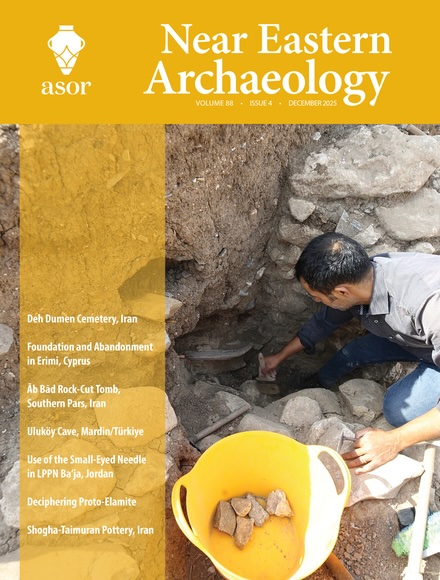
 You can receive NEA (and other ASOR publications) through an ASOR Membership.
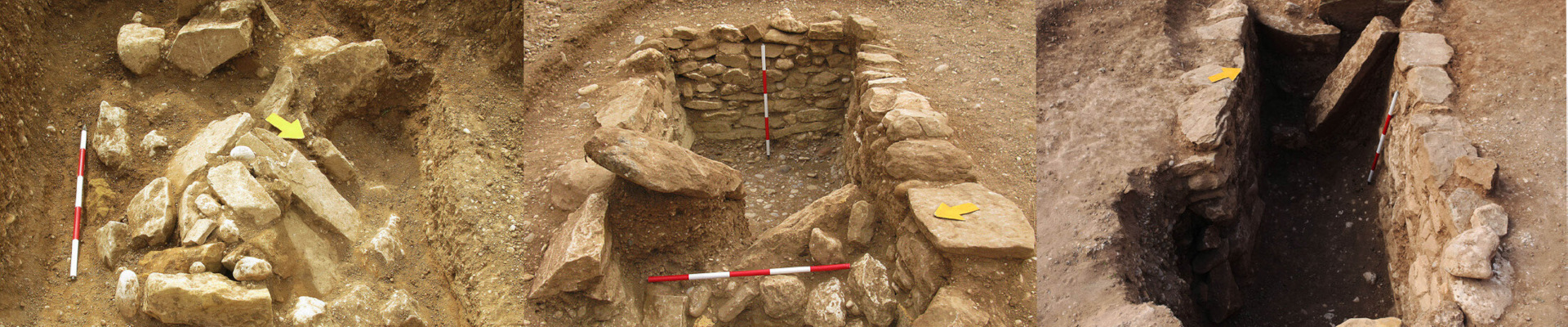 Pp. 260–271: “Burial Practices of the Bronze Age: An Archaeological Study of the Deh Dumen Cemetery in Southern Zagros, Iran” by Reza Naseri and Morteza Khanipour
Recent rescue excavations at the Deh Dumen cemetery near the Khersan III Dam in the southern Zagros identified 20 graves. This study, based on the first excavation season, sheds light on burial practices and cultural connections of local people in the Bronze Age. Likely within Elamite territory, the cemetery includes stone and jar graves for different social groups. The excavations yielded nearly 145 artifacts, including pottery, metal, and stones. The presence of imported items, such as lapis lazuli from Central Asia and metal artifacts from the Indus Valley, indicates extensive trade relations and cultural contacts with southeastern and northeastern Iran. These findings suggest that the Zagros region had access to a trade route connecting East and West and maintained strong connections with other Elamite communities during the Bronze Age. PLEASE NOTE: This article contains images of human skeletal remains.
ASOR Members with online access: log into ASOR’s Online Portal here. Once logged in, click the JOURNALS tab in the top navigation bar. Tutorials for how to log in to the Online Portal as well as how to navigate to the Portal Journals page can be found here.
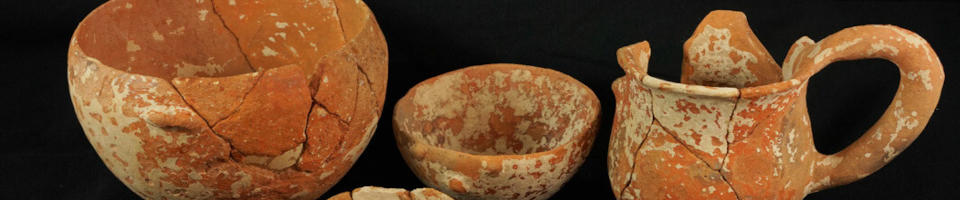 Pp. 272-281: “Time Capsules: Evidence for Foundation and Abandonment Practices at Middle Bronze Age Erimi, Cyprus” by Luca Bombardieri and Marialucia Amadio
This article focuses on the analysis of settlement building and abandonment activities and their impact on the formation of community ideologies and ideas. Specifically, the evidence of social practices will be discussed for Prehistoric Cyprus, taking the example of the Middle Bronze Age community at Erimi in South coastal Cyprus. Through the discussion of specific evidence recovered from the workshop complex and domestic areas at this site, we aim to explore the possible connection of construction and abandonment activities with ritualized practices performed by the community to ensure and sustain long-term social cohesion and construct social memory and communal identity.
ASOR Members with online access: log into ASOR’s Online Portal here. Once logged in, click the JOURNALS tab in the top navigation bar. Tutorials for how to log in to the Online Portal as well as how to navigate to the Portal Journals page can be found here.
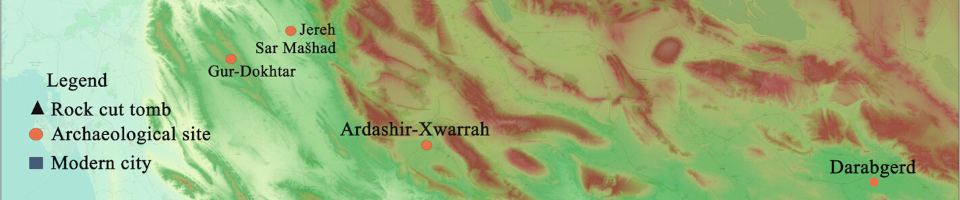 Pp. 282-291: “Āb Bād Rock-cut Tomb: Tracking Post-Achaemenid Burial Customs in Qir-o Karzin, Southern Pars, Iran” by Parsa Ghasemi, Leila Ghasemi, Alireza Mehrabi, and Aziz Rezaei
This article examines a newly discovered rock-cut tomb in Āb Bād village, Qir-o Karzin county, Iran. The tomb features a simple design with a single chamber and a burial cavity, or cist. Its facade is constructed with three overlapping rectangular registers in a stepped arrangement, devoid of decoration or relief. This reflects architectural continuity from Achaemenid rock tombs (550–330 BCE). Based on current survey evidence, it is highly probable that the construction of this tomb dates to the post-Achaemenid period (330 BCE–224 CE) and likely belonged to a high-ranking local ruler or noble of Pars under the Parthian Empire.
ASOR Members with online access: log into ASOR’s Online Portal here. Once logged in, click the JOURNALS tab in the top navigation bar. Tutorials for how to log in to the Online Portal as well as how to navigate to the Portal Journals page can be found here.
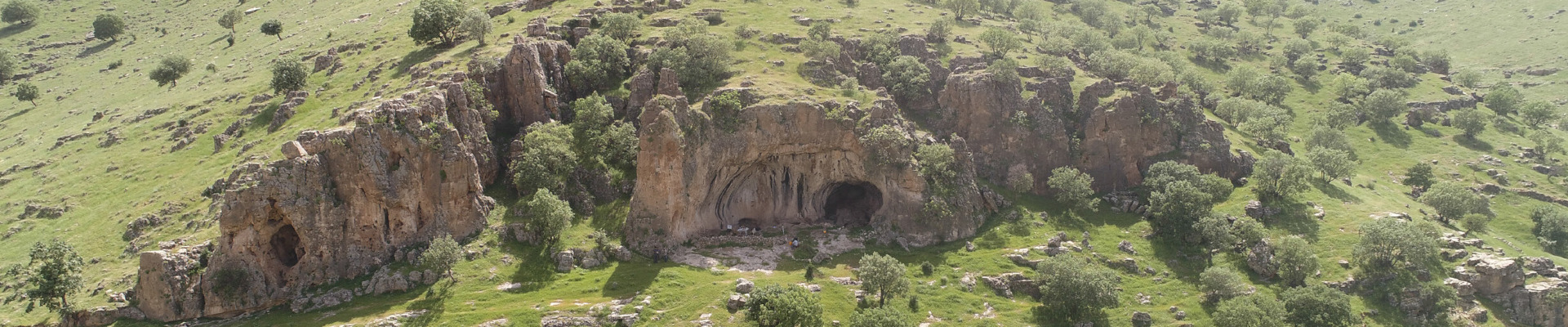 Pp. 292-303: “First Observations on the Excavations in the Terrace Area of Uluköy Cave, Mardin/Türkiye” by Ergül Kodaş, Eşref Erbil, Charlotte Labedan Kodaş, and Mehmet Şan
The emergence of sedentary societies in southeastern Anatolia has been the focus of numerous studies in recent years, particularly those concentrating on Early Neolithic mound settlements located along the riverbanks of the Euphrates Basin and the Tigris Valley. However, research on the Late Epipaleolithic communities in this region remains limited. Currently, our knowledge of the early phase of the transition to sedentary lifestyle in southeastern Anatolia is based on information gathered from only five archaeological sites, most of which are situated along the Tigris: Körtik Tepe, Çemka Höyük, Boncuklu Tarla, Biris Mezarlığı, and Söğüt Tarlası. Recently, the excavation of Ulukoy Cave in 2023 and 2024, located in the Mardin Range, led to the discovery of Epipaleolithic architectural features and lithic tools in its terrace. This article presents our initial observations from this archaeological site.
ASOR Members with online access: log into ASOR’s Online Portal here. Once logged in, click the JOURNALS tab in the top navigation bar. Tutorials for how to log in to the Online Portal as well as how to navigate to the Portal Journals page can be found here.
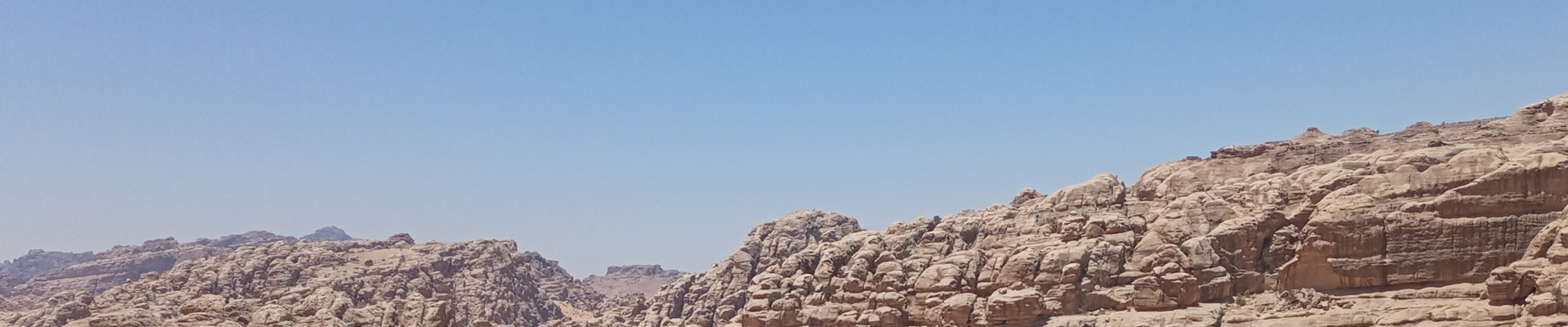 Pp. 304-312: “Potential Use of the Small-Eyed Needle from Late Pre-Pottery Neolithic Baʿja in Jordan” by Bellal Abuhelaleh, Hans G. K. Gebel, Carmela Vaccaro, and Ursula Thun Hohenstein
The Pre-Pottery Neolithic sites in Jordan represent important stages in the evolution of human social structures in the Middle East. These sites reveal a remarkably complex social differentiation, as well as cultural and technological advances that paved the way for stratified socioeconomic structures in the Transjordanian Highlands. One important Late Pre-Pottery Neolithic site is Baʿja (ca. 7200–6800 BCE). Dr. Hans K. Gebel and his team from the Free University of Berlin first excavated Baʿja in 1984. Excavations resumed in 1997 and continue today. This article examines a particular bone tool: a very thin, cylindrical eyed needle, recovered in the lowermost layer of Baʿja stratigraphy. The object is notable for its dimensional smallness. In order to gather more information about its possible production technique and use, the researchers conducted a scientific experiment to produce a replica similar to the original Baʿja eyed needle.
ASOR Members with online access: log into ASOR’s Online Portal here. Once logged in, click the JOURNALS tab in the top navigation bar. Tutorials for how to log in to the Online Portal as well as how to navigate to the Portal Journals page can be found here.
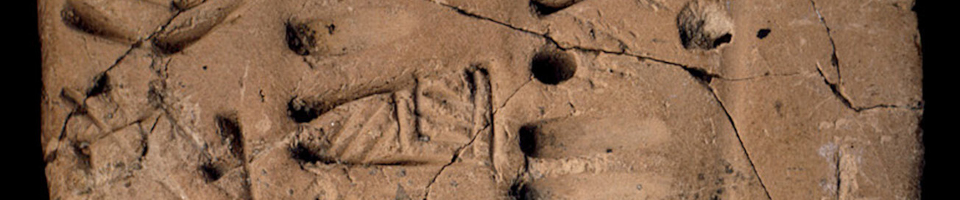 Pp. 314-323: “Recent Progress in Deciphering Proto-Elamite” by M. Willis Monroe, Kathryn Kelley, Logan Born, and Anoop Sarkar
Within about a century of the earliest inventions of writing in southern Iraq and Egypt at the end of the fourth millennium BCE, a third writing system was invented in southwestern Iran. This writing is called proto-Elamite, and it has remained undeciphered, even though a large number of tablets (now over 1,700) have been available for study since the early twentieth century. The name proto-Elamite is a conventional label, not meant to imply a known language, that was coined by V. Scheil. Proto- Elamite is a distinct corpus from the much later Linear Elamite writing system. With increasing digital documentation of this corpus, new avenues of research have opened, and over the past five years an interdisciplinary team of researchers has been making insights by combining traditional knowledge of the corpus with techniques developed in computational linguistics.
ASOR Members with online access: log into ASOR’s Online Portal here. Once logged in, click the JOURNALS tab in the top navigation bar. Tutorials for how to log in to the Online Portal as well as how to navigate to the Portal Journals page can be found here.
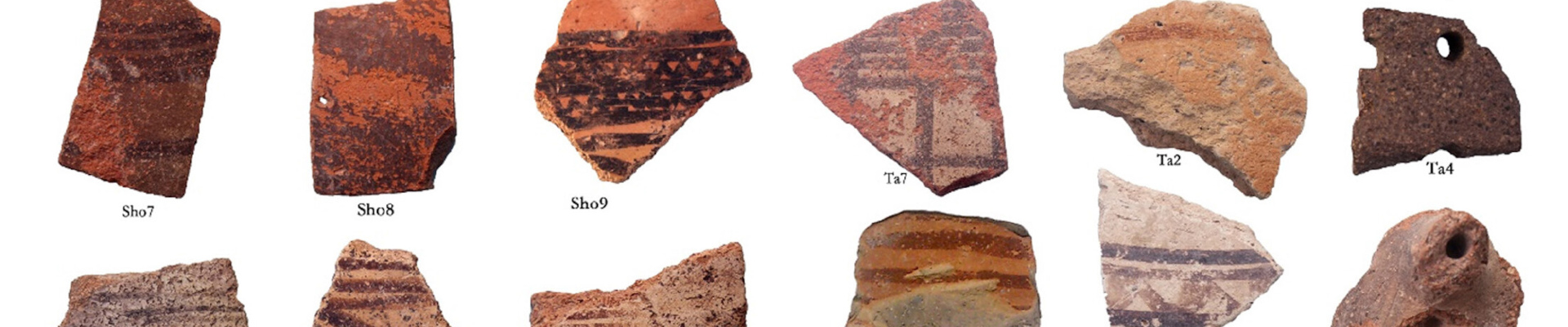 Pp. 324-337: “Insights into Shogha-Taimuran Pottery: Exploring Making Centers and Cultural Significance” by Habib Emadi and Ali Aarab
The Shogha-Taimuran period refers to the second half of the second millennium BCE in the Kur River Basin of southwestern Iran, characterized by two visually distinct yet contemporaneous pottery types. To elucidate the causes of these distinctions, Neutron Activation Analysis (NAA) and X-ray Fluorescence (XRF) were conducted on the samples. Previous researchers posited Tol-e Darwazeh as the production center for Shogha-Taimuran pottery. However, this study reveals that Tol-e Taimuran also served as a production center, indicating different origins for some Taimuran pottery types and reflecting two distinct pottery traditions in the mid-second millennium BCE (Middle Elam). Analyses of Taimuran pottery, alongside other site findings, indicate connections with other areas, positioning Tol-e Taimuran as a potential main center for Shogha-Taimuran culture following the abandonment of Tol-e Malyan.
ASOR Members with online access: log into ASOR’s Online Portal here. Once logged in, click the JOURNALS tab in the top navigation bar. Tutorials for how to log in to the Online Portal as well as how to navigate to the Portal Journals page can be found here.
 The Early Career Scholars (ECS) Committee is seeking part-time Social Media Content Creators. This paid position offers the opportunity to engage closely with scholars working across disciplines represented by the larger ASOR community. The successful candidate(s) will assist the Community Building Subcommittee of ECS in creating content for the Early Career Scholars Highlight series. We encourage graduate students to apply for this position to gain experience working and networking with early career scholars.
The main responsibilities will be designing, writing content, and scheduling posts; reaching out to potential early career ASOR members about participation in the social media series; and maintaining and using content submitted through our Google submission form. The content creator will report directly to the ECS Community Building Subcommittee and will follow an agreed upon posting schedule.
Candidates should be adept at writing interesting and detailed social media captions to highlight the work and projects of our early career community. Candidates should also have time-management and organizational skills to follow consistent posting schedules. The candidate(s) should be proficient in using social media platforms including Facebook, Instagram, and Canva.
To apply, please submit your CV and a brief statement of interest (250 words max.) detailing your qualifications and motivations for the position. If you have any questions or concerns, please reach out to us at earlycareerscholars@asor.org.
If you wish to be considered by the committee, please fill out the application form here. Review of applications will begin on December 1, 2025 and close on January 30, 2026. The position will run from March 2 to June 30, 2026.
Please fill out this online form if you are interested in being a Social Media Content Creator.

The Honors and Awards Committeeseeks nominations to serve on the G. Ernest Wright Book Award sub-committee. ASOR invites nominations, including self-nominations, from ASOR members who are interested in being considered by the committee for these openings. Committee members will serve a three-year term with the possibility of two consecutive terms. Nominees must fill out the online form by January 30, 2026. The Honors and Awards Committee takes responsibility for determining the awardees for the three book awards, the field archaeology award, the “best poster” and “best student paper” awards, and the multiple membership service awards that ASOR gives annually; conducting the awards ceremony during the Members’ Meeting at the ASOR Annual Meeting; and discussing and advising the ASOR Board of Trustees about ASOR’s awards, including recommending to the Board the creation of new awards as deemed appropriate.
Three candidates are sought for the G. Ernest Wright Award sub-committee. This award is given to the author/editor of the most substantial volume(s) dealing with archaeological material, excavation reports and material culture from the ancient Near East and Eastern Mediterranean. This work must be the result of original research published within the past two years. (One award is given annually.) Candidates may also serve on the Joy Ungerleider Poster or Student Paper Award sub-committees.
Preference will be given to candidates who complement the research specialities of the existing committee members.
In order to receive full consideration by the committee the online form must be submitted by noon EST on January 30, 2026. For questions and concerns, please contact Moni Islam (info@asor.org).
Want to help more students and early career archaeologists get into the field? Donate to the cause today by selecting “Fieldwork Scholarships” as your gift purpose!



 We all remember a time when the History Channel was about history, documentaries bored us with facts and black-and-white footage, and everyone knew Indiana Jones, Daniel Jackson, and River Song were swashbuckling adventurers (not serious scientists). When did the lines between fiction and fact blur? Did it start when thorough public history education was reduced to merely one year during middle school, when the Socratic method gave way to teaching-to-the-test? Although many of us are still fascinated by our ancestors and the empires they built and destroyed, the field of archaeology is shrinking when we need more access to the lessons of the past, not less.
 Both researchers and readers must understand the problem before us: troll farms are creating and multiplying fake content that crowd out real news, profit-trained algorithms are pushing what we learn, and AI is making falsehood harder to detect.
Even if archaeologists were well funded and better resourced, they could not compete with the truly fake news pushed by entertainment companies and “adventurers,” whom we might call pseudoarchaeologists. Social media’s lack of conscience and sensationalists’ focus on fame and wealth make the fight with slow science and thoughtful debate an unfair one. Through publications such as ASOR’s ANE Today and BAS’s Biblical Archaeology Review, scholars have shared their findings with the public in less-technical language for many years. However, as reading rates drop among students and adults, authors are now competing with filmmakers for eyeballs, hearts, and minds. Increases in forgeries and thefts make us all wonder what is real.
The quest to recover our ancient history is not yet lost to Skynet. But it is going to take all of us—the real archaeologists in the field and the curious readers behind their screens—to reinvigorate real exploration.
 Amanda Hope Haley has a bachelor of arts in Religious Studies from Rhodes College and a master of theological studies in Hebrew Scripture and Interpretation from Harvard University. She entered the publishing industry in 2005, first contributing to The Voice Bible as a translator, commentary writer, and editor. She then began working with popular nonfiction titles as a content editor, theological reviewer, and ghostwriter before her first book was published by Thomas Nelson in 2014. Amanda’s most recent book, Stones Still Speak: How Biblical Archaeology Illuminates the Stories You Thought You Knew, was released by Revell in September and encourages readers to distinguish between popular traditions and historical facts. Between writing manuscripts, she podcasts as The Red-Haired Archaeologist® and introduces sound archaeological insights to readers overwhelmed and misdirected by cinematic or culturally inherited images of the ancient world.
Friends of ASOR is pleased to announce that the first webinars of the 2025-2026 season will once again be free and open to the public with a goal to raise $10,000 so that the entire webinar season will be free. Will you support this outreach effort with a tax-deductible contribution? All donors/sponsors with gifts of $100 or more will be recognized in subsequent webinars. Make your gift today and select “webinars” from the dropdown menu.

Designate your gift for “Webinars” in the drop-down menu.
Want to help more students and early career archaeologists get into the field? Donate to the cause today by selecting “Fieldwork Scholarships” as your gift purpose!


Until recently, the work of Middle Easterners on archaeological projects in Palestine, and southwestern Asia and Egypt more broadly, during the period of colonialist control between the World Wars (1918–1939) has largely gone unnoticed, undocumented, and uncelebrated. However, over the last decade scholars have begun to take a long overdue interest in this subject, resulting in the appearance of an increasing number of publications addressing archaeology’s colonialist past. Egyptians, working both in Egypt itself and on projects in the Levant, have received the most attention so far. However, more work is now appearing on the roles of Palestinians during this turbulent time. This article documents and contextualizes the career of Boulos el-ʿAraj, a young Palestinian man active in British Mandate-era archaeology from ca. 1926–1936. Despite the number of excavations on which he worked, and his reputation at the time, he remains a mostly unknown figure, often going unmentioned in even recent articles dealing with Palestinian archaeologists of that era (for example, Abu Alsaud 2022, 2024), which makes documenting his career especially important.
 Pp. 25-42: “Unveiling the Obscure: Exploring the Function and Meaning of Levantine Shrine Models through an Ethnoarchaeological Lens,” by Itamar Weissbein
This article examines pottery vessels commonly referred to as “shrine models” or “portable shrines,” which were found throughout the Bronze and Iron Age Levant. While these vessels are often recognized for their significant religious importance, their exact functions and meanings remain unclear to modern scholars. This study aims to offer new insights into these questions by drawing on ethnoarchaeological parallels from India, suggesting that these vessels may have served as symbolic dwellings for the spirits of deities or the deceased and offering insights into potential associated religious rituals.
 Pp. 43-71: “Paleoenvironment and Fruit Tree Horticulture at Early Bronze Age Tel Bet Yerah: Evidence from Charcoal Remains,” by Eshel Mor, Raphael Greenberg, and Dafna Langgut
This article presents the first detailed examination of a charred wood assemblage from Early Bronze Age I–III Tel Bet Yerah (ca. 3700–2500 B.C.E.). The wood-anatomy identification of the charcoal remains aims to reconstruct the nearby natural and horticultural arboreal environment as well as the long-term human-environment relations at the site and beyond it. The assemblage provides evidence for substantial fruit-tree horticulture, mainly of olive and fig. In addition, there is evidence for exploitation of a well-developed Mediterranean woodland in the site’s vicinity, as well as of a riparian habitat. The assemblage also includes taxa rarely encountered in the regional archaeobotanical record, such as pomegranate. The transition from village to urban settlement in the Early Bronze II (ca. 3100–2850 B.C.E.) shows changes in the charred wood assemblage that parallel economic, cultural, and environmental changes evidenced in the settlement layout and other findings. Evolving cultural-economic interactions between local and “Khirbet Kerak” populations during the first part of the Early Bronze III (ca. 2850–2700 B.C.E.) are also indicated. The study also offers a general land-use scheme for the site, based on the data that emerged from this research combined with the results of other relevant paleoenvironmental and archaeobotanical studies.
 Pp. 73-99: “Reassessing the Levantine Tradition of Early Bronze III Bone Tubes: The View from Tell el-Hesi,” by Geoffrey Ludvik, Kara Larson, and Jeffrey A. Blakely
Incised bone tubes are an important class of artifacts associated with the 3rd millennium B.C.E. throughout the Near East and eastern Mediterranean. Typically made of ovicaprine or cattle long bones and decorated with a series of incised motifs, bone tubes are a rare find in Early Bronze (EB) elite burial and settlement contexts. New work at Tell el-Hesi, Israel, has shown that a specialized bone tube workshop was present at the site, operating only during the southern Levantine EB IIIA (2800–2700 B.C.E.). This article provides a reassessment of the Levantine tradition of bone tube manufacture and design based on the existence of the Tell el-Hesi workshop. The authors provide a detailed description of the workshop’s stratigraphic context, review its chaîne opératoire, and, using the established baseline of morphometric variation characterizing its workshop style/tradition, compare bone tubes produced elsewhere to this known production center. It is thereby demonstrated that a subset of bone tubes from other sites in the Near East share morphometric proportions, motif sequences, styles, and techniques with Tell el-Hesi. The authors interpret these artifacts as products of the Hesi workshop, providing a chronological anchor for their contexts and evidence for a bone tube exchange operating during the EB IIIA period.
 Pp. 101-121: “Empires, Local Traditions, and the Spread of Knowledge: A Case Study in Water Management in Early Islamic Palestine,” by Azriel Yechezkel, Gideon Avni, Bethany Walker, Meir Rotter, Yoav Negev, and Yuval Gadot
Qanat technology, most likely originating on the Iranian Plateau or in the Arabian Peninsula around the 2nd millennium B.C.E., diffused in a wave-like pattern across Eurasia over various periods throughout history, reaching the southern Levant as late as the 8th century C.E. This unique water extraction technology is based on the diversion of water from underground aquifers over great distances through man-made subterranean tunnels. It is particularly efficient in alluvium soil in arid to hyper-arid regions. This study presents a unique example of a qanat-like system found in the Judean Hills of Israel, an area characterized by a different water management tradition, based on the use of natural springs and the modification of their sources through artificial tunneling. This article argues that the knowledge and use of qanat technology in the Mediterranean area of the Judean Hills bear evidence for a top-down attempt to introduce new water management technology in the Early Islamic period. The construction of this qanat-like underground system was intended to increase the resilience of the new road network of Early Islamic Palestine, particularly the road connecting Jerusalem and Ramla.
 Pp. 123-145: “The “Last” Canaanean Blades: Some Insights from the Early Bronze IV Site of Khirbet Um al-Ghozlan in Jordan,” by Francesca Manclossi and James Fraser
A new study of materials recovered from the British Museum excavations at Khirbet Um al-Ghozlan in Jordan offers new insights into the production and use of Canaanean blades during the Early Bronze Age IV (EB IV) period in the southern Levant. The specialized purpose of the site, which was probably occupied seasonally for the annual production and temporary storage of olive oil, presents a unique window to observe changes in the Canaanean blade system in the 3rd millennium B.C. The assemblage suggests a significant continuity in Canaanean blade production and circulation despite the abandonment of the region’s proto-urban centers and the reconfiguration of economic, political, and social systems that defined the period of ruralization that followed. These blades, produced by a small number of flint specialists, were easily acquirable, never completely exploited, rarely recycled as ad hoc tools, and probably used for activities other than cereal harvesting. The examples at Khirbet Um al-Ghozlan suggest that some EB IV communities had a versatile tool kit, adaptable to other roles than as curved and composite sickles, which enabled them to exploit different environmental zones between the Jordan Valley floor and the uplands of the adjacent escarpment above.
 Pp. 147-160: “Motifs of Drought in Ugaritic Narratives,” by František Válek
This paper discusses the motifs of drought as they appear in Ugaritic narratives, namely the Baʿlu Cycle, Epic of ʾAqhatu, and Epic of Kirtu. It argues that the recurring character of these motifs can indicate that the author(s) of these compositions could have reacted to the environmental changes emerging at the end of the Late Bronze Age. Apart from discussing the relevant passages of these texts, the paper sets them within the broader cultural, political, and environmental milieu of the Late Bronze Age world. It is argued that while the author(s) might have also been inspired by existing literary lore (such as Atraḫasīs or Hittite myths of disappearing deities), the climate change, droughts, and consequent food shortages underscore the social relevance of recounting such stories. The Ugaritic narratives are discussed in the perspective of the theory of social myths, directing our attention to the social relevance of myths and the intentions of social actors. In this case, the social significance might have been in the pondering of a variety of cosmological meanings and causes in order to address the challenges and boost the social and political resilience of the Kingdom of Ugarit.
ASOR Members with online access: log into ASOR’s Online Portal here. Once logged in, click the JOURNALS tab in the top navigation bar. Tutorials for how to log in to the Online Portal as well as how to navigate to the Portal Journals page can be found here.
 Pp. 161-196: “Magic in the Levant: On Some Late Antique Amuletic Plaque-Pendants,” by Alexandra Uscatescu and Alexander Bar-Magen Numhauser
The recent translation of an inscribed magical amulet with an Aramaic text found in the macellum of Gerasa (Jerash, Jordan) presents new evidence on magical practices at the end of Late Antiquity and allows for the re-assessment of a particular group of bronze amulets made in the Syrian-Palestinian region. This analysis offers a thorough review of our knowledge about the whole group of amuletic plaque-pendants, especially regarding the syncretic aspects of this craft. Therefore, the following paper proposes to adjust the definition of this group’s features to a new typology.
ASOR Members with online access: log into ASOR’s Online Portal here. Once logged in, click the JOURNALS tab in the top navigation bar. Tutorials for how to log in to the Online Portal as well as how to navigate to the Portal Journals page can be found here.
 Pp. 197-219: “The Site of Gird Qalachogan, Iraqi Kurdistan: Salvage Excavations and Survey,” by Petra M. Creamer, Kyra Kaercher, Glynnis Maynard, Nader Babakr, Jason Ur, Rafeeq Bradosti, Khalil Barzinjy, and Timothy Matney
Gird Qalachogan is a mounded settlement in Iraqi Kurdistan located just north of Erbil’s city limits. It was primarily occupied in the Middle and Late Bronze Age, reaching a size of around 14 ha. Recent damage inflicted on the site by local construction projects has put its preservation in a dire situation, with parts of the mound being carved away by backhoe cuts. Salvage excavations were carried out in 2022 with the intent of defining and identifying features revealed in cuts on the western edge of the mound. A survey of the site and surface collections were also carried out to form a comprehensive understanding of Qalachogan’s extent and occupation periods. This article presents the results of both investigations, concluding that the site was likely once an important Bronze Age center in the 2nd millennium B.C.E. with non-sequential phases of occupation into Islamic periods. Notable finds include a monumental building and vaulted tomb dating to the Middle Bronze Age and an in-situ cremation burial potentially belonging to the Late Bronze Age.
ASOR Members with online access: log into ASOR’s Online Portal here. Once logged in, click the JOURNALS tab in the top navigation bar. Tutorials for how to log in to the Online Portal as well as how to navigate to the Portal Journals page can be found here.