Silent Auction at ASOR’s 125th Anniversary Celebration

[vc_row fullwidth=”true” attached=”true” css=”.vc_custom_1496247803139{padding-top: 0px !important;padding-right: 0px !important;padding-bottom: 0px !important;padding-left: 0px !important;}”][vc_column][vc_single_image image=”106432″ img_size=”1920×400″ alignment=”center”][/vc_column][/vc_row][vc_row fullwidth=”true” css=”.vc_custom_1496682730308{padding-top: 10px !important;padding-right: 0px !important;padding-bottom: 0px !important;padding-left: 0px !important;}”][vc_column width=”1/12″ css=”.vc_custom_1496683820796{margin-right: 10px !important;}” offset=”vc_hidden-md vc_hidden-sm vc_hidden-xs”][vc_column_text]

 SHARE

[/vc_column_text][mk_image src=”http://www.asortest.org/wp-content/uploads/2017/01/social-fb-icon4.jpg” image_width=”42″ image_height=”42″ hover=”false” custom_url=”https://www.facebook.com/ASOResearch/” margin_bottom=”0″][mk_image src=”http://www.asortest.org/wp-content/uploads/2017/01/social-tw-icon4.jpg” image_width=”42″ image_height=”42″ hover=”false” custom_url=”https://twitter.com/ASOResearch?ref_src=twsrc%5Egoogle%7Ctwcamp%5Eserp%7Ctwgr%5Eauthor” margin_bottom=”0″][mk_image src=”http://www.asortest.org/wp-content/uploads/2017/01/social-in-icon4.jpg” image_width=”42″ image_height=”42″ hover=”false” custom_url=”https://www.linkedin.com/company/american-schools-of-oriental-research” margin_bottom=”0″][mk_image src=”http://www.asortest.org/wp-content/uploads/2017/01/social-ml-icon_7.jpg” image_width=”42″ image_height=”42″ hover=”false” custom_url=”mailto:info@asor.org” margin_bottom=”0″][mk_image src=”http://www.asortest.org/wp-content/uploads/2017/01/blog-icon3.jpg” image_width=”42″ image_height=”42″ hover=”false” custom_url=”http://asor.org/blog” margin_bottom=”0″][/vc_column][vc_column border_color=”rgba(255,255,255,0.01)” width=”1/6″ css=”.vc_custom_1496683923840{margin-right: 20px !important;border-left-width: 2px !important;padding-right: 20px !important;padding-left: 20px !important;border-left-color: #99422f !important;}”][mk_divider divider_color=”rgba(255,255,255,0.01)” thickness=”1″ margin_top=”3″ margin_bottom=”3″][vc_widget_sidebar sidebar_id=”ca-sidebar-39801″][/vc_column][vc_column border_color=”rgba(170,170,170,0.01)” width=”1/2″ css=”.vc_custom_1487276122024{margin-right: 10px !important;margin-bottom: 30px !important;border-right-width: 2px !important;border-bottom-width: 2px !important;padding-top: 30px !important;padding-right: 30px !important;padding-left: 20px !important;background-color: #ffffff !important;border-right-color: rgba(227,228,228,0.75) !important;border-bottom-color: rgba(227,228,228,0.75) !important;}”][vc_column_text responsive_align=”left”]

Silent Auction at ASOR’s 125th Anniversary Celebration

[/vc_column_text][mk_divider][vc_column_text]ASOR is gearing up for our 125th Anniversary Celebration at this year’s Annual Meeting in Boston on Saturday, November 22nd, and we can’t wait to see you there! A silent auction will be held as part of the festivities, and this is your chance to make a unique contribution to this very special milestone.

All proceeds from the silent auction will go towards Membership and Annual Meeting Scholarships. ASOR has already awarded over $15,000 in scholarship funds this year and we need your help to make sure we can continue to support those members of our ASOR community with financial need.

Not able to make it to the celebration Boston this November? ASOR will be hosting the auction on-line through December 31, so that you can still bid on these one-of-a-kind items and experiences.
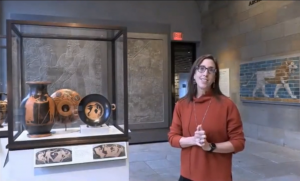
Auction items can include:

  • Autographed books
  • A virtual lecture
  • Private lunch or dinner
  • VIP tour of a site
  • Special access to or a personal tour of a museum
  • Artwork
  • Hands-on or virtual training in a particular skill or method
  • Translation services
  • Editorial services
  • Or anything you can think of!

Do you have a great idea for an auction item? Fill out this brief Google form to make your mark on the festivities.

 

[/vc_column_text][mk_padding_divider][/vc_column][vc_column border_color=”rgba(170,170,170,0.01)” width=”1/6″ css=”.vc_custom_1496684098866{margin-right: 5px !important;margin-bottom: 20px !important;border-right-width: 2px !important;border-bottom-width: 2px !important;padding-top: 30px !important;padding-right: 10px !important;padding-left: 10px !important;background-color: #ffffff !important;border-right-color: rgba(227,228,228,0.75) !important;border-bottom-color: rgba(227,228,228,0.75) !important;}”][vc_wp_posts title=”BROWSE THE NEWS ARCHIVE” number=”4″][/vc_column][vc_column border_color=”rgba(170,170,170,0.01)” width=”1/6″ css=”.vc_custom_1496684008271{margin-right: 10px !important;margin-bottom: 30px !important;border-right-width: 2px !important;border-bottom-width: 2px !important;padding-top: 30px !important;padding-right: 20px !important;padding-left: 20px !important;background-color: #ffffff !important;border-right-color: rgba(227,228,228,0.75) !important;border-bottom-color: rgba(227,228,228,0.75) !important;}”][vc_widget_sidebar sidebar_id=”ca-sidebar-99363″][/vc_column][/vc_row]
Fieldwork Report: Aleyna Uyanik

Dusty, Sweaty but very Happy!

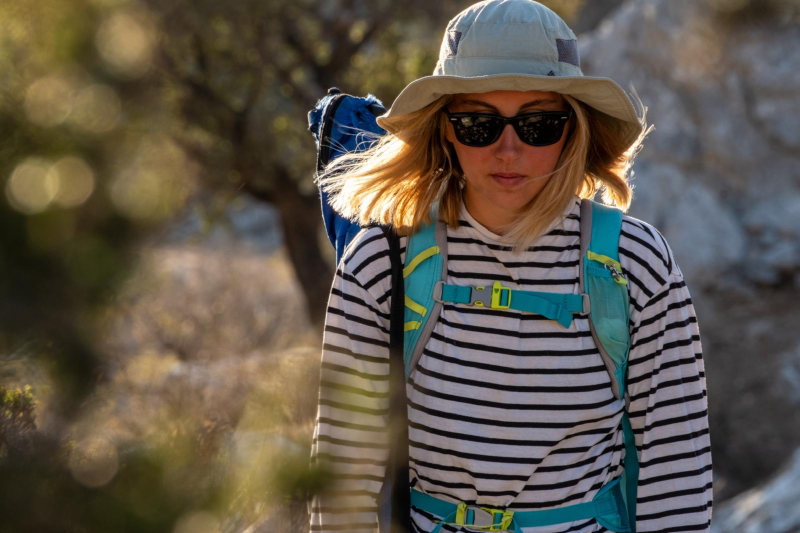
Aleyna Uyanik, 2025 Katherine Barton Platt Fellowship Recipient. 

Spending the summer in Marmaris with the Phoenix Archaeological Project has been nothing short of incredible.

The people I worked with in the project are more than just colleagues. For me, this is one of the most beautiful aspects of our discipline. Every summer, people from different corners of the world come together in one place: Taslica. While we have scientific goals, we also share daily challenges, laughter, and mutual support under often demanding conditions. Looking back, I realize that the moments from the summer that stay with me most are the ones with the Phoenix Project team in Marmaris. It might sound cliché, but it is here that I learned the most. It was not only about archaeology, it was about so many other things. Even something as simple as a song playing on the radio on our way to the field became part of that shared memory, one that I value just as much as the ancient press stones and pottery finds we documented.

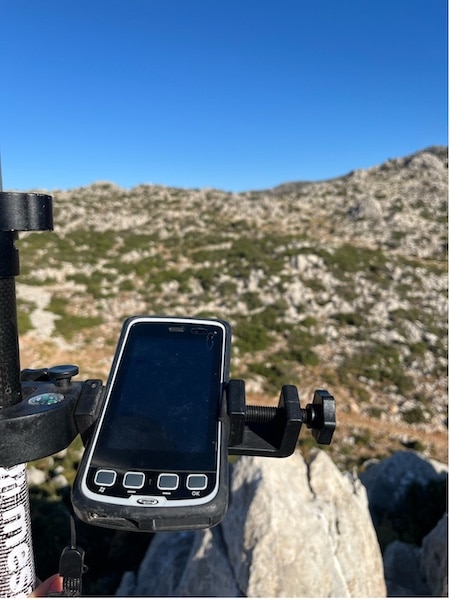
Me in the field carrying our GNSS. (Photography: Ayse Ozaydin)

Life in the Field


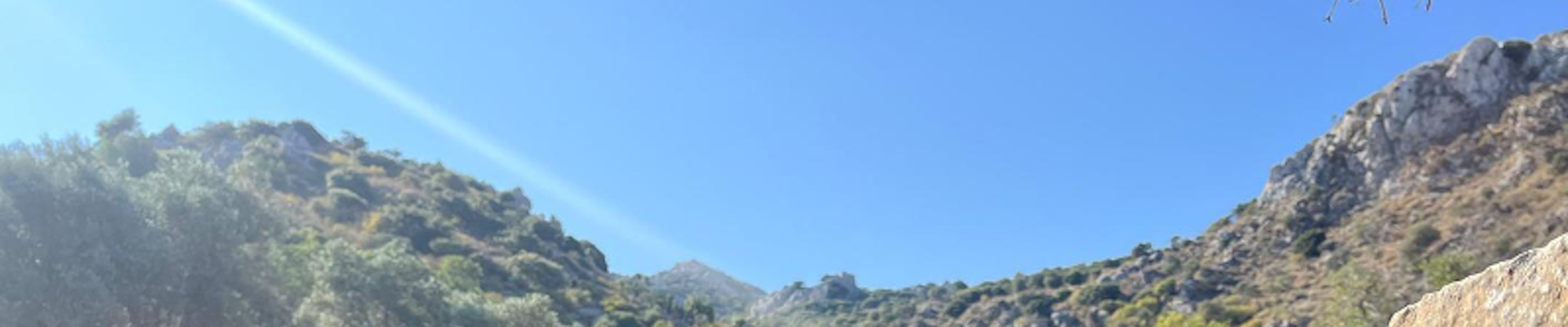
At the Phoenix Archaeological Project, we work in the ancient region of Caria, today’s Marmaris area in southwestern Turkey. The terrain is demanding: steep hills and rocky paths (which made me cry once, though thinking about it now actually makes me laugh), but that is also what makes the work so rewarding. A typical day begins early. By sunrise, we have breakfast, and shortly after, we pack our equipment and head into the hills. Every evening, during team meetings, the we set the plan for the following day. That means that when we leave in the morning, we know exactly where we are going and what we are searching for. Of course, the land itself has the power to change plans. Sometimes we encounter unexpected things, or we find a site denser in material than anticipated, which forces us to adjust our schedule.

Fieldwork in the hills of "carian chersonese".
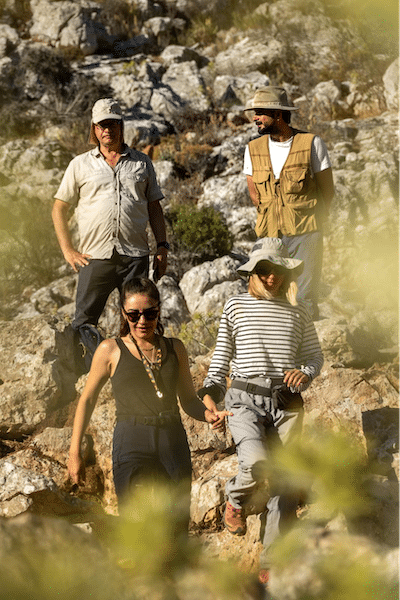
With my dear professor, Assoc. Prof. Dr. Koray Konuk and our project director Dr. Asil Yaman (top right), together with my colleague and friend Ilayda Alikaya (bottom left) and myself (bottom right). (Photography: Ayse Ozaydin)

By midday, the heat in Marmaris becomes little overwhelming. Before temperatures rise too high and our water bottles empty, we return to our research center for lunch. At lunch we discuss the morning’s work, observations from the field, and sometimes also share jokes about an oversized rabbit that startled us. Yes, we enjoyed documenting even the tiniest sherds, since they contribute meaningfully to our academic work, but we also enjoyed the moments of laughter which made the long and tiring days at the field both productive and memorable.

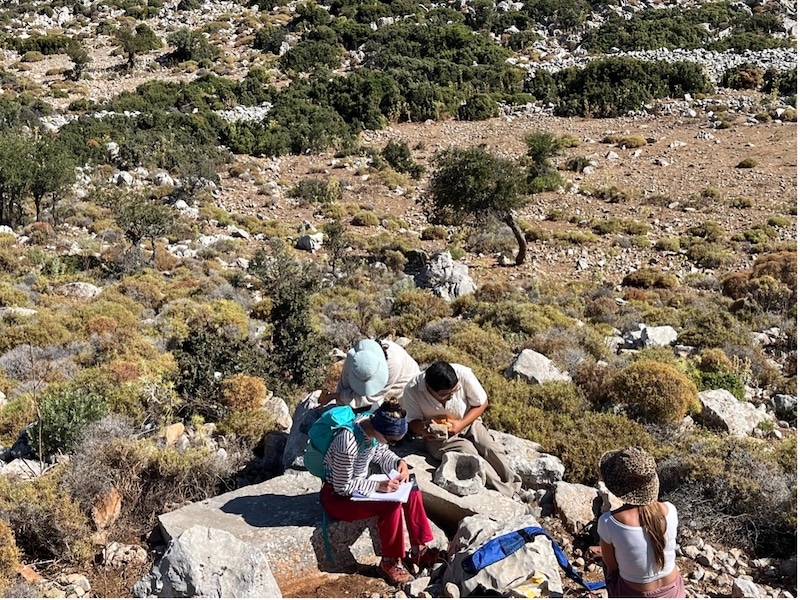
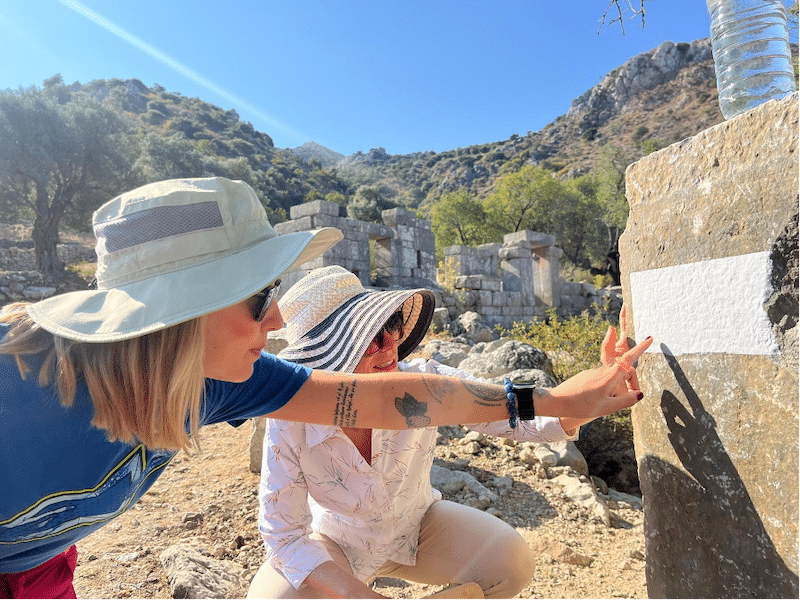
Me and my dear professor Dr. Anna Sitz during our sunday "estampage" practice in the field.

After lunch, we usually take  a pause to rest and take care of personal needs. In the late afternoon, office work begins. This is where “fieldwork” is turned into more scientific data. Out in the field we spent a lot of time around agricultural terraces and farm structures. We came across press stones, cisterns, and weight stones, which I helped measure and record with my teammates. Even small things like roof tiles or amphora bases around old farmhouses became important to document, because these small finds tell us a lot about the history of the place. Every time we found ceramics, we carefully recorded them, since pottery is one of the best ways to figure out the age of a structure.

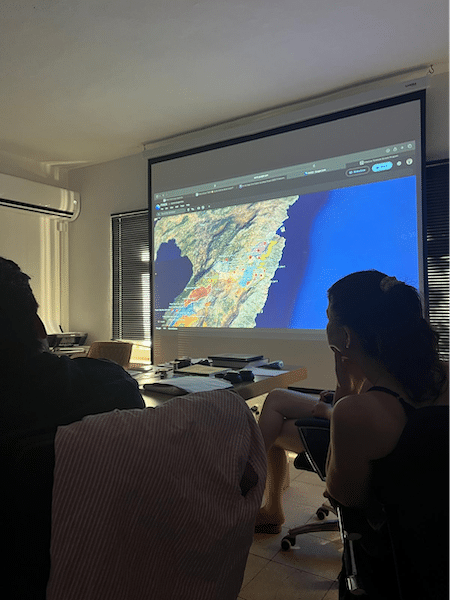
One of our daily team meetings.

One of my main responsibilities was working with the GNSS device (the Spectra Sp60). I often walked along ancient paths and terraces to record the exact coordinates of structures and finds. At the end of the day, I would hand these over to my dear friend Bahar Cansel, who put them into QGIS so that all of our data came together in one big map. It was nice to see how the dots and lines we collected in the field turned into a detailed picture of the area.

Me recording GPS points during the morning survey.

Community and Camaraderie


What makes the Phoenix Project great is not only the research but also the community it creates. After office hours, we often gather in the garden. Dinners in the evening are followed by late-night conversations (sometimes it was not the best idea, since we have to wake up around 5am, oopsie!) with friends who, in just a few weeks, come to feel like family. Balancing personal space and constant teamwork on archaeological projects can be challenging. We live and work together nearly every hour of the day. but we always find a way to overcome any negativities.

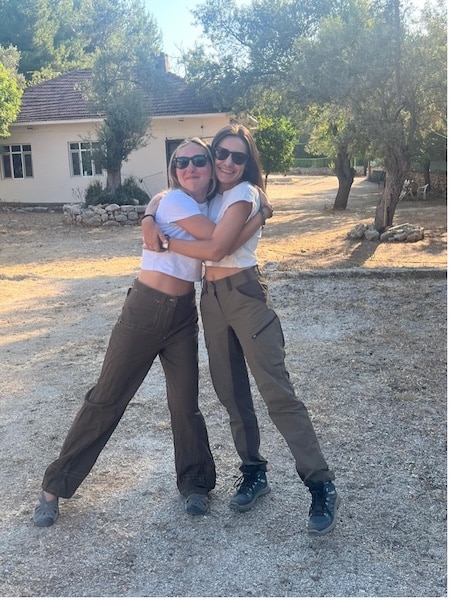
A fun coincidence: my teammate Ilayda Alikaya and I accidentally wore the same clothes on the same morning without planning it. Girlhood is everywhere.

Participating in an archaeology project can be physically demanding, but also mentally and emotionally taxing. To be honest, it is also incredibly rewarding. Every sunrise over the mountains, every small find, or architectural complexes we find, every conversation with a teammate adds to whole experience. For me, the Phoenix Project was more than a regular survey experience, it was a place where I learned academic work as well as being a team. I am so glad to continue to work with them in 2026!

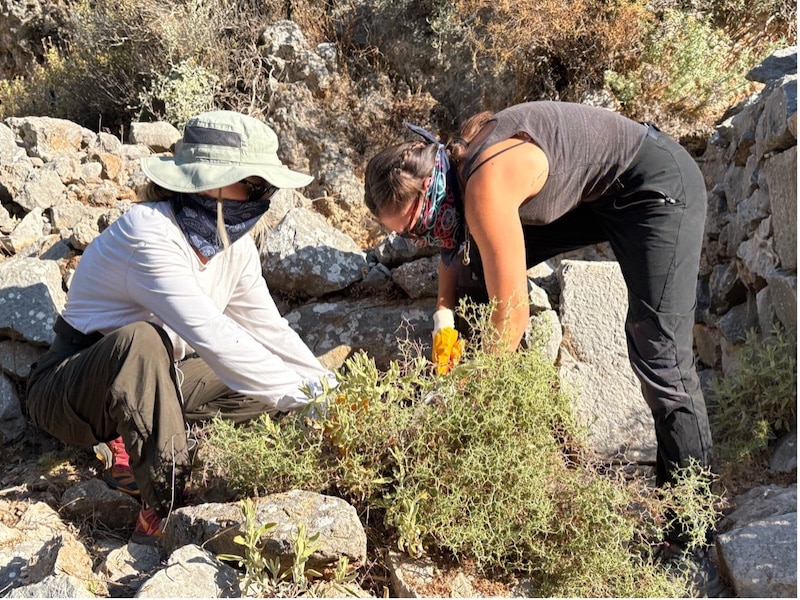
Cleaning some thorny plants to see the structure of the ancient walls and other remains.

Aleyna Uyanik is a Classical Archaeology and Philosophy student at Johannes Gutenberg University Mainz. She has worked in archaeology and museum projects in Turkey and Germany, with a focus on Greek and Roman material culture.

Phoenix Archaeological Project Website: https://www.phoenixprojesi.com/en/homepage/

Want to help more students and early career archaeologists get into the field? Donate to the cause today by selecting “Fieldwork Scholarships” as your gift purpose!

FOA Webinar: Igor Kreimerman, Mike Freikman, and Rachel Hallote

FRIENDS OF ASOR WEBINARS

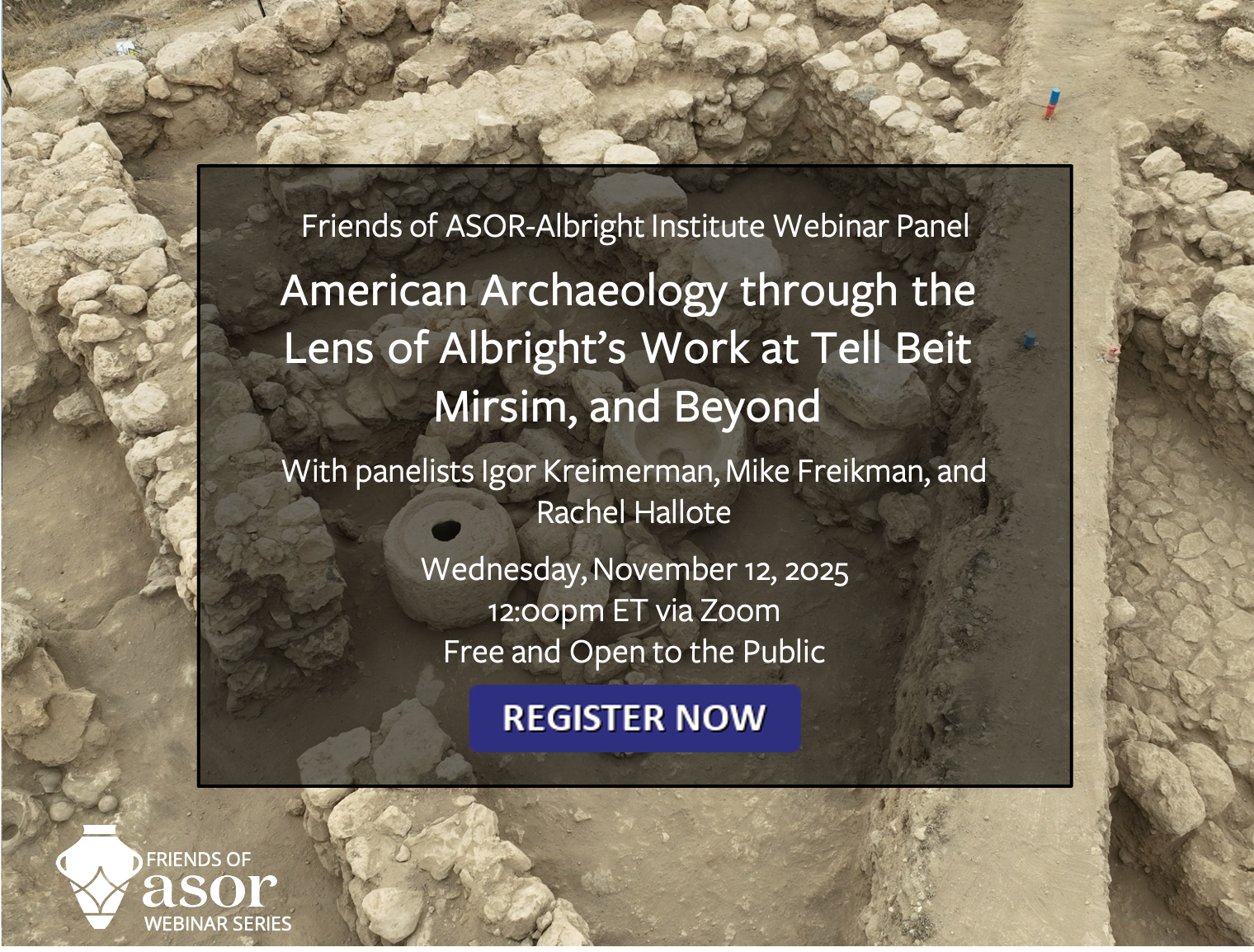
American Archaeology through the Lens of Albright’s Work at Tell Beit Mirsim, and Beyond

Friends of ASOR (in partnership with the W.F. Albright Institute of Archaeological Research) present the next webinar of the 2025-2026 season on November 12, 2025, at 12:00 pm EST, with panelists Igor Kreimerman, Michael Freikman, and Rachel Hallote. This webinar will be free and open to the public. Registration through Zoom (with a valid email address) is required. This webinar will be recorded and all registrants will be sent a recording link in the days following the webinar.

Presentation 1: “Tell Beit Mirsim in Perspective: Revisiting Albright’s excavations in Light of Renewed Work” with Igor Kreimerman

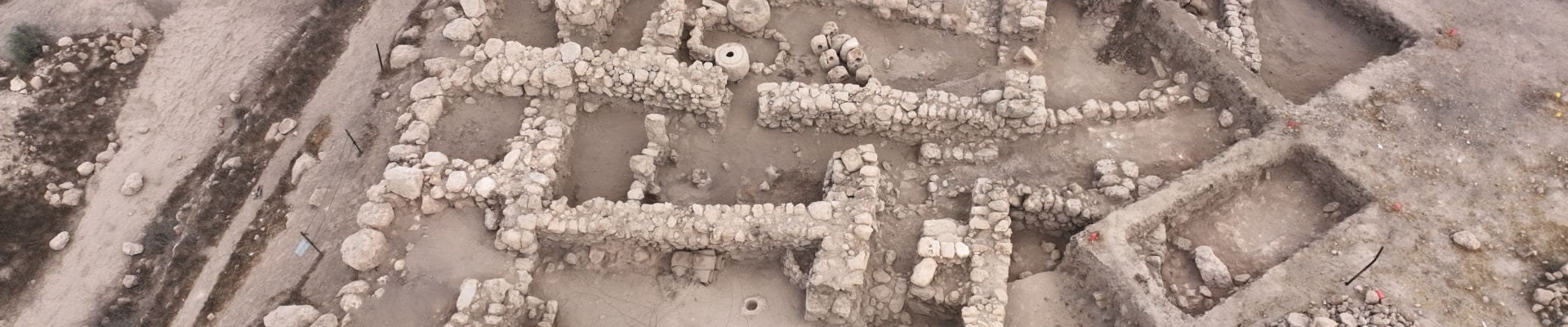
Albright’s excavations at Tell Beit Mirsim marked a turning point in the development of Biblical Archaeology, establishing the site as a key type-site for the discipline. The innovative methods applied in both excavation and publication resonated for decades and provided the foundation for Albright’s wide-ranging synthetic studies. Over time, however, many of his conclusions and theories have been challenged and re-evaluated. The renewed excavations at Tell Beit Mirsim invite a fresh assessment of Albright’s work, comparing his insights with new evidence from the field. This presentation will reconsider the validity of his reports in light of modern scholarship and reflect on the enduring impact of his excavations.

Dr. Igor Kreimerman is a Senior Lecturer in Archaeology and Ancient Near Eastern Studies at the Hebrew University of Jerusalem. He directs the Selz Foundation Hazor Excavations in Memory of Yigael Yadin and serves as scientific advisor to the Renewed Excavations at Tell Beit Mirsim. His research focuses on the social and economic structures of Bronze and Iron Age Levantine societies, as well as on human-induced site formation processes, particularly those related to construction and destruction.

Presentation 2: “Going Where No One has gone Before: A Peek Into the Intricacies of Albright’s Expedition at Tell Beit Mirsim” with Michael Freikman

The excavation of this little-known tell became groundbreaking in the history of biblical archaeology. As one of the earliest American expeditions in the Near East, Albright drew on his wide learning and field experience, effectively turning Tell Beit Mirsim into an open-air laboratory and, in many respects, helping to shape biblical archaeology as we know it today. We will highlight key aspects of his experience at the site—the team’s methodology, day-to-day life in the field, and Albright’s relationships with his team and local population—together forming the enduring legacy of one of the foremost forefathers of modern archaeology.

Dr. Michael Friekman holds a Ph.d in Archaeology at Hebrew Univeristy in Jerusalem. He has studied the megalithic architecture in the Ancient Near East, excavated at Rujm el Hiri, and participated at the excavation and publication of Kh. Qeyiafa, Sha’ar Hagolan, and Tel Tsaf. He presently directs the renewed excavation of Tell Beit Mirsim.

Presentation 3: “Tell Beit Mirsim in Context: The American Archaeological Presence in Ottoman and Mandatory Palestine Before and After Albright” with Rachel Hallote

This talk will put W. F. Albright’s Tell Beit Mirsim excavations into the historical context of archaeological work that had previously been done in Ottoman controlled Palestine. The arrival of Albright at the American Schools of Oriental Studies in Jerusalem immediately after World War I marks the beginnings the a real American presence in archaeology that had not been acknowledged previously. Although the Americans did not dominate the field, the Tell Beit Mirsim excavations came to be known for its concentration on ceramic and stratigraphic methodologies, and continued to influence the discipline in later decades.

Rachel Hallote is Professor of History at Purchase College SUNY. Her research involves British and American archaeologists who excavated in Ottoman-controlled Palestine in the 19th century. She has worked at numerous archaeological sites in Israel, including Tell Miqne and Megiddo. Her publications include Bible, Map, and Spade: The American Exploration Society, Frederick Jones Bliss, and the Forgotten Story of Early American Biblical Archaeology and the co-authored volume, The Photographs of the American Palestine Exploration Society as well as many articles about archaeology and the history of the discipline. She currently co-hosts an archaeology podcast called This Week in the Ancient Near East.

SUPPORT THE WEBINAR PROGRAM!

Friends of ASOR is pleased to announce that the first webinars of the 2025-2026 season will once again be free and open to the public with a goal to raise $10,000 so that the entire webinar season will be free. Will you support this outreach effort with a tax-deductible contribution? All donors/sponsors with gifts of $100 or more will be recognized in subsequent webinars. Help ensure these webinars stay free and available to all by donating today!

Designate your gift for “Webinars” in the drop-down menu.

New BASOR Editors Announced

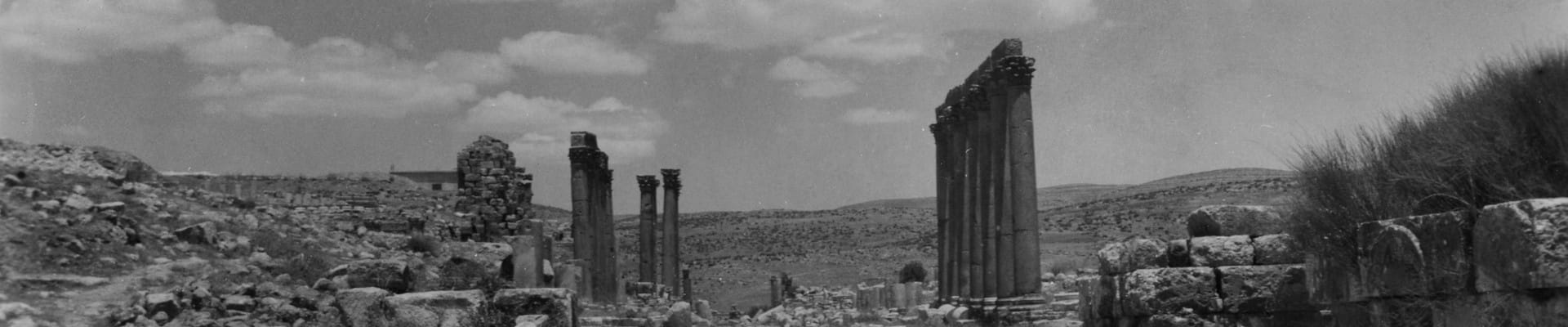
Ammonite Iron Age Tower in Jordan

NEW BULLETIN OF ASOR (BASOR) EDITORIAL TEAM ANNOUNCED

ASOR welcomes Jason Ur as a new interim co-editor of TheBulletin of the American Society of Overseas Research (BASOR). This co-editor appointment was unanimously approved by the Executive Committee on recommendation from the Committee on Publications. Ur will serve an interim term, ending December 31, 2026, alongside one of the current co-editors, Marwan Kilani. The Committee on Publications thanks the three outgoing editors, Susan Cohen, Jana Mynářová, and Regine Pruzsinszky, for their dedication, professionalism, and service.

Jason Ur is Stephen Phillips Professor of Archaeology and Ethnology in the Department of Anthropology at Harvard University. He specializes in early urbanism, landscape archaeology, and remote sensing. He was trained in Anthropology at the University of Pennsylvania (BA 1994) and in Near Eastern Languages and Civilizations at the University of Chicago (PhD 2004). He has directed field surveys in Syria, Iraq, Turkey, and Iran. He is the author of Urbanism and Cultural Landscapes in Northeastern Syria: The Tell Hamoukar Survey, 1999-2001 (2010). Since 2012, he has directed the Erbil Plain Archaeological Survey, an archaeological survey in the Kurdistan Region of northern Iraq. In 2014, he was the plenary speaker at the 2014 ASOR Annual Meeting with his talk, “The Renaissance of Archaeology in Iraq and its Kurdistan Region.”

Marwan Kilani is an Egyptologist and linguist working on cultural and linguistic interactions between Egypt and the Levant. He has a strong interest in methodological questions, and in digital humanities and computational methods applied to the study of the ancient world. He is currently a postdoctoral researcher at the University of Basel and has served as BASOR co-editor since January 1, 2021.

Those interested in publishing in BASOR should continue to submit manuscripts through the online submission system.

Final Week: October Webinar Challenge

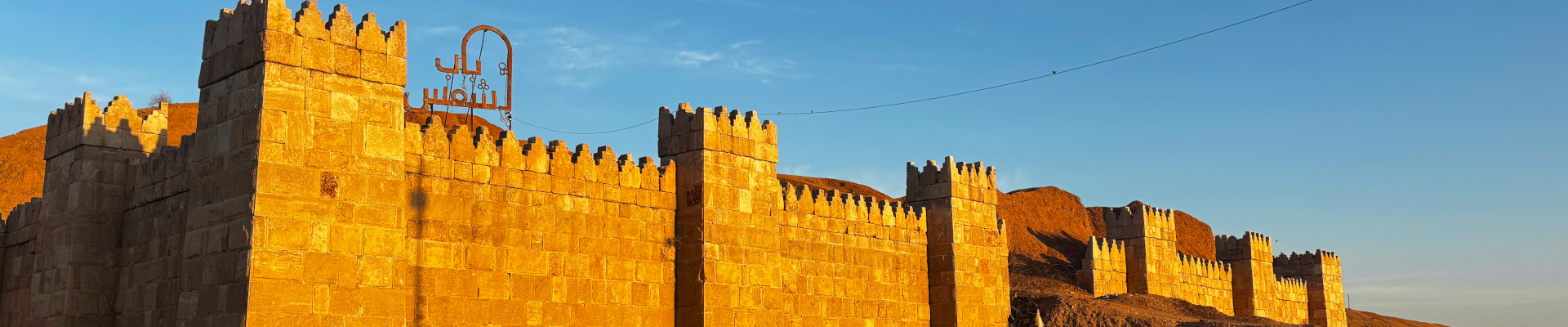
Shamash Gate at Nineveh, Iraq.

Final Week: October Webinar Challenge

Each year, ASOR offers a series of fascinating Friends of ASOR webinarsthat are free to the public. In order to keep this program running and make sure webinars stay free and accessible for all, ASOR needs to raise $10,000 every fiscal year. This year, two anonymous donors have generously pledged $3,000 in matching gifts to support the webinars. That means for every gift you make between now and November 26th, these generous donors will match your gift one-to-one until we hit $3,000.

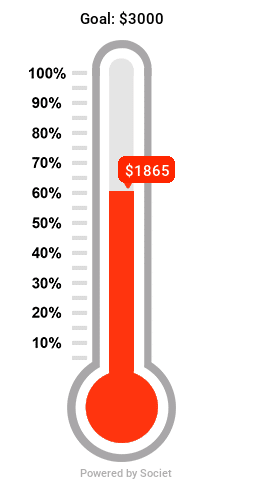
Thanks to everyone who has donated thus far. As of November 24, we are at $1,865 of our $3,000 goal. There’s still time for you to have an impact by making a gift today.

Be a part of ensuring webinars like these continue to be available for all. 100% of your gift will go towards supporting FOA Webinars. Make your gift today to help ASOR meet the Webinar Challenge. Please select “Webinars” from the dropdown menu.


OTHER WAYS TO DONATE

DONATE BY PHONEDONATE BY MAILMAKE A PLEDGE
(DONATE LATER)
Call ASOR:
703-789-9229
ASOR
209 Commerce St.
Alexandria, VA 22314
E-mail ASOR


Fieldwork Report: Andrew Rivadeneira

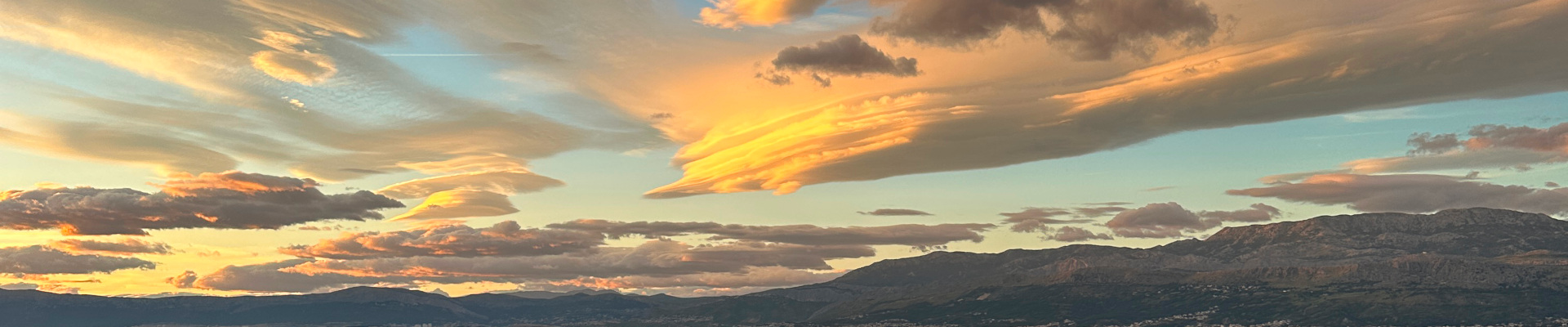
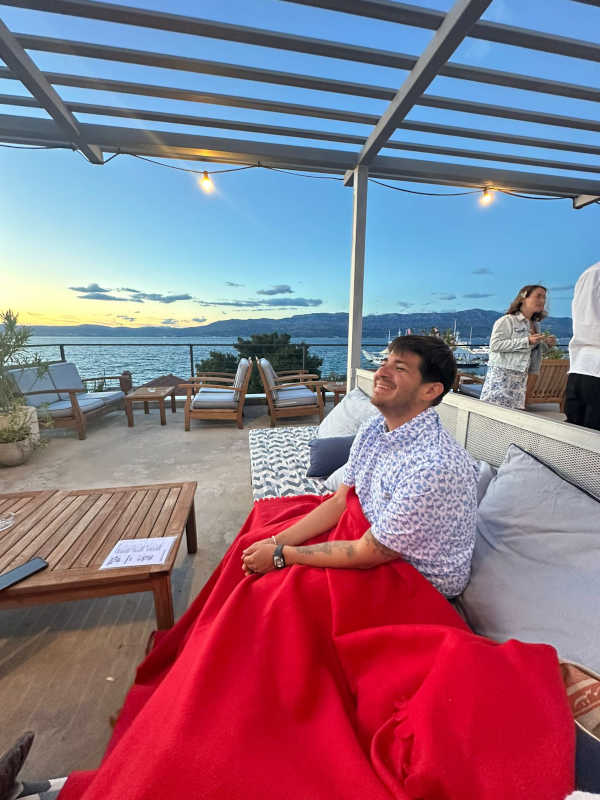
Sunset at Brac Island Croatia

Floating in the Adriatic

Andrew Victor Rivadeneira, 2025 Katherine Barton Platt Fieldwork Scholarship Recipient 

After 3 years of excavations at the hillfort Gradina Rat on Brač Island in Croatia, this year was a study season. The site is about an hour ferry ride from Split on the mainland. Gradina Rat has a long history of occupation from the Bronze Age through the 19th century. The focus this season was on analyzing and cataloging artifacts previously excavated, instead of on uncovering new material. As researchers, we focused on the processing of the finds and started to build a clearer picture for the function of the site for reports and publication. This was my third year as part of the project and second as a staff member. My role was to aid in processing archaeobotanical samples and help with the field reports.

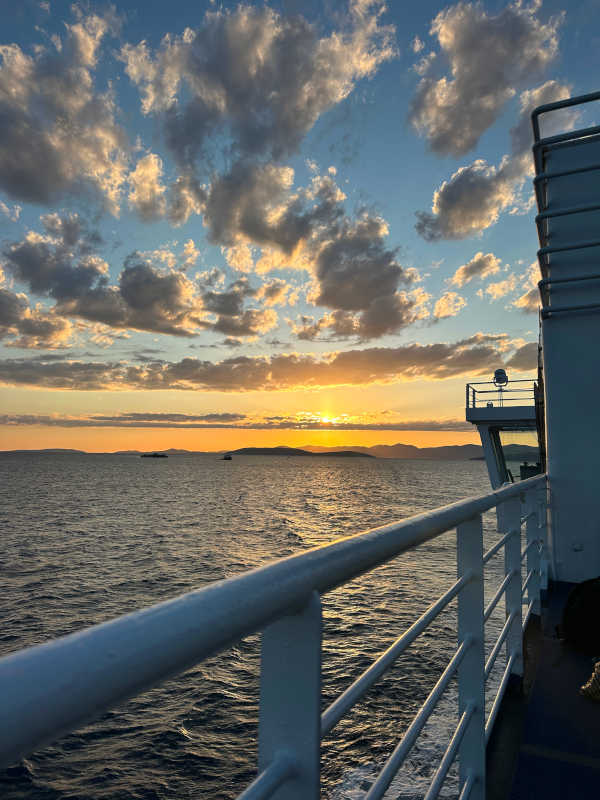
Views from the ferry boat going from Split to Supetar on Brač.

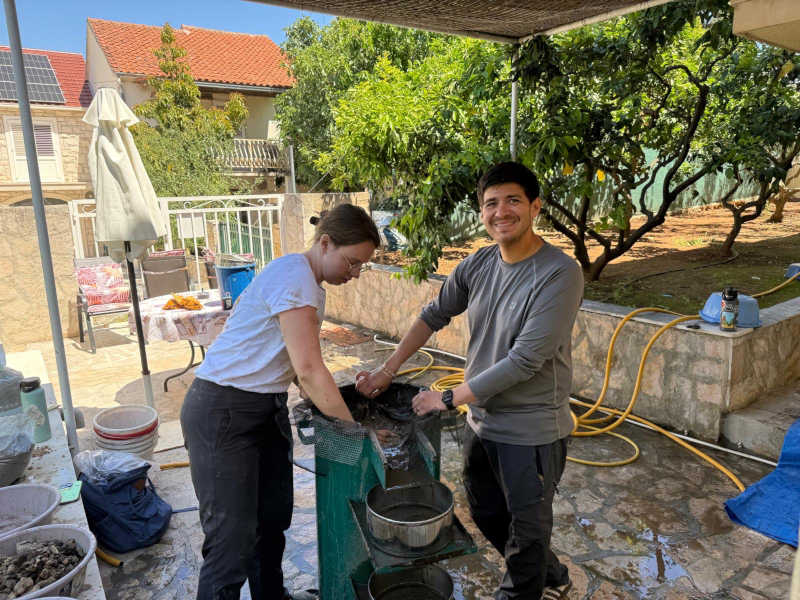
Flotation is a key archaeological method for recovering small scale artifacts such as seeds, charcoal, and fish bones from sediment. These smaller materials are hard to see during excavation of the deposits. Yet their low density allows them to float and become more visible in water, hence the flotation method. Samples were taken from each context after the modern layers and kept separated throughout the process. We used a full-sized metal water sieve device that was loaned from the University of Zadar for the last two field seasons. The drum was filled with water near the bottom, and then soil was poured from the top over the mesh in the drum. The mesh allowed the dirt to pass through while keeping larger material on the top of the mesh, and for the smaller material to float. The floating material and water then were slowly pushed out of an opening near the top of the drum. There were two different sized micro mesh trays that would then catch the material while allowing the water to filter through and out of the device. Afterwards the collected micro material was dried and later sorted.

Floating a soil sample with my colleague Hannah Hungerford.
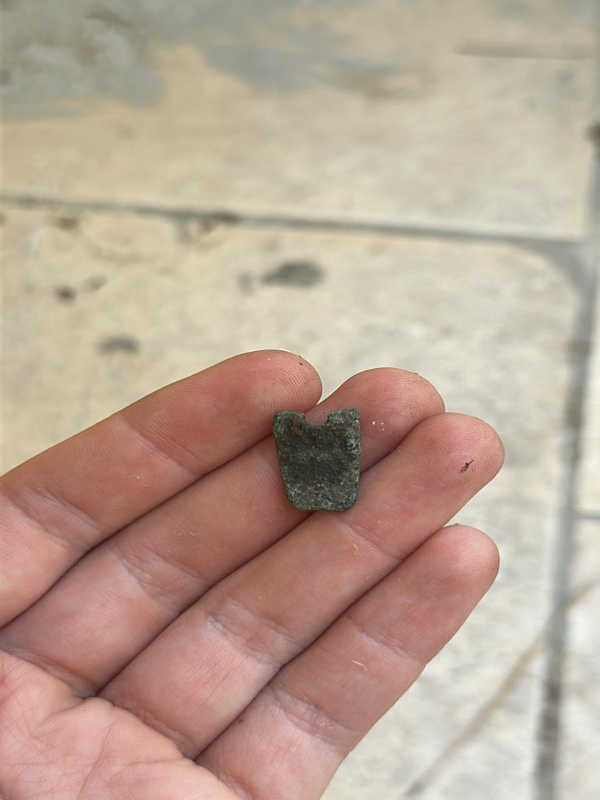
Piece of metal found during flotation.

Sorting the floated material proved a meticulous and at times painstaking process.  Once dried, samples were transferred onto plastic trays, and then tweezers were used to separate tiny seeds, charcoal, bone, and shell. Trying to distinguish this material from compact dirt or rocks was another challenge especially for seeds. The material then was treated separately, seeds were saved for our archaeobotanist to study to help get a better understanding of possible diet, agriculture, and environment. Fish bones and scales were of particular interest when found since they are so small, and this method is one of the best ways to find them. Other bones are often too shattered and small to be identifiable in most instances to be particularly useful. Larger material gathered from the top mesh were sherds of ceramics, lithics, and metals. Sorting the top mesh was much easier and partially done during flotation.

Spending a night out with the team after the work week.

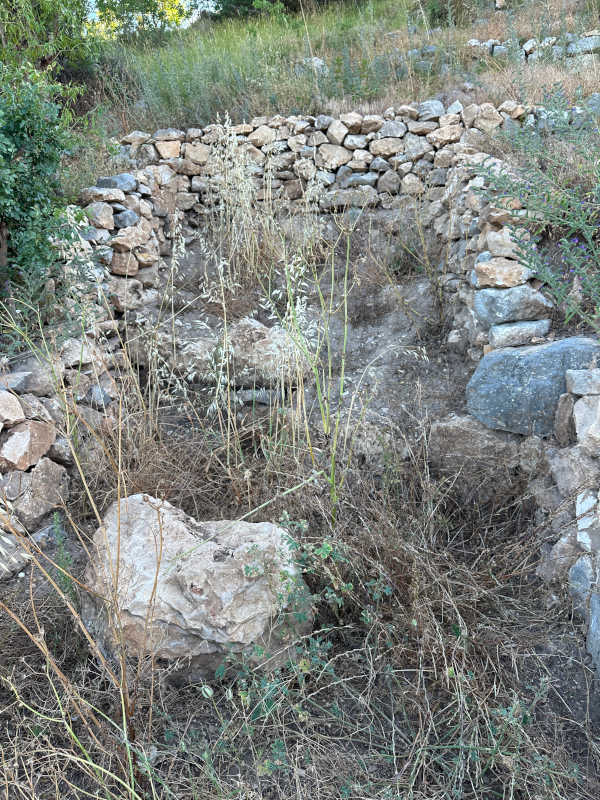
Working on this project has been extremely rewarding personally and professionally. There is still much to discover and understand about Croatian archaeology. This site provides a fascinating component in helping us understand something about the past. A portion of an early fortification wall was found on the terraced hillside, and there are plans to try to preserve it for the public. There appear to be other signs of domestic structures on the hilltop and slopes, and there is evidence for trade—both locally and abroad—with other Mediterranean civilizations for over a thousand years. The complete story of this site still needs further investigation, though for now we must work with what we currently have. Hopefully this site will soon be accessible to hikers and bikers with signage directing people to the prehistoric wall as part of a Croatian state conservation project!

Preliminary preservation of section of an early fortification wall.

Andrew Rivadeneira is a second year PhD student in Anthropology: Archaeology of the Mediterranean World at the University of Arizona. His research interests are in migration and entanglement in the central Mediterranean, digital/cyber-archaeology, and ways of bringing the ancient world to modern people.

Want to help more students and early career archaeologists get into the field? Donate to the cause today by selecting “Fieldwork Scholarships” as your gift purpose!

Collections Fellowship Report: Erin Darby

Missing Ritual Objects from the Nelson Glueck Excavations of Kheleifeh in the ASOR Archives at the American Heritage Center

Erin Darby, University of Tennessee, 2025 Study of Collections Fellowship Recipient

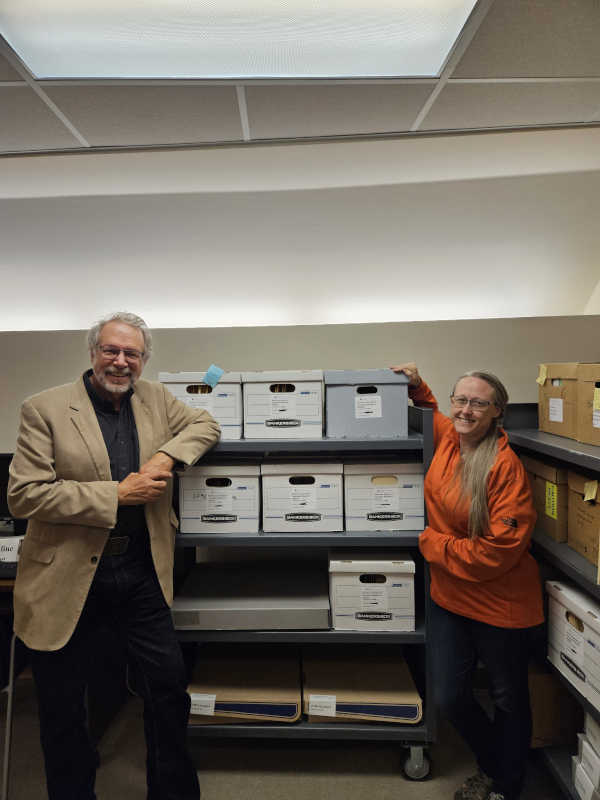
Paul Flesher, American Heritage Center

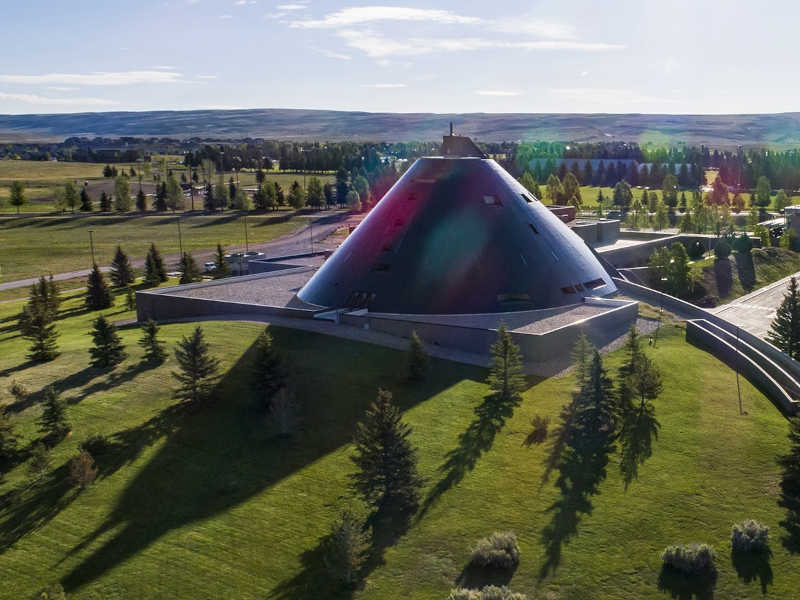
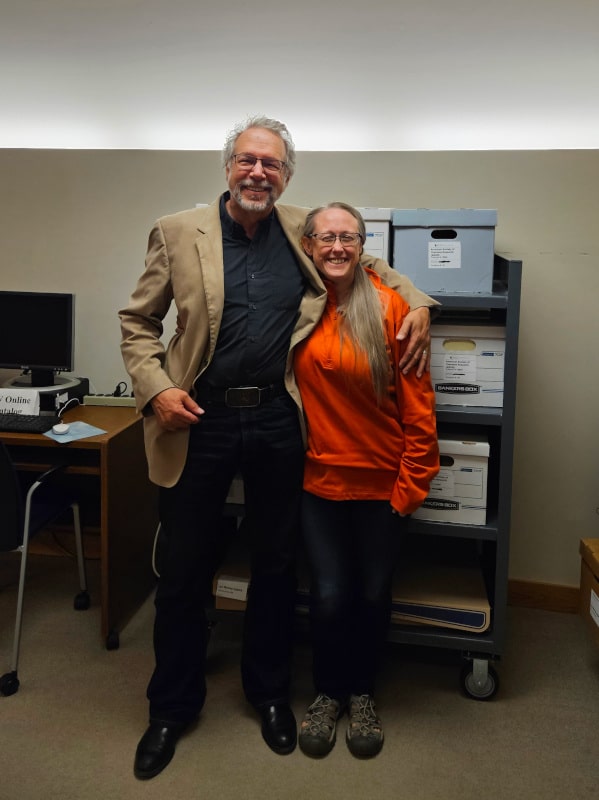
You never know where in the world Near Eastern archaeology will take you! Erin Darby’s 2025 ASOR Study of Collections Fellowship took her to Laramie, Wyoming where the American Heritage Center (AHC) houses the American Society of Overseas Research (ASOR) Archives (1900-2023) at the University of Wyoming. Since 2022, the AHC has been the caretaker of this important repository that includes not only documents associated with the history of ASOR but also several collections of records from American-led excavations from the early twentieth century. In her particular case, Erin was on the hunt for unpublished religious artifacts from the Nelson Glueck excavations at Tell el-Kheleifeh.

Paul and Erin with the Tell el-Kheleifeh records from the ASOR Archives in the AHC.

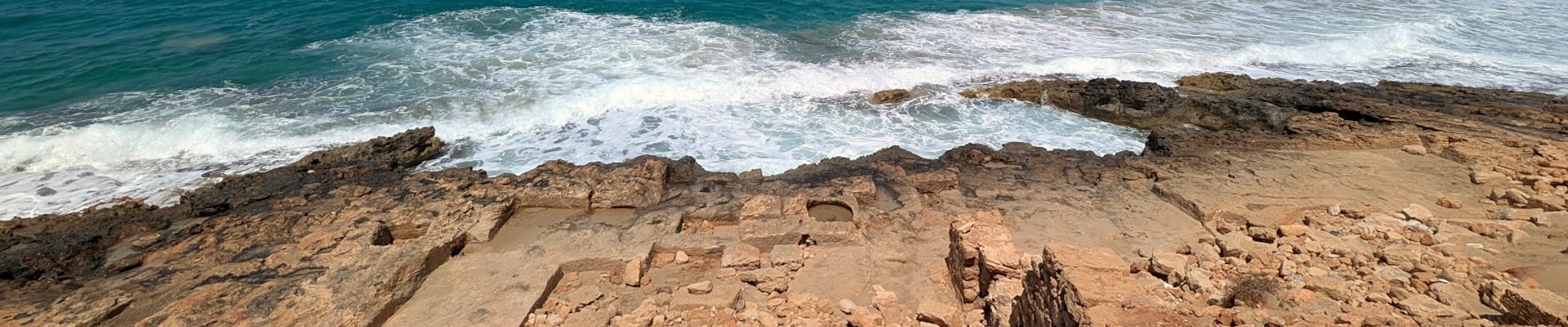
Kheleifeh plays a prominent role in attempts to understand the geopolitical organization of southern Israel and Jordan, particularly in the Iron IIB-C. Since its excavation in 1938-1940, scholars have been interested in whether the site was controlled by the Israelites, Judahites, Edomites, unaffiliated tribal communities, or the Neo-Assyrian and Neo-Babylonian Empires. When it comes to the study of cultic artifacts, however, Kheleifeh is most notable for its absence from the conversation.  With the support of AHC staff this past June, Erin was able to excavate a number of unpublished artifacts from the archive and create a database of cultic remains from the site. Owing to the importance of the collection, the University of Tennessee and the AHC are teaming up this coming year to digitize the site’s artifact registration lists so that scholars from anywhere in the world who are interested in the objects from Kheleifeh will be able to identify the relevant records in the AHC holdings.

The American Heritage Center at the University of Wyoming.

Tell el-Kheleifah is only one of several sets of excavation records in the AHC’s ASOR archives. The collection also holds materials from: Khirbet et Tannur, Dibon, Issawiya, Jerash, Nippur, Beth-Zur and Carthage, as well as small holdings of records from Jerash, Lehav and Tell Hesban, and others. (In general, note that artifacts, as opposed to records, are held by Harvard University’s Museum of the Ancient Near East.)  There are several collections of Middle East photographs, with the earliest from 1875. Other sections of the collection hold records of past ASOR presidents, including those of W.F. Albright, Nelson Glueck, G. Ernest Wright, Carl Kraeling, Paul Lapp and William Dever. And of course there are ASOR administrative materials from across the decades, including records of ASOR committees and awarded grants. Overall, the American Society of Overseas Research collection holds 180 cubic feet of materials plus 155 GB of digital copies.

The American Heritage Center is an excellent home for the ASOR collection. Even though it is one of the ten largest non-government public archives in the USA and so is large enough to have the resources to look after the collection, it is small enough to care about all its collections and to look after each patron personally. The AHC has a number of services that enable scholars to access the ASOR collection. Laramie, Wyoming, the home of the American Heritage Center, is less than a three-hour drive north of Denver, or just 30 minutes by plane. Start planning a trip by consulting the finding aid for the ASOR collection, readily available online, and then request materials ahead of time from the Reference Services Department (AHCref@uwyo.edu, 307-766-3756).

Collection materials can also be accessed remotely. The Center’s Reference Services department can easily be contacted to answer remote inquiries. (Recently, we looked up old municipal records for the Albright Institute in Jerusalem.) The AHC has a large digitization lab and can digitize collection materials at cost. Finally, the Center has the RRAD program (Remote Research and Discovery) that matches a researcher with a research assistant via Zoom and document camera for a nominal cost. This enables researchers to look through collection materials remotely and identify materials they wish to study. These can then be digitized for more careful examination. The AHC looks forward to helping archaeologists and other scholars from around the world to research its historic ASOR collection.
The URL for the ASOR collection finding aid is: https://archiveswest.orbiscascade.org/ark:80444/xv346099?q=ASOR#overview.

2025 Nominees for ASOR Board Elections

2025 NOMINEES FOR ASOR BOARD ELECTIONS

Trustee Nominations Committee has selected six highly qualified members to stand for election for four open positions on the Board of Trustees. The Board sets the direction for ASOR and provides oversight for our organization. Among other responsibilities, members of the Board agree to attend two meetings each year, to participate thoughtfully in the governance process, and to contribute financially to ASOR.

There are four candidates running for two openings as Membership-elected Trustees for 3-year terms (Sarah Kielt Costello, Ido Koch, Nadine Panayot, and Yorke Rowan). There are two candidates for two openings as Institutionally-elected Trustees for 3-year terms (Kathryn Grossman and Michael Hasel). All ASOR members are eligible to vote in the Membership-elected Trustee Election, while only Institutional Representatives of the 60 ASOR-member schools may vote in the Institutionally-elected Trustee Election. Missions and brief biographies of the nominees will be available in the ballot.

ASOR will conduct the elections by online ballot, and all members and Institutional Representatives will receive the appropriate ballot(s) via email on or around October 16, 2025. We will send out two reminders, and all ballots must be completed by 12:00 PM Eastern Time on Monday, November 17. If you have difficulties completing the online ballot (once they are distributed), please contact Marta Ostovich at programs@asor.org.

Nominees for Membership-elected Trustees
(two to be elected)

 
Sarah Kielt Costello

Sarah Kielt Costello (MA Classical and Near Eastern Archaeology, Bryn Mawr College; Ph.D. Anthropology, Binghamton University) is Professor of Art History at the University of Houston – Clear Lake, a Hispanic-serving regional university dedicated to educating a broad community of scholars, including first-generation, working-class and incarcerated students. She has won two University-wide teaching awards and a University Faculty Fellowship in recognition of exemplary teaching, research and service. At UHCL, she has served in leadership roles including Department Chair and Faculty Senate Executive Committee, in which she oversaw the creation of an equitable workload policy for faculty. She has been active in archaeological fieldwork since 1995, working in Israel, Turkey, Greece, and Cyprus. In her research, Costello specializes in seals and related artifacts; ethics and museum practices; Neolithic imagery; and archaeological theory. Her recent publications include Ethics in Archaeological Practice (AASOR 2024) and Object Biographies, Selections from the Art of the Ancient World in the Menil Collection (Menil/Yale 2021), a volume that takes on the ethical challenges of unprovenienced museum collections.

Mission Statement: In the nearly 30 years that I’ve been involved with ASOR, I’ve seen its membership grow significantly and its members develop far-ranging research agendas. In recent years, ASOR members have forged research pathways into areas such as cultural heritage, sensorial archaeology, climate, bioarchaeology, and ancient dress, and have been on the forefront of developing cutting edge digital and technological approaches to archaeology. Geographically, ASOR has had the opportunity to expand beyond its traditional emphasis on the archaeology of the Bible Lands as its members have engaged in projects in Central Asia, Kurdistan, Egypt, and the Gulf states. It is vital that ASOR continue to embrace new areas of research, and at the same time, confront the ethical challenges of our time by setting agendas and policies that support best practices. Challenging political times put ASOR members in the middle of contentious issues; as a Trustee, I would help maintain our focus on our shared interests in research and stewardship of the past, and the important relationships that sustain that work.

 
Ido Koch

Ido Koch is Associate Professor in the Department of Archaeology and Ancient Near Eastern Cultures at Tel Aviv University. A field archaeologist of the southern Levant, his research explores interregional connectivity, colonial encounters, visual language, craft, and material religion. He is the author of several monographs, dozens of articles, and co-editor of ten volumes. Koch co-directs the Tel Hadid Archaeological Project, the renewed excavations at Tel Qasile, and the final publication of the Tel Arad excavations—all of which place strong emphasis on innovative documentation strategies, community outreach, and the dissemination of archaeological knowledge to diverse audiences. He is co-PI of several collaborative ventures, including the historical–archaeological study of the depopulated Palestinian village of al-Haditha (one of the few academic archaeological projects addressing the recent past of Israel/Palestine), and the Stamp Seals from the Southern Levant Project together with its comprehensive open-access online companion database. Koch also serves as Editor-in-Chief of Tel Aviv: Journal of the Institute of Archaeology of Tel Aviv Universityand sits on several international editorial boards. Through his research and teaching, he integrates advanced digital tools with inclusive, community-based approaches, engaging both Jewish and Arab students, to help build inclusive and forward-looking connections between academic, archaeological, and wider communities in the study of the southern Levant.

Mission Statement: I have been a member of ASOR since 2009, have attended nearly all annual meetings since then, and have interacted with scores of ASOR members of all ages and backgrounds. ASOR has been my professional cradle and the place where I learned to appreciate the value of an international network, a value I hope my students will inherit.

As a scholar based in the Middle East, I believe ASOR must strengthen the representation of voices from the regions it studies. The societies who live in the lands whose pasts we uncover deserve a place in shaping how that past is researched, understood, and represented. As an Israeli archaeologist working on the remote and recent past of the southern Levant, I am acutely aware of the region’s diversity and complexity. Based on my experience, ASOR and its sister institutions (such as the W.F. Albright Institute) are uniquely positioned to foster dialogue between Israeli and Palestinian scholars, a dialogue urgently needed now more than ever. I see my role as a bridge: between ASOR and local scholarly and cultural communities, and between those communities themselves. In times of deepening divisions, we must hold fast to both our professional and human ties. In my fieldwork and collaborations, I strive to create spaces where Jewish and Arab students, alongside colleagues from different backgrounds and perspectives, can work together toward shared understanding. Archaeology can and should serve as a medium of dialogue, and as a reminder of our intertwined pasts and shared humanity.

Drawing on my experience directing and co-directing field projects, I recognize the need for ASOR to advance ethical, inclusive, and community-oriented archaeology. I propose developing a collaboratively produced “fieldwork toolkit,” drawing on the collective knowledge of ASOR-affiliated projects. This toolkit would guide projects that prioritize community engagement, the dissemination of results to local institutions, and accessible digital platforms for sharing data. Through such initiatives, I hope to help ASOR lead by example—making archaeology both academically rigorous and socially meaningful.

 
Nadine Panayot

Nadine Panayot is an archaeologist currently serving as Curator of the Archaeological Museum and Associate Professor of Practice at the American University of Beirut. A graduate of Paris 1 Panthéon-Sorbonne, she specializes in the heritage of the Classical Mediterranean, with over three decades of fieldwork across Lebanon and Southwest Asia. Her work focuses on the intersection of archaeology, cultural preservation with a growing emphasis on digital technologies, and community engagement.

Previously, she chaired the Archaeology and Museology Department at the University of Balamand, where she established a Master’s program in Museum Studies and Cultural Heritage Management and co-founded the Ethnographic Museum. She has curated numerous exhibitions and interdisciplinary events, both locally and internationally, emphasizing inclusive practices, accessibility, and cross-cultural dialogue. Following the 2020 Beirut port explosion, she led the restoration of AUB’s shattered glass collection, recognized with the 2023 Nigel Williams Conservation Award (Runner-Up).

A committed advocate for community-led conservation, she directs the Hima Anfehreserve and serves on several scientific and advisory boards. A member of ICOM since 1992, she has held leadership roles in national and regional committees and currently presides over the working committee of the UNESCO National Commission while also serving on the Scientific Committee of ALIPH. In 2023, she was named Chevalier des Arts et Lettres by the French Ministry of Culture. Through her teaching, curating, and policy work, she positions museums and heritage sites as agents of resilience, healing, and social cohesion.

Mission Statement: I am committed to advancing ASOR’s mission of promoting inclusive and rigorous scholarship, safeguarding cultural heritage, and sustaining open, evidence-based inquiry that transcends political and ideological boundaries.

The protection and study of cultural heritage is not only an academic responsibility but an essential ethical imperative. The recent and ongoing destruction of heritage, represents an irreparable loss to humanity, erasing material witnesses to identity, history, and memory. Acknowledging such losses, and working collectively to prevent them, aligns with ASOR’s foundational mission to document, preserve, and interpret the human past. Upholding this principle reaffirms our shared commitment to dignity, justice, and cultural continuity, and reminds us that heritage protection is inseparable from the recognition of our common humanity.

Equally vital is ASOR’s dedication to intellectual integrity and freedom of thought. Scholarship reaches its highest potential when guided by evidence, methodological rigor, and openness to diverse perspectives. When inquiry becomes constrained by ideology, it compromises its ability to engage with complexity and nurture genuine understanding. ASOR’s continued vitality will depend on its capacity to sustain spaces where thoughtful analysis and open dialogue can thrive, uniting scholars and institutions across diverse traditions.

As a Membership-Elected Trustee, I would work to broaden equitable participation, re-engage scholars from Southwest Asia, and Africa and strengthen collaborative and digital initiatives that enhance accessibility, exchange, and trust; ensuring that ASOR remains a beacon of principled, inclusive, and forward-looking scholarship.

 
Yorke Rowan

Yorke Rowan is an anthropological archaeologist and Research Professor at the Institute for the Study of Ancient Cultures (formerly the Oriental Institute) at the University of Chicago. He focuses on later prehistory (Late Neolithic, Chalcolithic, and Early Bronze), with thematic research interests in death, prehistoric ritual performance, and material objects mediating these human actions. He is a Fulbright Scholar to Jordan and a NEH Fellow at the W.F. Albright Institute for Archaeological Research in Jerusalem and the American Center of Research in Amman. His most recent publications include The Social Archaeology of the Levant: From Prehistory to Present (2019, Cambridge Press, co-edited with A. Yasur-Landau and E. Cline), “Desert Kites: Neolithic Infrastructure in the Margins” in Infrastructure in Archaeological Discourse: Framing Society in the Past (2024, Routledge, co-authored with A. C. Hill) and “The Black Desert Drone Survey: New Perspectives on an Ancient Landscape” in the journal Remote Sensing (2022) with A.C. Hill. He co-directs the NSF funded Kites in Context and Eastern Badia Archaeological Projects, two projects in the Black Desert of Jordan.

Mission Statement: Since the 1990s, ASOR has been fundamental to my development as a professional scholar and field archaeologist. The first grant I received for field research was an ASOR travel scholarship, and the first national professional paper I delivered was at ASOR in New Orleans. I have a long dedication to the success of ASOR, serving on the editorial boards of Bulletin of the American Schools of Overseas Research and Near Eastern Archaeology, co-chairing the Program Committee after for two previous terms on the committee, serving on the Honors and Awards Committee, and the Committee on Archaeological Policy. In addition, I co-chaired and co-organized various sessions such as the standing session “Prehistoric Archaeology” (2015, 2019-2021) and the member organized “Archaeology of Religion and Ritual” (2005-2006). My involvement with ASOR is complemented by extensive engagement with communities on the ground in different countries, emphasizing my commitment to creating more collaborative opportunities with colleagues based abroad.

The organization has grown tremendously since I joined as a graduate student, with a welcome expansion to include a broader range of topics, geographic regions, and chronological periods. This growth is not limited to scholarly interests but includes increased worldwide accessibility through a hybrid meeting format. I believe it is important to sustain and build on this positive trend to build membership, engage with members at different career stages, and seek to find new collaborative partnerships that will only strengthen ASOR. As ASOR faces new challenges like complicated funding realities, regional civil unrest, and climate change, the organization must mount new initiatives and endeavors to respond to member needs. As a member of ASOR’s Board of Trustees, my goal will be to promote its mission to disseminate knowledge of western Asia and Mediterranean ancient societies, and to make that scholarship more accessible to the public. Finding creative ways to promote our research, particularly those of our research partners, to a variety of audiences is a challenge that will strengthen our organization and continue to interest future generations of students, the public, and scholars.

Nominees for Institutionally-elected Trustees
(two to be elected):

 
Kathryn Grossman

Kathryn Grossman is Assistant Professor of Anthropology in the Department of Sociology and Anthropology at North Carolina State University. She is an archaeologist with expertise in the Chalcolithic and Bronze Age cultures of Cyprus and Mesopotamia and a methodological specialty in zooarchaeology. She is Director of the ASOR-affiliated Makounta-Voules Archaeological Project (Cyprus), as well as zooarchaeologist for the Kani Shaie Archaeological Project (Iraqi Kurdistan), the Wadi el-Hudi Expedition (Egypt), and the Petra North Ridge Project (Jordan). She is currently co-editing, with Jesse Casana and Eric Jensen, the final report on the excavations at Tell Qarqur, Syria.

Mission Statement: I have been involved with ASOR for seventeen years. I began attending and presenting at the annual meeting as a graduate student, and my engagement has deepened over time. I served on the Committee on Archaeological Policy for two terms, and during that time I also chaired the CAP Fellowships Subcommittee. In 2018, I presented the work of the Fellowships Subcommittee at that year’s Legacy Dinner, and in 2023 I received an ASOR Service award for my work on the CAP Fellowships Subcommittee. I chair the Archaeology of Syria sessions at the Annual Meeting, am a member of the Damascus Committee, a member of the Executive committee, the chair of the Trustees Nominations Committee, and I serve as the institutional representative for ASOR at North Carolina State University. In my time as an ASOR member, I have watched the organization grow dramatically in its geographic scope and evolve to meet the demands of 21st-century scholarship. In serving as an Institutionally-elected member on the ASOR Board of Trustees, I look forward to helping ASOR move forward with the issues that loom before us, including increasing our outreach to diverse audiences at home and abroad, and promoting the preservation of tangible and intangible cultural heritage.

 
Michael Hasel

Michael G. Hasel is Director of the Institute of Archaeology and Lynn H. Wood Archaeological Museum at Southern Adventist University, where he also serves as Professor of Near Eastern Studies and Archaeology since 1998.

Hasel has participated and served in administrative capacities on eleven different excavations in the Middle East, including Gezer, Ashkelon, Dor, Miqne-Ekron, Masada, and Hazor, in Israel; Idalion, Cyprus; and Jalul in Jordan. He has directed excavations and surveys at Khirbet Qeiyafa and Socoh and currently is co-director of The Fourth Expedition to Lachish. As curator of the Lynn H. Wood Archaeological Museum, Hasel was responsible for planning and displaying art and objects from the ancient Near East in a state-of-the-art exhibit entitled “Vessels in Time: A Journey into the Biblical World” and several temporary exhibits including “Peace and War: The Assyrian Conquest of Lachish” (2023-2025) and “The Ivory Comb: Lice and Literacy at Lachish” (2025).

Hasel, an ASOR member since 1989, has chaired several ASOR sessions and served on the Agenda Committee. He held the Samuel H. Kress Fellowship at the W. F. Albright Institute for Archaeological Research (AIAR) in 1995-96 and a Fulbright at the Cyprus American Archaeological Research Institute (CAARI) in 2005 and the NEH Fellowship at the Albright Institute in 2025-26. He is also a fellow of the Institute for Biblical Research and Tyndale House, Cambridge.

Hasel joined the ASOR Board in January 2014.

Mission Statement: Over the past 36 years of my involvement with ASOR, I have watched ASOR grow into a strong society representing a wide variety of interests and research foci in the ancient Near Eastern and Mediterranean worlds. During that same period, I have been actively involved in excavations in Israel, Jordan, and Cyprus while also engaged in Egyptological research. As an excavator I am interested in encouraging the archaeological interplay between text and material culture. This integration has been one of the historic strengths of ASOR and I believe it remains vital as ASOR continues to position itself as an important and relevant voice to a large segment of North America. As a museum director part of my vision is to make our field relevant for future generations through popularizing archaeological discoveries and making it accessible to a larger segment of society. This would include encouraging young scholars who are searching for direction and belonging to get involved in ASOR while fostering connections in the regions it serves. To accomplish these goals, I would welcome the opportunity to continue to support and serve as a member of the Board of Trustees for another term.

FOA Webinar: Ory Amitay

FRIENDS OF ASOR WEBINARS

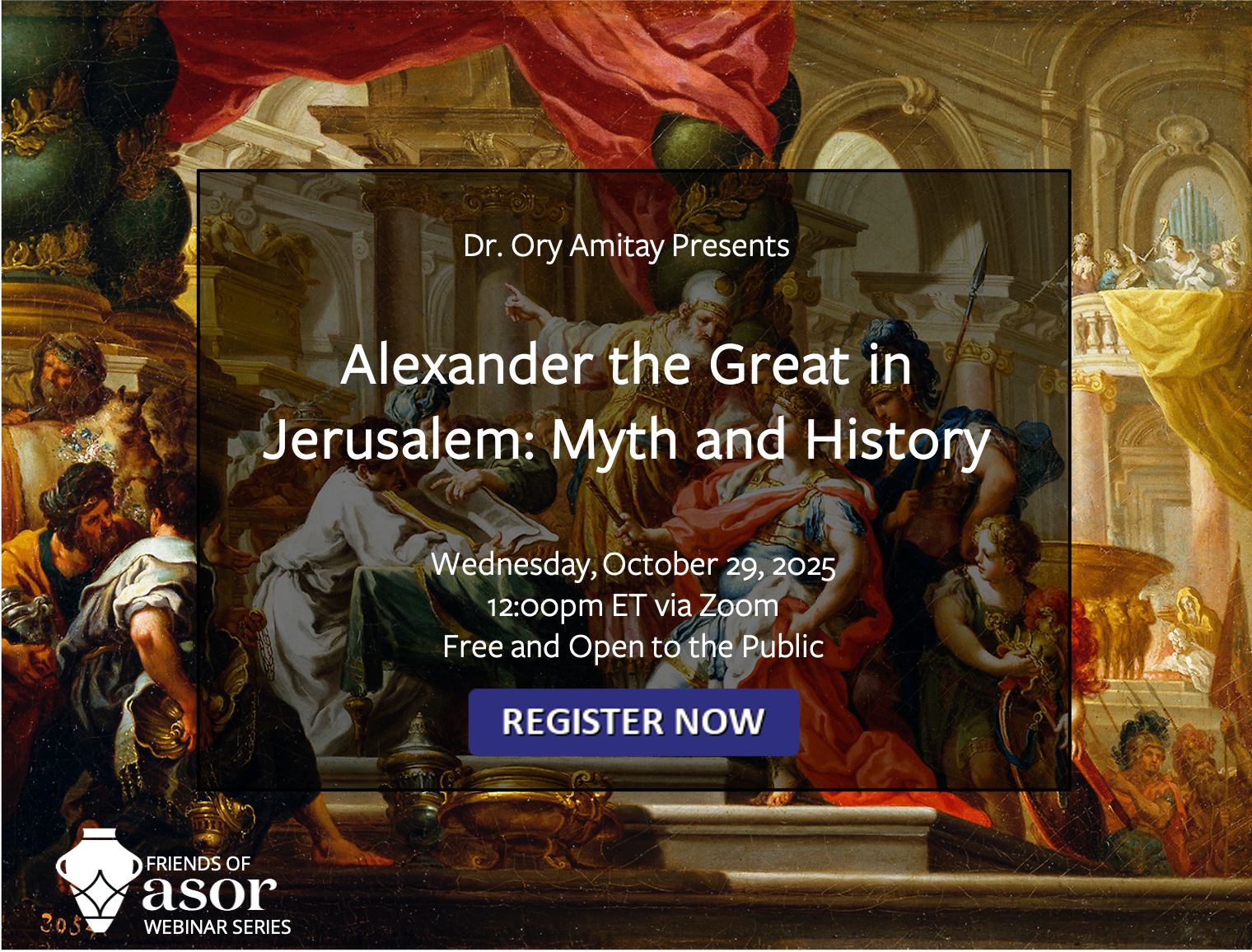
Alexander the Great in Jerusalem: Myth and History

Friends of ASOR present the next webinar of the 2025-2026 season on October 29, 2025, at 12:00 pm EDT, presented by Dr. Ory Amitay. This webinar will be free and open to the public. Registration through Zoom (with a valid email address) is required. This webinar will be recorded and all registrants will be sent a recording link in the days following the webinar.

The episode of Alexander’s visit to Jerusalem is familiar mostly through the story of Flavius Josephus. This version of the story dominates not only the public imagination but also scholarly discussion. It is generally assumed that Josephus’ story is derived from the earliest source(s) relating the story; it is consequently also the most often discussed in scholarship, mostly at the expense of any discussion of the other versions of the story. A main conclusion of Dr. Amitay’s recent book, Alexander the Great in Jerusalem: Myth and History (2025, Oxford UP), is that among the four different versions of the Alexander in Jerusalem story – which are quite different from one another – Josephus’ version is not the earliest but rather the latest, and clearly relies on two earlier versions. A second conclusion, which conforms with the consensus of previous scholarship, is that the story, in all its versions, cannot be regarded as history; it is a political myth. Therefore, rather than look in the stories for clues that might reveal some details about the history of Alexander, Dr. Amitay analyzed each of the stories for indicators that would reveal the respective contexts of their creation.

All these contexts taken together bring us to the third major conclusion, a common denominator that dominates the tradition as a whole: new stories of Alexander in Jerusalem (at least the ones that reached us) were born as a result of a major change in the relationship between the people of Judea and their foreign rulers. These major changes include the Seleukid takeover of the southern Levant, the first arrival of Roman arms in Judea, the abolishment of Judean kingship and the institution of provincia Judaea, and the rearrangement of Judea as an independent province after the destruction of the temple. Given the continued status of Judea as a province of some empire or other during the second temple period (Hasmonean period excluded), and the suddenness and totality of the change brought about by Alexander, it is small wonder that his arrival in Jerusalem became the subject of political myths dealing with major shifts in the relationship of Judea with its foreign rulers.

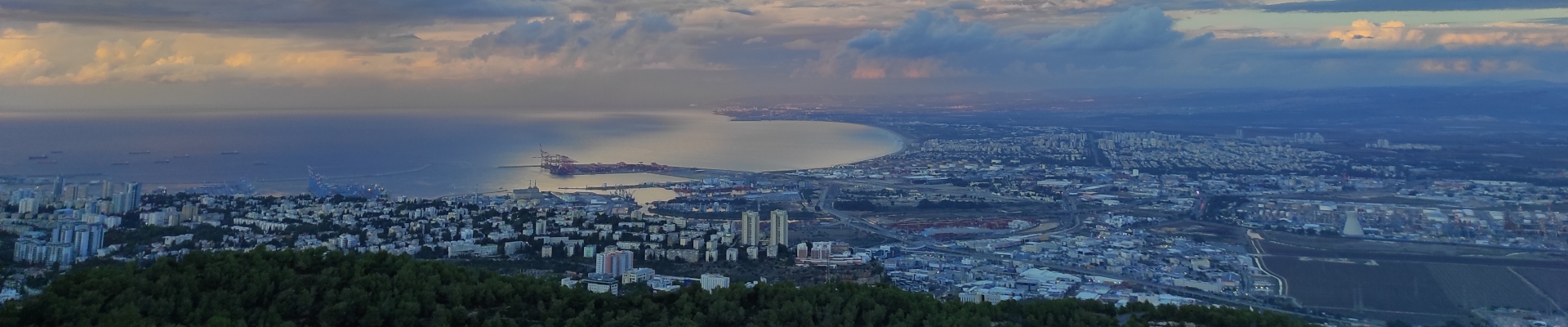
For the last twenty odd years, Ory Amitay has been teaching and conducting research in the University of Haifa. His research is situated at the intersection of two crossroads: one between myth and history, the other between various peoples of the ancient west. The topic of his new book, and of this lecture, is a clear example. Amitay’s main research strategy in analyzing historical (or rather pseudo-historical) myths is locating the obvious false factoids – parts of the story that are in blatant contradiction to known historical facts – and interpreting them not as the products of carelessness or ignorance, but rather as intentional fabrications. As such, they have both a context, where they make sense historically, and an agenda. The underlying assumption is that false factoids are fabricated with a purpose in mind. The goal is to identify both context and agenda.
In terms of teaching, Amitay has taught courses on the Hellenistic world; Archaic Rome; Imperial Rome; Athenian Democracy and Empire; Hellenistic History; Second Temple Judaism; Myth and History; and is the author of an online course called The Ancient West, treating the area from eastern Iran to the Atlantic, from the Neolithic Revolution to the age before the rise of Islam. He has also led field coursework in Rome and Athens.

SUPPORT THE WEBINAR PROGRAM!

Friends of ASOR is pleased to announce that the first webinars of the 2025-2026 season will once again be free and open to the public with a goal to raise $10,000 so that the entire webinar season will be free. Will you support this outreach effort with a tax-deductible contribution? All donors/sponsors with gifts of $100 or more will be recognized in subsequent webinars. This October, two anonymous donors have generously pledged $3,000 in matching gifts to support the webinars. That means for every gift you make between now and October 31st, these generous donors will match your gift one-to-one until we hit $3,000. Make your gift today and select “webinars” from the dropdown menu.

Designate your gift for “Webinars” in the drop-down menu.

Friends of ASOR Chicago Tour 2025 Recap

A Tour to Remember: Friends of ASOR in Chicago

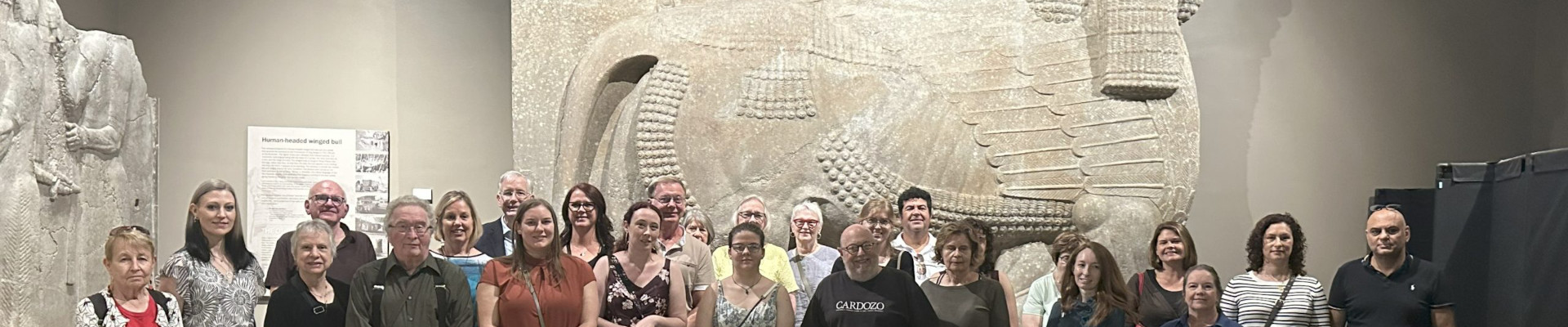
What a fantastic two days! Friends of ASOR gathered in Chicago for an adventure through some of the city’s most inspiring museums. With 30 participants, the energy and curiosity were more than contagious.

Day 1: ISAC & Megiddo: A City Unearthed, A Past Imagined

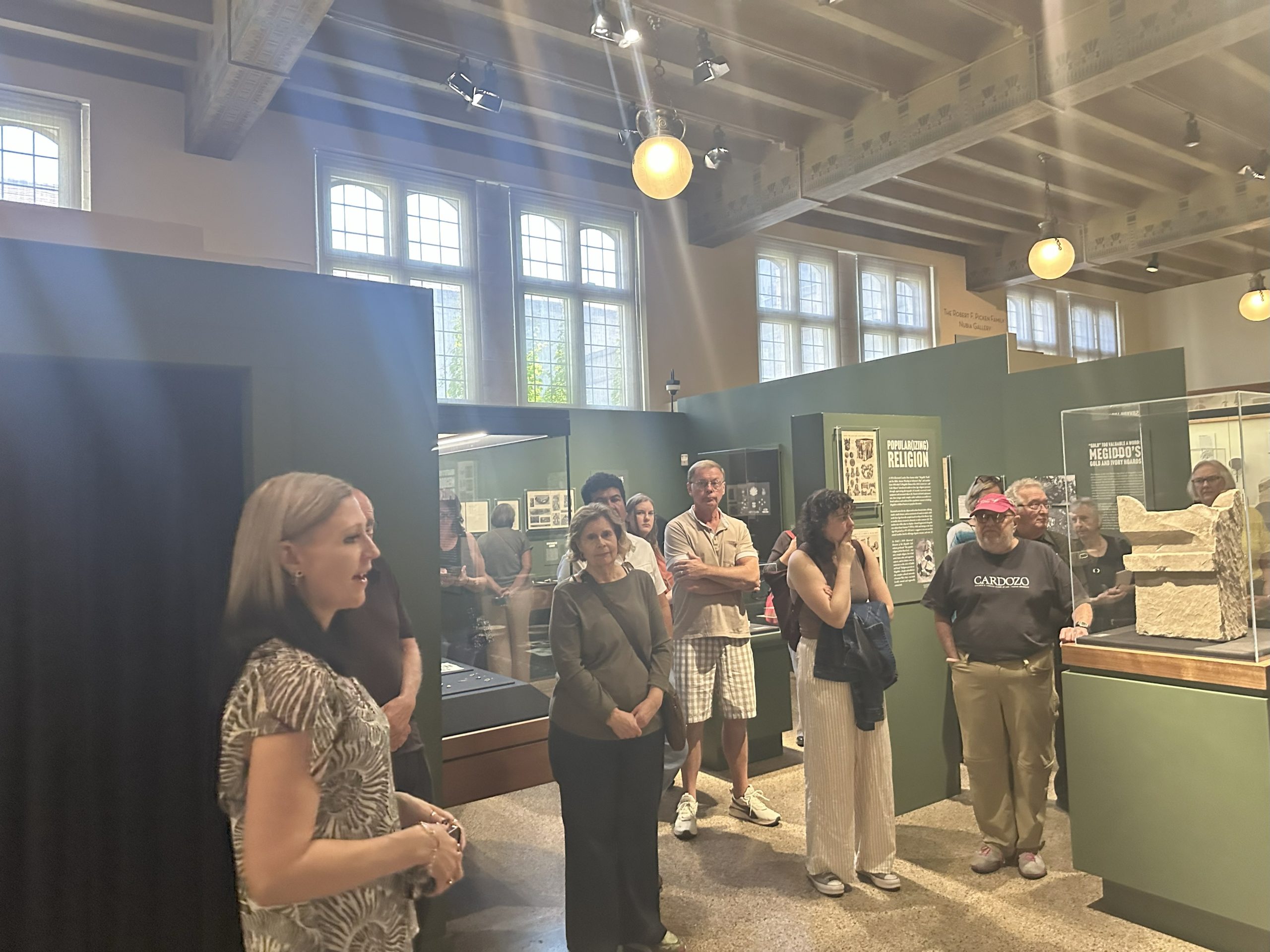
We kicked off at the Institute for the Study of Ancient Cultures (ISAC) with the special exhibition Megiddo: A City Unearthed, A Past Imagined, curated by Kiersten Neumann. Marking 100 years since ISAC’s first major Megiddo expedition (1925–1939), the exhibit highlighted archaeological finds, palaces, fortifications, and elite material culture, while exploring how Megiddo has been represented in newspapers, institutional ambitions, and cultural narratives, as well as the people behind the excavations.

From archival correspondence and press clippings to a contemporary art film by Nick Crowe and Ian Rawlinson, the exhibition encouraged us to think about how archaeology shapes cultural memory. Before we ended at the new exhibit, Kiersten guided us through the ISAC galleries, where we spent time with some of the museum’s most notable pieces. Highlights included the Mesopotamian section, where the Assyrian lamassu stands guard beside cuneiform tablets, and the Egyptian gallery, with its statues, vividly painted coffins, and temple reliefs.

Kiersten shared ISAC’s curatorial approach, emphasizing context and storytelling as central to presenting the ancient world. We also saw how the museum integrates digital tools and updated scholarship to bring fresh perspectives to familiar artifacts. By the end of our visit, it was clear that ISAC continues to evolve as both a research center and a space for public engagement with the ancient past.

A Walking Monument Tour

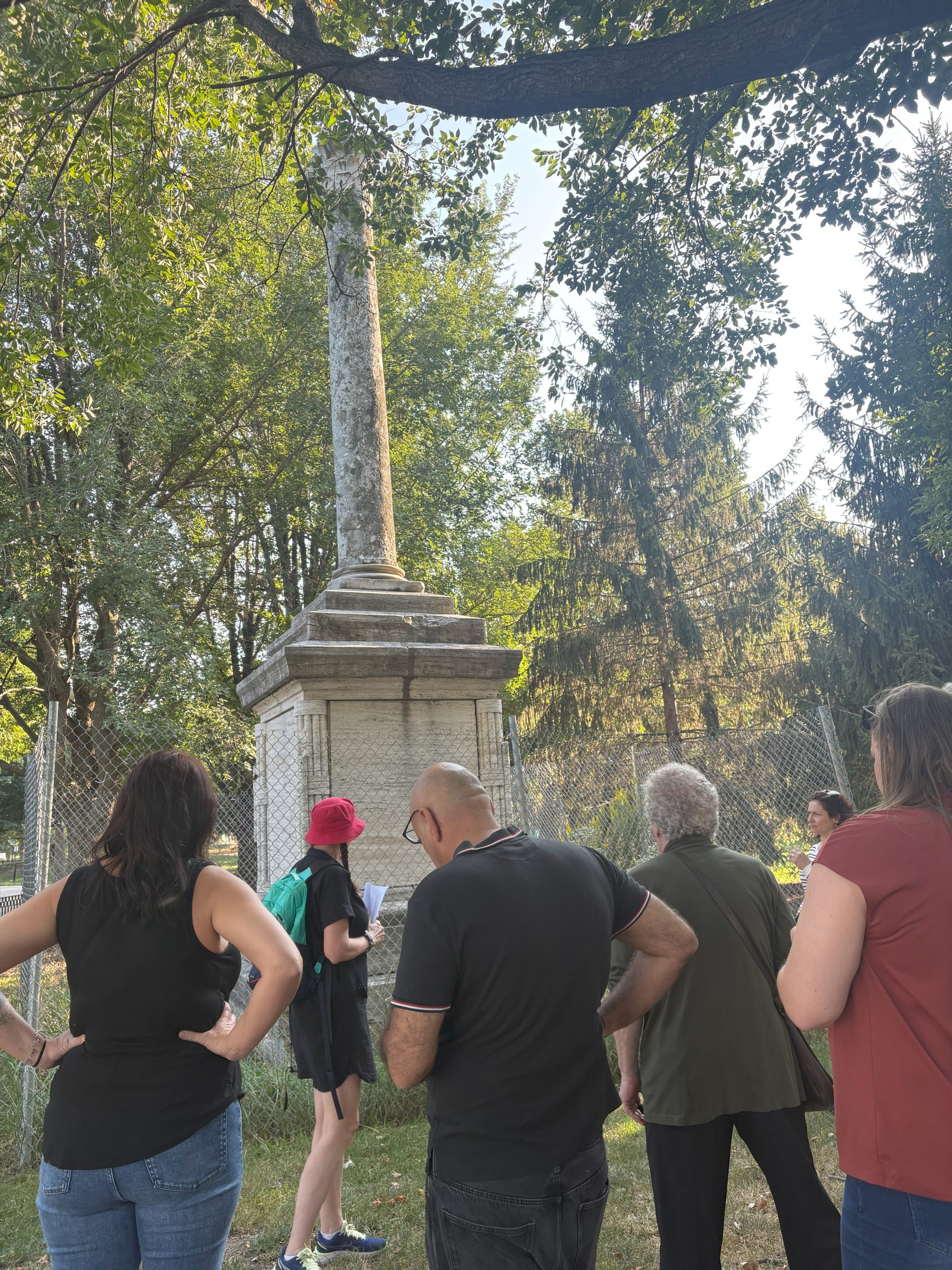
After the galleries, we hit the streets for a walking monument tour of Chicago with Dr. Morag Kersel. This tour offered a new perspective on public spaces that reflect the city’s history and identity.

Morag led us through downtown streets and parks, pointing out monuments, plaques, and architectural details that tell Chicago’s stories. We learned what these sites commemorate, the values they represent, and what they leave out. The tour sparked discussion about public memory and its impact on community identity.

Kiersten Neumann discusses her new exhibit at ISAC: "Megiddo: A City Unearthed, A Past Imagined", Sept. 18, 2025.
Morag Kersel brings the Friends of ASOR to the Balbo Monument during their walking tour of Chicago, Sept. 18, 2025.
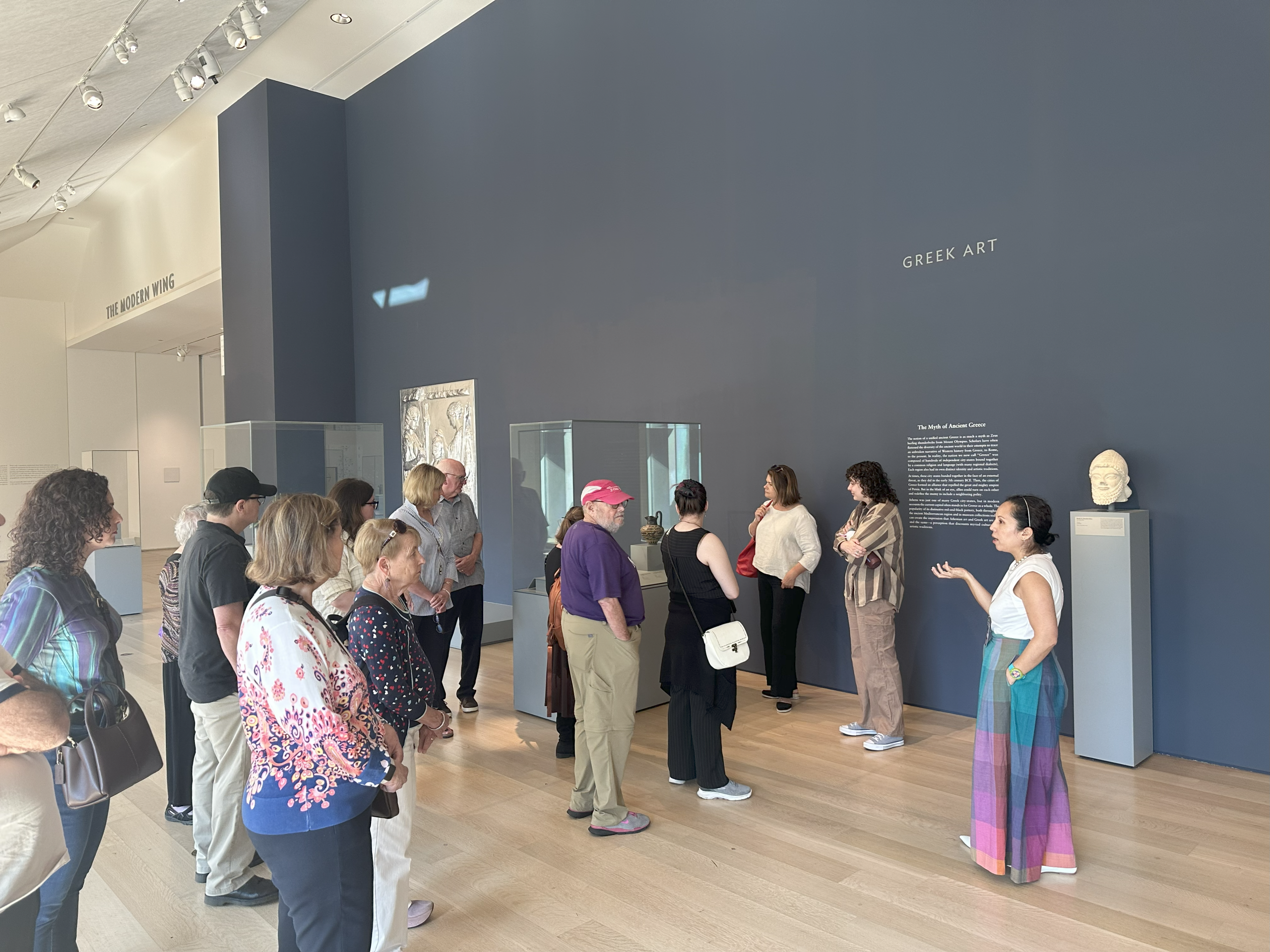
Lisa Cakmak explains the process behind the Greek, Roman, and Byzantine galleries at the Art Institute during the Friends of ASOR Chicago tour, Sept. 19, 2025.
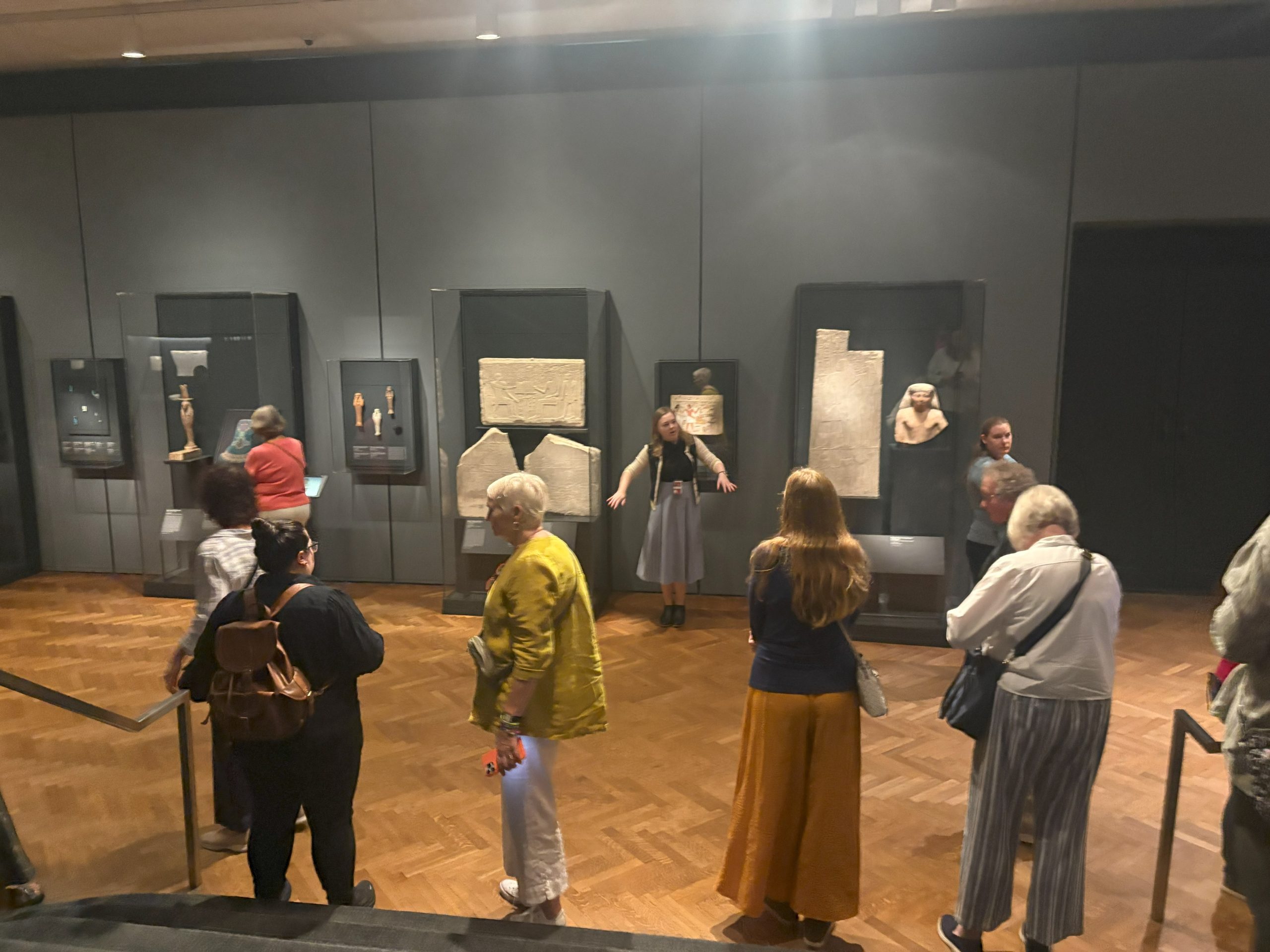
Ashley Arico shows off the Egyptian gallery at the Art Institute to the Friends of ASOR, Sept. 19, 2025.
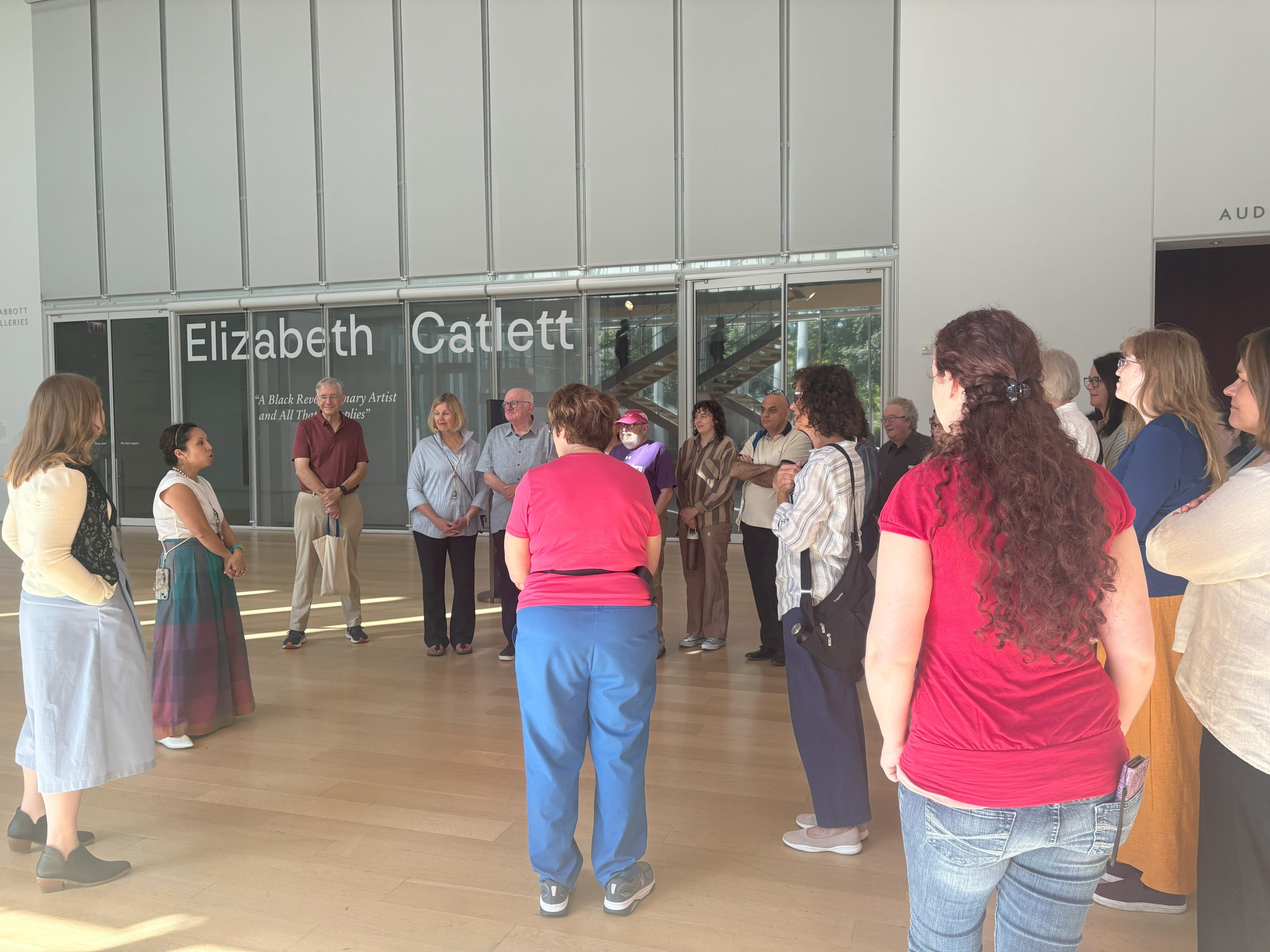
Art Institute Curators Ashley Arico and Lisa Çakmak speak to the Friends of ASOR group during their visit, Sept. 19, 2025.
Day 2: The Art Institute of Chicago

Day two began at the Art Institute of Chicago, where we explored Egyptian, Greek, Roman, and Byzantine collections. Guided tours brought context to iconic works while highlighting lesser-known treasures that reveal daily life in the ancient world.

Ashley Arico and Lisa Çakmak shared the behind-the-scenes work of bringing these collections to the public. They explained how curators and conservators balance preservation with accessibility, using storytelling and updated gallery design to renew interest in long-studied objects. They also discussed collaborations with institutions like the Field Museum and ISAC, showing how loaned artifacts can create new research opportunities and richer public interpretations.

Behind the Scenes at the Field Museum

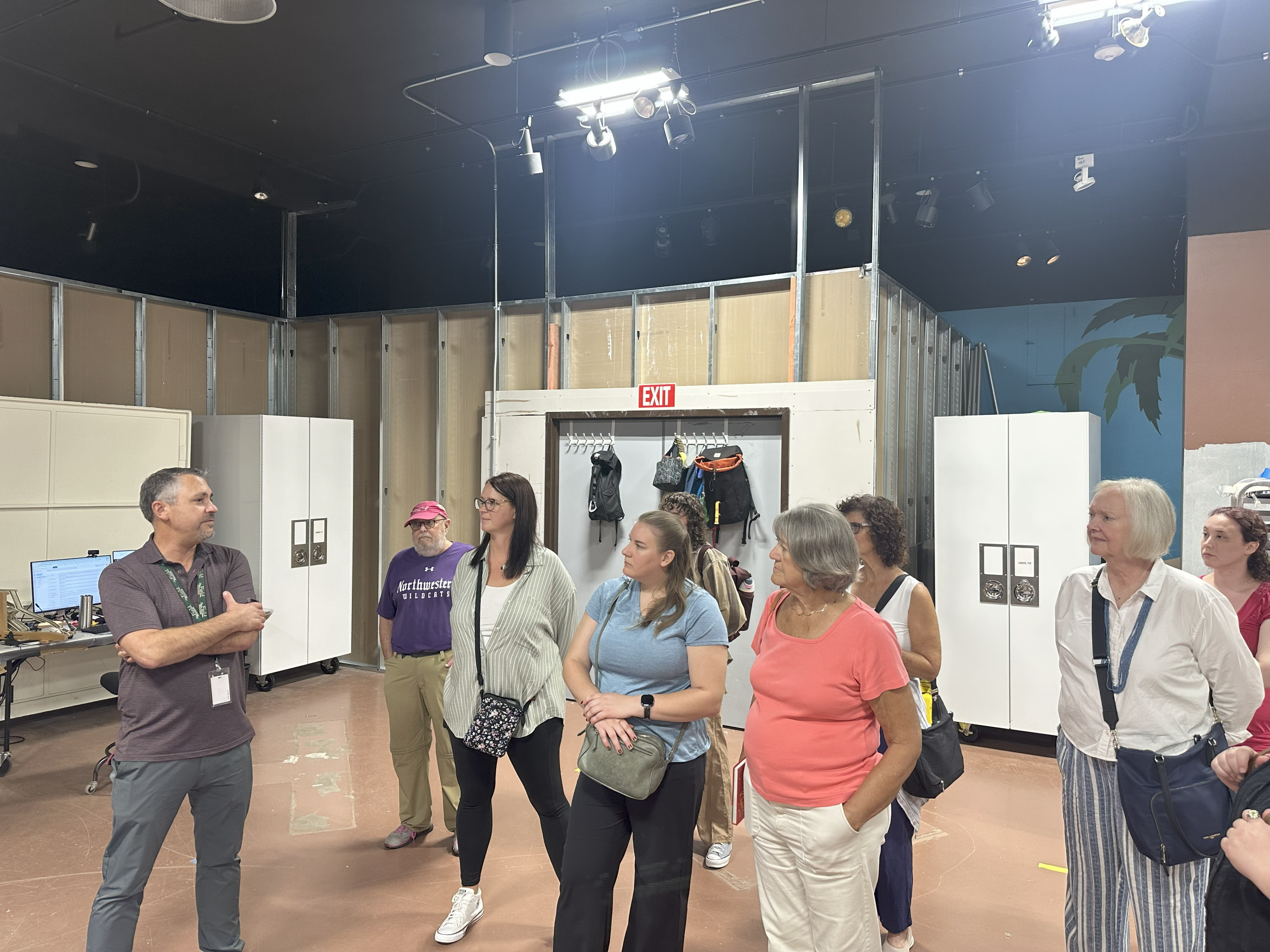
Next, Dr. Bill Parkinson welcomed us behind the scenes at the Field Museum, where the research collections are carefully stored. We saw how the museum’s holdings span continents and millennia, connecting Mediterranean archaeology with North American history.

Bill introduced Mediterranean artifacts, highlighting the Field Museum’s long engagement with Old World research. He also showcased North American collections, including American Indian artifacts such paddles, artwork, and attire. These items are studied and interpreted in partnership with their respective communities, emphasizing provenance, cultural sensitivity, and shared stewardship. Seeing Mediterranean and North American artifacts together reinforced the Field Museum’s global mission, grounded in collaboration.

Community & Connections

Between gallery strolls, meals, and engaging conversations, the tour offered opportunities for connection. Many participants shared how meaningful it was to experience these collections with fellow archaeology enthusiasts and see them through the eyes of scholars and museum professionals.

We are deeply grateful to everyone who joined us in Chicago for making this tour a success. We can’t wait to welcome you on our next adventure! Keep an eye out for upcoming U.S. tours, and remember, there’s still room on our June 2026 Cyprus Tour.

Bill Parkinson gives a behind-the-scenes look at the anthropology collections at the Field Museum during the Friends of ASOR tour in Chicago, Sept. 19, 2025.