Fellowship Report: Amber Leenders

2019 PLATT FELLOWSHIP FIELD REPORT: AMBER LEENDERS

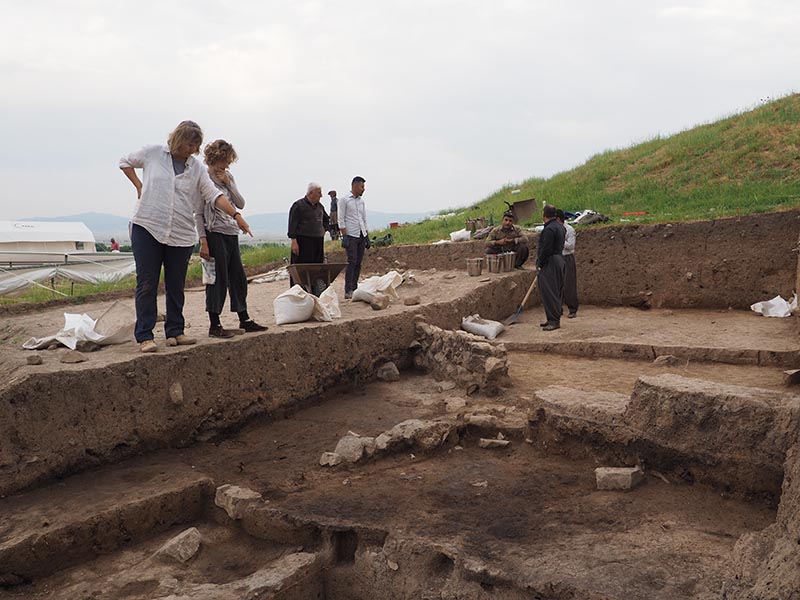
With the support of the Platt Excavation Fellowship, I was able to travel to the Kurdistan Region of Iraq in May of 2019 and join Dr. Lisa Cooper’s team from the University of British Columbia to excavate the fascinating, multi-period site of Bestansur. Our team also included Dr. Kate Kelley, Dr. Lynn Welton, and Dr. Jill Weber.

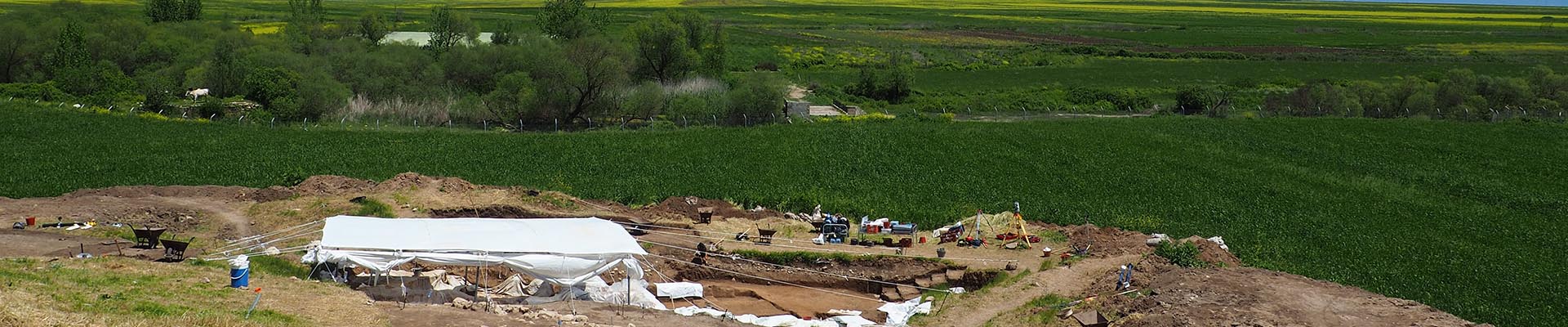
The town of Bestansur is located in the Kurdistan province of Sulaymaniyah, a mountainous area of northeastern Iraq. The landscape is stunningly beautiful, with the lush green fields of the Shahrizor plain, the rocky slopes of the Zagros mountain range, and tributary rivers such as the Sirwan, which eventually feed into the Diyala and Tigris Rivers to the south. Although I have been on digs before, this was my first trip to the Middle East, and I felt slightly out of my element and unsure of what to expect. When we arrived on site for the first early morning of work, however, and I saw the snow-capped peaks of the Zagros mountains rising out of the clouds, I knew that I would quickly grow to love Kurdistan and its history.

We were fortunate to join a team of British archaeologists from the University of Reading, who have been excavating the site since 2012 due to their interest in its unique evidence of Neolithic occupation. It is a remarkable site, with over ten thousand years of history that include well-preserved monumental Neolithic architecture, as well as an exceptional number of human remains. It provides the earliest evidence of settled village life in this region and in fact, some of the earliest in the world! The site continually reveals valuable details about the diet, lifestyle, trade, and ritual practices of the people who occupied the settlement. It was great to observe the Reading team carry out their excavations, and to learn from them about the meticulous excavation, sampling, and recording necessary to understand Neolithic habitation and culture.

So, where does the UBC team come into this? About seven thousand years later…
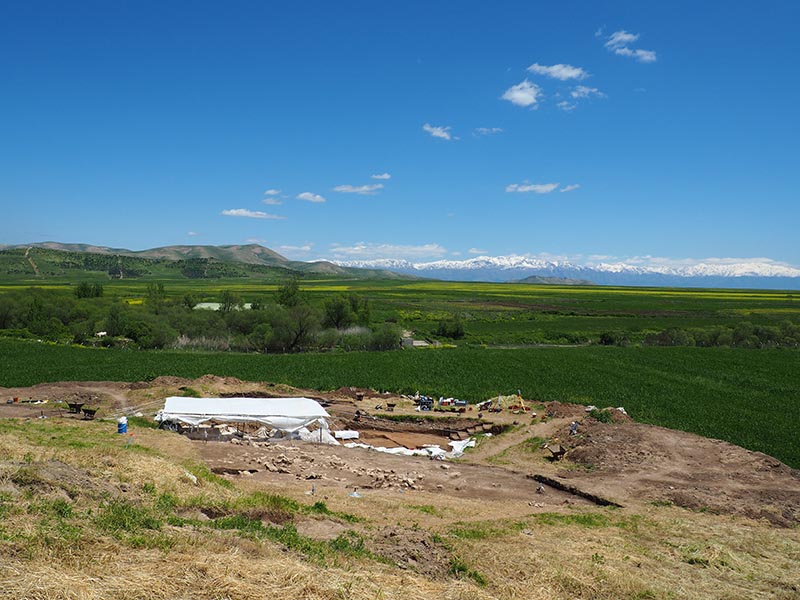
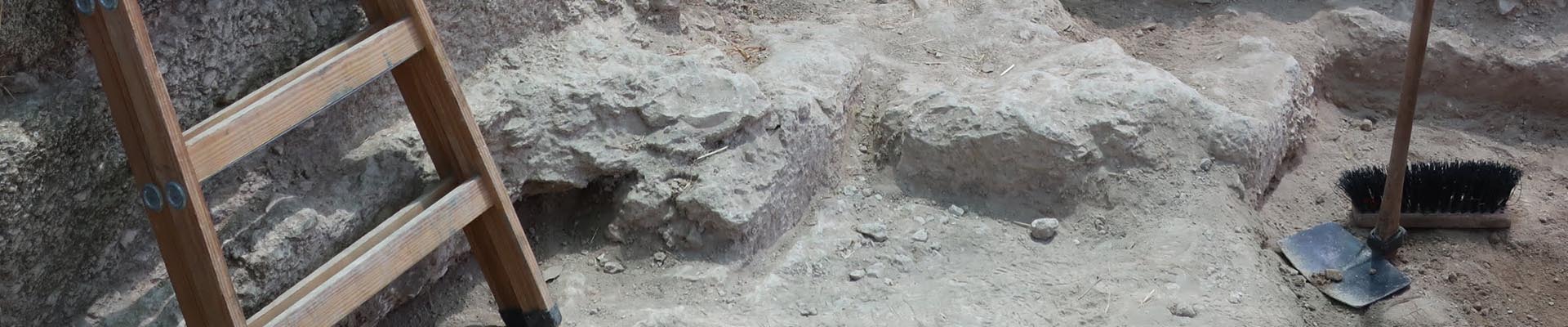
All phases of a site must be excavated with equal care, so on a large site such as this it is helpful to have multiple teams working on different phases to smooth the process. Dr. Lisa Cooper’s research has mainly focused on the Neo-Assyrian occupation at Bestansur, which is some of the most significant material that superimposes the Neolithic remains on the tell. The power of the Neo-Assyrian empire grew during the 10th-7th centuries BCE, and we are interested in the ways that this might have impacted the lives of people in the Kurdistan region—an important thoroughfare in northern Mesopotamia. Bestansur’s Trench 14, just south-east of the tell, revealed significant Neo-Assyrian stone architecture and in-situ pottery in the previous 2013 and 2017 seasons, and the 2019 season had many more surprises in store. New evidence of post-Neolithic burned stone and pisé buildings on the main mound meant that this year UBC’s teams decided to divide and conquer, excavating in both Trenches 10 North and 10 West.

I excavated mainly in 10 West, but my main role on the UBC team was to map the site using our total station, and to document the trenches using photographs and photogrammetry models. Photogrammetry has become an essential part of archaeological recording; the process uses specialized software to transform a collection of photos of an object or space into a 3D model, which can then be studied further, and put in its geographical context. It’s an incredibly helpful tool for archaeology, which is a process that paradoxically destroys the things which it is studying! After archaeologists excavate an artifact or context, or dissemble architecture, photogrammetry makes it possible to study the site as it previously stood. Models the one below are especially helpful for examining things like the Sasanian/early Islamic period structures in Trench 10 West, which had to be fully excavated and removed in order to properly chronicle the history of occupation in the trench as a whole.
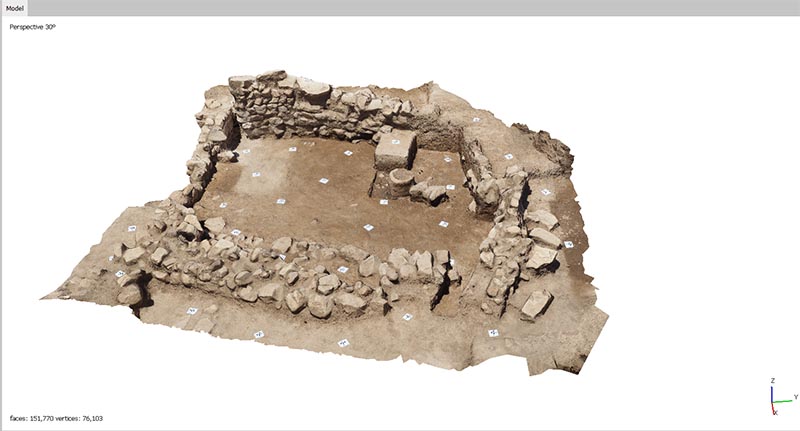
There were many phases of occupation on the tell. Work in Trench 10 North revealed a complex series of layers of a possible Neo-Assyrian burned building, along with features like tannour ovens and deposits of shells. In Trench 10 West, although scattered remains like tannours and hearths of the Ottoman period were encountered, features from the Sasanian/ early Islamic period were especially prevalent, these comprising curvilinear stone structures, pebbled surfaces and associated outdoor spaces. Exciting finds from this season, including intact ceramic vessels, a wide variety of animal bones, and various metal tools, can lead to more accurate knowledge about the region and the lifeways of its occupants during these often-understudied later periods.

The 2019 season expanded on the work of previous seasons, and opened up new discussions and debates about the significance of the site— during the Neo-Assyrian period, was it a valuable example of a rural agricultural community? Or could it have been an administrative center of the expanding empire? Did pastoral communities pass through or settle there in the Sasanian and Ottoman periods? Future research and excavations will clarify these and many more questions.

The incredibly warm welcome that we received from our host families and the rest of the local community was a highlight of our month; the people of Bestansur are generous, helpful, good-humoured, and fiercely competitive at soccer to boot (Team Archaeology put up a good fight, but suffered some serious losses against the local team). Many of the locals have years of experience working at this and other sites in the area, and the work of the UBC and Reading teams would not have been possible without their excellent work excavating, processing samples, washing pottery, cooking for our teams, and providing transportation and logistical support.

The experience of excavating and living in Iraqi Kurdistan was unforgettable, and has sparked my interest in this region, its people, and their culture. I am sincerely grateful to ASOR and the donors of the Platt Excavation Fellowship for this opportunity! Thank you to everyone on the team who worked so hard this season, and put the “Best” in Bestansur.

For more information about Bestansur, and the rest of the Central Zagros Archaeological Project, please visit https://www.czap.org/research/bestansur.


Amber Leenders is currently finishing her MA in Classical and Near Eastern Archaeology at the University of British Columbia. Her thesis focuses on using archival data to re-interpret the archaeology of the temples at the site of Dura-Europos, located in modern day Syria. After graduation, she hopes to continue to teach, research, and excavate in the field she loves.

Want to help more students and early career archaeologists get into the field? Donate to the cause today by selecting “Excavation Scholarships” as your gift purpose!

New Year (2020) Welcome Message from ASOR President Sharon Herbert

[vc_row fullwidth=”true” attached=”true” css=”.vc_custom_1496247803139{padding-top: 0px !important;padding-right: 0px !important;padding-bottom: 0px !important;padding-left: 0px !important;}”][vc_column][vc_single_image image=”55426″ img_size=”full” alignment=”center”][/vc_column][/vc_row][vc_row fullwidth=”true” css=”.vc_custom_1496682730308{padding-top: 10px !important;padding-right: 0px !important;padding-bottom: 0px !important;padding-left: 0px !important;}”][vc_column width=”1/12″ css=”.vc_custom_1496683820796{margin-right: 10px !important;}” offset=”vc_hidden-md vc_hidden-sm vc_hidden-xs”][vc_column_text]

 SHARE

[/vc_column_text][mk_image src=”http://www.asortest.org/wp-content/uploads/2017/01/social-fb-icon4.jpg” image_width=”42″ image_height=”42″ hover=”false” custom_url=”https://www.facebook.com/ASOResearch/” margin_bottom=”0″][mk_image src=”http://www.asortest.org/wp-content/uploads/2017/01/social-tw-icon4.jpg” image_width=”42″ image_height=”42″ hover=”false” custom_url=”https://twitter.com/ASOResearch?ref_src=twsrc%5Egoogle%7Ctwcamp%5Eserp%7Ctwgr%5Eauthor” margin_bottom=”0″][mk_image src=”http://www.asortest.org/wp-content/uploads/2017/01/social-in-icon4.jpg” image_width=”42″ image_height=”42″ hover=”false” custom_url=”https://www.linkedin.com/company/american-schools-of-oriental-research” margin_bottom=”0″][mk_image src=”http://www.asortest.org/wp-content/uploads/2017/01/social-ml-icon_7.jpg” image_width=”42″ image_height=”42″ hover=”false” custom_url=”mailto:info@asor.org” margin_bottom=”0″][mk_image src=”http://www.asortest.org/wp-content/uploads/2017/01/blog-icon3.jpg” image_width=”42″ image_height=”42″ hover=”false” custom_url=”http://asor.org/blog” margin_bottom=”0″][/vc_column][vc_column border_color=”rgba(255,255,255,0.01)” width=”1/6″ css=”.vc_custom_1496683923840{margin-right: 20px !important;border-left-width: 2px !important;padding-right: 20px !important;padding-left: 20px !important;border-left-color: #99422f !important;}”][mk_divider divider_color=”rgba(255,255,255,0.01)” thickness=”1″ margin_top=”3″ margin_bottom=”3″][vc_column_text]

NEWS@ASOR E-NEWSLETTER

ANCIENT NEAR EAST TODAY E-NEWSLETTER

PAST ASOR NEWS, MONTH BY MONTH

FY19 HONOR ROLL OF DONORS

ASOR ANNUAL MEETING

[/vc_column_text][/vc_column][vc_column border_color=”rgba(170,170,170,0.01)” width=”1/2″ css=”.vc_custom_1487276122024{margin-right: 10px !important;margin-bottom: 30px !important;border-right-width: 2px !important;border-bottom-width: 2px !important;padding-top: 30px !important;padding-right: 30px !important;padding-left: 20px !important;background-color: #ffffff !important;border-right-color: rgba(227,228,228,0.75) !important;border-bottom-color: rgba(227,228,228,0.75) !important;}”][vc_column_text responsive_align=”left”]

NEW YEAR (2020) WELCOME MESSAGE FROM ASOR PRESIDENT SHARON HERBERT

[/vc_column_text][vc_column_text]On January 1, 2020, I became ASOR’s new president. It is an honor and a privilege to serve ASOR in this leadership role. I will work zealously to justify the confidence that the Officers’ Nominating Committee and the Board of Trustees, has placed in me to serve the members of ASOR as we all in our myriad ways endeavor to fulfill ASOR’s missions of initiating, encouraging, and supporting research into, and public understanding of, the history and cultures of the Near East and wider Mediterranean, from the earliest times.

My own history with ASOR goes back to the 1980s, when I sought CAP affiliation for the University of Michigan/University of Missouri excavations at the Hellenistic site of Tel Anafa in the Upper Galilee of Israel. It has continued to this day through work on other ASOR sponsored excavations, publications, and committees. Over the past 7 years I have served as Vice President; from this position I have observed first hand ASOR’s growing strength both on its traditional fronts and expansion into other arenas, most notably our cultural heritage initiatives.

I feel fortunate to come to the ASOR presidency at a time of its greatest strength to date. The credit for this goes predominantly to the efforts and vision of our past President, Susan Ackerman, and our continuing Executive Director, Andy Vaughn. They have been vigorously supported in their efforts by the commitment of our active Board of Trustees, hard work of our officers, member committees, and the enthusiasm of our members and friends.

Today, ASOR membership is at its highest level ever. Our two traditional public faces—the Annual Meeting and print publications, BASOR, NEA, and JCS—are flourishing. Our most recent annual meeting, in November 2019 in San Diego, was our 2nd largest ever. There were nearly 950 total registrants and over 500 papers delivered; San Diego was second only to our 2017 meeting in the perennial favorite, Boston. As we gear up for the November 2020 meeting, once again in Boston, we already foresee another blockbuster. The Program Committee has received an unprecedented number of workshop and sessions proposals. Likewise, our new partnership with the University of Chicago Press has widened the distribution of our journals, while our digital publications, News@ASOR and Ancient Near East Today, have extended our outreach to over 15,000 Friends of ASOR. We now sponsor 53 fieldwork projects and 25 publication projects over 10 countries.

We have been extraordinarily blessed on the fund-raising front in recent years. Thanks to generous donations our fellowship support for our members has grown, and we are able to fund collections research and conservation in addition to student participation on excavations. In less than two years, between 2018 and 2020, our membership raised over $1.6 million to enable us to purchase a permanent home, an office building in Alexandria, Virginia, which we have named the James F. Strange Center in honor of Jim Strange, a loyal and distinguished member of many years. We moved in last April. We share this space with two of our overseas research centers, ACOR and CAARI. From this stable and strategically placed location in the greater Washington D. C. area, we will be able to serve our membership more efficiently and to network more successfully with other archaeological societies and foundations headquartered there.

The key word for ASOR over the past decade has been expansion– in membership and scope of activities, and in areas and kinds of engagement. Expansion is not an end in itself, however. We have to work diligently to maintain and improve the quality of our programs and meet the needs of our membership. We have successfully taken up opportunities as we have seen them in cultural heritage and created others there, and in internationalization and outreach while supporting research projects of the highest quality. We stand where we do today thanks to carefully crafted and nimbly executed strategic plans and targeted initiatives that produced codes of professional conduct responsive to the concerns of our 21st century membership. All we know for certain about the future is that there will be change. Nowhere is this more certain than in the Near and Middle East, where ASOR’s activities are focused. Come what may in the three years of my term as President, I pledge to work together with all of you to keep ASOR true to its missions of initiating, encouraging, and supporting research into, and public understanding of, the history and cultures of the Near East and wider Mediterranean, from the earliest times.

So, I close as I began: I am honored to have been chosen to lead such a vibrant and on-the-move organization, and I feel extremely fortunate to have taken office at a moment when ASOR is in a position of such incredible strength. It’s with great enthusiasm, then, that I look forward to the next three years and to ASOR’s continued success.[/vc_column_text][/vc_column][vc_column border_color=”rgba(170,170,170,0.01)” width=”1/6″ css=”.vc_custom_1496684098866{margin-right: 5px !important;margin-bottom: 20px !important;border-right-width: 2px !important;border-bottom-width: 2px !important;padding-top: 30px !important;padding-right: 10px !important;padding-left: 10px !important;background-color: #ffffff !important;border-right-color: rgba(227,228,228,0.75) !important;border-bottom-color: rgba(227,228,228,0.75) !important;}”][vc_wp_posts title=”BROWSE THE NEWS ARCHIVE” number=”4″][/vc_column][vc_column border_color=”rgba(170,170,170,0.01)” width=”1/6″ css=”.vc_custom_1496684008271{margin-right: 10px !important;margin-bottom: 30px !important;border-right-width: 2px !important;border-bottom-width: 2px !important;padding-top: 30px !important;padding-right: 20px !important;padding-left: 20px !important;background-color: #ffffff !important;border-right-color: rgba(227,228,228,0.75) !important;border-bottom-color: rgba(227,228,228,0.75) !important;}”][vc_column_text] [/vc_column_text][/vc_column][/vc_row]

Introducing ASOR’s Online Library

[vc_row fullwidth=”true” css=”.vc_custom_1486761987223{padding-top: 0px !important;padding-right: 0px !important;padding-bottom: 0px !important;padding-left: 0px !important;}”][vc_column][vc_single_image image=”70936″ img_size=”full” alignment=”center”][/vc_column][/vc_row][vc_row fullwidth=”true” css=”.vc_custom_1567018248215{margin-top: 20px !important;padding-top: 0px !important;padding-right: 0px !important;padding-bottom: 0px !important;padding-left: 0px !important;}”][vc_column width=”1/12″ css=”.vc_custom_1493002455400{margin-right: 10px !important;}” offset=”vc_hidden-md vc_hidden-sm vc_hidden-xs”][vc_column_text]

 SHARE

[/vc_column_text][mk_image src=”http://www.asortest.org/wp-content/uploads/2017/01/social-fb-icon4.jpg” image_width=”42″ image_height=”42″ hover=”false” custom_url=”https://www.facebook.com/ASOResearch/” margin_bottom=”0″][mk_image src=”http://www.asortest.org/wp-content/uploads/2017/01/social-tw-icon4.jpg” image_width=”42″ image_height=”42″ hover=”false” custom_url=”https://twitter.com/ASOResearch?ref_src=twsrc%5Egoogle%7Ctwcamp%5Eserp%7Ctwgr%5Eauthor” margin_bottom=”0″][mk_image src=”http://www.asortest.org/wp-content/uploads/2017/01/social-in-icon4.jpg” image_width=”42″ image_height=”42″ hover=”false” custom_url=”https://www.linkedin.com/company/american-schools-of-oriental-research” margin_bottom=”0″][mk_image src=”http://www.asortest.org/wp-content/uploads/2017/01/social-ml-icon_7.jpg” image_width=”42″ image_height=”42″ hover=”false” custom_url=”mailto:asor@bu.edu” margin_bottom=”0″][mk_image src=”http://www.asortest.org/wp-content/uploads/2017/01/blog-icon3.jpg” image_width=”42″ image_height=”42″ hover=”false” custom_url=”http://asorblog.org/” margin_bottom=”0″][/vc_column][vc_column border_color=”rgba(255,255,255,0.01)” width=”1/6″ css=”.vc_custom_1493004112151{margin-right: 20px !important;border-left-width: 2px !important;padding-right: 20px !important;padding-left: 20px !important;border-left-color: #99422f !important;}”][mk_divider divider_color=”rgba(255,255,255,0.01)” thickness=”1″ margin_top=”3″ margin_bottom=”3″][vc_widget_sidebar sidebar_id=”ca-sidebar-38696″][/vc_column][vc_column border_color=”rgba(170,170,170,0.01)” width=”1/2″ css=”.vc_custom_1487276122024{margin-right: 10px !important;margin-bottom: 30px !important;border-right-width: 2px !important;border-bottom-width: 2px !important;padding-top: 30px !important;padding-right: 30px !important;padding-left: 20px !important;background-color: #ffffff !important;border-right-color: rgba(227,228,228,0.75) !important;border-bottom-color: rgba(227,228,228,0.75) !important;}”][vc_row_inner][vc_column_inner width=”1/4″ css=”.vc_custom_1567043246123{padding-right: 10px !important;}”][vc_single_image image=”70945″ img_size=”186×96″][/vc_column_inner][vc_column_inner width=”3/4″][vc_column_text responsive_align=”left”]

INTRODUCING ASOR’S ONLINE LIBRARY

[/vc_column_text][/vc_column_inner][/vc_row_inner][mk_divider thickness=”1″ margin_top=”0″][vc_wp_text]Beginning in January 2021, ASOR is pleased to announce the launch of our Online Library platform, an exclusive resource for scholars, students, and enthusiasts who want a master portal into the world of the ancient Near East and wider Mediterranean. The platform is already open to registrants of the 2020 Virtual Annual Meeting (VAM). You can also gain access to this platform by registering for the 2021 Annual Meeting in Chicago and Virtual, or by purchasing online access through June 2021. The Online Library brings together presentations, posters, and virtual museum tours from the 2020 Virtual Program, and the entire archive of Friends of ASOR’s monthly webinar series.[/vc_wp_text][mk_divider thickness=”1″ margin_top=”0″][vc_wp_text]

ONLINE LIBRARY HOMEPAGE

[/vc_wp_text][mk_divider divider_width=”one_third” thickness=”1″ margin_top=”0″][vc_wp_text]
ACCESS TO ALL ASOR VIRTUAL ANNUAL MEETING 2020 CONTENT

[/vc_wp_text][mk_divider divider_width=”one_third” thickness=”1″ margin_top=”0″][vc_wp_text]

VIEW ALL PAST FOA WEBINAR RECORDINGS
(Available in library 45–60 days after the webinar)

[/vc_wp_text][mk_divider divider_width=”one_third” thickness=”1″ margin_top=”0″][vc_wp_text]

Please note: if you registered for the 2020 VAM, you already have access to the Online Library platform through June 30, 2021. You can use the same login process as you did during the meeting. You will also gain access to the Online Library platform if you register for the 2021 Annual Meeting in Chicago and Virtual.  If you did not register for the 2020 VAM, please either register for the 2021 Annual Meeting (to gain access for free) or follow the directions below to purchase access to all the content from the Virtual Annual Meeting and our monthly webinars.

[/vc_wp_text][mk_divider divider_width=”one_third” thickness=”1″][vc_wp_text]

Non-Members: $125 | Members: $100 | Early Career Members: $75 | Student Members: $50

How to gain access: If you are an ASOR member, log into the online store. If you are new to ASOR, please click on the “New Visitor Registration” link to enter your e-mail address and chose a password for the online store. After logging in, navigate to “Buy Merchandise” in the lefthand menu. Choose the “ASOR Online Library Access” product and the appropriate fee type from the dropdown menu. Each paid registrant will receive a confirmation e-mail after paying for access. If you do not receive this e-mail (and you have checked your Spam folder), please contact us because the system did not complete your registration. Please e-mail membership@asor.org with any questions or issues with paying for access and jaredkoller@asor.org for issues with accessing the platform.

Reminder about 2021 Annual Meeting Registration: you will gain free access to the Online Library platform with your 2021 Annual Meeting registration—and you’ll have access to the 2021 content (through June 30, 2022) when it becomes available.

[/vc_wp_text][/vc_column][vc_column border_color=”rgba(170,170,170,0.01)” width=”1/6″ css=”.vc_custom_1597939292123{margin-right: 5px !important;margin-bottom: 20px !important;border-right-width: 2px !important;border-bottom-width: 2px !important;padding-top: 30px !important;padding-right: 10px !important;padding-left: 10px !important;background-color: #ffffff !important;border-right-color: rgba(227,228,228,0.75) !important;border-bottom-color: rgba(227,228,228,0.75) !important;}”][vc_wp_posts title=”BROWSE THE NEWS ARCHIVE” number=”4″][/vc_column][vc_column border_color=”rgba(170,170,170,0.01)” width=”1/6″ css=”.vc_custom_1597939488878{margin-right: 10px !important;margin-bottom: 30px !important;border-right-width: 2px !important;border-bottom-width: 2px !important;padding-top: 30px !important;padding-right: 20px !important;padding-left: 20px !important;background-color: #ffffff !important;border-right-color: rgba(227,228,228,0.75) !important;border-bottom-color: rgba(227,228,228,0.75) !important;}”][vc_column_text] [/vc_column_text][/vc_column][/vc_row]

ASOR President’s Statement in Defense of Iranian Heritage

[vc_row fullwidth=”true” attached=”true” css=”.vc_custom_1496247803139{padding-top: 0px !important;padding-right: 0px !important;padding-bottom: 0px !important;padding-left: 0px !important;}”][vc_column][vc_single_image image=”56213″ img_size=”full” alignment=”center”][/vc_column][/vc_row][vc_row fullwidth=”true” css=”.vc_custom_1496682730308{padding-top: 10px !important;padding-right: 0px !important;padding-bottom: 0px !important;padding-left: 0px !important;}”][vc_column width=”1/12″ css=”.vc_custom_1496683820796{margin-right: 10px !important;}” offset=”vc_hidden-md vc_hidden-sm vc_hidden-xs”][vc_column_text]

 SHARE

[/vc_column_text][mk_image src=”http://www.asortest.org/wp-content/uploads/2017/01/social-fb-icon4.jpg” image_width=”42″ image_height=”42″ hover=”false” custom_url=”https://www.facebook.com/ASOResearch/” margin_bottom=”0″][mk_image src=”http://www.asortest.org/wp-content/uploads/2017/01/social-tw-icon4.jpg” image_width=”42″ image_height=”42″ hover=”false” custom_url=”https://twitter.com/ASOResearch?ref_src=twsrc%5Egoogle%7Ctwcamp%5Eserp%7Ctwgr%5Eauthor” margin_bottom=”0″][mk_image src=”http://www.asortest.org/wp-content/uploads/2017/01/social-in-icon4.jpg” image_width=”42″ image_height=”42″ hover=”false” custom_url=”https://www.linkedin.com/company/american-schools-of-oriental-research” margin_bottom=”0″][mk_image src=”http://www.asortest.org/wp-content/uploads/2017/01/social-ml-icon_7.jpg” image_width=”42″ image_height=”42″ hover=”false” custom_url=”mailto:info@asor.org” margin_bottom=”0″][mk_image src=”http://www.asortest.org/wp-content/uploads/2017/01/blog-icon3.jpg” image_width=”42″ image_height=”42″ hover=”false” custom_url=”http://asor.org/blog” margin_bottom=”0″][/vc_column][vc_column border_color=”rgba(255,255,255,0.01)” width=”1/6″ css=”.vc_custom_1496683923840{margin-right: 20px !important;border-left-width: 2px !important;padding-right: 20px !important;padding-left: 20px !important;border-left-color: #99422f !important;}”][mk_divider divider_color=”rgba(255,255,255,0.01)” thickness=”1″ margin_top=”3″ margin_bottom=”3″][vc_column_text]

NEWS@ASOR E-NEWSLETTER

ANCIENT NEAR EAST TODAY E-NEWSLETTER

PAST ASOR NEWS, MONTH BY MONTH

FY19 HONOR ROLL OF DONORS

ASOR ANNUAL MEETING

[/vc_column_text][/vc_column][vc_column border_color=”rgba(170,170,170,0.01)” width=”1/2″ css=”.vc_custom_1487276122024{margin-right: 10px !important;margin-bottom: 30px !important;border-right-width: 2px !important;border-bottom-width: 2px !important;padding-top: 30px !important;padding-right: 30px !important;padding-left: 20px !important;background-color: #ffffff !important;border-right-color: rgba(227,228,228,0.75) !important;border-bottom-color: rgba(227,228,228,0.75) !important;}”][vc_column_text responsive_align=”left”]

ASOR SPEAKS OUT IN DEFENSE OF IRAN’S CULTURAL HERITAGE

[/vc_column_text][mk_divider][vc_column_text]In light of President Trump’s recent threats to Iranian cultural sites, ASOR President Sharon Herbert has issued the following statement.  She has also signed on behalf of ASOR a letter to the New York Times deploring these threats.

In accord with ASOR’s mission to support efforts to protect, preserve, and present to the public the historic and cultural heritage of the Near East and the wider Mediterranean and to raise awareness of its degradation, ASOR strongly protests U.S. President Donald Trump’s threats to intentionally target  Iranian cultural heritage sites.

The 1954 Hague Convention for the Protection of Cultural Property in the Event of Armed Conflict, ratified by the USA in 2009, and the U.S. Department of Defense’s Law of War Manual (paragraph 5.18.5.1) both prohibit the intentional destruction of cultural heritage during armed conflict except in situations when targeting is imperative for a legitimate military goal.

ASOR calls upon President Trump and the U.S. Department of Defense to avoid harm to the cultural heritage of Iran.[/vc_column_text][mk_divider][/vc_column][vc_column border_color=”rgba(170,170,170,0.01)” width=”1/6″ css=”.vc_custom_1496684098866{margin-right: 5px !important;margin-bottom: 20px !important;border-right-width: 2px !important;border-bottom-width: 2px !important;padding-top: 30px !important;padding-right: 10px !important;padding-left: 10px !important;background-color: #ffffff !important;border-right-color: rgba(227,228,228,0.75) !important;border-bottom-color: rgba(227,228,228,0.75) !important;}”][vc_wp_posts title=”BROWSE THE NEWS ARCHIVE” number=”4″][/vc_column][vc_column border_color=”rgba(170,170,170,0.01)” width=”1/6″ css=”.vc_custom_1496684008271{margin-right: 10px !important;margin-bottom: 30px !important;border-right-width: 2px !important;border-bottom-width: 2px !important;padding-top: 30px !important;padding-right: 20px !important;padding-left: 20px !important;background-color: #ffffff !important;border-right-color: rgba(227,228,228,0.75) !important;border-bottom-color: rgba(227,228,228,0.75) !important;}”][vc_column_text] [/vc_column_text][/vc_column][/vc_row][vc_row][vc_column][vc_column_text]

[/vc_column_text][/vc_column][/vc_row][vc_row][/vc_row]

Fellowship Report: Jewel Trail

2019 STRANGE-MIDKIFF FELLOWSHIP FIELD REPORT: JEWEL TRAIL

I spent the first four weeks of my summer in the Galilean heat (which is considerably more bearable than the heat in the southeastern United States). Our dig site was on a hillside outside of Nazareth, Israel. Kefar Shikhin, also known as Asochis, is just outside Sepphoris. I immediately felt comfortable in the familiar scientific setting of diligent data collection taught at the Shikhin Excavation Project’s field school. Despite archaeology being one of the newest social sciences, recently developed methods mirror the accuracy and completeness of research methods in established natural science research.

The Shikhin Excavation Project utilizes stratigraphic excavation, which distinguishes itself from other methods by recognizing that each element of the site contains valuable data. Dr. James F. Strange used to say, “the dirt is evidence.” Stratigraphic excavation focuses on the unique characteristics of each strata and the data that can be obtained from individual loci. Just as a slight change in color, smell, viscosity, particle size, or any other empirical change is recorded in a chemistry research lab, analogous changes on an archaeological excavation are recorded in a square’s field book. Examples of these analogous changes are the all-important three Cs (color, compaction, and contents); elevations; daily and weekly top plans; and daily photographs and conclusions. Careful recording of all details reflects the gravity and responsibility that archaeologists take on when excavating a site.

From the beginning of the dig until publication, the individual steps of the entire excavation process correspond to the steps of the scientific method:

Step 1- Make an Observation: Archaeologists must make initial observations about where or what they want to excavate. When archaeologists are deciding where to dig, they look for solid clues that indicate a site is a strong candidate for excavation. In the case of Shikhin, Dr. James Riley Strange took into account the proximity to Sepphoris, textual evidence, and the physical remains in the topsoil when deciding to open an excavation at Shikhin.

Step 2- Formulate a Question: After looking at the available evidence, researchers decide what questions can be asked of an excavation site, and what insights could be gained from excavating there. Questions are developed from analyzing all relevant sources. Sources are often textual, but material evidence will also effect the specific questions asked.

Step 3- Develop a Hypothesis: Once the archaeologists have decided what questions they want to answer, they build a probable hypothesis based on their observations, textual evidence, and other cultural evidence. The hypothesis is designed to address all of the questions the archaeologists will ask of the site.

Jewel and her square-mate get a lesson on balk drawing from field director Dr. James Riley Strange during fruit break.

Step 4- Design the Experiment: Deciding how to lay out the excavation’s grid (or lack of a grid) is very similar to a natural scientist designing an experiment. In this step, the approach and operating procedures are brainstormed, perfected, and enacted. In archaeology, this includes: determining the location of fields, evaluating the relationship of the remains to the cardinal directions (e.g. structure walls need to cross perpendicular to baulks), using the traditional “square” or finding the most beneficial geometric shape, and optimizing the size of the “squares” (or other geometric shape of choice), among other considerations. The excavations at Shikhin utilized a north-south grid of 5 x 5m squares.

Step 5- Test the Hypothesis: This is arguably the most exciting part of the entire process. At this point you get out into the field and dig! While written records are a great resource for testing a historical hypothesis, the physical remains that a group of people leave behind are invaluable. For example, Shikhin is a Jewish village and likely had its own synagogue. Josephus, however, reports Christian activity taking place alongside the Jewish practices. If the archaeologists at Shikhin would like to explore this facet of life at this site, the only way to search for answers is to find the physical evidence.

Step 6- Make Modifications: Without fail, a dig will encounter obstacles along the way that require a change in the plan of action. These obstacles can result in abandoning a square that is not producing adequate data, changing a hypothesis mid-season, realizing that some element of the designed excavation method is not working, or deciding to open another field. Thus, modifications may be necessary mid-season or between seasons and must be based on and take into account all preliminary conclusions. The evidence that is uncovered is necessary to make the appropriate changes to the excavation method and hypothesis. In the field, balk drawings are an excellent way to evaluate what modifications need to be made to the original excavation plan. Balk drawings are crucial for analyzing the stratification of a square and relating loci to one another, and they combine a lot of information into one visual resource.

Teeth found in I.22.

Step 7- Tell Others: After the dig season is over, the final step of the archaeological scientific method begins. Before scholars can write the paper and have it published, the original hypothesis must be compared to the modified hypotheses and all data carefully considered. Preliminary conclusions are tested and forged into final conclusions during this step, specifically relying on resources built up over the course of the season. Meticulously kept field books with pictures of weekly excavation updates, daily notes, and descriptions of artifacts found are all key resources in analyzing every bit of data that is collected across an excavation’s history. What is found in the seventh season must be related to the findings of the third season, along with everything in between. Once all of this has been woven into the narrative of the site, a final paper can be written to share the archaeologist’s findings with the larger community.

Jewel Trail is a senior University Fellow at Samford University (AL) from Murfreesboro, TN. She is a Chemistry and Classics double major and has previously worked with Dr. Brian Gregory of the Chemistry and Biochemistry Department on “Compositional analyses of potsherds from an ancient Jewish pottery industrial site by inductively-coupled plasma optical emission spectrometry,” which is focused on pottery from Shikhin. This was her first time participating in an excavation.

More information about the Shikhin Excavation Project and its field school can be found at: https://shikhinexcavationproject.com/

Want to help more students and early career archaeologists get into the field? Donate to the cause today by selecting “Excavation Scholarships” as your gift purpose!