UNEARTHING THE PAST SINCE 1900
  • BECOME A MEMBER
  • RENEW
  • GIVE NOW
  • SEARCH
  • ONLINE PORTAL
  • American Society of Overseas Research (ASOR)American Society of Overseas Research (ASOR)
  • ABOUT
    • WELCOME FROM ASOR OFFICERS
    • HISTORY OF ASOR
    • MISSION, BYLAWS, & STRATEGIC PLAN
    • Board of Trustees
    • COMMITTEES
    • POLICIES
    • FINANCIAL DOCUMENTS
    • MEDIA RELEASES
    • CONTACT US
  • CULTURAL
    HERITAGE
    • ABOUT CULTURAL HERITAGE INITIATIVES
    • UPDATES
    • PAST GRANTS
    • TUTORIALS
    • Who We Are
  • ANNUAL
    MEETING
    • REGISTRATION
    • HOTEL RESERVATIONS
    • ANNUAL MEETING SCHEDULES
    • SPONSOR & EXHIBIT
    • ASOR Online Library
    • HONORS & AWARDS
    • ANNUAL MEETING SCHOLARSHIPS
    • PAST & FUTURE ANNUAL MEETINGS
  • MEMBERSHIP
    & RESOURCES
    • INDIVIDUAL MEMBERSHIPS
    • INSTITUTIONAL MEMBERSHIPS
    • NEWS@ASOR
    • PAST ASOR NEWS, MONTH BY MONTH
    • AFFILIATED PROJECTS
    • AFFILIATED RESEARCH CENTERS
    • ARCHIVES
    • ONLINE RESOURCES
      • PHOTO COLLECTION
    • EARLY CAREER MEMBER RESOURCES
  • FELLOWSHIPS
    & GRANTS
    • SCHOLARSHIPS FOR FIELDWORK PARTICIPATION
    • GRANTS FOR ARCHAEOLOGICAL PROJECTS
    • RESEARCH FELLOWSHIPS FOR MEMBERS
    • MEMBERSHIP & ANNUAL MEETING SCHOLARSHIPS
    • ASOR-AFFILIATED RESEARCH CENTERS FELLOWSHIPS
    • OTHER FELLOWSHIP PROGRAMS
  • PUBLICATIONS
    • BOOK SERIES & MONOGRAPHS
    • BULLETIN OF ASOR
    • JOURNAL OF CUNEIFORM STUDIES
    • MAARAV
    • NEAR EASTERN ARCHAEOLOGY
    • THE ANCIENT NEAR EAST TODAY
    • News@ASOR
    • LEVANTINE CERAMICS PROJECT
  • FRIENDS
    OF ASOR
    • Webinars
    • TOURS
    • THE ANCIENT NEAR EAST TODAY
    • ASOR ONLINE LIBRARY
  • Donate
    • FY25 HONOR ROLL OF DONORS
    • LIFETIME HONOR ROLL OF DONORS
    • ASOR LEGACY CIRCLE
    • WAYS TO DONATE
BASOR-394-banner

 SHARE


NEWS@ASOR E-NEWSLETTER

ANCIENT NEAR EAST TODAY E-NEWSLETTER

PAST ASOR NEWS, MONTH BY MONTH

ASOR LEGACY CIRCLE MEMBERS

LIFETIME HONOR ROLL OF DONORS

FY25 HONOR ROLL OF DONORS

ASOR ANNUAL MEETING

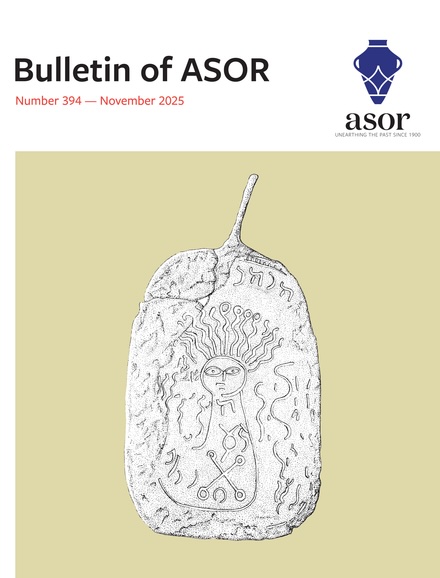
Table of Contents for Bulletin of ASOR 394 (November 2025)

You can receive BASOR (and other ASOR publications) through an ASOR Membership.
Please e-mail the Membership office if you have any questions.
BASOR-394-article-1-banner

Pp. 1-24: “Boulos el-ʿAraj: A Palestinian Quaker Archaeologist of the British Mandate Era (1926–1936),” by Jeffrey R. Zorn

Until recently, the work of Middle Easterners on archaeological projects in Palestine, and southwestern Asia and Egypt more broadly, during the period of colonialist control between the World Wars (1918–1939) has largely gone unnoticed, undocumented, and uncelebrated. However, over the last decade scholars have begun to take a long overdue interest in this subject, resulting in the appearance of an increasing number of publications addressing archaeology’s colonialist past. Egyptians, working both in Egypt itself and on projects in the Levant, have received the most attention so far. However, more work is now appearing on the roles of Palestinians during this turbulent time. This article documents and contextualizes the career of Boulos el-ʿAraj, a young Palestinian man active in British Mandate-era archaeology from ca. 1926–1936. Despite the number of excavations on which he worked, and his reputation at the time, he remains a mostly unknown figure, often going unmentioned in even recent articles dealing with Palestinian archaeologists of that era (for example, Abu Alsaud 2022, 2024), which makes documenting his career especially important.

ASOR Members with online access: log into ASOR’s Online Portal here. Once logged in, click the JOURNALS tab in the top navigation bar. Tutorials for how to log in to the Online Portal as well as how to navigate to the Portal Journals page can be found here.
BASOR-394-article-2-banner

Pp. 25-42: “Unveiling the Obscure: Exploring the Function and Meaning of Levantine Shrine Models through an Ethnoarchaeological Lens,” by Itamar Weissbein

This article examines pottery vessels commonly referred to as “shrine models” or “portable shrines,” which were found throughout the Bronze and Iron Age Levant. While these vessels are often recognized for their significant religious importance, their exact functions and meanings remain unclear to modern scholars. This study aims to offer new insights into these questions by drawing on ethnoarchaeological parallels from India, suggesting that these vessels may have served as symbolic dwellings for the spirits of deities or the deceased and offering insights into potential associated religious rituals.

ASOR Members with online access: log into ASOR’s Online Portal here. Once logged in, click the JOURNALS tab in the top navigation bar. Tutorials for how to log in to the Online Portal as well as how to navigate to the Portal Journals page can be found here.
BASOR-394-article-3-banner

Pp. 43-71: “Paleoenvironment and Fruit Tree Horticulture at Early Bronze Age Tel Bet Yerah: Evidence from Charcoal Remains,” by Eshel Mor, Raphael Greenberg, and Dafna Langgut

This article presents the first detailed examination of a charred wood assemblage from Early Bronze Age I–III Tel Bet Yerah (ca. 3700–2500 B.C.E.). The wood-anatomy identification of the charcoal remains aims to reconstruct the nearby natural and horticultural arboreal environment as well as the long-term human-environment relations at the site and beyond it. The assemblage provides evidence for substantial fruit-tree horticulture, mainly of olive and fig. In addition, there is evidence for exploitation of a well-developed Mediterranean woodland in the site’s vicinity, as well as of a riparian habitat. The assemblage also includes taxa rarely encountered in the regional archaeobotanical record, such as pomegranate. The transition from village to urban settlement in the Early Bronze II (ca. 3100–2850 B.C.E.) shows changes in the charred wood assemblage that parallel economic, cultural, and environmental changes evidenced in the settlement layout and other findings. Evolving cultural-economic interactions between local and “Khirbet Kerak” populations during the first part of the Early Bronze III (ca. 2850–2700 B.C.E.) are also indicated. The study also offers a general land-use scheme for the site, based on the data that emerged from this research combined with the results of other relevant paleoenvironmental and archaeobotanical studies.

ASOR Members with online access: log into ASOR’s Online Portal here. Once logged in, click the JOURNALS tab in the top navigation bar. Tutorials for how to log in to the Online Portal as well as how to navigate to the Portal Journals page can be found here.
BASOR-394-article-4-banner

Pp. 73-99: “Reassessing the Levantine Tradition of Early Bronze III Bone Tubes: The View from Tell el-Hesi,” by Geoffrey Ludvik, Kara Larson, and Jeffrey A. Blakely

Incised bone tubes are an important class of artifacts associated with the 3rd millennium B.C.E. throughout the Near East and eastern Mediterranean. Typically made of ovicaprine or cattle long bones and decorated with a series of incised motifs, bone tubes are a rare find in Early Bronze (EB) elite burial and settlement contexts. New work at Tell el-Hesi, Israel, has shown that a specialized bone tube workshop was present at the site, operating only during the southern Levantine EB IIIA (2800–2700 B.C.E.). This article provides a reassessment of the Levantine tradition of bone tube manufacture and design based on the existence of the Tell el-Hesi workshop. The authors provide a detailed description of the workshop’s stratigraphic context, review its chaîne opératoire, and, using the established baseline of morphometric variation characterizing its workshop style/tradition, compare bone tubes produced elsewhere to this known production center. It is thereby demonstrated that a subset of bone tubes from other sites in the Near East share morphometric proportions, motif sequences, styles, and techniques with Tell el-Hesi. The authors interpret these artifacts as products of the Hesi workshop, providing a chronological anchor for their contexts and evidence for a bone tube exchange operating during the EB IIIA period.

ASOR Members with online access: log into ASOR’s Online Portal here. Once logged in, click the JOURNALS tab in the top navigation bar. Tutorials for how to log in to the Online Portal as well as how to navigate to the Portal Journals page can be found here.
BASOR-394-article-5-banner

Pp. 101-121: “Empires, Local Traditions, and the Spread of Knowledge: A Case Study in Water Management in Early Islamic Palestine,” by Azriel Yechezkel, Gideon Avni, Bethany Walker, Meir Rotter, Yoav Negev, and Yuval Gadot

Qanat technology, most likely originating on the Iranian Plateau or in the Arabian Peninsula around the 2nd millennium B.C.E., diffused in a wave-like pattern across Eurasia over various periods throughout history, reaching the southern Levant as late as the 8th century C.E. This unique water extraction technology is based on the diversion of water from underground aquifers over great distances through man-made subterranean tunnels. It is particularly efficient in alluvium soil in arid to hyper-arid regions. This study presents a unique example of a qanat-like system found in the Judean Hills of Israel, an area characterized by a different water management tradition, based on the use of natural springs and the modification of their sources through artificial tunneling. This article argues that the knowledge and use of qanat technology in the Mediterranean area of the Judean Hills bear evidence for a top-down attempt to introduce new water management technology in the Early Islamic period. The construction of this qanat-like underground system was intended to increase the resilience of the new road network of Early Islamic Palestine, particularly the road connecting Jerusalem and Ramla.

ASOR Members with online access: log into ASOR’s Online Portal here. Once logged in, click the JOURNALS tab in the top navigation bar. Tutorials for how to log in to the Online Portal as well as how to navigate to the Portal Journals page can be found here.
BASOR-394-article-6-banner

Pp. 123-145: “The “Last” Canaanean Blades: Some Insights from the Early Bronze IV Site of Khirbet Um al-Ghozlan in Jordan,” by Francesca Manclossi and James Fraser

A new study of materials recovered from the British Museum excavations at Khirbet Um al-Ghozlan in Jordan offers new insights into the production and use of Canaanean blades during the Early Bronze Age IV (EB IV) period in the southern Levant. The specialized purpose of the site, which was probably occupied seasonally for the annual production and temporary storage of olive oil, presents a unique window to observe changes in the Canaanean blade system in the 3rd millennium B.C. The assemblage suggests a significant continuity in Canaanean blade production and circulation despite the abandonment of the region’s proto-urban centers and the reconfiguration of economic, political, and social systems that defined the period of ruralization that followed. These blades, produced by a small number of flint specialists, were easily acquirable, never completely exploited, rarely recycled as ad hoc tools, and probably used for activities other than cereal harvesting. The examples at Khirbet Um al-Ghozlan suggest that some EB IV communities had a versatile tool kit, adaptable to other roles than as curved and composite sickles, which enabled them to exploit different environmental zones between the Jordan Valley floor and the uplands of the adjacent escarpment above.

ASOR Members with online access: log into ASOR’s Online Portal here. Once logged in, click the JOURNALS tab in the top navigation bar. Tutorials for how to log in to the Online Portal as well as how to navigate to the Portal Journals page can be found here.
BASOR-394-article-7-banner

Pp. 147-160: “Motifs of Drought in Ugaritic Narratives,” by František Válek

This paper discusses the motifs of drought as they appear in Ugaritic narratives, namely the Baʿlu Cycle, Epic of ʾAqhatu, and Epic of Kirtu. It argues that the recurring character of these motifs can indicate that the author(s) of these compositions could have reacted to the environmental changes emerging at the end of the Late Bronze Age. Apart from discussing the relevant passages of these texts, the paper sets them within the broader cultural, political, and environmental milieu of the Late Bronze Age world. It is argued that while the author(s) might have also been inspired by existing literary lore (such as Atraḫasīs or Hittite myths of disappearing deities), the climate change, droughts, and consequent food shortages underscore the social relevance of recounting such stories. The Ugaritic narratives are discussed in the perspective of the theory of social myths, directing our attention to the social relevance of myths and the intentions of social actors. In this case, the social significance might have been in the pondering of a variety of cosmological meanings and causes in order to address the challenges and boost the social and political resilience of the Kingdom of Ugarit.

ASOR Members with online access: log into ASOR’s Online Portal here. Once logged in, click the JOURNALS tab in the top navigation bar. Tutorials for how to log in to the Online Portal as well as how to navigate to the Portal Journals page can be found here.

BASOR-394-article-8-banner

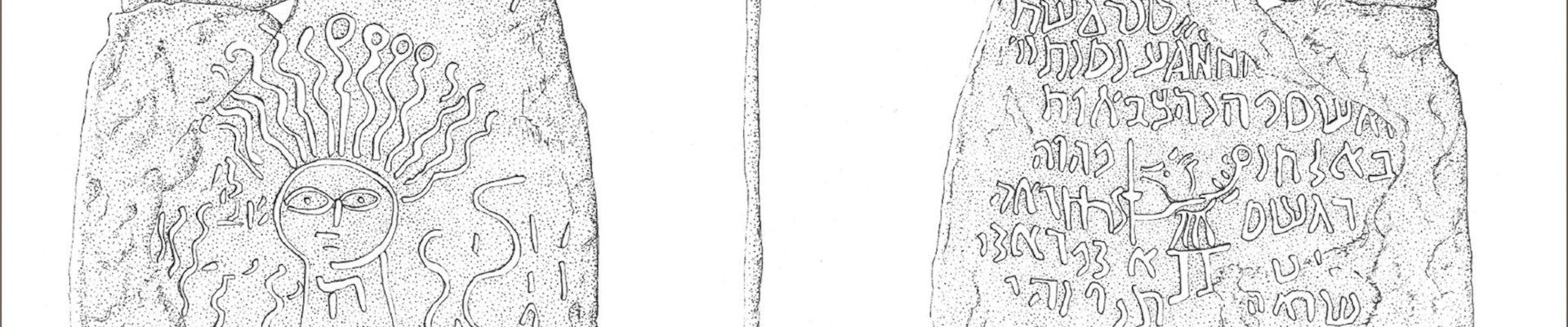
Pp. 161-196: “Magic in the Levant: On Some Late Antique Amuletic Plaque-Pendants,” by Alexandra Uscatescu and Alexander Bar-Magen Numhauser

The recent translation of an inscribed magical amulet with an Aramaic text found in the macellum of Gerasa (Jerash, Jordan) presents new evidence on magical practices at the end of Late Antiquity and allows for the re-assessment of a particular group of bronze amulets made in the Syrian-Palestinian region. This analysis offers a thorough review of our knowledge about the whole group of amuletic plaque-pendants, especially regarding the syncretic aspects of this craft. Therefore, the following paper proposes to adjust the definition of this group’s features to a new typology.

ASOR Members with online access: log into ASOR’s Online Portal here. Once logged in, click the JOURNALS tab in the top navigation bar. Tutorials for how to log in to the Online Portal as well as how to navigate to the Portal Journals page can be found here.

BASOR-394-article-9-banner

Pp. 197-219: “The Site of Gird Qalachogan, Iraqi Kurdistan: Salvage Excavations and Survey,” by Petra M. Creamer, Kyra Kaercher, Glynnis Maynard, Nader Babakr, Jason Ur, Rafeeq Bradosti, Khalil Barzinjy, and Timothy Matney

Gird Qalachogan is a mounded settlement in Iraqi Kurdistan located just north of Erbil’s city limits. It was primarily occupied in the Middle and Late Bronze Age, reaching a size of around 14 ha. Recent damage inflicted on the site by local construction projects has put its preservation in a dire situation, with parts of the mound being carved away by backhoe cuts. Salvage excavations were carried out in 2022 with the intent of defining and identifying features revealed in cuts on the western edge of the mound. A survey of the site and surface collections were also carried out to form a comprehensive understanding of Qalachogan’s extent and occupation periods. This article presents the results of both investigations, concluding that the site was likely once an important Bronze Age center in the 2nd millennium B.C.E. with non-sequential phases of occupation into Islamic periods. Notable finds include a monumental building and vaulted tomb dating to the Middle Bronze Age and an in-situ cremation burial potentially belonging to the Late Bronze Age.

ASOR Members with online access: log into ASOR’s Online Portal here. Once logged in, click the JOURNALS tab in the top navigation bar. Tutorials for how to log in to the Online Portal as well as how to navigate to the Portal Journals page can be found here.

BROWSE THE NEWS ARCHIVE

  • Fieldwork Report: Joshua Feland
  • FOA Webinar: Yana Tchekhanovets
  • Spring 2026 Book Sale
  • Fieldwork Report: Atakan Atabas

Latest Posts from @ASORResearch

asor_research

Initiating and supporting research of the history and cultures of the Near East and wider Mediterranean world.


ASOR's Early Career Scholars hosted Dr. Danielle M
ASOR's Early Career Scholars hosted Dr. Danielle Macdonald (The University of Tulsa) for their Spring 2026 Brown Bag lecture, "Scientific Publishing in Archaeology: Ask an Editor." Dr. Macdonald provides insights into the publication process, including understanding peer review, manuscript preparation best practices, responding to reviewer comments, and current trends in scientific archaeological publishing, such as open access models. Watch the lecture on YouTube at the link in our bio: https://www.youtube.com/watch?v=JDQxb_I0A3Y


Join us for the next Friends of ASOR webinar on We
Join us for the next Friends of ASOR webinar on Wednesday, April 29th at 12:30pm ET: “New Excavations at Nessana, Negev: Late Antique Pilgrimage Hub on the Desert Fringe” presented by Yana Tchekhanovets. The ancient settlement of Nessana, located in the southwestern Negev, on the modern Israeli–Egyptian border, is a key site for the study of early Christian pilgrimage. This lecture will present the preliminary results of the first four seasons of renewed excavations at the site. Read more and register at the link in our bio: https://www.asor.org/news/2026/04/webinar-tchekhanovets


Our #ObjectoftheWeek is a terracotta model of a bo
Our #ObjectoftheWeek is a terracotta model of a boat with multiple persons and birds, decorated with geometric patterns. From Cyprus, Middle Bronze Age, ca. 2000-1600 BCE. Louvre AM972. Credit: Musée du Louvre, Dist. GrandPalaisRmn / Raphaél Chipault
#Archaeology #Cyprus #BronzeAge


Ancient Nessana is not associated with any biblica
Ancient Nessana is not associated with any biblical events or major relics. However, during the Byzantine period, it emerged as a prominent Christian center for pilgrims traveling to Sinai. Read more in the latest ANE Today at the link in our bio: https://anetoday.org/ancient-nessana-pilgrimage/
📸 ©Nessana Expedition


Don't forget to tune in TONIGHT at 7:00 pm ET for
Don't forget to tune in TONIGHT at 7:00 pm ET for the next FOA webinar presented by Dr. Kevin Fisher: "Kalavasos and Maroni Revisited: New Explorations of Late Bronze Age Urban Landscapes in Southcentral Cyprus." If you haven't already signed up, click the link in our bio to register for free: https://buff.ly/Me2Ax1K


Atakan Atabas, a PhD student at the University of
Atakan Atabas, a PhD student at the University of Central Florida, received a Shirlee Meyers/G. Ernest Wright Fellowship to excavate at Kerkenes, Türkiye in 2025. During the 2025 season, Atakan contributed to survey and geophysical work, including electrical resistivity mapping, while also engaging with local communities and exploring how interdisciplinary approaches can be applied. Read more at the link in our bio: https://www.asor.org/news/2026/03/fieldwork-report-atabas
#Turkiye


April 15 is the last day to register for the 2026
April 15 is the last day to register for the 2026 Annual Meeting and take advantage of Early Bird savings. If you are planning to join us in Chicago, November 18–21, don’t miss your chance to save $50 by registering today. A full and exciting program is taking shape, featuring engaging sessions and workshops, new research, and plenty of opportunities to connect with friends and colleagues. We look forward to welcoming you this November at the Hilton Chicago. Register now at the link in our bio: https://www.asor.org/am/2026/annual-meeting-registration-2026


Since launching in January, ASOR’s Sudan National
Since launching in January, ASOR’s Sudan National Museum Access Project has made steady progress in strengthening site security and restoring key infrastructure at the Sudan National Museum in Khartoum. Over the last three months, the work has focused on two main priorities: repairing a damaged enclosure wall and clearing the property’s sewage drainage system. Read the project update here: https://www.asor.org/chi/updates/2026/04/sudan-museum-project-update
#Sudan


Do you know of a recently published great book 📚️
Do you know of a recently published great book 📚️ on the ancient Near East and Eastern Mediterranean? Nominate it for a Book Award today! ASOR is proud to give three awards annually: the Frank Moore Cross Award, the Nancy Lapp Popular Book Award, and the G. Ernest Wright Award. Nominations are due by May 1: https://www.asor.org/about-asor/honors-awards/
📸 winner of the 2025 Cross Award


Join us for the next Friends of ASOR webinar on We
Join us for the next Friends of ASOR webinar on Wednesday, April 15th at 7:00pm ET: “Kalavasos and Maroni Revisited: New Explorations of Late Bronze Age Urban Landscapes in Southcentral Cyprus,” presented by Dr. Kevin Fisher. Compared with some of its better-known neighbors in the ancient eastern Mediterranean and Near East, Cyprus sees the relatively late emergence of urbanism. Its first cities appear in the Late Bronze Age (c. 1700-1100 BCE), along with other changes to the built environment. This talk presents the results of recent work by the Kalavasos and Maroni Built Environments (KAMBE) Project, a collaborative and interdisciplinary investigation of the relationship between urban landscapes and social change in south-central Cyprus during the Late Bronze Age. Register at the link in our bio: https://www.asor.org/news/2026/03/webinar-fisher
#Cyprus #BronzeAge


The cuneiform sources of ancient Mesopotamian hist
The cuneiform sources of ancient Mesopotamian history are abundant. They are nevertheless incomplete, having been filtered by ancient processes of preservation and destruction, shaped by chance discoveries and scientific practices. Read the newest ANE Today by clicking the link in our bio: https://anetoday.org/cuneiform-written-artifacts/
#Mesopotamia #Cuneiform
📸: © Cécile Michel


Happy Passover! Our #ObjectoftheWeek is a hexagona
Happy Passover! Our #ObjectoftheWeek is a hexagonal glass pilgrim's jar from ca. 578-636 CE, with Jewish symbols such as the menorah on it. Such jars were often made for pilgrims visiting holy sites or for use in burial rituals. Credit: Metropolitan Museum of Art. 1972.118.180
#Archaeology #Byzantine #Passover


The newest issue of Near East Archaeology includes
The newest issue of Near East Archaeology includes articles like: Evolution, Resilience, and Collapse of Prehistoric Settlements in the Bavanat River Basin, Southern Iran; Script over Sealings: Proto-Elamite Bureaucratic Innovation at Tepe Sofalin, Iran; Intramural Nonadult Burials at Tell Muhammad (in Baghdad) during the Old Babylonian Period (1894–1595 BCE): A Preliminary Assessment of Legacy Data; Khirbet el-‘Eika: A Hellenistic Estate in the Lower Galilee; An Example of the Architectural Integrity of Historical Bridges: The Agora Bridge from the Period of Justinian I in Dara (Anastasiopolis); and more. Check out the Table of Contents here: https://www.asor.org/news/2026/03/nea89.1-toc/


With over $4,000 raised, ASOR's March Fellowship M
With over $4,000 raised, ASOR's March Fellowship Madness has reached our final push. Help us get to $6,000 so 3 students can receive dig scholarships this summer—and stay tuned to see which artifact will emerge victorious! https://buff.ly/XPKQcGL
#MarchMadness


A reminder to check out ASOR's spring book sale be
A reminder to check out ASOR's spring book sale before it ends! ASOR members (with a US mailing address) can purchase ASOR books 2+ years old at the discounted price of $10.00. Check our website for the list of titles still available.


ASOR Board Member Rick St. Hilaire was recently pu
ASOR Board Member Rick St. Hilaire was recently published in The Hill for his opinion piece on protecting Iran's cultural heritage. You can find the article link in our bio.
#Archaeology #CulturalHeritage #Iran #Preservation

Image: Investiture scene, rock relief of Sasanian king Bahram Ist at Bishapur (said Bishapur V). Iran, province of Fars. Credit: Pentocelo/Wikimedia Commons.


Reminder: the final deadline to submit paper abstr
Reminder: the final deadline to submit paper abstracts and workshop presentation proposals for the 2026 Annual Meeting is April 1! ASOR academic membership and Annual Meeting registration are required to access the submission form in the ASOR Abstract Center. Read the Call for Papers on how to submit by clicking the link in our bio: https://www.asor.org/am/2026/call-for-papers-2026


Make sure to tune in TONIGHT at 7:00 pm ET for the
Make sure to tune in TONIGHT at 7:00 pm ET for the next FOA webinar presented by Neville McFerrin: "'Lions, Rams, and Kings: Interpreting Animals at Persepolis". If you haven't already signed up, click the link in our bio to register for free: https://www.asor.org/news/2026/03/webinar-mcferrin


As March Madness hits the Sweet 16, ASOR's March F
As March Madness hits the Sweet 16, ASOR's March Fellowship Madness has reached our first goal! With over $2,000 raised so far—thus one more student receiving a fieldwork scholarship—our artifacts have advanced to the next round. Help us get to $4,000 so we can send another student on a dig this summer, and follow along to see which artifact will be crowned a winner! 
#MarchMadness #Archaeology #Scholarships


Join ASOR’s Early Career Scholars on April 3 from
Join ASOR’s Early Career Scholars on April 3 from 12:00-1:00pm ET via Zoom for a virtual Brown Bag talk on scientific publishing in archaeology, led by Dr. Danielle Macdonald, co-Editor of the Journal of Archaeological Science: Reports. This session will provide insights into the publication process including understanding peer review, manuscript preparation best practices, responding to reviewer comments, and current trends in scientific archaeological publishing such as open access models. Register for the free lecture by clicking the link (https://www.asor.org/news/2026/03/ecs-macdonald) in our bio.


Instagram

Stay updated with the latest insights, photos, and news by following us on Instagram!

Follow Us on Instagram

American Society of Overseas Research
The James F. Strange Center
209 Commerce Street
Alexandria, VA 22314

E-mail: info@asor.org

© 2025 ASOR
All rights reserved.
Images licensed under a Creative Commons Attribution-NonCommercial-ShareAlike 4.0 International License

Contact Us
Membership
Give
Friends of ASOR
ASOR Cultural Heritage Initiatives
Terms of Use
News

Please follow & like us :)
Facebook
YouTube
LinkedIn