Friends of ASOR Philadelphia Tour 2026 Recap

Behind the Scenes in Philadelphia: Two Days with Friends of ASOR

On the bright spring morning of April 16, a group of Friends of ASOR gathered just inside the entrance of the Penn Museum. There was a shared sense of anticipation for the next two days of stepping into the working world of museums and collections, archaeology, and curation. Our Friends of ASOR in Philadelphia tour gave the opportunity not simply to see the incredible objects of some of the city’s greatest institutions, but also to encounter them in context, guided by the scholars and specialists who found and study them.

Among Ancient Worlds at the Penn Museum

The first day kicked off in the Penn Museum’s Middle East Galleries, where towering Assyrian reliefs and intricately inscribed tablets offered a powerful introduction to the ancient Near East. Moving through the galleries together, the group learned not only how these objects were made, used, found, and but also how they were ultimately brought into museum collections.

In the Ancient Egypt in Watercolors exhibition, Dr. Josef Wegner gave the group the special insight into materials found at Dra Abu el-Naga, as well as the exemplary, century-old watercolors documenting Egyptian tomb paintings. Created by Egyptian artist Ahmed Yousef during Penn Museum excavations in the early 1920s, these paintings vividly record elaborately decorated funerary chapels from Dra Abu el-Naga, a key burial ground of elite officials and priests during Egypt’s New Kingdom (ca. 1550–1070 BCE).

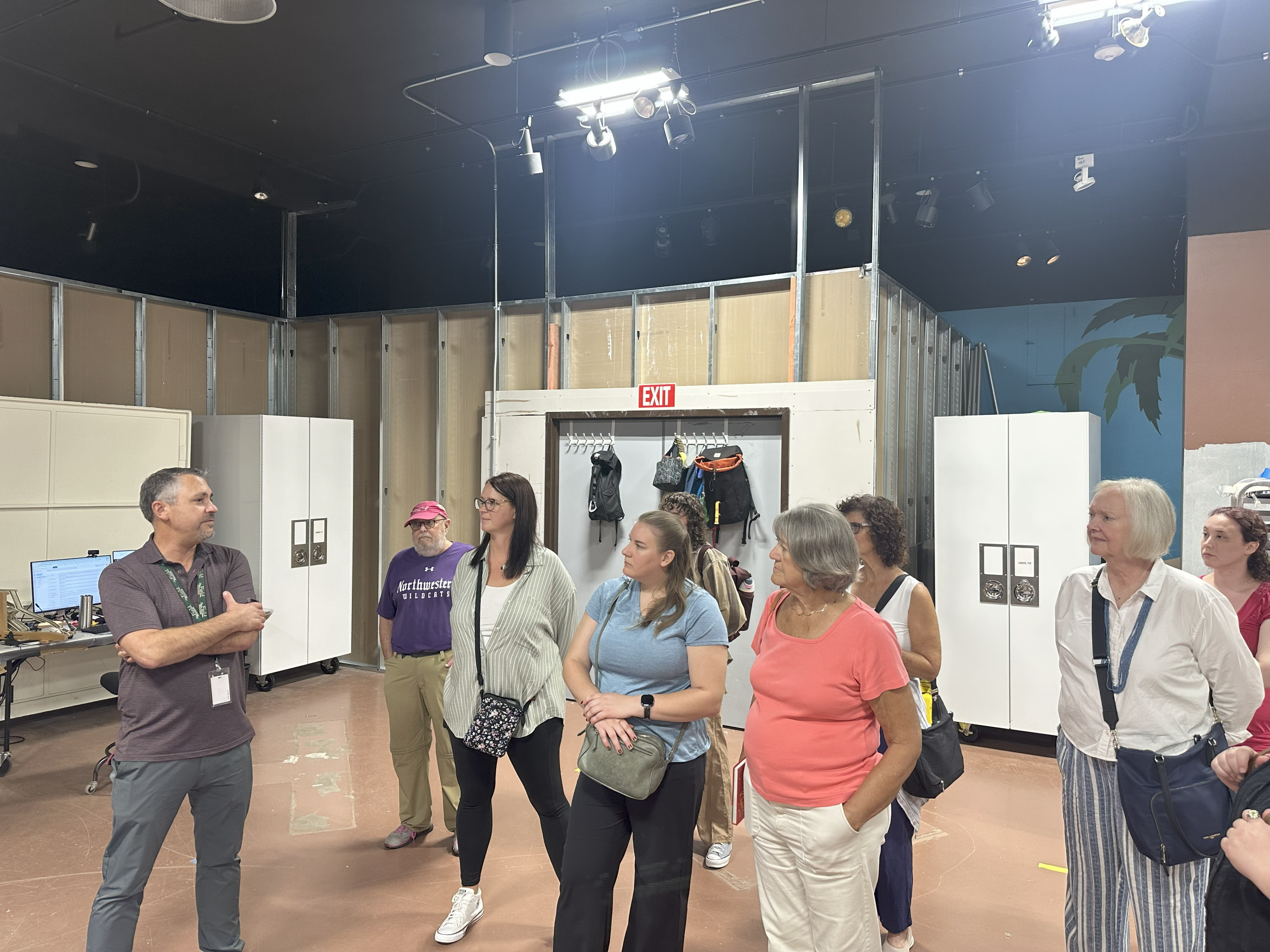
By the afternoon, the tour shifted from the public galleries into spaces few visitors ever see. Inside the Center for the Analysis of Archaeological Materials led by Dr. Marie-Claude Boileau, the Near Eastern Storage with Dr. Katy Blanchard, and Tablet Room with Dr. Phil Jones and Dr. Steve Tinney, participants stepped into laboratories where archaeology is not just displayed, but actively practiced. Specialists explained how materials are analyzed to reveal stories invisible to the naked eye.

What had begun as observation became a deeper understanding of the meticulous work and stories that underlie each museum display.
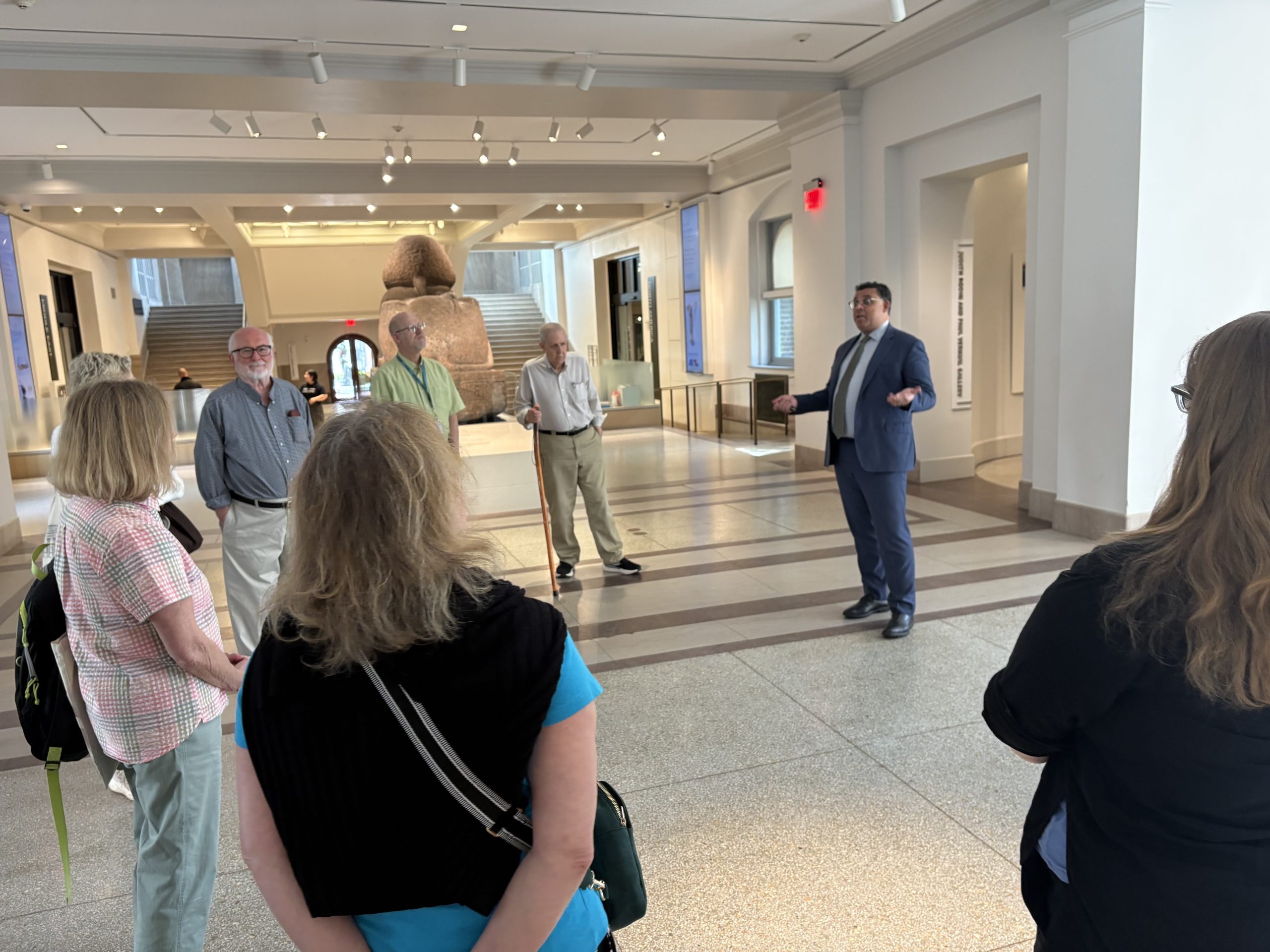
Dr. Chris Woods, director of the Penn Museum, welcomes the Friends of ASOR group on April 16, 2026.

Dr. Chris Woods, director of the Penn Museum, welcomes the Friends of ASOR group on April 16, 2026. (Credit: ASOR)


A New Lens at the Barnes Foundation

The second day began at the Barnes Foundation, where a private lecture led by Dr. Kaelin Jewell offered a different lens on the ancient world through Albert Barnes’s philosophy on art and collecting antiquities. Rather than focusing solely on archaeology, the conversation broadened to include the history of collecting, display, and interpretation, as well as identifying the potential pitfalls of collecting and forgeries.

Moving through the galleries, participants encountered Egyptian, Greek, and Roman objects in dialogue with paintings and decorative arts from across centuries. The juxtaposition invited new questions: How do we interpret ancient objects outside of archaeological contexts? What stories and patterns emerge when they are placed alongside later works?
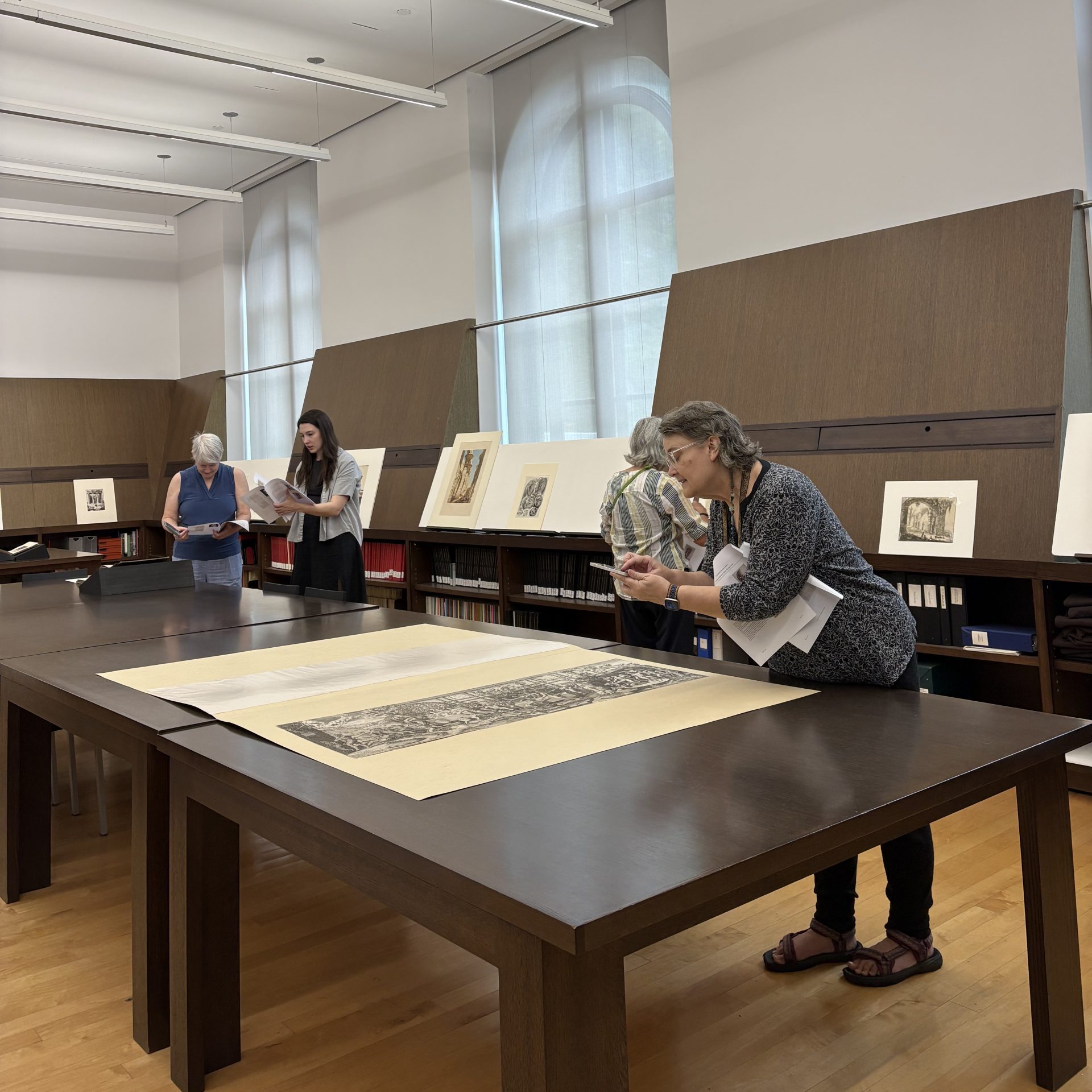
Friends of ASOR discover prints, drawings, and photographs in the Philadelphia Museum of Art's Print Room on April 17, 2026. (Credit: ASOR)

Friends of ASOR discover prints, drawings, and photographs in the Philadelphia Museum of Art’s Print Room on April 17, 2026. (Credit: ASOR)


Hidden Treasures at the Philadelphia Museum of Art

That afternoon, the group arrived at the Philadelphia Museum of Art for one of the tour’s most exclusive and intimate moments: a visit to the Abigail Rebecca Cohen Study Room. Here, away from the crowds, participants gathered around tables as works on paper—prints, drawings, and photographs—were carefully brought out for close viewing. ASOR President Dr. Jane DeRose Evans welcomed the group and joined in the afternoon’s close and unique encounter with the Prints Collection.

Without glass barriers or gallery noise, each object was given ample time and reflection by the viewer. Fine lines, subtle textures, and traces of the artist’s hand and eye became visible up close. Conversations unfolded naturally with curator Nora Rosengarten, guided by curiosity and up-close observation.

It was, in many ways, a fitting conclusion to the tour: a reminder that the study of the past is as much about careful observation as it is about grand narratives.
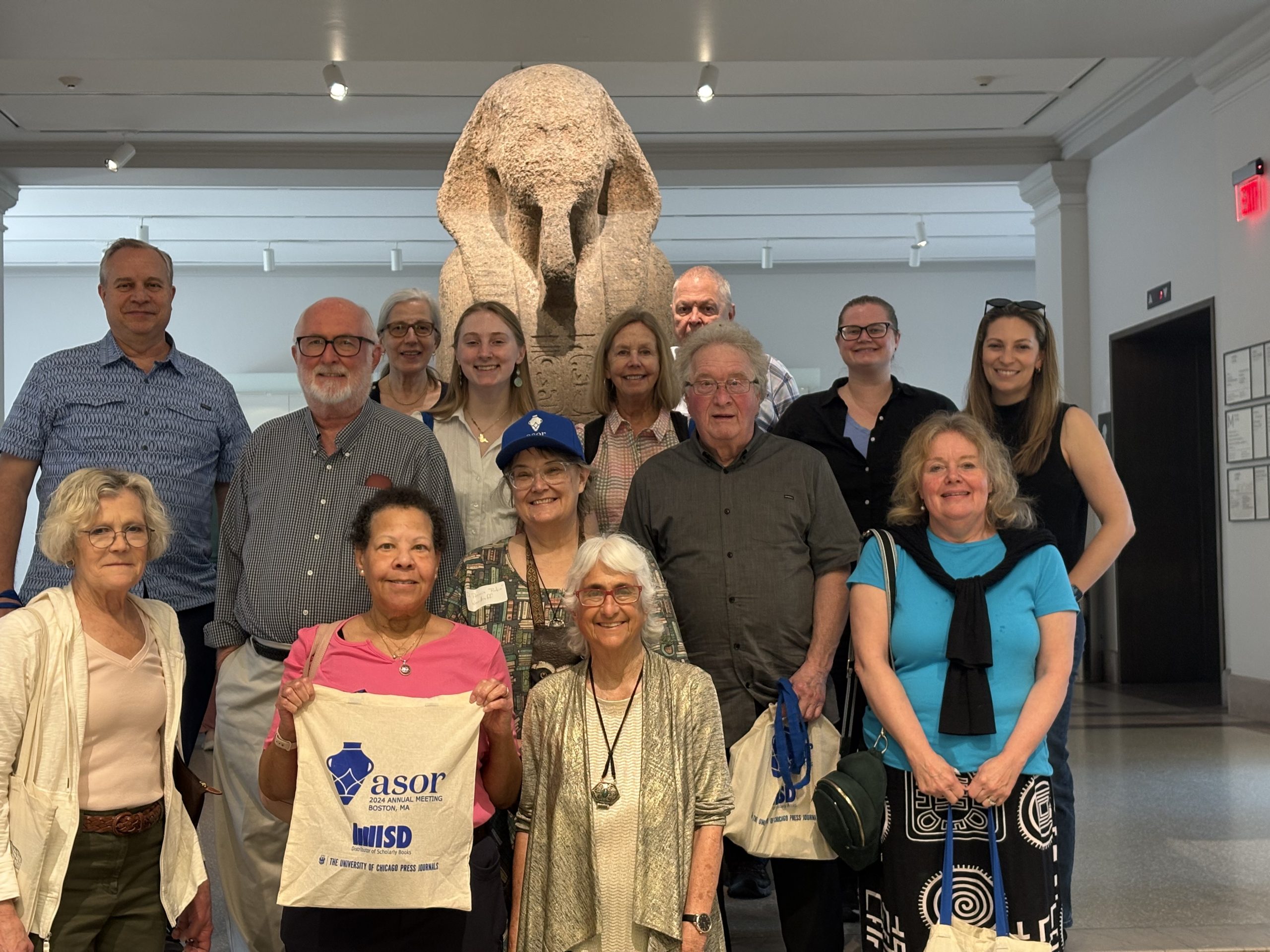
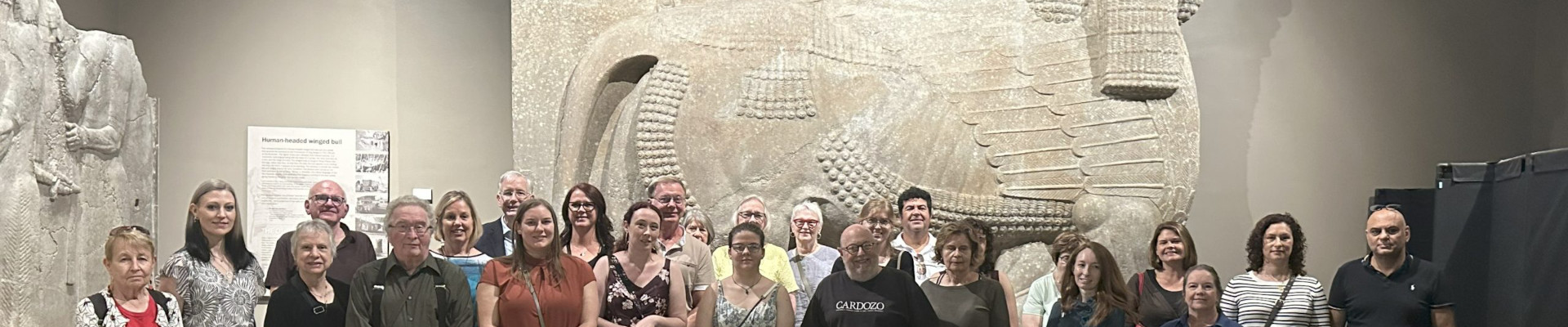
Friends of ASOR at the Penn Museum in Philadelphia, April 16, 2026.

Friends of ASOR at the Penn Museum in Philadelphia, April 16, 2026. (Credit: ASOR)


Lasting Connections

Across the two days, what emerged most clearly was a sense of shared discovery. Participants were active participants in an ongoing dialogue by asking questions, making connections, and engaging directly with the people who dedicate their careers to understanding the past.

These two days defined the Friends of ASOR tour experience. The FOA tours offer not only access, but a deeper understanding of how archaeology and museums work together to preserve and interpret human history.
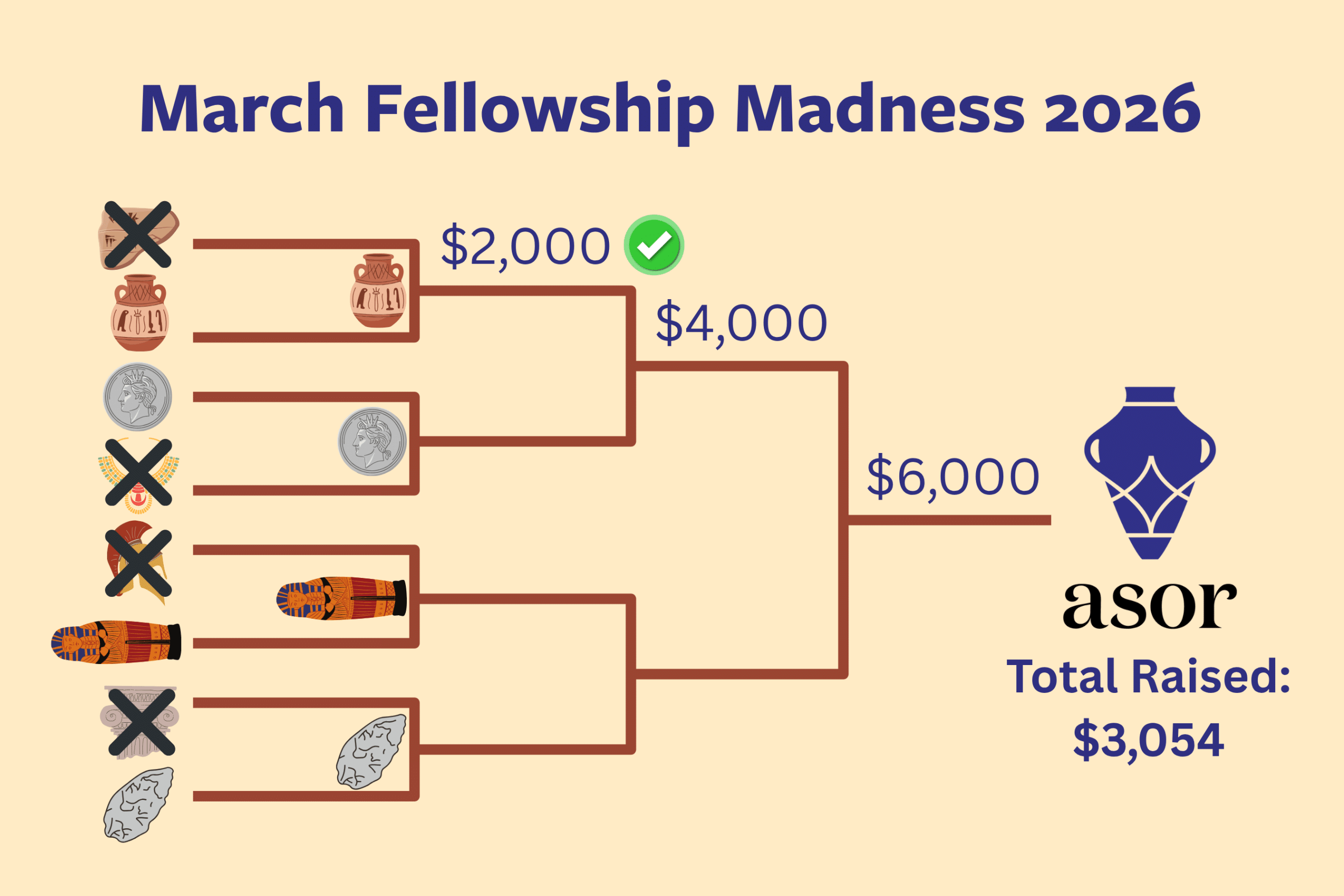
March Fellowship Madness 2026: Bracket of Impact

March Fellowship Madness 2026: Bracket of Impact

March is here — and so is ASOR’s March Fellowship Madness!

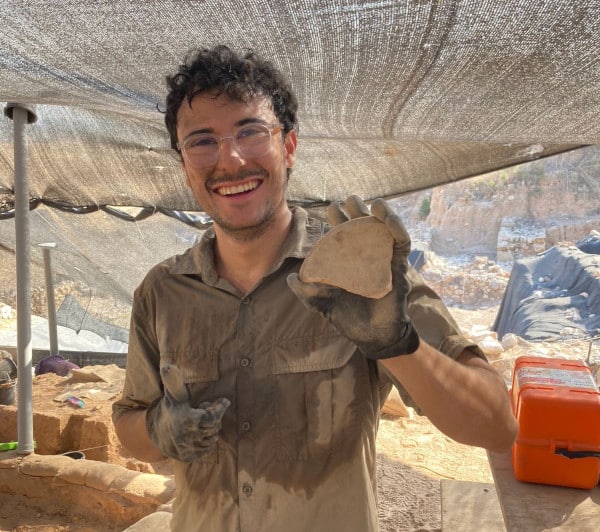
This year, we invite you to step into our Bracket of Impact,where every gift advances the next generation of archaeologists. Fieldwork Scholarships open doors to mentorship, hands-on training, and connections that shape the future of our field.

Here’s how the Bracket of Impact works:

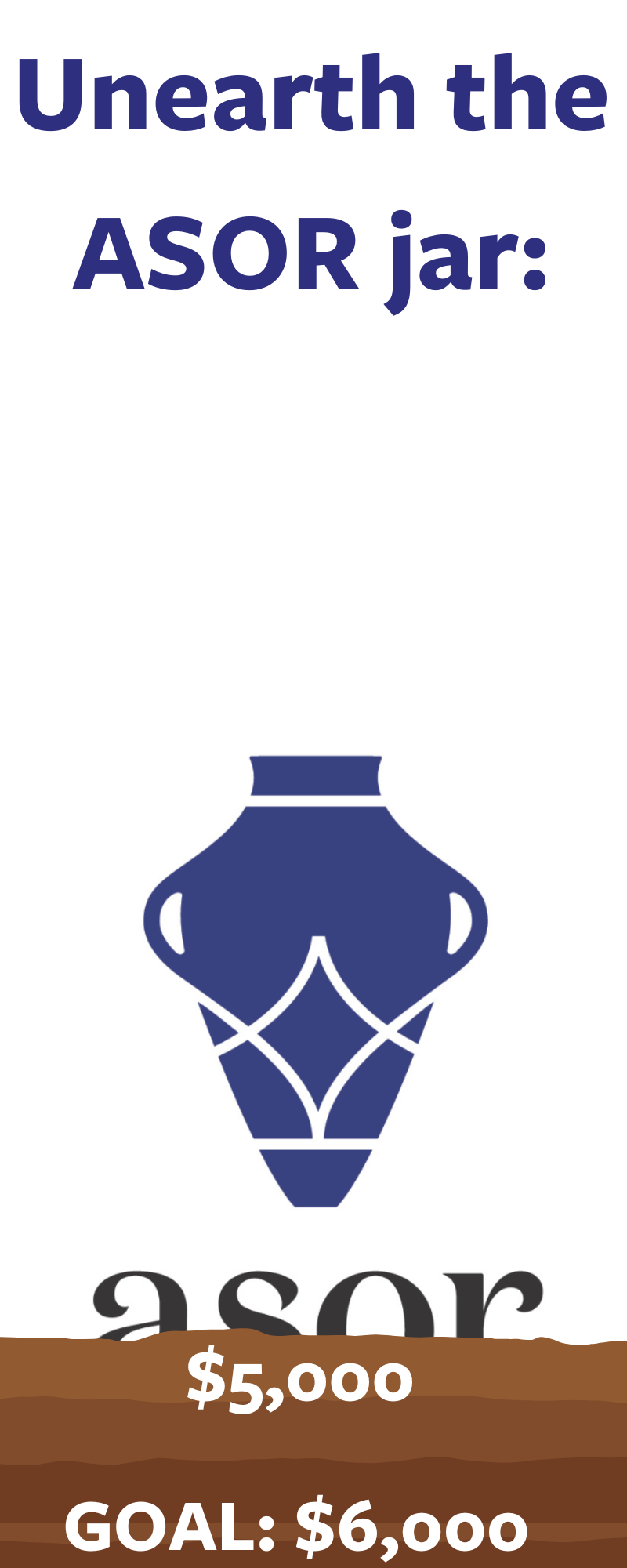
Our goal is to raise $6,000 by March 31 which would fund scholarships for three more students. 100% of your gift will go directly toward funding student fieldwork participation. Every gift moves us forward, and every donor becomes part of a winning team by supporting emerging scholars.

As donations come in, we’ll update our Bracket of Impact so you can track our progress and see which of your favorite artifacts below advances to the next round.

Whether you give $25, $250, or champion a full scholarship, your support makes a measurable difference in a young archaeologist’s journey.

ASOR provides these scholarships with your partnership. You are enabling ASOR to establish new scholarships and grants through endowed funds, but your annual support (i.e., gifts this year) will allow ASOR to send more eager students and early career scholars into the field. Please support archaeology’s next generation by making a gift today and selecting “Fieldwork Scholarships” as the designation for your gift. You may also make a designated gift by choosing any category from the drop-down menu on the donations module.


*If archaeological excavations are significantly disrupted or canceled in 2026, ASOR may, at its sole discretion, decide not to offer fieldwork scholarships. Fieldwork scholarships cannot be deferred; applicants may reapply either for fieldwork funding in 2027 or for non-fieldwork summer stipends if ASOR offers such stipends in 2026.

If ASOR does not award fieldwork scholarships in 2026, it will consult with donors to determine whether they prefer to have their contributions held for 2027 fieldwork scholarships or redirected to support non-fieldwork summer research stipends in 2026.

Spring Internships at ASOR

SPRING INTERNSHIPS AT ASOR

ASOR seeks candidates for part-time internship positions to begin around mid-January. These paid internships are for the spring semester (January-May) with the possibility of renewal for the summer and/or fall semester. Interns are expected to work 10–15 hours per week at ASOR’s headquarters—The James F. Strange Center, 209 Commerce St., in historic Old Town Alexandria, VA. Hours and schedule are flexible depending on school or other commitments.

For 125 years, ASOR has been a flagship for archaeology, history, and cultural heritage in the Middle East and wider Mediterranean, supporting professional standards for excavations, research, peer review, and conduct. ASOR has a unique ability to bring together scholars from archaeology, history, science and other fields to protect and study cultural heritage and share its importance with the public especially as so many sites are being threatened or destroyed. Please visit www.asor.org for more information.

Primary Responsibilities:

  • Maintain high-quality customer service for ASOR’s members and friends
  • Assist with the maintenance of ASOR’s website
  • Provide general office support (e.g., scanning, copying, ordering supplies, and processing mail, orders, and bills)
  • Assist with membership and donation mailings
  • Assist with managing ASOR’s social media platforms
  • Perform other office duties as assigned

Qualifications / Skills Desired:

  • General office skills
  • Customer service
  • Microsoft Office
  • Database management
  • Familiarity with social media platforms (Instagram, Facebook, LinkedIn, and X/Twitter)
  • Graphic and image design and editing (Adobe Photoshop, Canva, etc.)
  • Website management (WordPress or similar)
  • Excellent communication and interpersonal skills
  • Attention to detail; ability to multitask and to prioritize

Compensation: $15/hour for undergraduate interns, $20/hour for graduate interns.

How To Apply: E-mail your resume and a brief statement of interest to Marta Ostovich at programs@asor.org. Please include your name and “ASOR Spring Internship” in the subject line.

Review of applications will begin immediately and continue until the positions are filled.

ASOR is an equal opportunity employer, and all qualified applicants will receive consideration for employment without regard to race, color, gender, religion, national origin, disability, veteran status, age, marital status, sexual orientation, gender identity, genetic information, or any other class protected by federal or state law (EEO/AA).

Board of Trustees Election Results

2025 ASOR BOARD OF TRUSTEES ELECTION RESULTS

Thank you to all the ASOR members who voted in this year’s Board of Trustees election!

The Board of Trustees sets the direction for ASOR and provides oversight for our organization. Among other responsibilities, members of the Board agree to attend two meetings each year, to participate thoughtfully in the governance process, and to contribute financially to ASOR. All ASOR members are eligible to vote in the Member-elected Trustee Election, while only Institutional Representatives of the 55 ASOR-member schools may vote in the Institutionally-elected Trustee Election.

Yorke Rowan and Ido Koch will serve 3-year terms as Member-elected Trustees.

Kathryn Grossman and Michael Hasel will serve 3-year terms as Institutionally-elected Trustees.

Read more about the newly-elected and reelected Trustees below.

 
Yorke Rowan

Yorke Rowan is an anthropological archaeologist and Research Professor at the Institute for the Study of Ancient Cultures (formerly the Oriental Institute) at the University of Chicago. He focuses on later prehistory (Late Neolithic, Chalcolithic, and Early Bronze), with thematic research interests in death, prehistoric ritual performance, and material objects mediating these human actions. He is a Fulbright Scholar to Jordan and a NEH Fellow at the W.F. Albright Institute for Archaeological Research in Jerusalem and the American Center of Research in Amman. His most recent publications include The Social Archaeology of the Levant: From Prehistory to Present (2019, Cambridge Press, co-edited with A. Yasur-Landau and E. Cline), “Desert Kites: Neolithic Infrastructure in the Margins” in Infrastructure in Archaeological Discourse: Framing Society in the Past (2024, Routledge, co-authored with A. C. Hill) and “The Black Desert Drone Survey: New Perspectives on an Ancient Landscape” in the journal Remote Sensing (2022) with A.C. Hill. He co-directs the NSF funded Kites in Context and Eastern Badia Archaeological Projects, two projects in the Black Desert of Jordan.

Mission Statement: Since the 1990s, ASOR has been fundamental to my development as a professional scholar and field archaeologist. The first grant I received for field research was an ASOR travel scholarship, and the first national professional paper I delivered was at ASOR in New Orleans. I have a long dedication to the success of ASOR, serving on the editorial boards of Bulletin of the American Schools of Overseas Research and Near Eastern Archaeology, co-chairing the Program Committee after for two previous terms on the committee, serving on the Honors and Awards Committee, and the Committee on Archaeological Policy. In addition, I co-chaired and co-organized various sessions such as the standing session “Prehistoric Archaeology” (2015, 2019-2021) and the member organized “Archaeology of Religion and Ritual” (2005-2006). My involvement with ASOR is complemented by extensive engagement with communities on the ground in different countries, emphasizing my commitment to creating more collaborative opportunities with colleagues based abroad.

The organization has grown tremendously since I joined as a graduate student, with a welcome expansion to include a broader range of topics, geographic regions, and chronological periods. This growth is not limited to scholarly interests but includes increased worldwide accessibility through a hybrid meeting format. I believe it is important to sustain and build on this positive trend to build membership, engage with members at different career stages, and seek to find new collaborative partnerships that will only strengthen ASOR. As ASOR faces new challenges like complicated funding realities, regional civil unrest, and climate change, the organization must mount new initiatives and endeavors to respond to member needs. As a member of ASOR’s Board of Trustees, my goal will be to promote its mission to disseminate knowledge of western Asia and Mediterranean ancient societies, and to make that scholarship more accessible to the public. Finding creative ways to promote our research, particularly those of our research partners, to a variety of audiences is a challenge that will strengthen our organization and continue to interest future generations of students, the public, and scholars.

 
Ido Koch

Ido Koch is Associate Professor in the Department of Archaeology and Ancient Near Eastern Cultures at Tel Aviv University. A field archaeologist of the southern Levant, his research explores interregional connectivity, colonial encounters, visual language, craft, and material religion. He is the author of several monographs, dozens of articles, and co-editor of ten volumes. Koch co-directs the Tel Hadid Archaeological Project, the renewed excavations at Tel Qasile, and the final publication of the Tel Arad excavations—all of which place strong emphasis on innovative documentation strategies, community outreach, and the dissemination of archaeological knowledge to diverse audiences. He is co-PI of several collaborative ventures, including the historical–archaeological study of the depopulated Palestinian village of al-Haditha (one of the few academic archaeological projects addressing the recent past of Israel/Palestine), and the Stamp Seals from the Southern Levant Project together with its comprehensive open-access online companion database. Koch also serves as Editor-in-Chief of Tel Aviv: Journal of the Institute of Archaeology of Tel Aviv University and sits on several international editorial boards. Through his research and teaching, he integrates advanced digital tools with inclusive, community-based approaches, engaging both Jewish and Arab students, to help build inclusive and forward-looking connections between academic, archaeological, and wider communities in the study of the southern Levant.

Mission Statement: I have been a member of ASOR since 2009, have attended nearly all annual meetings since then, and have interacted with scores of ASOR members of all ages and backgrounds. ASOR has been my professional cradle and the place where I learned to appreciate the value of an international network, a value I hope my students will inherit.

As a scholar based in the Middle East, I believe ASOR must strengthen the representation of voices from the regions it studies. The societies who live in the lands whose pasts we uncover deserve a place in shaping how that past is researched, understood, and represented. As an Israeli archaeologist working on the remote and recent past of the southern Levant, I am acutely aware of the region’s diversity and complexity. Based on my experience, ASOR and its sister institutions (such as the W.F. Albright Institute) are uniquely positioned to foster dialogue between Israeli and Palestinian scholars, a dialogue urgently needed now more than ever. I see my role as a bridge: between ASOR and local scholarly and cultural communities, and between those communities themselves. In times of deepening divisions, we must hold fast to both our professional and human ties. In my fieldwork and collaborations, I strive to create spaces where Jewish and Arab students, alongside colleagues from different backgrounds and perspectives, can work together toward shared understanding. Archaeology can and should serve as a medium of dialogue, and as a reminder of our intertwined pasts and shared humanity.

Drawing on my experience directing and co-directing field projects, I recognize the need for ASOR to advance ethical, inclusive, and community-oriented archaeology. I propose developing a collaboratively produced “fieldwork toolkit,” drawing on the collective knowledge of ASOR-affiliated projects. This toolkit would guide projects that prioritize community engagement, the dissemination of results to local institutions, and accessible digital platforms for sharing data. Through such initiatives, I hope to help ASOR lead by example—making archaeology both academically rigorous and socially meaningful.

 
Kathryn Grossman

Kathryn Grossman is Assistant Professor of Anthropology in the Department of Sociology and Anthropology at North Carolina State University. She is an archaeologist with expertise in the Chalcolithic and Bronze Age cultures of Cyprus and Mesopotamia and a methodological specialty in zooarchaeology. She is Director of the ASOR-affiliated Makounta-Voules Archaeological Project (Cyprus), as well as zooarchaeologist for the Kani Shaie Archaeological Project (Iraqi Kurdistan), the Wadi el-Hudi Expedition (Egypt), and the Petra North Ridge Project (Jordan). She is currently co-editing, with Jesse Casana and Eric Jensen, the final report on the excavations at Tell Qarqur, Syria.

Mission Statement: I have been involved with ASOR for seventeen years. I began attending and presenting at the annual meeting as a graduate student, and my engagement has deepened over time. I served on the Committee on Archaeological Policy for two terms, and during that time I also chaired the CAP Fellowships Subcommittee. In 2018, I presented the work of the Fellowships Subcommittee at that year’s Legacy Dinner, and in 2023 I received an ASOR Service award for my work on the CAP Fellowships Subcommittee. I chair the Archaeology of Syria sessions at the Annual Meeting, am a member of the Damascus Committee, a member of the Executive committee, the chair of the Trustees Nominations Committee, and I serve as the institutional representative for ASOR at North Carolina State University. In my time as an ASOR member, I have watched the organization grow dramatically in its geographic scope and evolve to meet the demands of 21st-century scholarship. In serving as an Institutionally-elected member on the ASOR Board of Trustees, I look forward to helping ASOR move forward with the issues that loom before us, including increasing our outreach to diverse audiences at home and abroad, and promoting the preservation of tangible and intangible cultural heritage.

 
Michael Hasel

Michael G. Hasel is Director of the Institute of Archaeology and Lynn H. Wood Archaeological Museum at Southern Adventist University, where he also serves as Professor of Near Eastern Studies and Archaeology since 1998.

Hasel has participated and served in administrative capacities on eleven different excavations in the Middle East, including Gezer, Ashkelon, Dor, Miqne-Ekron, Masada, and Hazor, in Israel; Idalion, Cyprus; and Jalul in Jordan. He has directed excavations and surveys at Khirbet Qeiyafa and Socoh and currently is co-director of The Fourth Expedition to Lachish. As curator of the Lynn H. Wood Archaeological Museum, Hasel was responsible for planning and displaying art and objects from the ancient Near East in a state-of-the-art exhibit entitled “Vessels in Time: A Journey into the Biblical World” and several temporary exhibits including “Peace and War: The Assyrian Conquest of Lachish” (2023-2025) and “The Ivory Comb: Lice and Literacy at Lachish” (2025).

Hasel, an ASOR member since 1989, has chaired several ASOR sessions and served on the Agenda Committee. He held the Samuel H. Kress Fellowship at the W. F. Albright Institute for Archaeological Research (AIAR) in 1995-96 and a Fulbright at the Cyprus American Archaeological Research Institute (CAARI) in 2005 and the NEH Fellowship at the Albright Institute in 2025-26. He is also a fellow of the Institute for Biblical Research and Tyndale House, Cambridge.

Hasel joined the ASOR Board in January 2014.

Mission Statement: Over the past 36 years of my involvement with ASOR, I have watched ASOR grow into a strong society representing a wide variety of interests and research foci in the ancient Near Eastern and Mediterranean worlds. During that same period, I have been actively involved in excavations in Israel, Jordan, and Cyprus while also engaged in Egyptological research. As an excavator I am interested in encouraging the archaeological interplay between text and material culture. This integration has been one of the historic strengths of ASOR and I believe it remains vital as ASOR continues to position itself as an important and relevant voice to a large segment of North America. As a museum director part of my vision is to make our field relevant for future generations through popularizing archaeological discoveries and making it accessible to a larger segment of society. This would include encouraging young scholars who are searching for direction and belonging to get involved in ASOR while fostering connections in the regions it serves. To accomplish these goals, I would welcome the opportunity to continue to support and serve as a member of the Board of Trustees for another term.

Friends of ASOR Chicago Tour 2025 Recap

A Tour to Remember: Friends of ASOR in Chicago

What a fantastic two days! Friends of ASOR gathered in Chicago for an adventure through some of the city’s most inspiring museums. With 30 participants, the energy and curiosity were more than contagious.

Day 1: ISAC & Megiddo: A City Unearthed, A Past Imagined

We kicked off at the Institute for the Study of Ancient Cultures (ISAC) with the special exhibition Megiddo: A City Unearthed, A Past Imagined, curated by Kiersten Neumann. Marking 100 years since ISAC’s first major Megiddo expedition (1925–1939), the exhibit highlighted archaeological finds, palaces, fortifications, and elite material culture, while exploring how Megiddo has been represented in newspapers, institutional ambitions, and cultural narratives, as well as the people behind the excavations.

From archival correspondence and press clippings to a contemporary art film by Nick Crowe and Ian Rawlinson, the exhibition encouraged us to think about how archaeology shapes cultural memory. Before we ended at the new exhibit, Kiersten guided us through the ISAC galleries, where we spent time with some of the museum’s most notable pieces. Highlights included the Mesopotamian section, where the Assyrian lamassu stands guard beside cuneiform tablets, and the Egyptian gallery, with its statues, vividly painted coffins, and temple reliefs.

Kiersten shared ISAC’s curatorial approach, emphasizing context and storytelling as central to presenting the ancient world. We also saw how the museum integrates digital tools and updated scholarship to bring fresh perspectives to familiar artifacts. By the end of our visit, it was clear that ISAC continues to evolve as both a research center and a space for public engagement with the ancient past.

A Walking Monument Tour

After the galleries, we hit the streets for a walking monument tour of Chicago with Dr. Morag Kersel. This tour offered a new perspective on public spaces that reflect the city’s history and identity.

Morag led us through downtown streets and parks, pointing out monuments, plaques, and architectural details that tell Chicago’s stories. We learned what these sites commemorate, the values they represent, and what they leave out. The tour sparked discussion about public memory and its impact on community identity.

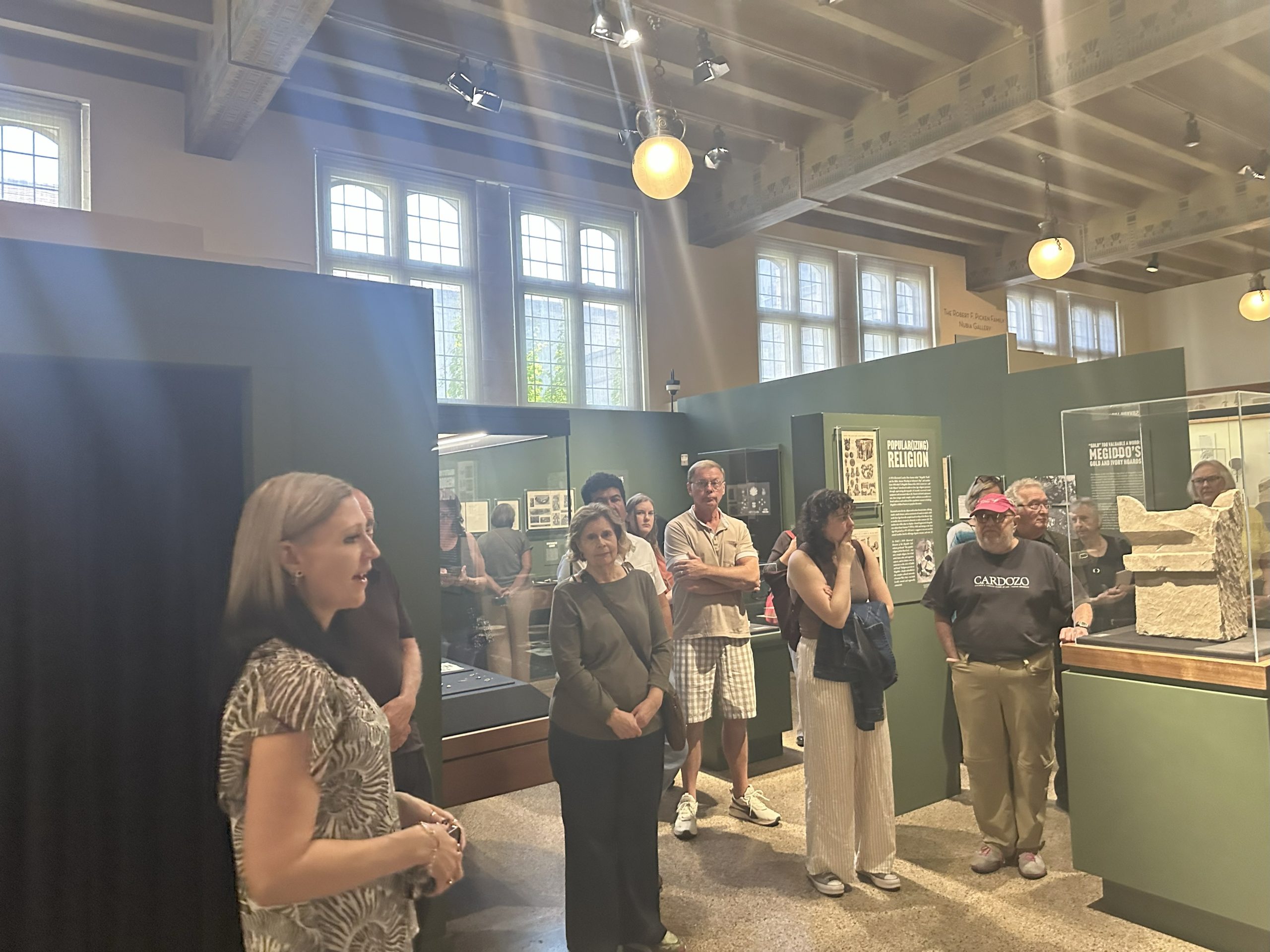
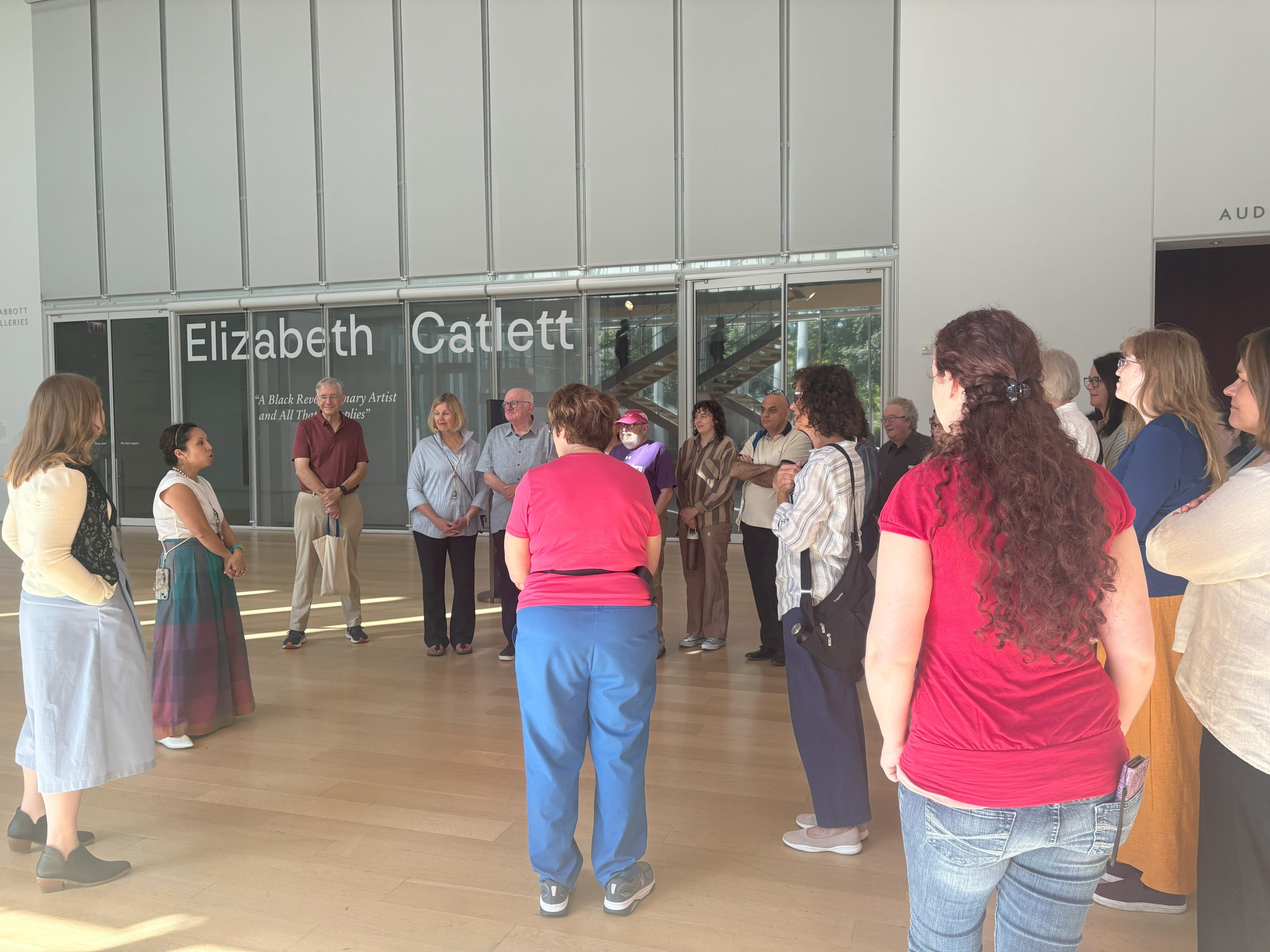
Kiersten Neumann discusses her new exhibit at ISAC: "Megiddo: A City Unearthed, A Past Imagined", Sept. 18, 2025.
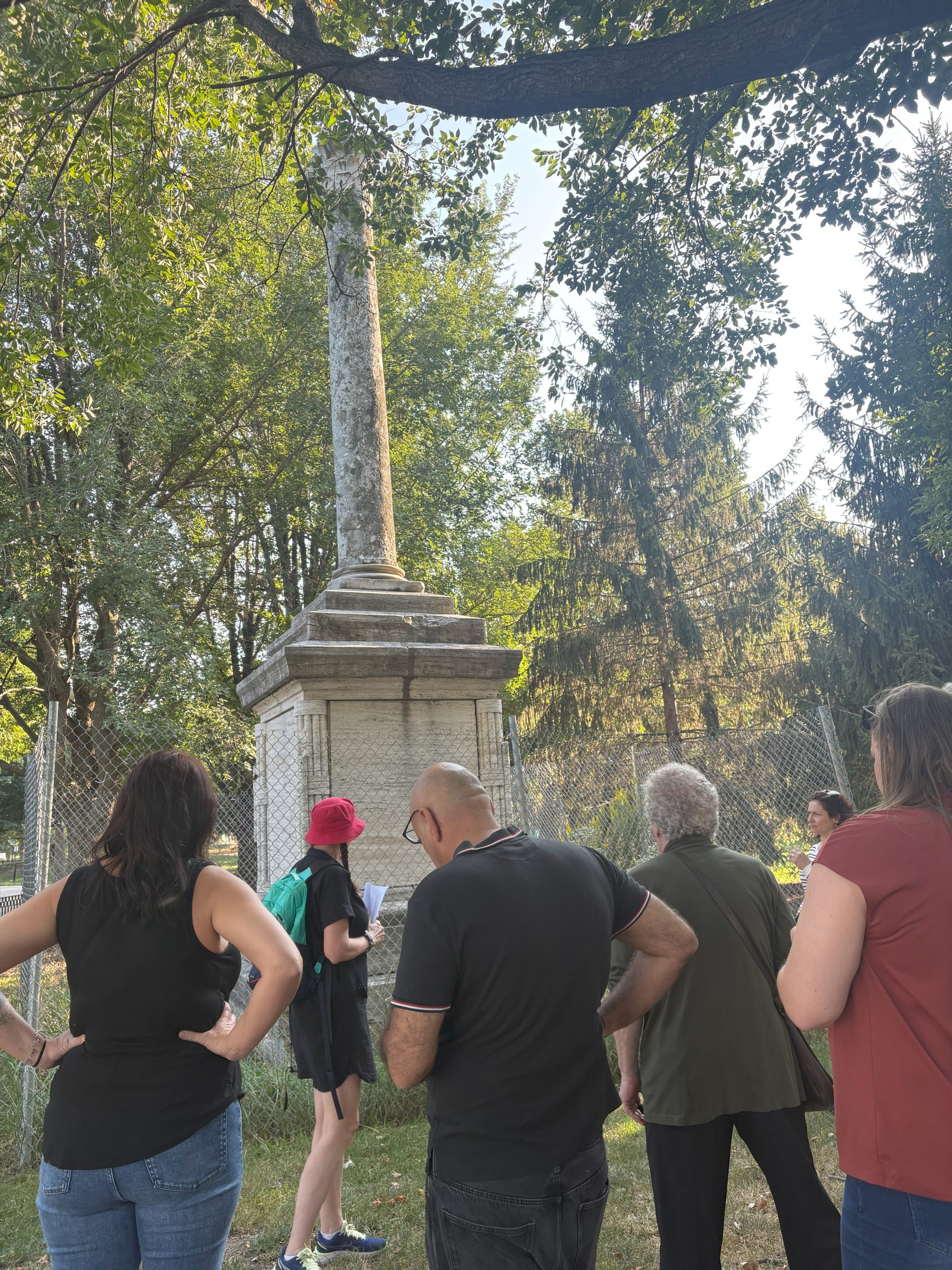
Morag Kersel brings the Friends of ASOR to the Balbo Monument during their walking tour of Chicago, Sept. 18, 2025.
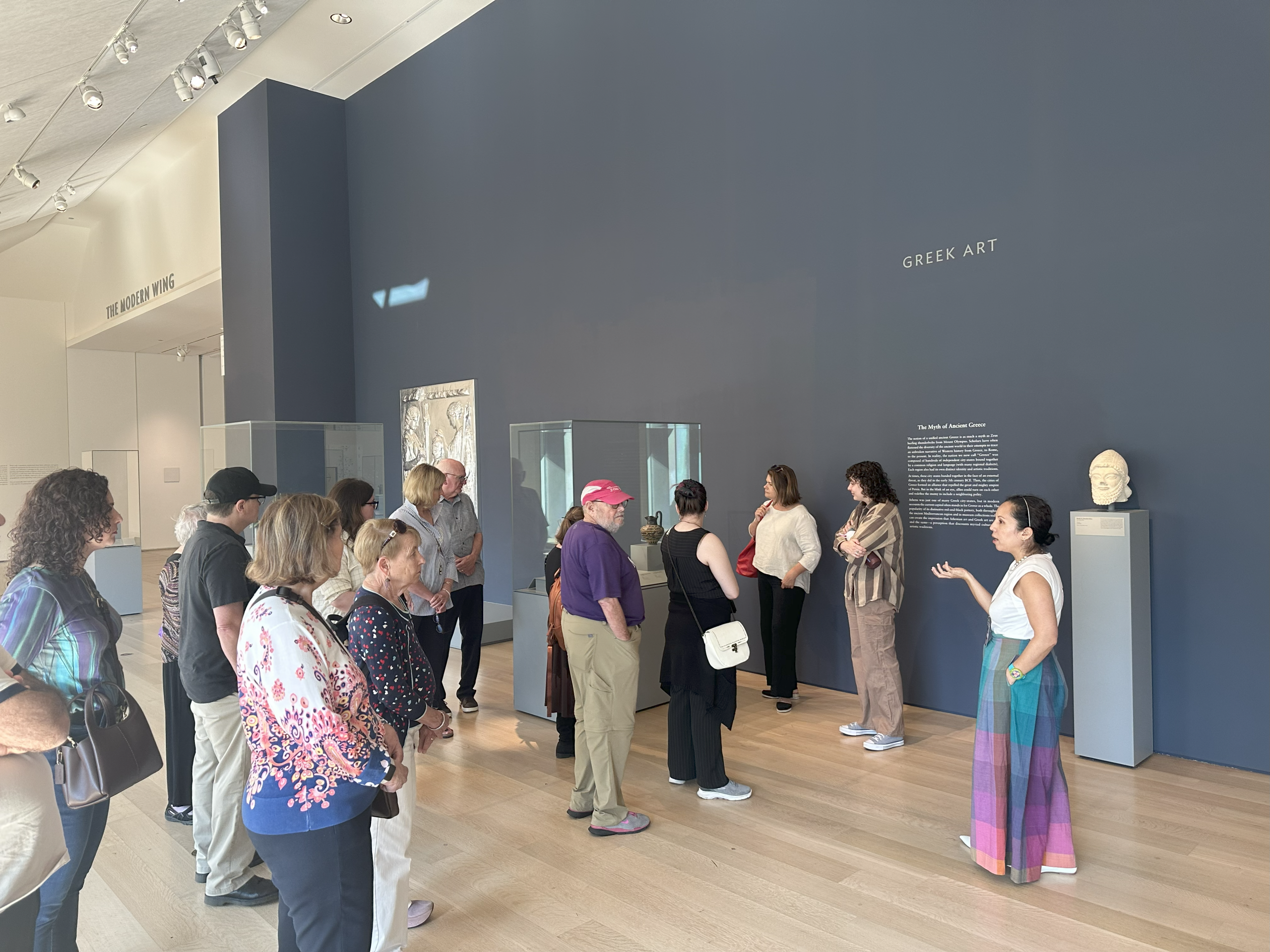
Lisa Cakmak explains the process behind the Greek, Roman, and Byzantine galleries at the Art Institute during the Friends of ASOR Chicago tour, Sept. 19, 2025.
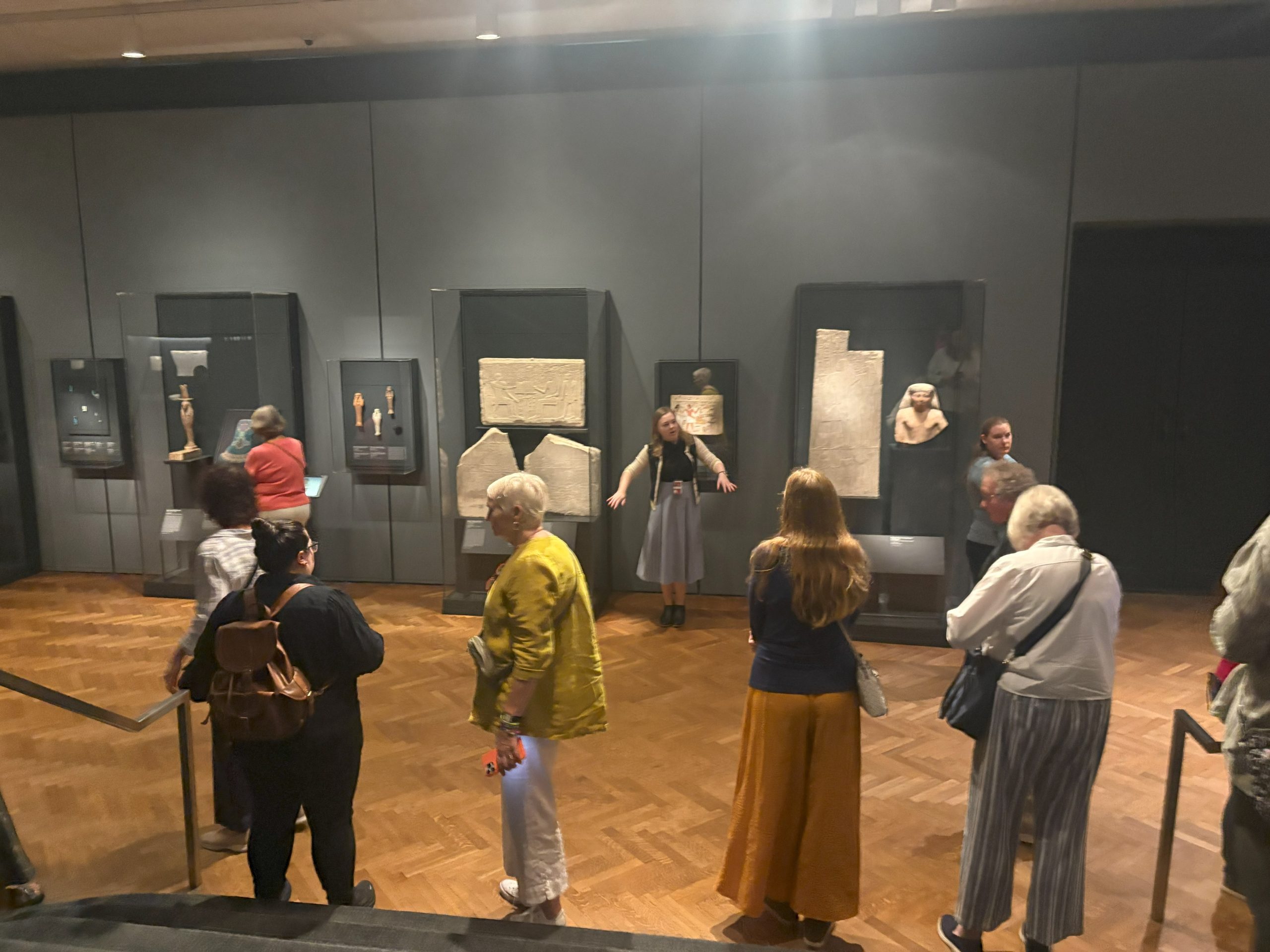
Ashley Arico shows off the Egyptian gallery at the Art Institute to the Friends of ASOR, Sept. 19, 2025.
Art Institute Curators Ashley Arico and Lisa Çakmak speak to the Friends of ASOR group during their visit, Sept. 19, 2025.
Day 2: The Art Institute of Chicago

Day two began at the Art Institute of Chicago, where we explored Egyptian, Greek, Roman, and Byzantine collections. Guided tours brought context to iconic works while highlighting lesser-known treasures that reveal daily life in the ancient world.

Ashley Arico and Lisa Çakmak shared the behind-the-scenes work of bringing these collections to the public. They explained how curators and conservators balance preservation with accessibility, using storytelling and updated gallery design to renew interest in long-studied objects. They also discussed collaborations with institutions like the Field Museum and ISAC, showing how loaned artifacts can create new research opportunities and richer public interpretations.

Behind the Scenes at the Field Museum

Next, Dr. Bill Parkinson welcomed us behind the scenes at the Field Museum, where the research collections are carefully stored. We saw how the museum’s holdings span continents and millennia, connecting Mediterranean archaeology with North American history.

Bill introduced Mediterranean artifacts, highlighting the Field Museum’s long engagement with Old World research. He also showcased North American collections, including American Indian artifacts such paddles, artwork, and attire. These items are studied and interpreted in partnership with their respective communities, emphasizing provenance, cultural sensitivity, and shared stewardship. Seeing Mediterranean and North American artifacts together reinforced the Field Museum’s global mission, grounded in collaboration.

Community & Connections

Between gallery strolls, meals, and engaging conversations, the tour offered opportunities for connection. Many participants shared how meaningful it was to experience these collections with fellow archaeology enthusiasts and see them through the eyes of scholars and museum professionals.

We are deeply grateful to everyone who joined us in Chicago for making this tour a success. We can’t wait to welcome you on our next adventure! Keep an eye out for upcoming U.S. tours, and remember, there’s still room on our June 2026 Cyprus Tour.

Bill Parkinson gives a behind-the-scenes look at the anthropology collections at the Field Museum during the Friends of ASOR tour in Chicago, Sept. 19, 2025.

2025 Annual Meeting Highlights

2025 ANNUAL MEETING HIGHLIGHTS

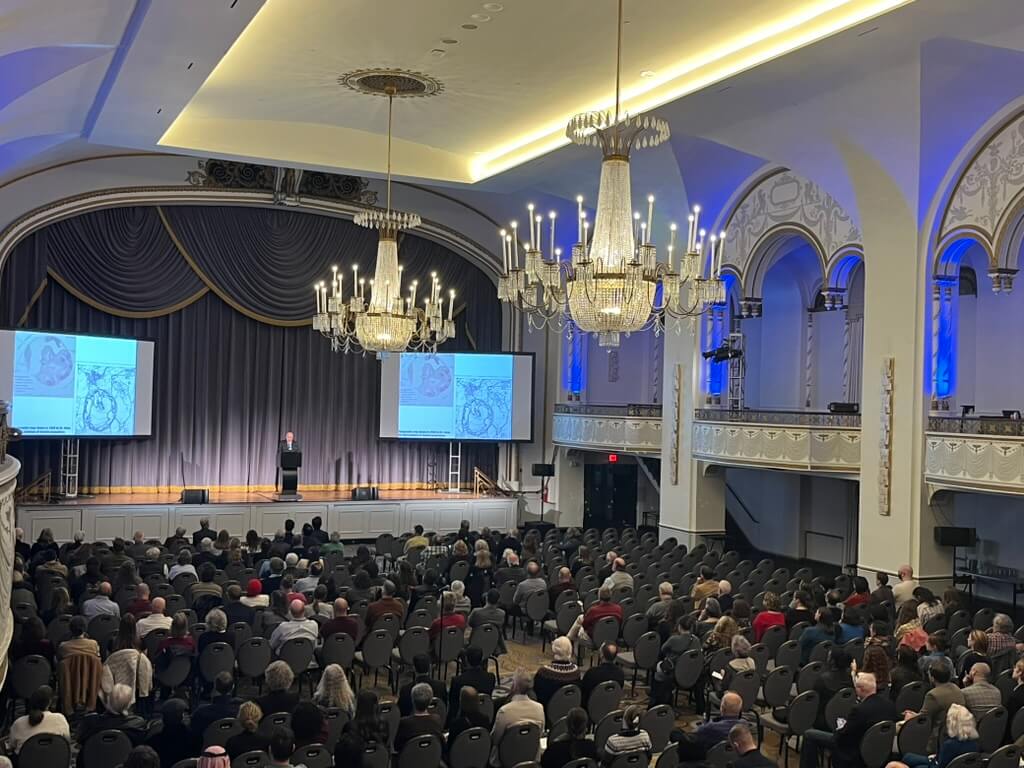
ASOR Annual Meeting attendees in Boston and online will be treated to a full academic program with more than 125 sessions and 600 presentations. The academic program and business schedule can be found on the Annual Meeting Schedules page. Registered meeting attendees also have access to the Online Schedule in the ASOR Online Portal. This is where you will find paper abstracts and virtual participants will find Zoom links (posted during conference days) to attend the sessions and workshops online.

Attendees can follow the program, create personal schedules, and connect with others in the Annual Meeting Mobile App (powered by Guidebook). Download instructions will be available in the ASOR Online Portal under the 2025 ASOR Annual Meeting / Schedule once the app is ready to use.

Boston Highlights

Free admission to the Museum of Fine Arts
The Museum of Fine Arts is offering free general admission to ASOR Annual Meeting attendees from November 19–26, 2025. Show your ASOR name badge at the admissions desk for free entrance. For information on opening hours, planning your trip, and special exhibits (additional fee may apply), please visit the MFA website.

There are a number of special events taking place during the Annual Meeting for those who are coming to Boston. Some of these events require registered attendees to sign-up in advance.

Wednesday, November 19

3:00-4:30pm EST
Seal Carving Workshop  (Newbury Room, Hilton Boston Park Plaza) 
Led by Pinar Durgun, this workshop is free for ASOR attendees. Space is limited and advance sign-up is required. Registration is full, but please email programs@asor.org to be added to the waitlist.

3:00-5:00pm EST
Putting Objects to Work: Building Visitors’ Museum Literacy through Critical Encounters with Collections  (Harvard Art Museums) 
This free workshop will be led by Jennifer Thum from 3 to 5 p.m. at the Harvard Art Museums in Cambridge, MA. Space is limited and advance sign-up is required. Learn more about the museum literacy workshop here.

3:00-5:00pm EST
Little Syria Walking Tour  (Chinatown Gate, Beach Street, Boston) 
This tour led by Lydia Harrington from 3 to 5 p.m. takes visitors through Boston’s first Arabic-speaking neighborhood, which thrived between the 1880s and 1950s in today’s Chinatown and South End. Space is limited and sign-up is required through this link. The tour is pay what you wish, with a suggested contribution of $15 in cash, due upon arrival. Learn more about the walking tour here.

7:00-8:30pm EST
ASOR Annual Meeting Plenary Address (Hilton Boston Park Plaza, Grand Ballroom A)
Dr. Timothy P. Harrison, Director of the Institute for the Study of Ancient Cultures (ISAC) and Professor of Near Eastern Archaeology at the University of Chicago, will present, “The Middle East Cultural Heritage Crisis and Why It Matters.” Also available online for virtual attendees. Learn more here.

8:30-9:30pm EST
Welcome Reception (Hilton Boston Park Plaza, Grand Ballroom B)
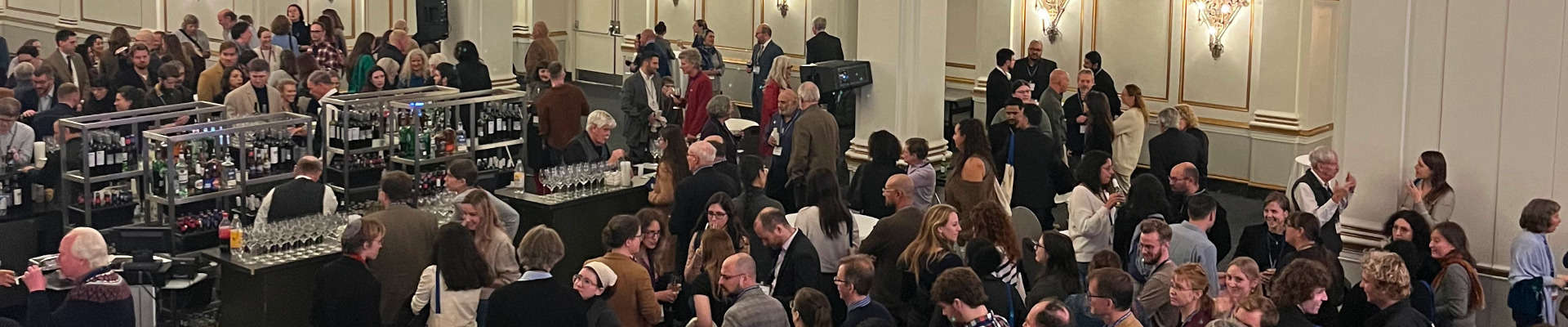
Following the Plenary Address, ASOR Annual Meeting attendees are invited to network, socialize, and enjoy light refreshments as we get ready for three full days of sessions, workshops, posters, and fun.

Thursday, November 20

12:55-1:55pm EST
Early Career Scholars’ Brown-Bag Lunch (Georgian)
Panelists: Brita Lorentzen, James Fraser, Kathryn Grossman
Bring your lunch and join us for Applying to ASOR & ASOR-Affiliated Scholarships: Understanding Eligibility and Crafting Strong Applications. The panel will host representatives from the fellowship committees of ASOR, the Cyprus American Archaeological Research Institute (CAARI), and the Albright Institute of Archaeological Research (AIAR) to talk about various funding possibilities offered through these institutions.

12:55-1:55pm EST
ASOR Roundtable Discussions (The Square, Lobby Level)
There will be a number of discussion topics offered during this lunchtime event. Advance sign-up will be required.

Friday, November 21

12:55-1:55pm EST
ASOR Members’ Meeting, Sharon Herbert, Presiding (Georgian Room, Mezzanine Level)
Bring your lunch and come for an update on the business of ASOR and the 2025 Honors & Awards.

6:30-7:30pm EST
Cyprus American Archaeological Research Institute (CAARI) Reception (Boylston Room, Mezzanine Level)

8:00-10:00pm EST  
Early Career Scholars’ Reception (Off the Common, Lobby Level)
This event is for registered ASOR attendees who are Early Career Scholars. There is no cost to attend, but space is limited and ECS members must sign-up in advance here.

Saturday, November 22

10:20-10:40am EST
ASOR Raffle Drawing (Mezzanine Level)
A fun event to highlight ASOR Exhibitors during the morning coffee break on the last day of the meeting. Join us in the Exhibit Hall (Mezzanine Level) near the registration tables to see if your raffle ticket is a winner.

12:45-2:00pm EST
ASOR Poster Session (Statler Room, Mezzanine Level)
Visit the ASOR Poster Hall throughout the Annual Meeting to see all of the research projects being presented, and come to the Poster Session on Saturday to talk with the presenters and ask questions.

6:45-11:00pm EST
ASOR 125th Anniversary Celebration (Grand Ballroom A)
After the academic program ends, we invite you to a celebratory evening of exceptional dining, entertainment, and ASOR-themed activities in honor of our 125th anniversary. Enjoy inspiring remarks from speakers who have been integral in shaping ASOR’s mission. Tickets are $100 and may be purchased here. Discounted tickets are available—use code SAVE50 for a reduced ticket of $50, or use code SAVE75 for a reduced ticket of $25.

ASOR Receives $100,000 Grant for Cyrene Conservation Initiative in Libya

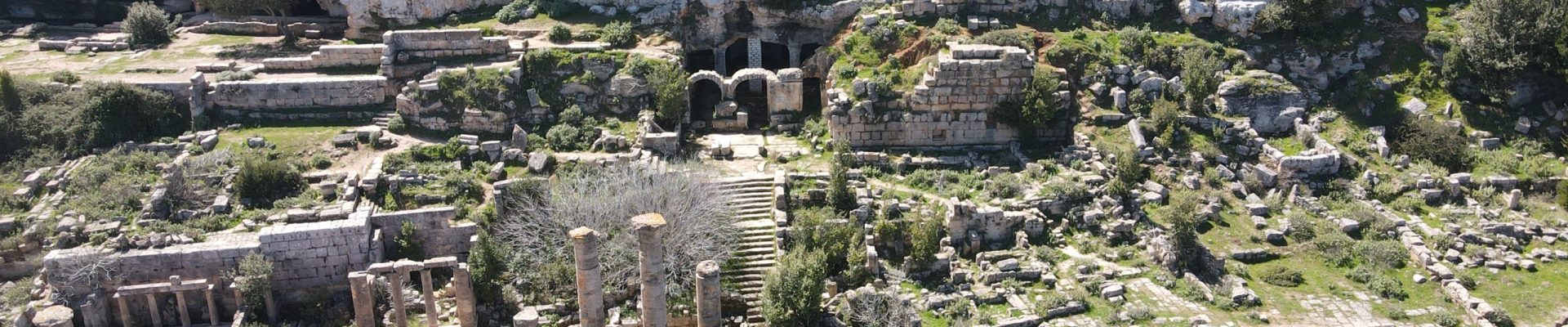
Cyrene Sanctuary Aerial

ASOR Receives $100,000 Grant for Cyrene Conservation Initiative in Libya

Media Release

ASOR Receives $100,000 Grant for Cyrene Conservation Initiative in Libya
Project to Preserve and Educate at Flood-Damaged World Heritage Site

WASHINGTON, DC — The American Society of Overseas Research (ASOR) is pleased to announce it has been awarded a $100,000 grant from the American Institute for Roman Culture in support of the Cyrene Conservation Initiative—a conservation and heritage education project at the UNESCO World Heritage Site of Cyrene in eastern Libya.

Developed in close collaboration with the Libyan Department of Antiquities, the Cyrene Conservation Initiative is a response to the devastating impacts of Storm Daniel, which caused catastrophic flooding in September 2023. The project will focus on key areas of the ancient city that were particularly affected by the flood, including Valley Street and the Sanctuary of Apollo terrace, one of the most iconic districts in the city.

“Working together to save and appreciate shared cultural heritage is a crucial element in uniting people today,” said ASOR President Sharon Herbert. “ASOR is proud to be part of this project with archaeologists from the Libyan Department of Antiquities and the American Institute for Roman Culture and Ancient Rome Live.”

Project objectives include:

  • Documenting and protecting heritage damaged by the flooding;
  • Restoring safe access to monuments on the Sanctuary of Apollo terrace;
  • Enhancing on-site interpretation through new educational materials for Libyan and international visitors.

“ASOR has been privileged to work closely with Libyan partners and the U.S. State Department to invest more than $1,000,000 in heritage and education projects over the past decade,” said ASOR Executive Director Dr. Andrew G. Vaughn. “The heritage of Libya is rich and varied, exhibiting important international connections for millennia. ASOR is now honored to begin a partnership with American Institute for Roman Culture and Ancient Rome Live to ensure that the important Roman heritage in Cyrene is conserved and protected from future flood damage.”

Executive Director of American Institute for Roman Culture and Ancient Rome Live, Darius Arya, says, “we are so pleased that for our inaugural grant distribution we are able to partner with such a leader in the field of conservation and participate in the important preservation of such a historically relevant site as Cyrene!”

From its beginning as the earliest Greek colonization in North Africa, Cyrene became a major center of Greek and Roman culture and a dramatic example of urban life on the edge of a mountainous plateau. The Cyrene Conservation Initiative and Ancient Rome Live will help ensure that this unique expression of Libyan heritage endures for future generations. For more information about the Ancient Rome Live online learning platform, please visit https://ancientromelive.org/.

For more information about ASOR’s cultural heritage efforts, please visit www.asor.org/chi.

About ASOR

The American Society of Overseas Research (ASOR) is a nonprofit 501(c)(3) organization whose mission is to initiate, encourage, and support research into, and public understanding of, the history and cultures of the Near East and wider Mediterranean world, from the earliest times. ASOR fosters original research, archaeological excavations, and explorations; encourages scholarship in the Near East’s basic languages, cultural histories, and traditions; builds support for Near Eastern studies; and advocates high academic standards. ASOR is apolitical and has no religious affiliation.

About the American Institute for Roman Culture
The American Institute for Roman Culture is a U.S.-based nonprofit dedicated to the promotion, preservation, and study of ancient Roman history and culture through innovative educational programming and heritage protection projects.

###
Media Contact:
Rachel Bernstein
Email: rachel.bernstein@asor.org
Phone: 703-789-9234

The American Society of Overseas Research
The James F. Strange Center
209 Commerce Street
Alexandria, VA 22314
E-mail: info@asor.org
Telephone: 703-789-9229

Don’t Miss It! —ASOR’s 125th Anniversary Celebration

Don’t Miss It! —ASOR’s 125th Anniversary Celebration

Boston | November 22, 2025, at 6:45 p.m.

ASOR has turned 125—yes, that’s 125 years old!

And you’re invited to join the celebration by participating in a special dinner event on Saturday night at this year’s Annual Meeting in Boston!

We’ll be kicking off the festive occasion at 6:45 p.m. on Saturday, November 22, 2025, at the Hilton Boston Park Plaza. Join us for an evening of exceptional dining, entertainment, and ASOR-themed activities, featuring speakers who have been integral to ASOR’s mission, as well as an after-dinner dance party, with music provided by DJ Ace E (our very own Asa Eger)! Your presence will help make this milestone truly meaningful.

The evening will also feature live music from the Boston Arabic Music Ensemble. In the early 1980s, a few amateur musicians and friends from the Boston community gathered to play some popular folkloric and other classical songs from the Arabic musical heritage. More recently, the group has evolved into its current members from the Boston community and performs classical and folkloric Arabic musical repertoire. The Boston Arabic Music Ensemble was under the artistic direction of the late maestro Bassam Saba (from 2010 to 2018). Since 2018, it has been led by the award-winning violinists, composers, and educators Bengisu Gökçe, Layth Sidiq, and Akram Haddad.

ASOR’s cost of the dinner is $100. To ensure that everyone can attend, we are offering discount codes for reduced ticket prices of $25 and $50.  Sponsorship tickets are also available, and any ticket purchase above $100 may be tax-deductible. Your contribution will make the evening accessible for everyone. We ask all members to choose the ticket price that they can afford, recognizing that the cost charged by the hotel (without drinks) is $100.

Register Now

Use code SAVE50 for a reduced ticket price of $50, or use code SAVE75 for a reduced ticket price of $25. When purchasing your ticket, please specify your dinner entree choice: beef, chicken, fish, or vegetarian. Tickets must be purchased byNovember 12, and seats are going fast!

Dress code: Cocktail attire/festive, black-tie optional.

March Fellowship Madness 2025 — In Our 125th Year!

[vc_row fullwidth=”true” attached=”true” css=”.vc_custom_1496247803139{padding-top: 0px !important;padding-right: 0px !important;padding-bottom: 0px !important;padding-left: 0px !important;}”][vc_column][vc_single_image image=”94401″ img_size=”full” alignment=”center”][/vc_column][/vc_row][vc_row fullwidth=”true” css=”.vc_custom_1496682730308{padding-top: 10px !important;padding-right: 0px !important;padding-bottom: 0px !important;padding-left: 0px !important;}”][vc_column width=”1/12″ css=”.vc_custom_1496683820796{margin-right: 10px !important;}” offset=”vc_hidden-md vc_hidden-sm vc_hidden-xs”][vc_column_text]

 SHARE

[/vc_column_text][mk_image src=”http://www.asortest.org/wp-content/uploads/2017/01/social-fb-icon4.jpg” image_width=”42″ image_height=”42″ hover=”false” custom_url=”https://www.facebook.com/ASOResearch/” margin_bottom=”0″][mk_image src=”http://www.asortest.org/wp-content/uploads/2017/01/social-tw-icon4.jpg” image_width=”42″ image_height=”42″ hover=”false” custom_url=”https://twitter.com/ASOResearch?ref_src=twsrc%5Egoogle%7Ctwcamp%5Eserp%7Ctwgr%5Eauthor” margin_bottom=”0″][mk_image src=”http://www.asortest.org/wp-content/uploads/2017/01/social-in-icon4.jpg” image_width=”42″ image_height=”42″ hover=”false” custom_url=”https://www.linkedin.com/company/american-schools-of-oriental-research” margin_bottom=”0″][mk_image src=”http://www.asortest.org/wp-content/uploads/2017/01/social-ml-icon_7.jpg” image_width=”42″ image_height=”42″ hover=”false” custom_url=”mailto:info@asor.org” margin_bottom=”0″][mk_image src=”http://www.asortest.org/wp-content/uploads/2017/01/blog-icon3.jpg” image_width=”42″ image_height=”42″ hover=”false” custom_url=”http://asor.org/blog” margin_bottom=”0″][/vc_column][vc_column border_color=”rgba(255,255,255,0.01)” width=”1/6″ css=”.vc_custom_1496683923840{margin-right: 20px !important;border-left-width: 2px !important;padding-right: 20px !important;padding-left: 20px !important;border-left-color: #99422f !important;}”][mk_divider divider_color=”rgba(255,255,255,0.01)” thickness=”1″ margin_top=”3″ margin_bottom=”3″][vc_widget_sidebar sidebar_id=”ca-sidebar-39801″][/vc_column][vc_column border_color=”rgba(170,170,170,0.01)” width=”1/2″ css=”.vc_custom_1487276122024{margin-right: 10px !important;margin-bottom: 30px !important;border-right-width: 2px !important;border-bottom-width: 2px !important;padding-top: 30px !important;padding-right: 30px !important;padding-left: 20px !important;background-color: #ffffff !important;border-right-color: rgba(227,228,228,0.75) !important;border-bottom-color: rgba(227,228,228,0.75) !important;}”][vc_column_text responsive_align=”left”]

March Fellowship Madness 2025 — In Our 125th Year!

[/vc_column_text][mk_divider margin_top=”10″][vc_row_inner][vc_column_inner css=”.vc_custom_1706024108985{padding-right: 10px !important;}”][vc_column_text]

Thank you to everyone who was part of ASOR’s 2025 March Fellowship Madness. Your generous donations raised $4,725 this year and ASOR can now fund 2 additional fieldwork scholarships.

Each year, ASOR sponsors many Fieldwork Scholarships for students and volunteers to take part in ASOR-affiliated projects. With your help, we aim to raise $6,000 to send three more students into the field during Summer 2025. Right now, ASOR is able to award 47 fieldwork scholarships in 2025 and with your help, we’ll make it to 50!

We’re looking forward to celebrating our 125th anniversary with you and planning the future (hopefully another 125 years at least!) to provide a bright future for the next generations of archaeologists.

[/vc_column_text][/vc_column_inner][/vc_row_inner][mk_gallery images=”101677,101477,101413,101344,101284,101069″ column=”6″ enable_title=”false” item_id=”1740691625-67c0d8a942a8f”][vc_row_inner][vc_column_inner][vc_column_text]

ASOR provides these scholarships with your partnership. You are enabling ASOR to establish new scholarships and grants through endowed funds, but your annual support (i.e., gifts this year) will allow ASOR to send more eager students and early career scholars into the field. Please support archaeology’s next generation by making a gift today and selecting “Fieldwork Scholarships” as the designation for your gift. You may also make a designated gift by choosing any category from the drop-down menu on the donations module.

[/vc_column_text][/vc_column_inner][/vc_row_inner][vc_row_inner][vc_column_inner css=”.vc_custom_1706024108985{padding-right: 10px !important;}”][vc_column_text]The past 125 years owe so much to our generous members; even a small donation of just $10 adds up to make a big difference. 100% of your gift will go toward Fieldwork Scholarships for students. Keep track of our March Fellowship Madness 2025 donation progress here — with each $1,000 donated, we’ll excavate more of the ASOR jar![/vc_column_text][vc_wp_text][/vc_wp_text][/vc_column_inner][/vc_row_inner][/vc_column][vc_column border_color=”rgba(170,170,170,0.01)” width=”1/6″ css=”.vc_custom_1496684098866{margin-right: 5px !important;margin-bottom: 20px !important;border-right-width: 2px !important;border-bottom-width: 2px !important;padding-top: 30px !important;padding-right: 10px !important;padding-left: 10px !important;background-color: #ffffff !important;border-right-color: rgba(227,228,228,0.75) !important;border-bottom-color: rgba(227,228,228,0.75) !important;}”][vc_wp_posts title=”BROWSE THE NEWS ARCHIVE” number=”4″][vc_widget_sidebar sidebar_id=”ca-sidebar-99363″][/vc_column][/vc_row]

Save the Date for ASOR’s 125th Anniversary Celebration

Save the Date for Our 125th Anniversary Celebration

Boston | November 22, 2025, at 7 p.m.

ASOR is turning 125—and we want you to be part of the celebration!

Our special anniversary dinner will take place during this year’s Annual Meeting in Boston, and we hope you’ll join us for this unforgettable evening of community, celebration, and reflection on ASOR’s history. 

 ⏰ We’ll be kicking off the festive occasion at 6:45 p.m. on Saturday, November 22, 2025, at the Hilton Boston Park Plaza. Enjoy an evening of exceptional dining, entertainment, and ASOR-themed activities, featuring speakers who have been integral to ASOR’s mission. Your presence will help make this milestone truly meaningful.


Register Now


 🎟 Tickets are $100 (ASOR’s cost), but we’re committed to making the event accessible for all. If you need financial assistance to attend, use code SAVE50 for $50 tickets, or SAVE75 for $25 tickets. Sponsorship tickets are also available—and dinner tickets above $100 may be tax-deductible. If you are able, please consider a sponsorship so that you can support the discounted tickets described above.

When purchasing your ticket, please specify your dinner entree choice: beef, chicken, fish, or vegetarian.

 👗 Dress code: Cocktail attire/festive, black-tie optional.

If you haven’t done so already, click here to register for the Annual Meeting and join our celebration in November.