FOA Webinar: Archaeogaming on Apr. 18

FRIENDS OF ASOR WEBINARS

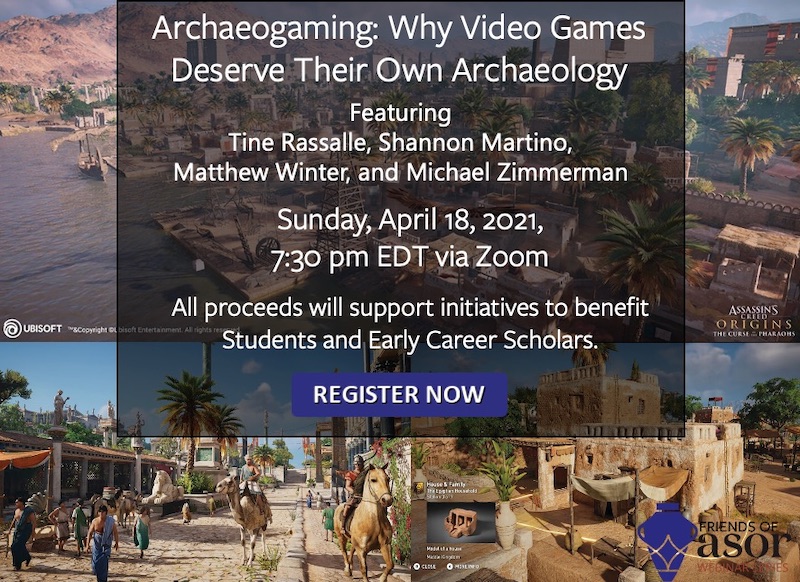
Archaeogaming: Why Video Games Deserve Their Own Archaeology

Friends of ASOR presents the next webinar in our monthly series on April 18, at 7:30 pm EDT. Ever wonder how archaeology “plays” into the world of video games? Following the publication of the March 2021 issue of Near Eastern Archaeology, this webinar and a panel of four scholars will introduce you to the key concepts of “archaeogaming,” or the intersection of archaeology and video games. A rapidly emerging field, archaeogaming studies the representation of archaeology in video games, the historical narratives in video games, the use of video games as pedagogical tools in the archaeological classroom, and so much more. The discussants will seek to demonstrate how video games can no longer be overlooked as tools to communicate with a general audience and how video games are intriguing new subjects and places for archaeologists to study. Digital games are the new archaeological sites, landscapes, and artifacts. Please join us for this exciting and relevant discussion where we will delve into the world of gaming: no previous experience required! The webinar will conclude with a live Q&A session with the panel that will give you the opportunity to ask questions about this exciting new field.

Tine Rassalle is a PhD candidate in the Religious Studies department at the University of North Carolina at Chapel Hill. She has an MA in Archaeology of the ancient Near East from Gent University (Belgium) and another BA in Hebrew and Aramaic Languages and Cultures from Leiden University (the Netherlands). Her main research focuses on the material culture of ancient Judaism and early Christianity in Palestine. She is currently finishing up her dissertation project: a digital database of coin deposits found in ancient synagogues from Late Antique Palestine. Tine is the field supervisor of the Horvat Kur excavations in the Galilee, an executive staff member of SASA (Save Ancient Studies Alliance), and a member of the ASOR Early Career Scholars Committee. Her main hobby, however, is playing video games, which has now started to influence her scholarly work. She has been writing articles and has given talks on archaeogaming, and she recently guest-edited a special issue of ASOR’s Near Eastern Archaeology journal, focused entirely on archaeogaming.


Shannon Martino is an archaeologist and art historian living in Chicago, Illinois, who specializes in archaeological ceramic illustration and ceramic analysis. Shannon graduated from the University of Chicago with an honors BA in Anthropology and earned her PhD from the University of Pennsylvania in Art History. Her work focuses on Chalcolithic ceramics and clay figurines from the eastern Balkans and Turkey and she is currently a member of the Yalburt Yaylası archaeological team and a faculty member of Morton College in Cicero, IL.


Matthew Winter is an archaeologist, with a PhD in Anthropology from the University of Arizona with a focus on the archaeology of the ancient Mediterranean and Near East. In addition to archaeogaming, his research interests focus on archaeological and anthropological theory, social network analysis, ancient urbanism, approaches to the archaeology of religion and identity, and the archaeology and anthropology of food. He has been involved in several different archaeological projects in Italy, Israel, and Jordan.


Michael Zimmerman is an archaeologist, with a PhD from the Joukowsky Institute for Archaeology and the Ancient World at Brown University. He also holds an MA in Classical Languages from the University of Florida. He has been involved in the past ten years in the analysis and publication of pottery, lamps and other ceramic material from the Joint Expeditions to Caesarea Maritima in Israel. His graduate work, centered on the analysis of Hellenistic and Roman period pottery from ‘Iraq al-Amir in Jordan, was published by ASOR in late 2019. He has excavated at a number of archaeological sites, including Caesarea Maritima in Israel, the Petra Great Temple Project in Jordan, and the Middleboro Little League Site in Massachusetts, as he expanded into the field of North American archaeology. His other work and research interests include archaeogaming in pedagogical contexts, antiquities trafficking, cultural heritage law and public policy, pottery studies, the archaeology of the Near East, and the prehistoric archaeology of Northeastern America. He teaches introductory and upper level archaeology courses, Middle Eastern cultures, and myth and folklore courses.

ASOR Sustaining Members: $0 | ASOR Members: $5 | Public: $10

To receive your ASOR member discount, log into the online store. If you are new to ASOR, please click on the “New Visitor Registration” link to register your e-mail address and choose a password for our online store. Once logged in, navigate to “Meeting and Event Registration” to register for the webinar and pay the fee. Each paid registrant will receive a confirmation e-mail when you pay for the webinar. If you do not receive this e-mail, then you are not registered. Please e-mail membership@asor.org with any questions or issues with registering.

You will be e-mailed the Zoom Webinar link in the week prior to the lecture on April 18, 2021. If you do not receive the link by the close of business on the Thursday before the webinar, please e-mail membership@asor.org immediately. All webinars are recorded and all paid registrants will be sent a link to view the recording.

All proceeds will support initiatives to benefit Students and Early Career Scholars.
WHY SPONSOR A WEBINAR?

Several levels of support from $50-$1,000 are available. Proceeds go towards membership scholarships and towards increasing ASOR’s virtual resources. Each sponsorship is tax-deductible and you can give your friends free registrations to a webinar!

Bronze Level ($50): up to 2 guest registrations
Silver Level ($100): up to 5 guest registrations
Gold Level ($500): up to 20 guest registrations
Platinum Level ($1,000): up to 50 guest registrations

After you sign up for a sponsorship online or over the phone, email the names and email addresses of your guests to Felice Herman at membership@asor.org, who will send your guests a confirmation and the Zoom link before the webinar.

WANT TO SAVE $5.00 ON THE NEXT WEBINAR?

Join ASOR as a member! Click here for more details about discounts for events and other benefits of membership. Memberships start at $40 for the year as an Associate Member.

Not ready to join yet? Become a Friend of ASOR for FREE!

Click here for more details about our online resources.

PAST WEBINARS

You can now purchase the link to the recording of any webinar. You can also purchase the bundle packages of all webinars from the 2020-2022 seasons. Please e-mail membership@asor.org for purchase details.

To see a printable pdf of the webinar titles from the 2020-2021 season, please click here. To see a printable pdf of the webinar titles from the 2021-2022 season, please click here.

Pricing:

Members: $6.00 per recording
Non-Members: $12.00 per recording
Bundle of 2020-2021 Webinars: $75.00
Bundle of 2021-2022 Webinars: $75.00
Bundle of 2020-2022 Webinars: $125.00

2021-2022 Season

A World at War: Protecting Cultural Heritage in Times of Conflict
Patty Gerstenblith (DePaul University), Lisa Ackerman (Columbus Citizens Foundation), Andrew Cohen (Government Professional and Cultural Heritage Expert) | May 12, 2022

Preserving Cultural Heritage in Hisban and Umm al-Jimal, Jordan
Øystein LaBianca (Andrews University), Elizabeth Osinga (Umm al-Jimal Archaeological Project), Darrell Rohl (Calvin University) | April 24, 2022

Back to the Field: Recent Discoveries & Summer Plans 2022
Lorenzo d’Alfonso (ISAW), Kathryn Grossman (NC State University), James R. Strange (Samford University) | April 3, 2022

Uncovering What is Nubian Beneath the Veneer of Egyptianness: Excavating the Archives
Debora Heard (University of Chicago) | March 20, 2022

Where Are They Now?: A Preview of 2022 ASOR-Affiliated Fieldwork Projects
Michael Given (University of Glasgow), Xenia-Paula Kyriakou (Florida Gulf Coast University), Stephen Batiuk (University of Toronto), Monique Roddy (Walla Walla University), Kent Bramlett (La Sierra University), Friedbert Ninow (La Sierra University), and Michael Hoff (University of Nebraska-Lincoln) | March 8, 2022

Excavations at Tel Gezer: A Personal Story
Sam Wolff (Tel Gezer Laboratory) | February 20, 2022

Tel Rehov: A Major Bronze and Iron Age City in the Jordan Valley
Amihai Mazar (Hebrew University of Jerusalem), Nava Panitz-Cohen ( Hebrew University of Jerusalem), Nota Kourou (Athens University), Naama Yahalom-Mack (Hebrew University of Jerusalem), Robert Mullins (Azusa Pacific University) | February 10, 2022

The Not-So-Innocents Abroad: The Beginnings of American Biblical Archaeology
Rachel Hallote (Samford University) | January 20, 2022

Synagogues as Jesus Knew Them
James R. Strange (Samford University) | December 2, 2021

Under Jerusalem: The Buried History of the World’s Most Contested City
Andrew Lawler | November 4, 2021

Jesus and Jerusalem on TV: How Do Bible Documentaries Get Made?
Robert Cargill (University of Iowa) | October 17, 2021

Digging the Divine?: Judahite Pillar Figurines and the Archaeology of Israelite Religion
Erin Darby (University of Tennessee) | October 7, 2021

David, Solomon, and Rehoboam’s Kingdom—The Archaeological Evidence
Yosef Garfinkel (Hebrew University of Jerusalem) | September 19, 2021

From Standing Stones to Sacred Emptiness: Textual and Visual Portrayals of Israel’s God
Theodore Lewis (Johns Hopkins University) | August 29, 2021

2020-2021 Season

Making May Matter: Webinarathon to Endow Diversity
Multiple Speakers | May 21-23, 2021

Archaeogaming: Why Video Games Deserve Their Own Archaeology
Tine Rassalle (University of North Carolina at Chapel Hill), Shannon Martino (Morton College), Matthew Winter (University of Arizona), Michael Zimmerman (Rhode Island) | April 18, 2021

How the Bible Became a Book
William Schniedewind (UCLA) | March 21, 2021

The Mysteries of Mithras in Caesarea: Exploring the Cult’s Rites and Remains
Jane DeRose Evans (Temple University), Alexandra Ratzlaff (Brandeis University) | March 11, 2021

Archaeology and the Hidden Religious Culture of Israelite Women
Carol Meyers (Duke University) | February 21, 2021

Meet the Directors—Fundraiser to Support ASOR’s Affiliated Overseas Research Centers
Matthew J. Adams (AIAR), Pearce Paul Creasman (ACOR), Lindy Crewe (CAARI) | February 11, 2021

Early Synagogues, Jesus, and Galilee—A Jewish Perspective
Eric Meyers (Duke University) | December 13, 2020

Home Sweet Home: Ancient Israelite Households in Context
Cynthia Shafer-Elliott (William Jessup University) | October 18, 2020

Priestesses in the Days of Solomon and Ahab
Susan Ackerman (Dartmouth College) | September 13, 2020

Digging Deeper: How Archaeology Works
Eric H. Cline (The George Washington University) | August 9, 2020

(Back-up) Symposium ASOR CHI : Initiatives du Patrimoine Culturel en Afrique aujourd’hui

[vc_row fullwidth=”true” attached=”true” css=”.vc_custom_1496247803139{padding-top: 0px !important;padding-right: 0px !important;padding-bottom: 0px !important;padding-left: 0px !important;}”][vc_column][vc_single_image image=”92761″ img_size=”full” alignment=”center”][/vc_column][/vc_row][vc_row fullwidth=”true” css=”.vc_custom_1620063527766{padding-top: 0px !important;padding-right: 0px !important;padding-bottom: 0px !important;padding-left: 0px !important;}”][vc_column width=”1/12″ css=”.vc_custom_1496683820796{margin-right: 10px !important;}” offset=”vc_hidden-md vc_hidden-sm vc_hidden-xs”][vc_column_text]

 SHARE

[/vc_column_text][mk_image src=”http://www.asortest.org/wp-content/uploads/2017/01/social-fb-icon4.jpg” image_width=”42″ image_height=”42″ hover=”false” custom_url=”https://www.facebook.com/ASOResearch/” margin_bottom=”0″][mk_image src=”http://www.asortest.org/wp-content/uploads/2017/01/social-tw-icon4.jpg” image_width=”42″ image_height=”42″ hover=”false” custom_url=”https://twitter.com/ASOResearch?ref_src=twsrc%5Egoogle%7Ctwcamp%5Eserp%7Ctwgr%5Eauthor” margin_bottom=”0″][mk_image src=”http://www.asortest.org/wp-content/uploads/2017/01/social-in-icon4.jpg” image_width=”42″ image_height=”42″ hover=”false” custom_url=”https://www.linkedin.com/company/american-schools-of-oriental-research” margin_bottom=”0″][mk_image src=”http://www.asortest.org/wp-content/uploads/2017/01/social-ml-icon_7.jpg” image_width=”42″ image_height=”42″ hover=”false” custom_url=”mailto:info@asor.org” margin_bottom=”0″][mk_image src=”http://www.asortest.org/wp-content/uploads/2017/01/blog-icon3.jpg” image_width=”42″ image_height=”42″ hover=”false” custom_url=”http://asor.org/blog” margin_bottom=”0″][/vc_column][vc_column border_color=”rgba(255,255,255,0.01)” width=”1/6″ css=”.vc_custom_1496683923840{margin-right: 20px !important;border-left-width: 2px !important;padding-right: 20px !important;padding-left: 20px !important;border-left-color: #99422f !important;}”][mk_divider divider_color=”rgba(255,255,255,0.01)” thickness=”1″ margin_top=”3″ margin_bottom=”3″][vc_widget_sidebar sidebar_id=”ca-sidebar-39801″][/vc_column][vc_column border_color=”rgba(170,170,170,0.01)” width=”1/2″ css=”.vc_custom_1487276122024{margin-right: 10px !important;margin-bottom: 30px !important;border-right-width: 2px !important;border-bottom-width: 2px !important;padding-top: 30px !important;padding-right: 30px !important;padding-left: 20px !important;background-color: #ffffff !important;border-right-color: rgba(227,228,228,0.75) !important;border-bottom-color: rgba(227,228,228,0.75) !important;}”][vc_column_text responsive_align=”left”]

Symposium ASOR CHI

Initiatives du Patrimoine Culturel en Afrique aujourd’hui

[/vc_column_text][vc_row_inner][vc_column_inner width=”1/2″ css=”.vc_custom_1711131898290{padding-right: 10px !important;}”][vc_wp_text]

View Page in English

[/vc_wp_text][/vc_column_inner][vc_column_inner width=”1/2″][vc_wp_text]

مشاهدة الصفحة باللغة العربية

[/vc_wp_text][/vc_column_inner][/vc_row_inner][mk_divider][vc_column_text responsive_align=”left”]

April 11-13, 2024 | 11:00 – 13:00 EDT

Aucune inscription nécessaire

[/vc_column_text][vc_single_image image=”95724″ img_size=”full” alignment=”center” onclick=”custom_link”][mk_padding_divider size=”20″][vc_column_text]ASOR CHI est fier d’annoncer la tenue des Initiatives du patrimoine culturel en Afrique aujourd’hui, un symposium gratuit de trois jours qui met en lumière le travail des professionnels du patrimoine locaux, des universitaires et des organisations de la société civile pour protéger, préserver et promouvoir le patrimoine culturel en Afrique du Nord et au Sahel. Le symposium aura lieu du 11 au 13 avril et présentera des travaux en Libye (11 avril), au Maghreb (12 avril) et au Sahel (13 avril). Chaque session durera de 11h00 à 13h00 EDT. Une interprétation simultanée en arabe, anglais et français sera assurée.

Le programme complet et les détails supplémentaires seront annoncés prochainement.[/vc_column_text][mk_padding_divider size=”20″][/vc_column][vc_column border_color=”rgba(170,170,170,0.01)” width=”1/6″ css=”.vc_custom_1496684098866{margin-right: 5px !important;margin-bottom: 20px !important;border-right-width: 2px !important;border-bottom-width: 2px !important;padding-top: 30px !important;padding-right: 10px !important;padding-left: 10px !important;background-color: #ffffff !important;border-right-color: rgba(227,228,228,0.75) !important;border-bottom-color: rgba(227,228,228,0.75) !important;}”][vc_wp_posts title=”BROWSE THE NEWS ARCHIVE” number=”4″][/vc_column][vc_column border_color=”rgba(170,170,170,0.01)” width=”1/6″ css=”.vc_custom_1496684008271{margin-right: 10px !important;margin-bottom: 30px !important;border-right-width: 2px !important;border-bottom-width: 2px !important;padding-top: 30px !important;padding-right: 20px !important;padding-left: 20px !important;background-color: #ffffff !important;border-right-color: rgba(227,228,228,0.75) !important;border-bottom-color: rgba(227,228,228,0.75) !important;}”][/vc_column][/vc_row]

March Fellowship Madness 2021 Update

[vc_row fullwidth=”true” attached=”true” css=”.vc_custom_1496247803139{padding-top: 0px !important;padding-right: 0px !important;padding-bottom: 0px !important;padding-left: 0px !important;}”][vc_column][vc_single_image image=”67771″ img_size=”full” alignment=”center”][/vc_column][/vc_row][vc_row fullwidth=”true” css=”.vc_custom_1496682730308{padding-top: 10px !important;padding-right: 0px !important;padding-bottom: 0px !important;padding-left: 0px !important;}”][vc_column width=”1/12″ css=”.vc_custom_1496683820796{margin-right: 10px !important;}” offset=”vc_hidden-md vc_hidden-sm vc_hidden-xs”][vc_column_text]

 SHARE

[/vc_column_text][mk_image src=”http://www.asortest.org/wp-content/uploads/2017/01/social-fb-icon4.jpg” image_width=”42″ image_height=”42″ hover=”false” custom_url=”https://www.facebook.com/ASOResearch/” margin_bottom=”0″][mk_image src=”http://www.asortest.org/wp-content/uploads/2017/01/social-tw-icon4.jpg” image_width=”42″ image_height=”42″ hover=”false” custom_url=”https://twitter.com/ASOResearch?ref_src=twsrc%5Egoogle%7Ctwcamp%5Eserp%7Ctwgr%5Eauthor” margin_bottom=”0″][mk_image src=”http://www.asortest.org/wp-content/uploads/2017/01/social-in-icon4.jpg” image_width=”42″ image_height=”42″ hover=”false” custom_url=”https://www.linkedin.com/company/american-schools-of-oriental-research” margin_bottom=”0″][mk_image src=”http://www.asortest.org/wp-content/uploads/2017/01/social-ml-icon_7.jpg” image_width=”42″ image_height=”42″ hover=”false” custom_url=”mailto:info@asor.org” margin_bottom=”0″][mk_image src=”http://www.asortest.org/wp-content/uploads/2017/01/blog-icon3.jpg” image_width=”42″ image_height=”42″ hover=”false” custom_url=”http://asor.org/blog” margin_bottom=”0″][/vc_column][vc_column border_color=”rgba(255,255,255,0.01)” width=”1/6″ css=”.vc_custom_1496683923840{margin-right: 20px !important;border-left-width: 2px !important;padding-right: 20px !important;padding-left: 20px !important;border-left-color: #99422f !important;}”][mk_divider divider_color=”rgba(255,255,255,0.01)” thickness=”1″ margin_top=”3″ margin_bottom=”3″][vc_column_text]

NEWS@ASOR E-NEWSLETTER

ANCIENT NEAR EAST TODAY E-NEWSLETTER

PAST ASOR NEWS, MONTH BY MONTH

LIFETIME HONOR ROLL OF DONORS

FY20 HONOR ROLL OF DONORS

ASOR ANNUAL MEETING

[/vc_column_text][/vc_column][vc_column border_color=”rgba(170,170,170,0.01)” width=”1/2″ css=”.vc_custom_1487276122024{margin-right: 10px !important;margin-bottom: 30px !important;border-right-width: 2px !important;border-bottom-width: 2px !important;padding-top: 30px !important;padding-right: 30px !important;padding-left: 20px !important;background-color: #ffffff !important;border-right-color: rgba(227,228,228,0.75) !important;border-bottom-color: rgba(227,228,228,0.75) !important;}”][vc_column_text responsive_align=”left”]

March Fellowship Madness 2021 Update

Update March 31: $13,690 raised towards $20,000 goal[/vc_column_text][mk_divider][mk_skill_meter title=”Progress towards $20,000 March Goal” percent=”68″ title_color=”#000000″ progress_bar_color=”#27d2f4″ track_bar_color=”#b2b2b2″][mk_divider][vc_wp_text]

Update March 17, 2021

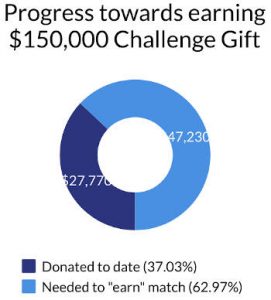
Since ASOR launched March Fellowship Madness 2021 on March 1, the support of donors has helped us move almost halfway towards our goal. Through the generous support of our members, we have been able to raise $9,095 in the first 17 days of March. With the 2-for-1 match, this means ASOR has received a total of $27,285 for this endowment. Thank you!

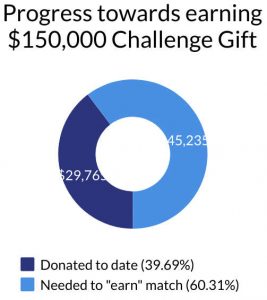
This is exceptional progress towards setting up a permanent scholarship fund for BIPOC students and scholars. ASOR still needs the help and support of our members and donors to reach our $20,000 fundraising goal for March Fellowship Madness. Please consider a donation today to help ASOR reach our March goal and to enable us to “earn” all of this incredible $150,000 gift.[/vc_wp_text][mk_divider][vc_wp_text]

Since 2007, ASOR has awarded over 830 fellowships, grants, dig scholarships, and travel awards totaling more than $900,000. In 2021, ASOR plans to award at least 25 summer stipends, six to eight excavation project grants, two Mesopotamian Fellowships, and more than a dozen Annual Meeting Travel Scholarships.

Every year in March, we launch a targeted campaign called March Fellowship Madness to support scholarships. This March we are focusing our efforts on raising $20,000 for BIPOC scholarships. We have received $9,095 through March 17, so we need $10,905 more to reach our goal.

Our $20,000 March goal is part of a larger campaign to support broader ASOR diversity initiatives.  Thanks to a generous 2-for-1 challenge gift by ASOR Trustee Carolyn Midkiff Strange, every dollar contributed will be matched with two dollars. A contribution of $25 will be matched with $50; a gift of $100 will be matched with $200; a gift of $1,000 will be matched with $2,000; and so forth.

In addition to supporting BIPOC stipends and scholarships in 2021, ASOR will use these gifts to endow research scholarships, internships, and travel fellowships dedicated to BIPOC students and early career scholars. These fellowships and grants will be a foundation for future efforts, and will serve as a tangible sign of ASOR’s commitment to long-term change.

The $20,000 March Fellowship Madness goal will move ASOR much closer towards raising the $75,000 that is needed to fully “earn” this transformative $150,000 challenge gift. Extending social equity and equal opportunity throughout all sectors of our world is one of the foremost challenges facing us today. You can join ASOR in making this change happen. Consider a gift of any amount to help us earn this extraordinary challenge gift.

[/vc_wp_text][mk_divider][vc_wp_text]

Please choose “Diversity Initiatives” from the drop-down menu in the
online donation module to designate your gift to this 2-for-1 Challenge Campaign.

Thank you to all our generous members and donors!

[/vc_wp_text][vc_wp_text]

OTHER WAYS TO DONATE

Donate By Phone Donate By Mail Make A Pledge
(Donate Later)
Call ASOR:
(703) 789-9229
ASOR
209 Commerce Street
Alexandria, VA 22314
E-mail ASOR

[/vc_wp_text][/vc_column][vc_column border_color=”rgba(170,170,170,0.01)” width=”1/6″ css=”.vc_custom_1496684098866{margin-right: 5px !important;margin-bottom: 20px !important;border-right-width: 2px !important;border-bottom-width: 2px !important;padding-top: 30px !important;padding-right: 10px !important;padding-left: 10px !important;background-color: #ffffff !important;border-right-color: rgba(227,228,228,0.75) !important;border-bottom-color: rgba(227,228,228,0.75) !important;}”][vc_wp_posts title=”BROWSE THE NEWS ARCHIVE” number=”4″][/vc_column][vc_column border_color=”rgba(170,170,170,0.01)” width=”1/6″ css=”.vc_custom_1496684008271{margin-right: 10px !important;margin-bottom: 30px !important;border-right-width: 2px !important;border-bottom-width: 2px !important;padding-top: 30px !important;padding-right: 20px !important;padding-left: 20px !important;background-color: #ffffff !important;border-right-color: rgba(227,228,228,0.75) !important;border-bottom-color: rgba(227,228,228,0.75) !important;}”][vc_column_text] [/vc_column_text][/vc_column][/vc_row]

What is a Dual Component Annual Meeting?

[vc_row fullwidth=”true” attached=”true” css=”.vc_custom_1496247803139{padding-top: 0px !important;padding-right: 0px !important;padding-bottom: 0px !important;padding-left: 0px !important;}”][vc_column][vc_single_image image=”73004″ img_size=”full” alignment=”center”][/vc_column][/vc_row][vc_row fullwidth=”true” css=”.vc_custom_1496682730308{padding-top: 10px !important;padding-right: 0px !important;padding-bottom: 0px !important;padding-left: 0px !important;}”][vc_column width=”1/12″ css=”.vc_custom_1496683820796{margin-right: 10px !important;}” offset=”vc_hidden-md vc_hidden-sm vc_hidden-xs”][vc_column_text]

 SHARE

[/vc_column_text][mk_image src=”http://www.asortest.org/wp-content/uploads/2017/01/social-fb-icon4.jpg” image_width=”42″ image_height=”42″ hover=”false” custom_url=”https://www.facebook.com/ASOResearch/” margin_bottom=”0″][mk_image src=”http://www.asortest.org/wp-content/uploads/2017/01/social-tw-icon4.jpg” image_width=”42″ image_height=”42″ hover=”false” custom_url=”https://twitter.com/ASOResearch?ref_src=twsrc%5Egoogle%7Ctwcamp%5Eserp%7Ctwgr%5Eauthor” margin_bottom=”0″][mk_image src=”http://www.asortest.org/wp-content/uploads/2017/01/social-in-icon4.jpg” image_width=”42″ image_height=”42″ hover=”false” custom_url=”https://www.linkedin.com/company/american-schools-of-oriental-research” margin_bottom=”0″][mk_image src=”http://www.asortest.org/wp-content/uploads/2017/01/social-ml-icon_7.jpg” image_width=”42″ image_height=”42″ hover=”false” custom_url=”mailto:info@asor.org” margin_bottom=”0″][mk_image src=”http://www.asortest.org/wp-content/uploads/2017/01/blog-icon3.jpg” image_width=”42″ image_height=”42″ hover=”false” custom_url=”http://asor.org/blog” margin_bottom=”0″][/vc_column][vc_column border_color=”rgba(255,255,255,0.01)” width=”1/6″ css=”.vc_custom_1496683923840{margin-right: 20px !important;border-left-width: 2px !important;padding-right: 20px !important;padding-left: 20px !important;border-left-color: #99422f !important;}”][mk_divider divider_color=”rgba(255,255,255,0.01)” thickness=”1″ margin_top=”3″ margin_bottom=”3″][vc_column_text]

NEWS@ASOR E-NEWSLETTER

ANCIENT NEAR EAST TODAY E-NEWSLETTER

PAST ASOR NEWS, MONTH BY MONTH

LIFETIME HONOR ROLL OF DONORS

FY20 HONOR ROLL OF DONORS

ASOR ANNUAL MEETING

[/vc_column_text][/vc_column][vc_column border_color=”rgba(170,170,170,0.01)” width=”1/2″ css=”.vc_custom_1487276122024{margin-right: 10px !important;margin-bottom: 30px !important;border-right-width: 2px !important;border-bottom-width: 2px !important;padding-top: 30px !important;padding-right: 30px !important;padding-left: 20px !important;background-color: #ffffff !important;border-right-color: rgba(227,228,228,0.75) !important;border-bottom-color: rgba(227,228,228,0.75) !important;}”][vc_column_text responsive_align=”left”]

What is a Dual Component Annual Meeting?

[/vc_column_text][mk_divider][vc_wp_text]ASOR’s members come from all over the world. In 2020, more than 45% of ASOR Annual Meeting presenters were from countries other than the United States. We are committed to providing inclusive opportunities for all colleagues to share research, collaborate, and engage.

As part of our commitment to fostering inclusivity for all of our members, the 2021 Annual Meeting will have both in-person and virtual components. As long as it is safe and possible, the in-person component will take place in Chicago, November 17-20. The virtual component will take place online, December 9-12, and will feel much like the 2020 virtual meeting. Here some of the key features of the dual component Annual Meeting:[/vc_wp_text][vc_column_text]

  • Meeting registration includes both components.
  • Scholarships are available: Due to COVID-19, and thanks to our generous members, current ASOR members with a need may request a 25%, 50%, or full Annual Meeting scholarship. Email your scholarship request to programs@asor.org before you purchase registration.
  • In-person papers will be presented live during the sessions in Chicago.
  • Virtual paper presentations will be recorded and uploaded to ASOR’s virtual platform in November.
  • Many sessions and workshops are being hosted as part of both components.
  • A member may present the same paper both in-person and online and this will count as 1 program appearance.
  • Make sure to submit your abstract via both the In-Person AND Virtual proposal forms if you would like to present your paper as part of both components.
  • March 15 is the Call for Papers deadline to propose a paper or workshop presentation.
  • UPDATE: The extended deadline to submit paper proposals is April 1, 2021.
    Abstracts submitted between March 16 – April 1 are subject to a $25 late fee payable in the ASOR Online Store. This fee does not apply if the abstract is solicited by a session chair.

[/vc_column_text][vc_wp_text]

Chicago, November 17-20

Approved Sessions and Workshops: Chicago

ASOR is watching the pandemic and following health and safety guidelines as we make plans to hold a safe in-person meeting. ASOR attendees will enjoy an iconic downtown location at the Hilton Chicago. The hotel overlooks Grant Park and Lake Michigan, and is located within walking distance of museums, restaurants, shopping, and many of Chicago’s top attractions. Read more about the hotel and Chicago here.

The academic program will include an opening plenary address, paper sessions, workshops, and posters. In addition, attendees will have access to exhibitors, receptions and networking opportunities.

Program participants may choose to share their work with those who are not able to attend in person by preparing the same paper or poster for presentation during the virtual component. ASOR is not planning to live stream or record presentations in Chicago, however, presenters may prepare a recording to upload to the virtual component platform.

March 15 is the deadline to propose a paper or workshop presentation proposal for Chicago:
In-Person Abstract Submission Form (Chicago, November 17-20)

Virtual, December 9-12

Approved Sessions and Workshops: Virtual

The second component of ASOR’s 2021 Annual Meeting will take place online, December 9-12. As was the case for the 2020 Virtual Annual Meeting, the online session time will be used for discussion of presentations. Pre-recorded paper presentations and digital posters will be available to view on demand before the virtual component takes place. Those presenting a paper as part of the virtual component will need to pre-record their presentation and upload the .mp4 file to ASOR’s virtual platform in November. This format will allow scholars who presented in Chicago to share their work with virtual attendees, and vice versa.

A Note About Virtual Workshops: The format for workshops is different from a traditional paper session. Whereas paper presentations for the virtual component will be pre-recorded, workshops will take place live and do not include pre-recorded content or paper presentations. Workshop presentations are limited to 10 minutes maximum.

March 15 is the deadline to submit a paper or workshop presentation proposal for the virtual component:
Virtual Abstract Submission Form (Online, December 9-12)[/vc_wp_text][/vc_column][vc_column border_color=”rgba(170,170,170,0.01)” width=”1/6″ css=”.vc_custom_1496684098866{margin-right: 5px !important;margin-bottom: 20px !important;border-right-width: 2px !important;border-bottom-width: 2px !important;padding-top: 30px !important;padding-right: 10px !important;padding-left: 10px !important;background-color: #ffffff !important;border-right-color: rgba(227,228,228,0.75) !important;border-bottom-color: rgba(227,228,228,0.75) !important;}”][vc_wp_posts title=”BROWSE THE NEWS ARCHIVE” number=”4″][/vc_column][vc_column border_color=”rgba(170,170,170,0.01)” width=”1/6″ css=”.vc_custom_1496684008271{margin-right: 10px !important;margin-bottom: 30px !important;border-right-width: 2px !important;border-bottom-width: 2px !important;padding-top: 30px !important;padding-right: 20px !important;padding-left: 20px !important;background-color: #ffffff !important;border-right-color: rgba(227,228,228,0.75) !important;border-bottom-color: rgba(227,228,228,0.75) !important;}”][vc_column_text] [/vc_column_text][/vc_column][/vc_row]

Table of Contents for NEA 84.1 (2021)

Table of Contents for Near Eastern Archaeology 84.1 (March 2021)


You can receive NEA (and other ASOR publications) through an ASOR Membership. Please e-mail the Membership office if you have any questions.

Pp. 4–11: “Archaeogaming: When Archaeology and Video Games Come Together,” by Tine Rassalle

The connection between archaeology and video games might come as a surprise to some, especially to those who have never played a video game. However, games and “playing” as a field for serious scholarship and historical research have been explored since the 1930s, when Dutch cultural historian Johan Huizinga wrote that “play is older than culture.” In Homo Ludens, Huizinga makes the case that from human play comes the creation of cultures, the forming of meaning, and the learning and transmitting of knowledge. His “playing man” engages in game-like practices and rituals, in politics, and in war and violence, showing that play and culture exist side by side as a “twin-union,” but play came first (Huizinga).


ASOR Members with online access: navigate to the token link email sent to you (search for “token link” in inbox) before attempting to read this article. Once you have activated your member token, click here to access the above article on The University of Chicago Press Journals’ website.

Pp. 12–21: “Beyond Tomb and Relic: Anthropological and Pedagogical Approaches to Archaeogaming,” by Matthew Winter

The advent of the computer chip has radically altered human life at a global scale, and with increasing access to digital platforms it was inevitable that digitization would reshape popular culture. The video game industry is one of the fastest growing sectors in technological and entertainment industries, reaching an enormous audience. It is now estimated that some 2.5 billion people play games worldwide, with 211 million American adults, 52 percent of whom are college educated (see Rassalle in this issue) ().Figure 1. Infographic of gamer demographics. From Entertainment Software Association. Source: https://www.theesa.com/esa-research/2019-essential-facts-about-the-computer-and-video-game-industry/.


ASOR Members with online access: navigate to the token link email sent to you (search for “token link” in inbox) before attempting to read this article. Once you have activated your member token, click here to access the above article on The University of Chicago Press Journals’ website.

Pp. 22–31: “Formless and Void: The Emergence of Biblical Lands in Early Religious Video Games (1982–1991),” by V. Gonzalez and Tine Rassalle

This essay examines how digital signifiers across the first decade of religious video games (1982–1991) helped players to situate themselves in the biblical landscapes. Spanning eight gaming platforms, and many different genres, from puzzle games to adventure, 17 games depicting biblical lands were created in this time period, offering us a fresh perspective on the question of how the past is presented through video games.


ASOR Members with online access: navigate to the token link email sent to you search for “token link” in inbox) before attempting to read this article. Once you have activated your member token, click here to access the above article on The University of Chicago Press Journals’ website.

Pp. 32–43: “Might, Culture, and Archaeology in Sid Meier’s Civilization,” by Shannon Martino

That video games should be socially conscious, engaged with political discourse, or historically accurate may not immediately come to mind: Video games are entertainment. One popular game series, Sid Meier’s Civilization (Civ), however, has run into multiple issues regarding its representations of culture(s) and history, particularly of underrepresented societies. This is unsurprising given the premise of the game, where users create civilizations based upon predefined, somewhat historically informed, often unfamiliar historical cultures. Players are encouraged to learn about these from the quasi-academic, imbedded encyclopedia Civilopedia, from in-game historical allusions and scenarios, game units, buildings, and archaeology.


ASOR Members with online access: navigate to the token link email sent to you (search for “token link” in inbox) before attempting to read this article. Once you have activated your member token, click here to access the above article on The University of Chicago Press Journals’ website.

Pp. 44–51: “Persia’s Victory: The Mechanics of Orientalism in Sid Meier’s Civilization,” by Angus Mol and Aris Politopoulos

A large Persian army consisting of archers, siege equipment, and fearless Immortals is wedged in a narrow strip between the sea and the mountains. Beyond this pass lies the Greek heartland and the ancient cities of Corinth and Athens. All that stands between Persia and their conquest of Greek cities is a handful of charioteers and bowmen. The battle commences. Arrows cloud the sky but fail to stop the advance of the Immortals. The Greek charioteers, caught by surprise and without enough room to maneuver, are quickly defeated. Corinth cannot stand the siege and soon falls. With minimal losses to the Persian army and little time for the Greeks to regroup, the city of Athens is soon to follow. In a defeat without distinction, the capital of the Greek world is ceded to the Persians. A few years later, nothing but toponyms are left to remind one of the once thriving Greek civilization.


ASOR Members with online access: navigate to the token link email sent to you (search for “token link” in inbox) before attempting to read this article. Once you have activated your member token, click here to access the above article on The University of Chicago Press Journals’ website.

Pp. 52–61: “Virtual Ziggurats: Orientalist Views and Playful Spaces,” by Aris Politopoulos

With this quotation, this fifth-century BCE Greek historian provides us with a vivid description of Etemenanki, the ziggurat of Babylon. The ziggurat is one of the most enduring symbols of the ancient Near East: From paintings to movies to books to video games, versions of the stepped constructions emerge in popular culture and imagination all the way from classical Greece until today. One could even argue that the ziggurat is a transhistorical symbol (Crowther ); it has existed as a symbol not only produced by and related to the ancient Near East, but has transcended its original historical context and has acquired new meanings and images over time. In this article, I explore this transhistoricity of the ziggurat by examining it within western, modern, popular imagination, and particularly within the context of video games. For this, I take an art-historical approach, examining ziggurats from various games to create a ziggurat typology as portrayed in video games. In doing that, I explore how modern conceptions of the ziggurat affect and shape our understanding of the Near East, and how this can be tied to Edward Said’s concept of orientalism (see also Mol and Politopoulos in this issue). I conclude with a brief discussion on how we can reframe the ziggurat within popular culture in order to increase knowledge and awareness about the history and cultures of the ancient Near East today.


ASOR Members with online access: navigate to the token link email sent to you (search for “token link” in inbox)  before attempting to read this article. Once you have activated your member token, click here to access the above article on The University of Chicago Press Journals’ website.

Pp. 62–70: “Building Kunulua Block by Block: Exploring Archaeology through Minecraft,” by Dominique Langis-Barsetti

The Computational Research on the Ancient Near East (CRANE) Project, directed by Tim Harrison of the University of Toronto, has united scholars from a variety of disciplines across several institutions around the globe since 2012. Originally focused on the Orontes Watershed of southern Turkey and northwestern Syria, the goal of the project is to provide researchers with a collaborative framework in which to leverage the full array of data produced by archaeology in order to shed light on the rise and development of complex societies in the region. The pooled resources and skills of collaborators have allowed the project to visualize and model connections between social, economic, and environmental factors across a range of temporal and regional scales (https://crane.utoronto.ca/).


ASOR Members with online access: navigate to the token link email sent to you (search for “token link” in inbox)  before attempting to read this article. Once you have activated your member token, click here to access the above article on The University of Chicago Press Journals’ website.

Pp. 71–78: “Assassin’s Creed Origins: Video Games as Time Machines,” by Christian Casey

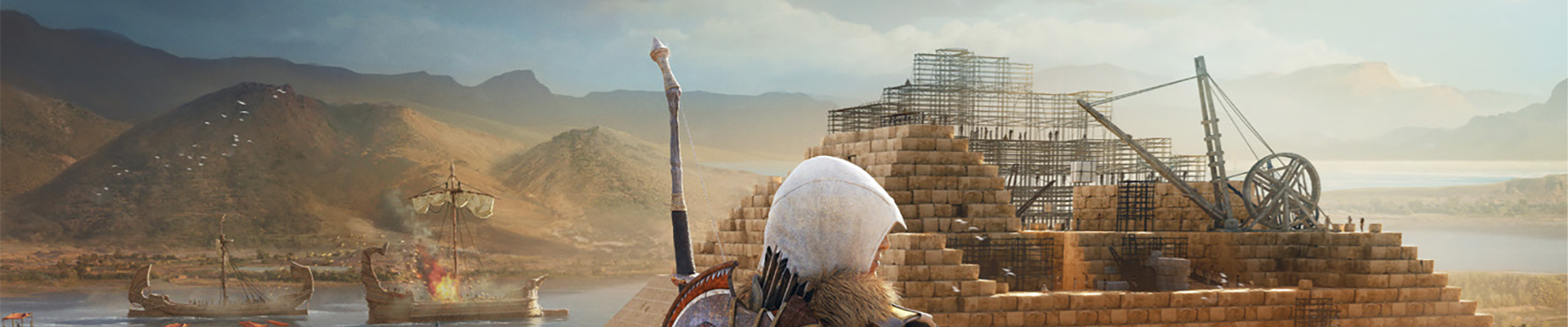
Ancient Egypt is far away. Very far away. For too many scholars who study Egypt professionally, it is far away in space. For all of us, it is far away in time—around two thousand years at the nearest point. This distance has consequences. We tend to view the world of ancient Egypt as we would a city on a mountain top: We observe the buildings as amorphous shapes, the people as bug-like creatures moving about at random, the events that shape their lives as momentary flurries of activity. Deliberate study provides an alternative view. Through the telescopic lens of scholarship, individual moments come into focus, are magnified, and become real, but the whole remains an incomplete sum of its disconnected parts. To use a more-familiar metaphor, we modern scholars see either the texture of the bark or the blue-gray smudge of a distant forest (). We have no choice but to miss the forest for the trees, we can never experience them together. Figure 1. Bayek and trusty pet lion in an idyllic Egyptian forest. The only proper way to experience a forest is to walk through one. Screenshot by the author.


ASOR Members with online access: navigate to the token link email sent to you (search for “token link” in inbox)  before attempting to read this article. Once you have activated your member token, click here to access the above article on The University of Chicago Press Journals’ website.

Pp. 79–85: “Assassin’s Creed Origins Discovery Tour: A Behind the Scenes Experience,” by Perrine Poiron

Assassin’s Creed: Origins was released at the British Museum in September 2017. For this particular event, which was celebrating the tenth anniversary of the Assassin’s Creed franchise, Ubisoft organized a colossal event, inviting influencers from all around the world plus media and some academics. This large event clearly shows the importance of this video game franchise, which started in 2007 with the launch of the first Assassin’s Creed game, set in Crusader Israel. Since then, twelve games have been released, each taking place in a specific time period, from the Peloponnesian War to the Renaissance era to the Victorian period ().Figure 1. All Assassins-Assassin’s Creed Brand. © 2020 Ubisoft Entertainment. All Rights Reserved.


ASOR Members with online access: navigate to the token link email sent to you (search for “token link” in inbox)  before attempting to read this article. Once you have activated your member token, click here to access the above article on The University of Chicago Press Journals’ website.

Pp. 86–92: “Colossal Cave Archaeology: Epigraphy, FORTRAN Code-Artifacts, and the Ur-Game,” by Andrew Reinhard

As explained by Tine Rassalle in her article introducing this special issue, video games and archaeology intersect in many ways, all of which can be applied to the archaeology of the Near East. Other authors in this issue describe video games (and their underlying engines) as pedagogical tools, tools for digital visualizations and reconstructions, and offer windows into how archaeology and archaeologists are perceived by both designers and players, which can also inform them about different interpretations of the ancient Near East and its many cultures. In this article, however, I take a different approach, showing that one can take methods, tools, and theories used by more traditional archaeologists working on Near Eastern topics and apply them to work on digital artifacts from the late twentieth century (Reinhard : 49–130).


ASOR Members with online access: navigate to the token link email sent to you (search for “token link” in inbox)  before attempting to read this article. Once you have activated your member token, click here to access the above article on The University of Chicago Press Journals’ website.

Meet the New BASOR Editors

[vc_row fullwidth=”true” attached=”true” css=”.vc_custom_1496247803139{padding-top: 0px !important;padding-right: 0px !important;padding-bottom: 0px !important;padding-left: 0px !important;}”][vc_column][vc_single_image image=”53271″ img_size=”1920×400″ alignment=”center”][/vc_column][/vc_row][vc_row fullwidth=”true” css=”.vc_custom_1496682730308{padding-top: 10px !important;padding-right: 0px !important;padding-bottom: 0px !important;padding-left: 0px !important;}”][vc_column width=”1/12″ css=”.vc_custom_1496683820796{margin-right: 10px !important;}” offset=”vc_hidden-md vc_hidden-sm vc_hidden-xs”][vc_column_text]

 SHARE

[/vc_column_text][mk_image src=”http://www.asortest.org/wp-content/uploads/2017/01/social-fb-icon4.jpg” image_width=”42″ image_height=”42″ hover=”false” custom_url=”https://www.facebook.com/ASOResearch/” margin_bottom=”0″][mk_image src=”http://www.asortest.org/wp-content/uploads/2017/01/social-tw-icon4.jpg” image_width=”42″ image_height=”42″ hover=”false” custom_url=”https://twitter.com/ASOResearch?ref_src=twsrc%5Egoogle%7Ctwcamp%5Eserp%7Ctwgr%5Eauthor” margin_bottom=”0″][mk_image src=”http://www.asortest.org/wp-content/uploads/2017/01/social-in-icon4.jpg” image_width=”42″ image_height=”42″ hover=”false” custom_url=”https://www.linkedin.com/company/american-schools-of-oriental-research” margin_bottom=”0″][mk_image src=”http://www.asortest.org/wp-content/uploads/2017/01/social-ml-icon_7.jpg” image_width=”42″ image_height=”42″ hover=”false” custom_url=”mailto:info@asor.org” margin_bottom=”0″][mk_image src=”http://www.asortest.org/wp-content/uploads/2017/01/blog-icon3.jpg” image_width=”42″ image_height=”42″ hover=”false” custom_url=”http://asor.org/blog” margin_bottom=”0″][/vc_column][vc_column border_color=”rgba(255,255,255,0.01)” width=”1/6″ css=”.vc_custom_1496683923840{margin-right: 20px !important;border-left-width: 2px !important;padding-right: 20px !important;padding-left: 20px !important;border-left-color: #99422f !important;}”][mk_divider divider_color=”rgba(255,255,255,0.01)” thickness=”1″ margin_top=”3″ margin_bottom=”3″][vc_widget_sidebar sidebar_id=”ca-sidebar-39801″][/vc_column][vc_column border_color=”rgba(170,170,170,0.01)” width=”1/2″ css=”.vc_custom_1487276122024{margin-right: 10px !important;margin-bottom: 30px !important;border-right-width: 2px !important;border-bottom-width: 2px !important;padding-top: 30px !important;padding-right: 30px !important;padding-left: 20px !important;background-color: #ffffff !important;border-right-color: rgba(227,228,228,0.75) !important;border-bottom-color: rgba(227,228,228,0.75) !important;}”][vc_column_text responsive_align=”left”]

MEET THE NEW EDITORS OF BASOR

[/vc_column_text][mk_divider][vc_wp_text]Last year, ASOR announced the appointment of the new editors of The Bulletin of ASOR (BASOR)—a team of four scholars from the United States and Europe. All four team members have since started their term in January 2021, working on the May 2021 issue. The new editors succeeded the previous co-editors, Eric Cline and Christopher Rollston. This team of four brings extensive editorial experience and diverse academic backgrounds that reflect the diversity of ASOR’s membership and mandate. The editors were nominated by the BASOR Editorial Search Committee after an extensive public search process. The nomination was unanimously endorsed by ASOR’s Publications Committee, and the editors were unanimously approved by the ASOR Board of Trustees in May 2020. BASOR editors are appointed for a three-year term, with the possibility of being re-appointed for a second term. Their initial term will run from 2021–2023.[/vc_wp_text][vc_row_inner][vc_column_inner width=”1/4″][vc_single_image image=”72927″ add_caption=”yes” alignment=”center” css=”.vc_custom_1614632853896{padding-right: 10px !important;}”][/vc_column_inner][vc_column_inner width=”1/4″][vc_single_image image=”72928″ add_caption=”yes” alignment=”center” css=”.vc_custom_1614632872360{padding-right: 10px !important;}”][/vc_column_inner][vc_column_inner width=”1/4″][vc_single_image image=”72934″ add_caption=”yes” alignment=”center” css=”.vc_custom_1614694724047{padding-right: 10px !important;}”][/vc_column_inner][vc_column_inner width=”1/4″][vc_single_image image=”72935″ add_caption=”yes” alignment=”center” css=”.vc_custom_1614632928270{padding-right: 10px !important;}”][/vc_column_inner][/vc_row_inner][mk_padding_divider][vc_wp_text]Susan Cohen (Montana State University) is an archaeologist, focusing on rural-urban relations and interactions and chronological connections between Egypt and the southern Levant.

Regine Pruzsinszky (Albert-Ludwigs-University Freiburg) is an Assyriologist with a particular interest in Semitic and Hurrian onomastics, Mesopotamian chronology of the second millennium BCE, and the socio-cultural role of musicians in the Ancient Near East. Susan and Regine lead the team as co-editors.

Jana Mynářová (Charles University in Prague) is an Assyriologist and Egyptologist, focusing on political and cultural relations of Egypt and the Near East.

Marwan Kilani (currently a postdoc researcher associated with the Freie Universität in Berlin and the Swiss National Science Foundation) is an Egyptologist and linguist working on cultural and linguistic interactions between Egypt and the Levant. He has a strong interest in methodological questions, and in digital humanities and computational methods applied to the study of the ancient world. Both Jana and Marwan have joined the team as associate editors.

BASOR is a leader among peer-reviewed academic journals of the ancient Near East. Since 1919, BASOR has served as a highly respected interdisciplinary English-language forum for scholars worldwide in subjects pertaining to the archaeological and history of the ancient Near Eastern world. The journal publishes articles by emerging and established scholars of the ancient world focusing on the regions of the Levant, Mesopotamia, Cyprus, Anatolia, Iran, Caucasus, and Egypt with a chronological range from the Paleolithic through the early modern period.

BASOR appears bi-annually, in May and November. Submissions of particular interest include articles that present original research, novel archaeological interpretations, theoretical analysis, and contributions based on innovative approaches to the study of the ancient world. The journal also contains reviews and commentaries on the latest books. Suggestions are also welcomed for occasional theme issues relating to topics of broad scholarly interest. Those interested in publishing in BASOR should continue to submit manuscripts through the online submission system. Questions, comments, or suggestions for the new editors? You can now contact them at basor@asor.org.[/vc_wp_text][/vc_column][vc_column border_color=”rgba(170,170,170,0.01)” width=”1/6″ css=”.vc_custom_1496684098866{margin-right: 5px !important;margin-bottom: 20px !important;border-right-width: 2px !important;border-bottom-width: 2px !important;padding-top: 30px !important;padding-right: 10px !important;padding-left: 10px !important;background-color: #ffffff !important;border-right-color: rgba(227,228,228,0.75) !important;border-bottom-color: rgba(227,228,228,0.75) !important;}”][vc_wp_posts title=”BROWSE THE NEWS ARCHIVE” number=”4″][/vc_column][vc_column border_color=”rgba(170,170,170,0.01)” width=”1/6″ css=”.vc_custom_1496684008271{margin-right: 10px !important;margin-bottom: 30px !important;border-right-width: 2px !important;border-bottom-width: 2px !important;padding-top: 30px !important;padding-right: 20px !important;padding-left: 20px !important;background-color: #ffffff !important;border-right-color: rgba(227,228,228,0.75) !important;border-bottom-color: rgba(227,228,228,0.75) !important;}”][vc_column_text] [/vc_column_text][/vc_column][/vc_row]

FOA Webinar: Bill Schniedewind on Mar. 21

FRIENDS OF ASOR WEBINARS

How the Bible Became a Book

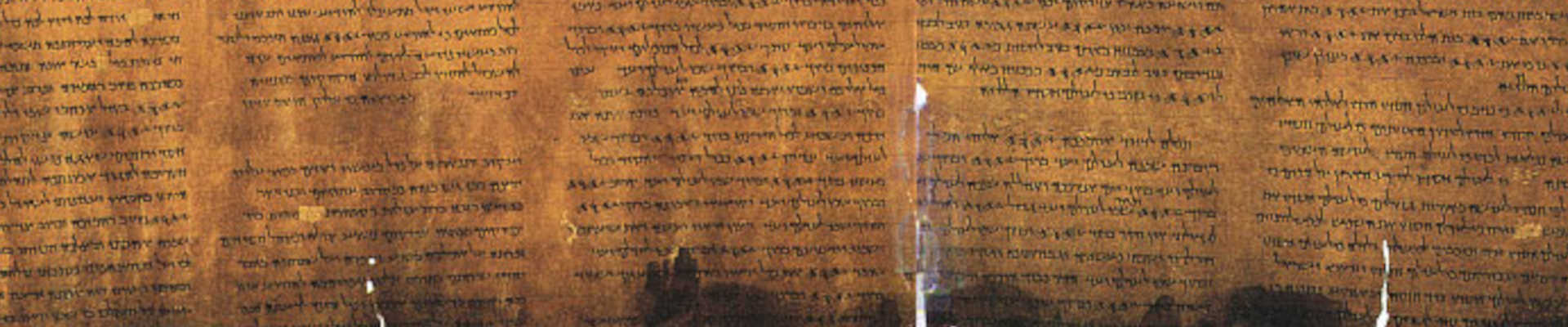
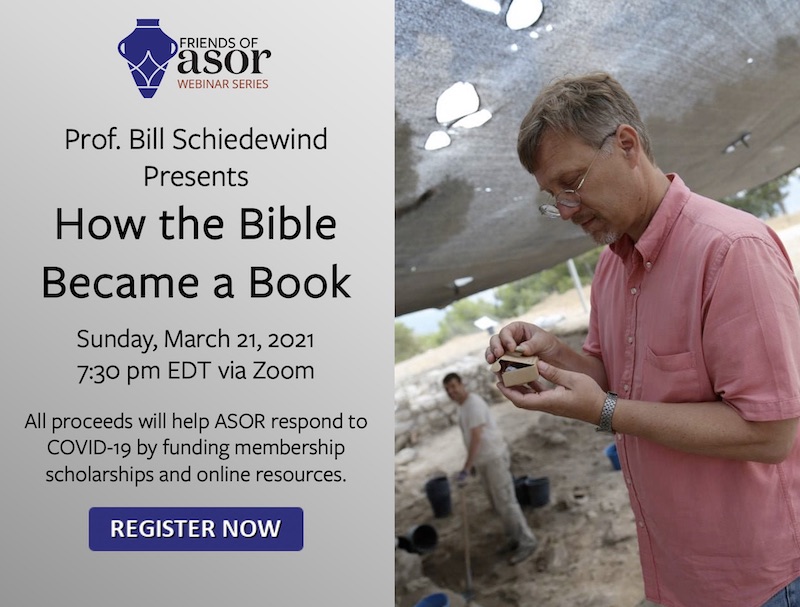
Friends of ASOR presents the next webinar in our monthly series on March 21, at 7:30 pm EDT, featuring Prof. William Schniedewind. An expert in ancient biblical interpretation, the social history of the ancient eastern Mediterranean world, and sociolinguistics of Classical Hebrew, Dr. Schniedewind will address some fundamental questions: How did the Bible become a book? And why did these texts become scripture? This lecture explores answers about the origins of the biblical literary traditions from an anthropological perspective beginning with the epigraphic and archaeological evidence. Early Israel was originally a pastoral and agrarian society, yet it created an extensive literary tradition. Seminal social and political changes in Jerusalem began in the late eighth century and resulted in an expanded role for writing and the beginnings of biblical literature. But archaeological and epigraphic evidence for Hebrew writing ends with the Babylonian exile and does not reemerge until the late Persian period. Join us for this master class on how to examine the Bible based on its linguistic structure and historical background. Prof. Schniedewind will conclude his webinar with a live Q&A session.

William Schniedewind is a Professor of Biblical Studies at UCLA. He has been the Chair of the Department of Near Eastern Languages and Cultures at UCLA and held the Kershaw Endowed Chair of Ancient Eastern Mediterranean Studies. He received a B.A. in Religion from George Fox University (1984), a M.A. in Historical Geography from Jerusalem University College, and a Ph.D. in Bible and Ancient Near East from Brandeis University (1992). He has been a Visiting Scholar at the Hebrew University and a Research Fellow at the Albright Institute of Archaeological Research in Jerusalem. He is the author of six books including How the Bible Became a Book: the Textualization of Ancient Israel (Cambridge University Press, 2004), A Social History of Hebrew: its Origins Through the Rabbinic Period (Yale University Press, 2013), and The Finger of the Scribe: How Scribes Learned to Write the Bible (Oxford University Press, 2019).

ASOR Sustaining Members: $0 | ASOR Members: $5 | Public: $10

To receive your ASOR member discount, log into the online store. If you are new to ASOR, please click on the “New Visitor Registration” link to register your e-mail address and choose password for our online store. Once logged in, navigate to “Meeting and Event Registration” to register for the webinar and pay the fee. Each paid registrant will receive a confirmation e-mail when you pay for the webinar. If you do not receive this e-mail, then you are not registered. Please e-mail membership@asor.org with any questions or issues with registering.

You will be e-mailed the Zoom Webinar link in the week prior to the lecture on March 21, 2021. If you do not receive the link by the close of business on the Thursday before the webinar, please e-mail membership@asor.org immediately. All webinars are recorded and all paid registrants will be sent a link to view the recording.

All proceeds from this lecture are used to fund scholarships for members impacted by COVID-19 as well as increasing ASOR’s online resources, which are free to the public.

WHY SPONSOR A WEBINAR?

Several levels of support from $50-$1,000 are available. Proceeds go towards membership scholarships and towards increasing ASOR’s virtual resources. Each sponsorship is tax-deductible and you can give your friends free registrations to a webinar!

Bronze Level ($50): up to 2 guest registrations
Silver Level ($100): up to 5 guest registrations
Gold Level ($500): up to 20 guest registrations
Platinum Level ($1,000): up to 50 guest registrations

After you sign up for a sponsorship online or over the phone, email the names and email addresses of your guests to Felice Herman at membership@asor.org, who will send your guests a confirmation and the Zoom link before the webinar.

WANT TO SAVE $5.00 ON THE NEXT WEBINAR?

Join ASOR as a member! Click here for more details about discounts for events and other benefits of membership. Memberships start at $40 for the year as an Associate Member.

Not ready to join yet? Become a Friend of ASOR for FREE!

Click here for more details about our online resources.

PAST WEBINARS

You can now purchase the link to the recording of any webinar. You can also purchase the bundle packages of all webinars from the 2020-2022 seasons. Please e-mail membership@asor.org for purchase details.

To see a printable pdf of the webinar titles from the 2020-2021 season, please click here. To see a printable pdf of the webinar titles from the 2021-2022 season, please click here.

Pricing:

Members: $6.00 per recording
Non-Members: $12.00 per recording
Bundle of 2020-2021 Webinars: $75.00
Bundle of 2021-2022 Webinars: $75.00
Bundle of 2020-2022 Webinars: $125.00

2021-2022 Season

A World at War: Protecting Cultural Heritage in Times of Conflict
Patty Gerstenblith (DePaul University), Lisa Ackerman (Columbus Citizens Foundation), Andrew Cohen (Government Professional and Cultural Heritage Expert) | May 12, 2022

Preserving Cultural Heritage in Hisban and Umm al-Jimal, Jordan
Øystein LaBianca (Andrews University), Elizabeth Osinga (Umm al-Jimal Archaeological Project), Darrell Rohl (Calvin University) | April 24, 2022

Back to the Field: Recent Discoveries & Summer Plans 2022
Lorenzo d’Alfonso (ISAW), Kathryn Grossman (NC State University), James R. Strange (Samford University) | April 3, 2022

Uncovering What is Nubian Beneath the Veneer of Egyptianness: Excavating the Archives
Debora Heard (University of Chicago) | March 20, 2022

Where Are They Now?: A Preview of 2022 ASOR-Affiliated Fieldwork Projects
Michael Given (University of Glasgow), Xenia-Paula Kyriakou (Florida Gulf Coast University), Stephen Batiuk (University of Toronto), Monique Roddy (Walla Walla University), Kent Bramlett (La Sierra University), Friedbert Ninow (La Sierra University), and Michael Hoff (University of Nebraska-Lincoln) | March 8, 2022

Excavations at Tel Gezer: A Personal Story
Sam Wolff (Tel Gezer Laboratory) | February 20, 2022

Tel Rehov: A Major Bronze and Iron Age City in the Jordan Valley
Amihai Mazar (Hebrew University of Jerusalem), Nava Panitz-Cohen ( Hebrew University of Jerusalem), Nota Kourou (Athens University), Naama Yahalom-Mack (Hebrew University of Jerusalem), Robert Mullins (Azusa Pacific University) | February 10, 2022

The Not-So-Innocents Abroad: The Beginnings of American Biblical Archaeology
Rachel Hallote (Samford University) | January 20, 2022

Synagogues as Jesus Knew Them
James R. Strange (Samford University) | December 2, 2021

Under Jerusalem: The Buried History of the World’s Most Contested City
Andrew Lawler | November 4, 2021

Jesus and Jerusalem on TV: How Do Bible Documentaries Get Made?
Robert Cargill (University of Iowa) | October 17, 2021

Digging the Divine?: Judahite Pillar Figurines and the Archaeology of Israelite Religion
Erin Darby (University of Tennessee) | October 7, 2021

David, Solomon, and Rehoboam’s Kingdom—The Archaeological Evidence
Yosef Garfinkel (Hebrew University of Jerusalem) | September 19, 2021

From Standing Stones to Sacred Emptiness: Textual and Visual Portrayals of Israel’s God
Theodore Lewis (Johns Hopkins University) | August 29, 2021

2020-2021 Season

Making May Matter: Webinarathon to Endow Diversity
Multiple Speakers | May 21-23, 2021

Archaeogaming: Why Video Games Deserve Their Own Archaeology
Tine Rassalle (University of North Carolina at Chapel Hill), Shannon Martino (Morton College), Matthew Winter (University of Arizona), Michael Zimmerman (Rhode Island) | April 18, 2021

How the Bible Became a Book
William Schniedewind (UCLA) | March 21, 2021

The Mysteries of Mithras in Caesarea: Exploring the Cult’s Rites and Remains
Jane DeRose Evans (Temple University), Alexandra Ratzlaff (Brandeis University) | March 11, 2021

Archaeology and the Hidden Religious Culture of Israelite Women
Carol Meyers (Duke University) | February 21, 2021

Meet the Directors—Fundraiser to Support ASOR’s Affiliated Overseas Research Centers
Matthew J. Adams (AIAR), Pearce Paul Creasman (ACOR), Lindy Crewe (CAARI) | February 11, 2021

Early Synagogues, Jesus, and Galilee—A Jewish Perspective
Eric Meyers (Duke University) | December 13, 2020

Home Sweet Home: Ancient Israelite Households in Context
Cynthia Shafer-Elliott (William Jessup University) | October 18, 2020

Priestesses in the Days of Solomon and Ahab
Susan Ackerman (Dartmouth College) | September 13, 2020

Digging Deeper: How Archaeology Works
Eric H. Cline (The George Washington University) | August 9, 2020

March Fellowship Madness 2021

[vc_row fullwidth=”true” attached=”true” css=”.vc_custom_1496247803139{padding-top: 0px !important;padding-right: 0px !important;padding-bottom: 0px !important;padding-left: 0px !important;}”][vc_column][vc_single_image image=”72386″ img_size=”full” alignment=”center”][/vc_column][/vc_row][vc_row fullwidth=”true” css=”.vc_custom_1496682730308{padding-top: 10px !important;padding-right: 0px !important;padding-bottom: 0px !important;padding-left: 0px !important;}”][vc_column width=”1/12″ css=”.vc_custom_1496683820796{margin-right: 10px !important;}” offset=”vc_hidden-md vc_hidden-sm vc_hidden-xs”][vc_column_text]

 SHARE

[/vc_column_text][mk_image src=”http://www.asortest.org/wp-content/uploads/2017/01/social-fb-icon4.jpg” image_width=”42″ image_height=”42″ hover=”false” custom_url=”https://www.facebook.com/ASOResearch/” margin_bottom=”0″][mk_image src=”http://www.asortest.org/wp-content/uploads/2017/01/social-tw-icon4.jpg” image_width=”42″ image_height=”42″ hover=”false” custom_url=”https://twitter.com/ASOResearch?ref_src=twsrc%5Egoogle%7Ctwcamp%5Eserp%7Ctwgr%5Eauthor” margin_bottom=”0″][mk_image src=”http://www.asortest.org/wp-content/uploads/2017/01/social-in-icon4.jpg” image_width=”42″ image_height=”42″ hover=”false” custom_url=”https://www.linkedin.com/company/american-schools-of-oriental-research” margin_bottom=”0″][mk_image src=”http://www.asortest.org/wp-content/uploads/2017/01/social-ml-icon_7.jpg” image_width=”42″ image_height=”42″ hover=”false” custom_url=”mailto:info@asor.org” margin_bottom=”0″][mk_image src=”http://www.asortest.org/wp-content/uploads/2017/01/blog-icon3.jpg” image_width=”42″ image_height=”42″ hover=”false” custom_url=”http://asor.org/blog” margin_bottom=”0″][/vc_column][vc_column border_color=”rgba(255,255,255,0.01)” width=”1/6″ css=”.vc_custom_1496683923840{margin-right: 20px !important;border-left-width: 2px !important;padding-right: 20px !important;padding-left: 20px !important;border-left-color: #99422f !important;}”][mk_divider divider_color=”rgba(255,255,255,0.01)” thickness=”1″ margin_top=”3″ margin_bottom=”3″][vc_widget_sidebar sidebar_id=”ca-sidebar-39801″][/vc_column][vc_column border_color=”rgba(170,170,170,0.01)” width=”1/2″ css=”.vc_custom_1487276122024{margin-right: 10px !important;margin-bottom: 30px !important;border-right-width: 2px !important;border-bottom-width: 2px !important;padding-top: 30px !important;padding-right: 30px !important;padding-left: 20px !important;background-color: #ffffff !important;border-right-color: rgba(227,228,228,0.75) !important;border-bottom-color: rgba(227,228,228,0.75) !important;}”][vc_column_text responsive_align=”left”]

March Fellowship Madness 2021- Supporting Diversity, Equity, and Inclusion

Update March 10: $9,095 raised towards $20,000 goal[/vc_column_text][mk_divider][mk_skill_meter title=”Progress towards $20,000 March Goal” percent=”45″ title_color=”#000000″ progress_bar_color=”#27d2f4″ track_bar_color=”#b2b2b2″][mk_divider][vc_wp_text]

Since 2007, ASOR has awarded over 830 fellowships, grants, dig scholarships, and travel awards totaling more than $900,000. In 2021, ASOR plans to award at least 25 summer stipends, six to eight excavation project grants, two Mesopotamian Fellowships, and more than a dozen Annual Meeting Travel Scholarships.

Every year in March, we launch a targeted campaign called March Fellowship Madness to support scholarships. This March we are focusing our efforts on raising $20,000 for BIPOC scholarships. We have received a lead gift of $7,000, so we need $13,000 more to reach our goal.

Our $20,000 March goal is part of a larger campaign to support broader ASOR diversity initiatives.  Thanks to a generous 2-for-1 challenge gift by ASOR Trustee Carolyn Midkiff Strange, every dollar contributed will be matched with two dollars. A contribution of $25 will be matched with $50; a gift of $100 will be matched with $200; a gift of $1,000 will be matched with $2,000; and so forth.

In addition to supporting BIPOC stipends and scholarships in 2021, ASOR will use these gifts to endow research scholarships, internships, and travel fellowships dedicated to BIPOC students and early career scholars. These fellowships and grants will be a foundation for future efforts, and will serve as a tangible sign of ASOR’s commitment to long-term change.

The $20,000 March Fellowship Madness goal will move ASOR much closer towards raising the $75,000 that is needed to fully “earn” this transformative $150,000 challenge gift. Extending social equity and equal opportunity throughout all sectors of our world is one of the foremost challenges facing us today. You can join ASOR in making this change happen. Consider a gift of any amount to help us earn this extraordinary challenge gift.

[/vc_wp_text][mk_divider][vc_wp_text]

Please choose “Diversity Initiatives” from the drop-down menu in the
online donation module to designate your gift to this 2-for-1 Challenge Campaign.

Thank you to all our generous members and donors!

[/vc_wp_text][vc_wp_text]

OTHER WAYS TO DONATE

Donate By Phone Donate By Mail Make A Pledge
(Donate Later)
Call ASOR:
(703) 789-9229
ASOR
209 Commerce Street
Alexandria, VA 22314
E-mail ASOR

[/vc_wp_text][/vc_column][vc_column border_color=”rgba(170,170,170,0.01)” width=”1/6″ css=”.vc_custom_1496684098866{margin-right: 5px !important;margin-bottom: 20px !important;border-right-width: 2px !important;border-bottom-width: 2px !important;padding-top: 30px !important;padding-right: 10px !important;padding-left: 10px !important;background-color: #ffffff !important;border-right-color: rgba(227,228,228,0.75) !important;border-bottom-color: rgba(227,228,228,0.75) !important;}”][vc_wp_posts title=”BROWSE THE NEWS ARCHIVE” number=”4″][/vc_column][vc_column border_color=”rgba(170,170,170,0.01)” width=”1/6″ css=”.vc_custom_1496684008271{margin-right: 10px !important;margin-bottom: 30px !important;border-right-width: 2px !important;border-bottom-width: 2px !important;padding-top: 30px !important;padding-right: 20px !important;padding-left: 20px !important;background-color: #ffffff !important;border-right-color: rgba(227,228,228,0.75) !important;border-bottom-color: rgba(227,228,228,0.75) !important;}”][vc_column_text] [/vc_column_text][/vc_column][/vc_row]