ASOR Grant & Fellowship Awardees

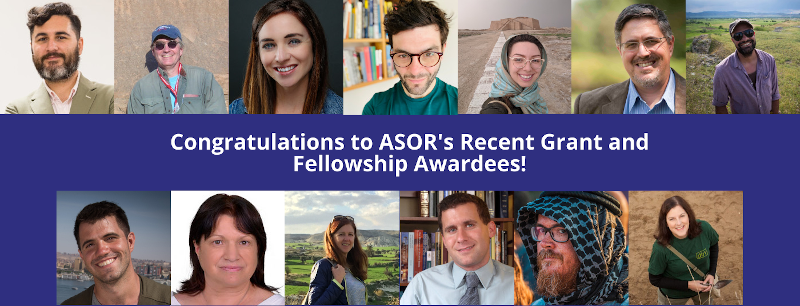
2022 PROJECT GRANT AND RESEARCH FELLOWSHIP AWARDEES

Grants for Archaeological Projects

Stevan B. Dana Project Grant
  • Sergio Alarcón Robledo, Harvard University: North Saqqara Archaeological Survey (Egypt)
Lawrence T. Geraty Community Archaeology Grant
  • Abdullah Abdulazeese Al-masha’lah, AlRaqeem for Logistic Services and Training: Tall Hisban (Jordan)
Denise L. Gold Project Grant
  • Lindy Crewe, CAARI: Kissonerga-Skalia Bronze Age Settlement Excavation (Cyprus)
Charles Harris Project Grant
  • Ian W. N. Jones, University of California-San Diego: Balu’a Regional Archaeology Project (Jordan)
  • Rocco Palermo, University of Pisa: Gird-i Matrab Archaeological Project (Iraqi Kurdistan)
Joe D. Seger Project Grant
  • Shawn Bubel, University of Lethbridge: Final Analysis of the Chipped Stone Tools Excavated from Tel Beth-Shemesh (Israel)
  • Darrell J. Rohl, Calvin University: Religion and Society at Umm al-Jimal (Jordan)
Shepard Urgent Action Grant
  • Maria Elena Ronza, SELA for Training and Protection of Heritage: Emergency Conservation of the Roman Bathhouse in Petra (Jordan)

Research Fellowships

Study of Collections Fellowships
  • Joseph A. Greene, Harvard Museum of the Ancient Near East: Kelsey Museum Archives-Michigan Excavations in the Carthage Sanctuary of Tanit (US)
  • James D. Moore, Humboldt-Universität zu Berlin: Cabinet du Corpus Inscriptionum Semiticarum in the Académie des Inscriptions et Belles-Lettres-Semitic Artifacts Database (France)
  • Michael Press, University of Agder: The Antiquities Market in Late Ottoman Palestine (London, Paris, and Jerusalem)
  • Matthew J. Suriano, University of Maryland: Cabinet du Corpus Inscriptionum Semiticarum in the Académie des Inscriptions et Belles-Lettres-Clermont-Ganneau Collection (France)
William G. Dever Fellowship
  • Krysta Fauria, University of Southern California: Legio (Israel)
Herbert Warren Mason Fellowship
  • Maria Rita Corticelli: The Kakais of Iraq: Culture, Religion and Society (Iraq)
Mesopotamian Fellowship
  •  A Khaled Abu Jayyab, University of Toronto: The Tepe Gawra Lower Town Survey, Ninawa (Iraq)
  • Petra M. Creamer, Dartmouth College: Rural Landscapes of Imperial Iron Age Mesopotamia (Iraqi Kurdistan)

Support ASOR’s Fellowships, Scholarships, and Grants!

ASOR is fortunate to have a growing number of named endowments that support membership research, excavation grants, and scholarships for fieldwork participation and scholarships for Membership and the Annual Meeting. However, we also need support from individual donors who make annual gifts or consider establishing endowments to support these programs in perpetuity. Support of ASOR’s Annual (Unrestricted) Fund enables us to support the operations of the ever-growing scholarship and grant programs. Please contact ASOR’s executive director, Andy Vaughn, for more information about ASOR’s grants, scholarship, and fellowship programs. Gifts of all amounts are needed and greatly appreciated.

Study of Collections Fellowship Report: Joseph A. Greene

2022 Study of Collections Fellowship Report: Kelsey Museum Archives

Joseph A. Greene, Harvard Museum of the Ancient Near East

An ASOR Study of Collections Fellowship funded my travel to the University of Michigan to complete work in archives related the 1925 Michigan excavations in the Carthage Sanctuary of Tanit (tophet). The excavator, Professor Francis Kelsey, died before completing a final report, but he left behind an extensive archives, held both at the Kelsey Museum and at the Bentley Historical Library.

The 1925 expedition directed by Kelsey was the forerunner to the 1975–1979 ASOR Punic Project, directed by the late Professor L.E. Stager (1943–2017). Dr. Brien Garnand and I have now taken responsibility for publication of the Punic Project, and we are using the opportunity to include Kelsey’s unpublished results with those of the ASOR Punic Project.

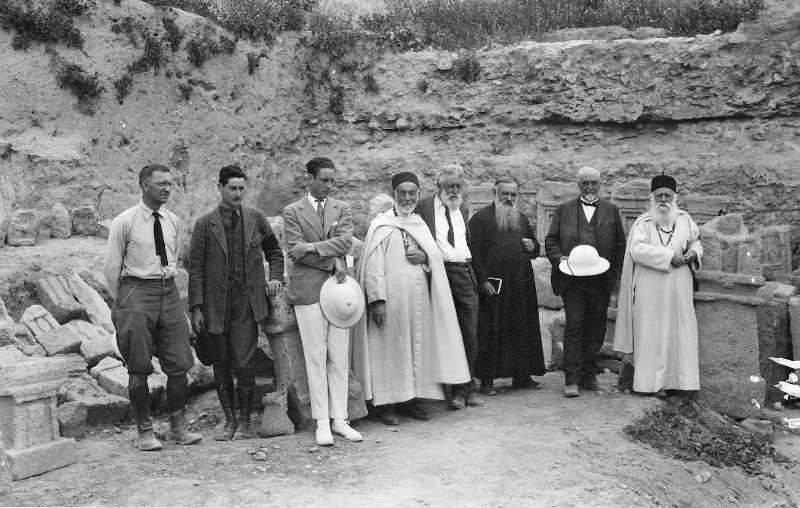
Francis Kelsey with his very smartly dressed Carthage excavation team. Kelsey is on the far right in dark three-piece suit holding white pith helmet. (University of Michigan, Kelsey Museum Archives)
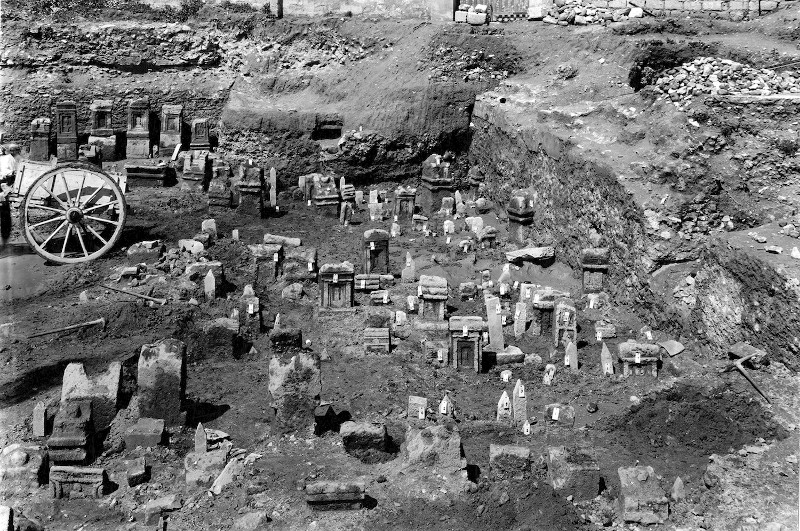
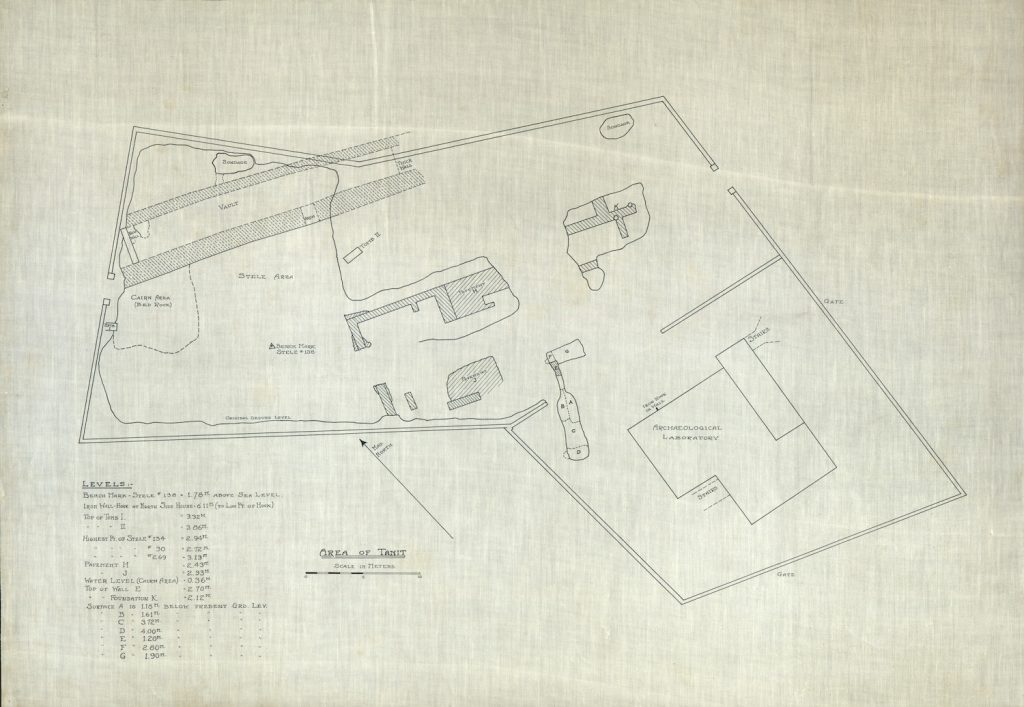
Carthage Tophet under excavation in 1925 with stelae and cippi exposed in situ, view northwest. The flat, vertical wall on righthand side is an intrusive 4th c. A.D. Roman vault (see also plan, Fig. 3). (University of Michigan, Kelsey Museum Archives)

Dr. Garnand completed much work in the Michigan archive before 2022. For example, Kelsey’s 1925 site plan had already been integrated into the ASOR 1979 site plan. Field notes and excavation diaries from 1925 have been scanned and edited, along with plans, sections, drawings, field photos and other documentation. The drawings and photographs have been edited and annotated so their format corresponds to that of the ASOR Punic Project records. All of the annotated 1925 field photos and plans will be included in the digital publication, while a selection will appear in the printed version of the final report.

Certain other tasks planned for 2022 have also already been completed. Photography of 78 paper squeezes of Tophet stele excavated by Kelsey was undertaken by the University of Michigan Imaging Services. Likewise prints of the 1925 expedition photographs (the negatives are lost) have also been digitized. Thus, we now have a detailed inventory of squeezes and photographs.

With help of Kelsey Museum Registrar Michelle Fontenot, I was able to identify and organize a residue of ASOR Punic Project large-format plans unaccountably co-mingled in the archives with those from Kelsey’s 1925 expedition and the 1975–1979 Carthage-Dermech Michigan excavations. The physical plans remain at Michigan, but digital copies will be deposited in the ASOR Punic Project archives at the Harvard Museum of the Ancient Near East (HMANE). Also digitized were 15 large-format plans and drawings from the 1925 and 1975–1979 Carthage Tophet and Harbor excavations. This was completed with assistance from Kelsey Museum Collections Manager Sebastian Encina and undergraduate intern, Isabella Blanton, who accompanied me to the Clark Library where we scanned the material using a large-format scanner under the guidance of map librarian Karl Longstreth.

Plan of 1925 Carthage Tophet excavation area. The “Vault” in upper lefthand side is an intrusive 4th c. A.D. Roman feature (also visible in the photo, Fig. 2). (University of Michigan, Kelsey Museum Archives)

Another unanticipated but helpful discovery was the archive of 1978 exhibit “Carthage Then and Now,” originated at the Kelsey Museum, which then traveled to the Oriental Institute Museum at the University of Chicago and to the Semitic Museum at Harvard (now HMANE).

Finally, in the Bentley Library I completed the review of the relevant Francis Kelsey papers held there. Garnand had begun review 165 boxes of Kelsey papers on a previous visit, and it was necessary only for me to verify the box numbers which contained the relevant documents previously scanned.

Stipend Report: Kacey Garcia

Khirbet al-Balu’a 2021 Study Season: Pottery and Figurines

Kacey Garcia, 2021 Shirlee Meyers-G. Ernest Wright Summer Stipend Recipient

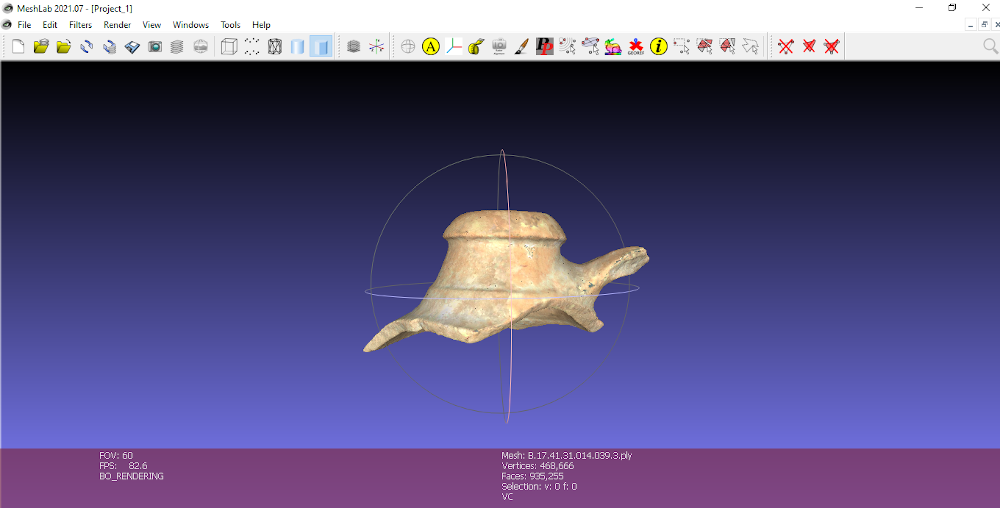
I would like to thank the Shirlee Meyers-G. Ernest Wright Scholarship donors and ASOR for providing me with an amazing opportunity to participate in the 2021 study season at La Sierra University. I assisted in processing loaned, diagnostic ceramic samples for publication of 2012-2019 excavation seasons at Khirbet al-Balu’a. I organized and sorted these samples according to occupational phases utilizing the data collected from the loci. Relying on my skills with Next Engine’s software ScanStudio and Meshlab, I was able to create plates for all of these diagnostic samples to prepare them for the Khirbet al-Balu’a publication. The next step will be creating a ceramic seriation for Central Jordan by applying C14 data.

Meshlab of an aligned diagnostic sample from 2017.

Scanning set up at La Sierra University.

I was also able to conduct research on the figurines found in the main occupational strata at Khirbet al Balu’a as part of a class on household archaeology. I discussed the figurines’ purposes while providing contextual evidence from Iron Age Khirbet al-Balu’a. I read articles in household archaeology methodology and theory and applied what I’ve learned to the archaeological dataset from Khirbet al-Balu’a. A total of 19 figurines were found at Khirbet al-Balu’a during the 2012 to 2019 excavations. While both anthropomorphic and zoomorphic figurines were found, the majority were zoomorphic (13 figurines). This assumes that the demonstrated figures are animals since many are difficult to interpret due to their poor condition.

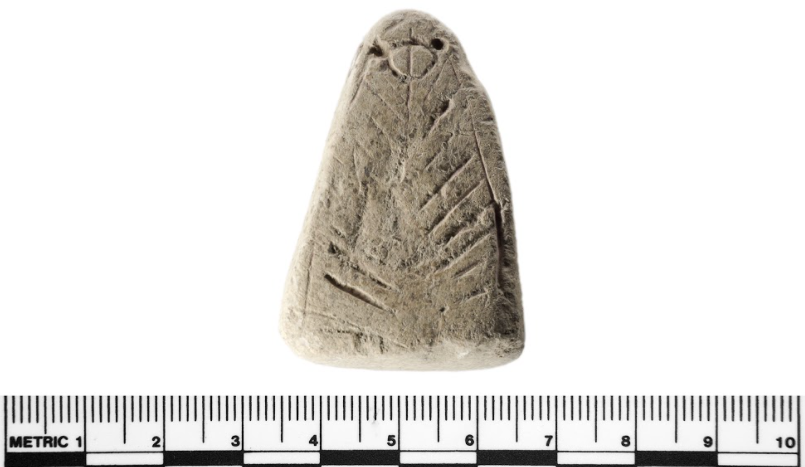
When analyzing figurines there are 3 main categories: zoomorphic, anthropomorphic and theriomorphic. Zoomorphic figurines resemble an animal, anthropomorphic figurines resemble humans, and theriomorphic figurines are thought to have depicted gods in animal form. In the ancient near east, theriomorphic figurine can be either an animal with humanistic traits that identify with gods or as part animal and human. Phase 2 at Balu’a did not have any female depictions, despite female figurines being the most common anthropomorphic archetype. Female figurines are often correlated to fertility, and were possibly used to enhance the chances of bearing children or giving birth safely. Most of Balu’a figurines are zoomorphic, and the ones from the Iron Age II house are identified as bovine, birds, and horses. Two of the figurines were ceramic and another two were made of plaster and clay. For example, B190010 was a plaster, conical-shaped zoomorphic figurine with incised eyes, beak, feathers and wings. There is a line design originating from the center of the figure. It is thought to be a bird of some sort owl or a hawk. This figurine was a part of the Phase 2 post-collapse rubble layer located in room A4. While learning about these figurines I couldn’t help but feel connected to the occupants of the Iron Age II house. I wondered what I would leave behind in my home long after I am gone for others to find. Figurines are initially interpreted as cultic objects. This is my favorite theory because it shows that ancient peoples needed something to believe in when life got too unpredictable and difficult. There is an unspoken beauty and a sense of humanity to the concept of hope thriving through these figurines during what may have been a desperate time.

Zoomorphic figurine of a bird from Balu'a Iron II house. Artifact #B190010 (Used with permission of Balu'a Regional Archaeological Project, BRAP)

Kacey Garcia is a senior undergraduate at La Sierra University majoring in archaeology. She first encountered archaeology while studying classics in Italy and has since fallen in love with it. Kacey knew right away this was what she wanted to do for the rest of her life. For the past two years, Kacey has been working as a student research assistant at the Center for Near Eastern Archaeology on projects pertaining to Khirbet al-Balu’a and Tell al-Umayri.
Balu’a Regional Archaeological Project (BRAP)

Center for Near Eastern Archaeology, La Sierra University

During the summer of 2021, ASOR supported 27 undergraduate and graduate students through the Summer Stipend Program. These students undertook non-fieldwork archaeological research projects led by ASOR-affiliated project directors. They also took part in monthly cohort group meetings hosted via zoom. Read a summary of these cohort meetings here.

Stay tuned for more updates from the 2021 Summer Stipend recipients!

New ASOR-Affiliated Projects

NEW ASOR-AFFILIATED PROJECTS: MAY 2022

ASOR-affiliated projects adhere to ASOR policies, most notably the Non-Discrimination Policy, Policy on Professional Conduct, and Code of Conduct for the ASOR Annual Meeting and Other ASOR Sponsored Events. These policies affirm ASOR’s commitment to high standards for research integrity, academic mentoring and ethical professional behavior. Project Principal Investigators may apply for ASOR affiliation for their projects through the Committee for Archaeological Research and Policy (CAP).  Principal Investigators of ASOR-affiliated projects are eligible to apply for ASOR Project Grants and Shepard Urgent Action Grants. Students working on ASOR-affiliated projects are eligible to apply for Scholarships for Fieldwork Participation.

Currently, 98 projects are affiliated with ASOR. This includes 71 field projects and 27 publication projects. Nine field projects (seven new projects and two project renewals) have received ASOR affiliation so far in 2022. Read more about these new ASOR-affiliated projects below!

New ASOR-Affiliated Projects

Birsama Exploration Project, Israel (Alexandra Ratzlaff and Tali Erickson-Gini)

Birsama (Be’er Shema) is situated in the northwest quadrant of the northern Negev, approximately 21 km southeast of Gaza and 25 km northwest of Be’er Sheva. Interest in the site focuses on the presence of a Late Roman fort and associated structures, including the Byzantine church of St. Stephen, a Roman road, pottery kilns and a potential vicus (civilian camp adjacent to the fort). The site appears in the Notitia Dignitatum, distinguished as ‘Birsama’, a provincial military base for the garrison of the Equites Thamudeni Illyriciani. The aim of this project is two-fold 1.) Exploration of the fort and its environs to elucidate new information on this important military and administrative site in relation to the larger late Roman army network in the Negev, 2.) test new digital imaging and modeling methodologies and equipment at the site. The initial 2022 summer season will be an intensive terrestrial and aerial survey of the site to provide key information on the topography and extent of the site. A minimum of five successive excavation field seasons will be carried out beginning in the summer of 2023, followed but a study season for publication preparation. Technological testing of new equipment and methodologies in digital imaging will also form a core component to the recording and exploration of the site. The Brandeis Techne Group, a research team based out of the Autodesk Boston Technology Center, plans to test applications such as multi-drone imaging and use of the Boston Dynamics “Spot the Robot Dog” at the site for terrestrial survey imaging.

Gird-I Matrab Archaeological Project (gMAP), Iraq (Rocco Palermo)


Gird-I Matrab: picture of the main mound

The Gird-I Matrab Archaeological Project (gMAP) investigates the daily life of a small rural settlement in Northern Iraq, its economy, and the impact of climate transformation on the site and its inhabitants from the age of Assyrians to the heirs of Alexander the Great. Gird-I Matrab (“the dusty mound” in Kurdish) is located in the plain of Erbil, in North Iraq. It was already known by Iraqi archaeologists in the 1970s, but only systematically surveyed by the Erbil Plain Archaeological Survey team in 2012 and 2020. The site consists of a group of five low mounds orbiting around a central – slightly higher – one. Geophysical survey carried out in October 2020 have revealed a large and architecturally complex building, whose spatial extent and architectural features indicate a potential administrative function, most likely dated to the last centuries of the 1st millennium BC.


Visit of local representetives with Project Director Dr. Rocco Palermo

While the buried remains have not been physically uncovered yet, the presence of such an articulated building on a relatively small site in North Mesopotamia, might directly provide new dimensions to our understanding of the rural communities of the region in the Hellenistic and following periods.

gMAP plans to investigate the site through and integrated, multi-scalar approach that combines traditional techniques with the use of state-of-the-art technology and scientific analyses.

Hippos Excavations Project, Israel (Michael Eisenberg and Arleta Kowalewska)

Hippos Excavations Project is one of the main continuously running Classical archaeology research expeditions in Israel. Since the year 2000 our international team has excavated the site of Hippos (Sussita) and its environs. Hippos is located upon Mt. Sussita just east of the Sea of Galilee, overlooking the lake and Eastern Galilee.
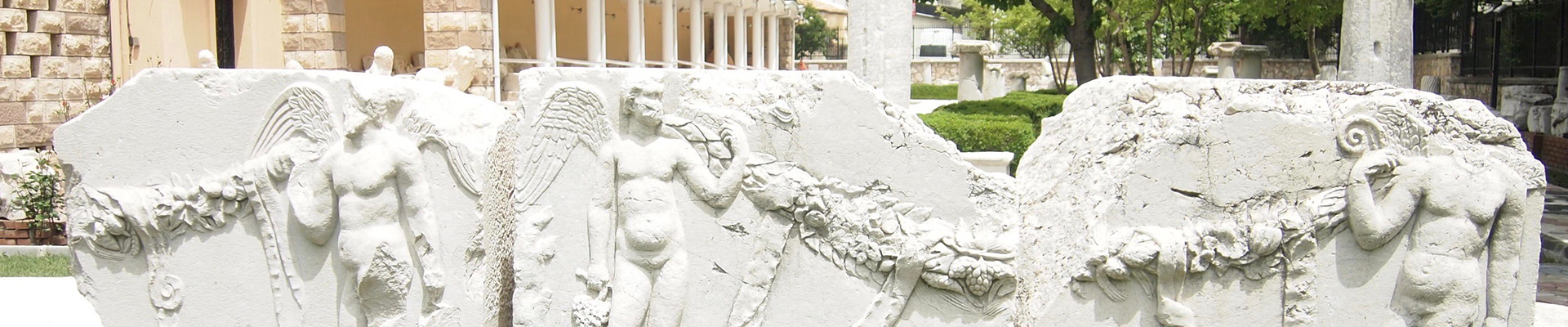
Hippos’ remains present a continuous sequence from its foundation as Antiochia Hippos in the Hellenistic period (2nd cent. BCE) until the devastating earthquake at 749 CE at the end of the Umayyad rule. As the regional polis and one of the Decapolis it reached its peak during the Roman period. At least seven churches were built in the city during the Byzantine period when it was the see of a bishop.

The Kites in Context Project, Jordan (Chad Hill and Yorke Rowan)


Chad Hill and Yorke Rowan.

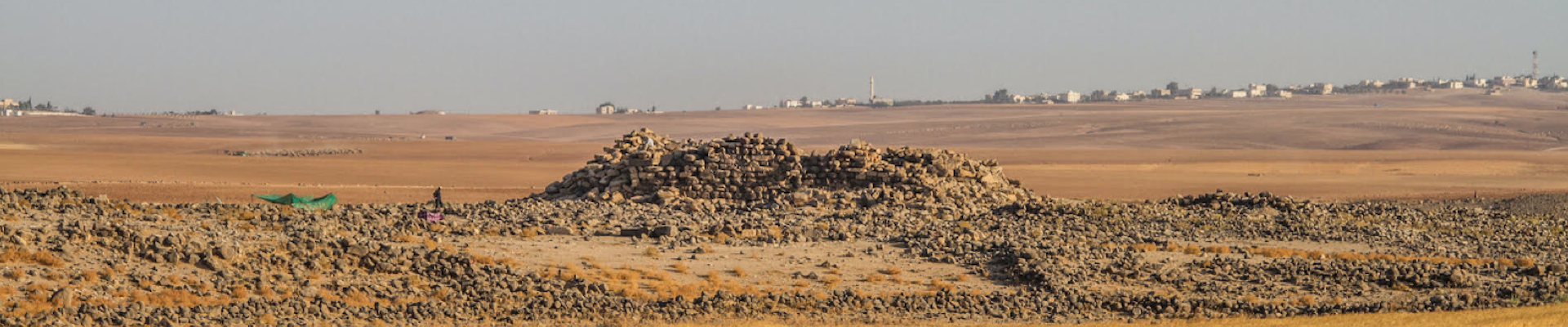
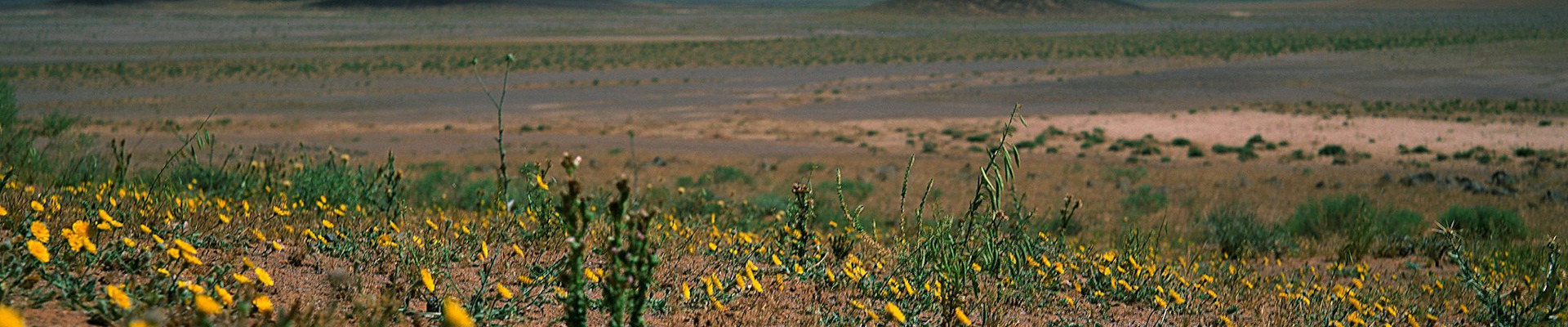
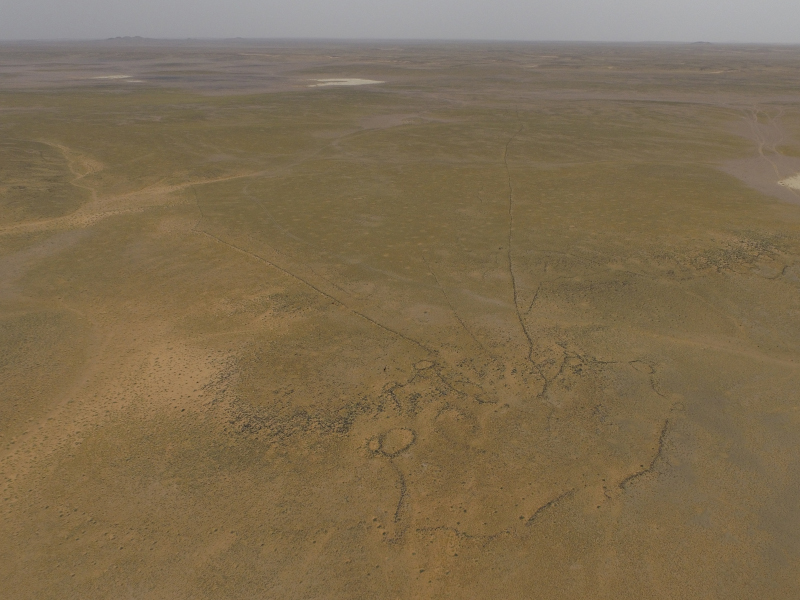
This project investigates the social and economic role of ancient animal hunting traps known as “desert kites” during a time of dramatic changing land use, human migrations, and shifting economies. Located in a hyper-arid, basaltic desert, these structures were built as mass-kill traps for ungulates in the later prehistory of the region.


Aerial view of a kite taken by a drone. Photo credit: Chad Hill.

Each chain includes dozens to hundreds of individual traps, spanning tens of kilometers, linked by intricate wall networks that functioned to create one enormous system. These represent a remarkable ancient infrastructural investment in labor, significant social organization, and the ability to generate subsistence surpluses in a marginal environment. This new study of desert kites, in context, focuses on the economy of this desert infrastructure and the social organization of largescale prey-manipulation strategies, to offer new insight into subsistence adaptations in marginal environments. The results from this research have the potential to transform knowledge of human responses and adaptations to arid environments in prehistory.

Menorca Archaeological Project, Torre d’en Galmés, Spain (Alexander Smith, Amalia Pérez-Juez, and Paul Goldberg)


MAP team.

The Menorca Archaeological Project (MAP) is an interdisciplinary group of Spanish and American collaborators that currently focuses on the diachronic investigation of the site of Torre d’en Galmés on the Balearic Island of Menorca. Torre d’en Galmés is one of the largest prehistoric sites on the Balearic Islands, having received international attention from archaeologists for decades. The site’s importance is due both its size and temporal scope. Within the remains of Torre d’en Galmés, one can see on display the early indigenous inhabitants of the island, the impressive remains of the Talayotic culture from the island’s Iron Age, and evidence of Carthaginian and Roman interactions well into the first centuries C.E.


Torre d’en Galmes, aerial view of SpU 9. Photo credit: Alexander Smith.

Long after the site was abandoned during the third or fourth centuries C.E., Torre d’en Galmés was settled once more by Islamic communities that made the island their home during the medieval period. In 1287 C.E., the Islamic settlers were forced to leave the island by King Alfonso III of Aragon, and the rapid depopulation saw the abandonment of sites across the island. Torre d’en Galmés never again saw significant occupation. What remains then is an incredible window into medieval Islamic life in this rural part of Menorca, with dozens of structures preserved, exhibiting the daily life of this group. MAP is dedicated to the archaeological study of the complex history of Torre d’en Galmés, in particular the Islamic medieval remains that have been largely overlooked on the site.

MiSAK, Missione Storico-Archeologica Italiana nel Kurdistan, Sarqala, Iraq (Luca Colliva, Serenella Mancini, Fabrizio Sinisi, Domenico Andreucci, Veronica Castignani, Mehrnaz Partow, and Paolo Severi)


https://misak.it/en/home-english/

MiSAK, the Italian Historical-Archaeological Mission in Kurdistan, was established in 2021 due to the common interest of ISMEO – the International Association for Mediterranean and Eastern Studies, and the International Institute of Kurdish Culture in Rome to contribute directly and effectively to the study, preservation, and enhancement of the Kurdish historical, archaeological and cultural heritage. MiSAK signed in December 2021 a three-year renewable agreement with the KRG General Directorate of Antiquities for the implementation of an archaeological project concerning the historical-archaeological study, protection and enhancement of the Sarqala site, which includes both the Parthian necropolis and the Qalla Kon tell, a multi-phase site probably part of the settlement connected to the nearby necropolis.

Seeking Sultan Abad-e Chamchamal: Archaeological Excavation at the Site of Tepe Hala Bag, Iran (Mohammad Eghbal Chehri)

According to historical texts, Sultanabad Chamchamal (Solṭānābād) is the most important settlement of the Ilkhanid period in the Bisotun region, which is mentioned in various contemporary historical books with the Ilkhanids due to its great importance. Historical texts show that Sultanabad Chamchamal was built at the foot of Bisotun Mountain and in the western part of Chamchamal plain. The construction of Sultanabad Chamchamal was on the side of the main Khorasan-Baghdad road and in the same area of Bisotun. In fact, despite the efforts of various researchers, the problem of locating and determining the exact location of Sultanabad Chamchamal has not been solved and can be considered as one of the problems in archaeology of the region, and this issue clearly justifies the need for excavation. Based on preliminary studies and archaeological survey, the location of Sultanabad Chamchamal can be considered the same as Halah Bag Tepe. The certainty of this issue, the ability to adapt Tepe Hala Bag with Sultanabad Chamchamal can be understood only by archeological excavation.

ASOR-Affiliated Project Renewals

Jezreel Valley Regional Project, Legio, Israel (Mark Letteney, Matthew J. Adams, Yotam Tepper, and Susan Cohen)

Legio is the site of the sprawling base of the Roman VIth Ferrata Legion. Established during the reign of the Emperor Hadrian (117–138 A.D.), the base controlled imperial roads, with direct access to the Galilee and inland valleys of northern Palestine—important centers of the local, occasionally uproarious, Jewish population. Excavations so far have demonstrated clear ties to major political and cultural events in the formative years of Rabbinic Judaism and Christianity and have provided an incredible new window into the Roman military occupation of the eastern provinces.

Tayinat Archaeological Project, Turkey (Tim Harrison and Elif Denel)


Tell Tayinat from above: Photo by Murat Akar, courtesy of the Tayinat Archaeological Project.

The Tayinat Archaeological Project (TAP) is investigating the archaeological history of the Bronze and Iron Age site of Tell Tayinat, which served as the capital of a succession of small territorial states centered in the Amuq Plain in the North Orontes Valley, Turkey. During the Iron Age, Tayinat was called Kunulua, royal city of the Neo-Hittite Kingdom of Palistin/Patina/Unqi, and Kinalia during the Neo-Assyrian imperial period.