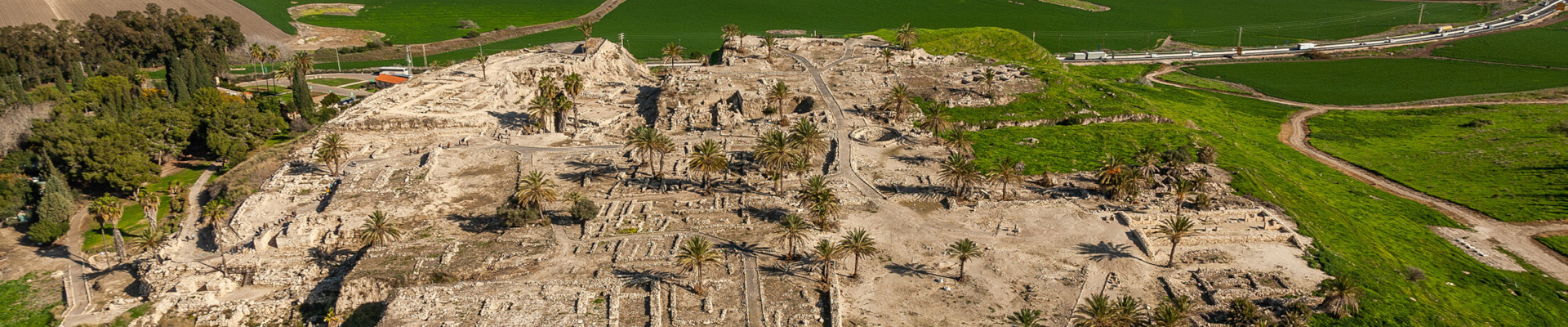

 Pp. 88–95: “Megiddo, the Mother of All Tells: An Introduction” by Israel Finkelstein and Matthew J. Adams
In this introduction the authors describe the goals of the Tel Aviv University Expedition team on the outset of the project thirty years ago and ask whether they have been fulfilled. Special emphasis is given to the unique Megiddo Strato-Ceramic-Radiocarbon chain of actions. The stratigraphy of Megiddo is also summarized.
ASOR Members with online access: log into ASOR’s Online Portal here. Once logged in, click the JOURNALS tab in the top navigation bar. Tutorials for how to log in to the Online Portal as well as how to navigate to the Portal Journals page can be found here.
 Pp. 96-101: “A Brief History of Excavations at Megiddo” by Eric H. Cline
This article provides a brief history of the four archaeological expeditions to Megiddo, including the excavation areas and methodology of each, as well as some of their major finds. The survey begins with Gottlieb Schumacher (1903–1905), continues with the University of Chicago (1925–1939), followed by Yigael Yadin/Hebrew University of Jerusalem (1960 and early 1970s), and ends with a brief overview of the Tel Aviv University Consortium (1994–present).
ASOR Members with online access: log into ASOR’s Online Portal here. Once logged in, click the JOURNALS tab in the top navigation bar. Tutorials for how to log in to the Online Portal as well as how to navigate to the Portal Journals page can be found here.
 Pp. 102-111: “Vegetation and Climate of Megiddo and Its Surroundings during the Bronze and Iron Ages” by Dafna Langgut
This survey article seeks to reconstruct the environmental and climatic conditions at Tel Megiddo during the Bronze and Iron Ages. It aims to illuminate both the natural and man-made landscape of the site, with a focus on how plants were utilized by its inhabitants. In the absence of continuous, high-resolution paleoclimate records from Megiddo or its immediate surroundings, climate records from other nearby locations within the Mediterranean vegetation zone are used to provide a detailed reconstruction of the climate and environment. Archaeobotanical remains collected over the years from excavations at Tel Megiddo are analyzed to understand the use of plants for construction, wooden crafts, and fuel. Additionally, horticultural practices, dietary habits, and the use of plants for medicinal and ritual purposes are revealed.
ASOR Members with online access: log into ASOR’s Online Portal here. Once logged in, click the JOURNALS tab in the top navigation bar. Tutorials for how to log in to the Online Portal as well as how to navigate to the Portal Journals page can be found here.
 Pp. 112-119: “Animal Economy at Megiddo: From the Middle Bronze III to the Iron I” by Lidar Sapir-Hen
This paper explores trends in animal economy in two neighborhoods in Megiddo, between the MB III, when the palace was established in the northwest of the tell, and the Late Iron Age I, when the city was destroyed. Results show that throughout this time span, Area K inhabitants were engaged with production activities, like herding and ploughing, while Area H inhabitants, located near the palace, were provided with animals and their products. At the same time, the two neighborhoods shared the source of livestock animals, implying an internal food production system. The use of animals and their products to establish social disparity demonstrates the urban nature of the site in the discussed periods and emphasizes the central role that livestock animals play in the life of the population.
PLEASE NOTE: This article contains images of human skeletal remains.
ASOR Members with online access: log into ASOR’s Online Portal here. Once logged in, click the JOURNALS tab in the top navigation bar. Tutorials for how to log in to the Online Portal as well as how to navigate to the Portal Journals page can be found here.
 Pp. 120-125: “Megiddo Microgeoarchaeology in the Field and in the Lab” by Ruth Shahack-Gross
Micro-geoarchaeological research at Tel Megiddo targets questions about construction materials, occupation deposits in domestic and public sectors of the city, destruction, abandonment, and postdepositional processes. Since 2006, employing primarily the methods of micromorphology, infrared spectroscopy, phytolith, dung spherulite, and wood ash analysis, significant insights have been gained. This article presents three case studies that show the strength of micro-geoarchaeology for obtaining a general understanding of the history and archaeology of Megiddo’s inhabitants: (1) characterization of domestic trash deposits, (2) characterization of construction materials and the implications for understanding the natural resources that were used by the site’s inhabitants, and (3) understanding the mechanism and processes that took place during Megiddo’s most famous destruction by fire.
ASOR Members with online access: log into ASOR’s Online Portal here. Once logged in, click the JOURNALS tab in the top navigation bar. Tutorials for how to log in to the Online Portal as well as how to navigate to the Portal Journals page can be found here.
 Pp. 126-137: “Megiddo in the Third Millennium BCE: Rise and Fall of Urban Life” by Matthew J. Adams
Megiddo has provided some of the most iconic architecture for the Early Bronze Age Levant, including the well-known Stratum XIX broad-room temple complex and the large round altar of Stratum XVII–XVI, both excavated by the Oriental Institute team in the 1930s. The Tel Aviv University Megiddo Expedition was able to add the Great Temple of the EB I, the largest and most monumental structure of its period in all of the Levant, even rivaling contemporary structures in Egypt and Mesopotamia. This article traces the developments at Megiddo from the end of the fourth millennium to the end of the third, from a temple-centered to a palace-centered society and back again.
ASOR Members with online access: log into ASOR’s Online Portal here. Once logged in, click the JOURNALS tab in the top navigation bar. Tutorials for how to log in to the Online Portal as well as how to navigate to the Portal Journals page can be found here.
 Pp. 138-152: “Megiddo in the Middle Bronze Age: Chronology, Urbanization, and Population” by Matthew J. Adams, Mario A. S. Martin, Zachary Dunseth, Assaf Yasur-Landau, and Israel Finkelstein
This article deals with Middle Bronze Megiddo, emphasizing its importance for understanding this period at the site, and in the entire southern Levant in general. We focus on new evidence for exceptional accumulation of layers for the earliest Middle Bronze layer, radiocarbon dated to the early twentieth century BCE, and for the first fortification system also dated to the twentieth century BCE. We also deal with the complex history of the fortifications, including gates, and the phenomenon of intramural burials, some of them of monumental nature.
PLEASE NOTE: This article contains images of human skeletal remains.
ASOR Members with online access: log into ASOR’s Online Portal here. Once logged in, click the JOURNALS tab in the top navigation bar. Tutorials for how to log in to the Online Portal as well as how to navigate to the Portal Journals page can be found here.
 Pp. 154-165: “The Rule of an Empire: Megiddo in the Late Bronze Age” by Mario A. S. Martin and Israel Finkelstein
During the Egyptian empire in the Late Bronze Age Megiddo was the hub of a city-state linked to all areas of the eastern Mediterranean, and its fate was determined by the macro-political events of the time. Early in the period, especially in the aftermath of the Battle of Megiddo in 1457 BCE, the city was in decline. A long spell of revival and prosperity ensued in the fourteenth (Amarna Age) and thirteenth centuries. The twelfth century brought a period of crisis, which caused the downfall of the Late Bronze city in several steps; various quarters were hit at different times and intensity. The final blow is marked by the fiery destruction of the palace district in the early eleventh century, more than a generation after the demise of the Egyptian empire.
ASOR Members with online access: log into ASOR’s Online Portal here. Once logged in, click the JOURNALS tab in the top navigation bar. Tutorials for how to log in to the Online Portal as well as how to navigate to the Portal Journals page can be found here.
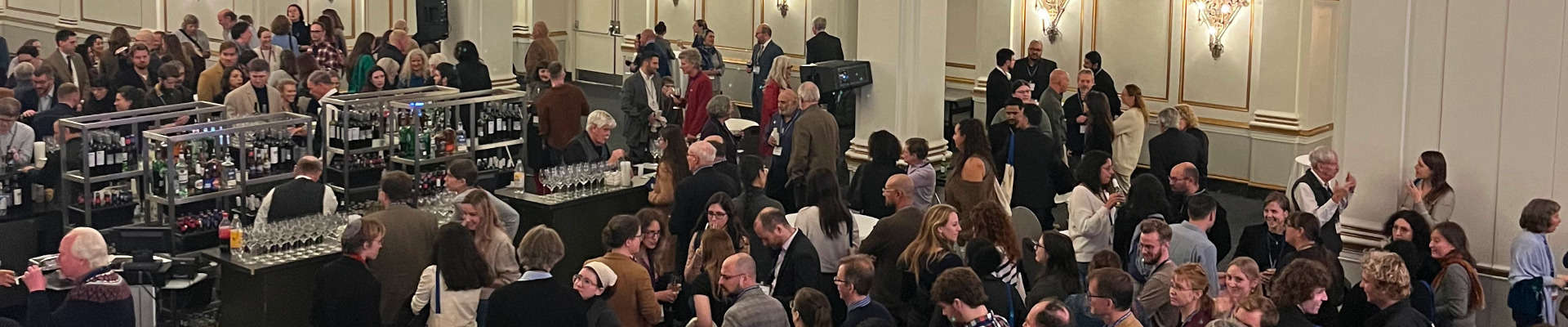
 ASOR has turned 125—yes, that’s 125 years old!