FOA Webinar: Debora Heard on March 20

FRIENDS OF ASOR WEBINARS

Uncovering What is Nubian Beneath the Veneer of Egyptianness: Excavating the Archives

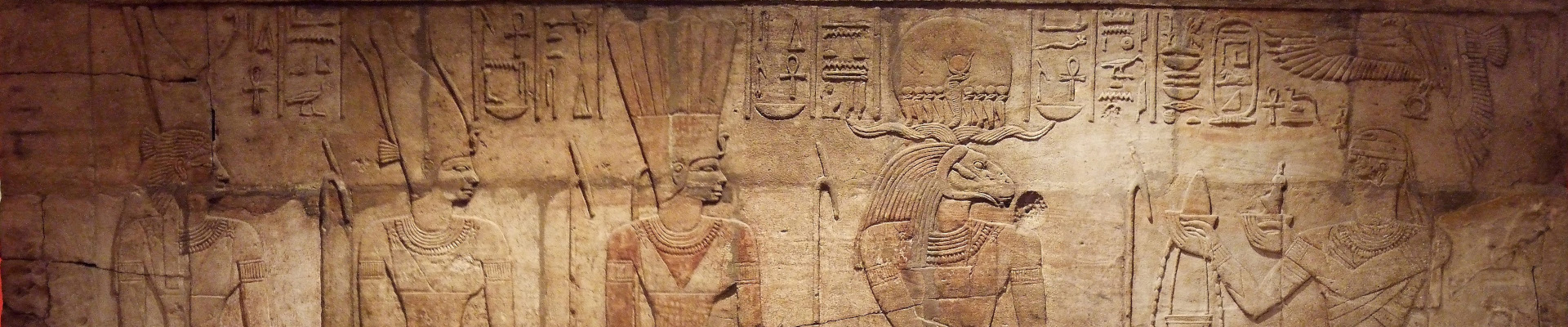
Friends of ASOR present the next webinar in our monthly series on March 20, 2022, at 7:30 pm EST, featuring Debora Heard. During the Egyptian New Kingdom colonization of Nubia, Egyptian pharaohs built temples to their gods in the heartland of the Kingdom of Kush. Turning the tables in the 25th Dynasty reign of Egypt, the Kushite kings restored and expanded several of the Egyptian temples in Nubia while building more of their very own. While these temples used Egyptian religious ideology and exhibited Egyptian imagery, a closer examination of the texts and iconography reveals cultural differences that are hidden when viewed with an Egyptian lens. Through an examination of temple architecture, iconography, and inscriptions, this lecture will present a preliminary examination of three Upper Nubian temples – two dedicated to the Egyptian god Amun and one dedicated to the Nubian god Apedemak – in an effort to “uncover what is Nubian beneath the veneer of Egyptianness.”

In the course of this lecture, Debora will share with us her process of excavating the archive of archaeological excavation and inscriptional material for her dissertation as well as provide an intimate look at some of the challenges that minority, first-generation, and working-class students face in pursuing archaeology as a career. Debora will conclude her webinar with a live Q&A session.

Debora Heard is a Ph.D. Candidate in Anthropology specializing in the archaeology and history of ancient Nubia at the University of Chicago where she has also studied the history and language of ancient Kemet. She situates her research at the intersection of anthropology, archaeology, Egyptology, Nubian Studies, African Studies, and Africana Studies. Her dissertation research engages in a regional and temporal analysis of the inscriptions and iconography of the Upper Nubian Kushite temples dedicated to the gods Amun and Apedemak.

For more than fifteen years, she has given public lectures, taught courses, and participated in special programming dedicated to ancient Nubia and Egypt at the Oriental Institute, the Kemetic Institute, Chicago State University, and the University of Nebraska-Omaha. Debora has served as an intern in the Department of Egyptian and Nubian Art at the Museum of Fine Arts in Boston and as a curatorial assistant in the installation of the Picken Family Nubian Gallery of the Oriental Institute Museum in Chicago. She has also excavated at sites in the Nile 4th Cataract region in Sudan. She serves as the organizer and founding member of the William Leo Hansberry Society, which is committed to providing African-descended people with access, opportunity, and training in the fields of ancient Nile Valley and Northeast African Studies.

This webinar will be recorded and all paid registrants will be sent a link to view the recording.

ASOR Sustaining Members: $0 | ASOR Members: $6 | Public: $12

To receive your ASOR member discount, log into the online store. If you are new to ASOR, please click on the “New Visitor Registration” link to register your e-mail address and choose a password for our online store. Once logged in, navigate to “Meeting and Event Registration” to register for the webinar and pay the fee. Each paid registrant will receive a confirmation e-mail when you pay for the webinar. If you do not receive this e-mail, then you are not registered. Please e-mail membership@asor.org with any questions or issues with registering.

You will be e-mailed the Zoom Webinar link in the week prior to the lecture on February 20, 2022. If you do not receive the link by the close of business on the Thursday before the webinar, please e-mail membership@asor.org immediately. This webinar will be recorded and all paid registrants will be sent a link to view the recording.

All proceeds from this lecture are used to fund scholarships for members impacted by COVID-19 as well as increasing ASOR’s online resources, which are free to the public.

WHY SPONSOR A WEBINAR?

Several levels of support from $50-$1,000 are available. Proceeds go towards membership scholarships and towards increasing ASOR’s virtual resources. Each sponsorship is tax-deductible and you can give your friends free registrations to a webinar!

Bronze Level ($50): up to 2 guest registrations
Silver Level ($100): up to 5 guest registrations
Gold Level ($500): up to 20 guest registrations
Platinum Level ($1,000): up to 50 guest registrations

After you sign up for a sponsorship online or over the phone, email the names and email addresses of your guests to Felice Herman at membership@asor.org, who will send your guests a confirmation and the Zoom link before the webinar.

WANT TO SAVE $6.00 ON THE NEXT WEBINAR?

Join ASOR as a member! Click here for more details about discounts for events and other benefits of membership. Memberships start at $40 for the year as an Associate Member.

Not ready to join yet? Become a Friend of ASOR for FREE!

Click here for more details about our online resources.

PAST WEBINARS

You can now purchase the link to the recording of any webinar. You can also purchase the bundle packages of all webinars from the 2020-2022 seasons. Please e-mail membership@asor.org for purchase details.

To see a printable pdf of the webinar titles from the 2020-2021 season, please click here. To see a printable pdf of the webinar titles from the 2021-2022 season, please click here.

Pricing:

Members: $6.00 per recording
Non-Members: $12.00 per recording
Bundle of 2020-2021 Webinars: $75.00
Bundle of 2021-2022 Webinars: $75.00
Bundle of 2020-2022 Webinars: $125.00

2021-2022 Season

A World at War: Protecting Cultural Heritage in Times of Conflict
Patty Gerstenblith (DePaul University), Lisa Ackerman (Columbus Citizens Foundation), Andrew Cohen (Government Professional and Cultural Heritage Expert) | May 12, 2022

Preserving Cultural Heritage in Hisban and Umm al-Jimal, Jordan
Øystein LaBianca (Andrews University), Elizabeth Osinga (Umm al-Jimal Archaeological Project), Darrell Rohl (Calvin University) | April 24, 2022

Back to the Field: Recent Discoveries & Summer Plans 2022
Lorenzo d’Alfonso (ISAW), Kathryn Grossman (NC State University), James R. Strange (Samford University) | April 3, 2022

Uncovering What is Nubian Beneath the Veneer of Egyptianness: Excavating the Archives
Debora Heard (University of Chicago) | March 20, 2022

Where Are They Now?: A Preview of 2022 ASOR-Affiliated Fieldwork Projects
Michael Given (University of Glasgow), Xenia-Paula Kyriakou (Florida Gulf Coast University), Stephen Batiuk (University of Toronto), Monique Roddy (Walla Walla University), Kent Bramlett (La Sierra University), Friedbert Ninow (La Sierra University), and Michael Hoff (University of Nebraska-Lincoln) | March 8, 2022

Excavations at Tel Gezer: A Personal Story
Sam Wolff (Tel Gezer Laboratory) | February 20, 2022

Tel Rehov: A Major Bronze and Iron Age City in the Jordan Valley
Amihai Mazar (Hebrew University of Jerusalem), Nava Panitz-Cohen ( Hebrew University of Jerusalem), Nota Kourou (Athens University), Naama Yahalom-Mack (Hebrew University of Jerusalem), Robert Mullins (Azusa Pacific University) | February 10, 2022

The Not-So-Innocents Abroad: The Beginnings of American Biblical Archaeology
Rachel Hallote (Samford University) | January 20, 2022

Synagogues as Jesus Knew Them
James R. Strange (Samford University) | December 2, 2021

Under Jerusalem: The Buried History of the World’s Most Contested City
Andrew Lawler | November 4, 2021

Jesus and Jerusalem on TV: How Do Bible Documentaries Get Made?
Robert Cargill (University of Iowa) | October 17, 2021

Digging the Divine?: Judahite Pillar Figurines and the Archaeology of Israelite Religion
Erin Darby (University of Tennessee) | October 7, 2021

David, Solomon, and Rehoboam’s Kingdom—The Archaeological Evidence
Yosef Garfinkel (Hebrew University of Jerusalem) | September 19, 2021

From Standing Stones to Sacred Emptiness: Textual and Visual Portrayals of Israel’s God
Theodore Lewis (Johns Hopkins University) | August 29, 2021

2020-2021 Season

Making May Matter: Webinarathon to Endow Diversity
Multiple Speakers | May 21-23, 2021

Archaeogaming: Why Video Games Deserve Their Own Archaeology
Tine Rassalle (University of North Carolina at Chapel Hill), Shannon Martino (Morton College), Matthew Winter (University of Arizona), Michael Zimmerman (Rhode Island) | April 18, 2021

How the Bible Became a Book
William Schniedewind (UCLA) | March 21, 2021

The Mysteries of Mithras in Caesarea: Exploring the Cult’s Rites and Remains
Jane DeRose Evans (Temple University), Alexandra Ratzlaff (Brandeis University) | March 11, 2021

Archaeology and the Hidden Religious Culture of Israelite Women
Carol Meyers (Duke University) | February 21, 2021

Meet the Directors—Fundraiser to Support ASOR’s Affiliated Overseas Research Centers
Matthew J. Adams (AIAR), Pearce Paul Creasman (ACOR), Lindy Crewe (CAARI) | February 11, 2021

Early Synagogues, Jesus, and Galilee—A Jewish Perspective
Eric Meyers (Duke University) | December 13, 2020

Home Sweet Home: Ancient Israelite Households in Context
Cynthia Shafer-Elliott (William Jessup University) | October 18, 2020

Priestesses in the Days of Solomon and Ahab
Susan Ackerman (Dartmouth College) | September 13, 2020

Digging Deeper: How Archaeology Works
Eric H. Cline (The George Washington University) | August 9, 2020

FOA Webinar: Preview of 2022 ASOR-Affiliated Fieldwork Projects on March 8

FRIENDS OF ASOR WEBINAR

Where Are They Now?: A Preview of 2022 ASOR-Affiliated Fieldwork Projects

Friends of ASOR presents a webinar on March 8, 2022 from 6:00pm to 8:00pm EST, “Where Are They Now?: A Preview of 2022 ASOR-Affiliated Fieldwork Projects,” featuring Michael Given, Xenia-Paula Kyriakou, Stephen Batiuk, Monique Roddy, Kent Bramlett, Friedbert Ninow, and Michael Hoff. This special event will preview the field seasons of four sites across Cyprus (Kourion’s Amathous Gate Cemetery), Georgia (Gadachrili Gora Regional Archaeological Project Expedition), Jordan (Balu’a), and Turkey (Antiochia ad Cragum). The program will include four presentations covering such topics as introductions to each site in its historical context, current excavation and survey progress, the research focus of the upcoming field season, and discussion of past work and scholarship at each site. Join us as we explore some of the exciting projects that ASOR members are currently participating in across the eastern Mediterranean region. The panelists will conclude their webinar with a live Q&A session with the audience. The full program is below. The event will be recorded.

ASOR Sustaining Members: $0 | ASOR Members: $6 | Public: $12

Program Schedule

TUESDAY, MARCH 8, 2022

6:00pm – 6:20pm

Michael Given

University of Glasgow

Xenia-Paula Kyriakou

Florida Gulf Coast University

Cyprus: Kourion’s Amathous Gate Cemetery

Read the Description

Kourion’s Amathous Gate Cemetery lies at the base of the limestone cliffs of Kourion, a well-preserved Greco-Roman port-city on the south coast of Cyprus. The tombs, features, and deposits are the result of a long and complex sequence of activities, from funeral processions and commemorative libations to quarrying limestone, burning marble, and herding goats. This talk will discuss the work of the original excavations at Kourion’s Amathous Gate Cemetery directed by Danielle A. Parks between 1995 and 2000, and the long analysis and writing phase of the project led by a team of her friends and colleagues after she died in 2007. This work has been virtually completed, with a draft of the two volumes of the final publication submitted to the Annual of ASOR. Owing to the pandemic, one more task remains to be done: the analysis and publication of the human remains. We will present our plans for one last field school in June 2022 to study this exciting material.

6:20pm – 6:40pm

Stephen Batiuk

University of Toronto

Georgia: Gadachrili Gora Regional Archaeological Project Expedition

Read the Description

The Gadachrili Gora Regional Archaeological Project Expedition (GRAPE) is a joint venture between the University of Toronto, the Georgian National Museum (GNM) and the National Wine Agency of the Ministry of Agriculture (of the Republic of Georgia). The project aims to investigate the emergence of farming economies in the South Caucasus and the development of horticultural practices and the resultant secondary products, with a focus on viticulture and viniculture. We also aim to look at the influence of Near East societies on the development of local Neolithic and Chalcolithic cultures of Caucasia and, conversely, the reciprocal influence on the Near East. GRAPE represents the archaeological component of a larger interdisciplinary project sponsored by the Georgian National Government entitled the Research and Popularization of Georgian Grape and Wine Culture. The excavations are directed by Mindia Jalabadze (GNM), Stephen Batiuk (University of Toronto), with Khaled Abujayyab (University of Toronto). GRAPE is an international multidisciplinary research project, but also an archaeological field school, which provides a unique opportunity to receive intensive training in archaeological field and survey methods at a series of rural settlements in the Middle Kura region of the Kvemo Kartli province south of the modern city of Marneuli, with a focus on the sites of Gadachrili Gora and Shulaveris Gora.

6:40pm – 6:50pm

Break

6:50pm – 7:10pm

Monique Roddy

Walla Walla University

Kent V. Bramlett

La Sierra University

Friedbert Ninow

La Sierra University

Jordan: Balu’a

Read the Description

Khirbat al-Balu’a is located on the Karak Plateau in Central Jordan. In its location near the Wadi Mujib, Balu’a was able to control a major north-south route in the pre-Classical periods, acting as gatekeeper to the plateau. Balu’a spreads across nearly 16 hectares with some periods inhabiting distinct areas, such as an Iron Age settlement at the core of the site and medieval Islamic remains to the southwest. Given its size and position, Balu’a was likely a prominent site, especially in the Moabite kingdom of the Iron Age. The Iron II Period settlement at Balu’a covers approximately 13.5 hectares. Much of the architecture of this settlement is visible at the surface, including a casemate wall that defines the extent of the Iron Age settlement and structure walls with intact doorways. Excavations from 2012 to 2019 have focused on three main areas at the Iron Age site: the Qasr, a monumental structure at the highest of part of the site, the House, a well-preserved domestic structure, and the Wall, a segment of the fortification system that divided the core of the settlement from a later expansion. This talk will focus on the main discoveries of the Balu’a Regional Archaeological Project at Balu’a (BRAP), and explain the plans for the 2022 excavation season. Find out more about participating at Balu’a here (security forms due by March 1).

7:10pm – 7:30pm

Michael Hoff

University of Nebraska-Lincoln

Turkey: Antiochia ad Cragum in Rough Cilicia

Read the Description

The Roman-era city of Antiochia ad Cragum is located on the Turkish south coast, approximately 40 km southeast of Alanya. In antiquity, the city formed part of the region referred to as western Rough Cilicia. The city was founded by Antiochus IV of Commagene about 41 BCE and eponymously named. Previously the site had served as a base for the notorious “Cilician Pirates,” who raided throughout the Mediterranean from bases mainly situated along this coastline. Excavation began in 2005 with modest explorations of the Northeast Temple. After a few seasons, we expanded operations in the city center, and we have gained a wealth of information regarding the interplay between city and citizens over the past 15 years. We have revealed bath complexes, market shops, the bouleuterion, and several church complexes. Before COVID we had just begun to look at the domestic quarters and in near-future seasons, these will be the focus of our operations.

7:30pm – 8:00pm

Audience Q&A with all Panelists

ASOR Sustaining Members: $0 | ASOR Members: $6 | Public: $12

To receive your ASOR member discount, log into the online store. If you are new to ASOR, please click on the “New Visitor Registration” link to register your e-mail address and choose a password for our online store. Once logged in, navigate to “Meeting and Event Registration” to register for the webinar and pay the fee. Each paid registrant will receive a confirmation e-mail when you pay for the event. If you do not receive this e-mail, then you are not registered. Please e-mail membership@asor.org with any questions or issues with registering.

You will be e-mailed the Zoom Webinar link in the week prior to the webinar on March 8. If you do not receive the link by the close of business on the Friday before the event, please e-mail membership@asor.org immediately. This event will be recorded and all paid registrants will be sent a link to view the recording.

All proceeds from this webinar are used to fund scholarships for members impacted by COVID-19 as well as increasing ASOR’s online resources, which are free to the public.

Sponsors will be acknowledged during the event. Sponsorships are available at the following levels:

  • Bronze Sponsor: $50
  • Silver Sponsor: $100
  • Gold Sponsor: $500
  • Platinum Sponsor: $1,000

Each sponsor will receive a confirmation e-mail. If you do not receive this e-mail, then we did not receive your sponsorship online.  If you prefer to register or sponsor over the phone, please call 703-789-9230. Please e-mail membership@asor.org with any questions or issues.

Speakers / Presenters

Stephen Batiuk is a Senior Research Associate and Lecturer with the Department of Near & Middle Eastern Civilizations, University of Toronto, and co-director of GRAPE – the Gadachrili Gora Regional Archaeological Project Expedition (Republic of Georgia) as well as Director of Excavations for the Tayinat Archaeological Project (Turkey) and the Project Manager for the Computational Research on the Ancient Near East (CRANE) Project. He holds his degrees from the University of Toronto (Ph.D.) and the University of Ottawa, and his areas of specialization include Near Eastern archaeology with a focus in the Bronze and Irons Ages of Turkey, Syria and the Caucasus.


Kent V. Bramlett is a Professor of Archaeology and the History of Antiquity at La Sierra University where he has taught since 2010. He is Chair of the Department of Biblical Studies and Archaeology and Director of Graduate Studies in Archaeology. He is Curator of the Archaeology Collections and Associate Director of the Center for Near Eastern Archaeology at La Sierra University. He earned a Ph.D. in Near Eastern Archaeology at the University of Toronto, specializing in the Late Bronze Age. He is co-director of the Madaba Plains Project excavation at Tall al-‘Umayri and the Balu‘a Regional Archaeological Project, both in Jordan. At La Sierra, he teaches Akkadian, Hieroglyphic Egyptian, and other ancient languages in addition to archaeology classes.


Michael Given is a Senior Lecturer in Archaeology in the School of Humanities, University of Glasgow, Scotland. His research interests include archaeological survey and landscape archaeology, the historical periods in the Eastern Mediterranean, post-Medieval Scotland, the relationship between people and the environment, and conviviality theory. He has carried out fieldwork in Cyprus, Egypt, Greece, Scotland and Turkey. From 2000 to 2012 he was co-director of the Troodos Archaeological and Environmental Survey Project, Cyprus, and he is currently director of the publication phase of the Excavations at Kourion’s Amathous Gate Cemetery, Cyprus. His books include The Archaeology of the Colonized (Routledge, 2004), and Landscape and Interaction: The Troodos Archaeological and Environmental Survey Project, Cyprus (with A.B. Knapp, L. Sollars, J. Noller and V. Kassianidou; 2 volumes; Council for British Research in the Levant, 2013).


Michael Hoff specializes in Greek and Roman archaeology, particularly of Asia Minor in Turkey where he currently conducts research. From 1997 to 2004, Hoff co-directed the architectural survey team of the Rough Cilicia Archaeological Survey Project that documented ancient Roman sites in Turkey. Since 2005, Hoff has served as Project Director for the large-scale excavations of the ancient Roman-era city of Antiochia ad Cragum on the south coast of Turkey. Hoff has excavated previously at the Athenian Agora, Corinth, Crete, and at the Sanctuary of Zeus at Nemea, Greece. In addition to his work on the archaeology of Asia Minor, Hoff also conducts research on the history and topography of Roman Athens. Hoff has authored many articles in international journals and has co-edited several books, including Rough Cilicia: New Historical and Archaeological Approaches (Oxbow Press). Professor Hoff received his B.A. from the University of Missouri, M.A. from Florida State University, and Ph.D. from Boston University. Hoff joined the art history faculty at the University of Nebraska in 1989.


Xenia-Paula Kyriakou is a Lecturer in Legal Studies in the Department of Justice Studies at Gulf Coast University, in Florida. Her research interests include the reconstruction of health and demography in ancient societies, paleoepidemiology, paleo-oncology, the development of standards and methods in forensic anthropology, humanitarian forensics, and necropolitics. She was involved in numerous archaeological excavations as a bioarchaeologist and worked on many forensic cases, including those that address violation of human rights, both in Cyprus and abroad. She is the director of Odyssey Field School, which has been running since 2014 to present day, and offers training and research opportunities to students in the disciplines of bioarchaeology and forensic anthropology.


Friedbert Ninow (Ph.D. 2000, Andrews University) is the Dean of the Richards Divinity School, La Sierra University, and co-director of the Balu’a Regional Archaeological Project. He also directed the Wadi ash-Shkafiya Archaeological Survey as well as excavations at Khirbat al-Ma’mariyah.


Monique D. Roddy is an Assistant Professor in the Department of History and Philosophy at Walla Walla University. She earned her Ph.D. from the University of Chicago with a dissertation on household archaeology in the Early Iron Age in the southern Levant. She worked with the Madaba Plains Project at Tall al-‘Umayri in Jordan from 2004 to 2016 and continues to work as an editor on the final publication series for ‘Umayri. She has co-directed the Balu’a Regional Archaeological Project at Khirbat al-Balu’a since 2017. She has also excavated at Zincirli in southeastern Turkey, Keros in the Cycladic Islands, and Cartagena in southern Spain.

ASOR is grateful for your support. Each registrant will receive an automated confirmation e-mail. If you do not receive this e-mail, please check you Spam folder and then contact ASOR. If you prefer to register over the phone, please call 703-789-9230. Please e-mail membership@asor.org with any questions or issues.

PAST WEBINARS

You can now purchase the link to the recording of any webinar. You can also purchase the bundle packages of all webinars from the 2020-2022 seasons. Please e-mail membership@asor.org for purchase details.

To see a printable pdf of the webinar titles from the 2020-2021 season, please click here. To see a printable pdf of the webinar titles from the 2021-2022 season, please click here.

Pricing:

Members: $6.00 per recording
Non-Members: $12.00 per recording
Bundle of 2020-2021 Webinars: $75.00
Bundle of 2021-2022 Webinars: $75.00
Bundle of 2020-2022 Webinars: $125.00

2021-2022 Season

A World at War: Protecting Cultural Heritage in Times of Conflict
Patty Gerstenblith (DePaul University), Lisa Ackerman (Columbus Citizens Foundation), Andrew Cohen (Government Professional and Cultural Heritage Expert) | May 12, 2022

Preserving Cultural Heritage in Hisban and Umm al-Jimal, Jordan
Øystein LaBianca (Andrews University), Elizabeth Osinga (Umm al-Jimal Archaeological Project), Darrell Rohl (Calvin University) | April 24, 2022

Back to the Field: Recent Discoveries & Summer Plans 2022
Lorenzo d’Alfonso (ISAW), Kathryn Grossman (NC State University), James R. Strange (Samford University) | April 3, 2022

Uncovering What is Nubian Beneath the Veneer of Egyptianness: Excavating the Archives
Debora Heard (University of Chicago) | March 20, 2022

Where Are They Now?: A Preview of 2022 ASOR-Affiliated Fieldwork Projects
Michael Given (University of Glasgow), Xenia-Paula Kyriakou (Florida Gulf Coast University), Stephen Batiuk (University of Toronto), Monique Roddy (Walla Walla University), Kent Bramlett (La Sierra University), Friedbert Ninow (La Sierra University), and Michael Hoff (University of Nebraska-Lincoln) | March 8, 2022

Excavations at Tel Gezer: A Personal Story
Sam Wolff (Tel Gezer Laboratory) | February 20, 2022

Tel Rehov: A Major Bronze and Iron Age City in the Jordan Valley
Amihai Mazar (Hebrew University of Jerusalem), Nava Panitz-Cohen ( Hebrew University of Jerusalem), Nota Kourou (Athens University), Naama Yahalom-Mack (Hebrew University of Jerusalem), Robert Mullins (Azusa Pacific University) | February 10, 2022

The Not-So-Innocents Abroad: The Beginnings of American Biblical Archaeology
Rachel Hallote (Samford University) | January 20, 2022

Synagogues as Jesus Knew Them
James R. Strange (Samford University) | December 2, 2021

Under Jerusalem: The Buried History of the World’s Most Contested City
Andrew Lawler | November 4, 2021

Jesus and Jerusalem on TV: How Do Bible Documentaries Get Made?
Robert Cargill (University of Iowa) | October 17, 2021

Digging the Divine?: Judahite Pillar Figurines and the Archaeology of Israelite Religion
Erin Darby (University of Tennessee) | October 7, 2021

David, Solomon, and Rehoboam’s Kingdom—The Archaeological Evidence
Yosef Garfinkel (Hebrew University of Jerusalem) | September 19, 2021

From Standing Stones to Sacred Emptiness: Textual and Visual Portrayals of Israel’s God
Theodore Lewis (Johns Hopkins University) | August 29, 2021

2020-2021 Season

Making May Matter: Webinarathon to Endow Diversity
Multiple Speakers | May 21-23, 2021

Archaeogaming: Why Video Games Deserve Their Own Archaeology
Tine Rassalle (University of North Carolina at Chapel Hill), Shannon Martino (Morton College), Matthew Winter (University of Arizona), Michael Zimmerman (Rhode Island) | April 18, 2021

How the Bible Became a Book
William Schniedewind (UCLA) | March 21, 2021

The Mysteries of Mithras in Caesarea: Exploring the Cult’s Rites and Remains
Jane DeRose Evans (Temple University), Alexandra Ratzlaff (Brandeis University) | March 11, 2021

Archaeology and the Hidden Religious Culture of Israelite Women
Carol Meyers (Duke University) | February 21, 2021

Meet the Directors—Fundraiser to Support ASOR’s Affiliated Overseas Research Centers
Matthew J. Adams (AIAR), Pearce Paul Creasman (ACOR), Lindy Crewe (CAARI) | February 11, 2021

Early Synagogues, Jesus, and Galilee—A Jewish Perspective
Eric Meyers (Duke University) | December 13, 2020

Home Sweet Home: Ancient Israelite Households in Context
Cynthia Shafer-Elliott (William Jessup University) | October 18, 2020

Priestesses in the Days of Solomon and Ahab
Susan Ackerman (Dartmouth College) | September 13, 2020

Digging Deeper: How Archaeology Works
Eric H. Cline (The George Washington University) | August 9, 2020

ASOR is grateful for your support. Each registrant will receive an automated confirmation e-mail. If you do not receive this e-mail, please check you Spam folder and then contact ASOR. If you prefer to register over the phone, please call 703-789-9230. Please e-mail membership@asor.org with any questions or issues.
March Madness Challenge 2022

MARCH MADNESS CHALLENGE 2022: FILL THE POTS

ASOR’s Annual March Madness Challenge is back! This year we are “filling” a different need: supporting the ongoing cost and maintenance of The Levantine Ceramics Project. This incredible resource has been an ASOR publication since 2016. The LCP is an open, interactive website focused on ceramics produced in the Levant from the Neolithic era through the Ottoman period. Thanks to the generosity of three ASOR donors, we have received a $5,000 challenge gift that can be fully earned by raising another $5,000 for a total of $10,000 to keep the LCP running. All gifts will support the ongoing maintenance and hosting of the Levantine Ceramics Project (LCP)— an ASOR open-access publication.

As of March 3, we have received $1,700 in matching gifts, which translates into a total of $3,400 for the LCP. Donate today to help us raise the additional $6,600 to fill the pot for the LCP!

The LCP’s mission

The LCP, an ASOR open-access publication and research project, is a sustainable research tool designed to pull the study of archaeological ceramics into the 21st century.
Why ceramics? Because they comprise the most abundant category of remains found throughout the Near East, and because every excavator must contend with identifying and publishing them, yet the mode by which that is done has not changed in a substantive way since William Flinders Petrie began working in 1880. Constant excavation since then has created unthinkable quantities of data, all disseminated via print (and now digitized versions of print) publications. Print is excellent for many things – but it is remarkably ill-suited for fast exchange of information, collaborative study, and especially the rapid recording of new or changing ideas. Archaeology is a field that is always in a mode of discovery; we need tools that can keep up, that allow us to bring new material into dialogue with that long known, are easy to use, foster sharing, and enable us to readily learn from one other. The LCP is such a tool.

The LCP inspires new questions, and gives us the tools to answer them: Hard borders, civil wars, intractable terrain – these are facts on the ground across the landscapes of the Levant. Swaths of territory that are invisible or inaccessible today were zones of habitation and connection in the past. Archaeological survey and fieldwork fill in the blanks, allow us to see what was, imagine different realities. This is why we pursue such work; this is one of the best rationales for its value now and in the future. The LCP helps deliver on that lofty promise. Four examples of regions, activities, lives able to be seen, mapped, and linked to a wider world via pottery on the LCP:

  • the eastern desert of Egypt: >200 vessels from 25+ already on the LCP with another 1000+ from 200 sites, thanks to integration with the EU/CNRS Desert Networks Project (scheduled for submission this summer).
  • the Hauran of southern Syria: >1000 vessels from 50+ sites, dating from 1200 BCE-200 CE, from the Lajāʾ survey (2003–2009), the Qarrāṣa excavations (2008–2011), plus published and unpublished data from the French Archaeological Mission to Southern Syria, thanks to Jérôme Rohmer’s 2020 Hauran VI. D’Aram à Rome. La Syrie du Sud de l’âge due Fer à l’annexion romaine (XIIe siècle av. J.-C. – Ier siècle apr. J.C.).
  • Rough Cilicia, Turkey: ~200 vessels from 40+ sites, from Nicholas Rauh’s Rough Cilicia Archaeological Survey Project (1996-2011).
  • the maritime networks linking northern and southern Cyprus with the northern Levant: 400+ vessels dating from the Middle Bronze – Iron Ages, from Cyprus and sites in Cilicia and coastal Syria, including 250+ vessels from Tell Tweini in northern Syria, excavated by the University of Leuven from 1999-2007.


The LCP advances ASOR Strategic Plan and Goals by providing easy and open access to new information: The LCP provides quick access to new finds and current ideas, and helps American researchers connect with foreign scholars. Most LCP contributors are based in Europe, Turkey, Cyprus, Lebanon, Jordan, Israel, and Egypt, and are affiliated with foreign research universities or institutes. Not all users are are members of ASOR, yet their enthusiastic embrace of the LCP helps ASOR members stay abreast of work they would otherwise have a hard time accessing or even knowing about in the first place. Keeping the LCP free and open access is critical; if there was a members-only access policy, we would lose the input of most of these foreign contributors. The LCP provides assistance for ASOR-affiliated excavators: LCP interns work with ASOR-affiliated excavators to prepare and submit their pottery to the site. Using the LCP, interns also regularly make connections with material from other sites that excavators had not known about. This has the double benefit of deepening knowledge from excavated material as well as disseminating new information to scholars and students around the world.

The LCP brings disparate, hard-to-find data together, able to be mapped, studied, arranged and re-arranged for connections, ideas, insights. It is worth emphasizing that much of this material crosses borders and links regions that are currently impassible. All appear on the LCP thanks to ASOR’s neutrality as an American-based organization. In this way, ASOR helps frame a vision of the Levant that rises above the current political fray, and enables a new generation to ask and answer new questions, to understand the past – and perhaps therefore also the future – in different ways.

 Read More About The Levantine Ceramics Project (LCP)

Academic Genealogies of Near Eastern Scholars (AGNES) Project

ACADEMIC GENEALOGIES OF NEAR EASTERN SCHOLARS (AGNES) PROJECT

This is a request from Rachel Hallote and Eric Cline:

Because of our shared interest in the history of archaeology and related disciplines, we are initiating this “Academic Genealogies of Near Eastern Scholars” (AGNES) project. Our goal is to find connections between scholars and mentors stretching back as far as we can, to reveal the interwoven web of our disciplines. For instance, some of us can trace ourselves back as academic great-great-grand-students of William F. Albright. Others of us are academic descendants of W.M.F. Petrie, Kathleen Kenyon, Frank Moore Cross, Emily Vermeule, Trude Dothan, Yigael Yadin, and so on. Still others (such as Eric) have a different lineage altogether. We are also interested in whether specific field projects have had more of an impact or influence than others, in terms of training the next generation(s) of archaeologists and/or passing along tried and true or new/innovative field techniques.

The survey questions won’t take you long and are concerned primarily with whether you are able to remember the name of your primary thesis advisor and their advisor (i.e., when you talk about your “Doktorvater” or “Doktormutter,” whose name do you give?) and where you have excavated or surveyed (if anywhere). We stress that we have no ulterior motive other than curiosity as to the extent of the influence of the founding generation of scholars in our field(s) and the possible influence of specific field projects. If there any interesting findings or results that come out of this, we hope to present the preliminary results in an ASOR session in Boston this coming November. But to make this project a reality, we need to hear from YOU as soon as possible!

Click here to take the survey now!

Please note that:

  • It doesn’t matter if you are still completing graduate work or never completed it.
  • It doesn’t matter if you are early or later in your career.
  • It doesn’t matter if you are retired.
  • It doesn’t matter if you have an academic appointment or are currently an independent researcher or are out of the field entirely.
  • It doesn’t matter what your nationality is.
  • It doesn’t matter what your gender is.
  • It doesn’t matter where your graduate institution was/is.


We want to hear from everyone! So, please take the time to fill out this survey, which should take only a few minutes to complete. Thank you so much for participating!

ANE Today Editor -Job Opening

[vc_row fullwidth=”true” attached=”true” css=”.vc_custom_1496247803139{padding-top: 0px !important;padding-right: 0px !important;padding-bottom: 0px !important;padding-left: 0px !important;}”][vc_column][vc_single_image image=”33901″ img_size=”full” alignment=”center”][/vc_column][/vc_row][vc_row fullwidth=”true” css=”.vc_custom_1496682730308{padding-top: 10px !important;padding-right: 0px !important;padding-bottom: 0px !important;padding-left: 0px !important;}”][vc_column width=”1/12″ css=”.vc_custom_1496683820796{margin-right: 10px !important;}” offset=”vc_hidden-md vc_hidden-sm vc_hidden-xs”][vc_column_text]

 SHARE

[/vc_column_text][mk_image src=”http://www.asortest.org/wp-content/uploads/2017/01/social-fb-icon4.jpg” image_width=”42″ image_height=”42″ hover=”false” custom_url=”https://www.facebook.com/ASOResearch/” margin_bottom=”0″][mk_image src=”http://www.asortest.org/wp-content/uploads/2017/01/social-tw-icon4.jpg” image_width=”42″ image_height=”42″ hover=”false” custom_url=”https://twitter.com/ASOResearch?ref_src=twsrc%5Egoogle%7Ctwcamp%5Eserp%7Ctwgr%5Eauthor” margin_bottom=”0″][mk_image src=”http://www.asortest.org/wp-content/uploads/2017/01/social-in-icon4.jpg” image_width=”42″ image_height=”42″ hover=”false” custom_url=”https://www.linkedin.com/company/american-schools-of-oriental-research” margin_bottom=”0″][mk_image src=”http://www.asortest.org/wp-content/uploads/2017/01/social-ml-icon_7.jpg” image_width=”42″ image_height=”42″ hover=”false” custom_url=”mailto:info@asor.org” margin_bottom=”0″][mk_image src=”http://www.asortest.org/wp-content/uploads/2017/01/blog-icon3.jpg” image_width=”42″ image_height=”42″ hover=”false” custom_url=”http://asor.org/blog” margin_bottom=”0″][/vc_column][vc_column border_color=”rgba(255,255,255,0.01)” width=”1/6″ css=”.vc_custom_1496683923840{margin-right: 20px !important;border-left-width: 2px !important;padding-right: 20px !important;padding-left: 20px !important;border-left-color: #99422f !important;}”][mk_divider divider_color=”rgba(255,255,255,0.01)” thickness=”1″ margin_top=”3″ margin_bottom=”3″][vc_widget_sidebar sidebar_id=”ca-sidebar-39801″][/vc_column][vc_column border_color=”rgba(170,170,170,0.01)” width=”1/2″ css=”.vc_custom_1487276122024{margin-right: 10px !important;margin-bottom: 30px !important;border-right-width: 2px !important;border-bottom-width: 2px !important;padding-top: 30px !important;padding-right: 30px !important;padding-left: 20px !important;background-color: #ffffff !important;border-right-color: rgba(227,228,228,0.75) !important;border-bottom-color: rgba(227,228,228,0.75) !important;}”][vc_column_text responsive_align=”left”]

JOB OPENING – ANE TODAY EDITOR

[/vc_column_text][mk_divider][vc_wp_text]ASOR seeks an editor for The Ancient Near East Today, a weekly e-platform for shorter to medium-length, non-technical pieces aimed at the general public, of interest to students, faculty, and other professionals in related fields. The platform was created in 2012, began publication in 2013, and has since published more than 500 short pieces with a geographic range from the Atlantic to Afghanistan, and a chronological range from the Paleolithic to the 20th century. ANE Today appears 52 times a year. This is a compensated position.

The editor should be capable of identifying and evaluating potential contributors and topics, soliciting and then evaluating items, and generally working with writers to produce pieces that are accurate, engaging, concise, and visually appealing. Items range from 800-1500 words; they appear first on the website and are then pushed out with the help of ASOR staff to over 42,000 readers via email and social media. ANE Today emails also include a variety of links to archaeological news, new books and reviews, exhibitions, and resources.

The ideal candidate should have a wide perspective on scholars and scholarship in ancient Near Eastern (and allied) studies from prehistory to the modern period in order to access the broadest possible range of potential writers. These writers may range from senior scholars to graduate students, and may include individuals outside of academia. Candidates are also expected to become familiar with ANE Today’s publications to date in order to develop both new and old topics and writers, avoid duplication, and to expand and reexamine themes and issues.

The editor solicits writers, edits contributions, organizes the imagery and layout, supervises the production, posting and distribution of items, works with technical and other ASOR staff members regarding the design and operation of the platform, and on marketing, strategy and reporting. The editor reports to a committee that oversees the platform and is also a voting member of the Committee on Publications. Editors are approved by ASOR’s Executive Committee and Board of Trustees. They may serve two three-year terms.

The candidate should also have excellent writing skills, preferably across a range of topics and genres inside and outside of academia, along with some editorial experience. Work experience as a journalist is beneficial but not required. Familiarity with social media and new media is similarly useful. Those interested should send a CV and letter of interest to Marta Ostovich at programs@asor.org. Consideration of applications will begin on March 14 but will continue until the position is filled.[/vc_wp_text][/vc_column][vc_column border_color=”rgba(170,170,170,0.01)” width=”1/6″ css=”.vc_custom_1496684098866{margin-right: 5px !important;margin-bottom: 20px !important;border-right-width: 2px !important;border-bottom-width: 2px !important;padding-top: 30px !important;padding-right: 10px !important;padding-left: 10px !important;background-color: #ffffff !important;border-right-color: rgba(227,228,228,0.75) !important;border-bottom-color: rgba(227,228,228,0.75) !important;}”][vc_wp_posts title=”BROWSE THE NEWS ARCHIVE” number=”4″][/vc_column][vc_column border_color=”rgba(170,170,170,0.01)” width=”1/6″ css=”.vc_custom_1496684008271{margin-right: 10px !important;margin-bottom: 30px !important;border-right-width: 2px !important;border-bottom-width: 2px !important;padding-top: 30px !important;padding-right: 20px !important;padding-left: 20px !important;background-color: #ffffff !important;border-right-color: rgba(227,228,228,0.75) !important;border-bottom-color: rgba(227,228,228,0.75) !important;}”][vc_column_text] [/vc_column_text][/vc_column][/vc_row]

Stipend Report: Jane Holmstrom

Noble Networks?: Visualizing Urartian Expansion into Adjacent Territories Using Least Cost Paths

Jane Holmstrom, 2021 Platt Summer Stipend Recipient

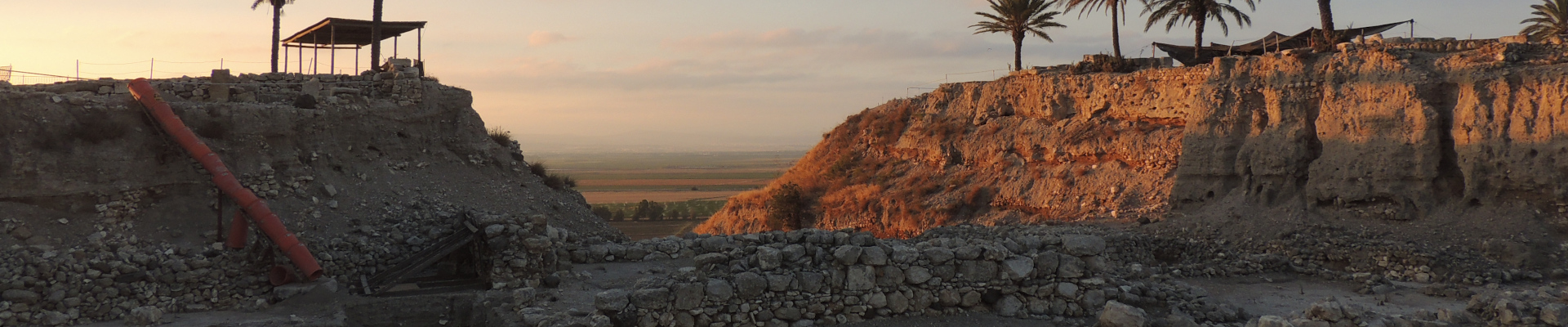
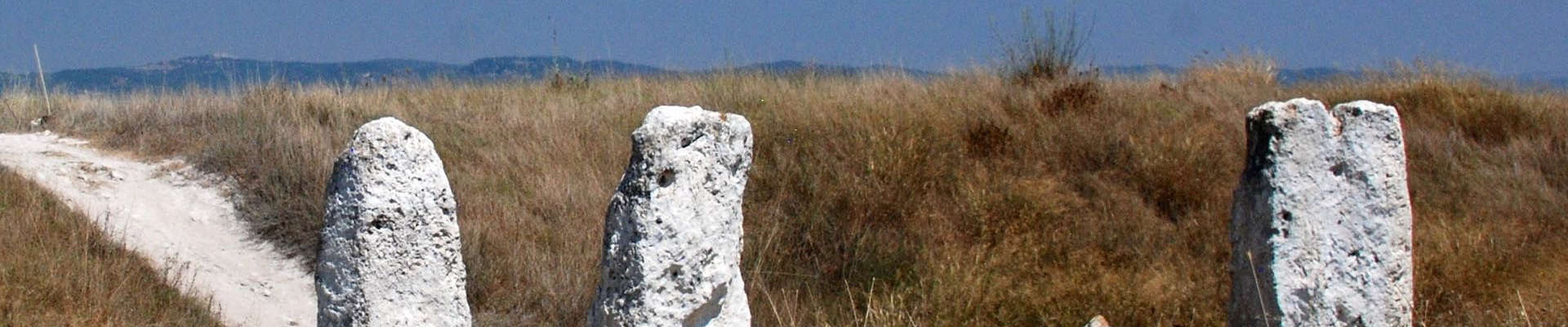
Lacking archaeological remains of roads used by the Urartians, we do not always have a clear idea of the routes they took to various places across the landscape. For this project, I mapped commemorative inscriptions from the Corpus dei Testi Urartei using least cost analysis and Tobler’s hiking function to important centers, including the capital of Urartu as well as other forts and fortress sites. From this I was able to visualize a potential networks of paths utilized for trade and mobility, specifically, expanding the Urartu empire into Armenia.

Urartian Stone Inscription at Tsovinar. Image credit: Tiffany Earley-Spadoni.
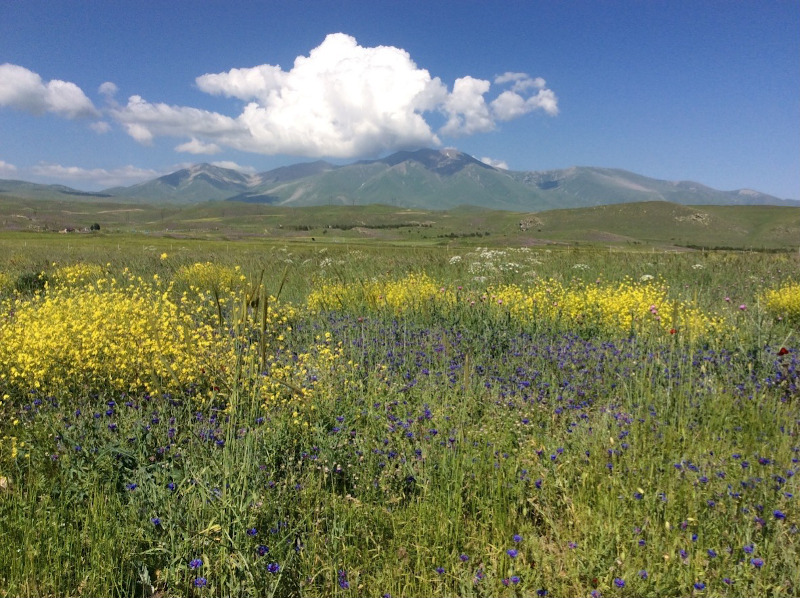
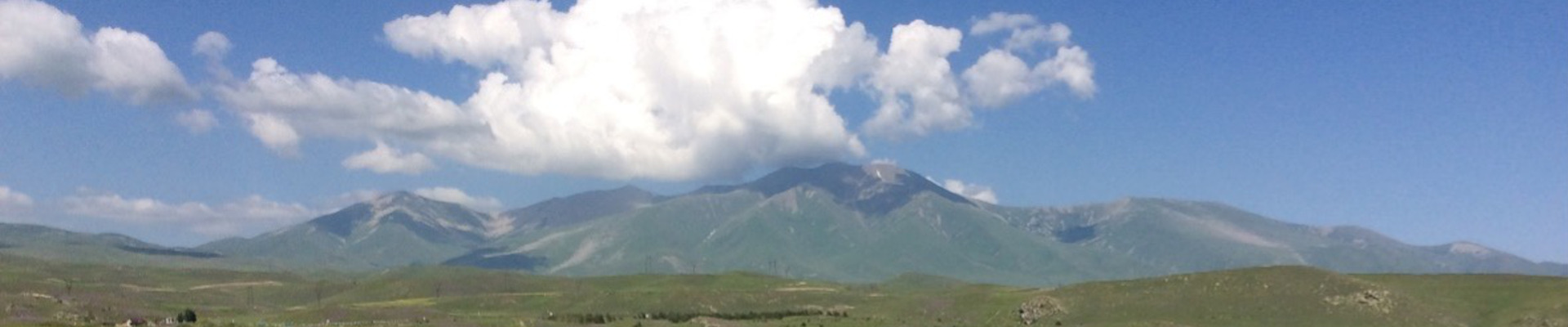
View of Countryside, Vayots Dzor, Armenia. Image credit: Tiffany Earley-Spadoni.

It has been really interesting, and sometimes frustrating, to learn and manipulate various tools within ArcGIS. One of the more challenging situations I faced was to figure out how to remove lakes in the region from the analysis, since our models were pedestrian. I tried a lot of ways that did not work, but eventually was able to figure out a solution, warranting an afternoon of celebration. It was also useful to read the translations of each of the stone-carved inscriptions to get a more thorough understanding of what was happening in these places during this period of time. From gaining control of an area or improving infrastructure through new buildings, canals, or vineyards, the kings were often quite boastful, while thanking or dedicating their achievements to specific Gods.

It is argued that computer-based algorithms may oversimplify mobility and omits human decision making; however, I think that a visualization component to research, even as an estimation, really adds a humanistic element to understanding ancient history. Through the mapping of least cost paths, it is fascinating to see how people potentially moved throughout the landscape and provides information that can be further explored in the field.

Jane is a PhD candidate in the Integrative Anthropological Sciences Program at the University of Central Florida. Her research interests are diet and mobility, status, and identity, using isotope analysis and geospatial analysis. Her temporal geographical focus is the Ancient Near East and Medieval West Europe.
For more information about the Vayots Dzor Fortress Landscapes Project, click here.   

During the summer of 2021, ASOR supported 27 undergraduate and graduate students through the Summer Stipend Program. These students undertook non-fieldwork archaeological research projects led by ASOR-affiliated project directors. They also took part in monthly cohort group meetings hosted via zoom. Read a summary of these cohort meetings here.

Stay tuned for more updates from the 2021 Summer Stipend recipients!

FOA Webinar: Sam Wolff on Feb. 20

FRIENDS OF ASOR WEBINARS

Excavations at Tel Gezer: A Personal Story

Friends of ASOR present the next webinar in our monthly series on February 20, 2022, at 3:30 pm EST, featuring Dr. Sam Wolff. In 1972, a stone vat was discovered in Dr. Sam Wolff’s square in Field VII at Tel Gezer, Israel. Visitors to the square marveled at the lovely “dye vat.” These comments piqued his intellectual curiosity, which led him on a life-long quest to understand this and similar stone installations at Tel Gezer. To aid in this exploration, he returned to the site as co-director of the Tandy Museum excavations (2006-2017).

This webinar will review the results of that project, which took place in the area between the well-known six-chambered Iron Age gate (“Solomon’s Gate”) and that same square that Dr. Wolff excavated in 1972, Field VII. Dr. Wolff will place special emphasis on newly discovered industrial installations, including those related to olive oil production, thus shedding light on important aspects of daily life at Tel Gezer in the Iron Age. Dr. Wolff will conclude his webinar with a live Q&A session.

After volunteering at Tel Gezer in 1972 and 1973, Sam Wolff continued his archaeological studies at the University of Chicago. During that time, he participated in excavations of the Commercial Harbor and Tophet at Carthage (1975-1979) in modern day Tunisia. Wolff received his Ph.D. in 1986. He was Field Supervisor and later Assistant Director of the excavations at Ashkelon (Israel) from 1985 to 1990. He relocated from Chicago to Israel in 1987 with his family. In 1991, he began a 25-year career as a field archaeologist at the Israel Antiquities Authority (IAA). His most important excavations were conducted at the Iron Age I site of Ein Hagit, the multiperiod site of Tel Megadim, and the Iron Age II site at Tel Hamid, a satellite of Tel Gezer. He worked as Co-Director (with Prof. Steve Ortiz) and photographer at the renewed excavations at Tel Gezer from 2006 to 2017. Since retiring from the IAA in 2017, he has been managing the Tel Gezer laboratory and working on articles and final publications of his excavations.
This webinar will be recorded and all paid registrants will be sent a link to view the recording.

ASOR Sustaining Members: $0 | ASOR Members: $6 | Public: $12

To receive your ASOR member discount, log into the online store. If you are new to ASOR, please click on the “New Visitor Registration” link to register your e-mail address and choose password for our online store. Once logged in, navigate to “Meeting and Event Registration” to register for the webinar and pay the fee. Each paid registrant will receive a confirmation e-mail when you pay for the webinar. If you do not receive this e-mail, then you are not registered. Please e-mail membership@asor.org with any questions or issues with registering.

You will be e-mailed the Zoom Webinar link in the week prior to the lecture on February 20, 2022. If you do not receive the link by the close of business on the Thursday before the webinar, please e-mail membership@asor.org immediately. This webinar will be recorded and all paid registrants will be sent a link to view the recording.

All proceeds from this lecture are used to fund scholarships for members impacted by COVID-19 as well as increasing ASOR’s online resources, which are free to the public.

WHY SPONSOR A WEBINAR?

Several levels of support from $50-$1,000 are available. Proceeds go towards membership scholarships and towards increasing ASOR’s virtual resources. Each sponsorship is tax-deductible and you can give your friends free registrations to a webinar!

Bronze Level ($50): up to 2 guest registrations
Silver Level ($100): up to 5 guest registrations
Gold Level ($500): up to 20 guest registrations
Platinum Level ($1,000): up to 50 guest registrations

After you sign up for a sponsorship online or over the phone, email the names and email addresses of your guests to Felice Herman at membership@asor.org, who will send your guests a confirmation and the Zoom link before the webinar.


WANT TO SAVE $6.00 ON THE NEXT WEBINAR?

Join ASOR as a member! Click here for more details about discounts for events and other benefits of membership. Memberships start at $40 for the year as an Associate Member.

Not ready to join yet? Become a Friend of ASOR for FREE!

Click here for more details about our online resources.

PAST WEBINARS

You can now purchase the link to the recording of any webinar. You can also purchase the bundle packages of all webinars from the 2020-2022 seasons. Please e-mail membership@asor.org for purchase details.

To see a printable pdf of the webinar titles from the 2020-2021 season, please click here. To see a printable pdf of the webinar titles from the 2021-2022 season, please click here.

Pricing:

Members: $6.00 per recording
Non-Members: $12.00 per recording
Bundle of 2020-2021 Webinars: $75.00
Bundle of 2021-2022 Webinars: $75.00
Bundle of 2020-2022 Webinars: $125.00

2021-2022 Season

A World at War: Protecting Cultural Heritage in Times of Conflict
Patty Gerstenblith (DePaul University), Lisa Ackerman (Columbus Citizens Foundation), Andrew Cohen (Government Professional and Cultural Heritage Expert) | May 12, 2022

Preserving Cultural Heritage in Hisban and Umm al-Jimal, Jordan
Øystein LaBianca (Andrews University), Elizabeth Osinga (Umm al-Jimal Archaeological Project), Darrell Rohl (Calvin University) | April 24, 2022

Back to the Field: Recent Discoveries & Summer Plans 2022
Lorenzo d’Alfonso (ISAW), Kathryn Grossman (NC State University), James R. Strange (Samford University) | April 3, 2022

Uncovering What is Nubian Beneath the Veneer of Egyptianness: Excavating the Archives
Debora Heard (University of Chicago) | March 20, 2022

Where Are They Now?: A Preview of 2022 ASOR-Affiliated Fieldwork Projects
Michael Given (University of Glasgow), Xenia-Paula Kyriakou (Florida Gulf Coast University), Stephen Batiuk (University of Toronto), Monique Roddy (Walla Walla University), Kent Bramlett (La Sierra University), Friedbert Ninow (La Sierra University), and Michael Hoff (University of Nebraska-Lincoln) | March 8, 2022

Excavations at Tel Gezer: A Personal Story
Sam Wolff (Tel Gezer Laboratory) | February 20, 2022

Tel Rehov: A Major Bronze and Iron Age City in the Jordan Valley
Amihai Mazar (Hebrew University of Jerusalem), Nava Panitz-Cohen ( Hebrew University of Jerusalem), Nota Kourou (Athens University), Naama Yahalom-Mack (Hebrew University of Jerusalem), Robert Mullins (Azusa Pacific University) | February 10, 2022

The Not-So-Innocents Abroad: The Beginnings of American Biblical Archaeology
Rachel Hallote (Samford University) | January 20, 2022

Synagogues as Jesus Knew Them
James R. Strange (Samford University) | December 2, 2021

Under Jerusalem: The Buried History of the World’s Most Contested City
Andrew Lawler | November 4, 2021

Jesus and Jerusalem on TV: How Do Bible Documentaries Get Made?
Robert Cargill (University of Iowa) | October 17, 2021

Digging the Divine?: Judahite Pillar Figurines and the Archaeology of Israelite Religion
Erin Darby (University of Tennessee) | October 7, 2021

David, Solomon, and Rehoboam’s Kingdom—The Archaeological Evidence
Yosef Garfinkel (Hebrew University of Jerusalem) | September 19, 2021

From Standing Stones to Sacred Emptiness: Textual and Visual Portrayals of Israel’s God
Theodore Lewis (Johns Hopkins University) | August 29, 2021

2020-2021 Season

Making May Matter: Webinarathon to Endow Diversity
Multiple Speakers | May 21-23, 2021

Archaeogaming: Why Video Games Deserve Their Own Archaeology
Tine Rassalle (University of North Carolina at Chapel Hill), Shannon Martino (Morton College), Matthew Winter (University of Arizona), Michael Zimmerman (Rhode Island) | April 18, 2021

How the Bible Became a Book
William Schniedewind (UCLA) | March 21, 2021

The Mysteries of Mithras in Caesarea: Exploring the Cult’s Rites and Remains
Jane DeRose Evans (Temple University), Alexandra Ratzlaff (Brandeis University) | March 11, 2021

Archaeology and the Hidden Religious Culture of Israelite Women
Carol Meyers (Duke University) | February 21, 2021

Meet the Directors—Fundraiser to Support ASOR’s Affiliated Overseas Research Centers
Matthew J. Adams (AIAR), Pearce Paul Creasman (ACOR), Lindy Crewe (CAARI) | February 11, 2021

Early Synagogues, Jesus, and Galilee—A Jewish Perspective
Eric Meyers (Duke University) | December 13, 2020

Home Sweet Home: Ancient Israelite Households in Context
Cynthia Shafer-Elliott (William Jessup University) | October 18, 2020

Priestesses in the Days of Solomon and Ahab
Susan Ackerman (Dartmouth College) | September 13, 2020

Digging Deeper: How Archaeology Works
Eric H. Cline (The George Washington University) | August 9, 2020

Call for Honors and Awards Committee Member

[vc_row fullwidth=”true” attached=”true” css=”.vc_custom_1496247803139{padding-top: 0px !important;padding-right: 0px !important;padding-bottom: 0px !important;padding-left: 0px !important;}”][vc_column][vc_single_image image=”78668″ img_size=”full” alignment=”center”][/vc_column][/vc_row][vc_row fullwidth=”true” css=”.vc_custom_1496682730308{padding-top: 10px !important;padding-right: 0px !important;padding-bottom: 0px !important;padding-left: 0px !important;}”][vc_column width=”1/12″ css=”.vc_custom_1496683820796{margin-right: 10px !important;}” offset=”vc_hidden-md vc_hidden-sm vc_hidden-xs”][vc_column_text]

 SHARE

[/vc_column_text][mk_image src=”http://www.asortest.org/wp-content/uploads/2017/01/social-fb-icon4.jpg” image_width=”42″ image_height=”42″ hover=”false” custom_url=”https://www.facebook.com/ASOResearch/” margin_bottom=”0″][mk_image src=”http://www.asortest.org/wp-content/uploads/2017/01/social-tw-icon4.jpg” image_width=”42″ image_height=”42″ hover=”false” custom_url=”https://twitter.com/ASOResearch?ref_src=twsrc%5Egoogle%7Ctwcamp%5Eserp%7Ctwgr%5Eauthor” margin_bottom=”0″][mk_image src=”http://www.asortest.org/wp-content/uploads/2017/01/social-in-icon4.jpg” image_width=”42″ image_height=”42″ hover=”false” custom_url=”https://www.linkedin.com/company/american-schools-of-oriental-research” margin_bottom=”0″][mk_image src=”http://www.asortest.org/wp-content/uploads/2017/01/social-ml-icon_7.jpg” image_width=”42″ image_height=”42″ hover=”false” custom_url=”mailto:info@asor.org” margin_bottom=”0″][mk_image src=”http://www.asortest.org/wp-content/uploads/2017/01/blog-icon3.jpg” image_width=”42″ image_height=”42″ hover=”false” custom_url=”http://asor.org/blog” margin_bottom=”0″][/vc_column][vc_column border_color=”rgba(255,255,255,0.01)” width=”1/6″ css=”.vc_custom_1496683923840{margin-right: 20px !important;border-left-width: 2px !important;padding-right: 20px !important;padding-left: 20px !important;border-left-color: #99422f !important;}”][mk_divider divider_color=”rgba(255,255,255,0.01)” thickness=”1″ margin_top=”3″ margin_bottom=”3″][vc_widget_sidebar sidebar_id=”ca-sidebar-39801″][/vc_column][vc_column border_color=”rgba(170,170,170,0.01)” width=”1/2″ css=”.vc_custom_1487276122024{margin-right: 10px !important;margin-bottom: 30px !important;border-right-width: 2px !important;border-bottom-width: 2px !important;padding-top: 30px !important;padding-right: 30px !important;padding-left: 20px !important;background-color: #ffffff !important;border-right-color: rgba(227,228,228,0.75) !important;border-bottom-color: rgba(227,228,228,0.75) !important;}”][vc_column_text responsive_align=”left”]

Call for Honors and Awards Committee Member

[/vc_column_text][mk_divider][vc_wp_text]

The Honors and Awards Committee seeks nominations to serve on the Frank Moore Cross Book Award sub-committee. ASOR invites nominations, including self-nominations, from ASOR members who are interested in being considered by the committee for this opening. Committee members will serve a three-year term with the possibility of two consecutive terms. Nominees must fill out the online form by February 28, 2022. The Honors and Awards Committee takes responsibility for determining the awardees for the three book awards, the field archaeology award, the “best poster” award, and the multiple membership service awards that ASOR gives annually; conducting the awards ceremony during the Members’ Meeting at the ASOR Annual Meeting; and discussing and advising the ASOR Board of Trustees about ASOR’s awards, including recommending to the Board the creation of new awards as deemed appropriate.
One candidate is sought for the Frank Moore Cross Award sub-committee. This award is presented to the author/editor of the most substantial volume(s) related to the history and/or religion of the ancient Near East and Eastern Mediterranean. Primary consideration will be given to historical, epigraphic, textual, and comparative literary studies; or to works that advance and/or evaluate new methodological approaches to the literary record(s). This work must be the result of original research published during the past two years. (One award is given annually.)

In order to receive full consideration by the committee the online form must be submitted by noon EDT on February 28, 2021. For questions and concerns, please contact Marta Ostovich (programs@asor.org) 

[/vc_wp_text][/vc_column][vc_column border_color=”rgba(170,170,170,0.01)” width=”1/6″ css=”.vc_custom_1496684098866{margin-right: 5px !important;margin-bottom: 20px !important;border-right-width: 2px !important;border-bottom-width: 2px !important;padding-top: 30px !important;padding-right: 10px !important;padding-left: 10px !important;background-color: #ffffff !important;border-right-color: rgba(227,228,228,0.75) !important;border-bottom-color: rgba(227,228,228,0.75) !important;}”][vc_wp_posts title=”BROWSE THE NEWS ARCHIVE” number=”4″][/vc_column][vc_column border_color=”rgba(170,170,170,0.01)” width=”1/6″ css=”.vc_custom_1496684008271{margin-right: 10px !important;margin-bottom: 30px !important;border-right-width: 2px !important;border-bottom-width: 2px !important;padding-top: 30px !important;padding-right: 20px !important;padding-left: 20px !important;background-color: #ffffff !important;border-right-color: rgba(227,228,228,0.75) !important;border-bottom-color: rgba(227,228,228,0.75) !important;}”][vc_column_text] [/vc_column_text][/vc_column][/vc_row]

Seger Grant Report: The Trajanic Fort at Humayma

Seger Grant Report: The Trajanic Fort at Humayma

With the assistance of the Joe D. Seger Grant several hundred pottery profiles and drawings were prepared for vol. 3 of the Humayma Excavation Project report, concerning the Trajanic Fort. The excavation was sponsored by the University of Victoria and Queen’s University, was funded by numerous SSHRC General Research Grants and grants from various other foundations, and was assisted immeasurably by the American Center of Research in Amman.

Aerial view of site from south (Photo: Jane Taylor).

From 1986 to 2005, I directed survey and excavation at the site of Humayma, ancient Hawara, in the Hisma Desert of Southern Jordan halfway between Petra and Aqaba. The site flourished from the first century BC to the eighth century AD as a Nabataean, then Roman, Byzantine, and Early Islamic site. Each culture left its mark: a sophisticated Nabataean water supply system, Nabataean houses and temples, a Roman auxiliary fort, bath, and associated civilian settlement, five Byzantine churches and many houses, and the palace of the Abbasid family and associated mosques. My team surveyed and sampled or excavated all these structures. In 2005 I turned over the archaeological permit for the site to my collaborator, Dr. M. Barbara Reeves, a professor at Queen’s University, who has continued fieldwork. We have published many preliminary reports on the excavation in the form of articles, chapters, and conference papers, along with two final report volumes: Resources, History, and the Water-Supply System (ASOR 2010), and Nabataean Campground and Necropolis, Byzantine Churches, and Early Islamic Domestic Structures (ASOR 2013).

Aerial of the fort from north (Photo: Jane Taylor).

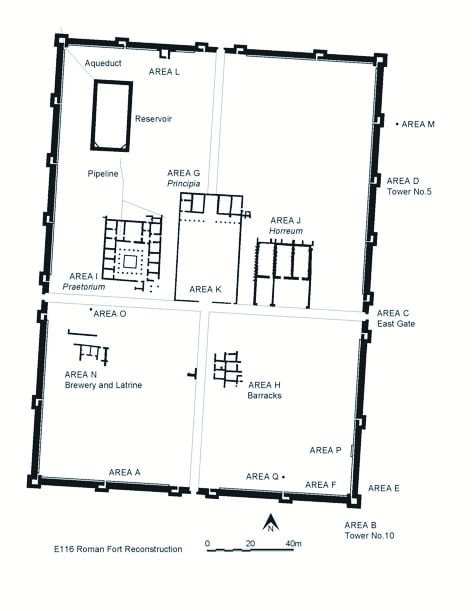
The fort at Humayma is particularly important as the best preserved — and one of the very few — early principate period forts in the Near East. The fort was founded soon after Trajan’s conquest of the Nabataean kingdom in AD 106 to house a detachment of around 500 troops. Our excavations documented the fortification walls with 24 projecting towers and the location and plans of the main interior structures: the principia (headquarters building), praetorium (commander’s residence), horreum (granary), barracks, a brewery and craft areas, latrine, and water distribution system. The fort and internal structures were laid out in carefully chosen multiples of the Roman foot (0.296 m). My research will present the most complete documentation yet of the modular planning of an entire fort complex by Roman military engineers, and its pioneering use of projecting towers.

Reconstructed plan of the Trajanic fort (Chris Mundigler)

The ceramics from the fort, for the most part manufactured in Petra and Aqaba, show an interesting mix of fine wares, storage wares, and kitchen wares. The remains of several cheese curd strainers indicate the preparation of sheep or goat cheese in the fort.

Area H pottery drawings.
Cheese curd strainer.

-John P. Oleson, University of Victoria