[vc_row fullwidth=”true” attached=”true” css=”.vc_custom_1496247803139{padding-top: 0px !important;padding-right: 0px !important;padding-bottom: 0px !important;padding-left: 0px !important;}”][vc_column][vc_single_image image=”33590″ img_size=”full” alignment=”center”][/vc_column][/vc_row][vc_row fullwidth=”true” css=”.vc_custom_1496682730308{padding-top: 10px !important;padding-right: 0px !important;padding-bottom: 0px !important;padding-left: 0px !important;}”][vc_column width=”1/12″ css=”.vc_custom_1496683820796{margin-right: 10px !important;}” offset=”vc_hidden-md vc_hidden-sm vc_hidden-xs”][vc_column_text]
SHARE
[/vc_column_text][mk_image src=”http://www.asortest.org/wp-content/uploads/2017/01/social-fb-icon4.jpg” image_width=”42″ image_height=”42″ hover=”false” custom_url=”https://www.facebook.com/ASOResearch/” margin_bottom=”0″][mk_image src=”http://www.asortest.org/wp-content/uploads/2017/01/social-tw-icon4.jpg” image_width=”42″ image_height=”42″ hover=”false” custom_url=”https://twitter.com/ASOResearch?ref_src=twsrc%5Egoogle%7Ctwcamp%5Eserp%7Ctwgr%5Eauthor” margin_bottom=”0″][mk_image src=”http://www.asortest.org/wp-content/uploads/2017/01/social-in-icon4.jpg” image_width=”42″ image_height=”42″ hover=”false” custom_url=”https://www.linkedin.com/company/american-schools-of-oriental-research” margin_bottom=”0″][mk_image src=”http://www.asortest.org/wp-content/uploads/2017/01/social-ml-icon_7.jpg” image_width=”42″ image_height=”42″ hover=”false” custom_url=”mailto:asor@bu.edu” margin_bottom=”0″][mk_image src=”http://www.asortest.org/wp-content/uploads/2017/01/blog-icon3.jpg” image_width=”42″ image_height=”42″ hover=”false” custom_url=”http://asorblog.org/” margin_bottom=”0″][/vc_column][vc_column border_color=”rgba(255,255,255,0.01)” width=”1/6″ css=”.vc_custom_1496683923840{margin-right: 20px !important;border-left-width: 2px !important;padding-right: 20px !important;padding-left: 20px !important;border-left-color: #99422f !important;}”][mk_divider divider_color=”rgba(255,255,255,0.01)” thickness=”1″ margin_top=”3″ margin_bottom=”3″][vc_column_text]
ASOR BLOG
NEWS@ASOR E-NEWSLETTER
ANCIENT NEAR EAST TODAY E-NEWSLETTER
PAST ASOR NEWS, MONTH BY MONTH
FY17 HONOR ROLL OF DONORS
ASOR ANNUAL MEETING
[/vc_column_text][/vc_column][vc_column border_color=”rgba(170,170,170,0.01)” width=”1/2″ css=”.vc_custom_1487276122024{margin-right: 10px !important;margin-bottom: 30px !important;border-right-width: 2px !important;border-bottom-width: 2px !important;padding-top: 30px !important;padding-right: 30px !important;padding-left: 20px !important;background-color: #ffffff !important;border-right-color: rgba(227,228,228,0.75) !important;border-bottom-color: rgba(227,228,228,0.75) !important;}”][vc_column_text responsive_align=”left”]
ASOR BOARD OF TRUSTEES NOMINEES
[/vc_column_text][vc_column_text]ASOR is pleased to announce that the Board Nominations Committee has selected six highly qualified members to stand for election for four open positions on the ASOR Board of Trustees (two openings for Individual Representatives and two openings for Institutional Representatives). The ASOR Board sets the direction for ASOR and provides oversight for our organization. Among other responsibilities, members of the Board agree to attend two meetings each year at their own expense, to participate thoughtfully in the governance process, and to contribute financially to ASOR.
As described below, there are three candidates for both the Individual and Instituational categories. All ASOR members are eligible to vote in the Individual Election while only Institutional Representatives of the 83 ASOR-member schools may vote in the Institutional Election. ASOR will once again conduct the elections by online ballot, and all members and Institutional Representatives will receive the appropriate ballot(s) on or about October 6, 2016. We will send out several reminders, and all ballots must be completed by 4:00PM Eastern Time on November 7. If you would like to receive a paper ballot or if you have difficultities completing the online ballot (once they are distributed), please contact Inda Omerefendic at 617-358-4376 or asorpubs@bu.edu.[/vc_column_text][vc_column_text responsive_align=”left”]
Individual Representatives Nominees
[/vc_column_text][vc_row_inner][vc_column_inner width=”1/4″ css=”.vc_custom_1503684310141{padding-right: 10px !important;}”][mk_image src=”http://www.asor.org/wp-content/uploads/2017/08/charaf.jpg” image_width=”200″ image_height=”250″ crop=”false” hover=”false”][/vc_column_inner][vc_column_inner width=”3/4″][vc_column_text]
Hanan Charaf
Hanan Charaf received her PhD in Near Eastern Art and Archaeology from the University of Paris I, Panthéon-Sorbonne, France, her MA from the University of Lyon II, France, and her BA from the Lebanese University-Section II, Beirut. She is an adjunct professor of archaeology at the Lebanese University and an associate member of the Research Unit 7041 at the University of Paris I-Sorbonne. She serves as senior field archaeologist at the excavations of Tell Arqa (ancient Irqata) and Gbeil/Byblos in Lebanon. She is the series editor of ASOR’s monographs Archaeological Reports Series (ARS) since 2015. She has been a member of ASOR since 2000 and in the last three years has served on the Board of Trustees of ASOR. She is also a member of the Honors and Awards Committee, the Publications Committee, and the Officers Nomination Committee. She guest co-edited Near Eastern Archaeology (Vol. 73.2.3, 2010) and three volumes of Journal of Eastern Mediterranean Archaeology and Heritage Studies (Vols. 3.4, 4.1, and 4.2, 2015-2016) all dedicated to the archaeology of Lebanon. Her research interests include the ceramics of the Late Bronze and Iron Age in northern Levant, the intra- and supra-regional pottery exchange in the Levant, the cultural characteristics of the end of the Late Bronze Age and the beginning of the Early Iron Age in the Northern Levant, the study of the trade patterns of the Cypriot pottery to the Levant, and raising cultural heritage awareness amongst local populations. Her publication record includes several articles and book chapters on the Middle and Late Bronze Ages from Lebanon. She is currently working on a book on the Late Bronze Age of Tell Arqa.
Mission statement: As a board member, I would continue the mission I started three years ago when I was elected to the board, and that was to bring to ASOR an indigenous perspective and an active participation in the archaeology and cultural heritage of the Middle East. Coming from and working in this region, I intimately relate to the destructions and threats endangering the heritage of many countries. I am championing an active presence and exposure of ASOR in underrepresented regions of the Middle East by establishing new contacts with local institutions and communities and by encouraging scholars to attend ASOR annual meetings and to be more active in this organization. This would not only diversify ASOR’s membership, but would also provide another venue for outreach and shared learning. Recently, the Cultural Heritage Initiative (CHI) offered ASOR a unique platform to engage in cultural heritage preservation. I would like to see ASOR continue and expand this mission, not only in Syria, but in other countries of the Middle East and Africa plagued by wars. ASOR would not only preserve and document the heritage of those countries but would efficiently help their citizens, especially the youth, preserve their past and their cultural identities, the powerful and crucial tools for rebuilding these regions. In doing this, ASOR would be fulfilling one of the goals of its mission statement. The CHI introduced also ASOR to many European archaeological circles; I would like to see this position strengthened further by forging relationships with additional European institutions, thus adhering to ASOR’s new geographical sphere of interest, the Near East and the Wider Mediterranean. ASOR premium commitment in disseminating first-hand knowledge at its annual meetings would benefit from foreign professionals. This new broadening of ASOR’s membership would richly diversify ASOR’s publications by bringing new authors and topics. Another interest of mine is to advocate for more involvement of women in archaeology in general and in ASOR in particular. Being a woman who also belongs to a minority ethnic group gives me a unique perspective on the challenges that both women and minorities face in the world of archaeology.
[/vc_column_text][/vc_column_inner][/vc_row_inner][vc_row_inner][vc_column_inner width=”1/4″ css=”.vc_custom_1503684320408{padding-right: 15px !important;}”][mk_image src=”http://www.asor.org/wp-content/uploads/2016/11/hallote.jpg” image_width=”200″ image_height=”250″ crop=”false” hover=”false”][/vc_column_inner][vc_column_inner width=”3/4″][vc_column_text]
Rachel Hallote
Rachel Hallote is Professor of History at Purchase College, State University of New York, where she currently serves as coordinator of both the History and the Jewish Studies Programs. Her research focuses on the history of the discipline of biblical archaeology, specifically on British and American archaeological involvements in Ottoman Palestine in the late 19th and early 20th centuries. Among her publications is the co-authored volume The Photographs of the American Palestine Exploration Society (AASOR 2012). She is currently working on a book titled The Bible, History and Archaeology (forthcoming, Jewish Publication Society). Hallote has excavated at many sites in Israel, most recently at Khirbet Summeily. She has served on the ASOR board for the past three years.
Mission Statement: While ASOR has always been an important scholarly society, over the past several years I have watched it become better known and noteworthy outside the archaeological community. Enterprises such as the Cultural Heritage Initiative have brought ASOR into the public eye. If reelected to a place on the board, I would hope see the organization continue to engage in public discussions, and disseminate accurate information about antiquity to the public. Beyond this, ASOR has always sustained scholarship, and I would want to see it continue to foster connections among scholars, and provide networking opportunities, particularly for younger scholars, and for those in the many different subfields of ancient Near Eastern studies.[/vc_column_text][/vc_column_inner][/vc_row_inner][vc_row_inner][vc_column_inner width=”1/4″ css=”.vc_custom_1503684320408{padding-right: 15px !important;}”][mk_image src=”http://www.asor.org/wp-content/uploads/2017/08/hparker.jpg” image_width=”200″ image_height=”250″ crop=”false” hover=”false”][/vc_column_inner][vc_column_inner width=”3/4″][vc_column_text]
Heather Dana Davis Parker
Heather Dana Davis Parker received her PhD in Near Eastern Studies from Johns Hopkins University (JHU) in 2013. She is currently a lecturer for the Center for Leadership Education at JHU. She has received grants from ACOR, AIAR, and CAORC (co-recipient) for her work on the palaeography of Northwest Semitic scripts and has conducted research in museums throughout Europe and the Middle East, including the Louvre, the Vorderasiatisches Museum, the Jordan and Israel Museums, and the National (Archaeological) Museums of Cyprus, Sardinia, Athens, and Malta. Her work on early script traditions contributes directly to the study of the origins of Levantine regional states and kingdoms. She has co-published articles on the use of digital technologies in the research, presentation, and preservation of ancient inscriptions and artifacts in BASOR, NEA, and other venues and has participated in conferences highlighting the use of modern technology in Cultural Heritage Preservation. She is the president of the Colloquium for Biblical and Near Eastern Studies and serves on the editorial board for BASOR. She has served ASOR on both its Strategic Planning and Branding Task Forces and currently co-chairs the session on Ancient Inscriptions at its Annual Meeting.
Mission Statement: As a member of the Board of Trustees, I would support ASOR’s leadership and members in our mission to foster exploration, education, and scholarship of the Near East and wider Mediterranean (NEWM), focusing particularly on the following key areas of our most recent strategic plan. (1) I would serve our diverse membership, particularly “next generation” scholars, by continuing to serve ASOR’s leadership as a junior-scholar consultant and by exploring opportunities for ASOR scholars in the expanded job market. (2) I would champion the study of the NEWM, showcasing its cultures, history, and value for world cultural heritage through continued public outreach, speaking to and collaborating with both lay groups and formal students at the elementary, secondary, and higher education levels. I would also promote ASOR as a key resource for knowledge and expertise pertaining to the NEWM. (3) I would assist ASOR in its Cultural Heritage Initiatives, particularly in its members’ efforts to engage and to serve the communities in which we work, via collaboration and mutual education. My personal educational mission for any community I serve is to help to shift perspectives from a “me” orientation, focused on the here and now, to a vision of “us” that incorporates our rich world heritage, both past and present, as we look toward the future.
[/vc_column_text][/vc_column_inner][/vc_row_inner][vc_column_text responsive_align=”left”]
Institutional Representative Nominees
(All institutional representatives will be asked to vote for two of the following three nominees)[/vc_column_text][vc_row_inner][vc_column_inner width=”1/4″ css=”.vc_custom_1503684320408{padding-right: 15px !important;}”][mk_image src=”http://www.asor.org/wp-content/uploads/2017/08/foran.jpg” image_width=”200″ image_height=”250″ crop=”false” hover=”false”][/vc_column_inner][vc_column_inner width=”3/4″][vc_column_text]
Debra Foran
Debra Foran holds a BA in Near Eastern Archaeology from Wilfrid Laurier University, an MA and PhD in Near and Middle Eastern Civilizations from the University of Toronto, and Licence in Mediaeval Studies from the Pontifical Institute of Mediaeval Studies in Toronto. She has participated in numerous archaeological field projects in Jordan, Syria, and Tunisia. Debra has been teaching Near Eastern Archaeology at Wilfrid Laurier University since 2012. She is the Director of the Town of Nebo Archaeological Project, an active research project and undergraduate field school that is investigating the role of landscape in the religious and economic development of the site of Khirbat al-Mukhayyat (Jordan). In addition to overseeing this field project, she is also working on the final publications for the Tell Madaba Archaeological Project that she directed between 2006 and 2012. Debra has chaired several ASOR sessions on the archaeology of Jordan and the Byzantine and Early Islamic Near East. She served as Vice-President and Treasurer of ASOR-Canada from 2004 to 2007 at which time she was elected President, a position she still holds. During that time she has overseen the implementation of a student bursary program for Canadian students participating in ASOR-affiliated field projects.
Mission Statement: As a member of the Board of Trustees, I will uphold ASOR’s mandate to promote research into and public understanding of the cultures and history of the Near East. As an institutional member of the Board, I would like to seek out ways for ASOR’s current Institutional Members to become more active participants in ASOR’s programs and initiatives. I would also work on strategies to recruit more Institutional Members. My own institution recently became an Institutional Member after I demonstrated the advantages for students and faculty that an ASOR membership can afford. I also wish to foster collaboration with the local communities that are directly affected by the archaeological research of ASOR members. One way of encouraging this collaboration that is of particular interest to me is the integration of national cultural heritage into school curricula. I would like to explore how, as a foreign researchers, the work of ASOR members can contribute to this. Finally, I want to explore innovative ways of incorporating undergraduate education into active excavation and research projects. The inclusion of both North American students and students from local communities will nurture their appreciation for the cultural heritage of the Near East and help safeguard the continuation and future of our discipline.
[/vc_column_text][/vc_column_inner][/vc_row_inner][vc_row_inner][vc_column_inner width=”1/4″ css=”.vc_custom_1503684320408{padding-right: 15px !important;}”][mk_image src=”http://www.asor.org/wp-content/uploads/2017/08/hasel.jpg” image_width=”200″ image_height=”250″ crop=”false” hover=”false”][/vc_column_inner][vc_column_inner width=”3/4″][vc_column_text]
Michael G. Hasel
Michael G. Hasel is Director of the Institute of Archaeology and Lynn H. Wood Archaeological Museum at Southern Adventist University and serves as Professor of Near Eastern Studies and Archaeology since 1998. He received an MA in Archaeology from Andrews University and an MA and PhD in Near Eastern Studies and Anthropology from The University of Arizona. He has been actively involved in excavating or surveying 12 sites in Israel, Jordan, and Cyprus while also engaged in Egyptological research. He has directed excavations at Khirbet Qeiyafa (in publication phase) and currently is co-director of The Fourth Expedition to Lachish. He has held the Samuel H. Kress Fellowship at the Albright Institute (1995-96) and a Fulbright at the Cyprus American Archaeological Research Institute (2005). He has been a member of ASOR since 1989 and has chaired several ASOR sessions, served on the Agenda Committee, and recently completed his first three-year term as an ASOR board member.
Mission Statement: I have served as an active participant of ASOR since 1989 while still an undergraduate student and have not missed a meeting since that time. I have observed ASOR grow into a strong society representing a wide variety of interests and research foci in the ancient Near Eastern world. As a director of an Institute of Archaeology and museum, part of my vision is to make our field relevant to this and future generations. There has been an increased separation of the society from an interdisciplinary historical approach which builds on the biblical interest in North America as witnessed in the historical roots of ASOR. Our field has also experienced fragmentation that can leave our younger scholars searching for direction, belonging, and a future. My concern is that without that connection we are at risk of losing an important and relevant voice to a large segment in North America. ASOR has been an important force in supporting archaeological work in the modern Middle East and I would be happy to continue to support and serve as a liaison to accomplish excavation opportunities and the work of ASOR for current and future generations.[/vc_column_text][/vc_column_inner][/vc_row_inner][vc_row_inner][vc_column_inner width=”1/4″ css=”.vc_custom_1503684320408{padding-right: 15px !important;}”][mk_image src=”http://www.asor.org/wp-content/uploads/2017/08/ortiz.jpg” image_width=”200″ image_height=”250″ crop=”false” hover=”false”][/vc_column_inner][vc_column_inner width=”3/4″][vc_column_text]
Steven Ortiz
Steven Ortiz is the director of the Tandy Institute for Archaeology at Southwestern Baptist Theological Seminary where he is also a professor of archaeology and biblical backgrounds. He is the principal investigator and co-director, along with Sam Wolff, of the Tel Gezer Excavation Project. He received his PhD in Near Eastern Archaeology from The University of Arizona. He has over 30 years of archaeological experience in Israel as he has been a senior staff member at Tel Zeitah, Ekron, Jerusalem-Ketef Hinnom, Tell el-Hamma, and Lachish. He is co-author (with Sy Gitin and Trude Dothan) of the forthcoming excavation report in the Tel Miqne-Ekron Series, Excavations 1994-1996, Fields IVNE/NW and VSE/SW: The Iron Age II, Late Philistine Temple Complex Ortiz’s research and publications focus on the archaeology of David and Solomon, Iron Age I and II transition, and the border relations between Judah and Philistia. Steve currently serves on the ASOR board and has served ASOR since 2001 on various committees. He has served or currently holds leadership positions in several scholarly and academic associations: National Research Council of the National Academies, Southwest Region of the Institute for Biblical Research, The Association of Theological Schools in the United States and Canada, Hispanic Theological Initiative Mentoring program; and the Southwest Commission on Religious Studies.
Mission Statement: As a trustee I will support ASOR’s mission to support and promote archaeological excavation, scholarly research, student training, and the dissemination of information about the cultures and history of the Near East. I will also support the current strategic plan for 2016-2020. I believe ASOR needs to continue to develop and maintain an aggressive development plan in order to place the organization on a solid financial and support base. My interests are in supporting field projects and ensuring that the next generation of students and young scholars have a solid scholarly community.[/vc_column_text][/vc_column_inner][/vc_row_inner][/vc_column][vc_column border_color=”rgba(170,170,170,0.01)” width=”1/6″ css=”.vc_custom_1496684098866{margin-right: 5px !important;margin-bottom: 20px !important;border-right-width: 2px !important;border-bottom-width: 2px !important;padding-top: 30px !important;padding-right: 10px !important;padding-left: 10px !important;background-color: #ffffff !important;border-right-color: rgba(227,228,228,0.75) !important;border-bottom-color: rgba(227,228,228,0.75) !important;}”][vc_wp_posts title=”BROWSE THE NEWS ARCHIVE” number=”4″][/vc_column][vc_column border_color=”rgba(170,170,170,0.01)” width=”1/6″ css=”.vc_custom_1496684008271{margin-right: 10px !important;margin-bottom: 30px !important;border-right-width: 2px !important;border-bottom-width: 2px !important;padding-top: 30px !important;padding-right: 20px !important;padding-left: 20px !important;background-color: #ffffff !important;border-right-color: rgba(227,228,228,0.75) !important;border-bottom-color: rgba(227,228,228,0.75) !important;}”][vc_column_text] [/vc_column_text][/vc_column][/vc_row]

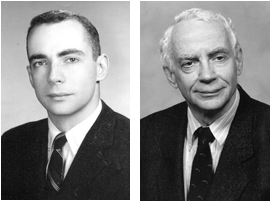 Jack was one of eight of us who entered a doctoral program at Harvard in the early 1960’s, under the direction of Ernest Wright and Frank Cross. The Fall Seminar met on Thursdays from 3 to 5. In the first session, Frank gave an overview of the literary sources for our knowledge of the “Near Eastern Languages and Literatures” (the Department in those days being known as NELL), and immediately we all were intimidated. The following week Ernest gave a similar presentation, I suspect (my brain had not sufficiently recovered from the previous week for me to remember clearly), on the material grounds. The third week, a grad student who was at the dissertation stage gave a presentation on that topic—as I recall, on the Hasmonean Priesthood. He sat at one end of the long seminar table, with Cross and Wright flanking him on his left and right shoulders like two seraphim. He began to read. Shortly one of the two seraphim broke in with a question. He responded and went on. Before long the other broke in with a comment. He responded, then went on. This cycle recurred several more times, by the end of which the student would read a sentence, pause, look inquiringly left, then right, and, if there were no interposition from either side, he would go on. The following week we had the first seminar paper by one of our own number (the eight of us, Virgil Rabe, and Merton Sherman). That fall, the seminar was devoted to “The Tenth Century.” The first of our number “up” was Jack, and his topic was “The Fall Festival.”