ASOR Awards Spotlight: Scribes and Scrolls at Qumran

[vc_row fullwidth=”true” attached=”true” css=”.vc_custom_1496247803139{padding-top: 0px !important;padding-right: 0px !important;padding-bottom: 0px !important;padding-left: 0px !important;}”][vc_column][vc_single_image image=”61268″ img_size=”full” alignment=”center”][/vc_column][/vc_row][vc_row fullwidth=”true” css=”.vc_custom_1496682730308{padding-top: 10px !important;padding-right: 0px !important;padding-bottom: 0px !important;padding-left: 0px !important;}”][vc_column width=”1/12″ css=”.vc_custom_1496683820796{margin-right: 10px !important;}” offset=”vc_hidden-md vc_hidden-sm vc_hidden-xs”][vc_column_text]

 SHARE

[/vc_column_text][mk_image src=”http://www.asortest.org/wp-content/uploads/2017/01/social-fb-icon4.jpg” image_width=”42″ image_height=”42″ hover=”false” custom_url=”https://www.facebook.com/ASOResearch/” margin_bottom=”0″][mk_image src=”http://www.asortest.org/wp-content/uploads/2017/01/social-tw-icon4.jpg” image_width=”42″ image_height=”42″ hover=”false” custom_url=”https://twitter.com/ASOResearch?ref_src=twsrc%5Egoogle%7Ctwcamp%5Eserp%7Ctwgr%5Eauthor” margin_bottom=”0″][mk_image src=”http://www.asortest.org/wp-content/uploads/2017/01/social-in-icon4.jpg” image_width=”42″ image_height=”42″ hover=”false” custom_url=”https://www.linkedin.com/company/american-schools-of-oriental-research” margin_bottom=”0″][mk_image src=”http://www.asortest.org/wp-content/uploads/2017/01/social-ml-icon_7.jpg” image_width=”42″ image_height=”42″ hover=”false” custom_url=”mailto:info@asor.org” margin_bottom=”0″][mk_image src=”http://www.asortest.org/wp-content/uploads/2017/01/blog-icon3.jpg” image_width=”42″ image_height=”42″ hover=”false” custom_url=”http://asor.org/blog” margin_bottom=”0″][/vc_column][vc_column border_color=”rgba(255,255,255,0.01)” width=”1/6″ css=”.vc_custom_1496683923840{margin-right: 20px !important;border-left-width: 2px !important;padding-right: 20px !important;padding-left: 20px !important;border-left-color: #99422f !important;}”][mk_divider divider_color=”rgba(255,255,255,0.01)” thickness=”1″ margin_top=”3″ margin_bottom=”3″][vc_column_text]

NEWS@ASOR E-NEWSLETTER

ANCIENT NEAR EAST TODAY E-NEWSLETTER

PAST ASOR NEWS, MONTH BY MONTH

FY19 HONOR ROLL OF DONORS

ASOR ANNUAL MEETING

[/vc_column_text][/vc_column][vc_column border_color=”rgba(170,170,170,0.01)” width=”1/2″ css=”.vc_custom_1487276122024{margin-right: 10px !important;margin-bottom: 30px !important;border-right-width: 2px !important;border-bottom-width: 2px !important;padding-top: 30px !important;padding-right: 30px !important;padding-left: 20px !important;background-color: #ffffff !important;border-right-color: rgba(227,228,228,0.75) !important;border-bottom-color: rgba(227,228,228,0.75) !important;}”][vc_column_text responsive_align=”left”]

ASOR BOOK AWARD SPOTLIGHT: SCRIBES AND SCROLLS AT QUMRAN

[/vc_column_text][mk_divider][vc_wp_text]At the 2019 ASOR Annual Meeting in San Diego, Sidnie White Crawford was awarded the Frank Moore Cross Award for her book, Scribes and Scrolls at Qumran (Eerdmans). This award is presented to the author/editor of the most substantial volume(s) related to the history and/or religion of the ancient Near East and Eastern Mediterranean. Primary consideration will be given to historical, epigraphic, textual, and comparative literary studies; or to works that advance and/or evaluate new methodological approaches to the literary record(s). This work must be the result of original research published during the past two years.

Sidnie White Crawford receives the Cross Award in San Diego.

In Scribes and Scrolls at Qumran, Sidnie White Crawford, the Willa Cather Professor of Biblical Studies Emerita at the University of Nebraska-Lincoln, offers an innovative and compelling theory that Qumran functioned as a scribal center and a central Essene library. Drawing from decades of research, Crawford builds her case thoroughly and meticulously, examining first scribes and libraries across the Mediterranean and the ancient Near East, including ancient Israel, and then reassessing the archaeological evidence from Qumran. The result is a synthesis of archaeology and text of remarkable breadth and depth, one that places the Qumran collection within the broader context of scribes and libraries in the ancient world. Scribes and Scrolls at Qumran is an invaluable contribution to the fields of Biblical, Ancient Near Eastern, and Qumran Studies from a leading international expert on the Dead Sea Scrolls, one that will become a standard reference for the next generation of scholars.


“I was particularly pleased and proud to receive this award, as Frank Moore Cross was my teacher and dissertation director. To him I owe my research career, and the book is dedicated to his memory.”

-Sidnie White Crawford

[/vc_wp_text][mk_divider][vc_wp_text]

Learn more about ASOR Awards

Nominate a book for the Frank Moore Cross award. The deadline for book award nominations September 18, 2020. The deadline for service award nominations is September 11, 2020.[/vc_wp_text][/vc_column][vc_column border_color=”rgba(170,170,170,0.01)” width=”1/6″ css=”.vc_custom_1496684098866{margin-right: 5px !important;margin-bottom: 20px !important;border-right-width: 2px !important;border-bottom-width: 2px !important;padding-top: 30px !important;padding-right: 10px !important;padding-left: 10px !important;background-color: #ffffff !important;border-right-color: rgba(227,228,228,0.75) !important;border-bottom-color: rgba(227,228,228,0.75) !important;}”][vc_wp_posts title=”BROWSE THE NEWS ARCHIVE” number=”4″][/vc_column][vc_column border_color=”rgba(170,170,170,0.01)” width=”1/6″ css=”.vc_custom_1496684008271{margin-right: 10px !important;margin-bottom: 30px !important;border-right-width: 2px !important;border-bottom-width: 2px !important;padding-top: 30px !important;padding-right: 20px !important;padding-left: 20px !important;background-color: #ffffff !important;border-right-color: rgba(227,228,228,0.75) !important;border-bottom-color: rgba(227,228,228,0.75) !important;}”][vc_column_text] [/vc_column_text][/vc_column][/vc_row]

A History of ASOR: The Jerusalem School

[vc_row fullwidth=”true” attached=”true” css=”.vc_custom_1496247803139{padding-top: 0px !important;padding-right: 0px !important;padding-bottom: 0px !important;padding-left: 0px !important;}”][vc_column][vc_single_image image=”55426″ img_size=”full” alignment=”center”][/vc_column][/vc_row][vc_row fullwidth=”true” css=”.vc_custom_1496682730308{padding-top: 10px !important;padding-right: 0px !important;padding-bottom: 0px !important;padding-left: 0px !important;}”][vc_column width=”1/12″ css=”.vc_custom_1496683820796{margin-right: 10px !important;}” offset=”vc_hidden-md vc_hidden-sm vc_hidden-xs”][vc_column_text]

 SHARE

[/vc_column_text][mk_image src=”http://www.asortest.org/wp-content/uploads/2017/01/social-fb-icon4.jpg” image_width=”42″ image_height=”42″ hover=”false” custom_url=”https://www.facebook.com/ASOResearch/” margin_bottom=”0″][mk_image src=”http://www.asortest.org/wp-content/uploads/2017/01/social-tw-icon4.jpg” image_width=”42″ image_height=”42″ hover=”false” custom_url=”https://twitter.com/ASOResearch?ref_src=twsrc%5Egoogle%7Ctwcamp%5Eserp%7Ctwgr%5Eauthor” margin_bottom=”0″][mk_image src=”http://www.asortest.org/wp-content/uploads/2017/01/social-in-icon4.jpg” image_width=”42″ image_height=”42″ hover=”false” custom_url=”https://www.linkedin.com/company/american-schools-of-oriental-research” margin_bottom=”0″][mk_image src=”http://www.asortest.org/wp-content/uploads/2017/01/social-ml-icon_7.jpg” image_width=”42″ image_height=”42″ hover=”false” custom_url=”mailto:info@asor.org” margin_bottom=”0″][mk_image src=”http://www.asortest.org/wp-content/uploads/2017/01/blog-icon3.jpg” image_width=”42″ image_height=”42″ hover=”false” custom_url=”http://asor.org/blog” margin_bottom=”0″][/vc_column][vc_column border_color=”rgba(255,255,255,0.01)” width=”1/6″ css=”.vc_custom_1496683923840{margin-right: 20px !important;border-left-width: 2px !important;padding-right: 20px !important;padding-left: 20px !important;border-left-color: #99422f !important;}”][mk_divider divider_color=”rgba(255,255,255,0.01)” thickness=”1″ margin_top=”3″ margin_bottom=”3″][vc_column_text]

NEWS@ASOR E-NEWSLETTER

ANCIENT NEAR EAST TODAY E-NEWSLETTER

PAST ASOR NEWS, MONTH BY MONTH

FY19 HONOR ROLL OF DONORS

ASOR ANNUAL MEETING

[/vc_column_text][/vc_column][vc_column border_color=”rgba(170,170,170,0.01)” width=”1/2″ css=”.vc_custom_1487276122024{margin-right: 10px !important;margin-bottom: 30px !important;border-right-width: 2px !important;border-bottom-width: 2px !important;padding-top: 30px !important;padding-right: 30px !important;padding-left: 20px !important;background-color: #ffffff !important;border-right-color: rgba(227,228,228,0.75) !important;border-bottom-color: rgba(227,228,228,0.75) !important;}”][vc_column_text responsive_align=”left”]

A History of ASOR: The Jerusalem School

[/vc_column_text][mk_divider][vc_wp_text]In the previous post on ASOR’s history, we concluded with the incorporation of ASOR as an organization in the United States. It was in 1921 that ASOR received its name as the American Schools of Oriental Research. This name change signified that the scope of research, both geographically and historically, was greatly expanded from the original goals of the organization in the Levant. To mark this change, ASOR adopted a new seal that was in use until 2017.This seal consisted of the “Egyptian ankh hieroglyph, the symbol of life, containing within it the Babylonian dinger, the eight-pointed star formed by four cuneiform wedges, signifying deity.” (Meyers 2001; 11).

ASOR’s original seal, circa 1921.

ASOR’s incorporation was soon followed by the construction of a permanent facility in Jerusalem. In 1917, Mrs. James B. Nies gave a gift of $50,000 to construct a building on land that had been acquired in 1909. Construction finally begin in 1924 under the direction of William F. Albright, ASOR’s Director until 1929. The design of the school was selected from submissions to a contest held at Yale School of Architecture. Under supervision of Elias T. Gelat, the first of three buildings was completed in 1924. The Annual Professors building, the Main Building, and the Director’s House were all completed by 1931. These new structures provided housing for members of ASOR’s staff and an additional 10 rooms to host scholars (Meyers 2001; 11).

The new Jerusalem School was only able to operate for a few years before the outbreak of World War II. The conflict ceased all travel and research based out of the Jerusalem School. ASOR faced further difficulties to scholarship with “the establishment of the State of Israel and the Hashemite Kingdom of Jordan” in 1948 (Meyers 2001; 22). With the Jerusalem School now within the area under Jordanian jurisdiction, ASOR resumed its research activities with multiple archaeological projects throughout the Levant. The multitude of projects undertaken by ASOR from 1950 to 1967 include, “Dhiban, Tell-es Sultan, Khirbet Qumran, Bethel, the Buqe’ah, Petra, el-Jib Shechem, Beth-Zur, Pella, Ghassul, Araq el-Emir” and many others (Meyers 2001; 23). Perhaps the most famous of ASOR’s research activities was the identification of the Dead Sea Scrolls in 1948.

Despite ASOR’s prolific research based out of the Jerusalem School, plans were made to sell the property due to its increased value.  This plan was an attempt to solve financial difficulties that ASOR faced in the Spring of 1967. However, this never came to pass as the Six-Day War broke out and the Jerusalem School was now under the jurisdiction of the Israeli State. The aftermath of the Six-Day War saw an “Arab boycott of all scholars working in Israel” (Meyers 2001; 30). This meant that researchers who chose to work in Israel could not also work in Jordan or Syria.

The Jerusalem School, circa 1930

This led to a very serious dilemma facing ASOR scholars who had previously worked throughout the entire region. In 1970 it was decided the best course of action was to create two separate institutions, one in Jordan and the other in Israel. From this resolution, the American Center for Oriental Research (ACOR) was established in Amman. Subsequently, in 1970 the Jerusalem School was reincorporated as the W.F. Albright Institute of Archaeological Research (AIAR). This saw the end of the Jerusalem School as administered by ASOR and the buildings were fully turned over to AIAR in the 1990’s. Today you can visit ASOR’s former home in Jerusalem by visiting the Albright. AIAR and ACOR continue to thrive as institutions with whom ASOR has continued close ties and working relationship.

Stay tuned for the next installment on the history of ASOR! Thank you to Joe Seger for his continued input to this series on ASOR’s history.

Sources:

Meyers, Eric M. and Joe D. Seger. 2001. ASOR: A History of the American Schools of Oriental Research. In An ASOR Mosaic, edited by Joe D. Seger, pp. 2-103. American Schools of Oriental Research, Boston.[/vc_wp_text][/vc_column][vc_column border_color=”rgba(170,170,170,0.01)” width=”1/6″ css=”.vc_custom_1496684098866{margin-right: 5px !important;margin-bottom: 20px !important;border-right-width: 2px !important;border-bottom-width: 2px !important;padding-top: 30px !important;padding-right: 10px !important;padding-left: 10px !important;background-color: #ffffff !important;border-right-color: rgba(227,228,228,0.75) !important;border-bottom-color: rgba(227,228,228,0.75) !important;}”][vc_wp_posts title=”BROWSE THE NEWS ARCHIVE” number=”4″][/vc_column][vc_column border_color=”rgba(170,170,170,0.01)” width=”1/6″ css=”.vc_custom_1496684008271{margin-right: 10px !important;margin-bottom: 30px !important;border-right-width: 2px !important;border-bottom-width: 2px !important;padding-top: 30px !important;padding-right: 20px !important;padding-left: 20px !important;background-color: #ffffff !important;border-right-color: rgba(227,228,228,0.75) !important;border-bottom-color: rgba(227,228,228,0.75) !important;}”][vc_column_text] [/vc_column_text][/vc_column][/vc_row]

Fellowship Report: Marcella Barbosa

THE EDGE OF THE LATE BRONZE AGE CULT?

Marcella Barbosa, 2019 Eric and Carol Meyers Fellowship Recipient

Archaeologists have always been fascinated by the cult and made it the subject of study throughout their examination of human history. This examination is usually manifested through the study of things like temples, shrines, icons, and other enigmatic objects. The same is true for the Late Bronze Age in Canaan, especially when it comes to temples. Much work has been done on the subject; one only need to look at the information on individual sites, where excavators are always sure to highlight the temple, if there is one, or at other comprehensive works like Amihai Mazar’s chapter in The Architecture of Ancient Israel.


Me excavating by a Late Bronze wall in Area B3.

So far, when it comes to cultic architecture of the Late Bronze Age, most of the emphasis has been put on temples and shrines, which are, no doubt, fascinating. But the excavations in Area B1 at Tel Burna brought something different to the table.

Tel Burna is a site in the southern Shephelah that was occupied in the Bronze and Iron Ages. The site is dominated by the remains of an Iron Age Judahite fortress at the very top of the tel, but a shelf-like lower protrusion on the west side of the tel is what interests us when speaking about the Late Bronze Age. Here, on this lower shelf, is where the project opened Area B1 and discovered what the excavators interpret as a large open-air cultic enclosure, which was built on bedrock in many places. Its cultic nature is demonstrated by its assemblage of finds that include ceramic masks, seals, figurines, zoomorphic vessels, votive vessels, imports that included two large Cypriot pithoi, and several standing stones. Also, the analysis and distribution of bones and organic matter within the enclosure, along with the ceramic finds, seem to indicate that this was possibly a place for ritual feasting.


Area B3 at the end of the 2019 season.

The enclosure measured at least 25 meters by 25 meters, and obviously held a prominent place in Late Bronze Burna. The years of excavation uncovered much of this enclosure and its inner units, including the northern, western, and likely eastern outer walls. But much of the shelf that it sits on still remained unexcavated and the southern extent of the enclosure had yet to be found. For this reason, in the 2019 season, the project decided to open the new area B3 on this lower shelf just to the south of Area B1 with the goal of furthering our understanding of Late Bronze Age Burna and with the hopes of discovering the southern extent of the cultic enclosure. Due to my interest in Late Bronze Age Canaan and previous work at another Shephelah site, I was fortunate to supervise our new small area.

Due to the bedrock being so close to the surface, we can often see bits of possible architecture sticking out above the surface, and it was one of these areas that we chose to place the first square of Area B3, as it also intersected with where we thought the southern end of the LB cultic enclosure might be. We quickly came down on architecture, revealing two two-row walls, built with large stones, that were built into an integrated corner. The north-south wall also looks like it might have an extension built off the north end of the corner, though we cannot be certain of this without excavating the square to the north. Whatever the case might be, it was obvious that we had architecture with rooms the continued at least north, west, and south of this first square, and probably east as well. From this first square alone, we uncovered a large portion of a room/unit that produced an earthen floor and a good amount of restorable pottery. On the opposite side of this room/unit, to the south, was a small corner of another room/unit that also provided a relatively large amount of restorable pottery underneath tumbled stone.

As this room continued south into the baulk, and our shade cloth was already set up accordingly, we decided to open our second square to the south. We hoped that this would give us the rest of the room whose small corner we had excavated in the first square, as well as provide a clearer understanding overall for the complex, whether it be through continuation/alignment of walls and/or the finds uncovered within the units. We discovered that the south end of the north-south wall from the first square tapered off as it sat directly on a high point of bedrock. We also discovered two more walls, both single-row and built perpendicular to each other. This gave us the rest of the room whose corner we first discovered in the first square, though its boundaries to the south and southeast are somewhat ambiguous due to a high peak of bedrock. This room, though smaller than the other units uncovered in Area B3 so far even while being the only unit with its layout fully uncovered, provided a relatively large amount of restorable pottery, a few complete vessels, and a fragment of a plaque figurine. Its entrance lay to the west, and it appears there was quick access to the room to the north and another room to the south, though this intersection needs clarifying through excavation to the west.


Area B3 Foundation Deposit.

The room to the south, of which more than two by two meters was uncovered, was interesting in that no surface was found preserved and there was no obvious large amounts of restorable pottery, as there was in neighboring rooms. Yet, it did yield two lamp-and-bowl foundation deposits, which were collected carefully for possible organic material and possible residue analysis. The area to the south of the east-west wall revealed a layer of mudbrick collapse, where the shape of a few of the mudbricks were mostly preserved. Underneath this mudbrick layer, we uncovered the remains of at least two smashed storage jars in situ, with perhaps a third mixed in. Samples were taken from the storage jars for residue analysis and to search for remaining organic matter. These storage jars and mudbrick collapse lay on top of a hard-packed earthen surface, much like the one found in the first square. The nature of this particular unit is uncertain as we only have its northern wall, while the rest of it continued into the west, south, and east baulks. It might be part of a large room or an unroofed area or the outside of the complex; only further excavation will enlighten us.

What did strike the team is that while architecture was plentiful for the excavation of two squares, none of the walls seemed to absolutely line up with the cultic enclosure of Area B1 as we had expected, though we were only a few meters away from it. Also, the finds of Area B3 were not of the same ilk as those of Area B1, which helped identify that enclosure as cultic in nature. Thus, our preliminary interpretation is that the complex uncovered in Area B3 is not part of the cultic enclosure of Area B1, as we originally had thought it might be; rather, it appears that we reached and moved beyond the edge of the cultic enclosure to find a new, contemporary complex. Whether this new complex of Area B3 is residential or something else remains to be seen as we continue to excavate Area B3 and analyze the finds.

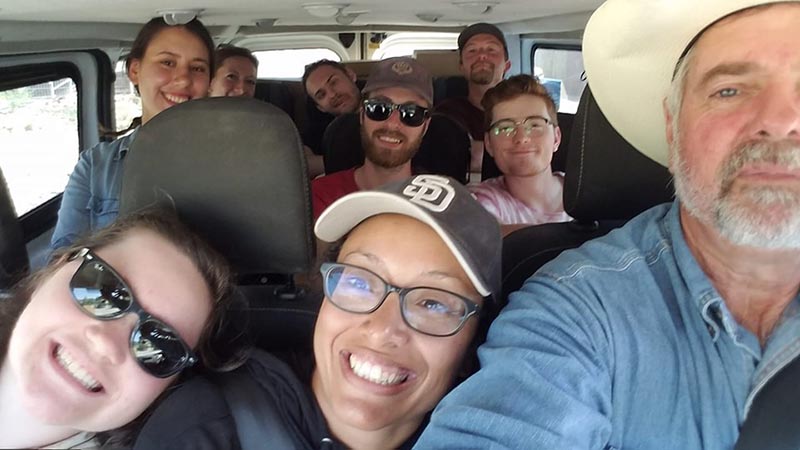
We got close in our rides to and from the tel!

Read more about the Tel Burna Excavation Project.

Marcella Barbosa is a Ph.D. student of the Tandy Institute for Archaeology at Southwestern Baptist Theological Seminary in Fort Worth, Texas. She has been pursuing archaeology all of her life and has excavated in Menorca, Cyprus, and Israel, with the majority of her time so far spent in nine seasons with the Tel Gezer Project. She spent five years as the Collections Manager for the Tandy Archaeological Museum and is currently working on her dissertation/Gezer publication research in Israel thanks to  a scholarship from Ariel University.

ASOR Announces Membership Scholarships

[vc_row fullwidth=”true” attached=”true” css=”.vc_custom_1496247803139{padding-top: 0px !important;padding-right: 0px !important;padding-bottom: 0px !important;padding-left: 0px !important;}”][vc_column][vc_single_image image=”30182″ img_size=”1920×400″ alignment=”center”][/vc_column][/vc_row][vc_row fullwidth=”true” css=”.vc_custom_1496682730308{padding-top: 10px !important;padding-right: 0px !important;padding-bottom: 0px !important;padding-left: 0px !important;}”][vc_column width=”1/12″ css=”.vc_custom_1496683820796{margin-right: 10px !important;}” offset=”vc_hidden-md vc_hidden-sm vc_hidden-xs”][vc_column_text]

 SHARE

[/vc_column_text][mk_image src=”http://www.asortest.org/wp-content/uploads/2017/01/social-fb-icon4.jpg” image_width=”42″ image_height=”42″ hover=”false” custom_url=”https://www.facebook.com/ASOResearch/” margin_bottom=”0″][mk_image src=”http://www.asortest.org/wp-content/uploads/2017/01/social-tw-icon4.jpg” image_width=”42″ image_height=”42″ hover=”false” custom_url=”https://twitter.com/ASOResearch?ref_src=twsrc%5Egoogle%7Ctwcamp%5Eserp%7Ctwgr%5Eauthor” margin_bottom=”0″][mk_image src=”http://www.asortest.org/wp-content/uploads/2017/01/social-in-icon4.jpg” image_width=”42″ image_height=”42″ hover=”false” custom_url=”https://www.linkedin.com/company/american-schools-of-oriental-research” margin_bottom=”0″][mk_image src=”http://www.asortest.org/wp-content/uploads/2017/01/social-ml-icon_7.jpg” image_width=”42″ image_height=”42″ hover=”false” custom_url=”mailto:info@asor.org” margin_bottom=”0″][mk_image src=”http://www.asortest.org/wp-content/uploads/2017/01/blog-icon3.jpg” image_width=”42″ image_height=”42″ hover=”false” custom_url=”http://asor.org/blog” margin_bottom=”0″][/vc_column][vc_column border_color=”rgba(255,255,255,0.01)” width=”1/6″ css=”.vc_custom_1496683923840{margin-right: 20px !important;border-left-width: 2px !important;padding-right: 20px !important;padding-left: 20px !important;border-left-color: #99422f !important;}”][mk_divider divider_color=”rgba(255,255,255,0.01)” thickness=”1″ margin_top=”3″ margin_bottom=”3″][vc_column_text]

NEWS@ASOR E-NEWSLETTER

ANCIENT NEAR EAST TODAY E-NEWSLETTER

PAST ASOR NEWS, MONTH BY MONTH

FY19 HONOR ROLL OF DONORS

ASOR ANNUAL MEETING

[/vc_column_text][/vc_column][vc_column border_color=”rgba(170,170,170,0.01)” width=”1/2″ css=”.vc_custom_1487276122024{margin-right: 10px !important;margin-bottom: 30px !important;border-right-width: 2px !important;border-bottom-width: 2px !important;padding-top: 30px !important;padding-right: 30px !important;padding-left: 20px !important;background-color: #ffffff !important;border-right-color: rgba(227,228,228,0.75) !important;border-bottom-color: rgba(227,228,228,0.75) !important;}”][vc_column_text responsive_align=”left”]

ASOR ANNOUNCES MEMBERSHIP SCHOLARSHIPS

[/vc_column_text][mk_divider][vc_wp_text]The ASOR family is a strong and close one, and that fact has never been more evident than in these challenging and stressful times. Please know that we at ASOR are doing all that we can to serve our constituents, while keeping the safety and health of our members, volunteers, officers, and employees as our highest priority.

As part of our ongoing efforts to support our members, we are pleased to announce membership scholarships that are available for any current or lapsed ASOR member. Thanks to several anonymous donors, we have received pledges to pay the membership fee for those who have experienced a financial hardship related (directly or indirectly) to the COVID-19 pandemic.

The application process is simple—if you have a membership that expired on December 31, 2019, March 31, 2020, or one that will expire on June 30, 2020, please send a confidential e-mail to Felice Herman or Andy Vaughn with a brief statement. We have enough pledged funds to cover all requests from these dates. If you previously had a print-delivery only membership, but would like both print delivery and online access, please let us know. We will provide both options for scholarship recipients if requested in order to assist members during this time when online content is needed more than in the past.

Request a Scholarship button

If you had a membership that expired on September 30, 2019 (or earlier), please send Andy or Felice a brief note explaining why the support is needed. We will do our best to support those requests on a case-by-case basis.

If you have any questions or suggestions, or if you would like to make a donation to support these scholarships, please e-mail Andy Vaughn.[/vc_wp_text][/vc_column][vc_column border_color=”rgba(170,170,170,0.01)” width=”1/6″ css=”.vc_custom_1496684098866{margin-right: 5px !important;margin-bottom: 20px !important;border-right-width: 2px !important;border-bottom-width: 2px !important;padding-top: 30px !important;padding-right: 10px !important;padding-left: 10px !important;background-color: #ffffff !important;border-right-color: rgba(227,228,228,0.75) !important;border-bottom-color: rgba(227,228,228,0.75) !important;}”][vc_wp_posts title=”BROWSE THE NEWS ARCHIVE” number=”4″][/vc_column][vc_column border_color=”rgba(170,170,170,0.01)” width=”1/6″ css=”.vc_custom_1496684008271{margin-right: 10px !important;margin-bottom: 30px !important;border-right-width: 2px !important;border-bottom-width: 2px !important;padding-top: 30px !important;padding-right: 20px !important;padding-left: 20px !important;background-color: #ffffff !important;border-right-color: rgba(227,228,228,0.75) !important;border-bottom-color: rgba(227,228,228,0.75) !important;}”][vc_column_text] [/vc_column_text][/vc_column][/vc_row]

Annual Meeting 2020—Paper Proposal Decisions

[vc_row fullwidth=”true” attached=”true” css=”.vc_custom_1496247803139{padding-top: 0px !important;padding-right: 0px !important;padding-bottom: 0px !important;padding-left: 0px !important;}”][vc_column][vc_single_image image=”59447″ img_size=”full” alignment=”center”][/vc_column][/vc_row][vc_row fullwidth=”true” css=”.vc_custom_1496682730308{padding-top: 10px !important;padding-right: 0px !important;padding-bottom: 0px !important;padding-left: 0px !important;}”][vc_column width=”1/12″ css=”.vc_custom_1496683820796{margin-right: 10px !important;}” offset=”vc_hidden-md vc_hidden-sm vc_hidden-xs”][vc_column_text]

 SHARE

[/vc_column_text][mk_image src=”http://www.asortest.org/wp-content/uploads/2017/01/social-fb-icon4.jpg” image_width=”42″ image_height=”42″ hover=”false” custom_url=”https://www.facebook.com/ASOResearch/” margin_bottom=”0″][mk_image src=”http://www.asortest.org/wp-content/uploads/2017/01/social-tw-icon4.jpg” image_width=”42″ image_height=”42″ hover=”false” custom_url=”https://twitter.com/ASOResearch?ref_src=twsrc%5Egoogle%7Ctwcamp%5Eserp%7Ctwgr%5Eauthor” margin_bottom=”0″][mk_image src=”http://www.asortest.org/wp-content/uploads/2017/01/social-in-icon4.jpg” image_width=”42″ image_height=”42″ hover=”false” custom_url=”https://www.linkedin.com/company/american-schools-of-oriental-research” margin_bottom=”0″][mk_image src=”http://www.asortest.org/wp-content/uploads/2017/01/social-ml-icon_7.jpg” image_width=”42″ image_height=”42″ hover=”false” custom_url=”mailto:info@asor.org” margin_bottom=”0″][mk_image src=”http://www.asortest.org/wp-content/uploads/2017/01/blog-icon3.jpg” image_width=”42″ image_height=”42″ hover=”false” custom_url=”http://asor.org/blog” margin_bottom=”0″][/vc_column][vc_column border_color=”rgba(255,255,255,0.01)” width=”1/6″ css=”.vc_custom_1496683923840{margin-right: 20px !important;border-left-width: 2px !important;padding-right: 20px !important;padding-left: 20px !important;border-left-color: #99422f !important;}”][mk_divider divider_color=”rgba(255,255,255,0.01)” thickness=”1″ margin_top=”3″ margin_bottom=”3″][vc_column_text]

NEWS@ASOR E-NEWSLETTER

ANCIENT NEAR EAST TODAY E-NEWSLETTER

PAST ASOR NEWS, MONTH BY MONTH

FY19 HONOR ROLL OF DONORS

ASOR ANNUAL MEETING

[/vc_column_text][/vc_column][vc_column border_color=”rgba(170,170,170,0.01)” width=”1/2″ css=”.vc_custom_1487276122024{margin-right: 10px !important;margin-bottom: 30px !important;border-right-width: 2px !important;border-bottom-width: 2px !important;padding-top: 30px !important;padding-right: 30px !important;padding-left: 20px !important;background-color: #ffffff !important;border-right-color: rgba(227,228,228,0.75) !important;border-bottom-color: rgba(227,228,228,0.75) !important;}”][vc_column_text responsive_align=”left”]

ANNUAL MEETING UPDATE: PAPER PROPOSAL DECISIONS ISSUED

[/vc_column_text][mk_divider][vc_wp_text]Paper proposal decision notifications were issued on May 1, for the 2020 ASOR Annual Meeting. A record number of paper proposals were accepted, and the 2020 academic program is the largest and broadest to date. Notifications were auto-generated from ASOR’s online abstract management system powered by Oxford Abstracts and sent to the e-mail address associated with the abstract submission. Co-authors should check with the person who submitted the abstract to find out if their paper was accepted. Please check your spam folder for an e-mail from “ASOR 2020” if you submitted an abstract and have not yet received a decision notification.[/vc_wp_text][vc_single_image image=”55592″ img_size=”full”][mk_padding_divider][vc_wp_text]Please contact Arlene Press, ASOR’s Director of Meetings and Events, if you submitted an abstract and have not received a decision notification, or if you have any questions about the 2020 ASOR Annual Meeting.

Because of the uncertainty of travel during the ongoing COVID-19 pandemic, and because of the changing situation for many of our members, ASOR extended the Early Bird registration rate until July 8, 2020. In late June, we will re-evaluate the situation and see if a further extension seems warranted.[/vc_wp_text][/vc_column][vc_column border_color=”rgba(170,170,170,0.01)” width=”1/6″ css=”.vc_custom_1496684098866{margin-right: 5px !important;margin-bottom: 20px !important;border-right-width: 2px !important;border-bottom-width: 2px !important;padding-top: 30px !important;padding-right: 10px !important;padding-left: 10px !important;background-color: #ffffff !important;border-right-color: rgba(227,228,228,0.75) !important;border-bottom-color: rgba(227,228,228,0.75) !important;}”][vc_wp_posts title=”BROWSE THE NEWS ARCHIVE” number=”4″][/vc_column][vc_column border_color=”rgba(170,170,170,0.01)” width=”1/6″ css=”.vc_custom_1496684008271{margin-right: 10px !important;margin-bottom: 30px !important;border-right-width: 2px !important;border-bottom-width: 2px !important;padding-top: 30px !important;padding-right: 20px !important;padding-left: 20px !important;background-color: #ffffff !important;border-right-color: rgba(227,228,228,0.75) !important;border-bottom-color: rgba(227,228,228,0.75) !important;}”][vc_column_text] [/vc_column_text][/vc_column][/vc_row]