ASOR Remembers Philip King

[vc_row fullwidth=”true” attached=”true” css=”.vc_custom_1496247803139{padding-top: 0px !important;padding-right: 0px !important;padding-bottom: 0px !important;padding-left: 0px !important;}”][vc_column][vc_single_image image=”33852″ img_size=”full” alignment=”center”][/vc_column][/vc_row][vc_row fullwidth=”true” css=”.vc_custom_1496682730308{padding-top: 10px !important;padding-right: 0px !important;padding-bottom: 0px !important;padding-left: 0px !important;}”][vc_column width=”1/12″ css=”.vc_custom_1496683820796{margin-right: 10px !important;}” offset=”vc_hidden-md vc_hidden-sm vc_hidden-xs”][vc_column_text]

 SHARE

[/vc_column_text][mk_image src=”http://www.asortest.org/wp-content/uploads/2017/01/social-fb-icon4.jpg” image_width=”42″ image_height=”42″ hover=”false” custom_url=”https://www.facebook.com/ASOResearch/” margin_bottom=”0″][mk_image src=”http://www.asortest.org/wp-content/uploads/2017/01/social-tw-icon4.jpg” image_width=”42″ image_height=”42″ hover=”false” custom_url=”https://twitter.com/ASOResearch?ref_src=twsrc%5Egoogle%7Ctwcamp%5Eserp%7Ctwgr%5Eauthor” margin_bottom=”0″][mk_image src=”http://www.asortest.org/wp-content/uploads/2017/01/social-in-icon4.jpg” image_width=”42″ image_height=”42″ hover=”false” custom_url=”https://www.linkedin.com/company/american-schools-of-oriental-research” margin_bottom=”0″][mk_image src=”http://www.asortest.org/wp-content/uploads/2017/01/social-ml-icon_7.jpg” image_width=”42″ image_height=”42″ hover=”false” custom_url=”mailto:info@asor.org” margin_bottom=”0″][mk_image src=”http://www.asortest.org/wp-content/uploads/2017/01/blog-icon3.jpg” image_width=”42″ image_height=”42″ hover=”false” custom_url=”http://asor.org/blog” margin_bottom=”0″][/vc_column][vc_column border_color=”rgba(255,255,255,0.01)” width=”1/6″ css=”.vc_custom_1496683923840{margin-right: 20px !important;border-left-width: 2px !important;padding-right: 20px !important;padding-left: 20px !important;border-left-color: #99422f !important;}”][mk_divider divider_color=”rgba(255,255,255,0.01)” thickness=”1″ margin_top=”3″ margin_bottom=”3″][vc_column_text]

NEWS@ASOR E-NEWSLETTER

ANCIENT NEAR EAST TODAY E-NEWSLETTER

PAST ASOR NEWS, MONTH BY MONTH

FY19 HONOR ROLL OF DONORS

ASOR ANNUAL MEETING

DONATE NOW

[/vc_column_text][/vc_column][vc_column border_color=”rgba(170,170,170,0.01)” width=”1/2″ css=”.vc_custom_1487276122024{margin-right: 10px !important;margin-bottom: 30px !important;border-right-width: 2px !important;border-bottom-width: 2px !important;padding-top: 30px !important;padding-right: 30px !important;padding-left: 20px !important;background-color: #ffffff !important;border-right-color: rgba(227,228,228,0.75) !important;border-bottom-color: rgba(227,228,228,0.75) !important;}”][vc_column_text responsive_align=”left”]

ASOR REMEMBERS PHILIP KING

[/vc_column_text][vc_column_text]

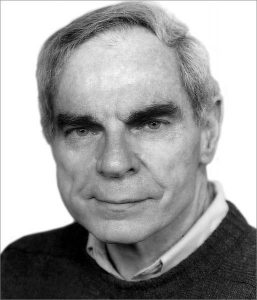
Philip J. King (1925–2019)

By Joseph A. Greene and Stuart Swiny

Professor Philip J. King, a former president of ASOR, died in Boston, Massachusetts, December 7, 2019, aged 94. He was eulogized by Boston College, where he taught from 1974 to 2001, and by the Roman Catholic Archdiocese of Boston, where he was ordained a priest in 1949. These memorials were devoted to Phil’s priestly life and his academic formation and subsequent career. This remembrance focuses rather on his many years of service to ASOR—not only as president but in other ways besides—as well as his role as mentor, colleague and friend to those who knew him through those years. In this brief tribute we can touch only on the salient points and offer some personal recollections.

Phil’s formal involvement with ASOR began as a member of the Board of Trustees (1973–1990) during which time he became president of the Albright Institute (1972–1976) and then president of ASOR (1976–1982). Before that, he had spent a fellowship year in Jerusalem as an Albright Fellow at what was still the “American School in Jerusalem.” (It became the “Albright Institute of Archaeological Research,” AIAR, only in 1970.) His time in Jerusalem led Phil to a series of archaeological field projects: Tell es-Sa`idiyeh and Tell er-Rumeith in Jordan (1967), Tell Ta`anach in the West Bank (1968), then Gezer and Hesi in Israel (1968–1973). Nancy Lapp, whose late husband Paul directed the Rumeith excavations, first met him there. Much later she recalled using Phil’s handwritten field notebooks while preparing the final Rumeith report with Tristan Barako (Tell er-Rumeith: The Excavations of Paul W. Lapp, 1962 and 1967. ASOR Archaeological Reports 22 [2015]). In 1986 Phil returned to the renamed Albright Institute as an NEH Fellow. In 1989–1990 he was elected Life Member of Clare Hall at the University of Cambridge at the conclusion of a fellowship there.

His academic service was not confined to ASOR. He held the presidency of two other learned societies, the Catholic Biblical Association (1981–1982) and the Society for Biblical Literature (1988), and served on the Board of Governors of the American Research Center in Egypt, ARCE (1982–1985) and the Archaeological Institute of America, AIA (1983–1988).

But it was a ASOR president that Phil made his greatest mark. One instance is emblematic: as ASOR president Phil played a crucial role in the establishment of ASOR’s institute in Nicosia, the Cyprus American Archaeological Research Institute, CAARI. He did much to ensure its financial survival during those difficult early years, at one stage even offering to lend CAARI some of his own money in order to keep it going. Indeed without Phil’s dogged pursuit of funding for CAARI in 1981 and 1982 it might well have closed down. Thanks to Phil’s effort, CAARI survived; and today it thrives as a major force in archaeological and historical research in the eastern Mediterranean.

Stepping down as ASOR president in 1982, Phil turned immediately to researching and writing a chronicle of ASOR first 80 years: American Archaeology in the Mideast: A History of the American Schools of Oriental Research (1983). This remains an indispensable account of ASOR’s founding and early years. Many aspects of it recur prominently in what could be called the Deuteronomistic version of ASOR’s history, An ASOR Mosaic: A Centennial History of the American Schools of Oriental Research, 1900–2000 (ed. Seger, 2001).

It was Phil’s friendship with the late Leon Levy and with Shelby White, a friendship that developed during Phil’s ASOR presidency, that produced, ultimately, the lasting archaeological legacy of the Leon Expedition to Ashkelon, led by Larry Stager, the late Dorot Professor of the Archaeology of Israel at Harvard. This friendship also resulted in 1997 in the creation of the Leon Levy-Shelby White Program for Archaeological Publications, of which Phil King was the founding director. Under Phil’s leadership and under his successor, Professor Christopher Hallett of the University of California, Berkeley, the White-Levy Program has supported the publication of scores of final dig reports, not just in the Near East but globally.

In 2006 the Leon Levy Foundation established with an endowment to Harvard the Philip J. King Professor “to support an outstanding scholar of the ancient world.” In 2010, Dr. Peter Der Manuelian, an Egyptologist, was appointed the first Philip J. King Professor thereby bringing back to Harvard the study of Egyptology after a hiatus of over 70 years.

This incomplete and too brief account can hardly to justice Philip King’s decades-long contributions to ASOR, but we hope we have called attention to the most important of those contributions.


Joseph A. Greene is Deputy Director and Curator of the Semitic Museum of Harvard University. Stuart Swiny directed the Cyprus American Archaeological Research Institute in Nicosia from 1980 to 1995 and then became Professor of Anthropology at the University at Albany–SUNY where he taught until his retirement in 2014.[/vc_column_text][/vc_column][vc_column border_color=”rgba(170,170,170,0.01)” width=”1/6″ css=”.vc_custom_1496684098866{margin-right: 5px !important;margin-bottom: 20px !important;border-right-width: 2px !important;border-bottom-width: 2px !important;padding-top: 30px !important;padding-right: 10px !important;padding-left: 10px !important;background-color: #ffffff !important;border-right-color: rgba(227,228,228,0.75) !important;border-bottom-color: rgba(227,228,228,0.75) !important;}”][vc_wp_posts title=”BROWSE THE NEWS ARCHIVE” number=”4″][/vc_column][vc_column border_color=”rgba(170,170,170,0.01)” width=”1/6″ css=”.vc_custom_1496684008271{margin-right: 10px !important;margin-bottom: 30px !important;border-right-width: 2px !important;border-bottom-width: 2px !important;padding-top: 30px !important;padding-right: 20px !important;padding-left: 20px !important;background-color: #ffffff !important;border-right-color: rgba(227,228,228,0.75) !important;border-bottom-color: rgba(227,228,228,0.75) !important;}”][vc_column_text] [/vc_column_text][/vc_column][/vc_row]

Susan Ackerman’s “President’s Valedictory”

[vc_row fullwidth=”true” attached=”true” css=”.vc_custom_1496247803139{padding-top: 0px !important;padding-right: 0px !important;padding-bottom: 0px !important;padding-left: 0px !important;}”][vc_column][vc_single_image image=”36832″ img_size=”full” alignment=”center”][/vc_column][/vc_row][vc_row fullwidth=”true” css=”.vc_custom_1496682730308{padding-top: 10px !important;padding-right: 0px !important;padding-bottom: 0px !important;padding-left: 0px !important;}”][vc_column width=”1/12″ css=”.vc_custom_1496683820796{margin-right: 10px !important;}” offset=”vc_hidden-md vc_hidden-sm vc_hidden-xs”][vc_column_text]

 SHARE

[/vc_column_text][mk_image src=”http://www.asortest.org/wp-content/uploads/2017/01/social-fb-icon4.jpg” image_width=”42″ image_height=”42″ hover=”false” custom_url=”https://www.facebook.com/ASOResearch/” margin_bottom=”0″][mk_image src=”http://www.asortest.org/wp-content/uploads/2017/01/social-tw-icon4.jpg” image_width=”42″ image_height=”42″ hover=”false” custom_url=”https://twitter.com/ASOResearch?ref_src=twsrc%5Egoogle%7Ctwcamp%5Eserp%7Ctwgr%5Eauthor” margin_bottom=”0″][mk_image src=”http://www.asortest.org/wp-content/uploads/2017/01/social-in-icon4.jpg” image_width=”42″ image_height=”42″ hover=”false” custom_url=”https://www.linkedin.com/company/american-schools-of-oriental-research” margin_bottom=”0″][mk_image src=”http://www.asortest.org/wp-content/uploads/2017/01/social-ml-icon_7.jpg” image_width=”42″ image_height=”42″ hover=”false” custom_url=”mailto:asor@bu.edu” margin_bottom=”0″][mk_image src=”http://www.asortest.org/wp-content/uploads/2017/01/blog-icon3.jpg” image_width=”42″ image_height=”42″ hover=”false” custom_url=”http://asorblog.org/” margin_bottom=”0″][/vc_column][vc_column border_color=”rgba(255,255,255,0.01)” width=”1/6″ css=”.vc_custom_1496683923840{margin-right: 20px !important;border-left-width: 2px !important;padding-right: 20px !important;padding-left: 20px !important;border-left-color: #99422f !important;}”][mk_divider divider_color=”rgba(255,255,255,0.01)” thickness=”1″ margin_top=”3″ margin_bottom=”3″][vc_column_text]

NEWS@ASOR E-NEWSLETTER

ANCIENT NEAR EAST TODAY E-NEWSLETTER

PAST ASOR NEWS, MONTH BY MONTH

FY19 HONOR ROLL OF DONORS

ASOR ANNUAL MEETING

DONATE NOW

[/vc_column_text][/vc_column][vc_column border_color=”rgba(170,170,170,0.01)” width=”1/2″ css=”.vc_custom_1487276122024{margin-right: 10px !important;margin-bottom: 30px !important;border-right-width: 2px !important;border-bottom-width: 2px !important;padding-top: 30px !important;padding-right: 30px !important;padding-left: 20px !important;background-color: #ffffff !important;border-right-color: rgba(227,228,228,0.75) !important;border-bottom-color: rgba(227,228,228,0.75) !important;}”][vc_column_text responsive_align=”left”]

SUSAN ACKERMAN’S “PRESIDENT’S VALEDICTORY”

[/vc_column_text][vc_column_text]

The 2019 Annual Meeting in San Diego, CA, was Susan Ackerman’s last meeting as presiding president. The following are remarks that Dr. Ackerman gave at the Members’ Meeting on November 22, 2019, where she was awarded the Richard J. Scheuer Medal for outstanding service to ASOR.

President’s Valedictory

by Susan Ackerman

My first message to the ASOR community was a letter from me, the then “new president,” published in our online e-newsletter News@ASOR in January 2014. In that letter, I wrote, as I thought a president should, about some recent ASOR accomplishments and especially about some recent fund-raising successes. But after spewing forth that requisite presidential verbiage, I went on to say that, “however notable the accomplishments and strengths of ASOR that I have outlined, our greatest strength is, as always, you: our members.”

I was not lying when I wrote that: indeed, one of my guiding principles as ASOR President has been always to tell the truth when speaking with the ASOR membership. But what I did not realize, when I wrote about our members in 2014, is how true my words were, as what I have come to understand profoundly over the course of the last six years is how deep-seated, far-reaching, and heartfelt our members’ dedication to ASOR truly is and the true extent of the ways that each and every one of you contributes — in so many different ways — to support and sustain our organization.

For example, ASOR members give untold hours of their time to ASOR. Let me give you just one example, again related to a News@ASOR story — one we ran a few months ago, seeking volunteers to serve as new members on the Program Committee.

Now, many of us work at colleges, universities, and other institutions of higher education where we have lots of committees, and if you are like most of my colleagues at my university, you spend a large part of your life trying to avoid service on your institution’s manifold committees. Indeed, I have colleagues at my university who should win an award — if there were such a thing — for their expertise in dodging committee assignments. But after the News@ASOR solicitation appeared, seeking three volunteers to serve on the Program Committee, thirteen people wrote, asking us for the opportunity to serve. When does this ever happen?!? It is truly extraordinary — and ASOR thrives as an organization because of the dedication of its member volunteers.

Not only, moreover, do you generously volunteer your time; you give generously from your wallets. Indeed, we estimate that roughly 25% of our members makes a charitable donation to ASOR every year, to support our fellowship programs, or the ASOR Annual Fund, or, most recently, our fund-raising efforts that allowed us to purchase ASOR’s fabulous new and permanent headquarters, the James F. Strange Center in Alexandria, VA. And that 25% of you who give to our fund-raising efforts do so on top of paying your membership dues and your registration fees for the Annual Meeting. To have that kind of support from almost a quarter of our membership is an extraordinary percentage; just so you know, the average membership giving rate for other learned societies is about 5%. ASOR members’ generosity and their willingness to offer their support to our organization is literally off the charts.

Which brings me back to the observation with which I began: I wasn’t lying when I wrote, back in January 2014, that you, our members, are ASOR’s greatest strength, but what I have come to realize, over the last six years is how superficially I understood that statement compared to the way I understand today how much each and every one of you does for ASOR. In short: while I have always spoken truthfully about our dedicated and committed membership — again, always to tell the truth her been one of my governing principles as ASOR President — it has taken me six years to learn the depth of that truth, and to know the depth of your dedication and commitment in ways I only glimpsed dimly back in January 2014.

There is a second principle that has governed me as I have served as ASOR President, and that is “never miss a chance to say thank you.” Now, truth me told (always tell the truth!): when it comes to this principle, I have screwed up over and over and over. There are so many times I should have said thank you to one of you individually, for some effort you made on ASOR’s behalf, or some donation you gave, or some action you took to make ASOR a better organization. But I just somehow didn’t get around to it. There are likewise so many times when I should have said thank you to some of you as a collective — to some ad hoc committee that had taken on some thorny issue on ASOR’s behalf, or to some working group, or just to some self-constituted body that brought me some idea or some insight on how to do things that would, again, make ASOR better and stronger. But, again, somehow, I just didn’t always take the time, or make the effort, to say thank you properly.

But while I can’t go back and fill in all those blanks — I can’t go back and say all the thank yous I should of said then — let me not miss this one last opportunity to extend my gratitude. I am truly and profoundly grateful for everything that each and every one of you has done over the past six years, and continues to do, to nurture, support, and sustain ASOR. Equally, I am truly and profoundly grateful — I cannot tell you how grateful — for everything each and every one of you has done over the past six years to nurture, support, and sustain me. My work as your president has been one of the greatest experiences of my professional life, and I thank you, so much, for giving me this opportunity. It has been an honor, and a privilege, to serve.[/vc_column_text][/vc_column][vc_column border_color=”rgba(170,170,170,0.01)” width=”1/6″ css=”.vc_custom_1496684098866{margin-right: 5px !important;margin-bottom: 20px !important;border-right-width: 2px !important;border-bottom-width: 2px !important;padding-top: 30px !important;padding-right: 10px !important;padding-left: 10px !important;background-color: #ffffff !important;border-right-color: rgba(227,228,228,0.75) !important;border-bottom-color: rgba(227,228,228,0.75) !important;}”][vc_wp_posts title=”BROWSE THE NEWS ARCHIVE” number=”4″][/vc_column][vc_column border_color=”rgba(170,170,170,0.01)” width=”1/6″ css=”.vc_custom_1496684008271{margin-right: 10px !important;margin-bottom: 30px !important;border-right-width: 2px !important;border-bottom-width: 2px !important;padding-top: 30px !important;padding-right: 20px !important;padding-left: 20px !important;background-color: #ffffff !important;border-right-color: rgba(227,228,228,0.75) !important;border-bottom-color: rgba(227,228,228,0.75) !important;}”][vc_column_text] [/vc_column_text][/vc_column][/vc_row]

Fellowship Report: Joanna Smith

2019 STUDY OF COLLECTIONS FELLOWSHIP REPORT: JOANNA SMITH

Weighty Matters

In May and June of 2019 I studied objects connected with Iron Age Cypriot textile production. Research for this project began during study seasons on Cyprus in Polis Chrysochous (ancient Marion and Arsinoe) where I have been a long-time member of the Princeton University excavation team. Each year since 2014 while doing inventories of the finds I have documented textile tools from across the excavations. These tools come from workshop and household contexts ranging in date from the Cypro-Geometric to the early Hellenistic period. Primarily they were made and used by people who lived in the ancient city of Marion. Some tools attest to continuity in craft production in the city even after its destruction by King Ptolemy I, Soter, in 312 BCE. The ASOR Collections Fellowship gave me the opportunity to continue study of the tools in Polis and to study assemblages of textile tools from three other contemporary Cypriot settlements, Kition, Kouklia, and Kourion, in order to have more of an island-wide view of Cypriot Iron Age textiles. Locating and rediscovering objects held in the storerooms of the museums of Cyprus was just as eye-opening as unearthing objects during field excavation.


Top, Joanna S. Smith working with metal tools in the Local Museum of Marion and Arsinoe (Polis Chrysochous). Below, a series of iron sword fragments from Area E.F2 (trench r09, 1986).

Among the tools I studied are whorls for spinning, weights that held down warp fibers on looms, and dyestuffs such as crushed murex for the color purple. Yet textile tools can take unexpected forms. An object may seem unconnected when taken in isolation, but when seen in view of its archeological context it can reveal whole new meaning. A case in point comes from Polis. To understand the textile-working contexts there better in 2018 I began to look back through all the other associated finds and found several fragmentary iron sword blades. In 2019 I reexamined all the metal finds and confirmed that the find contexts of all the swords are the same as the contexts with the largest concentrations of whorls, loom weights, and dyestuffs.

Some fragments have the distinctive squared tip of a weaving sword (see Laura Mazow 2017 in Archaeological Textiles Review). Weaving swords were used to pack or beat in weft fibers woven through the warp threads strung on the loom. Some blade fragments have a triangular tip, more like a combat sword. Possibly weavers were reusing and refashioning weapons. These are the first weaving swords yet identified in any Mediterranean workshop context.

Fiber arts rarely survive in the archaeological record in climates subject to extremes of hot and cold, and damp and dry weather. To figure out what kinds of fibers and fabrics were made, it is important to know the weights of the tools used and key measurements such as spindle whorl diameter and loom weight thickness. Whorl weight, diameter, and shape determine the weight and tightness of the spun thread. The weight and width of a loom weight indicate the density and weight of the warp thread count in a fabric. Even these simple measurements, however, can raise questions. For example, some loom weights tend to rotate when hung on the loom becoming ever more rounded on the edges over time. This is especially the case with pyramidal weights, such as this example from Kition-Kathari.


At left, measuring one possibility for the width of a truncated pyramidal loom weight from Kition-Kathari (Kit-II/3898). At right, a cylindrical loom weight from Kouklia-Evreti (TE F 39).

Thus, one must explore the range of possibilities through multiple measurements. This observation helped to explain the enduring popularity of another weight shape, the flat disc or short cylinder. Weights of this shape vary widely in size and quality of crafting. Some weigh nearly 500 grams, while others are less than 40 grams, as with this example from Kouklia-Evreti. Yet short cylindrical weights would have hung on the loom in a predictable way, with their flat sides next to one another. Cloth woven with these weights ranges from light-weight and gauzy to heavy and dense, perhaps sail cloth.


At left, a broken cylindrical loom weight marked with three impressed dots and a seal-ring impression from the Kourion acropolis (Penn excavations no. Mi 387). At right, detail of the seal-ring impression: standing Aphrodite, at right, and a standing Eros with large wing, at left.

Few spindle whorls come from these settlement sites. Some spinning tools were placed in tombs and may have been linked closely with their owners, while weaving tools rarely accompanied people to the grave. Close observation and handling of many loom weights caused me to wonder what their makers/owners/users thought about them. The cylindrical weights cited above are especially telling. Over the course of the first millennium BCE these weights were made in an increasingly sturdy fashion, changing from expedient and lumpy unfired clay objects, to low-fired and smoothed terracotta, to hard-fired ceramics with more sharply defined edges. Labeling of these weights with seal rings and other marks is only a feature of the more permanent, fired weights. Initially people placed stamps on the curved surfaces that could be seen while weaving, suggesting a practical as well as perhaps a personal connection. People marked the high-fired late Classical and Hellenistic period weights, however, on the flat surfaces, as on this fragmentary example found by the University of Pennsylvania team on the Kourion acropolis.

These marks were hidden when weights were in use on the loom, which suggests that such marks were more personal than practical. The stamped seal-ring designs are not always easily legible; raking light, however, clearly reveals this ring’s design of Aphrodite and Eros, a fitting and exciting find during a season of study on the island of Cyprus.


Joanna S. Smith the co-Director of the Princeton Cyprus Expedition and a Consulting Scholar in the Mediterranean Section at the Penn Museum. She currently works as the Consulting Curator of Ancient Art at The John and Mable Ringling Museum of Art in Sarasota, Florida, and the copy-editor of the Kyrenia Ship Project.

ASOR is accepting applications for 2020 Study of Collections Fellowships! The deadline for applications is January 15, 2020 and information on applying can be found here.

Table of Contents for NEA 82.4 (2019)

[vc_row fullwidth=”true” attached=”true” css=”.vc_custom_1496247803139{padding-top: 0px !important;padding-right: 0px !important;padding-bottom: 0px !important;padding-left: 0px !important;}”][vc_column][vc_single_image image=”55883″ img_size=”full” alignment=”center”][/vc_column][/vc_row][vc_row fullwidth=”true” css=”.vc_custom_1496682730308{padding-top: 10px !important;padding-right: 0px !important;padding-bottom: 0px !important;padding-left: 0px !important;}”][vc_column width=”1/12″ css=”.vc_custom_1496683820796{margin-right: 10px !important;}” offset=”vc_hidden-md vc_hidden-sm vc_hidden-xs”][vc_column_text]

 SHARE

[/vc_column_text][mk_image src=”http://www.asortest.org/wp-content/uploads/2017/01/social-fb-icon4.jpg” image_width=”42″ image_height=”42″ hover=”false” custom_url=”https://www.facebook.com/ASOResearch/” margin_bottom=”0″][mk_image src=”http://www.asortest.org/wp-content/uploads/2017/01/social-tw-icon4.jpg” image_width=”42″ image_height=”42″ hover=”false” custom_url=”https://twitter.com/ASOResearch?ref_src=twsrc%5Egoogle%7Ctwcamp%5Eserp%7Ctwgr%5Eauthor” margin_bottom=”0″][mk_image src=”http://www.asortest.org/wp-content/uploads/2017/01/social-in-icon4.jpg” image_width=”42″ image_height=”42″ hover=”false” custom_url=”https://www.linkedin.com/company/american-schools-of-oriental-research” margin_bottom=”0″][mk_image src=”http://www.asortest.org/wp-content/uploads/2017/01/social-ml-icon_7.jpg” image_width=”42″ image_height=”42″ hover=”false” custom_url=”mailto:asor@bu.edu” margin_bottom=”0″][mk_image src=”http://www.asortest.org/wp-content/uploads/2017/01/blog-icon3.jpg” image_width=”42″ image_height=”42″ hover=”false” custom_url=”http://asorblog.org/” margin_bottom=”0″][/vc_column][vc_column border_color=”rgba(255,255,255,0.01)” width=”1/6″ css=”.vc_custom_1496683923840{margin-right: 20px !important;border-left-width: 2px !important;padding-right: 20px !important;padding-left: 20px !important;border-left-color: #99422f !important;}”][mk_divider divider_color=”rgba(255,255,255,0.01)” thickness=”1″ margin_top=”3″ margin_bottom=”3″][vc_column_text]

ASOR BLOG

NEWS@ASOR

ANCIENT NEAR EAST TODAY

PAST ASOR NEWS, MONTH BY MONTH

FY19 HONOR ROLL OF DONORS

ASOR ANNUAL MEETING

[/vc_column_text][/vc_column][vc_column border_color=”rgba(170,170,170,0.01)” width=”1/2″ css=”.vc_custom_1487276122024{margin-right: 10px !important;margin-bottom: 30px !important;border-right-width: 2px !important;border-bottom-width: 2px !important;padding-top: 30px !important;padding-right: 30px !important;padding-left: 20px !important;background-color: #ffffff !important;border-right-color: rgba(227,228,228,0.75) !important;border-bottom-color: rgba(227,228,228,0.75) !important;}”][vc_row_inner][vc_column_inner width=”1/4″ css=”.vc_custom_1570040186774{padding-right: 10px !important;}”][mk_image src=”http://www.asor.org/wp-content/uploads/2019/12/NEA82.4cover.jpg” image_width=”151″ image_height=”200″ hover=”false”][/vc_column_inner][vc_column_inner width=”3/4″][vc_column_text]

Table of Contents for Near Eastern Archaeology 82.4 (December 2019)

[/vc_column_text][/vc_column_inner][/vc_row_inner][vc_row_inner][vc_column_inner css=”.vc_custom_1570040186774{padding-right: 10px !important;}”][vc_column_text]

You can receive NEA (and other ASOR publications) through an ASOR Membership. Please e-mail the Membership office if you have any questions.

[/vc_column_text][/vc_column_inner][/vc_row_inner][mk_divider][vc_row_inner][vc_column_inner width=”1/4″ css=”.vc_custom_1570041002103{padding-right: 10px !important;}”][mk_image src=”http://www.asor.org/wp-content/uploads/2019/12/NEA83.4.jpg” image_width=”200″ image_height=”500″ crop=”false” hover=”false”][/vc_column_inner][vc_column_inner width=”3/4″][vc_column_text]

Pp. 200-209: “Milk Libations for Osiris: Nubian Piety at Philae,” by Solange Ashby

During the Roman period, the temples of Philae became a favorite place of pilgrimage for people throughout the Greco-Roman world. Pilgrims came to pray before Isis and her brother-husband Osiris who was buried on the adjacent island of Biga, also known by its Greek name Abaton. Many of these pilgrims left reminders of their pious visits in the form of prayer inscriptions, called proskynemata, which were engraved on the stone walls of the temple complex at Philae. Philae’s numerous temples are located on an island near the first cataract of the Nile, the traditional border between Egypt and Nubia. The Main Temple of Philae, dedicated to the goddess Isis, is oriented toward the south whence come the island’s most consistent visitors: the Nubians. Recovered building blocks and a bark shrine dedicated to Amun indicate that the Kushite king Taharqa was active at Philae during his twenty-six-year reign (690–664 BCE). The last inscriptions of Blemmye priests who traveled to Philae from elsewhere in Nubia were inscribed in 456 CE. Thus, Nubians were active in temple ritual at Philae and the other Egyptian temples of Lower Nubia for a period of more than one thousand years.[/vc_column_text][/vc_column_inner][/vc_row_inner][vc_column_text responsive_align=”left”]ASOR Members with online access: navigate to the token link email sent to you before attempting to read this article. Once you have activated your member token, click here to access the above article on The University of Chicago Press Journals’ website.[/vc_column_text][mk_divider][vc_row_inner][vc_column_inner width=”1/4″ css=”.vc_custom_1570041002103{padding-right: 10px !important;}”][mk_image src=”http://www.asor.org/wp-content/uploads/2019/12/NEA82.4-2.jpg” image_width=”200″ image_height=”500″ crop=”false” hover=”false”][/vc_column_inner][vc_column_inner width=”3/4″][vc_column_text]

Pp. 210-215: “Material Evidence of the Early Christian Occupation in the Great Temple of Amun-Ra at Karnak,” by Benjamin Durand

Since 2008, the sector of the Temple of Ptah at Karnak has been subject to an epigraphic, architectural, and archaeological survey (fig. 1). It offers a tremendous opportunity for a diachronic study of the history of occupation in the domain of Amun (Thiers and Zignani 2013). Remains found by Guillaume Charloux in 2015 allow for a closer look at the first occupation of the sector dating back to the Middle Kingdom (Charloux 2017). Likewise, surface structures abandoned at the end of the fourth or middle of the fifth century CE (David 2013, 2017) provide a unique opportunity to gather information about this less-studied period of the area. While in-depth excavation has allowed for a limited peek at the earlier occupation, the surface remains have been cleared and documented in a much more extensive way despite being subjected to long-term human and climatic interference. As a result, all Byzantine remains were excavated as part of the multidisciplinary program conducted in the sector of the Temple of Ptah. The broad extent of the excavation allows for a comprehensive picture, meaning not only a better understanding of the spatial organization of the structures, but also of their function (at least for some of them). Furthermore, the examination of the objects discovered has allowed for the study of the local community and its culture.[/vc_column_text][/vc_column_inner][/vc_row_inner][vc_column_text responsive_align=”left”]ASOR Members with online access: navigate to the token link email sent to you before attempting to read this article. Once you have activated your member token, click here to access the above article on The University of Chicago Press Journals’ website.[/vc_column_text][mk_divider][vc_row_inner][vc_column_inner width=”1/4″ css=”.vc_custom_1570041002103{padding-right: 10px !important;}”][mk_image src=”http://www.asor.org/wp-content/uploads/2019/12/NEA82.4-3.jpg” image_width=”200″ image_height=”500″ crop=”false” hover=”false”][/vc_column_inner][vc_column_inner width=”3/4″][vc_column_text]

Pp. 216-225: “Bygone Fish: Rediscovering the Red-Sea Parrotfish as a Delicacy of Byzantine Negev Cuisine,” by Gil Gambash, Guy Bar-Oz, Efraim Lev, and Uri Jeremias

In the ancient world, the presence of exotic fish in locations distant from the sea would have signified their importance as luxury foods for social elites. Of special interest in this respect is the Red Sea parrotfish (scarus Sp.), which, while consumed regularly around the Red Sea basin, would have been considered an exotic fish when found at great distances from its point of origin. Recent archaeological excavations in the Negev Desert of the southern Levant have yielded surprising and unprecedented quantities of parrotfish remains, found in the landfills of Byzantine sites located some 200 km from the Red Sea (Tepper et al. 2018; Bar-Oz et al. 2019). These sites (Elusa, Soubeita, Oboda, and Nessana), which date from the fourth through seventh centuries CE, are located along the main system of ancient trade routes that connected the Arabian Peninsula and the Red Sea with the Mediterranean region and Europe (fig. 1). The remains recovered from these sites testify to the historical importance of this fish in Byzantine society and economy, as well as to the development of sophisticated trade networks, which facilitated the supply of Red Sea fish to distant inland locations.[/vc_column_text][/vc_column_inner][/vc_row_inner][vc_column_text responsive_align=”left”]ASOR Members with online access: navigate to the token link email sent to you before attempting to read this article. Once you have activated your member token, click here to access the above article on The University of Chicago Press Journals’ website.[/vc_column_text][mk_divider][vc_row_inner][vc_column_inner width=”1/4″ css=”.vc_custom_1570041002103{padding-right: 10px !important;}”][mk_image src=”http://www.asor.org/wp-content/uploads/2019/12/NEA.jpg” image_width=”200″ image_height=”500″ crop=”false” hover=”false”][/vc_column_inner][vc_column_inner width=”3/4″][vc_column_text]Pp. 226-235: “Rescuing the Paleolithic Heritage of Hawraman, Kurdistan, Iranian Zagros,” by Fereidoun Biglari and Sonia Shidrange

The last two decades have seen a significant development in the field of rescue archaeology in Iran due to the increasing legal protection of archaeological sites in areas that are threatened by rapid urban and rural development. The construction of numerous dams, used for irrigation, hydropower, and other purposes in different parts of the country forced the Iranian Center for Archaeological Research (ICAR) to take action and organize rescue projects. Except for a few projects in the Khuzestan and Fars regions (Wright 1979; Tsuneki and Zeidi 2008), these rescue projects have been focused mainly on excavation of mound sites, which is not surprising given that they are the most common site type in the alluvial plains of Iran. As a result, archaeological salvage projects have predominantly contributed information on late prehistoric and historic periods. The construction of Darian Dam on the Sirwan River in the Central Western Zagros, where archaeological deposits are better preserved in cave and rockshelter contexts, have allowed us to explore such sheltered sites in the framework of a dam salvage project.[/vc_column_text][/vc_column_inner][/vc_row_inner][vc_column_text responsive_align=”left”]ASOR Members with online access: navigate to the token link email sent to you before attempting to read this article. Once you have activated your member token, click here to access the above article on The University of Chicago Press Journals’ website.[/vc_column_text][mk_divider][vc_row_inner][vc_column_inner width=”1/4″ css=”.vc_custom_1570041002103{padding-right: 10px !important;}”][mk_image src=”http://www.asor.org/wp-content/uploads/2019/12/NEA82.4-5.jpg” image_width=”200″ image_height=”500″ crop=”false” hover=”false”][/vc_column_inner][vc_column_inner width=”3/4″][vc_column_text]

Pp. 236-247: “Hala Sultan Tekke, Cyprus: A Late Bronze Age Trade Metropolis,” by Peter M. Fischer

The ancient city of Hala Sultan Tekke, which flourished in the Late Bronze Age, that is, from approximately 1650 to 1150 BCE, is situated on the southeastern coast of Cyprus west-southwest of the Larnaca Salt Lake near Larnaca Airport (fig. 1). Today’s salt lake, which is isolated from the open sea, was a protected bay of the Mediterranean in the Late Bronze Age and thus provided convenient anchorage—the basis for trade and the wealth of the city. The city is named after the nearby famous mosque, which has its roots in the seventh century CE. The mosque was built in the area where, according to a local tradition, Umm Haram, a relative or nurse of the prophet Mohammed, died.[/vc_column_text][/vc_column_inner][/vc_row_inner][vc_column_text responsive_align=”left”]ASOR Members with online access: navigate to the token link email sent to you before attempting to read this article. Once you have activated your member token, click here to access the above article on The University of Chicago Press Journals’ website.[/vc_column_text][mk_divider][vc_row_inner][vc_column_inner width=”1/4″ css=”.vc_custom_1570041002103{padding-right: 10px !important;}”][mk_image src=”http://www.asor.org/wp-content/uploads/2019/12/NEA82.4-6.jpg” image_width=”200″ image_height=”500″ crop=”false” hover=”false”][/vc_column_inner][vc_column_inner width=”3/4″][vc_column_text]

Pp. 248-255: “Papyrus and the Pharaoh’s Treasure: An Ecological Perspective,” by John Gaudet

Many factors have been cited to explain how and why Egypt developed so quickly in ancient times. The Nile water, the annual inundation with its life-nourishing sediment, the warm climate, and a system of natural barriers to invasion all helped. Other hydraulic civilizations had some or all of these resources, but a unique resource stood out in Egypt. As it happened, that nation was the only one among early hydraulic civilizations in which the giant aquatic sedge papyrus (figs. 1–2) grew and prospered.[/vc_column_text][/vc_column_inner][/vc_row_inner][vc_column_text responsive_align=”left”]ASOR Members with online access: navigate to the token link email sent to you before attempting to read this article. Once you have activated your member token, click here to access the above article on The University of Chicago Press Journals’ website.[/vc_column_text][/vc_column][vc_column border_color=”rgba(170,170,170,0.01)” width=”1/6″ css=”.vc_custom_1496684098866{margin-right: 5px !important;margin-bottom: 20px !important;border-right-width: 2px !important;border-bottom-width: 2px !important;padding-top: 30px !important;padding-right: 10px !important;padding-left: 10px !important;background-color: #ffffff !important;border-right-color: rgba(227,228,228,0.75) !important;border-bottom-color: rgba(227,228,228,0.75) !important;}”][vc_wp_posts title=”BROWSE THE NEWS ARCHIVE” number=”4″][/vc_column][vc_column border_color=”rgba(170,170,170,0.01)” width=”1/6″ css=”.vc_custom_1496684008271{margin-right: 10px !important;margin-bottom: 30px !important;border-right-width: 2px !important;border-bottom-width: 2px !important;padding-top: 30px !important;padding-right: 20px !important;padding-left: 20px !important;background-color: #ffffff !important;border-right-color: rgba(227,228,228,0.75) !important;border-bottom-color: rgba(227,228,228,0.75) !important;}”][vc_column_text] [/vc_column_text][/vc_column][/vc_row]
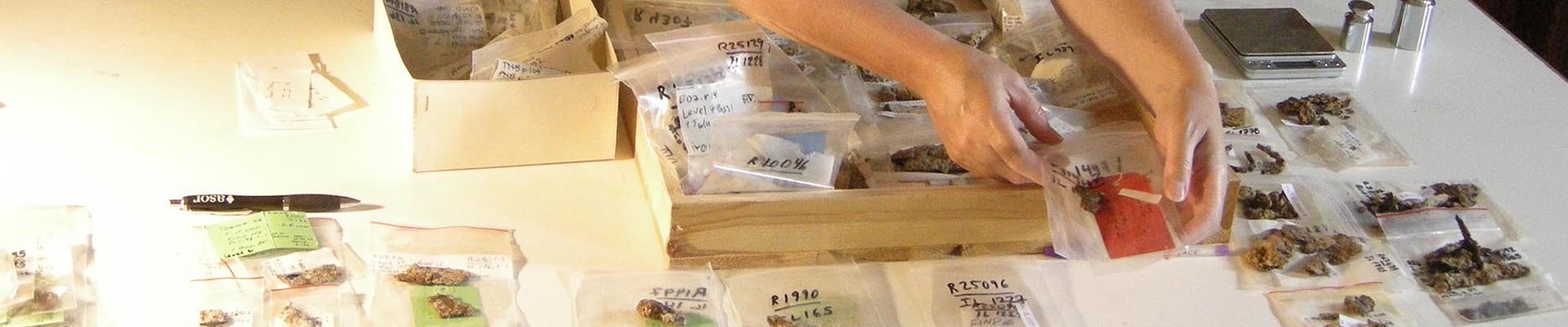
Table of Contents for BASOR 382 (November 2019)

[vc_row fullwidth=”true” attached=”true” css=”.vc_custom_1496247803139{padding-top: 0px !important;padding-right: 0px !important;padding-bottom: 0px !important;padding-left: 0px !important;}”][vc_column][mk_image src=”http://www.asor.org/wp-content/uploads/2019/12/BASOR-Banner382.jpg” image_width=”1920″ image_height=”400″ crop=”false” hover=”false” align=”center” margin_bottom=”0″][/vc_column][/vc_row][vc_row fullwidth=”true” css=”.vc_custom_1496682730308{padding-top: 10px !important;padding-right: 0px !important;padding-bottom: 0px !important;padding-left: 0px !important;}”][vc_column width=”1/12″ css=”.vc_custom_1496683820796{margin-right: 10px !important;}” offset=”vc_hidden-md vc_hidden-sm vc_hidden-xs”][vc_column_text]

 SHARE

[/vc_column_text][mk_image src=”http://www.asortest.org/wp-content/uploads/2017/01/social-fb-icon4.jpg” image_width=”42″ image_height=”42″ hover=”false” custom_url=”https://www.facebook.com/ASOResearch/” margin_bottom=”0″][mk_image src=”http://www.asortest.org/wp-content/uploads/2017/01/social-tw-icon4.jpg” image_width=”42″ image_height=”42″ hover=”false” custom_url=”https://twitter.com/ASOResearch?ref_src=twsrc%5Egoogle%7Ctwcamp%5Eserp%7Ctwgr%5Eauthor” margin_bottom=”0″][mk_image src=”http://www.asortest.org/wp-content/uploads/2017/01/social-in-icon4.jpg” image_width=”42″ image_height=”42″ hover=”false” custom_url=”https://www.linkedin.com/company/american-schools-of-oriental-research” margin_bottom=”0″][mk_image src=”http://www.asortest.org/wp-content/uploads/2017/01/social-ml-icon_7.jpg” image_width=”42″ image_height=”42″ hover=”false” custom_url=”mailto:asor@bu.edu” margin_bottom=”0″][mk_image src=”http://www.asortest.org/wp-content/uploads/2017/01/blog-icon3.jpg” image_width=”42″ image_height=”42″ hover=”false” custom_url=”http://asorblog.org/” margin_bottom=”0″][/vc_column][vc_column border_color=”rgba(255,255,255,0.01)” width=”1/6″ css=”.vc_custom_1496683923840{margin-right: 20px !important;border-left-width: 2px !important;padding-right: 20px !important;padding-left: 20px !important;border-left-color: #99422f !important;}”][mk_divider divider_color=”rgba(255,255,255,0.01)” thickness=”1″ margin_top=”3″ margin_bottom=”3″][vc_column_text]

NEWS@ASOR E-NEWSLETTER

ANCIENT NEAR EAST TODAY E-NEWSLETTER

PAST ASOR NEWS, MONTH BY MONTH

FY18 HONOR ROLL OF DONORS

ASOR ANNUAL MEETING

[/vc_column_text][/vc_column][vc_column border_color=”rgba(170,170,170,0.01)” width=”1/2″ css=”.vc_custom_1487276122024{margin-right: 10px !important;margin-bottom: 30px !important;border-right-width: 2px !important;border-bottom-width: 2px !important;padding-top: 30px !important;padding-right: 30px !important;padding-left: 20px !important;background-color: #ffffff !important;border-right-color: rgba(227,228,228,0.75) !important;border-bottom-color: rgba(227,228,228,0.75) !important;}”][vc_column_text]

Table of Contents for Bulletin of ASOR 382 (November 2019)

You can receive BASOR (and other ASOR publications) through an ASOR Membership. Please e-mail the Membership office if you have any questions.

[/vc_column_text][vc_column_text responsive_align=”left”]

Pp. 1–15: “An Analog from the Prehistoric Bronze Age Site of Alambra Mouttes (Cyprus) for Adornments on the Enigmatic Vounous Bowl,” by Andrew Sneddon

The “Vounous Bowl” (ca. 2025–1850 b.c.e.) is a prehistoric Bronze Age vessel from the cemetery at Bellapais Vounous on the northern coast of Cyprus, modeled to depict what is commonly interpreted as people engaged in ritual activities in front of a shrine. The vessel has long intrigued archaeologists working in Cyprus, partly because unambiguous evidence for religious structures and paraphernalia has eluded them in the archaeological record. However, excavations at the Early–Middle Bronze Age site of Alambra in central Cyprus have yielded an artifact that closely resembles the finials placed atop the “throne” depicted in the Vounous Bowl. Its find context—in a room within a domestic structure that also contained a human burial—supports those interpretations of the Vounous Bowl that emphasize its sacred dimensions and its possible connections with the mortuary domain.

ASOR Members with online access: navigate to the token link email sent to you before attempting to read this article. Once you have activated your member token, click here to access the above article on The University of Chicago Press Journals’ website.

Pp. 17-32: “Observations on the Stratigraphic Attribution of the Early Bronze Age Pillared Building in Area D at Tel ʿErani, Israel,” by Marcin Czarnowicz and Eliot Braun

Tel ʿErani is a large Early Bronze Age site within the municipal bounds of modern Qiryat Gat, Israel, at the northeastern edge of the Negev, adjacent to the Judean Shephelah (piedmont). It includes a high mound and several lower terraces, ca. 25 ha in area. The site gained notoriety when an imported potsherd bearing an Egyptian royal symbol (a serekh) incised with the hieroglyph of an early ruler, Narmer, was found in Excavation Area D. Large-scale exposure there in the 1950s and 1960s, under the direction of Shmuel Yeivin, unearthed a rather lengthy and complicated stratigraphic sequence that has prompted numerous attempts at correlating its Early Bronze Age strata with Dynasty 0 and the early 1st Dynasty in Egypt. Yeivin’s cursorily published results illustrate only partial and rudimentary plans of the Early Bronze Age strata in Area D, most of which lack elevations. One exceptionally large building boasting seven substantial mudbrick pillars has attracted researchers’ attention, as it likely had a public function. This essay, based on Yeivin’s original, unpublished plans that include elevations, as well as information derived from recent excavations in Area D, offers a detailed reconstruction of the plan of that building, which suggests its likely chrono-stratigraphic ascription to late phases of the Early Bronze I. It further notes its importance for understanding the relationship between Egypt and the southern Levant in this late prehistoric period, and especially the place of Tel ʿErani as one of a growing number of sites in the southern Levant known to yield definitive evidence for the onset of its earliest complex, hierarchical societies in the first centuries of the 4th millennium b.c.e.

ASOR Members with online access: navigate to the token link email sent to you before attempting to read this article. Once you have activated your member token, click here to access the above article on The University of Chicago Press Journals’ website.

Pp. 33-69: “Reconsidering Coastal Archaeological Sites in Late Bronze Age Cyprus: Tochni-Lakkia and the South-Central Coastscape,” by Georgia M. Andreou, Artemis Georgiou, Thomas M. Urban, Kevin D. Fisher, Sturt W. Manning, and David A. Sewell

The Cypriot Late Bronze Age (referred to as Late Cypriot and LBA, 1680/1650–1100 b.c.e.) has attracted particular attention due to textual and material evidence that suggests engagement with the international maritime trade networks of the eastern Mediterranean. A longstanding scholarly preoccupation with interregional trade has encouraged the development of theoretical models that aim to reconstruct the economy of the island and generally view Late Cypriot coastal sites as gateway communities channeling copper to the eastern Mediterranean. Studies have also highlighted the local and regional significance of these communities and have shed light on their complex economic networks. In this paper, we use data from coastal Tochni-Lakkia, an actively eroding site located near two major Late Bronze Age centers (Kalavasos-Ayios Dhimitrios and the Maroni Complex) to add nuance to smaller-scale regional interaction networks along the south-central coast of the island. To do that, we engage evidence from trial excavations and archaeological and geophysical surveys at Tochni-Lakkia in the form of a preliminary report with theoretical approaches that highlight the potential for and role of regional maritime networks and the concept of coastscape.

ASOR Members with online access: navigate to the token link email sent to you before attempting to read this article. Once you have activated your member token, click here to access the above article on The University of Chicago Press Journals’ website.

Pp. 71-87: “Wood Economy in Early Roman Period Jerusalem,” by Helena Roth, Yuval Gadot, and Dafna Langgut

In this study we present the identification of several Early Roman (63 b.c.e.–70 c.e.) charred wood assemblages, collected from the “Lower City” of Jerusalem. The results outline elements in Jerusalem’s nearby woody vegetation, characterized by a mosaic of native Mediterranean maquis-forest species and olive orchards, and possibly pine and cypress stands. The arboreal surrounding of Jerusalem supplied the city with pruned olive branches and other types of agricultural refuse to serve as firewood. Local conifers (pines and cypress) as well as imported conifers (cedar of Lebanon), were used for construction purposes. The results further highlight important issues such as social status and importation of wood. The occurrence of prestigious imported tree species within the charcoal assemblage of the Lower City (e.g., cedar, boxwood) indicates the presence of wealthy residences, standing in contrast to prior assumptions that suggest a low social status for the inhabitants within this area.

ASOR Members with online access: navigate to the token link email sent to you before attempting to read this article. Once you have activated your member token, click here to access the above article on The University of Chicago Press Journals’ website.

Pp. 89-110: “The Metal Assemblage from Early Iron Age IIA Khirbet Qeiyafa and Its Implications for the Inception of Iron Production and Use,” Alla Rabinovich, Naama Yahalom-Mack, Yosef Garfinkel, Saar Ganor, and Michael G. Hasel

A large metal assemblage was uncovered at the late 11th–early 10th century b.c.e. fortified town of Khirbet Qeiyafa. At this early date, iron was already used rather extensively for utilitarian purposes at the site, though bronze was not yet restricted to decorative use. The metal assemblage from Khirbet Qeiyafa, therefore, provides a rare glimpse into the transition from bronze to iron at the beginning of Iron Age II. This article presents the typology and spatial distribution of the finds, followed by a discussion of their possible cultural and social implications.

ASOR Members with online access: navigate to the token link email sent to you before attempting to read this article. Once you have activated your member token, click here to access the above article on The University of Chicago Press Journals’ website.

Pp. 111-142: “The Pottery of Tel Esur, a Rural Canaanite Late Bronze Age Site on the Via Maris,” by Golan Shalvi, Shay Bar, Shlomo Shoval, and Ayelet Gilboa

Tel Esur is identifiable with D-f-tj (Djefty), mentioned by Thutmose III in his description of his march to Megiddo through the ʿAruna Pass. Recent excavations provide the first unequivocal indication that the site was inhabited during the Late Bronze Age as a farm/hamlet, perhaps also a waystation. The main architectural feature is a large partially-excavated structure, whose contents—mainly pottery—were well preserved by a destruction level. We propose that the destruction assemblage dates around the mid-14th century b.c.e. and that the structure was built around 1400 b.c.e., thus somewhat later than Thutmose III’s famed first campaign. Since pottery of this period is known primarily from large/central sites, Tel Esur offers an exceptional glimpse into a 14th century b.c.e. assemblage from the rural Canaanite domain. Currently, it is also the only small site excavated along the ʿAruna Pass between Megiddo and the Sharon, inter alia offering insights about this stretch of the Via Maris during the Late Bronze Age. This is the first synthesis of Tel Esur during this period. We focus on typo-chronology, and on the main characteristics of the ceramic assemblage, including unique phenomena such as storage in Cypriot-Style pithoi and Egyptianizing pottery in a rural setting.

ASOR Members with online access: navigate to the token link email sent to you before attempting to read this article. Once you have activated your member token, click here to access the above article on The University of Chicago Press Journals’ website.

Pp. 143-209: “‘A Mid-6th-Century B.C.E. Deposit from Gordion in Central Anatolia: Evidence for Feasting and the Persian Destruction,” by Elspeth R. M. Dusinberre, Kathleen M. Lynch, and Mary M. Voigt

A coherent deposit of dumped debris, excavated at Gordion in 1950 and the 1990s, was apparently formed during the cleanup following the Achaemenid Persian attack on the city, ca. 540 b.c.e. It offers a first glimpse of life at Gordion during the mid-6th century (end of the Middle Phrygian period, Yassıhöyük Stratigraphic Sequence 5A). Greek imports provide a relatively firm date for the deposit and allow a chronologically specific snapshot of locally produced fine, household, and coarse wares. Vessels made of traditional Phrygian black-polished ware were used primarily for drinking. Lydian influence at the site is seen in the large number of burnished gray stemmed vessels, although the size of Gordion’s stemmed dishes and the way in which they were used apparently differ from the Lydian capital, Sardis. Bowls come in a variety of wares, shapes, and sizes, while large jars and jugs are primarily gray-slipped household wares, with some imports. Puzzling is a large terracotta object with pseudomorph appliqués suggesting metal attachments, which may have been a niche for a household cult. This initial presentation of the pottery from the mid-6th-century dump provides insight into multiple concerns and behaviors of Gordion’s inhabitants just before the Achaemenid Persian Empire.

ASOR Members with online access: navigate to the token link email sent to you before attempting to read this article. Once you have activated your member token, click here to access the above article on The University of Chicago Press Journals’ website.

Pp. 211-241: “A Persian Period Bulla from Tel Qedesh, Israel, and Its Implications for Relations between Tyre and Nippur,” by Baruch Brandl, Xiaoli Ouyang, Andrea M. Berlin, Sharon C. Herbert, and Anastasia Shapiro

In the 1999 season of excavation at Tel Qedesh, in northern Israel, a small, perfectly intact stamped bulla dating to the Persian period was found. The bulla originally sealed a papyrus document. Thanks to its excellent preservation, it is possible to identify a series of key aspects of the object: the motif and type of seal used to stamp it, the way the bulla was created, and even the way in which the original document was folded and tied. These details allow us to identify the probable origin and date of the seal and contextualize its associated bulla within the site of Qedesh. This evidence, in conjunction with information from the late 5th century b.c.e. Murašû archive in Nippur, allows us to suggest that the seal’s user may have been a person with Tyrian ties—perhaps a member of the Tyrian diaspora—who acquired his seal in Nippur and traveled to Qedesh where he used it to seal a document.

ASOR Members with online access: navigate to the token link email sent to you before attempting to read this article. Once you have activated your member token, click here to access the above article on The University of Chicago Press Journals’ website.

Pp. 243-259: “The Idrimi Statue Inscription in its Late Bronze Age Scribal Context,” by Kathryn McConaughy Medill

The Idrimi Statue Inscription from Alalakh (modern Tell Atchana) has added immeasurably to our understanding of Late Bronze Age Syria since it was published by Sidney Smith in 1949. However, it is notorious for its non-standard Akkadian grammar and paleography. While recent studies have explained individual problems in the inscription, a systematic framework for the verbal system has been lacking. Following a suggestion from Manfred Dietrich and Oswald Loretz (1981), I examine three types of non-standard verb forms in the inscription and argue that these are best understood as reflexes of a scribal code similar (but not identical) to the Canaano-Akkadian code of the Taanach and Amarna Letters. These non-standard verb forms are limited to the first part of the inscription while standard Akkadian verbs appear in the second part of the inscription, suggesting that the scribe was switching between orthographic codes in order to achieve his rhetorical goals. I end by considering some of the questions raised by the inclusion of the Idrimi inscription’s code in the orthographic and linguistic repertoire of Syro-Palestinian scribes.

ASOR Members with online access: navigate to the token link email sent to you before attempting to read this article. Once you have activated your member token, click here to access the above article on The University of Chicago Press Journals’ website.

Pp. 261-312: “Urban Built Environments in Early 1st Millennium b.c.e. Syro-Anatolia: Results of the Tayinat Archaeological Project, 2004–2016,” by James F. Osborne, Timothy P. Harrison, Stephen Batiuk, Lynn Welton, J. P. Dessel, Elif Denel, and Özge Demirci

The archaeological site of Tell Tayinat in the province of Hatay in southern Turkey was the principal regional center in the Amuq Plain and North Orontes Valley during the Early Bronze and Iron Ages. This paper focuses on the latest known period of occupation at Tayinat, which during the Iron Age was the Syro-Anatolian city of Kunulua. In 2004, following a 67-year hiatus, the University of Toronto’s Tayinat Archaeological Project (TAP) resumed excavations at the site. Here we present the preliminary results of TAP’s investigations of the Iron Age II and III settlement, including the topography of the 1st millennium settlement, super- and sub-structural remains associated with Building II (a temple first discovered in the 1930s), a second, newly discovered temple (Building XVI), part of a large Assyrian-style courtyard building, and the remains of additional monumental architecture on the Iron Age citadel. The terminal phases of these structures date to the Iron Age III period, or the late 8th and 7th century occupation of Kunulua following the Assyrian conquest in 738 b.c.e., and collectively point to the transformation of Kunulua’s royal citadel into a Neo-Assyrian provincial administrative center, a pattern witnessed at contemporary sites elsewhere in southeastern Anatolia and northern Syria.

ASOR Members with online access: navigate to the token link email sent to you before attempting to read this article. Once you have activated your member token, click here to access the above article on The University of Chicago Press Journals’ website.

[/vc_column_text][mk_divider][vc_column_text]

ASOR Members with online access: navigate to the token link email sent to you before attempting to read this issue. Once you have activated your member token, click here to access the the entire issue, including book reviews, on The University of Chicago Press Journals’ website.

[/vc_column_text][/vc_column][vc_column border_color=”rgba(170,170,170,0.01)” width=”1/6″ css=”.vc_custom_1496684098866{margin-right: 5px !important;margin-bottom: 20px !important;border-right-width: 2px !important;border-bottom-width: 2px !important;padding-top: 30px !important;padding-right: 10px !important;padding-left: 10px !important;background-color: #ffffff !important;border-right-color: rgba(227,228,228,0.75) !important;border-bottom-color: rgba(227,228,228,0.75) !important;}”][vc_wp_posts title=”BROWSE THE NEWS ARCHIVE” number=”4″][/vc_column][vc_column border_color=”rgba(170,170,170,0.01)” width=”1/6″ css=”.vc_custom_1496684008271{margin-right: 10px !important;margin-bottom: 30px !important;border-right-width: 2px !important;border-bottom-width: 2px !important;padding-top: 30px !important;padding-right: 20px !important;padding-left: 20px !important;background-color: #ffffff !important;border-right-color: rgba(227,228,228,0.75) !important;border-bottom-color: rgba(227,228,228,0.75) !important;}”][vc_column_text] [/vc_column_text][/vc_column][/vc_row]

2019 Annual Meeting Recap

[vc_row fullwidth=”true” attached=”true” css=”.vc_custom_1512671582587{padding-top: 0px !important;padding-right: 0px !important;padding-bottom: 0px !important;padding-left: 0px !important;}”][vc_column][vc_single_image image=”42403″ img_size=”full” alignment=”center”][/vc_column][/vc_row][vc_row fullwidth=”true” css=”.vc_custom_1496682730308{padding-top: 10px !important;padding-right: 0px !important;padding-bottom: 0px !important;padding-left: 0px !important;}”][vc_column width=”1/12″ css=”.vc_custom_1496683820796{margin-right: 10px !important;}” offset=”vc_hidden-md vc_hidden-sm vc_hidden-xs”][vc_column_text]

 SHARE

[/vc_column_text][mk_image src=”http://www.asortest.org/wp-content/uploads/2017/01/social-fb-icon4.jpg” image_width=”42″ image_height=”42″ hover=”false” custom_url=”https://www.facebook.com/ASOResearch/” margin_bottom=”0″][mk_image src=”http://www.asortest.org/wp-content/uploads/2017/01/social-tw-icon4.jpg” image_width=”42″ image_height=”42″ hover=”false” custom_url=”https://twitter.com/ASOResearch?ref_src=twsrc%5Egoogle%7Ctwcamp%5Eserp%7Ctwgr%5Eauthor” margin_bottom=”0″][mk_image src=”http://www.asortest.org/wp-content/uploads/2017/01/social-in-icon4.jpg” image_width=”42″ image_height=”42″ hover=”false” custom_url=”https://www.linkedin.com/company/american-schools-of-oriental-research” margin_bottom=”0″][mk_image src=”http://www.asortest.org/wp-content/uploads/2017/01/social-ml-icon_7.jpg” image_width=”42″ image_height=”42″ hover=”false” custom_url=”mailto:info@asor.org” margin_bottom=”0″][mk_image src=”http://www.asortest.org/wp-content/uploads/2017/01/blog-icon3.jpg” image_width=”42″ image_height=”42″ hover=”false” custom_url=”http://asor.org/blog” margin_bottom=”0″][/vc_column][vc_column border_color=”rgba(255,255,255,0.01)” width=”1/6″ css=”.vc_custom_1496683923840{margin-right: 20px !important;border-left-width: 2px !important;padding-right: 20px !important;padding-left: 20px !important;border-left-color: #99422f !important;}”][mk_divider divider_color=”rgba(255,255,255,0.01)” thickness=”1″ margin_top=”3″ margin_bottom=”3″][vc_column_text]

NEWS@ASOR E-NEWSLETTER

ANCIENT NEAR EAST TODAY E-NEWSLETTER

PAST ASOR NEWS, MONTH BY MONTH

FY19 HONOR ROLL OF DONORS

ASOR ANNUAL MEETING

[/vc_column_text][/vc_column][vc_column border_color=”rgba(170,170,170,0.01)” width=”1/2″ css=”.vc_custom_1487276122024{margin-right: 10px !important;margin-bottom: 30px !important;border-right-width: 2px !important;border-bottom-width: 2px !important;padding-top: 30px !important;padding-right: 30px !important;padding-left: 20px !important;background-color: #ffffff !important;border-right-color: rgba(227,228,228,0.75) !important;border-bottom-color: rgba(227,228,228,0.75) !important;}”][vc_column_text responsive_align=”left”]

2019 ANNUAL MEETING RECAP

[/vc_column_text][mk_divider][vc_column_text]Nearly 950 people attended ASOR’s 2019 Annual Meeting in San Diego, California last month at The Westin San Diego. ASOR’s Executive Director, Andrew Vaughn, has said it was one of the best, if not the best, meetings so far. The academic program was especially strong, with 103 sessions and more than 500 papers and posters. Eric H. Cline gave the Plenary Address, “Dirt, Digging, Dreams, and Drama: Why Presenting Proper Archaeology to the Public is Crucial for the Future of our Field,” which can be viewed here on ASORtv.

Other highlights of the 2019 Annual Meeting included a luncheon in honor of past ASOR President Lawrence T. Geraty and the establishment of the Geraty Community Archaeology Endowment, the Initiative on the Status of Women in ASOR’s Mentoring Lunch organized by Beth Alpert Nakhai, and a reception on the last night of the meeting hosted by UCLA’s Department of Near Eastern Languages and Cultures.

A list of those who received honors and awards at the meeting in San Diego can be found here. President Susan Ackerman received the Richard J. Scheuer Medal for her excellent service to the organization. She offered her heartfelt gratitude to the ASOR family during her acceptance speech at the Members’ Meeting on November 22. As we bid farewell to the long-standing President, join us in thanking her for shepherding us to the next chapter of ASOR’s history. We could not have done it without her.

If you attended the Annual Meeting and have not completed the Annual Meeting Evaluation, please take a few minutes to provide us with important feedback that will help make the 2020 Annual Meeting an even greater success!

We wish you all a joyful holiday season and look forward to seeing you next year at ASOR’s 2020 Annual Meeting, November 18-21, at The Westin Boston Waterfront!

Take a moment to enjoy these photos of friends, colleagues, academic sessions, and social events at the Annual Meeting in San Diego. Thank you for being a part of this wonderful event and for ensuring that ASOR is a place that anyone and everyone can feel at home.[/vc_column_text][mk_divider][vc_single_image image=”55588″ img_size=”full” add_caption=”yes” alignment=”center” onclick=”link_image”][mk_divider][vc_single_image image=”55497″ img_size=”full” add_caption=”yes” alignment=”center” onclick=”link_image”][mk_divider][vc_single_image image=”55494″ img_size=”full” add_caption=”yes” alignment=”center” onclick=”link_image”][mk_divider][vc_single_image image=”55587″ img_size=”full” add_caption=”yes” alignment=”center” onclick=”link_image”][mk_divider][vc_single_image image=”55602″ img_size=”full” add_caption=”yes” alignment=”center” onclick=”link_image”][mk_divider][vc_single_image image=”55586″ img_size=”full” add_caption=”yes” alignment=”center” onclick=”link_image”][mk_divider][vc_single_image image=”55584″ img_size=”full” add_caption=”yes” alignment=”center” onclick=”link_image”][mk_divider][vc_single_image image=”55581″ img_size=”full” add_caption=”yes” alignment=”center” onclick=”link_image”][mk_divider][vc_single_image image=”55594″ img_size=”full” add_caption=”yes” alignment=”center” onclick=”link_image”][mk_divider][vc_single_image image=”55593″ img_size=”full” add_caption=”yes” alignment=”center” onclick=”link_image”][mk_divider][vc_single_image image=”55592″ img_size=”full” add_caption=”yes” alignment=”center” onclick=”link_image”][mk_divider][vc_single_image image=”55583″ img_size=”full” add_caption=”yes” alignment=”center” onclick=”link_image”][mk_divider][vc_single_image image=”55582″ img_size=”full” add_caption=”yes” alignment=”center” onclick=”link_image”][mk_divider][vc_single_image image=”55589″ img_size=”full” add_caption=”yes” alignment=”center” onclick=”link_image”][mk_divider][vc_single_image image=”55590″ img_size=”full” add_caption=”yes” alignment=”center” onclick=”link_image”][mk_divider][vc_single_image image=”55591″ img_size=”full” add_caption=”yes” alignment=”center” onclick=”link_image”][mk_divider][vc_single_image image=”55600″ img_size=”full” add_caption=”yes” alignment=”center” onclick=”link_image”][mk_divider][vc_single_image image=”55601″ img_size=”full” add_caption=”yes” alignment=”center” onclick=”link_image”][mk_divider][vc_single_image image=”55639″ img_size=”full” add_caption=”yes” alignment=”center” onclick=”link_image”][mk_divider][vc_single_image image=”55595″ img_size=”full” add_caption=”yes” alignment=”center” onclick=”link_image”][mk_divider][vc_single_image image=”55598″ img_size=”full” add_caption=”yes” alignment=”center” onclick=”link_image”][mk_divider][vc_single_image image=”55599″ img_size=”full” add_caption=”yes” alignment=”center” onclick=”link_image”][mk_divider][vc_single_image image=”55597″ img_size=”full” add_caption=”yes” alignment=”center” onclick=”link_image”][mk_divider][vc_single_image image=”55596″ img_size=”full” add_caption=”yes” alignment=”center” onclick=”link_image”][mk_divider][vc_single_image image=”55585″ img_size=”full” add_caption=”yes” alignment=”center” onclick=”link_image”][mk_divider][vc_single_image image=”55495″ img_size=”full” add_caption=”yes” alignment=”center” onclick=”link_image”][mk_divider][vc_single_image image=”55496″ img_size=”full” add_caption=”yes” alignment=”center” onclick=”link_image”][mk_divider][vc_single_image image=”55498″ img_size=”full” add_caption=”yes” alignment=”center” onclick=”link_image”][/vc_column][vc_column border_color=”rgba(170,170,170,0.01)” width=”1/6″ css=”.vc_custom_1496684098866{margin-right: 5px !important;margin-bottom: 20px !important;border-right-width: 2px !important;border-bottom-width: 2px !important;padding-top: 30px !important;padding-right: 10px !important;padding-left: 10px !important;background-color: #ffffff !important;border-right-color: rgba(227,228,228,0.75) !important;border-bottom-color: rgba(227,228,228,0.75) !important;}”][vc_wp_posts title=”BROWSE THE NEWS ARCHIVE” number=”4″][/vc_column][vc_column border_color=”rgba(170,170,170,0.01)” width=”1/6″ css=”.vc_custom_1496684008271{margin-right: 10px !important;margin-bottom: 30px !important;border-right-width: 2px !important;border-bottom-width: 2px !important;padding-top: 30px !important;padding-right: 20px !important;padding-left: 20px !important;background-color: #ffffff !important;border-right-color: rgba(227,228,228,0.75) !important;border-bottom-color: rgba(227,228,228,0.75) !important;}”][vc_column_text] [/vc_column_text][/vc_column][/vc_row]

ASOR Election Results (2019)

[vc_row fullwidth=”true” attached=”true” css=”.vc_custom_1496247803139{padding-top: 0px !important;padding-right: 0px !important;padding-bottom: 0px !important;padding-left: 0px !important;}”][vc_column][vc_single_image image=”33590″ img_size=”full” alignment=”center”][/vc_column][/vc_row][vc_row fullwidth=”true” css=”.vc_custom_1496682730308{padding-top: 10px !important;padding-right: 0px !important;padding-bottom: 0px !important;padding-left: 0px !important;}”][vc_column width=”1/12″ css=”.vc_custom_1496683820796{margin-right: 10px !important;}” offset=”vc_hidden-md vc_hidden-sm vc_hidden-xs”][vc_column_text]

 SHARE

[/vc_column_text][mk_image src=”http://www.asortest.org/wp-content/uploads/2017/01/social-fb-icon4.jpg” image_width=”42″ image_height=”42″ hover=”false” custom_url=”https://www.facebook.com/ASOResearch/” margin_bottom=”0″][mk_image src=”http://www.asortest.org/wp-content/uploads/2017/01/social-tw-icon4.jpg” image_width=”42″ image_height=”42″ hover=”false” custom_url=”https://twitter.com/ASOResearch?ref_src=twsrc%5Egoogle%7Ctwcamp%5Eserp%7Ctwgr%5Eauthor” margin_bottom=”0″][mk_image src=”http://www.asortest.org/wp-content/uploads/2017/01/social-in-icon4.jpg” image_width=”42″ image_height=”42″ hover=”false” custom_url=”https://www.linkedin.com/company/american-schools-of-oriental-research” margin_bottom=”0″][mk_image src=”http://www.asortest.org/wp-content/uploads/2017/01/social-ml-icon_7.jpg” image_width=”42″ image_height=”42″ hover=”false” custom_url=”mailto:asor@bu.edu” margin_bottom=”0″][mk_image src=”http://www.asortest.org/wp-content/uploads/2017/01/blog-icon3.jpg” image_width=”42″ image_height=”42″ hover=”false” custom_url=”http://asorblog.org/” margin_bottom=”0″][/vc_column][vc_column border_color=”rgba(255,255,255,0.01)” width=”1/6″ css=”.vc_custom_1496683923840{margin-right: 20px !important;border-left-width: 2px !important;padding-right: 20px !important;padding-left: 20px !important;border-left-color: #99422f !important;}”][mk_divider divider_color=”rgba(255,255,255,0.01)” thickness=”1″ margin_top=”3″ margin_bottom=”3″][vc_column_text]

NEWS@ASOR E-NEWSLETTER

ANCIENT NEAR EAST TODAY E-NEWSLETTER

PAST ASOR NEWS, MONTH BY MONTH

FY18 HONOR ROLL OF DONORS

ASOR ANNUAL MEETING

[/vc_column_text][/vc_column][vc_column border_color=”rgba(170,170,170,0.01)” width=”1/2″ css=”.vc_custom_1487276122024{margin-right: 10px !important;margin-bottom: 30px !important;border-right-width: 2px !important;border-bottom-width: 2px !important;padding-top: 30px !important;padding-right: 30px !important;padding-left: 20px !important;background-color: #ffffff !important;border-right-color: rgba(227,228,228,0.75) !important;border-bottom-color: rgba(227,228,228,0.75) !important;}”][vc_column_text responsive_align=”left”]

ASOR ELECTION RESULTS (2019)

[/vc_column_text][vc_column_text]ASOR announced five newly elected members of the ASOR Board of Trustees at the 2019 Annual Meeting in San Diego.

There were two openings for Member-elected Trustees (each for a 3-year term) and three openings for Institutionally-elected Trustees (two openings for 3-year terms and one opening for a 2-year term). All ASOR members were eligible to vote in the Member-elected Trustee Election, while only Institutional Representatives of the 70 ASOR-member schools voted in the Institutionally-elected Trustee Election. Both elections were conducted by online ballot.

In addition, Lisa Ackerman and Sheila Bishop were re-appointed as Board-elected Trustees.

Congratulations and welcome to the new members of ASOR’s Board of Trustees![/vc_column_text][vc_column_text responsive_align=”left”]

Membership-elected Trustees

[/vc_column_text][vc_row_inner][vc_column_inner width=”1/4″ css=”.vc_custom_1503684310141{padding-right: 10px !important;}”][mk_image src=”http://www.asor.org/wp-content/uploads/2019/05/Paul-photo-by-Sam.jpg” image_width=”150″ image_height=”250″ hover=”false”][/vc_column_inner][vc_column_inner width=”3/4″][vc_column_text]

Paul V. M. Flesher

My primary training is in the history of ancient Judaism and its texts, but I have always seen archaeological research as an important source for understanding the ancient Near East. I began studying Judaism of the land of Israel during the Roman and early Byzantine periods at the University of Rochester, and then undertook an M.Phil. with Geza Vermes at Oxford University (1982) and a Ph.D. with Jacob Neusner at Brown University (1988).

During my undergraduate days, I also studied computer programming and for the last 40 years have used computers in my research. When I was on the staff of the Tel Miqne excavations in 1995, I was responsible for designing a pottery database and recording finds. More recently, I served on the Huqoq staff for four years, first designing their database, and then guiding recording. Currently, I help lead a project to create an online database archive of the excavation records from the four upper-Galilean synagogues and the Jewish quarter at Sepphoris which Eric and Carol Meyers excavated and published.

When I served as the Seymour Gitin Distinguished Professor at the Albright in 2016, I began a multi-disciplinary project investigating how Jewish ritual took place in now-excavated Galilean synagogues. And, unable to stay away from excavation, I served as an area supervisor at Legio (part of the Jezreel Valley Regional Project) this past summer, under the directorship of Matt Adams and Susan Cohen.

Finally, part of what I can bring to the Board is a broad expertise in public outreach that could help ASOR promote Near Eastern archaeology more effectively. I have been an associate editor of the Bible and Interpretation website from its founding, written a bi-monthly newspaper column called Religion Today for 20 years, and for the last decade have organized and promoted a faculty-based lecture series across my state called Saturday University.

Mission Statement: The heart of ASOR is archaeological excavation. Indeed, fieldwork provides the fastest growing body of knowledge of the ancient Near East. For more than a century, ASOR has provided support structures and a strong disciplinary environment that have advanced and enhanced American archaeological work in the region.

Today excavations and their results need to reach audiences beyond the archaeological community. In this era of fewer academic positions and dwindling resources, ASOR needs to make a strong case for the relevance of archaeology and the ancient world more broadly, for the understanding of ancient peoples continues to be relevant today. ASOR’s Strategic plan lays out a multi-pronged strategy to accomplish that, focusing on outreach, publication and education. If elected to the Board, I would work to guide ASOR’s strategy for accomplishing those goals.

Outreach is more than splashy newspaper headlines. Effective outreach requires a variety of digital and internet platforms, supported by networking social media; it requires marketing to the general public and to students—to say nothing of face-to-face interaction in local communities.

Education is another area where ASOR needs to renew its approach. As archaeologists retire, positions are disappearing. We are losing access to our undergraduates, to our future. We need to work with our cognate disciplines to strengthen each other’s position in the academy. We need to make our case now to persuade our institutions that Near East archaeology is an area they should hire.

ASOR needs to continue and even expand its traditional publications, but it also needs to move solidly into digital publication. Lots of experimentation with digital and internet publication has taken place over the last two decades; it is time to assess what has worked, what has not, and then develop our own outlets in a methodical and persistent manner.

Digital publication modes are needed for both new and old research. In current excavations, many new technological techniques require innovative forms of dissemination. For past excavations, ASOR should promote the publication of data archives. While final reports are necessary, their limitations are increasing clear. For proper scientific debate, all excavation data needs to be available for both further analysis and teaching.

If elected an ASOR trustee, I will use my experience in these three areas to help promote the importance of excavations to broader audiences for the benefit of ASOR and its constituents.[/vc_column_text][/vc_column_inner][/vc_row_inner][vc_row_inner][vc_column_inner width=”1/4″ css=”.vc_custom_1503684320408{padding-right: 15px !important;}”][mk_image src=”http://www.asor.org/wp-content/uploads/2019/05/9997-ROBERT-MULLINS-APU2.jpg” image_width=”150″ image_height=”250″ hover=”false”][/vc_column_inner][vc_column_inner width=”3/4″][vc_column_text]

Robert Mullins

Robert Mullins is a professor of Biblical Studies at Azusa Pacific University in Los Angeles where he is also Chair of the Department of Biblical and Religious Studies. He received his Ph.D. in Archaeology from the Hebrew University of Jerusalem where he supervised areas at Tel Beth Shean and Tel Rehov under the direction of Prof. Amihai Mazar with whom he also worked with as a research assistant. Outside of Israel, he worked for two projects in southeastern Turkey at Tell Atchana (Alalakh) and Zincirli Hoyuk (Samal) under the auspices of the University of Chicago. Bob currently co-directs the archaeological project at Abel Beth Maacah in northern Israel together with two long-time friends and colleagues from the Hebrew University of Jerusalem. His research interests encompass Egyptian-Canaanite interaction during the Late Bronze Age, the Late Bronze/Iron Age I transition, Canaanite and Israelite religious cult, and cross-cultural interaction in the Levant and Eastern Mediterranean. Two recently published works are “The Late Bronze Age” with Eli Yannai in Volume 3 of The Pottery of Ancient Israel and Its Neighbors and the Atlas of the Biblical World (Fortress Press, 2019) with Mark Vitalis Hoffman.

Mission Statement: I have been a regular member of ASOR since 1996. In the past, I have served as an ASOR trustee and I would like to renew that commitment. I believe in ASOR and I will continue to support its mission regarding the history, people, and cultures of the Near East. I want to see us continue to move in the direction of a creative, vibrant, and diverse organization that serves the needs of its members and instills a greater appreciation of our profession to the public. I want us to continue to foster a culture of inquiry, scholarship, and collegiality that engages students and encourages international involvement, especially among students and professionals from underrepresented regions. With all that is going on in Syria and other war torn regions, we need to support heritage documentation and preservation as a professional responsibility. As the co-director of an archaeological project that has benefited from students having access to ASOR-funded excavation scholarships, I want to ensure that our ASOR membership does not lessen its financial commitment. Finally, I would like to see ASOR take the lead in reaching out to students and other scholars who normally attend SBL to have at least one joint session since everyone benefits from peer interaction and informed dialogue. I believe that ASOR has much to gain from a vision that articulates a clear purpose, demonstrates a high level of integrity, maintains fiscal stability, and promotes organizational structures and processes that effectively fulfill its purposes.[/vc_column_text][/vc_column_inner][/vc_row_inner][vc_column_text responsive_align=”left”]

Institutionally-elected Trustees

[/vc_column_text][vc_row_inner][vc_column_inner width=”1/4″ css=”.vc_custom_1503684320408{padding-right: 15px !important;}”][mk_image src=”http://www.asor.org/wp-content/uploads/2019/05/headshot.jpg” image_width=”150″ image_height=”250″ hover=”false”][/vc_column_inner][vc_column_inner width=”3/4″][vc_column_text]

Erin Darby

Erin Darby is an associate professor of Religious Studies at the University of Tennessee and the co-director of the CAP-affiliated ‘Ayn Gharandal Archaeological Project in southern Jordan. She graduated with her Ph.D. in Religious Studies from Duke University in 2011. Erin is an expert in the Hebrew Bible, archaeology, and ancient Near Eastern history and literature. Her publications, including her book, Interpreting Judean Pillar Figurines: Gender and Empire in Judean Apotropaic Ritual (Mohr Siebeck 2014), focus on the archaeology of ancient religion and the interpretation of religious iconography. As the co-director of the ‘Ayn Gharandal Archaeological Project, she is excavating a Nabataean-Islamic period site and leads the UT Dig Jordan study abroad program. At the University of Tennessee, she is one of the founding members of the Partnership for the Academic Study of Early Judaism, the Knoxville ArabFest cultural festival, the UT Archaeology Day outreach event, and the Tennessee Initiative for Middle East Studies. Erin also works closely with the UT Office of the Vice Chancellor for Diversity and Engagement, the Center for Global Engagement, the Office of Undergraduate Research, the Office of Experience Learning, and the Office of Development.

Mission Statement: I have been an active ASOR member since 2008 and have had the privilege of serving in a variety of ways. I was the co-chair of the Junior Scholars Committee (now ‘Early Career Scholars’) for seven years, overseeing its transition to a standing committee and representing the committee on the Chairs Coordinating Council. In this capacity, I also collaborated with the Ethics Working Group and the Initiative on the Status of Women. I have served as the program chair for the Archaeology of the Near East: Bronze and Iron Ages and as co-chair for a number of member-organized sessions. Most recently, I served on the ASOR Ad Hoc Committee for the Location of the Annual Meeting, and I was honored to receive an ASOR Membership Service Award in 2017. I have been the ASOR institutional representative for the University of Tennessee since encouraging the university to join ASOR in 2014.

Serving on the Board of Trustees is a new way for me to demonstrate my gratitude for how central ASOR has been in my professional life and in the lives of my students. My work with ASOR and with university administration has impressed upon me the importance of supporting ASOR in this time of transition in higher education. Alongside all of our current initiatives, I am particularly interested in thinking creatively about the value we bring to institutional members, ways we can articulate that value to institutions, and how we can maximize our connection to students in their classrooms and through ASOR-affiliated field schools. The challenges that are affecting higher education will certainly have an impact on scholarly societies like ASOR, but I believe that the type of learning encouraged through our programs is unique in the field of higher education and has the potential to yield new development initiatives.[/vc_column_text][/vc_column_inner][/vc_row_inner][vc_row_inner][vc_column_inner width=”1/4″ css=”.vc_custom_1503684320408{padding-right: 15px !important;}”][mk_image src=”http://www.asor.org/wp-content/uploads/2018/06/foran.jpg” image_width=”150″ image_height=”250″ hover=”false”][/vc_column_inner][vc_column_inner width=”3/4″][vc_column_text]

Debra Foran

Debra Foran is Assistant Professor in the Department of Archaeology and Heritage Studies at Wilfrid Laurier University. Her research focuses on pilgrimage and trade during the Late Byzantine period (5th to 8th centuries CE) in Jordan.

From 2006 and 2012, Dr. Foran directed the Tell Madaba Archaeological Project. Currently, she is the Director of the Town of Nebo Archaeological Project, which is investigating the role of landscape in the religious and economic development of the site of Khirbat al-Mukhayyat (Jordan). This project is part of a larger regional research effort designed to investigate the development of centralized institutions and state-ordered societies in central Jordan. Dr. Foran has also participated in archaeological field projects in Syria and Tunisia.

Foran has chaired several ASOR sessions on the archaeology of Jordan and the Byzantine and Early Islamic Near East. She served as Vice-President and Treasurer of ASOR-Canada (CASOR) from 2004 to 2007, at which time she was elected President, a position she still holds.

Foran joined the ASOR Board in January 2017.

Mission Statement: As a member of the Board of Trustees, I will uphold ASOR’s mandate to promote research into and public understanding of the cultures and history of the Near East. As an institutional member of the Board, I would like to seek out ways for ASOR’s current Institutional Members to become more active participants in ASOR’s programs and initiatives. I would also work on strategies to recruit more Institutional Members. I also wish to foster collaboration with the local communities that are directly affected by the archaeological research of ASOR members. One way of encouraging this collaboration that is of particular interest to me is the integration of national cultural heritage into school curricula. I would like to explore how, as a foreign researchers, the work of ASOR members can contribute to this. Finally, I want to explore innovative ways of incorporating undergraduate education into active excavation and research projects. The inclusion of both North American students and students from local communities will nurture their appreciation for the cultural heritage of the Near East and help safeguard the continuation and future of our discipline.[/vc_column_text][/vc_column_inner][/vc_row_inner][vc_row_inner][vc_column_inner width=”1/4″ css=”.vc_custom_1503684320408{padding-right: 15px !important;}”][mk_image src=”http://www.asor.org/wp-content/uploads/2018/06/hasel.jpg” image_width=”150″ image_height=”250″ hover=”false”][/vc_column_inner][vc_column_inner width=”3/4″][vc_column_text]

Michael Hasel

Michael G. Hasel is Director of the Institute of Archaeology and Lynn H. Wood Archaeological Museum at Southern Adventist University, where he has also served as Professor of Near Eastern Studies and Archaeology since 1998.

Hasel has participated and served in administrative capacities on ten different excavations in the Middle East, including Gezer, Ashkelon, Dor, Miqne-Ekron, Masada, and Hazor, in Israel; Idalion, Cyprus; and Jalul in Jordan. He has directed excavations at Khirbet Qeiyafa and currently is co-director of the Fourth Expedition to Lachish. As curator of the Lynn H. Wood Archaeological Museum, Hasel was responsible for planning and displaying art and objects from the ancient Near East in a state-of-the-art exhibit entitled “Vessels in Time: A Journey into the Biblical World.”

Hasel, an ASOR member since 1989, has chaired several ASOR sessions and served on the Agenda Committee. He held the Samuel H. Kress Fellowship at the W. F. Albright Institute for Archaeological Research (AIAR) in 1995-96 and a Fulbright at the Cyprus American Archaeological Research Institute (CAARI) in 2005. He is also a fellow of the Institute for Biblical Research. He has served two terms on the Board of Trustees since 2014.

Mission Statement: I have served as an active participant of ASOR since 1989 while still an undergraduate student and have missed one meeting in 30 years. I have watched ASOR grow into a strong society representing a wide variety of interests and research foci in the ancient Near Eastern and Mediterranean worlds. During that same period, I have been actively involved in excavations in Israel, Jordan, and Cyprus while also engaged in Egyptological research. I have co-directed projects at Khirbet Qeiyafa, Socoh and Lachish. As a director of an Institute of Archaeology and museum, part of my vision is to make our field relevant to this and future generations. Over the years I have noticed an increased separation in our field from an interdisciplinary historical approach as witnessed in the roots of ASOR. My concern is that without that connection we are at risk of losing an important and relevant voice to a large segment in North America. It seems that as we have grown, we have also experienced an increased fragmentation which leaves our younger scholars searching for direction and belonging. ASOR has been an important force in facilitating work in the modern Middle East and I would be happy to continue to support and serve as a member of the Board of Trustees.[/vc_column_text][/vc_column_inner][/vc_row_inner][vc_column_text responsive_align=”left”]

Re-appointed Board-elected Trustees

[/vc_column_text][vc_row_inner][vc_column_inner width=”1/4″ css=”.vc_custom_1503684320408{padding-right: 15px !important;}”][mk_image src=”http://www.asor.org/wp-content/uploads/2019/08/Ackerman_Lisa_200x250-1.jpg” image_width=”150″ image_height=”250″ hover=”false”][/vc_column_inner][vc_column_inner width=”3/4″][vc_column_text]

Lisa Ackerman

Lisa Ackerman is the Interim Chief Executive Officer of the World Monuments Fund, an organization founded in 1965 that has assisted in the conservation and development of long-term stewardship strategies at more than 600 sites in 100 countries. She has held her position at WMF since 2007 and has developed multiple international collaborative projects in conservation. In addition to general supervision over approximately 60 projects in 40 countries, she is the senior project manager for activities in Cambodia, Iraq, Libya, Thailand, and Tunisia. Previously she served as Executive Vice President and Chief Operating Officer of the World Monuments Fund and as Executive Vice President of the Samuel H. Kress Foundation.[/vc_column_text][/vc_column_inner][/vc_row_inner][vc_row_inner][vc_column_inner width=”1/4″ css=”.vc_custom_1503684320408{padding-right: 15px !important;}”][mk_image src=”http://www.asor.org/wp-content/uploads/2018/06/bishop.jpg” image_width=”150″ image_height=”250″ hover=”false”][/vc_column_inner][vc_column_inner width=”3/4″][vc_column_text]

Sheila Bishop

Sheila Bishop is the President of the Foundation for Biblical Archaeology, which was established “to promote the science of Biblical Archaeology as a discipline by providing funding and support for new and continuing excavations, publication, research, and education.” The Foundation has helped support the Mount Zion Survey, the excavations at Sepphoris, the Roman Aqaba project, the Cana of Galilee project, the reconstruction of a first-century Nazareth farm site, the Tzuba excavation, and the Jezreel expedition. The Foundation for Biblical Archaeology also funds Student Service Scholarships, which provide undergraduates and graduates at ASOR-member colleges, seminaries, and universities with funding to pay for transportation and lodging incurred while attending the ASOR Annual Meeting. In return, students serve as volunteers at the Registration Desk and in service of the Annual Meeting Program Committee and Session Chairs.

Bishop has served on the ASOR Board since January 2011. In November 2016, Bishop received the ASOR Membership Service Award.[/vc_column_text][/vc_column_inner][/vc_row_inner][/vc_column][vc_column border_color=”rgba(170,170,170,0.01)” width=”1/6″ css=”.vc_custom_1496684098866{margin-right: 5px !important;margin-bottom: 20px !important;border-right-width: 2px !important;border-bottom-width: 2px !important;padding-top: 30px !important;padding-right: 10px !important;padding-left: 10px !important;background-color: #ffffff !important;border-right-color: rgba(227,228,228,0.75) !important;border-bottom-color: rgba(227,228,228,0.75) !important;}”][vc_wp_posts title=”BROWSE THE NEWS ARCHIVE” number=”4″][/vc_column][vc_column border_color=”rgba(170,170,170,0.01)” width=”1/6″ css=”.vc_custom_1496684008271{margin-right: 10px !important;margin-bottom: 30px !important;border-right-width: 2px !important;border-bottom-width: 2px !important;padding-top: 30px !important;padding-right: 20px !important;padding-left: 20px !important;background-color: #ffffff !important;border-right-color: rgba(227,228,228,0.75) !important;border-bottom-color: rgba(227,228,228,0.75) !important;}”][vc_column_text] [/vc_column_text][/vc_column][/vc_row]

Membership and Outreach Committee Seeks Members

[vc_row fullwidth=”true” css=”.vc_custom_1567005170772{padding-top: 0px !important;padding-right: 0px !important;padding-bottom: 0px !important;padding-left: 0px !important;}”][vc_column][vc_single_image image=”36792″ img_size=”full” alignment=”center”][/vc_column][/vc_row][vc_row fullwidth=”true” css=”.vc_custom_1567017064108{padding-right: 0px !important;padding-bottom: 0px !important;padding-left: 0px !important;}”][vc_column width=”1/12″ css=”.vc_custom_1496683820796{margin-right: 10px !important;}” offset=”vc_hidden-md vc_hidden-sm vc_hidden-xs”][vc_column_text]

 SHARE

[/vc_column_text][mk_image src=”http://www.asortest.org/wp-content/uploads/2017/01/social-fb-icon4.jpg” image_width=”42″ image_height=”42″ hover=”false” custom_url=”https://www.facebook.com/ASOResearch/” margin_bottom=”0″][mk_image src=”http://www.asortest.org/wp-content/uploads/2017/01/social-tw-icon4.jpg” image_width=”42″ image_height=”42″ hover=”false” custom_url=”https://twitter.com/ASOResearch?ref_src=twsrc%5Egoogle%7Ctwcamp%5Eserp%7Ctwgr%5Eauthor” margin_bottom=”0″][mk_image src=”http://www.asortest.org/wp-content/uploads/2017/01/social-in-icon4.jpg” image_width=”42″ image_height=”42″ hover=”false” custom_url=”https://www.linkedin.com/company/american-schools-of-oriental-research” margin_bottom=”0″][mk_image src=”http://www.asortest.org/wp-content/uploads/2017/01/social-ml-icon_7.jpg” image_width=”42″ image_height=”42″ hover=”false” custom_url=”mailto:info@asor.org” margin_bottom=”0″][mk_image src=”http://www.asortest.org/wp-content/uploads/2017/01/blog-icon3.jpg” image_width=”42″ image_height=”42″ hover=”false” custom_url=”http://asor.org/blog” margin_bottom=”0″][/vc_column][vc_column border_color=”rgba(255,255,255,0.01)” width=”1/6″ css=”.vc_custom_1496683923840{margin-right: 20px !important;border-left-width: 2px !important;padding-right: 20px !important;padding-left: 20px !important;border-left-color: #99422f !important;}”][mk_divider divider_color=”rgba(255,255,255,0.01)” thickness=”1″ margin_top=”3″ margin_bottom=”3″][vc_column_text]

NEWS@ASOR E-NEWSLETTER

ANCIENT NEAR EAST TODAY E-NEWSLETTER

PAST ASOR NEWS, MONTH BY MONTH

FY19 HONOR ROLL OF DONORS

ASOR ANNUAL MEETING

[/vc_column_text][/vc_column][vc_column border_color=”rgba(170,170,170,0.01)” width=”1/2″ css=”.vc_custom_1567019678113{margin-right: 10px !important;margin-bottom: 30px !important;border-right-width: 2px !important;border-bottom-width: 2px !important;padding-top: 30px !important;padding-right: 30px !important;padding-left: 20px !important;background-color: #ffffff !important;border-right-color: rgba(227,228,228,0.75) !important;border-bottom-color: rgba(227,228,228,0.75) !important;}”][vc_column_text responsive_align=”left”]

MEMBERSHIP AND OUTREACH COMMITTEE SEEKS NEW MEMBERS

[/vc_column_text][vc_column_text]Interesting in serving on an ASOR Committee? ASOR’s Committee on Membership and Outreach is seeking new members!

The Committee on Membership and Outreach takes responsibility for discussing matters regarding ASOR institutional and individual memberships, including (but not limited to) strategies for membership growth, appropriate membership benefits, the most fitting way to categorize individual memberships (student, recent graduate, etc.), greater enfranchisement of ASOR’s international members, and resources that members might like ASOR to provide. The committee also oversees ASOR’s outreach efforts. These include, preeminently, the Friends of ASOR program (a program for individuals who share ASOR members’ interest in the archaeology and history of the Near East and wider Mediterranean but who are not themselves members). In addition, it advises the ASOR staff about the presentation and content of several of ASOR’s digital platforms, including the ASOR Facebook page, the ASOR Twitter account, the ASOR LinkedIn page, ASORTv, and ASOR’s e-magazine News@ASOR. 

Those interested in serving on the Membership and Outreach Committee should email the incoming Chair, Teddy Burgh, by January 31, 2020.[/vc_column_text][/vc_column][vc_column border_color=”rgba(170,170,170,0.01)” width=”1/6″ css=”.vc_custom_1567019695971{margin-right: 5px !important;margin-bottom: 20px !important;border-right-width: 2px !important;border-bottom-width: 2px !important;padding-top: 30px !important;padding-right: 10px !important;padding-left: 10px !important;background-color: #ffffff !important;border-right-color: rgba(227,228,228,0.75) !important;border-bottom-color: rgba(227,228,228,0.75) !important;}”][vc_wp_posts title=”BROWSE THE NEWS ARCHIVE” number=”4″][/vc_column][vc_column border_color=”rgba(170,170,170,0.01)” width=”1/6″ css=”.vc_custom_1496684008271{margin-right: 10px !important;margin-bottom: 30px !important;border-right-width: 2px !important;border-bottom-width: 2px !important;padding-top: 30px !important;padding-right: 20px !important;padding-left: 20px !important;background-color: #ffffff !important;border-right-color: rgba(227,228,228,0.75) !important;border-bottom-color: rgba(227,228,228,0.75) !important;}”][vc_column_text] [/vc_column_text][/vc_column][/vc_row][vc_row][vc_column][vc_column_text]

[/vc_column_text][/vc_column][/vc_row][vc_row][vc_column][vc_column_text]

[/vc_column_text][/vc_column][/vc_row]

Immediate Openings on Cultural Heritage Committee

[vc_row fullwidth=”true” css=”.vc_custom_1567005170772{padding-top: 0px !important;padding-right: 0px !important;padding-bottom: 0px !important;padding-left: 0px !important;}”][vc_column][vc_single_image image=”55426″ img_size=”full” alignment=”center”][/vc_column][/vc_row][vc_row fullwidth=”true” css=”.vc_custom_1567017064108{padding-right: 0px !important;padding-bottom: 0px !important;padding-left: 0px !important;}”][vc_column width=”1/12″ css=”.vc_custom_1496683820796{margin-right: 10px !important;}” offset=”vc_hidden-md vc_hidden-sm vc_hidden-xs”][vc_column_text]

 SHARE

[/vc_column_text][mk_image src=”http://www.asortest.org/wp-content/uploads/2017/01/social-fb-icon4.jpg” image_width=”42″ image_height=”42″ hover=”false” custom_url=”https://www.facebook.com/ASOResearch/” margin_bottom=”0″][mk_image src=”http://www.asortest.org/wp-content/uploads/2017/01/social-tw-icon4.jpg” image_width=”42″ image_height=”42″ hover=”false” custom_url=”https://twitter.com/ASOResearch?ref_src=twsrc%5Egoogle%7Ctwcamp%5Eserp%7Ctwgr%5Eauthor” margin_bottom=”0″][mk_image src=”http://www.asortest.org/wp-content/uploads/2017/01/social-in-icon4.jpg” image_width=”42″ image_height=”42″ hover=”false” custom_url=”https://www.linkedin.com/company/american-schools-of-oriental-research” margin_bottom=”0″][mk_image src=”http://www.asortest.org/wp-content/uploads/2017/01/social-ml-icon_7.jpg” image_width=”42″ image_height=”42″ hover=”false” custom_url=”mailto:info@asor.org” margin_bottom=”0″][mk_image src=”http://www.asortest.org/wp-content/uploads/2017/01/blog-icon3.jpg” image_width=”42″ image_height=”42″ hover=”false” custom_url=”http://asor.org/blog” margin_bottom=”0″][/vc_column][vc_column border_color=”rgba(255,255,255,0.01)” width=”1/6″ css=”.vc_custom_1496683923840{margin-right: 20px !important;border-left-width: 2px !important;padding-right: 20px !important;padding-left: 20px !important;border-left-color: #99422f !important;}”][mk_divider divider_color=”rgba(255,255,255,0.01)” thickness=”1″ margin_top=”3″ margin_bottom=”3″][vc_column_text]

NEWS@ASOR E-NEWSLETTER

ANCIENT NEAR EAST TODAY E-NEWSLETTER

PAST ASOR NEWS, MONTH BY MONTH

FY19 HONOR ROLL OF DONORS

ASOR ANNUAL MEETING

[/vc_column_text][/vc_column][vc_column border_color=”rgba(170,170,170,0.01)” width=”1/2″ css=”.vc_custom_1567019678113{margin-right: 10px !important;margin-bottom: 30px !important;border-right-width: 2px !important;border-bottom-width: 2px !important;padding-top: 30px !important;padding-right: 30px !important;padding-left: 20px !important;background-color: #ffffff !important;border-right-color: rgba(227,228,228,0.75) !important;border-bottom-color: rgba(227,228,228,0.75) !important;}”][vc_column_text responsive_align=”left”]

IMMEDIATE OPENINGS ON ASOR’S CULTURAL HERITAGE COMMITTEE

[/vc_column_text][vc_column_text]This committee is no longer accepting nominations.

The ASOR Cultural Heritage Committee is seeking new members. The Cultural Heritage Committee, which was instituted as an ASOR Standing Committee at the April 2019 Board of Trustees meeting, takes responsibility for overseeing ASOR initiatives on cultural heritage (CHI), including advising the Executive Director on grant applications; assistance and review as needed on ASOR cultural heritage activities and funding; working with other standing committees (e.g. the Publications Committee) and advising the Board of Trustees on issues pertaining to cultural heritage.[/vc_column_text][/vc_column][vc_column border_color=”rgba(170,170,170,0.01)” width=”1/6″ css=”.vc_custom_1567019695971{margin-right: 5px !important;margin-bottom: 20px !important;border-right-width: 2px !important;border-bottom-width: 2px !important;padding-top: 30px !important;padding-right: 10px !important;padding-left: 10px !important;background-color: #ffffff !important;border-right-color: rgba(227,228,228,0.75) !important;border-bottom-color: rgba(227,228,228,0.75) !important;}”][vc_wp_posts title=”BROWSE THE NEWS ARCHIVE” number=”4″][/vc_column][vc_column border_color=”rgba(170,170,170,0.01)” width=”1/6″ css=”.vc_custom_1496684008271{margin-right: 10px !important;margin-bottom: 30px !important;border-right-width: 2px !important;border-bottom-width: 2px !important;padding-top: 30px !important;padding-right: 20px !important;padding-left: 20px !important;background-color: #ffffff !important;border-right-color: rgba(227,228,228,0.75) !important;border-bottom-color: rgba(227,228,228,0.75) !important;}”][vc_column_text] [/vc_column_text][/vc_column][/vc_row][vc_row][vc_column][vc_column_text]

[/vc_column_text][/vc_column][/vc_row][vc_row][vc_column][vc_column_text]

[/vc_column_text][/vc_column][/vc_row]

$8,000 Needed By Dec. 31

[vc_row fullwidth=”true” attached=”true” css=”.vc_custom_1496247803139{padding-top: 0px !important;padding-right: 0px !important;padding-bottom: 0px !important;padding-left: 0px !important;}”][vc_column][vc_single_image image=”55728″ img_size=”full” alignment=”center”][/vc_column][/vc_row][vc_row fullwidth=”true” css=”.vc_custom_1496682730308{padding-top: 10px !important;padding-right: 0px !important;padding-bottom: 0px !important;padding-left: 0px !important;}”][vc_column width=”1/12″ css=”.vc_custom_1496683820796{margin-right: 10px !important;}” offset=”vc_hidden-md vc_hidden-sm vc_hidden-xs”][vc_column_text]

 SHARE

[/vc_column_text][mk_image src=”http://www.asortest.org/wp-content/uploads/2017/01/social-fb-icon4.jpg” image_width=”42″ image_height=”42″ hover=”false” custom_url=”https://www.facebook.com/ASOResearch/” margin_bottom=”0″][mk_image src=”http://www.asortest.org/wp-content/uploads/2017/01/social-tw-icon4.jpg” image_width=”42″ image_height=”42″ hover=”false” custom_url=”https://twitter.com/ASOResearch?ref_src=twsrc%5Egoogle%7Ctwcamp%5Eserp%7Ctwgr%5Eauthor” margin_bottom=”0″][mk_image src=”http://www.asortest.org/wp-content/uploads/2017/01/social-in-icon4.jpg” image_width=”42″ image_height=”42″ hover=”false” custom_url=”https://www.linkedin.com/company/american-schools-of-oriental-research” margin_bottom=”0″][mk_image src=”http://www.asortest.org/wp-content/uploads/2017/01/social-ml-icon_7.jpg” image_width=”42″ image_height=”42″ hover=”false” custom_url=”mailto:info@asor.org” margin_bottom=”0″][mk_image src=”http://www.asortest.org/wp-content/uploads/2017/01/blog-icon3.jpg” image_width=”42″ image_height=”42″ hover=”false” custom_url=”http://asor.org/blog” margin_bottom=”0″][/vc_column][vc_column border_color=”rgba(255,255,255,0.01)” width=”1/6″ css=”.vc_custom_1496683923840{margin-right: 20px !important;border-left-width: 2px !important;padding-right: 20px !important;padding-left: 20px !important;border-left-color: #99422f !important;}”][mk_divider divider_color=”rgba(255,255,255,0.01)” thickness=”1″ margin_top=”3″ margin_bottom=”3″][vc_column_text]

DONATE NOW

WAYS TO DONATE TO ASOR

FY18 HONOR ROLL OF DONORS

FY19 HONOR ROLL OF DONORS

ASOR LEGACY CIRCLE MEMBERS

[/vc_column_text][/vc_column][vc_column border_color=”rgba(170,170,170,0.01)” width=”1/2″ css=”.vc_custom_1487276122024{margin-right: 10px !important;margin-bottom: 30px !important;border-right-width: 2px !important;border-bottom-width: 2px !important;padding-top: 30px !important;padding-right: 30px !important;padding-left: 20px !important;background-color: #ffffff !important;border-right-color: rgba(227,228,228,0.75) !important;border-bottom-color: rgba(227,228,228,0.75) !important;}”][vc_column_text responsive_align=”left”]

$8,000 NEEDED BY DEC. 31, 2019

Click here to make a donation

[/vc_column_text][vc_column_text responsive_align=”left”]

As we prepare to celebrate the beginning of 2020 (ASOR’s 120th anniversary), we have been reminded time and time again how much our members have helped us achieve during 2019—truly a transformative year.

Thanks to your generosity, ASOR raised funds to purchase a new ASOR home in Alexandria, VA—The James F. Strange Center. Moving into our new home was and is an amazing accomplishment (see moving article).

We are almost to the finish line with our fundraising campaign. We have two weeks to accomplish the second half of our challenge for an extraordinary 2-for-1 matching gift.

We reached many milestones this year, but we still need YOUR partnership and participation to achieve this final goal. As you remember, we received a challenge pledge of $450,000 that will ensure the future of the building—but we need to earn this gift. We have already met the participation challenge with 461 donors in Fiscal Year 2019. We now need to earn the dollar amount of the challenge ($225) by December 31:

  • We must raise $225,000 in new gifts and pledges for the Building Fund by December 31, 2019. To date, we have received gifts and pledges of $217,000 for this challenge—so we only need $8,000 more!

[/vc_column_text][mk_divider][mk_skill_meter title=”$8,000 TO GO!” percent=”96.4″ title_color=”#777777″ progress_bar_color=”#dd3333″ track_bar_color=”#eeeeee”][mk_divider][vc_column_text responsive_align=”left”]Your membership in ASOR is crucial to our shared success. We thank you for making our plans a reality. Your donations enable ASOR to carry out our mission at a higher level and with greater impact. Even modest gifts add up to create significant support for ASOR, and the high level of donor participation from our memberships helps us attract gifts from foundations and major donors. Truly, every donor is important, and every gift is meaningful. This year, every gift gets us closer to the $450,000![/vc_column_text][vc_column_text responsive_align=”left”]

If you are one of our generous members or donors who has already made a gift, thank you for your support. If you have not yet made a gift this fiscal year, please consider joining the ranks of ASOR donors (click here to see the donors from last year—Fiscal Year 2019). We have just over two weeks to reach our goal, so please make a gift today![/vc_column_text][mk_divider][mk_table]

OTHER WAYS TO DONATE

Donate By Phone Donate By Mail Make A Pledge
(Donate Later)
Call ASOR:
703-789-9229
ASOR
209 Commerce St.
Alexandria, VA 22314
E-mail ASOR

[/mk_table][/vc_column][vc_column border_color=”rgba(170,170,170,0.01)” width=”1/6″ css=”.vc_custom_1496684098866{margin-right: 5px !important;margin-bottom: 20px !important;border-right-width: 2px !important;border-bottom-width: 2px !important;padding-top: 30px !important;padding-right: 10px !important;padding-left: 10px !important;background-color: #ffffff !important;border-right-color: rgba(227,228,228,0.75) !important;border-bottom-color: rgba(227,228,228,0.75) !important;}”][vc_wp_posts title=”BROWSE THE NEWS ARCHIVE” number=”4″][/vc_column][vc_column border_color=”rgba(170,170,170,0.01)” width=”1/6″ css=”.vc_custom_1496684008271{margin-right: 10px !important;margin-bottom: 30px !important;border-right-width: 2px !important;border-bottom-width: 2px !important;padding-top: 30px !important;padding-right: 20px !important;padding-left: 20px !important;background-color: #ffffff !important;border-right-color: rgba(227,228,228,0.75) !important;border-bottom-color: rgba(227,228,228,0.75) !important;}”][vc_column_text] [/vc_column_text][/vc_column][/vc_row][vc_row][/vc_row]
