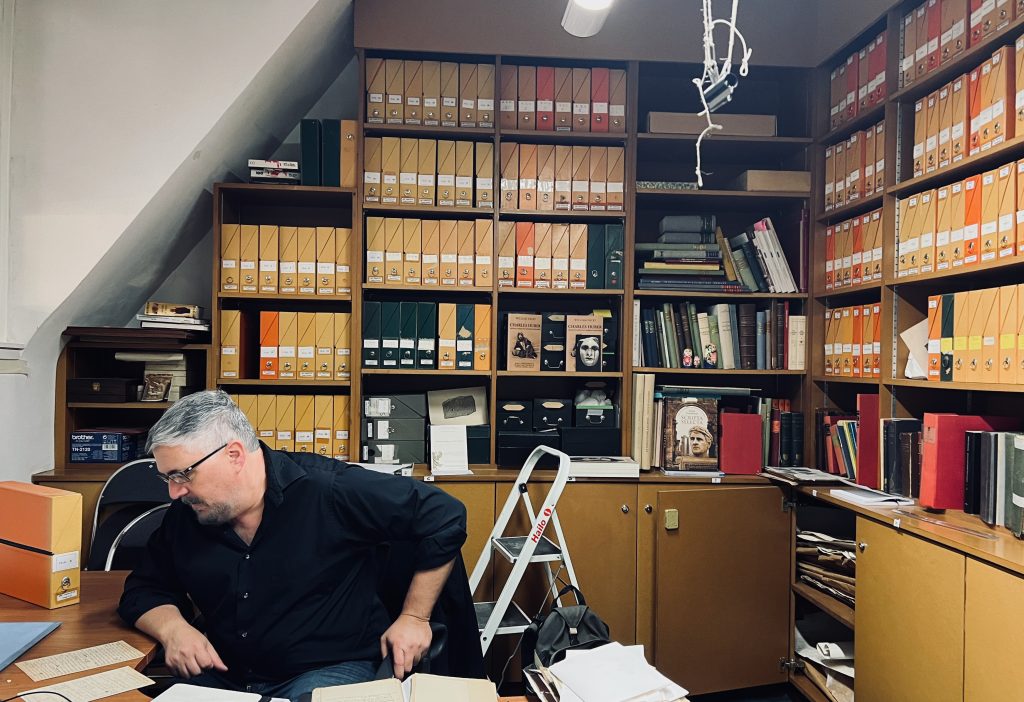
Fieldwork Report: Noah Barton

[vc_row fullwidth=”true” attached=”true” css=”.vc_custom_1496247803139{padding-top: 0px !important;padding-right: 0px !important;padding-bottom: 0px !important;padding-left: 0px !important;}”][vc_column][vc_single_image image=”96087″ img_size=”full” alignment=”center”][/vc_column][/vc_row][vc_row fullwidth=”true” css=”.vc_custom_1496682730308{padding-top: 10px !important;padding-right: 0px !important;padding-bottom: 0px !important;padding-left: 0px !important;}”][vc_column width=”1/12″ css=”.vc_custom_1496683820796{margin-right: 10px !important;}” offset=”vc_hidden-md vc_hidden-sm vc_hidden-xs”][vc_column_text]

 SHARE

[/vc_column_text][mk_image src=”http://www.asortest.org/wp-content/uploads/2017/01/social-fb-icon4.jpg” image_width=”42″ image_height=”42″ hover=”false” custom_url=”https://www.facebook.com/ASOResearch/” margin_bottom=”0″][mk_image src=”http://www.asortest.org/wp-content/uploads/2017/01/social-tw-icon4.jpg” image_width=”42″ image_height=”42″ hover=”false” custom_url=”https://twitter.com/ASOResearch?ref_src=twsrc%5Egoogle%7Ctwcamp%5Eserp%7Ctwgr%5Eauthor” margin_bottom=”0″][mk_image src=”http://www.asortest.org/wp-content/uploads/2017/01/social-in-icon4.jpg” image_width=”42″ image_height=”42″ hover=”false” custom_url=”https://www.linkedin.com/company/american-schools-of-oriental-research” margin_bottom=”0″][mk_image src=”http://www.asortest.org/wp-content/uploads/2017/01/social-ml-icon_7.jpg” image_width=”42″ image_height=”42″ hover=”false” custom_url=”mailto:info@asor.org” margin_bottom=”0″][mk_image src=”http://www.asortest.org/wp-content/uploads/2017/01/blog-icon3.jpg” image_width=”42″ image_height=”42″ hover=”false” custom_url=”http://asor.org/blog” margin_bottom=”0″][/vc_column][vc_column border_color=”rgba(255,255,255,0.01)” width=”1/6″ css=”.vc_custom_1496683923840{margin-right: 20px !important;border-left-width: 2px !important;padding-right: 20px !important;padding-left: 20px !important;border-left-color: #99422f !important;}”][mk_divider divider_color=”rgba(255,255,255,0.01)” thickness=”1″ margin_top=”3″ margin_bottom=”3″][vc_widget_sidebar sidebar_id=”ca-sidebar-39801″][/vc_column][vc_column border_color=”rgba(170,170,170,0.01)” width=”1/2″ css=”.vc_custom_1487276122024{margin-right: 10px !important;margin-bottom: 30px !important;border-right-width: 2px !important;border-bottom-width: 2px !important;padding-top: 30px !important;padding-right: 30px !important;padding-left: 20px !important;background-color: #ffffff !important;border-right-color: rgba(227,228,228,0.75) !important;border-bottom-color: rgba(227,228,228,0.75) !important;}”][vc_column_text responsive_align=”left”]

Dig Cyprus: A Story of Cherishment, Craziness, and Cats

Noah Barton, Undergraduate University Student[/vc_column_text][mk_divider][vc_wp_text]

This summer I had the pleasure of attending an archaeological field school in Cyprus with North Carolina State University. The program – Cyprus Archaeological Field School – is directed by two of my past professors and has been occurring yearly since 2017. I arrived in Cyprus on May 20, 2022. The island is beautiful; every turn has a clear blue ocean, incredible mountains and hillsides, or luscious forests. A pleasant surprise was that Cyprus is loaded with wild cats – there are more cats on the island than humans, in fact – and most of them are friendly. The only downside is that it was very humid, but that’s to be expected for an island near the Middle-East in June.

The archaeological site I helped excavate is called Makounta-Voules, which appears to have been the home of a copper-mining group between 5000 and 7000 years ago. They used stone tools and had a large interest in picrolite – a bright green stone – which they sculpted into figurines and pendants. In addition to picrolite, our team also searched for evidence of stone tools and pieces of pottery (also known as sherds), bone (human and non-human), and shells that were used to create jewelry.[/vc_wp_text][vc_row_inner][vc_column_inner][vc_single_image image=”96093″ img_size=”full” add_caption=”yes” alignment=”center” onclick=”img_link_large” img_link_target=”_blank” css=”.vc_custom_1711651992536{padding-right: 10px !important;}”][/vc_column_inner][/vc_row_inner][mk_padding_divider][vc_wp_text]

Every morning, I woke up at 4:20 am and got on a bus with all the other students. We went straight to the site and started working right away. The entire team was divided into groups of four, with three students and one supervisor. The archaeological method of digging is very systematic; each group dug a hole that was square-shaped and 4 meters wide, known as a trench. We usually dug five centimeters down at a time across the entire surface of the trench before digging any farther. In each group, the students worked together to break up the compact dirt with a pickaxe, shovel up all the newly-made piles of loose dirt, and sift through that dirt to find artifacts. We also straightened out the walls of the trench, known as balk walls. After the team got back to the hotel and ate lunch, we spent an hour or two washing the artifacts that we dug up. This was done by scrubbing them with a toothbrush and soaking them in water. About three nights per week, we also had a lecture that was given by one of the supervisors. The topics ranged from the entire history of Cyprus to different processes and ethics in archaeology.

Every Friday we took a break from digging and went on field trips. During each trip, we visited at least one excavated archaeological site, one museum, and one local beach (except Nicosia). In Nea Paphos, we visited Kissonerga and Lemba, the Paphos museum, and Vardas beach. In Palaepaphos, we visited Prastio and Souskiou, Aphrodite’s temple, and Petra Tou Romeou beach, which is the legendary birthplace of Aphrodite. In Kourion we visited Kolossi, the Kourion museum, and Kourion beach. While in Nicosia we visited the Cyprus Museum, which was the most expansive museum of all.

[/vc_wp_text][vc_single_image image=”96095″ img_size=”full” add_caption=”yes” alignment=”center” onclick=”img_link_large” img_link_target=”_blank” css=”.vc_custom_1711651975573{padding-right: 10px !important;}”][mk_padding_divider][vc_row_inner][vc_column_inner][vc_wp_text]

Every Saturday was a free day for the students to do whatever they wanted. On the first free day, my friends and I went on a cruise, where we saw incredible views on the ocean and swam in the clear blue Mediterranean sea. On another free day, my friends and I hiked up Aphrodite’s trail, revealing the best views of the entire trip. I didn’t make any excursions on my fourth free day. Our fifth free day was spent in Nicosia, the country’s capital. My friends and I explored the city and later celebrated one friend’s birthday at bars and clubs.
On the final day, most students took a final exam; I did not as I didn’t need credit for an Anthropology major, and instead wrote two research essays to get credit for my History major. I left Cyprus on June 25, 2022, ending a wonderful five weeks of excavation and adventure.

[/vc_wp_text][vc_single_image image=”96096″ img_size=”full” add_caption=”yes” alignment=”center” onclick=”img_link_large” img_link_target=”_blank” css=”.vc_custom_1711652023736{padding-right: 10px !important;}”][mk_padding_divider][/vc_column_inner][/vc_row_inner][vc_wp_text]

Noah Barton is a senior at North Carolina State University, double-majoring in International Studies and History and minoring in Latin. He lives in Raleigh, North Carolina and enjoys history, music, and traveling.

[/vc_wp_text][mk_divider][vc_wp_text]Want to help more students and early career archaeologists get into the field? Donate to the cause today by selecting “Excavation Scholarships” as your gift purpose!

[/vc_wp_text][mk_padding_divider][/vc_column][vc_column border_color=”rgba(170,170,170,0.01)” width=”1/6″ css=”.vc_custom_1496684098866{margin-right: 5px !important;margin-bottom: 20px !important;border-right-width: 2px !important;border-bottom-width: 2px !important;padding-top: 30px !important;padding-right: 10px !important;padding-left: 10px !important;background-color: #ffffff !important;border-right-color: rgba(227,228,228,0.75) !important;border-bottom-color: rgba(227,228,228,0.75) !important;}”][vc_wp_posts title=”BROWSE THE NEWS ARCHIVE” number=”4″][/vc_column][vc_column border_color=”rgba(170,170,170,0.01)” width=”1/6″ css=”.vc_custom_1496684008271{margin-right: 10px !important;margin-bottom: 30px !important;border-right-width: 2px !important;border-bottom-width: 2px !important;padding-top: 30px !important;padding-right: 20px !important;padding-left: 20px !important;background-color: #ffffff !important;border-right-color: rgba(227,228,228,0.75) !important;border-bottom-color: rgba(227,228,228,0.75) !important;}”][vc_column_text] [/vc_column_text][/vc_column][/vc_row]
Fieldwork Report: Erin Brantmayer

[vc_row fullwidth=”true” attached=”true” css=”.vc_custom_1496247803139{padding-top: 0px !important;padding-right: 0px !important;padding-bottom: 0px !important;padding-left: 0px !important;}”][vc_column][vc_single_image image=”95995″ img_size=”1000×300″ alignment=”center”][/vc_column][/vc_row][vc_row fullwidth=”true” css=”.vc_custom_1496682730308{padding-top: 10px !important;padding-right: 0px !important;padding-bottom: 0px !important;padding-left: 0px !important;}”][vc_column width=”1/12″ css=”.vc_custom_1496683820796{margin-right: 10px !important;}” offset=”vc_hidden-md vc_hidden-sm vc_hidden-xs”][vc_column_text]

 SHARE

[/vc_column_text][mk_image src=”http://www.asortest.org/wp-content/uploads/2017/01/social-fb-icon4.jpg” image_width=”42″ image_height=”42″ hover=”false” custom_url=”https://www.facebook.com/ASOResearch/” margin_bottom=”0″][mk_image src=”http://www.asortest.org/wp-content/uploads/2017/01/social-tw-icon4.jpg” image_width=”42″ image_height=”42″ hover=”false” custom_url=”https://twitter.com/ASOResearch?ref_src=twsrc%5Egoogle%7Ctwcamp%5Eserp%7Ctwgr%5Eauthor” margin_bottom=”0″][mk_image src=”http://www.asortest.org/wp-content/uploads/2017/01/social-in-icon4.jpg” image_width=”42″ image_height=”42″ hover=”false” custom_url=”https://www.linkedin.com/company/american-schools-of-oriental-research” margin_bottom=”0″][mk_image src=”http://www.asortest.org/wp-content/uploads/2017/01/social-ml-icon_7.jpg” image_width=”42″ image_height=”42″ hover=”false” custom_url=”mailto:info@asor.org” margin_bottom=”0″][mk_image src=”http://www.asortest.org/wp-content/uploads/2017/01/blog-icon3.jpg” image_width=”42″ image_height=”42″ hover=”false” custom_url=”http://asor.org/blog” margin_bottom=”0″][/vc_column][vc_column border_color=”rgba(255,255,255,0.01)” width=”1/6″ css=”.vc_custom_1496683923840{margin-right: 20px !important;border-left-width: 2px !important;padding-right: 20px !important;padding-left: 20px !important;border-left-color: #99422f !important;}”][mk_divider divider_color=”rgba(255,255,255,0.01)” thickness=”1″ margin_top=”3″ margin_bottom=”3″][vc_widget_sidebar sidebar_id=”ca-sidebar-39801″][/vc_column][vc_column border_color=”rgba(170,170,170,0.01)” width=”1/2″ css=”.vc_custom_1487276122024{margin-right: 10px !important;margin-bottom: 30px !important;border-right-width: 2px !important;border-bottom-width: 2px !important;padding-top: 30px !important;padding-right: 30px !important;padding-left: 20px !important;background-color: #ffffff !important;border-right-color: rgba(227,228,228,0.75) !important;border-bottom-color: rgba(227,228,228,0.75) !important;}”][vc_column_text responsive_align=”left”]

Fieldwalking and Fieldflying

Erin Brantmayer, 2022 Stevan B. Dana Scholarship Recipient[/vc_column_text][mk_divider][vc_wp_text]The summer of 2022 saw my fifth year of archaeological work in Israel. A typical summer abroad for me is four to six weeks of very physical work excavating under the hot Levantine sun, but things were a bit different this time. At the Roman and Byzantine site of Birsama, an unexcavated fort and associated settlement area nestled into the region where the Mediterranean coastal plain meets the arid Negev Desert, I and four other sure-footed archaeologists spent two weeks walking around. Our walks, or transects, were along parallel lines about 700 meters long, north to south, covering an area about 250 meters wide east to west. Along these transects, we recorded pottery strewn on the ground’s surface and collected diagnostic sherds – broken pieces of handles, rims, and bases.

These activities were the meat of our preliminary survey. Surveys conducted before excavation are usually done to help archaeologists get a sense of the area they will be digging and to target areas of high interest. For us, high interest in this case meant the area of the fort and the space adjacent to the fort where people would have lived. Additionally, we located some areas with exposed and disturbed architectural elements, including some wall foundations churned up by agricultural vehicles associated with the nearby peanut farm and a few column fragments.

[/vc_wp_text][vc_row_inner][vc_column_inner][vc_single_image image=”95993″ img_size=”full” add_caption=”yes” alignment=”center” onclick=”img_link_large” img_link_target=”_blank” css=”.vc_custom_1711553941755{padding-right: 10px !important;}”][/vc_column_inner][/vc_row_inner][mk_padding_divider][vc_wp_text]

But fieldwalking wasn’t our only survey component – we also did extensive aerial mapping. My archaeological work applies GIS (geographic information science) and drone- and camera-based photography to ancient sites to better understand the spatial relationships that are often harder to see on the ground. This work is incredibly useful for surveying because it is sometimes easier to see features, like buildings, from the air.

[/vc_wp_text][vc_single_image image=”95994″ img_size=”full” add_caption=”yes” alignment=”center” onclick=”img_link_large” img_link_target=”_blank” css=”.vc_custom_1711554000085{padding-right: 10px !important;}”][mk_padding_divider][vc_wp_text]Using a drone equipped with an RTK module, I took over 2,500 pictures to create an orthomosaic of the nearly one square kilometer that comprises our study area. This is awesome because an RTK (real-time kinematic) DGPS is a type of global positioning system that is accurate at the sub-centimeter level – for reference, your phone is only accurate within five meters! So, a drone with RTK is about 1,000 times more accurate than your average GPS app. That accuracy is built into the orthomosaiced images – multiple overlapping photos that are stitched together to create one larger, continuous image. The result is pinpoint accuracy and incredible detail in a single map, from which features and points of interest can be marked and examined.[/vc_wp_text][vc_single_image image=”95995″ img_size=”full” add_caption=”yes” alignment=”center” onclick=”img_link_large” img_link_target=”_blank” css=”.vc_custom_1711554502413{padding-right: 10px !important;}”][mk_padding_divider][vc_wp_text]Our two weeks in the desert were not without their difficulties – survey can be a hard learning curve when you’re used to digging a square. Finding a program to track our fieldwalking was initially difficult, but I did eventually find an app that could track movements, worked on both Androids and iPhones, didn’t need an internet connection, and was free. I also struggled with learning a new system. That awesome RTK drone was one I’ve never used before. I spent eleven of our twelve days at Birsama trying to figure out how to get the system to work, battling through RTK connection errors, malfunctions, thousands of photos not writing to an SD card, and getting the car stuck at 8 PM in the desert four hours before driving to the airport. Everything was eventually unstuck, literally and metaphorically. Just took some perseverance and a crack team of five sure-footed archaeologists.[/vc_wp_text][vc_single_image image=”95996″ img_size=”full” add_caption=”yes” alignment=”center” onclick=”img_link_large” img_link_target=”_blank” css=”.vc_custom_1711554594647{padding-right: 10px !important;}”][mk_divider][vc_wp_text]Erin Brantmayer is currently a doctoral student at the University of Texas at Austin’s Department of Classics. Her research has two foci: exploring how past societies have understood and made use of their natural landscapes and applying digital tools and techniques to archaeological fieldwork. When Erin isn’t studying the ancient Mediterranean or fieldwalking, she can be found walking her dog, Juno, and cooking.

Erin’s personal Instagram: https://instagram.com/erinbrantmayer

Project Instagram: https://instagram.com/birsamaarchaeology

Project website: https://birsama.wordpress.com/[/vc_wp_text][mk_divider][vc_wp_text]Want to help more students and early career archaeologists get into the field? Donate to the cause today by selecting “Excavation Scholarships” as your gift purpose!

[/vc_wp_text][mk_padding_divider][/vc_column][vc_column border_color=”rgba(170,170,170,0.01)” width=”1/6″ css=”.vc_custom_1496684098866{margin-right: 5px !important;margin-bottom: 20px !important;border-right-width: 2px !important;border-bottom-width: 2px !important;padding-top: 30px !important;padding-right: 10px !important;padding-left: 10px !important;background-color: #ffffff !important;border-right-color: rgba(227,228,228,0.75) !important;border-bottom-color: rgba(227,228,228,0.75) !important;}”][vc_wp_posts title=”BROWSE THE NEWS ARCHIVE” number=”4″][/vc_column][vc_column border_color=”rgba(170,170,170,0.01)” width=”1/6″ css=”.vc_custom_1496684008271{margin-right: 10px !important;margin-bottom: 30px !important;border-right-width: 2px !important;border-bottom-width: 2px !important;padding-top: 30px !important;padding-right: 20px !important;padding-left: 20px !important;background-color: #ffffff !important;border-right-color: rgba(227,228,228,0.75) !important;border-bottom-color: rgba(227,228,228,0.75) !important;}”][vc_column_text] [/vc_column_text][/vc_column][/vc_row]

Fieldwork Report: Andrew Bock

[vc_row fullwidth=”true” attached=”true” css=”.vc_custom_1496247803139{padding-top: 0px !important;padding-right: 0px !important;padding-bottom: 0px !important;padding-left: 0px !important;}”][vc_column][vc_single_image image=”95793″ img_size=”1920×600″ alignment=”center”][/vc_column][/vc_row][vc_row fullwidth=”true” css=”.vc_custom_1496682730308{padding-top: 10px !important;padding-right: 0px !important;padding-bottom: 0px !important;padding-left: 0px !important;}”][vc_column width=”1/12″ css=”.vc_custom_1496683820796{margin-right: 10px !important;}” offset=”vc_hidden-md vc_hidden-sm vc_hidden-xs”][vc_column_text]

 SHARE

[/vc_column_text][mk_image src=”http://www.asortest.org/wp-content/uploads/2017/01/social-fb-icon4.jpg” image_width=”42″ image_height=”42″ hover=”false” custom_url=”https://www.facebook.com/ASOResearch/” margin_bottom=”0″][mk_image src=”http://www.asortest.org/wp-content/uploads/2017/01/social-tw-icon4.jpg” image_width=”42″ image_height=”42″ hover=”false” custom_url=”https://twitter.com/ASOResearch?ref_src=twsrc%5Egoogle%7Ctwcamp%5Eserp%7Ctwgr%5Eauthor” margin_bottom=”0″][mk_image src=”http://www.asortest.org/wp-content/uploads/2017/01/social-in-icon4.jpg” image_width=”42″ image_height=”42″ hover=”false” custom_url=”https://www.linkedin.com/company/american-schools-of-oriental-research” margin_bottom=”0″][mk_image src=”http://www.asortest.org/wp-content/uploads/2017/01/social-ml-icon_7.jpg” image_width=”42″ image_height=”42″ hover=”false” custom_url=”mailto:info@asor.org” margin_bottom=”0″][mk_image src=”http://www.asortest.org/wp-content/uploads/2017/01/blog-icon3.jpg” image_width=”42″ image_height=”42″ hover=”false” custom_url=”http://asor.org/blog” margin_bottom=”0″][/vc_column][vc_column border_color=”rgba(255,255,255,0.01)” width=”1/6″ css=”.vc_custom_1496683923840{margin-right: 20px !important;border-left-width: 2px !important;padding-right: 20px !important;padding-left: 20px !important;border-left-color: #99422f !important;}”][mk_divider divider_color=”rgba(255,255,255,0.01)” thickness=”1″ margin_top=”3″ margin_bottom=”3″][vc_widget_sidebar sidebar_id=”ca-sidebar-39801″][/vc_column][vc_column border_color=”rgba(170,170,170,0.01)” width=”1/2″ css=”.vc_custom_1487276122024{margin-right: 10px !important;margin-bottom: 30px !important;border-right-width: 2px !important;border-bottom-width: 2px !important;padding-top: 30px !important;padding-right: 30px !important;padding-left: 20px !important;background-color: #ffffff !important;border-right-color: rgba(227,228,228,0.75) !important;border-bottom-color: rgba(227,228,228,0.75) !important;}”][vc_column_text responsive_align=”left”]

We Dig Dan: Learning Beyond the Classroom

Andrew Bock, 2022 Stevan B. Dana Scholarship Recipient[/vc_column_text][mk_divider][vc_wp_text]As a master’s student applying to doctoral programs in Hebrew Bible, I was interested in applying to departments that housed a Levantine archaeologist in order to broaden my understanding of ancient Israelite society and religion beyond the textual evidence. As a doctoral student at UCLA, I have been able to accomplish this goal by participating in seminars on the Late Bronze Age, Iron Age I, Iron Age II, and Archaeology and Collective Identity. Before these courses, I had no exposure to archaeology or site reports and very little exposure to material culture remains. These classes provided a solid foundation for me to understand the types of data with which archaeologists work and the types of questions they ask. Archaeology and material culture, however, cannot be learned by merely reading articles, books, and site reports. Instead, one must get their hands dirty by moving buckets of dirt and creating balks, looking for changes in soil consistency and color, and washing and examining pottery to truly understand archaeology.

This summer I was afforded the opportunity to dig at Tel Dan and see how archaeologists operate in the field. Area B at Tel Dan was my “classroom” for four weeks. There I learned about archaeological methods, how to use different archaeological tools, the value of teamwork and collaboration in archaeology, and how to better understand how archaeologists reconstruct the spaces they are digging through the objects and architecture that is uncovered. While I could write at length about the different aspects of archaeology and material culture that I learned at Tel Dan, but could not have learned in a traditional classroom, I will narrow my description to three activities: taking elevations, flotation practices, and pottery washing and reading.

One of the first days we were at Tel Dan, Dr. David Ilan pulled me aside and showed me how to use the dumpy level. I had to learn how to calibrate the instrument, take the measurement using the level and pole, and how the numbers for the measurements worked to calculate the specific elevations. From that point on, I was tasked with setting up and calibrating the level each morning, determining the height of instrument for the day, taking the majority of the readings with the level, and teaching others in our area to use the level. Understanding how the dumpy level works and correctly operating the level are important skills on an archaeological dig. The dumpy level allowed us to establish the relative heights of objects and loci. These elevations are important because they help us to reconstruct the spatial dimensions of the area and to identify exactly where items were located and where they were found in relation to other objects.[/vc_wp_text][vc_row_inner][vc_column_inner][vc_single_image image=”95793″ img_size=”full” add_caption=”yes” alignment=”center” onclick=”img_link_large” img_link_target=”_blank” css=”.vc_custom_1711398119242{padding-right: 10px !important;}”][/vc_column_inner][/vc_row_inner][mk_padding_divider][vc_wp_text]During the third week of the dig, we began to perform flotations in order to recover tiny artifacts and plant remains from soil samples. One of the other volunteers was in charge of the flotation process because flotation analysis is a large part of his thesis, and he taught other volunteers, including myself, how the flotation process functions. Flotation begins by slowly pouring your dirt sample into a larger bucket and mixing it with water. One then slowly pours the water out of the bucket and through a fine netting in order to capture the smallest plant remains. The larger amount of sludge left in the bucket is then sifted more thoroughly by placing netting over a bucket that has the bottom removed in order to capture the larger plant remains. In order to sift these larger remains from the sludge, one must climb into the river that emanates from the spring at Tel Dan and use the force of the current to sift the sludge through the netting. The plant remains that we recovered were bagged and tagged so they can be analyzed by specialists in a laboratory in the coming months. The hope is that these seed remains will allow us to reconstruct the diet of the people who were living in this area of Tel Dan during the Late Bronze Age to Iron Age I transition. By understanding the diets of the people who lived in this area, we may be able to postulate about the collective identity of the group living in this area during this time period.[/vc_wp_text][vc_single_image image=”95794″ img_size=”full” add_caption=”yes” alignment=”center” onclick=”img_link_large” img_link_target=”_blank” css=”.vc_custom_1711398286718{padding-right: 10px !important;}”][mk_divider][vc_wp_text]Pottery sherds are the most commonly found object in an archaeological dig. Each dig season, volunteers procure buckets and buckets of pottery from each square. Thus, identifying and dating pottery is critical for dating the different stratigraphic levels and attempting to interpret the use of specific areas. The importance of pottery sherds means pottery washing and reading (the identification and dating of pottery sherds) is one of the most critical exercises of each dig day. This event happens in the afternoon after digging has concluded for the day and the volunteers and staff have eaten lunch. Everyone sits with a pottery bucket filled with water that has soaked overnight. With a scrub brush, one scrubs away the dirt from each piece of pottery so one is able to see the color of the pottery and any paint, decoration, or inscribed marking that may be left on the pottery. Each pottery bucket is then laid on trays to dry overnight so it can be read the next day. Pottery reading involves separating the diagnostic pieces or pieces that can help one identify what type of object from which the sherd comes (i.e., rims, bases, handles, decorated pieces) in each tray. Participating in pottery reading with archaeologists who are pottery experts helped me learn more about pottery typology and the production of pottery than any articles or books about pottery that I had previously read in seminars.

In sum, the hands-on learning at Tel Dan helped me better understand the concepts I learned in my archaeology seminars (especially pottery typology!), the tools and methods used on archaeological digs, and how archaeologists make decisions in real time about what they are finding. Overall, I learned many things about archaeology and archaeological methods while on the dig that I never could have learned in the classroom.

As a final note, I would like to thank the generous donations of Stevan B. Dana who made this extremely educational trip possible for me. With his support, I had the opportunity to excavate at Tel Dan for the 2022 dig season. I would also like to thank Professors Aaron Burke and David Ilan for being so patient with me as a first-time volunteer—your guidance and support this season was invaluable and immensely encouraging.[/vc_wp_text][vc_single_image image=”95795″ img_size=”full” add_caption=”yes” alignment=”center” onclick=”img_link_large” img_link_target=”_blank” css=”.vc_custom_1711398441077{padding-right: 10px !important;}”][mk_divider][vc_wp_text]

Andrew Bock is a doctoral student in the Near Eastern Languages and Cultures (NELC) department at the University of California, Los Angeles (UCLA) who specializes in the Hebrew Bible and Northwest Semitic inscriptions. His research interests include prophetic literature and phenomenon in the ancient Near East, scribal revision techniques in the Hebrew Bible and Akkadian literature, Ugarit, and the intersection of material culture and textual evidence.

[/vc_wp_text][mk_divider][vc_wp_text]Want to help more students and early career archaeologists get into the field? Donate to the cause today by selecting “Excavation Scholarships” as your gift purpose!

[/vc_wp_text][mk_padding_divider][/vc_column][vc_column border_color=”rgba(170,170,170,0.01)” width=”1/6″ css=”.vc_custom_1496684098866{margin-right: 5px !important;margin-bottom: 20px !important;border-right-width: 2px !important;border-bottom-width: 2px !important;padding-top: 30px !important;padding-right: 10px !important;padding-left: 10px !important;background-color: #ffffff !important;border-right-color: rgba(227,228,228,0.75) !important;border-bottom-color: rgba(227,228,228,0.75) !important;}”][vc_wp_posts title=”BROWSE THE NEWS ARCHIVE” number=”4″][/vc_column][vc_column border_color=”rgba(170,170,170,0.01)” width=”1/6″ css=”.vc_custom_1496684008271{margin-right: 10px !important;margin-bottom: 30px !important;border-right-width: 2px !important;border-bottom-width: 2px !important;padding-top: 30px !important;padding-right: 20px !important;padding-left: 20px !important;background-color: #ffffff !important;border-right-color: rgba(227,228,228,0.75) !important;border-bottom-color: rgba(227,228,228,0.75) !important;}”][vc_column_text] [/vc_column_text][/vc_column][/vc_row]

Call for Honors and Awards Committee Members

Call for Honors and Awards Committee Members

The Honors and Awards Committee seeks nominations to serve on the G. Ernest Wright Book Award and Frank Moore Cross Book Award sub-committees. ASOR invites nominations, including self-nominations, from ASOR members who are interested in being considered by the committee for these openings. Committee members will serve a three-year term with the possibility of two consecutive terms. Nominees must fill out the online form by February 17, 2023. The Honors and Awards Committee takes responsibility for determining the awardees for the three book awards, the field archaeology award, the “best poster” award, and the multiple membership service awards that ASOR gives annually; conducting the awards ceremony during the Members’ Meeting at the ASOR Annual Meeting; and discussing and advising the ASOR Board of Trustees about ASOR’s awards, including recommending to the Board the creation of new awards as deemed appropriate. 

One candidate is sought for the Frank Moore Cross Award sub-committee. This award is presented to the author/editor of the most substantial volume(s) related to the history and/or religion of the ancient Near East and Eastern Mediterranean. Primary consideration will be given to historical, epigraphic, textual, and comparative literary studies; or to works that advance and/or evaluate new methodological approaches to the literary record(s). This work must be the result of original research published during the past two years. (One award is given annually.)

One candidate is sought for the G. Ernest Wright Award sub-committee. This award is given to the author/editor of the most substantial volume(s) dealing with archaeological material, excavation reports and material culture from the ancient Near East and Eastern Mediterranean. This work must be the result of original research published within the past two years. (One award is given annually.)

In order to receive full consideration by the committee the online form must be submitted by noon EST on February 17, 2023. For questions and concerns, please contact Marta Ostovich (programs@asor.org) 

Fieldwork Report: Tucker Deady

Khirbat Iskandar Field Season and Landscape Explorations 2022

Tucker Deady, 2022 Katherine Barton Platt Fieldwork Scholarship Recipient

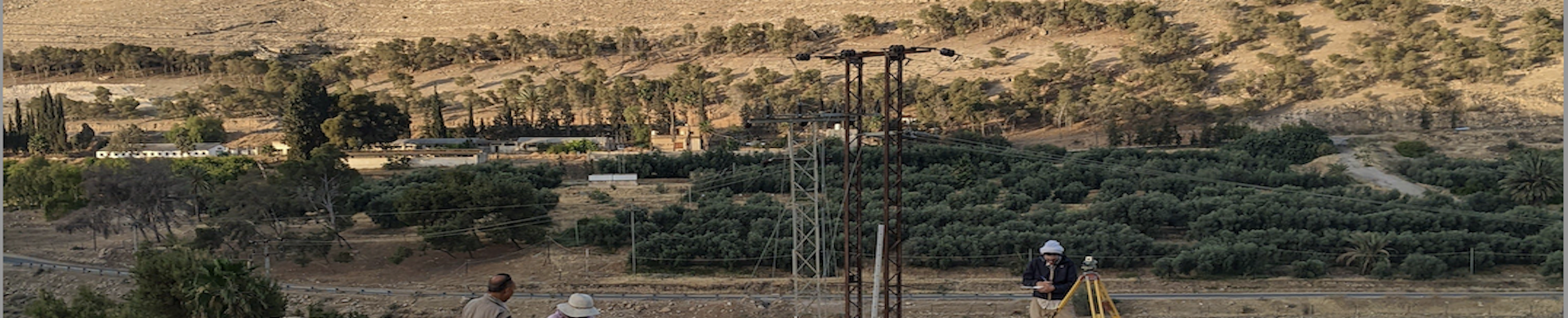
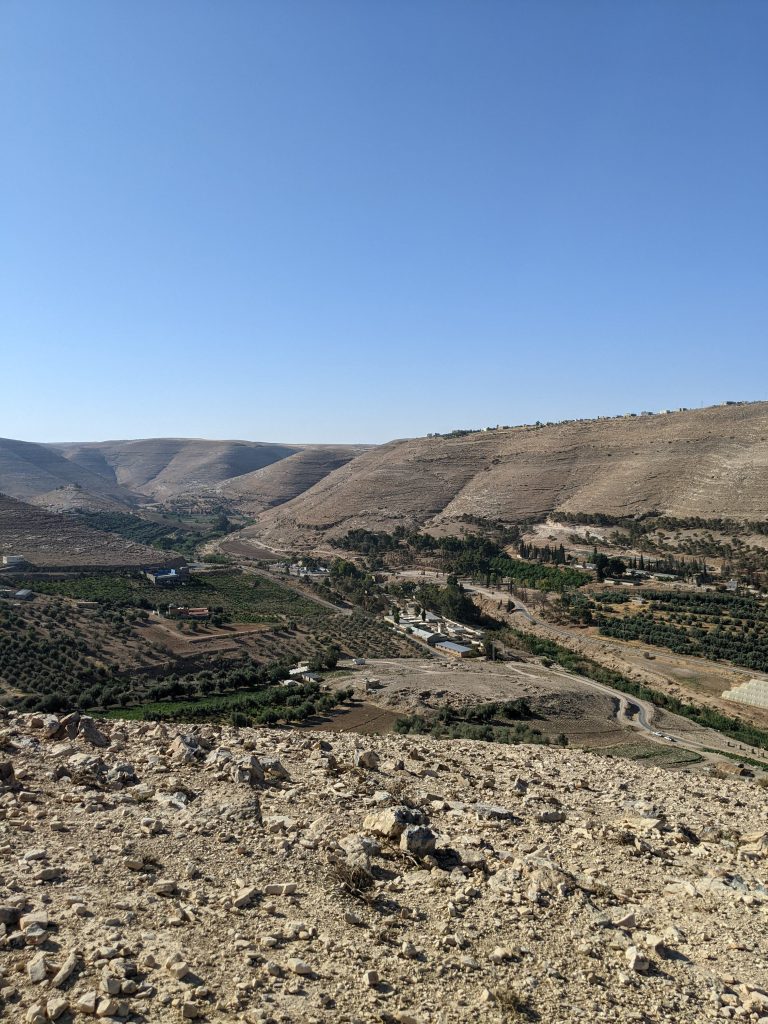
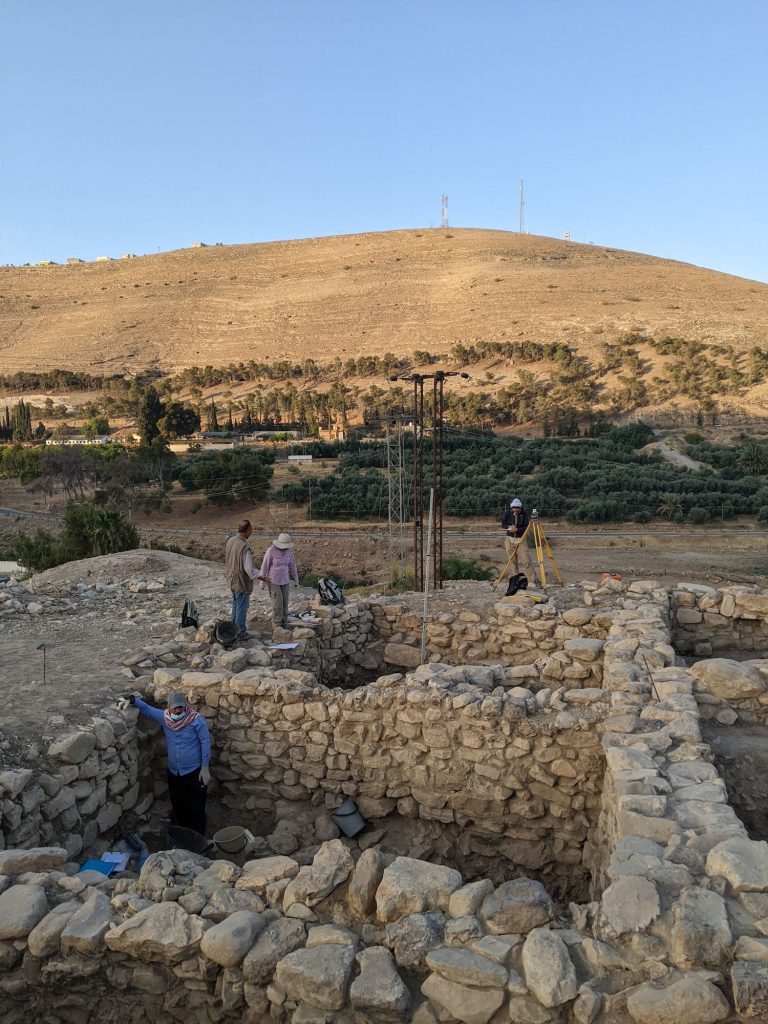
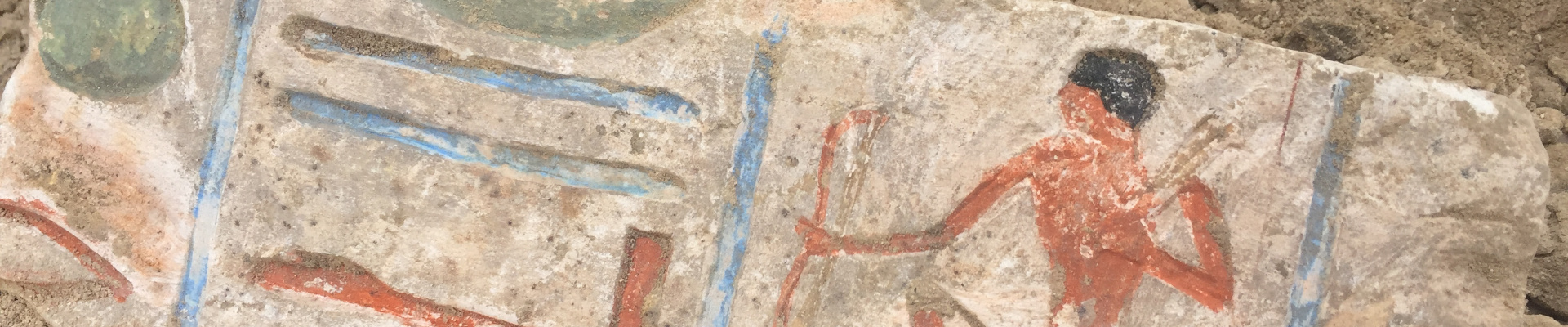
Driving south from the bustling town of Madaba, the sun rises over the rolling plains of the plateau. As we descend into the Wadi al-Wala canyon, the Khirbat Iskandar (KI) mound comes into view. Its position provides visual access east and west along the wadi and south to the slopes that lead into Dhiban. It is easy to see the importance of its position in the landscape. As we climb the gravely path to the site, the sun crests the hill to the east and the light slowly begins to illuminate the EB III and IV contexts in which we have been meticulously working this season.

Khirbat Iskandar and the Wadi al-Wala from above.

Excavations at KI have been ongoing since the 1980s, each season further revealing the site’s significance as an urban settlement during a time often marked by trends of ruralization in the southern Levant. The 2022 field season at KI shed new light on the pivotal Early Bronze III/IV nexus and provided new contexts that help expose the continuation of habitation at the site. We began the season with a clear set of goals divided between three excavation units. With a team of only 10, we were limited in what we could achieve in a set period of time. But with the experience at hand we were able to efficiently and effectively answer questions lingering from seasons before and build upon existing theories about KI’s role during the later EBA. The main objective was to continue to define the phasing for Area C, an excavation field in the southeastern corner of the tell. We aimed to do this by linking loci between trenches with known and new architectural and material phasing. In doing so, we could gain a more well-rounded picture of the associated phasing of the EB IV within Area C and in turn, the EB III/IV horizon.

We were successful in all our excavation goals, but archaeology is about more than just digging. My dissertation research focuses on micro and macro scales of the KI landscape and this field season provided the opportunity to not only develop my understanding of the EB III/IV at the site, but it also allowed me to garner a better appreciation of KI’s position in the greater region. KI’s setting along a possible route of travel is what initially inspired me to explore the connections between EBA sites in the Central Moab area. One of my personal goals this season was to take time to visit other regional sites and the spaces in between to better understand KI’s physical connections to neighboring locales. I was able to do so, moving at my own pace and experiencing these distances between sites, which caused me to think more about other aspects that impact movement and connections between spaces. A visit to the Chalcolithic and EB IA site of Murayghat was particularly impactful. Its position on a plateau surrounded on three sides with slopes covered in dolmens and the fourth side, a sweeping view into the valley below and hilltops beyond, provided a unique context by which to think about the relationships of spaces dedicated to both mortuary and domestic settings and how they could be perceived by visitors. A stop at Bab adh-Dhra’ was likewise a highlight and furthered my interest in the topic of the intersection of the living and dead spaces and how the various uses and perceptions of these spaces may have been communicated throughout the EBA. While I have studied these sites individually and tried to assess their spatial and social proximities digitally, I still lacked the ability to grasp what travel across some of these landforms and distances meant in reality. As I continue to develop my research on landscape-based approaches to the spatial and social connections in the southern Levant, field seasons like this greatly improve my ability to accurately contextualize and represent movement at the time.


Tucker Deady is currently a PhD student at the University of Toronto in the Department of Near and Middle Eastern Civilizations. Tucker’s areas of interest include landscape archaeology, GIS, and the Early Bronze Age of the Southern Levant.
 

Read more about the Khirbat Iskandar project here.

ASOR is now accepting applications for 2023 Fieldwork Participation Scholarships!

Learn more about applying here. 

Want to help more students and early career archaeologists get into the field? Donate to the cause today by selecting “Student Support” as your gift purpose!

FOA Webinar: Sarah Parcak on February 8

FRIENDS OF ASOR WEBINARS

Secrets of Egypt’s Middle Kingdom Capital: el-Lisht

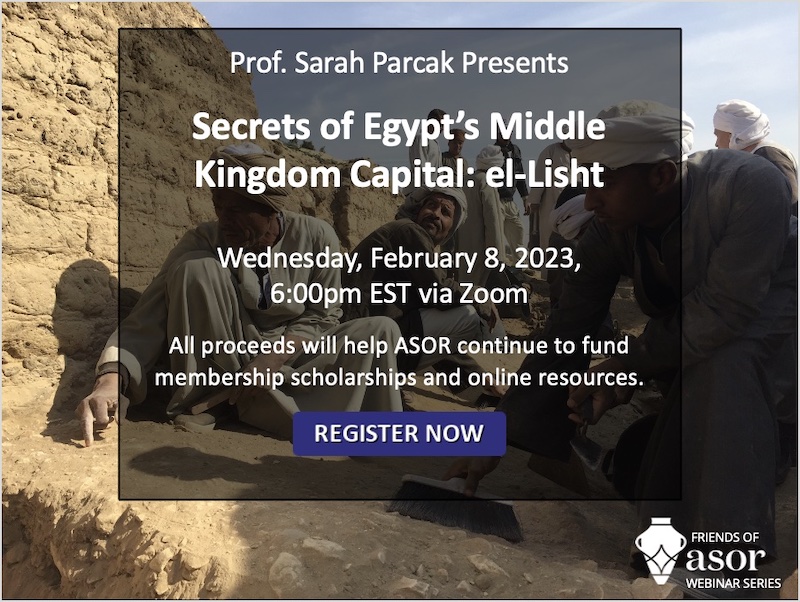
Friends of ASOR present the next webinar in our monthly series on February 8, 2023, at 6:00 pm EST, featuring Prof. Sarah Parcak and moderated by Prof. Kara Cooney. This lecture will discuss exciting new discoveries and ongoing work at the site of Lisht, Egypt. Lisht was Egypt’s Middle Kingdom Capital, called Itj-Tawy, dating to ca. 1900 BCE, and contains the pyramids of the two co-founders of Dynasty 12, Amenemhat 1 and Senwosret 1 (father and son), as well as a cemetery with the tombs of the many thousands of officials, artisans, and soldiers who called Itj-Tawy home. The city itself is buried in the floodplain, and its exact location is not known by Egyptologists. It is Egypt’s greatest primarily unexcavated ancient capital, and contains countless treasures that will help to rewrite the history of a period of time about which we know relatively little compared to Egypt’s Old and New Kingdoms (The Pyramid age and Egypt’s Golden age).

The Lisht Mission, a Joint project between the University of Alabama at Birmingham and Egypt’s Ministry of Antiquities, commenced work in 2015, discovering a tomb of a previously unattested individual, over 800 Middle Kingdom tombs, and the hints of Itj-tawy’s suburbs. We will discuss the project, as well as future plans at the site using new mapping technologies.

Join Prof. Parcak as she uncovers the secrets of this intriguing site and what it can tell us about life in Egypt during the Middle Kingdom period. The webinar will conclude with a Q&A session with fellow Egyptologist, Prof. Kara Cooney (University of California, Los Angeles).

Sarah Parcak, is an Archaeologist and Egyptologist and has worked on excavations in 14 countries across the globe since 1999. Sarah attended Yale University for her BA, and received her M.Phil and PhD degrees from Cambridge University in the UK in 2005. She lectured at the University of Wales-Swansea before starting work in the Dept of Anthropology at the University of Alabama at Birmingham in 2006, where she is now a full Professor.

Sarah is the author of Satellite Remote Sensing For Archaeology (Routledge 2009) and Archaeology from Space: How the Future Shapes Our Past (Henry Holt 2019), which won the Phi Beta Kappa 2020 Book Award for Science, as well as many peer-reviewed academic papers. She is a National Geographic Society Explorer, a Young Global Leader, a Fellow of the Society of Antiquaries, a TED Senior Fellow, winner of the 2016 TED Prize, 2016 recipient of the Smithsonian Institute American Ingenuity Award, a 2018 recipient of the Explorer’s Club Lowell Thomas Award, and a 2020 recipient of the Roy Chapman Andrews Society Distinguished Explorer’s Award.

Sarah serves as the Founder and President of Globalxplorer, a non-profit dedicated to using cutting edge technologies to protect and preserve cultural heritage. She co-directs the Joint Lisht Mission with Egypt’s Ministry of Antiquities, which focuses on the excavation and survey of Egypt’s Middle Kingdom capital. Her research has been featured in multiple BBC-Discovery Channel and PBS-Nova documentaries.

Sarah collaborates with her husband, Dr. Greg Mumford, on multiple archaeology projects, when they are not busy chasing after their 10 year-old son Gabriel, who already knows more about ancient Egypt than they do. Her hobbies include birdwatching, golf, and baking.

This webinar will be recorded and all paid registrants will be sent a link to view the recording.

ASOR Sustaining Members: $0 | ASOR Members: $6 | Public: $12
Season Pass: ASOR Sustaining Members: $0 | ASOR Members: $75 | Public: $150
Buy one here!

To receive your ASOR member discount, log into the online store. If you are new to ASOR, please click on the “New Visitor Registration” link to register your e-mail address and choose a password for our online store. Once logged in, navigate to “Meeting and Event Registration” to register for the webinar and pay the fee. Each paid registrant will receive a confirmation e-mail when you pay for the webinar. If you do not receive this e-mail, then you are not registered. Please e-mail membership@asor.org with any questions or issues with registering.

You will be e-mailed the Zoom Webinar link in the week prior to the lecture on February 8, 2023. If you do not receive the link by the close of business two days before the webinar, please e-mail membership@asor.org immediately. This webinar will be recorded and all paid registrants will be sent a link to view the recording.

All proceeds from this webinar are used to fund scholarships for members as well as increasing ASOR’s online resources, which are free to the public.

READY FOR A WEBINAR SEASON PASS?

Buy a season pass for all the webinars* of the 2022-2023 FOA Webinar Season! 1) You will automatically receive the Zoom link for each webinar so no need to register each time. 2) You will also receive the recording of each webinar automatically after the event.

If you have missed webinars earlier in the season and still want to buy the pass, you will receive the links to the recordings of the webinars you missed in your automatic confirmation email after you buy the pass.

*Special symposiums may be excluded from the season pass price.

No more registering for a year if you buy your pass today!

Pricing:

Members: $75.00
Non-Members: $150.00
ASOR Sustaining Members: $0 (automatic registration for each webinar)
Not a member yet? Click here to join as a member and receive the 50% off a season pass!


Log into our online store to purchase the season pass for 2022-2023. If you are new to ASOR and do not have a record in our store yet, click here to register. After you login, navigate to the left to “Meeting and Event Registration.” Please e-mail membership@asor.org if you have any questions or issues.

WHY SPONSOR A WEBINAR?

Several levels of support from $50-$1,000 are available. Proceeds go towards membership scholarships and towards increasing ASOR’s virtual resources. Each sponsorship is tax-deductible and you can give your friends free registrations to a webinar!

Bronze Level ($50): up to 2 guest registrations
Silver Level ($100): up to 5 guest registrations
Gold Level ($500): up to 20 guest registrations
Platinum Level ($1,000): up to 50 guest registrations

After you sign up for a sponsorship online or over the phone, email the names and email addresses of your guests to Felice Herman at membership@asor.org, who will send your guests a confirmation and the Zoom link before the webinar.

WANT TO SAVE $6.00 ON THE NEXT WEBINAR?

Join ASOR as a member! Click here for more details about discounts for events and other benefits of membership. Memberships start at $40 for the year as an Associate Member.

Not ready to join yet? Become a Friend of ASOR for FREE!

Click here for more details about our online resources.

PAST WEBINARS

You can now purchase the link to the recording of any webinar. You can also purchase the bundle packages of all webinars from the 2020-2022 seasons. Please e-mail membership@asor.org for purchase details.

To see a printable pdf of the webinar titles from the 2020-2021 season, please click here. To see a printable pdf of the webinar titles from the 2021-2022 season, please click here.

Pricing:

Members: $6.00 per recording
Non-Members: $12.00 per recording
Bundle of 2020-2021 Webinars: $75.00
Bundle of 2021-2022 Webinars: $75.00
Bundle of 2020-2022 Webinars: $125.00

2021-2022 Season

A World at War: Protecting Cultural Heritage in Times of Conflict
Patty Gerstenblith (DePaul University), Lisa Ackerman (Columbus Citizens Foundation), Andrew Cohen (Government Professional and Cultural Heritage Expert) | May 12, 2022

Preserving Cultural Heritage in Hisban and Umm al-Jimal, Jordan
Øystein LaBianca (Andrews University), Elizabeth Osinga (Umm al-Jimal Archaeological Project), Darrell Rohl (Calvin University) | April 24, 2022

Back to the Field: Recent Discoveries & Summer Plans 2022
Lorenzo d’Alfonso (ISAW), Kathryn Grossman (NC State University), James R. Strange (Samford University) | April 3, 2022

Uncovering What is Nubian Beneath the Veneer of Egyptianness: Excavating the Archives
Debora Heard (University of Chicago) | March 20, 2022

Where Are They Now?: A Preview of 2022 ASOR-Affiliated Fieldwork Projects
Michael Given (University of Glasgow), Xenia-Paula Kyriakou (Florida Gulf Coast University), Stephen Batiuk (University of Toronto), Monique Roddy (Walla Walla University), Kent Bramlett (La Sierra University), Friedbert Ninow (La Sierra University), and Michael Hoff (University of Nebraska-Lincoln) | March 8, 2022

Excavations at Tel Gezer: A Personal Story
Sam Wolff (Tel Gezer Laboratory) | February 20, 2022

Tel Rehov: A Major Bronze and Iron Age City in the Jordan Valley
Amihai Mazar (Hebrew University of Jerusalem), Nava Panitz-Cohen ( Hebrew University of Jerusalem), Nota Kourou (Athens University), Naama Yahalom-Mack (Hebrew University of Jerusalem), Robert Mullins (Azusa Pacific University) | February 10, 2022

The Not-So-Innocents Abroad: The Beginnings of American Biblical Archaeology
Rachel Hallote (Samford University) | January 20, 2022

Synagogues as Jesus Knew Them
James R. Strange (Samford University) | December 2, 2021

Under Jerusalem: The Buried History of the World’s Most Contested City
Andrew Lawler | November 4, 2021

Jesus and Jerusalem on TV: How Do Bible Documentaries Get Made?
Robert Cargill (University of Iowa) | October 17, 2021

Digging the Divine?: Judahite Pillar Figurines and the Archaeology of Israelite Religion
Erin Darby (University of Tennessee) | October 7, 2021

David, Solomon, and Rehoboam’s Kingdom—The Archaeological Evidence
Yosef Garfinkel (Hebrew University of Jerusalem) | September 19, 2021

From Standing Stones to Sacred Emptiness: Textual and Visual Portrayals of Israel’s God
Theodore Lewis (Johns Hopkins University) | August 29, 2021

2020-2021 Season

Making May Matter: Webinarathon to Endow Diversity
Multiple Speakers | May 21-23, 2021

Archaeogaming: Why Video Games Deserve Their Own Archaeology
Tine Rassalle (University of North Carolina at Chapel Hill), Shannon Martino (Morton College), Matthew Winter (University of Arizona), Michael Zimmerman (Rhode Island) | April 18, 2021

How the Bible Became a Book
William Schniedewind (UCLA) | March 21, 2021

The Mysteries of Mithras in Caesarea: Exploring the Cult’s Rites and Remains
Jane DeRose Evans (Temple University), Alexandra Ratzlaff (Brandeis University) | March 11, 2021

Archaeology and the Hidden Religious Culture of Israelite Women
Carol Meyers (Duke University) | February 21, 2021

Meet the Directors—Fundraiser to Support ASOR’s Affiliated Overseas Research Centers
Matthew J. Adams (AIAR), Pearce Paul Creasman (ACOR), Lindy Crewe (CAARI) | February 11, 2021

Early Synagogues, Jesus, and Galilee—A Jewish Perspective
Eric Meyers (Duke University) | December 13, 2020

Home Sweet Home: Ancient Israelite Households in Context
Cynthia Shafer-Elliott (William Jessup University) | October 18, 2020

Priestesses in the Days of Solomon and Ahab
Susan Ackerman (Dartmouth College) | September 13, 2020

Digging Deeper: How Archaeology Works
Eric H. Cline (The George Washington University) | August 9, 2020

Fieldwork Report: First Name Last Name

[vc_row fullwidth=”true” attached=”true” css=”.vc_custom_1496247803139{padding-top: 0px !important;padding-right: 0px !important;padding-bottom: 0px !important;padding-left: 0px !important;}”][vc_column][vc_single_image image=”96103″ img_size=”full” alignment=”center”][/vc_column][/vc_row][vc_row fullwidth=”true” css=”.vc_custom_1496682730308{padding-top: 10px !important;padding-right: 0px !important;padding-bottom: 0px !important;padding-left: 0px !important;}”][vc_column width=”1/12″ css=”.vc_custom_1496683820796{margin-right: 10px !important;}” offset=”vc_hidden-md vc_hidden-sm vc_hidden-xs”][vc_column_text]

 SHARE

[/vc_column_text][mk_image src=”http://www.asortest.org/wp-content/uploads/2017/01/social-fb-icon4.jpg” image_width=”42″ image_height=”42″ hover=”false” custom_url=”https://www.facebook.com/ASOResearch/” margin_bottom=”0″][mk_image src=”http://www.asortest.org/wp-content/uploads/2017/01/social-tw-icon4.jpg” image_width=”42″ image_height=”42″ hover=”false” custom_url=”https://twitter.com/ASOResearch?ref_src=twsrc%5Egoogle%7Ctwcamp%5Eserp%7Ctwgr%5Eauthor” margin_bottom=”0″][mk_image src=”http://www.asortest.org/wp-content/uploads/2017/01/social-in-icon4.jpg” image_width=”42″ image_height=”42″ hover=”false” custom_url=”https://www.linkedin.com/company/american-schools-of-oriental-research” margin_bottom=”0″][mk_image src=”http://www.asortest.org/wp-content/uploads/2017/01/social-ml-icon_7.jpg” image_width=”42″ image_height=”42″ hover=”false” custom_url=”mailto:info@asor.org” margin_bottom=”0″][mk_image src=”http://www.asortest.org/wp-content/uploads/2017/01/blog-icon3.jpg” image_width=”42″ image_height=”42″ hover=”false” custom_url=”http://asor.org/blog” margin_bottom=”0″][/vc_column][vc_column border_color=”rgba(255,255,255,0.01)” width=”1/6″ css=”.vc_custom_1496683923840{margin-right: 20px !important;border-left-width: 2px !important;padding-right: 20px !important;padding-left: 20px !important;border-left-color: #99422f !important;}”][mk_divider divider_color=”rgba(255,255,255,0.01)” thickness=”1″ margin_top=”3″ margin_bottom=”3″][vc_widget_sidebar sidebar_id=”ca-sidebar-39801″][/vc_column][vc_column border_color=”rgba(170,170,170,0.01)” width=”1/2″ css=”.vc_custom_1487276122024{margin-right: 10px !important;margin-bottom: 30px !important;border-right-width: 2px !important;border-bottom-width: 2px !important;padding-top: 30px !important;padding-right: 30px !important;padding-left: 20px !important;background-color: #ffffff !important;border-right-color: rgba(227,228,228,0.75) !important;border-bottom-color: rgba(227,228,228,0.75) !important;}”][vc_column_text responsive_align=”left”]

Dig Cyprus: A Story of Cherishment, Craziness, and Cats

Noah Barton, Undergraduate University Student[/vc_column_text][mk_divider][vc_wp_text]This summer I had the pleasure of attending an archaeological field school in Cyprus with North Carolina State University. The program – Cyprus Archaeological Field School – is directed by two of my past professors and has been occurring yearly since 2017. I arrived in Cyprus on May 20, 2022. The island is beautiful; every turn has a clear blue ocean, incredible mountains and hillsides, or luscious forests. A pleasant surprise was that Cyprus is loaded with wild cats – there are more cats on the island than humans, in fact – and most of them are friendly. The only downside is that it was very humid, but that’s to be expected for an island near the Middle-East in June. The archaeological site I helped excavate is called Makounta-Voules, which appears to have been the home of a copper-mining group between 5000 and 7000 years ago. They used stone tools and had a large interest in picrolite – a bright green stone – which they sculpted into figurines and pendants. In addition to picrolite, our team also searched for evidence of stone tools and pieces of pottery (also known as sherds), bone (human and non-human), and shells that were used to create jewelry.

Every morning, I woke up at 4:20 am and got on a bus with all the other students. We went straight to the site and started working right away. The entire team was divided into groups of four, with three students and one supervisor. The archaeological method of digging is very systematic; each group dug a hole that was square-shaped and 4 meters wide, known as a trench. We usually dug five centimeters down at a time across the entire surface of the trench before digging any farther. In each group, the students worked together to break up the compact dirt with a pickaxe, shovel up all the newly-made piles of loose dirt, and sift through that dirt to find artifacts. We also straightened out the walls of the trench, known as balk walls. After the team got back to the hotel and ate lunch, we spent an hour or two washing the artifacts that we dug up. This was done by scrubbing them with a toothbrush and soaking them in water. About three nights per week, we also had a lecture that was given by one of the supervisors. The topics ranged from the entire history of Cyprus to different processes and ethics in archaeology.[/vc_wp_text][vc_row_inner][vc_column_inner][vc_single_image image=”95649″ img_size=”full” add_caption=”yes” alignment=”center” onclick=”img_link_large” img_link_target=”_blank” css=”.vc_custom_1710779963494{padding-right: 10px !important;}”][vc_single_image image=”95650″ img_size=”full” add_caption=”yes” alignment=”center” onclick=”img_link_large” img_link_target=”_blank” css=”.vc_custom_1710780038183{padding-right: 10px !important;}”][/vc_column_inner][/vc_row_inner][mk_padding_divider][vc_wp_text]

Every Friday we took a break from digging and went on field trips. During each trip, we visited at least one excavated archaeological site, one museum, and one local beach (except Nicosia). In Nea Paphos, we visited Kissonerga and Lemba, the Paphos museum, and Vardas beach. In Palaepaphos, we visited Prastio and Souskiou, Aphrodite’s temple, and Petra Tou Romeou beach, which is the legendary birthplace of Aphrodite. In Kourion we visited Kolossi, the Kourion museum, and Kourion beach. While in Nicosia we visited the Cyprus Museum, which was the most expansive museum of all.

Every Saturday was a free day for the students to do whatever they wanted. On the first free day, my friends and I went on a cruise, where we saw incredible views on the ocean and swam in the clear blue Mediterranean sea. On another free day, my friends and I hiked up Aphrodite’s trail, revealing the best views of the entire trip. I didn’t make any excursions on my fourth free day. Our fifth free day was spent in Nicosia, the country’s capital. My friends and I explored the city and later celebrated one friend’s birthday at bars and clubs.

On the final day, most students took a final exam; I did not as I didn’t need credit for an Anthropology major, and instead wrote two research essays to get credit for my History major. I left Cyprus on June 25, 2022, ending a wonderful five weeks of excavation and adventure.[/vc_wp_text][vc_single_image image=”95651″ img_size=”full” add_caption=”yes” alignment=”center” onclick=”img_link_large” img_link_target=”_blank” css=”.vc_custom_1710780131829{padding-right: 10px !important;}”][vc_single_image image=”95652″ img_size=”full” add_caption=”yes” alignment=”center” onclick=”img_link_large” img_link_target=”_blank” css=”.vc_custom_1710780182039{padding-right: 10px !important;}”][mk_padding_divider][vc_wp_text]Noah Barton is a senior at North Carolina State University, double-majoring in International Studies and History and minoring in Latin. He lives in Raleigh, North Carolina and enjoys history, music, and traveling.

The Archaeological Project’s Website: https://makountavoules.com/

The Archaeological Project’s Facebook Page: https://www.facebook.com/makountavoules/[/vc_wp_text][mk_divider][vc_wp_text]Want to help more students and early career archaeologists get into the field? Donate to the cause today by selecting “Excavation Scholarships” as your gift purpose!

[/vc_wp_text][mk_padding_divider][/vc_column][vc_column border_color=”rgba(170,170,170,0.01)” width=”1/6″ css=”.vc_custom_1496684098866{margin-right: 5px !important;margin-bottom: 20px !important;border-right-width: 2px !important;border-bottom-width: 2px !important;padding-top: 30px !important;padding-right: 10px !important;padding-left: 10px !important;background-color: #ffffff !important;border-right-color: rgba(227,228,228,0.75) !important;border-bottom-color: rgba(227,228,228,0.75) !important;}”][vc_wp_posts title=”BROWSE THE NEWS ARCHIVE” number=”4″][/vc_column][vc_column border_color=”rgba(170,170,170,0.01)” width=”1/6″ css=”.vc_custom_1496684008271{margin-right: 10px !important;margin-bottom: 30px !important;border-right-width: 2px !important;border-bottom-width: 2px !important;padding-top: 30px !important;padding-right: 20px !important;padding-left: 20px !important;background-color: #ffffff !important;border-right-color: rgba(227,228,228,0.75) !important;border-bottom-color: rgba(227,228,228,0.75) !important;}”][vc_column_text] [/vc_column_text][/vc_column][/vc_row]

Fieldwork Report: Pauline Allaire

[vc_row fullwidth=”true” attached=”true” css=”.vc_custom_1496247803139{padding-top: 0px !important;padding-right: 0px !important;padding-bottom: 0px !important;padding-left: 0px !important;}”][vc_column][vc_single_image image=”95640″ img_size=”full” alignment=”center”][/vc_column][/vc_row][vc_row fullwidth=”true” css=”.vc_custom_1496682730308{padding-top: 10px !important;padding-right: 0px !important;padding-bottom: 0px !important;padding-left: 0px !important;}”][vc_column width=”1/12″ css=”.vc_custom_1496683820796{margin-right: 10px !important;}” offset=”vc_hidden-md vc_hidden-sm vc_hidden-xs”][vc_column_text]

 SHARE

[/vc_column_text][mk_image src=”http://www.asortest.org/wp-content/uploads/2017/01/social-fb-icon4.jpg” image_width=”42″ image_height=”42″ hover=”false” custom_url=”https://www.facebook.com/ASOResearch/” margin_bottom=”0″][mk_image src=”http://www.asortest.org/wp-content/uploads/2017/01/social-tw-icon4.jpg” image_width=”42″ image_height=”42″ hover=”false” custom_url=”https://twitter.com/ASOResearch?ref_src=twsrc%5Egoogle%7Ctwcamp%5Eserp%7Ctwgr%5Eauthor” margin_bottom=”0″][mk_image src=”http://www.asortest.org/wp-content/uploads/2017/01/social-in-icon4.jpg” image_width=”42″ image_height=”42″ hover=”false” custom_url=”https://www.linkedin.com/company/american-schools-of-oriental-research” margin_bottom=”0″][mk_image src=”http://www.asortest.org/wp-content/uploads/2017/01/social-ml-icon_7.jpg” image_width=”42″ image_height=”42″ hover=”false” custom_url=”mailto:info@asor.org” margin_bottom=”0″][mk_image src=”http://www.asortest.org/wp-content/uploads/2017/01/blog-icon3.jpg” image_width=”42″ image_height=”42″ hover=”false” custom_url=”http://asor.org/blog” margin_bottom=”0″][/vc_column][vc_column border_color=”rgba(255,255,255,0.01)” width=”1/6″ css=”.vc_custom_1496683923840{margin-right: 20px !important;border-left-width: 2px !important;padding-right: 20px !important;padding-left: 20px !important;border-left-color: #99422f !important;}”][mk_divider divider_color=”rgba(255,255,255,0.01)” thickness=”1″ margin_top=”3″ margin_bottom=”3″][vc_widget_sidebar sidebar_id=”ca-sidebar-39801″][/vc_column][vc_column border_color=”rgba(170,170,170,0.01)” width=”1/2″ css=”.vc_custom_1487276122024{margin-right: 10px !important;margin-bottom: 30px !important;border-right-width: 2px !important;border-bottom-width: 2px !important;padding-top: 30px !important;padding-right: 30px !important;padding-left: 20px !important;background-color: #ffffff !important;border-right-color: rgba(227,228,228,0.75) !important;border-bottom-color: rgba(227,228,228,0.75) !important;}”][vc_column_text responsive_align=”left”]

Why is excavating in Hazor such an amazing experience?

Pauline Allaire, 2022 Stevan B. Dana Scholarship for Fieldwork Participation[/vc_column_text][mk_divider][vc_wp_text]Archaeological excavations are always a significant step in the training of an archaeologist. I already had the opportunity to participate in several excavation campaigns but only in France, that’s why I was very elated to be able to participate in this excavation campaign in Israel, on the famous site of Hazor. This experience was rich and exotic in many ways.

At the beginning of the trip, the first step was to take the plane. It was the first time I had to make a trip with a stopover, it was stressful, but once this step was over, the adventure could really begin. As soon as I arrived in Israel, I chose to observe as much of my surroundings as possible to make the most of my memories. The airport was full of people looking for their loved ones, with huge welcome balloons and various posters of all kinds. The last step of my journey was to get to the kibbutz, the place where we were staying during the search. I had to take the train and the bus for almost three hours. Despite some difficulties in finding my way around, I finally arrived at the place thanks to the help of some very nice Israelis, who really did their best to help me. It was so nice![/vc_wp_text][vc_row_inner][vc_column_inner][vc_single_image image=”95641″ img_size=”full” add_caption=”yes” alignment=”center” onclick=”img_link_large” img_link_target=”_blank” css=”.vc_custom_1710776738379{padding-right: 10px !important;}”][mk_divider][/vc_column_inner][/vc_row_inner][mk_padding_divider][vc_wp_text]

Once I arrived at the port, I discovered my living space for the next three weeks. It’s quite different from what you can find in France. The kibbutz is Israeli farming communities where mutual aid is at the heart of life. For example, people who work in the community are housed and fed. The residents can eat together in a large hall. The landscape also surprised me. There are innumerable small hills with evenly spaced trees. Many fruit trees are present, as well as prickly pears. The overall atmosphere is rather desert-like, and it is very hot. Being from the north of France, this was completely different from what I was used to seeing. The animals were also surprising. If I was lucky enough to meet few scorpions and snakes, the countless lizards never ceased to make me smile, climbing trees, running around and sometimes even fighting.

Finally, of course, the archaeological site of Hazor filled my eyes with stars. This is a very special archaeological site. It is one of the largest sites in Israel. It is located north of Lake Tiberias. It can be divided into an “upper city” which is on a tell, a kind of hill, and a “lower city” which is much larger, as is often the case in the Near East, with a total area of about 80 hectares. There are temples, palaces, and administrative buildings. It is an important site essentially for the Bronze and Iron Ages, from 2600 BC to its destruction by the Assyrians in 732 BC. It was identified in 1875. It has been inscribed on the UNESCO World Heritage List since 2005. And today it is also a national park.[/vc_wp_text][vc_single_image image=”95642″ img_size=”full” add_caption=”yes” alignment=”center” onclick=”img_link_large” img_link_target=”_blank” css=”.vc_custom_1710776429463{padding-right: 10px !important;}”][mk_divider][vc_single_image image=”95643″ img_size=”full” add_caption=”yes” alignment=”center” onclick=”img_link_large” img_link_target=”_blank” css=”.vc_custom_1710776465463{padding-right: 10px !important;}”][mk_divider][vc_row_inner][vc_column_inner][vc_wp_text]It is also a biblical site and is mentioned several times (eighteen times). One of the strata is said to have been built during the reign of Solomon, the prophet and king of Israel in the Bible. The excavation campaign was led by Professor Amnon Ben-Tor, assisted by Igor Kreimerman and Deborah (Deby) Sandhaus. The focus this year was on Area M, which was the supposed entrance to the Bronze Age palace and storage areas. The aim was also to find the stairs of the palace. Although I was used to digging and already knew some of the excavation methods, it was still a learning session. I learned to understand the layering of stratigraphic layers. For example, learning which pavement above which pavement or which walls are from the same period.  The best moment to teach my eye to recognise archaeological remains was certainly the reading of ceramics. In the evening, at about 5 p.m., we would meet up with the other excavators from our area, M69 for me, to analyse the ceramics that we had washed in the morning. We had to understand the damaged fragments of pottery to find the type of container and to give a date. The pieces that interested us were the characteristic pieces such as the lips and the hooves if they had seals or marks. The next step was to define the orientation of the lip to find the opening of the container and thus to define its type: jar, crater, cooking pot, etc. Finally, it was necessary to establish a dating, essentially Bronze Age or Iron Age depending on the decoration or the material. This is something that I found very interesting because it allowed us to use our knowledge concretely, and we had to adapt to each little piece that was in front of us. This site was impressive because of the size of the archaeological site, but also because of the discoveries, each one more interesting than the other. I can’t wait for all this to be published.[/vc_wp_text][vc_single_image image=”95644″ img_size=”full” add_caption=”yes” alignment=”center” onclick=”img_link_large” img_link_target=”_blank” css=”.vc_custom_1710776634696{padding-right: 10px !important;}”][mk_divider][vc_wp_text]Finally, one of the last elements that makes this workcamp a rich experience is its international aspect. Indeed, although the workcamp is under the supervision of the Hebrew University of Jerusalem, there are students and volunteers of all nationalities. For example, this year I was able to meet American, Swedish, Spanish, and of course Israeli students. This great diversity of cultures is for me one of the strong points of this workcamp. It allows us to compare points of view, to understand each other’s visions and ways of learning. But also, to laugh at each other’s clichés and to learn about new cultures.

It is for all this that I am very grateful to have been able to participate in this experience thanks to the ASOR association and my benefactor Mr. Stevan B. Dana. I would also like to thank my various colleagues on the dig for their good atmosphere and their motivation, as well as the people in charge of the dig for their transmission of knowledge and their patience.[/vc_wp_text][/vc_column_inner][/vc_row_inner][mk_divider][vc_wp_text]Pauline Allaire completed her undergraduate degree at the Ecole du Louvre in Paris and is currently studying for a master’s degree in the history and archaeology of the ancient worlds, specialising in Egyptology, at the Université Paul Valery Montpellier 3 (France).

Archaeological excavation network links:

Instagram: @hazor.excavations https://www.instagram.com/hazor.excavations/?hl=fr

Website: http://www.hazor-excavations.org/[/vc_wp_text][mk_divider][vc_wp_text]Want to help more students and early career archaeologists get into the field? Donate to the cause today by selecting “Excavation Scholarships” as your gift purpose!

[/vc_wp_text][mk_padding_divider][/vc_column][vc_column border_color=”rgba(170,170,170,0.01)” width=”1/6″ css=”.vc_custom_1496684098866{margin-right: 5px !important;margin-bottom: 20px !important;border-right-width: 2px !important;border-bottom-width: 2px !important;padding-top: 30px !important;padding-right: 10px !important;padding-left: 10px !important;background-color: #ffffff !important;border-right-color: rgba(227,228,228,0.75) !important;border-bottom-color: rgba(227,228,228,0.75) !important;}”][vc_wp_posts title=”BROWSE THE NEWS ARCHIVE” number=”4″][/vc_column][vc_column border_color=”rgba(170,170,170,0.01)” width=”1/6″ css=”.vc_custom_1496684008271{margin-right: 10px !important;margin-bottom: 30px !important;border-right-width: 2px !important;border-bottom-width: 2px !important;padding-top: 30px !important;padding-right: 20px !important;padding-left: 20px !important;background-color: #ffffff !important;border-right-color: rgba(227,228,228,0.75) !important;border-bottom-color: rgba(227,228,228,0.75) !important;}”][vc_column_text] [/vc_column_text][/vc_column][/vc_row]

FOA Webinar: Katie Paul on January 26

FRIENDS OF ASOR WEBINARS

Antiquities Trafficking in the Age of Social Media: How Big Tech Facilitates and Profits from the Digital Black Market

Friends of ASOR present the next webinar in our monthly series on January 26, 2023, at 6:00pm EST, featuring Katie A. Paul and moderated by Prof. Eric Cline. From the invasion of Ukraine to conflict in Syria, tech platforms like Facebook, YouTube, and TikTok have democratized global engagement in black markets. A new generation of tech-driven traffickers are capitalizing on Big Tech’s unregulated algorithms to maximize reach. Tech companies and traffickers alike profit from crime, providing monetization tools for antiquities looters to make money even without a sale.

When it comes to trafficking of cultural heritage and the financing of terrorism and organized crime, Big Tech platforms like Facebook and YouTube have provided digital toolkits that not only facilitate, but also accelerate the black market in cultural property while lining the pockets of both terror groups and tech companies alike.

Since 2018, the ATHAR Project has tracked networks of black-market antiquities trafficking groups across Facebook and other Big Tech platforms and documented thousands of artifacts trafficked in private and public Facebook groups to preserve critical evidence of looting and trafficking in the MENA region.

Technology companies have largely allowed traffickers and extremists to utilize these tools with impunity. The reach provided by Big Tech platforms has added a new dimension to terror finance and transnational crime, enabling illicit actors to more effectively traffic artifacts and finance their activities.

Facebook announced a ban of the trade of artifacts on its platform in June 2020. But a policy is only as valuable as its enforcement, and despite our multiple efforts to report antiquities trafficking content, Facebook makes no attempt to enforce their policy. Facebook is essentially knowingly facilitating the trafficking of cultural property that can amount to war crimes—and profiting from it.

No innovation of this kind has previously been so readily available to terror groups, transnational criminal organizations, or the average looter as it is today. The ATHAR Project’s years of research on Big Tech’s antiquities black market gives new insights into the next generation of traffickers and the type of regulation needed to reel in the growth of online black markets.

Join Katie Paul as she exposes the illegalities that lurk in plain sight on your favorite social media platforms. The webinar will conclude with a live Q&A session moderated by Prof. Eric Cline (The George Washington University).

Katie A. Paul (@AnthroPaulicy) is an anthropologist and investigative researcher who serves as the director of the Tech Transparency Project (TTP), where she specializes in tracking extremism, disinformation, and criminal activity on online platforms such as Facebook. She also serves as co-director and co-founder of the Antiquities Trafficking and Heritage Anthropology Research (ATHAR) Project and a founding member of the Alliance to Counter Crime Online (ACCO) where she focuses on trafficking, terror finance, and organized crime facilitated by Big Tech platforms.

Previously, Katie served as chief of staff and a research fellow at the Antiquities Coalition, a Washington, DC-based non-profit dedicated to combating cultural racketeering. She holds a bachelor’s degree from Miami University (OH) with a double major in Anthropology and Ancient Greek and earned an M.A. in Anthropology at The George Washington University.

This webinar will be recorded and all paid registrants will be sent a link to view the recording.

ASOR Sustaining Members: $0 | ASOR Members: $6 | Public: $12
Season Pass: ASOR Sustaining Members: $0 | ASOR Members: $75 | Public: $150
Buy one here!

To receive your ASOR member discount, log into the online store. If you are new to ASOR, please click on the “New Visitor Registration” link to register your e-mail address and choose a password for our online store. Once logged in, navigate to “Meeting and Event Registration” to register for the webinar and pay the fee. Each paid registrant will receive a confirmation e-mail when you pay for the webinar. If you do not receive this e-mail, then you are not registered. Please e-mail membership@asor.org with any questions or issues with registering.

You will be e-mailed the Zoom Webinar link in the week prior to the lecture on January 26, 2023. If you do not receive the link by the close of business two days before the webinar, please e-mail membership@asor.org immediately. This webinar will be recorded and all paid registrants will be sent a link to view the recording.

All proceeds from this webinar are used to fund scholarships for members as well as increasing ASOR’s online resources, which are free to the public.

READY FOR A WEBINAR SEASON PASS?

Buy a season pass for all the webinars* of the 2022-2023 FOA Webinar Season! 1) You will automatically receive the Zoom link for each webinar so no need to register each time. 2) You will also receive the recording of each webinar automatically after the event.

If you have missed webinars earlier in the season and still want to buy the pass, you will receive the links to the recordings of the webinars you missed in your automatic confirmation email after you buy the pass.

*Special symposiums may be excluded from the season pass price.

No more registering for a year if you buy your pass today!

Pricing:

Members: $75.00
Non-Members: $150.00
ASOR Sustaining Members: $0 (automatic registration for each webinar)
Not a member yet? Click here to join as a member and receive the 50% off a season pass!


Log into our online store to purchase the season pass for 2022-2023. If you are new to ASOR and do not have a record in our store yet, click here to register. After you login, navigate to the left to “Meeting and Event Registration.” Please e-mail membership@asor.org if you have any questions or issues.

WHY SPONSOR A WEBINAR?

Several levels of support from $50-$1,000 are available. Proceeds go towards membership scholarships and towards increasing ASOR’s virtual resources. Each sponsorship is tax-deductible and you can give your friends free registrations to a webinar!

Bronze Level ($50): up to 2 guest registrations
Silver Level ($100): up to 5 guest registrations
Gold Level ($500): up to 20 guest registrations
Platinum Level ($1,000): up to 50 guest registrations

After you sign up for a sponsorship online or over the phone, email the names and email addresses of your guests to Felice Herman at membership@asor.org, who will send your guests a confirmation and the Zoom link before the webinar.

WANT TO SAVE $6.00 ON THE NEXT WEBINAR?

Join ASOR as a member! Click here for more details about discounts for events and other benefits of membership. Memberships start at $40 for the year as an Associate Member.

Not ready to join yet? Become a Friend of ASOR for FREE!

Click here for more details about our online resources.

PAST WEBINARS

You can now purchase the link to the recording of any webinar. You can also purchase the bundle packages of all webinars from the 2020-2022 seasons. Please e-mail membership@asor.org for purchase details.

To see a printable pdf of the webinar titles from the 2020-2021 season, please click here. To see a printable pdf of the webinar titles from the 2021-2022 season, please click here.

Pricing:

Members: $6.00 per recording
Non-Members: $12.00 per recording
Bundle of 2020-2021 Webinars: $75.00
Bundle of 2021-2022 Webinars: $75.00
Bundle of 2020-2022 Webinars: $125.00

2021-2022 Season

A World at War: Protecting Cultural Heritage in Times of Conflict
Patty Gerstenblith (DePaul University), Lisa Ackerman (Columbus Citizens Foundation), Andrew Cohen (Government Professional and Cultural Heritage Expert) | May 12, 2022

Preserving Cultural Heritage in Hisban and Umm al-Jimal, Jordan
Øystein LaBianca (Andrews University), Elizabeth Osinga (Umm al-Jimal Archaeological Project), Darrell Rohl (Calvin University) | April 24, 2022

Back to the Field: Recent Discoveries & Summer Plans 2022
Lorenzo d’Alfonso (ISAW), Kathryn Grossman (NC State University), James R. Strange (Samford University) | April 3, 2022

Uncovering What is Nubian Beneath the Veneer of Egyptianness: Excavating the Archives
Debora Heard (University of Chicago) | March 20, 2022

Where Are They Now?: A Preview of 2022 ASOR-Affiliated Fieldwork Projects
Michael Given (University of Glasgow), Xenia-Paula Kyriakou (Florida Gulf Coast University), Stephen Batiuk (University of Toronto), Monique Roddy (Walla Walla University), Kent Bramlett (La Sierra University), Friedbert Ninow (La Sierra University), and Michael Hoff (University of Nebraska-Lincoln) | March 8, 2022

Excavations at Tel Gezer: A Personal Story
Sam Wolff (Tel Gezer Laboratory) | February 20, 2022

Tel Rehov: A Major Bronze and Iron Age City in the Jordan Valley
Amihai Mazar (Hebrew University of Jerusalem), Nava Panitz-Cohen ( Hebrew University of Jerusalem), Nota Kourou (Athens University), Naama Yahalom-Mack (Hebrew University of Jerusalem), Robert Mullins (Azusa Pacific University) | February 10, 2022

The Not-So-Innocents Abroad: The Beginnings of American Biblical Archaeology
Rachel Hallote (Samford University) | January 20, 2022

Synagogues as Jesus Knew Them
James R. Strange (Samford University) | December 2, 2021

Under Jerusalem: The Buried History of the World’s Most Contested City
Andrew Lawler | November 4, 2021

Jesus and Jerusalem on TV: How Do Bible Documentaries Get Made?
Robert Cargill (University of Iowa) | October 17, 2021

Digging the Divine?: Judahite Pillar Figurines and the Archaeology of Israelite Religion
Erin Darby (University of Tennessee) | October 7, 2021

David, Solomon, and Rehoboam’s Kingdom—The Archaeological Evidence
Yosef Garfinkel (Hebrew University of Jerusalem) | September 19, 2021

From Standing Stones to Sacred Emptiness: Textual and Visual Portrayals of Israel’s God
Theodore Lewis (Johns Hopkins University) | August 29, 2021

2020-2021 Season

Making May Matter: Webinarathon to Endow Diversity
Multiple Speakers | May 21-23, 2021

Archaeogaming: Why Video Games Deserve Their Own Archaeology
Tine Rassalle (University of North Carolina at Chapel Hill), Shannon Martino (Morton College), Matthew Winter (University of Arizona), Michael Zimmerman (Rhode Island) | April 18, 2021

How the Bible Became a Book
William Schniedewind (UCLA) | March 21, 2021

The Mysteries of Mithras in Caesarea: Exploring the Cult’s Rites and Remains
Jane DeRose Evans (Temple University), Alexandra Ratzlaff (Brandeis University) | March 11, 2021

Archaeology and the Hidden Religious Culture of Israelite Women
Carol Meyers (Duke University) | February 21, 2021

Meet the Directors—Fundraiser to Support ASOR’s Affiliated Overseas Research Centers
Matthew J. Adams (AIAR), Pearce Paul Creasman (ACOR), Lindy Crewe (CAARI) | February 11, 2021

Early Synagogues, Jesus, and Galilee—A Jewish Perspective
Eric Meyers (Duke University) | December 13, 2020

Home Sweet Home: Ancient Israelite Households in Context
Cynthia Shafer-Elliott (William Jessup University) | October 18, 2020

Priestesses in the Days of Solomon and Ahab
Susan Ackerman (Dartmouth College) | September 13, 2020

Digging Deeper: How Archaeology Works
Eric H. Cline (The George Washington University) | August 9, 2020

Collections Fellowship Report: Matthew Suriano

2022 Study of Collections Fellowship Report: The Unpublished Materials of Charles Clermont-Ganneau

Matthew J. Suriano, University of Maryland

Through the support of the Collections Fellowship I was able to spend several days in Paris working at the Institut de France in the Académie des inscriptions et belles-lettres (AIBL). There, I studied the unpublished materials of Charles Clermont-Ganneau that are in the Cabinet du Corpus Inscriptionum Semiticarum (CIS). Access to this collection was granted by the kind permission of Christian Robin, the AIBL’s director. In Paris, I worked with Maria Gorea, the director of the Cabinet du CIS, where I benefited from her knowledge of Clermont-Ganneau and her ability to decipher his difficult handwriting. Dr. Gorea and her student Noémie Carpentier also were of great assistance with French technical terms that I came across in Clermont-Ganneau’s writings.

The research is part of my larger project on the Hebrew funerary inscriptions from Silwan, which include the Royal Steward Inscription. That inscription together with a shorter inscription were first documented by Clermont-Ganneau in Silwan in 1870. He eventually purchased them for the British Museum, where they reside today. This summer in London I was able to study Clermont-Ganneau’s correspondence with the British Museum in the museum’s archives. My work in Paris, supported by the ASOR Collections Fellowship, continued my investigation into the acquisition of the artifacts. Clermont-Ganneau’s papers in the Cabinet du CIS shed important light on two aspects involving the Hebrew epigraphic sources. First his papers describe the French diplomat / archaeologist’s efforts to buy the inscriptions from the Arab homeowner in Silwan, including details on how the inscriptions were extracted. Much of this information was left out of his 1899 published account of his discovery. Second, his notes, drawings, squeezes and casts (plaster and papier-mâché) reveal the extent of his work to translate the inscriptions, as well as his plans –ultimately unfilled– plans to publish them.

Access to Clermont-Ganneau’s papers was critical for my project, which seeks to publish the first comprehensive edition of the funerary inscriptions from Silwan. My collections study in Paris will allow me to write a chapter on the history of research that provides insight into the events that led to the acquisition of a famous Hebrew artifact from Jerusalem that is today prominently displayed in the British Museum.

Interested in applying for a 2023 Study of Collections Fellowship? The deadline is February 28.

Learn more about applying here.