2025 Annual Meeting Recap

ASOR 2025 Annual Meeting Recap

Boston and Hybrid | November 19-22

ASOR held its hybrid Annual Meeting last month, November 19-22, at the Hilton Boston Park Plaza and online. More than 1,100 people were registered for the meeting, with approximately 950 attending in Boston.

The hybrid format of the meeting offered a way for attendees in Boston and online to share their research on an international platform. There were more than 600 paper, poster, and workshop presentations given on the academic program. ASOR’s Annual Meeting Mobile App (powered by Guidebook) provided means for in-person and virtual attendees to connect and to build personalized schedules.

If you attended the 2025 Annual Meeting in Boston or online, please complete the 2025 Annual Meeting Evaluation to provide valuable feedback that will be considered as we plan for 2026 and beyond.

Read on for a summary of the 2025 Annual Meeting, including features from the academic program, the business schedule, special events, and the 2025 ASOR Honors & Awards.
Not for use without permission.

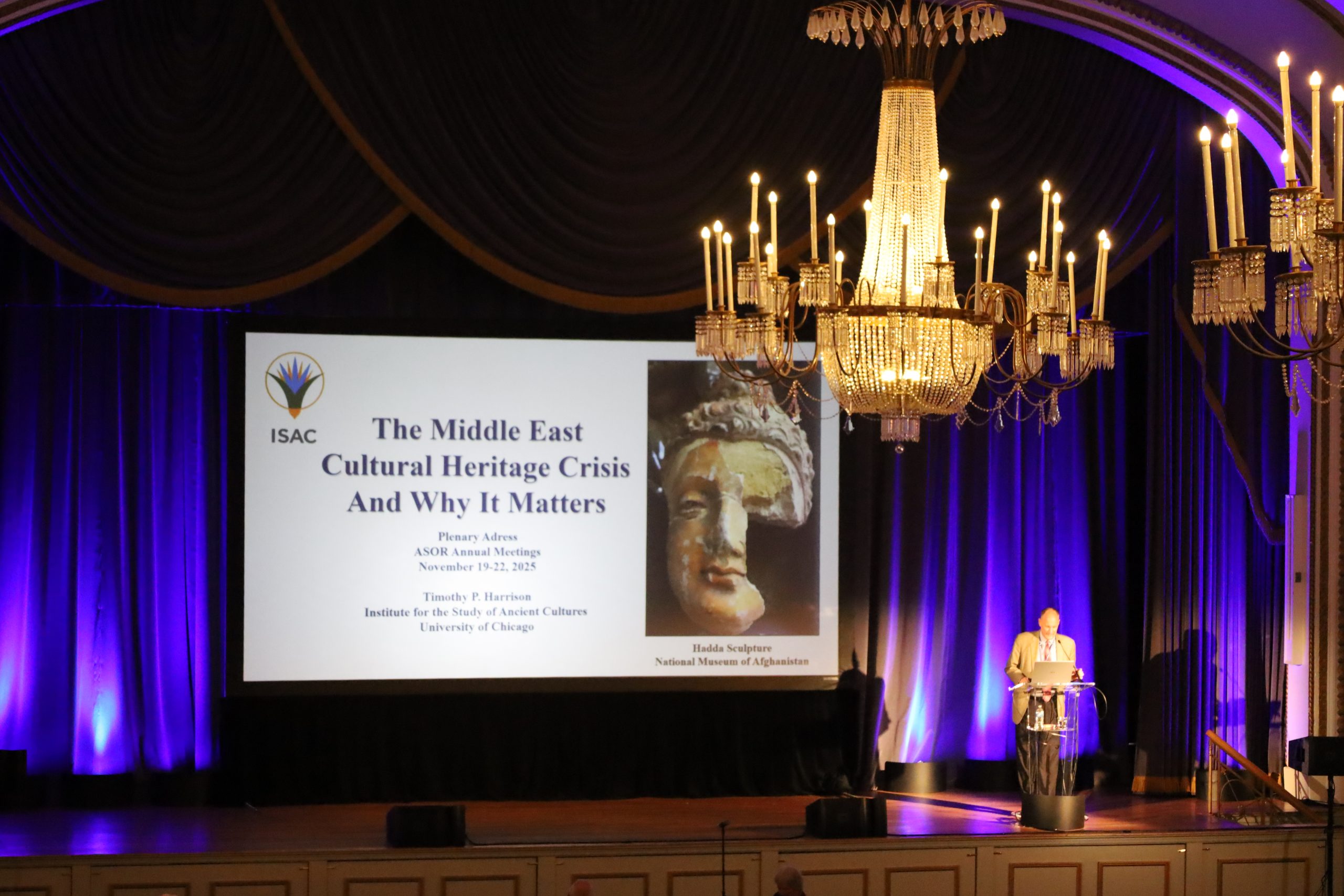
The 2025 hybrid Annual Meeting opened on Wednesday, November 19, with the Plenary Address by Dr. Timothy P. Harrison (Director of the Institute for the Study of Ancient Cultures (ISAC) and Professor of Near Eastern Archaeology at the University of Chicago) titled, The Middle East Cultural Heritage Crisis and Why It Matters. The presentation generated a lot of discussion and enthusiasm, which continued throughout the evening at the Welcome Reception. View the Opening Remarks from ASOR’s Executive Director and President, as well as the Plenary Address by Dr. Timothy P. Harrison here.

The sessions, workshops, and posters on the academic program took place Thursday through Saturday, November 20-22. There were over 125 sessions and workshops with presenters representing 30 countries. The Poster Session featured more than 40 projects shared in Boston, as well as a virtual poster gallery. Online attendees could join sessions and workshops via Zoom from the 2025 ASOR Online Schedule. This was a valuable resource, not only for those who are unable to travel, but also for local registrants who had to be on campus or at their office during portions of the meeting that they would have otherwise missed. Session and workshop organizers were supported by ASOR assistants who were trained to facilitate the hybrid logistics of the meeting.

The recorded content of the Annual Meeting is being edited and will be available to registered attendees via the ASOR Online Portal / 2025 Online Schedule through July of 2026. Registration includes access to past Annual Meeting content in the ASOR Online Library. Register for the 2026 ASOR Annual Meeting or purchase access to the ASOR Online Library in the ASOR Online Portal for continued access.[/vc_wp_text][vc_single_image image=”106924″ img_size=”full” add_caption=”yes” alignment=”center”][mk_padding_divider][vc_wp_text]
Not for use without permission.

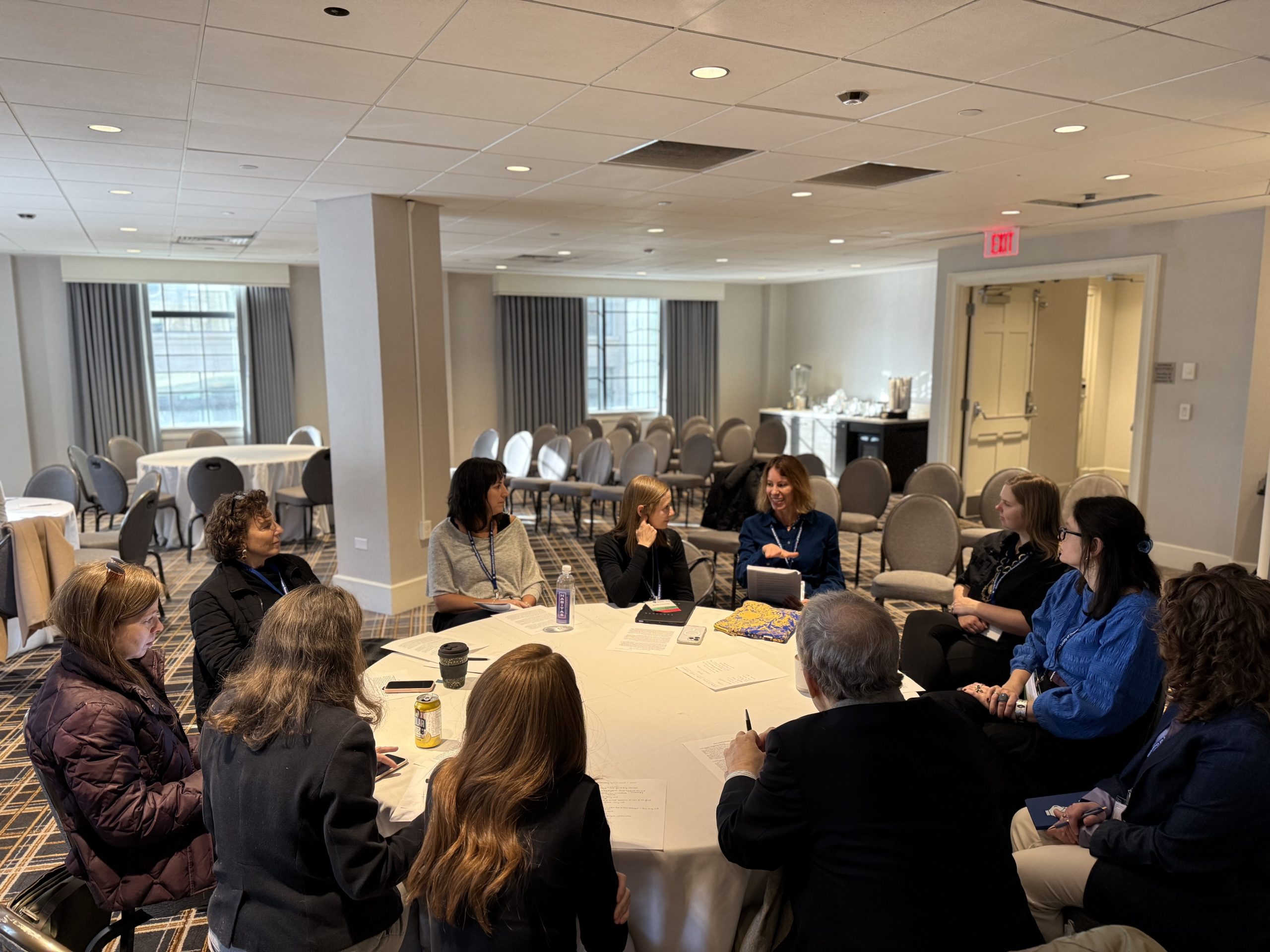
In addition to the academic program, attendees in Boston enjoyed several special events at the Hilton Boston Park Plaza, as well as extracurricular programs organized by members, and complimentary access to the Museum of Fine Arts with an ASOR name badge. Events at the Hilton Boston Park Plaza included the Early Career Scholars brown-bag lunch panel, Roundtable Discussions, and the Exhibit Raffle. Receptions were hosted during the event by ASOR, the Madaba Plains Regional Project, and the Cyprus American Archaeological Research Institute (CAARI). Before the meeting, attendees had the option to attend a seal carving workshop organized by Pinar Durgun, a workshop at the Harvard Art Museums organized by Jennifer Thum on building visitors’ museum literacy, and a tour of Little Syria with members of the ASOR GIV Committee.
Not for use without permission.

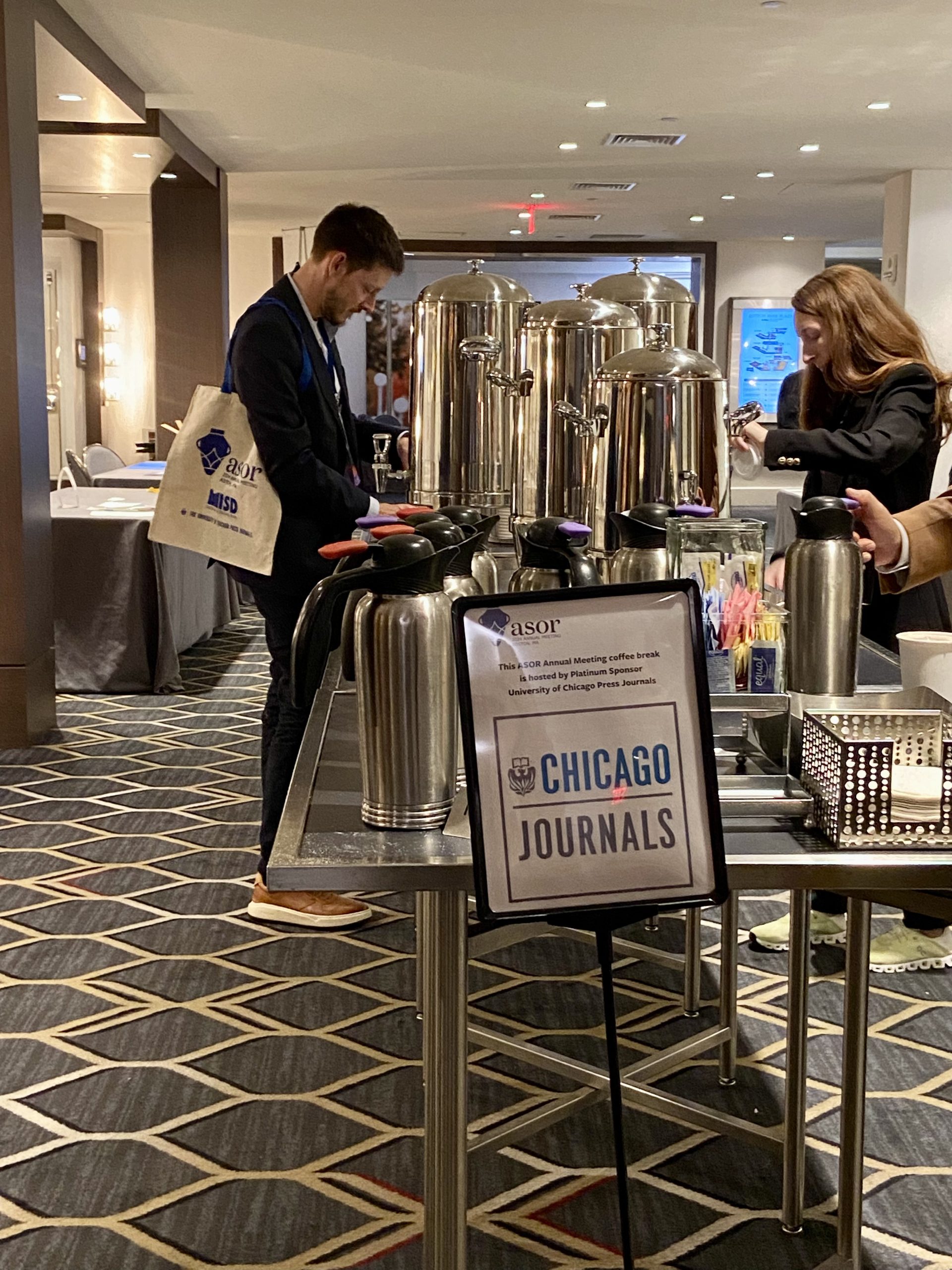
The Exhibit Hall at the Hilton Boston Park Plaza included publishers, book sellers, universities, and booths by 2025 Annual Meeting sponsors, University of Chicago Press (Platinum Sponsor), Eisenbrauns / Penn State University Press (Platinum Sponsor), and ISD (Platinum Sponsor). Attendees browsed the exhibits on the centrally located Mezzanine foyer between sessions and during sponsored coffee breaks.

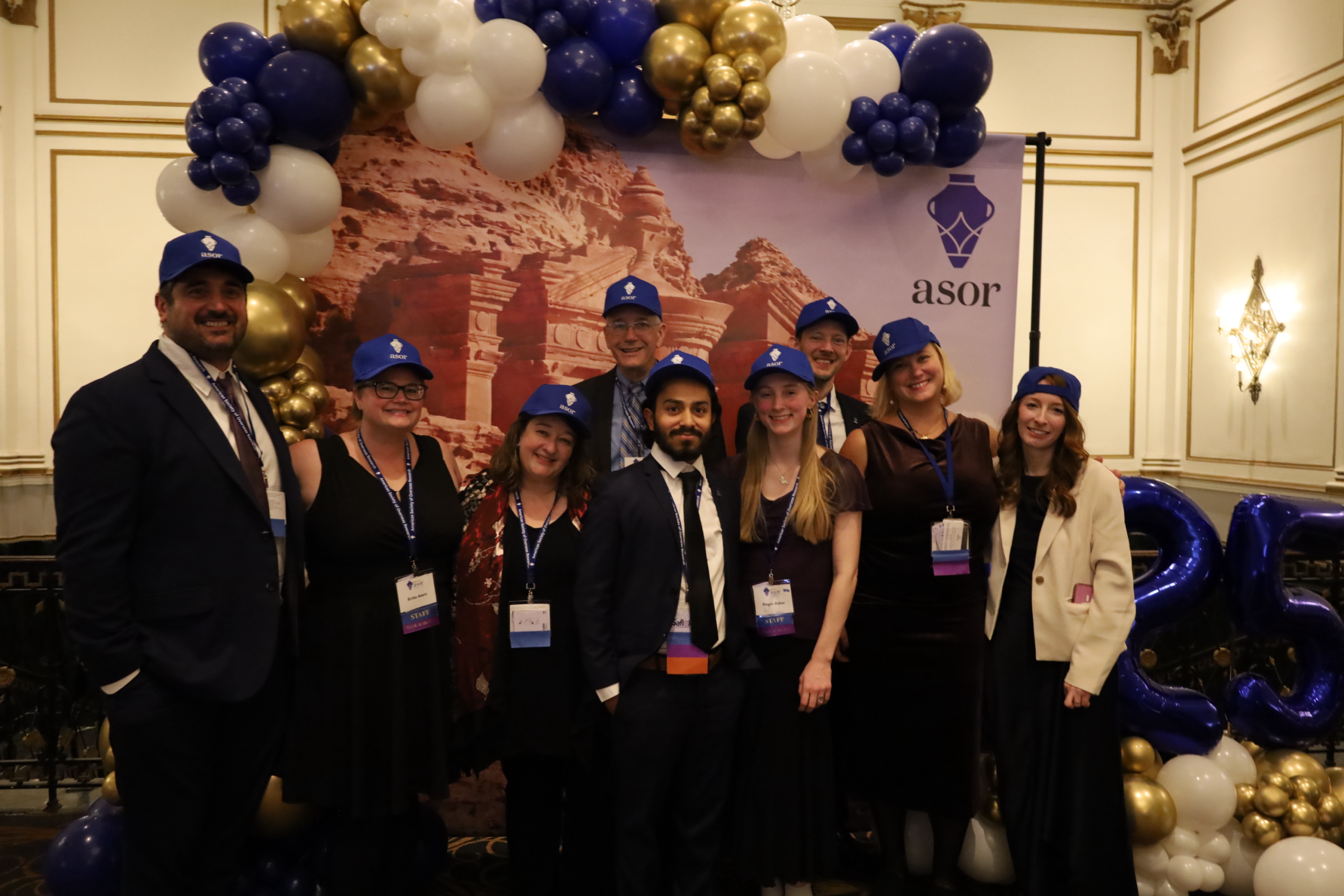
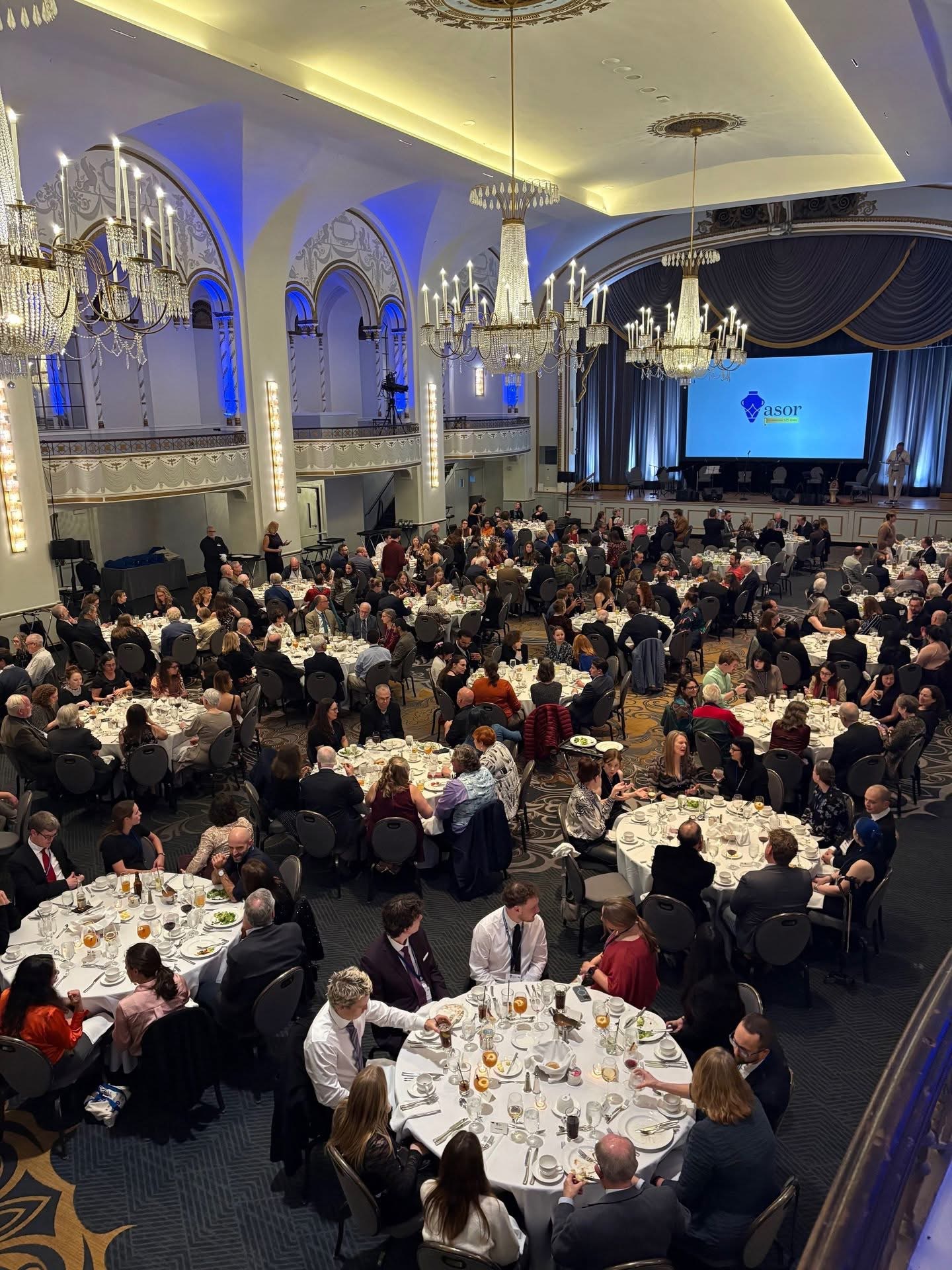
After the Annual Meeting, nearly 300 people stayed to celebrate ASOR’s 125th Anniversary with a festive evening of dining, live music, member-curated playlists, and ASOR-themed activities.

ASOR would like to thank everyone who participated and contributed to the success of the 2025 Annual Meeting. Please enjoy some of the memorable moments captured in the photo album below, and we hope you will continue to enjoy the recorded content from the meeting through June 2026.

Please mark your calendars for ASOR’s 2026 Annual Meeting at the Hilton Chicago and online, November 18–21. Registration is open! The Call for Member-Organized Session & Workshop proposals will be open from December 15, 2025, to January 15, 2026.
Not for use without permission.


2025 ASOR Annual Meeting Photo Album

Thank you to ASOR member, Bruno Soltic, for all of the photos taken during the 2025 Annual Meeting!
ASOR 2025 Annual Meeting Album

Fieldwork Report: Kearyn Hall

Disturbance and Discovery: Learning from Looting at Humayma

Kearyn Hall, 2025 Harva L. Sheeler Fieldwork Scholarship Recipient

The 2025 field school began in Amman, the capital of Jordan, where our first week was devoted to lab-based training. Under the guidance of our instructors, we handled ceramics, practiced drawing profiles, reconstructed fragments, and grew accustomed to the meticulous process of cataloging. This initial week was invaluable; it allowed us to encounter the material record in a controlled environment before confronting its fragmentary and often damaged reality in the field. By the time we left Amman, I carried with me not only a set of practical skills but also a growing awareness of how even small sherds and fragments could speak volumes when studied carefully.

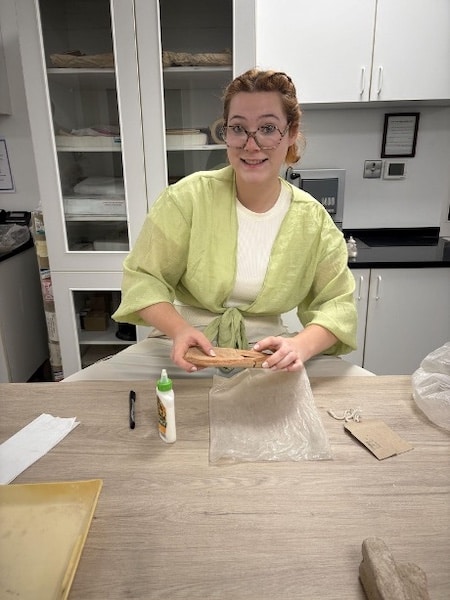
In the lab at Amman, gluing fragments to reassemble a ceramic tile.
During the first week in the lab, we not only became familiar with local pottery typologies and classifications, but also received training in photogrammetry and the collection of RTK points.

Travelling south to Humayma shifted our focus dramatically. The site itself lies in an austere yet striking landscape of desert plains framed by sandstone ridges. At first glance, it appears modest compared to monumental Nabataean or Roman centers, yet its significance lies precisely in its layered history. Established as a Nabataean settlement, later transformed by the presence of a Roman fort, and subsequently home to Byzantine churches and early Islamic occupation, Humayma presents a unique cross-section of centuries of cultural, religious, and social change. Standing within its ruins, one could trace how different communities shaped the same terrain, leaving behind traces that are at once fragile and enduring.

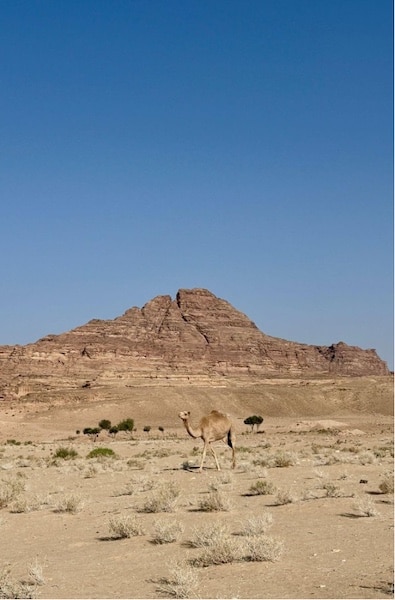
A camel standing before the Jebel Qalkha at Humayma, which was venerated as the source of water in antiquity.

Life at Humayma quickly settled into a rhythm. Early mornings were spent in the field, where small teams divided their efforts among photogrammetry, architectural recording, survey, and midden documentation. Some days were devoted to tracing architectural features with RTK mapping, others to carefully noting the distribution of ceramics within middens. Afternoons were often spent reviewing notes, comparing interpretations, and discussing questions raised by the day’s work. Evenings, though quieter, were filled with writing, preparation, and the informal but equally important conversations that come with living and learning in close quarters.

Among the many tasks we undertook, the reality of looting stood out most starkly. It was impossible to ignore; it was everywhere. Some disturbances were recent, the scars from metal detectors fresh in the soil. Graves had been torn open, leaving human remains displaced, stripped of the context that would have allowed us to understand their original placement and significance. In another area, a marble platform had been ripped apart, apparently under the assumption that it concealed valuables. In truth, it was nothing more than a built surface, its destruction a senseless erasure of evidence. These episodes made clear how devastating looting is, not only for material culture but for the fragile stories of lives once lived.

Looting also shaped our daily practice. It was evident that looters were aware of our presence, and we were advised not to linger in any single area for too long. This necessity forced us to adapt; recording and documentation were carried out with a heightened sense of urgency, trying to get everything done at once so we didn’t have to worry about it still being there tomorrow to document. It was a sobering reminder that the work of archaeology does not unfold in isolation, but in a living landscape where the past and present are in constant negotiation.

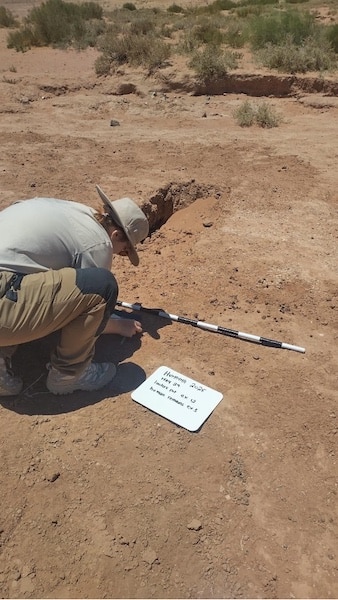
Setting up the north arrow before photographing a looter’s pit that contained human remains.

For me, the most difficult moments were those involving disturbed human remains. Confronting looted graves was unsettling; faced with the incivility of leaving someone once buried to wither away on the surface, at first, I questioned whether I was truly suited to pursue bioarchaeology. Yet when I was able to contribute to the documentation of these remains, I realized how meaningful it was simply to approach them with care and respect. That experience did not erase the destruction I witnessed, but it gave me a sense of purpose in responding to it. It reminded me that archaeology is not only about recovering knowledge, but also about honouring the people and cultures whose traces we encounter.

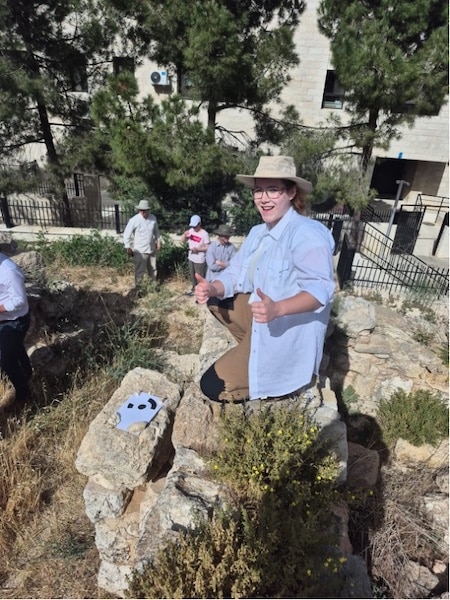
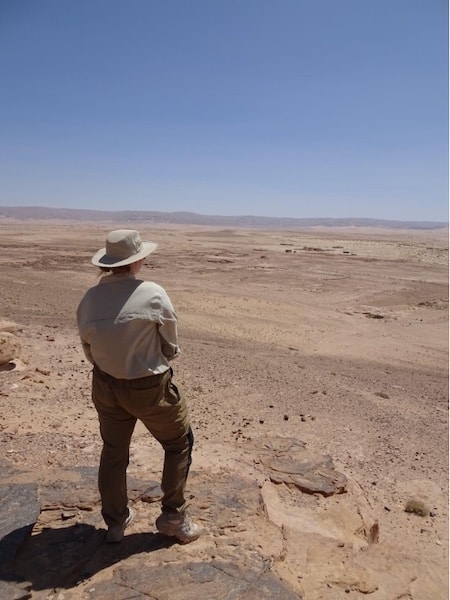
Overlooking the site of Humayma during the hike on our final day in the field.
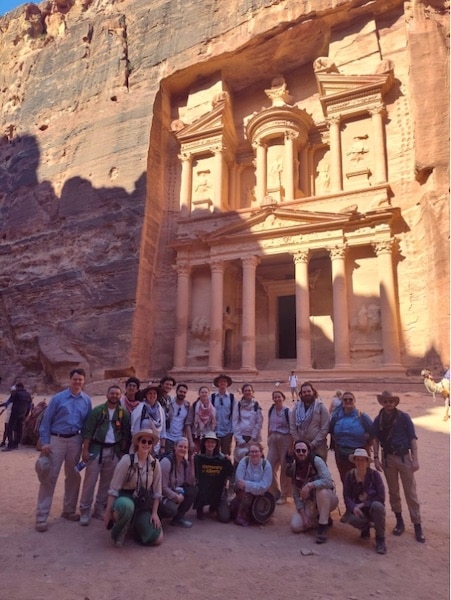
Field School group photograph at the Treasury in Petra, taken on our excursion en route from Amman to Aqaba.

I am deeply grateful to ASOR and to the Sheelers for supporting my participation in this project. This opportunity not only allowed me to gain invaluable field experience, but also helped me realize that I have found something I truly love to do. Thank you for supporting my dream and helping me take these first steps toward a career in archaeology.

Kearyn is in her final year of her Bachelor of Arts in Anthropology and Classics at the University of Alberta. She is currently applying to Master’s programs with a focus on Osteoarchaeology.

Learn more about this project here.

Want to help more students and early career archaeologists get into the field? Donate to the cause today by selecting “Fieldwork Scholarships” as your gift purpose!

Board of Trustees Election Results

2025 ASOR BOARD OF TRUSTEES ELECTION RESULTS

Thank you to all the ASOR members who voted in this year’s Board of Trustees election!

The Board of Trustees sets the direction for ASOR and provides oversight for our organization. Among other responsibilities, members of the Board agree to attend two meetings each year, to participate thoughtfully in the governance process, and to contribute financially to ASOR. All ASOR members are eligible to vote in the Member-elected Trustee Election, while only Institutional Representatives of the 55 ASOR-member schools may vote in the Institutionally-elected Trustee Election.

Yorke Rowan and Ido Koch will serve 3-year terms as Member-elected Trustees.

Kathryn Grossman and Michael Hasel will serve 3-year terms as Institutionally-elected Trustees.

Read more about the newly-elected and reelected Trustees below.

 
Yorke Rowan

Yorke Rowan is an anthropological archaeologist and Research Professor at the Institute for the Study of Ancient Cultures (formerly the Oriental Institute) at the University of Chicago. He focuses on later prehistory (Late Neolithic, Chalcolithic, and Early Bronze), with thematic research interests in death, prehistoric ritual performance, and material objects mediating these human actions. He is a Fulbright Scholar to Jordan and a NEH Fellow at the W.F. Albright Institute for Archaeological Research in Jerusalem and the American Center of Research in Amman. His most recent publications include The Social Archaeology of the Levant: From Prehistory to Present (2019, Cambridge Press, co-edited with A. Yasur-Landau and E. Cline), “Desert Kites: Neolithic Infrastructure in the Margins” in Infrastructure in Archaeological Discourse: Framing Society in the Past (2024, Routledge, co-authored with A. C. Hill) and “The Black Desert Drone Survey: New Perspectives on an Ancient Landscape” in the journal Remote Sensing (2022) with A.C. Hill. He co-directs the NSF funded Kites in Context and Eastern Badia Archaeological Projects, two projects in the Black Desert of Jordan.

Mission Statement: Since the 1990s, ASOR has been fundamental to my development as a professional scholar and field archaeologist. The first grant I received for field research was an ASOR travel scholarship, and the first national professional paper I delivered was at ASOR in New Orleans. I have a long dedication to the success of ASOR, serving on the editorial boards of Bulletin of the American Schools of Overseas Research and Near Eastern Archaeology, co-chairing the Program Committee after for two previous terms on the committee, serving on the Honors and Awards Committee, and the Committee on Archaeological Policy. In addition, I co-chaired and co-organized various sessions such as the standing session “Prehistoric Archaeology” (2015, 2019-2021) and the member organized “Archaeology of Religion and Ritual” (2005-2006). My involvement with ASOR is complemented by extensive engagement with communities on the ground in different countries, emphasizing my commitment to creating more collaborative opportunities with colleagues based abroad.

The organization has grown tremendously since I joined as a graduate student, with a welcome expansion to include a broader range of topics, geographic regions, and chronological periods. This growth is not limited to scholarly interests but includes increased worldwide accessibility through a hybrid meeting format. I believe it is important to sustain and build on this positive trend to build membership, engage with members at different career stages, and seek to find new collaborative partnerships that will only strengthen ASOR. As ASOR faces new challenges like complicated funding realities, regional civil unrest, and climate change, the organization must mount new initiatives and endeavors to respond to member needs. As a member of ASOR’s Board of Trustees, my goal will be to promote its mission to disseminate knowledge of western Asia and Mediterranean ancient societies, and to make that scholarship more accessible to the public. Finding creative ways to promote our research, particularly those of our research partners, to a variety of audiences is a challenge that will strengthen our organization and continue to interest future generations of students, the public, and scholars.

 
Ido Koch

Ido Koch is Associate Professor in the Department of Archaeology and Ancient Near Eastern Cultures at Tel Aviv University. A field archaeologist of the southern Levant, his research explores interregional connectivity, colonial encounters, visual language, craft, and material religion. He is the author of several monographs, dozens of articles, and co-editor of ten volumes. Koch co-directs the Tel Hadid Archaeological Project, the renewed excavations at Tel Qasile, and the final publication of the Tel Arad excavations—all of which place strong emphasis on innovative documentation strategies, community outreach, and the dissemination of archaeological knowledge to diverse audiences. He is co-PI of several collaborative ventures, including the historical–archaeological study of the depopulated Palestinian village of al-Haditha (one of the few academic archaeological projects addressing the recent past of Israel/Palestine), and the Stamp Seals from the Southern Levant Project together with its comprehensive open-access online companion database. Koch also serves as Editor-in-Chief of Tel Aviv: Journal of the Institute of Archaeology of Tel Aviv University and sits on several international editorial boards. Through his research and teaching, he integrates advanced digital tools with inclusive, community-based approaches, engaging both Jewish and Arab students, to help build inclusive and forward-looking connections between academic, archaeological, and wider communities in the study of the southern Levant.

Mission Statement: I have been a member of ASOR since 2009, have attended nearly all annual meetings since then, and have interacted with scores of ASOR members of all ages and backgrounds. ASOR has been my professional cradle and the place where I learned to appreciate the value of an international network, a value I hope my students will inherit.

As a scholar based in the Middle East, I believe ASOR must strengthen the representation of voices from the regions it studies. The societies who live in the lands whose pasts we uncover deserve a place in shaping how that past is researched, understood, and represented. As an Israeli archaeologist working on the remote and recent past of the southern Levant, I am acutely aware of the region’s diversity and complexity. Based on my experience, ASOR and its sister institutions (such as the W.F. Albright Institute) are uniquely positioned to foster dialogue between Israeli and Palestinian scholars, a dialogue urgently needed now more than ever. I see my role as a bridge: between ASOR and local scholarly and cultural communities, and between those communities themselves. In times of deepening divisions, we must hold fast to both our professional and human ties. In my fieldwork and collaborations, I strive to create spaces where Jewish and Arab students, alongside colleagues from different backgrounds and perspectives, can work together toward shared understanding. Archaeology can and should serve as a medium of dialogue, and as a reminder of our intertwined pasts and shared humanity.

Drawing on my experience directing and co-directing field projects, I recognize the need for ASOR to advance ethical, inclusive, and community-oriented archaeology. I propose developing a collaboratively produced “fieldwork toolkit,” drawing on the collective knowledge of ASOR-affiliated projects. This toolkit would guide projects that prioritize community engagement, the dissemination of results to local institutions, and accessible digital platforms for sharing data. Through such initiatives, I hope to help ASOR lead by example—making archaeology both academically rigorous and socially meaningful.

 
Kathryn Grossman

Kathryn Grossman is Assistant Professor of Anthropology in the Department of Sociology and Anthropology at North Carolina State University. She is an archaeologist with expertise in the Chalcolithic and Bronze Age cultures of Cyprus and Mesopotamia and a methodological specialty in zooarchaeology. She is Director of the ASOR-affiliated Makounta-Voules Archaeological Project (Cyprus), as well as zooarchaeologist for the Kani Shaie Archaeological Project (Iraqi Kurdistan), the Wadi el-Hudi Expedition (Egypt), and the Petra North Ridge Project (Jordan). She is currently co-editing, with Jesse Casana and Eric Jensen, the final report on the excavations at Tell Qarqur, Syria.

Mission Statement: I have been involved with ASOR for seventeen years. I began attending and presenting at the annual meeting as a graduate student, and my engagement has deepened over time. I served on the Committee on Archaeological Policy for two terms, and during that time I also chaired the CAP Fellowships Subcommittee. In 2018, I presented the work of the Fellowships Subcommittee at that year’s Legacy Dinner, and in 2023 I received an ASOR Service award for my work on the CAP Fellowships Subcommittee. I chair the Archaeology of Syria sessions at the Annual Meeting, am a member of the Damascus Committee, a member of the Executive committee, the chair of the Trustees Nominations Committee, and I serve as the institutional representative for ASOR at North Carolina State University. In my time as an ASOR member, I have watched the organization grow dramatically in its geographic scope and evolve to meet the demands of 21st-century scholarship. In serving as an Institutionally-elected member on the ASOR Board of Trustees, I look forward to helping ASOR move forward with the issues that loom before us, including increasing our outreach to diverse audiences at home and abroad, and promoting the preservation of tangible and intangible cultural heritage.

 
Michael Hasel

Michael G. Hasel is Director of the Institute of Archaeology and Lynn H. Wood Archaeological Museum at Southern Adventist University, where he also serves as Professor of Near Eastern Studies and Archaeology since 1998.

Hasel has participated and served in administrative capacities on eleven different excavations in the Middle East, including Gezer, Ashkelon, Dor, Miqne-Ekron, Masada, and Hazor, in Israel; Idalion, Cyprus; and Jalul in Jordan. He has directed excavations and surveys at Khirbet Qeiyafa and Socoh and currently is co-director of The Fourth Expedition to Lachish. As curator of the Lynn H. Wood Archaeological Museum, Hasel was responsible for planning and displaying art and objects from the ancient Near East in a state-of-the-art exhibit entitled “Vessels in Time: A Journey into the Biblical World” and several temporary exhibits including “Peace and War: The Assyrian Conquest of Lachish” (2023-2025) and “The Ivory Comb: Lice and Literacy at Lachish” (2025).

Hasel, an ASOR member since 1989, has chaired several ASOR sessions and served on the Agenda Committee. He held the Samuel H. Kress Fellowship at the W. F. Albright Institute for Archaeological Research (AIAR) in 1995-96 and a Fulbright at the Cyprus American Archaeological Research Institute (CAARI) in 2005 and the NEH Fellowship at the Albright Institute in 2025-26. He is also a fellow of the Institute for Biblical Research and Tyndale House, Cambridge.

Hasel joined the ASOR Board in January 2014.

Mission Statement: Over the past 36 years of my involvement with ASOR, I have watched ASOR grow into a strong society representing a wide variety of interests and research foci in the ancient Near Eastern and Mediterranean worlds. During that same period, I have been actively involved in excavations in Israel, Jordan, and Cyprus while also engaged in Egyptological research. As an excavator I am interested in encouraging the archaeological interplay between text and material culture. This integration has been one of the historic strengths of ASOR and I believe it remains vital as ASOR continues to position itself as an important and relevant voice to a large segment of North America. As a museum director part of my vision is to make our field relevant for future generations through popularizing archaeological discoveries and making it accessible to a larger segment of society. This would include encouraging young scholars who are searching for direction and belonging to get involved in ASOR while fostering connections in the regions it serves. To accomplish these goals, I would welcome the opportunity to continue to support and serve as a member of the Board of Trustees for another term.

FOA Webinar: Michael Hundley

FRIENDS OF ASOR WEBINARS

What is a God? The Bible and the Ancient Near East

Friends of ASOR present the next webinar of the 2025-2026 season on December 17, 2025, at 7:00 pm EST, presented by Dr. Michael Hundley. This webinar will be free and open to the public. Registration through Zoom (with a valid email address) is required. This webinar will be recorded and all registrants will be sent a recording link in the days following the webinar.

What is a god? While the question is simple enough, our answer often depends on our cultural context, and we tend to expect other cultures to have the same ideas we do. We also project our modern ideas backward onto ancient texts, overlooking native classifications in the process. However, rather than being a fixed category, the definition of a “god” is culturally conditioned. With an assist from the Cognitive Science of Religion, this presentation attempts to reconstruct ancient perceptions of gods in the Ancient Near East and the Bible. It draws from and expands upon Dr. Hundley’s four-part series in Ancient Near East Today, as well as his previous and current book projects.

We begin by surveying the various beings who may qualify as gods in the Bible and the wider Ancient Near East, including Egypt, Mesopotamia, the Levant, and Hittite Anatolia. With the data in place, we consider the qualities that all deities share. While gods come in all shapes and sizes, all possess power and agency. To make the divine world more comprehensible, we then sort the divine sphere into categories: high gods (e.g., Egyptian Amun, Mesopotamian Marduk and Assur, Ugaritic El, and biblical YHWH), major gods, minor gods, and peripheral gods. High gods rule, and in the case of Amun, Marduk, Assur, and YHWH, possess a complement of divine powers, like a one-stop shop. Major gods often are specialists (e.g., weather, sun, moon), whereas minor gods serve the high and major gods. Peripheral gods include deified natural phenomena like rivers and mountains, monsters and demons, foreign gods, as well as seemingly inanimate objects like beds and doorposts. Although all gods possess humanlike agency, those closer to the top tend to be the most humanlike internally, making them immediately more understandable and relatable. By contrast, peripheral gods tend to be less humanlike and, as such, more menacing.

The presentation will conclude with a look at the monotheistic redefinition of the god category. Although multiple superhuman beings remain, only one qualifies as a god in the Abrahamic religions (although Christianity divides this god into three persons). Over time Christian tradition reclassifies other erstwhile gods as either good and rebellious angels, thereby dividing the divine world into Team God and Team Satan.

Dr. Michael Hundley (B.A. Amherst College; Ph.D. University of Cambridge) is Assistant Professor of Teaching at the University of Memphis. He works at the intersection of human and divine in the Hebrew Bible/Old Testament and the Ancient Near East and has published multiple books and articles, including Keeping Heaven on Earth: Safeguarding the Divine Presence in the Priestly Tabernacle (2011), Gods in Dwellings: Temples and Divine Presence in the Ancient Near East (2013), and Yahweh among the Gods: The Divine in Genesis, Exodus, and the Ancient Near East (2022). He is currently finishing Ancient Gods and Monsters: The Bible, the Ancient Near East, and Beyond and is beginning Temples and Divine Presence in the Bible and Ancient Near East for the Cambridge Elements series. Future projects include a comparison of temples and divine presence in the Bible, Ancient Near East, and Hinduism and an exploration of gendering gods.

SUPPORT THE WEBINAR PROGRAM!

Friends of ASOR is pleased to announce that the first webinars of the 2025-2026 season will once again be free and open to the public with a goal to raise $10,000 so that the entire webinar season will be free. Will you support this outreach effort with a tax-deductible contribution? All donors/sponsors with gifts of $100 or more will be recognized in subsequent webinars. Make your gift today and select “webinars” from the dropdown menu.

Designate your gift for “Webinars” in the drop-down menu.

2025 Dana Grant Report: Erbil Plain Archaeological Survey

2025 Dana Grant Report: Developing an Accessible Digital Ceramic Typology for the Erbil Plain Archaeological Survey (EPAS)

Elise Laugier, Utah State University

For more than a decade, the Erbil Plain Archaeological Survey (EPAS) has documented the settlement and land use history of the agricultural plain surrounding Erbil, the capital city of the Kurdistan Region of Iraq. With more than a thousand sites documented to date, EPAS has revealed the Erbil Plain to be one of the richest archaeological landscapes in northern Mesopotamia.

Drone image of the Erbil Plain near EPAS site 761, showing ongoing agricultural activity and landscape development. Image courtesy the Erbil Plain Archaeological Survey (EPAS).

In recent years, urban expansion and agricultural intensification have placed increasing pressure on the region’s archaeological sites and cultural landscapes. Rapid documentation and accurate dating of surface materials have become critical for protecting the region’s cultural heritage. The EPAS ceramic typology, long used internally by the project, offers a standardized system for identifying pottery across 21 chronological phases (from the Proto-Hassuna to the Islamic periods) but has not yet been widely available.

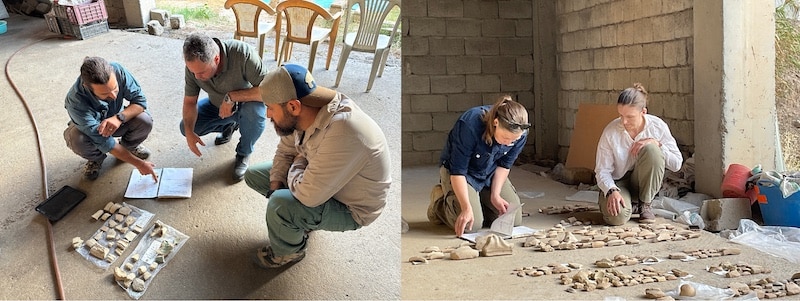
EPAS team members analyzing ceramics at the Erbil Directorate of Antiquities. From left: Jason Ur, Rebwar Jalal, Mohammed Lashkri, Elise Laugier, Madeline Ouimet.

Our goal in the last two seasons has been to expand access to EPAS’s ceramic typology by developing a bilingual, image-rich digital platform, an app that will allow archaeologists and heritage professionals to quickly identify pottery and date sites in the field. The app, accessible on both desktop and mobile devices, integrates detailed ceramic descriptions, diagnostic criteria, and color images, and will soon include both English and Kurdish. Once finalized, this accessible resource will provide students, archaeologists, and heritage officials in Iraq with a standardized system for ceramic classification, ensuring consistent documentation of sites across the Erbil Plain and adjacent regions.

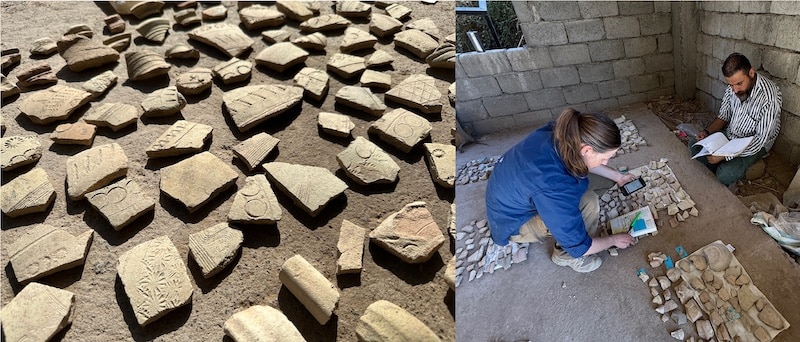
A selection of photographed sherds from the Mid-Late 3rd Millennium BCE through the Islamic periods (left). EPAS team members selecting ceramic types (right).

With support from ASOR’s Stevan B. Dana Grant, our 2025 season focused on expanding and completing the image database that underpins this typology. Working at the Museum at Erbil Directorate of Antiquities, the team processed and added dozens of images from early phases (Proto-Hassuna through Ninevite 5) to the existing ArcGIS Online mobile application. We also photographed hundreds of additional sherds representing later periods (Mid-Late 3rd Millennium through Islamic), creating a database of over 2,500 high-resolution images. Together, these materials form the foundation of the first comprehensive digital typology for the Erbil Plain.

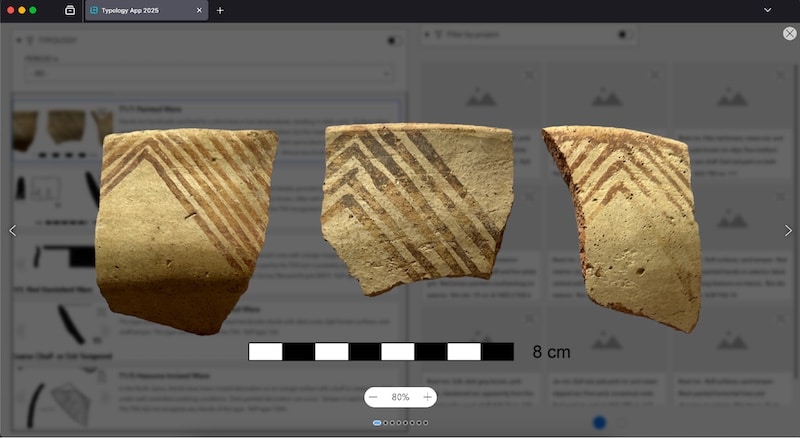
Example of the desktop EPAS Ceramic Typology interface, displaying color images and descriptive text of Hassuna Period painted sherds.

This project supports local capacity building and collaboration with Kurdish heritage professionals, ensuring that vital archaeological expertise is shared widely and sustainably. By transforming years of specialized field research into an open, bilingual reference, the project contributes to both heritage preservation and digital innovation in Mesopotamian archaeology.

We thank ASOR and the Stevan B. Dana Grant for its generous support in helping us transform a decade of research into a shared resource for the archaeological and heritage communities of the Erbil Plain and beyond.

Learn more about the project on their website or follow the project on Facebook.

2025 ASOR Honors & Awards

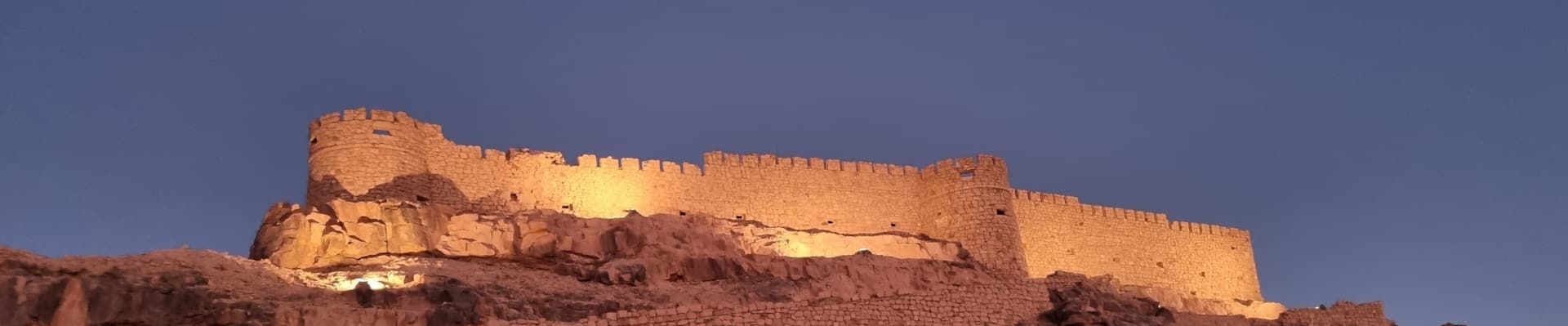
A photo of Ghat Fort in Libya, taken at night.

2025 ASOR HONORS & AWARDS


Each year at the Annual Meeting, ASOR recognizes individuals who have performed outstanding service for the organization, those who have published exceptional academic work, and those who made significant contributions to our field. The following award recipients were honored at the 2025 Annual Meeting in Boston and during the Members’ Meeting on November 21st. Awards were presented by Lynn Welton, co-chair of ASOR’s Honors and Awards Committee.

The Richard J. Scheuer Medal. This award honors an individual who has provided truly outstanding, long-term support and service contributions to ASOR (this medal is awarded when such an individual is identified).

Awarded to Sharon Herbert, for her exceptional contributions and guidance during her two terms as both Vice President and President of ASOR.

The Charles U. Harris Service Award. This award is given in recognition of long-term and/or special service as an ASOR officer or Trustee (one award is given annually).

Awarded to Charles E. Jones, Tombros Librarian for Classics and Humanities at Pennsylvania State University, for his time as ASOR Vice President from 2020-2025, most prominently his work with the Chairs Coordinating Council (CCC).

The P. E. MacAllister Field Archaeology Award. This award honors an archaeologist who, during his/her/their career, has made outstanding contributions to ancient Near Eastern and eastern Mediterranean archaeology (one award is given annually).

Awarded to Yorke Rowan, Research Professor, Institute for the Study of Ancient Cultures at the University of Chicago, for his impactful contributions to the archaeology of Eastern Badia, Wadi al-Qattafi, and major Chalcolithic sites.

Community Engagement and Public Outreach Award. This award recognizes individuals, teams, and organizations who have initiated outstanding educational, informational, or practical projects (including but not limited to classes, programs, exhibits, resources, events, and platforms) with the goal of making subjects and information about the ancient world accessible to wider (particularly non-academic) audiences.

Awarded to Chad Spigel (Trinity University) and Paul Flesher (University of Wyoming), for their development of the website for the Duke University Galilee Database, which makes publicly available all of the original field records for the 1970-1981 excavations of four synagogues of Upper Galilee: Meiron, Gush Halav, Khirbet Shema, and Nabratein. The database provides a searchable presentation of all field notes: from locus sheets and top plans to pottery readings and object lists, from daily notes to weekly and end-of-season reports.

ASOR Membership Service Award. This award recognizes individuals who have made special contributions on behalf of the ASOR membership, through committee, editorial, or office services.

Awarded to: Theodore W. Burgh, Professor, University of North Carolina Wilmington, has been an exemplary leader for ASOR’s Membership and Outreach Committee during his two terms as its chair, from 2020 through 2025.


Awarded to Allison Thomason, Professor, Southern Illinois University, Edwardsville, for her work as Co-Chair of the Program Committee for the last six years and compassionate approach to her service to ASOR.


Awarded to Vanessa Workman, University of Pennsylvania, who has served on the Early Career Scholars (ECS) Committee since 2017 and became its Co-Chair in 2023.

The W. F. Albright Service Award. This award honors an individual who has shown special support or made outstanding service contributions to one of the overseas centers (AIAR, CAARI), or to one of the overseas committees – the Baghdad Committee and the Damascus Committee. This award is given when such an individual is identified.

Awarded to Matthew J. Adams, Director of the Center for the Mediterranean World, who served as Director of the W. F. Albright Institute of Archaeological Research from 2014 to 2022, revitalizing its facilities, programs, finances, and global reach.

The G. Ernest Wright Award. This award is given to the editor/author of the most substantial volume(s) dealing with archaeological material, excavation reports and material culture from the ancient Near East and eastern Mediterranean. This work must be the result of original research published within the past two years (one award is given annually).

Awarded to Kevin D. Fisher, Associate Professor of Eastern Mediterranean Archaeology, University of British Columbia, for his substantial contribution to the archaeology of Cyprus in Monumentality, Place-Making and Social Interaction on Late Bronze Age Cyprus (Equinox Publishing).

The Frank Moore Cross Award. This award is presented to the author/editor of the most substantial volume(s) related to the history and/or religion of the ancient Near East and Eastern Mediterranean. Primary consideration will be given to historical, epigraphic, textual, and comparative literary studies; or to works that advance and/or evaluate new methodological approaches to the literary record(s). This work must be the result of original research published during the past two years (one award is given annually).

Awarded to Tiffany Earley-Spadoni, Associate Professor, University of Central Florida, for the novel analysis of Urartu as a decentralized non-urban empire with a political organization constructed around a dispersed fortified regional network in Landscapes of Warfare: Urartu and Assyria in the Ancient Middle East (University Press of Colorado).

The Nancy Lapp Popular Book Award. This award is presented to the author/editor of a book published in the last two years that offers a new synthesis of archaeological or textual evidence intended to reach an audience of scholars as well as students and the broader public (one award is given annually).

Awarded to Tate Paulette, Associate Professor at North Carolina State University, for In the Land of Ninkasi: A History of Beer in Ancient Mesopotamia (Oxford University Press), which synthesizes the long and colorful history of Mesopotamian beer.

The Joy Ungerleider Poster Award. This award is conferred upon the author(s) of the poster presenting the results of a study about ancient Near Eastern societies in a clear, legible fashion using original graphic content. Subject matter may be based in archaeological sciences, history, anthropology, epigraphy, ethnography, heritage or other scholarly approaches to understanding ancient people in the areas covered by ASOR (one award is given annually).

Awarded to Defne Bilgili, Johns Hopkins University, for the poster: “Preservation and Public Engagement at Tell Atchana, Alalakh: A Digital Reconstruction of the Middle Bronze Age Gate Complex.”

Student Paper Award. This award is conferred upon the author(s) of a paper presented during the Annual Meeting that conveys the results of a study about ancient Near Eastern and wider Mediterranean societies in a clear, understandable, and convincing fashion. The first author and presenter of the paper must be a registered student at the time of presentation in order to be eligible for consideration for this award.

Awarded to Aaren (Zhengfang) Zhou, New York  University, for her paper “Cooking Pots and Negotiating Identity: Material Culture and Adaptive Agency During the Egyptian Occupation of Beth She’an.”