FOA Webinar: Müge Durusu-Tanrıöver

FRIENDS OF ASOR WEBINARS

Anatolian Futures: Archaeologies of Anatolia within the Larger Mediterranean

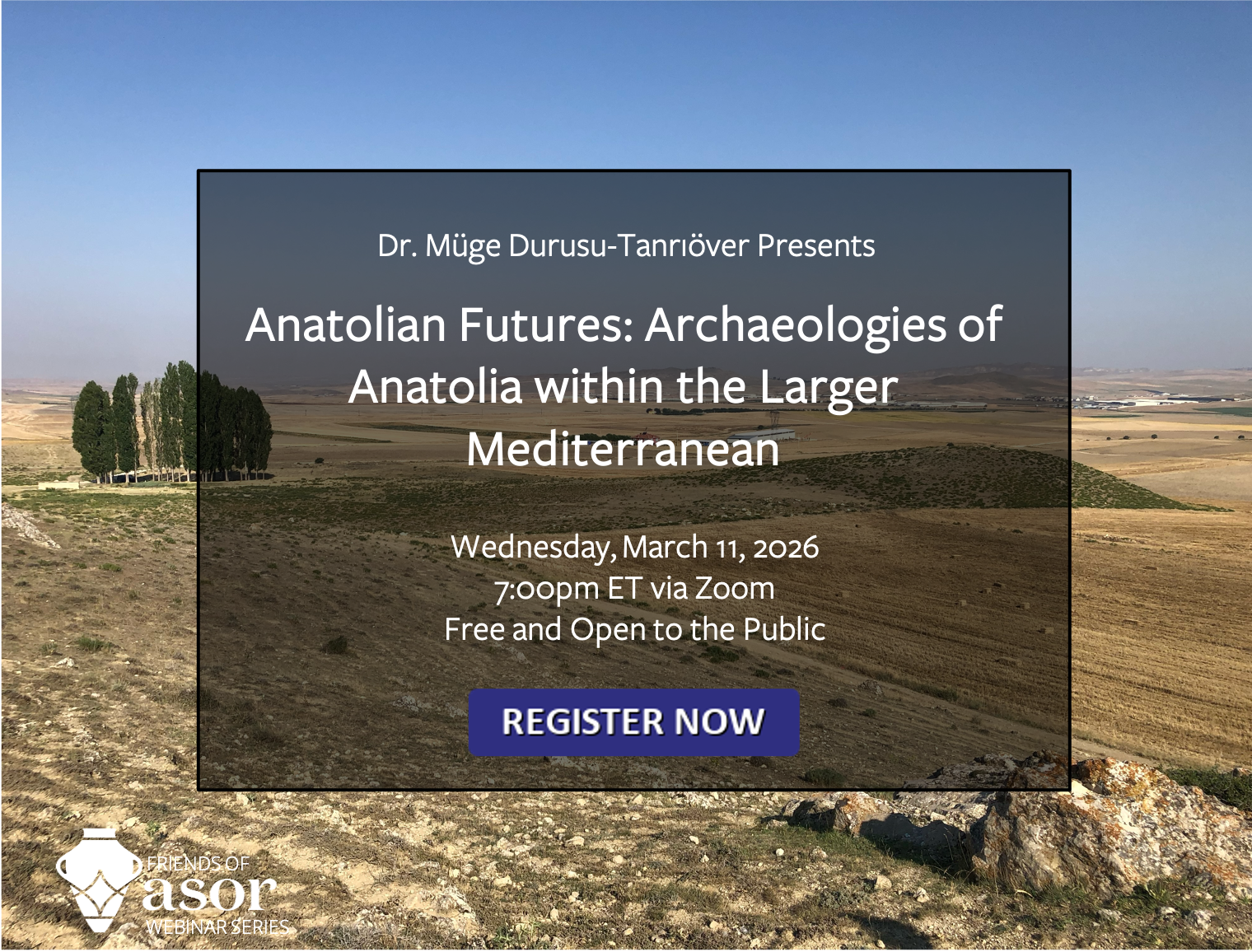
Friends of ASOR present the next webinar of the 2025-2026 season on March 11, 2026, at 7:00 pm EDT, presented by Müge Durusu-Tanrıöver. This webinar will be free and open to the public. Registration through Zoom (with a valid email address) is required. This webinar will be recorded and all registrants will be sent a recording link in the days following the webinar.

Since their beginnings, archaeologies of Anatolia have occupied a liminal position within the larger archaeological traditions of the “Old World.” Seen as a geography in contact with, but never fully belonging to, the archaeologies of Mesopotamia, the Mediterranean, the Aegean, or the Black Sea over the longue durée, certain combinations of time and space in the Anatolian past have been siloed into various sub-fields that either look outwards to neighboring geographies or stay exclusively Anatolian. For instance, the Middle Bronze Age of the central plateau is discussed within frameworks of Mesopotamian archaeology because of the trade routes that linked Assyria to Anatolia, while the period immediately succeeding it has been studied mostly in isolation as a distinctly Anatolian phenomenon, even though the Hittite Empire of the Late Bronze Age thrived on the trade networks of the Middle Bronze Age. Similarly, the classical cities of western Anatolia are staples of Greek and Roman archaeology and are seen as part of a larger Mediterranean world, while the Bronze Age in this same geography falls between the cracks of Anatolian and Aegean traditions, remaining an understudied topic even today. Befitting the common trope of Anatolia as a bridge, the archaeologies of this geography have been fragmented into numerous transitions, some claimed by the larger Mediterranean world, while others remain distinctly Anatolian and idiosyncratic within scholarship.

In this talk, Dr. Durusu-Tanrıöver traces the lineage of this fragmentation across times, places, and people as varied as nineteenth-century European travelers to Anatolia, early Republican Ankara, continual coloniality, and Orientalism. Posing the questions of how we can define Anatolia and what its archaeologies can look like in the later twenty-first century CE, she makes the case for a connected Anatolian archaeology that can both claim its multiple constituents and contribute to the larger debates in Mediterranean archaeology. To this end, she will identify several directions including, but not limited to, deliberate theoretical engagement, multi-disciplinarity, and regional fieldwork looking beyond single sites.

Dr. Müge Durusu-Tanrıöver is an archaeologist whose research explores the strategies and impacts of ancient imperialism on border regions in the eastern Mediterranean during the Bronze and Iron Ages. Her publications and fieldwork to date have mainly focused on the Hittite Empire, approaching this state from its edges through a myriad of lenses, including material culture and hybridity, artistic production, the rhetoric of kingship, and place-making. She holds a PhD in Archaeology and the Ancient World from Brown University and is currently an Assistant Professor in Temple University’s Department of Art History. Since 2019, Dr. Durusu-Tanrıöver has directed the Polatlı Landscape Archaeology and Survey Project (PLAS), a fieldwork initiative that seeks to understand the imperial strategies of the Hittite Empire along its western border, as well as the responses of local communities to the expansion of Hittite power in the region. Dr. Durusu-Tanrıöver has received numerous grants for her research, including a Charles Harris Project Grant from ASOR in 2023.

SUPPORT THE WEBINAR PROGRAM!

Friends of ASOR is pleased to announce that the first webinars of the 2025-2026 season will once again be free and open to the public with a goal to raise $10,000 so that the entire webinar season will be free. Will you support this outreach effort with a tax-deductible contribution? All donors/sponsors with gifts of $100 or more will be recognized in subsequent webinars. Make your gift today and select “webinars” from the dropdown menu.

Designate your gift for “Webinars” in the drop-down menu.
ASOR Receives Award from Gerda Henkel Stiftung for Access Project at the Sudan National Museum

ASOR Receives Award from Gerda Henkel Stiftung for Access Project at the Sudan National Museum

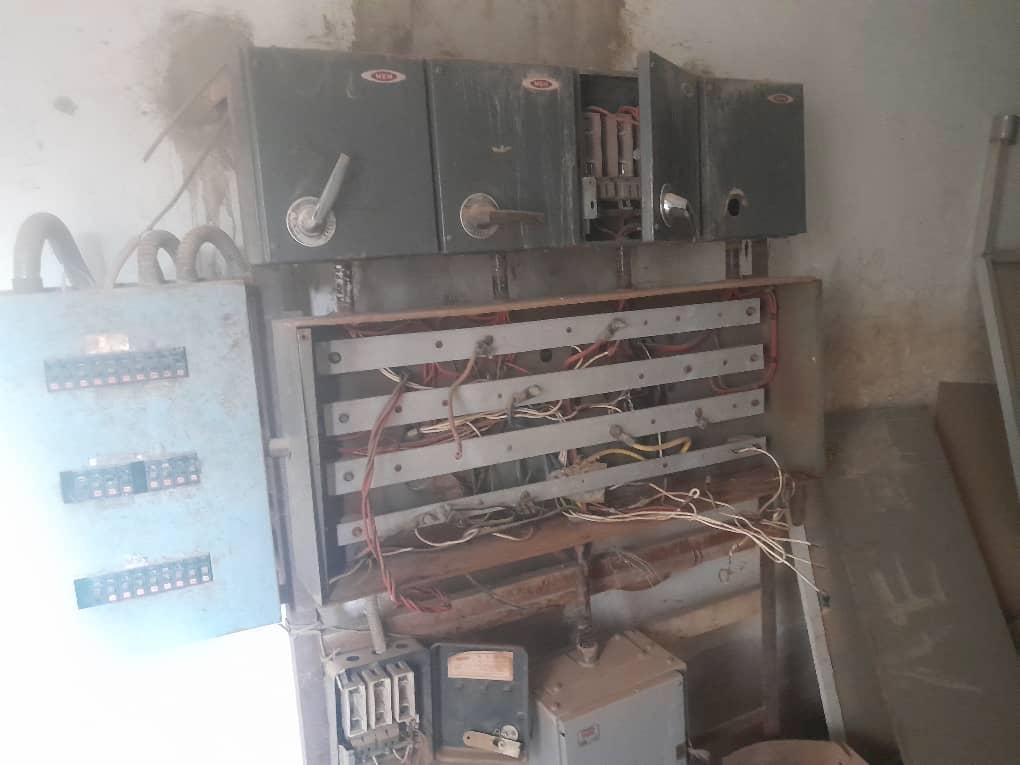
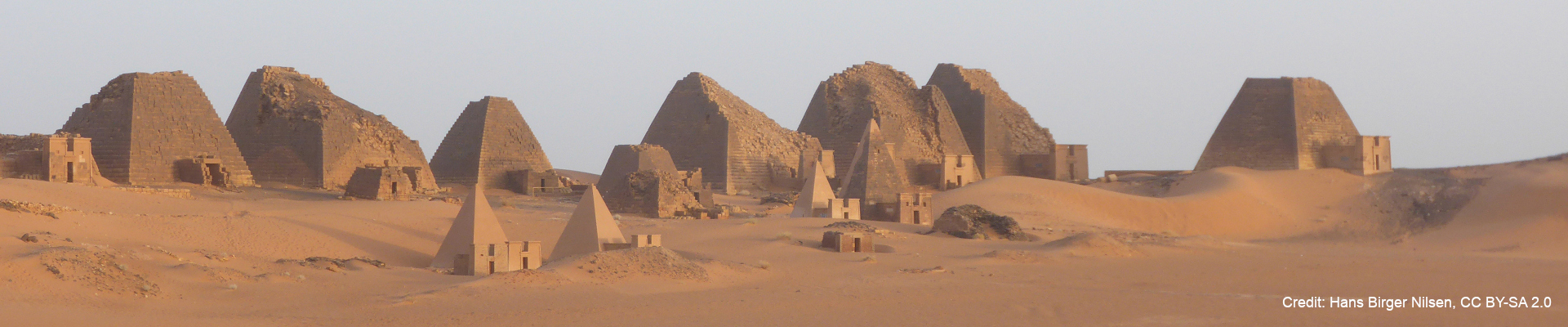
The American Society of Overseas Research (ASOR) is pleased to announce an award from the Gerda Henkel Stiftung supporting critical site security and infrastructure improvements at the Sudan National Museum in Khartoum. Working in coordination with the Sudanese National Corporation for Antiquities and Museums (NCAM), ASOR will expand safe access to the property, with a focus on rebuilding the damaged enclosure wall and making priority repairs to the electrical, water, and sewage systems. This project will lay essential groundwork to support NCAM’s ongoing efforts to restore functionality to the Sudan National Museum complex.

Founded in 1971, the Sudan National Museum is Sudan’s largest storeroom for cultural property and serves as a central hub for offices, labs, and other administrative facilities that support NCAM’s work throughout the country. Materials from the Aswan Dam Salvage Project, as well as artifacts from over a century of archaeological research, form major parts of the Museum’s collection. In total, the Museum’s pre-war collections comprised more than 100,000 objects representing the full breadth of Sudan’s history.

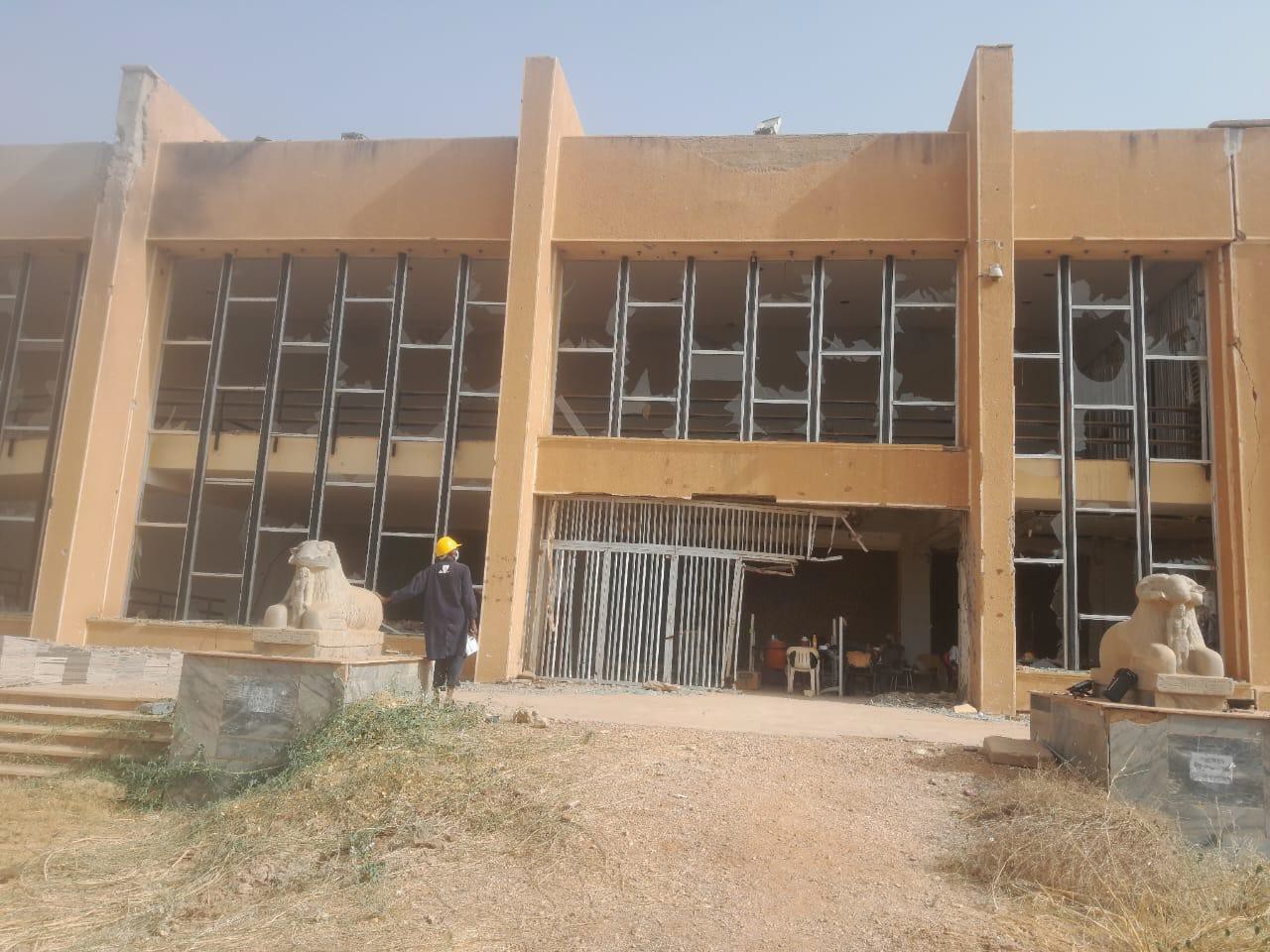
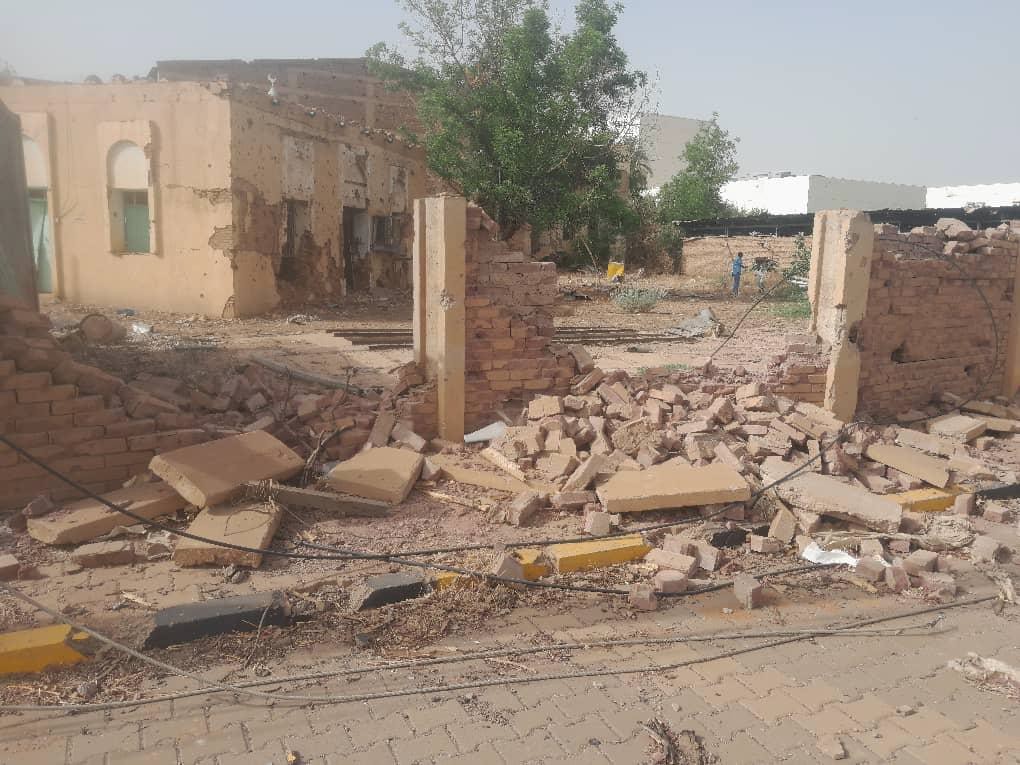
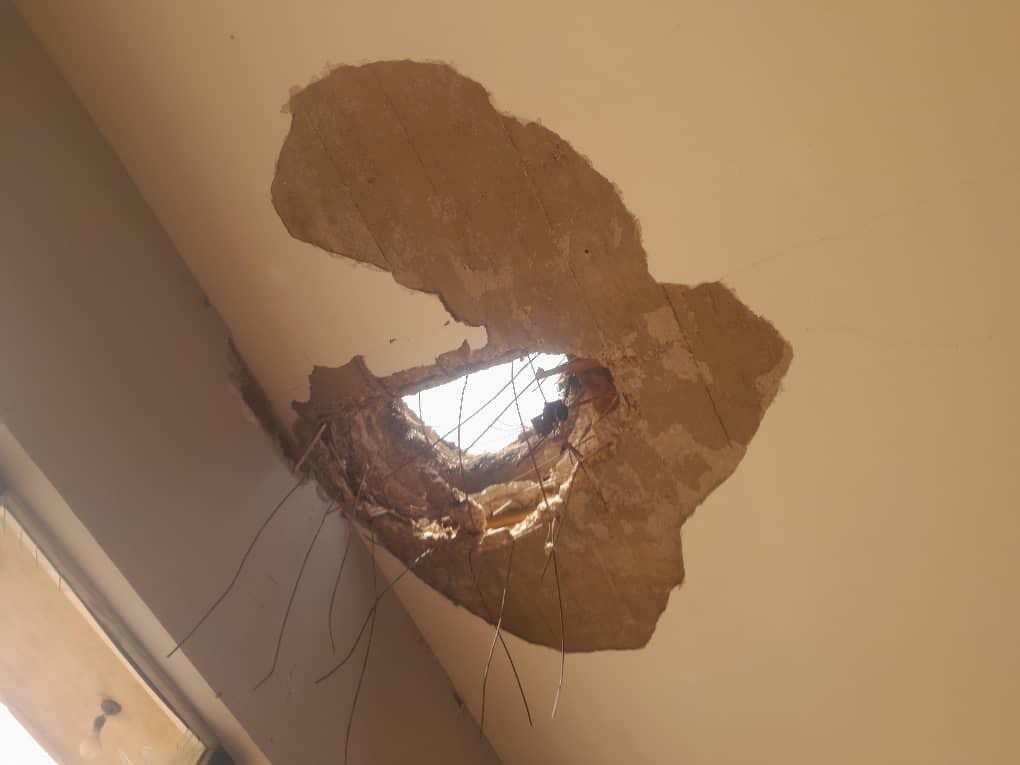
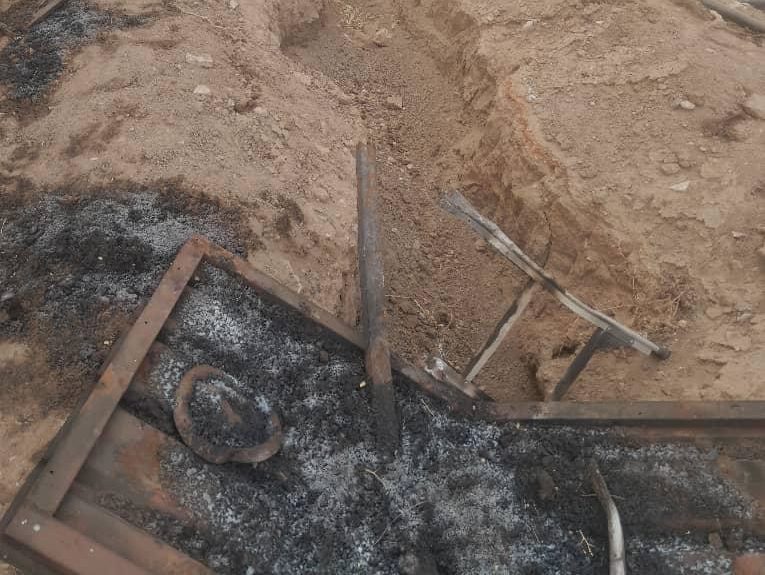
The status of the Sudan National Museum and its collections had been a serious concern for Sudanese and international observers since the Museum was occupied by the Rapid Support Forces in April 2023. During the building’s occupation, reports spread of looting and removal of the Museum’s collections from the site. The liberation of the Sudan National Museum in March 2025 revealed heavy damage to the buildings and property caused by combat and the systematic looting of the property’s physical infrastructure. More importantly, NCAM’s review of the Sudan National Museum storerooms confirmed the theft of important pieces of the collections. Some objects left behind were smashed or burned, and exhibit spaces were vandalized. The physical inventory of these collections was scattered, making it difficult to identify fully what was stolen and what remains on the property.

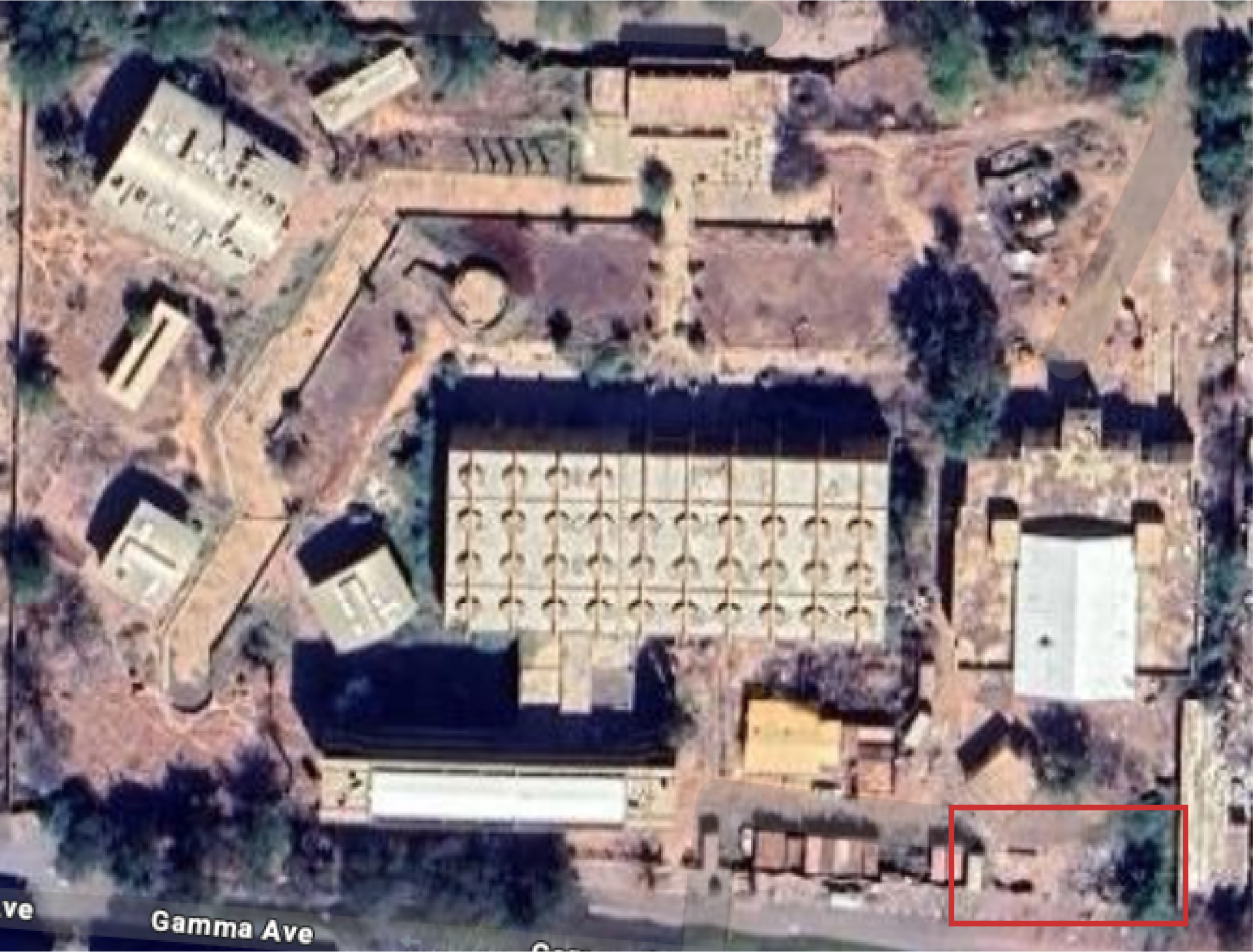
The grounds and main entrance of the Sudan National Museum in 2025. The breach in the perimeter wall is located at the bottom right of the left image. (Source: Google Maps; NCAM)

The theft and vandalism of the Museum’s collections as well as the damage to its exhibits, research labs, and administrative spaces have severely affected NCAM’s ability to protect and preserve Sudan’s diverse heritage. This project takes concrete steps towards restoring these capacities. At the end of the project, NCAM will be better able to protect the heritage present in the National Museum and to return what has been stolen.

The perimeter wall at the southeastern corner of the property and an example of roof damage documented in 2025. (Source: NCAM)

Damage to wiring and circuit breakers on the property, including the burning of wiring to extract copper, documented in 2025. (Source: NCAM)

Seger Grant Report: Tall al-Handaquq South

2025 Joe D. Seger Project Grant: Tall al-Handaquq South Archaeological Project

Hanna Erftenbeck, Grinnell College and Natalia M. Handziuk, University of Toronto

With the support of the 2025 Joe D. Seger Project Grant, the Tall al-Handaquq Archaeological Project (HAP) conducted its first season of renewed work at Tall al-Handaquq South in Jordan. Previous excavations in the 1990’s exposed a well-preserved residential complex dating to the Early Bronze Age, contributing significantly to our understanding of people’s everyday lives during this period of early urban developments in the region.

 
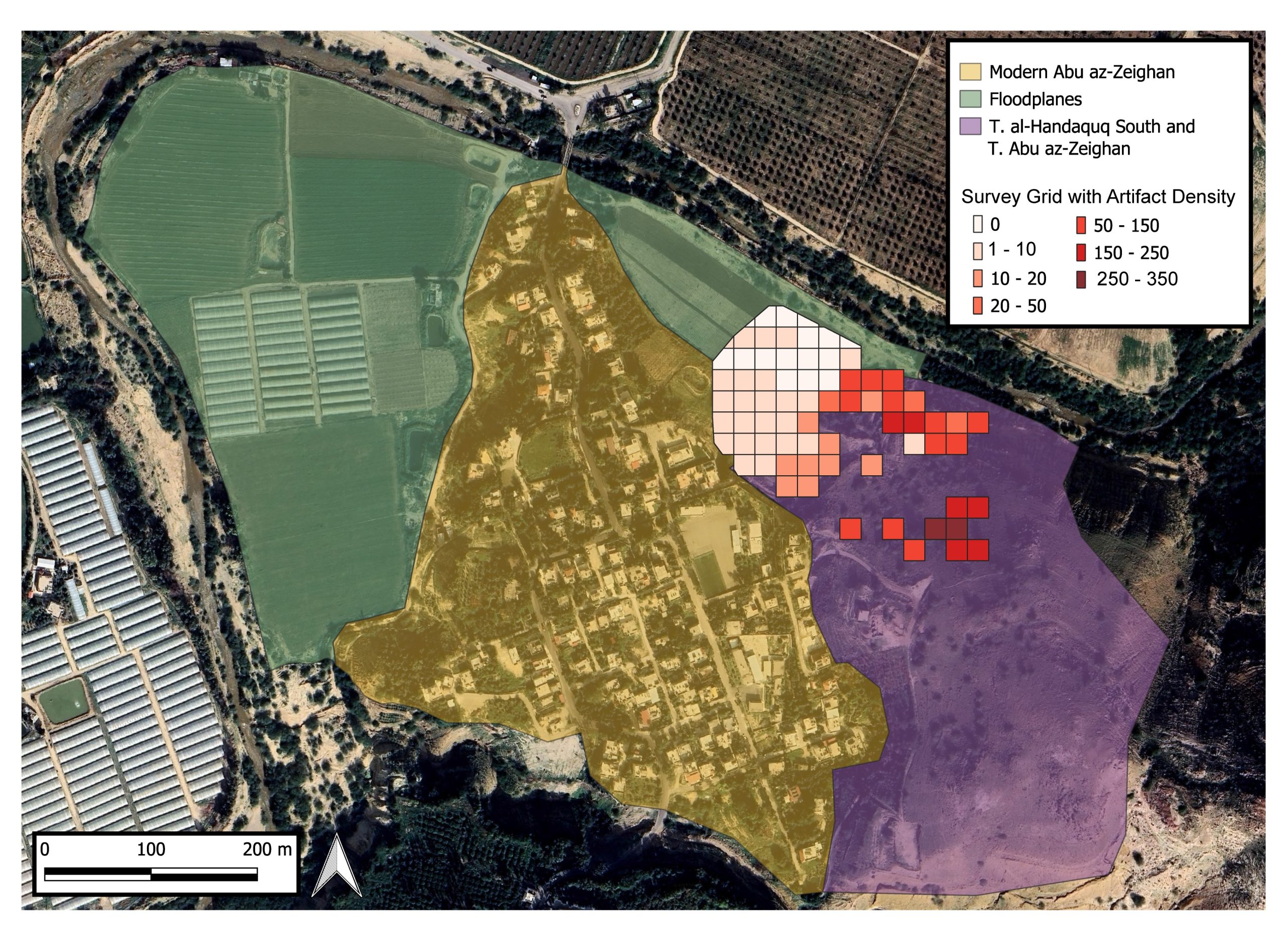
Figure 1: Map of Tall al-Handaquq South/Tall Abu az-Zeighan with survey grid and recorded artifact density.
Figure 1: Map of Tall al-Handaquq South/Tall Abu ez-Zeighan with survey grid and recorded artifact density.

HAP Co-directors Dr. Natalia M. Handziuk and Dr. Hanna Erftenbeck conducted a zero-recovery survey on Tall al-Handaquq South, which encompasses the northern part of a large, Early Bronze Age town, that extends into the archaeological site of Tall Abu ez-Zeighan. The goals of the 2025 seasons were to (1) assess the extent of the site, and (2) the density of archaeological materials on the surface, (3) document features visible on the surface, and (4) assess site preservation and possible threats.

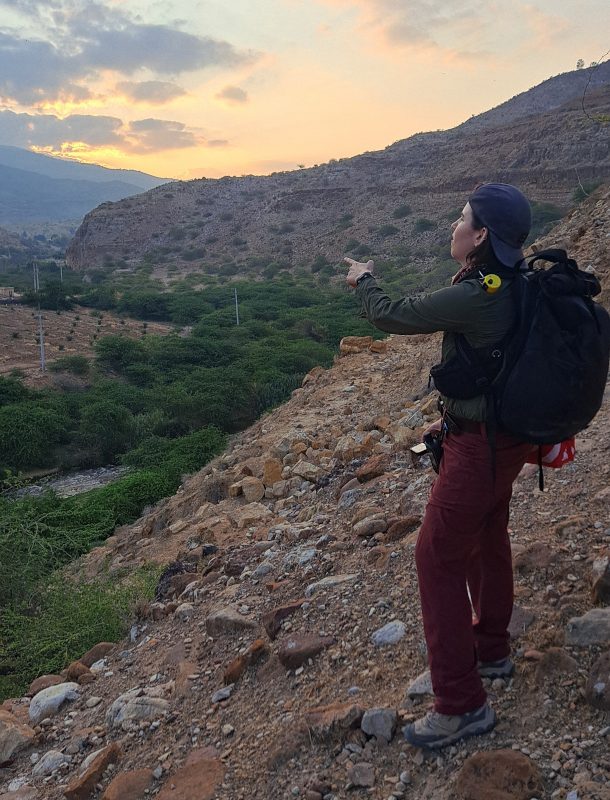
Figure 2: Natalia M. Handziuk on the northern slope of Tall al-Handaquq South, looking North into the Wadi Zarqa.

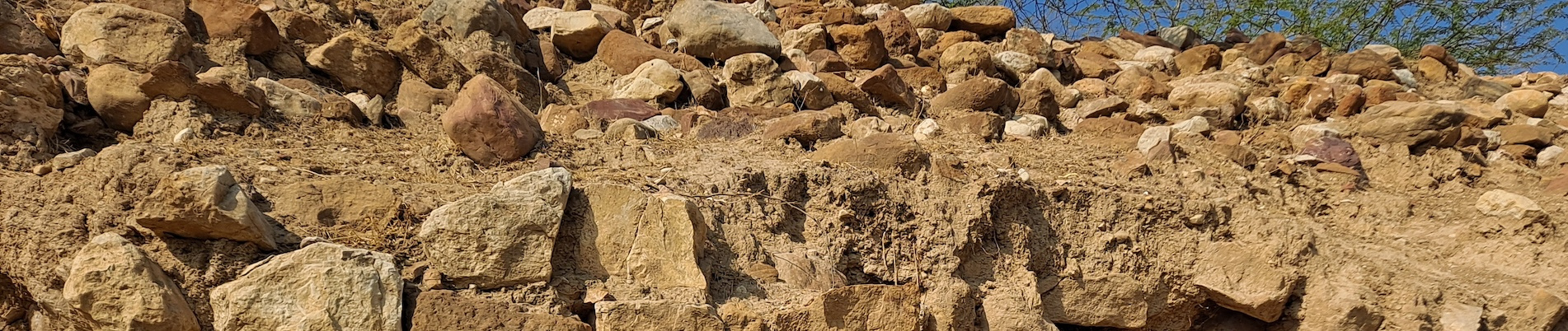
The survey focused on the floodplains and terraces along the northern limits of the site. There, modern agricultural fields are located on the flood plains of the Wadi Zarqa. As shown on the map, the density was overall low in the area northwest of the slope, marking the limits of preserved archaeological material. We identified three terraces along the northern edge of the slope, on which find density was much higher, and the outlines of a wall or platform were visible running below the second terrace.

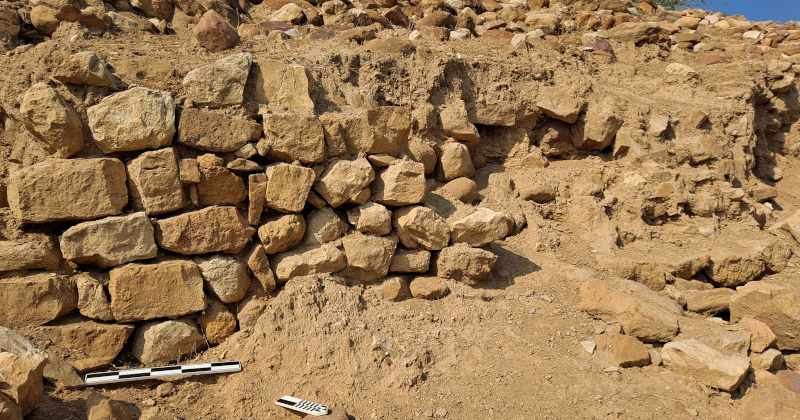
Figure 3: Wall or platform visible along the bottom of the second terrace on the northern edge of Tall al-Handaquq South.
Further up the slope, the density increased further, and wall lines of different sizes were recorded on the surface. A trilithon dolmen and two cupmarks were recorded on the slope toward the southern limits of Tall al-Handaquq. While the dolmen is intact,
large holes indicate that it has been looted.
Figure 4: Dolmen in area 794 with looting hole.

Figure 4: Dolmen in area 794 with looting hole.

During the survey, we recorded several looting holes in and near the architecture visible on the surface of the slope and the terraces. Almost all of the pottery collected during the survey on Tall al-Handaquq South dates to the Early Bronze Age I through IV, with the majority of the pottery dating to the EB II-III period, confirming that Tall al-Handaquq South/ Tall Abu ez-Zeighan was settled intensely during this time period.

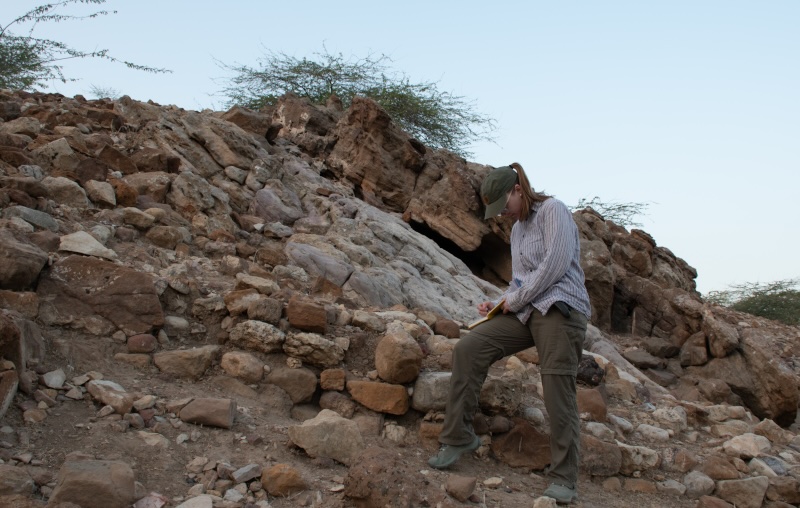
Figure 5: Hanna Erftenbeck documenting wall lines in areas 912 and 951.

The Tall al-Handaquq Archaeological Project (HAP) expresses its deep gratitude to ASOR and the Joe D. Seger Project Grant for their generous support. This project was conducted in collaboration with and under the guidance of the Department of Antiquities of Jordan. Special thanks go to Rami Frehat, who offered valuable insights into the regional setting of Tall al-Handaquq South and supported us on the ground each day. We are grateful to the team at ACOR for their support in starting a new project and for providing us with lab space during our field season. Mohammad Shabsogh provided logistical support throughout the season, and we are deeply grateful.

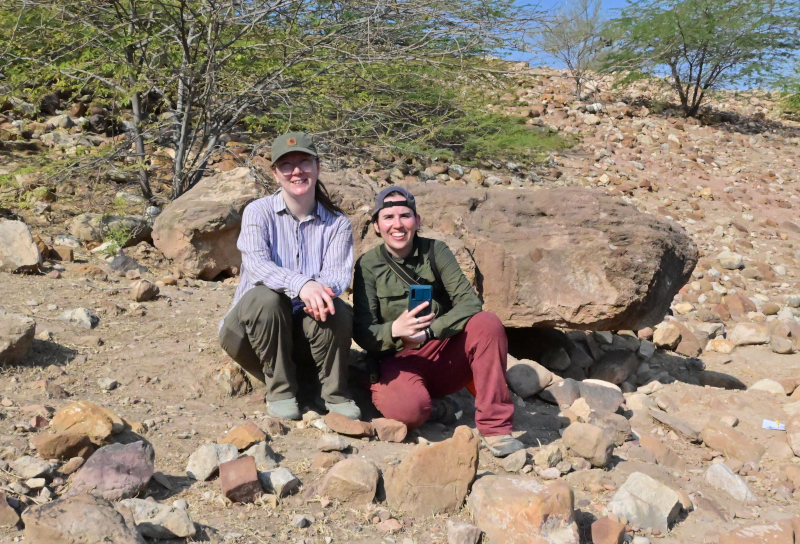
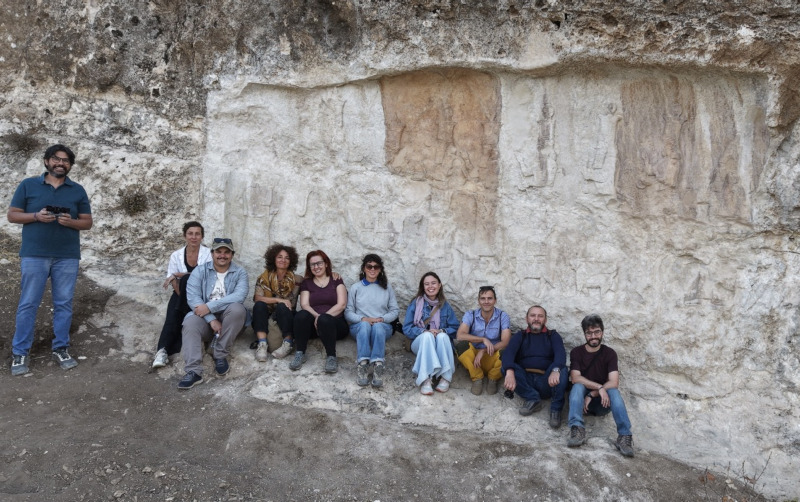
Figure 6: HAP 2025 Team photo.

Fieldwork Report: Anna Taibi

Growing through the Dust: Skills, Challenges, and Community in the Mosul Dam Reservoir

Anna Taibi, 2025 Strange/Midkiff Families Fellowship Recipient

The season that just concluded has definitely been one of the most intense of my (still short) fieldwork experience! In October and November 2025, thanks to ASOR’s scholarship for fieldwork participation, I took part in ReLand’s 2025 campaign in the Mosul Dam Reservoir, KRI. The project’s goal is twofold: monitoring threatened sites located on Mosul Lake’s shore and, during cyclical phases of re-emergence, conducting emergency excavations to document settlements and their interaction with the surrounding landscape.

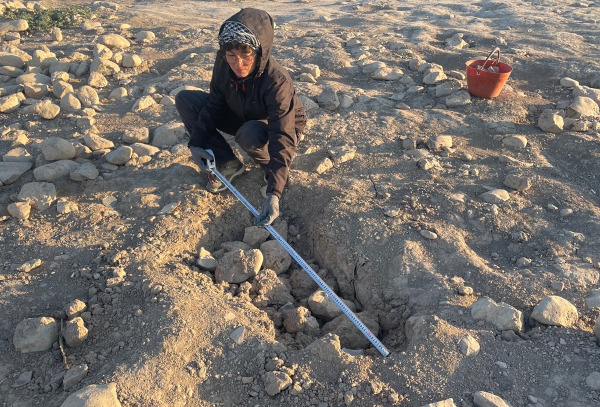
This year, due to an exceptional drought, hundreds of sites have emerged from the lake’s water, and, sadly, as a remote survey had already highlighted, these millennia-old features have immediately been targeted by looters. As a project member, during the first three weeks of the campaign, I helped record evidence of this kind of damage during the field survey, documenting different types of looting traces.

Recording a big looting pit, likely made by hand or shovel
Recording a big looting pit, likely made by hand or shovel.

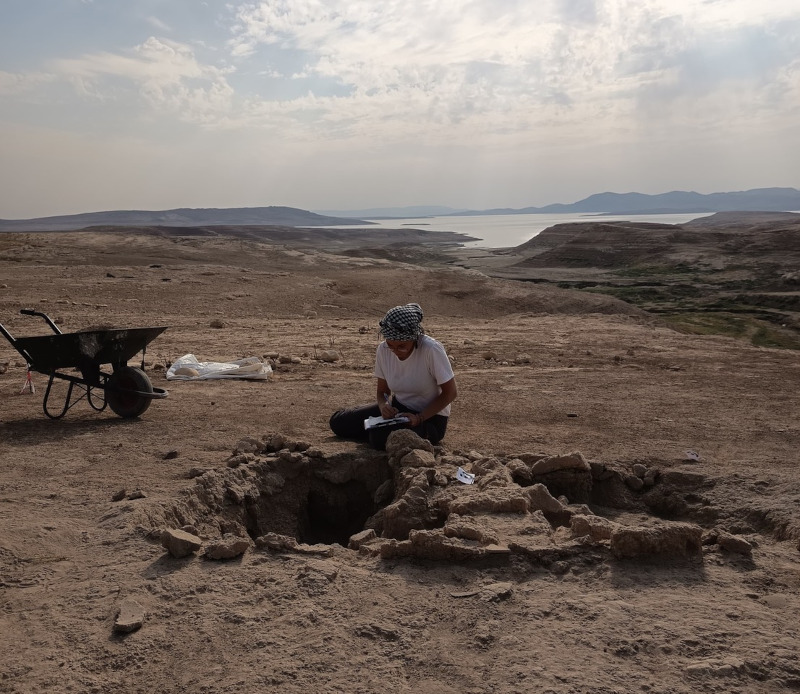
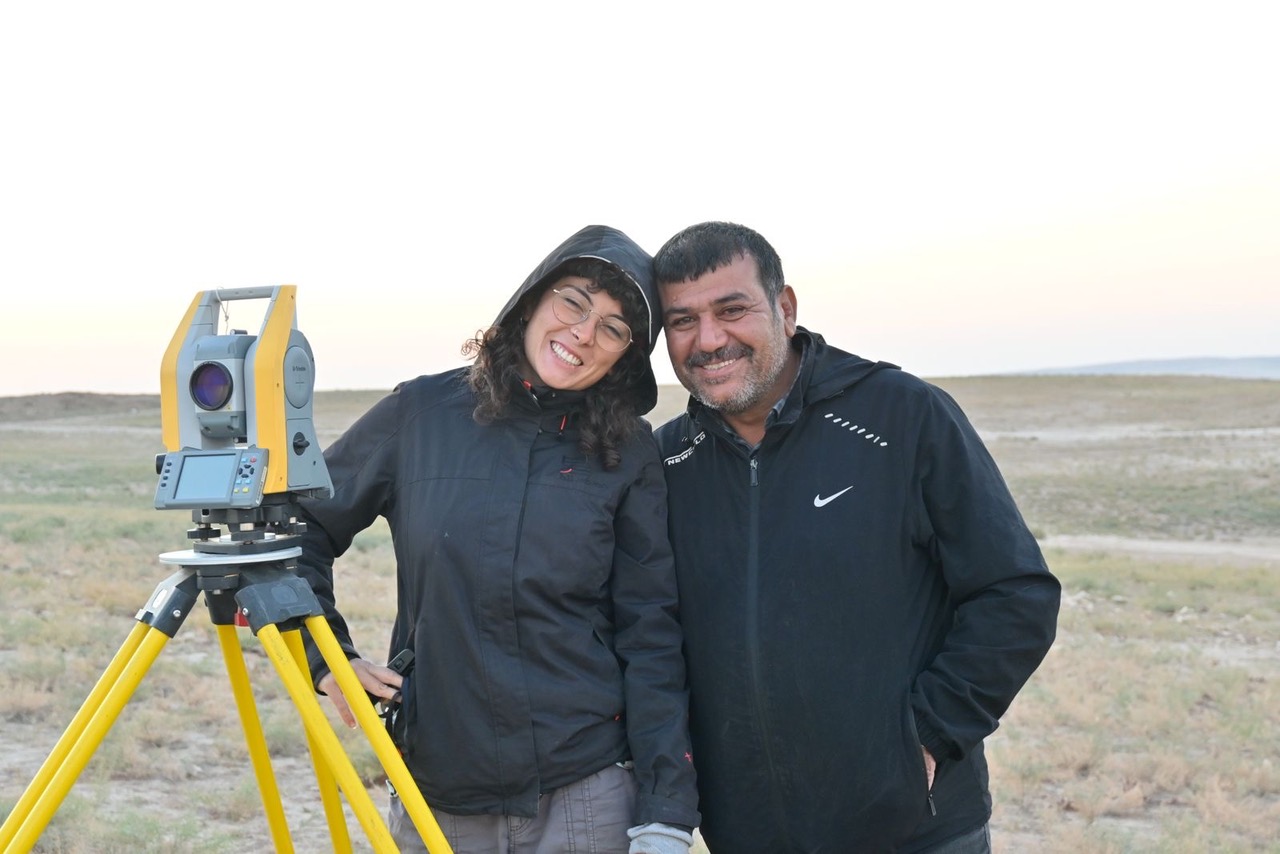
In the second part of the campaign, I worked at the site of Tell Gombass, a small Late Chalcolithic village, once located on a spur of a wadi, not far from the Tigris itself. Here, for the second year, emergency excavations were carried out. In particular, I was appointed as trench supervisor to excavate an ovoidal mud-brick (pottery?) kiln that just re-emerged. On this occasion, I had to challenge myself to lead a small team, ensuring a good quality of the documentation. But that’s not all: through the patient and expert guidance of our topographer, I managed to develop new skills in the topographical field and refine methodologies tailored to the diverse needs of the archaeological mission.

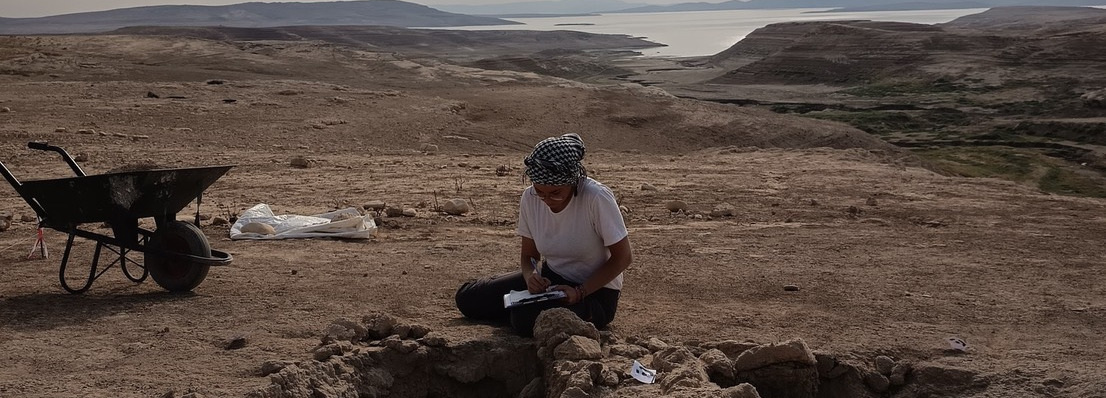
Excavating and documenting a Late-Calcholitic kiln’
Excavating and documenting a Late-Calcholitic kiln.
Me, Ali and the total station
Me, Ali, and the total station.

Previous skills have helped me through this international campaign: I’m getting better, but I still haven’t learnt Arabic nor Kurdish very well, so never has my Deutsches Sprachdiplom der Kultursministerkonferenz (DSD) been so helpful as to interact with Tarek, our chief worker from Syria, who spent 20 years excavating with German teams in Western Asia. His long field experience and knowledge had been one of the precious elements of the excavation campaign: although we worked in two different areas, we always kept up with each other’s work, and I’ve taken his generous advice to heart. This experience has definitely allowed me to work closely with Kurdish team members, fostering mutual learning and shared expertise while contributing to more inclusive and sustainable heritage practices.

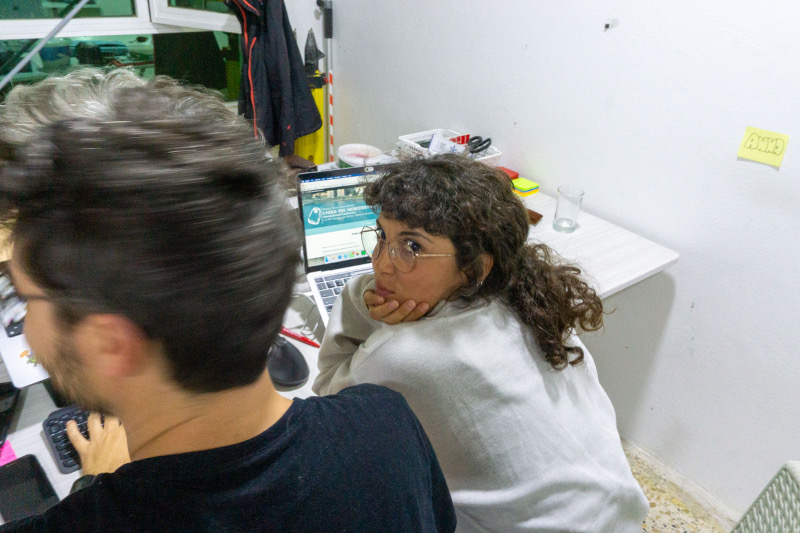
In the afternoons, I took care of the small finds documentation, getting the chance to measure, photograph, and document different types of artefacts, architectural elements, and ornaments that humans have produced in the Duhok region through millennia.

 
Afternoons
Afternoons.

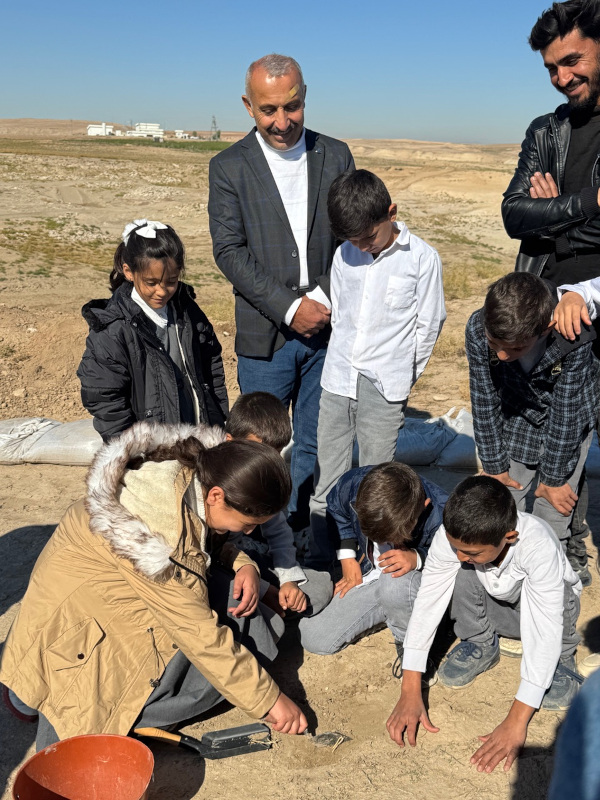
Last but not least, during my last week in KRI, I helped organise a tour of the excavation for Gombass’ elementary school pupils and students from the University of Duhok. It has been a precious moment to raise awareness among local populations about the cultural and historical significance of their landscape, and for my education as an archaeologist who wants to put ethical and post-colonial theories in practice: I believe that our work means nothing if not immediately given back to the people this heritagescape directly belongs to. This outreach experience has been particularly meaningful for me, as I have a strong interest in community organization, equitable governance, and cultural heritage preservation. After all, it is one of the main objectives of this project to preserve the memory of those communities that lived along the riverbanks, and the millennia-old settlements they inhabited, ensuring that their histories are acknowledged and valued.

Little archaeologists at work… in their home
Little archaeologists at work…in their home.

Last but not least, during my last week in KRI, I helped organise a tour of the excavation for Gombass’ elementary school pupils and students from the University of Duhok. It has been a precious moment to raise awareness among local populations about the cultural and historical significance of their landscape, and for my education as an archaeologist who wants to put ethical and post-colonial theories in practice: I believe that our work means nothing if not immediately given back to the people this heritagescape directly belongs to. This outreach experience has been particularly meaningful for me, as I have a strong interest in community organization, equitable governance, and cultural heritage preservation. After all, it is one of the main objectives of this project to preserve the memory of those communities that lived along the riverbanks, and the millennia-old settlements they inhabited, ensuring that their histories are acknowledged and valued.

I feel that participating in this long campaign of ReLand’s project has had a significant impact on my development as an archaeologist and as a future researcher. From survey skills to new and exciting responsibilities as a field supervisor, up until the possibility of developing and practicing non-colonial approaches to field archaeology, this campaign has given me far beyond the expertise luggage I expected to get back home with. I’m grateful for having built new tools and learnt methodologies, and I can’t wait for upcoming chances of professional and personal growth.

Team visit in Maltai, Duhok province’
Team visit in Maltai, Duhok province

Anna Taibi is a native of Palermo, Sicily, where she is working on her Master’s degree in Mediterranean and West Asian archaeology. She completed a BA in Cultural Heritage at the University of Palermo in 2023 with a cum laude dissertation on post- and decolonial approaches in archaeology. She is now delving into her commitment to community-based fieldwork while approaching new interests, such as the archaeology of production. She has participated in surveys and excavations in the Kurdistan Region of Iraq (ReLand project) and in Sicily, where she’s serving as a trench supervisor at the Phoenician-Punic site of Motya since 2024.

Want to help more students and early career archaeologists get into the field? Donate to the cause today by selecting “Fieldwork Scholarships” as your gift purpose!

Fieldwork Report: Hannah Borotsik

Just a Girl and Her Whiteboard

Hannah Borotsik, 2025 P. E. MacAllister Fellowship Recipient

Athens holds a very special place in my heart, and it has become one of my favourite cities in the world. I have met some of my best friends and have had some of the coolest experiences of my life here. I was so excited to be able to return to Greece for a fourth summer and for my third summer working at the Athenian Agora excavations with the American School of Classical Studies at Athens. I started in 2023 as a volunteer, and then in 2024, I returned as an assistant supervisor assigned to work in the apotheke. This past summer, I had the privilege of moving up to the role of apotheke supervisor. I never thought I would get the chance to say that I was a supervisor at the Athenian Agora Excavations, but this was the summer when I got the opportunity of a lifetime.

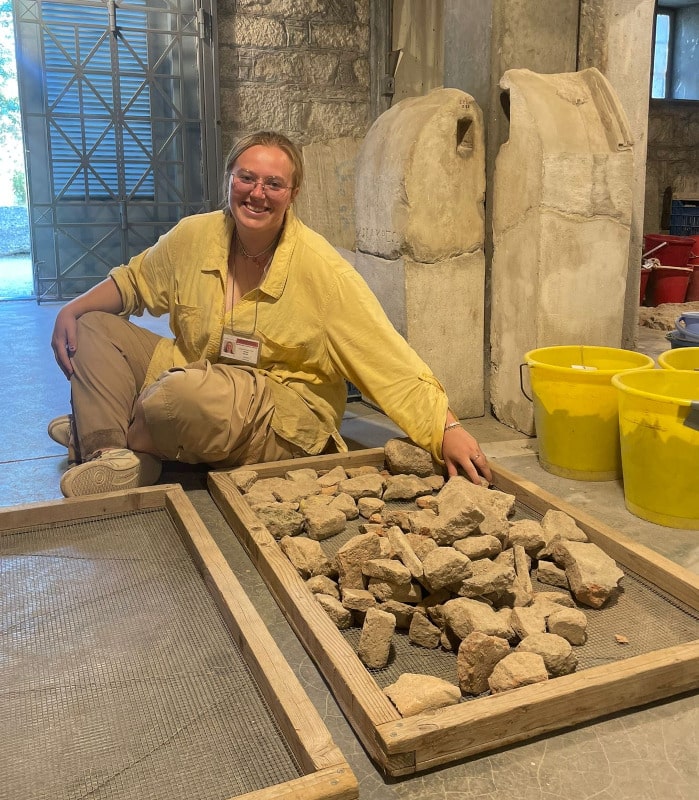
A common position to find me in… laying out tile. Photo by James Razumoff

My position involved managing the material coming into the apotheke and supervising all the volunteers who were assigned to flotation and pottery/bone/shell/tile wash. At the beginning of the season, my main goal was to make the processing of material coming to the apotheke as smooth as possible for everyone involved. I established different organizational systems, including having a large whiteboard, inboxes, labels, and designated spaces for different workflows. Since I worked with many different areas and members of the project on a daily basis, I thought a brief example of a “day in the life” for me at the Athenian Agora would be the best way to share how I spent my summer:

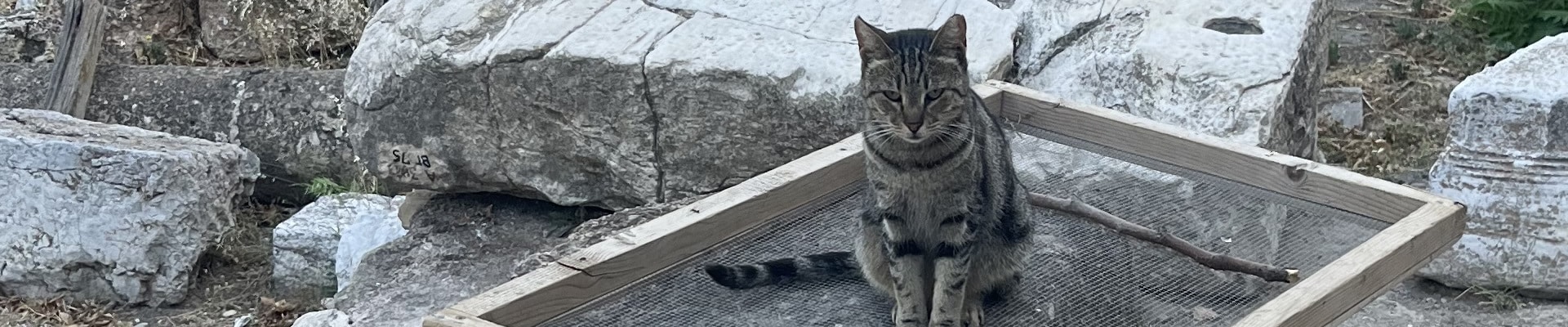
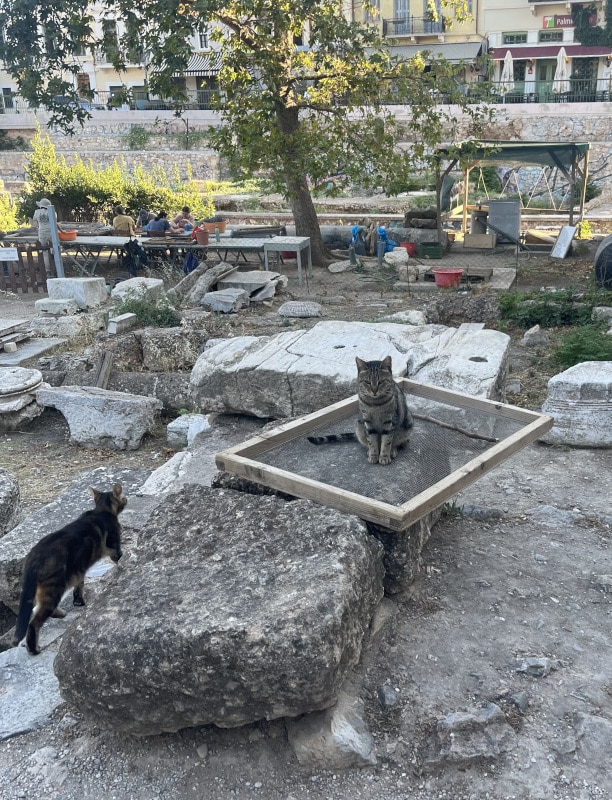
We get many cat visitors every day and some even liked to hang out in our trays. Photo by Hannah Borotsik

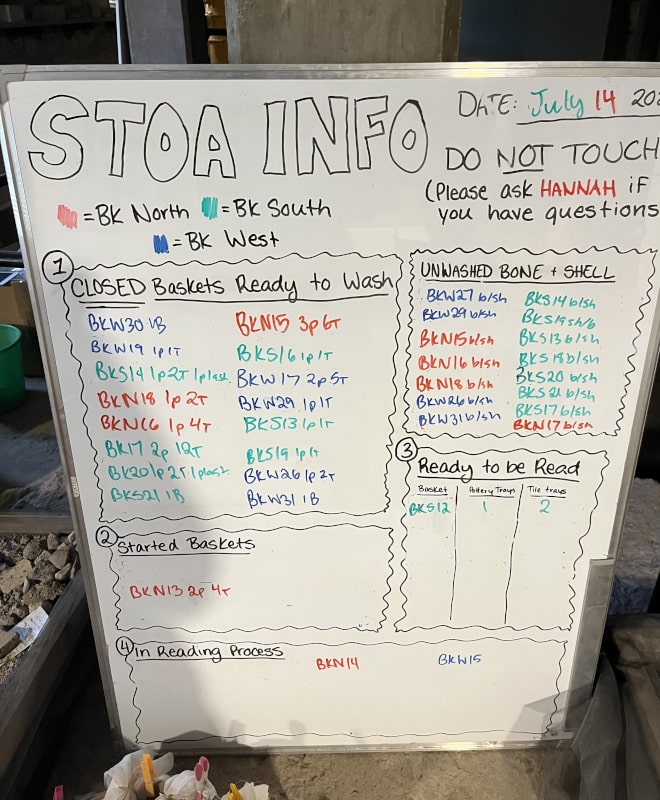
At the beginning of each day, I would start in the basement of the Stoa of Attalos, which serves as the apotheke for the Agora excavations. I would review the unwashed material and update my whiteboard with the information about the material that came up from the site at the end of the previous day. The whiteboard contained information for closed baskets from each trench in order to track the progress of washing, sorting, and reading by our wonderful pottery, bone, and shell specialists. Since the Agora is a total collection excavation, there is a lot of material coming up, and being able to communicate where all the material was at any given moment was extremely important. This was a method that I established in the 2024 season, and it became a staple of the basement’s organization (as well as a staple of my identity on the project).

The 2025 version of my whiteboard when the number of buckets of pottery felt like it would never end. Photo by Hannah Borotsik

Next, I would decide on which basket, or more often than not, baskets of pottery would be washed for the day. This depended on many different factors, including the number of volunteers assigned to wash, the number of available trays, and the number of buckets of pottery and tile belonging to a basket. The largest number of buckets in one basket from this season was three full buckets of pottery and thirteen tile buckets (this one took a while to wash). At this point, the volunteers assigned to the pottery wash area would arrive from the site for the day, and after bringing everything outside, I would divide the group into flotation and pottery wash.

Besides training and helping volunteers wash material, I had many responsibilities that I took care of during our work hours. I had to make sure that the dried ceramics, including the tile, were ready for our pottery specialists to analyse and count, weigh, and photograph. In some cases, I assisted with these procedures (for example, choosing the tile samples). I bagged and weighed dried bone and shell, after which I recorded the information into our iDig system. I made sure that any material that was ready for the trench supervisors to pack or things that needed to be made a special finds were in their respective inboxes. I wrote tags for trays inside and outside. I organized the baskets that were in queue to be washed. I strategized the best way to tackle the large backlog of tile, once larger baskets began to appear. At the end of the day, I facilitated the clean-up and organization of the apotheke, which mostly consisted of me giving the volunteers directions on what order I wanted each tray to go in and where I wanted them to go in the basement (and they did a great job every day!). These are just a few of my daily responsibilities, since every day came with new opportunities to improve workflows. After work, I sometimes stayed later to finish organizing and prepare for the following day or I worked on the procedural manual for the apotheke. At the end of most days, I went home and took a nap. One of the most important aspects of my job was to be the point of communication between our three open trenches and those working in the apotheke. As a result, my job consisted of many moving parts and more often than not, learning something new every day.

 
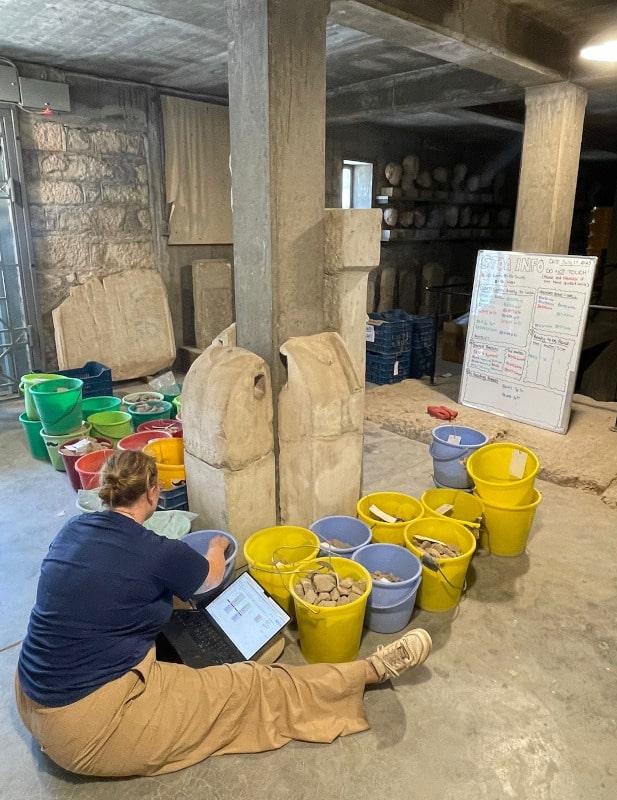
I am sitting with my buckets and whiteboard, updating the information for the unwashed shell and bone on my spreadsheet. Photo by James Razumoff

I was grateful to return to the Agora for my third summer and, although I was nervous to hold a supervisor position at such a well-known dig with only a few years of experience, my fellow supervisors, field director, and director were wonderful role models and helped me to become confident in my position. I learned so much more about being a leader and finding my leadership style, and I got more in-depth training on the many procedures that take place on excavation after the material comes out of the ground. All of these lessons have made me a better archaeologist. I am so thankful for the trust that was placed in me, and I will never forget my first-ever summer as a supervisor.

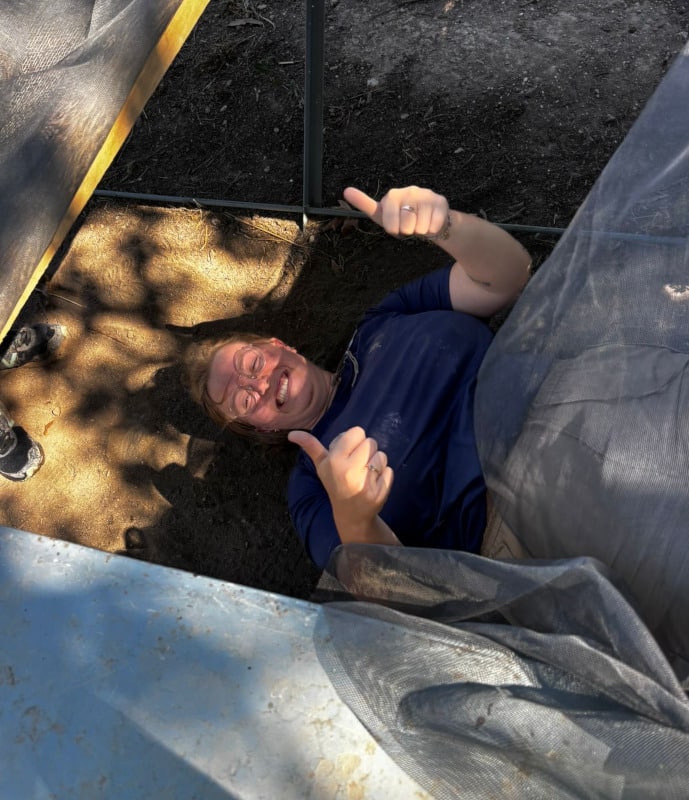
I am taking a break under the flotation trays. Photo by Theresa Cole

Hannah Borotsik is a first year PhD student in Classics at the University of Western Ontario, where she has just completed her Masters. She is also a graduate of Memorial University of Newfoundland and Labrador. She is interested in Ancient Greek religion, specifically traditions and rituals, and their relationship to social and political contexts. She has participated in digs at the Helike project and the Athenian Agora and has also worked on material from Newfoundland and Labrador.

Want to help more students and early career archaeologists get into the field? Donate to the cause today by selecting “Fieldwork Scholarships” as your gift purpose!

AM25 Recordings Now Available on ASOR’s Online Library

AM25 Recordings Now Available on ASOR’s Online Library

Free Access for 2025 Annual Meeting Registrants through June 30, 2026!

ASOR’s 2025 Annual Meeting was a resounding success. Scholars, archaeologists, and historians from around the world gathered to exchange ideas, present groundbreaking research, and celebrate the vibrant world of the Near East and wider Mediterranean world. ASOR is pleased to announce that recordings from the 2025 Annual Meeting in Boston are now available to view on the 2025 ASOR Online Schedule and ASOR’s Online Library. This initiative not only helps preserve the wealth of knowledge shared but also ensures that those who couldn’t attend the event in person still have access to session and workshop presentations (nearly 500 in total).

We are still working through a few recordings that need additional editing. If you do not see your recording available, please contact Jared Koller (jaredkoller@asor.org) for a status update.

The Impact of Sharing the Recordings

By making the recordings of the 2025 Annual Meeting available to AM25 attendees, ASOR not only increases the reach of its events but also fulfills its mission to advance the study of the ancient world and its impact on modern life. These recordings allow those unable to attend to still be part of the conversation, and they offer invaluable educational resources for students, scholars, and enthusiasts of Near Eastern archaeology and history.  ASOR is proud to share these valuable resources with you, and we’re excited to continue building on this effort in the future.

How to View the Recordings on the 2025 Annual Meeting Website

Recordings are available until June 30, 2026 for AM25 attendees.

Reminder about 2026 Annual Meeting Registration: you will gain free access to the Online Library platform with your 2026 Annual Meeting registration—and you’ll have access to the Online Library content (through June 30, 2026).