

Shepard Urgent Action Grant Report: Cham Pashaya II

Overview

2023 SHEPARD URGENT ACTION GRANT: RESCUE OPERATIONS AT THE SITE OF CHAM PASHAYA II, DUHOK PROVINCE, KURDISTAN REGION OF IRAQ

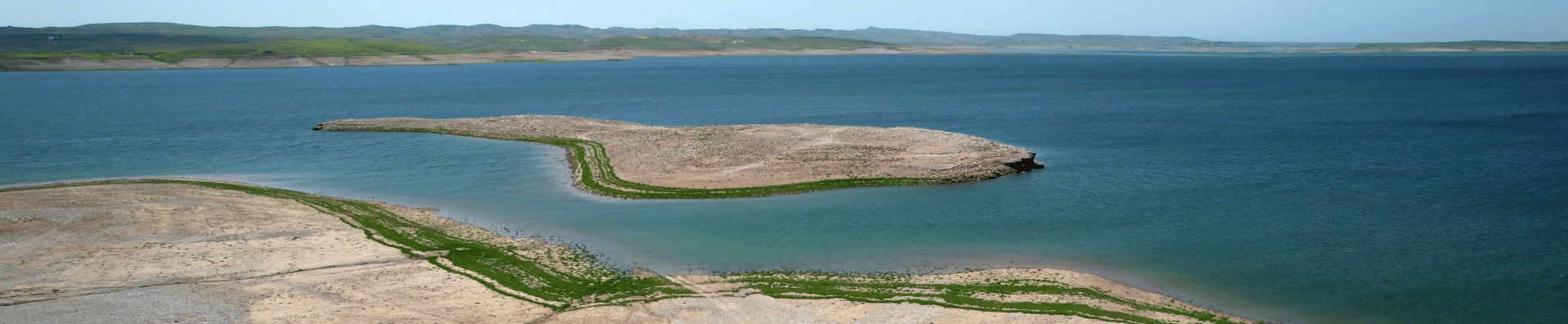
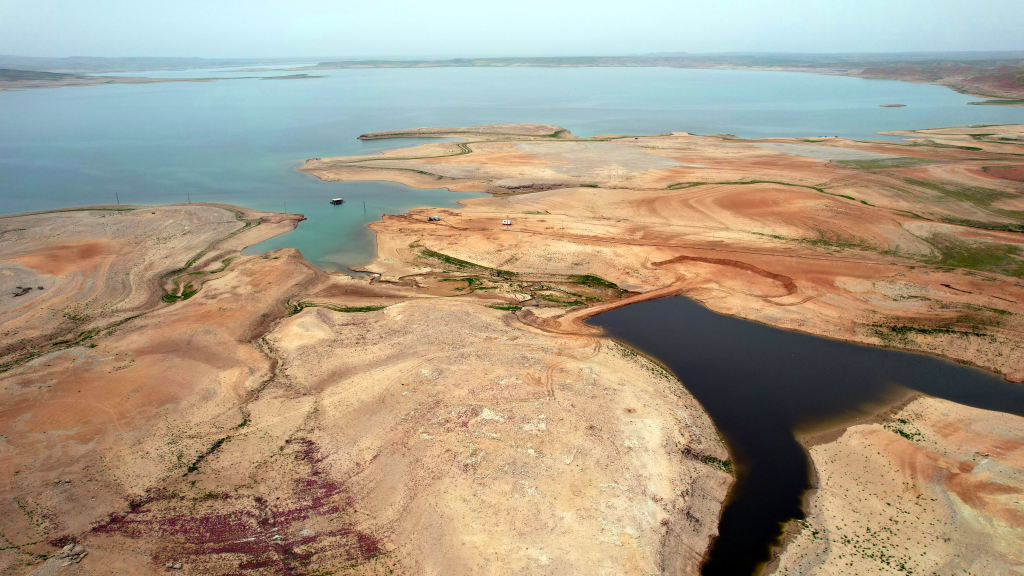
Along with natural catastrophes and destruction during conflict, artificial dam construction and the consequent water impact are primary causes of the loss of archaeological heritage. Once submerged, most flooded sites do not re-emerge. Others periodically resurface due to the reservoir’s exceptional or cyclical water fluctuation processes, and once again reveal the evidence of their past. One such site is Cham Pashaya II, located in the Kurdistan Region of Iraq on the shore of the Mosul Dam reservoir (Fig. 1).

Cham Pashaya
Fig. 1: View of Cham Pashaya with the Mosul Lake in the background.

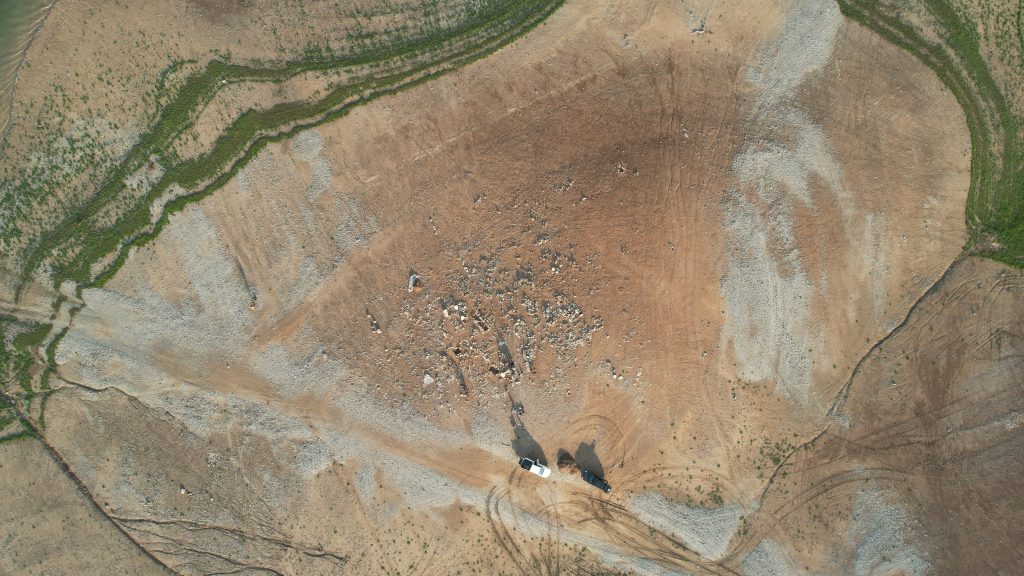
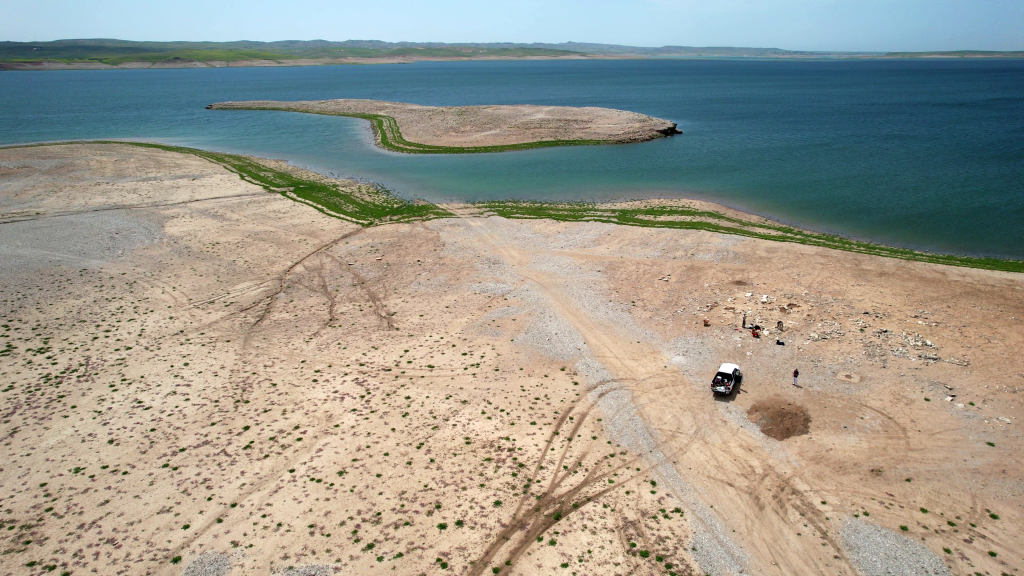
Cham Pashaya II is a large cemetery (ca. 2 ha) that extends across two adjacent hillocks (Fig. 2). The site contains over 50 visible cist graves that are threatened by destruction, looting, and vandalism when the water levels of the lake drop and the site is accessible. Since the closing of the dam in 1988, the site has remained mostly underwater, resurfacing only twice: once in 2018 and again in winter 2022.

Water level in the dam area is affected by a number of connected factors including normal dam management, increasing population pressure, the region’s aridification which is driven by global climate change, as well as political strife between countries for control of the dammed basins.

Fig. 2A: Aerial view of the site with visible graves.
View of Cham Pashaya with the Mosul Lake in the background.
Fig. 2B: View of the cemetery Cham Pashaya with the main tell already partially submerged in the background

Thanks to a Shepard Urgent Action Grant, a three-week salvage mission was carried out at the site in April 2023 by a Kurdish-Italian team led by the University of Palermo in cooperation with the Duhok Directorate of Antiquities and Heritage (Fig. 3). This was a multi-disciplinary mission that included salvage excavations, archaeological survey, high-resolution documentation of the site’s state of preservation, and monitoring of damage and looting to the cultural resources.

People at work
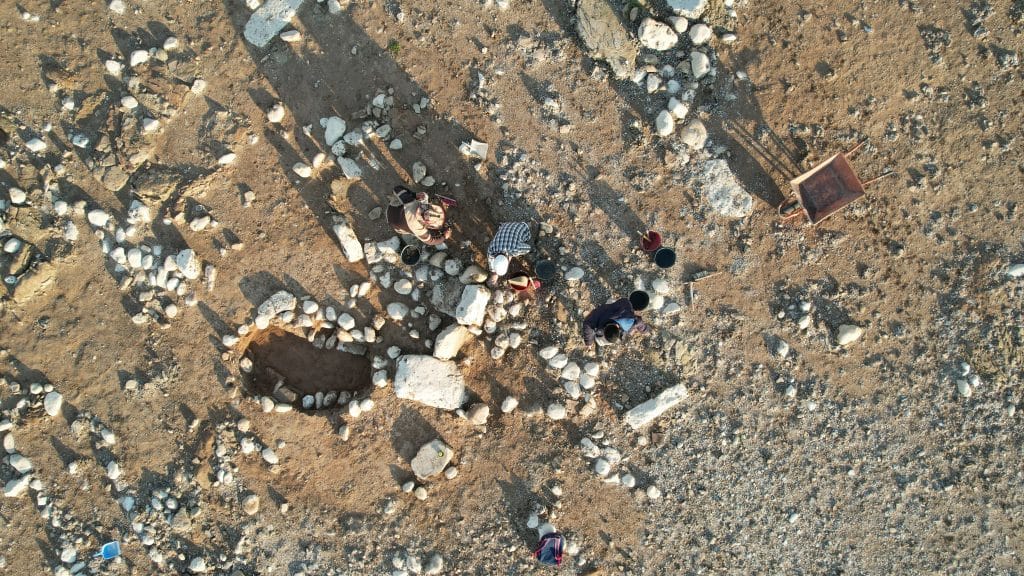
Fig 3: The team at work.

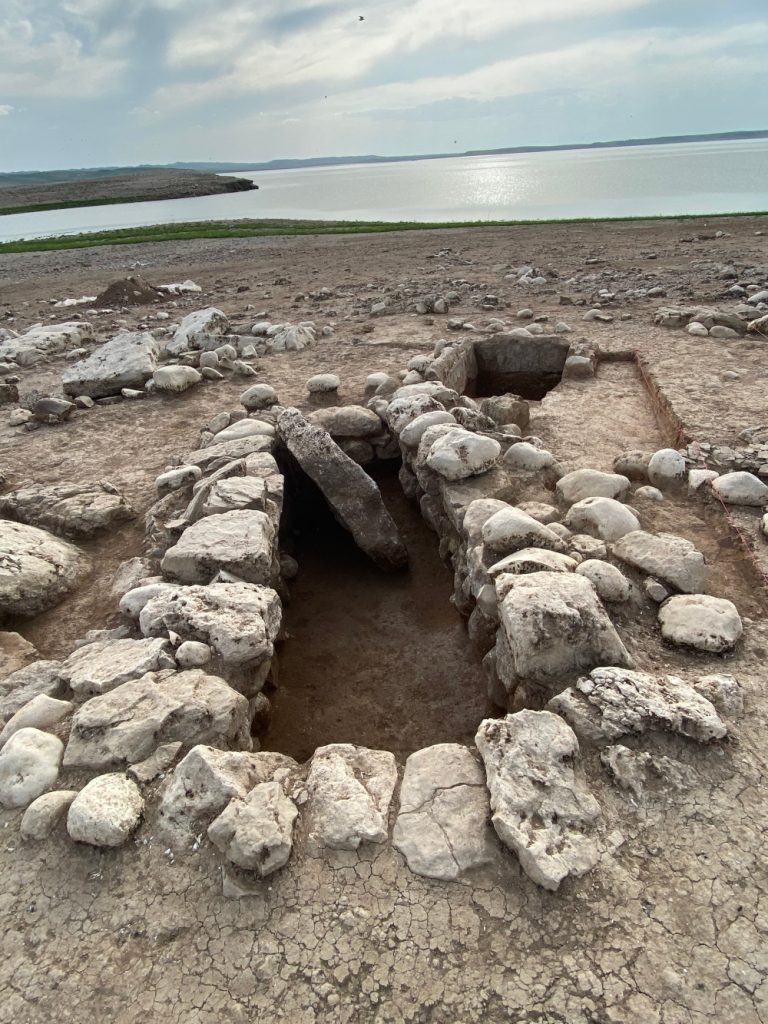
An area of 150 square meters was cleared and 25 graves were exposed to investigate the spatial relationships between them. These graves are primarily stone cists of different sizes ranging from over 3 m in length to only 40 cm in diameter. The majority of the graves are rectangular (Fig. 4), but there are also oval and round graves. The team determined that the Cham Pashaya II cemetery has graves from multiple phases based on their spatial relationships. The variety of sizes and forms also supports this interpretation.

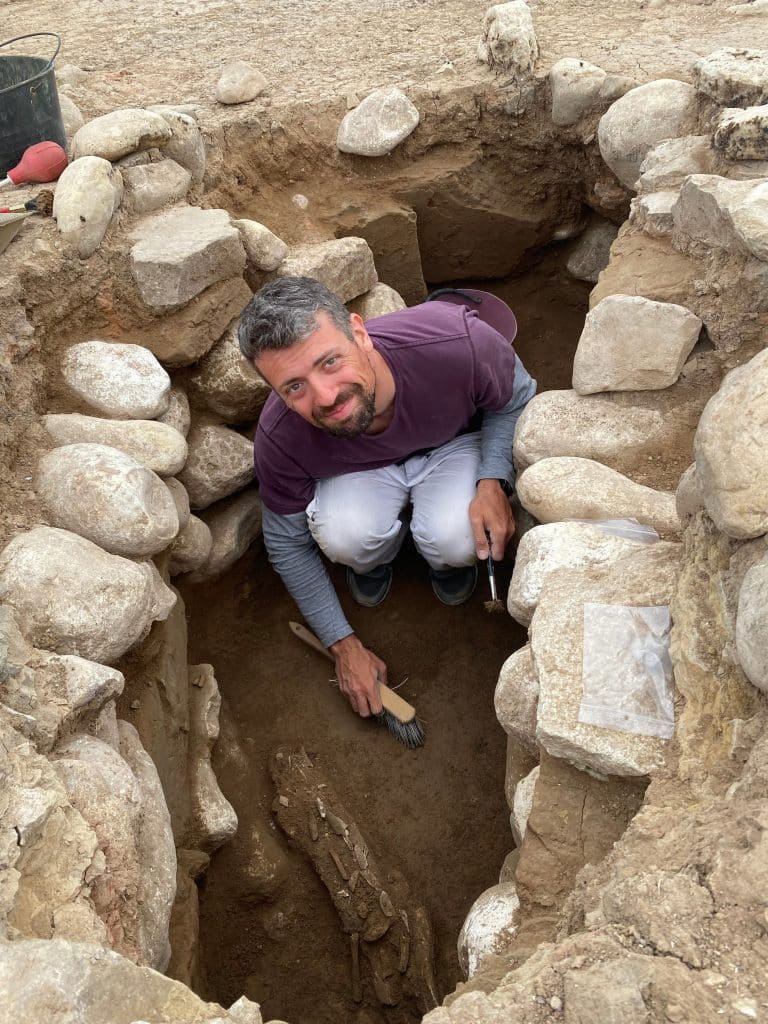
We decided to further investigate and fully excavate 5 graves, choosing a selection of the different typologies and sizes (Fig. 5).

Despite widespread ancient and modern looting and the very poor state of preservation of the bone material due to the water-logged environment, we found that it was still possible to reconstruct some of the funerary practices and to establish a chronological framework for the cemetery. Graves were meant to host one or more individuals. The larger ones were apparently used for longer periods, and had evidence to show that they were re-opened many times.

One of the largest graves.
Fig. 4: One of the largest graves.
Our anthropologist at work
Fig. 5: Our anthropologist at work.

Our current interpretation is that Cham Pashaya II was a burial ground for the community living at the adjacent multi-period mound of Cham Pashaya I during the first half of the third millennium BC. This was a critical time that saw the establishment of the first “urban model” in Upper Mesopotamia—a focal point of research on the archaeology of Southwest Asia in recent decades.

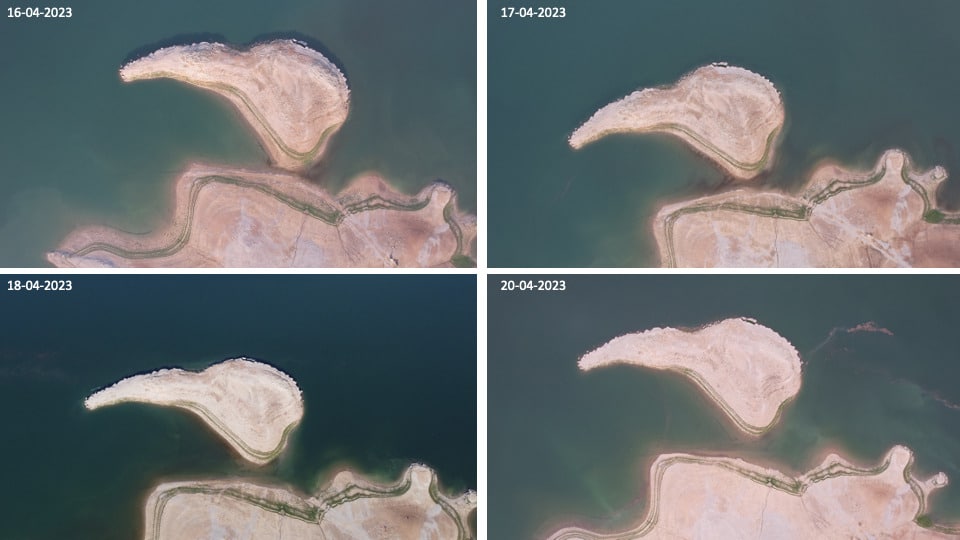
Cham Pashaya II disappeared again under the lake water a few days after the end of our fieldwork (Fig. 6). It is hard to predict if and when it will re-emerge.

Rising of the water level in the days before our departure.
Fig. 6: Rising of the water level in the days before our departure.
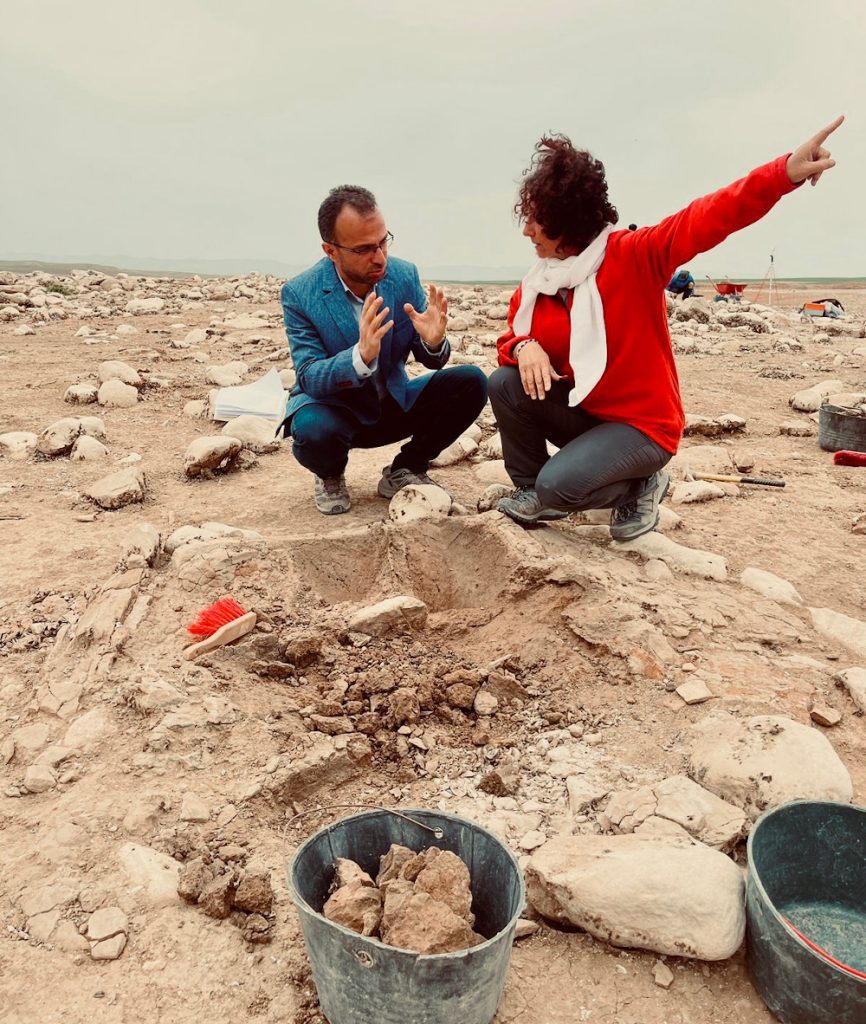
Dr. Sconzo consults with a one of the project's partners from the Duhok Directorate of Antiquities and Heritage.
Dr. Sconzo consults with the project's partner, Dr. Bekas Jamaluddin Hasan Al-Brifkany, from the Duhok Directorate of Antiquities and Heritage.


-Dr. Paola Sconzo, University of Palermo

The Cham Pashaya salvage excavation is part of a larger monitoring, survey, and rescue activities project called ReLand (Resurfacing Landscapes: Mosul Dam Archaeological Project).

Established in 2020 with annual contributions, the Shepard Urgent Action Grants program was created to support emergency and rapid response activities on archaeological sites in the greater Mediterranean region. Shepard Grants have provided $59,625 in support of projects with urgent need since the program began. While preference is given to projects and teams with current ASOR affiliation, applications will be considered from all projects. All 2023 grant funds have been awarded, and ASOR plans to resume accepting applications for Shepard Grants in 2024. Read more about the grant program here.

Fieldwork Report: Sarah Foster

My Expectations of Desert Fieldwork vs. the Reality

Sarah Foster, 2022 Platt Scholarship

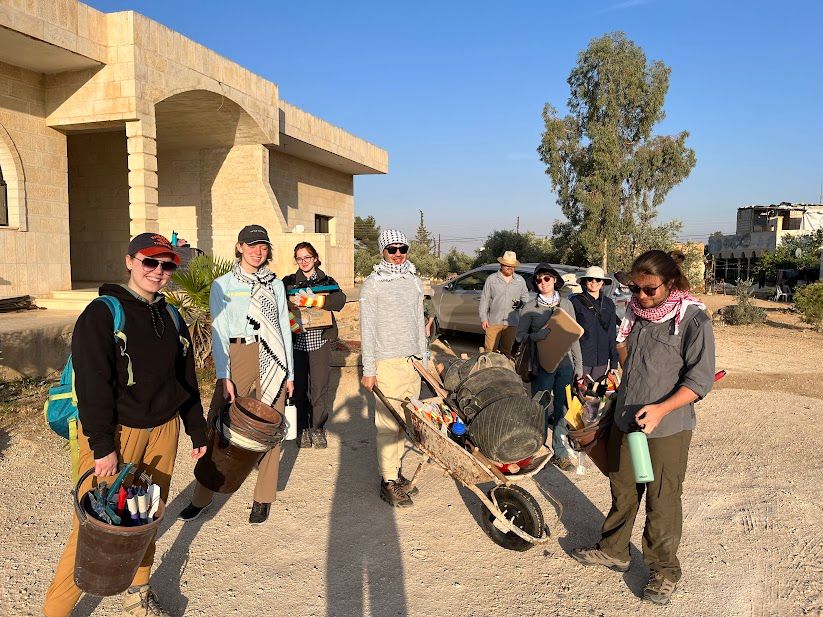
In May of 2022 I had the fortunate opportunity to be able to participate in fieldwork under the Umm al-Jimal Archaeological Project, taking part in excavations at their West Church. I shared this experience with fellow Calvin University undergraduate students, most of whom had little to no knowledge of the realities of archaeological fieldwork in a desert environment. Although I was passionate to finally do archaeology instead of reading about it. Yet, the classes I took in preparation led me to expect our work to look and be entirely different from what it actually was.

For instance, I was under the notion that the trench would be a perfect rectangle with no obstacles inhibiting my ability to trowel through the contexts and collect artifacts. We worked alongside the North end of the West Church, just outside the area of the apse in locations that were suspected to be rooms that were added later on in the church’s life. Before we had arrived, a local team had worked to clear these “rooms” of large rubble and stones that had been part of the infrastructure. Even when we started our fieldwork, we had to work around large stones that had been buried by sand over the ages since the building’s collapse. Our trench was therefore not a perfect square but instead a rubble-filled rectangle with areas that were never even excavated. From this I learned that while ideally, we’d like to dig up the entire area of the rooms to get a solid understanding of their layout and purpose, it just wasn’t physically possible. Instead, we strived to make the best of our trench by troweling in areas that were assumed to be most significant and drawing a top plan of the inaccessible parts to aide us in answering our research questions. 

Additionally, I had not expected fieldwork to take much of a toll on my body besides the typical soreness from physical labor. I discovered that while working in a desert environment, if you are not used to it, can worsen your allergies and the dust can cause irritation in your eyes, nose, and throat. As a result, many of us started taking allergy medicine, opted to use masks to ward off as much dust as possible, and drank a lot of tea to soothe our throats. Ideally, we would have been able to put in 100% effort of work each day, but due to our body’s response to the environment, there were those of us that had to sit out for a day to allow our bodies to recover. This taught me that when conducting fieldwork in the desert, I cannot expect my body to function as it normal does in the environment I live in. Therefore, before going anywhere, it is just as important to research the environment and its potential effects as it is to do background research on the history. 

Overall, conducting fieldwork at the West Church in Umm al-Jimal was a formative experience for me. I got to discover how archaeology is conducted in the field which I found was in practice a lot different than my expectations. This realization allowed me to comprehend that not only should archaeologists strive to achieve the ideals that are taught, but that they should in turn never expect them. Our rubble-filled trench in the deserts of northern Jordan provided difficulties, as do all other environments and sites when conducting fieldwork. The ideals that exist are expected in a perfect world that we will never find. Thus, it is important to have courage that you can overcome aspects of the obstacles of your environment but it is also important to take heart and embrace the differentness of your setting to reach the histories that lie within. 

Sarah Foster is a recent graduate of Calvin University, located in Grand Rapids, Michigan. She graduated magna cum laude, earning her B.A. degree in history alongside a minor in archaeology. 
Want to help more students and early career archaeologists get into the field? Donate to the cause today by selecting “Student Support” as your gift purpose!

Fieldwork Report: Anna Luurtsema

A Day in the Life on an Archaeological Survey Project

Anna Luurtsema, 2022 Shirlee Meyers-G. Ernest Wright Scholarship Recipient

This summer, I was the recipient of the Shirlee Meyers-G. Ernest Wright Scholarship for Fieldwork Participation. This scholarship made it possible for me to participate in an archaeological survey project called “A Multi-Survey Exploration of Residences near Tell el-Hesi, Israel.” The project utilized GPR, magnetometry, and pedestrian survey to better understand where people were living in the Bronze Age town surrounding Tell el-Hesi; our results will help inform the locations of our excavations next season. I primarily helped with the pedestrian survey. In the area surrounding the tell, we created a grid of five-by-five meter squares in order to systematically measure the densities of potsherds, lithics, and other artifacts. We had five minutes in each square to pick up as many artifacts as we could. Our findings were then recorded and photographed before being placed back in the square. Over the course of three weeks, we surveyed 600 squares. 

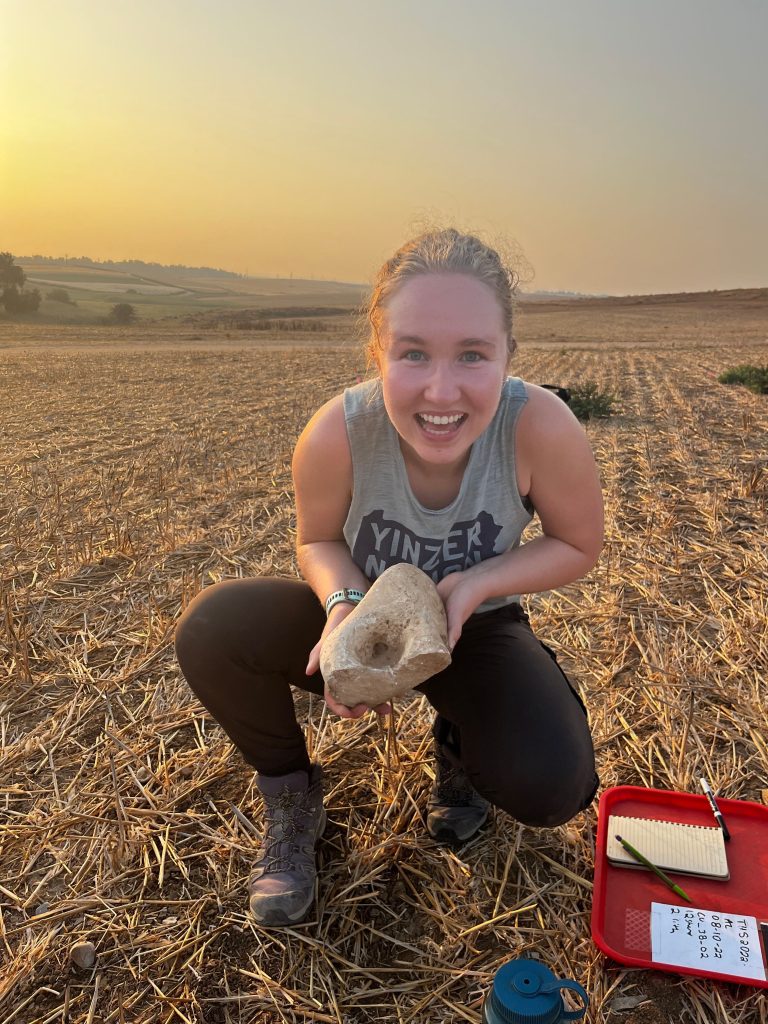
One of my coolest finds--a Bronze Age socket that held up the lintel in a door frame.

Upon arriving in Israel, we quickly fell into a routine. We stayed at a kibbutz, which is sort of like a gated community complete with a grocery store and a school. We woke up at 5:30 every morning as it was essential to get an early start to the day in order to beat the heat. For breakfast, I would usually have a pita and an apple with a mug of instant coffee. Then we piled into our trusty rental car we endearingly named Sandy—by the end of the project, the rear window was covered with dust. It was about a twenty minute drive from the kibbutz to the site on dirt roads; everyday, it seemed that we discovered new craters and bumps in the winding path. 

At the site, we started our survey. The three of us undergraduates took our positions in our own squares, which were marked by pink tape, while our supervisor timed us and documented our findings. For five minutes, we picked up potsherds, lithics, and other miscellaneous objects—glass, bone, coral. Sometimes I collected upwards of thirty sherds in a square, while other times I was lucky to find three. After each five-minute interval, in addition to showing our supervisor, we also recorded in our own notebooks the proportion of Bronze Age pottery and noted any other unusual finds, such as sickle blade fragments. 

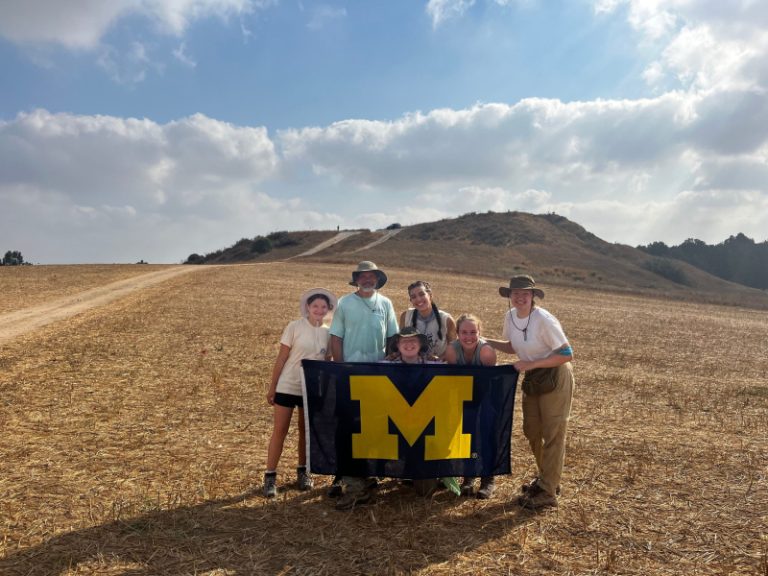
Our survey team, with Tell el-Hesi in the background.
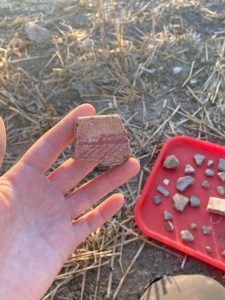
A beautiful piece of Bronze Age pottery.

For the first hour or so, the tell blocked the sun from directly shining on us, so the air was almost cool. Gradually, it started to heat up, and eventually the black flies made their appearance. We kept surveying, swapping stories and playing music to distract ourselves from the heat and the perpetual buzzing of flies in our ears. It was sometimes difficult to stay motivated in the heat, but it helped me to look forward to the next milestone—200 squares, 300 squares, 400 squares—and to remember how much progress we had already made. 

Around 9 am, we took a break in the comfort of our air conditioned car to have a snack and reapply sunscreen. Then we continued for another three hours, or until we hit our quota of squares for the day. Our work day was finished by lunchtime, at which point the heat was almost unbearable. We always felt accomplished with our work as we drove back to the kibbutz. 

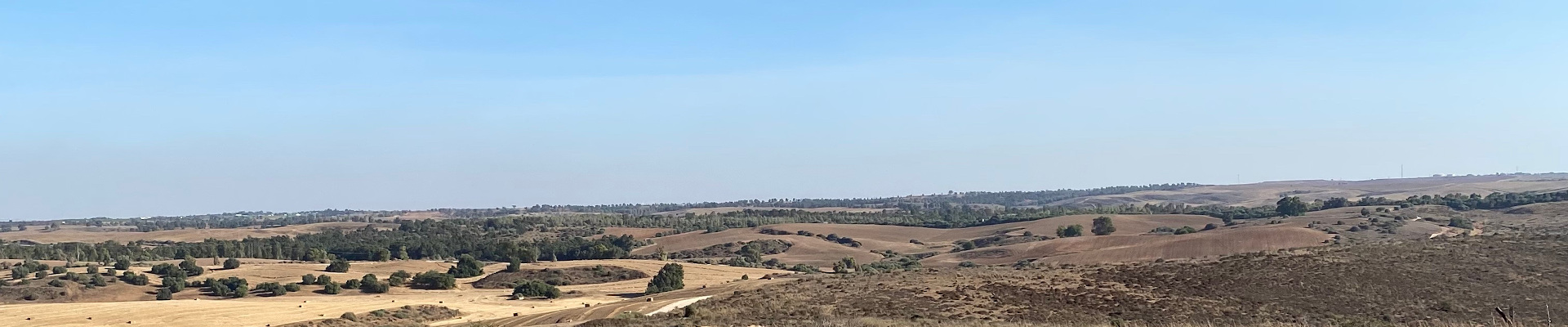
The landscape around Tell el-Hesi.

For lunch, we usually had pita bread and a variety of vegetables—cucumber, carrots, bell peppers—dipped in hummus. We made almost daily trips to the kibbutz grocery store for fruit; the peaches were the best I’ve ever had. In the afternoons, I helped organize boxes of artifacts from previous excavations at the site. Tell el-Hesi has been periodically excavated since the 19th century, though the boxes we were working with were from the 1970s and later. Some of the boxes were falling apart, so we moved the bags of artifacts to new ones; sometimes, the plastic bags were deteriorating as well. This task made me realize the importance of curation; it’s critical that we preserve artifacts for future generations. 

After boxing artifacts and hanging out around the kibbutz in the afternoon, one of our favorite spots to go for dinner was McDonald’s, funny enough. McDonald’s in Israel is very different from the US as it’s not really considered fast food. Our first time there, I ordered a hamburger and was shocked to discover that it was almost the size of my face. I really enjoyed our time outside the kibbutz, both at night and on the weekends, when we took trips to places like Masada, the Dead Sea, and Jerusalem. I loved experiencing the culture of Israel as I learned firsthand about its archaeology.

I look forward to continuing this project next summer, when we begin excavations. I’m sure it will be very exciting and rewarding to participate in an archaeological field project from the initial survey phase all the way through the excavation. Of course, I wouldn’t have been able to participate in this project without the help of the Shirlee Meyers-G. Ernest Wright Scholarship, and I am sincerely grateful for this experience.

Anna Luurtsema is a senior at the University of Michigan studying anthropological archaeology with a minor in Middle East Studies. Her research interests include zooarchaeology, human mobility, and the origin of agriculture, and she plans to apply to graduate school this fall.
Want to help more students and early career archaeologists get into the field? Donate to the cause today by selecting “Student Support” as your gift purpose!