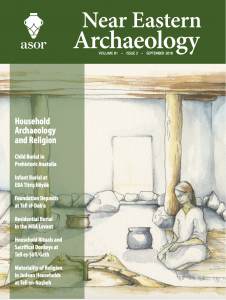
Table of Contents for NEA 81.3 (September 2018)

[vc_row fullwidth=”true” attached=”true” css=”.vc_custom_1496247803139{padding-top: 0px !important;padding-right: 0px !important;padding-bottom: 0px !important;padding-left: 0px !important;}”][vc_column][mk_image src=”http://www.asor.org/wp-content/uploads/2018/10/Unknown.jpeg” image_width=”1920″ image_height=”600″ hover=”false” margin_bottom=”0″][/vc_column][/vc_row][vc_row fullwidth=”true” css=”.vc_custom_1496682730308{padding-top: 10px !important;padding-right: 0px !important;padding-bottom: 0px !important;padding-left: 0px !important;}”][vc_column width=”1/12″ css=”.vc_custom_1496683820796{margin-right: 10px !important;}” offset=”vc_hidden-md vc_hidden-sm vc_hidden-xs”][vc_column_text]

 SHARE

[/vc_column_text][mk_image src=”http://www.asortest.org/wp-content/uploads/2017/01/social-fb-icon4.jpg” image_width=”42″ image_height=”42″ hover=”false” custom_url=”https://www.facebook.com/ASOResearch/” margin_bottom=”0″][mk_image src=”http://www.asortest.org/wp-content/uploads/2017/01/social-tw-icon4.jpg” image_width=”42″ image_height=”42″ hover=”false” custom_url=”https://twitter.com/ASOResearch?ref_src=twsrc%5Egoogle%7Ctwcamp%5Eserp%7Ctwgr%5Eauthor” margin_bottom=”0″][mk_image src=”http://www.asortest.org/wp-content/uploads/2017/01/social-in-icon4.jpg” image_width=”42″ image_height=”42″ hover=”false” custom_url=”https://www.linkedin.com/company/american-schools-of-oriental-research” margin_bottom=”0″][mk_image src=”http://www.asortest.org/wp-content/uploads/2017/01/social-ml-icon_7.jpg” image_width=”42″ image_height=”42″ hover=”false” custom_url=”mailto:asor@bu.edu” margin_bottom=”0″][mk_image src=”http://www.asortest.org/wp-content/uploads/2017/01/blog-icon3.jpg” image_width=”42″ image_height=”42″ hover=”false” custom_url=”http://asorblog.org/” margin_bottom=”0″][/vc_column][vc_column border_color=”rgba(255,255,255,0.01)” width=”1/6″ css=”.vc_custom_1496683923840{margin-right: 20px !important;border-left-width: 2px !important;padding-right: 20px !important;padding-left: 20px !important;border-left-color: #99422f !important;}”][mk_divider divider_color=”rgba(255,255,255,0.01)” thickness=”1″ margin_top=”3″ margin_bottom=”3″][vc_column_text]

ASOR BLOG

NEWS@ASOR

ANCIENT NEAR EAST TODAY

PAST ASOR NEWS, MONTH BY MONTH

FY18 HONOR ROLL OF DONORS

ASOR ANNUAL MEETING

[/vc_column_text][/vc_column][vc_column border_color=”rgba(170,170,170,0.01)” width=”1/2″ css=”.vc_custom_1487276122024{margin-right: 10px !important;margin-bottom: 30px !important;border-right-width: 2px !important;border-bottom-width: 2px !important;padding-top: 30px !important;padding-right: 30px !important;padding-left: 20px !important;background-color: #ffffff !important;border-right-color: rgba(227,228,228,0.75) !important;border-bottom-color: rgba(227,228,228,0.75) !important;}”][vc_column_text responsive_align=”left”]

Table of Contents for Near Eastern Archaeology 81.3 (September 2018)

Subscription Options
You can receive NEA (and other ASOR publications) through an ASOR Membership or through an Individual Subscription. Single issues (subject to availability) are available for purchase, with ASOR members receiving a discount. Please e-mail us if you have any questions.

Pp. 164-173: “Sanctifying the House: Child Burial in Prehistoric Anatolia,” by Burcu Yıldırım, Laurel D. Hackley, and Sharon R. Steadman

Intramural burials are common on the Anatolian plateau, beginning in early prehistory. Neolithic examples indicate that the incorporation of human remains into domestic architecture was a regular part of the rhythm of family life. By the Late Chalcolithic, adult burials have largely moved into extramural cemeteries, although there are some exceptions. Infants and small children, however, continue to be buried within the house and these interments are a common feature on the Anatolian plateau. At the site of Çadır Höyük in central Anatolia, well over one dozen Chalcolithic infant burials were placed in corners of existing rooms, in areas of possible ritual function, and incorporated in walls at the time of construction. This study investigates the relationship between the spatial context of these burials and their function in the domestic context, and considers the possibility that some infant burials served as foundation deposits in the architecture at Chalcolithic Çadır.

Click here to access the above article on JSTOR (ASOR membership with online access and/or subscription to JSTOR Current Content required).

Pp. 174-181: “Infant Burial Practices as Domestic Funerary Ritual at Early Bronze Age Titriş Höyük,” by Timothy Matney

The Early Bronze Age tradition of intramural tombs at settlements in the Middle Euphrates region is well established, with examples from many excavations. Often these intramural tombs comprise stone-built cist chambers with adult or juvenile occupants and a range of funerary offerings. They are located within domestic residences and interpreted as family crypts. Less well explored are contemporary infant burials, which, in addition to poor preservation, are often located beneath the living floors of domestic houses but not within the cist tombs. This study reviews the evidence for the intramural burial of infants at mid-to late Early Bronze Age Titriş Höyük in southeastern Turkey in the context of broader funerary traditions at the site and in the region. The author suggests that the division between adult/juvenile and infant burial treatments might be more pragmatic than dogmatic; the implications of this observation for domestic funerary rituals and household cults are explored.

Click here to access the above article on JSTOR (ASOR membership with online access and/or subscription to JSTOR Current Content required).

Pp. 182-190: “Foundation Deposits and Strategies of Place-Making at Tell el-Dab’a/Avaris,” by Miriam Müller

Foundation ceremonies are well known from the Egyptian royal and sacred spheres: They mark the beginning of construction work and ensure the effectiveness and longevity of the building to which they belong. One important component of these ceremonies is the foundation deposit, which is often placed under the corners of a temple or tomb and contain various items. Although foundation deposits are also attested in connection with profane architecture, such as storage buildings belonging to the royal household, they are uncommon in the nonelite sphere. The author discusses the evidence for this practice from a neighborhood of the ancient city of Avaris (Tell el-Dab’a) in the eastern Nile Delta. These finds are evaluated in light of comparative evidence from other parts of Egypt and the Near East. The author concludes that domestic foundation rituals are essentially poorer versions of royal ones, serving to sanctify, protect, commemorate, and elaborate. The evidence for this practice at Tell el-Dab’a furthermore hints at a mixture of Near Eastern and Egyptian elements at the site, opening up a new area of research in Egyptian domestic architecture.

Click here to access the above article on JSTOR (ASOR membership with online access and/or subscription to JSTOR Current Content required).

Pp. 191-201: “Residential Burial and Social Memory in the Middle Bronze Age Levant,” by Melissa S. Cradic

Disposal of the dead within occupied buildings of the Middle Bronze Age Levant, or intramural burial, offered inhabitants a way of closely interacting with the physical remains of the deceased. Residential burials provided permanent spatial connections between the living and the dead and served as loci of social memory for the intergenerational household. Drawing on archaeological evidence from Tel Megiddo, this article presents a model for residential burial and social memory focusing on the diversity of body disposal methods. Burials inside the settlement varied significantly in terms of type and architecture, body disposal methods, and grave goods. In several cases, burials were reopened periodically to reposition corpses while others were never disturbed. The author argues that the high degree of diversity within this mortuary corpus relates to differential social roles of the deceased after burial, and that mourners’ close encounters with deceased bodies transformed the status of the dead in a complex and protracted sequence of funerary rituals.

Click here to access the above article on JSTOR (ASOR membership with online access and/or subscription to JSTOR Current Content required).

Pp. 202-211: “Household Rituals and Sacrificial Donkeys: Why Are There So Many Domestic Donkeys Buried in an Early Bronze Age Neighborhood at Tell eṣ-Ṣâfi/Gath?,” by Haskel J. Greenfield, Tina L. Greenfield, Itzhaq Shai, Shira Albaz and Aren M. Maeir

A few years ago, a domestic donkey (Equus asinus), or ass, was discovered at Tell eṣ-Ṣafi/Gath in modern Israel and determined to have been sacrificed and buried as a foundation deposit beneath the floor of an Early Bronze III house. Since then, three additional complete domestic donkey burials have been revealed beneath the floors of another house in the same Early Bronze neighborhood. These animals were buried within a nonelite domestic neighborhood at the edge of the city. The authors suggest that this urban space may have been the location of the homes and work spaces of merchants who relied upon donkeys as “beasts of burden” to transport their goods regionally and interregionally.

Click here to access the above article on JSTOR (ASOR membership with online access and/or subscription to JSTOR Current Content required).

Pp. 212-221: “Materiality of Religion in Judean Households: A Contextual Analysis of Ritual Objects from Iron II Tell en-Naṣbeh,” by Aaron Brody

The author highlights household religion through a direct, contextual presentation of ritual artifacts from one Judean household compound at Tell en-Naṣbeh in their original contexts. The compound is made of five conjoined pillared houses that constitute the living space of one extended family. The author takes a gendered approach to the artifacts, which include female pillar figurines, animal figurines, horse-and-rider figurines, incense stands, and zoomorphic vessels. Ritualized utilitarian objects are also taken into account. This approach to ritual at the site adds to our understanding of the religious culture of women, men, children, families, and households at Naṣbeh. Most notably the author proposes that the concentration of ritual objects near the two kitchen spaces in the compound suggests that the female head of household who provided sustenance for the extended family and its dependents also presided over the religious health of the household.

Click here to access the above article on JSTOR (ASOR membership with online access and/or subscription to JSTOR Current Content required).

[/vc_column_text][mk_divider][vc_column_text]To view the entire issue on JSTOR, click here.[/vc_column_text][/vc_column][vc_column border_color=”rgba(170,170,170,0.01)” width=”1/6″ css=”.vc_custom_1496684098866{margin-right: 5px !important;margin-bottom: 20px !important;border-right-width: 2px !important;border-bottom-width: 2px !important;padding-top: 30px !important;padding-right: 10px !important;padding-left: 10px !important;background-color: #ffffff !important;border-right-color: rgba(227,228,228,0.75) !important;border-bottom-color: rgba(227,228,228,0.75) !important;}”][vc_wp_posts title=”BROWSE THE NEWS ARCHIVE” number=”4″][/vc_column][vc_column border_color=”rgba(170,170,170,0.01)” width=”1/6″ css=”.vc_custom_1496684008271{margin-right: 10px !important;margin-bottom: 30px !important;border-right-width: 2px !important;border-bottom-width: 2px !important;padding-top: 30px !important;padding-right: 20px !important;padding-left: 20px !important;background-color: #ffffff !important;border-right-color: rgba(227,228,228,0.75) !important;border-bottom-color: rgba(227,228,228,0.75) !important;}”][vc_column_text] [/vc_column_text][/vc_column][/vc_row]

ASOR Board Nominees (2018)

[vc_row fullwidth=”true” attached=”true” css=”.vc_custom_1496247803139{padding-top: 0px !important;padding-right: 0px !important;padding-bottom: 0px !important;padding-left: 0px !important;}”][vc_column][vc_single_image image=”33590″ img_size=”full” alignment=”center”][/vc_column][/vc_row][vc_row fullwidth=”true” css=”.vc_custom_1496682730308{padding-top: 10px !important;padding-right: 0px !important;padding-bottom: 0px !important;padding-left: 0px !important;}”][vc_column width=”1/12″ css=”.vc_custom_1496683820796{margin-right: 10px !important;}” offset=”vc_hidden-md vc_hidden-sm vc_hidden-xs”][vc_column_text]

 SHARE

[/vc_column_text][mk_image src=”http://www.asortest.org/wp-content/uploads/2017/01/social-fb-icon4.jpg” image_width=”42″ image_height=”42″ hover=”false” custom_url=”https://www.facebook.com/ASOResearch/” margin_bottom=”0″][mk_image src=”http://www.asortest.org/wp-content/uploads/2017/01/social-tw-icon4.jpg” image_width=”42″ image_height=”42″ hover=”false” custom_url=”https://twitter.com/ASOResearch?ref_src=twsrc%5Egoogle%7Ctwcamp%5Eserp%7Ctwgr%5Eauthor” margin_bottom=”0″][mk_image src=”http://www.asortest.org/wp-content/uploads/2017/01/social-in-icon4.jpg” image_width=”42″ image_height=”42″ hover=”false” custom_url=”https://www.linkedin.com/company/american-schools-of-oriental-research” margin_bottom=”0″][mk_image src=”http://www.asortest.org/wp-content/uploads/2017/01/social-ml-icon_7.jpg” image_width=”42″ image_height=”42″ hover=”false” custom_url=”mailto:asor@bu.edu” margin_bottom=”0″][mk_image src=”http://www.asortest.org/wp-content/uploads/2017/01/blog-icon3.jpg” image_width=”42″ image_height=”42″ hover=”false” custom_url=”http://asorblog.org/” margin_bottom=”0″][/vc_column][vc_column border_color=”rgba(255,255,255,0.01)” width=”1/6″ css=”.vc_custom_1496683923840{margin-right: 20px !important;border-left-width: 2px !important;padding-right: 20px !important;padding-left: 20px !important;border-left-color: #99422f !important;}”][mk_divider divider_color=”rgba(255,255,255,0.01)” thickness=”1″ margin_top=”3″ margin_bottom=”3″][vc_column_text]

NEWS@ASOR E-NEWSLETTER

ANCIENT NEAR EAST TODAY E-NEWSLETTER

PAST ASOR NEWS, MONTH BY MONTH

FY18 HONOR ROLL OF DONORS

ASOR ANNUAL MEETING

[/vc_column_text][/vc_column][vc_column border_color=”rgba(170,170,170,0.01)” width=”1/2″ css=”.vc_custom_1487276122024{margin-right: 10px !important;margin-bottom: 30px !important;border-right-width: 2px !important;border-bottom-width: 2px !important;padding-top: 30px !important;padding-right: 30px !important;padding-left: 20px !important;background-color: #ffffff !important;border-right-color: rgba(227,228,228,0.75) !important;border-bottom-color: rgba(227,228,228,0.75) !important;}”][vc_column_text responsive_align=”left”]

ASOR BOARD OF TRUSTEES NOMINEES (2018)

[/vc_column_text][vc_column_text]ASOR is pleased to announce that the Trustee Nominations Committee has selected seven highly qualified members to stand for election for five open positions on the ASOR Board of Trustees (three openings for Member-elected Trustees and two openings for Institutionally-elected Trustees). The ASOR Board sets the direction for ASOR and provides oversight for our organization. Among other responsibilities, members of the Board agree to attend two meetings each year at their own expense, to participate thoughtfully in the governance process, and to contribute financially to ASOR.

There are five candidates running for the three openings as Member-elected Trustees (one opening for a 2-year term, and two openings for 3-year terms). There are two candidates (running unopposed) for two, three-year positions as Institutionally-elected Trustees. All ASOR members are eligible to vote in the Member-elected Trustee Election, while only Institutional Representatives of the 72 ASOR-member schools may vote in the Institutionally-elected Trustee Election.

ASOR will conduct the elections by online ballot, and all members and Institutional Representatives will receive the appropriate ballot(s) on or about October 17, 2018. We will send out two reminders, and all ballots must be completed by 2:00PM Eastern Time on Wednesday, November 7. If you would like to receive a paper ballot or if you have difficulties completing the online ballot (once they are distributed), please contact Marta Ostovich at programs@asor.org.[/vc_column_text][vc_column_text responsive_align=”left”]

Nominees for Membership-elected Trustees
(three to be elected)

[/vc_column_text][vc_row_inner][vc_column_inner width=”1/4″ css=”.vc_custom_1503684310141{padding-right: 10px !important;}”][mk_image src=”http://www.asor.org/wp-content/uploads/2018/10/Bonney_Emily.jpg” image_width=”150″ image_height=”250″ hover=”false”][/vc_column_inner][vc_column_inner width=”3/4″][vc_column_text]
Emily Miller Bonney

Emily Miller Bonney is a professor of Liberal Studies at California State University Fullerton, where she currently serves as Interim Dean of the Pollak University Library.  She received her PhD in Greek and Roman art and archaeology from the Institute of Fine Arts at New York University and her JD from the University of California at Los Angeles.  Her research focuses on Bronze Age Crete, and specifically on the application of extended mind and material agency theories to the relationship between the archaeological record and social/political/economic change.  She also examines the ways in which the specific disciplinary frameworks affect the conclusions scholars reach.  Among her publications is the co-edited volume Incomplete Archaeologies: Assembling Knowledge in the Past and Present.  Her recent work re-examines the mortuary evidence for social organization transitions in the Early Bronze Age on Crete, particularly the circular stone tombs, and for cross-crafting in pottery and other media.

Mission Statement: When I returned to the Academy in 1999 after 15 years in the world of law school and legal practice, a colleague suggested I attend an ASOR meeting, and I remain forever grateful for that recommendation.  Like many people I found my vision of my profession changed through contact with ASOR members and activities, and I look forward to the opportunity to serve and give back to the organization as a Board member.  If elected I would work to ensure that ASOR can continue its support of scholarly activity in the field, in research, and in the classroom.  In particular I would encourage continued expansion into all levels of education as well as in the network of municipal libraries and other public fora with an eye to elevating everyone’s awareness of our shared cultural heritage.  The organization has been importantly active in supporting younger scholars’ development and maintenance of professional networks and more recently has begun to provide opportunities to explore careers outside the academy, both efforts to which I am deeply committed.  I also would hope to see ASOR maintain and grow its role as an intermediary between the realms of scholarship and the wider public in its publications and in an array of outreach activities.  To that end I would want to find ways we could continue to expand membership not just among scholars working in the Near East and the Western Mediterranean, but among those interested in understanding antiquity more broadly defined – in Europe, Asia and the Americas.  Finally I would encourage increasing ASOR’s advocacy for the preservation of the peoples and cultures we study.  We all have a stake in deepening our understanding of the civilizations that preceded our own.[/vc_column_text][/vc_column_inner][/vc_row_inner][vc_row_inner][vc_column_inner width=”1/4″ css=”.vc_custom_1503684320408{padding-right: 15px !important;}”][mk_image src=”http://www.asor.org/wp-content/uploads/2018/06/evans.jpg” image_width=”150″ image_height=”250″ hover=”false”][/vc_column_inner][vc_column_inner width=”3/4″][vc_column_text]

Jane DeRose Evans

Jane DeRose Evans is an archaeologist who works in any area that was conquered by the Romans: she has conducted field work in France, England, Greece, Israel, Jordan, and especially Turkey. She has written reports on the coins from the excavations of the synagogue at Sardis, Bir Madkhour, Tell er Ras, Gordion and Sardis.  She is the author of books on the excavation coins of Sardis (Coins from the Excavations at Sardis: Their Archaeological and Economic Contexts, Harvard 2018), and Caesarea Maritima (The JECM Excavation Reports v.6, The Coins and the Hellenistic, Roman, and Byzantine Economy of Palestine, ASOR 2006) and political propaganda (The Art of Persuasion, Michigan 1992). She was editor and contributor to The JECM Excavation Reports v.2: the Mithraeum at Caesarea Maritima (ASOR 2017).  She is preparing a volume on the portico of Area C in Caesarea Maritima.  Currently, she serves as Chair of Art History at Tyler School of Art, Temple University.

Mission statement: ASOR has been an important part of my scholarly life since graduate school, as a place to find out about excavations and new ways of thinking about the cultural history of the southern Levant and Anatolia. More recently, I served on the committee to write the policies on ethics, been an active member with the women of ASOR, and part of the cultural heritage committee. I have been proud to see ASOR move to a stable financial footing, and tackle important questions of cultural heritage and ethical responses to threats to the region’s archaeological heritage.  The organization is entering a new phase, with the movement of the offices, and its relationship to AAR/SBL in flux. I hope to be part of the transition time, as we retain our valuable mission to bring a greater understanding of our past to a wider audience.[/vc_column_text][/vc_column_inner][/vc_row_inner][vc_row_inner][vc_column_inner width=”1/4″ css=”.vc_custom_1503684320408{padding-right: 15px !important;}”][mk_image src=”http://www.asor.org/wp-content/uploads/2018/10/Flesher_Paul-150-x-250.jpg” image_width=”150″ image_height=”250″ crop=”false” hover=”false”][/vc_column_inner][vc_column_inner width=”3/4″][vc_column_text]

Paul V.M. Flesher

My primary training is in the history of ancient Judaism and its texts, but I have always seen archaeological research as an important source of information for understanding the ancient Near East. One of my earliest articles analyzed the archaeological interpretation of first-century synagogues in the land of Israel. In 1995, I edited Ancient Synagogues: Historical Analysis & Archaeological Discovery with Dan Urman, a work that brought together the best Israeli and American research on ancient synagogues, both archaeological and historical. More recently, I worked with Jennie Ebeling, Ed Wright and Mark Elliot to publish The Old Testament in Archaeology and History (2017), the first textbook to provide a history of ancient Israel drawing equally upon the evidence of archaeology, biblical books and other historical evidence.

My academic training has been in Judaism of the land of Israel during the Roman and early Byzantine periods. After my undergraduate work in Religious Studies at the University of Rochester, I undertook an M.Phil. with Geza Vermes at Oxford University (1982) and then did a Ph.D. in the History of Judaism with Jacob Neusner at Brown University (1988).

During my undergraduate days, I studied computer programming and engineering, and for the last 40 years have used computers in my research into antiquity in a variety of ways. In particular, my archaeological experience has often been tied to computers. When I was on the staff of the Tel Miqne excavations in 1995, I was responsible for designing a pottery database and recording finds. More recently, I served on the Huqoq staff for four years, first designing a database for recording all finds and information, and then guiding the process of recording the information into it.

Currently, I am involved with Chad Spigel, as well as Eric and Carol Meyers, to create an online archive of the excavation records from the four upper-Galilean synagogues which the Meyers excavated and published during their career. The first site, Gush Halav, should be publicly available within the year.

My current research began while I served as the Seymour Gitin Distinguished Professor at the Albright Institute of Archaeological Research in 2016. It focuses on the archaeology of ritual in ancient synagogues, where I draw upon historical, textual and archaeological information to understand the rites practiced in synagogue. I am also engaged in the archaeoacoustic modeling of synagogue worship, based on excavated synagogue remains. Next year, my institution, the University of Wyoming, will be a sponsor of the new excavations at Abu Shusha, taking place under the directorship of Matt Adams and the Jezreel Valley Regional Project, where I will serve on the staff.

Finally, part of what I can bring to a position on the Board is my decades of experience in “scholarship for the public.” I have been an associate editor of the Bible and Interpretation website from its founding, written a bi-monthly newspaper column called Religion Today since 2000, and for the last decade have organized and promoted an extensive, faculty based, lecture series across my state called Saturday University. While only Bible and Interpretation features archaeology, these activities have provided me with broad expertise in public outreach that could help ASOR promote Near Eastern archaeology more effectively.

Mission Statement: 

The heart of ASOR is archaeological excavation. And rightly so, for fieldwork provides the fastest growing body of knowledge concerning the ancient Near East. For more than a century, ASOR has provided on-the-ground support structures and a strong disciplinary environment that have advanced and enhanced American archaeological work in the region.

ASOR itself does not excavate, however, it has always left that activity to individual archaeologists. As a scholarly organization, it works towards goals beyond the reach of its individual and institutional members, addressing problems and issues that require a broader approach.

Today excavation research and its results need to reach audiences beyond the archaeological community. In this era of fewer academic positions and dwindling resources, ASOR needs to make a strong case for the relevance of archaeology and the ancient world more broadly, for the understanding of ancient peoples continues to be relevant today. ASOR’s Strategic plan lays out a multi-pronged strategy to accomplish that, focusing on outreach, publication and education. If elected to the Board, I would work to guide ASOR’s strategy for accomplishing those goals.

Outreach is more than splashy newspaper headlines. Effective outreach meets the audience where they are, rather than asking them to come to us. Today, this requires a variety of digital and internet platforms, connected to each other and supported by networking social media; it requires marketing to a general public, to students, and to specific segments of both. But the internet is not a substitute for face-to-face interaction in local communities. ASOR cannot do this as an organization, that is the job of our members, but it can provide resources to support the local work of its membership.

Education is another area where ASOR needs to undertake a new approach. As archaeologists retire, positions are disappearing. We are losing access to our undergraduates, to our future. We need to work with our cognate disciplines, demonstrating our relevance to their undertakings, so that we can come together to strengthen each other’s position in the academy. Some of the decline in positions comes from budget reductions, but we need to be making our case now so that when budgets become flush again, Near East archaeology is an area institutions can be persuaded to hire.

Both outreach and education depend upon publication. ASOR needs to continue and even expand its traditional publication approach, but it also needs to move solidly into digital publication. This will enable it to develop new ways of promoting archaeological research to scholars and students in cognate fields as well as the general public, and new ways of disseminating archaeological data and research results to the discipline. Lots of experimentation with digital and internet publication has taken place over the last two decades; it is time to assess what has worked, what has not, and then develop its own outlets in a methodical and persistent manner.

Digital publication modes are needed for both new and old research. On the one hand, as the cutting edge of archaeological investigation makes increasing use of new technological and digital techniques, we need to find new ways of disseminating those results instead of forcing them into the limitations of print technology. On the other hand, ASOR should promote the publication of archives from past excavations. While final reports are both important and necessary, their limitations are increasing clear. For proper scientific analysis, one that enables the debate needed to refine interpretation of results, all excavation data needs to be available for both further analysis and for teaching purposes.

If elected an ASOR trustee, I will use my experience in these three areas to help promote the importance of excavations to broader audiences for the benefit of ASOR and its constituents.[/vc_column_text][/vc_column_inner][/vc_row_inner][vc_row_inner][vc_column_inner width=”1/4″ css=”.vc_custom_1503684320408{padding-right: 15px !important;}”][mk_image src=”http://www.asor.org/wp-content/uploads/2018/10/andrew-mccarthy-headshot-150-x-250.jpg” image_width=”150″ image_height=”250″ hover=”false”][/vc_column_inner][vc_column_inner width=”3/4″][vc_column_text]

Andrew McCarthy

Andrew McCarthy studied Classics and History at Loyola University New Orleans before moving to the University of Edinburgh to pursue a PhD in prehistoric Near Eastern archaeology under Prof. Trevor Watkins and Prof. Edgar Peltenburg. Since 1995, he has been very active in fieldwork, including Field Directing sites in Syria such as the (ASOR-affiliated) Tell Jerablus Tahtani and Tell Leilan’s City Gate, as well as surveys such as the Land of Carchemish Project. Since 2001, he also participated in excavations in Cyprus, where he currently Directs the ASOR-affiliated Prastio-Mesorotsos Archaeological Expedition and co-Directs the ASOR-affiliated Makounta-Voules Project. In 2000, he became a member of ASOR and has participated in the Annual Meeting every year since, including co-chairing the Theoretical and Anthropological Approaches session for a decade and serving ex-officio on its Board of Trustees from 2011-2017. After receiving his PhD, he was taken on as a Fellow in History, Classics and Archaeology at the University of Edinburgh, a title which he still holds. He also served as CAARI Director from 2011 to 2017, during which time he oversaw the construction of the Library Expansion Project, which tripled the library space and renovated the facilities as well as expanding the institute’s endowment. In 2018, he took on the role of Adjunct Lecturer at the College of Southern Nevada and serves on the Board of two southwestern US archaeology learned societies. He is a glyptic specialist who is widely published in art history and early bureaucracy. He has also published extensively on theory, methodology, gender, ethics and trafficking of cultural property, experimental archaeology and artifactual analysis in addition to the publication of several sites and surveys in the Near East and eastern Mediterranean.

Mission Statement: As an American who found myself living and working in Europe for twenty years, ASOR has long been my lifeline connecting me to a community of Near Eastern archaeologists that spans the world. I have gotten a great deal out of my association with ASOR, but because of the good-spirited nature of the membership, I also feel like I can make a positive impact in the organization. These connections continued when I became the Director of CAARI, and I found that ASOR served as the thread that tied researchers across the Mediterranean and Near East together. In part this was through the affiliated overseas centers, but the central ASOR organization also plays a crucial role. I now find myself teaching at a Community College in America and ASOR once again can serve to make important connections. In my current position I frequently encounter students and researchers who feel that they have no way to advance in archaeology. My mission is to use ASOR as a conduit to expand access to Near Eastern archaeology for students and researchers from diverse backgrounds. Increased access will in turn expand the breadth of perspectives in archaeology and improve the discipline as a consequence.[/vc_column_text][/vc_column_inner][/vc_row_inner][vc_row_inner][vc_column_inner width=”1/4″ css=”.vc_custom_1503684320408{padding-right: 15px !important;}”][mk_image src=”http://www.asor.org/wp-content/uploads/2018/10/Welch-Headshot-150-x-250.jpg” image_width=”150″ image_height=”250″ hover=”false”][/vc_column_inner][vc_column_inner width=”3/4″][vc_column_text]

Eric Welch

Eric Welch received his PhD in History and Classics and Ancient Mediterranean Studies from the Pennsylvania State University in 2015. Following three years as Visiting Assistant Professor of Jewish Studies at the University of Kansas, he joined the University of Kentucky as a founding lecturer in the Lewis Honors College. As a Senior Lecturer, he teaches across the honors curriculum, including honors courses in Hebrew Bible, History, and Archaeology. Eric has been with the Tell es-Safi/Gath Excavation Project since 2006, where he directs the excavation of a 9th century BCE olive oil production facility. His work at Tell es-Safi has been supported by ASOR’s Heritage Excavation Grant, the Sean William Dever Fellowship, and was presented at the ASOR Annual Meeting with the assistance of the Foundation for Biblical Archaeology Scholarship.

Eric has been an active member of ASOR since 2008 in both scholarship and service. He is a member of the ASOR Early Career Scholars committee and currently serves as co-chair of the committee. He also serves on the ASOR ad hoc committee for the location of the Annual Meeting and is the chair of the ASOR program unit, Archaeology of the Near East: Bronze and Iron Ages.

Mission Statement: My goal in serving ASOR is to represent the voice of early career scholars. As the landscape of employment changes, I intend to be an advocate for our undergraduate, graduate, and post-graduate members as they seek out personal and professional fulfillment. ASOR has always been comprised of specialists who hold jobs outside of traditional tenure track university positions. I want to continue make ASOR a place that embraces career diversity and empowers early career scholars to be active members in ASOR whether their position is academic, peri-academic, or in an industry completely unrelated to the academy.

To do this, I have taken the lead on a mentorship initiative as a part of my work on the Early Career Scholars Committee. My vision is that our early career scholars would have opportunities for mentorship and professional development that reflect the realities of our collective career diversity. As a member of the Board of Trustees, I will be better positioned to communicate the necessity of this initiative to the wider membership body, along with an improved ability to facilitate these mentorship opportunities. It is my hope that efforts like this will contribute to the value of ASOR membership whether one seeks employment in the academy or beyond.

As an early career scholar, I recognize the important role the Annual Meeting plays in my own professional development. A significant portion of our members are the only Near Eastern scholars in their place of work, so the November meeting provides a crucial opportunity to interact with other scholars of the ancient Near East. With a significant portion of our membership having little to no access to professional development funds, it is imperative that the Annual Meeting remain financially feasible for all members. At the same time, I am committed to ensuring that the Annual Meeting is financially viable for ASOR. As a member of the Board of Trustees, I look forward to helping the Annual Meeting continue to benefit the membership of ASOR without becoming a financial liability for our organization.[/vc_column_text][/vc_column_inner][/vc_row_inner][vc_column_text responsive_align=”left”]

Nominees for Institutionally-elected Trustees
(two to be elected)

[/vc_column_text][vc_row_inner][vc_column_inner width=”1/4″ css=”.vc_custom_1503684320408{padding-right: 15px !important;}”][mk_image src=”http://www.asor.org/wp-content/uploads/2018/05/dodd.jpg” image_width=”150″ image_height=”250″ hover=”false”][/vc_column_inner][vc_column_inner width=”3/4″][vc_column_text]
Lynn Swartz Dodd

Lynn Swartz Dodd is Associate Professor of the Practice of Religion at the University of Southern California Dornsife College of Letters, Arts and Sciences. There, she has served as the Director of the Interdisciplinary Archaeology Undergraduate Major and the Director of Undergraduate Studies in Religion. She was also designated a USC Dornsife Distinguished Faculty Fellow.

Dodd’s research centers on archaeology and politics, and the ways that beliefs about the world and resources figure in social change. As Curator of USC’s Archaeology Research Center, she is also engaged in material studies, excavation publication projects, and new imaging techniques in archaeological research and conservation. She directs the Tell al-Judaidah Publication Project (Turkey) and Native American Sacred Landscapes Project (California); co-directed the Kenan Tepe Excavations (Tigris River, Turkey); and was field director of the Amuq Valley Research Project Survey (Turkey). Dodd is in addition the co-organizer of the Israeli Palestinian Archaeology Working Group.

Dodd has served ASOR in many capacities: for example, as a member of the Publications Committee and of the Committee on Archaeological Research and Policy (and as Chair of that committee’s Fellowships Subcommittee), and member of the Near Eastern Archaeology Editorial Board. She was the Chair of the Ad Hoc Ethics Working Group that authored the Policy on Professional Conduct adopted by the ASOR Board in April 2015. She has been ASOR Secretary since January 1, 2013.

In November 2015, she received the ASOR Membership Service Award.

Mission Statement: During my term serving as Secretary of the Board of Trustees and Chair of the Ad Hoc Ethics Working Group, I came to understand the critical importance of ASOR members’ perspectives about professional responsibility in all areas of research, publication, and teaching. I support ASOR’s on-going efforts to specify best practices that support safety and respect for all participants in every environment.

I applaud ASOR’s recent decision to open all benefits of membership, including scholarships, to all members regardless of their home location.  As an Institutional Representative to the ASOR Board of Trustees, I will work to increase the visible, reciprocal benefits both for Institutional members and for ASOR. Also, I will contribute to reimagining institutional membership in ways that enable diverse forms of support for ASOR and its members worldwide.  I will encourage ASOR to pursue initiatives that support relevance, diversity, and expanded professional opportunities for ASOR members, including new partnerships with non-profits and other organizations. I affirm ASOR’s tangible efforts to support heritage preservation, documentation and rebuilding in the regions where ASOR members work as reflections of our broad vision of scholarly responsibility and relevance.  I will continue to support ASOR personally, and will seek to identify others who will support ASOR, both financially and in other ways, so that additional resources can be offered to members who participate in research into, and public understanding of, the history and cultures of the Near East and wider Mediterranean, from the earliest times.[/vc_column_text][/vc_column_inner][/vc_row_inner][vc_row_inner][vc_column_inner width=”1/4″ css=”.vc_custom_1503684320408{padding-right: 15px !important;}”][mk_image src=”http://www.asor.org/wp-content/uploads/2018/06/wright.jpg” image_width=”150″ image_height=”250″ hover=”false”][/vc_column_inner][vc_column_inner width=”3/4″][vc_column_text]

J. Edward Wright

Wright is Professor of Hebrew Bible and Early Judaism and Director of The Arizona Center for Judaic Studies at the University of Arizona. Wright’s area of expertise is early Jewish history and religion with particular interest in early Jewish apocryphal texts — texts that shed light on the non-traditional aspects of early Jewish thought and culture, allowing for a more accurate depiction of the rich diversity of early Judaism.

Wright is also a member of the Board of Advisors of the Museum of Biblical Archaeology, a new national public museum that will be devoted to the history, culture, and people of the land of the Bible. In addition, he serves as a co-editor of “The Bible and Interpretation” website, and he is a past President of the Society of Biblical Literature, Pacific Coast Region.

Within ASOR, Wright was the guest editor of a special issue of Near Eastern Archaeology — “The House that Albright Built” (NEA 65/1). He has served as an ASOR Trustee since 2006, and he also served two terms as President of the W. F. Albright Institute for Archaeological Research (AIAR), from 2006-2012. He remains an Honorary Trustee of the Albright. Currently, Wright serves as the Chair of the ASOR Board’s Development Committee. In November 2012, Wright received ASOR’s W. F. Albright Service Award, which honors an individual who has shown special support or made outstanding service contributions to one of the overseas centers, ACOR, AIAR, CAARI, or to one of the overseas committees – the Baghdad Committee and the Damascus Committee.


Mission Statement
: As a trustee I will support ASOR’s mission to support and promote archaeological excavation, scholarly research, student training, and the dissemination of information about the cultures and history of the Near East. As the current chair of the development committee, I am especially interested in promoting development efforts that strive to raise funds to support ASOR’s mission-driven endeavors, and that naturally includes the effort to established our new headquarters in the DC area.

.[/vc_column_text][/vc_column_inner][/vc_row_inner][/vc_column][vc_column border_color=”rgba(170,170,170,0.01)” width=”1/6″ css=”.vc_custom_1496684098866{margin-right: 5px !important;margin-bottom: 20px !important;border-right-width: 2px !important;border-bottom-width: 2px !important;padding-top: 30px !important;padding-right: 10px !important;padding-left: 10px !important;background-color: #ffffff !important;border-right-color: rgba(227,228,228,0.75) !important;border-bottom-color: rgba(227,228,228,0.75) !important;}”][vc_wp_posts title=”BROWSE THE NEWS ARCHIVE” number=”4″][/vc_column][vc_column border_color=”rgba(170,170,170,0.01)” width=”1/6″ css=”.vc_custom_1496684008271{margin-right: 10px !important;margin-bottom: 30px !important;border-right-width: 2px !important;border-bottom-width: 2px !important;padding-top: 30px !important;padding-right: 20px !important;padding-left: 20px !important;background-color: #ffffff !important;border-right-color: rgba(227,228,228,0.75) !important;border-bottom-color: rgba(227,228,228,0.75) !important;}”][vc_column_text] [/vc_column_text][/vc_column][/vc_row]

Fellowship Report: Paula Waiman-Barak & Sveta Matskevich

IN SEARCH OF A MIDDLE BRONZE AGE HARBOR:
EXCAVATION AT TEL MEVORAKH

Paula Waiman-Barak & Sveta Matskevich, 2017 Shirlee Meyers/G. Ernest Wright Excavation Fellowship Recipients

Tel Mevorakh, first excavation season


Aerial photo of Tel Mevorakh, Mt. Carmel, the Carmel Coast and the Mediterranean.

Tel Mevorakh is a small mound on the southern bank of Nahal Taninim, 2 km inland from the river’s opening into the Mediterranean Sea along the ancient maritime route between Egypt and the Levantine coastal sites. In antiquity, this area was an estuary where salt marshes—influenced by tidal currents, brackish water from local springs and sweet water from the river—formed a wetland interface between the coast and its hinterland. We believe that during the Middle Bronze Age (MBA) Tel Mevorakh served as an inland port of trade for seafaring Canaanite merchants on the crossroad between maritime and land routes.

The tell was previously excavated by Ephraim Stern of the Hebrew University of Jerusalem. Over four seasons (1973–1976), two excavation areas and one trench revealed a site occupation sequence spanning from the Neolithic to the Byzantine period. Later remains, mostly Crusader and Muslim burials dug into the latest occupation layers, were found in small-scale salvage excavations conducted by the Israel Antiquities Authority (IAA) in 1997 and 2005–2006. Other exposed areas included the presumed “lower town,” located in the lower part of the slope of the tell, unearthed architectural remains dated to the Late Iron Age and the Persian Period.

Since the earliest architectural remains at Mevorakh belong to the Middle Bronze Age, we decided to focus our investigation on this period. During the previous excavation on the tell, MBA remains were found in the lower strata (XIII-XV) in the main areas, as well near the surface in the eastern test trenches. In the main area, a large MBA structure with thickened walls was unearthed (Stratum XIII). Because of the thickened walls of the main building, Stern interpreted it as a garrison. However, adjacent to this structure, Stern described sediments that might be interpreted as characteristic of wetlands. To our minds, this raised the possibility that this structure was built in close proximity to water and therefore required thick walls to withstand the elements of. In the fall of 2017 we opened a small excavation in an attempted to address the question of the ancient environment of the site during the MBA.

On site, it was evident that a new excavation at “Stern’s Garrison” was impossible for safety reasons. We decided instead to reopen the excavation areas on the eastern slope (the easternmost squares of the main area and the “East Cut”), to record the architectural remains and to collect sediments and ceramics for analysis. In addition, for control, we excavated new squares on both sides of this “East Cut.”

The material culture of the site from all periods suggested that there was substantial maritime traffic, and that the economic prosperity of the residents of Tel Mevorakh depended on the interconnections with neighboring communities. However, there were two main interpretations regarding Tel Mevorakh and its place in the settlement history of the area. Stern’s excavations focused on the site and its presumed connections to a terrestrial road network along the Carmel Coast, while Avner Raban, in his 1985 paper on Canaanite harbors suggested that Mevorakh was an inland port on the banks of the Nahal Taninim in an ancient semi-closed marine lagoon.


Excavations on the east slope, Fall 2017.

The paleoenvironment of the broader area nearby was researched extensively by geologists via coring. However, those studies were concerned with environments predating the Bronze Age. Therefore, we decided to approach the problem with a different method: to gather sediments from excavated archaeological contexts, and to analyze them using geological techniques with the aim to derive environmental information. The mineralogical and faunal content of associated sediments can provide a reflection of the environment in which they were deposited. Thus, using sediments from mudbricks with a solid archaeological context can potentially provide a well-dated reconstruction of the paleoenvironment.

During the inaugural 2017 season at Tel Mevorakh we focused the work on the MBA settlement. For this purpose, we reopened one of the old excavation areas on the eastern slope and started several new squares immediately next to it. According to the 1970’s excavation report on the eastern slope, MBA stratum were the uppermost archaeological layer, and these contained a brick wall and MBA ceramics. In our excavation, we re-exposed the MBA brick wall and found it mostly burnt and collapsed on several MBA Canaanite jars (now on our restoration table). One of the jar fragments had shells of Glycymeris (a saltwater marine bivalve mollusk) attached to it. Glycymeris, as well as other marine shells (e.g., Murex, Egyptian Chambardia) were very common in the excavation. This is consistent with the malacological analyses published in the 1970’s excavation report and suggests a marine connection. Although Glycymeris species no longer exist along the Israeli coast, they were common in the Bronze and Iron Ages and were collected by humans for different usages.

Sediment analysis

We collected several sediment samples from the collapsed brick wall based on the assumption that the materials used for making the mudbricks were harvested near the site. A preliminary analysis of the sediment was done in collaboration with Beverly Goodman-Tchernov. In the mudbricks of the MBA wall we found sediments typical of the coastal area with abundant fauna characteristic of marine and brackish wetlands: marine shell fragments, spines of sea urchins and foraminifera of species highly tolerant to both marine and brackish waters. Additional coring in the immediate surrounding of the site is planned. 

Ceramic analysis


Volunteers from Kibbutz Ma’agan-Michael Field School and Sveta Matskevich.

While the study of the sediments in mudbricks is progressing, we apply ceramic petrography to the assemblages of pottery found at our excavation and from the MBA “garrison” published by Stern. Usually, ceramic petrography is used to determine provenance of the artifacts in order to trace commercial interactions. Indeed, we found an abundance of imported pottery from various production centers up and down the Levantine coast, as well as from Egypt and Cyprus. The same method allows us to characterize the clays available in the vicinity o the site, which will give us additional information about the environment of the site during the MBA.

Prior to our excavation, we conducted petrographic examination of the ceramic assemblages from the MBA “garrison” published by Stern. We found an abundance of imported pottery from various production centers up and down the Levantine coast, as well as from Egypt and Cyprus. The ceramic petrography of the local pottery shows a similar sedimentological fingerprint as in the mudbricks, although the mudbricks exhibit a higher ratio of clay minerals and are not fired. The fabric of the ceramics also contains minerals formed in saltwater environments, such as gypsum and glauconite, so far unidentified in the mudbricks.

The ceramics of the 2017 excavation are currently being drawn using the 3D camera scanner and associated computerized morphological analysis at the Computerized Archaeology Laboratory at the Hebrew University of Jerusalem.

A community venture


Ceramic petrography on ceramics from the 1970’s excavation: a jar imported from the Syrian Coast.

The question of the local ecosystem before human activities and before human intervention is very relevant for modern conservation and development plans of the area. The communities in nearby Kibbutz Ma’agan-Michael and Moshav Beit-Hanania embraced this expedition and joined as volunteers. We opened the excavation to families during the Sukkot holiday and the children of the area participated in all activities. This proved to be a very valuable learning experience for all who participated.

Summary and future investigation

The ancient environment at Tel Mevorakh has long been the subject of academic interest. In applying methods from different fields, we are exploring questions regarding the site’s function at the crossroad of land and sea trade routes. This will contribute to the understanding of the role of Tel Mevorakh along land and sea systems, and its connection to the immediate hinterland.

The analysis of the paleoenvironment based on well-dated archaeological remains, both on sediments, architecture and ceramics is a new, innovative approach. Hopefully this research leads to the formation of specific methodological tools and criteria to help in the identification of marine, wetland and riverine harbors in the Bronze Age―an identification so far elusive in the archaeological record.

Facebook Page

Presentation at ASOR 2017

2017 Tel Mevorahk excavation team

ASOR Seeks Membership Specialist or Manager

[vc_row fullwidth=”true” attached=”true” css=”.vc_custom_1496247803139{padding-top: 0px !important;padding-right: 0px !important;padding-bottom: 0px !important;padding-left: 0px !important;}”][vc_column][vc_single_image image=”38644″ img_size=”full” alignment=”center”][/vc_column][/vc_row][vc_row fullwidth=”true” css=”.vc_custom_1496682730308{padding-top: 10px !important;padding-right: 0px !important;padding-bottom: 0px !important;padding-left: 0px !important;}”][vc_column width=”1/12″ css=”.vc_custom_1496683820796{margin-right: 10px !important;}” offset=”vc_hidden-md vc_hidden-sm vc_hidden-xs”][vc_column_text]

 SHARE

[/vc_column_text][mk_image src=”http://www.asortest.org/wp-content/uploads/2017/01/social-fb-icon4.jpg” image_width=”42″ image_height=”42″ hover=”false” custom_url=”https://www.facebook.com/ASOResearch/” margin_bottom=”0″][mk_image src=”http://www.asortest.org/wp-content/uploads/2017/01/social-tw-icon4.jpg” image_width=”42″ image_height=”42″ hover=”false” custom_url=”https://twitter.com/ASOResearch?ref_src=twsrc%5Egoogle%7Ctwcamp%5Eserp%7Ctwgr%5Eauthor” margin_bottom=”0″][mk_image src=”http://www.asortest.org/wp-content/uploads/2017/01/social-in-icon4.jpg” image_width=”42″ image_height=”42″ hover=”false” custom_url=”https://www.linkedin.com/company/american-schools-of-oriental-research” margin_bottom=”0″][mk_image src=”http://www.asortest.org/wp-content/uploads/2017/01/social-ml-icon_7.jpg” image_width=”42″ image_height=”42″ hover=”false” custom_url=”mailto:asor@bu.edu” margin_bottom=”0″][mk_image src=”http://www.asortest.org/wp-content/uploads/2017/01/blog-icon3.jpg” image_width=”42″ image_height=”42″ hover=”false” custom_url=”http://asorblog.org/” margin_bottom=”0″][/vc_column][vc_column border_color=”rgba(255,255,255,0.01)” width=”1/6″ css=”.vc_custom_1496683923840{margin-right: 20px !important;border-left-width: 2px !important;padding-right: 20px !important;padding-left: 20px !important;border-left-color: #99422f !important;}”][mk_divider divider_color=”rgba(255,255,255,0.01)” thickness=”1″ margin_top=”3″ margin_bottom=”3″][vc_column_text]

NEWS@ASOR E-NEWSLETTER

ANCIENT NEAR EAST TODAY E-NEWSLETTER

PAST ASOR NEWS, MONTH BY MONTH

FY18 HONOR ROLL OF DONORS

ASOR ANNUAL MEETING

[/vc_column_text][/vc_column][vc_column border_color=”rgba(170,170,170,0.01)” width=”1/2″ css=”.vc_custom_1487276122024{margin-right: 10px !important;margin-bottom: 30px !important;border-right-width: 2px !important;border-bottom-width: 2px !important;padding-top: 30px !important;padding-right: 30px !important;padding-left: 20px !important;background-color: #ffffff !important;border-right-color: rgba(227,228,228,0.75) !important;border-bottom-color: rgba(227,228,228,0.75) !important;}”][vc_column_text responsive_align=”left”]

ASOR SEEKS MEMBERSHIP SPECIALIST OR MANAGER

[/vc_column_text][vc_column_text]ASOR seeks a candidate for a full-time position of Membership Specialist or Manager to begin in October. This position is located at ASOR’s new offices in Alexandria, VA. ASOR is currently renting temporary office space on the campus of the Virginia Theological Seminary, and we plan to move into a new office building in Old Town Alexandria in the first half of 2019.

Founded in 1900, the American Schools of Oriental Research (ASOR) is an international organization of archaeologists, historians, linguists, and cultural heritage professionals who initiate, encourage, and support research into, and public understanding of, the cultures and history of the Near East and wider Mediterranean. Please visit www.asor.org for more information.

Primary Responsibilities:

  • Work with members of the ASOR staff to maintain high-quality customer service for our members and subscribers; answer the ASOR telephone and email account(s).
  • Work with Programs Manager to send invoices and reminders for membership dues, and help process payments.
  • Work with Programs Manager to create and distribute membership outreach from online membership renewals, bimonthly e-newsletter, publication notices, etc.
  • Assist with ASOR’s off-site Annual Meeting by processing payments, answering questions, and making all potential attendees feel welcome.
  • Update website regarding membership and publications news; compile membership reports and queries
  • General office and other duties as assigned, including processing payments and updating website (WordPress); processing fellowship applications; collecting author contracts; and invoicing for institutional memberships.

Qualifications / Skills Needed:

  • Associate Degree or equivalent work experience; Bachelor’s Degree strongly preferred.
  • 2-5 years of office experience preferred; experience with databases, Microsoft Office, WordPress, general office management also preferred.
  • Excellent communication and interpersonal skills are required.
  • Attention to detail; ability to multitask and to prioritize.

Compensation and Benefits: Salary range between $44,000 and $55,000, depending on qualifications, experience, and position title (whether the position is filled at the specialist or manager level). Benefits include paid vacation and sick time; paid holidays; employer retirement contribution (6%); and benefit dollars ($500 per month).

How To Apply: E-mail letter of interest, resume, and contact information for three references to Marta Ostovich at programs@asor.org. Please include your name and “ASOR Membership Opening” in the subject line. Review of applications will begin immediately and continue until the position is filled.

ASOR is an equal opportunity employer and all qualified applicants will receive consideration for employment without regard to race, color, gender, religion, national origin, disability, veteran status, age, marital status, sexual orientation, gender identity, genetic information, or any other class protected by federal or state law (EEO/AA).[/vc_column_text][/vc_column][vc_column border_color=”rgba(170,170,170,0.01)” width=”1/6″ css=”.vc_custom_1496684098866{margin-right: 5px !important;margin-bottom: 20px !important;border-right-width: 2px !important;border-bottom-width: 2px !important;padding-top: 30px !important;padding-right: 10px !important;padding-left: 10px !important;background-color: #ffffff !important;border-right-color: rgba(227,228,228,0.75) !important;border-bottom-color: rgba(227,228,228,0.75) !important;}”][vc_wp_posts title=”BROWSE THE NEWS ARCHIVE” number=”4″][/vc_column][vc_column border_color=”rgba(170,170,170,0.01)” width=”1/6″ css=”.vc_custom_1496684008271{margin-right: 10px !important;margin-bottom: 30px !important;border-right-width: 2px !important;border-bottom-width: 2px !important;padding-top: 30px !important;padding-right: 20px !important;padding-left: 20px !important;background-color: #ffffff !important;border-right-color: rgba(227,228,228,0.75) !important;border-bottom-color: rgba(227,228,228,0.75) !important;}”][vc_column_text] [/vc_column_text][/vc_column][/vc_row]

S. Thomas Parker Remembrances

IN MEMORIAM:
S. THOMAS PARKER‎ (1950 – 2021)

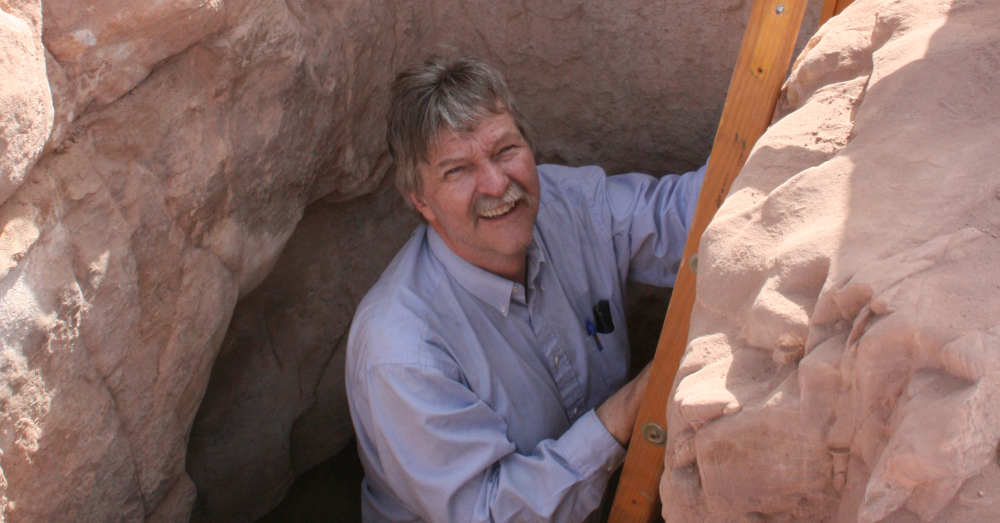
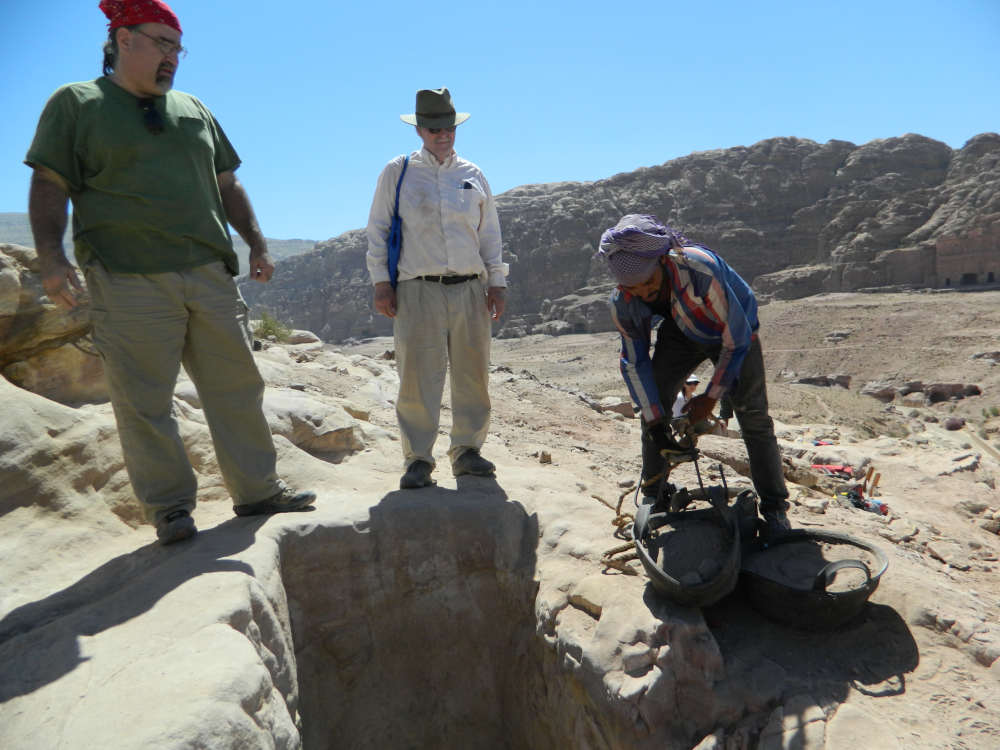
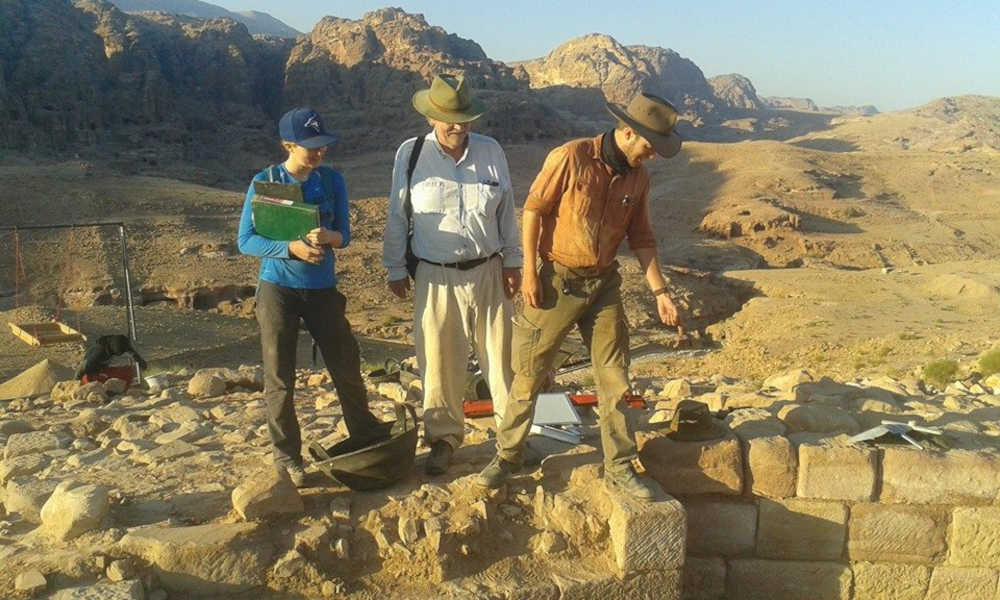
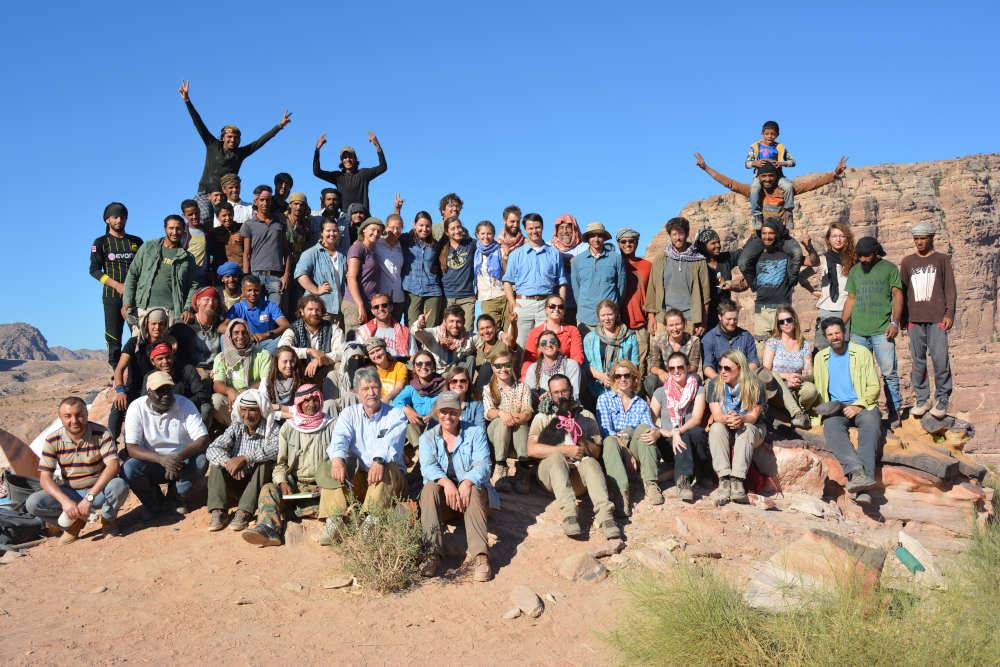
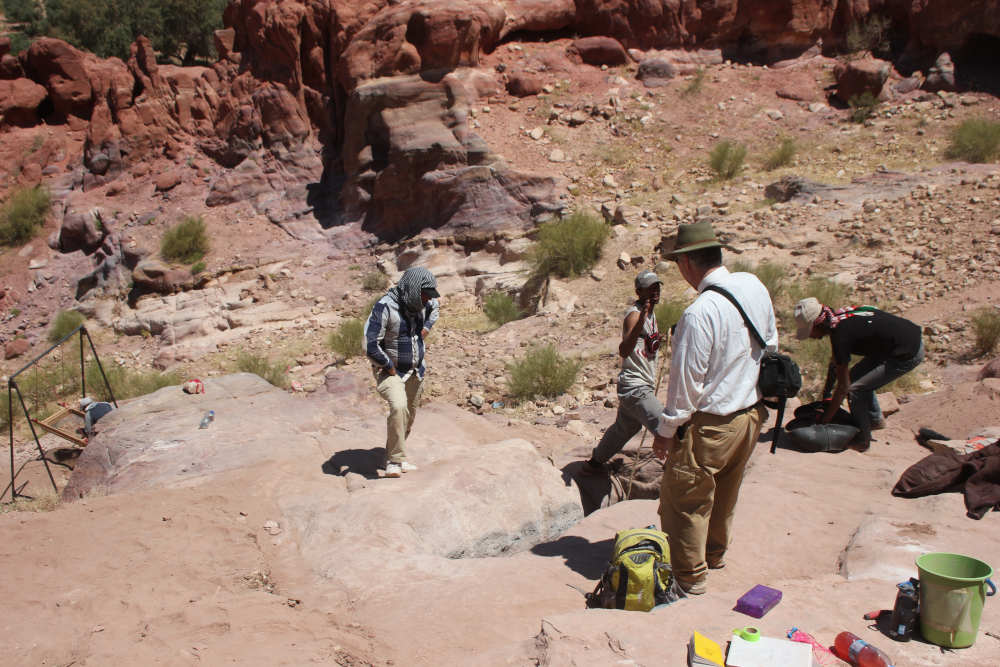
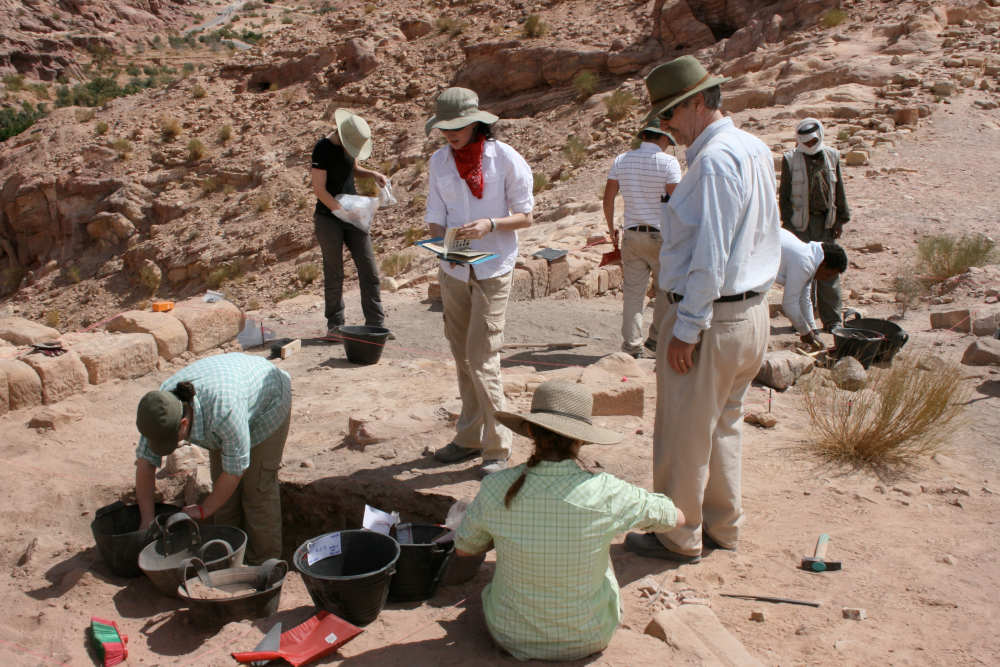
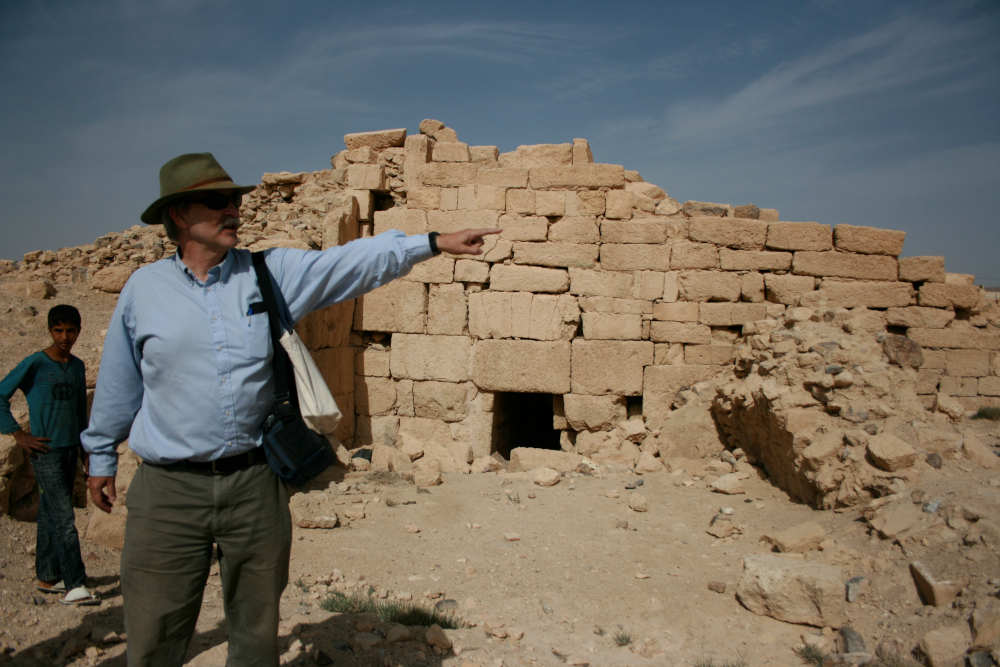
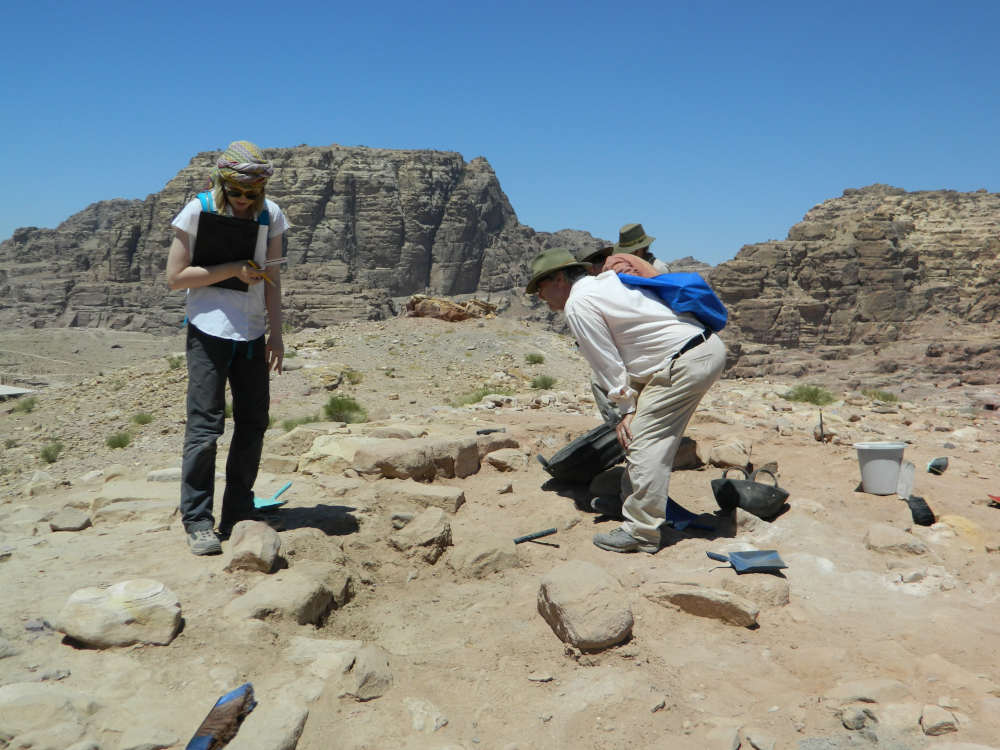
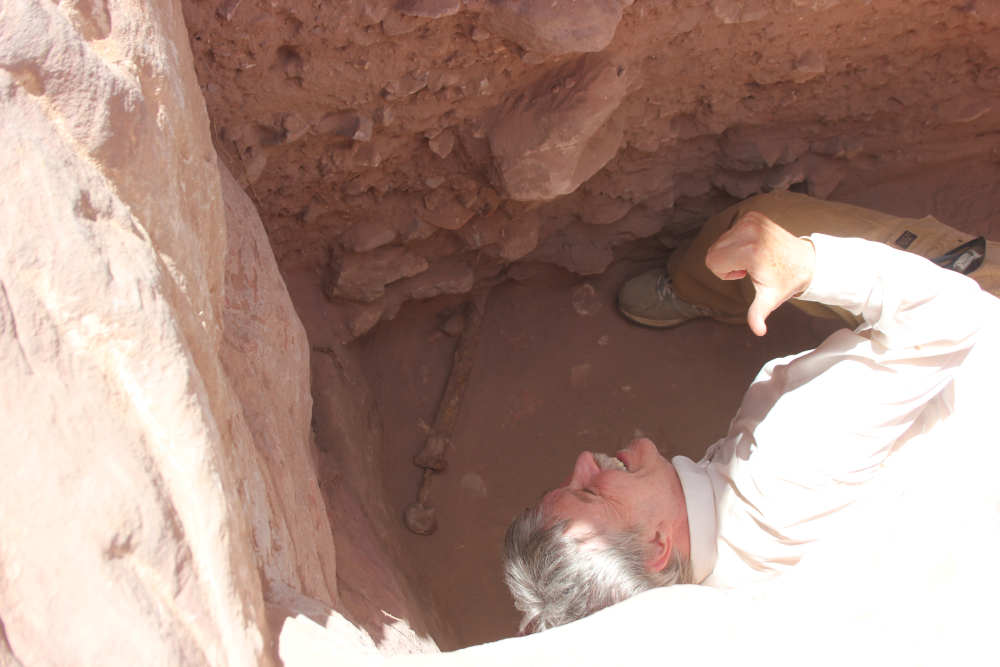
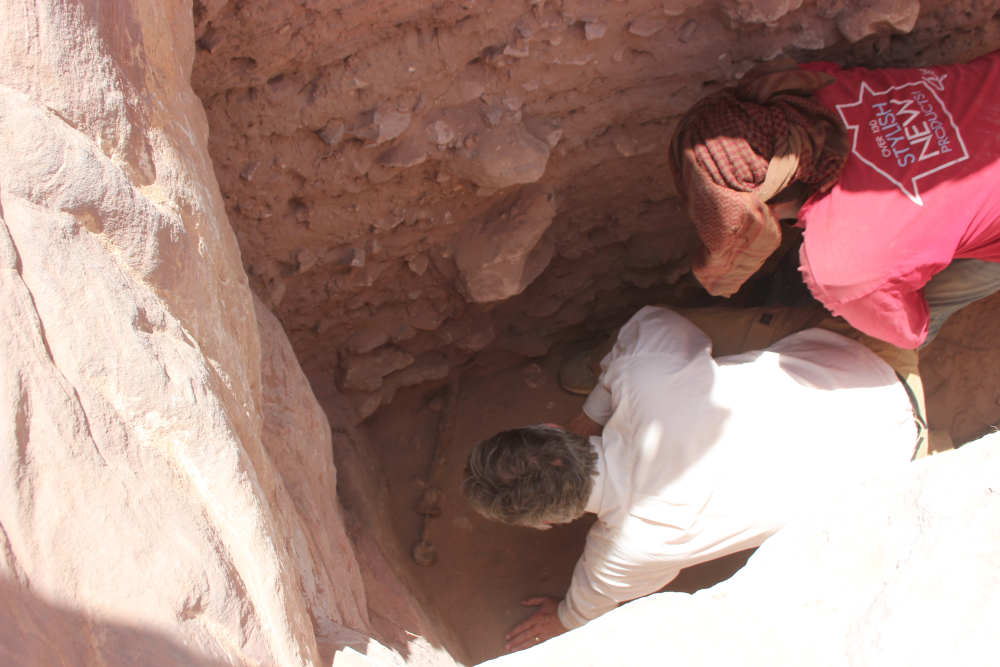
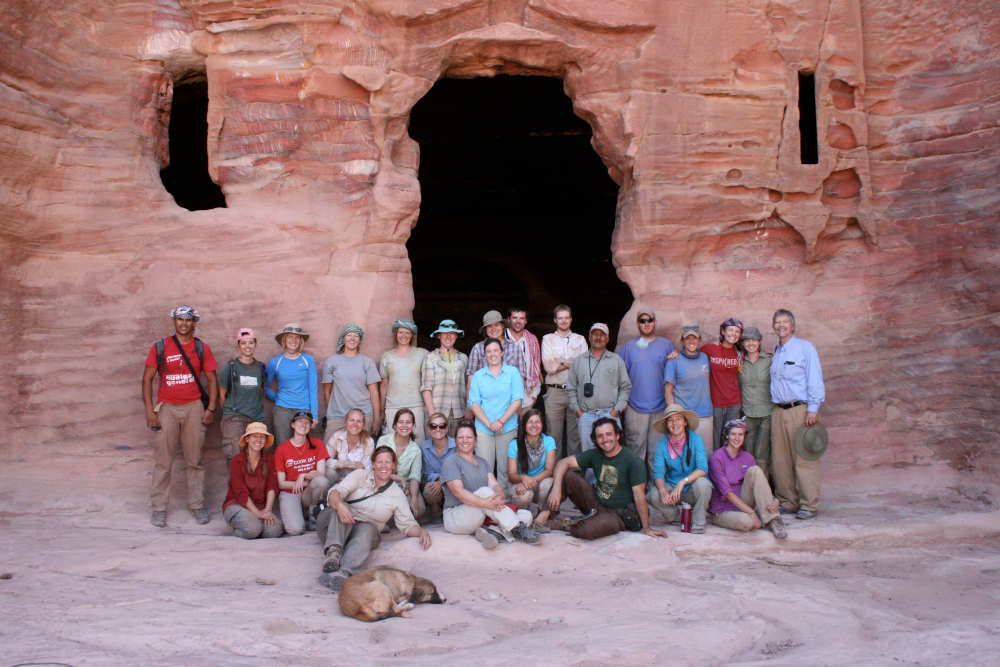
Tom emerging from a Petra North Ridge tomb during the 2012 season. (Photograph by Jennifer Ramsay)

ASOR mourns the passing of long-time member, S. Thomas Parker (1950-2021), who passed away at Duke Hospital in Durham, NC after a brief illness on September 12, at age 71. We share our condolences with Tom’s wife and daughter (Mary Mattocks and Grace Parker), and his siblings.

While we will miss Tom dearly, we remember and celebrate his life and many accomplishments. We have included two remembrances below: a detailed and complete remembrance by Megan Perry, and an additional remembrance by Jeffrey Blakely with additional comments from others.

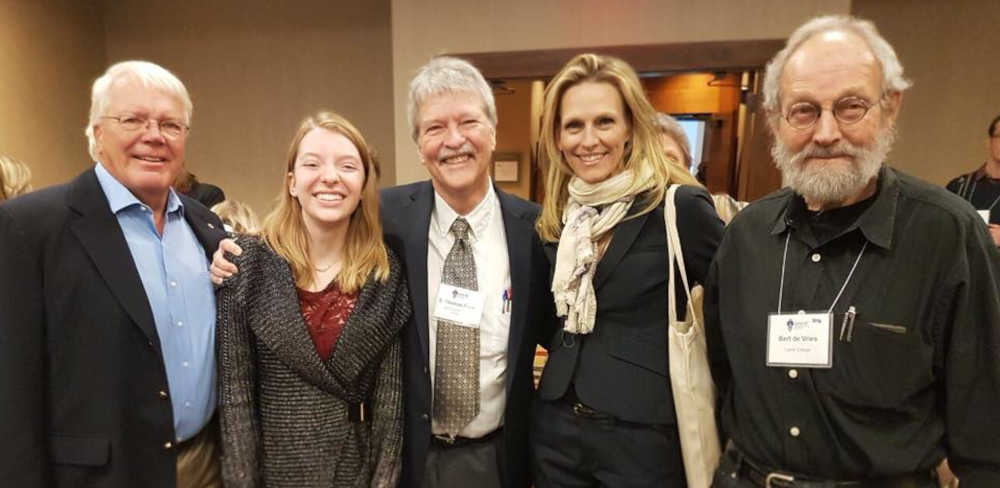
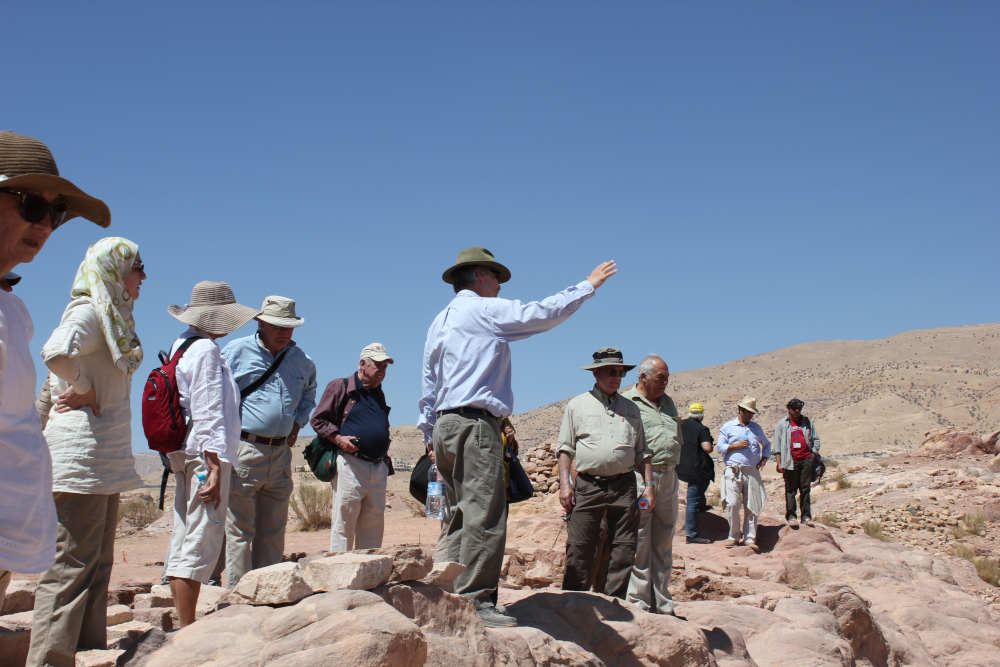
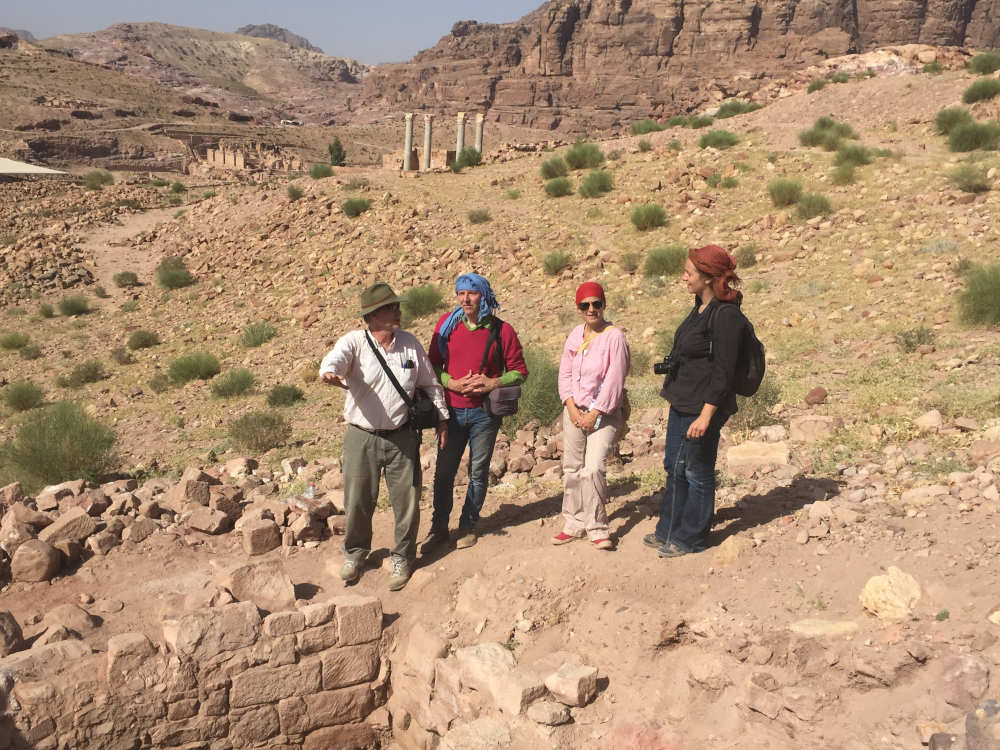
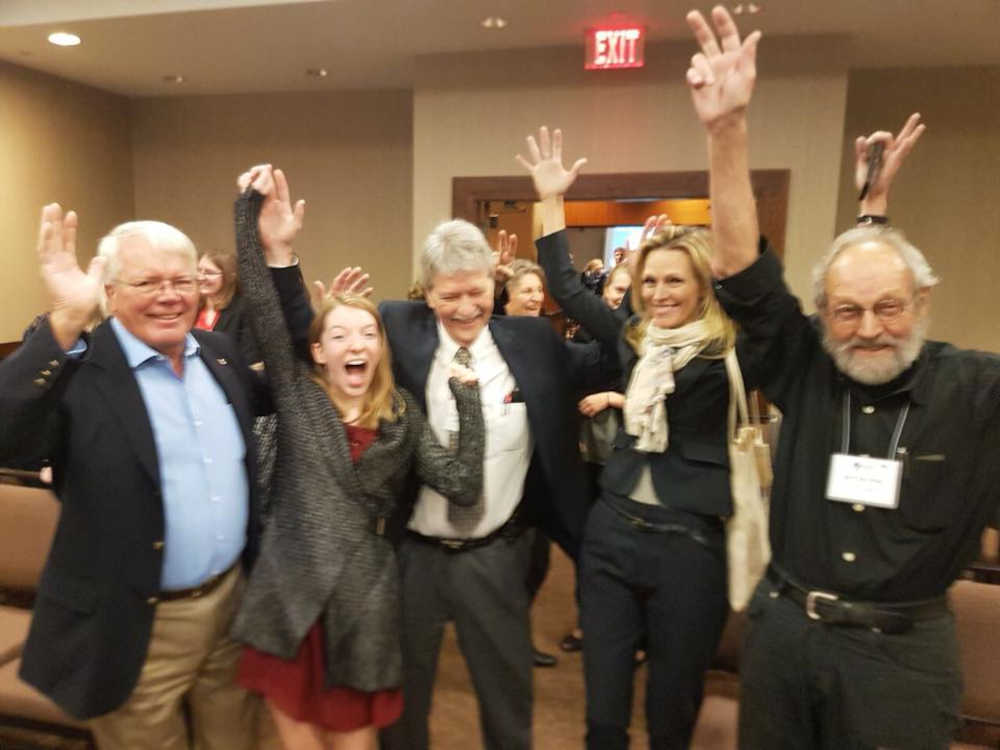
John Oleson, Grace Parker, Tom, Jenna Morton, and Bert deVries after Tom’s Festscrhift session at the 2017 ASOR meeting. (Photograph by Megan Perry)

In Memoriam: S. Thomas Parker (1950 – 2021)

Megan Perry, Professor of Biological Anthropology, East Carolina University

Thomas (Tom) Parker, well-known archaeologist of Roman Jordan and longtime ASOR supporter, passed away suddenly on September 12, 2021. Tom spent most of his childhood in the Chicago area and graduated with his bachelor’s degree in history and religion from Trinity University in 1972. He went on to doctoral studies in history at the University of California, Los Angeles, completing his dissertation in 1979 on his survey of Roman and Byzantine fortifications along the limes Arabicus in Jordan. He joined the History faculty at North Carolina State University in 1980, where he remained throughout his academic career. Tom had almost 50 years of archaeological experience in Jordan, Israel, and Cyprus, having excavated at Tell el-Hesi, Ashkelon, Idalion, Tell Hesban, and the Petra Household Excavations before directing his own field projects. The Tell el-Hesi excavation was a seminal moment for Tom, who not only met many future fellow archaeologists but also began intensively studying ceramic typology that would serve as a major focus for the rest of his career.

Tom directed or co-directed three multi-season excavation projects in Jordan: the Limes Arabicus Project, which expanded his PhD survey to include excavation the legionary fortress of Leijjun, the Roman Aqaba Project, recovering evidence of Nabataean, Roman, and Byzantine Aila, and the Petra North Ridge Project, which I co-directed with Tom. He served as the ceramics specialist on all of his projects, but always with the goal of mentoring students or younger scholars in the field and in the laboratory. His kindness and patience fostered many budding scholars, and he always, always “knew what was best” for them. While many of his students eventually developed careers outside of history and archaeology, their experiences and his unwavering support and pride in their accomplishments profoundly shaped their lives. In turn, many of these former students contributed to a Festscrhift in his honor, published in 2017.

I first met Tom in 1993, when he visited Tell Nimrin to, among other things, meet me as that year’s Groot fellowship recipient. Tom helped established this ACOR fellowship in honor of his dear friend and Leijjun staff member, Jennifer Groot, who sadly died in 1987 at only 36 years of age. Creating this fellowship, which serves to support first-time excavators in Jordan, exemplifies not only Tom’s generosity but also his role as a mentor to young archaeologists. In the weeks since his death, many archaeologists in the region have commented on his support of beginning and even seasoned scholars. Suzanne Richard, director of the Khirbet Iskander project, recalls, “…as a field supervisor at el-Lejjun, I was so impressed with Tom’s expertise in the field, good leadership skills, calm dealings with staff and students, yet he was always vibrant, jolly, and personable.” Tim Harrison, former ASOR director “will always remember the interest he took in what I was doing … His interest and attention, coming from a senior colleague, was a real encouragement…” Monique Roddy, co-director of the Balu’a Regional Archaeological Project, remarks that “Tom was a wonderful mentoring archaeologist, even for those of us who were never his students!”

Tom faithfully supported ACOR and ASOR throughout his career. He served on ACOR’s board since 1987 and had been Second Vice President of the board from 2002 until his death. He also was an ASOR Trustee from 1989-1992 and served on ASOR’s Committee on Archaeological Policy (1986-1987) and on the Editorial Board of BASOR (1995-1998). Tom was someone always “a great person to have on an ASOR Committee,” according to Tom Levy. I first attended the ASOR Annual Meeting in 1995, and I don’t recall a year since then without Tom’s presence at the conference. Deb Foran, director of the Khirbet al-Mukhayyat Project, commented that this is where he will most be missed, for he “always sat in the front row, listened attentively, and asked insightful questions, no matter how senior or junior the speaker was.” This was often preceded by “his characteristic head turn and raise of the hand” once the Q&A period started, followed by “the gentle laughter because everyone knew he was going to have [a question] ready,” recalls his former student Tiffany Key.

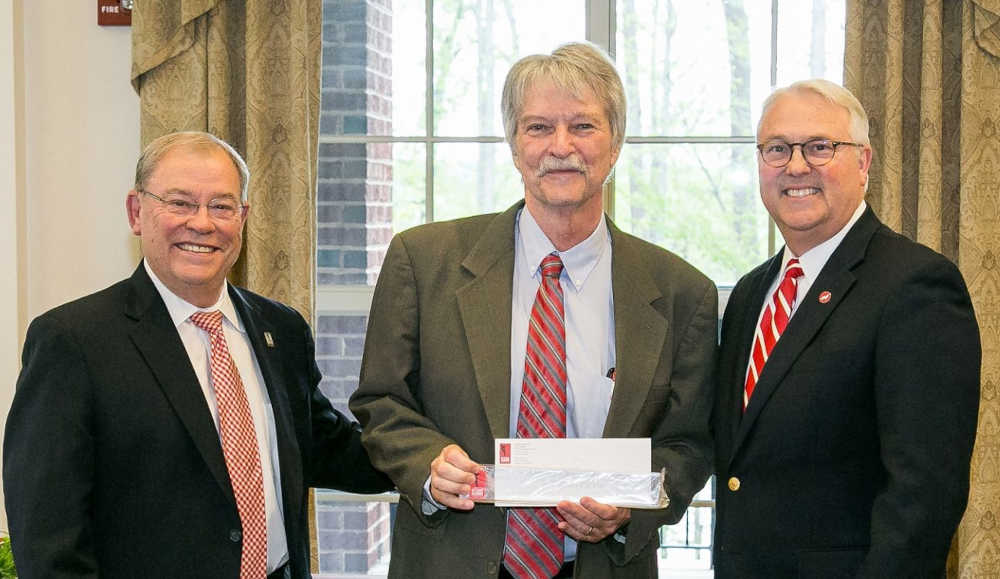
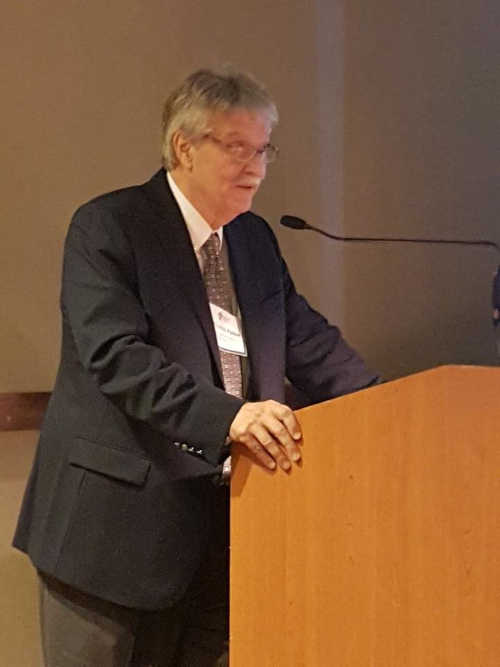
Tom receiving the NC State’s Alumni Association Outstanding Faculty Research Award in 2017. (Photograph by NC State)

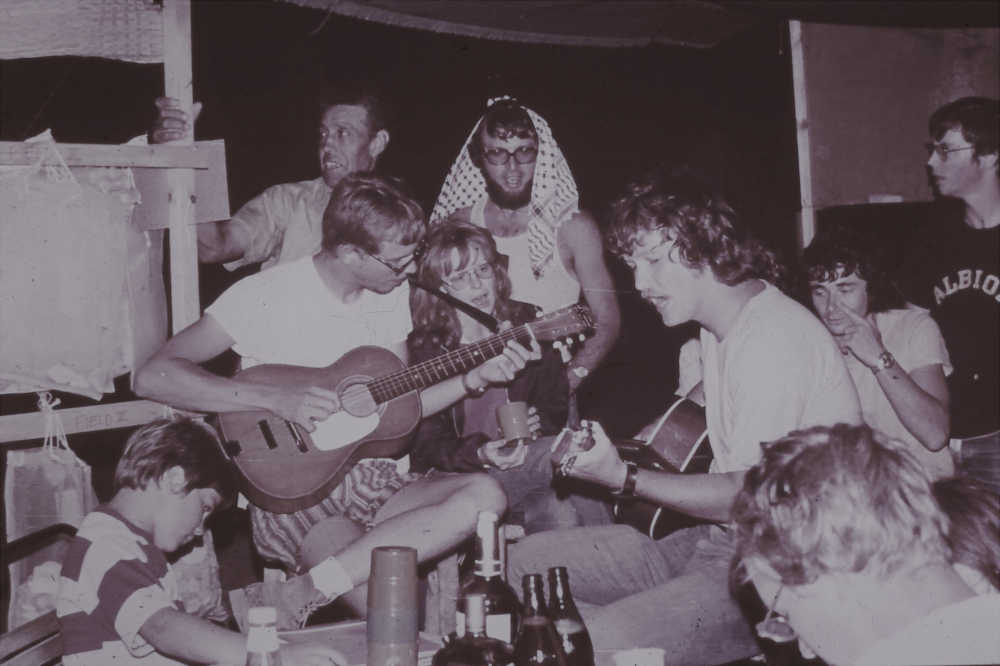
Tom will be remembered for his warmth, his conviviality, his support, his mentorship, his friendship, his scholarship, his collaborations, his laughter, and of course, his singing and guitar playing. You know wherever he is, he’s encouraging those around him to join in: “On a dark desert highway, cool wind in my hair…”

Tom is survived by his wife, Mary Mattocks, and their beloved daughter Grace Parker.

Tom entertaining his fellow Hesi crew. (Photograph by Jeff Blakely)

In Memoriam: S. Thomas Parker (1950 – 2021)

Jeffrey A. Blakely, University of Wisconsin-Madison

Tom and I were friends for just over 50 years, not close friends but good friends who shared a formative experience. In our field, half a century is simply a rounding error, but to friends it is much of our individual lifespans. The day we truly met is as clear to me as yesterday since it was the start of a life altering experience.

Tom and I each decided to participate in the archaeological field school at Tell el-Hesi in the summer of 1971. Soon after the end of the spring semester in early June 1971 we each made our way to the charter flight terminal at Kennedy Airport and boarded a Capital Airways flight for Le Bourget Airport in Paris. A bus tour of Paris and a night in a hotel saw us at Orly the next morning for a flight to Tel Aviv. It was dark when we arrived, boarding busses to our hotels in Jerusalem. After three days of orientation and extensive walking tours of the Holy City we got up and boarded the chartered busses for Hesi. We almost made it, but the drivers refused to cross a wadi so we had to shlep all of our luggage about a half a mile to Hesi’s new tent village. After finding our tents and throwing our luggage in we had to line up for work details since the camp was still a “work in progress.” Sue, the camp manager (and Larry Stager’s wife), “randomly” assigned jobs. Somehow if you were a large or muscular male you were put into one group, twelve guys. I happened to be standing next to Tom and we were paired as a work team. The new camp had not yet dug its outhouses. So we were taken down to six 1.5 x 1.5 meter probes outlined in string and told to keep straight sides and to go down 2.00 meters with picks and hoes. Yella, yella in case they were needed! So at precisely the same time Tom and I began our archaeological experience, digging a modern s****er. We had a number of hours in the hot sun to get to know each other, he from Trinity and me from Oberlin, he just having finished his Junior year and me my Freshman year. He was in history and looking at a potential career in archaeology. I was looking for a once in a lifetime experience. When we reached 2.00m one of the staff came over and noted that our balks were rather overcut … but don’t dare undercut them lest someone sitting on the throne experience a sad and memorable plunge. Once they were straight Larry Toombs hopped in and checked our balks. Below 50 cm of debris/wash we had gone through nothing but loess … no EB city here. Tom and I were friends from that point.

At Camp Hesi the chore details were daily experiences. Soon the botanist had me sorting things and others were pulled off for other recurring duties, but a core four remained unassigned, “Pope, Parker, Woodruff, and Zipris.” Somehow “randomly” Camp Manager Sue always assigned them to the crappiest jobs every day. It became a running joke around camp. In later years when Tom told the story he tended to exaggerate a bit, to wit: “the urinal is filthy, oh, we have no brushes so lick it clean”, or “the outhouses are mounding in the middle, so jump in and push the pile to the sides as you distribute the lime”, or, “I can’t think of a task so dig a big hole and then refill it.” Tom certainly got the short end here, but it was not quite as extreme as his story. Good story, though!

In 1971 Tom was assigned to a square in Field III, while I was in Field I. We both learned a lot and at the end of the season we headed back to college. By 1973 Tom was in Grad school in History and Archaeology at UCLA and I was a Junior at Oberlin. He had successfully applied to be an Area Supervisor while I had wanted to come back and dig again, but I received a field promotion so I, too, became an Area Supervisor. Tom remained in Field III digging the Iron Age fortification system and I remained in Field I digging Persian-Period pits and floors, both in 1973 and 1975. We learned how to dig and how to supervise. It served us well. Tom was also the co-writer and lead performer of the classic Hesi song “Big Mama Sift Some More” and the “permanent” host of the end of the dig parties. By 1977 he was doing his own research in Jordan. But, forever, he was a Hesi-ite at heart. He always came to the Hesi sessions at ASOR and he always would find time to sit and talk with me. His advice was always thoughtful and valued. He was a true friend of mine and of the project.

In 1996 my family and I were to spend a year in Jerusalem, and I came over early to set up school and other things for our son. In advance of this I contacted Tom. We had been friends for 25 years and in the summer of 1996 I was not doing my own research. So, I asked, can I pay my own way and come and simply dig and once again experience what drew me to the field? Tom was the only person I would ever want to work with in such a way … afterall, we were the only Hesi-ites running projects. Tom said, sure, but wouldn’t I rather supervise? No, no responsibilities, let me relive the joys of fieldwork again. Okay.

In late May 1996 after a day in the hot sun crossing the border from Elat to Aqaba I arrived at the project headquarters and I found the proper floor. I saw Tom down the hall and he motioned to me to come and talk in his room as soon as I dropped my bags in my room. I joined him and he had a grim face and he told me he had a big problem. One of his supervisors cancelled at the last minute and even though we had agreed I was to be a digger, could I supervise instead? Damn, I said sure I can do an Area, on a dig you do what is needed. But then he said, “No, you misunderstand” … it was one of the Field Supervisors and I would be overseeing six Areas; remember you just said you do what is needed. Somehow I think I fell into a well orchestrated plan, and a few years later when I actually asked if that was the case, all I got was a typical Tom Parker smile and a helpless shrug. I will always see that smile and shrug when I think of Tom.

Jeff Blakely

Comments in Remembrance of Tom Parker

“I will always remember the interest he took in what I was doing, even if it involved cultural periods much earlier than his own research focus… His interest and attention, coming from a senior colleague, was a real encouragement, and modelled a wonderful collegiality that continued over many years.” – Tim Harrison


“Even in 1980, as a field supervisor at el-Lejjun, I was so impressed with Tom’s expertise in the field, good leaderships skills, calm dealings with staff and students, yet he was always vibrant, jolly, and personable.  He became a leader in the field but was still the same wonderful Tom.” – Suzanne Richard


“From the first time we met and worked together (1976 at Tall Hisban), I could see in him a rising star in the field. From my point of view, his star has set much too soon. We will miss him.” – Doug Clark


“The study of the archaeology of Jordan and the Roman Near East will not be the same without Tom Parker, nor will ACOR. Those of us in the field have lost such a warm, gregarious, vivacious, and endlessly supportive colleague.” – Elise Friedland


“Tom was the first ‘real’ archeologist that I met in Jordan (35 years ago) – he was so unpretentious, humble, full of humor – in one word: a ‘Kumpel’! – and yet: a world class scholar.” – Friedbert Ninow


“Thomas Parker was to me Sir Thomas Parker, a world-class scholar, an enthusiastic and charismatic field archaeologist, a great teacher and mentor, and a loyal and most enjoyable companion, fellow camper and friend… His scholarly achievements as an archaeologist of the Roman Frontier in the Southern Levant will be re-visited over and over again by future generations for decades to come.” – Øystein LaBianca


“Working in Jordan will never be the same without them both [Tom and Bert deVries, who passed away in March of this year]. We will miss their presence at every ASOR Conference and at every group meal at ACOR. They were both such amazing mentors and willing to help scholars of all ages and backgrounds. God grant comfort to Tom’s family and may his legacy live on in every young scholar and colleague that we each can assist and encourage just like Tom did.” – Cynthia Finlayson


“From my first interaction with Tom in the late 1980’s I was thankful of his presence, his humanity and his love of archaeology.  Really, this is a major loss.” – Ian Kuijt


“Tom was the friendliest, most supportive colleague, and a great mentor. We will all miss him.” – Jonathan Ferguson


“Tom and I cross over more than 4 decades as active members of the Jordanian archaeological community, our mutual interest in Roman Frontier Studies, and our excavations at Petra.  A great personal loss for me and for everyone. The epitome of an ambassador for our profession.” – David Graf


“I’ll never forget when we gave him his start in Jordanian archaeology as a field supervisor at Hisban in 1974…. For the last fifty years he’s been at the forefront of Jordanian archaeology and has touched the lives for good of all of us.” – Larry Geraty


“This is indeed a tremendous loss for us all. My deepest sympathies to his family. I will miss him greatly.” – Lisa Maher


“Tom was the biggest advocate of junior archaeologists and always had a smile on his face. He will be missed.” – Leigh-Ann Bedal


“A tremendous loss to his family, his friends, his students, and to archaeology in Jordan. It’s difficult to imagine Jordan without the presence and contributions of Tom Parker.” – Gary Rollefson


“He was such a nice person and a good scholar… It is difficult to think on works and not having him somwehere in the back as advisor and friendly colleague.” – Robert Wenning


“Tom, a gentleman and collaborator in support of ACOR’s vision, supported the institution by serving on many of the board’s committees, and always calmly responded to its challenges. Tom also nurtured camaraderie with everyone he met. Always thoughtful and encouraging. Tom threw great parties. Tom’s scholarship was impeccable.” – Martha Joukowsky via her daughter Nina Köprülü


“The flood of recollections and condolences reflect the place Tom held in the ASOR/ACOR community.  STP was one of a kind, and we’ve suffered a great loss at many levels.” – Jerry & Pam Mattingly


“Everyone who knew Tom will miss him. He was a great scholar and a friend of many Jordanians. May his soul Rest In Peace.” – Moawiyah Ibrahim


“…he was a friend and colleague going back to 1975 when we first went to Jordan, and one of my daughters was a member on his digs…a strong supporter of ACOR both in his financial support and the time and effort he put into the fellowship program. We will miss him significantly and condolences to his family.” – Randy Old


“Tom was such a kind, funny, and supportive figure, and I have long admired his dedication to good and careful scholarship, his encouragement to younger scholars, and his commitment to Jordan.  I’m grateful that I had the chance to get to know him.” – Björn Anderson


“Tom was a unique individual, a good friend to just about everyone he met, and he leaves a big gap in all sorts of places, most of all in our hearts.” – John Oleson


“It is a big loss to ACOR and to the field in Jordan. I also feel lucky to have got to know him over the 4+ years I have been on the ACOR board and I am grateful for that.” – David Nichols


“Tom was not only a wonderful mentor and colleague but also a true friend, working in Jordan and attending ASOR meetings will not be the same. I count myself lucky to have had the opportunity to have learned from him and worked with him in the field. He will be truly missed by everyone who knew him and my heart goes out to his family.” – Jennifer Ramsay


“In our years at ACOR, Tom was very helpful to us in many ways. His work on the fellowship committee always led to ACOR having interesting and committed scholars. Tom was also a good colleague, ever generous with his expertise. We will miss him.” – Pierre and Patricia Bikai


“Tom Parker was a special person, and not just an amazing scholar, teacher, and leader. I will always be grateful for the ways that he supported me in my work and encouraged me a person. Neither ACOR nor ASOR would be the strong organizations that they are today without him..” – Andy Vaughn

Image Gallery

An ACOR Fellowship – the “S. Thomas Parker ACOR Memorial Fellowship” – is being established in Tom’s memory. The link below will direct you to his page. This fellowship will support students participating on archaeological projects and doing research in Jordan, continuing the tradition of mentorship so important to Tom.

https://acorjordan.org/contributions-in-honor-of-s-thomas-parker/

The Petroglyphs of Domab in the Central Plateau of Iran

[vc_row fullwidth=”true” attached=”true” css=”.vc_custom_1496247803139{padding-top: 0px !important;padding-right: 0px !important;padding-bottom: 0px !important;padding-left: 0px !important;}”][vc_column][mk_image src=”http://www.asor.org/wp-content/uploads/2018/05/Screen-Shot-2018-05-18-at-9.32.09-AM-2.png” image_width=”1920″ image_height=”600″ crop=”false” hover=”false” margin_bottom=”0″][/vc_column][/vc_row][vc_row fullwidth=”true” css=”.vc_custom_1496682730308{padding-top: 10px !important;padding-right: 0px !important;padding-bottom: 0px !important;padding-left: 0px !important;}”][vc_column width=”1/12″ css=”.vc_custom_1496683820796{margin-right: 10px !important;}” offset=”vc_hidden-md vc_hidden-sm vc_hidden-xs”][vc_column_text]

 SHARE

[/vc_column_text][mk_image src=”http://www.asortest.org/wp-content/uploads/2017/01/social-fb-icon4.jpg” image_width=”42″ image_height=”42″ hover=”false” custom_url=”https://www.facebook.com/ASOResearch/” margin_bottom=”0″][mk_image src=”http://www.asortest.org/wp-content/uploads/2017/01/social-tw-icon4.jpg” image_width=”42″ image_height=”42″ hover=”false” custom_url=”https://twitter.com/ASOResearch?ref_src=twsrc%5Egoogle%7Ctwcamp%5Eserp%7Ctwgr%5Eauthor” margin_bottom=”0″][mk_image src=”http://www.asortest.org/wp-content/uploads/2017/01/social-in-icon4.jpg” image_width=”42″ image_height=”42″ hover=”false” custom_url=”https://www.linkedin.com/company/american-schools-of-oriental-research” margin_bottom=”0″][mk_image src=”http://www.asortest.org/wp-content/uploads/2017/01/social-ml-icon_7.jpg” image_width=”42″ image_height=”42″ hover=”false” custom_url=”mailto:asor@bu.edu” margin_bottom=”0″][mk_image src=”http://www.asortest.org/wp-content/uploads/2017/01/blog-icon3.jpg” image_width=”42″ image_height=”42″ hover=”false” custom_url=”http://asorblog.org/” margin_bottom=”0″][/vc_column][vc_column border_color=”rgba(255,255,255,0.01)” width=”1/6″ css=”.vc_custom_1496683923840{margin-right: 20px !important;border-left-width: 2px !important;padding-right: 20px !important;padding-left: 20px !important;border-left-color: #99422f !important;}”][mk_divider divider_color=”rgba(255,255,255,0.01)” thickness=”1″ margin_top=”3″ margin_bottom=”3″][vc_column_text]

NEWS@ASOR E-NEWSLETTER

ANCIENT NEAR EAST TODAY

PAST ASOR NEWS, MONTH BY MONTH

FY18 HONOR ROLL OF DONORS

ASOR ANNUAL MEETING

[/vc_column_text][/vc_column][vc_column border_color=”rgba(170,170,170,0.01)” width=”1/2″ css=”.vc_custom_1487276122024{margin-right: 10px !important;margin-bottom: 30px !important;border-right-width: 2px !important;border-bottom-width: 2px !important;padding-top: 30px !important;padding-right: 30px !important;padding-left: 20px !important;background-color: #ffffff !important;border-right-color: rgba(227,228,228,0.75) !important;border-bottom-color: rgba(227,228,228,0.75) !important;}”][vc_column_text responsive_align=”left”]

The Petroglyphs of Domab in the Central Plateau of Iran

[/vc_column_text][vc_column_text]
Available until October 12, 2018[/vc_column_text][mk_divider][vc_column_text]Near Eastern Archaeology, June 2018, “The Petroglyphs of Domab in the Central Plateau of Iran” by Ebrahim Karimi (University of Victoria)

Two clusters of rock art consisting of a considerable number of petroglyphs are identified in the Domab region in the west of the Isfahan province in the central plateau of Iran. Hunting scenes and zoomorphic depictions, mostly ibexes, are the main subjects of rock art in the Domab area. All panels are made on the schist rocks that can be seen all over the region. Several scattered panels that bear geometric markings and depictions of ibexes have also been identified. The petroglyphs of Domab show similarities in terms of subject matter, style, and iconography to the rock art of other regions of central Iran, such as Teymare and Qameshlu national park. The current evidence suggests hunters as the possible creators of some of this rock art.

[/vc_column_text][mk_divider][vc_column_text][/vc_column_text][/vc_column][vc_column border_color=”rgba(170,170,170,0.01)” width=”1/6″ css=”.vc_custom_1496684098866{margin-right: 5px !important;margin-bottom: 20px !important;border-right-width: 2px !important;border-bottom-width: 2px !important;padding-top: 30px !important;padding-right: 10px !important;padding-left: 10px !important;background-color: #ffffff !important;border-right-color: rgba(227,228,228,0.75) !important;border-bottom-color: rgba(227,228,228,0.75) !important;}”][vc_wp_posts title=”BROWSE THE NEWS ARCHIVE” number=”4″][/vc_column][vc_column border_color=”rgba(170,170,170,0.01)” width=”1/6″ css=”.vc_custom_1496684008271{margin-right: 10px !important;margin-bottom: 30px !important;border-right-width: 2px !important;border-bottom-width: 2px !important;padding-top: 30px !important;padding-right: 20px !important;padding-left: 20px !important;background-color: #ffffff !important;border-right-color: rgba(227,228,228,0.75) !important;border-bottom-color: rgba(227,228,228,0.75) !important;}”][vc_column_text] [/vc_column_text][/vc_column][/vc_row]

Search for NEA Editor

[vc_row fullwidth=”true” attached=”true” css=”.vc_custom_1496247803139{padding-top: 0px !important;padding-right: 0px !important;padding-bottom: 0px !important;padding-left: 0px !important;}”][vc_column][mk_image src=”http://www.asor.org/wp-content/uploads/2018/05/Screen-Shot-2018-05-18-at-9.32.09-AM-2.png” image_width=”1920″ image_height=”400″ hover=”false” margin_bottom=”0″][/vc_column][/vc_row][vc_row fullwidth=”true” css=”.vc_custom_1496682730308{padding-top: 10px !important;padding-right: 0px !important;padding-bottom: 0px !important;padding-left: 0px !important;}”][vc_column width=”1/12″ css=”.vc_custom_1496683820796{margin-right: 10px !important;}” offset=”vc_hidden-md vc_hidden-sm vc_hidden-xs”][vc_column_text]

 SHARE

[/vc_column_text][mk_image src=”http://www.asortest.org/wp-content/uploads/2017/01/social-fb-icon4.jpg” image_width=”42″ image_height=”42″ hover=”false” custom_url=”https://www.facebook.com/ASOResearch/” margin_bottom=”0″][mk_image src=”http://www.asortest.org/wp-content/uploads/2017/01/social-tw-icon4.jpg” image_width=”42″ image_height=”42″ hover=”false” custom_url=”https://twitter.com/ASOResearch?ref_src=twsrc%5Egoogle%7Ctwcamp%5Eserp%7Ctwgr%5Eauthor” margin_bottom=”0″][mk_image src=”http://www.asortest.org/wp-content/uploads/2017/01/social-in-icon4.jpg” image_width=”42″ image_height=”42″ hover=”false” custom_url=”https://www.linkedin.com/company/american-schools-of-oriental-research” margin_bottom=”0″][mk_image src=”http://www.asortest.org/wp-content/uploads/2017/01/social-ml-icon_7.jpg” image_width=”42″ image_height=”42″ hover=”false” custom_url=”mailto:asor@bu.edu” margin_bottom=”0″][mk_image src=”http://www.asortest.org/wp-content/uploads/2017/01/blog-icon3.jpg” image_width=”42″ image_height=”42″ hover=”false” custom_url=”http://asorblog.org/” margin_bottom=”0″][/vc_column][vc_column border_color=”rgba(255,255,255,0.01)” width=”1/6″ css=”.vc_custom_1496683923840{margin-right: 20px !important;border-left-width: 2px !important;padding-right: 20px !important;padding-left: 20px !important;border-left-color: #99422f !important;}”][mk_divider divider_color=”rgba(255,255,255,0.01)” thickness=”1″ margin_top=”3″ margin_bottom=”3″][vc_column_text]

ASOR BLOG

NEWS@ASOR

ANCIENT NEAR EAST TODAY

PAST ASOR NEWS, MONTH BY MONTH

FY18 HONOR ROLL OF DONORS

FY18 HONORIC AND MEMORIAL GIFTS

[/vc_column_text][/vc_column][vc_column border_color=”rgba(170,170,170,0.01)” width=”1/2″ css=”.vc_custom_1487276122024{margin-right: 10px !important;margin-bottom: 30px !important;border-right-width: 2px !important;border-bottom-width: 2px !important;padding-top: 30px !important;padding-right: 30px !important;padding-left: 20px !important;background-color: #ffffff !important;border-right-color: rgba(227,228,228,0.75) !important;border-bottom-color: rgba(227,228,228,0.75) !important;}”][vc_column_text responsive_align=”left”]

SEARCH FOR EDITOR OF NEAR EASTERN ARCHAEOLOGY

[/vc_column_text][vc_column_text responsive_align=”left”]The Publications Committee of the American Schools of Oriental Research announces a call for nominations (self-nominations are welcome) for the Editor of Near Eastern Archaeology for a term to begin 1 January 2019.  ASOR Journal Editors serve a three-year term (eligible to be renewed twice).

Near Eastern Archaeology brings to life the ancient world from Mesopotamia to the wider Mediterranean with vibrant images and authoritative analyses. NEA ( ISSN 1094-2076) is published four times each year (quarterly): March, June, September, and December.

The Editor of Near Eastern Archaeology receives a stipend. The Editor, working with an Editorial Board, the Publications Committee, and ASOR’s publishing partner, The University of Chicago Press, holds full editorial control of Near Eastern Archaeology.

Self-nominations are preferred and should include the following items: 1) a one-paragraph academic biography; 2) a brief statement describing why the candidate is interested in the position; and 3) contact information (including e-mail and phone).  If a candidate is being nominated by another person, we seek the candidate’s name, a short academic history, a brief statement describing why the candidate would be appropriate for the position, contact information, and, most importantly, a statement from the candidate that she or he agrees to their name being placed into nomination.

Candidates are also encouraged to contact the current editor, Thomas Schneider (thomas.schneider@ubc.ca), for more information about the position and its responsibilities. Nominations for each position should be directed to the Chair of the Publications Committee (Charles Jones (cellwoodjones@gmail.com), with a copy to the Director of Membership and Publications, Inda Omerefendic (publications@asor.org).

Review of applications began on September 15, 2018, and will continue until the position is filled. The Publications Committee intends to recommend a candidate to the ASOR Executive Committee of the Board of Trustees and the full ASOR Board before the Annual Meeting in Denver in November 2018.[/vc_column_text][/vc_column][vc_column border_color=”rgba(170,170,170,0.01)” width=”1/6″ css=”.vc_custom_1496684098866{margin-right: 5px !important;margin-bottom: 20px !important;border-right-width: 2px !important;border-bottom-width: 2px !important;padding-top: 30px !important;padding-right: 10px !important;padding-left: 10px !important;background-color: #ffffff !important;border-right-color: rgba(227,228,228,0.75) !important;border-bottom-color: rgba(227,228,228,0.75) !important;}”][vc_wp_posts title=”BROWSE THE NEWS ARCHIVE” number=”4″][/vc_column][vc_column border_color=”rgba(170,170,170,0.01)” width=”1/6″ css=”.vc_custom_1496684008271{margin-right: 10px !important;margin-bottom: 30px !important;border-right-width: 2px !important;border-bottom-width: 2px !important;padding-top: 30px !important;padding-right: 20px !important;padding-left: 20px !important;background-color: #ffffff !important;border-right-color: rgba(227,228,228,0.75) !important;border-bottom-color: rgba(227,228,228,0.75) !important;}”][vc_column_text] [/vc_column_text][/vc_column][/vc_row]

Fellowship Report: Sara Soltani

FIVE THINGS YOU BRING HOME FROM AN ARCHAEOLOGICAL EXCAVATION

Sara Soltani, 2017, P.E. MacAllister Heritage Fellowship Recipient

Archaeology, known as one of the world’s dirtiest jobs, can also be one of the most rewarding. From participating in the discoveries that redefine history, to the wonderful experiences that excavations bring, it can truly be an experience that will stay with you for a lifetime. After the excavation ends though, what do you bring home other than photos, souvenirs, and memories? For those who are considering participating in an archaeological excavation, or those who are curious about what you gain from an excavation during the three to six-week period, let me share what I’ve learned.


From left to right; Noelle Purcell, Rebecca Larson, and Sara Soltani pose for a group photo after wet sieving. (All photos courtesy of Eric Cline)

When you arrive at your accommodations, you are placed in a room that you share with around one to three other people. Excavations begin at 5 a.m. sharp and continue until you head back for the day at around 1 p.m. for lunch. Upon arriving at the site, you are placed into a locus, or a specific area of excavation, with other participants. Before long, you may become very close with these participants, until they are no longer just fellow participants, but also friends. You all will work through the heat, sweat, and dirt during long and hot days towards a common goal, which creates a real and close friendship.


    1. Friendship

From left to right; Analee Nelson and Sara Soltani section a test trench.

Whether or not you study Archaeology, Anthropology, or History, new friendships and connections gained from an archaeological excavation are something you can maintain after the excavation season is complete. For all anthropology-related majors, excavations are a great place to meet new colleagues who will benefit you personally, as well as professionally. Besides the determination and commitment of the staff and participants at the site, nothing would get done without teamwork. Teamwork is the most important factor in making sure that any excavation season is a success. Because of this teamwork, in my experience, relationships formed at an excavation are often some of the strongest and last the longest. Something about a mutual understanding of hard work towards a common goal among all the excavation members compels us to rely on one another and work as a team for the duration of the dig, and that creates a lasting bond.

  1. Multitasking skills

It isn’t possible to be productive in an excavation without learning to multitask. You might think, ‘why would I possibly need to multitask?’ While digging that trench, have you thought about where your dig partners are while you excavate with a 10-lb pickaxe? They might not hear it coming. Are you looking for ceramics, bone, flint, shell, and metal while scooping up the dirt? Sometimes juggling the day-to-day tasks of a field archaeologist can be underappreciated until you experience them for yourself. After the season, you are able to return home with new skills that can be applied to both your career and your personal life. I’ve learned that one of the most beneficial results of this is the ability to manage deadlines while maintaining an active social life.

    1. Fitness

Sara Soltani is collecting the soil for disposal while looking for artifacts.

The hours are long, and the work is intense, but excavations really are as rewarding as they sound. Who wouldn’t love to find artifacts in the ground that haven’t been seen or touched by another human being for thousands of years? Who wouldn’t love to touch a piece of history with their bare hands and see it through its discovery, cleaning, and cataloguing, all while building muscle? Eight-hour excavation days might sound difficult, but you get to work out doing something you love, and reap the benefits. This is obtained by a combination of healthy meals, digging, and a stable support network—you’re all in this together!

    1. Coordination

Sectioning. Something every archaeologist knows all too well. How straight can you make your dirt wall? Are you a coordinated person? If you are, your OCD will thank you for it. Properly hacking at a dirt wall takes some practice, but you can always admire your work in the professional excavation photos. Where are your tools? Making a mental map of the location of each tool and loci will prevent injury and make for a speedier excavation day. Guaranteed, your navigation experience will improve as you learn to understand the layout of not only the site, but also of the ancient buildings you’re excavating. Each of these new skills might even improve your categorization of your possessions at home, and help in navigating yourself around new places, in addition to the obvious benefits to your hand-eye coordination.

    1. Personal growth

Sara Soltani is picking for bone, flint, shell, and metal.

Excavations teach you a great deal about personal responsibility. This is not just in dealing with the objects, but also in dealing with yourself and those around you. Character building is one of the best qualities an excavation can offer. During the excavation season, no matter how long you stay, you obtain a sense of community, gain leadership skills, and come away with a greater knowledge of both the site and of yourself. So, before you turn down the idea of an excavation, know that no matter what your age or professional experience, every archaeological excavation teaches you something different. Every archaeological excavation is a chance to gain professional and personal experiences that stay with you for a lifetime.

Sara Soltani is a senior studying archaeology at The George Washington University. She excavated at Tel Kabri, located in the western Galilee region of northern Israel, with The George Washington University for three weeks. During that time, she was in charge of managing the wet sieving, bone picking, and cataloguing collected samples, in addition to digging.