The Mysteries of Mithras in Caesarea: Exploring the Cult’s Rites and Remains
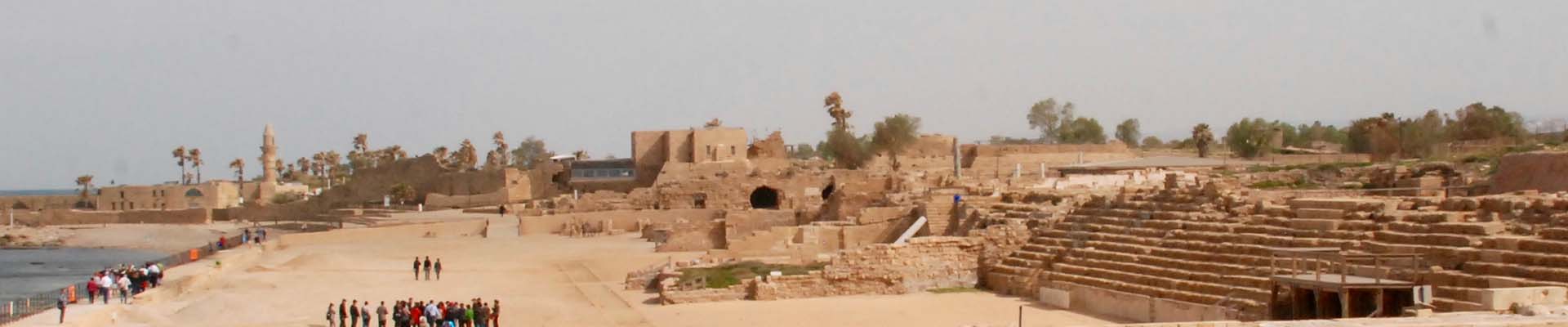
Friends of ASOR presents the next webinar in our monthly series on March 11, at 7:00 pm EST, featuring Prof. Jane DeRose Evans and Dr. Alexandra Ratzlaff. These two experts will take you on a journey underneath the ruins of ancient Caesarea Maritima on the Mediterranean Sea coast of modern Israel. A bustling port city before and during the lifetime of Jesus, this site has provided a wealth of information for scholars studying Caesarea’s Roman era, when it was ruled by Herod the Great, king of Judaea (37 BCE – 4 BCE). When the late Prof. Robert J. Bull’s team arrived to dig in the sand dunes near this ancient harbor in 1974, they discovered a row of warehouses dating to the Roman period. After crawling through several of the structures to decide which one to excavate, they chose the northernmost one in the row. Inside the vault, which had been used in later periods to dispose of decapitated bodies, the excavation team discovered the remains of a Mithraeum, or a place of worship for the mystery cult of Mithras. Join Prof. Evans and Dr. Ratzlaff as they discuss what we know about how the initiates formed the Mithraeum, and what we can uncover about the cult’s secret rites from the frescos painted on the vault walls and the objects left behind following its abandonment. The webinar will conclude with a live Q&A session.
Jane DeRose Evans is Chair and Professor of Art History at Tyler School of Art and Architecture, Temple University. She earned the A.B. in Classics from Franklin & Marshall College, and the M.A. and Ph.D. degrees in Classical Archaeology at the University of Pennsylvania. Jane met Robert Bull (then of Drew University and the Director of the JECM project) when he asked her to publish the excavation coins from the JECM excavations at Caesarea, and she continued to work with him on the materials from Caesarea for many years after they were published. She is currently a numismatist for the Harvard-Cornell Sardis Expeditions and The George Washington University’s Bir Madkhour Project. She leads the team to publish the results of the JECM excavations of the building on top of the warehouses.
Alexandra Ratzlaff is a Lecturer in the Department of Classical Studies at Brandeis University. She earned her BA in Classical Studies and Archaeology at The George Washington University and PhD in Archaeology at Boston University. Alexandra is a Classical and Near Eastern Archaeologist specializing in the Eastern Mediterranean. She is currently an Associate Director of the Tel Kabri Excavations. Beginning in 2021, she will be the Co-Director of a new project at the Roman Fort of Birsama in Israel. She has excavated in Israel on various projects for the last fifteen years. Her research interests include the Roman army, the Late Antique economy, Roman and Byzantine ceramics, Bronze Age economies and state structure. She is also the Project Lead for the Brandeis Techne Group at Autodesk, a long-term research project aimed at developing new equipment and methodologies for digital imaging in archaeology and the humanities.
To receive your ASOR member discount, log into the online store. If you are new to ASOR, please click on the “New Visitor Registration” link to register your e-mail address and choose password for our online store. Once logged in, navigate to “Meeting and Event Registration” to register for the webinar and pay the fee. Each paid registrant will receive a confirmation e-mail when you pay for the webinar. If you do not receive this e-mail, then you are not registered. Please e-mail membership@asor.org with any questions or issues with registering.
You will be e-mailed the Zoom Webinar link in the week prior to the lecture on March 11, 2021. If you do not receive the link by the close of business on the Monday before the webinar, please e-mail membership@asor.org immediately. All webinars are recorded and all paid registrants will be sent a link to view the recording.
All proceeds from this lecture are used to fund scholarships for members impacted by COVID-19 as well as increasing ASOR’s online resources, which are free to the public.
WHY SPONSOR A WEBINAR?
Several levels of support from $50-$1,000 are available. Proceeds go towards membership scholarships and towards increasing ASOR’s virtual resources. Each sponsorship is tax-deductible and you can give your friends free registrations to a webinar!
Bronze Level ($50): up to 2 guest registrations Silver Level ($100): up to 5 guest registrations Gold Level ($500): up to 20 guest registrations Platinum Level ($1,000): up to 50 guest registrations
After you sign up for a sponsorship online or over the phone, email the names and email addresses of your guests to Felice Herman at membership@asor.org, who will send your guests a confirmation and the Zoom link before the webinar.
WANT TO SAVE $5.00 ON THE NEXT WEBINAR?
Join ASOR as a member! Click here for more details about discounts for events and other benefits of membership. Memberships start at $40 for the year as an Associate Member.
You can now purchase the link to the recording of any webinar. You can also purchase the bundle packages of all webinars from the 2020-2022 seasons. Please e-mail membership@asor.org for purchase details.
To see a printable pdf of the webinar titles from the 2020-2021 season, please click here. To see a printable pdf of the webinar titles from the 2021-2022 season, please click here.
Where Are They Now?: A Preview of 2022 ASOR-Affiliated Fieldwork Projects Michael Given (University of Glasgow), Xenia-Paula Kyriakou (Florida Gulf Coast University), Stephen Batiuk (University of Toronto), Monique Roddy (Walla Walla University), Kent Bramlett (La Sierra University), Friedbert Ninow (La Sierra University), and Michael Hoff (University of Nebraska-Lincoln) | March 8, 2022
Tel Rehov: A Major Bronze and Iron Age City in the Jordan Valley Amihai Mazar (Hebrew University of Jerusalem), Nava Panitz-Cohen ( Hebrew University of Jerusalem), Nota Kourou (Athens University), Naama Yahalom-Mack (Hebrew University of Jerusalem), Robert Mullins (Azusa Pacific University) | February 10, 2022
Archaeogaming: Why Video Games Deserve Their Own Archaeology Tine Rassalle (University of North Carolina at Chapel Hill), Shannon Martino (Morton College), Matthew Winter (University of Arizona), Michael Zimmerman (Rhode Island) | April 18, 2021
[/vc_column_text][mk_divider][vc_column_text]ASOR Photo Collection has been growing over the past couple of months! Take a look at the 550+ images in ASOR’s Photo Collection. Images are organized by site, country, time period, and other categories.
In addition to the Photo Collection, ASOR’s Online Resources now include a Map Collectionas well.
One of the areas where the Photo Collection has expanded is through the inclusion of photos from museums. ASOR members and friends have kindly shared images from their travels, and we have started compiling photos from a number of different museums. Our hope is keep adding new museum pages to the Photo Collection over the next couple of months.
If you have traveled to these museums or others and would like to share photos with your ASOR colleagues for use in lectures and presentations, please email Marta Ostovich (programs@asor.org).
Thank you to all who have shared photos from their travels and excavations!
Update—February 16, 2021[/vc_column_text][mk_divider][vc_wp_text]ASOR is excited to announce a 2-for-1 challenge gift of $150,000 that will serve as the cornerstone of a targeted campaign (scheduled completion, June 2021) to raise $250,000 to promote diversity, equity, and inclusion in all of our endeavors.
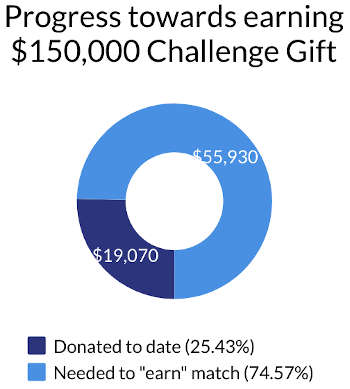
ASOR needs to raise $75,000 to earn the $150,000 challenge gift. As of February 16, 2021, we have raised $19,070.
This campaign will fund short-term and long-term initiatives that will advance the strategic planning started in 2020 by ASOR’s newly formed Diversity, Equity, and Inclusion Task Force. The purpose of this initiative is to permanently increase participation in ASOR by students and scholars who are African American/Black and Indigenous People of Color (BIPOC).
This ambitious, expedited campaign is made possible by a 2:1 leadership pledge of $150,000 by Trustee Carolyn Midkiff Strange. We can reach our goal by raising $75,000. Every dollar contributed (up to $75,000) will be matched with two dollars. A contribution of $100, will be matched with $200; a gift of $5,000, will be matched with $10,000; and so forth.
In the short-term, ASOR will use $50,000 to increase participation in ASOR by BIPOC students at the secondary, undergraduate, and graduate levels. $25,000 is in hand through a combination of prior gifts and current distributions. Part of these short-term funds will underwrite Summer Stipends and Annual Meeting travel grants for BIPOC students. The rest of the short-term funds will buoy an already-launched partnership with Archaeology in the Community. AITC is a successful non-profit centered in Washington D.C. that fosters student and community involvement in archaeology, with an emphasis on under-served groups. Together with AITC, and building on their experience, we are developing educational resources to promote engagement in archaeology by secondary level students.
ASOR will use the remaining $200,000 from this campaign to establish a permanent endowment that will generate $10,000 per year to support research scholarships, internships, and travel fellowships dedicated to BIPOC students. These fellowships will be a foundation for future efforts and will be a tangible sign of ASOR’s commitment to long-term change.
Extending social equity and equal opportunity throughout all sectors of our world is one of the foremost challenges facing us today. You can join ASOR in making this change happen. Consider a gift of any amount to help us earn this extraordinary $150,000 challenge gift. Please choose “Diversity Initiatives” from the drop-down menu in the online donation module to designate your contribution to this Challenge Campaign.
Please choose “Diversity Initiatives” from the drop-down menu in the
online donation module to designate your gift to this 2-for-1 Challenge Campaign.
[/vc_column_text][mk_divider][vc_column_text]On January 1, 2021, Jennie Ebeling (Department of Archaeology and Art History, University of Evansville) assumed the editorship of ASOR’s Archaeological Report Series (ASOR-ARS), replacing Hanan Charaf, who edited the series for the previous six years. Jennie wishes to thank Hanan for her excellent work as ASOR-ARS editor and looks forward to working with chair of the ASOR Publications Committee Kevin McGeough, editor of the Annual of ASOR (AASOR) series William Caraher, and colleagues who are interested in publishing the results of their fieldwork with ASOR. She is particularly interested in working to develop ASOR’s digital publication program and looks forward to exploring new possibilities for archaeological site publication.
ASOR’s Archaeological Report Series, whose first published volume appeared in 1991, is devoted to the publication of:
final excavation reports
surveys
ethnoarchaeological fieldwork
All time periods are considered for publication and excavation projects need not be ASOR-affiliated. ARS will continue to publish works on those regions ASOR has been historically involved with, but will also seek novel scholarship on regions and topics beyond the boundaries of its traditional mandate, and of interest to its growing and diverse membership. There are no length requirements for ARS and volumes are not published on any fixed schedule. The most recent volume, ARS 27, Caesarea Maritima Excavations in the Old City 1989-2003 Conducted by the University of Maryland and the University of Haifa, Final Reports, Volume 1: The Temple Platform (Area TP), Neighboring Quarters (Area TPS and Z), and the Inner Harbor Quays (Area I): Hellenistic Evidence, King Herod’s Harbor Temple, Intermediate Occupation, and the Octagonal Harbor Church (edited by Kenneth G. Holum), was published in November 2020.
ARS also publishes the CAARI Monographs, a sub-series dedicated to Cyprus. This sub-series may include conference proceedings, final excavation reports, and essays pertaining to the history and archaeology of Cyprus. Cyprus and the Balance of Empires: Art and Archaeology from Justinian I to the Coeur de Lion is the most recent CAARI Monograph and is available for purchase through the ISD website.
Information on the submission process can be found on the ASOR website.
For further information, please contact Jennie at jennie.ebeling@gmail.com.[/vc_column_text][mk_divider][vc_column_text responsive_align=”left”]
ANNUAL OF ASOR NEWS
[/vc_column_text][mk_divider][vc_column_text]Last year, Bill Caraher took over the editorship of the Annual of ASOR (AASOR) from Kevin McGeough, who took on the position of Chair of the ASOR Committee on Publications. With his continued support and encouragement and the collaboration of the Committee on Publications and of Jennie Ebeling, the new editor of the ARS, the Annual of ASOR embarks upon its second century of publication as a meaningful contributor to ASOR’s mission.
The Annual of ASOR was first published in 1920 making it ASOR’s oldest continuing publication, although its role has changed dramatically since its inception. Originally, AASOR published articles that would now be published in BASOR or JCS. Later, it became a venue for the presentation of site reports and cuneiform tablets (specifically the Nuzi materials). Both of these types of publications are now more appropriate for ARS or the JCS Supplemental Series.
In recent years, a variety of materials have been offered as AASOR volumes – festschriften, collections of essays, final reports, and the results of historic projects. Given its eclectic past contents and the mandates of ASOR’s other series and journals, now is a good time to clarify the mandate of the Annual. The defining character of the Annual is its flexibility. Over the last decade, this has allowed us to concentrate on a few key areas and AASOR has become a suitable location for:
Specialist studies that are perhaps too long or otherwise unsuitable for journal publication.
Publications of legacy material from projects that are no longer active in the field or in the regular publication of results.
Collections of articles on topics of interest to ASOR members and the discipline of archaeology more broadly.
As AASOR enters its second century of publishing, we’re particularly interested in publishing works that explore new approaches to archaeological publishing including publications that include digital data, novel interpretative strategies, and new ways of narrating the process of archaeological knowledge making.
Bill Caraher: william.caraher@und.edu[/vc_column_text][/vc_column][vc_column border_color=”rgba(170,170,170,0.01)” width=”1/6″ css=”.vc_custom_1496684098866{margin-right: 5px !important;margin-bottom: 20px !important;border-right-width: 2px !important;border-bottom-width: 2px !important;padding-top: 30px !important;padding-right: 10px !important;padding-left: 10px !important;background-color: #ffffff !important;border-right-color: rgba(227,228,228,0.75) !important;border-bottom-color: rgba(227,228,228,0.75) !important;}”][vc_wp_posts title=”BROWSE THE NEWS ARCHIVE” number=”4″][/vc_column][vc_column border_color=”rgba(170,170,170,0.01)” width=”1/6″ css=”.vc_custom_1496684008271{margin-right: 10px !important;margin-bottom: 30px !important;border-right-width: 2px !important;border-bottom-width: 2px !important;padding-top: 30px !important;padding-right: 20px !important;padding-left: 20px !important;background-color: #ffffff !important;border-right-color: rgba(227,228,228,0.75) !important;border-bottom-color: rgba(227,228,228,0.75) !important;}”][vc_column_text]Tweets by ASOResearch [/vc_column_text][/vc_column][/vc_row]
Archaeology and the Hidden Religious Culture of Israelite Women
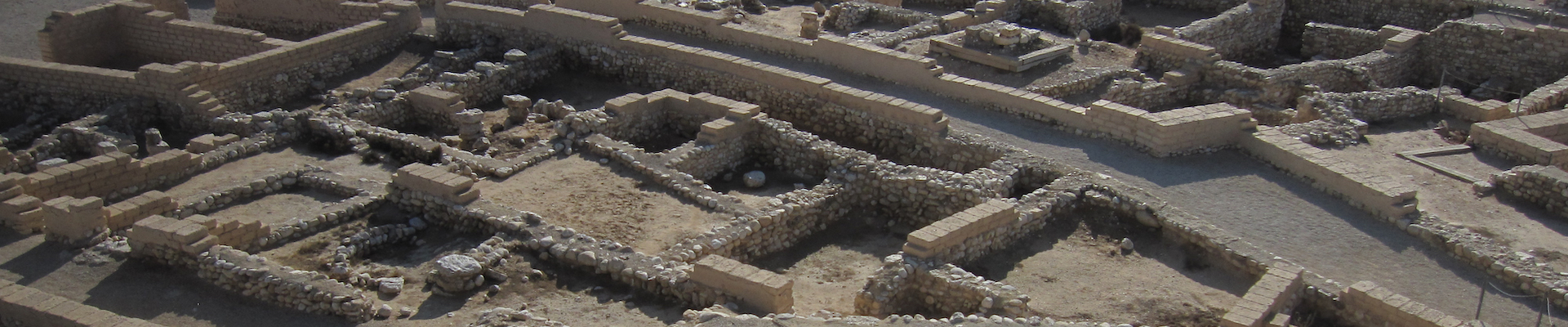
Friends of ASOR presents the next webinar in our monthly series on February 21, at 7:30 pm EST, featuring Dr. Carol Meyers. An expert in biblical studies, archaeology, and gender in the ancient world, she will address an important question: Who were the most important religious figures in ancient Israel? Most people would probably say that the priests were. But they would be wrong. The main arena of religious life for most people in the biblical period was not the Jerusalem temple or a regional shrine; it was the family household, and women were major figures in household religious activities. Those activities are largely invisible in the Bible with its focus on the priesthood and sacrifice. However, the use of an array of archaeological materials—and also some carefully selected and fascinating ethnographic data—can reveal many aspects of women’s household religious culture and its meaning for the lives of ordinary ancient Israelites.
In this lecture Professor Carol Meyers will take you into the Israelite household for an in-depth look at women’s religious activities, otherwise hidden from view. The webinar will conclude with a live Q&A session.
Registrants now receive a discount code for 30% off of Carol’s book from Oxford University Press!
Carol Meyers received the A.B. with honors from Wellesley College and the M.A. and Ph.D. in Near Eastern and Judaic Studies from Brandeis University. She is currently the Mary Grace Wilson Professor Emerita of Religious Studies at Duke University. A prolific scholar, she has lectured and published widely. She is the author of more than 450 articles, reports, reference-book entries, and reviews; and she has authored, co-authored, or edited twenty-two books. Her 2013 book, Rediscovering Eve: Ancient Israelite Women in Context, is a landmark study of women in ancient Israelite society. Other recent books include a commentary on the book of Exodus and several excavation reports (with Eric Meyers). Among her co-edited volumes are Archaeology, Bible, Politics, and the Media (2012), The Bible in the Public Square (2014), and the Bloomsbury Handbook of Food in the Hebrew Bible and Ancient Israel (forthcoming in 2021).
As a field archaeologist, Meyers has worked on numerous digs since she was an undergraduate, and she has been a staff member and then co-director of several archaeological projects in Israel. She has been a frequent consultant for media productions relating to archaeology and the Bible, including A&E’s Mysteries of the Bible series, DreamWorks’s “Prince of Egypt,” NOVA’s “The Bible’s Buried Secrets,” and several National Geographic documentaries.
Dr. Meyers has served on the editorial boards of many reference works and journals, including the Bulletin of ASOR. She was a senior editor of the Oxford Encyclopedia of Archaeology in the Near East and associate editor of The Torah: A Woman’s Commentary. She is currently a trustee of the American Society of Overseas Research (ASOR) and Vice-President of the Albright Institute of Archaeological Research. She is also a member of the Board of Directors of the Dead Sea Scrolls Foundation and recently served as President of the Society of Biblical Literature. Among her many honors and awards are ASOR’s Charles U. Harris Service Award for her many years of service as an ASOR trustee and ASOR’s P. E. MacAllister Field Archaeology Award for her contributions to Near Eastern archaeology.
To receive your ASOR member discount, log into the online store. If you are new to ASOR, please click on the “New Visitor Registration” link to register your e-mail address and choose password for our online store. Once logged in, navigate to “Meeting and Event Registration” to register for the webinar and pay the fee. Each paid registrant will receive a confirmation e-mail when you pay for the webinar. If you do not receive this e-mail, then you are not registered. Please e-mail membership@asor.org with any questions or issues with registering.
You will be e-mailed the Zoom Webinar link in the week prior to the lecture on February 21, 2021. If you do not receive the link by the close of business on the Thursday before the webinar, please email membership@asor.org immediately. All webinars are recorded and all paid registrants will be sent a link to view the recording.
All proceeds from this lecture are used to fund scholarships for members impacted by COVID-19 as well as increasing ASOR’s online resources, which are free to the public.
WHY SPONSOR A WEBINAR?
Several levels of support from $50-$1,000 are available. Proceeds go towards membership scholarships and towards increasing ASOR’s virtual resources. Each sponsorship is tax-deductible and you can give your friends free registrations to a webinar!
Bronze Level ($50): up to 2 guest registrations Silver Level ($100): up to 5 guest registrations Gold Level ($500): up to 20 guest registrations Platinum Level ($1,000): up to 50 guest registrations
After you sign up for a sponsorship online or over the phone, email the names and email addresses of your guests to Felice Herman at membership@asor.org, who will send your guests a confirmation and the Zoom link before the webinar.
WANT TO SAVE $5.00 ON THE NEXT WEBINAR?
Join ASOR as a member! Click here for more details about discounts for events and other benefits of membership. Memberships start at $40 for the year as an Associate Member.
You can now purchase the link to the recording of any webinar. You can also purchase the bundle packages of all webinars from the 2020-2022 seasons. Please e-mail membership@asor.org for purchase details.
To see a printable pdf of the webinar titles from the 2020-2021 season, please click here. To see a printable pdf of the webinar titles from the 2021-2022 season, please click here.
Where Are They Now?: A Preview of 2022 ASOR-Affiliated Fieldwork Projects Michael Given (University of Glasgow), Xenia-Paula Kyriakou (Florida Gulf Coast University), Stephen Batiuk (University of Toronto), Monique Roddy (Walla Walla University), Kent Bramlett (La Sierra University), Friedbert Ninow (La Sierra University), and Michael Hoff (University of Nebraska-Lincoln) | March 8, 2022
Tel Rehov: A Major Bronze and Iron Age City in the Jordan Valley Amihai Mazar (Hebrew University of Jerusalem), Nava Panitz-Cohen ( Hebrew University of Jerusalem), Nota Kourou (Athens University), Naama Yahalom-Mack (Hebrew University of Jerusalem), Robert Mullins (Azusa Pacific University) | February 10, 2022
Archaeogaming: Why Video Games Deserve Their Own Archaeology Tine Rassalle (University of North Carolina at Chapel Hill), Shannon Martino (Morton College), Matthew Winter (University of Arizona), Michael Zimmerman (Rhode Island) | April 18, 2021
[/vc_column_text][mk_divider][vc_wp_text]ASOR is excited to announce a 2-for-1 challenge gift of $150,000 that will serve as the cornerstone of a targeted campaign (scheduled completion, June 2021) to raise $250,000 to promote diversity, equity, and inclusion in all of our endeavors. ASOR needs to raise $75,000 to earn the $150,000 challenge gift.
This campaign will fund short-term and long-term initiatives that will advance the strategic planning started in 2020 by ASOR’s newly formed Diversity, Equity, and Inclusion Task Force. The purpose of this initiative is to permanently increase participation in ASOR by students and scholars who are African American/Black and Indigenous People of Color (BIPOC).
This ambitious, expedited campaign is made possible by a 2:1 leadership pledge of $150,000 by Trustee Carolyn Midkiff Strange. We can reach our goal by raising $75,000. Every dollar contributed (up to $75,000) will be matched with two dollars. A contribution of $100, will be matched with $200; a gift of $5,000, will be matched with $10,000; and so forth.
In the short-term, ASOR will use $50,000 to increase participation in ASOR by BIPOC students at the secondary, undergraduate, and graduate levels. $25,000 is in hand through a combination of prior gifts and current distributions. Part of these short-term funds will underwrite Summer Stipends and Annual Meeting travel grants for BIPOC students. The rest of the short-term funds will buoy an already-launched partnership with Archaeology in the Community. AITC is a successful non-profit centered in Washington D.C. that fosters student and community involvement in archaeology, with an emphasis on under-served groups. Together with AITC, and building on their experience, we are developing educational resources to promote engagement in archaeology by secondary level students.
ASOR will use the remaining $200,000 from this campaign to establish a permanent endowment that will generate $10,000 per year to support research scholarships, internships, and travel fellowships dedicated to BIPOC students. These fellowships will be a foundation for future efforts and will be a tangible sign of ASOR’s commitment to long-term change.
Extending social equity and equal opportunity throughout all sectors of our world is one of the foremost challenges facing us today. You can join ASOR in making this change happen. Consider a gift of any amount to help us earn this extraordinary $150,000 challenge gift. Please choose “Diversity Initiatives” from the drop-down menu in the online donation module to designate your contribution to this Challenge Campaign.
Please choose “Diversity Initiatives” from the drop-down menu in the
online donation module to designate your gift to this 2-for-1 Challenge Campaign.


 Jane DeRose Evans is Chair and Professor of Art History at Tyler School of Art and Architecture, Temple University. She earned the A.B. in Classics from Franklin & Marshall College, and the M.A. and Ph.D. degrees in Classical Archaeology at the University of Pennsylvania. Jane met Robert Bull (then of Drew University and the Director of the JECM project) when he asked her to publish the excavation coins from the JECM excavations at Caesarea, and she continued to work with him on the materials from Caesarea for many years after they were published. She is currently a numismatist for the Harvard-Cornell Sardis Expeditions and The George Washington University’s Bir Madkhour Project. She leads the team to publish the results of the JECM excavations of the building on top of the warehouses.
 Alexandra Ratzlaff is a Lecturer in the Department of Classical Studies at Brandeis University. She earned her BA in Classical Studies and Archaeology at The George Washington University and PhD in Archaeology at Boston University. Alexandra is a Classical and Near Eastern Archaeologist specializing in the Eastern Mediterranean. She is currently an Associate Director of the Tel Kabri Excavations. Beginning in 2021, she will be the Co-Director of a new project at the Roman Fort of Birsama in Israel. She has excavated in Israel on various projects for the last fifteen years. Her research interests include the Roman army, the Late Antique economy, Roman and Byzantine ceramics, Bronze Age economies and state structure. She is also the Project Lead for the Brandeis Techne Group at Autodesk, a long-term research project aimed at developing new equipment and methodologies for digital imaging in archaeology and the humanities.
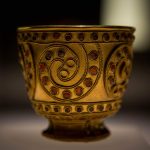 ASOR Photo Collection has been growing over the past couple of months! Take a look at the 550+ images in
 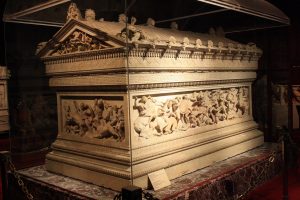 [/vc_column_text][/vc_column][vc_column border_color=”rgba(170,170,170,0.01)” width=”1/6″ css=”.vc_custom_1496684098866{margin-right: 5px !important;margin-bottom: 20px !important;border-right-width: 2px !important;border-bottom-width: 2px !important;padding-top: 30px !important;padding-right: 10px !important;padding-left: 10px !important;background-color: #ffffff !important;border-right-color: rgba(227,228,228,0.75) !important;border-bottom-color: rgba(227,228,228,0.75) !important;}”][vc_wp_posts title=”BROWSE THE NEWS ARCHIVE” number=”4″][/vc_column][vc_column border_color=”rgba(170,170,170,0.01)” width=”1/6″ css=”.vc_custom_1496684008271{margin-right: 10px !important;margin-bottom: 30px !important;border-right-width: 2px !important;border-bottom-width: 2px !important;padding-top: 30px !important;padding-right: 20px !important;padding-left: 20px !important;background-color: #ffffff !important;border-right-color: rgba(227,228,228,0.75) !important;border-bottom-color: rgba(227,228,228,0.75) !important;}”][vc_column_text]
 This ambitious, expedited campaign is made possible by a 2:1 leadership pledge of $150,000 by Trustee Carolyn Midkiff Strange. We can reach our goal by raising $75,000. Every dollar contributed (up to $75,000) will be matched with two dollars. A contribution of $100, will be matched with $200; a gift of $5,000, will be matched with $10,000; and so forth.