Sydney A. Pickens, 2026 Strange/Midkiff Families Scholarship Recipient
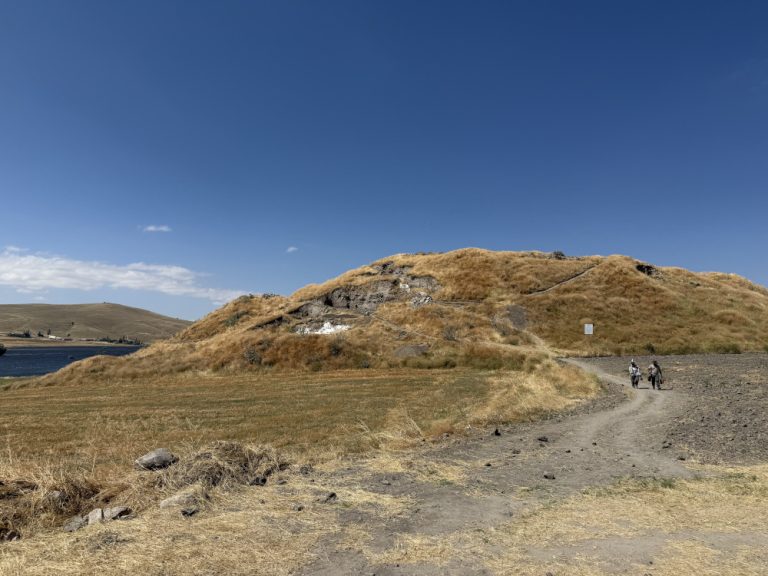
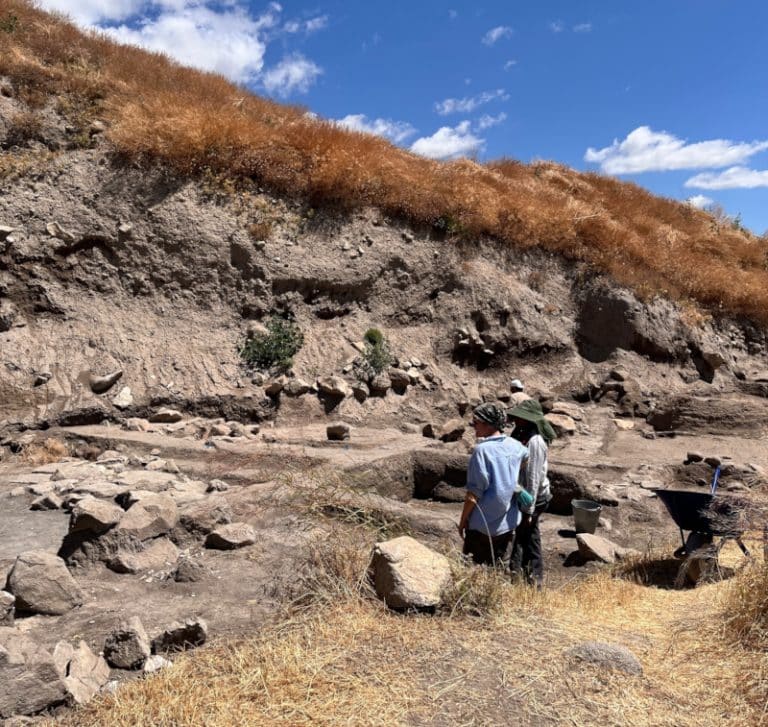
I spent the month of July in Türkiyeas amember of the ÇadırHöyük Archaeological Excavation Project, locatednear Peyniryemez Village in Sorgun, Yozgat Province.ÇadırHöyükis a tell, or artificial mound, in central Türkiye that was formed by 6,000 years of human settlement. The project explores how small rural communities adapted theirsubsistence strategies in response to environmental change and imperial control. During my time at the site, I supported this exploration through systematic excavation, documentation, and laboratory analysis.
The Çadir Höyük Archaeological Mound, facing south.
Up With the Sun
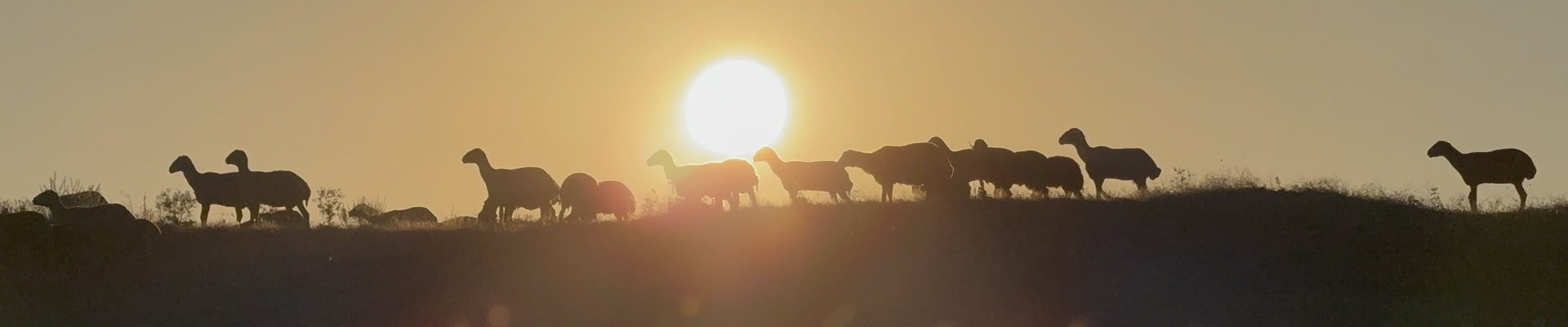
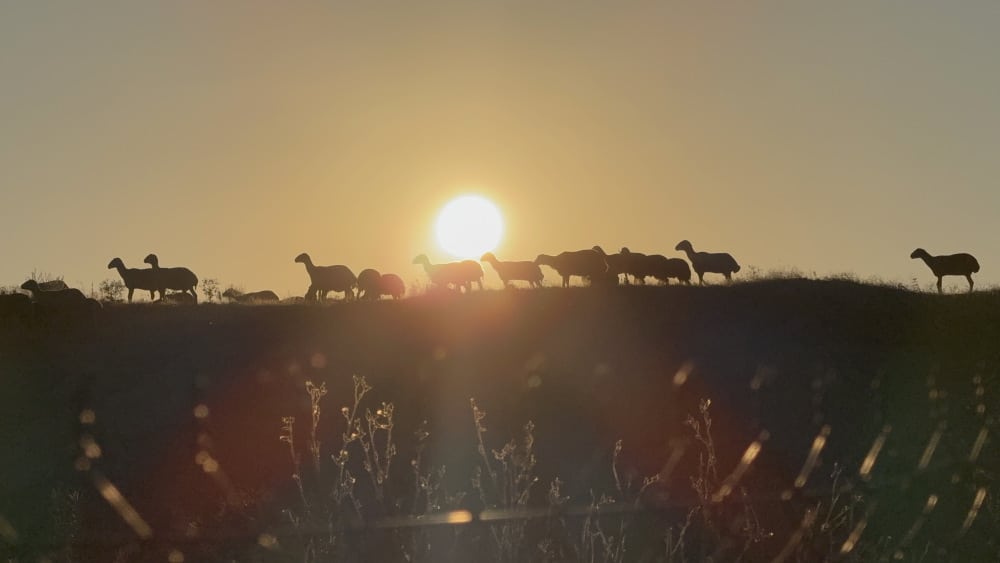
Most mornings, my eyes would flutter open at 5:15am in response to the familiar cadence of Donnie Trumpet’s Nothing Came to Me. On other days, it was the 5:00am recitation of the Adhan—the Islamic call to prayer—reverberating throughout the village. Yet on other days—and by far my favorite—it was the jangling bells of bleating sheep being herded across the central Anatolian hills.
Sheep at sunrise.
My subsequent morning routine was the same most days: drag self out of bed, wash face, brush teeth, get dressed, indulge in Çocokrem spread on bread—sometimes with a sprinkle of granola for an added flare—out the door and in the van by 6:00am, on site ready to work by 6:15am.
On Site
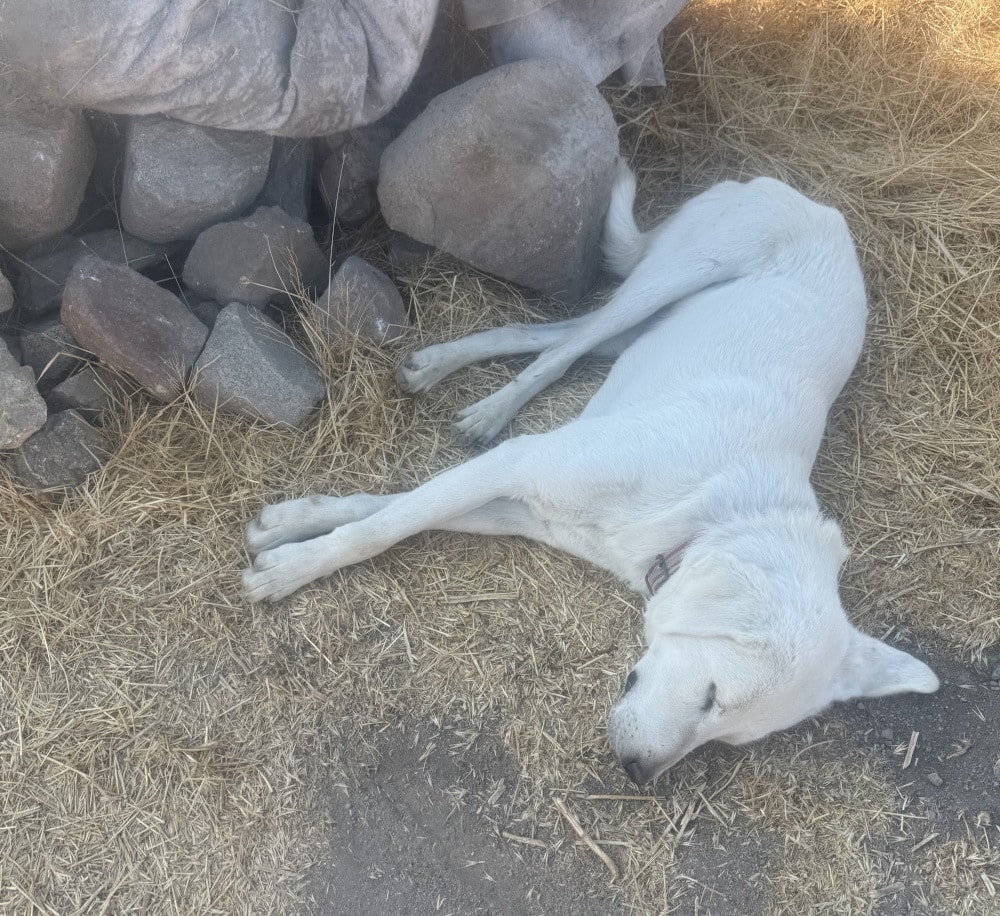
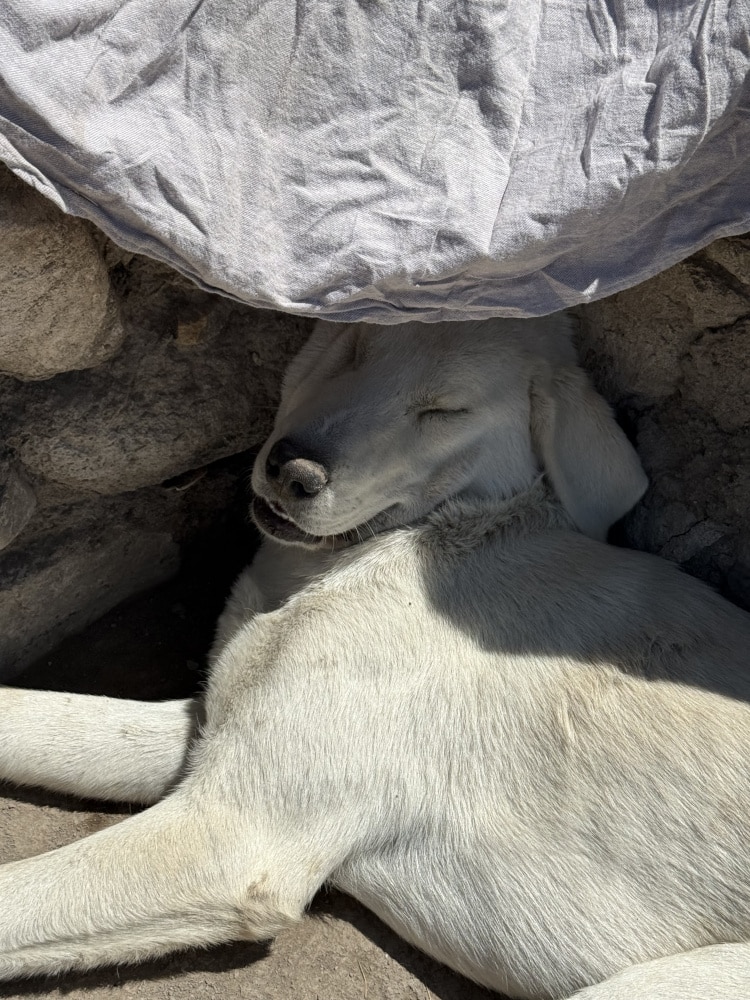
The arrival at the Çadır Höyük Archaeological Mound is stunning. My first morning on site and each morning thereafter, I beamed as I watched the sun dance across the lake. Making its first reappearance at the site in nearly a decade, the lake foreshadowed a productive field season and simultaneously affirmed the project’s emphasis on the impacts of environmental change. On our hike up and around the mound each morning, we were greeted by the wagging tail of Paşa, our friendly neighborhood Anatolian Shepard and adopted mascot for the project. More often than not, he would follow us up the mound, find a nice shady spot, and oversee excavation progress.
Paşa, trench overlord.
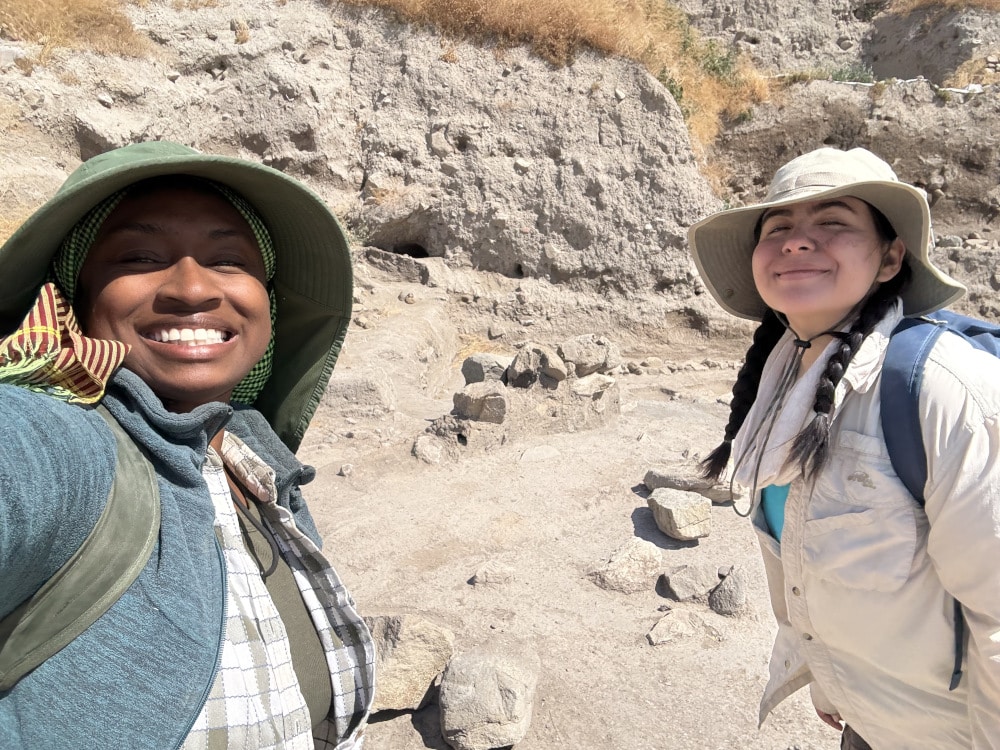
I spent the first two weeks of the project working in the Late Chalcolithic Period (ca. 4250–3000 BCE) trenches SES-1, SES-2, and LSS-5 training intensively under the supervision of my advisor, Dr. Laurel Darcy Hackley.Working at the bottom of the mound demanded that I move slowly, work carefully, and notice the most minute changes in soil textures and colors because removing the smallest 1–2cm layer could destroy hundreds of years of the occupational record.It taught me to look intently, ask questions, and make possible meaning out of potential traces until additional evidence appeared to support or contrast it. It activated my imagination, pushing me to see what was, and served as great archaeological skills training.
Darcy and I discussing the plan of action in LSS-5.
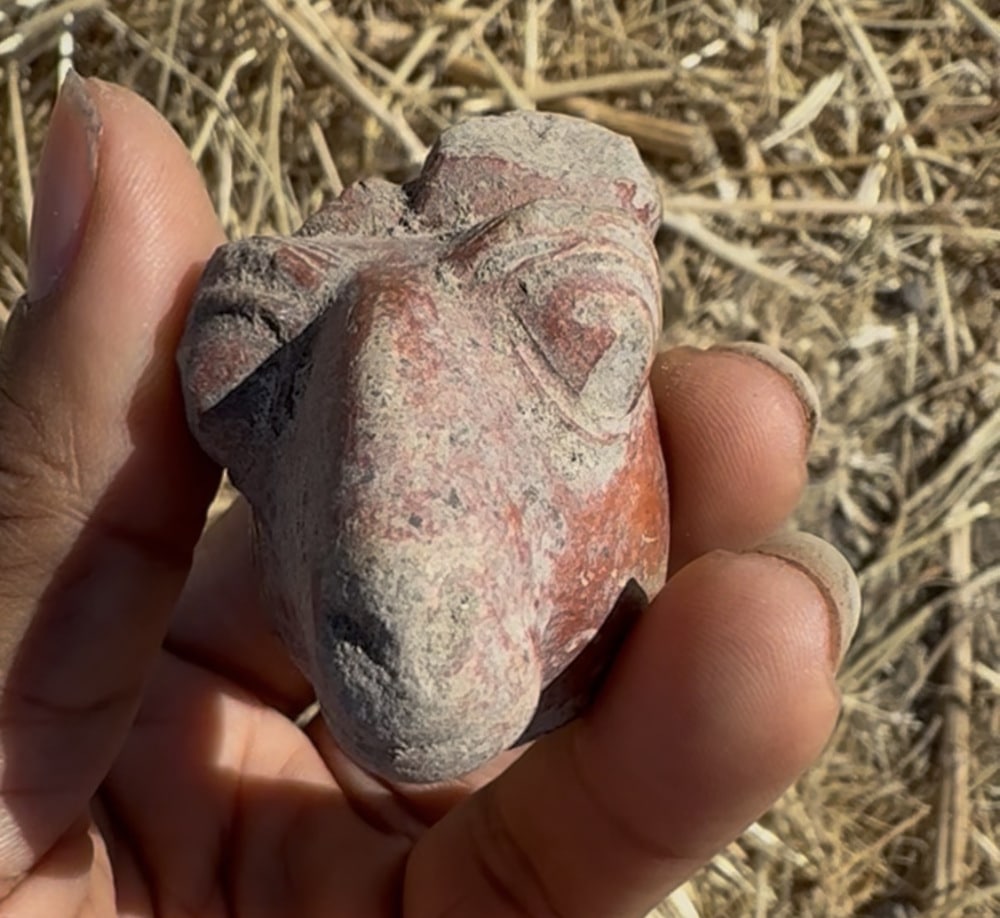
When week three rolled around and I was catapulted into the role of co-trench supervisor with my colleague Haleigh Keane, I was nervous, butready. We resumed excavations of LSS-8, a previously opened 4×10 meter trench in southwestern corner of the tell spanning the Late Chalcolithic and Early Bronze Ages. Our primary goals were to investigate a pit feature in the northwest corner of the trench and to remove walls that had been previously documented in hopes of beginning excavations of the next occupation phase.Our most exciting find came from that pit—a small ceramic sheep’s head, dated firmly to the Hittite period by its wide eyes, pronounced nose, and quirky smile.
Haleigh and I showing our work in LSS-8 on my last day in the field, after partially removing feature walls.
Hittite sheep head recovered from the pit in LSS-8.
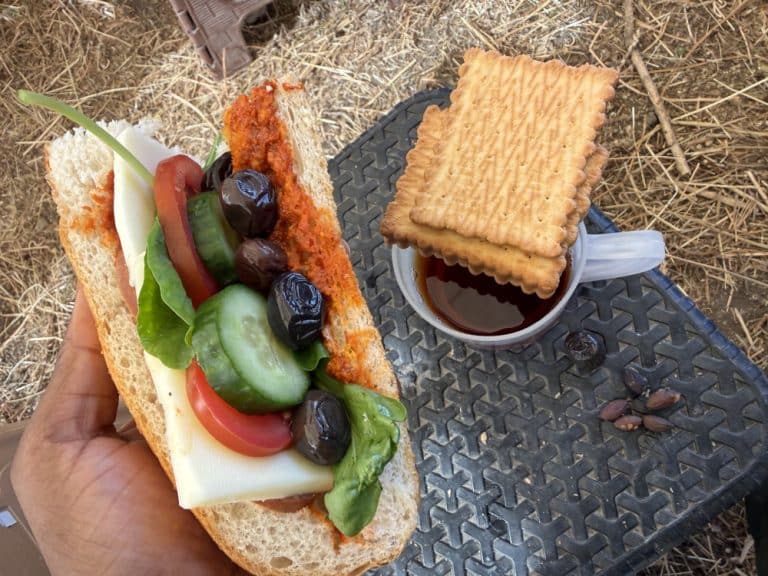
At 9am, the call for paydos! would reverberate around the site as the message spread like wildfire from trench to trench. Time to head down the mound to the break tent for second breakfast, the cherished mid-morning meal following hours of heavy physical labor. The project Bekçi, Ali, orchestrated the production, circulating all the sandwich fixings around the massive circle of excavators. First came the bread, followed by the spreads—mustard, mayo, and tomato. I always opted for a mustard and tomato combo.Next came the sliced salami and cheese, followed by tomato, cucumber, and leafy greens, and finally, the star of the show, black olives.YUM.
The Second Breakfast of Champions.
After second breakfast, we’d hike back up the mound to resume fieldwork until 12:30pm. Thereafter we’d give the trench a good sweep, clean up the site, and end the field day by 1pm. I’d customarily take the van home, hop in the shower, and squeeze in a pre-lunch nap if I could manage it.
After the Field
“Yemeeeeek!” Music to my ears. Like clockwork, people would begin filing out of their rooms and into the kitchen to help carry out food and set tables. At some point during lunch, the Project Director, Dr. Sharon Steadman would communicate any announcements for the day and reveal what time lab hours would begin: 4:30 or 5pm. We all hoped for 5pm; the fate of our post-lunch naps depended on it. When 4:30 or 5pm rolled around, we’d head to the lab to receive our assignments and begin work. I rotated lab tasks during the first two weeks or so to get oriented to the project. Pottery washing became a welcome rest and respite from the late afternoon heat. Seated beneath the shade of plum trees and laundry hanging on the line, I chatted with team members with the backdrop of cows on the move walking through the village streets.
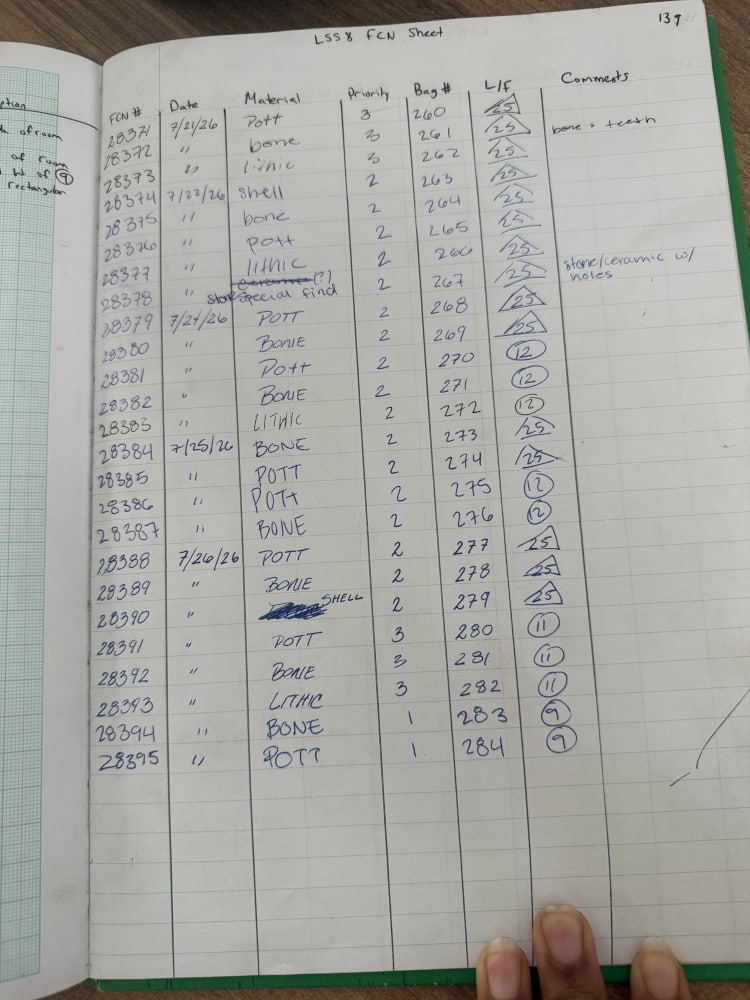
Once I assumed the role of trench supervisor, lab hours took the shape of completing the day’s field notes, documenting field catalog numbers (FCNs) and objects on feature and locus sheets and making plans for the next day’s excavations.
FCN sheet for LSS-8.
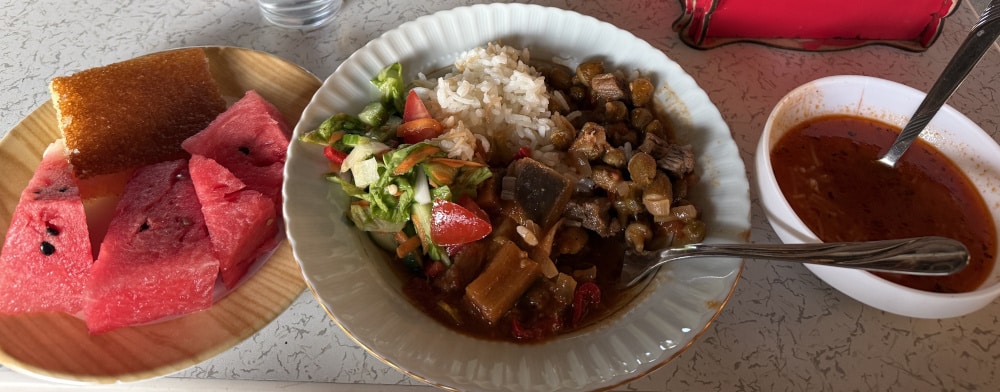
The evening call for dinner came at 7pm. Again, the entire dig site would burst with excited energy, looking forward to the culinary creations of our dig chef, Tuğba, and the pastry stylings of her daughter and sous chef, Buğlem. The meals were by far the best I’ve ever had on any excavation project.
Examples of Tuğba and Buğlem’s culinary creations.
We’d end the night with laughs over çay, board and/or card games, and sometimes even a Tango, a Lindy Hop, or two. By 10pm, I was in bed and ready to start it all againthe next morning.
Sydney A. Pickens graduated from the University of Memphis in August with Master’s degree in Art History, concentrating in Egyptian Art and Archaeology. She has since matriculated as a doctoral student at the University of California, Los Angeles (UCLA), where she is pursuing a PhD in Ancient Egyptian and Nubian Studies.
Want to help more students and early career archaeologists get into the field? Donate to the cause today by selecting “Fieldwork Scholarships” as your gift purpose!
I hope you all had a wonderful summer, perhaps having had the opportunity to get into the field, and hopefully some kind of relaxing break. As many of us gear up to return to school (and some in the United States already have), I have been filling out various “Doodle Polls” and setting up meetings with various committees leading up to the Annual Meeting in November.
One of my roles, as Vice-President of ASOR, is to lead the Chair Coordinating Council (CCC), which is explicitly charged with “monitoring the activities” of ASOR’s standing committees. While this is technically true, I prefer to think of the CCC as a means of facilitating conversations between the different committees, and an opportunity for each committee chair to share the exciting and important work that ASOR members are doing. It is a real privilege to chair the CCC, and I have a difficult time limiting our monthly meetings to just the one hour I promise everyone. The reports and discussions are so interesting and there is just so much good work that goes on.
Volunteering through one of the eight standing committees is one of major ways that ASOR members can play a role in the organization. In thinking about my own participation in ASOR, I remembered how I had been encouraged by other members throughout my career. As an undergraduate, David Hopkins and Larry Herr asked me to compile an index for Biblical Archaeologist, Tim Harrison suggested that I become more involved in ASOR Canada, Jeff Blakeley reached out to me to become a monographs editor, and Chuck Jones nudged me to take over as chair of the Publications Committee and then follow after him as Vice President. I am not sure that it ever would have occurred to me to volunteer for any of this work without having been explicitly asked by another member. So, I thought I would write to all of you, to give all of you a nudge to consider volunteering for one of the standing committees.
The committees really do very different kinds of work, and it may not be clear to all ASOR members what that work is, or even that these committees exist. More information about these committees, including current chairs and members, can be found on the ASOR website. Beyond these standing committees, ASOR also benefits from the work of affiliated research centers, our overseas committees, ASOR Canada, boards of our various publications, and ad hoc committees that are established by the President to achieve specific goals.
If you read ASOR’s newsletters (and if you are reading this, you probably do), or follow our social media, you’ll notice periodic requests for volunteers for these committees. If service on any of these sounds interesting to you, please answer those calls. But you also don’t have to wait for such a call. If you want to get more involved with ASOR, please reach out to any of the committee chairs, or to me as Vice President, either over email or in person at the Annual Meeting. Different bylaws and mandates govern the committees, some of which also include instructions on membership. Reaching out directly is really helpful, since even if there isn’t room on a committee at the moment you express interest, there likely will be soon.
I hope that you will consider participating in one of these committees. We are always looking for people with different kinds of experiences, backgrounds, and specialization. Regardless, I look forward to seeing you all at the Annual Meeting in Chicago this November.
Digging into The Odyssey: An Epic Reimagined or a Misinterpretation of Epic Proportions?
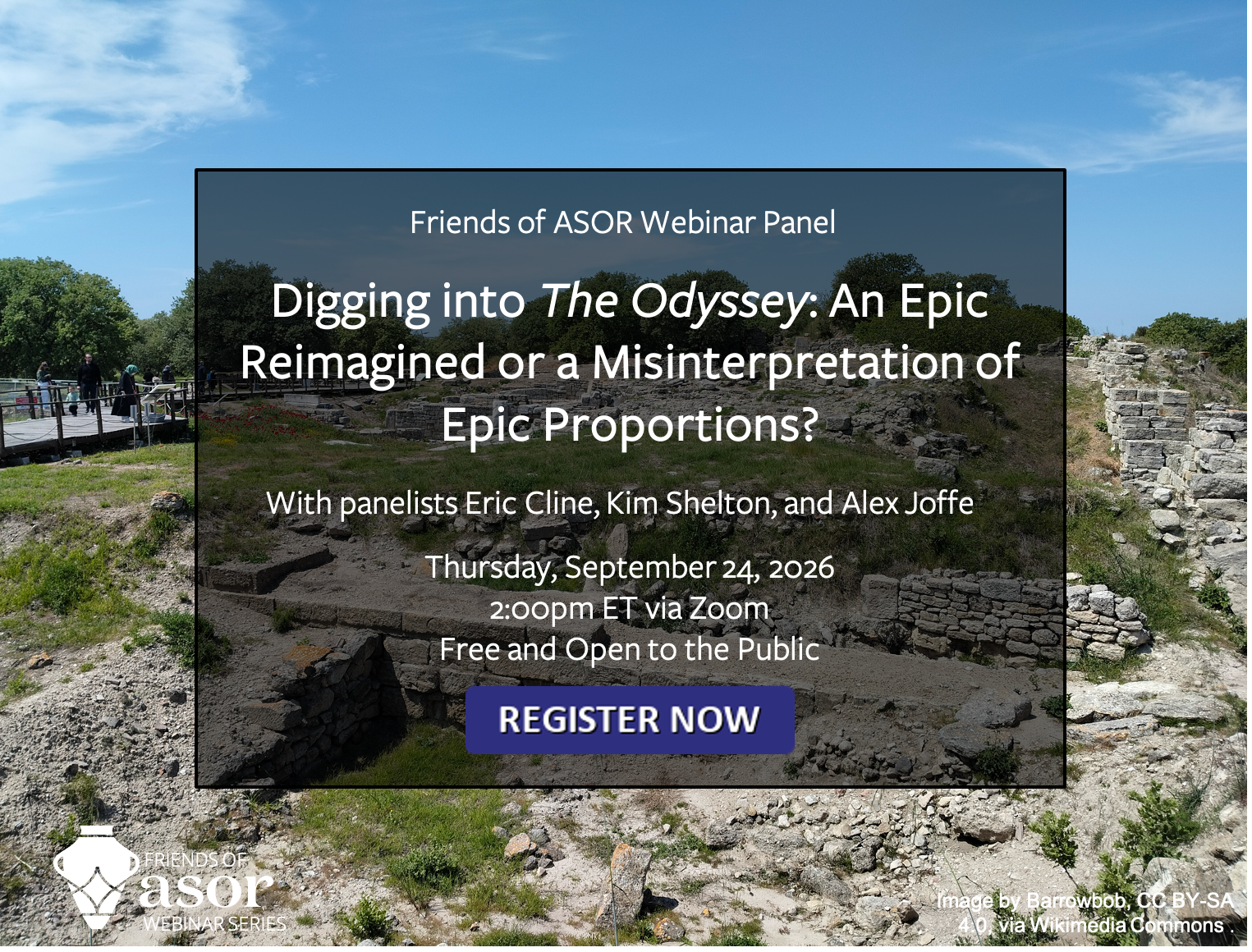
Friends of ASOR presents the first webinar of the 2026-2027 season: “Digging into The Odyssey: An Epic Reimagined or a Misinterpretation of Epic Proportions?” on September 24, 2026, at 2:00 pm EDT, with panelists Eric Cline, Kim Shelton, and Alex Joffe (moderated by Jessica Nitschke). This webinar will be free and open to the public. Registration through Zoom (with a valid email address) is required. This webinar will be recorded and all registrants will be sent a recording link in the days following the webinar.
Join us for a wide-ranging panel discussion on the 2026 film adaptation of The Odyssey, and hear scholars’ thoughts on the Late Bronze Age setting, the enigmatic Sea Peoples, the omission of Odysseus’ journey to Scheria, and more.
Eric H. Cline is Professor of Classics and Anthropology, former Chair of the Department of Classical and Near Eastern Languages and Civilizations, and current Director of the Capitol Archaeological Institute at George Washington University, in Washington DC.
Kim Shelton is the Class of 1957 Garff B. Wilson Professor of Ancient Greek & Roman Studies and the Graduate Group in Ancient History and Mediterranean Archaeology at the University of California Berkeley. She is also Director of the Archaeological Research Facility and the Nemea Center for Classical Archaeology, and First Vice President of the AIA. Shelton is an Aegean prehistorian with research interests in domestic architecture, ceramic production and economy, and religious ritual. She is the author of several publications on Mycenaean pottery, figurines, cemeteries, Mycenae’s Cult Center, and her excavations at the Sanctuary of Zeus at Nemea, Petsas House, Mycenae, and the Late Bronze Age cemeteries at Aidonia (TAPHOS).
Alex Joffe is an archaeologist and historian. He is currently the Director of Strategic Affairs for the Association for the Study of the Middle East and Africa. He has done fieldwork in Israel, Jordan, Greece, and the United States.
SUPPORT THE WEBINAR PROGRAM!
Friends of ASOR is pleased to announce that the first webinars of the 2026-2027 season will once again be free and open to the public with a goal to raise $10,000 so that the entire webinar season will be free. Will you support this outreach effort with a tax-deductible contribution? All donors/sponsors with gifts of $100 or more will be recognized in subsequent webinars. Make your gift today and select “webinars” from the drop-down menu.
Designate your gift for “Webinars” in the drop-down menu.
From Research to Reality: My Journey to the Balu’a Regional Archaeological Project
Zainab O. Hweij, 2026 Strange/Midkiff Families Fieldwork Scholarship
For months, I wasn’t sure this excavation season would happen.
Like many archaeologists working in the Middle East, our plans were overshadowed by the uncertainty created by the regional political situation. Every week seemed to bring new questions about whether the field season would be postponed or canceled. Yet throughout this period, Dr. Monique Roddy (co-director of the project ) remained remarkably optimistic, encouraging the team and continuing to prepare for the season. Her confidence gave me hope that I would soon have the opportunity I had been working toward for months.
When I finally arrived at the Mujeb Hotel and met the team members, all of that uncertainty disappeared. The excitement of beginning another excavation season quickly replaced months of anticipation. Looking back now, that first evening feels like the beginning of one of the most rewarding archaeological experiences of my career.
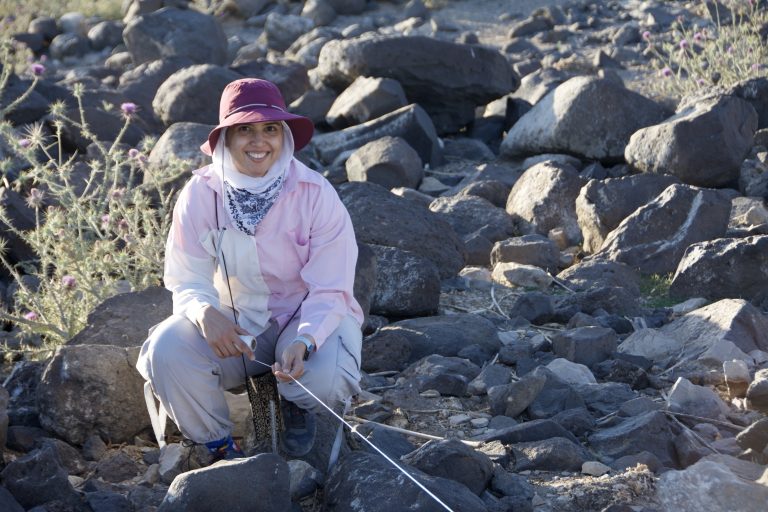
My name is Zainab O. Hweij, and I am a Jordanian archaeologist with master’s degree from the University of Jordan. My research focuses on the visual culture and religious iconography of the Iron Age southern Levant, and I hope to pursue doctoral research on Iron Age stamp seals and visual communication. Because of these interests, participating in an excavation at Khirbat al-Balu’a was a perfect opportunity to gain firsthand experience with Iron Age archaeology.
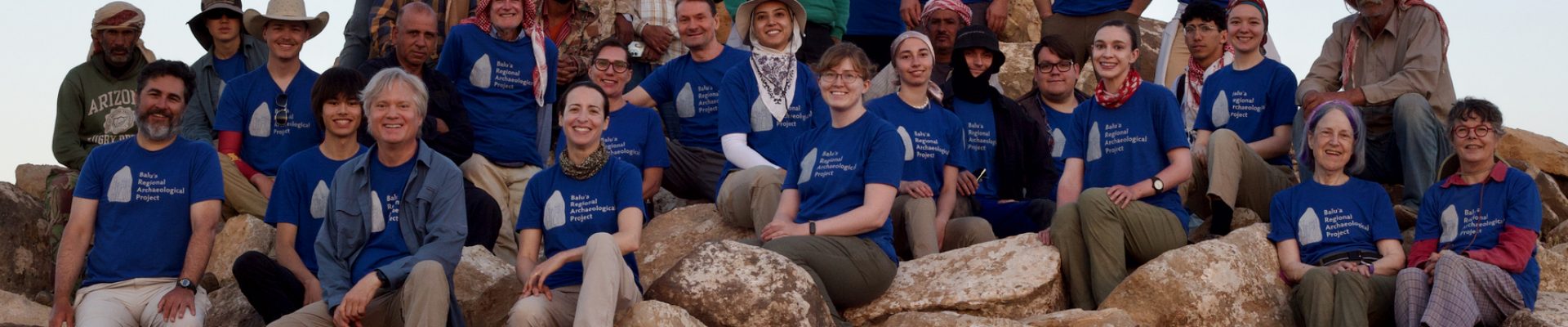
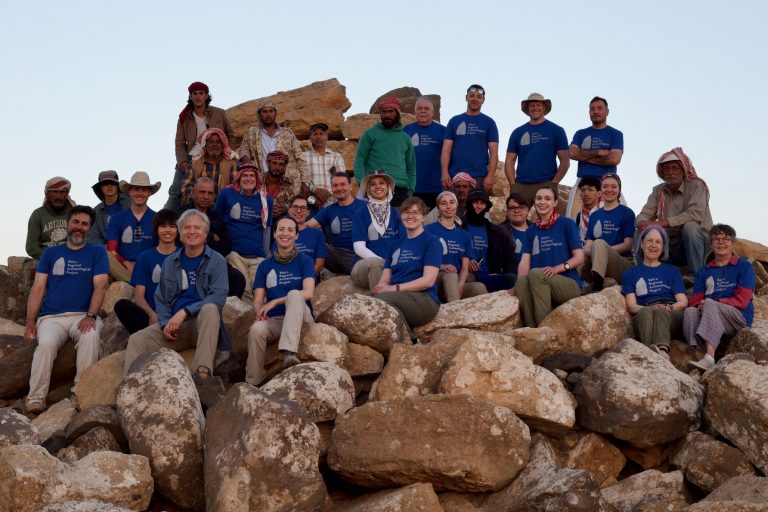
The Balu’a Regional Archaeological Project (BRAP) investigates Khirbat al-Balu’a, one of Jordan’s significant archaeological sites in the ancient kingdom of Moab. Directed by Drs. Kent Bramlett, Monique Roddy, and Friedbert Ninow, the project brings together specialists and students from around the world to investigate the site’s long occupational history, in the Iron Age and later periods. Working within such an international and multidisciplinary team provided an inspiring environment in which to learn.
Interestingly, I first discovered BRAP while researching a completely different site. During my master’s research and while preparing ideas for my future PhD, I spent considerable time reading about Tall al-‘Umayri and the Madaba Plains Project. As I explored publications and project websites, I came across BRAP and became fascinated by the work being conducted at Khirbat al-Balu’a.
I applied to join the project, but there was one significant obstacle: funding. As an early-career archaeologist, the costs associated with international fieldwork were beyond what I could afford on my own. Receiving a 2026 Strange/Midkiff Families Fieldwork Scholarship transformed what seemed like an impossible opportunity into reality. The scholarship removed the financial barrier that would otherwise have prevented me from participating, and for that I am deeply grateful.
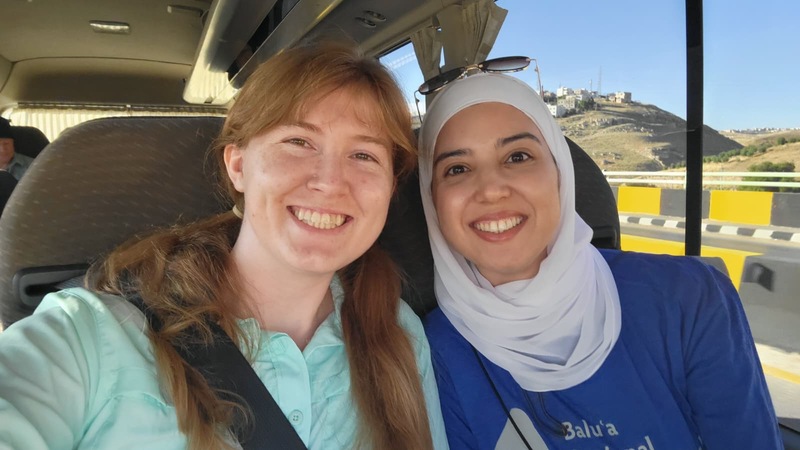
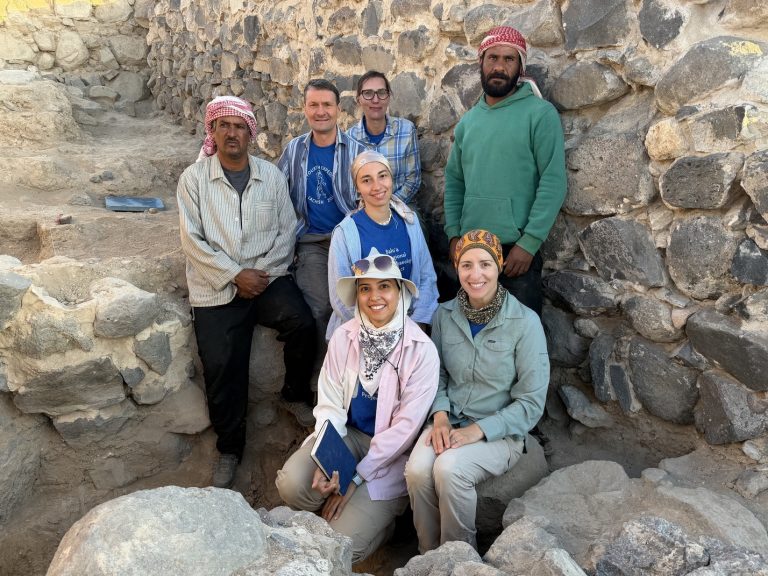
The excavation began with new friendships. At the Mujeb Hotel, I met archaeologists from different countries, each bringing their own experiences and perspectives. My roommate, Sarah Watson, immediately made me feel welcome, and before long our conversations continued from breakfast to the end of each excavation day. These friendships became one of the highlights of the season.
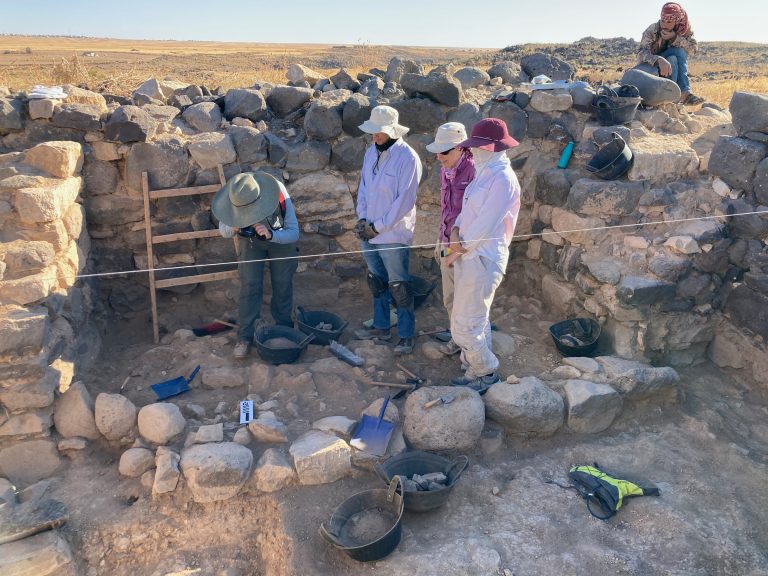
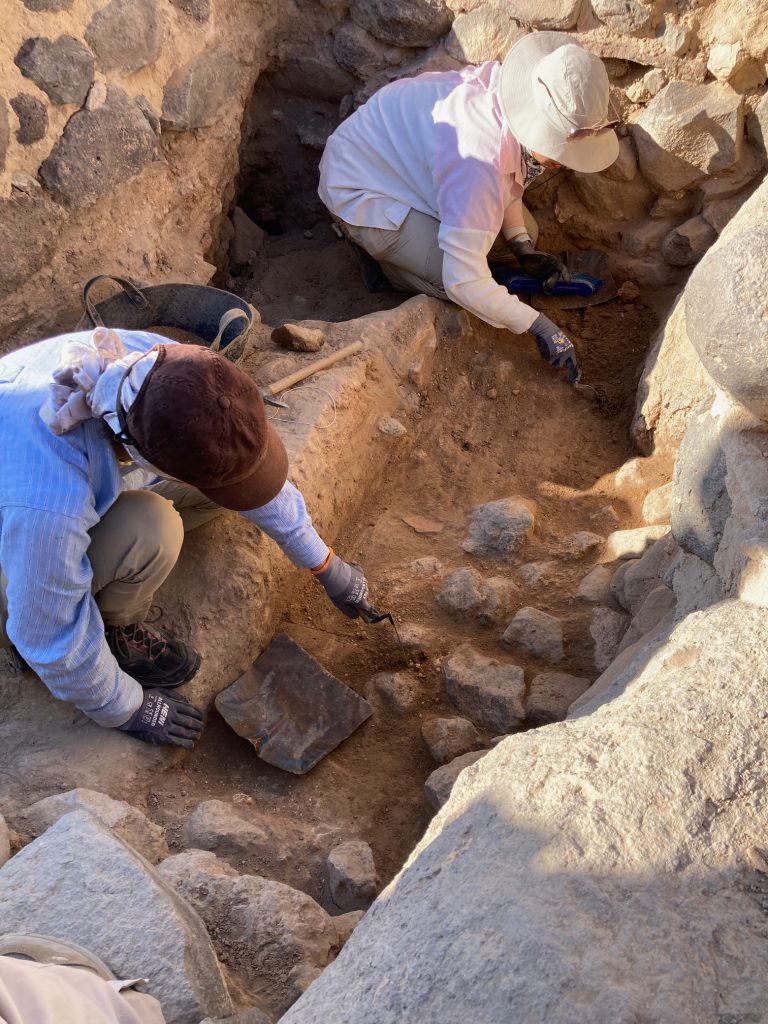
For much of the excavation, I worked as a square supervisor in the Khan area alongside Omar and Mary, while Amar and Salam worked with us in the field every day. Supervising a square required balancing excavation with careful documentation, recording contexts, directing excavation strategies, and constantly discussing interpretations with colleagues. Archaeology is often imagined as the discovery of spectacular artifacts, but I learned once again that it is really about patience, observation, and teamwork. Every layer removed, every stone recorded, and every pottery sherd documented contributed another piece to the history of the site.
Because my academic research focuses on the Iron Age, I hoped to gain direct experience excavating Iron Age architecture. I spoke with Dr. Ian Jones about my research interests, and he immediately supported the idea. Thanks to his encouragement and the generosity of the project directors, I was given the opportunity to spend a week excavating in the Iron Age domestic area alongside the German team that joined the project later in the season.
That week was especially meaningful. Instead of studying Iron Age material only through publications and museum collections, I was able to excavate architectural remains and contexts firsthand.
Beyond the archaeology itself, BRAP reminded me that fieldwork is built on community. Every day involved cooperation, shared problem-solving, and learning from people with different backgrounds and areas of expertise. Whether discussing pottery after excavation, comparing interpretations in the field, or simply sharing stories over dinner, I left the project with new knowledge, lasting friendships, and renewed motivation for my future career.
The Strange/Midkiff Families Fieldwork Scholarship made all of this possible. It did more than provide financial support, it opened the door to an experience that strengthened my archaeological skills, connected me with an incredible international team, and brought me one step closer to my goal of becoming a specialist in Iron Age archaeology. I will always be grateful for the opportunity to be part of the 2026 Balu’a Regional Archaeological Project, and I look forward to carrying the lessons I learned there into my future research.
Zainab O. Hweij has a Master’s in Archaeology from the University of Jordan, with research interests in the visual culture and religious iconography of the Iron Age southern Levant.
Want to help more students and early career archaeologists get into the field? Donate to the cause today by selecting “Fieldwork Scholarships” as your gift purpose!
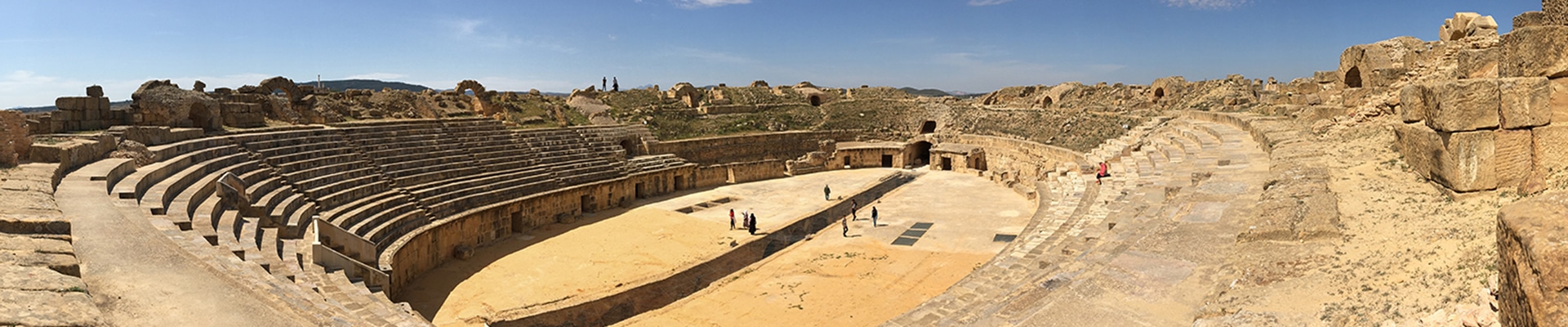
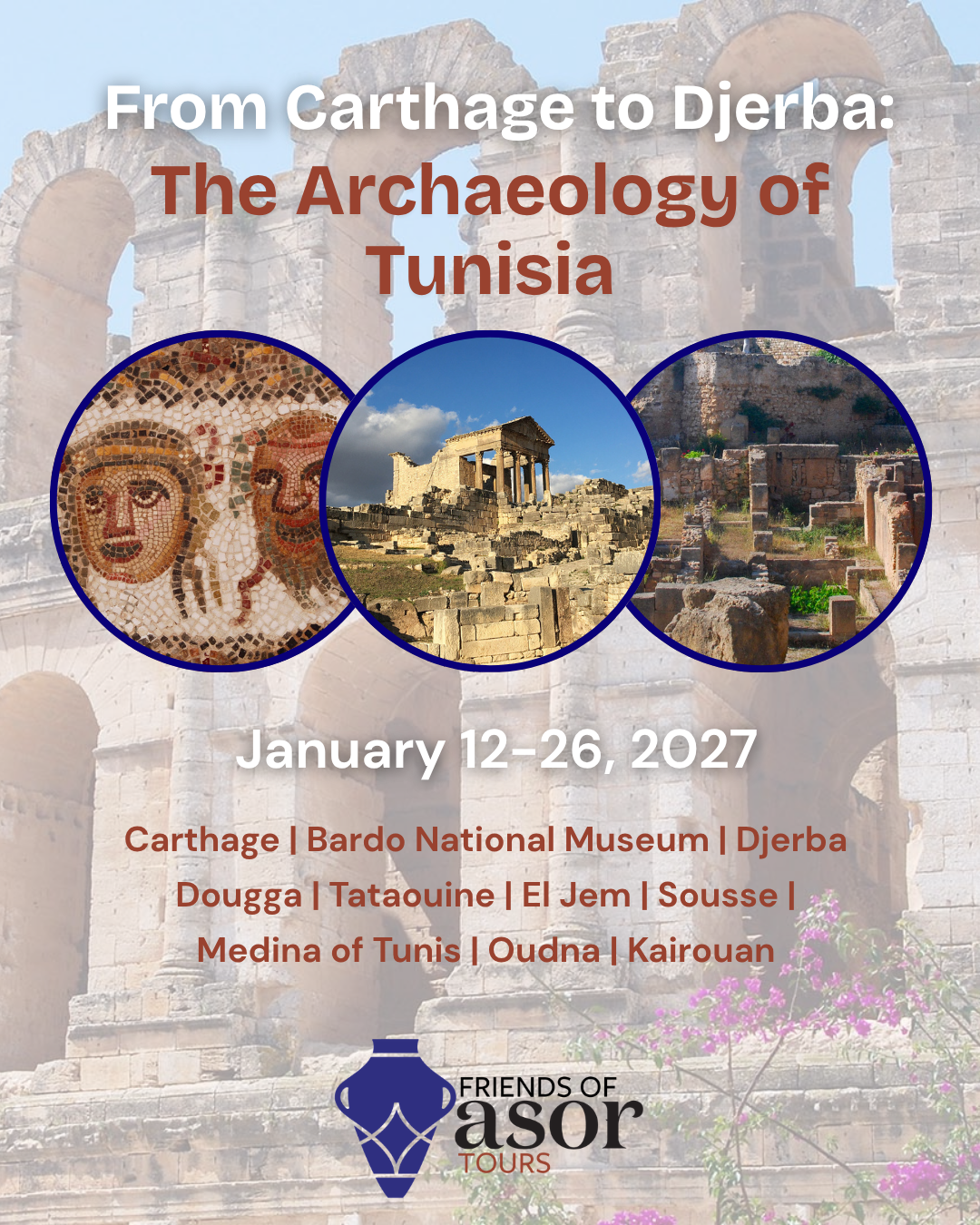
Discover Tunisia’s extraordinary blend of ancient cities, sacred landscapes, and desert fortresses on this new Friends of ASOR journey coming in January 2027. From Carthage to Djerba, explore millennia of history shaped by Phoenician, Roman, Islamic, and Amazigh cultures—a memorable experience for travelers who love archaeology, history, and heritage! Guided by expert scholars, this 15-day tour combines on-site lectures, museum visits, and cultural excursions for those eager to understand the deep history of the Maghreb.
Tour Dates: January 12 – 26, 2027
Tour Leader: Dr. Andrew G. Vaughn (ASOR Executive Director)
Early Bird (through October 20, 2026): $4,000 (including a $1,000 tax-deductible gift)
Super Saver (October 21 to November 13, 2026): $4,150 (including a $1,000 tax-deductible gift)
Advance (November 14 – December 15, 2026): $4,300 (including a $1,000 tax-deductible gift)
Regular (December 16, 2026 until space is full): $4,500 (including a $1,000 tax-deductible gift)
Payment Schedule:
To reserve your place: $250 non-refundable donation to Friends of ASOR Tours (applied toward your total $1,000 gift).
Full tour cost: Due by October 20, 2026 (or at registration if after this date). If this deadline presents an issue, we’d be willing to discuss an extension.
Example of payment schedule:
If you register during the Early Bird period: First payment at registration: $250 non-refundable donation to reserve spot Second payment on or before October 20: $3,750 remaining tour cost (includes remaining $750 tax-deductible gift)
Please e-mail us at info@asor.org or call +1 (703) 789-9229 with any questions.
Cancellation and Refund Policy:
ASOR strongly recommends that all participants purchase travel insurance because ASOR is required to make non-refundable deposits. ASOR cannot be responsible for refunds except as noted below.
All tax-deductible gifts to ASOR’s Friends of ASOR outreach initiatives are irrevocable and thus not refundable, except in the event that the tour is cancelled or rescheduled by ASOR. It is unlikely that travel insurance will cover the tax-deductible gift portion of the tour. No goods or services are provided in exchange for the gift to FOA.
Schedule of refunds for tour cost and single supplement (if any):
From time of payment until November 17, 2026: 90% refund of tour cost (excluding non-refundable donation[s] to Friends of ASOR)
From November 18, 2026 until December 7, 2026: 70% refund of tour cost (excluding non-refundable donation[s] to Friends of ASOR)
From December 8, 2026 until December 21, 2026: 25% refund of tour cost (excluding non-refundable donation[s] to Friends of ASOR)
We are looking forward to seeing everyone for the Annual Meeting in November! For those coming to Chicago there are many reasons to come early and stay late. In addition to the academic program of more than 100 sessions and workshops, posters, and the Plenary Address by Kim Benzel, there are many receptions, special events, and local attractions to enjoy.
Follow along with the Academic Program and the Business Schedule on the Annual Meeting Schedules Page and in the Annual Meeting Mobile App (coming soon). Check this page often for a quick view of all the other exciting things happening at the Annual Meeting and in Chicago.
Chicago Highlights
November 17–24, 2026 Free admission to the Field Museum of Natural History The Field Museum of Natural History is offering free general admission to ASOR Annual Meeting attendees. Show your ASOR name badge at the admissions desk for free entrance. For information on opening hours, planning your trip, and special exhibits (additional fee may apply), please visit their website.
November 17–24, 2026 Free admission to the Institute for the Study of Ancient Cultures (ISAC) Museum The Institute for the Study of Ancient Cultures (ISAC) Museum is offering free general admission to ASOR Annual Meeting attendees. Show your ASOR name badge at the admissions desk for free entrance. ASOR attendees will also receive a 10% discount at the ISAC Museum Shop when they present their badge. For information on opening hours, planning your trip, and special exhibits (additional fee may apply), please visit their website.
November 17–24, 2026 Free admission to The Art Institute of Chicago The Art Institute of Chicago is offering free general admission to ASOR Annual Meeting attendees. Show your ASOR name badge at the admissions desk for free entrance. For information on opening hours, planning your trip, and special exhibits (additional fee may apply), please visit their website.
November 17–24, 2026 Free admission to the Adler Planetarium The Adler Planetarium is offering free general admission to ASOR Annual Meeting attendees. Show your ASOR name badge at the admissions desk for free entrance. For information on opening hours, planning your trip, and special exhibits (additional fee may apply), please visit their website.
There are a number of special events taking place during the Annual Meeting. Some of these events require registered attendees to sign-up in advance.
Wednesday, November 18
7:00-8:30pm CST ASOR Annual Meeting Plenary Address (Grand Ballroom, Hilton Chicago) Dr. Kim Benzel, Curator in Charge of The Metropolitan Museum of Art, will present, “Lapis, Clay, Copper, Water: Presenting Ancient West Asian Art at The Met.” Also available online for virtual attendees. Learn more here.
12:55-1:55pm CST Early Career Scholars’ Panel (Boulevard C) Stay tuned for more info on this event.
12:55-1:55pm CST ASOR Roundtable Discussions (Grand Ballroom) There will be a number of discussion topics offered during this lunchtime event. Advance sign-up will be required.
Friday, November 20
12:45-2:00pm CST ASOR Members’ Meeting, Jane DeRose Evans, Presiding (Waldorf) Bring your lunch and come for an update on the business of ASOR and the 2026 Honors & Awards.
8:00-10:00pm CST Early Career Scholars’ Reception (720 South Bar, Lobby Level) This event is for registered ASOR attendees who are Early Career Scholars. There is no cost to attend, but space is limited and ECS members must sign-up in advance here.
Saturday, November 21
10:20-10:40am CST ASOR Raffle Drawing (Normandie Lounge, 2nd Floor) A fun event to highlight ASOR Exhibitors during the morning coffee break on the last day of the meeting. Join us in the Exhibit Hall (Normandie Lounge) near the registration tables to see if your raffle ticket is a winner.
12:45-2:00pm CST ASOR Poster Session (Grand Ballroom Foyer) Visit the ASOR Poster Hall throughout the Annual Meeting to see all of the research projects being presented, and come to the Poster Session on Saturday to talk with the presenters and ask questions.
7:00-8:00pm and 8:15-9:15pm CST Institute for the Study of Ancient Cultures (ISAC) Museum Reception After the sessions end on Saturday night, the Institute for the Study of Ancient Cultures (ISAC) Museum will host a reception for ASOR attendees. In addition to the permanent galleries, attendees will have the opportunity to view the new exhibition, Hartapu: The Forgotten King of Anatolia. Two time options are being offered to accommodate as many people as possible. Tickets are complimentary for ASOR attendees, however, space is limited and advanced registration is required (sign-up here).

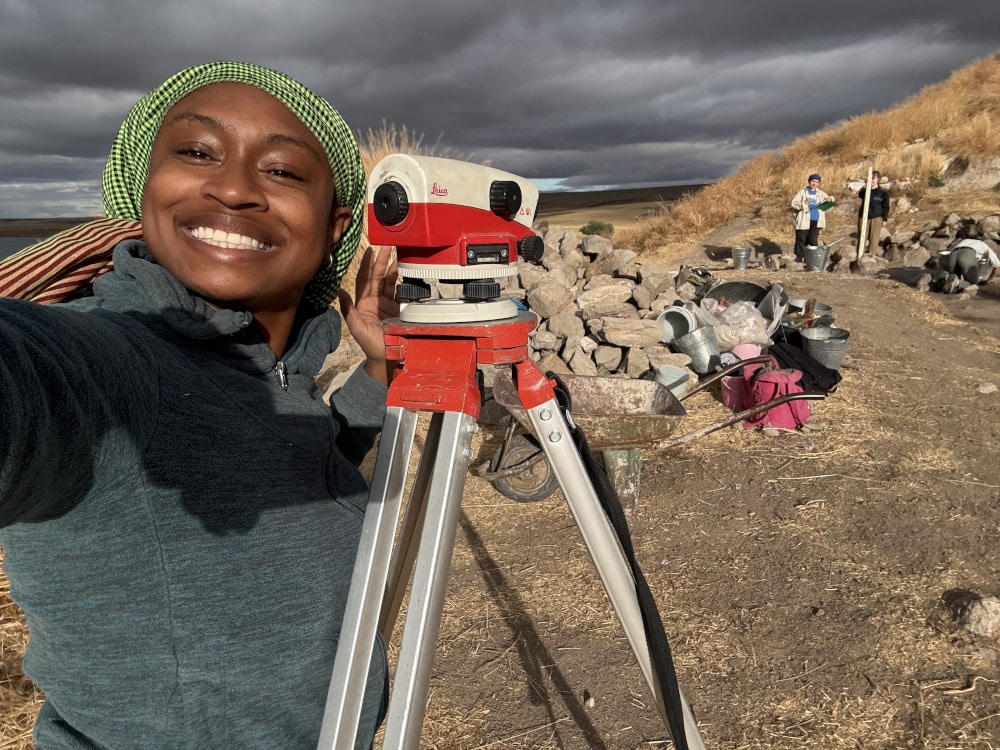 Sydney A. Pickens graduated from the University of Memphis in August with Master’s degree in Art History, concentrating in Egyptian Art and Archaeology. She has since matriculated as a doctoral student at the University of California, Los Angeles (UCLA), where she is pursuing a PhD in Ancient Egyptian and Nubian Studies.
 Eric H. Cline is Professor of Classics and Anthropology, former Chair of the Department of Classical and Near Eastern Languages and Civilizations, and current Director of the Capitol Archaeological Institute at George Washington University, in Washington DC.
 Kim Shelton is the Class of 1957 Garff B. Wilson Professor of Ancient Greek & Roman Studies and the Graduate Group in Ancient History and Mediterranean Archaeology at the University of California Berkeley. She is also Director of the Archaeological Research Facility and the Nemea Center for Classical Archaeology, and First Vice President of the AIA. Shelton is an Aegean prehistorian with research interests in domestic architecture, ceramic production and economy, and religious ritual. She is the author of several publications on Mycenaean pottery, figurines, cemeteries, Mycenae’s Cult Center, and her excavations at the Sanctuary of Zeus at Nemea, Petsas House, Mycenae, and the Late Bronze Age cemeteries at Aidonia (TAPHOS).
 Alex Joffe is an archaeologist and historian. He is currently the Director of Strategic Affairs for the Association for the Study of the Middle East and Africa. He has done fieldwork in Israel, Jordan, Greece, and the United States.