“Crafting Complexity”. Pottery Production and Consumption at Helawa (Erbil Plain) between the Ubaid and Late Chalcolithic Periods
Agnese Vacca, University of Milan, Mesopotamian Fellowship Recipient
Aims of the “Crafting Complexity” Project
The project aims at studying pottery production and consumption at Helawa (Erbil Plain) in a diachronic perspective–from the Ubaid to the Late Chalcolithic period (5th-4th millennium BC) – by means of technological and archaeometric analyses to ultimately explore the process of craft specialization and standardization, and their major implications for our understanding of complex societies in this crucial area of Northern Mesopotamia. Several studies focusing on ceramics have, in fact, pointed out that major changes in pottery production and distribution occurred in Mesopotamia in connection with the process of 4th millennium BCE urbanization, resulting in a highly specialized and intensified production performed at an extra-household level, reflected in the emergence of a standardized and mass-produced repertoire.
The project targets encompass the realization of mineralogical and petrographic characterization (thin sections, XRD, XRF, Raman Spectroscopy) on a selected sample of vessels (ca. 100 sherds) to reconstruct pottery traditions within the Helawa assemblage, understood as the result of different systems of production and consumption, passed down within a group or society. Furthermore, compositional analyses (INAA) are also envisaged to investigate ceramic production and circulation at an extra-site level, facilitating the comparison with the results already obtained for the pottery assemblage of nearby Chalcolithic sites such as Surezha, investigated by an American expedition of the Oriental Institute of Chicago (Stein 2018; Minc et al. 2019).
As a major output, the project aims at producing a database encompassing qualitative (drawings and photos) and quantitative (metric, petrographic, chemical) data intertwined with a solid stratigraphic and typo-chronological ceramic sequence, anchored to C14 dates. This dataset has the potential to carry out multivariate analyses to investigate in a diachronic perspective the relationship between the technical dimension of ceramic production, the degree of specialization, the transmission of knowledge between potters, and the socio-economic organization of prehistoric communities at Helawa, providing a frame of reference from a key-site to be compared with neighboring settlements in the Erbil Plain and more broadly in the Trans-Tigridian region.
The site of Helawa and the MAIPE Expedition in the Erbil Plain
During the last decades, dozens of international projects were launched in the Kurdistan Region of Iraq contributing to the definition of a new theoretical framework for this key area located in the Trans-Tigridian region, between the well-known Jazirah region and Southern Mesopotamia (Kopanias et al. 2015).
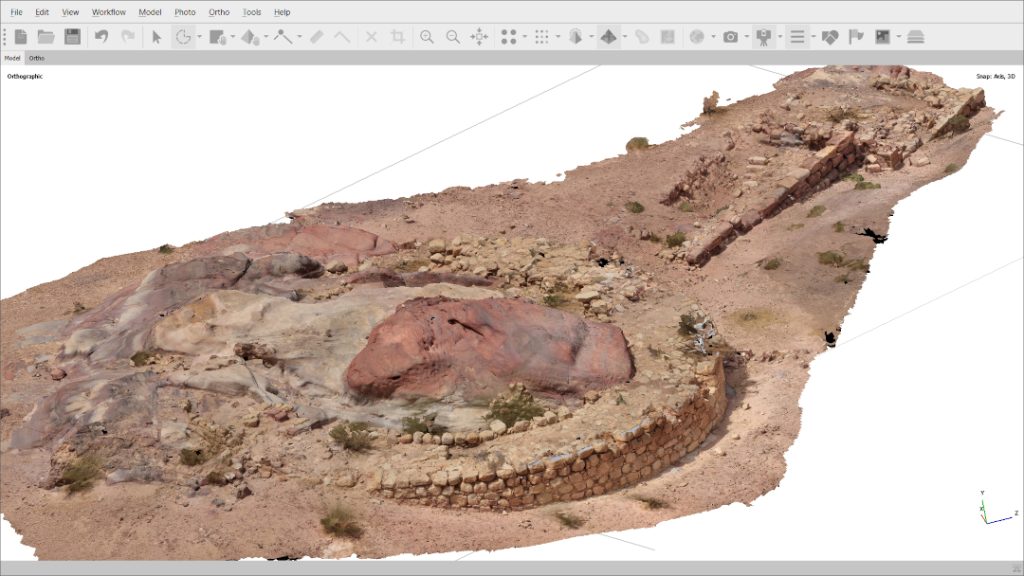
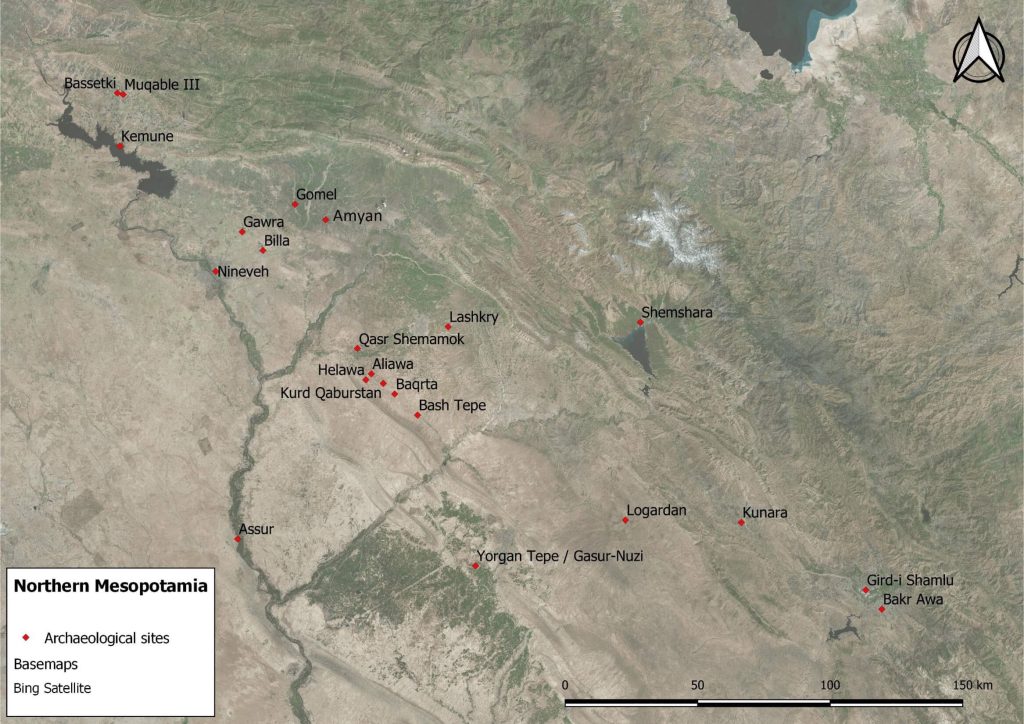
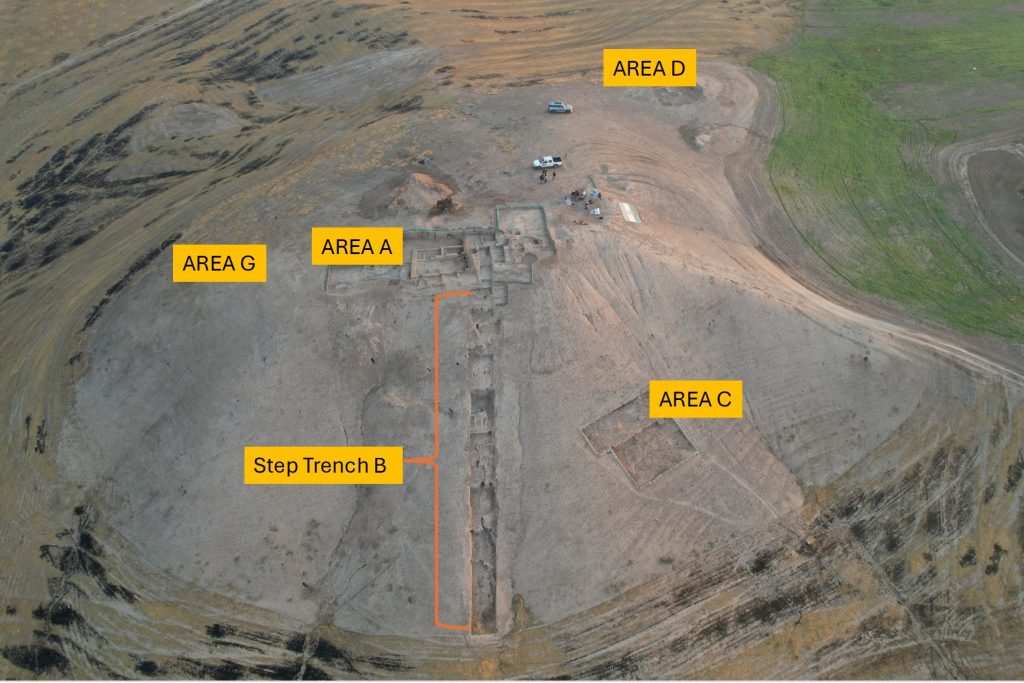
Tell/Gird Helawa (ca. 10ha) is situated about 28 km south-west from the modern city of Erbil, in the fertile Erbil plain, and has been investigated since 2013 – together with the site of Aliawa – by the MAIPE Expedition (Missione Archeologica Italiana nella Piana di Erbil) of the University of Milan under the direction of Luca Peyronel, with Agnese Vacca as Vice-director (Fig.1). Archaeological investigations at the sites of Helawa and Aliawa, with their multi-period occupation, allow an integrated reconstruction of the history of the region from the first Neolithic villages (ca. 7th millennium BC) to the fortified centers of the Parthian and Sasanian periods down to the early Islamic Age (3rd century BC-8th century AD). The MAIPE project carries out archaeological excavations, geo-archaeological and geophysical research, bio-archaeological studies and archaeometric analyses in agreement with the Iraqi State Board of Antiquities and Heritage and the Directorate of Antiquities of the Iraqi Kurdistan Region, promoting activities to enhance the local historical-archaeological heritage and disseminating the project’s results.
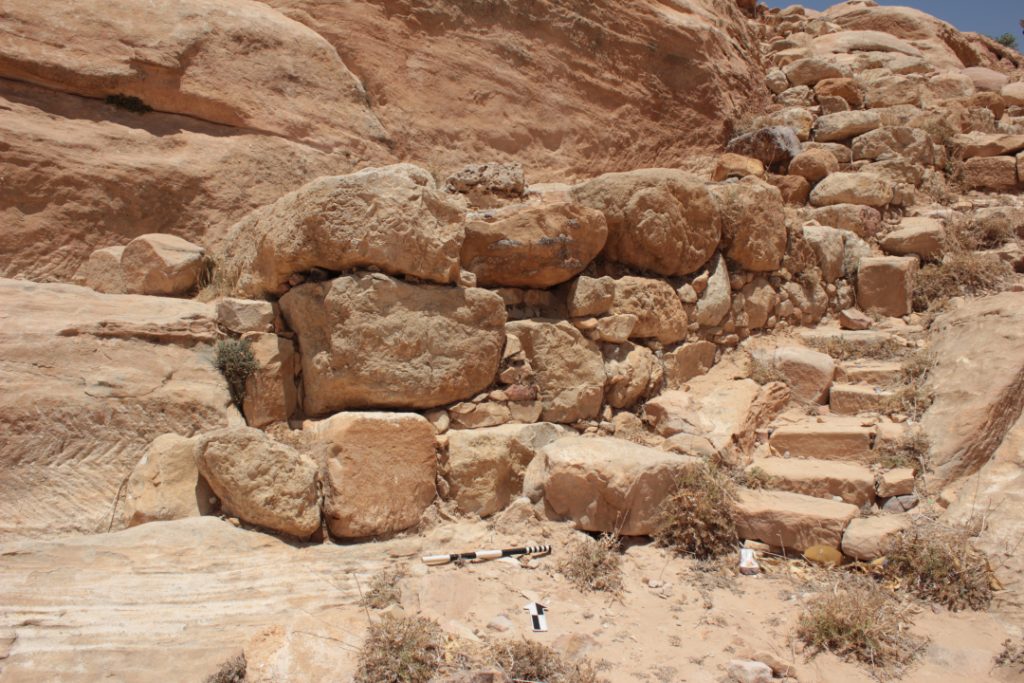
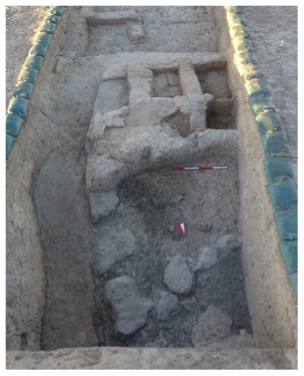
The 2016-2023 archaeological investigations carried out on the top of the Helawa mound (Area A) and along its southern slopes (Step Trench B) brought to light a seamless Halaf to Late Chalcolithic 3 (LC) sequence featuring an exceptional state of preservation of the structures, with rich in situ inventories encompassing complete and restorable vessels (Peyronel et al. 2019; Peyronel, Vacca 2020; Vacca et al. 2020). Moreover, two pottery workshops dating to the Ubaid and LC1 were excavated, allowing the analysis of both direct evidence of ceramic manufacture (furnaces and installations), and indirect variables inferred from the products themselves (Fig. 2).
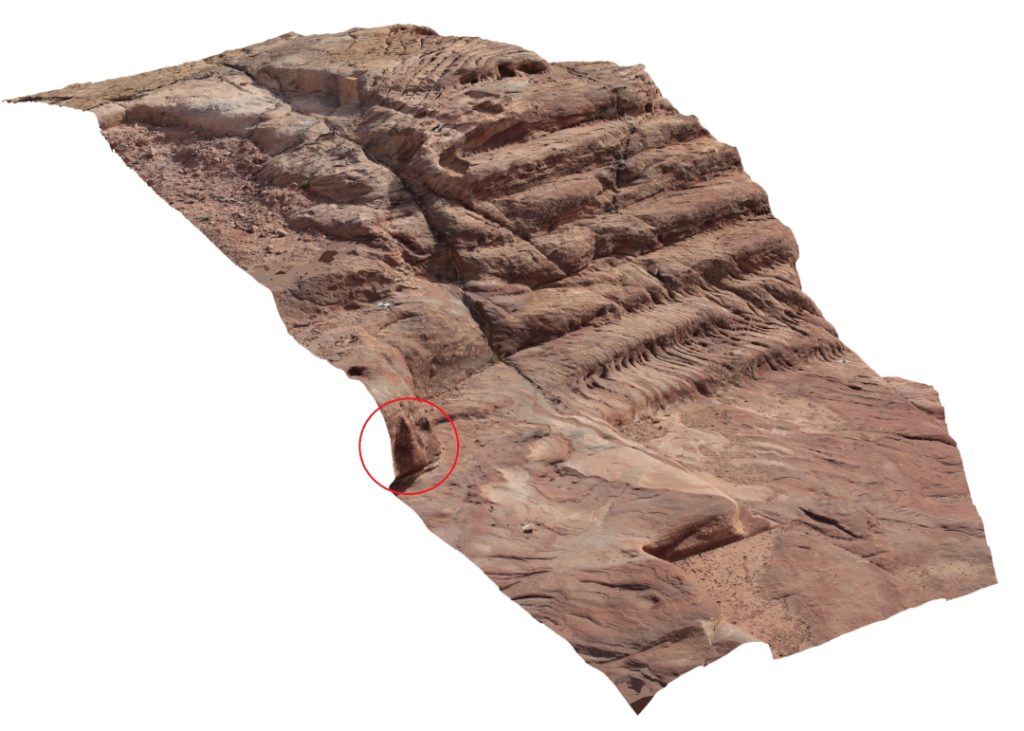
The last phase of occupation of the prehistoric mound dates to the early LC 3 (ca. 3850-3600 BC), and encompasses domestic structures excavated on the lower mounded area to the north-east (Area D)and one large tripartite building with adjoined rooms to the east and a courtyard paved with pebbles and sherds to the west (Area A, Step Trench B; Figs 2-3). After the LC 3 period, the site was abandoned and reoccupied a few centuries later, during the mid-2nd millennium BC.
A large number of vessels has been collected from the Ubaid and Late Chalcolithic contexts excavated thus far and sorted out for chrono-typological studies (ca. 3042 diagnostic sherds). Pottery finds have been classified in relation to the detailed stratigraphic and architectural sequence allowing the reconstruction of a relative ceramic periodization, that has been then anchored to a series of radiocarbon dating obtained for the Ubaid and Late Chalcolithic levels (Vacca, Peyronel 2022). This preliminary typological and functional classification of the pottery assemblage from stratified contexts represents a solid base to carry out targeted analyses on techno-morphological and techno-petrographic feature.
Materials and Method
The available dataset consists of 3042 sherds from the 2016-2022 excavations at Helawa, which have been already drawn, filed, and arranged in the MAIPE GIS platform. The whole assemblage has been sorted out in major ceramic classes, or ware groups (e.g., Simple Ware, Painted Simple Ware, Gray Ware, Cooking Ware), based on observable macroscopic characteristics, such as paste colour, hardness, inclusions, and surface treatment. Within each ware group, vessels have been then sorted out according to specific shape classes (open/closed) and morpho-functional types previously defined based on the statistical occurrence of formal and stylistic attributes (Fig. 4).
Out of 3042 sherds, 100 diagnostic fragments (25 dating to the Ubaid, 25 to the LC1, 25 to the LC2 and 25 to the LC3) have been selected and imported in Italy in agreement with the Directorate of Antiquities to carry out archaeometric analyses. Selected sherds are being analysed according to two main interrelated tasks:
1) Technological analyses: the different types of vessels classified according to morphological criteria, have been also studied and described based on recognizable diagnostic features related to specific techniques, methods, and tools, making use of digital high-resolution images obtained with a portable microscope (Dino-lite®) and experimental reference material (Roux and Courty 1998). Different manufacturing techniques (e.g., slab modelling, moulding, coiling, and throwing) have been identified, considering that each method produces characteristic surface features or macro-traces that can be interpreted as distinct manufacturing modes or potter’s gestures. Information about the formation and shaping process, including the use of rotative kinetic energy (RKE), has thus been described through the observation of macro traces recognised on the surface of the vessels and in cross-section. These descriptions have then been compared with information on the distribution and alignment of voids gathered through the analysis of thin sections.
2) Mineralogical-petrographic investigations: a selection of 100 sherds has already been sampled and submitted to petrographic analyses at the Department of Earth Science of the University of Milan (G.D. Gatta, G. Morabito, D. Comboni). Pottery samples are being analysed in thin section under polarizing optical microscope, using SEM with attached X-ray spectrometer and EMP, to define petrographic groups homogeneous in the microstructure and groundmass, and to obtain a detailed characterisation of inclusions, matrix, porosity, and slip. Moreover, the mineral composition is being determined by X-ray diffraction of the selected ceramics (XRF) at the Department of Geosciences, University of Padova (L. Maritan). The ware groups, previously defined through macroscopic observations of sherds, are thus being reassessed according to petrographic groups suggesting a reduced number of fabric types identified through petrographic analysis compared with those recognized by the excavators.
Moreover, a selection of 50 sherds that have been previously thin sectioned in Milan have been shipped to the USA to perform multielement bulk compositional analyses (INAA) at the Oregon State University Archaeometric Laboratory (L. Minc). Instrumental Neutron Activation Analysis is aimed to explore compositional variation in ceramics in the Erbil Plain, comparing the results of the Helawa assemblage with that obtained for the site of Surezha (Minc et al. 2019) and more broadly with analyses of ceramics from the northernmost site of Tepe Gawra (Rothman and Blackman 2003). Furthermore, the chemical composition of pottery will be compared with geomorphological samples collected in the area around the site and already processed by the Department of Earth Science of the University of Milan (A. Zerboni, L. Forti).
Preliminary Results
While archaeometric analyses are still ongoing some preliminary results can be described in terms of petrofabrics and manufacture of vessels in a diachronic perspective, from the Ubaid to the Late Chalcolithic period. Overall, the mineralogical association of the analyzed samples is very similar, suggesting the use of comparable raw material sources through time, with a difference in the composition of the fabrics mainly related to the addition of aggregates as well as to firing temperature, the latter resulting in newly formed phases such pyroxene and gehlenite (Morabito et al. in press). The composition and mineralogy of pottery is compatible with clay sediments found in the surrounding area suggesting that the use of local clay is highly probable.
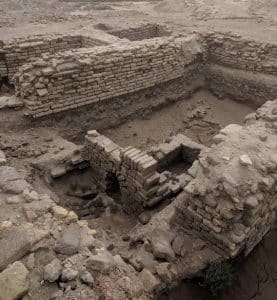
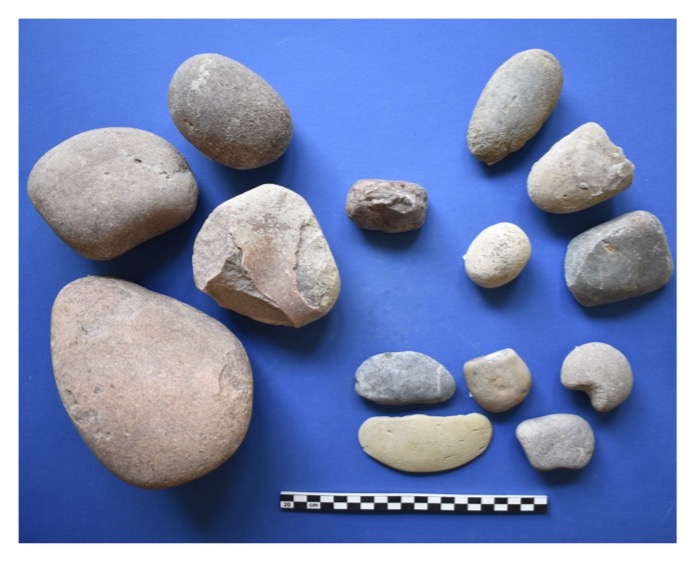
Local production is also envisaged by the discovery of firing structures dating to the Ubaid and Late Chalcolithic 1 respectively. In fact, excavations in Step Trench B, brought to light an Ubaid pottery production area with a large rectangular-shaped kiln (nearly cut through toward the east by a later pit), standing over 0.50 m high, with the firing chamber filled with ashy layers and overfired vessels. Immediately to the south of the kiln were a series of small rectangular mudbrick rooms that have been interpreted as pottery manufacturing installations and bins for clay preparation (Fig. 5). The small finds retrieved in association with the pottery workshop mainly consist of few ring scrapers, grinding stones, mortars, and lithic implements that could relate to the preparation of clay and the grinding of pigments (Peyronel et al. 2019). A parallel for the Helawa pottery workshop is represented by the Late Ubaid/LC 1 complex excavated at Tell Kosak Shamali on the Euphrates Rier, where similar small rooms made of mudbricks connected to kilns were brought to light (Nishiaki et al. 1999).
In the next LC 1 phase the function of the area is maintained, as documented by the occurrence of numerous kiln wasters, overfired vessels and ring scrapers collected from dumping layers associated with pits and a probable kiln laying beyond the excavation area to the north-west.
Fig. 5. Helawa, Ubaid pottery kiln K.119 (to the right); stone tools and ring scrapers for pottery manufacture (to the left). ©MAIPE.
Even through the centuries and down to modern times, the area of Helawa/Aliawa seems to have been strictly related to pottery production as suggested by the presence of clay quarries identified by geomorphological investigations in the surroundings of Tell Aliawa, and the identification at the same site of an industrial area for pottery production dating to the Akkadian period (mid-late mid-3rd millennium BC), with mudbrick platforms and installations for clay preparation and vessels shaping, and fifty large kilns, some of which reaching 2 m in diameter, organized in clusters and connected each other through a sophisticated system of underground ducts. Pottery production is documented also in later periods, in the 2nd millennium BC, as well as in the Islamic age. Nowadays, traditional brick factories are still operational around Mastawa/Aliawa, extracting clay from local quarries, which is mixed with chaff, water and tempered with straw, shaped through rectangular molds, sun dried and ultimately fired in modern kilns.
Analyses on the mineralogical composition of sherds (XRD, polarized-light optical microscopy) suggest high firing temperatures during the Ubaid period compared to the Late Chalcolithic, when medium-low firing conditions prevail (Morabito et al in press). The clay composition and recipes employed from one period to the next in the manufacturing of clay vessels indicates a shift from the use of mainly mineral-tempered (Fig. 6a) to coarser chaff-tempered pastes (Fig. 6b) that facilitate to the one hand the shaping of vessels and, to the other, their drying and firing, avoiding shrinkage cracks and thermal shock (Skibo, Schiffer and Reid 1989).
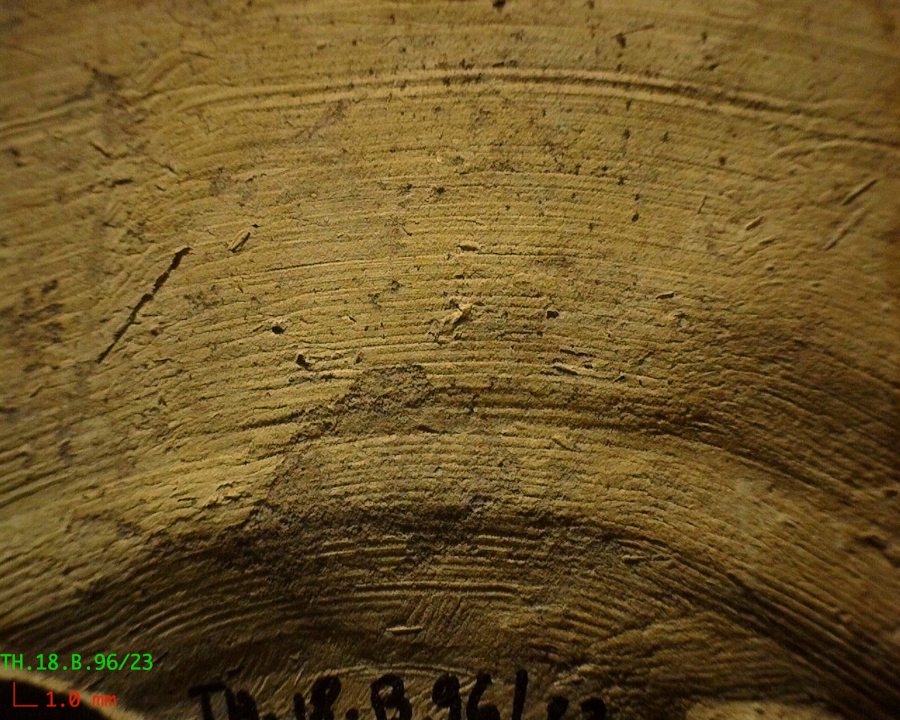
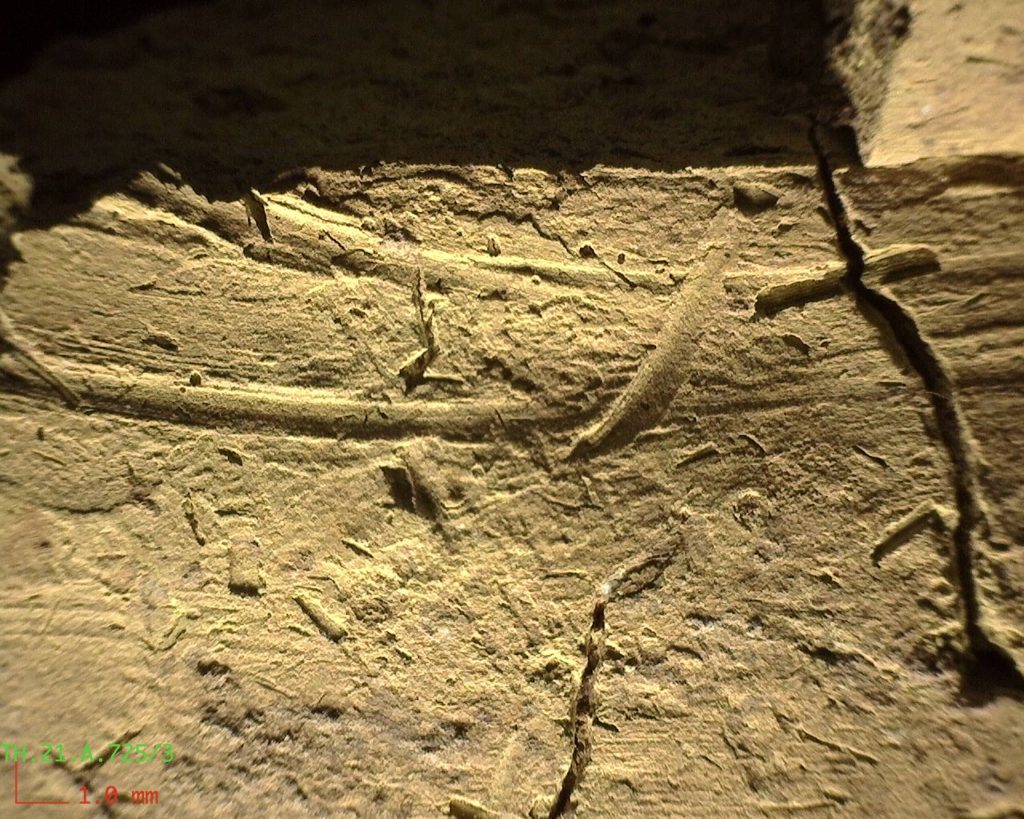
Finally, the observation of both thin sections under polarized microscope and vessel’s surfaces with a Dino-Light digital microscope (Fig. 6) provides information about the shaping techniques and the tools employed by the potters. In particular, diagnostic elements derived by the microscopic observation of the shape and orientation of voids, as well as the presence of surface features (e.g., concentric parallel striations, fissures and ridges) are being noted to identify the shaping techniques employed and the possible use of rotative devices (Baldi and Roux 2016). Data collected for both the Ubaid and Late Chalcolithic periods will be tested against experimental replica.
Fig. 6a) Ubaid (TH.18.B.96/23) and 6b) LC3 (TH.21.A.725/3) sherds from Helawa. Photo taken with Dino-lite® digital microscope (©MAIPE).
References
Baldi, J.S., Roux, V.
2016 The innovation of the potter’s wheel: a comparative perspective between Mesopotamia and the southern Levant, Levant 48(3): 236–253, https://doi.org/10.1080/00758914.2016.1230379.
Kopanias, K., MacGinnis, J., Ur, J.
2015 Archaeological Projects in the Kurdistan Region in Iraq, The Directorate of Antiquities of Kurdistan, Erbil.
Minc, L., Alden, J., Stein, G.J.
2019 A preliminary assessment of ceramic style and chemical composition during the Chalcolithic era at Surezha, Iraqi Kurdistan, Paléorient 45(2): 121–136.
Morabito, G., Comboni, D., Gatta, G.D.
in press Mineralogical-petrographic investigation of the sherds from the Helawa archaeological site, in L. Peyronel, A. Vacca (eds), Helawa Excavations I – The Southern Stratigraphic Trench (Step Trench B), Milano University Press, Milan.
Nishiaki, Y., Koizumi, T., Le Mière, M., Oguchi, T.
1999 Prehistoric Occupations at Tell Kosak Shamali, the Upper Euphrates, Syria, Akkadica 113: 13–68.
Peyronel, L., Minniti, C., Moscone, D., Naime, Y., Oselini, V., Perego, R., Vacca, A.
2019 The Italian archaeological expedition in the Erbil Plain, Kurdistan Region of Iraq. Preliminary report on the 2016-2018 excavations at Helawa, Mesopotamia 54: 1–104.
Peyronel, L., Vacca, A.
2020 Socio-economic complexity at the Late Chalcolithic site of Tell Helawa, Kurdistan Region of Iraq, Paléorient 46(1-2): 83–107.
Roux, V., Courty, M.-A.
1998 Identification of wheel-fashioning methods: technological analysis of 4th–3rd millennium BC oriental ceramics, Journal of Archaeological Science 25: 747–763.
Rothman M., Blackman, J.
2003 Late fifth and early fourth millennium exchange systems in Northern Mesopotamia: chemical characterization of Sprig and Impressed Wares, Al-Rāfidān: Journal of Western Asiatic Studies 24: 1–21.
Skibo, J.M., Schiffer, M.B., Reid, K.C.
1989 Organic-tempered pottery: An experimental study, American Antiquity 54(1): 122–146.
Stein, G.J.
2018 Excavations at Surezha (Erbil Plain, Kurdistan Region, Iraq) 2017, in C. Woods (ed.), Oriental Institute Annual Report 2017-2018, Chicago: 29–43.
Vacca, A., Moscone, D., Rosati, P.
2020 Managing Survey Data from Helawa, Erbil Plain (Kurdistan Region of Iraq), in M. Iamoni (ed.), From the Prehistory of Upper Mesopotamia to the Bronze and Iron Age Societies of the Levant. Proceedings of the Broadening Horizon 5, Udine, Vol. 1 (West & East Monograph 2), Udine: 107–124.
Vacca, A., Peyronel, L.
2022 Towards a definition of the Late Chalcolithic Period in the Erbil Plain: The contribution of the Helawa pottery sequence, in J.S. Baldi, M. Iamoni, L. Peyronel, P. Sconzo (eds), Late Chalcolithic Northern Mesopotamia in Context: Papers from a Workshop Held at the 11th ICAANE in Munich, April 5th 2018 (Subartu 48), Turnhout: 85–103.





 migration patterns, and forced resettlement during the Assyrian Empire beget a new set of mortuary norms. At the same time, some groups struggled to maintain their traditions in the face of a changing social and political landscape. This talk explores the variety of funerary traditions present in the Assyrian Empire and how they changed over time – telling us just as much about those alive as those deceased.




 The Trustee Nominations Committee announces an open call for (self) nominations for the ASOR Board of Trustees (Class of 2027). Trustees will serve a three-year term, starting January 1, 2025. There are three primary responsibilities of the members of the Board of Trustees: