Cultural Heritage Committee Call for Members

Cultural Heritage Committee – Open Positions for Class of 2025

The Cultural Heritage Committee is placing a call for consideration for membership on the Committee for the class of 2025. You can read about the Committee’s charge and purpose here.

In 2022, the Committee has actively worked to energize ASOR’s membership to respond to the renewal of the Memorandum of Understanding (MoU) for the preservation of cultural heritage of Libya; hosted an FOA webinar “A World at War: Protecting Cultural Heritage in Times of Conflict” and will sponsor a workshop at the virtual Annual Meeting.

We are especially seeking members from outside of North America and in areas that can add to the committee’s vision and work. Please send a brief statement of interest and a brief CV by November 1 to Jane DeRose Evans (jevans@temple.edu), whom you should also contact if you have any questions.

Table of Contents for NEA 85.3 (2022)

[vc_row fullwidth=”true” attached=”true” css=”.vc_custom_1496247803139{padding-top: 0px !important;padding-right: 0px !important;padding-bottom: 0px !important;padding-left: 0px !important;}”][vc_column][vc_single_image image=”83699″ img_size=”full” alignment=”center”][/vc_column][/vc_row][vc_row fullwidth=”true” css=”.vc_custom_1496682730308{padding-top: 10px !important;padding-right: 0px !important;padding-bottom: 0px !important;padding-left: 0px !important;}”][vc_column width=”1/12″ css=”.vc_custom_1496683820796{margin-right: 10px !important;}” offset=”vc_hidden-md vc_hidden-sm vc_hidden-xs”][vc_column_text]

 SHARE

[/vc_column_text][mk_image src=”http://www.asortest.org/wp-content/uploads/2017/01/social-fb-icon4.jpg” image_width=”42″ image_height=”42″ hover=”false” custom_url=”https://www.facebook.com/ASOResearch/” margin_bottom=”0″][mk_image src=”http://www.asortest.org/wp-content/uploads/2017/01/social-tw-icon4.jpg” image_width=”42″ image_height=”42″ hover=”false” custom_url=”https://twitter.com/ASOResearch?ref_src=twsrc%5Egoogle%7Ctwcamp%5Eserp%7Ctwgr%5Eauthor” margin_bottom=”0″][mk_image src=”http://www.asortest.org/wp-content/uploads/2017/01/social-in-icon4.jpg” image_width=”42″ image_height=”42″ hover=”false” custom_url=”https://www.linkedin.com/company/american-schools-of-oriental-research” margin_bottom=”0″][mk_image src=”http://www.asortest.org/wp-content/uploads/2017/01/social-ml-icon_7.jpg” image_width=”42″ image_height=”42″ hover=”false” custom_url=”mailto:asor@bu.edu” margin_bottom=”0″][mk_image src=”http://www.asortest.org/wp-content/uploads/2017/01/blog-icon3.jpg” image_width=”42″ image_height=”42″ hover=”false” custom_url=”http://asorblog.org/” margin_bottom=”0″][/vc_column][vc_column border_color=”rgba(255,255,255,0.01)” width=”1/6″ css=”.vc_custom_1496683923840{margin-right: 20px !important;border-left-width: 2px !important;padding-right: 20px !important;padding-left: 20px !important;border-left-color: #99422f !important;}”][mk_divider divider_color=”rgba(255,255,255,0.01)” thickness=”1″ margin_top=”3″ margin_bottom=”3″][vc_widget_sidebar sidebar_id=”ca-sidebar-39801″][/vc_column][vc_column border_color=”rgba(170,170,170,0.01)” width=”1/2″ css=”.vc_custom_1487276122024{margin-right: 10px !important;margin-bottom: 30px !important;border-right-width: 2px !important;border-bottom-width: 2px !important;padding-top: 30px !important;padding-right: 30px !important;padding-left: 20px !important;background-color: #ffffff !important;border-right-color: rgba(227,228,228,0.75) !important;border-bottom-color: rgba(227,228,228,0.75) !important;}”][vc_row_inner][vc_column_inner css=”.vc_custom_1570040186774{padding-right: 10px !important;}”][vc_column_text]

Table of Contents for Near Eastern Archaeology 85.3 (September 2022)

[/vc_column_text][/vc_column_inner][/vc_row_inner][mk_divider thickness=”1″ margin_top=”10″ margin_bottom=”30″][vc_row_inner][vc_column_inner width=”1/2″ css=”.vc_custom_1651246129117{padding-right: 10px !important;padding-bottom: 15px !important;}”][vc_single_image image=”83687″ img_size=”medium” alignment=”center” onclick=”custom_link” img_link_target=”_blank” link=”https://www.journals.uchicago.edu/toc/nea/2022/85/3″][/vc_column_inner][vc_column_inner width=”1/2″][vc_wp_text]

You can receive NEA (and other ASOR publications) through an ASOR Membership.
Please e-mail the Membership office if you have any questions.

[/vc_wp_text][/vc_column_inner][/vc_row_inner][mk_divider thickness=”1″ margin_top=”30″ margin_bottom=”30″][vc_row_inner][vc_column_inner css=”.vc_custom_1570041002103{padding-right: 10px !important;}”][vc_single_image image=”83669″ img_size=”full” alignment=”center” onclick=”custom_link” img_link_target=”_blank” link=”https://www.journals.uchicago.edu/doi/10.1086/720752″][mk_padding_divider size=”10″][vc_column_text]

Pp. 180–191: “Archaeological Survey Report on Paleolithic Sites of Harsin County in the Central Zagros, Iran,” by Mohammad Eghbal Chehri

The valleys and margins of the intermountain plains between Harsin and Bisotun are some of the most important regions in the Central Zagros, where numerous sites from different prehistoric periods have been discovered. Archaeological evidence from the region indicates that scattered human groups were present in the foothills and intermountain areas during the late Pleistocene period. Most archaeological studies in the region have focused on Mount Bisotun. Therefore, an intensive and thorough study is required in order to find new Paleolithic sites in the intermountain valleys leading to the city of Harsin. Archaeological surveys in the region have led to the identification of twenty-one new sites from the Middle Paleolithic to the Epipaleolithic period. In this article, the results of the archaeological survey of the middle Paleolithic to Epipaleolithic sites in the region are discussed.

ASOR Members with online access: navigate to the token link email sent to you (search for “token link” in inbox) before attempting to read this article. Once you have activated your member token, click here to access the above article on The University of Chicago Press Journals’ website.[/vc_column_text][/vc_column_inner][/vc_row_inner][mk_divider thickness=”1″ margin_top=”10″ margin_bottom=”30″][vc_row_inner][vc_column_inner css=”.vc_custom_1570041002103{padding-right: 10px !important;}”][vc_single_image image=”83686″ img_size=”full” alignment=”center” onclick=”custom_link” img_link_target=”_blank” link=”https://www.journals.uchicago.edu/doi/10.1086/720751″][mk_padding_divider size=”10″][vc_column_text]

Pp. 192–199: “Radiometric Dating of Wadi Zarqa Ma’in 1, a Limestone Sinkhole Natural Faunal Trap near the Dead Sea, Using Data from Test Pitting and a Portable Coring System,” by ames Pokines, Jeremy A. Beller, Amer S. A. al-Souliman, Osama Samawi, Christopher J. H. Ames, Carlos E. Cordova, and April Nowell Fink

Wadi Zarqa Ma’in 1 (WZM-1) is a natural faunal trap sinkhole ten kilometers southwest of the city of Madaba in Jordan, near the Dead Sea. The limestone karst feature measures over thirty meters in maximum depth and is a significant regional source of faunal, microbotanical, and sedimentological data recording climate change and paleoecology. A new method of sampling was tested during summer 2019 involving the use of a backpacksized Shaw Portable Core Drill that allowed a narrow-bore sampling through the mixed fine sediment and boulder matrix. The maximum depth reached below surface through a combination of test pitting and coring was 8.8 m. Multiple locations could be sampled for radiocarbon analysis, and the deepest (7.85 m) sample yielded a calibrated date of 3644–3382 BCE.

ASOR Members with online access: navigate to the token link email sent to you search for “token link” in inbox) before attempting to read this article. Once you have activated your member token, click here to access the above article on The University of Chicago Press Journals’ website.[/vc_column_text][/vc_column_inner][/vc_row_inner][mk_divider thickness=”1″ margin_top=”10″ margin_bottom=”30″][vc_row_inner][vc_column_inner css=”.vc_custom_1570041002103{padding-right: 10px !important;}”][vc_single_image image=”83678″ img_size=”full” alignment=”center” onclick=”custom_link” img_link_target=”_blank” link=”https://www.journals.uchicago.edu/doi/10.1086/720749″][mk_padding_divider size=”10″][vc_column_text]Pp. 200–210: “Rediscovering the Royal Steward Inscription: A Photographic Study,” by Matthew Suriano and Chris McKinny

The Royal Steward Inscription is one of the more famous artifacts in biblical archaeology, but its original context and setting is less-known due to the circumstances following Charles Clermont-Ganneau’s discovery in 1870. The acquisition and removal of the inscriptions from Silwan resulted in the fragmentation of the once prominent monolithic sepulcher of an important official. Today, the inscriptions are in the British Museum separated from the tomb they once adorned. The tomb in Jerusalem is surrounded by the modern residences of Silwan. The visible nature of the inscribed monument is lost. Recently identified nineteenth-century photographs of the Royal Steward Inscription in situ, however, shed light on the inscription’s context and offer a rare window into the viewshed of the tomb. The photographs provide the impetus for a history of research that reveals many ironies surrounding the Tomb of the Royal Steward and the inscriptions it once bore.

ASOR Members with online access: navigate to the token link email sent to you (search for “token link” in inbox) before attempting to read this article. Once you have activated your member token, click here to access the above article on The University of Chicago Press Journals’ website.[/vc_column_text][/vc_column_inner][/vc_row_inner][mk_divider thickness=”1″ margin_top=”10″ margin_bottom=”30″][vc_row_inner][vc_column_inner css=”.vc_custom_1570041002103{padding-right: 10px !important;}”][vc_single_image image=”83680″ img_size=”full” alignment=”center” onclick=”custom_link” img_link_target=”_blank” link=”https://www.journals.uchicago.edu/doi/10.1086/720750″][mk_padding_divider size=”10″][vc_column_text]

Pp. 211–219: “A Previously Unpublished Ceramic Assemblage of the Babylonian–Persian Periods from Tell en-Naṣbeh,” by Jeffrey Zorn

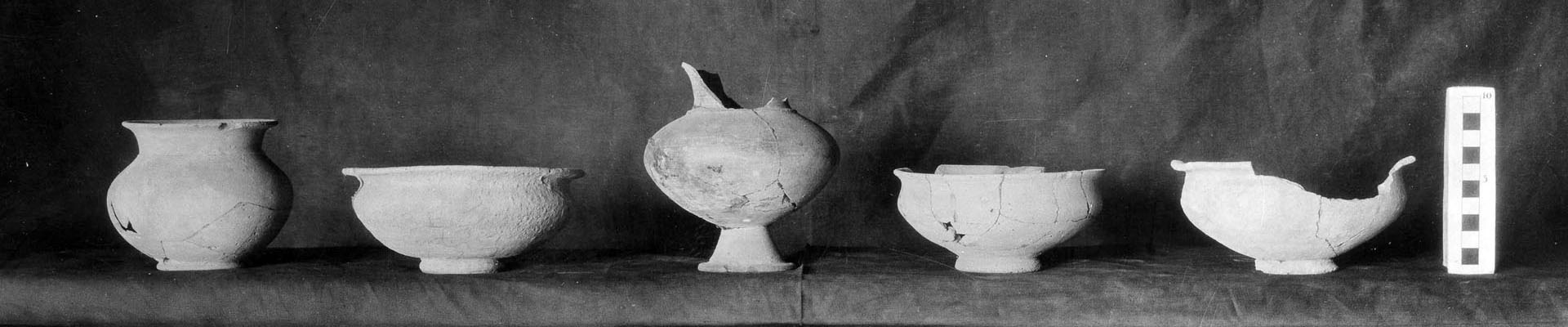
Archival work among the Tell en-Naṣbeh materials housed in the Badè Museum in Berkeley, California, turned up evidence of a previously unpublished assemblage of in situ storage jars that was excavated in April, 1932. These jars seem to belong to the Babylonian–Persian periods. While the assemblage was obviously known to the excavators, for some unknown reason the jars were not published or discussed as such in the original 1947 site report. This paper discusses how the archival material was discovered, issues involving the interpretation of these old excavation materials, the unusual context of the jars, parallels for the jars and how they add to our knowledge of the site and its history following the Babylonian destruction of Jerusalem.

ASOR Members with online access: navigate to the token link email sent to you (search for “token link” in inbox) before attempting to read this article. Once you have activated your member token, click here to access the above article on The University of Chicago Press Journals’ website.[/vc_column_text][/vc_column_inner][/vc_row_inner][mk_divider thickness=”1″ margin_top=”10″ margin_bottom=”30″][vc_row_inner][vc_column_inner css=”.vc_custom_1570041002103{padding-right: 10px !important;}”][vc_single_image image=”83682″ img_size=”full” alignment=”center” onclick=”custom_link” img_link_target=”_blank” link=”https://www.journals.uchicago.edu/doi/10.1086/721013″][mk_padding_divider size=”10″][vc_column_text]

Pp. 220–227: “The Nabatean Flood Control System of Wadi Hremiyyeh, Petra: Restoring and Learning from the Past,” by Catreena Hamarneh, Nizar Abu-Jaber, Safa’ Joude, Abdullah Al-Rawabdeh, Qasem Abdelal, and Khaldoon Al Qudah

A project to restore the function of an ancient Nabatean flood control system that had previously protected the Plaza of the Treasury (Al-Khazna), Petra, is described herein. The project involves a large, multidisciplinary team, numerous stakeholders, and a difficult setting. It involves training, outreach, documentation, archaeological investigation, hydrological modeling, architectural conservation and rehabilitation. Previous studies had indicated that such flood control systems operate by controlling water flow from the headwaters in order to prevent sudden surges of water. Since Petra often suffers from the effects of flash floods, the Petra Development and Tourism Regional Authority (PDTRA) asked the researchers to explore the possibility of controlling modern-day floods using these systems. This culminated in the partial rebuilding of the flood control system and important lessons on their limitations and how they work.

ASOR Members with online access: navigate to the token link email sent to you (search for “token link” in inbox) before attempting to read this article. Once you have activated your member token, click here to access the above article on The University of Chicago Press Journals’ website.[/vc_column_text][/vc_column_inner][/vc_row_inner][mk_divider thickness=”1″ margin_top=”10″ margin_bottom=”30″][vc_row_inner][vc_column_inner css=”.vc_custom_1570041002103{padding-right: 10px !important;}”][vc_single_image image=”83684″ img_size=”full” alignment=”center” onclick=”custom_link” img_link_target=”_blank” link=”https://www.journals.uchicago.edu/doi/10.1086/720748″][mk_padding_divider size=”10″][vc_column_text]

Pp. 228–237: “A Bioarchaeological Investigation of Fraternal Stillborn Twins from Tell el-Hesi,” by Jaime Ullinger, Lesley Gregoricka, Rebecca Bernardos, David Reich, Amel Langston, Paige Ferreri, and Brittney Ingram

A double nonadult burial excavated at the Ottoman period (1600–1800 CE) cemetery at Tell el-Hesi was hypothesized to belong to a set of stillborn twins. This study incorporated the use of multiple bioarchaeological techniques in order to assess both the age and survival of the perinates. Cranial and long-bone measurements were undertaken to determine age at death, while stable carbon and nitrogen isotopes were considered alongside microCT assessments of bacterial bioerosion in the cortices of long bones to identify whether these infants were born alive and had breastfed. Ancient DNA analysis can now identify twins with greater certainty and was also employed to confirm the sex and biological relationship between these two individuals. Using these various lines of evidence, we test two hypotheses, ultimately finding support for both: (1) the two perinates buried together from Tell el-Hesi were fraternal female twins; and (2) these perinates were likely stillborn.

ASOR Members with online access: navigate to the token link email sent to you (search for “token link” in inbox) before attempting to read this article. Once you have activated your member token, click here to access the above article on The University of Chicago Press Journals’ website.[/vc_column_text][/vc_column_inner][/vc_row_inner][mk_divider thickness=”1″ margin_top=”10″ margin_bottom=”30″][vc_row_inner][vc_column_inner css=”.vc_custom_1570041002103{padding-right: 10px !important;}”][vc_column_text]

ASOR Members with online access: navigate to the token link email sent to you before attempting to read this issue. Once you have activated your member token, click here to access the the entire issue, including book reviews, on The University of Chicago Press Journals’ website.

[/vc_column_text][/vc_column_inner][/vc_row_inner][/vc_column][vc_column border_color=”rgba(170,170,170,0.01)” width=”1/6″ css=”.vc_custom_1496684098866{margin-right: 5px !important;margin-bottom: 20px !important;border-right-width: 2px !important;border-bottom-width: 2px !important;padding-top: 30px !important;padding-right: 10px !important;padding-left: 10px !important;background-color: #ffffff !important;border-right-color: rgba(227,228,228,0.75) !important;border-bottom-color: rgba(227,228,228,0.75) !important;}”][vc_wp_posts title=”BROWSE THE NEWS ARCHIVE” number=”4″][/vc_column][vc_column border_color=”rgba(170,170,170,0.01)” width=”1/6″ css=”.vc_custom_1496684008271{margin-right: 10px !important;margin-bottom: 30px !important;border-right-width: 2px !important;border-bottom-width: 2px !important;padding-top: 30px !important;padding-right: 20px !important;padding-left: 20px !important;background-color: #ffffff !important;border-right-color: rgba(227,228,228,0.75) !important;border-bottom-color: rgba(227,228,228,0.75) !important;}”][vc_column_text] [/vc_column_text][/vc_column][/vc_row]

Collections Fellowship Report: Michael Press

2022 Study of Collections Fellowship Report: The Antiquities Market in Late Ottoman Palestine

Michael Press, University of Agder

How did people buy and sell antiquities in Palestine in the 19th century? This is the question I’ve been trying to answer since the fall of 2020. Because of COVID, I was confined for a year and a half to online and library research. This wasn’t a problem initially: there is a huge amount of relevant material online, especially because things published in the 19th century are in the public domain. I have been lucky to be able to access so many travelers’ accounts, newspaper and journal articles, business directories, travel guides, and even some archival material online. But many relevant letters or reports or inventories or meeting minutes – not to mention the objects themselves! – lay beyond my reach.

Finally, thanks to the ASOR Study of Collections Fellowship, I was able to make my first research trip for this project, to England in May 2022. Visiting several collections, I could piece together bits of evidence into a larger picture of the trade.

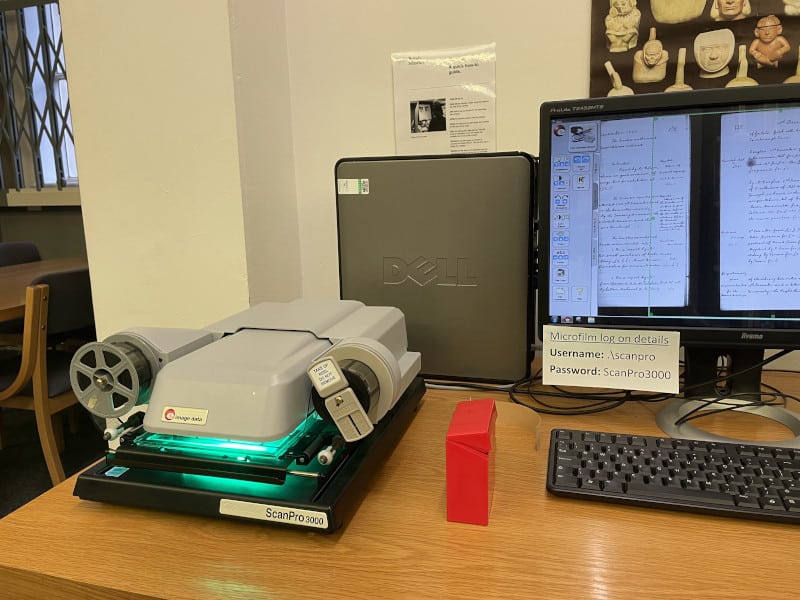
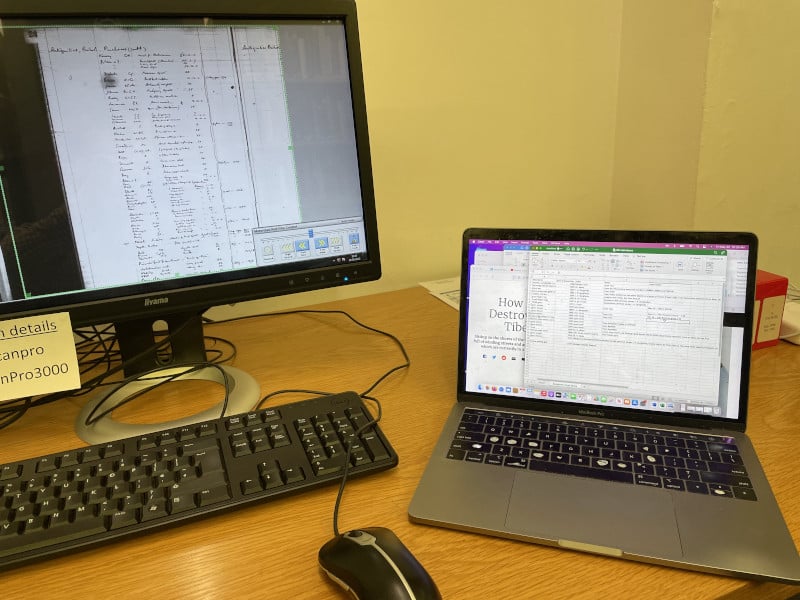
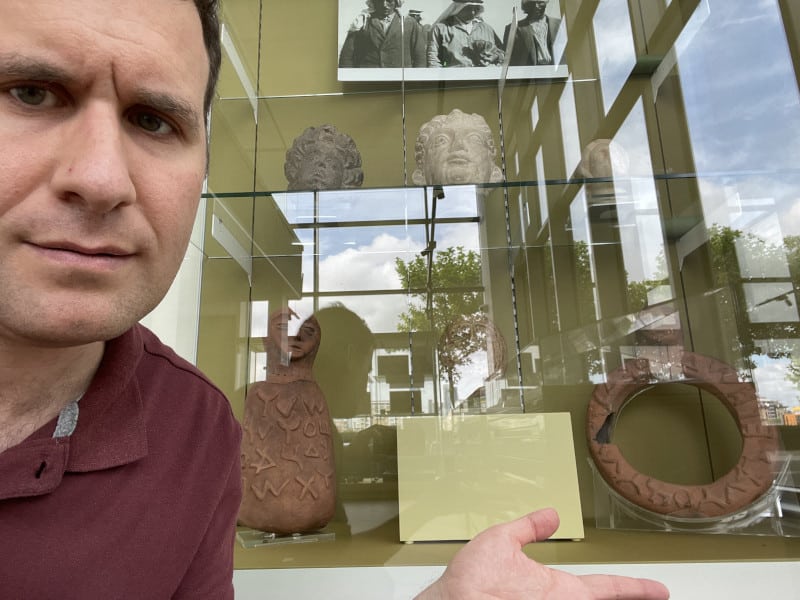
Take for example the notorious bookseller and antiquarian Moses Shapira. In the 1870s, Shapira sold the infamous Moabite pottery, consisting of thousands of fake clay vessels and figurines, and tried to sell an even more infamous Deuteronomy manuscript denounced as a fake in 1883. At the British Library, I was able to read letters written by Shapira himself, as well as journal entries and newspaper articles giving people’s impressions of him at the time. At the British Museum’s central archive, I was able to see the amounts the museum paid for authentic medieval and early modern manuscripts offered by Shapira in the 1870s and 1880s.

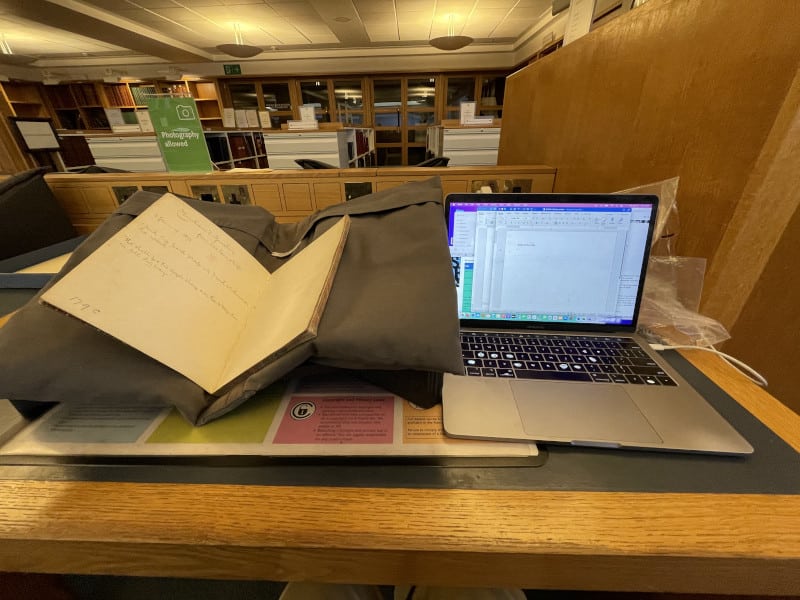
Research at the British Library.
My research setup at the British Museum.

But most of my time was spent at the Palestine Exploration Fund. Their officers, who were mapping and excavating in Palestine at just the time that Shapira was most active, wrote back detailed letters and reports to London. One of the Fund’s officers, Herbert Kitchener – long before he became famous as Lord Kitchener – purchased two of the Moabite pots in Jerusalem and brought them back to the PEF in London. I was fortunate enough to see these, as well as other forgeries probably offered for sale by Shapira.

My time in London was so productive that I am still processing all the information I collected!

With the PEF’s “Moabite Pottery”.

Vivan Bull Remembrances

IN MEMORIAM:
VIVIAN BULL‎ (1934 – 2022)

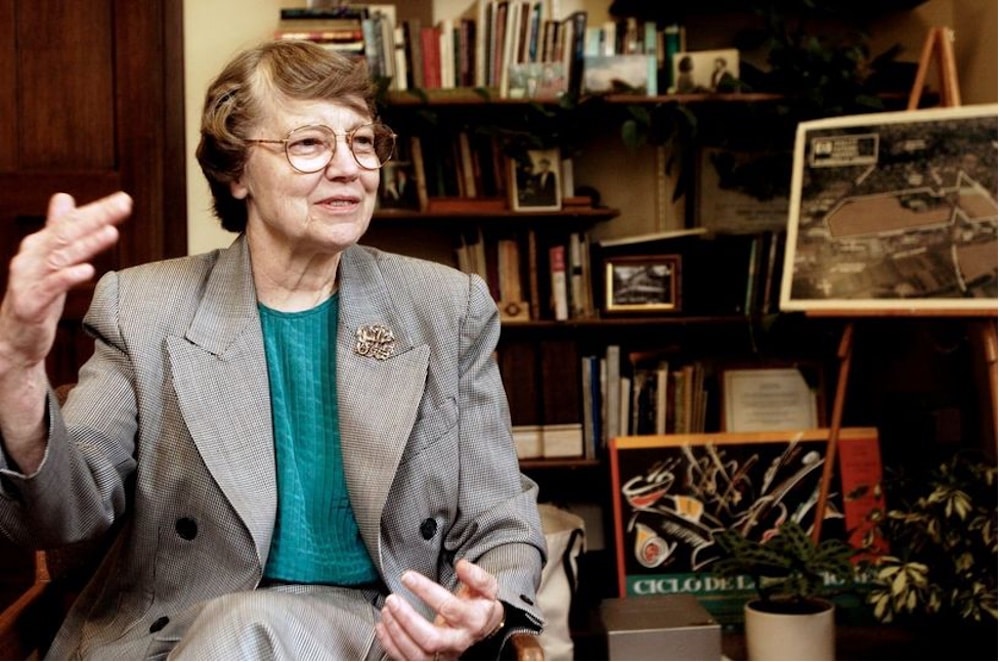
Vivian Bull before her retirement as president of Linfield University in 2005. (Oregonian file photo by Roger Jensen)

ASOR mourns the passing of long-time member, former Albright & ASOR Trustee, Vivian Ann Bull (1934-2022), who passed away on August 12, 2022 at age 87. We share our condolences with Vivian’s sons (Robert “Camper” Bull and W. Carlson Bull).

While we will miss Vivian dearly, we remember and celebrate her life and many accomplishments. We have included detailed remembrances by Jane DeRose Evans and by J. Edward Wright, a personal memorial letter to Vivian by Carolyn Midkiff Strange, and additional tributes and brief remembrances by ASOR officers and others in the ASOR family who were close to Vivian. Please e-mail ASOR if you would like to add a tribute to this webpage.

Please click here for the official obituary and memorial service information (October 8, 2022).

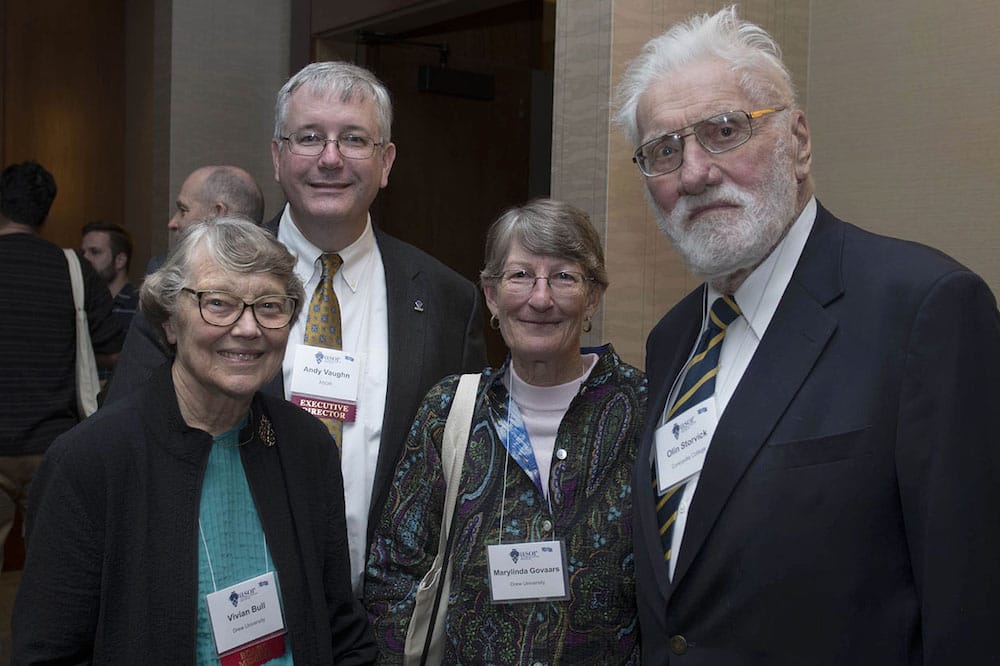
Vivian Bull, Andy Vaughn, Marylinda Govaars, and Olin Storvick at the 2017 ASOR meeting.

In Remembrance: Vivian Ann Bull (1934 – 2022)

Jane DeRose Evans, Professor of Roman Art and Archaeology and Chair of Art History, Temple University

Vivian, a long-time and staunch supporter of the Albright Institute and ASOR, was a trailblazer throughout her life. She was the first student from Albion College (where she earned her undergraduate degree in economics) to receive a Fulbright. Heading to the London School of Economics, she also completed graduate work in Norway and the Netherlands. After graduation, she was one of the few women working in the field of banking and finance – and had to appeal directly to her company’s vice president when she got her notice, which she convinced him was only due to her gender. Her curiosity about international economics brought her to Jerusalem, where she met Robert J. Bull, who was working at Tell er Ras (Shechem). Vivian went with Bob in 1955 to Madison NJ when he was offered the position of instructor of church history in 1955. Five years later, she became a part-time instructor of accounting, and only took on a fulltime position on the condition that she be allowed to complete the work for a PhD in Economics, which she did through NYU (her first choice, Princeton, was not accepting women). Vivian taught at Drew for thirty years, while also serving as Associate Dean of the College of Liberal Arts for much of that time. But summers were spent as registrar on the excavations that Bob directed – her meticulous organization of the records is still apparent from the field notes of those excavations.

In 1992, Vivian left Drew as Emeritus Professor to serve a 13-year term as president of Linfield College (OR). It was her background in international education, business, and academic leadership that attracted the attention of the search committee. She became known as a builder, doubling the size of the College’s campus and advocate for diversity and inclusion. When she retired from that position, she awarded the title of President Emeritus and is still remembered on that campus by the dedication of the Vivian A. Bull Music Center.

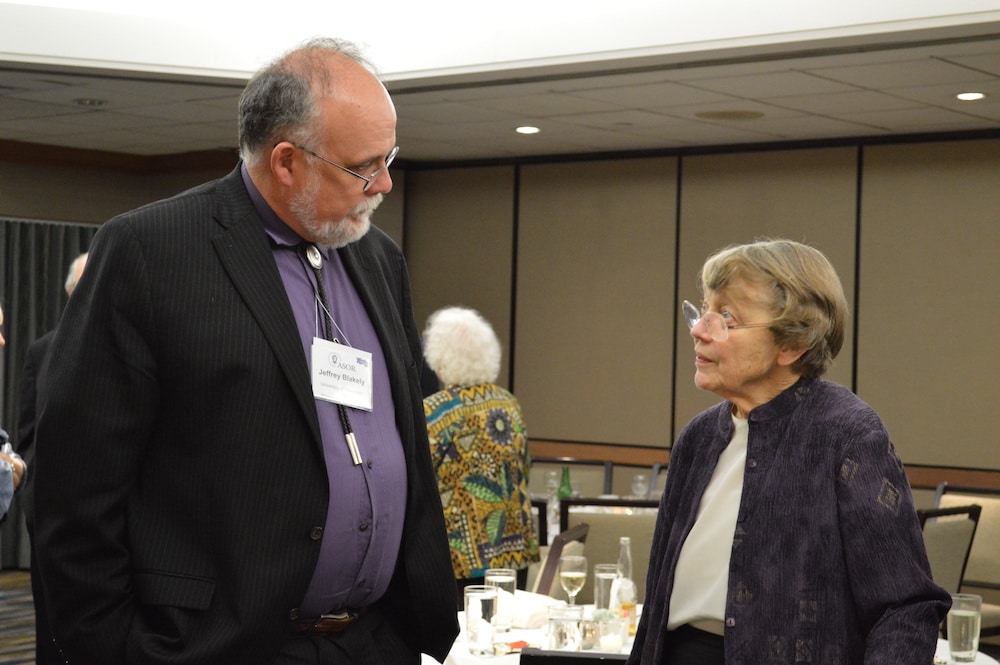
Vivian and Jeff Blakley converse at the 2014 Legacy Dinner.

In 2012, she came out of retirement at the request of the Drew trustees to serve as an interim president of the University. Upon her retirement in 2014, she was named President Emeritus and can be remembered on that campus by the dedication of the Vivian A. Bull Academic Commons in the University Library.

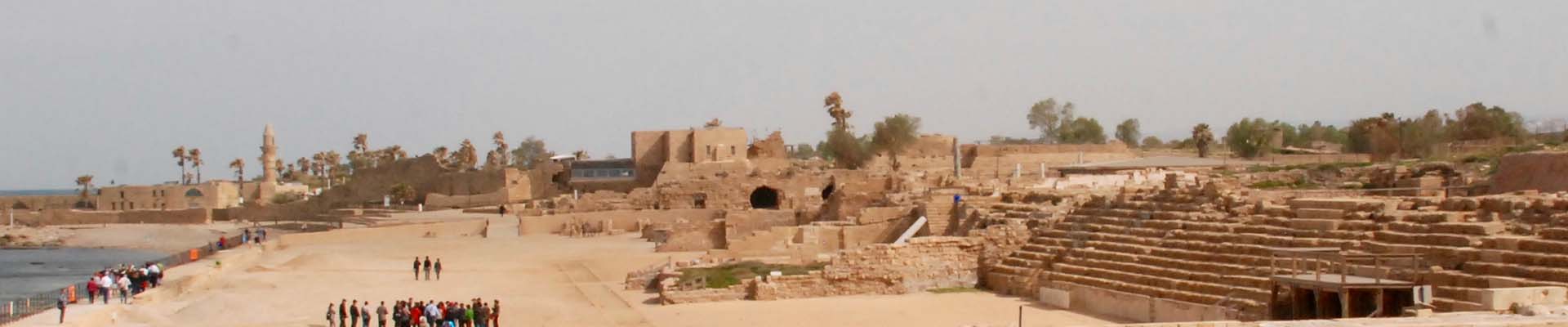
Through her archaeological work, Vivian became an advocate for the Albright Institute, where she became a Trustee of the Albright, first serving as Treasurer and then, in 2006, becoming the Chair of the Board. In 2012 she became a Honorary Trustee, a lifetime appointment. At the same time, she supported the work of ASOR, becoming a member of the Board and a vital voice on the Finance Committee and the Development Committee. In 2016, she received the Charles U. Harris Service Award from ASOR in acknowledgement of her work for the organization. Up until her death, she was deeply involved in the efforts to publish the results of Bob’s excavations in Caesarea and Tell er Ras.

Vivian’s strong faith was evident from an early age and remained an important part of her life’s work and philosophy. Although she would have liked to have been a Methodist minister, the denomination was not accepting women when she was making decisions about graduate school. She remained devoted to Methodist causes, working with committees to foster the growth of educational services in Africa and singing in the choir of her local church as one of the few tenors for many years.

Vivian is survived by two sons, Robert “Camper” Bull and W. Carlson Bull, both of whom grew up on the Caesarea excavations and remain supporters of ASOR.

A Life Well Lived: Vivian Ann Bull (1934 – 2022)

J. Edward Wright, Professor of Hebrew Bible and Early Judaism & Director of the Arizona Center for Judaic Studies, The University of Arizona

It was with deep sadness that we received the news of the passing of our esteemed colleague and longtime ASOR member Dr. Vivian Bull on 12 August 2022. Among her many admirable attributes were her wisdom, administrative acumen, compassionate spirit, piety, patience, humility, and commitment to service and doing what is right.

After graduating from Albion College, Vivian received a Fulbright Scholarship to study at the London School of Economics. She received a PhD from New York University and undertook additional studies in Norway, Great Britain, and the Netherlands. Her dissertation and subsequent work focused on the economic conditions and prospects in the West Bank. Her work was influential not only among scholars but also among policy experts in the United States’ government. She met archaeologist and prominent ASOR leader Robert J. Bull (1920-2013) in Jerusalem in 1955. Vivian and Bob married in 1959 and had two fine sons, Camper and Carlson, who now carry on their parents admirable legacy.

Vivian spent decades in the field alongside Bob, mostly serving as a camp administrator at several excavations, including Shechem, Pella, Tel er-Ras, Caesarea Maritima. After Bob’s death, Vivian continued to work on the Caesarea Maritima excavations and its publication series until her death. It is clearly due to her extensive overseas experience that Vivian was always a vocal advocate for the liberal arts.

Vivian served Drew University a private, liberal arts university located in Madison, New Jersey for forty-four years, moving through the academic and administrative ranks while serving as professor of economics (1960-1992) and associate dean of the College of Liberal Arts (1978-86). After two decades away from Drew, Vivian returned when she was named president in 2012, the first woman to lead Drew University as president. She retired once again in 2014. Obviously, Vivian really was not very good at “retiring.” In recognition of her many years of service and her outstanding leadership of the university, in 2014 the university bestowed on her the honor of president emerita and named the Academic Commons in the main library in her honor.

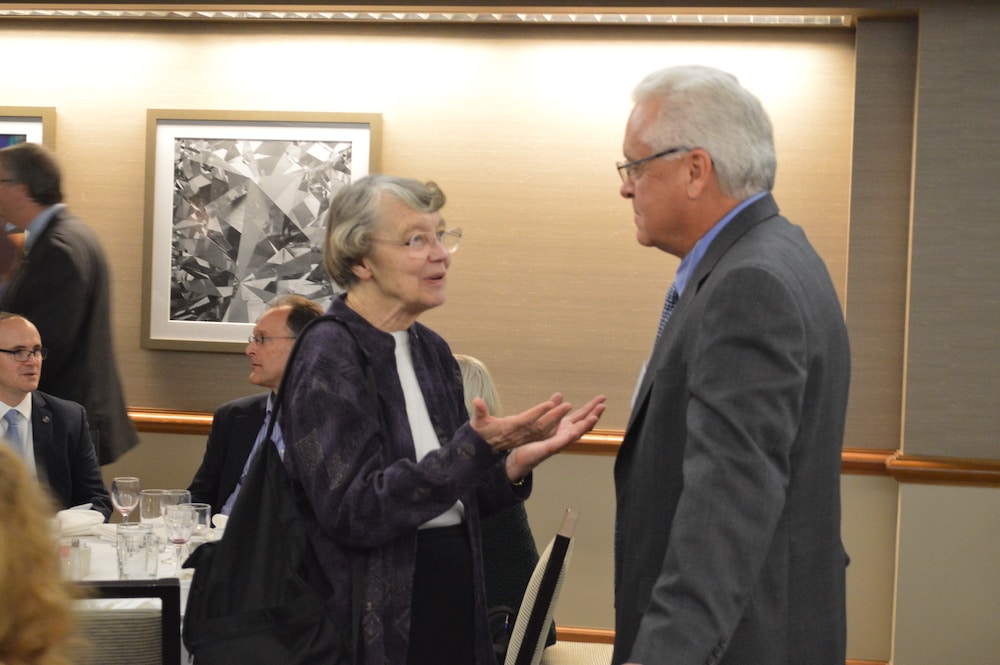
Vivian conversing with Ed Wright at the 2014 Legacy Dinner.

Vivian served as the 18th president of Linfield University, a private liberal arts university located in McMinnville, Oregon from 1992 to 2005. During her tenure, the university was consistently listed among the best liberal arts colleges in the western region. Vivian was the first woman to serve as Linfield’s president, and under her leadership the university experienced a period of growth in terms of its enrollments and academic standing. Scott Chambers, a Linfield faculty member and one of Vivian’s trusted advisors and a dear friend recently said, “Vivian was a transformational president. She led Linfield from a small college to a sizable university. She doubled Linfield’s acreage and had an impact on every aspect of the school—technology, curriculum, buildings, endowment, athletics, and international and professional programs. From the beginning Vivian was deeply engaged with students, faculty, staff, and the local community.” Marvin Henberg, former academic vice president at Linfield and president emeritus of The College of Idaho noted that “Vivian was the best boss, the one everyone deserves to have at least once in a lifetime.” In recognition of all her accomplishments, in 2006 the university named its new, state-of-the-art music center in her honor—The Vivian A. Bull Music Center. Upon her retirement, the university honored her with president-emerita status. Vivian also received honorary doctorates from the University of Portland, Drew University, and Albion College.

Vivian served on many boards during her long and distinguished career, and due to her decades of work in the field with Bob, it was only natural that she would be a leader in ASOR. She was a board member from 1982 to 1990 and again from 2014 to 2019. She was also named an honorary trustee. ASOR benefited from her professional expertise and wise leadership. She served on the Development, Finance, Officers Nominations, and Strategic Planning committees. In recognition of her decades of distinguished service, ASOR honored her with The Charles U. Harris Service Award in 2016. Former ASOR president Prof. Susan Ackerman admired Vivian and once told me that Vivian was a model to her as a scholar, administrator, and mentor.

I treasure the six-years (2006-2012) I served alongside Vivian on the W. F. Albright Institute’s Board of Trustees, Vivian as board chair and I as president. I learned so much from her during those years. Whenever the Board had to deal with a difficult issue, at some point in the back-and-forth discussions Vivian would say, firmly but respectfully, “Hope is not a business plan.” That challenge quickly led to more substantive planning. To this day I remain in awe of Vivian’s wisdom, patience, compassion, humility, and grace. We are all better people for having had Vivian as a colleague, mentor, and friend.

Vivian had an amazing life, and she had a deep impact on the lives of countless people—family, friends, faculty, staff, students, volunteers, and the people of her local community in both McMinnville and Madison. Vivian deserves all the accolades that have been bestowed on her during her life and now in her memory. I think we can best honor her life and memory by following her deep personal commitment to excellence, honor, diversity, justice, and service. Vivian set a high bar in all these areas.

Drew University will hold a memorial service honoring Vivian on October 8, 2022 in Madison, New Jersey. Linfield University will hold its memorial service for her on November 12, 2022 in McMinnville, Oregon.

May the memory of Vivian A. Bull forever be a blessing.

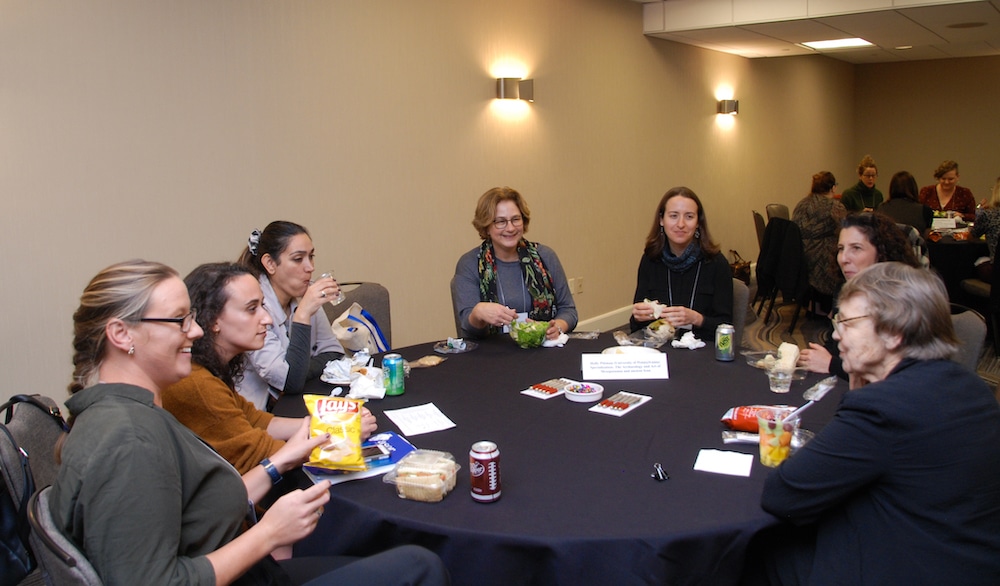
Vivian Bull hosting a table at the Initiative on the Status of Women: Mentoring Lunch at the 2018 Annual Meeting in Denver.

In Memoriam: Vivian Ann Bull (1934 – 2022)

Carolyn Midkiff Strange, Tampa, Florida

Dear Vivian,

In August of 1970, the Stranges, Jim, Carolyn, Mary Elizabeth, and James Riley, began a year filled more than we could have ever imagined. It first started with meeting you, Bob, and Camper in his OshKosh B’gosh and having his b’anna. You, the “First Lady of the Albright” that year, gave us months of memories which we will never forget.

As I look back on that time, I am amazed at all we did. You took us to a place where we watched knitters, and I was able to get sweaters for the children. James even remembers the one I bought for him. Another outing took us to a place where ceramics were being made. The gentleman there gave James and Elizabeth clay so they could fashion their own creations. We took their work back to be fired. I have those objects to this day. There were the cooking classes at the YWCA, during the time the men were galavanting around Turkey. You took me to Miss Halaby’s basement which was full of very fine cross stitch embroidered by Palestine women. I still have some of the pieces from there. If I remember correctly, her sister, an artist, served us a refreshing drink made of green grapes from her own vines. There was coffee in the morning with Omar in the kitchen and tea in the afternoon in the garden. At Christmas, a tree from the Jerusalem forest, which we decorated with ornaments called ‘God’s eyes.’ We had turkey dinner prepared by Omar; however, no cranberries were available, but you found lingonberries as a very nice substitute. You introduced us to the observance of Advent, not at all familiar to us Baptists. In the spring, there were birthday parties. One weekend with James and Elizabeth safely at the Albright, Jim and I were given the VW tender so we could go to Masada, the Roman ramp side. It is hard to believe we actually walked up that incline. The walk to Jericho is especially memorable. Then we all celebrated the birth of Carlson.

All of this and more orchestrated by you.

And yet, it did not end there. Back in Florham Park and Madison we continued to cherish our long friendship, even after I moved to Florida, mainly keeping in touch at breakfasts, lunches, or dinners during ASOR conferences. I always liked hearing about the grandchildren, especially Carlson’s one son and four daughters.

You were a tour guide, teacher, and friend through it all. It seems that we have come to the end of an era.

Thank you for many memorable experiences.

I must not forget to recognize you for your important contributions to the Albright over the years. It has become a place of great significance to all of my children and grandchildren.

I will miss you at our ASOR gatherings.

Carolyn

Comments in Remembrance of Vivian Bull

“I first met Vivian Bull, as so many of us did, at the Albright in the 1970s, where she wrangled two rambunctious kids, the Albright staff, fellows, and quarter mastered complex excavation projects with calm efficiency and good humor, all the while pursuing a career in high-powered economics. When Vivian was around, things got done. She was on the both the Albright and ASOR Boards in the years I was president and vice-president. She always had wise words for us and could calm fractious tempers with a few wise quiet words and a glance. Above all, she was kind. We will miss her.” – Sharon Herbert

“Vivian Bull was an incredible mentor to me when I became ASOR President, as she, with extraordinary patience and kindness, used the knowledge she had gained as President Emerita at both Linfield and Drew Universities to nurture in me at least some small measure of her formidable leadership skills.” – Susan Ackerman

“While working in field KK at Caesarea, Vivian would bring me a flower each morning. A discarded bottle became a vase, placed on my worktable. Before leaving the field, I’d place the flower on the ground. Such a fine way to greet and bid farewell to each day. Ave atque vale, Sophissima Magistra.” – Kate Sheeler

“Since I began my work as ASOR Executive Director in 2007, it was invaluable to have a college dean and university president who had strong ASOR ties going back to the 1950s serve as counselor—and just as importantly, Vivian was an encouraging friend. Her love and loyalty to Bob and to her family was inspiring. She and Bob were an amazing team. My condolences to Camper, Carson, and the entire Bull family.” – Andy Vaughn

“Vivian embodied wisdom and discernment, and she provided invaluable guidance to ASOR and the Albright over a lifetime, and in a generation when there were very few women in leadership in our field. I will always remember her quiet assurance and encouragement during the difficult early days of my presidency, when there was considerable doubt about the new leadership and ASOR’s viability as an organization. Vivian was a steady and trusted counsel over the ensuing years, and a source of much wisdom. May she rest in peace.” – Timothy Harrison

“Like the Stranges, my family first met Vivian Bull in 1970 when we arrived for our Fulbright year at the Albright. We learned that she and Bob Bull met around the corner at a noted Palestinian restaurant which is now the Adventist Study Center—just down the street from Orient House! The Bulls were superb hosts to the Albright appointees that year. Since we had a son, Brent, the same age as Camper, we bonded over our boys as well as archaeology. May she rest in peace!” – Lawrence Geraty

“Vivian Bull joined our 1970 dig at Khirbet Shema, for Bob Bull served as senior advisor that year. Going from years based at Nablus to our base camp at Meiron, an orthodox Jewish moshav, was a huge change of settings and cultures for both of them. The kashrut, the closing of the village on Shabbat, and the fact that the locals spoke Hebrew and Yiddish were all challenging, to say the least. Vivian found ways to work around all of that, as only she could, and helped enormously, especially in registry. Carol and I and our daughter, Julie, especially enjoyed our trips back to Jerusalem with them, in the Albright’s 404 Peugeot wagon, for weekends. RIP.” – Eric Meyers

“Vivian and Bob Bull had different personalities and individual different strengths, but over the fifty years I knew them they always seemed the perfect couple. At those times I headed committees for ASOR. I always wanted Vivian to be appointed to the committee because I knew our committee would receive thoughtful and insightful advice. My family will miss Vivian.” – Jeffrey Blakely

“A stalwart, serving as camp manager for the 1962 season at Shechem was where I first met Vivian Bull. Tough, but congenial and in all ways impressive she was our “Mama Bull” (though of course not to her face). Down the years she remained a warm and vitally supportive ally in the work of ASOR and the Albright Institute. And with all a special family friend. RIP Dear Vivian!” – Joe Seger

“I will always remember with a smile one of the most eyebrow-raising moments of a meeting of the W. F. Albright Institute’s Board of Trustees. Our beloved Vivian Bull—seemingly buttoned-up and quiet in appearance—proudly told the board with enthusiasm that one of her children was conceived at the Albright in Jerusalem. I loved her from that moment on. She was Chair of the Board (2006-2012) while I was Albright Vice-President and Chair of Fellowships. Today, as Chair of the Board myself, I realize how much I learned from her wisdom, guidance, and leadership during those years” – Joan Branham

“Vivian Bull was a quiet but powerful presence at the Albright Institute for as long as I can remember. As board chair, she was responsible for regularizing the Albright’s finances and safeguarding our endowment, services for which we continue to reap the benefit. I will cherish the memory of her loyalty to the Albright as well as her sense of humor.” – Sidnie White Crawford

“Vivian Bull will long be remembered for her dedication and loyalty to ASOR/Albright. What impressed me most about Vivian was her consistent and realistic approach to the development of the two institutions reflected in her often-heard response to Trustee proposals, ‘Hope is not a plan’. She will also be remembered for her unfailing support of Bob’s archaeological excavations represented by this photo [see below] of their working together on the Caesarea pottery at the Albright. May her memory be for a blessing.” – Sy Gitin

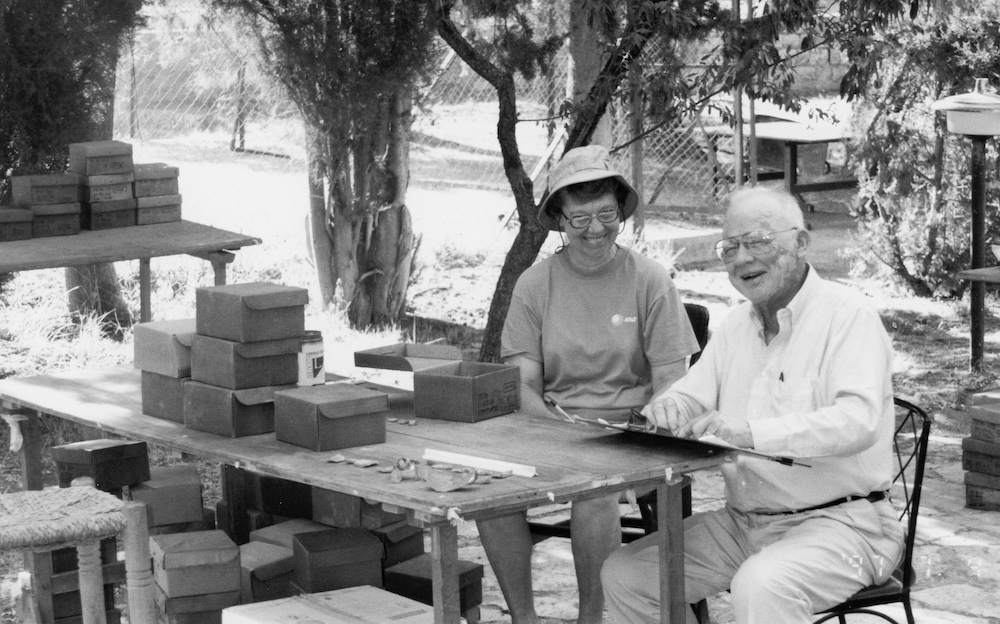
Vivian and Bob Bull working together on the Caesarea pottery at the Albright Institute in Jerusalem. (Photo credit: Sy Gitin)

Covid Protocol – 2022 Annual Meeting

Covid Protocol Update for 2022 Annual Meeting

September 7, 2022

Dear fellow ASOR members,

We write with an update on COVID protocols for our upcoming Annual Meeting in Boston. The well-being of our members during the ongoing pandemic remains our utmost concern, but we also recognize that the health situation and guidance from health authorities has changed. Thus, for the reasons outlined below, we currently do not plan to have a vaccination requirement. We do plan to require masking in conference venues (except when presenting, responding, or actively eating or drinking).

First some background… As you know, last year we required proof of vaccination for attendance and enforced a strict mask requirement in public spaces except where eating and drinking were taking place. These policies complied with recommendations from federal health agencies and city of Chicago requirements. They were also in line with requirements for air travel and entry into the United States. Today, both the city of Boston’s proof of vaccination policy and indoor masking mandates have been lifted. The proof of vaccination requirement for entry into the US has also been lifted. The loosening of vaccination requirements follows the recognition that vaccinations do not prevent the spread of the current dominant COVID variants the same way they did in November 2021 (during last year’s meeting). While masking helps with transmission, masking requirements vary across venues and jurisdictions.

Considering all this, ASOR has decided to drop the proof of vaccination requirement, while strongly advising and encouraging vaccination. All ASOR staff will be vaccinated. We also note that this decision is in line with some (but not all) other societies and organizations.

At the same time, we have decided to maintain a masking policy out of respect for and in consideration of those in the ASOR family who are immunocompromised, who have other health concerns, or who live with those with these concerns. ASOR acknowledges that this masking policy is stricter than CDC or local regulations, and we have received assurances from the Boston Park Plaza that they will comply with this policy in our meeting spaces and venues. We cannot control masking for our attendees or others outside the meeting and exhibit venues.

All of us at ASOR look forward to seeing you in November.

Respectfully,


Sharon Herbert and Andy Vaughn

Farsi Translation Sponsored by AIIrS

Farsi Translation Sponsored by AIIrS

Thanks to generous sponsorship from the American Institute of Iranian Studies (AIIrS), ASOR will offer Farsi translation as part of the virtual component of the 2022 Annual Meeting for the Archaeology of Iran session on Sunday, October 23 at 10:00am ET.  View the planned program for Archaeology of Iran (Virtual) here.

In addition to Farsi translation, the sponsorship will help support the meeting participation fees of Iranian paper and poster presenters.

ASOR is continuously working on ways to increase participation by making the Annual Meeting more inclusive and accessible to those who would not otherwise be able to attend. By limiting financial and language barriers, we hope that a greater number of scholars in Iran will be able to participate.

We invite members to recommend Iranian colleagues who would be interested in attending the virtual session. Please send your recommendations to Arlene Press at meetings@asor.org and include the scholar’s full name, professional affiliation, and their email address.

Fieldwork Report: Bruno Barros

Bringing Azekah’s Walls into the Light

Bruno Barros, 2022 G.E. Wright/Shirlee Meyers Fellowship Recipient


Sunrise in Area N1.

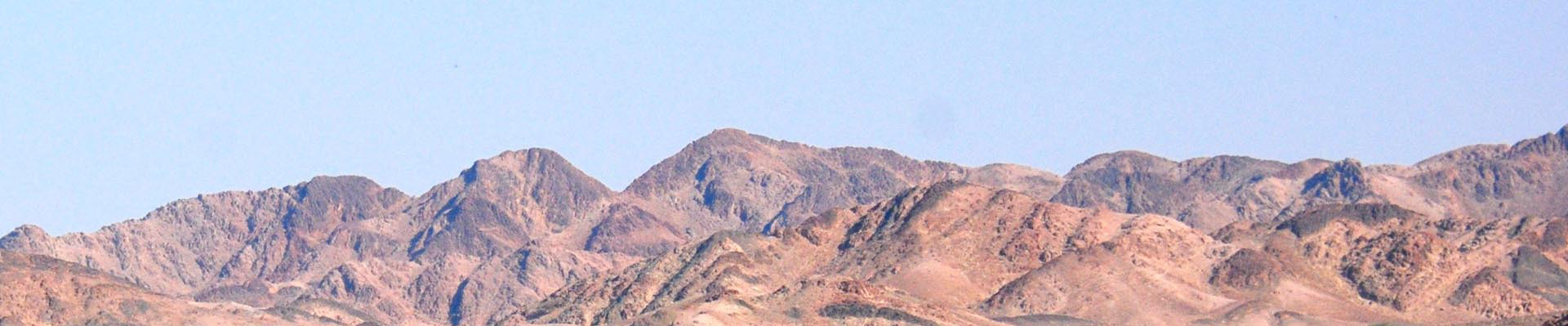
Yalla, Yalla! That was the call to jump on the bus around 4:50 in the morning. Half awake and half asleep, we prepared ourselves for another day of excavating at Tel Azekah in Israel. The days that any volunteer or staff member spends on a dig are far from ordinary as there is always something to keep you occupied! After arriving at the site while it was still a bit dark, we would carry the tools all the way up to our area and get started on the day’s activities. Among all the areas of the site, I was selected to work in area N1, an extensive area where you can find Middle/Late Bronze walls and floors in some squares and Iron Age/Persian structures in others. In previous seasons, an olive oil press dating to Iron Age IIC was found in area N1. This olive oil press is the best preserved in Israel from this period. After 701 B.C.E. and Sennacherib’s invasion of the Shephelah region of ancient Judah—which comprises the Judean mountains and the coastal plain—more local installations for the production of olive oil are found. There are around three different periods of olive oil production in the Shephelah affected by the Assyrian Empire. In the period before the 701 invasion, production was private, and the olive oil went to the city of Lachish, which was the center for collecting olive oil and paying taxes. After 701, the production center was moved to Ekron, and after the Assyrians left, Judah returned to the Shephelah and redeveloped the Judean olive oil production centers. Our task in area N1 was to open a new square adjacent to the Iron Age IIC olive oil press so we could search for the continuation of the Iron Age walls and possibly also a new press.

The new square, opened this field season, after three weeks of work.

Dr. Lipschits supervising the volunteers.

Joining an archaeological dig is more than just “doing science”; it is also therapy. It is therapy because you do not have any option other than being patient about what will come out of your square, especially when you open a new one. During the first few days the big pickaxes dominated the scene without much result. Our group was a bit disappointed at first, but the rewards started to come during the second week. Big pickaxes began to be replaced by smaller ones, and the volunteers began excavating around the rocks in order to find possible contexts. Were those rocks part of the wall or part of its collapse? It took three weeks to expose most of the walls along with a few rooms that belonged respectively to the Iron Age IIC and Persian periods, not to mention a strange structure. We are still not sure of this structure’s exact function, but according to the directors it is most likely a silo from the Persian Period, though its construction and shape are unusual. The upcoming seasons hopefully will bring more answers for this particular square in N1

My primary goal this summer was to join the Lautenschläger Azekah Expedition and look for answers for my Ph.D. research in the Neo-Assyrian expansion in the Southern Levant. I am grateful for many of the questions answered during the season and for being part of the 2022 team. I would like to express my gratitude to ASOR and the scholarship’s donors. They made this exciting experience possible and have significantly contributed to my research. I also thank the Azekah administration and Prof. Oded Lipschits for having hosted me and clarifying many of my questions.

Bruno Barros is a Ph.D. candidate in the department of Assyriology and Hebrew Studies at Eötvös Loránd University, Budapest. His research interests include Neo-Assyrian Art History and Levantine Archaeology particularly in the Iron Age.

Want to help more students and early career archaeologists get into the field? Donate to the cause today by selecting “Student Support” as your gift purpose!