
Table of Contents for Maarav 27.1-2 (November 2023)
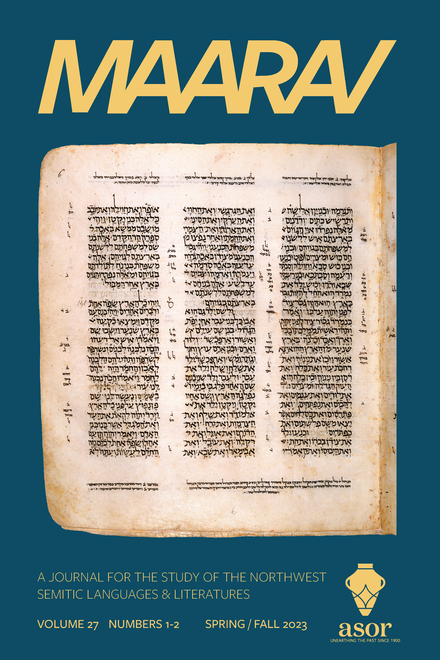
You can receive Maarav (and other ASOR publications) through an ASOR Membership.
Please e-mail the Membership office if you have any questions.
Pp. 1-38: “Syria, Mesopotamia, and the Origins of the Alphabet” by Madadh Richey
New potentially Early Alphabetic finds from Umm al-Marra (Syria) and Sealand (Mesopotamia) require a reanalysis of traditional out-of-Egypt hypotheses of alphabetic origins. The present article considers the problems new discoveries introduce for traditional understandings of alphabetic invention and proposes to overcome these problems by endorsing a northern Levantine context for the Early Alphabet’s initial adaptation from Egyptian hieroglyphs and its earliest usage. This proposal is contextualized among—and arguably supported by consideration of—other scribal experiments in the Levant during the Middle and Late Bronze Ages.
ASOR Members with online access: log into ASOR’s Online Portal here. Once logged in, click the JOURNALS tab in the top navigation bar. From here you may select which journal you would like to read. If you have online access, you will see your selected journal’s current issue Table of Contents. Click on the “Current Issue” button and you will then be redirected to the University of Chicago Press’s (UCP) platform to immediately start reading any issue of your choice. Tutorials for how to log in to the Online Portal as well as how to navigate to the Portal Journals page can be found here.
Pp. 39-73: “An Onomastic and Prosopographic Forest: ʿAbdīmilku in Texts from Ras Shamra–Ugarit and Ras Ibn Hani,” by Dennis Pardee
The Ugaritic personal name ʿAbdīmilku is presented in an attempt to lay out a working template for onomastic and prosopographic research on the corpus of texts from Ras Shamra–Ugarit and the nearby site of Ras Ibn Hani. Most of the names attested in these texts appear in various types of administrative documents (economic, epistolary, legal) inscribed in the local script, alphabetic cuneiform, or in the script used internationally in the Late Bronze Age, logo-syllabic cuneiform. That name was chosen because it is well attested in texts set down in the two scripts, and a good proportion of the texts include one or more of the features useful in prosopographic identification: patronym or other family relationships, geographical or professional affiliation, and textual or archaeological data permitting an approximate dating of the text itself.
ASOR Members with online access: log into ASOR’s Online Portal here. Once logged in, click the JOURNALS tab in the top navigation bar. From here you may select which journal you would like to read. If you have online access, you will see your selected journal’s current issue Table of Contents. Click on the “Current Issue” button and you will then be redirected to the University of Chicago Press’s (UCP) platform to immediately start reading any issue of your choice. Tutorials for how to log in to the Online Portal as well as how to navigate to the Portal Journals page can be found here.
Pp. 74-90: “A Text That Was but Isn’t: On the Contribution of Literary Evidence in the Assessment of Shapira Deuteronomy,” by Jeffrey Stackert
This article addresses the value of literary evidence in the assessment of putatively ancient texts, with special focus on Shapira Deuteronomy in the wake of its recent reconsideration. The article argues that, notwithstanding the challenges that attend them, all types of evidence—epigraphic, linguistic, literary—should be assessed, and that each can offer important evaluative insights, individually and in relation to each other. The article concludes with a few specific literary observations on Shapira Deuteronomy. These observations add to the case against this text’s status as an ancient work and, as such, demonstrate that literary analysis of the Shapira strips produces significant information regarding their putative antiquity, even apart from any epigraphic or linguistic assessment.
ASOR Members with online access: log into ASOR’s Online Portal here. Once logged in, click the JOURNALS tab in the top navigation bar. From here you may select which journal you would like to read. If you have online access, you will see your selected journal’s current issue Table of Contents. Click on the “Current Issue” button and you will then be redirected to the University of Chicago Press’s (UCP) platform to immediately start reading any issue of your choice. Tutorials for how to log in to the Online Portal as well as how to navigate to the Portal Journals page can be found here.
Pp. 91-191: “Word Craft in the Ancient Levant: Craft-Literacy as the Intersection of Specialized Knowledge,” by Alice Mandell
The scholarly history of the Levantine alphabet centers on scribal literacies. Yet there is compelling evidence that the script was used and taught in other communities of text-makers: the artisans involved in text-creation in stone, metal, ceramic, ivory, and other writing surfaces involving technical tools and specialized knowledge. The present essay explores the evidence for the intersection of craft and literacy practices in the inscriptional and archaeological record with a focus on the Bronze and Iron Ages. The proposed “craft-literacy” approach makes several suggestions about how scholars of alphabetic inscriptions might better theorize about the transmission of alphabetic literacies in the process of craft-production and the dissemination of inscribed objects. To this end, the present essay sets the study of Northwest Semitic epigraphy in conversation with material cultural approaches to the study of literacy, specifically “artifactual literacies,” an approach that evaluates the materiality of literacy and the ways in which textual-artifacts engage different audiences, and thereby participate in the transmission of knowledge.
ASOR Members with online access: log into ASOR’s Online Portal here. Once logged in, click the JOURNALS tab in the top navigation bar. From here you may select which journal you would like to read. If you have online access, you will see your selected journal’s current issue Table of Contents. Click on the “Current Issue” button and you will then be redirected to the University of Chicago Press’s (UCP) platform to immediately start reading any issue of your choice. Tutorials for how to log in to the Online Portal as well as how to navigate to the Portal Journals page can be found here.
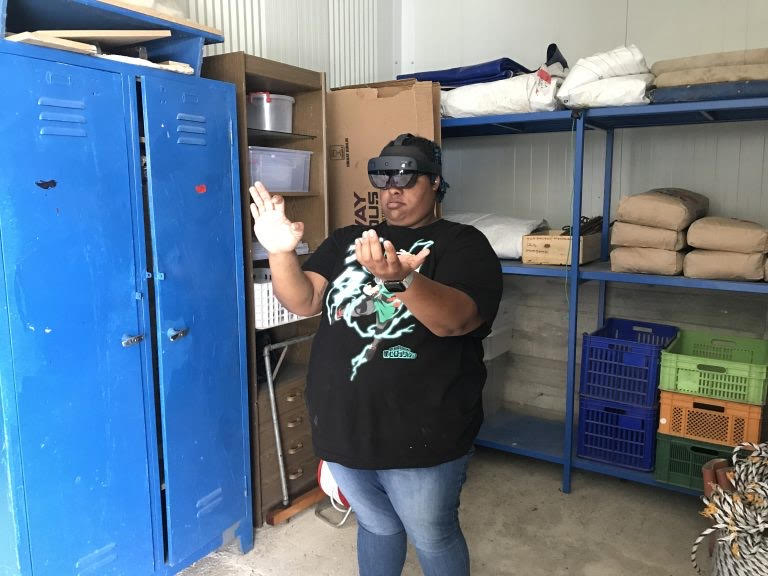
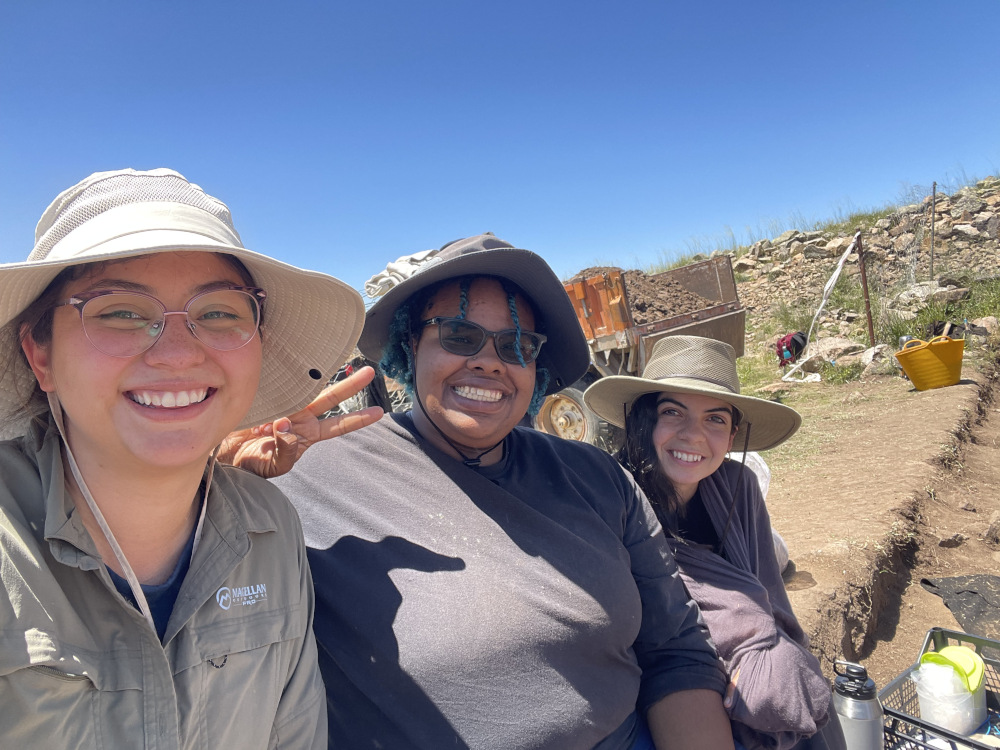



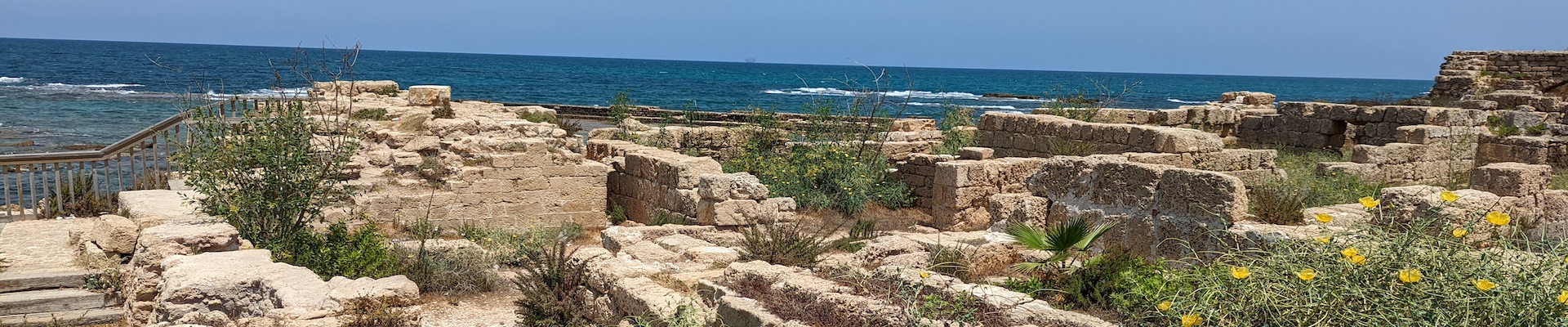
 Friends of ASOR present the next webinar in the 2023-2024 season on December 14 2023, at 6:00 pm EST, presented by Dr. Jennifer Ramsay. In the summer of 1994 I embarked on my first archaeological excavation to King Herod’s Palace at the site of Caesarea Maritima in Israel, where I was thrilled to be bestowed with the title of assistant bone person! After excavating many bones that summer, the director took me aside and said, ‘everyone is doing bones, you should study plant remains’. And just like that, an archaeobotanist was born. Little did I know those many years ago that plant remains recovered from archaeological sites could tell us so much about the past.
 I spent several summers as an archaeobotanist at Caesarea collecting plant remains. It was there that I discovered the importance of the neglected, but informative, ‘weed’. Many economic crops were recovered that illuminated aspects of the agricultural economy in the ancient city, but it was what the weeds could tell us about the environment, seasonality, and agricultural techniques that I found intriguing. I have since been fortunate to work on projects at sites like Petra, Jordan, where the data from the Petra Garden and Pool Complex addressed the questions of how plants functioned in the economy, and how the role of the garden changed through time.
 Additionally, plant remains I analyzed from Nabatean-period tomb deposits in Petra highlighted the role plants played in funerary contexts and contributed to a broader understanding of how they functioned in these ritual events in the ancient world. I have also recovered archaeobotanical data that allowed for a better understanding of the scale and timing of local agricultural production at the ancient site of Bir Madhkur, which lies in the hyper-arid hinterland of Petra. At other sites, for example the Islamic period site of Kinet Höyük in Turkey, the plant remains I analyzed indicated cereal agriculture, but also documented the emergence of a cotton boom, which is attested to in ethnohistorical sources but had rarely been confirmed through archaeobotanical evidence. From examining Neolithic plant remains from the Black Desert in Jordan that indicate a much more verdant environment in the past, to discovering what plants can tell us about provisioning the Roman Army in the East, and even to understanding the role pigeons played in ancient agriculture, plant remains offer vital evidence to our understanding of the past.
 Dr. Jennifer Ramsay (Ph.D. in 2008) is Professor and Chair of the Anthropology Department at SUNY Brockport (State University of New York). She is active on the Board of Trustees for the American Center of Research (ACOR) in Amman and chairs their Fellowship Committee. Jennifer received the Archaeological Institute of America’s Excellence in Undergraduate Teaching Award in 2019 and two State University of New York (SUNY) Chancellor’s Awards for Excellence in Teaching (2014) and Excellence in Faculty Service (2020). Her area of expertise centers on the use of archaeobotany for subsistence reconstruction, understanding trade patterns, recognizing environmental change, and interpreting land-use patterns to gain insight into lifeways of past societies. Although she specializes in the Roman and Late Antique world, Jennifer has also analyzed and published archaeobotanical data from the Neolithic, Bronze and Iron Ages, and Islamic periods. Over her career, she has participated in many archaeological projects in a variety of roles from project archaeobotanist and field school director, to assistant or associate director in Jordan, Israel and Italy at such sites such as Petra, Pompeii and Caesarea Marittima.
