March Meeting Madness is back! This year, we are raising funds to allow even more people to attend the Annual Meeting in Chicago in November. You can helps us raise $10,000—$5,000 for registration scholarships and $5,000 for Annual Meeting Travel Scholarships. These Annual Meeting travel scholarship awardees will be checking in other attendees at the registration desks and helping in the meeting rooms with the new Zoom integration for our very first hybrid meeting. The purpose of these scholarships is to allow those who could not afford the hotel and travel expenses of the Annual Meeting to attend in Chicago and experience all the meeting has to offer. Attending the ASOR Annual Meeting is an invaluable experience for students thinking about graduate school, for those who are on the academic job market, for those who are planning fieldwork, and for everyone who wants to connect, network, and share their research. The Annual Meetings is also great for those who are not in the field but passionate about learning more about recent research. With the transition to hybrid this year, the ASOR staff will be very grateful of the extra help in making the 2023 meeting a great experience for all.
You can help send more people to the Annual Meeting through ASOR’s Meeting Madness this March!
March Meeting Madness Progress: $4,750 raised of $10,000 goal
Friends of ASOR present the next webinar in our monthly series on March 23, 2023, at 3:00 pm EDT, featuring Prof. Tiffany Earley-Spadoni and moderated by Prof. Petra Creamer (Emory University). Urartu was a powerful empire located in the imposing highlands of modern-day eastern Turkey, Armenia, and western Iran in the 9th to the 7th centuries BCE. In this lecture, Prof. Earley-Spadoni will provide historical context for Urartu, a thriving, but often overlooked expansionary state. The Urartians left behind an impressive array of archaeological remains ranging from vibrant material culture to evocative texts carved in living stone. Despite its undeniable significance and unique features, the state is frequently framed as being a minor development resulting from the growth of the Assyrian empire to its south.
Rather than being organized around large cities like other empires which had come before, Urartu relied on a rural, regional network of forts, fortresses, and fire beacon stations to defend against threats and impose sovereignty upon the mountainous landscape. The fortified networks allowed for the spread of information and the coordination of military and administrative activities, which helped the kingdom consolidate its power over neighboring regions.
The talk will conclude with a call to reframe the way we think about Urartu. Prof. Earley-Spadoni will suggest that this goal can be achieved by studying Urartian materials and texts as developments that combined local practices and reinterpreted broader regional traditions. Ultimately, she will argue that Urartu must be understood as a historically specific case, and a topic worthy of much more dedicated study.
Tiffany Earley-Spadoni is an Associate Professor of History at the University of Central Florida. Her research consists of spatially-oriented investigations of expansionary state development in the ancient Near East. She received her PhD in Near Eastern Studies from the Johns Hopkins University.
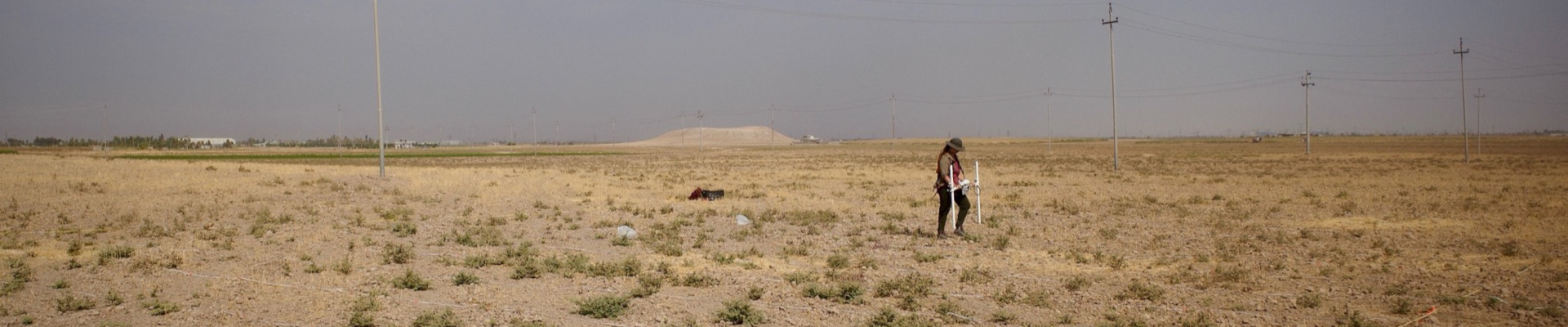
Her current archaeological field projects are the Kurd Qaburstan Project in Iraq and the Vayots Dzor Fortress Landscapes Project in Armenia. Kurd Qaburstan, likely to be identified with the ancient city of Qabra, was a more than 100 ha. walled city with major occupations dating to the Middle and Late Bronze Age periods. The project examines the spatial distribution and character of large-scale public architecture, domestic remains, craft production loci, and fortifications. The organization and experience of urban space is further explored through evidence for distinct neighborhoods and central planning.
In addition to her work on northern Mesopotamian urbanism, the creation of fortified regional networks in response to systematic warfare is the focus of her field work in Armenia. These investigations have revealed evidence for elaborate systems of fire beacon communication and numerous forts and fortresses.
This webinar will be recorded and all paid registrants will be sent a link to view the recording.
To receive your ASOR member discount, log into the online store. If you are new to ASOR, please click on the “New Visitor Registration” link to register your e-mail address and choose a password for our online store. Once logged in, navigate to “Meeting and Event Registration” to register for the webinar and pay the fee. Each paid registrant will receive a confirmation e-mail when you pay for the webinar. If you do not receive this e-mail, then you are not registered. Please e-mail membership@asor.org with any questions or issues with registering.
You will be e-mailed the Zoom Webinar link in the week prior to the lecture on March 23, 2023. If you do not receive the link by the close of business two days before the webinar, please e-mail membership@asor.org immediately. This webinar will be recorded and all paid registrants will be sent a link to view the recording.
All proceeds from this webinar are used to fund scholarships for members as well as increasing ASOR’s online resources, which are free to the public.
READY FOR A WEBINAR SEASON PASS?
Buy a season pass for all the webinars* of the 2022-2023 FOA Webinar Season! 1) You will automatically receive the Zoom link for each webinar so no need to register each time. 2) You will also receive the recording of each webinar automatically after the event.
If you have missed webinars earlier in the season and still want to buy the pass, you will receive the links to the recordings of the webinars you missed in your automatic confirmation email after you buy the pass.
*Special symposiums may be excluded from the season pass price.
No more registering for a year if you buy your pass today!
Pricing:
Members: $75.00 Non-Members: $150.00 ASOR Sustaining Members: $0 (automatic registration for each webinar) Not a member yet? Click here to join as a member and receive the 50% off a season pass!
Log into our online store to purchase the season pass for 2022-2023. If you are new to ASOR and do not have a record in our store yet, click here to register. After you login, navigate to the left to “Meeting and Event Registration.” Please e-mail membership@asor.org if you have any questions or issues.
WHY SPONSOR A WEBINAR?
Several levels of support from $50-$1,000 are available. Proceeds go towards membership scholarships and towards increasing ASOR’s virtual resources. Each sponsorship is tax-deductible and you can give your friends free registrations to a webinar!
Bronze Level ($50): up to 2 guest registrations Silver Level ($100): up to 5 guest registrations Gold Level ($500): up to 20 guest registrations Platinum Level ($1,000): up to 50 guest registrations
After you sign up for a sponsorship online or over the phone, email the names and email addresses of your guests to Felice Herman at membership@asor.org, who will send your guests a confirmation and the Zoom link before the webinar.
WANT TO SAVE $6.00 ON THE NEXT WEBINAR?
Join ASOR as a member! Click here for more details about discounts for events and other benefits of membership. Memberships start at $40 for the year as an Associate Member.
You can now purchase the link to the recording of any webinar. You can also purchase the bundle packages of all webinars from the 2020-2022 seasons. Please e-mail membership@asor.org for purchase details.
To see a printable pdf of the webinar titles from the 2020-2021 season, please click here. To see a printable pdf of the webinar titles from the 2021-2022 season, please click here.
Where Are They Now?: A Preview of 2022 ASOR-Affiliated Fieldwork Projects Michael Given (University of Glasgow), Xenia-Paula Kyriakou (Florida Gulf Coast University), Stephen Batiuk (University of Toronto), Monique Roddy (Walla Walla University), Kent Bramlett (La Sierra University), Friedbert Ninow (La Sierra University), and Michael Hoff (University of Nebraska-Lincoln) | March 8, 2022
Tel Rehov: A Major Bronze and Iron Age City in the Jordan Valley Amihai Mazar (Hebrew University of Jerusalem), Nava Panitz-Cohen ( Hebrew University of Jerusalem), Nota Kourou (Athens University), Naama Yahalom-Mack (Hebrew University of Jerusalem), Robert Mullins (Azusa Pacific University) | February 10, 2022
Archaeogaming: Why Video Games Deserve Their Own Archaeology Tine Rassalle (University of North Carolina at Chapel Hill), Shannon Martino (Morton College), Matthew Winter (University of Arizona), Michael Zimmerman (Rhode Island) | April 18, 2021
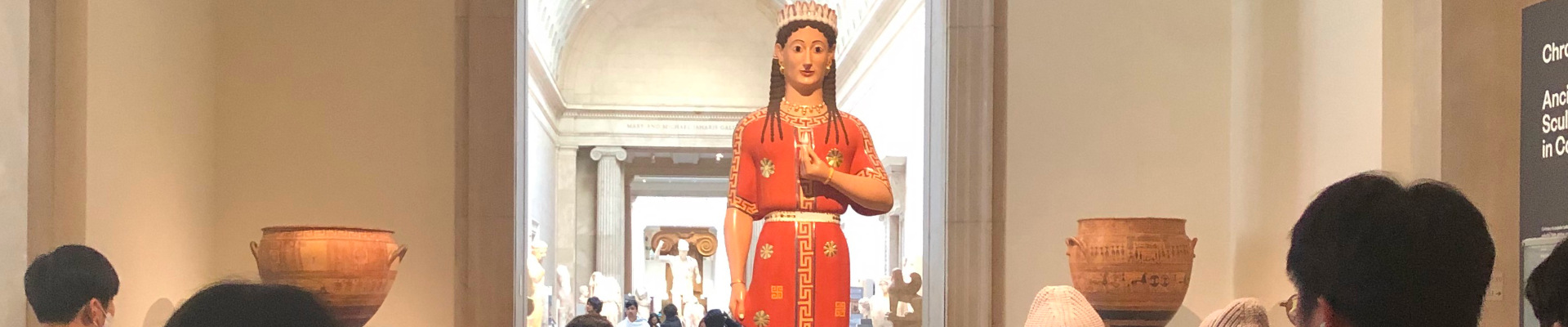
How the Ancient World is Saturating Museums with Color
Friends of ASOR present the next webinar in our monthly series on March 9, 2023, at 3:00 pm EST, featuring Dr. Pinar Durgun and moderated by Dr. Kiersten Neumann. It may be difficult to imagine the ancient world in color when museums display ancient objects in white galleries. Ancient objects themselves are now often in varying degrees of white, beige, and brown as the pigments on them often do not survive to our day or may not be visible to our naked eyes. But through archaeology and science, we know that the ancient world was vibrantly colorful. So why do colorful reconstructions look “off” to us? Where does the idea of a white sculpture come from? How can color change the perception of the ancient world for the modern museum visitor? This talk will explore some of the past and present ways of showcasing color in the ancient world and question what can be done for the future.
Join Dr. Durgun as she reveals a world of color and mystery through the lens and experience of both a museum curator and the museum visitor. The webinar will conclude with a Q&A session moderated by Dr. Kiersten Neumann (Oriental Institute).
Dr. Pınar Durgun is an art historically-trained archaeologist with a strong background in anthropology and museums, while also being passionate about outreach and education. She is interested in how museums can help us understand, protect, and engage with the past and how they can better serve our communities today. Her research focuses on ancient Anatolia and western Asia, the history of death and burial, image and identity making, digital museums, and museum ethics. She aims to make academic information about the ancient world accessible, fun, and inclusive. Dr. Durgun creates and curates educational content about art and the ancient world for museums, academic/educational organizations, and for social media. She currently works as a curator for the Vorderasiatisches Museum (Museum of Ancient Near East) in Berlin.
This webinar will be recorded and all paid registrants will be sent a link to view the recording.
To receive your ASOR member discount, log into the online store. If you are new to ASOR, please click on the “New Visitor Registration” link to register your e-mail address and choose a password for our online store. Once logged in, navigate to “Meeting and Event Registration” to register for the webinar and pay the fee. Each paid registrant will receive a confirmation e-mail when you pay for the webinar. If you do not receive this e-mail, then you are not registered. Please e-mail membership@asor.org with any questions or issues with registering.
You will be e-mailed the Zoom Webinar link in the week prior to the lecture on March 9, 2023. If you do not receive the link by the close of business two days before the webinar, please e-mail membership@asor.org immediately. This webinar will be recorded and all paid registrants will be sent a link to view the recording.
All proceeds from this webinar are used to fund scholarships for members as well as increasing ASOR’s online resources, which are free to the public.
READY FOR A WEBINAR SEASON PASS?
Buy a season pass for all the webinars* of the 2022-2023 FOA Webinar Season! 1) You will automatically receive the Zoom link for each webinar so no need to register each time. 2) You will also receive the recording of each webinar automatically after the event.
If you have missed webinars earlier in the season and still want to buy the pass, you will receive the links to the recordings of the webinars you missed in your automatic confirmation email after you buy the pass.
*Special symposiums may be excluded from the season pass price.
No more registering for a year if you buy your pass today!
Pricing:
Members: $75.00 Non-Members: $150.00 ASOR Sustaining Members: $0 (automatic registration for each webinar) Not a member yet? Click here to join as a member and receive the 50% off a season pass!
Log into our online store to purchase the season pass for 2022-2023. If you are new to ASOR and do not have a record in our store yet, click here to register. After you login, navigate to the left to “Meeting and Event Registration.” Please e-mail membership@asor.org if you have any questions or issues.
WHY SPONSOR A WEBINAR?
Several levels of support from $50-$1,000 are available. Proceeds go towards membership scholarships and towards increasing ASOR’s virtual resources. Each sponsorship is tax-deductible and you can give your friends free registrations to a webinar!
Bronze Level ($50): up to 2 guest registrations Silver Level ($100): up to 5 guest registrations Gold Level ($500): up to 20 guest registrations Platinum Level ($1,000): up to 50 guest registrations
After you sign up for a sponsorship online or over the phone, email the names and email addresses of your guests to Felice Herman at membership@asor.org, who will send your guests a confirmation and the Zoom link before the webinar.
WANT TO SAVE $6.00 ON THE NEXT WEBINAR?
Join ASOR as a member! Click here for more details about discounts for events and other benefits of membership. Memberships start at $40 for the year as an Associate Member.
You can now purchase the link to the recording of any webinar. You can also purchase the bundle packages of all webinars from the 2020-2022 seasons. Please e-mail membership@asor.org for purchase details.
To see a printable pdf of the webinar titles from the 2020-2021 season, please click here. To see a printable pdf of the webinar titles from the 2021-2022 season, please click here.
Where Are They Now?: A Preview of 2022 ASOR-Affiliated Fieldwork Projects Michael Given (University of Glasgow), Xenia-Paula Kyriakou (Florida Gulf Coast University), Stephen Batiuk (University of Toronto), Monique Roddy (Walla Walla University), Kent Bramlett (La Sierra University), Friedbert Ninow (La Sierra University), and Michael Hoff (University of Nebraska-Lincoln) | March 8, 2022
Tel Rehov: A Major Bronze and Iron Age City in the Jordan Valley Amihai Mazar (Hebrew University of Jerusalem), Nava Panitz-Cohen ( Hebrew University of Jerusalem), Nota Kourou (Athens University), Naama Yahalom-Mack (Hebrew University of Jerusalem), Robert Mullins (Azusa Pacific University) | February 10, 2022
Archaeogaming: Why Video Games Deserve Their Own Archaeology Tine Rassalle (University of North Carolina at Chapel Hill), Shannon Martino (Morton College), Matthew Winter (University of Arizona), Michael Zimmerman (Rhode Island) | April 18, 2021
The first season of the Girdi Matrab Archaeological Project was generously funded by the ASOR Charles Harris Project Grant. Girdi Matrab (“the earthen mound” in Kurdish) is a multi-mound site located in the plain of Erbil, in the autonomous region of the Iraqi Kurdistan and was first surveyed by the Erbil Plain Archaeological Survey (EPAS), directed by Jason Ur in 2012.
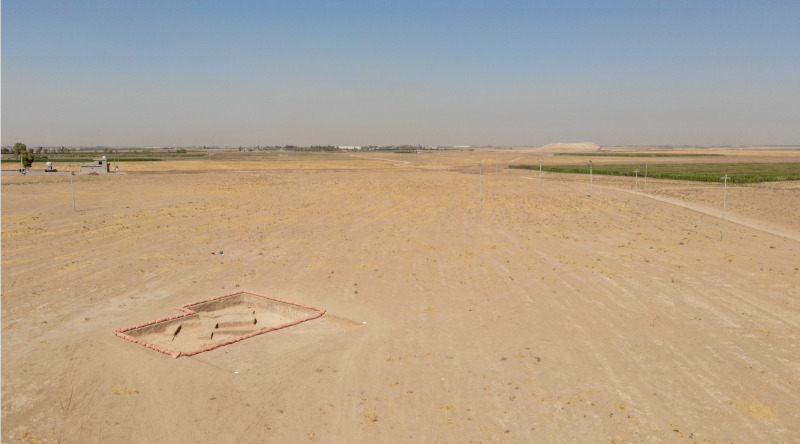
View of the excavation area at the end of the 2022 field season.
Surface reconnaissance yielded an impressive amount of pottery sherds, that confirmed the habitation phase and the history of the settlement. Girdi Matrab was settled from the Late Chalcolithic period (5th millennium BCE) until the Uruk phase (4th millennium BCE). No indication of Bronze and Iron Age occupation has been detected at the site. On the contrary, the settlement expanded rapidly at the end of the 1st millennium BCE, reaching a quasi-urban size in the Hellenistic and Parthian-Roman period before being abandoned and never re-occupied again.
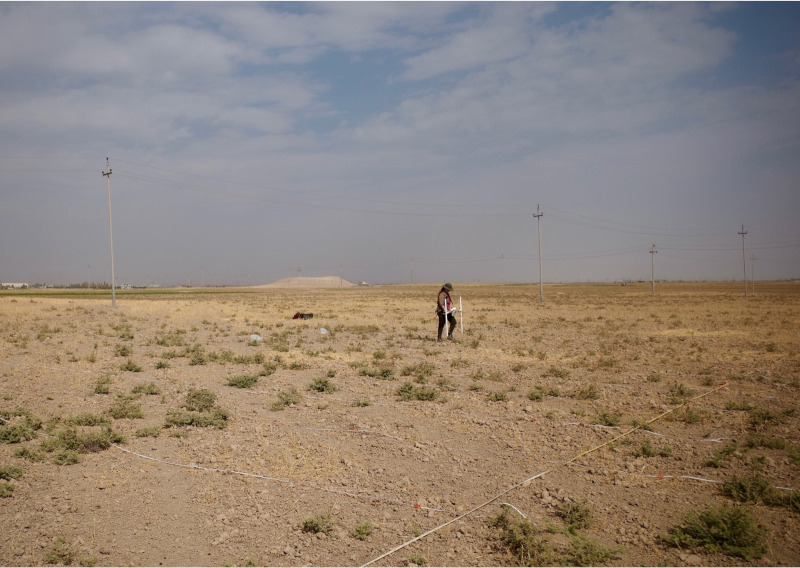
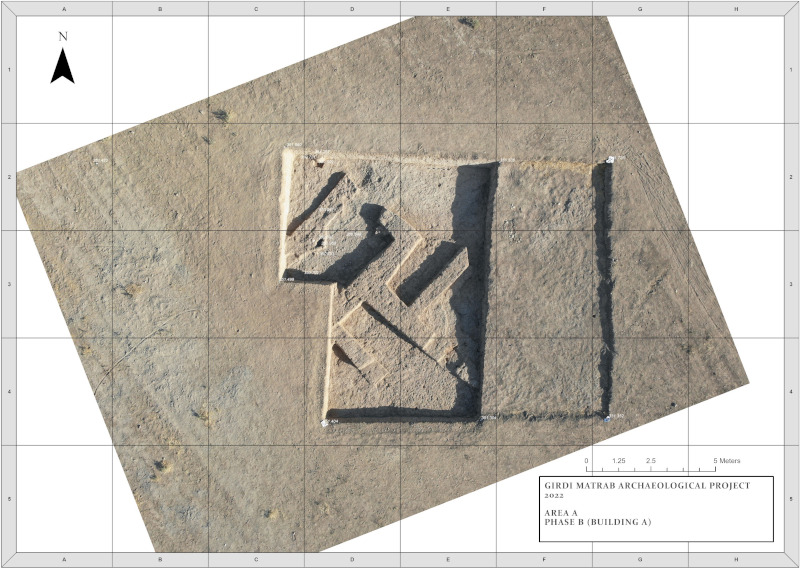
In view of the first proper excavation season, the site was also intensively surveyed in 2020 – thanks to the active participation of the EPAS Kurdish team members. In 2021, in collaboration with Petra Creamer (Emory University, USA) geophysical investigations were carried out at the site using a Bartington 601-2 Gradiometer, owned by the SPARC Lab at Dartmouth College, USA, highlighting, just below Mound 2, the remains of a large (40 x 40 m) building, with multiple rooms, internal courtyards, and hallways (Building A).
Petra Creamer (Emory) performing geophysics at Girdi Matrab (2021).
Plan of Phase B of Building A at the end of the 2022 field season.
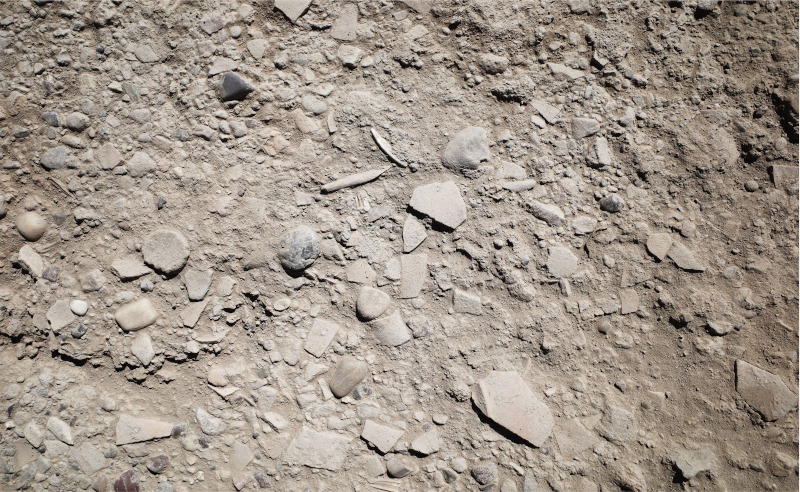
With the objective of investigating part of this sub-surface evidence, a 20 x 25 m trench was placed above the south-eastern corner of the building, on Mound 2. After 5 weeks of excavation, we unearthed four rooms, all built with mudbrick walls over stones and pebbles foundations. Two of these rooms opened towards an internal courtyard, where a complete tannur (open-air oven) was also recovered. One of these two rooms yielded a completely intact floor composed by pebbles, pottery sherds and animal bones. The close proximity to the open-air oven, and the presence of a mudbrick platform, and a small internal fireplace in the room, made us think that the space was used for cooking activities.
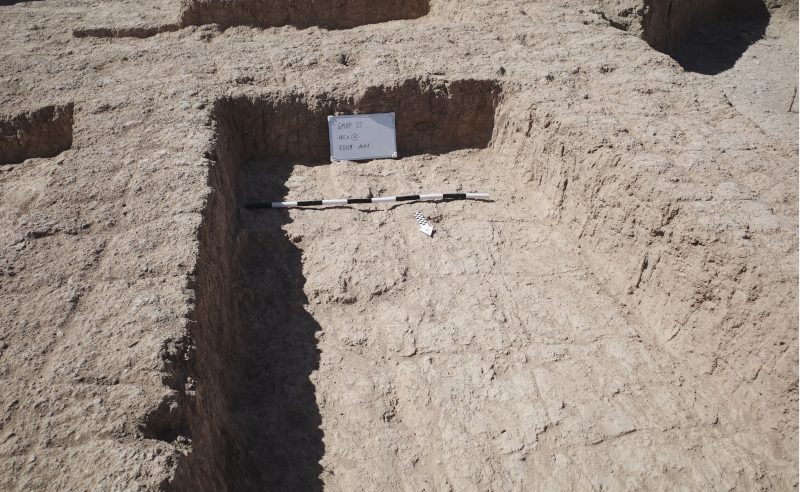
The adjacent room, smaller and with an unusual mudbrick floor, has been interpreted as a storage space, certainly connected to the cooking activities that were taking place in the bigger room to the West. The remaining two other room open towards the Southern part of the building, possibly connected to the unexcavated part of the complex through an elongated open-air hallway, whose extent has been partly identified during the 2022 season.
The analysis carried out on the ceramic repertoire excavated this year at Girdi Matrab has confirmed several hypotheses that were originally formulated prior to the campaign. The assemblage is mostly composed by commonware, with little or no inclusion of western-inspired, commonly known types such as the ubiquitous echinus bowls and/or Hellenistic period fish plates. Interestingly however we have identified a discrete number of specimens whose morphological tradition lies in the Iron Age and late Iron Age pottery horizon of the region.
On the base of the analysis of the ceramic material, we can securely date this phase of Building A to the period that covers a span of time between the late 4th and very early 3rd c. BCE.
Close-up of the composite floor of the kitchen area of Building A (detail).
View of the storeroom excavated right next to the kitchen. Note the well-preserved mudbrick floor.
The GMAP team focuses on the investigation of the domestic economy of a rural site in between the imperial transformation from the Iron Age to the early centuries of the 1st millennium CE. To better understand the socio-economic change of the Hellenistic and Parthian period Mesopotamia we rely on the analysis of the faunal remains excavated at the site. Nathalie Brusgaard (University of Groningen, the Netherlands), associate director of the GMAP, oversees the study of the zoo-archaeological evidence.
The presence of a large amount of commonware, the identification of young animals such as pigs and sheep, which could have been raised on site, as well as adult bovines – which might as well be oxen trained and used draft animals – seem preliminarily to indicate that Building A at Girdi Matrab could be a farm or farm-like estate.
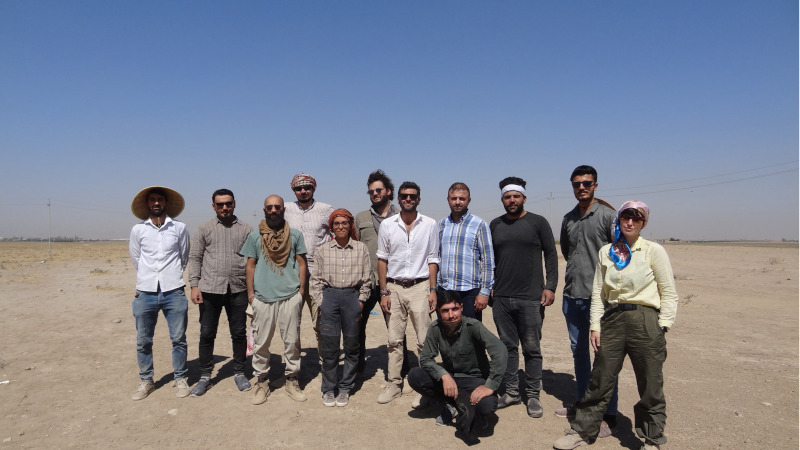
The KMAP team at the end of the season
We plan to continue investigating the rural economic landscape of the plain of Erbil in the future seasons, and we thank ASOR for supporting our research into this part of South-West Asia under the Seleucids, the Parthians, and the Romans, a critical but often overlooked period and one of central relevance for the understanding of the history of North Mesopotamia, and the Kurdistan Region of Iraq, in particular.
-Rocco Palermo, University of Pisa (Italy) and Bryn Mawr College (USA)
With the collaboration of
Nathalie Brusgaard (University of Groningen, Netherlands), Aila Santi (SOAS, London, UK), Valentina Grasso (Catholic University of America, USA), Jordan Brown (University of California at Berkeley, USA), Gabriele Viola (University of Pisa, Italy), Lara Pucci Daniele (University of Pisa, Italy), Michele Salvatore La Porta (University of Pisa, Italy), Parsa Kheirandish (University of Pisa, Italy), Ali Banishary (Directorate of the Antiquities, Erbil)
Learn more about the Girdi Matrab Archaeological Project at their website or their Instagram!
Interested in applying for a 2023 Charles Harris Project Grant? Learn more about applying here.
Currently, 115 projects are affiliated with ASOR. This includes 86 field projects and 29 publication projects. Fourteen projects (13 new projects and 1 project renewal) have received ASOR affiliation since last summer. Read more about these new ASOR-affiliated projects below!
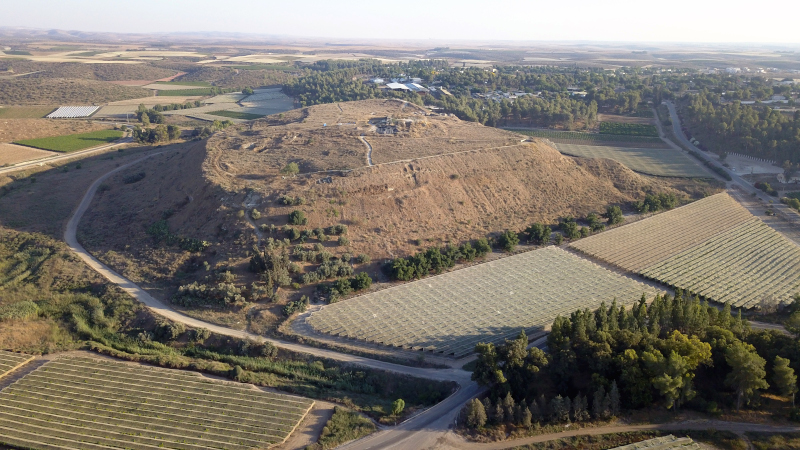
Aerial view of Tel Lachish looking southwest. (c) Jared Dye ÖAI-ÖAW.
The Austrian Expedition to Lachish focuses on the Middle and Late Bronze Age remains at the site. Since 2017, excavations have been conducted in Area S on the western edge of the site, uncovering several settlement phases of the early Late Bronze Age (15th and 14th century BC), and in Area P north of the Judean palace-fort, where additional parts of the Middle Bronze Age (17th and 16th century BC) palace were excavated.
Caesarea Coastal Archaeological Project (C-CAP), Caesarea Maritima, Israel (Asa Eger, Beverly Goodman, and Andrea de Giorgi)
The transition in the eastern Mediterranean from the Christian Late Roman Byzantine to Islamic rule beginning in the 7th century CE is a time full of uncertainty, migrations, conflict, and reconfiguring of people, economies, communities and cultures. While these changes are known in broad strokes due to historical records, archaeological information allows us to better understand the more direct meaning of these changes for those who lived at the time, as recognizable within the material record. In May-June 2022, the CCAP field school project invites students and volunteers to unravel the mysteries of Caesarea Maritima’s medieval and Islamic years, including both on land and underwater archaeological and geoarchaeological hands-on experience. Participants will immerse themselves in the world of the post-Roman Empire Islamic eastern Mediterranean, experience and reveal first-hand physical evidence of ancient natural disasters, and learn how to hear the stories from the objects that were left behind.
Kalavasos-Laroumena and Arkhangelos Archaeological Research Project, Cyprus (Mara T. Horowitz)
The Kalavasos-Laroumena and Arkhangelos Archaeological Research Project (K-LAARP) investigates social change in the Middle Cypriot Bronze Age on the south coast of Cyprus.
Kurd Qaburstan is an urban-sized Bronze Age site in northern Mesopotamia, southwest of Erbil in the Kurdistan Region of Iraq. Perhaps to be identified with ancient Qabra, the 118-hectare site consists of an 11-hectare central mound 17 meters high surrounded by a 107-hectare walled lower town. The project was initiated in 2013 by Dr. Glenn Schwartz, and is currently directed by Dr. Tiffany Earley-Spadoni.
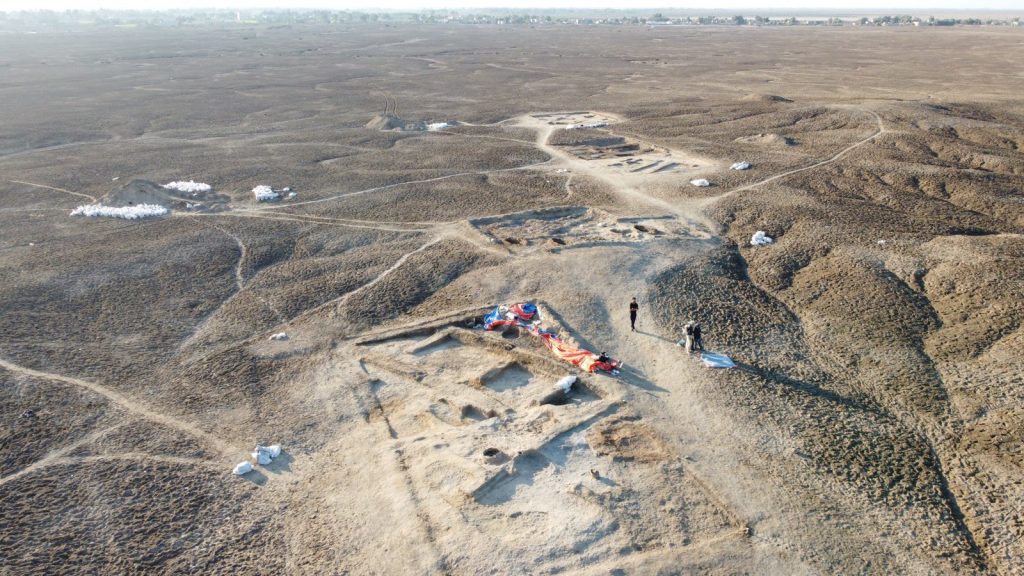
Excavations at ancient Lagash focus on understanding the urban organization during the Early Dynastic period. Remote sensing together with targeted excavation seeks to reveal craft production areas, domestic housing, and institutional installations.
Oblique view of Lagash.
Drone photo of the trenches opened in Fall 2022.
Mudawwara Ottoman Fort, Jordan (Andrew Petersen)
Mudawwara fort is a ruinous Ottoman fort located on the Hajj route in southern Jordan. Although the fort was only built in the eighteenth century the site is mentioned in pilgrimage itineraries from at least the ninth century CE. The fort is currently in a very vulnerable state and the aim is to record the architectural remains and carry out excavations at the site in advance of conservation and restoration work.
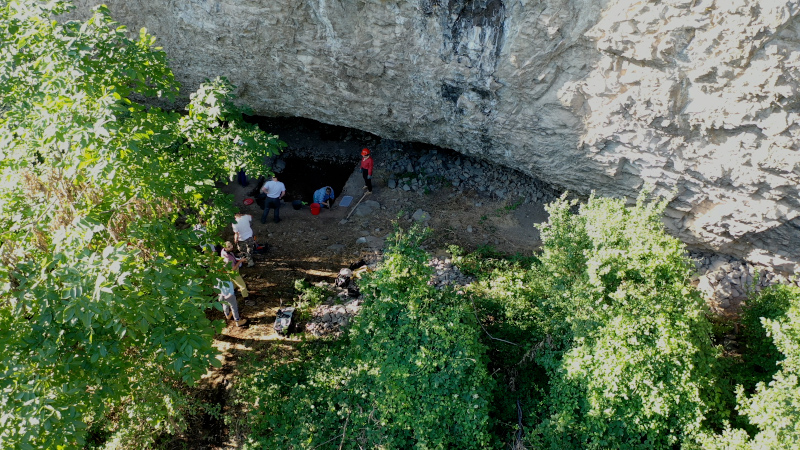
The Neanderthal Crossroads Project is the first Middle Paleolithic field school in the Balkan region. Students will get the opportunity to learn surface survey and trench excavation techniques at a Middle Paleolithic archaeological site, Uzun Mera, as well as exploratory investigations at additional caves including Peshka Cave. The Middle Paleolithic history of the central Balkans is still not well-known, despite it being the clear crossroads for hominins into and out of Europe. North Macedonia is a gorgeous, NATO-member country in the central Balkans that is safe and relatively inexpensive. Please reach out with questions about our schedule, travel logistics, or CoVID protocols; we would love to have you join us this summer! We have a short video of last summer’s excavation here.
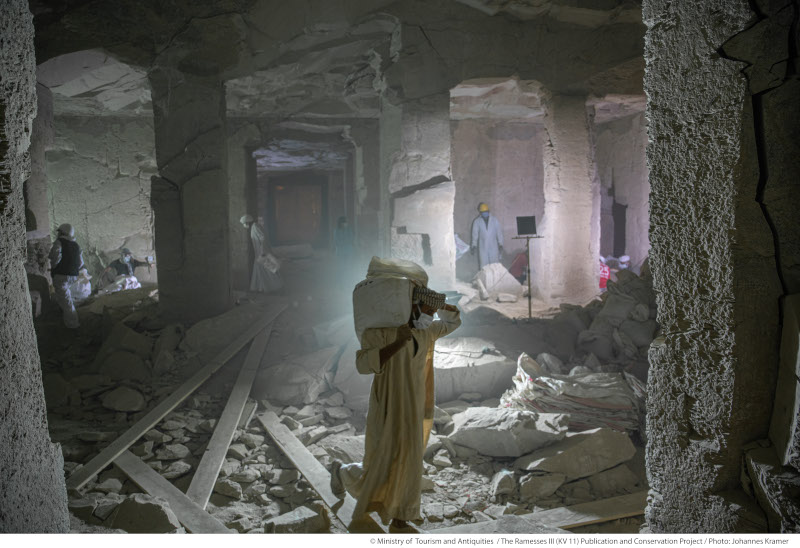
The Project is dedicated to the excavation, conservation, and publication of the tomb of pharaoh Ramesses III (ca. 1221 – 1156 BC) in the UNESCO World Heritage Site of the Valley of the Kings. Between 1885 and 1914, the tomb was flooded several times, causing severe damage in its rear compartments, and making it inaccessible to visitors. Since 2017, The Ramesses III (KV 11) Publication and Conservation Project has worked continuously on the preservation and publishing of the site. The mud and rubble which had accumulated in the rear parts are gradually being cleared, in the course of which valuable information on the tomb’s decoration and even fragments of its former furnishings have come to light. Its unique architecture and decoration program make KV 11 an important source for Ramesside beliefs concerning the afterlife. The final aim is to prepare the tomb for reopening and making it fully accessible to the public at large. To document and protect the tomb from further decay, specialists from different countries work together in the fields of archaeology, conservation, geoarchaeology, microbiology, osteology, philology, photography, and Egyptological research. The project is hosted by Humboldt-Universität zu Berlin and led by Dr. Anke Weber.
(c)The Ministry
of Tourism and Antiquities, The Ramesses III (KV 11) Publication and
Conservation Project, photos: Johannes Kramer
Rural Landscapes of Iron Age Imperial Mesopotamia (RLIIM) is a combination excavation-remote sensing project conducted on the Erbil Plain of Iraqi Kurdistan, just 15km south of Erbil near the modern village of Tirpa Spiyan. Excavations focus on a small, rural agricultural settlement of the Assyrian Empire, Qach Rresh. The project uses drone imagery and magnetometry to map the subsurface and landscape features of the village and its surrounding landscape to understand how the occupants of these small villages interacted within the broader imperial framework. Additionally, post-Assyrian material at the site allows us to investigate questions related to the collapse of the Assyrian empire as seen from the countryside, as opposed to a large urban center. We conducted our first season in Fall 2022, and our permit issued by the KRG Department of Antiquities allows for another four years of investigation before renewal. The project’s team is a combination of Kurdish and foreign members, directed by Prof. Petra Creamer (Emory University). We prioritize the training of our team members in various archaeological techniques, emphasizing technology and remote sensing along with more traditional methods.
Ulqin Archaeological Project: Landscape Survey and Geography, Southern Montenegro (Daniel Plekhov, Elic Weitzel, and Erina Baci)
The Ulqin Archaeological Project is a large-scale, diachronic regional survey of the Ulqin Municipality in southern Montenegro. Human occupation of this region dates to the earliest periods of human presence in Europe, with many subsequent cultures, states, and empires leaving their marks on the landscape through time. Our survey aims to document and study these traces. Through doing so, we will investigate how dynamics of human settlement and land-use in this region have changed through time and consider what effect they continue to have on the social and environmental characteristics of the region’s people and landscapes today. To that end, our project is focused as much on the archaeological remains of past periods as it is on the ongoing practices of local communities in the present. By combining archaeological methods with those from the fields of geography, ecology, and cultural anthropology, we will provide historical context for the development of modern-day settlement and agropastoral practices, and explore how communities today continue to inherit, adapt to, and transform the legacies of the past. Beyond studying the archaeological record of this region to understand its history and development, our project is also oriented towards the documentation and preservation of its rapidly disappearing heritage landscapes.
Tell Timai is the Nile Delta city of Thmouis, a site famous for perfume production, its role in the Great Rebellion discussed on the Rosetta Stone, and its prominence in the rise of Christianity in Egypt. Excavations in the coming years will focus on a series of religious structures from the Late Period to the Coptic Periods. Information on 2023-2023 fieldwork can be found here.
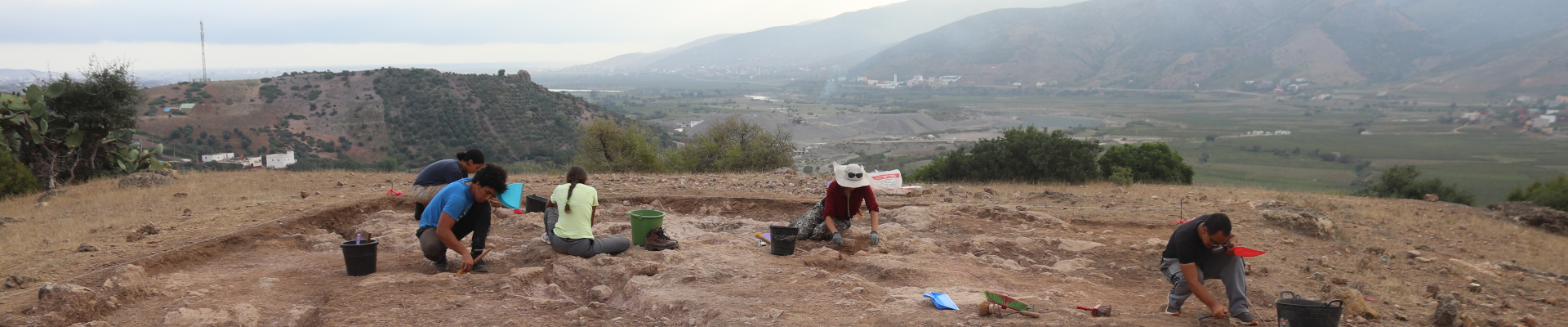
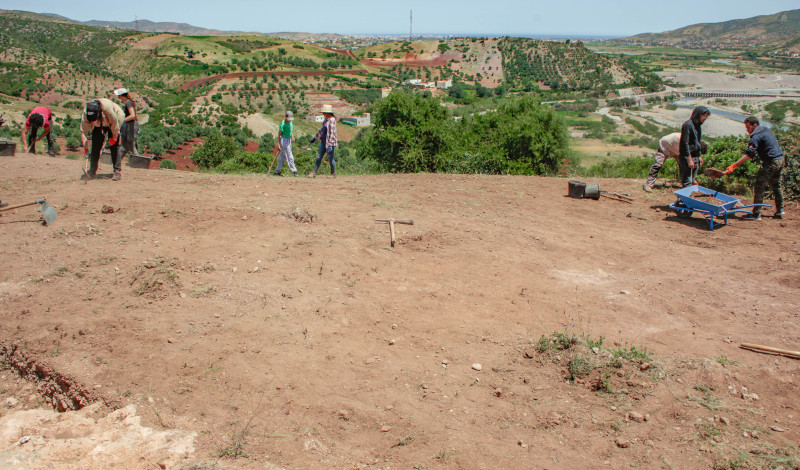
The Western Mediterranean has been characterized by complex social and economic dynamics, with the movements of Late Bronze Age communities settling the African shores yet to be fully deciphered. The site of Kach Kouch (Oued Laou, Morocco), a settlement with no parallels in north-west Africa, offers a unique chance to understand these dynamics and their place within debates about the hyperconnectivity of the Mediterranean in the late 2nd and early 1st millennium BC. The strategic location of Kach Kouch, controlling the access from the estuary of the Oued Laou river to the inland valleys of the Western Rif mountains, makes it ideally placed within a wider exchange network connecting local communities with the rest of the Mediterranean. To date, the archaeology of this region has been written overwhelmingly from a colonial perspective, even though evidence points to early connectivity of this area since the 6th millennium BC. This project focuses on the study of Kach Kouch and its territory, including the bassins of Oued Laou and Stehat, from a long durée perspective and with an emphasis on the role of local communities in the historical process. This project serves as a field school for young graduates and undergraduates in archaeology of the National Institute of Archaeology and Heritage of Morocco (INSAP).
Hilltop settlement of Kach Kouch, the Oued Laou Valley and the Mediterranean.
Fieldwork at Kach Kouch.
Vasagard, Denmark (Finn Ole Nielsen, M. Nicolas Caretta, Michael Thorsen, Ditte Kofod, and Roxana Youkhana)
The site of Vasagård is located on the southern side of the island of Bornholm, Denmark. Vasagård is separated by the 100m Læså valley from two nearly identical Neolithic sites and consists of a tomb system where a dolmen and a passage grave can be found close to the settlement. The grave system and causewayed enclosures are dated from c. 3500 BC, and constitute the most north-eastern occurrence of this complex type in Europe. During the excavations of 2013-2017, almost three hundred broken and completely flat, engraved stones were uncovered, marked with patterns of radiating straight lines. Named “sunstones” or “solar stones”, archaeologists from the Bornholm Museum have postulated that these artifacts were likely part of the rituals carried out by Neolithic sun-worshipping practitioners about 5,000 years ago. New excavations will help to increase and improve the information about the site and the Neolithic Period in the Baltic region.
ASOR-Affiliated Project Renewals
Carthage, The Precinct of Tanit (tophet) and Ba’al: The ASOR Punic Project: The Stager Excavations (1975-1979), Tunisia (J. A. Greene, B. K. Garnand, and L. E. Stager†)
This publication will present the results of the archaeological excavations at the so-called tophet or “Precinct of Tanit” in Carthage, Tunisia. These excavations were undertaken as part of the ASOR Punic Project (1975–1979) with funding from the Smithsonian Institution, the University of Chicago and Harvard University under auspices the UNESCO Campagne de Sauvegarde Carthage. The first volume will present a complete descriptive catalogue of artifacts, the second volume a detailed interpretation of stratigraphy, osteology and typology (urns, amulets, cippi/stelae), alongside interpretations of classical and biblical literary sources and epigraphic evidence, in order to present for the first time a holistic interpretation of Phoenician/Punic votive dedication of infants. This singular site has provided the vast majority of the Phoenician/Punic iconographic and epigraphic repertoire known from ca. 800–146 BCE.
ASOR is excited to announce that the 2023 ASOR Annual Meeting is going hybrid!
Instead of holding a separate virtual component in October, ASOR will hold a hybrid meeting with both virtual and in-person participation, November 15–18, at the Hilton Chicago. Feedback from members on the survey circulated by the ad hoc Committee on Climate Impact (Ad Hoc Climate Impact Committee Report) and discussion with many members at the Boston meeting led us to make this change for 2023.
What this means is that all sessions (and workshops, when feasible) will be able to include both in-person presentations in Chicago and virtual presentations online via Zoom. Virtual attendees will have the ability to view and listen to in-person and virtual speakers in real time. Virtual presenters will speak in real time when presenting; if they have a PowerPoint presentation, that will be projected by the session room’s ASOR facilitator to appear on the screen in the meeting room and online via Zoom (virtual presenters will be able to advance their own slides). All presenters (in-person and virtual) will be asked to send in their PowerPoint file (only slides, not a pre-recorded presentation) by Sunday, November 12. Sessions will be recorded and available online for a limited time after the meeting.
The meeting rooms in Chicago will not be set for a fully two-way hybrid experience, meaning that there will not be a view of the room/audience or synchronous discussion between virtual and in-person attendees. Virtual attendees will need to submit their post-presentation questions via the Zoom chat feature and the ASOR facilitator will read them to the presenter.
Program participants and meeting attendees have told us that scheduling time for ASOR two months in a row is difficult, but also that it is important to continue offering an option for virtual participation for those who can’t attend the meeting in person. We hope that offering a hybrid format will be an inclusive and welcomed option for all. If you have questions or concerns about the format, Arlene Press (meetings@asor.org) and Jared Koller (jaredkoller@asor.org) are here to help. You can also reach out to the Program Committee Co-Chairs, Allison Thomason and Kiersten Neumann (pc.chairs@asor.org), if you have questions pertaining to the academic program
With great excitement, all of us at ASOR look forward to seeing you in November online and/or in Chicago.
2022 William G. Dever Fellowship Report: Krysta Fauria
My first summer as a PhD student proved to be one of the most enriching summers I have had. I traveled to Israel for my first archaeological dig in May, and then spent a month at the W.F. Albright Institute of Archaeological Research in Jerusalem. These experiences were made possible through my funding from ASOR’s Dever Fellowship, which is designed for biblical scholars seeking to gain experience in archaeology. I did fully not comprehend the importance of studying material culture until I began my doctoral program in religion at the University of Southern California last year. As I began to recognize the need for scholars of Early Christianity to understand and, when possible, participate in archaeology, I sought ways to find funding to gain this experience. I discovered that Mark Letteney, a postdoctoral fellow at USC at the time, was on staff at the Jezreel Valley Regional Project. JVRP was leading an excavation in May through their Legio Project, which sought to uncover an amphitheater at the military base once occupied by the Roman VIth Ferrata Legion.
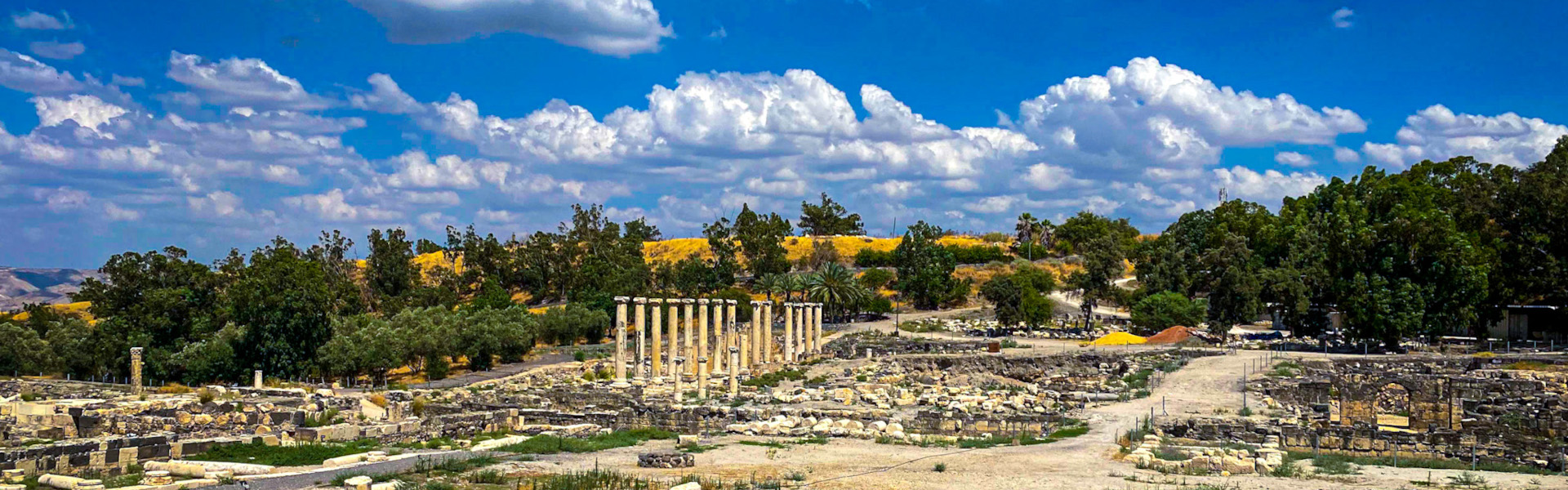
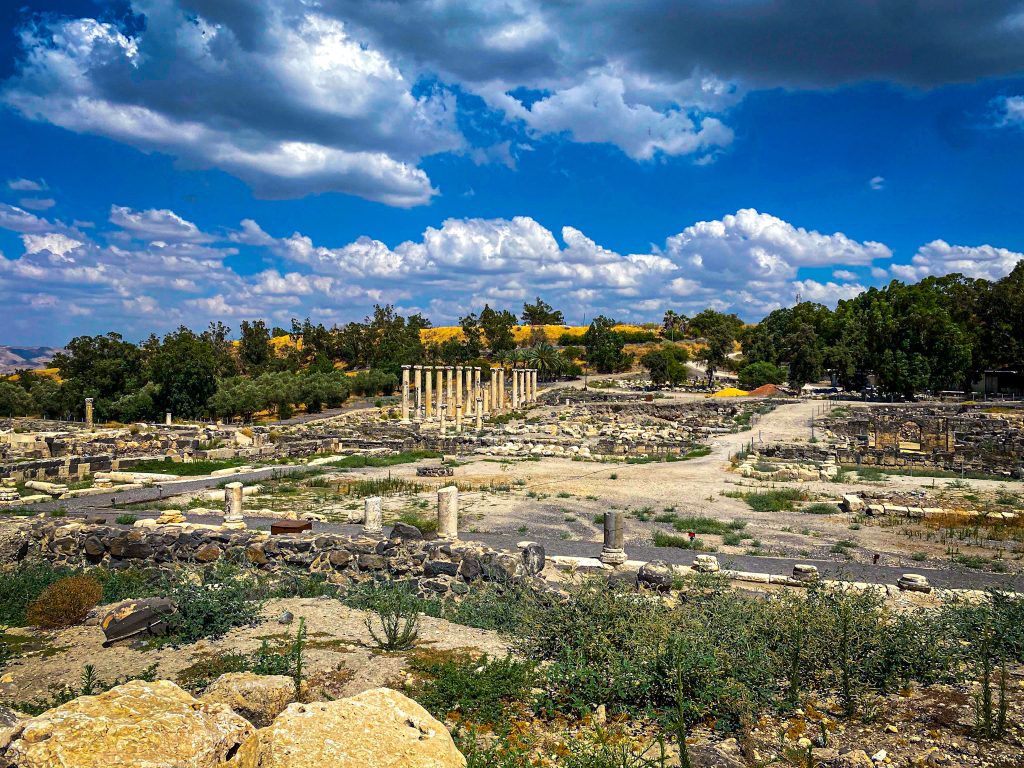
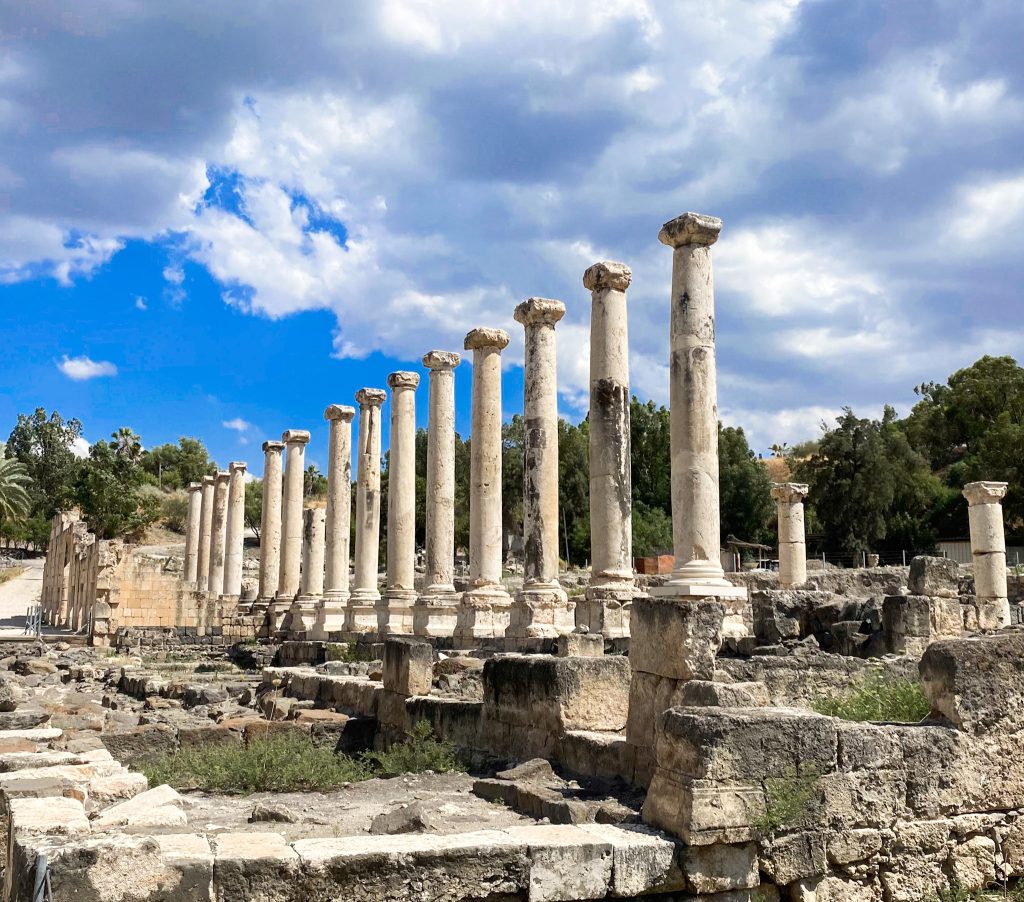
Beit She'an
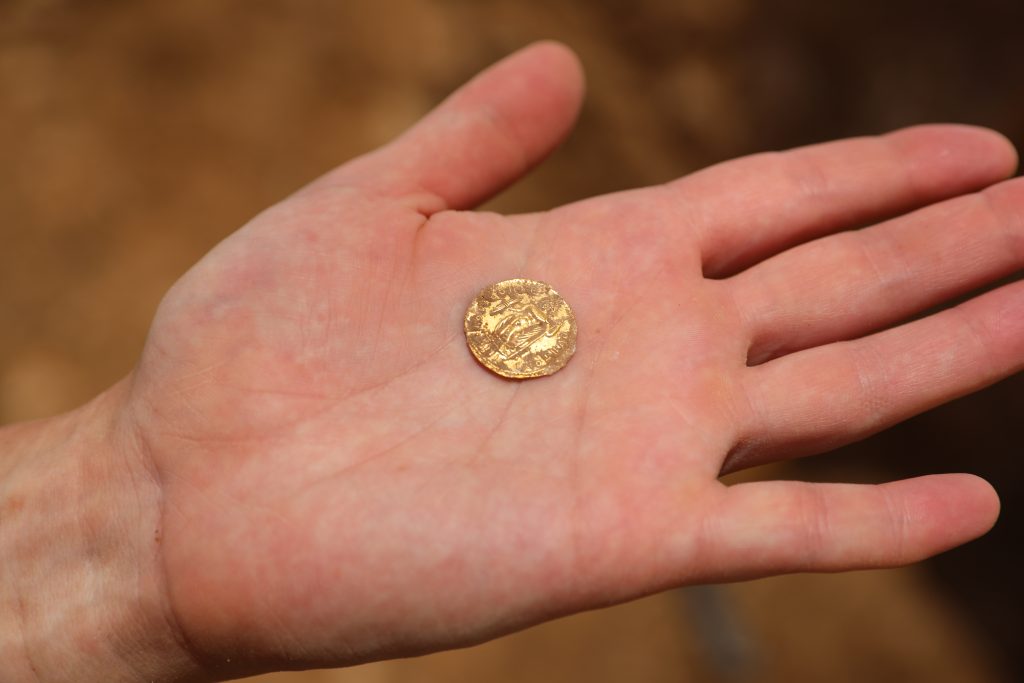
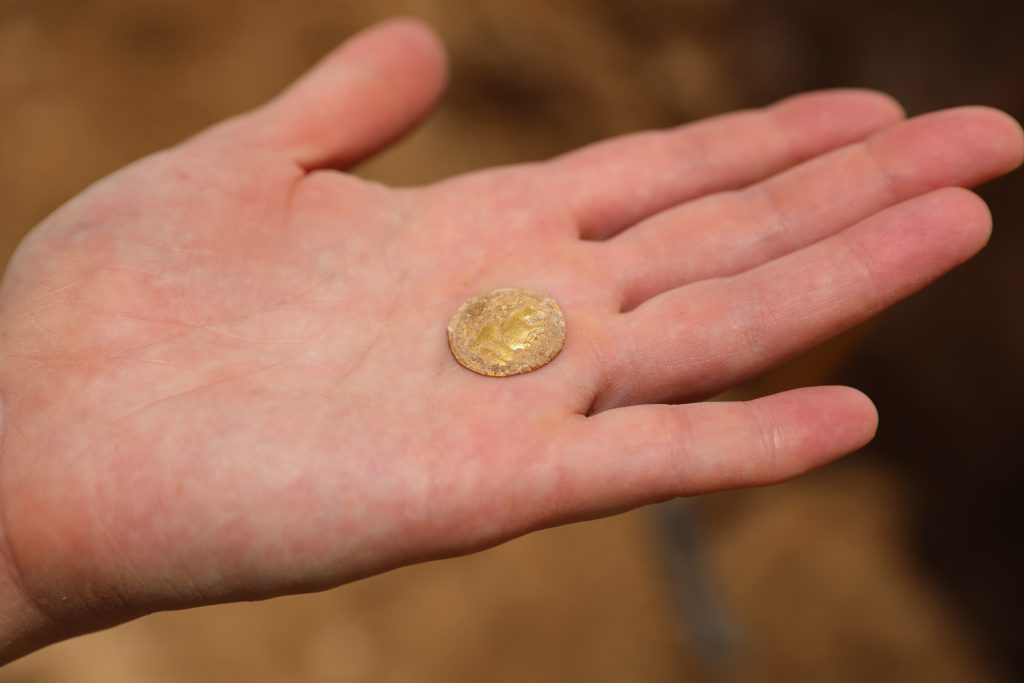
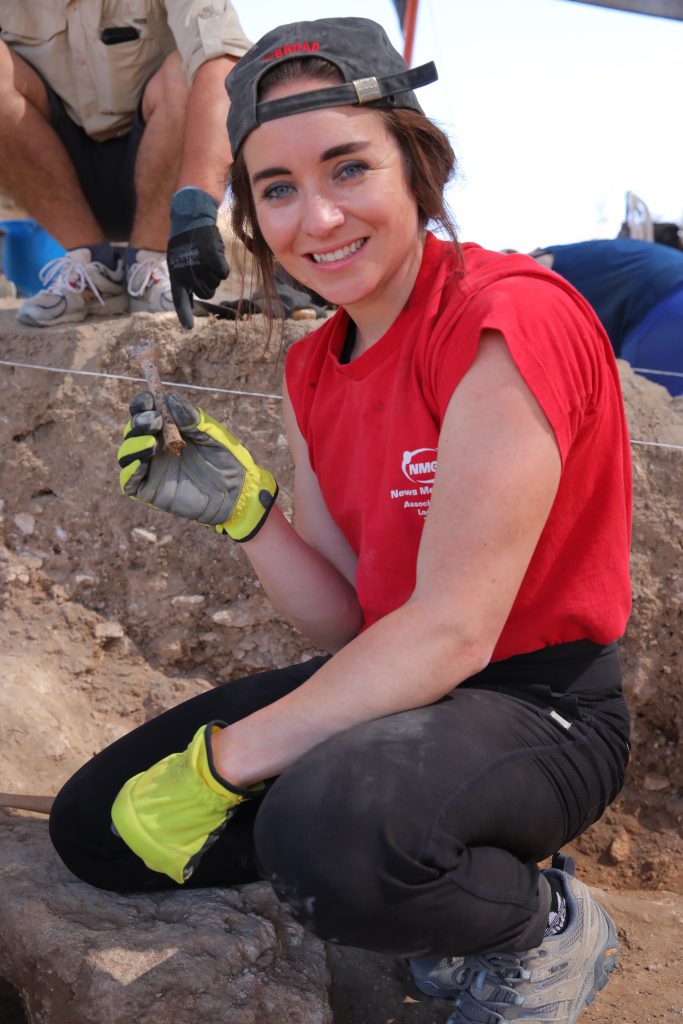
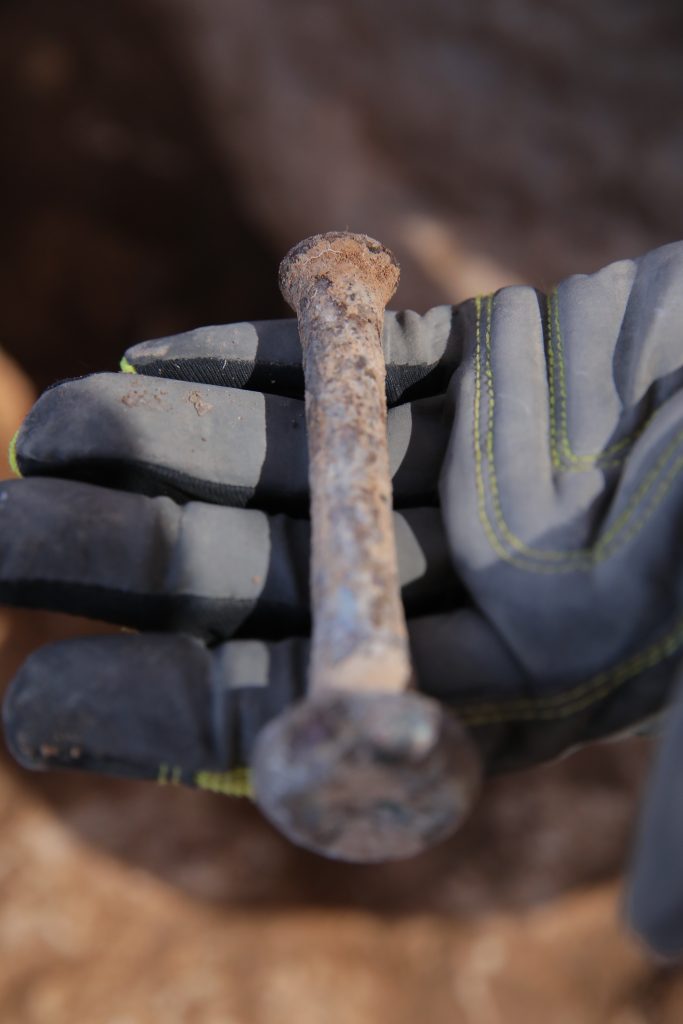
The dig was even more enriching than I anticipated. I gained a robust understanding of the methodology and tools used, as well as the post-excavation processing of artefacts. Moreover, I assisted the area directors with some of the more technical aspects of the excavation, including conducting photogrammetry and operating the total station. These experiences helped me gain a more thorough understanding of archaeological modeling and analysis. I personally uncovered a handful of significant finds, including an intact perfume vessel made from Roman glass, as well as a gold coin in near-perfect condition. The coin was minted under Diocletian in 295 CE and was the first dated item we found on the dig.
Coin found from 295 mentioned in the report (side 1)
Coin found from 295 mentioned in the report (side 2)
Krysta Fauria holding a Roman perfume vessel
Close up of the Roman perfume vessel
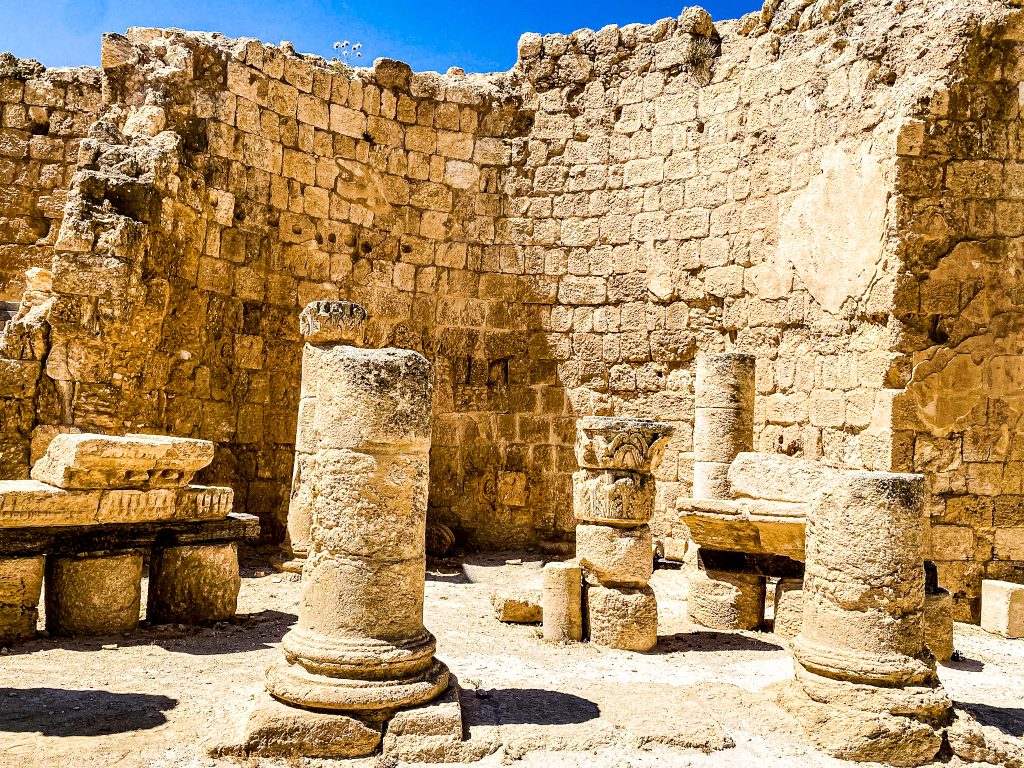
I also spent a significant amount of time visiting additional archaeological sites across the country and Palestine. Some of the sites that stood out as being particularly informative for my research were Megiddo, Beit She’an, Qumran, Herodion, and Caesarea, as well as the remains of the Second Temple and the City of David in Jerusalem.
It is difficult to overstate the ways in which my scholarship will benefit from this trip. For example, one way that studying the material remains informed my current understanding of the Second Temple and Roman Period is that it illustrated the ways in which the Judeans of this time were deeply entrenched in so-called Greco-Roman culture. While recent scholarship has had no shortage of critiques on conceptions of Hellenistic Judaism, I was able to comprehend this critique in new ways after seeing how Jewish people in antiquity co-existed with other Mediterranean inhabitants.
Herodion
This experience gave me an appreciation for the diverse areas of expertise needed to make an excavation possible. In a time when scholarship is seeking to become more collaborative and interdisciplinary, it seems prudent to look to the field of archaeology, which has long relied on scholars from a variety of disciplines and specializations. I hope to return to Israel and to hopefully go on another dig soon.
Beit She'an
Krysta Fauria is a second-year PhD student at the University of Southern California studying early Christianity and the Synoptic Gospels. Prior to beginning her program at USC, Krysta was a journalist covering politics and breaking news for The Associated Press in Washington, DC and Los Angeles.
Into the Unknown: Exploring a “Lost” Old Kingdom Tomb & Egypto-Nubian Connections
Friends of ASOR present the next webinar in our monthly series on February 23, 2023, at 6:00 pm EST, featuring Prof. Greg Mumford and moderated by Prof. Stuart Tyson Smith. This presentation briefly introduces the complicated circumstances and setting of a decorative program from a late Old Kingdom tomb belonging to Niankhnisut, who spanned late Dynasty 5 through early Dynasty 6 (temp. Kings Unas to Teti). Like many Ancient Egyptian elite tombs, this tomb chapel apparently displayed extensive damage by the time of its rediscovery and looting in 1917 (during World War I), with looters removing numerous blocks and extensive scenes, which were in turn obtained and dispersed by a dealer, Jacob Hirsch, to at least 18 museums and collections across the globe. Although the precise location of Niankhnisut’s tomb remained unknown for many decades, in 2000 the Supreme Council of Antiquities (now MoA) located and excavated this tomb, finding further scenes and numerous ex-situ fragments.
This webinar continues with an examination of an aspect of the decoration from Niankhnisut’s tomb, namely Egypto-Nubian relations in the Old Kingdom: Several scenes from this tomb, like many other Old Kingdom elite tombs, illustrate the presence of exotic fauna, frequently in conjunction with little people (i.e., “dwarfs” and/or pygmies), which reflect Egyptian interrelations with Nubia and Punt, which is widely attested via archaeological and textual-pictorial sources. The Old Kingdom court and elite often feature the employment of little people as animal handlers alongside imported Nubian primates, felines, and dogs, with an added emphasis upon the desirability of utilizing dwarfs and sometimes sub-Saharan pygmies, for diverse employment within the royal court and broader settings, including jewelry production, animal handlers, bearers, entertainers, and other roles. The presentation cannot encompass the much broader aspects of Egypto-Nubian relations during the second millennium BCE, but will touch upon further aspects in relation to Niankhnisut’s tomb scenes and the importation of exotic animals from Nubia. The webinar will conclude with a live Q&A session moderated by Prof. Stuart Tyson Smith (University of California, Santa Barbara).
Professor Greg Mumford grew up in Kenya (1965-1976) and South Africa (1977-1980), during which he accompanied his parents on frequent trips to archaeological sites, museums, and public lectures in these and adjacent countries. Mumford later pursued studies in archaeology and Egyptology at the University of Toronto, expanding his interests to Egypt’s relations with its neighbours. He direct projects at Tell Tebilla (NE Delta) and Markha Plain (SW Sinai) in Egypt, and work frequently with his spouse, Dr. S. Parcak, on several joint projects, including assisting at el-Lisht, Egypt. Mumford has also participated variously in prehistoric through Roman-Coptic period projects at East Karnak (Luxor), Tomb of Merenptah (Valley of the Kings), Amarna and its vicinity (Middle Egypt), Dakhleh Oasis (Western Desert), Mendes (NE Delta), Tell Kedwa (NW Sinai), and Tell Borg (NW Sinai), and has taught at Wilfrid Laurier University (1995), UCLA (1999-2000), the University of Toronto (1999-2005), and the University of Wales Swansea (2005-2006), and is now based –as an associate professor– at the University of Alabama at Birmingham (2006/7-present).
This webinar will be recorded and all paid registrants will be sent a link to view the recording.
To receive your ASOR member discount, log into the online store. If you are new to ASOR, please click on the “New Visitor Registration” link to register your e-mail address and choose a password for our online store. Once logged in, navigate to “Meeting and Event Registration” to register for the webinar and pay the fee. Each paid registrant will receive a confirmation e-mail when you pay for the webinar. If you do not receive this e-mail, then you are not registered. Please e-mail membership@asor.org with any questions or issues with registering.
You will be e-mailed the Zoom Webinar link in the week prior to the lecture on February 23, 2023. If you do not receive the link by the close of business on the Tuesday before the webinar, please e-mail membership@asor.org immediately. This webinar will be recorded and all paid registrants will be sent a link to view the recording.
All proceeds from this webinar are used to fund scholarships for members as well as increasing ASOR’s online resources, which are free to the public.
READY FOR A WEBINAR SEASON PASS?
Buy a season pass for all the webinars* of the 2022-2023 FOA Webinar Season! 1) You will automatically receive the Zoom link for each webinar so no need to register each time. 2) You will also receive the recording of each webinar automatically after the event.
If you have missed webinars earlier in the season and still want to buy the pass, you will receive the links to the recordings of the webinars you missed in your automatic confirmation email after you buy the pass.
*Special symposiums may be excluded from the season pass price.
No more registering for a year if you buy your pass today!
Pricing:
Members: $75.00 Non-Members: $150.00 ASOR Sustaining Members: $0 (automatic registration for each webinar) Not a member yet? Click here to join as a member and receive the 50% off a season pass!
Log into our online store to purchase the season pass for 2022-2023. If you are new to ASOR and do not have a record in our store yet, click here to register. After you login, navigate to the left to “Meeting and Event Registration.” Please e-mail membership@asor.org if you have any questions or issues.
WHY SPONSOR A WEBINAR?
Several levels of support from $50-$1,000 are available. Proceeds go towards membership scholarships and towards increasing ASOR’s virtual resources. Each sponsorship is tax-deductible and you can give your friends free registrations to a webinar!
Bronze Level ($50): up to 2 guest registrations Silver Level ($100): up to 5 guest registrations Gold Level ($500): up to 20 guest registrations Platinum Level ($1,000): up to 50 guest registrations
After you sign up for a sponsorship online or over the phone, email the names and email addresses of your guests to Felice Herman at membership@asor.org, who will send your guests a confirmation and the Zoom link before the webinar.
WANT TO SAVE $6.00 ON THE NEXT WEBINAR?
Join ASOR as a member! Click here for more details about discounts for events and other benefits of membership. Memberships start at $40 for the year as an Associate Member.
You can now purchase the link to the recording of any webinar. You can also purchase the bundle packages of all webinars from the 2020-2022 seasons. Please e-mail membership@asor.org for purchase details.
To see a printable pdf of the webinar titles from the 2020-2021 season, please click here. To see a printable pdf of the webinar titles from the 2021-2022 season, please click here.
Where Are They Now?: A Preview of 2022 ASOR-Affiliated Fieldwork Projects Michael Given (University of Glasgow), Xenia-Paula Kyriakou (Florida Gulf Coast University), Stephen Batiuk (University of Toronto), Monique Roddy (Walla Walla University), Kent Bramlett (La Sierra University), Friedbert Ninow (La Sierra University), and Michael Hoff (University of Nebraska-Lincoln) | March 8, 2022
Tel Rehov: A Major Bronze and Iron Age City in the Jordan Valley Amihai Mazar (Hebrew University of Jerusalem), Nava Panitz-Cohen ( Hebrew University of Jerusalem), Nota Kourou (Athens University), Naama Yahalom-Mack (Hebrew University of Jerusalem), Robert Mullins (Azusa Pacific University) | February 10, 2022
Archaeogaming: Why Video Games Deserve Their Own Archaeology Tine Rassalle (University of North Carolina at Chapel Hill), Shannon Martino (Morton College), Matthew Winter (University of Arizona), Michael Zimmerman (Rhode Island) | April 18, 2021



 administrative activities, which helped the kingdom consolidate its power over neighboring regions.
 Tiffany Earley-Spadoni is an Associate Professor of History at the University of Central Florida. Her research consists of spatially-oriented investigations of expansionary state development in the ancient Near East. She received her PhD in Near Eastern Studies from the Johns Hopkins University.









 This webinar continues with an examination of an aspect of the decoration from Niankhnisut’s tomb, namely Egypto-Nubian relations in the Old Kingdom: Several scenes from this tomb, like many other Old Kingdom elite tombs, illustrate the presence of exotic fauna, frequently in conjunction with little people (i.e., “dwarfs” and/or pygmies), which reflect Egyptian interrelations with Nubia and Punt, which is widely attested via archaeological and textual-pictorial sources. The Old Kingdom court and elite often feature the employment of little people as animal handlers alongside imported Nubian primates, felines, and dogs, with an added emphasis upon the desirability of utilizing dwarfs and sometimes sub-Saharan pygmies, for diverse employment within the royal court and broader settings, including jewelry production, animal handlers, bearers, entertainers, and other roles. The presentation cannot encompass the much broader aspects of Egypto-Nubian relations during the second millennium BCE, but will touch upon further aspects in relation to Niankhnisut’s tomb scenes and the importation of exotic animals from Nubia. The webinar will conclude with a live Q&A session moderated by Prof. Stuart Tyson Smith (University of California, Santa Barbara).
