
 University of Michigan and University of Minnesota Excavations at Tel Kedesh I: The Hellenistic Archive and its Sealings
by Sharon C. Herbert
This is the first volume in a projected series of final reports on the 1997-2012 University of Michigan/University of Minnesota excavations at Tel Kedesh, located in the Upper Galilee of modern Israel and the hinterland of ancient Tyre. It presents the 2nd century BCE Hellenistic archive and the 2000+ sealings found there. The Kedesh archive complex was situated within a large, multipurposed administrative building, first constructed under Persian rule in the late 6th century BCE and then modified under Ptolemaic and Seleucid rule in the 3rd and 2nd centuries BCE. The sealings in the archive date to the final Seleucid phase of occupation in the first half of the 2nd century BCE. The first part of the volume situates the Kedesh archive within the context of excavated Hellenistic archives from Carthage in the west to Selucia-on-the-Tigris in the east and reflects on the varieties of archives, clienteles, and sealing practices so far known from the Hellenistic world. The second part presents an annotated illustrated catalog of the images and iconography of the 1,733 readable impressions found on the sealings. The subject matter of the 1,293 seal rings that produced the impressions was for the most part Greek.
With contributions by Donald T. Ariel, Andrea M. Berlin, Paul Lesperance, and Anastasia Shapiro.
ASOR Archaeological Reports, Volume 30, September 2023, 584 pages, 285 b/w figures, 106 b/w plates, 978-0-89757-118-0, $99.95.
[vc_row fullwidth=”true” attached=”true” css=”.vc_custom_1496247803139{padding-top: 0px !important;padding-right: 0px !important;padding-bottom: 0px !important;padding-left: 0px !important;}”][vc_column][vc_single_image image=”90494″ img_size=”1900×400″ alignment=”center”][/vc_column][/vc_row][vc_row fullwidth=”true” css=”.vc_custom_1496682730308{padding-top: 10px !important;padding-right: 0px !important;padding-bottom: 0px !important;padding-left: 0px !important;}”][vc_column width=”1/12″ css=”.vc_custom_1496683820796{margin-right: 10px !important;}” offset=”vc_hidden-md vc_hidden-sm vc_hidden-xs”][vc_column_text]
SHARE
[/vc_column_text][mk_image src=”http://www.asortest.org/wp-content/uploads/2017/01/social-fb-icon4.jpg” image_width=”42″ image_height=”42″ hover=”false” custom_url=”https://www.facebook.com/ASOResearch/” margin_bottom=”0″][mk_image src=”http://www.asortest.org/wp-content/uploads/2017/01/social-tw-icon4.jpg” image_width=”42″ image_height=”42″ hover=”false” custom_url=”https://twitter.com/ASOResearch?ref_src=twsrc%5Egoogle%7Ctwcamp%5Eserp%7Ctwgr%5Eauthor” margin_bottom=”0″][mk_image src=”http://www.asortest.org/wp-content/uploads/2017/01/social-in-icon4.jpg” image_width=”42″ image_height=”42″ hover=”false” custom_url=”https://www.linkedin.com/company/american-schools-of-oriental-research” margin_bottom=”0″][mk_image src=”http://www.asortest.org/wp-content/uploads/2017/01/social-ml-icon_7.jpg” image_width=”42″ image_height=”42″ hover=”false” custom_url=”mailto:info@asor.org” margin_bottom=”0″][mk_image src=”http://www.asortest.org/wp-content/uploads/2017/01/blog-icon3.jpg” image_width=”42″ image_height=”42″ hover=”false” custom_url=”http://asor.org/blog” margin_bottom=”0″][/vc_column][vc_column border_color=”rgba(255,255,255,0.01)” width=”1/6″ css=”.vc_custom_1496683923840{margin-right: 20px !important;border-left-width: 2px !important;padding-right: 20px !important;padding-left: 20px !important;border-left-color: #99422f !important;}”][mk_divider divider_color=”rgba(255,255,255,0.01)” thickness=”1″ margin_top=”3″ margin_bottom=”3″][vc_widget_sidebar sidebar_id=”ca-sidebar-39801″][/vc_column][vc_column border_color=”rgba(170,170,170,0.01)” width=”1/2″ css=”.vc_custom_1487276122024{margin-right: 10px !important;margin-bottom: 30px !important;border-right-width: 2px !important;border-bottom-width: 2px !important;padding-top: 30px !important;padding-right: 30px !important;padding-left: 20px !important;background-color: #ffffff !important;border-right-color: rgba(227,228,228,0.75) !important;border-bottom-color: rgba(227,228,228,0.75) !important;}”][vc_wp_text]
October 20-22, Raleigh-Durham, NC
Register today for “Archaeology in the Mediterranean and Ancient Near East: Recent Discoveries and Retrospectives” a Friends of ASOR Weekend Seminar in Raleigh-Durham, NC at the Sheraton Imperial Hotel Raleigh-Durham Airport at Research Triangle Park.
Join us in Raleigh this October for a weekend full of interactive lectures, or register for a One-Day pass! Registration for the entire weekend includes admission to an intimate dinner discussion on Friday evening, presentations all-day Saturday, a special dinner and plenary panel discussion on ASOR’s Cultural Heritage Initiates, and presentations on Sunday morning. There will be ample opportunities to engage informally with speakers and panelists. Registration for the entire weekend includes access to a discount on hotel room rates (cut-off date is September 29), dinner on 10/20, lunch on 10/21, and dinner on 10/21.
This FOA Seminar will include presentations from Eric Meyers, Carol Meyers, Jennie Ebeling, Kate Grossman, Tate Paulette, and Jack Sasson. Sharon Herbert and Andrew Vaughn will participate as panelists.[/vc_wp_text][vc_single_image image=”89693″ img_size=”300×400″ alignment=”center” onclick=”custom_link” img_link_target=”_blank” css=”.vc_custom_1692208204439{padding-right: 10px !important;}” link=”https://members.asor.org/integratedEvents/home/2023-FRIENDS-OF-ASOR-SEMINAR”][mk_padding_divider][vc_wp_text]
(Full weekend seminar with all events included is $185, individual events priced below)[/vc_wp_text][mk_table]
| Friday Oct. 20 | Saturday Oct. 21 | Sunday Oct. 22 | |
|---|---|---|---|
| Dinner and a private conversation with the seminar’s academic speakers: $75 | One-day Registration (includes 4 presentations, lunch, and dinner): $80 | One-day Registration: $35 | |
| Saturday night dinner: $75 *Free for the first 30 local registrants |
|||
| Full Weekend Registration ($185) | All of the above included | All of the above included | All of the above included |
[/mk_table][mk_padding_divider][vc_wp_text]
[/vc_wp_text][vc_row_inner][vc_column_inner][vc_column_text]
[/vc_column_text][/vc_column_inner][vc_column_inner][/vc_column_inner][/vc_row_inner][vc_row_inner][vc_column_inner width=”1/6″][vc_column_text]Dinner
[/vc_column_text][/vc_column_inner][vc_column_inner width=”5/6″][vc_column_text]Private conversation with the seminar’s academic speakers
[/vc_column_text][/vc_column_inner][/vc_row_inner][vc_row_inner][vc_column_inner][vc_column_text]
[/vc_column_text][/vc_column_inner][/vc_row_inner][vc_row_inner][vc_column_inner width=”1/6″][vc_column_text]Morning[/vc_column_text][/vc_column_inner][vc_column_inner width=”5/6″][vc_column_text]Naboth’s Vineyard in Context: Excavating an Iron Age Winery at Jezreel
Jennie Ebeling
The beverage described most frequently in the Hebrew Bible/Old Testament, wine played a major role in the diet, economy, religion, and culture of ancient Israel. A well-preserved winery complex excavated at Jezreel in Israel’s Galilee offers insights into the technology of wine production during the Iron Age (ca. 1200-586 BCE) and provides context for the dramatic story of Naboth’s vineyard in 1 Kings 21.
Food, Gender, and Power in Israelite Households
Carol Meyers
Nothing is more fundamental to human existence than food, and in traditional societies like ancient Israel, growing crops and raising animals and then transforming them into edible form occupied a significant part of the daily life of most people. The latter step–the production of edible products, that is, food–was largely the task of women in biblical antiquity. This presentation will look at some of the archaeological materials that women used in making food. Then it will go a step further and look at the social, religious, and other aspects of women’s food-production tasks. In so doing, it will reveal otherwise unnoticed aspects, such as personal and social power, of women’s lives in Israelite households.
[/vc_column_text][/vc_column_inner][/vc_row_inner][vc_row_inner][vc_column_inner][vc_column_text]Lunch[/vc_column_text][/vc_column_inner][/vc_row_inner][vc_row_inner][vc_column_inner width=”1/6″][vc_column_text]Afternoon[/vc_column_text][/vc_column_inner][vc_column_inner width=”5/6″][vc_column_text]Tales the Animals Tell: Zooarchaeology and the Multispecies Communities of the Ancient Near East
Kate Grossman
The cities, towns, and countryside of the Near East were populated not just by humans, but also by the animals that lived, worked, and died alongside them. While we tend to think of animals primarily as a source of food and labor, new approaches to the study of human-animal interactions are foregrounding the ways that animals influenced human action and contributed to social life in the ancient world. Drawing on 15+ years of studying animal bones from archaeological sites in Syria, Iraq, Jordan, Egypt, and Cyprus, I will show how the zooarchaeological record provides surprising new insights into the multispecies communities of the ancient Near East.
Beer and Brewing in Ancient Mesopotamia
Tate Paulette
In ancient Mesopotamia, beer was produced on a massive scale and was consumed on a daily basis by people across the socio-economic spectrum. Beer was a gift from the gods, a marker of civilization, a dietary staple, a social lubricant, a ritual necessity, and a reason for celebration. It was consumed at feasts, festivals, and ritual ceremonies, but also at home, on the job, and in neighborhood taverns. It was produced by brewers working for the powerful palace and temple institutions and also by local tavern keepers and homebrewers. This lecture explores the archaeological, artistic, and written evidence for beer and brewing in Mesopotamia, as well as recent efforts to recreate Mesopotamian beer.
[/vc_column_text][/vc_column_inner][/vc_row_inner][vc_row_inner][vc_column_inner width=”1/6″][vc_column_text]Dinner
Plenary Panel[/vc_column_text][/vc_column_inner][vc_column_inner width=”5/6″][vc_column_text]Cultural Heritage in the Age of Conflict: ASOR in North Africa
Andrew Vaughn, Sharon Herbert, Carol Meyers, Eric Meyers, Jack Sasson[/vc_column_text][/vc_column_inner][/vc_row_inner][vc_row_inner][vc_column_inner][vc_column_text]
[/vc_column_text][/vc_column_inner][/vc_row_inner][vc_row_inner][vc_column_inner width=”1/6″][vc_column_text]Morning[/vc_column_text][/vc_column_inner][vc_column_inner width=”5/6″][vc_column_text]Of Tombstones and Atlantis: Searching for a Lost Past in Tunis and Djerba
Jack Sasson
In Tunis and Djerba, Jack M. Sasson, a retired (UNC and Vanderbilt) Assyriologist and Biblical scholar, had glimpses of remnant communities that parallel those of his native Syria and Lebanon, alas now as submerged as Atlantis. In this informal talk, he will reflect on his personal experience of that world as evoked by his visit: Arab in culture, Jewish in religion, and French in outlook. Sasson will also report on a striking difference among those communities in their biographic use of tombstones.
Jesus in Galilee: An Archaeological Perspective
Eric Meyers
Recent archaeological discoveries in Galilee have shown beyond any shadow of a doubt that the region was overwhelmingly Jewish in the time of Jesus. There are only a handful of sites that may be identified as gentile or non-Jewish. In addition, the identification of many early synagogues from this period has allowed us to better understand that the multiple references in Josephus and the New Testament are to actually purpose-built structures, chief among them being Magdala. Together with the many stones vessels and ritual baths found, we may today conclude that most of these Jewish sites, which date to the early Roman period, indicate that Jews were practicing purity laws based on the Torah. Also, with little to no Greek attested in the epigraphic finds from this time, therefore, a much more nuanced and accurate picture of Jewish Galilee may be drawn in the most recent quest for the historical Jesus.
[/vc_column_text][/vc_column_inner][/vc_row_inner][mk_padding_divider][vc_row_inner][vc_column_inner][vc_single_image image=”91975″ img_size=”full” alignment=”center” onclick=”custom_link” img_link_target=”_blank” css=”.vc_custom_1695302848266{padding-right: 10px !important;}” link=”https://members.asor.org/integratedEvents/home/2023-FRIENDS-OF-ASOR-SEMINAR”][/vc_column_inner][/vc_row_inner][mk_padding_divider][vc_wp_text]Questions about registration? Please contact membership@asor.org or call 703-789-9230.[/vc_wp_text][mk_padding_divider][/vc_column][vc_column border_color=”rgba(170,170,170,0.01)” width=”1/6″ css=”.vc_custom_1496684098866{margin-right: 5px !important;margin-bottom: 20px !important;border-right-width: 2px !important;border-bottom-width: 2px !important;padding-top: 30px !important;padding-right: 10px !important;padding-left: 10px !important;background-color: #ffffff !important;border-right-color: rgba(227,228,228,0.75) !important;border-bottom-color: rgba(227,228,228,0.75) !important;}”][vc_wp_posts title=”BROWSE THE NEWS ARCHIVE” number=”4″][/vc_column][vc_column border_color=”rgba(170,170,170,0.01)” width=”1/6″ css=”.vc_custom_1496684008271{margin-right: 10px !important;margin-bottom: 30px !important;border-right-width: 2px !important;border-bottom-width: 2px !important;padding-top: 30px !important;padding-right: 20px !important;padding-left: 20px !important;background-color: #ffffff !important;border-right-color: rgba(227,228,228,0.75) !important;border-bottom-color: rgba(227,228,228,0.75) !important;}”][vc_column_text]Tweets by ASOResearch [/vc_column_text][/vc_column][/vc_row]
 The Journal of Cuneiform Studies (JCS), a publication of the American Society of Overseas Research (ASOR) and published in partnership with the University of Chicago Press, is seeking a new Editor (or Co-Editors). We anticipate an appointment for an initial six-year period (consisting of two three-year terms) with the possibility of renewal for one additional three-year term. During this period, the Editor(s) will be responsible for one journal issue per annum. Beginning in January 2024, current editor Piotr Michalowski will work closely with the new Editor(s) to facilitate the transition, with the new Editor(s) assuming full responsibility by July 2024.
JCS is a peer-reviewed, illustrated publication including technical articles covering the entire ancient Middle East and eastern Mediterranean world from the beginning to the end of cuneiform culture. The principal subject areas of the journal include the texts, histories, cultures, and archaeology of the cuneiform cultures of the ancient Middle East and Mediterranean. JCS is published on paper and online through a publishing partnership with the University of Chicago Press.
The duties of the position include the following: maintenance of an editorial office for the journal (remote location is expected); solicitation and acquisition of manuscripts; implementation of a peer-review process; collaboration with the ASOR managing editor and staff; actively promoting the journal; and editing and proofreading each annual issue. One of the most important responsibilities of the Editor(s) is the chairing of an editorial board which is actively engaged in the production of the journal. Duties also include timely publication of journal issues, providing annual reports to the Chair of the ASOR Publications Committee, serving on the Committee on Mesopotamian Civilization (the Baghdad Committee), and attending the ASOR Annual Meetings including the meeting of the ASOR Committee on Publication, held on location. The new Editor(s) will be required to gain familiarity with the Editorial Manager software program which is currently used in the publication of the journal (training provided by University of Chicago Press).
The Editor(s) of JCS will have editorial control over the journal within the parameters of the editorial mission established for JCS by ASOR and the Baghdad Committee. The Editor(s) must have expertise in at least one of the languages used to write cuneiform (preferably Akkadian, Sumerian, or Hittite); they would be expected to collaborate with specialists in the languages with which they are less familiar. The Editor(s) should be able to engage with authors writing in English, German, French, but also be prepared to deal with authors with imperfect command of these languages. Ideally, the Editor(s) should have knowledge of the production and distribution processes common to print and electronic journals.
The search committee requests proposals from applicants outlining a vision for the journal within the changing realities of academic publishing. Applications from a single editor, co-editors, or an editorial team will be considered and accepted until the position is filled. All applications received by November 3 are guaranteed to receive full consideration, but applications will be accepted until the position is filled. The candidate’s application package should consist of the aforementioned vision statement and a current CV. These materials should be submitted via e-mail to Marta Ostovich in the ASOR Office. Any inquiries may be directed to Kevin McGeough, Chair of the ASOR Publications Committee, or Jay Crisostomo, Chair of the Baghdad Committee.


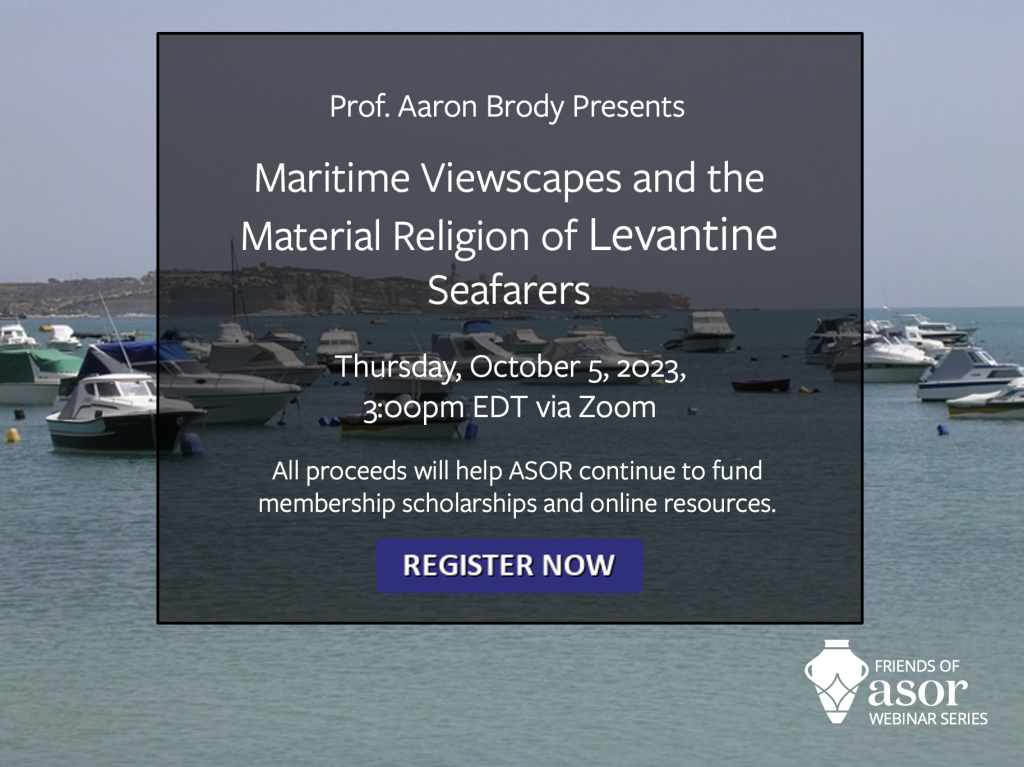
 Friends of ASOR present the next webinar in the 2023-2024 season on October 5 2023, at 3:00 pm EDT, presented by Professor Aaron Brody moderated by Dr. Caroline Sauvage. Ancient seafarers faced dangers and fears posed by the sea and hazards of sailing. Accordingly, specialized sacred beliefs and ritual practices developed among Levantine mariners, who are the focus of this study, which were a subset of terrestrial religion. Sailors honored deities whose maritime, celestial, or meteorological attributes could either benefit or devastate a voyage. While on land, these divine patrons were worshipped in harbor temples and promontory shrines, sometimes with maritime votives. While at sea, divine protection came from the ships themselves, which were considered to be imbued with the spirit of a deity; the vessels also contained sacred spaces that allowed for continued contact with their divine patrons.
 Mariners performed religious ceremonies to enlist and ensure sacred safeguarding and success for their voyages. Maritime features were also part of the funerary practices and mortuary rituals of seafarers. These specialized sacred beliefs and ritual practices were generated by the liminality of the deep and the unique uncertainties and perils at sea, and aided in Levantine maritime exploration, commercial exchanges, and Phoenician settlement that eventually spread throughout the Mediterranean basin and beyond to the Atlantic coasts of Iberia and Morocco.
The webinar will conclude with a live Q&A session led by Dr. Caroline Sauvage of Loyola Marymount University.
 Aaron Brody is the Robert and Kathryn Riddell Professor of Bible and Archaeology and Director of the Badè Museum at Pacific School of Religion in Berkeley, California. He has excavated primarily at harbor sites in Israel, including Tel Nami, Ashkelon, Dor, and Tel Akko; and participated in projects in the Negev and Akko Plain and with the Ohlone-Muwekma at sites in northern California. He has held fellowships at the Albright Institute of Archaeological Research in Jerusalem and the American Center of Research in Amman. Recent publications have focused on the topics of household religion, metallurgy, and interregional trade and economy at Tell en-Nasbeh, from holdings in the Badè and Rockefeller Museums. Professor Brody has longstanding research interests on Levantine seafarers, women’s religion and the sea, and underwater, deep-water, and harbor archaeology. He is a co-editor of a new volume, No Place Like Home: Ancient Near Eastern Houses and Households, recently published by Archaeopress. The research he is presenting today is from a chapter he authored in the Handbook of Material Religion in the Ancient Near East, edited by Nicola Laneri and Sharon Steadman, published earlier this year by Bloomsbury Academic press. That chapter and today’s talk are entitled “Maritime Viewscapes and the Material Religion of Levantine Seafarers”.
This webinar will be recorded and all paid registrants will be sent a link to view the recording.

*Please log in to the Online Portal BEFORE registering for the webinar. Once you have logged in, you will be able to register under our Events page linked above.
ASOR Sustaining Members: $0 | ASOR Members: $6.50 | Public: $13
Season Pass: ASOR Sustaining Members: $0 | ASOR Members: $75 | Public: $155
Buy one here!
Please e-mail membership@asor.org with any questions or issues with registering.
All proceeds from this webinar are used to fund scholarships for members as well as increasing ASOR’s online resources, which are free to the public.
Buy a season pass for all the webinars* of the 2023-2024 FOA Webinar Season! With a season pass, you will automatically be registered for every webinar in the season, and you will receive the recording of each webinar automatically after the event.
If you have missed webinars earlier in the season and still want to buy the pass, you will receive the links to the recordings of the webinars you missed in your automatic confirmation email after you buy the pass.
*Special symposiums may be excluded from the season pass price.
No more registering for a year if you buy your pass today!
Pricing:
ASOR Sustaining Members: $0 (automatic registration for each webinar)
Members: $75
Public: $150
Not a member yet? Click here to join as a member and receive the 50% off a season pass!

Please e-mail membership@asor.org if you have any questions or issues.
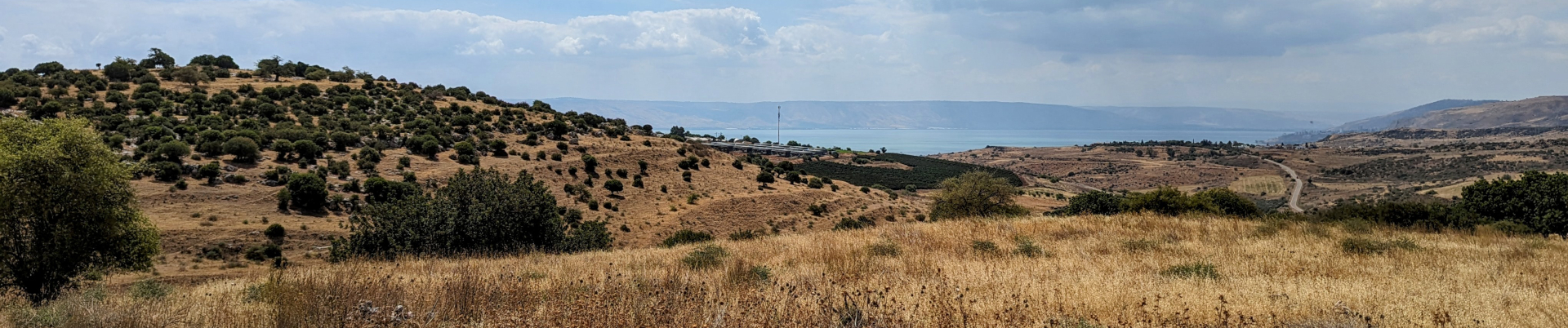

A view of the Sea of Galilee from the excavation site. Photo courtesy of the author.
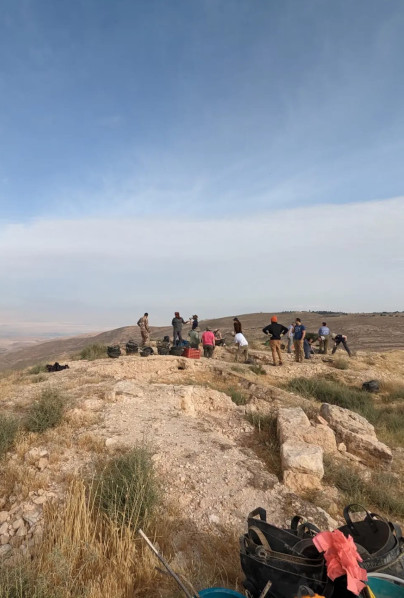
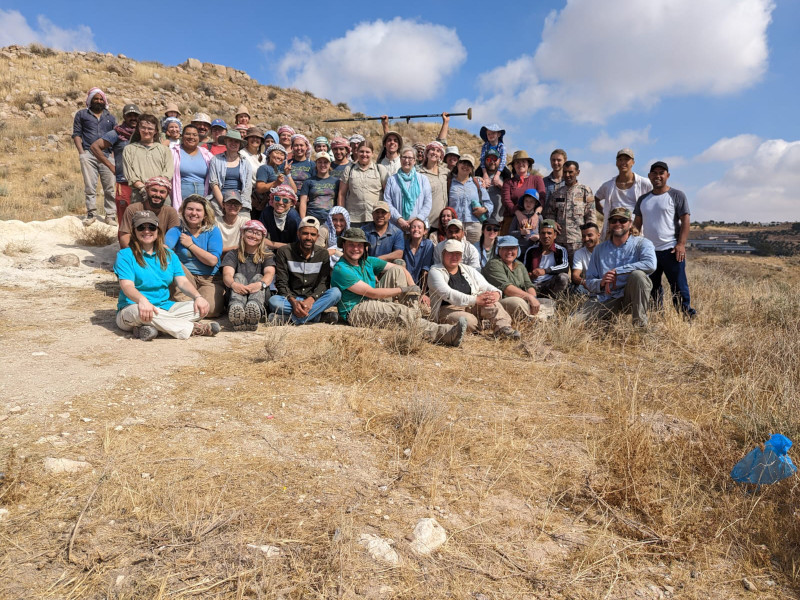
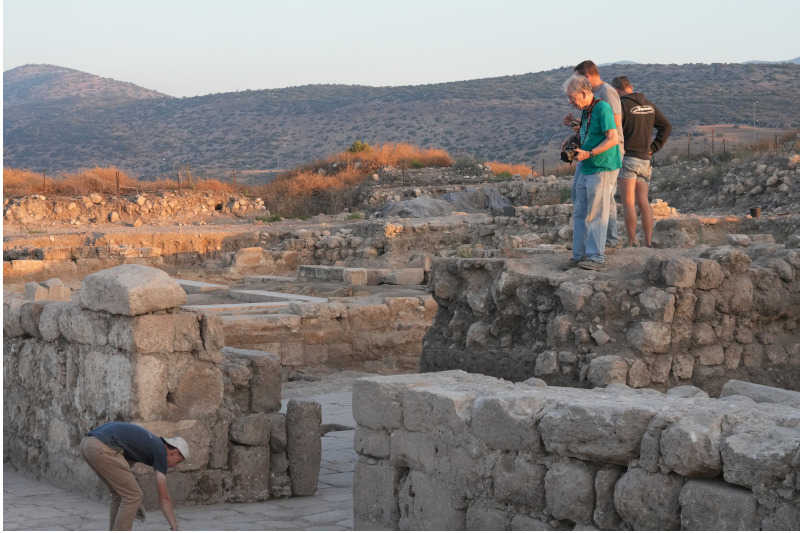
This project was a singular experience because it allowed us to participate in a traditional archaeological field school while tailoring this phenomenal experience to our particular interests. I was able to approach the project from a unique angle—I am a Geography student at Brigham Young University with a minor in History. My primary area of interest lies in the religious history of Judaism and early Christianity. Thus, this opportunity presented itself as the perfect way for me to intimately study religious experience up close and in the Holy Land, not just in a book or in a class. It likewise allowed me to, at least for a moment, fulfill my childhood dream of one day being an archaeologist.
While my experience differed from the “archaeology” I was exposed to in popular media as a child, I came away from my experience at Huqoq having been taught numerous valuable lessons. Above all,our excavations at Huqoq led me to have a shift in my understanding of the importance of archaeology.
Prior to participating in the dig, I had a preconceived notion that archaeology was simply the method used to produce information required for scholars and archaeologists to draw conclusions about the past. In a way, it was the best way for them to preserve a small snapshot of the past, if you will. While that has an element of truth to it, I also began to understand that archaeology additionally provided the opportunity for us as scholars to capture a fresh perspective of the historical world. History is multi-faceted, and not a one-dimensional “snapshot,” after all. It is for this reason that archaeology is such an appropriate means to better understand the past, as it allows us to uncover additional “vignettes” of the past and explore another aspect of the historical narrative that deserves to be shared.
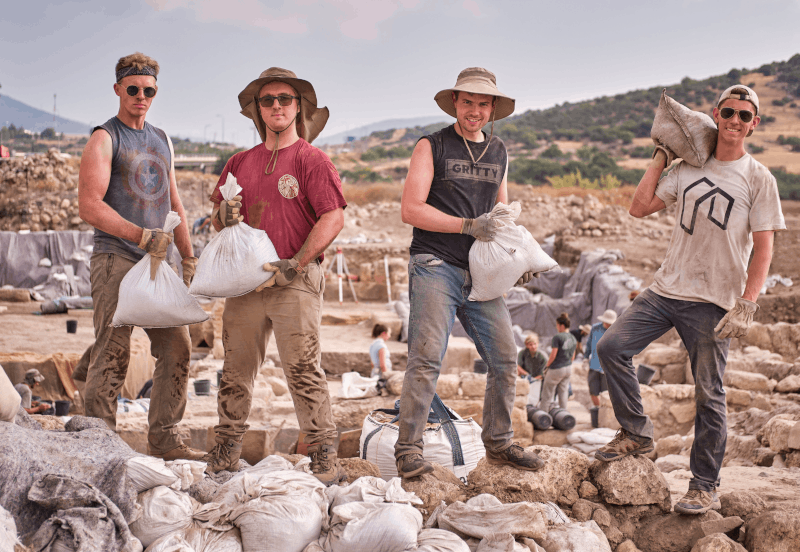
 Thomas Barrett is a Senior at Brigham Young University in Provo, Utah. He is currently studying Geography with an emphasis in Geospatial Science & Technology and is minoring in History, with an emphasis in Religious History.
[vc_row fullwidth=”true” attached=”true” css=”.vc_custom_1496247803139{padding-top: 0px !important;padding-right: 0px !important;padding-bottom: 0px !important;padding-left: 0px !important;}”][vc_column][vc_single_image image=”91698″ img_size=”full” alignment=”center”][/vc_column][/vc_row][vc_row fullwidth=”true” css=”.vc_custom_1496682730308{padding-top: 10px !important;padding-right: 0px !important;padding-bottom: 0px !important;padding-left: 0px !important;}”][vc_column width=”1/12″ css=”.vc_custom_1496683820796{margin-right: 10px !important;}” offset=”vc_hidden-md vc_hidden-sm vc_hidden-xs”][vc_column_text]
SHARE
[/vc_column_text][mk_image src=”http://www.asortest.org/wp-content/uploads/2017/01/social-fb-icon4.jpg” image_width=”42″ image_height=”42″ hover=”false” custom_url=”https://www.facebook.com/ASOResearch/” margin_bottom=”0″][mk_image src=”http://www.asortest.org/wp-content/uploads/2017/01/social-tw-icon4.jpg” image_width=”42″ image_height=”42″ hover=”false” custom_url=”https://twitter.com/ASOResearch?ref_src=twsrc%5Egoogle%7Ctwcamp%5Eserp%7Ctwgr%5Eauthor” margin_bottom=”0″][mk_image src=”http://www.asortest.org/wp-content/uploads/2017/01/social-in-icon4.jpg” image_width=”42″ image_height=”42″ hover=”false” custom_url=”https://www.linkedin.com/company/american-schools-of-oriental-research” margin_bottom=”0″][mk_image src=”http://www.asortest.org/wp-content/uploads/2017/01/social-ml-icon_7.jpg” image_width=”42″ image_height=”42″ hover=”false” custom_url=”mailto:asor@bu.edu” margin_bottom=”0″][mk_image src=”http://www.asortest.org/wp-content/uploads/2017/01/blog-icon3.jpg” image_width=”42″ image_height=”42″ hover=”false” custom_url=”http://asorblog.org/” margin_bottom=”0″][/vc_column][vc_column border_color=”rgba(255,255,255,0.01)” width=”1/6″ css=”.vc_custom_1496683923840{margin-right: 20px !important;border-left-width: 2px !important;padding-right: 20px !important;padding-left: 20px !important;border-left-color: #99422f !important;}”][mk_divider divider_color=”rgba(255,255,255,0.01)” thickness=”1″ margin_top=”3″ margin_bottom=”3″][vc_widget_sidebar sidebar_id=”ca-sidebar-39801″][/vc_column][vc_column border_color=”rgba(170,170,170,0.01)” width=”1/2″ css=”.vc_custom_1487276122024{margin-right: 10px !important;margin-bottom: 30px !important;border-right-width: 2px !important;border-bottom-width: 2px !important;padding-top: 30px !important;padding-right: 30px !important;padding-left: 20px !important;background-color: #ffffff !important;border-right-color: rgba(227,228,228,0.75) !important;border-bottom-color: rgba(227,228,228,0.75) !important;}”][vc_row_inner][vc_column_inner css=”.vc_custom_1570040186774{padding-right: 10px !important;}”][vc_column_text]
[/vc_column_text][/vc_column_inner][/vc_row_inner][mk_divider thickness=”1″ margin_top=”10″ margin_bottom=”30″][vc_row_inner][vc_column_inner width=”1/2″ css=”.vc_custom_1651246129117{padding-right: 10px !important;padding-bottom: 15px !important;}”][vc_single_image image=”91686″ img_size=”medium” alignment=”center” onclick=”custom_link” img_link_target=”_blank” link=”https://www.journals.uchicago.edu/toc/nea/current”][/vc_column_inner][vc_column_inner width=”1/2″][vc_wp_text]
[/vc_wp_text][/vc_column_inner][/vc_row_inner][mk_divider thickness=”1″ margin_top=”30″ margin_bottom=”30″][vc_row_inner][vc_column_inner css=”.vc_custom_1570041002103{padding-right: 10px !important;}”][vc_single_image image=”91688″ img_size=”full” alignment=”center” onclick=”custom_link” img_link_target=”_blank” link=”https://www.journals.uchicago.edu/doi/10.1086/725773″][mk_padding_divider size=”10″][vc_column_text]
Pp. 176-184: “Domestic Material Culture and Wealth Equality: Bronze Age Houses and Intramural Tombs at Titriş Höyük, Turkey,” by Yoko Nishimura
This article measures differential accumulation of material wealth between houses at the intrasite level. The dwellings measured are located in two separate residential neighborhoods at the urban settlement of Titriş Höyük in southeastern Turkey. As proxies of the measurement, the author employed various architectural spaces, built-in features, and portable artifacts exposed from primary floor contexts, as well as grave inclusions from burials within the houses that were completely or partially excavated. Gini values are calculated for thirteen variables derived from the material culture. The results show that occupants of the houses shared a similar economic status from about 2300 to 2100 BCE. It is thought that a centrally planned construction of this settlement around 2300 BCE played a role in the more or less equal wealth distribution. This type of comparative research necessitates a fine-grained excavation record of domestic floors and intramural tombs, both of which are available at Titriş.
ASOR Members with online access: log into ASOR’s Online Portal here. Once logged in, click the JOURNALS tab in the top navigation bar. From here you may select which journal you would like to read. If you have online access, you will see your selected journal’s current issue Table of Contents. Click on the “Current Issue” button and you will then be redirected to the University of Chicago Press’s (UCP) platform to immediately start reading any issue of your choice. Tutorials for how to log in to the Online Portal as well as how to navigate to the Portal Journals page can be found here. [/vc_column_text][/vc_column_inner][/vc_row_inner][mk_divider thickness=”1″ margin_top=”10″ margin_bottom=”30″][vc_row_inner][vc_column_inner css=”.vc_custom_1570041002103{padding-right: 10px !important;}”][vc_single_image image=”91689″ img_size=”full” alignment=”center” onclick=”custom_link” img_link_target=”_blank” link=”https://www.journals.uchicago.edu/doi/10.1086/725772″][mk_padding_divider size=”10″][vc_column_text]
Pp. 186-195: “Exploring the Biography of Gaming Stones at Aredhiou, Cyprus during the Late Bronze Age,” by Louise Steel
This article explores the social lives of gaming stones, a significant number of which have been found at the Late Bronze Age farming settlement of Aredhiou Vouppes, Cyprus. The number of gaming stones found at the site is unprecedented within a Late Cypriot context. Comparatively few are found in the contemporary urban centers, and in general they appear to be more typical of the Middle Cypriot social world. The purpose of this article is to investigate the agency of these gaming stones, and to consider them as social mediators within the community of Aredhiou. It explores the social and cognitive lives of these objects, examining how they might be transformed and reimagined as they moved through myriad states of existence throughout their object-life, and thus the various ways in which they were entangled in the social life of the settlement.
ASOR Members with online access: log into ASOR’s Online Portal here. Once logged in, click the JOURNALS tab in the top navigation bar. From here you may select which journal you would like to read. If you have online access, you will see your selected journal’s current issue Table of Contents. Click on the “Current Issue” button and you will then be redirected to the University of Chicago Press’s (UCP) platform to immediately start reading any issue of your choice. Tutorials for how to log in to the Online Portal as well as how to navigate to the Portal Journals page can be found here. [/vc_column_text][/vc_column_inner][/vc_row_inner][mk_divider thickness=”1″ margin_top=”10″ margin_bottom=”30″][vc_row_inner][vc_column_inner css=”.vc_custom_1570041002103{padding-right: 10px !important;}”][vc_single_image image=”91690″ img_size=”full” alignment=”center” onclick=”custom_link” img_link_target=”_blank” link=”https://www.journals.uchicago.edu/doi/10.1086/725771″][mk_padding_divider size=”10″][vc_column_text]Pp. 196-206: “A Triangular Amulet from Zincirli: The Moon God’s Magical Power in Childbirth,” by K. Lawson Younger
In this article, the author interprets a triangular amulet from the original period of Zincirli’s excavations. He argues that the schematic, linear decoration covering the piece related to astral imagery, most likely the lunar deity Su’en with specifically bovine imagery. The pseudo-script “inscription” covering one of the sides of the amulet was understood to be a magical spell. Based on this hypothesis and in combination with comparative figurine iconography, the author further suggests that the amulet was specifically worn by a woman as a protective aid in childbirth.
ASOR Members with online access: log into ASOR’s Online Portal here. Once logged in, click the JOURNALS tab in the top navigation bar. From here you may select which journal you would like to read. If you have online access, you will see your selected journal’s current issue Table of Contents. Click on the “Current Issue” button and you will then be redirected to the University of Chicago Press’s (UCP) platform to immediately start reading any issue of your choice. Tutorials for how to log in to the Online Portal as well as how to navigate to the Portal Journals page can be found here. [/vc_column_text][/vc_column_inner][/vc_row_inner][mk_divider thickness=”1″ margin_top=”10″ margin_bottom=”30″][vc_row_inner][vc_column_inner css=”.vc_custom_1570041002103{padding-right: 10px !important;}”][vc_single_image image=”91691″ img_size=”full” alignment=”center” onclick=”custom_link” img_link_target=”_blank” link=”https://www.journals.uchicago.edu/doi/10.1086/725774″][mk_padding_divider size=”10″][vc_column_text]
Pp. 208-216: “A Survey on the Geological Origin of the Stele of the Assyrian King Sargon II from Quwakh Tapeh, Kermanshah, Western Iran,” by Sajjad Alibaigi,John MacGinnis, and Iraj Rezaei
In the recent excavations of Quwakh Tapeh, located forty-five kilometers west of Kermanshah in the Mahidasht Plain in western Iran, two fragments were discovered of an Assyrian royal stele belonging to the end of the eighth century BCE and erected on the site following the attack of the Assyrian king Sargon II (722–705 BCE). Considering the high quality of the material, a dolostone, as well as the high quality of the carving of both the relief and the cuneiform inscription, an important question arises as to where the stele was manufactured. In this article we present the results of petrographic and ICP analysis carried out in order to identify the origin of the raw material used for the Quwakh Tapeh stele. The results of our investigations indicate that the stone used to make the stele was probably extracted from the Shahbazan Formation, which outcrops across the Chahar Zabar-Hasanabad Pass to the west and southwest of Quwakh Tapeh.
ASOR Members with online access: log into ASOR’s Online Portal here. Once logged in, click the JOURNALS tab in the top navigation bar. From here you may select which journal you would like to read. If you have online access, you will see your selected journal’s current issue Table of Contents. Click on the “Current Issue” button and you will then be redirected to the University of Chicago Press’s (UCP) platform to immediately start reading any issue of your choice. Tutorials for how to log in to the Online Portal as well as how to navigate to the Portal Journals page can be found here. [/vc_column_text][/vc_column_inner][/vc_row_inner][mk_divider thickness=”1″ margin_top=”10″ margin_bottom=”30″][vc_row_inner][vc_column_inner css=”.vc_custom_1570041002103{padding-right: 10px !important;}”][vc_single_image image=”91692″ img_size=”full” alignment=”center” onclick=”custom_link” img_link_target=”_blank” link=”https://www.journals.uchicago.edu/doi/10.1086/725770″][mk_padding_divider size=”10″][vc_column_text]
Pp. 218–229: “Robebus Chapel Crypt Burials: Commingled, Broken, and Processed,” by Margaret Ann Judd
The Robebus Chapel at Mount Nebo was revealed in 1981 and its crypts excavated from 2007 to 2011. The earliest interments were supine and articulated, while the bones of later depositions were disarticulated, commingled, and frequently broken. Postdepositional tool modification occurred on seven crania and on the ribs of one of the estimated seventy-three adult males interred. The accessibility to the crypts provided a means for monastics to view the decomposition sequence and anatomy, which provided useful knowledge in their capacity as physical as well as spiritual healers. Decomposition, reintegration, recombination, removal, and modification with tools were part of the funerary cycle that produced increased fragmentation over time. This fragmentation corresponded to increased competitive relic acquisition, international pilgrimage, and Mount Nebo’s role as a physical and spiritual healing center. N.B.: Images of human bones.
ASOR Members with online access: log into ASOR’s Online Portal here. Once logged in, click the JOURNALS tab in the top navigation bar. From here you may select which journal you would like to read. If you have online access, you will see your selected journal’s current issue Table of Contents. Click on the “Current Issue” button and you will then be redirected to the University of Chicago Press’s (UCP) platform to immediately start reading any issue of your choice. Tutorials for how to log in to the Online Portal as well as how to navigate to the Portal Journals page can be found here. [/vc_column_text][/vc_column_inner][/vc_row_inner][mk_divider thickness=”1″ margin_top=”10″ margin_bottom=”30″][vc_row_inner][vc_column_inner css=”.vc_custom_1570041002103{padding-right: 10px !important;}”][vc_single_image image=”91693″ img_size=”full” alignment=”center” onclick=”custom_link” img_link_target=”_blank” link=”https://www.journals.uchicago.edu/doi/10.1086/725769″][mk_padding_divider size=”10″][vc_column_text]
Pp. 230–239: “Coastal Archaeology and Climate Change in the Middle East and North Africa: Contextualizing Global Projections,” by Kieran Westley and Georgia Andreou
Recent global projections of climate change highlight alarming rates of flooding and erosion on the coastlines of the Middle East and North Africa (MENA). Though there are indisputable links between climate change and the deterioration of maritime cultural heritage (particularly coastal archaeology), deterioration is often the result of multiple compounding factors, central among which are anthropogenic landscape alterations. In this article the authors attempt to disentangle these factors at a small scale, using the Gaza Strip, Libya, and Oman as case studies. They examine the impact of accelerating coastal erosion, flooding, and increasing frequency of tropical cyclones to question predominant discussions on the impact of climate change on heritage. They emphasize methods and practices for the identification of sites that can expand and refine climate change research (often reliant on data from the twentieth and twenty-first centuries) through the long-term perspective archaeology is uniquely placed to offer.
ASOR Members with online access: log into ASOR’s Online Portal here. Once logged in, click the JOURNALS tab in the top navigation bar. From here you may select which journal you would like to read. If you have online access, you will see your selected journal’s current issue Table of Contents. Click on the “Current Issue” button and you will then be redirected to the University of Chicago Press’s (UCP) platform to immediately start reading any issue of your choice. Tutorials for how to log in to the Online Portal as well as how to navigate to the Portal Journals page can be found here. [/vc_column_text][mk_divider thickness=”1″ margin_top=”10″ margin_bottom=”30″][vc_single_image image=”91694″ img_size=”full” alignment=”center” onclick=”custom_link” img_link_target=”_blank” link=”https://www.journals.uchicago.edu/doi/10.1086/725775″][vc_column_text]
Pp. 240–249: “Immersing in Mesopotamia: Virtual Reality Site Tours in the Remote Classroom,” by Peter J. Cobb and Juuso H. Nieminen
Immersive technologies and 3D modeling hold the potential for improving how we teach students about archaeological topics, especially the spatial and visual aspects of the past. This article presents a rapid exploratory pilot experiment that deployed virtual reality (VR) devices for remote group tours of sites within an introductory Mesopotamian archaeology university course. Creating the 3D models of the sites took the most time, so it is hoped that future publication norms will encourage the direct sharing of models for reuse. Through student interviews, the authors found that students could remember and explain the spatial layouts of the sites presented in VR better than those presented by traditional means. Students also informed about challenges with using the technology and their enjoyment of interacting with the sites and other students in this new way. Future archaeological teaching with VR will build upon the practical knowledge gained from this initial pilot.
ASOR Members with online access: log into ASOR’s Online Portal here. Once logged in, click the JOURNALS tab in the top navigation bar. From here you may select which journal you would like to read. If you have online access, you will see your selected journal’s current issue Table of Contents. Click on the “Current Issue” button and you will then be redirected to the University of Chicago Press’s (UCP) platform to immediately start reading any issue of your choice. Tutorials for how to log in to the Online Portal as well as how to navigate to the Portal Journals page can be found here. [/vc_column_text][/vc_column_inner][/vc_row_inner][mk_divider thickness=”1″ margin_top=”10″ margin_bottom=”30″][/vc_column][vc_column border_color=”rgba(170,170,170,0.01)” width=”1/6″ css=”.vc_custom_1496684098866{margin-right: 5px !important;margin-bottom: 20px !important;border-right-width: 2px !important;border-bottom-width: 2px !important;padding-top: 30px !important;padding-right: 10px !important;padding-left: 10px !important;background-color: #ffffff !important;border-right-color: rgba(227,228,228,0.75) !important;border-bottom-color: rgba(227,228,228,0.75) !important;}”][vc_wp_posts title=”BROWSE THE NEWS ARCHIVE” number=”4″][/vc_column][vc_column border_color=”rgba(170,170,170,0.01)” width=”1/6″ css=”.vc_custom_1496684008271{margin-right: 10px !important;margin-bottom: 30px !important;border-right-width: 2px !important;border-bottom-width: 2px !important;padding-top: 30px !important;padding-right: 20px !important;padding-left: 20px !important;background-color: #ffffff !important;border-right-color: rgba(227,228,228,0.75) !important;border-bottom-color: rgba(227,228,228,0.75) !important;}”][vc_column_text]Tweets by ASOResearch [/vc_column_text][/vc_column][/vc_row]