Karak, Jordan is the home of the Iron I and II Moabite site of Khirbat al-Balu’a, an ASOR affiliated archaeological project that I joined through La Sierra University in Riverside, CA. At the Balu’a Regional Archaeological Program (BRAP) I was appointed as square supervisor, my first archaeological supervisory role due in part to my previous excavation experience and for my being a full season student. This was made possible thanks to the generosity of the 2022 Strange/Midkiff Families scholarship.
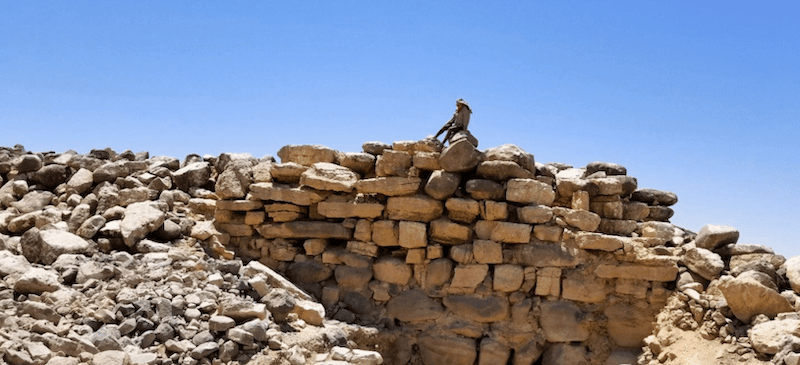
The Qasr wall directly above this season’s square
The first week at any excavation site is always the hardest, which I say with complete confidence since this is not my first time attending an archaeological field school or a regular excavation project. Leaving family and the comfort of one’s home behind for the pursuit of education in another country is not for the faint of heart, one must quickly acclimate to a whole new landscape, work schedule, language, culture, time zone, and cuisine. This can be physically challenging and emotionally taxing, but a very rewarding experience, nonetheless.
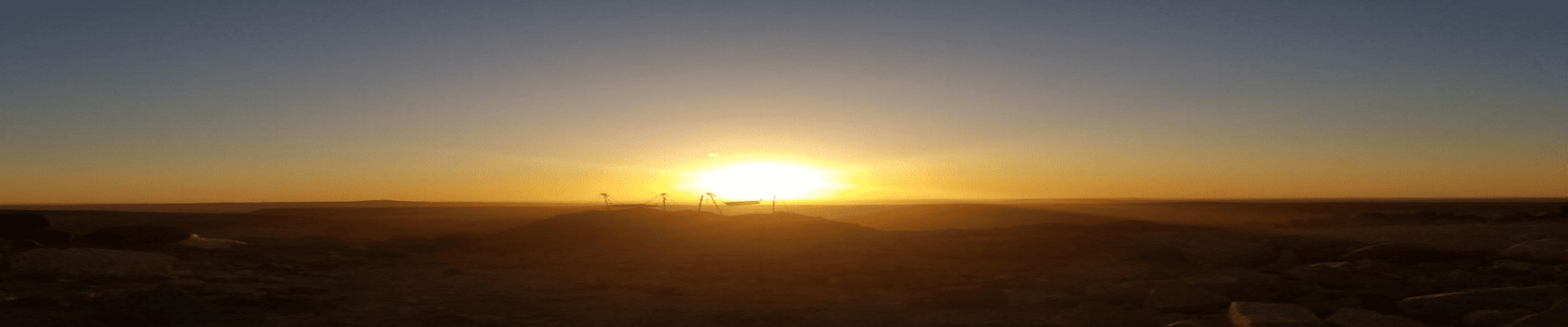
During the first and hardest week of the season, we received our assigned area of excavation, the Qasr (Castle), and got to meet our team members and team leaders. We had to prepare the area before excavations could begin, we first set up the soil sifts and made sure they were facing the Wadi Mujib and its fantastic sunrises to make the weeks to come more pleasant. Then came the arduous task of clearing the area of inter-seasonal debris and piles upon piles of rocks and tumble. We were lucky enough to have a constant breeze blowing from the west; the Jordanian desert was kind to the team. Once we cleared most of the rocks from our area, set up balk lines, and assigned individual tasks, we were ready to begin excavations.
The Qasr view from the west
The team clarified walls, cobbled surfaces, and doorways and found pottery sherds, stone artifacts, and faunal remains by the buckets. Any artifacts found in situ were immediately recoded using Global Positioning System (GPS), then collected for processing and laboratory analysis, though some of the stone artifacts excavated were too big to carry and were left in the field. The teams washed and sorted the excavated pottery sherds in preparation for the pottery readings, we took notes on pottery types and periods then sent the diagnostic pot sherds for publishing and the nondiagnostic sherds back to the field. We also completed daily and weekly reports in which we reviewed the strategy, implementation, and outcome of each project. And did I mention we moved more rocks?
On weekends, we had the opportunity to go on field trips to learn about castles such as Karak and Ajlun as well as other archaeological sites like Jerash and Tall al-Umayri. The highlight of the season was a weekend spent in Petra, a Nabatean city in the Wadi Musa. In Petra, we visited features such as the Treasury, the Highest Sacrificial Place, and the Monastery. We also had the opportunity to have sweet tea with many Bedouin women and men, haggled for prices at the various shops in the city, and rode a camel and a mule. This was a bit precarious for someone who is not accustomed to riding beasts of burden.
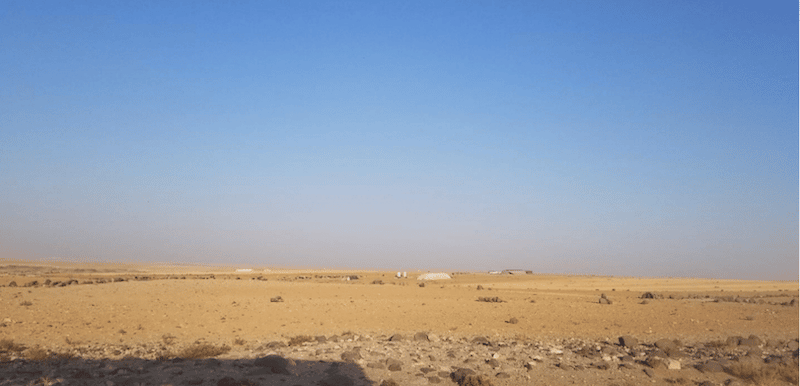
Bedouin tents in the distance
Our days in Jordan were never dull, at the site we were visited daily by large herds of sheep, goats, donkeys, and camels all being led by our worker’s friends or family who’d stop by from time to time to say hello. The Bedouin were very friendly and hospitable, they often shared Arabic sweet tea and sang songs for us, which made us feel very welcomed. The diversity of our team, their knowledge and sense of humor were the best part of the season. I said that the first week is always the hardest, but so is the last week when we have to say goodbye to the people with whom we discovered commonalities, developed friendships, and shared inside jokes for the past four to seven weeks. These relationships are the rewards we get to treasure when we leave our comfort zone in pursuit of knowledge and adventure in faraway places.
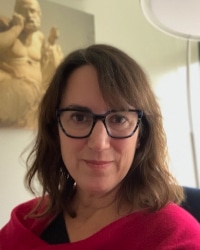
Margarita Apffel was born in Culiacan Sinaloa, Mexico but moved to California to study English and became the first in her family to go to college. She is a master’s student of Near Eastern Archaeology in the H. M. S. Richards Divinity School at La Sierra University in Riverside, California, and received a B.A. in Cultural Anthropology from California State University, San Bernardino. She has participated in various excavations projects in Menorca, Spain; Riverside, California; Karak, Jordan, and completed Museum Studies in Rome, Italy. Her goals are to further her education in the field of archaeology and museum studies and to continue to travel the world for as long as she can.
Want to help more students and early career archaeologists get into the field? Donate to the cause today by selecting “Student Support” as your gift purpose!
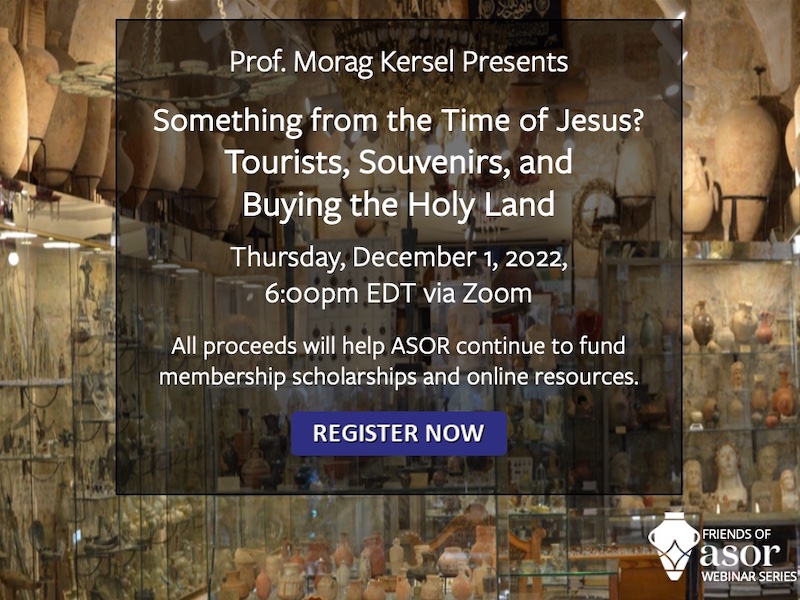
Something from the Time of Jesus? Tourists, Souvenirs, and Buying the Holy Land
Friends of ASOR present the next webinar in our monthly series on December 1, 2022, at 6:00 pm EDT, featuring Prof. Morag M. Kersel and moderated by Prof. Jennie Ebeling. This presentation shares insights into why people want to own Holy Land artifacts. Is the consumer a harmless character who spends their days sorting stamps, acquiring coins, buying a souvenir or a gift? Or the very opposite, a wily speculator investing in the past in order to increase their capital (cultural, economic, social, sensu Bourdieu)?
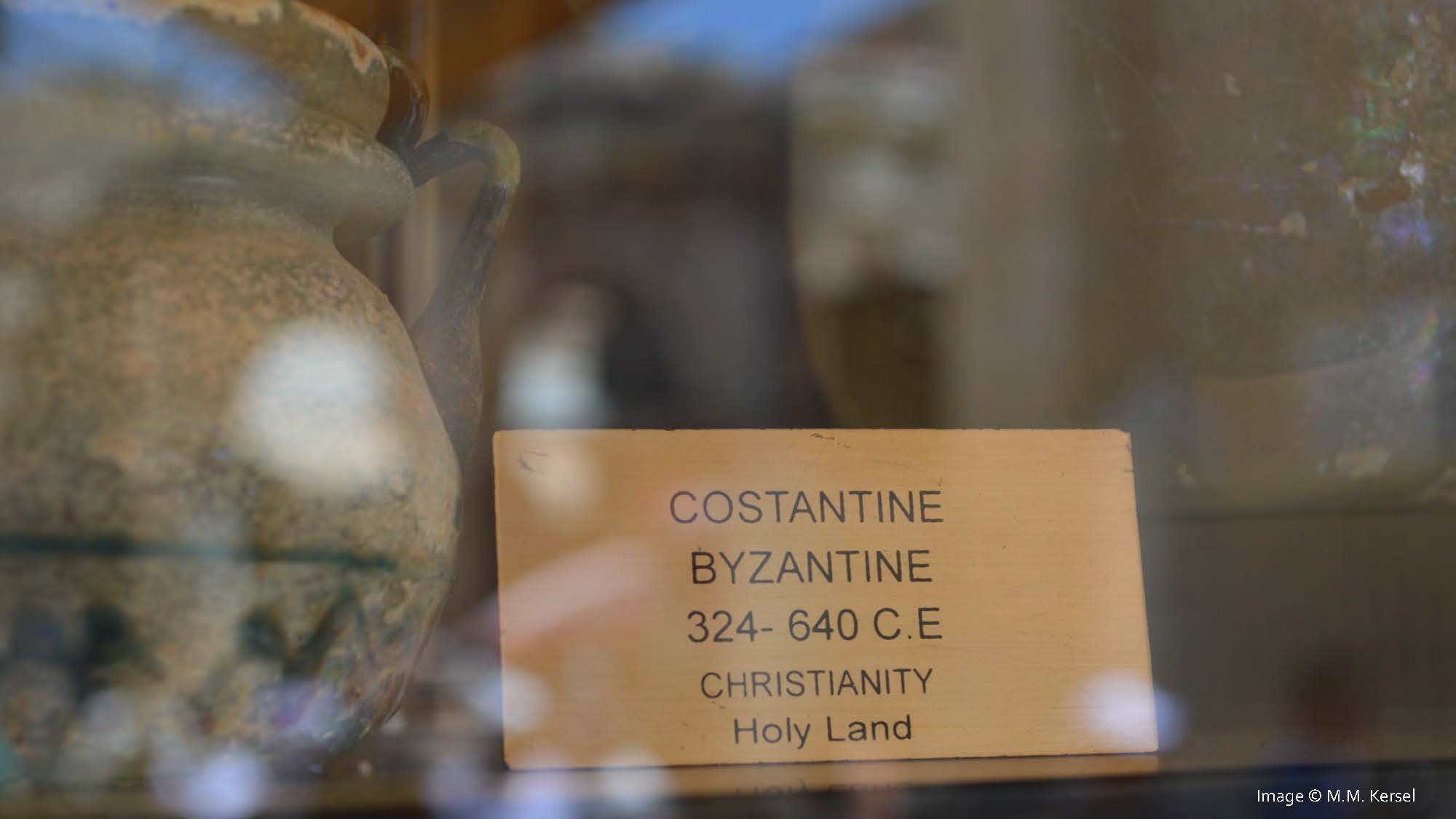
It is legal to buy and sell antiquities in the licensed market in Israel and for almost 20 years I have been interested in people buying things in that market. What they buy, why they buy, and what they do with antiquities from the Holy Land. While research demonstrates there is a direct link, particularly in the acquisition of Holy Land objects, innocent buyers have no reason to connect supply (the looting of archaeological sites) with demand (their purchase). In this webinar using data gathered from archaeological ethnographies, I examine the consumption of archaeological artifacts by tourists, the unintended consequences of such demand, and how we can create a more informed set of buyers in the legal antiquities market in Israel.
Join Prof. Kersel as she explores why people want to own Holy Land artifacts and the unintended consequences of this consumerism. The webinar will conclude with a live Q&A session moderated by Prof. Jennie Ebeling (University of Evansville).
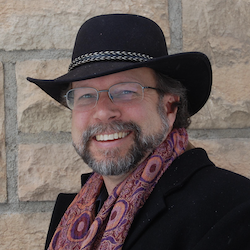
Morag M. Kersel is an archaeologist who works in the Eastern Mediterranean Neolithic, Chalcolithic and Early Bronze Age periods. Morag is an associate professor in the Anthropology Department at DePaul University. In addition to participating in archaeological excavations and surveys in Egypt, Greece, Israel, Jordan, Palestinian Authority areas, and Turkey, Morag is interested in the relationship between cultural heritage law, archaeological sites and objects, and local interaction. Basically, she is interested in how artifacts go from the ground to the consumer, the paths they take, the hands they pass through, and the places they end up.
She also works on the public display and interpretation of archaeological artifacts in institutional spaces. Currently, she is the co-director of the Galilee Prehistory Project and the Follow the Pots Project – tracing the movement of Early Bronze Age pots from the Dead Sea Plain in Jordan. Recently, she has become obsessed with Neolithic Masks and is a recipient of the Palestine Exploration Fund/W.F. Albright Institute Fellowship to support this obsession. She was 2021 ASOR Annual Meeting plenary speaker.
This webinar will be recorded and all paid registrants will be sent a link to view the recording.
To receive your ASOR member discount, log into the online store. If you are new to ASOR, please click on the “New Visitor Registration” link to register your e-mail address and choose a password for our online store. Once logged in, navigate to “Meeting and Event Registration” to register for the webinar and pay the fee. Each paid registrant will receive a confirmation e-mail when you pay for the webinar. If you do not receive this e-mail, then you are not registered. Please e-mail membership@asor.org with any questions or issues with registering.
You will be e-mailed the Zoom Webinar link in the week prior to the lecture on December 1, 2022. If you do not receive the link by the close of business on the Tuesday before the webinar, please e-mail membership@asor.org immediately. This webinar will be recorded and all paid registrants will be sent a link to view the recording.
All proceeds from this webinar are used to fund scholarships for members as well as increasing ASOR’s online resources, which are free to the public.
READY FOR A WEBINAR SEASON PASS?
Buy a season pass for all the webinars* of the 2022-2023 FOA Webinar Season! 1) You will automatically receive the Zoom link for each webinar so no need to register each time. 2) You will also receive the recording of each webinar automatically after the event.
If you have missed webinars earlier in the season and still want to buy the pass, you will receive the links to the recordings of the webinars you missed in your automatic confirmation email after you buy the pass.
*Special symposiums may be excluded from the season pass price.
No more registering for a year if you buy your pass today!
Pricing:
Members: $75.00 Non-Members: $150.00 ASOR Sustaining Members: $0 (automatic registration for each webinar) Not a member yet? Click here to join as a member and receive the 50% off a season pass!
Log into our online store to purchase the season pass for 2022-2023. If you are new to ASOR and do not have a record in our store yet, click here to register. After you login, navigate to the left to “Meeting and Event Registration.” Please e-mail membership@asor.org if you have any questions or issues.
WHY SPONSOR A WEBINAR?
Several levels of support from $50-$1,000 are available. Proceeds go towards membership scholarships and towards increasing ASOR’s virtual resources. Each sponsorship is tax-deductible and you can give your friends free registrations to a webinar!
Bronze Level ($50): up to 2 guest registrations Silver Level ($100): up to 5 guest registrations Gold Level ($500): up to 20 guest registrations Platinum Level ($1,000): up to 50 guest registrations
After you sign up for a sponsorship online or over the phone, email the names and email addresses of your guests to Felice Herman at membership@asor.org, who will send your guests a confirmation and the Zoom link before the webinar.
WANT TO SAVE $6.00 ON THE NEXT WEBINAR?
Join ASOR as a member! Click here for more details about discounts for events and other benefits of membership. Memberships start at $40 for the year as an Associate Member.
You can now purchase the link to the recording of any webinar. You can also purchase the bundle packages of all webinars from the 2020-2022 seasons. Please e-mail membership@asor.org for purchase details.
To see a printable pdf of the webinar titles from the 2020-2021 season, please click here. To see a printable pdf of the webinar titles from the 2021-2022 season, please click here.
Where Are They Now?: A Preview of 2022 ASOR-Affiliated Fieldwork Projects Michael Given (University of Glasgow), Xenia-Paula Kyriakou (Florida Gulf Coast University), Stephen Batiuk (University of Toronto), Monique Roddy (Walla Walla University), Kent Bramlett (La Sierra University), Friedbert Ninow (La Sierra University), and Michael Hoff (University of Nebraska-Lincoln) | March 8, 2022
Tel Rehov: A Major Bronze and Iron Age City in the Jordan Valley Amihai Mazar (Hebrew University of Jerusalem), Nava Panitz-Cohen ( Hebrew University of Jerusalem), Nota Kourou (Athens University), Naama Yahalom-Mack (Hebrew University of Jerusalem), Robert Mullins (Azusa Pacific University) | February 10, 2022
Archaeogaming: Why Video Games Deserve Their Own Archaeology Tine Rassalle (University of North Carolina at Chapel Hill), Shannon Martino (Morton College), Matthew Winter (University of Arizona), Michael Zimmerman (Rhode Island) | April 18, 2021
2022 Shepard Urgent Action Grant Report: Conservation of the Roman Bath House in Petra, Jordan
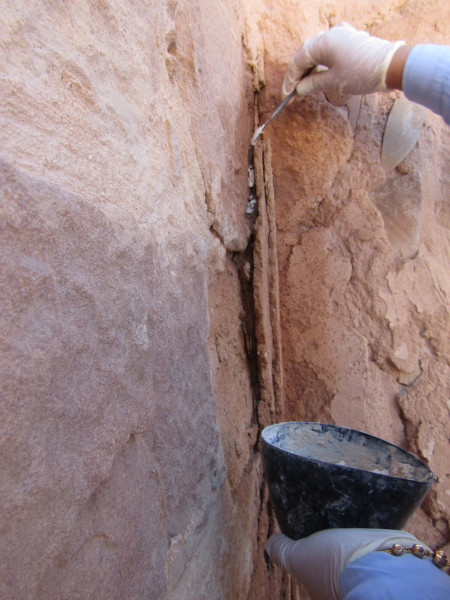
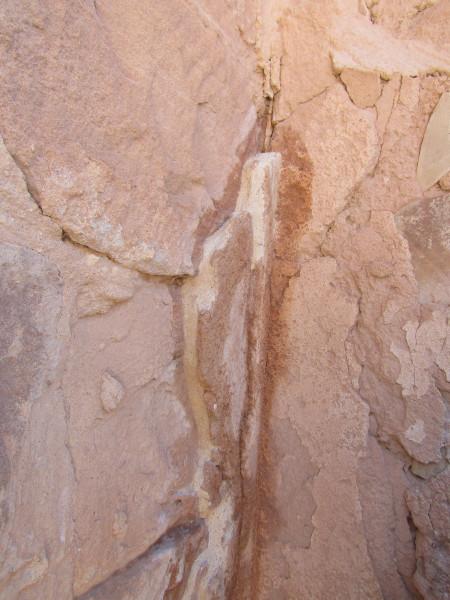
ASOR Editorial Note: The ASOR Team is pleased to share a report from a Shepard Urgent Action Grant awarded to Sela for Training and Protection of Heritage for repairs and conservation work to the Roman bath house at Petra, Jordan. These grants are intended to provide emergency funds to carry out critical stabilization, excavation, or documentation projects. Because time is of the essence with these proposals, funds for the grants can be disbursed 4-6 weeks after an application is received. The mortar, wall plaster, and structures themselves within many of the rooms of the bath house were in need of emergency consolidation and restoration after many years of continued exposure to the elements as well as vandalization of standing structures.
The Bath house was built between 106 AD and 113/114 AD and represents one of the first Roman interventions aiming at the “Romanization” of Petra after the annexation in 106 AD. It stayed in use for over four centuries before being abandoned after the 551 AD earthquake. It is unique for its small size and elegant structure and its architectural features combining the mastery of Nabatean water engineering with the Roman Pompeian bathhouse style. With its 22 rectangular and square rooms with a row of windowed parallel rectangular rooms overlooking the palaestra to the west, this balneum covers an area of almost 1000 sqm.
An overhead view of the Roman Bath house in Petra (Photo credit: Mohammad Albdoul).
The grant supported the work of a senior conservator, Dr. Fatma Marii, and a conservation technician, Ms. Nesreen Albdoul and involved interventions aiming at: (a) the emergency conservation of the standing structures (Cleaning – Salt removal – Mortar repair); (b) the consolidation of the wall plaster and the stone pavements (repair of detached plaster from the walls and stone slabs from the pavements); (c) anastylosis of the vandalized structures of the calidarium.
Map of the Roman Bath house (Source: Joukousky, M. (2009) – Surprises at the Great Temple: A retrospective in Studies on the History and Archaeology of Jordan X, 2009 – pp. 291-311)
The monument was documented in 2021 and a preliminary assessment was conducted in November 2021 and again in February 2022. In May 2022 after the awarding of the Shepard Grant a new assessment was conducted to determine the emergency interventions to prioritize for the preservation of the monument. The following interventions were identified:
Vestibule (B): This room presents bricks in a fragile state of conservation in need of consolidation. The mortar presented several horizontal and vertical cracks and required consolidation and repair.
Caldarium (C): This room presents several extremely deteriorated bricks. Walls needed salt removal and mortar consolidation and repair. After the assessment, it was concluded that anastylosis of vandalized structures was not appropriate since most of the collapsed structures were the result of previous interventions of reconstruction occurred in the 90s. All fragments from the original structure were numbered, removed, cleaned, consolidated and arranged in Room F for future interventions.
Loutron (D): The floor mortar of this room is made of lime-based mortar and required cleaning.
Vestibule (E): The mortar of the Eastern wall was extremely fragile and needed cleaning and consolidation.
Praefurnium (F): Mortar on the doorway between Room F and Room C required consolidation.
Service Passage (G): This small corridor on the eastern side of the bath presents plaster remains on the Eastern wall that needed consolidation and reinforcement.
Vestibule (H): The room presented several plaster remains in need of cleaning, consolidation and reinforcement.
Caldarium (I): The caldarium presented mortar in extremely fragile conditions that needed consolidation and repair.
Tepidarium (J): The Southern wall presents some plaster fragments and mortar relatively stable condition. The plaster needed cleaning and surface consolidation.
Ornamental Pool (L): The room presented plaster fragments on the Southern wall in need of reinforcement and consolidation. There are traces of copper alloy hangers on the Northern and Southern walls.
Vestibule (M): Plaster and mortar remains in the niches needed cleaning, reinforcement, consolidation, and repair.
The vestibule (M) before cleaning and repair of the mortar.
The vestibule (M) after cleaning and repair of the mortar.
Frigidarium (N): The walls presented plaster remains in fragile, but stable conditions that needed cleaning, reinforcement, and consolidation. Mortar both on the walls and on the pavement bedding needed cleaning and consolidation.
Small Cistern (P): The thick plaster lining the walls of the cistern needed reinforcement and consolidation.
Bathroom (Q): Plaster fragments in the niche of the Eastern wall required cleaning, reinforcement, and consolidation. The niche wall behind the plaster required mortar repair.
Anteroom (R): Plaster fragments on the Western and Southern walls required reinforcement and consolidation. Before proceeding with the interventions on the plaster, the Western wall required cleaning and consolidation.
Apodyterium (S): Plaster fragments at the corners of the southern wall needed reinforcement and consolidation. The walls needed mortar repair.
Well (T): A plaster fragment at the east corner of the southern east corner and one on the north niche needed reinforcement and consolidation. There are remains of lead alloy at the bottom of the water channel.
Colonnaded Corridor (U): There is a broken stone at the floor (a step), as well there is a fallen mortar require cleaning and consolidation. At the northern wall corner there are missing stones and broken, that the wall requires to be reconstructed.
Palaestra (W): On the eastern wall of this room the plaster is red painted. The plaster and the painting appeared stable. It required cleaning and reinforcement.
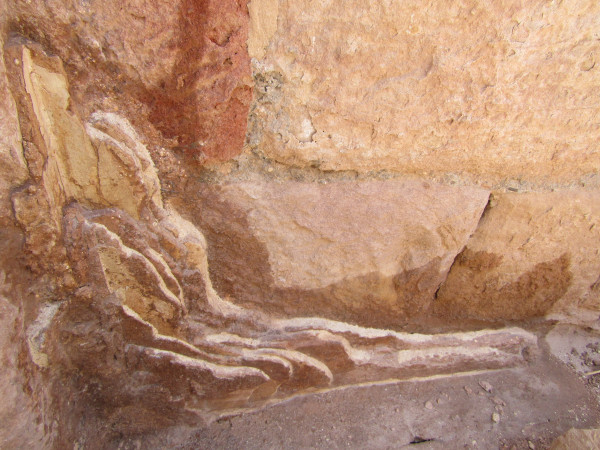
Plaster in the well (T) before repair and consolidation.
Plaster in the well (T) after repair and consolidation.
1. Emergency conservation of the standing structures
Standing walls are made of sandstone cut blocks, mostly affected by granular disintegration and erosion (caused by wind and rainfall). The standing walls were cleaned, salts efflorescence was removed and the surface was consolidated by spraying a protein based consolidant (calcium caseinate) in order to slow down and minimize the deterioration process. The choice of calcium caseinate as consolidant is crucial for the sustainability of the intervention since chemical and water based consolidants are not available in Jordan. Calcium caseinate can be locally produced and therefore sustainable for future interventions.
The original lime mortar has disintegrated and crumbled. Mortar consolidation and repair were implemented using calcium caseinate for consolidation and a lime-based mortar made of slaked lime, limestone powder and basalt powder (to increase water resistance) and crushed granite (to make the mortar recognizable as modern) for mortar repairs.
Mortar remains were mechanically cleaned using brushes and wooden sticks, and then using brushes and water. Mortar was consolidated either by spraying a filtered solution of water and calcium caseinate or by injecting a solution of water and acrylic emulsion.
Gaps and cracks in the mortar were filled using a mixture of 1 part of slaked lime, 0.5 parts of acrylic emulsion, 1 part of yellow sand and 1.5 parts of basalt powder.
The mortar mixture used for mortar repairs was made of 1 part of lime, 1 part of stone powder, 0.5 parts of crushed granite and 1.5 parts of basalt powder. All materials used in the mortar are locally available and easy to procure for future maintenance interventions.
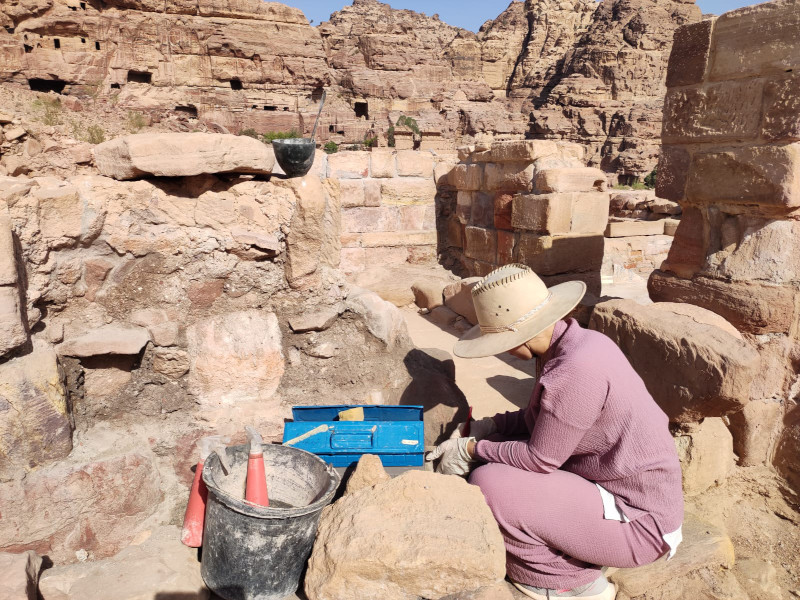
Working hard to restore the mortar of the court (V).
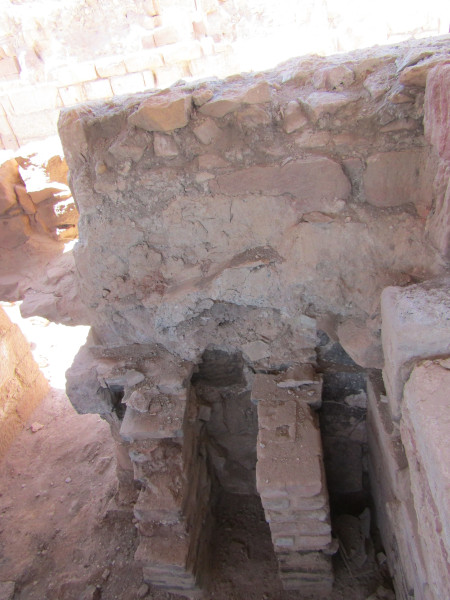
The caldarium (C) before consolidation and repair of the mortar.
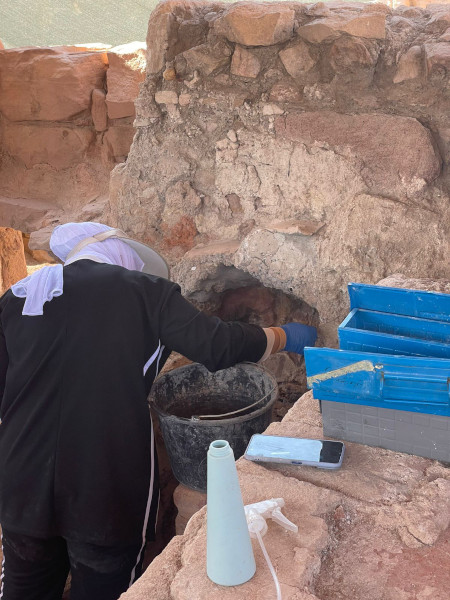
Repairing the mortar of the caldarium (C).
2. Consolidation of wall plaster and stone pavements
Several rooms presented remains of plaster and mortar pavement beddings.
The main process for conserving the plaster fragments and the mortar beddings involved:
Mechanical cleaning of accumulated soil and other materials on the plaster surface and edges using soft brushes, toothbrushes, toothpicks, wooden stick, and blower.
Chemical cleaning using water, distilled water, and ethanol (as needed) with sponges, brushes, toothpicks, or sprayers.
Filling the gaps and reinforcement of the edges using a mixture of 1 part of yellow sand, 1 part of slaked lime, 0.25 parts of acrylic emulsion (Primal), and 0.25 parts of water. Wet clothes or burlap were used to keep it wet during hot hours to assure a slow hardening process.
Consolidation was implemented either using a filtered solution of water and acrylic emulsion applied with syringes or spraying a solution of water and calcium caseinate.
Stone surfaces were cleaned and consolidated with calcium caseinate.
-Maria Elena Ronza, Vice President, Sela for Training and Protection of Heritage
The corner of the frigidarium (N) in the midst of repairs.
The same corner of the frigidarium (N) with its wall plaster now repaired.
Archaeological Tour of Israel & Palestinian Authority Areas 2023
13-day tour with visits to over 27 sites and museums with internationally renowned scholars
Guided tours of sites and museums by Yoav Arbel, Shlomit Bechar, Hushney Cohen, Katia Cytryn, Meir Edrey, Adi Erlich, Michael Eisenberg, Yuval Gadot, Peter Gendelman, David Gurevich, Yakov Kalman, Anastasia Kleshman, Robert Kool, Igor Kreimerman, Shelley-Anne Peleg, Issa Sarie, Katharina Schmidt, Avi Solomon, Guy Stiebel, Katharina Streit, Aharon Tavger, Joe Uziel, Sam Wolff, Assaf Yasur-Landau, and Irit Ziffer
More scholars, museum curators, and excavators are being confirmed every day with almost 30 anticipated
Due to cancellations, we have two rooms left, book today!
Friends of ASOR is excited to announce the launch of our first archaeological tour of Israel and Palestinian Authority areas from arrival onFebruary 19 to departure on March 3, 2023. ASOR is partnering with a premier touring company, Mejdi Tours, to create a custom 13-day trip for the Friends of ASOR. We will be visiting famous sites and speaking with scholars, excavators, and museum curators who are currently conducting or have conducted archaeological research projects in these regions. Due to cancellations, we have two rooms left, book today!
Participant sharing a double room: $7,500 | Participant in a single room: $9,000
A $300 non-refundable tour deposit is required at the time of registration. Please see Mejdi’s terms and conditions here before paying the deposit.
Price for this tour includes a $1,000 tax-deductible donation to ASOR and supports the Friends of ASOR programming.
Price includes all accommodation, 12 breakfasts, 11 lunches, 11 dinners, 11 days of private group transportation, all tips for drivers & staff, honorariums for speakers and guides, all site/museum entrance fees, water on the bus throughout the tour, a digital booklet including maps and plans of each site sent out before the trip, a personal headset for daily use, a licensed tour expert for the entire trip, dedicated pre-trip customer service, and on-ground support.
Moderate activity level. Average walking distance 2-3 miles per day (not all at once). Expect hills, stairs, and uneven pavement and terrain, especially on archaeological sites. Please bring comfortable footwear and walking poles are recommended if needed.
Tour includes 7 nights in Jerusalem, 2 nights in Galilee, 2 nights in Haifa, and 1 night in Tel Aviv – Jaffa.
Price does not include airfare, arrival/departure transport, travel and health insurance, or transportation outside of group itinerary.
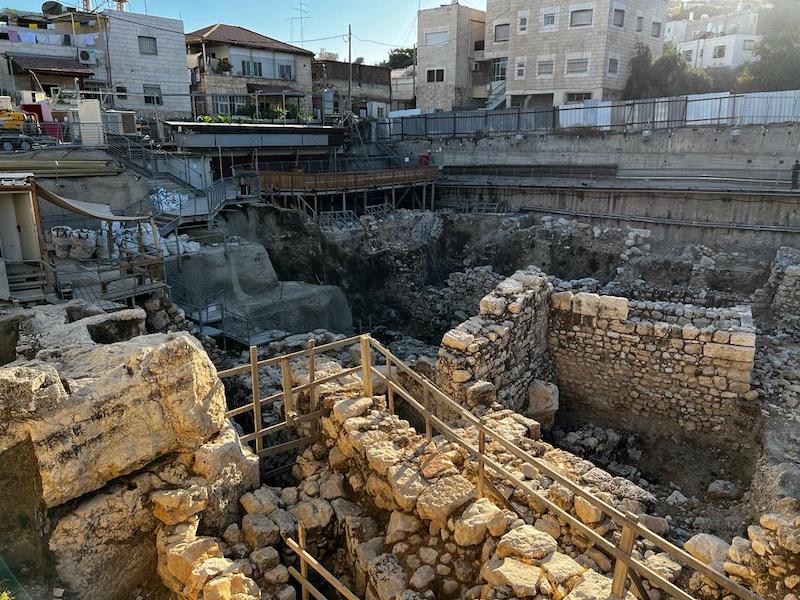
Yuval Gadot and colleagues, excavators of the City of David area of Jerusalem, will lead a behind-the-scenes tour of the current excavations. Expect moderate to heavy walking up and down stairs on this tour. Picnic lunch to follow. Dinner will be at a local restaurant with an archaeologist as guest (TBD).
Tuesday, February 21, 2023
Touring Cardo, Western Wall Tunnels, & Israel Museum
Overnight in Jerusalem
Read the Description
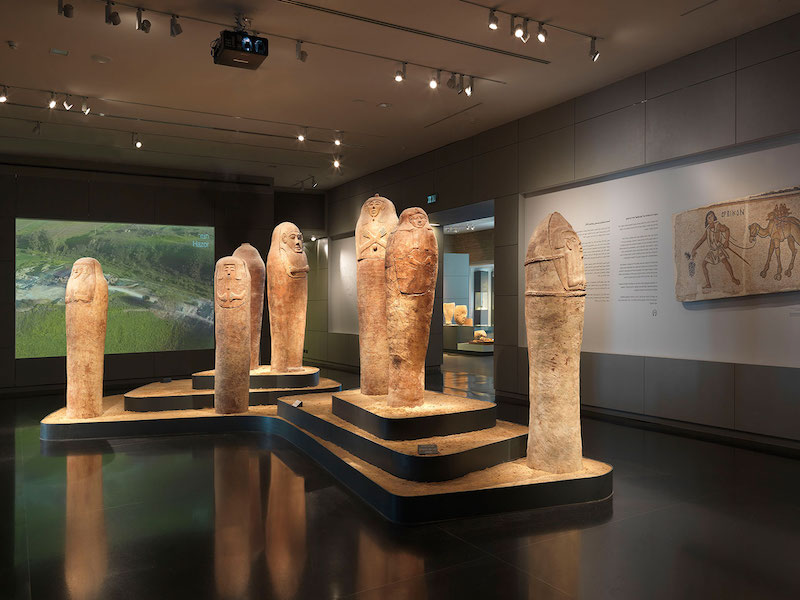
In the morning, Avi Solomon will lead the group through the new excavations in Eastern Cardo and Western Wall Tunnels. The group will have lunch in Jerusalem. In the afternoon, the group will visit the Israel Museum and receive a behind-the-scenes tour with Joe Uziel and the team in charge of the Israel Antiquity Authority’s (IAA) Dead Sea Scrolls Unit, as well as a tour by Robert Kool, head of the IAA Coin Department. Dinner will be at the Museum Restaurant with a curator (TBD). (Photo credit to the Israel Museum in Jerusalem)
Wednesday, February 22, 2023
Touring the Temple Mount/Haram al-Sharif, Church of the Holy Sepulcher, and the Albright Institute of Archaeology
Overnight in Jerusalem
Read the Description
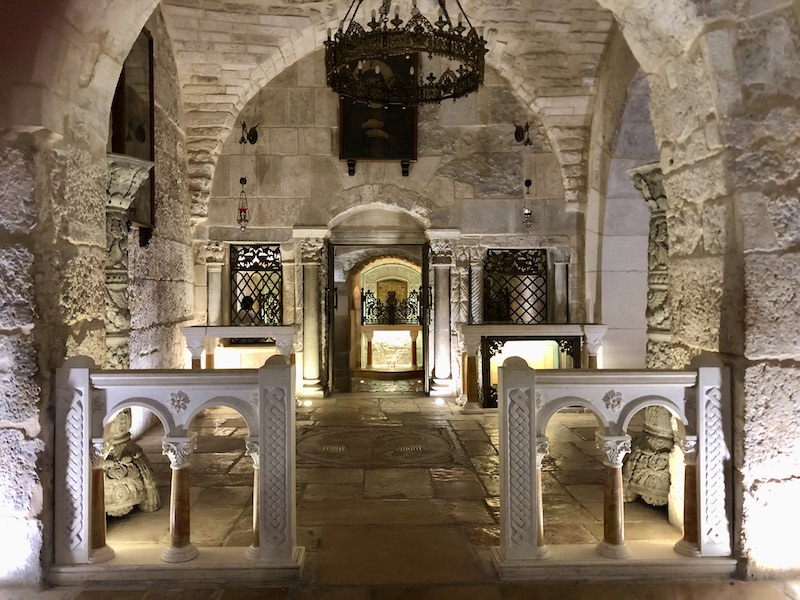
David Gurevich will guide the group on a tour of the Temple Mount/Haram al-Sharif and a behind-the-scenes tour of the Holy Sepulcher Church. Lunch to follow. The group will then continue to Christ Church to see the beautiful models of Jerusalem made by Conrad Schick. In the late afternoon, there will be a visit to the Albright Institute of Archaeology (AIAR) to meet with the director, Katharina Schmidt, and tour the facility. We will meet and mingle with Albright resident fellows over dinner cooked by AIAR chef, Hisham (an institution himself!).
Thursday, February 23, 2023
Touring Masada, Tel Jericho/Tell es-Sultan, and Hisham’s Palace/Khirbet Al-Mafjar
Overnight in Jerusalem
Read the Description
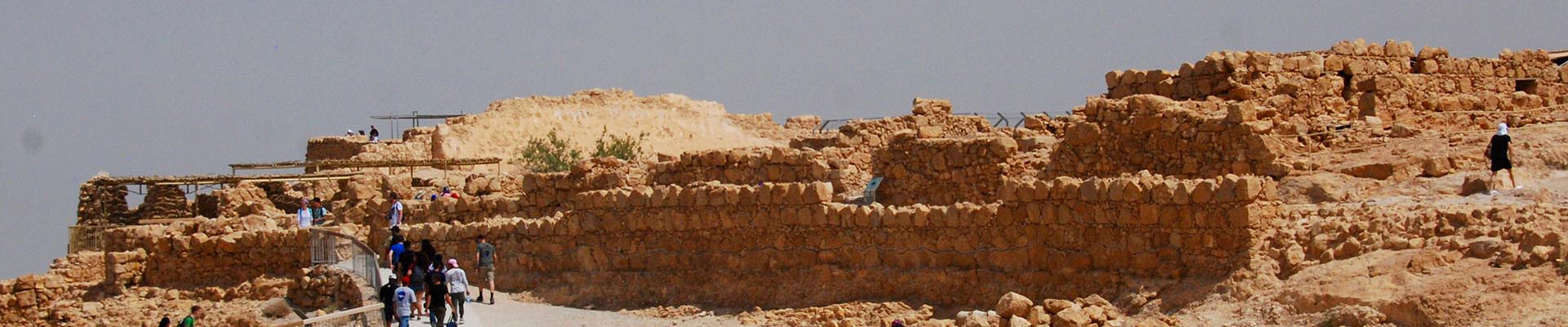
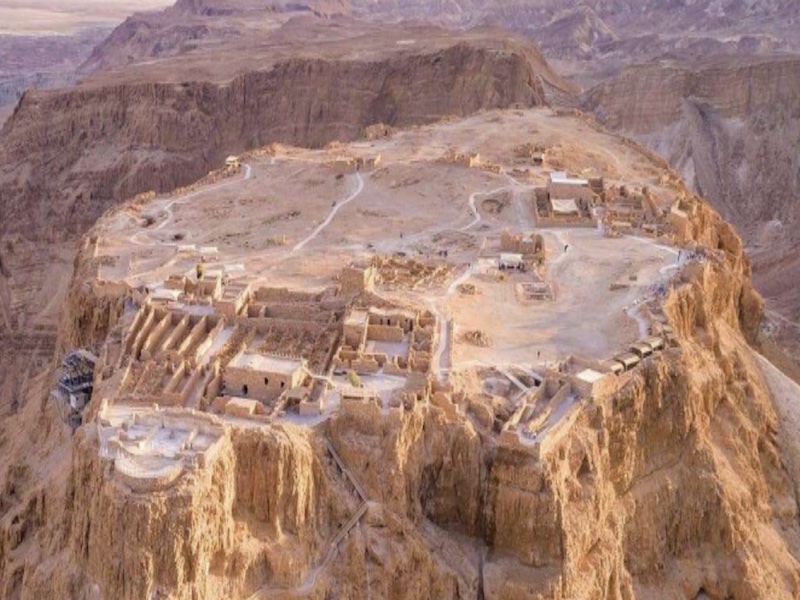
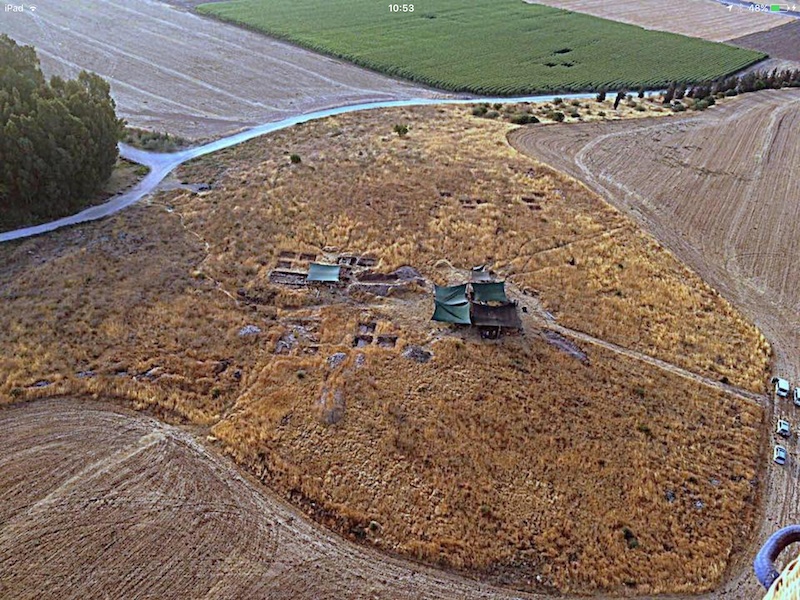
In the morning, the group will receive a guided tour of Masada with Guy Stiebel where an active excavation might be taking place. In the afternoon, Issa Sarie will guide a tour around Tel Jericho and Hisham’s Palace where his students are working. (Photo credit to the Neustadter Masada Expedition)
Friday, February 24, 2023
Touring south to Gezer, Beth Shemesh, Lachish, and Tel Beit Mirsim
Overnight in Jerusalem
Read the Description
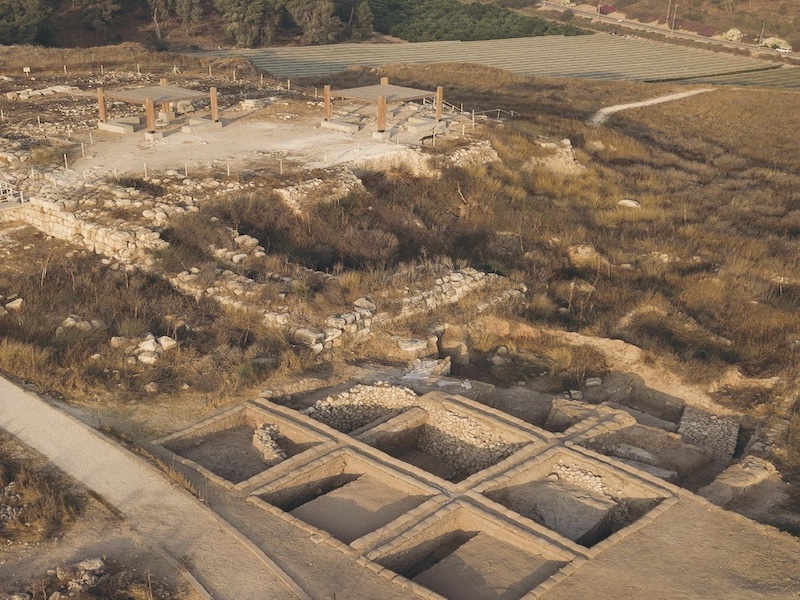
The tour will head south-east of Jerusalem to the site of Tel Beit Mirsim and Igor Kreimerman will show us his excavation and tell us the history of the site. We then go to Lachish with the current excavator Katharina Streit, who will give us the latest on this well excavated Tel. After lunch we will meet with Zvi Lederman, the excavator of Beth Shemesh and view his site. If time permits we will carry on Gezer , where Sam Wolff, its excavator, will give a guided tour. Dinner will be spent in Bethany with the owner of Mejdi Tours, Abu Sarah, and his family. (Photo credit The Austrian Expedition to Tel Lachish & AIAR)
Saturday, February 25, 2023
Touring southeast to Herodium and Bethlehem
Overnight in Jerusalem
Read the Description
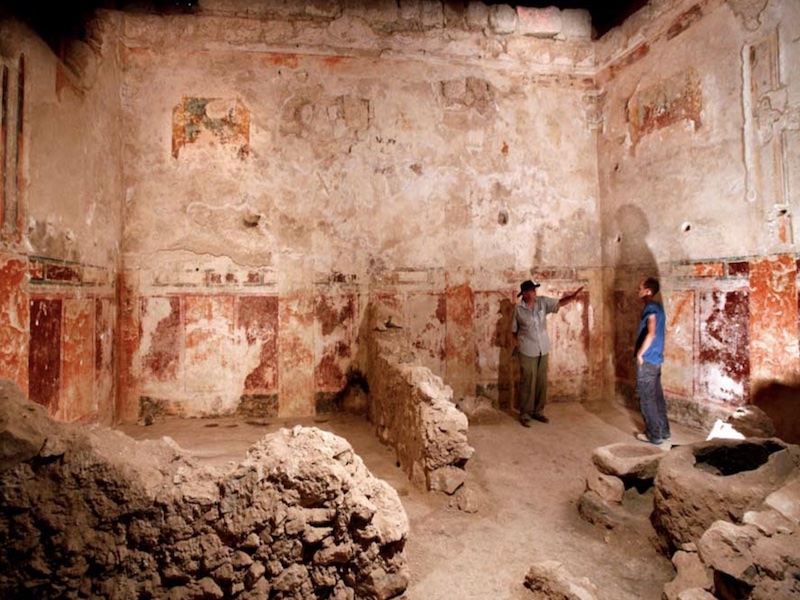
The morning will include a visit to Herodium with Yakov Kalman, who will explain the site and recent excavations and restoration work. The group will then stop in Bethlehem for lunch and to see the restored paintings in the Church of the Nativity and areas around. Anastasia Kleshman will accompany the group on this tour. Dinner will be on your own in Jerusalem. Recommendation for restaurants within walking distance from the hotel will be available. (Photo credit to The Herodium Expedition)
Sunday, February 26, 2023
Leaving Jerusalem to tour Mount Gerazim and Samaria-Sebastiya
Travel to and overnight in Galilee
Read the Description
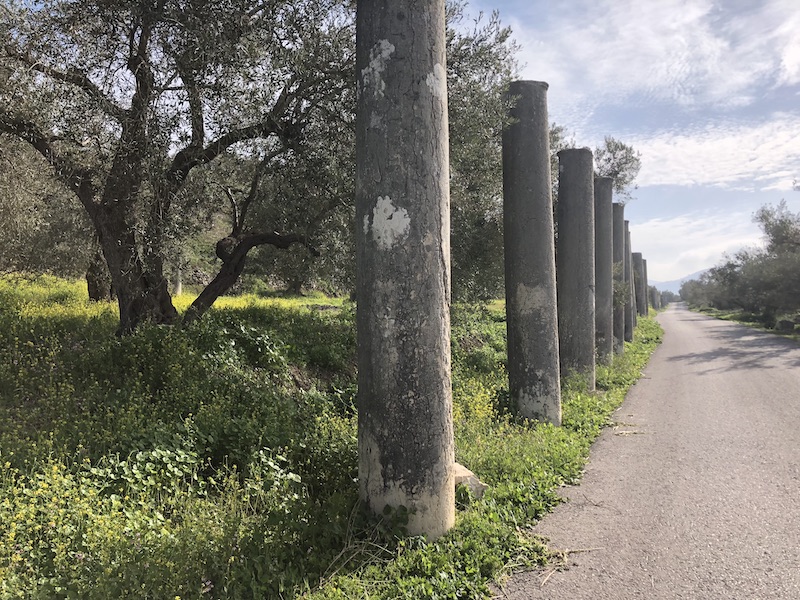
In the morning, the group will leave Jerusalem behind to travel to Mount Gerazim with expert in south Samaria sites, Aharon Tavger. The tour will then continue to the Samaritan community nearby and visit the local museum, guided by Hushney Cohen. We will also have an overview of the ancient city of Shechem. The group will then drive to Samaria-Sebastiya to have lunch in local restaurant. Afterwards, Norma Franklin will guide a tour of the ancient Tell of Samaria to view the excavations and the restoration work in Sebastiya. The tour will conclude the day with checking into the Olive Gilboa Hotel in Galilee and having dinner in the hotel.
Monday, February 27, 2023
Touring north to Tiberias, Hazor, and Magdala
Overnight in Galilee
Read the Description
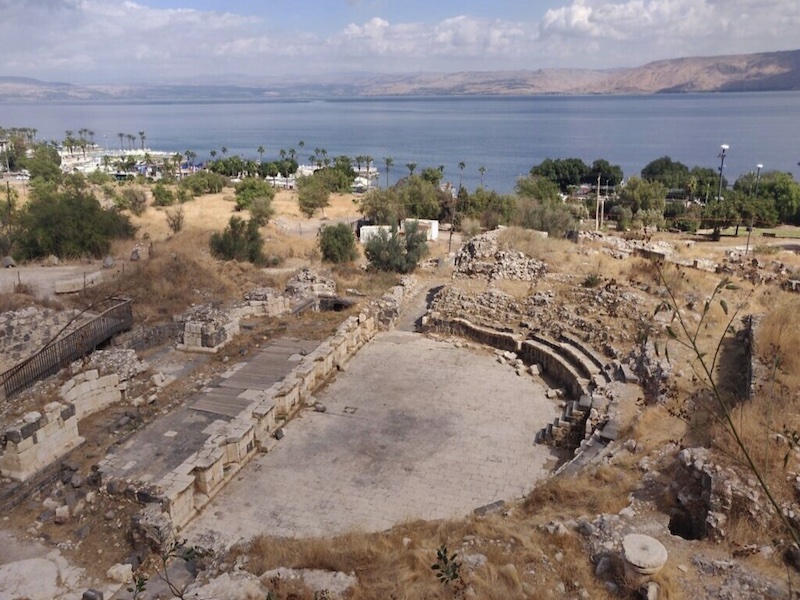
In the morning, the group will drive to Tiberias to meet with the directors from the Hebrew University and the German Institute in Jerusalem, including Katia Cytryn and Katja Soennecken. This is an active excavation where the group will possibly get their hands dirty! Afterwards, the group will visit Hazor and meet Dr. Shlomit Bechar, a former joint director of the Selz Foundation Excavations in Memory of Y. Yadin at Hazor, and now director of a project on the lower Tel of Hazor. In the late afternoon, the group will possibly visit the site of Magdala (traditional birthplace of Mary Magdalene) and the two synagogues that have been excavated there. Dinner will be on the way to hotel in the evening or at the hotel (TBD). (Photo credit The Times of Israel)
Tuesday, February 28, 2023
Touring Tel Jezreel & Megiddo
Travel to and overnight in Haifa
Read the Description
Our hotel is located next to the site of Tel Jezreel and we will have an overview of the upper and lower tels with Norma Franklin, the co-director of excavations at Jezreel. If weather conditions allow, we will also visit “Naboth’s Vineyard.” The group will then drive to Megiddo and tour the site with Norma Franklin. Lunch will be served after this visit. The group will then check into Dan Carmel Haifa Hotel. Dinner will be served in the hotel.
Wednesday, March 1, 2023
Touring University of Haifa and Acco
Overnight in Haifa
Read the Description
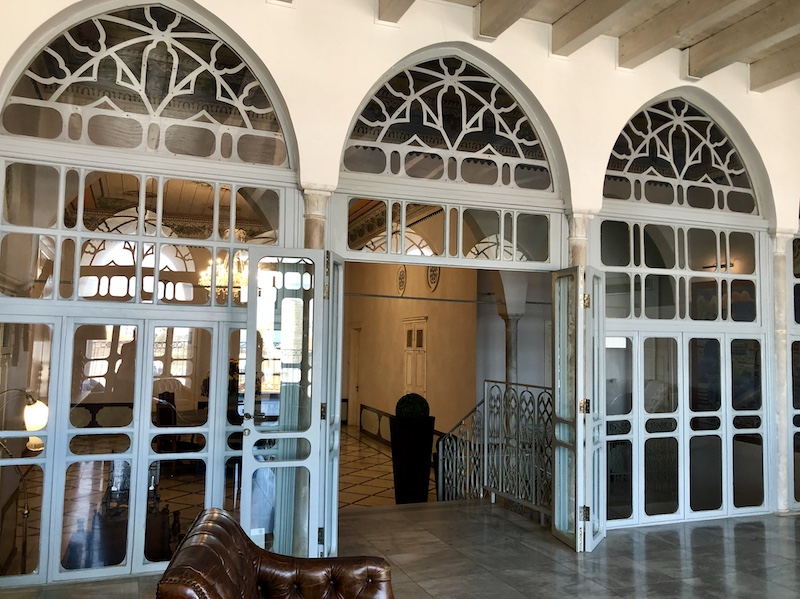
The group will visit the University of Haifa to meet with the directors of the Zinman Institute, Maritime Studies, Recanati—Adi Ehrlich, Michael Eisenberg, Meir Edrey, Assaf Yasur-Landau, and others to view the university’s diverse laboratories and projects. Lunch will be served at the university and followed by a short visit to the university’s Hecht Museum of Archaeology. In the afternoon, the group will meet with Shelley-Ann Peleg, the former head of the conservation unit on Acco, to have a tour of the medieval and Ottoman city. Dinner will be at the famous Uri Buri restaurant in Acco.
Thursday, March 2, 2023
Travel south to visit Caesarea Maritima, MUSA Eretz Israel Museum, and Tel of Jaffa
Travel to and overnight in Tel Aviv – Jaffa
Read the Description
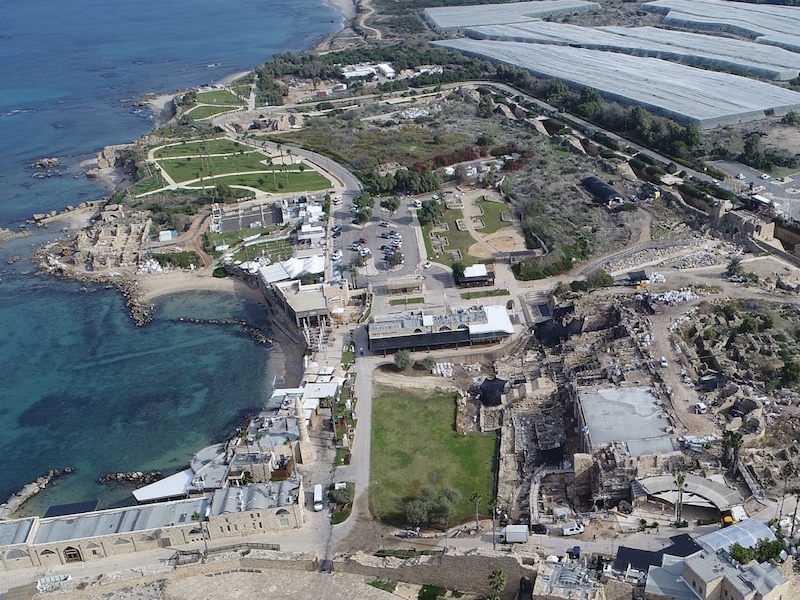
The group will leave Haifa to head south to Tel Aviv-Jaffa. The tour will continue at the famous site of Caesarea Maritima, where we will meet excavator, Peter Gendelman of the IAA, the expert on Caesarea. He will give an in-depth tour of the old and new excavations, plus the new restoration work. Lunch will be served in Caesarea. The group will continue on to the MUSA Eretz Israel Museum in Tel Aviv, where we will meet with Irit Ziffer, former head of the ceramics pavilion. We will check into the Market House Hotel in Jaffa in the late afternoon. We will then take a short walking tour of ancient Jaffa, including the Tel with IAA excavator and Jaffa expert, Yoav Arbel. Dinner will be in old Jaffa. (Photo credit to Yaakov Shimdov/Israel Antiquities Authority)
Friday, March 3, 2023
Touring Old Jaffa
End of tour
Read the Description
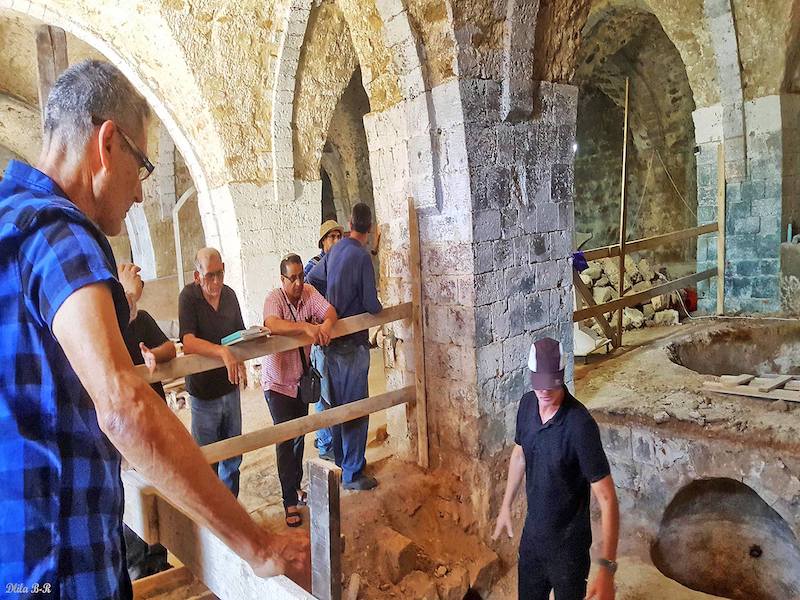
The last day includes a walk around the flea market and streets of old Jaffa with Yoav Arbel to hear about his work and the history of the city outside the walls followed by a late farewell lunch. End of tour. (Photo credit to Dlila Bar-Ratso & Friends of Israel Antiquities Authority)
Participant sharing a double room: $7,500 | Participant in a single room: $9,000
A $300 non-refundable tour deposit is required at the time of registration. Please see Mejdi’s terms and conditions here before paying the deposit.
Price for this tour includes a $1,000 tax-deductible donation to ASOR and supports the Friends of ASOR programming.
Price includes all accommodation, 12 breakfasts, 11 lunches, 11 dinners, 11 days of private group transportation, all tips for drivers & staff, honorariums for speakers and guides, all site/museum entrance fees, water on the bus throughout the tour, a digital booklet including maps and plans of each site sent out before the trip, a personal headset for daily use, a licensed tour expert for the entire trip, dedicated pre-trip customer service, and on-ground support.
Moderate activity level. Average walking distance 2-3 miles per day (not all at once). Expect hills, stairs, and uneven pavement and terrain, especially on archaeological sites. Please bring comfortable footwear and walking poles are recommended if needed
Tour includes 7 nights in Jerusalem, 2 nights in Galilee, 2 nights in Haifa, and 1 night in Tel Aviv – Jaffa.
Price does not include airfare, arrival/departure transport, travel and health insurance, or transportation outside of group itinerary.
Hosts
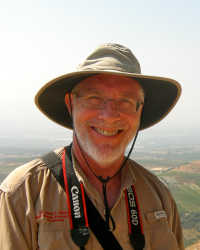
Sharon Herbert is the Charles K. Williams II Distinguished University Professor of Classical Archaeology Emerita and Research Associate at the Kelsey Museum of Archaeology at the University of Michigan. Formerly, she served as the chair of the Department of Classical Studies and Director of the Interdepartmental Program in Classical Art and Archaeology at Michigan, where she has enjoyed a remarkable career as a field archaeologist, teacher, and academic administrator since she joined the Michigan faculty in 1973. She is also the former Curator of Greek and Hellenistic Collections and Director Emerita (1997-2013) of the University of Michigan’s Kelsey Museum.
Herbert’s research specialties include Hellenistic Egypt and the Near East and ancient ceramics. She is best known for her contributions to the archaeology of Israel, as director of the Tel Anafa excavations from 1978 to 1981 and as co-director of the Tel Kedesh excavations from 1997 to 2012. She has also conducted archaeological fieldwork in Greece, Italy, and Egypt.
Before assuming her position as ASOR’s President on January 1, 2020, Herbert served as ASOR Vice President from 2013-2019. Herbert also served as the President of the W. F. Albright Institute for Archaeological Research (AIAR) from 2013-2018. In November 2017, Herbert received ASOR’s W. F. Albright Service Award, in recognition of her work on behalf of the Albright.
Andrew (Andy) Vaughn became ASOR’s Executive Director in 2007. Prior to this appointment, Vaughn taught at Gustavus Adolphus College in St. Peter, MN from 1997–2007, where he was Associate Professor of Hebrew Bible and later served as Chair of Department of Religion. His teaching and research interests include cultural heritage, history, archaeology, Semitic languages, and Israelite religion. He is a past recipient of the Mitchell Dahood Prize for Biblical Scholarship, and he was a Fulbright Fellow at Tel Aviv University from 1993–94. Since 2014, Vaughn has served as Co-Director of ASOR Cultural Heritage Initiatives and overseen major heritage projects in Syria, Iraq, Libya, Tunisia, Morocco, and (most recently) the Sahel (Mali, Niger, and Burkina Faso).
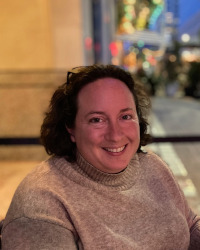
Norma Franklin is a field archaeologist who is happiest with complex stratigraphy. Other interests include ancient building techniques, water systems, and technology — old and new. Her research has focused on the three key cities of the Northern Kingdom of Israel: Samaria, Megiddo and Jezreel. She took part in the previous expedition Jezreel in 1990, directed by David Ussishkin of Tel Aviv University. In 1992 she became a founding member of the Megiddo Expedition, and served as a field archaeologist, successively directing 4 of the excavation areas. She resigned in 2011 in order to launch the Jezreel Expedition. Norma is the co-director of the Jezreel Expedition and a Research Associate at the Zinman Institute of Archaeology at the University of Haifa, Israel and an Associate Fellow of the W.F. Albright Institute of Archaeological Research in Jerusalem.
Site Guides / Speakers
Yoav Arbel received his B.A. in Archaeology and African Studies from The Hebrew University of Jerusalem and his M.A. and Ph.D. from the UCLA, San Diego. He was a staff member in various large-scale projects at Gamla, Bet She’an, and Maresha and regional projects at the Negev. Arbel was also a member of staff in excavations in England, Germany, Turkey, Jordan and Tanzania. Many of the salvage excavations he directed with the Israel Antiquities Authority took place in and around Jaffa. Arbel’s focuses his research on Historical Archaeology, and most of his publications discuss Jaffa and Israel’s archaeology and history in the Ottoman period.
Shlomit Bechar is a post-doctoral fellow at The Haifa Center for Mediterranean History at the University of Haifa. She also conducts ongoing research at the Institute of Archaeology at The Hebrew University of Jerusalem. Shlomit received her M.A. in 2012 and Ph.D. in 2019, both from the Hebrew University of Jerusalem. She has been digging at Tel Hazor since 2007 and became co-director of the excavations in 2015. Her book, Political Change and Material Culture in Middle to Late Bronze Age Canaan, was published in 2022 by Eisenbrauns, and she is co-author of Hazor VII and is currently co-authoring Hazor VIII.
Katia Cytryn is Senior Lecturer at the Institute of Archaeology and Dept. of Islamic and Middle Eastern Studies at The Hebrew University of Jerusalem. She specializes in Islamic Archaeology and Material Culture and teaches a variety of courses, from introductions to specialized seminars, dealing with her main areas of expertise: Umayyads, Mamluks, Mosque Architecture and road archaeology. While her research on Mamluks and road archaeology goes back to her doctoral thesis, her interest on the Umayyads and early Islamic mosque architecture deepened following her ongoing archaeological projects at Khirbat al-Minya and at Tiberias, both on the western side of the Sea of Galilee.
Meir Edrey is the Professional Director & Research Associate of the Leon Recanati Institute for Maritime Studies at the University of Haifa. He is also an Adjunct Lecturer and Post-doctoral fellow in the Department of Maritime Civilizations. Meir’s research focuses on the Phoenician Culture during the first millennium B.C.E. in the Orient and the Occident, dealing specifically with issues related to Phoenician terrestrial and maritime religion and cultic practices. His recent studies include different aspects of the material culture of Tel Kabri, Tel Achziv, and the underwater site of Shavei Zion. He is also the director of the Kh. es-Suwweida Excavation Project (GIF funded).
Michael Eisenberg is a senior researcher at The Zinman Institute of Archaeology at the University of Haifa. He does research in Cultural History, Historical Anthropology, Cultural Anthropology and mainly Classical Period Archaeology. He is also the Director of the Hippos of the Decapolis Excavations Project. His other interests include military architecture, the art of fortifications, and siege warfare during the Hellenistic and Roman periods.
Adi Erlich is a researcher at the Zinman Institute of Archaeology and a senior lecturer in the departments of Art History and Archaeology at the University of Haifa. Her Ph.D. was published as a monograph, The Art of Hellenistic Palestine (Oxford 2009). She studies art and archaeology at sites in Israel from the fifth century B.C.E. to the seventh century C.E., with a focus on terracotta figurines. She is a member of the executive board of the Association for Coroplastic Studies (ACoSt) and is the director of the Beth She’arim excavations, a main Jewish town in Galilee in the Roman period.
Yuval Gadot is the head of the Jacob M. Alkow Department of Archaeology and Ancient Near Eastern Cultures at Tel Aviv University. Since 2013, he has directed Tel-Aviv University excavations in the ‘City of David’ and is co-directing the “Lautenschläger Azekah Expedition.” His research in Jerusalem covers the ancient urban city and an interdisciplinary study of its rural landscape. Gadot obtained his Ph.D. in 2004 from Tel-Aviv University. Gadot’s publications include The Bronze Age Cemetery at ‘Ara (2014), Ramat Rahel III – Final Publication of Yohanan Aharoni’s Excavations at Ramat-Raḥel (2016), and the co-editing of “Rethinking Israel,” an edited volume published in honor of Prof. Israel Finkelstein (2017).
Peter Gendelman is a senior archaeologist with the Israel Antiquities Authority. Gendelman’s main research focus encompasses the area of Caesarea, a port city originally built by King Herod that served as an administrative center during the Roman Empire and the capital of a Byzantine province as well. Caesarea is considered one of the most impressive archaeological sites of Israel. As the head of excavations at Caesarea, Dr. Gendelman and his team have unearthed stunning finds like an altar dedicated to Augustus Caesar and a mother-of-pearl tablet bearing the inscription of a menorah. He also takes part in restoration and conservation efforts to preserve the area for tourists.
David Gurevich is an archaeologist as well as a former Fulbright Post-Doctoral Fellow in 2014-2015. With both an M.A. and Ph.D. in Archaeology from the University of Haifa, Dr. Gurevich’s main academic focuses include the history and archaeology of Jerusalem and Temple Mount, particularly during the Second Temple period. He has given lectures covering more modern topics as well, including geo-politics and Israel’s role in our international world. He also founded the academic program “Ambassadors Online” through Haifa University which aims to prepare Israeli students to take part in international conversations. Along with his many academic accolades, Dr. Gurevich is a licensed tour guide in Israel.
Yakov Kalman is an agriculturalist and archaeologist who started his career in the early 1970’s surveying and excavating various sites in the Negev Highlands. In the early 1990’s, he spent four years in the Arava, excavating at Ein Hazeva for the Israel Antiquities Authority. He has worked at Masada and Jericho, and since 1997 has worked as field supervisor at Lower Herodium, and then on the mount’s eastern slope, where he helped exposed Herod’s tomb and private theatre. He has also worked as co-director and field supervisor at Horkania (Judean Desert), and at Bet Loya (Lachish area). He is currently an MA archaeology student at the Hebrew University.
Robert Kool is a senior Curator at the Coin Department with the Israel Antiquities Authority (IAA). Some of his research interests include medieval and crusader coinages and seals, as well as both the monetary and economic developmental history of Jerusalem in the Mamluk and Ottoman periods. Through the study of coinages, Kool has identified many rare finds, including a 2,000 year old silver coin that may have been minted in the Temple of Jerusalem during the Great Jewish Revolt against the Romans in the Second Temple period.
Igor Kreimerman is a lecturer in the Department of Archaeology and Ancient Near Eastern Studies at The Hebrew University of Jerusalem. His research combines the use of geoarchaeology, experimental archaeology and traditional archaeological methods for the study of formation processes, especially construction and destruction, in the Bronze and Iron Age Levant. His areas of interest are the archaeology of the Bronze Age and Iron Age in Israel, ancient construction materials and techniques, architecture, urban planning, destruction by fire, the seam between archaeology and text-based disciplines. He currently serves as the director of the renewed excavations at Tel Beit Mirsim.
Zvi Lederman is a professor of archaeology at Tel Aviv University. Dr. Lederman is also the director of excavations at Tel Beth-Shemesh, a unique border site ideal for the examination of trade, communication, and interaction between the different ethnic and cultural groups that interacted with one another during the Iron Age. As a border site, Tel Beth-Shemesh reveals much information about the interplay and conflict between the local people and the Philistines. Dr. Lederman has excavated several villages and cities within Tel Beth-Shemesh that indicate conflict and rivalry between different factions.
Shelley-Anne Peleg is a specialist on cultural heritage, conservation procedures of cultural built heritage (archeological sites and historical cities) with a focus on the Old City of Akko. She is fellow researcher and lecturer in the Department of Israel Studies at the University of Haifa, and a lecturer at Kinneret College. Her Ph.D. dissertation was based on 25 years of work at the Israel Antiquities Authority. During that time, she served as the Director of the International Conservation Center – Citta’ di Roma (situated in the Old City of Akko). She established national and international curricula and training programs in practical conservation and cultural heritage studies at Akko.
Issa Sarie Issa Sarie is a lecturer of anthropology and archaeology at the Institute of archaeology at Al Quds University. Sarie received his education from Birzeit University, Yarmouk University, and The Hebrew University of Jerusalem. He is also a fellow of the Albright Institute of Archaeological Research in Jerusalem. He has lectured and worked in both the U.S. and in France. His research interest is broad and multidisciplinary in that it combines archaeology and anthropology. His main research focus is the impact of agriculture invention, animal husbandry, and domestication on human health status during the Natufian and Neolithic periods.
Katharina Schmidt recently accepted the post of the Director of the W.F. Albright Institute in Jerusalem in June 2022. From 2016 to 2022, she was the Director of the German Protestant Institute of Archaeology (GPIA) in Amman, Jordan. She studied Near Eastern Archaeology, Assyriology, and Pre-and Proto History at the Ludwig-Maximilians University in Munich (Ph.D. in 2016). Dr. Schmidt has done fieldwork throughout the Near East and Europe including Jordan, Syria, Turkey, and Germany. Since 2016, she has directed the Tall Zira´a excavation project (Jordan). She has curated a special public outreach exhibition in the Jordan National Museum and coordinated a cultural heritage project with UNESCO.
Guy Stiebel is a senior lecturer in Department of Archaeology and Ancient Near Eastern Cultures, Tel Aviv University, Israel and leads the archaeological expedition to the World Heritage site of Masada. He earned his Ph.D. at UCL for the study of militaria in Roman Palestine. Stiebel has published extensively on military archaeology and history. The new discoveries at Masada, most notably those concerning the horticulture and viniculture of King Herod, were recognized by the Third Shanghai Archaeological Forum, being awarded one of the 10 World discoveries in Archaeology. Stiebel was recently nominated by Israel’s Minister of Culture as the Chair of the Israel Archaeological Council.
Katharina Streit is currently a postdoctoral researcher at the Martin Buber Society of Fellows in the Humanities at The Hebrew University of Jerusalem, researching development and changes in material culture from the Middle to the Late Bronze Ages (Material Culture Project). She co-directs the Tel Lachish excavations with Felix Höflmayer and Ilan Sharon. Katharina has published extensively on chronological questions and radiocarbon dating from the Chalcolithic to the Iron Ages. Katharina began her studies at the University of Freiburg, received her undergraduate training at Oxford University, and finished her M.A. and Ph.D. studies at the Institute of Archaeology of The Hebrew University of Jerusalem.
Aharon Tavger is currently a post-doctoral fellow at the Hebrew University of Jerusalem. Aharon received his M.A. in 2012 from Bar-Ilan University, and his Ph.D. in 2019 from Ariel University. His research combines the use of historical-geography and archaeology, focusing mainly on the highlands of Ancient Israel and Judah during the Bronze and Iron Ages and the Persian period. Since 2016, he has served as a senior staff member in the archaeological expedition to Tel Burna, and currently serves as the lab director of the project. Aharon also as the director of the Heritage Center for the Study of the Kingdom of Israel at Ariel University.
Joe Uziel graduated with his Ph.D. from Bar-Ilan University in 2008. He has since worked for the Israel Antiquities Authority (IAA), excavating several areas in the City of David and the Western Wall Tunnels, uncovering a range of finds from the Middle Bronze Age through to the Mamluk period. Joe’s discoveries have inspired further research on the archaeology of Jerusalem, particularly relating to the Bronze and Iron Ages and Roman period. In January 2020, Joe was named head of the Dead Sea Scrolls Unit at the IAA. The Dead Sea Scroll Unit is dedicated to the conservation, curation, documentation, and research of the Dead Sea Scrolls.
Sam Wolff received his Ph.D. from University of Chicago in 1986. He was Field Supervisor and later Assistant Director at the 1985-1990 excavations at Ashkelon (Israel). In 1991, he began a 25-year career as a field archaeologist at the Israel Antiquities Authority (IAA). He has excavated at the Iron Age I site of Ein Hagit, the multi-period site of Tel Megadim, and the Iron Age II site at Tel Hamid, a satellite of Tel Gezer. He worked as Co-Director and photographer at the 2006-2017 excavations at Tel Gezer. Since retiring from the IAA in 2017, he has been managing the Tel Gezer laboratory.
Assaf Yasur-Landau is a professor in the Department of Maritime Civilizations at the University of Haifa, the director of the Laboratory for Coastal Archaeology and Underwater Survey, and a senior researcher at the Leon Recanati Institute for Maritime Studies. After attending Tel Aviv University for both his M.A. and Ph.D. degrees, Dr. Yasur-Landau attended Harvard University to complete his post-doctoral research. As an archaeologist interested in the connections between the Aegean and the Levant during the Bronze Age, he is involved in several archaeological projects including codirecting both the excavations at Tel Kabri and the underwater excavations at the ancient port of Tel Dor.
Irit Ziffer is an archaeologist, art historian, and the former curator of the Ceramics and Nehushtan pavilions at the Eretz Israel Museum in Tel Aviv. She received her Ph.D. in ancient Near Eastern art from Tel Aviv University, and was an Andrew W. Mellon Fellow in Art History at the Metropolitan Museum of Art from 2007-2008. Dr. Ziffer’s academic interests lie in the methods in which the ruling class utilized art and images for political purposes. She has also taught in the Department of Archaeology and ancient Near Eastern Cultures at Tel Aviv University and took part in the Aphek-Antipatris excavations from 1976-1979 and 1981-1982.
Registration is now live on Mejdi’s website so click the button above to reserve your space! Please e-mail membership@asor.org with any questions or issues.
The tour fees include a $1,000 donation to Friends of ASOR. If you cannot attend the trip, we would deeply appreciate your support to continue programming like this in the future. Click on the button above and choose “Friends of ASOR” from the dropdown menu of designations. Thank you for all you do for ASOR.
The weeks leading up to the project were some of the longest of my life. Ever since Kara Larson, a PhD student as well as my academic mentor at the University of Michigan, told me she needed undergraduates to come with her to Israel last fall, I could barely contain my excitement! This was finally my chance to go out and conduct archaeological research in the field, something I had desired for as long as I could remember. Naturally, then, it was difficult for me to wait for the trip. On the chalkboard in my bedroom, I counted down the days until my flight to Tel Aviv.
As excited as I was, however, I remember worrying about what it would be like. I had never been in the field before, let alone traveled internationally, so I had no idea what to expect. How was I going to feel if actually doing archaeology did not hold the same fascination as reading about it all of these years?
Working at Tell el-Hesi was hot, dirty, and absolutely exhausting. We faced scorpions, jackals, and distant rocketfire. I loved every second of the experience.
Michigan students in front of the Treasury in Petra, Jordan.
Our project, A Multi-Survey Exploration of Residences Near Tell el-Hesi, Israel, consisted of two studies. The primary objective of these surveys was to identify areas with high potential for occupation by Early Bronze Age (EBA) pastoralists. This is the focus of Kara’s PhD dissertation.
We began our fieldwork with a brief exploration of the region around the site. From a previous survey from several years ago, we started with a set of GPS points that had a high potential EBA yield. We spent the first few days of the trip driving to these points (sometimes on real roads, sometimes not) and conducting a basic cardinal survey at each one. Based on the quantity of EBA artifacts we found on the surface, such as characteristic potsherds and lithics, we will now be able to identify the most promising locations for potential EBA settlements. In total, we surveyed more than 30 individual sites using this method. This also served as a wonderful opportunity to see the Israeli countryside, which is absolutely beautiful.
The main pedestrian survey took place at the Tell itself. In the field at the base of the mound, we set up a grid of 86 squares, each 20 by 20 meters in size. These squares were then divided into 5 by 5 meter units. Kara would assign each of us undergraduates, myself and two others, a unit, and then set a timer for 5 minutes. In that time, we would carefully patrol our squares, collecting any artifacts we found on the surface. Over the course of the trip, we surveyed over 600 of these 5 by 5s, approximately 15,000 square meters!
Allison enjoying her time in the field.
A fragment of a stone sickle found at the site.
By far, my favorite artifact was a fragment of a stone sickle that I found during our main survey. It is a rather intact piece, made from a light brown chert and most likely EBA in origin. The blade edge has a slight sheen to it, indicating that it was used to harvest grain or other crops. Its size (about 2 inches in length) and condition are just spectacular given its age. This is my go-to answer whenever someone asks me what kinds of things we found!
I am beyond grateful for the fieldwork I participated in this summer. Not only did I learn a lot about the process of archaeological research, but I also grew as a student and person, as cliché as that sounds. Because of the work our team accomplished, Kara will be able to excavate at Hesi next summer. I plan on being there as a junior staff member. I’m already looking forward to it! This was truly a life-changing experience, and I would like to extend my most sincere gratitude to Carolyn Midkiff-Strange, ASOR, the University of Michigan, and to Kara Larson. Without all of your support, I would not have had such an amazing and transformative experience.
Allison Densel was born and raised in Sudbury, Massachusetts. After enrolling at the University of Michigan, she began to get involved with archaeological research, working with Dr. Natalie Abell and Kara Larson. It is her dream to be able to pursue archaeology into her professional life, hopefully as faculty at an institution of higher education.
Want to help more students and early career archaeologists get into the field? Donate to the cause today by selecting “Student Support” as your gift purpose!
The ASOR Trustee Nominations Committee has selected five highly qualified members to stand for election for four open positions on the Board of Trustees. The Board sets the direction for ASOR and provides oversight for our organization. Among other responsibilities, members of the Board agree to attend two meetings each year, to participate thoughtfully in the governance process, and to contribute financially to ASOR.
There are three candidates running for two openings as Member-elected Trustees for 3-year terms (Sarah Kielt Costello, Paul Flesher, and Robert Mullins). There are two candidates for two openings as Institutionally-elected Trustees for 3-year terms (Kathryn Grossman and Michael Hasel). All ASOR members are eligible to vote in the Member-elected Trustee Election, while only Institutional Representatives of the 60 ASOR-member schools may vote in the Institutionally-elected Trustee Election.
ASOR will conduct the elections by online ballot, and all members and Institutional Representatives will receive the appropriate ballot(s) via email on or around October 11, 2022. We will send out two reminders, and all ballots must be completed by 12:00 PM Eastern Time on Friday, November 11. If you have difficulties completing the online ballot (once they are distributed), please contact Marta Ostovich at programs@asor.org.
Nominees for Membership-elected Trustees (two to be elected)
Sarah Kielt Costello
Sarah Kielt Costello (MA Classical and Near Eastern Archaeology, Bryn Mawr College; Ph.D. Anthropology, Binghamton University) is Associate Professor of Art History at the University of Houston – Clear Lake, a Hispanic-serving regional university dedicated to educating a broad community of scholars, including first-generation, working-class and incarcerated students. She has won two University-wide teaching awards. At UHCL, she recently completed four years on Faculty Senate, including a leadership position in which she oversaw the creation of a new, equitable workload policy for faculty. She has been active in archaeological fieldwork since 1995, working in Israel, Turkey, Greece and Cyprus. In her research, Costello specializes in seals and related artifacts; ethics and museum practices; Neolithic imagery; and archaeological theory. Her recent publications include Object Biographies, Selections from the Art of the Ancient World in the Menil Collection (Menil/Yale 2021), a volume that takes on the ethical challenges of unprovenienced museum collections. She is in the final stages of co-editing a volume on Ethics for the ASOR Annual (AASOR).
Mission Statement: In the approximately 25 years that I’ve been involved with ASOR, I’ve seen its membership grow significantly and its members develop far-ranging research agendas. In recent years, ASOR members have forged research pathways into areas such as ancient dress, sensorial archaeology, climate, bioarchaeology and cultural heritage, and have been on the forefront of developing cutting edge digital and technological approaches to archaeology. Geographically, ASOR has had the opportunity to expand beyond its traditional emphasis on the archaeology of the Bible Lands as its members have engaged in projects in Central Asia, Kurdistan, Egypt, and the Gulf states. It is vital that ASOR continue to embrace new areas of research, and at the same time, confront the ethical challenges of our time by setting agendas and policies that move us forward and establish models of best practices. As a Trustee, I would support the work the organization is doing on ethical issues from equity to climate change. I would also help develop and support outreach efforts that further connect ASOR with students from a range of backgrounds, interests and means.
Paul Flesher
Paul Flesher is a Professor of Religious Studies at the University of Wyoming and presently directs the American Heritage Center, a large archive whose holdings extend from American history and literature to the Ancient Near East. Trained as a historian of ancient Judaism, with expertise ranging from the Second Temple to the early Byzantine periods, he has excavated on the staff of Tel Miqne-Ekron, Huqoq and Legio as a computer technician and an area supervisor. In 2016, he held the Seymour Gitin Distinguished Professorship at the Albright and began his current research reconstructing the acoustics of ancient Galilean synagogues.
Mission Statement: The heart of ASOR is archaeological excavation. Indeed, fieldwork provides the fastest growing body of knowledge about the ancient Near East. For more than a century, ASOR has provided support structures and a strong disciplinary environment that have advanced American archaeological work in the region.
With excavation at its core, ASOR’s primary activities feature dissemination and preservation. With regard to the former, ASOR’s strategic plan lays out a multi-pronged strategy that focuses on publication, outreach and education. This plan continues to build on activities the Society has pursued for more than a century, now expanding into digital publication and social media.
With regard to preservation, new technology provides challenges the field is only beginning to address. GIS, GPR, and Lidar provide a wealth of new information about architectural sites, but how is this born-digital data preserved as part of the coherent excavation record for future researchers? Even the photogrammetric recording of daily top plans brings on preservation challenges not faced by their hand-drawn predecessors. ASOR needs to provide leadership in addressing these matters.
As the head of national archive, I have begun to tackle these issues by providing the ASOR archive with a permanent home and by offering a place to other archaeological records from excavations, organizations and other sources. If reelected as a membership trustee, I will continue to work within ASOR to meet these preservation challenges so that the results of the field’s advanced site analyses are not lost to future generations.
Robert Mullins
Robert Mullins is a professor of Biblical Studies and Archaeology at Azusa Pacific University in Los Angeles where he is also Chair of the Department of Biblical and Religious Studies. He received his Ph.D. in Archaeology from the Hebrew University of Jerusalem where he supervised areas at Tel Beth Shean and Tel Rehov under the direction of Prof. Amihai Mazar with whom he also worked as a research assistant. Outside of Israel, he worked for two projects in southeastern Turkey at Tell Atchana (Alalakh) and Zinçirli Höyük (Samal) under the auspices of the University of Chicago. Bob currently co-directs the excavations at Abel Beth Maacah in northern Israel with two long-time friends and colleagues from the Hebrew University of Jerusalem. His interests encompass Egyptian-Canaanite interaction during the Late Bronze Age, the Late Bronze/Iron Age I transition, and cross-cultural interaction in the Levant and Eastern Mediterranean. In addition to publications related to the Abel Beth Maacah, Tel Beth-Shean, and Tel Rehov projects, Bob also wrote “The Late Bronze Age” with Eli Yannai in Volume 3 of The Pottery of Ancient Israel and Its Neighbors, and the Atlas of the Biblical World with Mark Vitalis Hoffman.
Mission Statement: I have been a member of ASOR since 1996 and would like to renew my service on the Board of Trustees. Over the years, I have witnessed ASOR’s growth into a creative, vibrant, and diverse organization that better serves its members and instills a greater appreciation of our profession to the public. I remain committed to our mission regarding the history, people, and cultures of the Near East. I will continue to support policies that foster growth, sustainability, diversity, and inclusiveness. I will continue to advocate for a culture of inquiry, scholarship, and collegiality that engages students and encourages international involvement, especially among students and professionals from underrepresented regions. This includes ASOR’s cultural heritage initiatives in North Africa, Syria, and other regions where we regard heritage documentation and preservation as a professional responsibility. As the co-director of an archaeological project that has benefited from student access to ASOR-funded excavation scholarships, I want to ensure that our membership does not lessen its financial and professional commitment to our younger scholars. ASOR has much to gain from a vision that articulates a clear purpose, demonstrates a high level of integrity, maintains fiscal stability, and promotes organizational structures and processes that effectively fulfill its purposes.
Nominees for Institutionally-elected Trustees (two to be elected):
Kathryn Grossman
Kathryn Grossman is Assistant Professor of Anthropology in the Department of Sociology and Anthropology at North Carolina State University. She is an archaeologist with expertise in the Chalcolithic and Bronze Age cultures of Cyprus and Mesopotamia and a methodological specialty in zooarchaeology. She is Director of the ASOR-affiliated Makounta-Voules Archaeological Project, as well as zooarchaeologist for the Kani Shaie Archaeological Project (Iraqi Kurdistan), the Wadi el-Hudi Expedition (Egypt), the Petra North Ridge Project (Jordan), and the Temple of the Winged Lions Cultural Resource Management Project (Jordan). She is currently co-editing, with Jesse Casana and Eric Jensen, the final report on the excavations at Tell Qarqur, Syria.
Mission Statement: I have been involved with ASOR for fourteen years. I began attending and presenting at the annual meeting as a graduate student, and my engagement has deepened over time. I served on the Committee on Archaeological Policy for two terms, and during that time I also chaired the CAP Fellowships Subcommittee. In 2018, I presented the work of the Fellowships Subcommittee at that year’s Legacy Dinner, and last year I received an ASOR Service award for my work on the CAP Fellowships Subcommittee. I am currently co-chairing, with Caroline Sauvage, the Archaeology of Syria sessions at the Annual Meeting, and I serve as the institutional representative for ASOR at North Carolina State University. In my time as an ASOR member, I have watched the organization grow dramatically in its geographic scope and evolve to meet the demands of 21st-century scholarship. In serving as an Institutionally-elected member on the ASOR Board of Trustees, I look forward to helping ASOR move forward with the issues that loom before us, including addressing our climate impact, increasing our outreach to diverse audiences, and promoting the preservation of tangible and intangible cultural heritage.
Michael G. Hasel
Michael G. Hasel is Director of the Institute of Archaeology and Lynn H. Wood Archaeological Museum at Southern Adventist University, where he also serves as Professor of Near Eastern Studies and Archaeology since 1998.
Hasel has participated and served in administrative capacities on eleven different excavations in the Middle East, including Gezer, Ashkelon, Dor, Miqne-Ekron, Masada, and Hazor, in Israel; Idalion, Cyprus; and Jalul in Jordan. He has directed excavations and surveys at Khirbet Qeiyafa and Socoh and currently is co-director of The Fourth Expedition to Lachish. As curator of the Lynn H. Wood Archaeological Museum, Hasel was responsible for planning and displaying art and objects from the ancient Near East in a state-of-the-art exhibit entitled “Vessels in Time: A Journey into the Biblical World” and several temporary exhibits including “Peace and War: The Assyrian Conquest of Lachish” (2023-2025).
Hasel, an ASOR member since 1989, has chaired several ASOR sessions and served on the Agenda Committee. He held the Samuel H. Kress Fellowship at the W. F. Albright Institute for Archaeological Research (AIAR) in 1995-96 and a Fulbright at the Cyprus American Archaeological Research Institute (CAARI) in 2005. He is also a fellow of the Institute for Biblical Research.
Hasel joined the ASOR Board in January 2014.
Mission Statement:Over the past 33 years of my involvement with ASOR, I have watched ASOR grow into a strong society representing a wide variety of interests and research foci in the ancient Near Eastern and Mediterranean worlds. During that same period, I have been actively involved in excavations in Israel, Jordan, and Cyprus while also engaged in Egyptological research. As an excavator I am interested in encouraging the archaeological interplay between text and material culture. This integration has been one of the historic strengths of of ASOR and I believe it remains vital as ASOR continues to position itself as an important and relevant voice to a large segment of North America. As a museum director part of my vision is to make our field relevant for future generations through popularizing archaeological discoveries and making it accessible to a larger segment of society. This would include encouraging young scholars who are searching for direction and belonging to get involved in ASOR while fostering connections in the regions it serves. To accomplish these goals, I would welcome the opportunity to continue to support and serve as a member of the Board of Trustees for another term.
This summer, I had the privilege of spending my seventh excavation season in Cyprus with the Kourion Urban Space Project under the direction of Drs. Tom Davis and Laura Swantek. Our goal for the season was to reach floor level and better define the relationship between the 5×5 meter trenches of Building 4, a building we began excavating in 2013. Our first week of work consisted of pulling weeds and cleaning the site. We had 4-6 years of brush growth to clear away. During our second week of work, we removed the baulks between the trenches, which was very enlightening. We discovered that “rooms” were not rooms, and walls bound spaces we thought were open. We also found that one area of the building was entirely paved by mosaic and marble floors and featured vine and floral painted plaster motifs. We also had an exciting discovery of a marble statue of a boy with a duck.
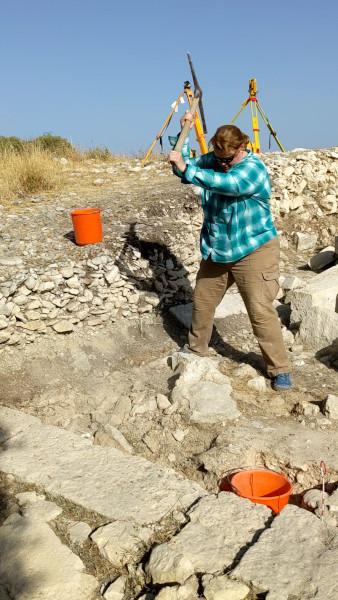
Rebekah hard at work in the field.
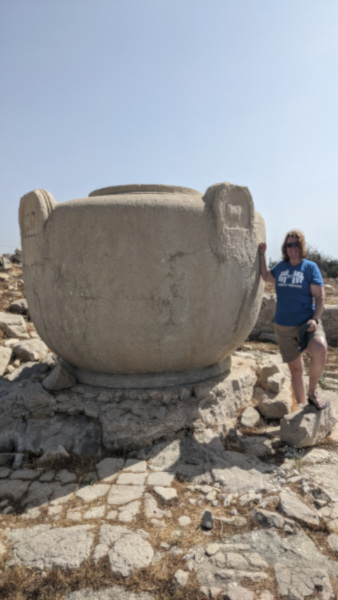
In front of the stone vase at Amathus, Cyprus.
I had a few personal research goals that I wanted to persue while I was in Cyprus. My dissertation focuses on using exterior lights in the ancient world, and I’m using Kourion as a test subject. While it will be possible to test light and distance with a mathematical formula and computer model, there is something to be said about seeing is believing. So I attempted a little experimental archaeology; with my scholarship money, I was able to purchase equipment and supplies to experiment with light, distance, moonlight, and visibility.
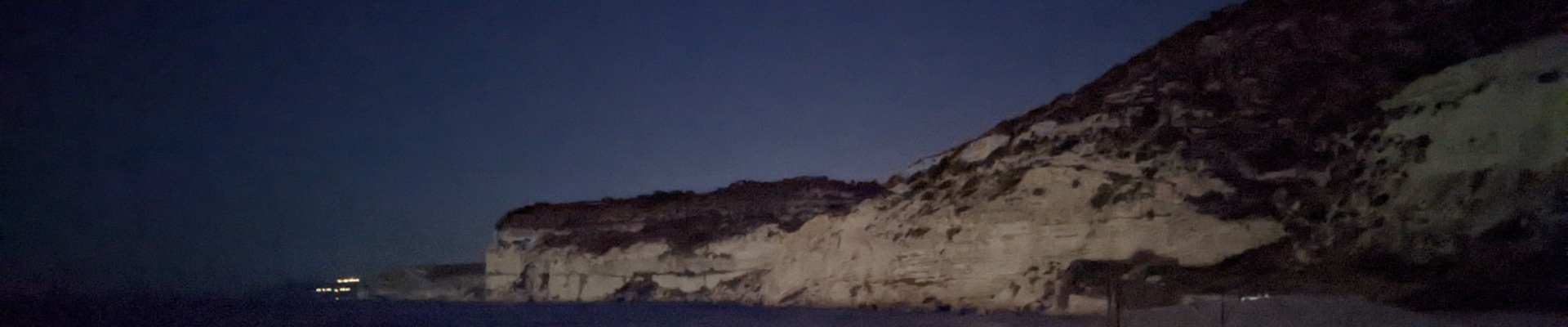
The first experiment on the beach.
My initial theory was that I would be able to see and measure the amount of light visible from the cliff to the beach. I had project members stand on the cliff, don’t worry, they were on a paved overlook, and a partner and I went down to the beach. Unfortunately, the first time we tried it, the wind was blowing too hard and blew out the candles. And we started too early in the evening before it was suitably dark. On our second attempt a few days later, we went to the cliff and beach after dark; there was less wind this time. I could see the candlelight from the beach; however, my light meter was too far away to pick up a reading. I made one final attempt at the end of the season late at night, around midnight to 1 A.M. It was just past a full moon, so I had plenty of natural light. This time I decided to see the base brightness level and how dim the light declined as I moved further away from my light source. I set up my candles and my tape measure, and I took a reading of one burning candle every 10 cm.
The final, and successful, attempt.
On my final attempt, I got a scaled measurement of a burning candle in bright moonlight! My first two attempts were failures, but as Thomas Edison said, “the light bulb was an invention with 1000 steps.” I’ll be able to plug this information into a formula and calculate how much light Kourion’s ancient inhabitants would require to be visible from the sea. My next experimental archaeology step will be to create torches and measure how much light they provide.
So why is this important? Light is easy for us. We flip a switch, turn on our phones, clap, light a match, or wave a hand. We are constantly in artificial light, so we do not think about the work that goes into illuminating a space. But there are drawbacks to working with light. For example, ancient light sources existed to be destroyed. Oil reservoirs burn out; wicks turn to ash; torches are made of wood and do not survive. So in some respects, I am chasing the invisible, but life did not stop for ancient people when the sun went down, and everybody went home and went to bed. There is too much evidence that this is untrue. But were people illuminating their cities? I think they were. People use light to establish their presence: Eifel Tower, city skylines, Las Vegas, or Jesus’ reference in Matthew of “a city on a hill” (Matthew 5:14). People use light to see and to be seen; they had to illuminate their city with artificial light. It was a statement of power, wealth, and a marker of civic identity. And for Kourion, I think this is key for understanding why they built on the acropolis where there was no natural water source.
Rebekah Ross is a senior Ph.D. student at Lipscomb University. She has been working with the Kourion Urban Space Project since its inception in 2012. Her research interests include light, illumination, lamps, and ancient glass.
Want to help more students and early career archaeologists get into the field? Donate to the cause today by selecting “Student Support” as your gift purpose!
We write with positive news, an update, and a request to continue supporting ASOR.
First, the positive news. As ASOR moves towards 2023, we see membership levels at a near all-time high (about 2,200), we continue to disseminate research through our journals, books, and Annual Meeting, and we will award a record number of scholarships and grants in 2022. We surpassed our goal of awarding $222,000 to celebrate ASOR’s 122 years, and now we are on pace to award $250,000.
Second, an update on valuable new and continuing member benefits:
Online resources: We have created online manuals and videos for site mapping and photographic documentation available in English, French, and Arabic for use outside of North America.
Photos and map collections: We added ca. 750 images of sites and artifacts and ca. 50 maps from the MENA regions so that members can use them for teaching and research
A new journal: Beginning in 2023, ASOR will provide free online access to the highly respected journal of Northwest Semitic studies, Maarav, for all student and regular ASOR members.
Annual Meeting: Hosting both virtual (October) and in-person meetings (November in Boston).
Scholarships: Over the past two years, we provided more than $55,000 for 309 membership and 386 meeting scholarships (full and partial).
Friends of ASOR Webinars: To date we have held 37 FOA webinars—all supporting scholarships.
Staff: We increased our staffing during the pandemic rather than cutting back or furloughing.
Cultural Heritage: We increased our support for protecting heritage in the Middle East and North Africa. We will implement more than $1,000,000 of federal programming in 2022–23.
Diversity: Added ~50 members from North Africa, awarded 6 BIPOC fieldwork scholarships, and produced three videos (with Archaeology in the Community) featuring BIPOC scholars.
Finally, two requests…
If a financial gap makes it challenging for you to continue your ASOR membership, please let us know (confidentially) that a membership scholarship could help (e-mail membership@asor.org).
If you can make a gift, please act now. We can only continue the long list of accomplishments above with your participation. You may give online here, or you print the donation form at the bottom of this letter and mail it back to 209 Commerce Street, Alexandria, VA 22314.
Warm regards,
Andrew G. Vaughn, Executive Director Lynn Swartz Dodd, Chair, ASOR Development


 Margarita Apffel was born in Culiacan Sinaloa, Mexico but moved to California to study English and became the first in her family to go to college. She is a master’s student of Near Eastern Archaeology in the H. M. S. Richards Divinity School at La Sierra University in Riverside, California, and received a B.A. in Cultural Anthropology from California State University, San Bernardino. She has participated in various excavations projects in Menorca, Spain; Riverside, California; Karak, Jordan, and completed Museum Studies in Rome, Italy. Her goals are to further her education in the field of archaeology and museum studies and to continue to travel the world for as long as she can.




 Sharon Herbert is the Charles K. Williams II Distinguished University Professor of Classical Archaeology Emerita and Research Associate at the Kelsey Museum of Archaeology at the University of Michigan. Formerly, she served as the chair of the Department of Classical Studies and Director of the Interdepartmental Program in Classical Art and Archaeology at Michigan, where she has enjoyed a remarkable career as a field archaeologist, teacher, and academic administrator since she joined the Michigan faculty in 1973. She is also the former Curator of Greek and Hellenistic Collections and Director Emerita (1997-2013) of the University of Michigan’s Kelsey Museum.
 Andrew (Andy) Vaughn became ASOR’s Executive Director in 2007. Prior to this appointment, Vaughn taught at Gustavus Adolphus College in St. Peter, MN from 1997–2007, where he was Associate Professor of Hebrew Bible and later served as Chair of Department of Religion. His teaching and research interests include cultural heritage, history, archaeology, Semitic languages, and Israelite religion. He is a past recipient of the Mitchell Dahood Prize for Biblical Scholarship, and he was a Fulbright Fellow at Tel Aviv University from 1993–94. Since 2014, Vaughn has served as Co-Director of ASOR Cultural Heritage Initiatives and overseen major heritage projects in Syria, Iraq, Libya, Tunisia, Morocco, and (most recently) the Sahel (Mali, Niger, and Burkina Faso).
 Norma Franklin is a field archaeologist who is happiest with complex stratigraphy. Other interests include ancient building techniques, water systems, and technology — old and new. Her research has focused on the three key cities of the Northern Kingdom of Israel: Samaria, Megiddo and Jezreel. She took part in the previous expedition Jezreel in 1990, directed by David Ussishkin of Tel Aviv University. In 1992 she became a founding member of the Megiddo Expedition, and served as a field archaeologist, successively directing 4 of the excavation areas. She resigned in 2011 in order to launch the Jezreel Expedition. Norma is the co-director of the Jezreel Expedition and a Research Associate at the Zinman Institute of Archaeology at the University of Haifa, Israel and an Associate Fellow of the W.F. Albright Institute of Archaeological Research in Jerusalem.
 Yoav Arbel received his B.A. in Archaeology and African Studies from The Hebrew University of Jerusalem and his M.A. and Ph.D. from the UCLA, San Diego. He was a staff member in various large-scale projects at Gamla, Bet She’an, and Maresha and regional projects at the Negev. Arbel was also a member of staff in excavations in England, Germany, Turkey, Jordan and Tanzania. Many of the salvage excavations he directed with the Israel Antiquities Authority took place in and around Jaffa. Arbel’s focuses his research on Historical Archaeology, and most of his publications discuss Jaffa and Israel’s archaeology and history in the Ottoman period.
 Shlomit Bechar is a post-doctoral fellow at The Haifa Center for Mediterranean History at the University of Haifa. She also conducts ongoing research at the Institute of Archaeology at The Hebrew University of Jerusalem. Shlomit received her M.A. in 2012 and Ph.D. in 2019, both from the Hebrew University of Jerusalem. She has been digging at Tel Hazor since 2007 and became co-director of the excavations in 2015. Her book, Political Change and Material Culture in Middle to Late Bronze Age Canaan, was published in 2022 by Eisenbrauns, and she is co-author of Hazor VII and is currently co-authoring Hazor VIII.
 Katia Cytryn is Senior Lecturer at the Institute of Archaeology and Dept. of Islamic and Middle Eastern Studies at The Hebrew University of Jerusalem. She specializes in Islamic Archaeology and Material Culture and teaches a variety of courses, from introductions to specialized seminars, dealing with her main areas of expertise: Umayyads, Mamluks, Mosque Architecture and road archaeology. While her research on Mamluks and road archaeology goes back to her doctoral thesis, her interest on the Umayyads and early Islamic mosque architecture deepened following her ongoing archaeological projects at Khirbat al-Minya and at Tiberias, both on the western side of the Sea of Galilee.
 Meir Edrey is the Professional Director & Research Associate of the Leon Recanati Institute for Maritime Studies at the University of Haifa. He is also an Adjunct Lecturer and Post-doctoral fellow in the Department of Maritime Civilizations. Meir’s research focuses on the Phoenician Culture during the first millennium B.C.E. in the Orient and the Occident, dealing specifically with issues related to Phoenician terrestrial and maritime religion and cultic practices. His recent studies include different aspects of the material culture of Tel Kabri, Tel Achziv, and the underwater site of Shavei Zion. He is also the director of the Kh. es-Suwweida Excavation Project (GIF funded).
 Michael Eisenberg is a senior researcher at The Zinman Institute of Archaeology at the University of Haifa. He does research in Cultural History, Historical Anthropology, Cultural Anthropology and mainly Classical Period Archaeology. He is also the Director of the Hippos of the Decapolis Excavations Project. His other interests include military architecture, the art of fortifications, and siege warfare during the Hellenistic and Roman periods.
 Adi Erlich is a researcher at the Zinman Institute of Archaeology and a senior lecturer in the departments of Art History and Archaeology at the University of Haifa. Her Ph.D. was published as a monograph, The Art of Hellenistic Palestine (Oxford 2009). She studies art and archaeology at sites in Israel from the fifth century B.C.E. to the seventh century C.E., with a focus on terracotta figurines. She is a member of the executive board of the Association for Coroplastic Studies (ACoSt) and is the director of the Beth She’arim excavations, a main Jewish town in Galilee in the Roman period.
 Yuval Gadot is the head of the Jacob M. Alkow Department of Archaeology and Ancient Near Eastern Cultures at Tel Aviv University. Since 2013, he has directed Tel-Aviv University excavations in the ‘City of David’ and is co-directing the “Lautenschläger Azekah Expedition.” His research in Jerusalem covers the ancient urban city and an interdisciplinary study of its rural landscape. Gadot obtained his Ph.D. in 2004 from Tel-Aviv University. Gadot’s publications include The Bronze Age Cemetery at ‘Ara (2014), Ramat Rahel III – Final Publication of Yohanan Aharoni’s Excavations at Ramat-Raḥel (2016), and the co-editing of “Rethinking Israel,” an edited volume published in honor of Prof. Israel Finkelstein (2017).
 Peter Gendelman is a senior archaeologist with the Israel Antiquities Authority. Gendelman’s main research focus encompasses the area of Caesarea, a port city originally built by King Herod that served as an administrative center during the Roman Empire and the capital of a Byzantine province as well. Caesarea is considered one of the most impressive archaeological sites of Israel. As the head of excavations at Caesarea, Dr. Gendelman and his team have unearthed stunning finds like an altar dedicated to Augustus Caesar and a mother-of-pearl tablet bearing the inscription of a menorah. He also takes part in restoration and conservation efforts to preserve the area for tourists.
 David Gurevich is an archaeologist as well as a former Fulbright Post-Doctoral Fellow in 2014-2015. With both an M.A. and Ph.D. in Archaeology from the University of Haifa, Dr. Gurevich’s main academic focuses include the history and archaeology of Jerusalem and Temple Mount, particularly during the Second Temple period. He has given lectures covering more modern topics as well, including geo-politics and Israel’s role in our international world. He also founded the academic program “Ambassadors Online” through Haifa University which aims to prepare Israeli students to take part in international conversations. Along with his many academic accolades, Dr. Gurevich is a licensed tour guide in Israel.
 Yakov Kalman is an agriculturalist and archaeologist who started his career in the early 1970’s surveying and excavating various sites in the Negev Highlands. In the early 1990’s, he spent four years in the Arava, excavating at Ein Hazeva for the Israel Antiquities Authority. He has worked at Masada and Jericho, and since 1997 has worked as field supervisor at Lower Herodium, and then on the mount’s eastern slope, where he helped exposed Herod’s tomb and private theatre. He has also worked as co-director and field supervisor at Horkania (Judean Desert), and at Bet Loya (Lachish area). He is currently an MA archaeology student at the Hebrew University.
 Robert Kool is a senior Curator at the Coin Department with the Israel Antiquities Authority (IAA). Some of his research interests include medieval and crusader coinages and seals, as well as both the monetary and economic developmental history of Jerusalem in the Mamluk and Ottoman periods. Through the study of coinages, Kool has identified many rare finds, including a 2,000 year old silver coin that may have been minted in the Temple of Jerusalem during the Great Jewish Revolt against the Romans in the Second Temple period.
 Igor Kreimerman is a lecturer in the Department of Archaeology and Ancient Near Eastern Studies at The Hebrew University of Jerusalem. His research combines the use of geoarchaeology, experimental archaeology and traditional archaeological methods for the study of formation processes, especially construction and destruction, in the Bronze and Iron Age Levant. His areas of interest are the archaeology of the Bronze Age and Iron Age in Israel, ancient construction materials and techniques, architecture, urban planning, destruction by fire, the seam between archaeology and text-based disciplines. He currently serves as the director of the renewed excavations at Tel Beit Mirsim.
 Zvi Lederman is a professor of archaeology at Tel Aviv University. Dr. Lederman is also the director of excavations at Tel Beth-Shemesh, a unique border site ideal for the examination of trade, communication, and interaction between the different ethnic and cultural groups that interacted with one another during the Iron Age. As a border site, Tel Beth-Shemesh reveals much information about the interplay and conflict between the local people and the Philistines. Dr. Lederman has excavated several villages and cities within Tel Beth-Shemesh that indicate conflict and rivalry between different factions.
 Shelley-Anne Peleg is a specialist on cultural heritage, conservation procedures of cultural built heritage (archeological sites and historical cities) with a focus on the Old City of Akko. She is fellow researcher and lecturer in the Department of Israel Studies at the University of Haifa, and a lecturer at Kinneret College. Her Ph.D. dissertation was based on 25 years of work at the Israel Antiquities Authority. During that time, she served as the Director of the International Conservation Center – Citta’ di Roma (situated in the Old City of Akko). She established national and international curricula and training programs in practical conservation and cultural heritage studies at Akko.
 Issa Sarie Issa Sarie is a lecturer of anthropology and archaeology at the Institute of archaeology at Al Quds University. Sarie received his education from Birzeit University, Yarmouk University, and The Hebrew University of Jerusalem. He is also a fellow of the Albright Institute of Archaeological Research in Jerusalem. He has lectured and worked in both the U.S. and in France. His research interest is broad and multidisciplinary in that it combines archaeology and anthropology. His main research focus is the impact of agriculture invention, animal husbandry, and domestication on human health status during the Natufian and Neolithic periods.
 Katharina Schmidt recently accepted the post of the Director of the W.F. Albright Institute in Jerusalem in June 2022. From 2016 to 2022, she was the Director of the German Protestant Institute of Archaeology (GPIA) in Amman, Jordan. She studied Near Eastern Archaeology, Assyriology, and Pre-and Proto History at the Ludwig-Maximilians University in Munich (Ph.D. in 2016). Dr. Schmidt has done fieldwork throughout the Near East and Europe including Jordan, Syria, Turkey, and Germany. Since 2016, she has directed the Tall Zira´a excavation project (Jordan). She has curated a special public outreach exhibition in the Jordan National Museum and coordinated a cultural heritage project with UNESCO.
 Guy Stiebel is a senior lecturer in Department of Archaeology and Ancient Near Eastern Cultures, Tel Aviv University, Israel and leads the archaeological expedition to the World Heritage site of Masada. He earned his Ph.D. at UCL for the study of militaria in Roman Palestine. Stiebel has published extensively on military archaeology and history. The new discoveries at Masada, most notably those concerning the horticulture and viniculture of King Herod, were recognized by the Third Shanghai Archaeological Forum, being awarded one of the 10 World discoveries in Archaeology. Stiebel was recently nominated by Israel’s Minister of Culture as the Chair of the Israel Archaeological Council.
 Katharina Streit is currently a postdoctoral researcher at the Martin Buber Society of Fellows in the Humanities at The Hebrew University of Jerusalem, researching development and changes in material culture from the Middle to the Late Bronze Ages (Material Culture Project). She co-directs the Tel Lachish excavations with Felix Höflmayer and Ilan Sharon. Katharina has published extensively on chronological questions and radiocarbon dating from the Chalcolithic to the Iron Ages. Katharina began her studies at the University of Freiburg, received her undergraduate training at Oxford University, and finished her M.A. and Ph.D. studies at the Institute of Archaeology of The Hebrew University of Jerusalem.
 Aharon Tavger is currently a post-doctoral fellow at the Hebrew University of Jerusalem. Aharon received his M.A. in 2012 from Bar-Ilan University, and his Ph.D. in 2019 from Ariel University. His research combines the use of historical-geography and archaeology, focusing mainly on the highlands of Ancient Israel and Judah during the Bronze and Iron Ages and the Persian period. Since 2016, he has served as a senior staff member in the archaeological expedition to Tel Burna, and currently serves as the lab director of the project. Aharon also as the director of the Heritage Center for the Study of the Kingdom of Israel at Ariel University.
 Joe Uziel graduated with his Ph.D. from Bar-Ilan University in 2008. He has since worked for the Israel Antiquities Authority (IAA), excavating several areas in the City of David and the Western Wall Tunnels, uncovering a range of finds from the Middle Bronze Age through to the Mamluk period. Joe’s discoveries have inspired further research on the archaeology of Jerusalem, particularly relating to the Bronze and Iron Ages and Roman period. In January 2020, Joe was named head of the Dead Sea Scrolls Unit at the IAA. The Dead Sea Scroll Unit is dedicated to the conservation, curation, documentation, and research of the Dead Sea Scrolls.
 Sam Wolff received his Ph.D. from University of Chicago in 1986. He was Field Supervisor and later Assistant Director at the 1985-1990 excavations at Ashkelon (Israel). In 1991, he began a 25-year career as a field archaeologist at the Israel Antiquities Authority (IAA). He has excavated at the Iron Age I site of Ein Hagit, the multi-period site of Tel Megadim, and the Iron Age II site at Tel Hamid, a satellite of Tel Gezer. He worked as Co-Director and photographer at the 2006-2017 excavations at Tel Gezer. Since retiring from the IAA in 2017, he has been managing the Tel Gezer laboratory.
 Assaf Yasur-Landau is a professor in the Department of Maritime Civilizations at the University of Haifa, the director of the Laboratory for Coastal Archaeology and Underwater Survey, and a senior researcher at the Leon Recanati Institute for Maritime Studies. After attending Tel Aviv University for both his M.A. and Ph.D. degrees, Dr. Yasur-Landau attended Harvard University to complete his post-doctoral research. As an archaeologist interested in the connections between the Aegean and the Levant during the Bronze Age, he is involved in several archaeological projects including codirecting both the excavations at Tel Kabri and the underwater excavations at the ancient port of Tel Dor.
 Irit Ziffer is an archaeologist, art historian, and the former curator of the Ceramics and Nehushtan pavilions at the Eretz Israel Museum in Tel Aviv. She received her Ph.D. in ancient Near Eastern art from Tel Aviv University, and was an Andrew W. Mellon Fellow in Art History at the Metropolitan Museum of Art from 2007-2008. Dr. Ziffer’s academic interests lie in the methods in which the ruling class utilized art and images for political purposes. She has also taught in the Department of Archaeology and ancient Near Eastern Cultures at Tel Aviv University and took part in the Aphek-Antipatris excavations from 1976-1979 and 1981-1982.

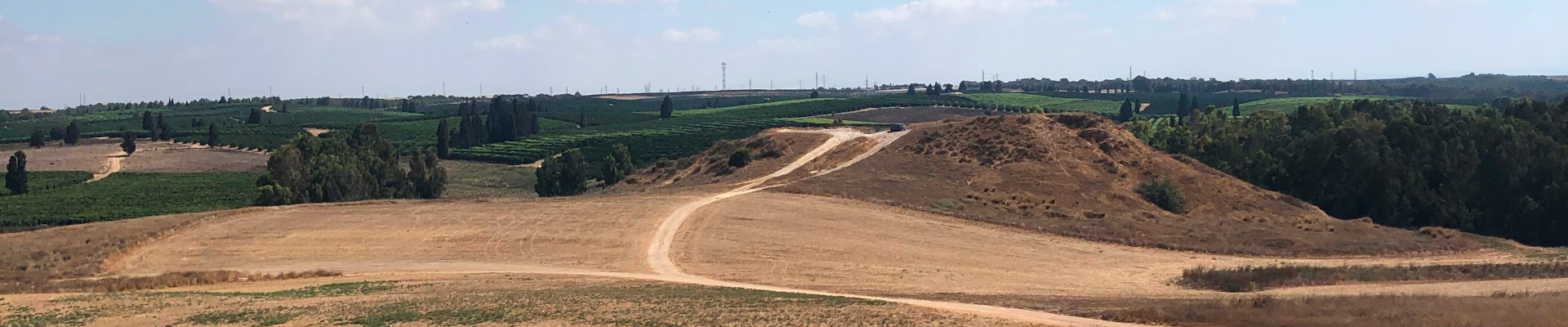

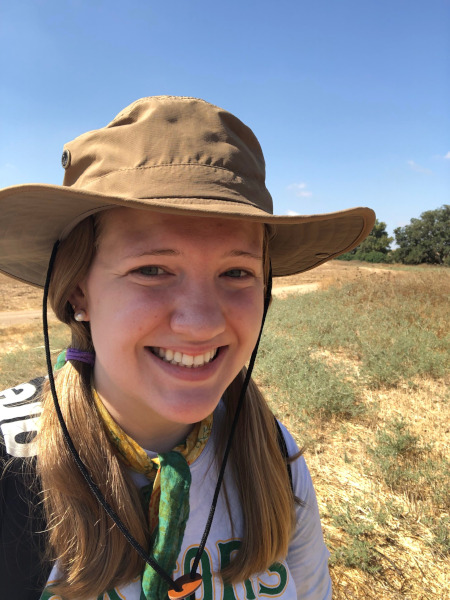
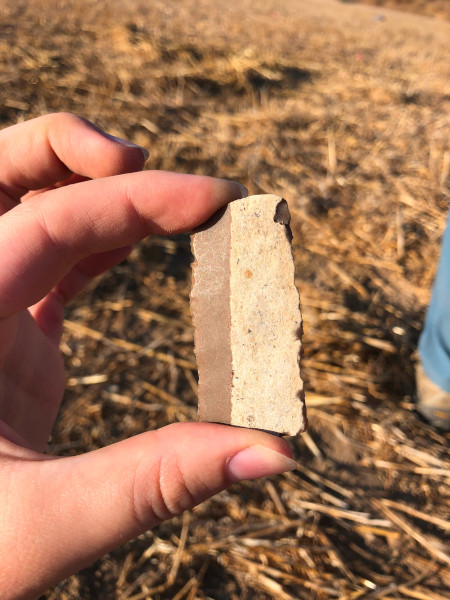
 Trustee Nominations Committee has selected five highly qualified members to stand for election for four open positions on the Board of Trustees. The Board sets the direction for ASOR and provides oversight for our organization. Among other responsibilities, members of the Board agree to attend two meetings each year, to participate thoughtfully in the governance process, and to contribute financially to ASOR.