Virtual Archaeology Initiative: 2025 Dig Diaries

Virtual Archaeology Initiative: 2025 Dig Diaries

As you embark on fieldwork and research this summer, ASOR invites you to make Dig Diaries and submit them to our Virtual Archaeology Initiative.

Dig Diaries can be any of the following (coordinate with your project director(s) to ensure their permission):

1) a short teaching video that explains a specific process or element of an excavation/survey, how that element fits within the overall objective of the project, and/or how it fulfills some responsibility that we as archaeologists have to study, preserve, document, and make accessible the materials we excavate;

2) a video field diary recording in which you discuss research questions for your given project/season along with progress reports throughout the season to show how those research questions are met and/or how they change;
3) a digital image with explanation of the pictured stratigraphy/object/etc.

Check out our current submissions on YouTube or TikTok for examples. We are also open to other kinds of virtual assets, so if you have a great idea, please feel free to share it with us. We hope that you choose to join us in developing Virtual Archaeology at ASOR. Submissions and any questions can be directed to info@asor.org.

Developed by ASOR’s Membership & Outreach Committee, the Virtual Archaeology Initiative is a growing collection of digital resources that illustrate or teach various steps involved in the archaeological process. In addition to creating teaching tools that will benefit students/educators and generate interest in archaeology, this will allow people who cannot or would not participate in actual excavations to feel as if they still can. Read more about the Virtual Archaeology Initiative here.

Fieldwork Report: Aayush Umesh

Banner Image for Aayush Umesh 2025 Fieldwork Report

Finding My Path

Aayush Umesh, 2025 Eric and Carol Meyers Fieldwork Scholarship Recipient 

A year ago today, I had no idea that I would become an Islamic archaeologist. My path has been full of twists and turns. In the last four years at the University of Georgia, I have completed a bachelor’s degree with double majors in theatre and communication studies and a minor in Arabic. I entered college with ambitions to attend law school. Eventually, however, I found archaeology, and tried my hand at excavation last summer at Antiochia ad Cragum, Türkiye. I fell in love and attended both the ASOR and AIA Annual Meetings in 2024 and 2025, respectively. At the ASOR Annual Meeting, I met Professor Bethany Walker, the head of the Islamic Archaeology Research Unit at the University of Bonn. Upon meeting her and listening to the work of her graduate students, the next segment of my path had been illuminated. I decided to pursue the MA in Islamic Archaeology at the University of Bonn and to accompany the university for fieldwork at Tall Hisban, Jordan, from May 18-29, 2025.

Photo of Aayush Umesh in Tall Hisban
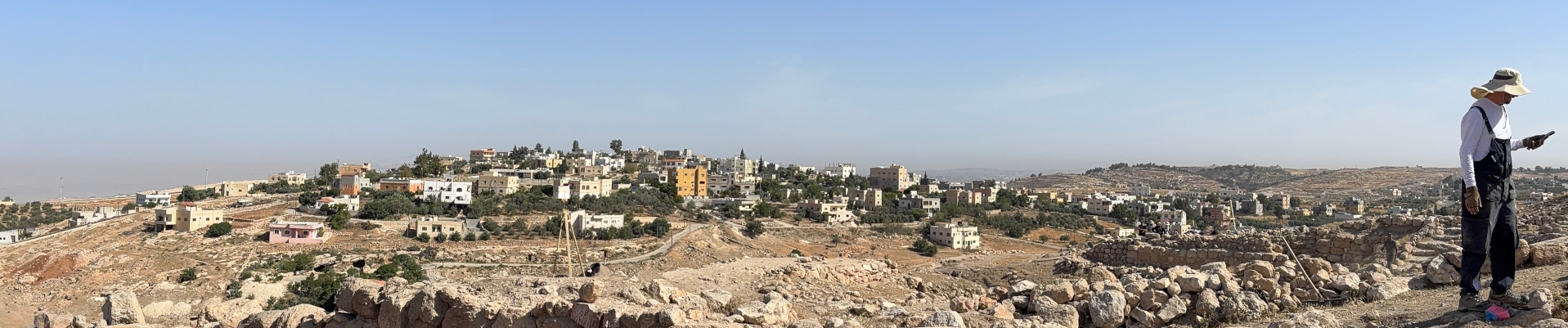
A panoramic view from Tall Hisban.
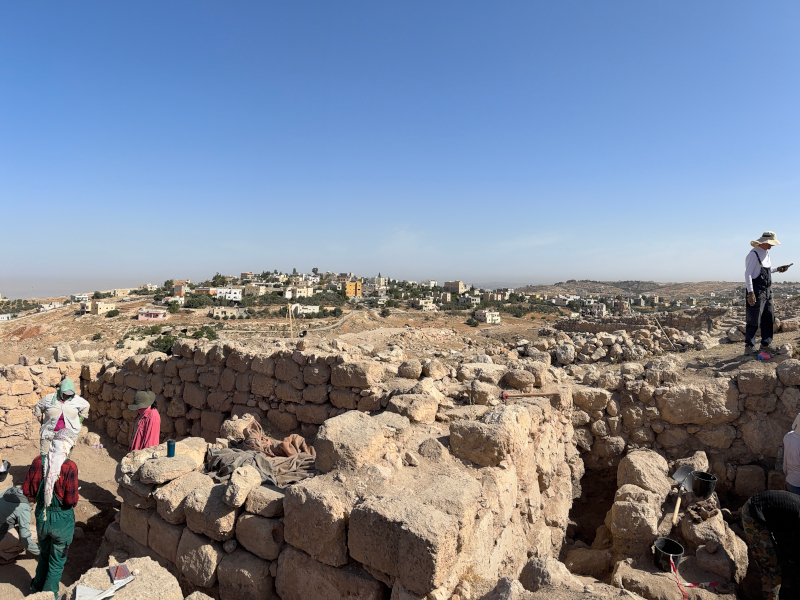
Photo from Aayush Umesh in Tall Hisban
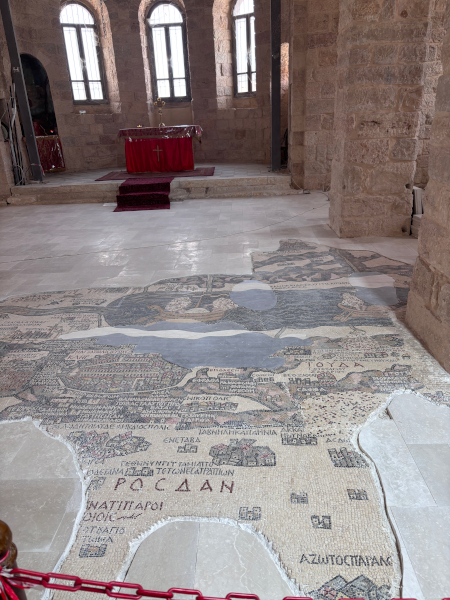
Madaba Map on the floor of the St. George Greek Orthodox Church.

Tall Hisban is around a 30-minute drive from Madaba, the “City of Mosaics” that houses the Madaba Map (the oldest surviving cartographic depiction of the Holy Land as a large floor mosaic on the floor of the St. George Greek Orthodox Church). Madaba today is a vibrant city boasting harmonious Christian and Muslim communities, spectacular archaeology, delicious Jordanian cuisine, talented mosaic artisans, and proximity to the capital city of Amman (which is less than an hour’s drive). Our team stayed at Salome Hotel, a gorgeous accommodation for guests in Madaba with simple yet beautiful amenities and a kind, hospitable staff.

Tall Hisban is a breathtaking site with millennia of occupation, with excavated material culture representing periods from Paleolithic to Late Islamic. A stroll through the site takes one up Roman stairs to Byzantine houses, through Islamic bathhouses reusing Christian baptismal basins to the entrances of previously settled underground cave systems. Old and new are engaged in a remarkable dance at Tall Hisban, best captured by the abundant spolia utilized in its diverse features’ constructions as well as in the tell’s modern residential surroundings.

Photo from Aayush Umesh in Tall Hisban
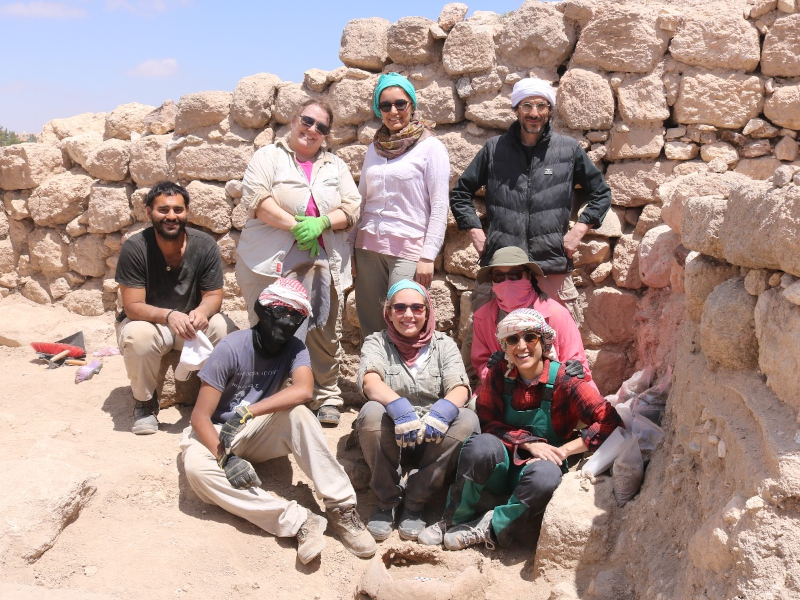
Me and some teammates in our square.

I was assigned to a square which had been identified in a previous season as an Ayyubid-era kitchen. Our goal was to continue excavating this square, passing the Ayyubid layer and investigating those beneath to determine the usage of the space in earlier Islamic eras. Our objective this excavation season was to gain a better understanding of the dietary practices of the inhabitants of Tall Hisban by comparing data procured at the tell to data procured at a nearby wadi (valley) that had been historically used for agricultural purposes. As such, many soil samples were taken during excavation for botanical analysis, particularly in areas high in charcoal or surrounding excavated cookwares. Some of the most outstanding discoveries were tabuns, or traditional clay ovens, which contain a multitude of data.

Photo from Aayush Umesh in Tall Hisban
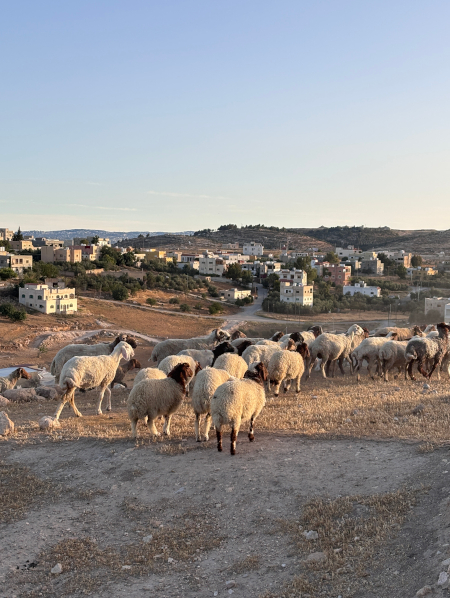
Sheep would greet us each morning at the site.

Upon returning to the hotel each afternoon, the group would reconvene for pottery washing and counting after a nap. It was inspiring watching Prof. Walker identify the period or region of any given sherd in seconds! Pottery washing was a great educational experience because I was able to acquaint myself with many types and periods of wares including Byzantine, Umayyad, Abbasid, Ayyubid, Mamluk, and Fatimid.


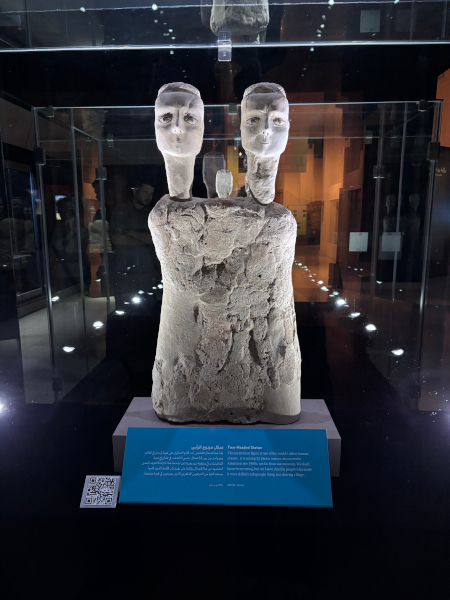
Having completed a minor in Arabic at UGA, I was thrilled to have this opportunity to develop my skills in spoken Arabic, particularly in the Jordanian dialect. I learned many helpful field vocabulary words from Jordanian workmen onsite including the words for trowel, pottery, shovel, dustpan, glass, pickaxe, and more! The team had one free weekend, and while most used this time to visit Petra, I decided to visit Amman instead with Prof. Walker and another teammate. We spent some time at the Jordan Museum, where I was able to stand just inches away from both the Dead Sea Scrolls and the Ain Ghazal statues. We then visited the Amman Citadel as well. The Jordan Archaeological Museum is located on the citadel, and features excavated artefacts from Tall Hisban and many other sites in Jordan.

Photo from Aayush Umesh in Tall Hisban
The Ain Ghazal statues at the Jordan Museum.

My time at Tall Hisban was nothing short of life-changing. Through this experience, I made over a dozen friends at the University of Bonn, which will make my transition far easier as I relocate to Germany this fall. I am thrilled that I have found my path—Islamic archaeology—and have been given the opportunity to study with one of the world’s leading Islamic archaeologists. I look forward to returning to Tall Hisban in future excavation seasons and continuing the work that we did this summer.

Photo from Aayush Umesh in Tall Hisban
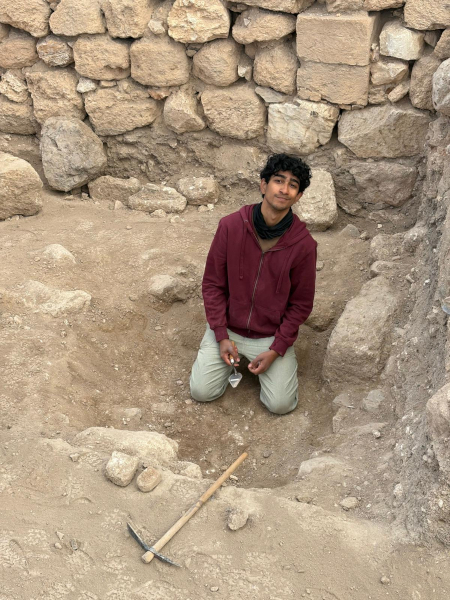
Me in the field!

Aayush Umesh is a recent graduate of the University of Georgia with a Bachelor of Arts in Theatre and Communication Studies. He hopes to become a professor in Islamic archaeology at a major research university, focusing in the Levant and/or South Asia. He will soon begin a Master of Arts degree in Islamic Archaeology at the University of Bonn, supervised by Prof. Bethany Walker.

Want to help more students and early career archaeologists get into the field? Donate to the cause today by selecting “Fieldwork Scholarships” as your gift purpose!


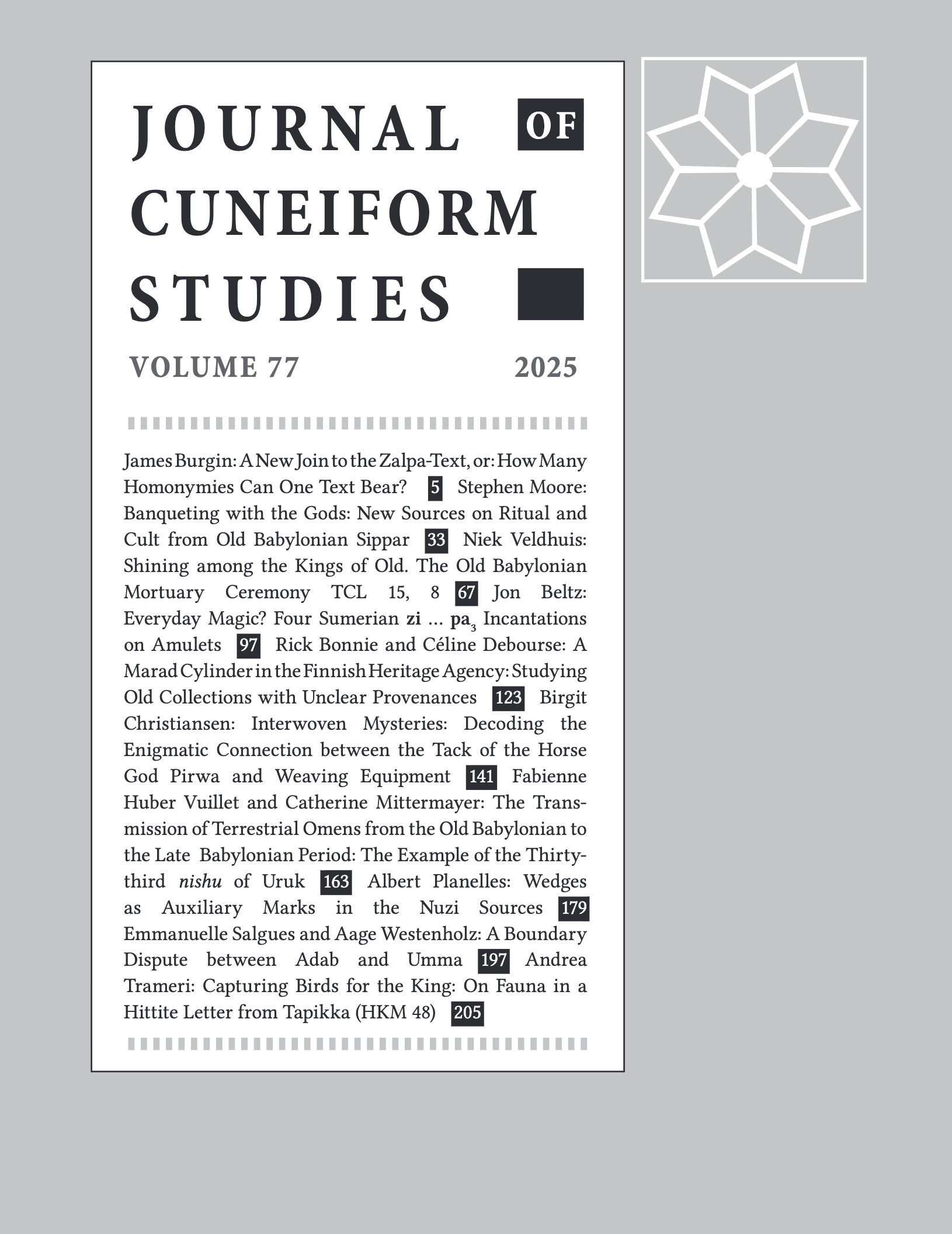
Table of Contents for JCS 77 (2025)

Table of Contents for Journal of Cuneiform Studies 77 (2025)

You can receive JCS (and other ASOR publications) through an ASOR Membership.
Please e-mail the Membership office if you have any questions.

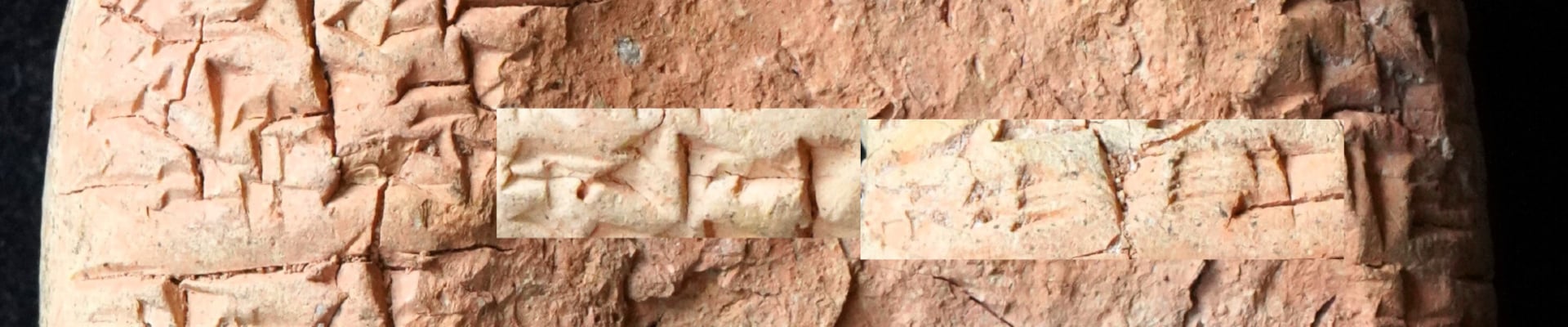
This contribution provides an edition of a small new join to paragraph §10′ of the Zalpa Text (CTH 3.1), one of the most intriguing texts of early Hittite historiography. The join is notable for containing the name Ḫuzziya. The ongoing discussion on the dating of the Zalpa Text is critically reviewed, and it is argued that the Ḫuzziya mentioned in the join is Ḫuzziya I, probable founder of the Hittite kingdom. While not ending the dating debate once and for all, the join represents another step forward toward situating this puzzling text in the arc of early Hittite historiography.

ASOR Members with online access: log into ASOR’s Online Portal here. Once logged in, click the JOURNALS tab in the top navigation bar. From here you may select which journal you would like to read. If you have online access, you will see your selected journal’s current issue Table of Contents. Click on the “Current Issue” button and you will then be redirected to the University of Chicago Press’s (UCP) platform to immediately start reading any issue of your choice. Tutorials for how to log in to the Online Portal as well as how to navigate to the Portal Journals page can be found here.

This article publishes nine new texts relating to ritual and cult in Old Babylonian Sippar. On internal grounds, they likely stem from Sippar-Amnānum (Tell ed-Dēr). Seven of these explicitly attest the banquets of particular deities, including Gula, Adad, Sîn, Šamaš, and Ea. Evidence for the influence of Annunītum and her cultic household is given in the texts. One text attests a night-vigil and provides evidence for a ritual most likely connected to (Ištar) Annunītum.

ASOR Members with online access: log into ASOR’s Online Portal here. Once logged in, click the JOURNALS tab in the top navigation bar. From here you may select which journal you would like to read. If you have online access, you will see your selected journal’s current issue Table of Contents. Click on the “Current Issue” button and you will then be redirected to the University of Chicago Press’s (UCP) platform to immediately start reading any issue of your choice. Tutorials for how to log in to the Online Portal as well as how to navigate to the Portal Journals page can be found here.

This contribution provides a new edition of TCL 15, 8 (AO 5374) and interprets the text as a mortuary ceremony for an (early) Old Babylonian royal figure, who is helped in his transition from this world to the next by netherworld gods and kings of the past, and eventually ends up in the skies as a star. The new edition is an occasion to discuss the relationships among Old Babylonian Emesal liturgies and relationships between Old Babylonian and later texts. The list of past kings includes the names of Ur III monarchs as well as kings of the Isin Dynasty. Such use of the past is further illustrated by an administrative text found at Ur (U.30628) that inventories precious objects in memory of kings of both dynasties (appendix 1).

ASOR Members with online access: log into ASOR’s Online Portal here. Once logged in, click the JOURNALS tab in the top navigation bar. From here you may select which journal you would like to read. If you have online access, you will see your selected journal’s current issue Table of Contents. Click on the “Current Issue” button and you will then be redirected to the University of Chicago Press’s (UCP) platform to immediately start reading any issue of your choice. Tutorials for how to log in to the Online Portal as well as how to navigate to the Portal Journals page can be found here.

Cuneiform incantations present modern researchers with a conundrum. On the one hand, they appear to be texts spoken over an individual to heal and protect from harm, but on the other, they are written on clay tablets, a medium more associated with educated scribal literature. Inscribed amulets, however, provide examples of written incantations that clearly had a place in magical praxis. This article presents editions of four zi … pa₃ incantations from amulets—two of which are entirely new to scholarship—and uses these four texts as a test case for comparison with zi … pa₃ incantations from clay tablets. This comparison reveals that there are significant similarities between the amulet incantations and those from single incantation tablets and larger compendia, suggesting that there may be less of a divide between the Sumerian incantation tradition and actual magical praxis than is sometimes thought. At the same time, the variation among the amulet texts themselves and between the amulet texts and other early zi … pa₃ incantations indicates that the amulets are not copies or excerpts from precisely worded scripts but appear to be creative adaptations of basic forms and textual structures.

ASOR Members with online access: log into ASOR’s Online Portal here. Once logged in, click the JOURNALS tab in the top navigation bar. From here you may select which journal you would like to read. If you have online access, you will see your selected journal’s current issue Table of Contents. Click on the “Current Issue” button and you will then be redirected to the University of Chicago Press’s (UCP) platform to immediately start reading any issue of your choice. Tutorials for how to log in to the Online Portal as well as how to navigate to the Portal Journals page can be found here.

Located in the storage of the archaeological collections of the Finnish Heritage Agency lies a well-preserved clay cylinder inscribed with cuneiform script. The text on it describes the building activities of the Neo-Babylonian king Nebuchadnezzar II (604–562 BCE), and in particular recounts his renovation of the temple of the god Lugal-Marada in Marad. As one of around fifty known recensions of this inscription, the Helsinki Cylinder reveals limited new historical information. Instead, much more pressing is the question of how the cylinder arrived in Finland and how it ended up seemingly forgotten in the storage of the Finnish Heritage Agency. In this article, we trace the cylinder’s journey to Finland, discuss how we, as scholars, should deal with unprovenanced objects such as this one, and provide an edition of the text it contains.

ASOR Members with online access: log into ASOR’s Online Portal here. Once logged in, click the JOURNALS tab in the top navigation bar. From here you may select which journal you would like to read. If you have online access, you will see your selected journal’s current issue Table of Contents. Click on the “Current Issue” button and you will then be redirected to the University of Chicago Press’s (UCP) platform to immediately start reading any issue of your choice. Tutorials for how to log in to the Online Portal as well as how to navigate to the Portal Journals page can be found here.

This article aims to enhance the understanding of the Hittite god Pirwa by analyzing descriptions of his statues in two oracle texts (KBo 44.209(+) and Çorum 6-1-96) and a cult inventory (KUB 38.4). In contrast to previous interpretations, I propose that the term 𒀹dupau-x[ in KUB 38.4 obv. 4 is a noun denoting a striking weapon rather than a Luwian genitive adjective linked to el-tù-ḫu “whip.” Accordingly, Pirwa is depicted as a horseman holding a striking weapon in his right hand and a whip in his left. The study also investigates the term ašuša-, suggesting it may refer to either the god’s earrings or components of the horse tack or rider’s gear. Furthermore, the mention of a mountain in Çorum 6-1-96 obv. 5′ is interpreted not as a specific mountain name but as a mountain-shaped feature of the divine statue. The article additionally delves into the hapax legomenon karzana- in Çorum 6-1-96 obv. 6′, linking it to the noun karza(n)-, which is associated with weaving activities in festival texts. Both terms are traced to the Indo-European root *(s)ker– meaning “to cut/scratch,” proposing that while karza(n)– likely signifies a weaving stick or shuttle, karzana– might denote a stick-shaped device used as a type of insignia or a weapon.

ASOR Members with online access: log into ASOR’s Online Portal here. Once logged in, click the JOURNALS tab in the top navigation bar. From here you may select which journal you would like to read. If you have online access, you will see your selected journal’s current issue Table of Contents. Click on the “Current Issue” button and you will then be redirected to the University of Chicago Press’s (UCP) platform to immediately start reading any issue of your choice. Tutorials for how to log in to the Online Portal as well as how to navigate to the Portal Journals page can be found here.

Old Babylonian precursors of terrestrial omens generally cover topics similar to those found in the first millennium series Šumma ālu ina mēlê šakin without having identical omens. The present article will focus on a group of omens that are handed down in a hitherto unknown continuity over nearly 1500 years. They are first attested in the Old Babylonian omen compendium MS 3104 and are integrated almost verbatim as the thirty-third nisḫu in the divinatory corpus of Late Babylonian Uruk. Four excerpt tablets from Nineveh and a Neo-Babylonian manuscript have been discovered by the authors to record a choice of the very same omens. The article discusses the place of these omens in the Šumma ālu series and gives a full edition of the “thirty-third nisḫu” omens as well as copies of the newly identified manuscripts.

ASOR Members with online access: log into ASOR’s Online Portal here. Once logged in, click the JOURNALS tab in the top navigation bar. From here you may select which journal you would like to read. If you have online access, you will see your selected journal’s current issue Table of Contents. Click on the “Current Issue” button and you will then be redirected to the University of Chicago Press’s (UCP) platform to immediately start reading any issue of your choice. Tutorials for how to log in to the Online Portal as well as how to navigate to the Portal Journals page can be found here.

Ancient Near Eastern scribes used several nonphonetic signs and marks to improve the readability of their texts. One of these resources was the so-called Glossenkeil. This article presents the first study of the use of the sign, here called “wedge-mark” to avoid terminological bias in the analysis of its function, in documents from ancient Nuzi. Based on the analysis of a wide repertoire of sources, the article concludes that the sign only had a paragraphemic function and was used optionally. To understand how Nuzi scribes used the sign, other topics related to it are also discussed, such as indentation. Finally, the evidence from Nuzi is considered in the light of general ancient Near Eastern scribal practice.

ASOR Members with online access: log into ASOR’s Online Portal here. Once logged in, click the JOURNALS tab in the top navigation bar. From here you may select which journal you would like to read. If you have online access, you will see your selected journal’s current issue Table of Contents. Click on the “Current Issue” button and you will then be redirected to the University of Chicago Press’s (UCP) platform to immediately start reading any issue of your choice. Tutorials for how to log in to the Online Portal as well as how to navigate to the Portal Journals page can be found here.

In this article, we present an updated edition of a Sargonic document first published by Bertrand Lafont in 2020. We offer several new readings and perspectives but admit that our understanding of the text is still incomplete. The preserved portion of the text records a land claim against Adab by Šubur-Nagarpae, the ensi of Umma usually known as Šubur, and settled by Naramsin in favor of Adab. The process involved witnesses from neighboring (yeta’ātim) towns and Adab, but also cities from much further east, Tallani, Ibrat, and Pašime. The last preserved section of the text describes the “piling up of the boundary markers” (in sapāki pulukke) in the presence of both ensis. Lugal-ša, ensi of Adab, is attested here for the first time.

ASOR Members with online access: log into ASOR’s Online Portal here. Once logged in, click the JOURNALS tab in the top navigation bar. From here you may select which journal you would like to read. If you have online access, you will see your selected journal’s current issue Table of Contents. Click on the “Current Issue” button and you will then be redirected to the University of Chicago Press’s (UCP) platform to immediately start reading any issue of your choice. Tutorials for how to log in to the Online Portal as well as how to navigate to the Portal Journals page can be found here.

This article presents a new edition and commentary of the Hittite letter HKM 48, from the ancient town of Tapikka (Maşat Höyük), dating approximately to the early fourteenth century BCE. In this letter, two subordinates of the Hittite king, Mariya and Ḫapiri, write to their lord with news on a task they were assigned: the capture of birds and, perhaps, other animals. The second part of the article discusses various aspects of interest within the letter’s content. In particular, a novel understanding of the primary concerns of the text and of the logic within the epistolary exchange is proposed, primarily centered on a new identification of the animals mentioned in a passage difficult to interpret.

ASOR Members with online access: log into ASOR’s Online Portal here. Once logged in, click the JOURNALS tab in the top navigation bar. From here you may select which journal you would like to read. If you have online access, you will see your selected journal’s current issue Table of Contents. Click on the “Current Issue” button and you will then be redirected to the University of Chicago Press’s (UCP) platform to immediately start reading any issue of your choice. Tutorials for how to log in to the Online Portal as well as how to navigate to the Portal Journals page can be found here.

2025 Fieldwork Updates

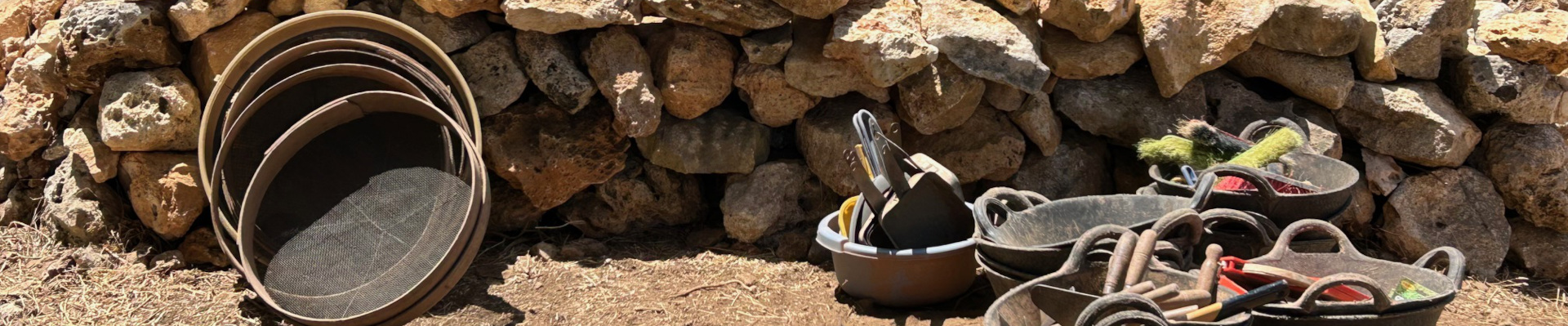
image of sifters, buckets, and other tools on the Menorca Archaeological Project

2025 UPDATES FROM THE FIELD

It is a busy and exciting time of year for many ASOR-affiliated projects. Below are some links to updates and stories from the field on social media. Click to read the latest edge-of-the-trowel news from the field. Survey, excavation, processing artifacts, conservation, visiting other sites, talking to the public, hosting outreach events—these accounts offer a slice-of-life picture of archaeology in action.

Photo from Aayush Umesh in Tall Hisban
Aayush Umesh, 2025 Eric and Carol Meyers fieldwork scholarship recipient, and team members excavating at Tall Hisban, Jordan.

Projects with Upcoming Fieldwork

Stay tuned from more news from students and researchers later this summer and fall both on the ASOR website and social media.

If you’d like to include updates from your ASOR-affiliated project on this list, email Marta Ostovich at programs@asor.org.

Interested in affiliating your project with ASOR? Learn more here.  

Fieldwork Report: Lonnie Reid

Banner photo for Lonnie Reid.

Magnetometry in the Erbil Plain

Lonnie Reid, 2024 Fieldwork Scholarship Recipient. 

My name is Lonnie Reid and thanks to ASOR’s scholarship, I had the opportunity to go to the Kurdistan Region of Iraq as a part of the Rural Landscapes of Iron Age Mesopotamia Project (RLIIM), run by Dr. Petra Creamer. For my report, instead focusing just on a specific trench, as we had multiple open this season, I will talk mainly about our main survey method, magnetometry.

But before we jump in, Qach Rresh is a Neo-Assyrian site in the Erbil plain that appears to be a transition center for goods going in and out of the major nearby city. Due to this, there are items of everyday transport on site such as pottery and arrowheads, and some things that you wouldn’t see everyday, but that’s a topic for another time.

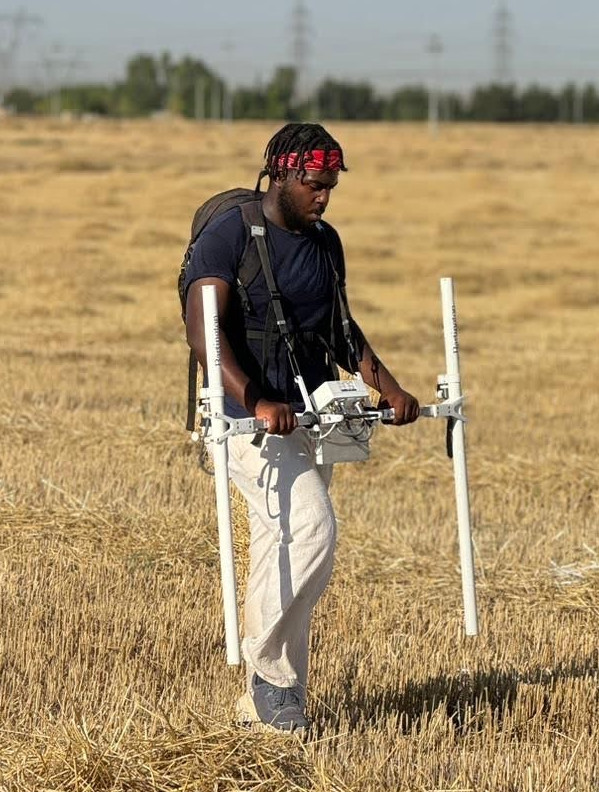
A magnetometer is a survey device that senses the slight magnetic changes in the atmosphere using the poles on either side of the device. The poles sense magnetic fields for about a meter in every direction. The device is so sensitive that the person operating it cannot wear any amount of magnetic clothing or have electronic devices on them. So sadly, while we were marching up and down rows of wheat for an hour or two at a time, we couldn’t have music or a podcast going.

A magnetometer works by taking a reading of the magnetic field every second. So to keep the readings from overlapping, we would have to walk at a constant pace of a meter per second, up and down a tape measure grid, so that we would know we are walking straight and at pace at all times. Funnily enough, the technology for magnetometers has remained fairly consistent over the years, meaning it’s old, so there’s a bit of manual adjusting we had to do before every use. The poles that measure magnetism can come off for easier transportation, meaning that we had to level them before each use to make sure that the poles were reading at the same height. Also to make sure the readings are stable, we had to hold the magnetometer out in front of us, which was also just as draining as walking. It appears light as parts are made of PVC material, but I promise, balancing those sensors on the sides is no joke.

Photo of Lonnie Reid operating a magnetometer.

The magnetometry team was always comprised of three people, one person holding the device and walking, and the other two would set up and move the grid system, so that as soon as one twenty by twenty square block was done, another could immediately start. I think the record for the most blocks done in a day was 16. Once you get into a groove, it’s pretty zen. But as I mentioned before, the lack of music does make it a long endeavor.

But why is magnetometry important? It’s a non-destructive survey method that allows archaeologists to plan out where they want to set up trenches, without needing to make an initial trench. This allows for areas with potential interest to be found sooner than just by choosing a spot based on the topsoil or by location near previous trenches.

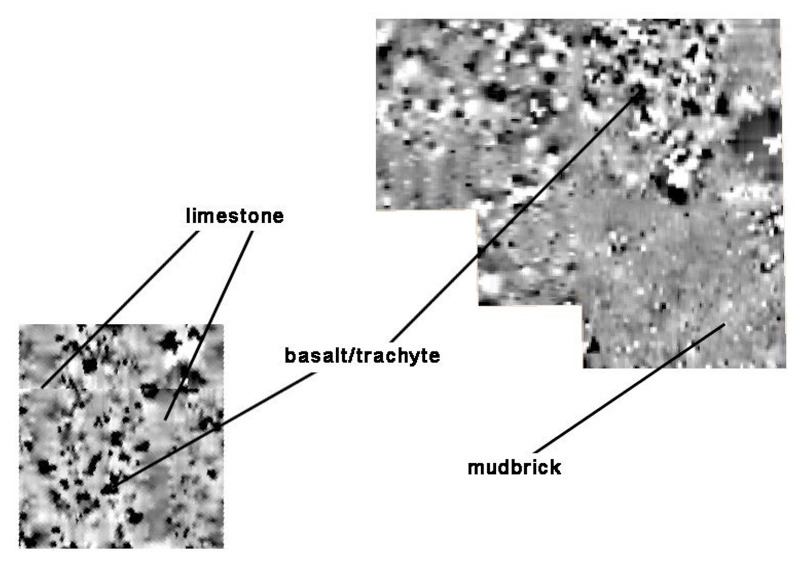
Magnetometer reading of limestone, basalt/trachyte, and mud brick.

Finally, I mentioned that the magnetometer has not really had a technological update in a few decades, so how do we process the data? Well the magnetometer itself does not know where it is within space, so that’s why we have to time out our steps at a meter per second. The machine does know that we walk up and down a grid in a zigzag pattern and whichever direction we face to begin with, must be the same direction for all of the squares to keep the data consistent. When uploading the raw data to the computer, it comes out as pixels, some shade of grey between black and white. The more white an area is, the more magnetic it is and the darker an area is, the less magnetic it is. Different types of stones and other materials will have their own magnetic signature. For example, basalt shows up black as it has little magnetism, whereas limestone is a medium gray, but mudbrick appears white. So eventually, you get a magnetic map of the area that shows where potential buildings used to lie due to the magnetic presence of the building materials.

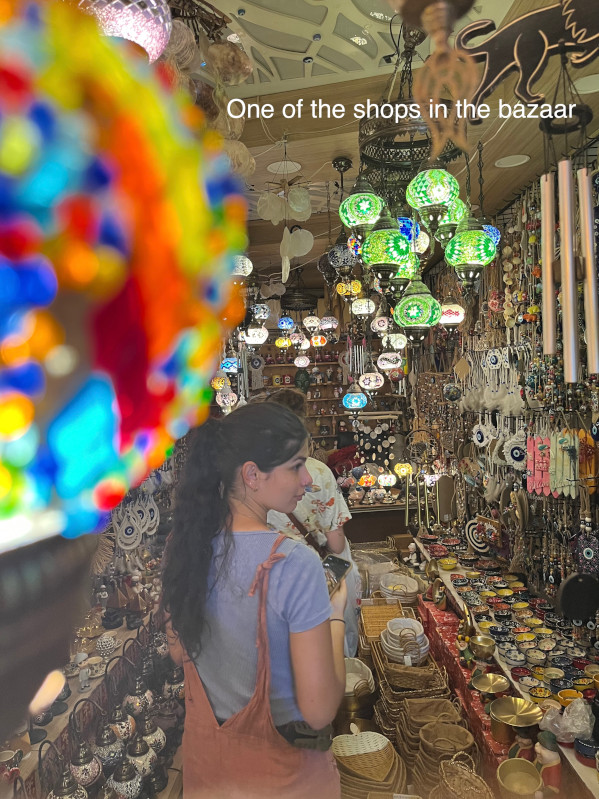
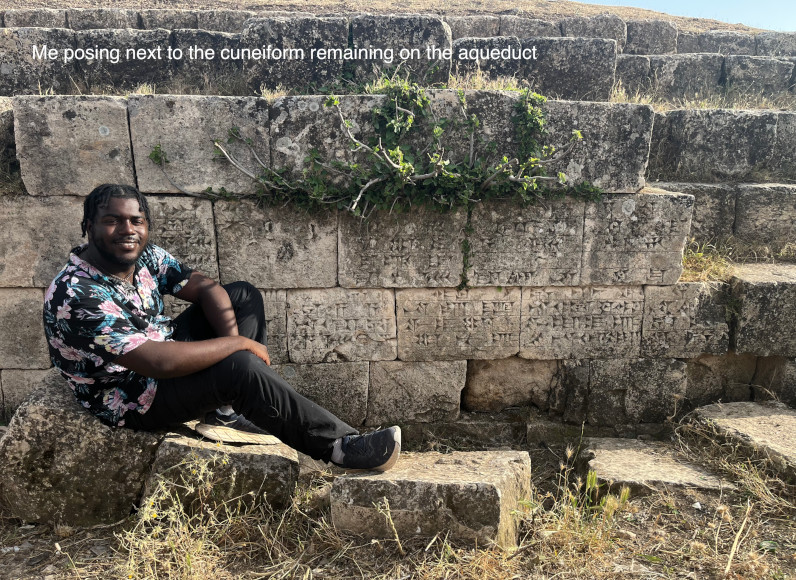
Magnetometry might have been the most intensive yet fun part of my fieldwork this past summer. But the trip wasn’t just all digging and marching. On the weekends we would make day trips to other archaeological sites in the greater Erbil area, and mingle with some of the locals and friends of the project. Our adventures included visiting Shanidar Cave, the bazaar, and a still standing aqueduct in Jerwan.

A shop in the bazaar.
Photo of Lonnie Reid sitting next to cuneiform remains on the aqueduct.

Lonnie Reid is a recent graduate of Emory University who studied math and art history. Currently a high school math teacher at Rabun Gap-Nacoochee School, Lonnie enjoys using both sides of his brain, and hopes to be able to discover more in the field for years to come.

Want to help more students and early career archaeologists get into the field? Donate to the cause today by selecting “Fieldwork Scholarships” as your gift purpose!
Thank You Fiscal Year 2025 Donors

Banner Image for Dominique Langis-Barsetti Post

Thank You Fiscal Year 2025 Donors

We did it (once again)!

This fiscal year (July 1, 2024–June 30, 2025) was a resounding success for ASOR. The reason? You, our members and donors!

While participation has always been high with ASOR members, the percentage of members who have donated $5 or more above their membership dues sharply increased during the past two years. This is in part thanks to a new membership module that makes it easier to include a “add-on” gift or credit card fee contribution when making any ASOR purchase. Because membership dues and subscription fees account for only about 25% of ASOR’s annual revenue, these additional gifts are transformative.

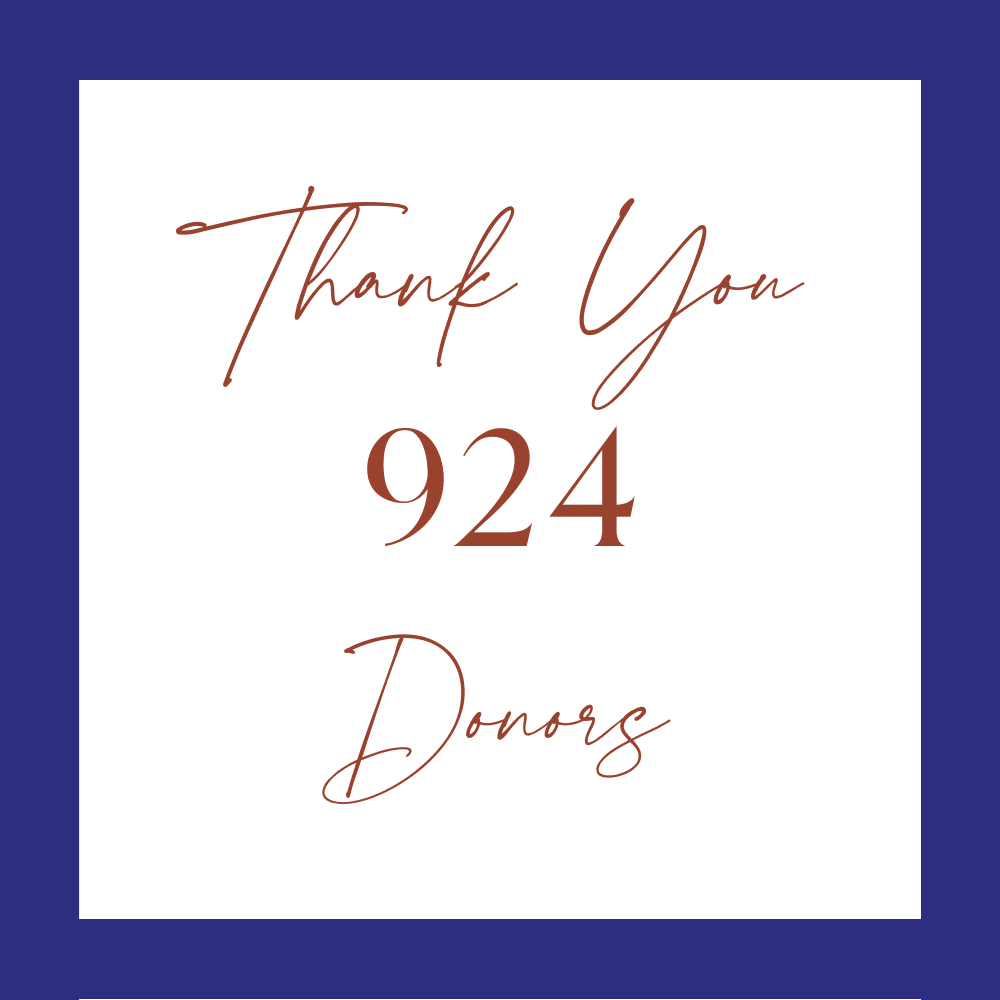
This year, a record 924 people made a gift of $5 or more! Another 211 people made a gift of less than $5 (primarily donations to help with credit card fees), making for a total of 1135 donors. Moreover, the total of all donations in FY 2025 was more than $500,000. Please click on the FY 2025 Honor Roll of Donors to see a list of people who gave at all levels. We are in the process of updating the Lifetime Honor Roll of Donors, so please check it now (and next month) to see the amazing list of lifetime supporters. We are updating and checking these lists, so please contact us with any corrections or comments (info@asor.org).

Benefactor ($20k+) – 8
Patron ($10,000–19,999) – 8
Friend ($5,000–9,999) – 12
Sponsor ($1,000–4,999) – 33
Sustainer ($500–999) – 27
Supporter ($250–499) – 34
Contributor ($100–249) – 196
Donor ($25–99.99) – 107
Ally ($5–24.99) – 499
Gifts under $5 – 211

Donor Participation Since 2016

0 200 400 600 800 1000
405
402
457
461
377
509
363
456
905
924
FY16 FY17 FY18 FY19 FY20 FY21 FY22 FY23 FY24 FY25

Number of Donors

Why does high donor participation matter?

Nearly half of ASOR’s membership contributed this year—an achievement that sets ASOR apart from nearly every other learned society. Moreover, the high level of donor participation from our membership is viewed positively by foundations and major donors outside ASOR and helps ASOR attract support from them.

Your donations also enable ASOR to carry out our mission. Subscriptions and memberships only account for about a quarter of our annual budget, so we rely on grants and donations from our members and friends. Every contribution, no matter the size, helps sustain our work. Thank you again for your support. Truly, every donor is important, and every gift is meaningful.


Fiscal Year 2025 Honor Roll

ASOR Legacy Circle Members

OTHER WAYS TO DONATE

DONATE BY PHONEDONATE BY MAILMAKE A PLEDGE
(DONATE LATER)
Call ASOR:
(703) 789-9229
ASOR
209 Commerce Street
Alexandria, VA 22314
E-mail ASOR

DC Day of Archaeology 2025

DC Day of Archaeology 2025

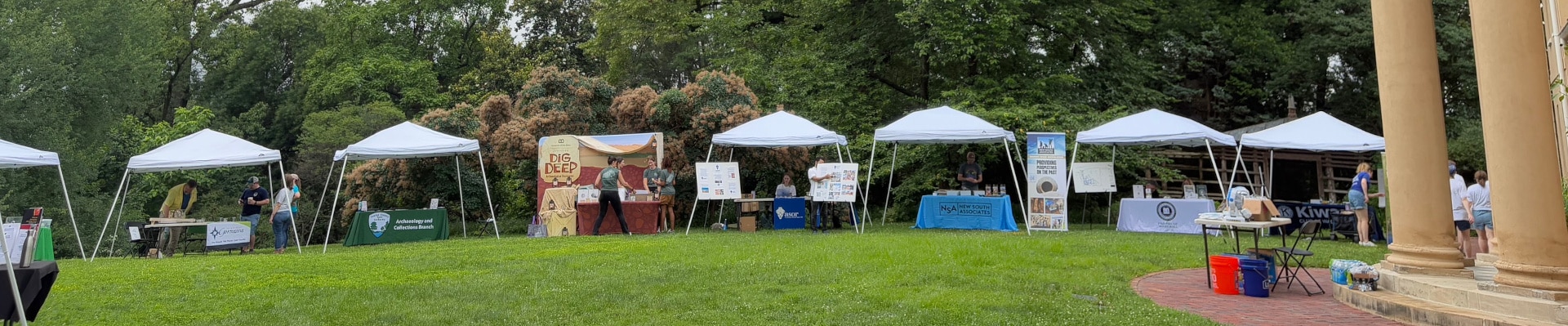
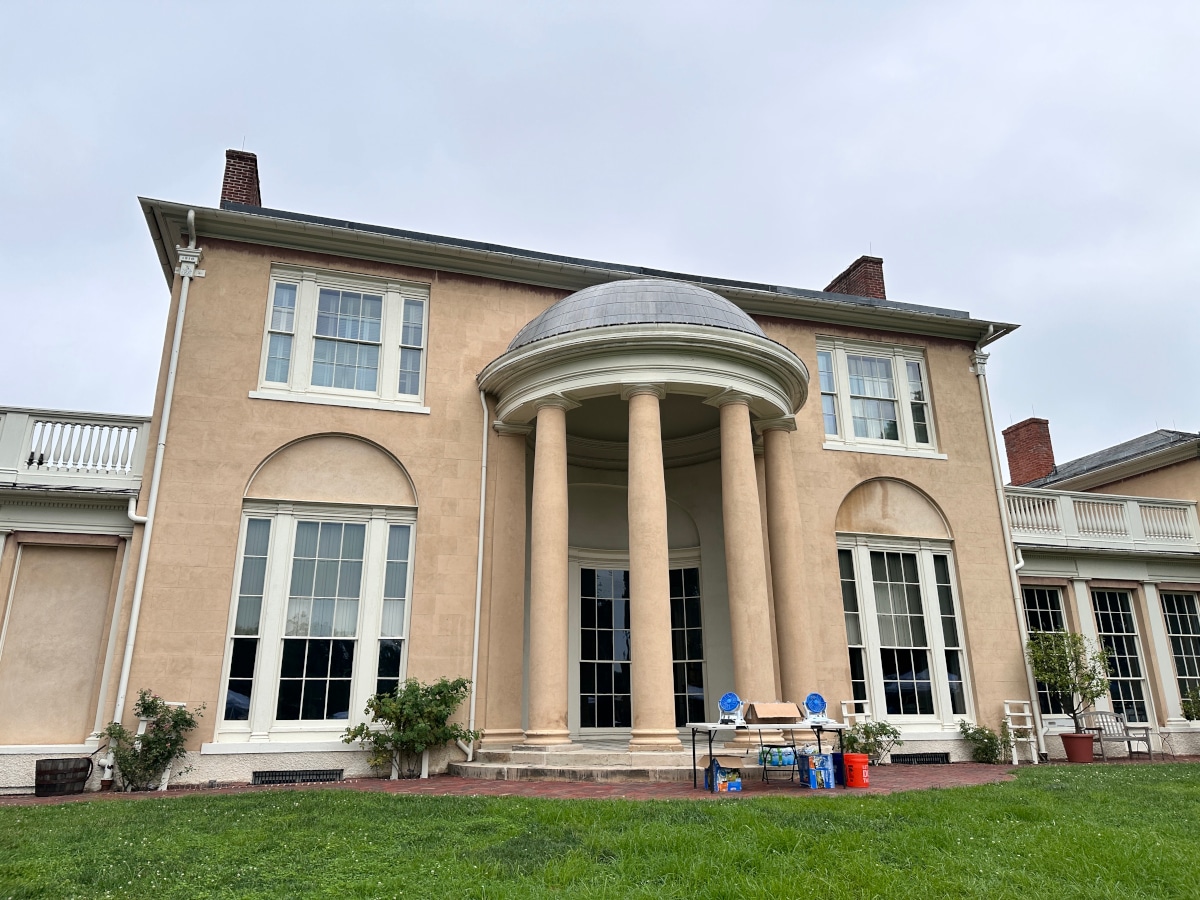
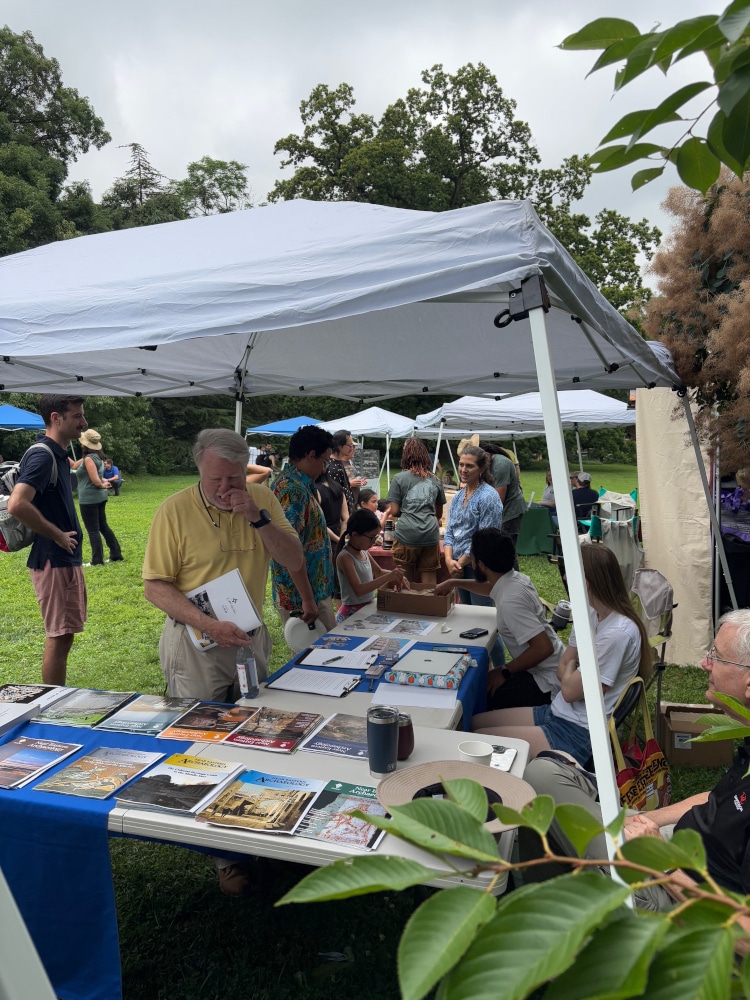
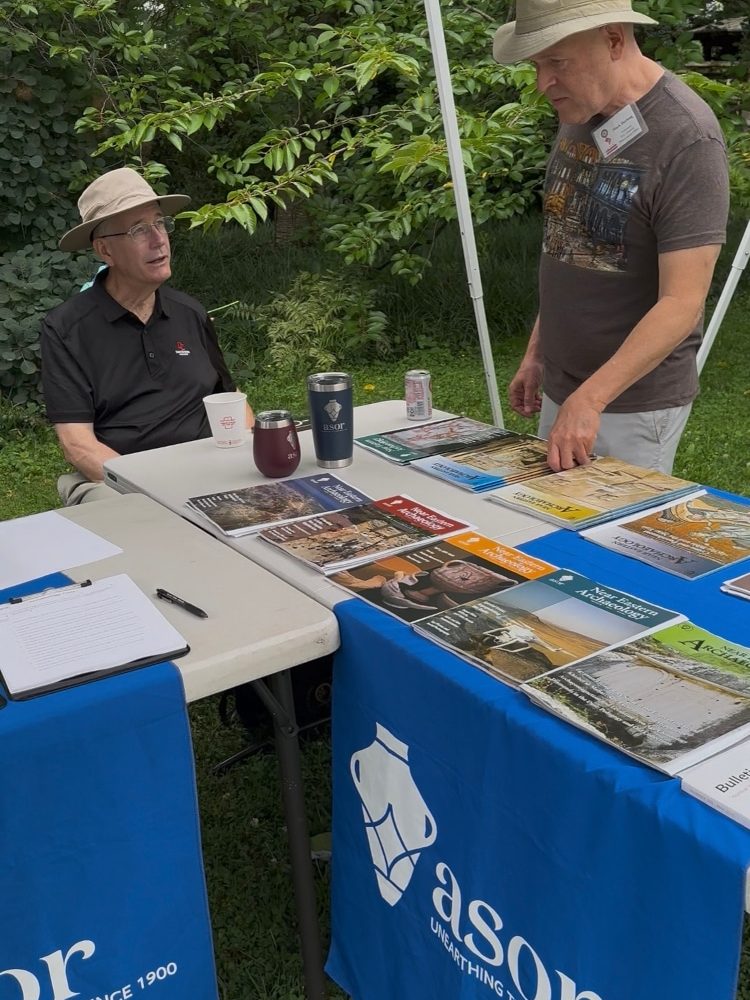
This past Saturday, June 28, ASOR was pleased to participate in the annual DC Day of Archaeology Festival organized by Archaeology in the Community (AITC). With 15 organizations and over 300 participants, the event gathered archaeological organizations around the DMV at the historic Tudor Place in Washington, D.C. for a day of community outreach and sharing of archaeological knowledge. Participants were able to visit the tables of local organizations to learn about a wide variety of archaeological topics and resources.

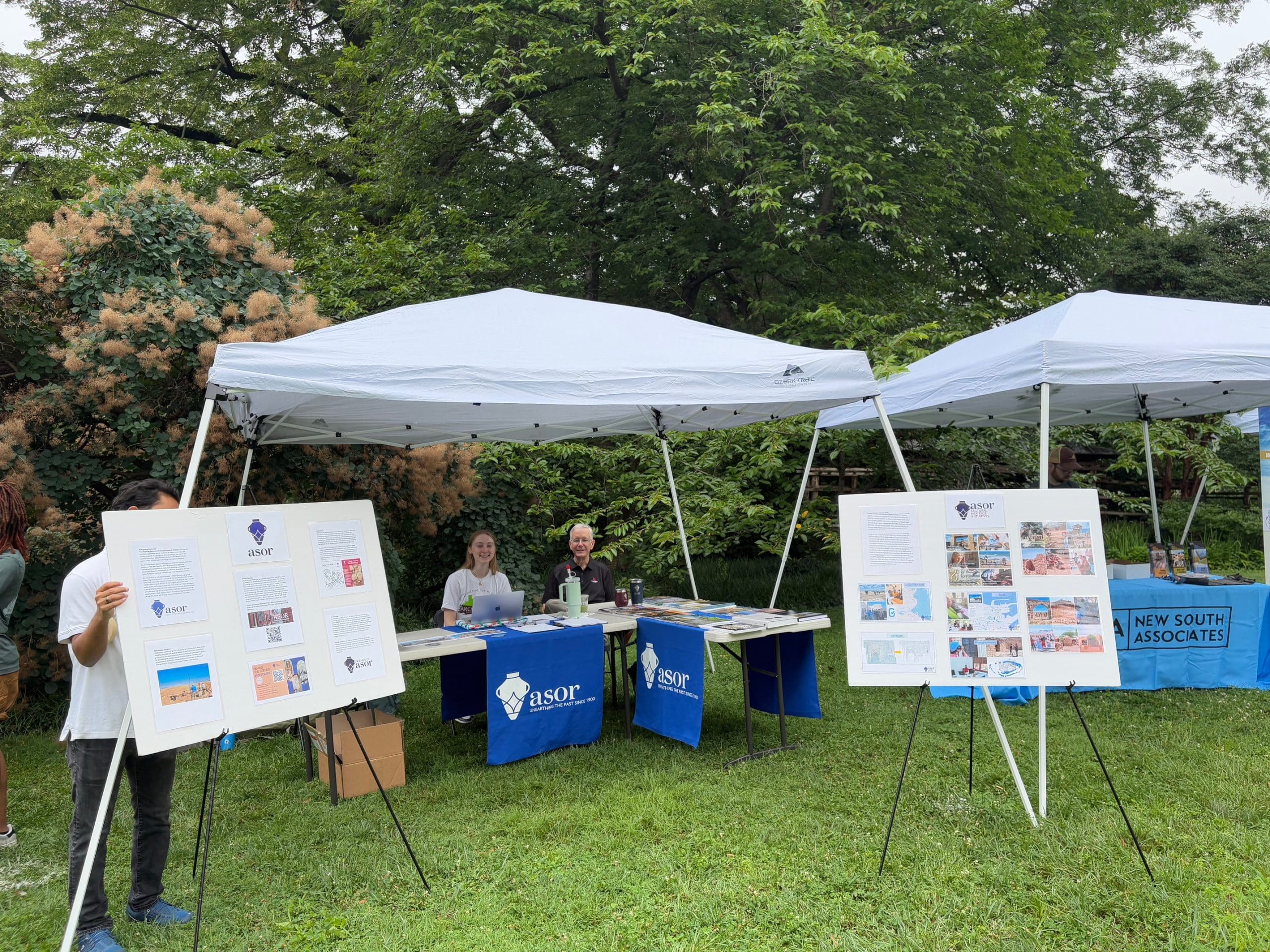
ASOR staff at the ASOR table
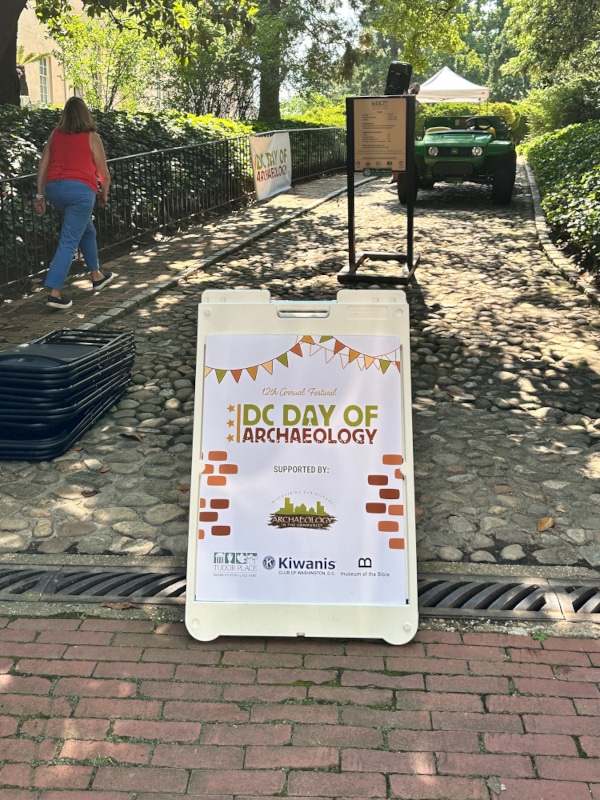
Entrance to the event
The south facade of Tudor Place

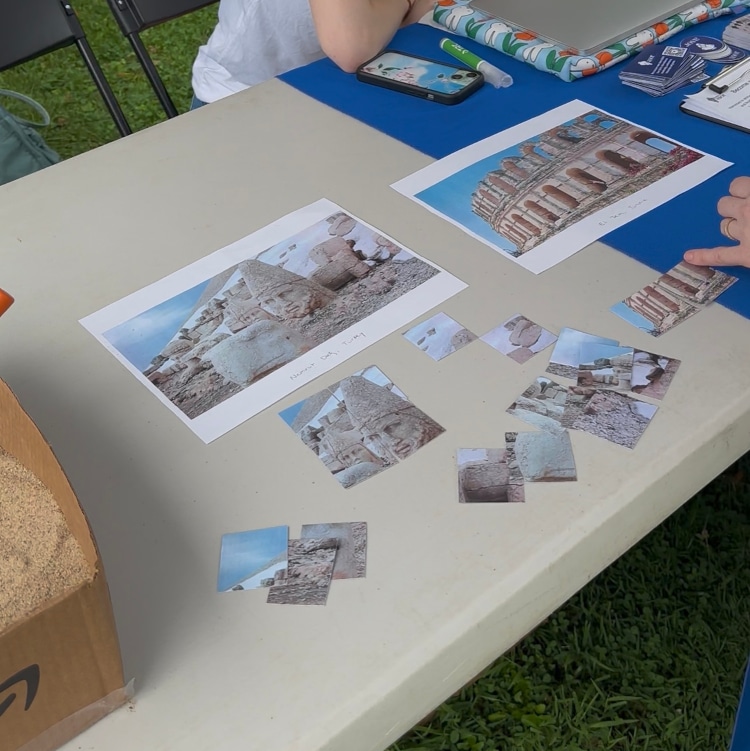
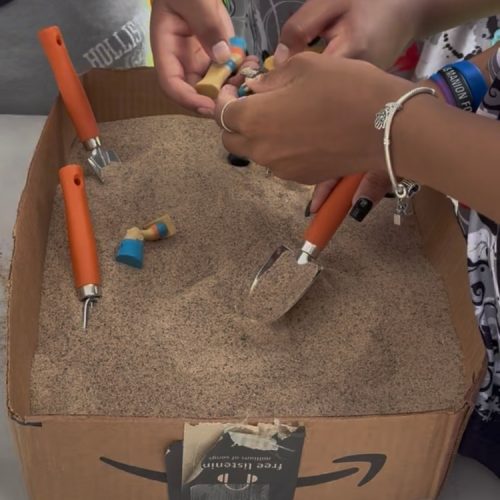
The ASOR table included several activities for a variety of ages and knowledge levels, as well as informative posters about our organization and Cultural Heritage Initiatives. For children, we provided a sandbox for digging up ancient Egyptian “artifacts,” and two puzzles of images from the Amphitheatre of El Jem in Tunisia and the statue heads at the hierothesion in Nemrut Dag, Turkiye. We also had copies ofNear Eastern Archaeology to give out, as well as ASOR swag.

Puzzles of El Jem and Nemrut Dag
Young archaeologists excavating for artifacts
Attendees browsing the ASOR table
ASOR staff speaking with a volunteer

ASOR is proud to once again support a successful DC Day of Archaeology! As part of our mission to make archaeology accessible and engaging for all, we were excited to connect with members of the public, share the latest discoveries, and highlight the importance of preserving cultural heritage. Events like these are vital for sparking curiosity, encouraging dialogue, and inspiring future generations of archaeologists.

Thank you to everyone who stopped by—we loved hearing your questions and sharing in your enthusiasm.
See you next year!