Cultural Heritage Photography Contest – 2017

[vc_row fullwidth=”true” attached=”true” css=”.vc_custom_1496247803139{padding-top: 0px !important;padding-right: 0px !important;padding-bottom: 0px !important;padding-left: 0px !important;}”][vc_column][mk_image src=”http://www.asor.org/wp-content/uploads/2017/04/100CrusderSeaCastleSaide-Sidon-–-1920×600-–-REVISED-1.jpg” image_width=”1920″ image_height=”600″ crop=”false” hover=”false” margin_bottom=”0″][/vc_column][/vc_row][vc_row fullwidth=”true” css=”.vc_custom_1496682730308{padding-top: 10px !important;padding-right: 0px !important;padding-bottom: 0px !important;padding-left: 0px !important;}”][vc_column width=”1/12″ css=”.vc_custom_1496683820796{margin-right: 10px !important;}” offset=”vc_hidden-md vc_hidden-sm vc_hidden-xs”][vc_column_text]

 SHARE

[/vc_column_text][mk_image src=”http://www.asortest.org/wp-content/uploads/2017/01/social-fb-icon4.jpg” image_width=”42″ image_height=”42″ hover=”false” custom_url=”https://www.facebook.com/ASOResearch/” margin_bottom=”0″][mk_image src=”http://www.asortest.org/wp-content/uploads/2017/01/social-tw-icon4.jpg” image_width=”42″ image_height=”42″ hover=”false” custom_url=”https://twitter.com/ASOResearch?ref_src=twsrc%5Egoogle%7Ctwcamp%5Eserp%7Ctwgr%5Eauthor” margin_bottom=”0″][mk_image src=”http://www.asortest.org/wp-content/uploads/2017/01/social-in-icon4.jpg” image_width=”42″ image_height=”42″ hover=”false” custom_url=”https://www.linkedin.com/company/american-schools-of-oriental-research” margin_bottom=”0″][mk_image src=”http://www.asortest.org/wp-content/uploads/2017/01/social-ml-icon_7.jpg” image_width=”42″ image_height=”42″ hover=”false” custom_url=”mailto:asor@bu.edu” margin_bottom=”0″][mk_image src=”http://www.asortest.org/wp-content/uploads/2017/01/blog-icon3.jpg” image_width=”42″ image_height=”42″ hover=”false” custom_url=”http://asorblog.org/” margin_bottom=”0″][/vc_column][vc_column border_color=”rgba(255,255,255,0.01)” width=”1/6″ css=”.vc_custom_1496683923840{margin-right: 20px !important;border-left-width: 2px !important;padding-right: 20px !important;padding-left: 20px !important;border-left-color: #99422f !important;}”][mk_divider divider_color=”rgba(255,255,255,0.01)” thickness=”1″ margin_top=”3″ margin_bottom=”3″][vc_column_text]

ASOR BLOG

NEWS@ASOR E-NEWSLETTER

ANCIENT NEAR EAST TODAY E-NEWSLETTER

PAST ASOR NEWS, MONTH BY MONTH

FY17 HONOR ROLL OF DONORS

ASOR ANNUAL MEETING

[/vc_column_text][/vc_column][vc_column border_color=”rgba(170,170,170,0.01)” width=”1/2″ css=”.vc_custom_1487276122024{margin-right: 10px !important;margin-bottom: 30px !important;border-right-width: 2px !important;border-bottom-width: 2px !important;padding-top: 30px !important;padding-right: 30px !important;padding-left: 20px !important;background-color: #ffffff !important;border-right-color: rgba(227,228,228,0.75) !important;border-bottom-color: rgba(227,228,228,0.75) !important;}”][vc_column_text responsive_align=”left”]

CULTURAL HERITAGE PHOTOGRAPHY CONTEST

2017 ASOR Annual Meeting
[/vc_column_text][vc_column_text]Submission deadline: November 12, 2017 

ASOR is pleased to announce a photography contest for images depicting cultural heritage in the Near East and Mediterranean World. These photographs may illustrate any aspect of tangible or intangible cultural heritage. Images may include, but are not limited to, heritage sites, built heritage and monuments, landscapes, people interacting with heritage sites, or people expressing their traditional heritage / culture. Any student-member of ASOR (undergraduate or graduate) may submit their own, original images. To the extent that is logistically possible, we will include the attendees of the 2017 ASOR Annual Meeting in the selection process. The winner will receive a free student Annual Meeting registration for the 2018 meeting in Denver, CO. The runner up will receive a free student ASOR membership (12 months). The third place winner will receive an ASOR water bottle.

Rules

  • Must be a student (undergraduate or graduate) who is registered for the 2017 ASOR Annual Meeting.
  • Photographs should illustrate tangible or intangible cultural heritage of the Near East or Mediterranean World. This could include landscapes of heritage sites or portraits of cultural heritage activities.
  • Photographs / images must be original. Photos that have been digitally altered beyond standard optimization (removal of dust, cropping, reasonable adjustments to exposure, color and contrast, black/white changes) will be disqualified.
  • Images should be submitted via e-mail as .jpg, .png or .tiff to kyrakaercher@asor.org and must be at least 300 dpi.
    • Please name the photograph file: countryname-sitename001-yeartaken-submittedby-firstname-familyname.JPG
      • Example: Syria-raqqa001-1952-submitedby-Jane-Doe.tiff
  • Fill out and sign the contest form and submit with photograph.

E-mail submission, or address questions to Kyra Kaercher at kyrakaercher@asor.org by November 12th, 2017.[/vc_column_text][mk_image src=”http://www.asor.org/wp-content/uploads/2017/10/ASOR-Cultural-Heritage-Photography-Contest-flier.jpg” image_width=”2550″ image_height=”3300″ crop=”false” hover=”false” custom_url=”http://www.asor.org/wp-content/uploads/2017/10/ASOR-Cultural-Heritage-Photography-Contest-flier.pdf” target=”_blank” margin_bottom=”20″][/vc_column][vc_column border_color=”rgba(170,170,170,0.01)” width=”1/6″ css=”.vc_custom_1496684098866{margin-right: 5px !important;margin-bottom: 20px !important;border-right-width: 2px !important;border-bottom-width: 2px !important;padding-top: 30px !important;padding-right: 10px !important;padding-left: 10px !important;background-color: #ffffff !important;border-right-color: rgba(227,228,228,0.75) !important;border-bottom-color: rgba(227,228,228,0.75) !important;}”][vc_wp_posts title=”BROWSE THE NEWS ARCHIVE” number=”4″][/vc_column][vc_column border_color=”rgba(170,170,170,0.01)” width=”1/6″ css=”.vc_custom_1496684008271{margin-right: 10px !important;margin-bottom: 30px !important;border-right-width: 2px !important;border-bottom-width: 2px !important;padding-top: 30px !important;padding-right: 20px !important;padding-left: 20px !important;background-color: #ffffff !important;border-right-color: rgba(227,228,228,0.75) !important;border-bottom-color: rgba(227,228,228,0.75) !important;}”][vc_column_text] [/vc_column_text][/vc_column][/vc_row]

ASOR Board of Trustees Nominees (2017)

[vc_row fullwidth=”true” attached=”true” css=”.vc_custom_1496247803139{padding-top: 0px !important;padding-right: 0px !important;padding-bottom: 0px !important;padding-left: 0px !important;}”][vc_column][mk_image src=”http://www.asor.org/wp-content/uploads/2017/04/100CrusderSeaCastleSaide-Sidon-–-1920×600-–-REVISED-1.jpg” image_width=”1920″ image_height=”600″ crop=”false” hover=”false” margin_bottom=”0″][/vc_column][/vc_row][vc_row fullwidth=”true” css=”.vc_custom_1496682730308{padding-top: 10px !important;padding-right: 0px !important;padding-bottom: 0px !important;padding-left: 0px !important;}”][vc_column width=”1/12″ css=”.vc_custom_1496683820796{margin-right: 10px !important;}” offset=”vc_hidden-md vc_hidden-sm vc_hidden-xs”][vc_column_text]

 SHARE

[/vc_column_text][mk_image src=”http://www.asortest.org/wp-content/uploads/2017/01/social-fb-icon4.jpg” image_width=”42″ image_height=”42″ hover=”false” custom_url=”https://www.facebook.com/ASOResearch/” margin_bottom=”0″][mk_image src=”http://www.asortest.org/wp-content/uploads/2017/01/social-tw-icon4.jpg” image_width=”42″ image_height=”42″ hover=”false” custom_url=”https://twitter.com/ASOResearch?ref_src=twsrc%5Egoogle%7Ctwcamp%5Eserp%7Ctwgr%5Eauthor” margin_bottom=”0″][mk_image src=”http://www.asortest.org/wp-content/uploads/2017/01/social-in-icon4.jpg” image_width=”42″ image_height=”42″ hover=”false” custom_url=”https://www.linkedin.com/company/american-schools-of-oriental-research” margin_bottom=”0″][mk_image src=”http://www.asortest.org/wp-content/uploads/2017/01/social-ml-icon_7.jpg” image_width=”42″ image_height=”42″ hover=”false” custom_url=”mailto:asor@bu.edu” margin_bottom=”0″][mk_image src=”http://www.asortest.org/wp-content/uploads/2017/01/blog-icon3.jpg” image_width=”42″ image_height=”42″ hover=”false” custom_url=”http://asorblog.org/” margin_bottom=”0″][/vc_column][vc_column border_color=”rgba(255,255,255,0.01)” width=”1/6″ css=”.vc_custom_1496683923840{margin-right: 20px !important;border-left-width: 2px !important;padding-right: 20px !important;padding-left: 20px !important;border-left-color: #99422f !important;}”][mk_divider divider_color=”rgba(255,255,255,0.01)” thickness=”1″ margin_top=”3″ margin_bottom=”3″][vc_column_text]

ASOR BLOG

NEWS@ASOR E-NEWSLETTER

ANCIENT NEAR EAST TODAY E-NEWSLETTER

PAST ASOR NEWS, MONTH BY MONTH

FY17 HONOR ROLL OF DONORS

ASOR ANNUAL MEETING

[/vc_column_text][/vc_column][vc_column border_color=”rgba(170,170,170,0.01)” width=”1/2″ css=”.vc_custom_1487276122024{margin-right: 10px !important;margin-bottom: 30px !important;border-right-width: 2px !important;border-bottom-width: 2px !important;padding-top: 30px !important;padding-right: 30px !important;padding-left: 20px !important;background-color: #ffffff !important;border-right-color: rgba(227,228,228,0.75) !important;border-bottom-color: rgba(227,228,228,0.75) !important;}”][vc_column_text responsive_align=”left”]

ASOR BOARD OF TRUSTEES NOMINEES

[/vc_column_text][vc_column_text]ASOR is pleased to announce that the Trustee Nominations Committee has selected highly qualified members to stand for election for four open positions on the ASOR Board of Trustees (two openings for Individual Representatives and two openings for Institutional Representatives). The ASOR Board sets the direction for ASOR and provides oversight for our organization. Among other responsibilities, members of the Board agree to attend two meetings each year at their own expense, to participate thoughtfully in the governance process, and to contribute financially to ASOR.

As described below, there are candidates for both the Individual and Instituational categories. All ASOR members are eligible to vote in the Individual Election while only Institutional Representatives of the 75 ASOR-member schools may vote in the Institutional Election. ASOR will once again conduct the elections by online ballot, and all members and Institutional Representatives will receive the appropriate ballot(s) on or about October 20, 2017. We will send out several reminders, and all ballots must be completed by 4:00PM Eastern Time on November 9. If you would like to receive a paper ballot or if you have difficulties completing the online ballot (once they are distributed), please contact Inda Omerefendic at 857-277-0417 or asorpubs@bu.edu.[/vc_column_text][vc_column_text responsive_align=”left”]

Individual Representatives Nominees

[/vc_column_text][vc_row_inner][vc_column_inner width=”1/4″ css=”.vc_custom_1503684310141{padding-right: 10px !important;}”][mk_image src=”http://www.asor.org/wp-content/uploads/2017/10/burgh.jpg” image_width=”200″ image_height=”250″ hover=”false”][/vc_column_inner][vc_column_inner width=”3/4″][vc_column_text]
Theodore Burgh

Theodore Burgh is a Professor at the University of North Carolina at Wilmington, in the Department of Philosophy and Religion. He holds his degrees from the University of Arizona (M.A./Ph.D.), Howard University (M.A.), and Hampton University (B.A.).  His research interests are the archaeology of ancient Israel and the Near East, the Hebrew Bible, archaeomusicology (the study of ancient music culture), the reconstruction of Syro-Palestinian and Near Eastern music culture and cataloging musical artifacts, utilization analysis of Syro-Palestinian sacred and secular space, and ethnomusicology.

Mission Statement:

I am truly grateful for the opportunity to continue to serve on the ASOR Board. It is an honor to be a part of ASOR’s distinguished history. It would be a privilege to continue to serve an organization that has provided so much for me.

I have been an active ASOR member since 1996, presenting numerous papers and chairing sessions. I have been a part of the membership committee for nearly fifteen years. On short notice, I also substituted for the 2012-13 Vice-President and chaired the 2012 ASOR Members Meeting.

As a trustee, I will continue to bring commitment and experience. Building on existing success, these are a few areas where I think ASOR could expand its services to the Academy generally and to members specifically. I would like to continue efforts to incorporate technology in ASOR’s development. ASOR is working to strengthen global connections and bringing excavations and archaeological conversations together in exciting new ways. ASOR understands that it is very difficult for some scholars and students in various parts of the world to attend ASOR conferences. However, thus, we have initiated discussions regarding implementing technology that could possibly live streaming or provide recorded lectures and papers delivered from these scholars and students. ASOR will also continue to explore how to possibly share specific lectures and symposiums in the same manner and incorporate Q&A whenever possible. To have top archaeological scholars sharing short clips within articles and reports that can be accessed any time would be invaluable sources.

Lastly, I would like to see continued energy with the membership and outreach committees.  Efforts with such endeavors as Friends of ASOR will be essential to maintaining the organization’s future membership and developing inclusivity.[/vc_column_text][/vc_column_inner][/vc_row_inner][vc_row_inner][vc_column_inner width=”1/4″ css=”.vc_custom_1503684320408{padding-right: 15px !important;}”][mk_image src=”http://www.asor.org/wp-content/uploads/2017/10/Headshot-2.jpg” image_width=”200″ image_height=”250″ hover=”false”][/vc_column_inner][vc_column_inner width=”3/4″][vc_column_text]

Thomas Schneider

Thomas Schneider is Professor of Egyptology and Near Eastern Studies at the University of British Columbia, Vancouver. Since 2012, he has also served ASOR as Editor of Near Eastern Archaeology and ex officio member on the Committee on Publications. He holds a Master’s degree, a doctorate, and a habilitation in Egyptology from the University of Basel. He was a Visiting Professor at the University of Vienna in 1999 and at the University of Heidelberg in 2003-4. From 2001 to 2005, he was a Junior Research Professor of the Swiss National Science Foundation at the University of Basel, and from 2005 to 2007, holder of the Chair in Egyptology at the University of Wales, Swansea. He was a visiting scholar at NYU in 2006, at Berkeley in 2012, and a guest lecturer at the Institute of Archaeology of the Chinese Academy of Social Sciences in 2016. He has widely published on Egyptian interconnections with the Levant and the Near East (including Egypt and the Bible), Egyptian history and  chronology and the history of Egyptology in Nazi Germany. He is founding editor of the Journal of Egyptian History, was the editor-in-chief of “Culture and History of the Ancient Near East” for Brill (2006-2013), and area editor history for the UCLA Encyclopedia of Egyptology. 

Mission Statement:

For the past six years, I have had the privilege to experience ASOR from the specific perspective of editor of Near Eastern Archaeology. This perspective has, first and foremost, been an outstanding opportunity: An opportunity to be a creative part of the ASOR community; an opportunity to motivate scholars from across the world to write for NEA, and to disseminate knowledge on the Near East; an opportunity to work with a passionate editorial board and the ASOR leadership. Since my editorship has also coincided with the aggravation of the political and heritage crisis in the Middle East, being NEA editor has also meant to have my finger on the pulse of the time. In the preface I wrote for the June 2015 issue, I discussed Laurent Olivier’s comments about the role archaeology plays as a science not of the past but of the present: The way in which remains have escaped destruction is a direct reflection of how the present came about; the present is the repository of the past’s surviving materiality. The heritage crisis in the Middle East, flagged up in the September 2015 issue of NEA, shows how indispensable it is for ASOR to assume, in the present situation, a political role as an interpreter and guardian of the past’s material memory. In my prospective role as Trustee, I would see it as important to strengthen ASOR and to underscore its eminent political role in preserving that memory. I would also want to support ASOR in its advocacy – with many sister organizations – of the need to educate global society and advance research in history and the humanities.[/vc_column_text][/vc_column_inner][/vc_row_inner][vc_column_text responsive_align=”left”]

Institutional Representative Nominees

(All institutional representatives will be asked to vote for two of the following two nominees)[/vc_column_text][vc_row_inner][vc_column_inner width=”1/4″ css=”.vc_custom_1503684320408{padding-right: 15px !important;}”][mk_image src=”http://www.asor.org/wp-content/uploads/2017/10/greene-1.jpg” image_width=”200″ image_height=”250″ hover=”false”][/vc_column_inner][vc_column_inner width=”3/4″][vc_column_text]

Joe Greene

Joe Greene, Deputy Director and Curator of the Semitic Museum of Harvard University, received his Ph.D. in archaeology in 1986 at the Oriental Institute of the University of Chicago. He completed eight seasons of fieldwork in Carthage (Tunisia), directing the Carthage Survey from 1980 to 1983. He has been a National Endowment for the Humanities Fellow in Jordan, a Fulbright Fellow in Cyprus, and has directed excavations and surveys in both countries. In 1987–88 he directed the USAID Cultural Resource Management Project in Jordan and in 2001–2001 served as a consultant to the Petra National Trust, a Jordanian NGO devoted to the preservation of the archaeological site of Petra. He has been editor of the American Schools of Oriental Research (ASOR) Archaeological Reports Series (2003–2008), of the ASOR Annual (2009–2014), and now serves as an editor for Manar al-Athar Publications based at Oxford Univeristy and as a board member for the Friends of Manar al-Athar. His research interests focus on archaeological survey and landscape archaeology of the Mediterranean/Middle East region with emphasis on the first millennium B.C./A.D., on cultural resource management in the Mediterranean/Middle East region, and on museums and the history of museums in Mediterranean and Middle Eastern countries. Since the 1980s, he has led tours in the Eastern and Western Mediterranean, most recently to Lebanon, Syria and Jordan in 2011, to Turkey and Greece in 2013 and to Central Asia and Iran in 2016. In 2014–2015 he was a member of a Harvard-based consulting museum group working in Saudi Arabia, Kuwait, Qatar and the United Arab Emirates.

Mission Statement
:

In my 30-plus years as a member of ASOR, I have enjoyed manifold benefits of that membership. I have attended ASOR’s annual meetings, participated in its affiliated field projects, received its fellowships, served on its committees, edited its publications, and lived and worked at its overseas institutes. In 2015-2017, I served as an ASOR Trustee as the institutional representative for Harvard University. As a returning Trustee, I would, as before, play a role in assuring that these benefits continue to be available to rising generations of students of the ancient Near East.

To that end I believe that ASOR should strengthen its core functions–its publications and its annual meetings–as well as provide ongoing support for research through its fellowships and through the overseas institutes that it created and helped to build in Jerusalem, Amman, and Nicosia. ASOR, through its Committee on Publications, should continue to develop a robust presence in electronic scholarly publication. Through the Committee on Annual Meeting and Program, it should expand the scope and attendance of the annual meeting while helping to expand membership and ensure that this enterprise is self-supporting. ASOR must also find way to make its Committee on Archaeological Policy (CAP) relevant to the contemporary archaeological research environment, both at home and abroad. ASOR must also develop the financial means to support the initiatives of COP, CAMP, and CAP. It should also pursue new initiatives such as a formulation of a policy of professional conduct consistent with ASOR’s Mission and Strategic Plan, the ongoing, Survey on Field Safety, the Initiative on Women in ASOR and the Cultural Heritage Initiative.[/vc_column_text][/vc_column_inner][/vc_row_inner][vc_row_inner][vc_column_inner width=”1/4″ css=”.vc_custom_1503684320408{padding-right: 15px !important;}”][mk_image src=”http://www.asor.org/wp-content/uploads/2017/10/C_Meyers.jpg” image_width=”200″ image_height=”250″ hover=”false”][/vc_column_inner][vc_column_inner width=”3/4″][vc_column_text]

Carol Meyers

Carol Meyers was born in Wilkes-Barre, Pennsylvania. She went to Kingston High School, Kingston, Pennsylvania; made her B.A. with honors at Wellesley College in Wellesley, Massachusetts and her M.A. and Ph.D. at Brandeis University in Waltham, Massachusetts.

Meyers started to teach at Duke University in 1977. She writes and teaches in the areas of biblical studies, archaeology, and the study of women in the biblical world. She has been described as “one of today’s leading historians and field archeologists”. Her 1988 book, Discovering Eve: Ancient Israelite Women in Context, was the “first comprehensive effort to present a female-centred view of the Bible using historical rather than literary criticism”. Meyers has also written commentaries on Exodus, Haggai, and Zechariah.

Meyers served as president of the Society of Biblical Literature in 2013. She also served as part of the revision team for the 2010 New American Bible.

She is married to fellow biblical scholar and Duke professor Eric M. Meyers.


Mission statement:

As a member of ASOR for many decades, I have seen this organization respond over and over again to many challenges–including economic, political, and technological ones–and come out stronger. I was privileged to be a member of the strategic planning committee that helped reorganize and refocus our energies. The hard work and dedication of its officers, board members, and members has made ASOR stronger than ever. My hopes for the future are that our organization will continue to meet challenges and carry its mission forth in these turbulent times. Our Syria initiative is a good sign that we are in fact doing that[/vc_column_text][/vc_column_inner][/vc_row_inner][/vc_column][vc_column border_color=”rgba(170,170,170,0.01)” width=”1/6″ css=”.vc_custom_1496684098866{margin-right: 5px !important;margin-bottom: 20px !important;border-right-width: 2px !important;border-bottom-width: 2px !important;padding-top: 30px !important;padding-right: 10px !important;padding-left: 10px !important;background-color: #ffffff !important;border-right-color: rgba(227,228,228,0.75) !important;border-bottom-color: rgba(227,228,228,0.75) !important;}”][vc_wp_posts title=”BROWSE THE NEWS ARCHIVE” number=”4″][/vc_column][vc_column border_color=”rgba(170,170,170,0.01)” width=”1/6″ css=”.vc_custom_1496684008271{margin-right: 10px !important;margin-bottom: 30px !important;border-right-width: 2px !important;border-bottom-width: 2px !important;padding-top: 30px !important;padding-right: 20px !important;padding-left: 20px !important;background-color: #ffffff !important;border-right-color: rgba(227,228,228,0.75) !important;border-bottom-color: rgba(227,228,228,0.75) !important;}”][vc_column_text] [/vc_column_text][/vc_column][/vc_row]

ASOR Urges Continued U.S. Engagement in UNESCO

[vc_row fullwidth=”true” attached=”true” css=”.vc_custom_1496247803139{padding-top: 0px !important;padding-right: 0px !important;padding-bottom: 0px !important;padding-left: 0px !important;}”][vc_column][mk_image src=”http://www.asor.org/wp-content/uploads/2017/04/100CrusderSeaCastleSaide-Sidon-–-1920×600-–-REVISED-1.jpg” image_width=”1920″ image_height=”600″ crop=”false” hover=”false” margin_bottom=”0″][/vc_column][/vc_row][vc_row fullwidth=”true” css=”.vc_custom_1496682730308{padding-top: 10px !important;padding-right: 0px !important;padding-bottom: 0px !important;padding-left: 0px !important;}”][vc_column width=”1/12″ css=”.vc_custom_1496683820796{margin-right: 10px !important;}” offset=”vc_hidden-md vc_hidden-sm vc_hidden-xs”][vc_column_text]

 SHARE

[/vc_column_text][mk_image src=”http://www.asortest.org/wp-content/uploads/2017/01/social-fb-icon4.jpg” image_width=”42″ image_height=”42″ hover=”false” custom_url=”https://www.facebook.com/ASOResearch/” margin_bottom=”0″][mk_image src=”http://www.asortest.org/wp-content/uploads/2017/01/social-tw-icon4.jpg” image_width=”42″ image_height=”42″ hover=”false” custom_url=”https://twitter.com/ASOResearch?ref_src=twsrc%5Egoogle%7Ctwcamp%5Eserp%7Ctwgr%5Eauthor” margin_bottom=”0″][mk_image src=”http://www.asortest.org/wp-content/uploads/2017/01/social-in-icon4.jpg” image_width=”42″ image_height=”42″ hover=”false” custom_url=”https://www.linkedin.com/company/american-schools-of-oriental-research” margin_bottom=”0″][mk_image src=”http://www.asortest.org/wp-content/uploads/2017/01/social-ml-icon_7.jpg” image_width=”42″ image_height=”42″ hover=”false” custom_url=”mailto:asor@bu.edu” margin_bottom=”0″][mk_image src=”http://www.asortest.org/wp-content/uploads/2017/01/blog-icon3.jpg” image_width=”42″ image_height=”42″ hover=”false” custom_url=”http://asorblog.org/” margin_bottom=”0″][/vc_column][vc_column border_color=”rgba(255,255,255,0.01)” width=”1/6″ css=”.vc_custom_1496683923840{margin-right: 20px !important;border-left-width: 2px !important;padding-right: 20px !important;padding-left: 20px !important;border-left-color: #99422f !important;}”][mk_divider divider_color=”rgba(255,255,255,0.01)” thickness=”1″ margin_top=”3″ margin_bottom=”3″][vc_column_text]

ASOR BLOG

NEWS@ASOR E-NEWSLETTER

ANCIENT NEAR EAST TODAY E-NEWSLETTER

PAST ASOR NEWS, MONTH BY MONTH

FY17 HONOR ROLL OF DONORS

ASOR ANNUAL MEETING

[/vc_column_text][/vc_column][vc_column border_color=”rgba(170,170,170,0.01)” width=”1/2″ css=”.vc_custom_1487276122024{margin-right: 10px !important;margin-bottom: 30px !important;border-right-width: 2px !important;border-bottom-width: 2px !important;padding-top: 30px !important;padding-right: 30px !important;padding-left: 20px !important;background-color: #ffffff !important;border-right-color: rgba(227,228,228,0.75) !important;border-bottom-color: rgba(227,228,228,0.75) !important;}”][vc_column_text responsive_align=”left”]

ASOR AND OTHER LEARNED SOCIETIES ISSUE A STATEMENT REGARDING THE UNITED STATES’ INTENTION TO WITHDRAW FROM UNESCO

[/vc_column_text][vc_column_text]Statement from the Archaeological Institute of America (AIA), American Alliance of Museums (AAM), American Anthropological Association (AAA), American Schools of Oriental Research (ASOR), Association of Art Museum Directors (AAMD), Society for Classical Studies (SCS), U.S. Committee of the Blue Shield (USCBS), and the U.S. National Committee of ICOMOS (US/ICOMOS) regarding the United States of America’s Intention to Withdraw from UNESCO.

On October 12, 2017, the United States announced its decision to withdraw from the United Nations Educational, Scientific, and Cultural Organization (UNESCO) in 2018. A founding member of the Organization in 1945, the United States has benefited from UNESCO’s guiding precepts and principles in its efforts to preserve humanity’s shared heritage.

The United States was the first State to ratify UNESCO’s 1972 World Heritage Convention. The 23 U.S. World Heritage sites reflect the universal values of our natural and cultural heritage. These sites include Philadelphia’s Independence Hall, where the Declaration of Independence and the Constitution were signed, the Statue of Liberty, which stands at the entrance to New York Harbor as an international symbol of freedom, and sites that reflect our country’s multicultural past from the dwellings and ceremonial buildings of the Pueblo Indians, to the defensive architecture of San Juan, to Jefferson’s plantation at Monticello. The United States’ unique contribution was recognition that natural wonders from Glacier Bay to the volcanoes of Mauna Loa and Kilauea and from the redwood forests to the Smoky Mountains serve as a bridge among generations and peoples in America and around the world.

Provisions of the 1970 UNESCO Convention on the Means of Prohibiting and Preventing the Illicit Import, Export and Transfer of Ownership of Cultural Property and the 1954 Hague Convention on the Protection of Cultural Property in the Event of Armed Conflict serve to protect archaeological sites, historic structures, and repositories of cultural material from looting and destruction both during armed conflict and transfer through the international market. The 1970 Convention also facilitates loans of cultural objects from museums around the world in order to inform American audiences about the heritage of those outside our borders. Throughout the world, UNESCO supports the protection of culture in the face of terrorist attacks, armed conflict, and natural disasters, recognizing its symbolic power to link communities and strengthen their resilience in the face of war and hardship.

The United States has long strived to protect heritage around the world. Through participation in UNESCO the United States has signaled the importance of international cooperation in education, science, cultural awareness and communication, all of which serve to strengthen ties among nations and societies. These messages stand at the heart of American democracy and underlie the activities of our organizations. Despite its regrettable decision, we call upon the United States to continue to work with UNESCO and the broader international community to promote appreciation of the outstanding value of our shared cultural heritage.

The Archaeological Institute of America promotes archaeological inquiry and public understanding of the material record of the human past to foster an appreciation of diverse cultures and our shared humanity. Founded in the AIA has nearly 220,000 Members and more than 100 local societies in the United States, Canada, and overseas. 

The American Alliance of Museums has been bringing museums together since 1906, helping to develop standards and best practices, gathering and sharing knowledge, and providing advocacy on issues of concern to the entire museum community. Representing more than 35,000 individual museum professionals and volunteers, institutions, and corporate partners serving the museum field, the Alliance stands for the broad scope of the museum community.

Founded in 1902, the American Anthropological Association, with 10,000 members, is dedicated to advancing human understanding and applying this understanding to the world’s most pressing problems. 

The American Schools of Oriental Research, founded in 1900, is an international organization of archaeologists, historians, linguists, and cultural heritage professionals who initiate, encourage, and support research into, and public understanding of, the cultures and history of the Near East and wider Mediterranean.

The Association of Art Museum Directors advances the profession by cultivating leadership capabilities of directors, advocating for the field, and fostering excellence in art museums. An agile, issues-driven organization, AAMD has three desired outcomes: engagement, leadership, and shared learning. Further information about AAMD’s professional practice guidelines and position papers is available at www.aamd.org.

The Society for Classical Studies, founded in 1869 as the American Philological Association, is the largest scholarly society in the field of Classics in North America. Its mission is to advance knowledge, understanding, and appreciation of the Greek and Roman world and its enduring legacy.

The U.S. Committee of the Blue Shield is dedicated to preventing destruction and theft of cultural property during armed conflict and natural disasters worldwide. The name, Blue Shield, comes from the 1954 Hague Convention for the Protection of Cultural Property in the Event of Armed Conflict, which specifies a blue shield as the symbol for marking protected cultural property. USCBS is an affiliated national committee of Blue Shield (International).

The U.S. National Committee of ICOMOS is part of the worldwide ICOMOS network of people, institutions, government agencies and private entities who support the conservation of the World’s heritage. Since 1965 US/ICOMOS has worked to deliver the best of international historic preservation and heritage conservation work to the U.S. domestic preservation dialogue, while sharing and interpreting for the world the unique American historic preservation system. [/vc_column_text][/vc_column][vc_column border_color=”rgba(170,170,170,0.01)” width=”1/6″ css=”.vc_custom_1496684098866{margin-right: 5px !important;margin-bottom: 20px !important;border-right-width: 2px !important;border-bottom-width: 2px !important;padding-top: 30px !important;padding-right: 10px !important;padding-left: 10px !important;background-color: #ffffff !important;border-right-color: rgba(227,228,228,0.75) !important;border-bottom-color: rgba(227,228,228,0.75) !important;}”][vc_wp_posts title=”BROWSE THE NEWS ARCHIVE” number=”4″][/vc_column][vc_column border_color=”rgba(170,170,170,0.01)” width=”1/6″ css=”.vc_custom_1496684008271{margin-right: 10px !important;margin-bottom: 30px !important;border-right-width: 2px !important;border-bottom-width: 2px !important;padding-top: 30px !important;padding-right: 20px !important;padding-left: 20px !important;background-color: #ffffff !important;border-right-color: rgba(227,228,228,0.75) !important;border-bottom-color: rgba(227,228,228,0.75) !important;}”][vc_column_text] [/vc_column_text][/vc_column][/vc_row]

Table of Contents for NEA 80.3 (September 2017)

[vc_row fullwidth=”true” attached=”true” css=”.vc_custom_1496247803139{padding-top: 0px !important;padding-right: 0px !important;padding-bottom: 0px !important;padding-left: 0px !important;}”][vc_column][mk_image src=”http://www.asor.org/wp-content/uploads/2017/07/nea-banner-80-2.jpg” image_width=”1920″ image_height=”400″ hover=”false” margin_bottom=”0″][/vc_column][/vc_row][vc_row fullwidth=”true” css=”.vc_custom_1496682730308{padding-top: 10px !important;padding-right: 0px !important;padding-bottom: 0px !important;padding-left: 0px !important;}”][vc_column width=”1/12″ css=”.vc_custom_1496683820796{margin-right: 10px !important;}” offset=”vc_hidden-md vc_hidden-sm vc_hidden-xs”][vc_column_text]

 SHARE

[/vc_column_text][mk_image src=”http://www.asortest.org/wp-content/uploads/2017/01/social-fb-icon4.jpg” image_width=”42″ image_height=”42″ hover=”false” custom_url=”https://www.facebook.com/ASOResearch/” margin_bottom=”0″][mk_image src=”http://www.asortest.org/wp-content/uploads/2017/01/social-tw-icon4.jpg” image_width=”42″ image_height=”42″ hover=”false” custom_url=”https://twitter.com/ASOResearch?ref_src=twsrc%5Egoogle%7Ctwcamp%5Eserp%7Ctwgr%5Eauthor” margin_bottom=”0″][mk_image src=”http://www.asortest.org/wp-content/uploads/2017/01/social-in-icon4.jpg” image_width=”42″ image_height=”42″ hover=”false” custom_url=”https://www.linkedin.com/company/american-schools-of-oriental-research” margin_bottom=”0″][mk_image src=”http://www.asortest.org/wp-content/uploads/2017/01/social-ml-icon_7.jpg” image_width=”42″ image_height=”42″ hover=”false” custom_url=”mailto:asor@bu.edu” margin_bottom=”0″][mk_image src=”http://www.asortest.org/wp-content/uploads/2017/01/blog-icon3.jpg” image_width=”42″ image_height=”42″ hover=”false” custom_url=”http://asorblog.org/” margin_bottom=”0″][/vc_column][vc_column border_color=”rgba(255,255,255,0.01)” width=”1/6″ css=”.vc_custom_1496683923840{margin-right: 20px !important;border-left-width: 2px !important;padding-right: 20px !important;padding-left: 20px !important;border-left-color: #99422f !important;}”][mk_divider divider_color=”rgba(255,255,255,0.01)” thickness=”1″ margin_top=”3″ margin_bottom=”3″][vc_column_text]

ASOR BLOG

NEWS@ASOR

ANCIENT NEAR EAST TODAY

PAST ASOR NEWS, MONTH BY MONTH

FY16 HONOR ROLL OF DONORS

ASOR ANNUAL MEETING

[/vc_column_text][/vc_column][vc_column border_color=”rgba(170,170,170,0.01)” width=”1/2″ css=”.vc_custom_1487276122024{margin-right: 10px !important;margin-bottom: 30px !important;border-right-width: 2px !important;border-bottom-width: 2px !important;padding-top: 30px !important;padding-right: 30px !important;padding-left: 20px !important;background-color: #ffffff !important;border-right-color: rgba(227,228,228,0.75) !important;border-bottom-color: rgba(227,228,228,0.75) !important;}”][vc_column_text responsive_align=”left”]

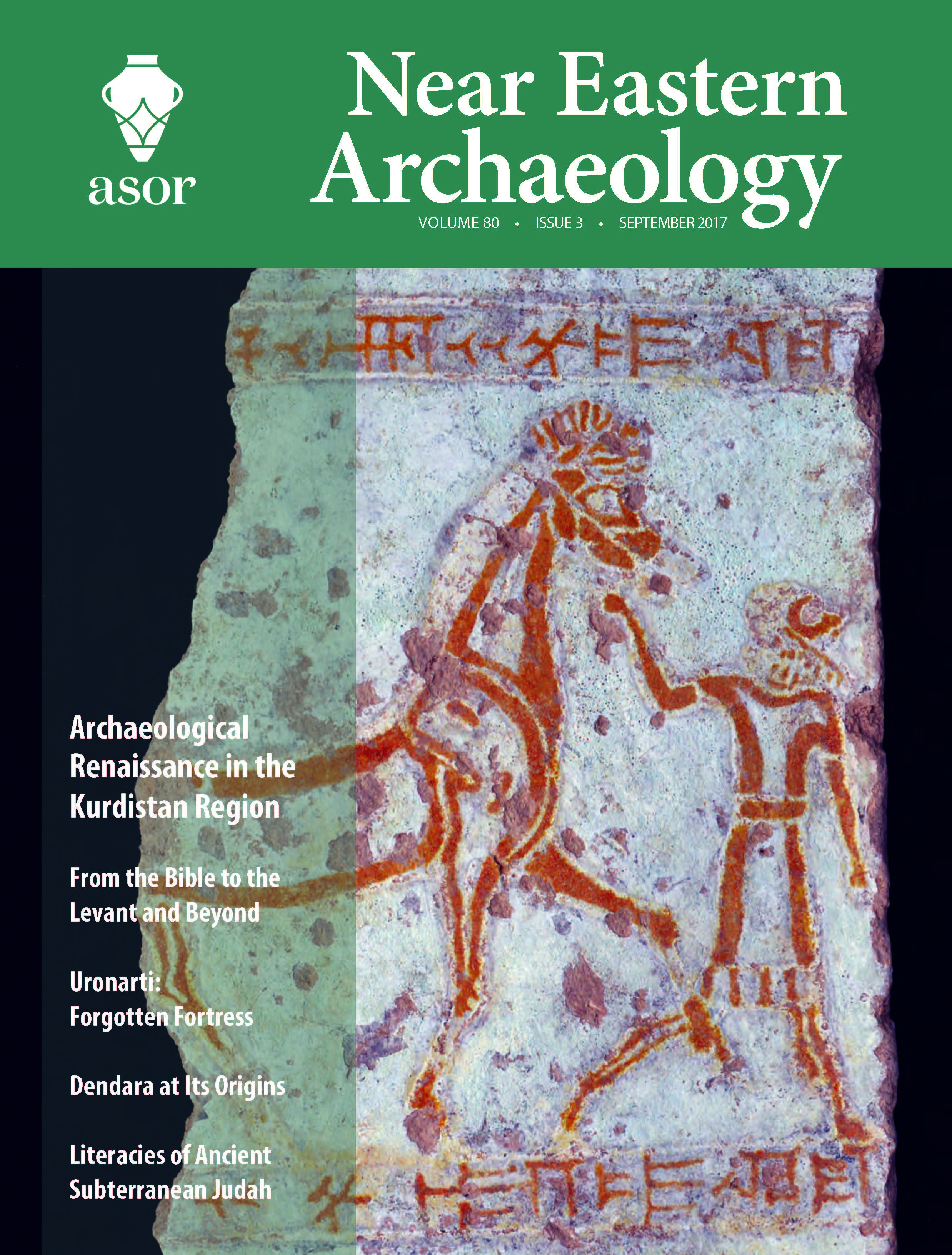
Table of Contents for Near Eastern Archaeology 80.3 (September 2017)

Subscription Options
You can receive NEA (and other ASOR publications) through an ASOR Membership or through an Individual Subscription. Single issues (subject to availability) are available for purchase, with ASOR members receiving a discount. Please email us if you have any questions.

Pp. 148-153: “From the Bible to the Levant and Beyond,” by William G. Dever

Professor Dever reflects on eighty years of Near Eastern Archaeology within the changing disciplinary landscape of biblical and Near Eastern archaeology.

Click here to access the above article on JSTOR (ASOR membership with online access and/or subscription to JSTOR Current Content required).

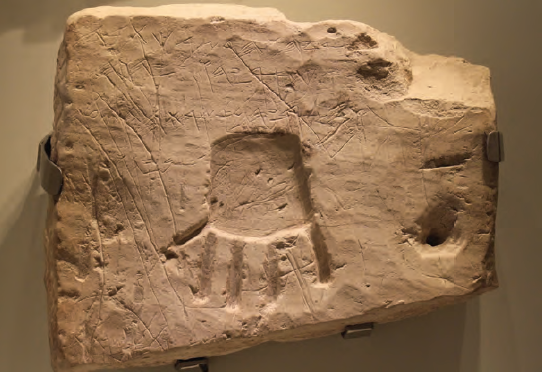
Pp. 154-165: “Forgotten Fortress: Returning to Uronarti,” by Laurel Bestock

The kings of the ancient Egyptian Middle Kingdom (ca. 2055–1650 B.C.E.) conquered and subsequently administered a large territory in Lower Nubia, south of the First Cataract. Monumental fortresses that were built along the banks of the Nile were excavated in the early twentieth century, but largely destroyed by the floodwaters from the damming of the Nile in the 1960s. Recent discovery that two of these fortresses have survived has led to new archaeological work, including survey and excavation at the site of Uronarti. Preliminary work there shows the complexity of lifestyle and cultural interaction at this ancient colonial outpost.

Click here to access the above article on JSTOR (ASOR membership with online access and/or subscription to JSTOR Current Content required).

Pp. 166-175: “Dendara at Its Origins: New Evidence for a Pre- and Early Dynastic Settlement Site in Upper Egypt,” by Gregory Marouard

The archaeology of Pre- and Early Dynastic Egypt has been one of the most active area in Egyptology in the past few decades, but despite the intensification of the fieldwork research in the Nile Delta or Middle Egypt, our knowledge of early Egyptian settlements in Upper Egypt is still limited to several prominent sites, some under excavation since the late nineteenth century. The work undertaken by a team from The Oriental Institute—on the concession of the French Archaeological Institute (IFAO)—in the intramural area of the Hathor and Isis sanctuaries at Dendara has uncovered the earliest archaeological levels discovered to date, with several strata from the Naqada IIC–D and Early Dynastic periods. These discoveries push back the date of a first permanent community at this site by more than five hundred years and add an important point on the map of the predynastic occupation of Upper Egypt, all the more significant since the site became one of the main provincial centers, the capital of the 6th Nome of Upper Egypt, in the following centuries.

Click here to access the above article on JSTOR (ASOR membership with online access and/or subscription to JSTOR Current Content required).

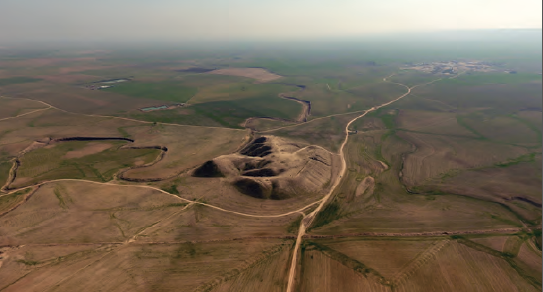
Pp. 176-187: “The Archaeological Renaissance in the Kurdistan Region of Iraq,” by Jason Ur

After an absence of over two decades, foreign archaeology has returned in earnest to one of the “cradles of civilization” in the Kurdistan Region of Iraq. Two wars, international sanctions, and internal unrest had together brought archaeological research nearly to a standstill; only a few under-funded Iraqi teams and a handful of intrepid Europeans attempted fieldwork following the first Gulf War of 1991. Following a decline in political violence that began in 2008, archaeologists have returned to the Republic of Iraq. The resumption of fieldwork in the southern “heartland of cities” has been significant but slow, and hampered by internal politics. In the autonomous Kurdistan Region, however, foreign research has expanded rapidly and continuously, in partnership with local archaeologists and institutes. This essay reviews these new developments, discusses how the new discoveries are challenging long-held ideas and filling blank spaces on the archaeological map, and suggests some new directions for the future of Mesopotamian studies.

Click here to access the above article on JSTOR (ASOR membership with online access and/or subscription to JSTOR Current Content required).

Pp. 188-195: “Reading and Writing in the Dark at Khirbet el-Qom: The Literacies of Ancient Subterranean Judah,” by Alice Mandell and Jeremy Smoak

How did ancient Israelites and Judeans interact with inscriptions located in subterranean contexts such as tombs, tunnels, and caves? What roles did writing hold in the darkness of such places? The present article argues that a multimodal approach to literacy needs to be applied to the study of such inscriptions in order to understand how they communicated to audiences underground in the dark. We challenge traditional approaches to the study of tomb inscriptions in ancient Judah, most of which have studied them for what they reveal about historical grammar and the development of orthography. We argue that a better understanding of how audiences interacted with such inscriptions proceeds from a consideration of the visual grammars of tomb aesthetics, architecture, and the funerary objects in these spaces. This context is what enabled ancient audiences to decode the meaning of inscriptions in tomb complexes.

Click here to access the above article on JSTOR (ASOR membership with online access and/or subscription to JSTOR Current Content required).

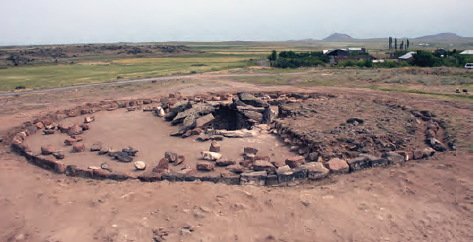
Pp. 196-201: “Cimmerian and Scythian Funerary Rituals in the South Caucasus,” by Garegin S. Tumanyan

The author presents the results of his investigation of sepulchers in the southern Caucasus that carry Cimmerian-Scythian features in the hopes of shedding light on the question of whether there was a Cimmerian-Scythian presence in the southern Caucasus in the late eighth to sixth centuries B.C.E. To identify eligible burial complexes, the author developed criteria based on a number of specific features: these included the presence of intrusive burials within the sepulchers, the presence of an anthropomorphic stone sculpture over the tomb or in the burial chamber, the skeleton’s position lying stretched on its back, the presence of human sacrifices, the practice of burying horsemen with their horse, and more. Specific burial goods, such as horse bits with stirrup-shaped ends, bronze mirrors, whetstones with holes for rings, javelins, acinac-type blades, and Scythian arrowheads, were also identified as indicating the presence of Cimmerian-Scythian burials. Based on a thorough exploration of available sources on sepulchers and burial complexes in the South Caucasus, the author identified 145 sepulchers and 63 burial grounds meeting his criteria and concluded that Cimmerian and Scythian cultures were present in the southern Caucasus of the seventh and sixth centuries B.C.E.

Click here to access the above article on JSTOR (ASOR membership with online access and/or subscription to JSTOR Current Content required).

Pp. 202-203: “‘There Is Nothing so Whole as a Broken Heart’: Reflections on ‘The Practice of Repairing Vessels in Ancient Egypt’ (NEA 79.4 [2016]) by Julia Hsieh,” by Aren M. Maeir

The author offers an additional perspective on the mending of ancient pottery, suggesting that breakage and repair are part of the normal life cycle of an object and that mending can in some cases lead to an enhancement of the original object and to a valuing of the repaired vessel.

Click here to access the above article on JSTOR (ASOR membership with online access and/or subscription to JSTOR Current Content required).

[/vc_column_text][/vc_column][vc_column border_color=”rgba(170,170,170,0.01)” width=”1/6″ css=”.vc_custom_1496684098866{margin-right: 5px !important;margin-bottom: 20px !important;border-right-width: 2px !important;border-bottom-width: 2px !important;padding-top: 30px !important;padding-right: 10px !important;padding-left: 10px !important;background-color: #ffffff !important;border-right-color: rgba(227,228,228,0.75) !important;border-bottom-color: rgba(227,228,228,0.75) !important;}”][vc_wp_posts title=”BROWSE THE NEWS ARCHIVE” number=”4″][/vc_column][vc_column border_color=”rgba(170,170,170,0.01)” width=”1/6″ css=”.vc_custom_1496684008271{margin-right: 10px !important;margin-bottom: 30px !important;border-right-width: 2px !important;border-bottom-width: 2px !important;padding-top: 30px !important;padding-right: 20px !important;padding-left: 20px !important;background-color: #ffffff !important;border-right-color: rgba(227,228,228,0.75) !important;border-bottom-color: rgba(227,228,228,0.75) !important;}”][vc_column_text] [/vc_column_text][/vc_column][/vc_row]

Trustee Nomination Deadline Extended

[vc_row fullwidth=”true” attached=”true” css=”.vc_custom_1496247803139{padding-top: 0px !important;padding-right: 0px !important;padding-bottom: 0px !important;padding-left: 0px !important;}”][vc_column][mk_image src=”http://www.asor.org/wp-content/uploads/2017/04/100CrusderSeaCastleSaide-Sidon-–-1920×600-–-REVISED-1.jpg” image_width=”1920″ image_height=”600″ crop=”false” hover=”false” margin_bottom=”0″][/vc_column][/vc_row][vc_row fullwidth=”true” css=”.vc_custom_1496682730308{padding-top: 10px !important;padding-right: 0px !important;padding-bottom: 0px !important;padding-left: 0px !important;}”][vc_column width=”1/12″ css=”.vc_custom_1496683820796{margin-right: 10px !important;}” offset=”vc_hidden-md vc_hidden-sm vc_hidden-xs”][vc_column_text]

 SHARE

[/vc_column_text][mk_image src=”http://www.asortest.org/wp-content/uploads/2017/01/social-fb-icon4.jpg” image_width=”42″ image_height=”42″ hover=”false” custom_url=”https://www.facebook.com/ASOResearch/” margin_bottom=”0″][mk_image src=”http://www.asortest.org/wp-content/uploads/2017/01/social-tw-icon4.jpg” image_width=”42″ image_height=”42″ hover=”false” custom_url=”https://twitter.com/ASOResearch?ref_src=twsrc%5Egoogle%7Ctwcamp%5Eserp%7Ctwgr%5Eauthor” margin_bottom=”0″][mk_image src=”http://www.asortest.org/wp-content/uploads/2017/01/social-in-icon4.jpg” image_width=”42″ image_height=”42″ hover=”false” custom_url=”https://www.linkedin.com/company/american-schools-of-oriental-research” margin_bottom=”0″][mk_image src=”http://www.asortest.org/wp-content/uploads/2017/01/social-ml-icon_7.jpg” image_width=”42″ image_height=”42″ hover=”false” custom_url=”mailto:asor@bu.edu” margin_bottom=”0″][mk_image src=”http://www.asortest.org/wp-content/uploads/2017/01/blog-icon3.jpg” image_width=”42″ image_height=”42″ hover=”false” custom_url=”http://asorblog.org/” margin_bottom=”0″][/vc_column][vc_column border_color=”rgba(255,255,255,0.01)” width=”1/6″ css=”.vc_custom_1496683923840{margin-right: 20px !important;border-left-width: 2px !important;padding-right: 20px !important;padding-left: 20px !important;border-left-color: #99422f !important;}”][mk_divider divider_color=”rgba(255,255,255,0.01)” thickness=”1″ margin_top=”3″ margin_bottom=”3″][vc_column_text]

ASOR BLOG

NEWS@ASOR E-NEWSLETTER

ANCIENT NEAR EAST TODAY E-NEWSLETTER

PAST ASOR NEWS, MONTH BY MONTH

FY17 HONOR ROLL OF DONORS

ASOR ANNUAL MEETING

[/vc_column_text][/vc_column][vc_column border_color=”rgba(170,170,170,0.01)” width=”1/2″ css=”.vc_custom_1487276122024{margin-right: 10px !important;margin-bottom: 30px !important;border-right-width: 2px !important;border-bottom-width: 2px !important;padding-top: 30px !important;padding-right: 30px !important;padding-left: 20px !important;background-color: #ffffff !important;border-right-color: rgba(227,228,228,0.75) !important;border-bottom-color: rgba(227,228,228,0.75) !important;}”][vc_column_text responsive_align=”left”]

BOARD NOMINATIONS DEADLINE EXTENDED TO OCTOBER 6

[/vc_column_text][vc_column_text]ASOR’s Trustees Nominations Committee is seeking names of members who are willing to be considered for nomination to the ASOR Board of Trustees (Class of 2020). The committee seeks individuals who would consider service as either Individual Trustees or as Institutional Representative Trustees. We anticipate two openings for three-year terms (2018-2020) in each category. Any ASOR member may be considered for nomination as an Individual Trustee, while only institutional representatives of ASOR Member Schools may be considered for nomination as an Institutional Representative Trustee.

The ASOR Board of Trustees sets the direction for ASOR and provides oversight for our organization. We encourage you to consider serving on the board, or to share names of members who would be a good fit. Among other responsibilities, members of the Board agree to attend two meetings each year at their own expense, to participate thoughtfully in the governance process, and to contribute financially to ASOR. At this stage, nominations may by made simply by sending the nominee’s name and email address to Britta Abeln in the ASOR office. Questions about service on the ASOR Board or about the selection process may be directed to Ann-Marie Knoblauch, chair of the Nominations Committee. Self-nominations are encouraged. The ASOR office will contact all nominees to describe the responsibilities in greater detail, and to make sure that the nominee is willing to have his or her name discussed by the Trustees Nominations Committee.

After the Committee selects individuals for nomination, the election will take place by electronic ballot during October and early November. ASOR is once again conducting online voting to ensure that more of our members are able to participate in this important process. The ASOR office will work with any person who is not able to complete an electronic ballot to make sure that everyone is included.

Members of the Trustees Nominations Committee include Ann-Marie Knoblauch (chair) and Jane DeRose Evans. In order to receive full consideration by the committee, nominations must be submitted to info@asor.org by October 6, 2017.[/vc_column_text][/vc_column][vc_column border_color=”rgba(170,170,170,0.01)” width=”1/6″ css=”.vc_custom_1496684098866{margin-right: 5px !important;margin-bottom: 20px !important;border-right-width: 2px !important;border-bottom-width: 2px !important;padding-top: 30px !important;padding-right: 10px !important;padding-left: 10px !important;background-color: #ffffff !important;border-right-color: rgba(227,228,228,0.75) !important;border-bottom-color: rgba(227,228,228,0.75) !important;}”][vc_wp_posts title=”BROWSE THE NEWS ARCHIVE” number=”4″][/vc_column][vc_column border_color=”rgba(170,170,170,0.01)” width=”1/6″ css=”.vc_custom_1496684008271{margin-right: 10px !important;margin-bottom: 30px !important;border-right-width: 2px !important;border-bottom-width: 2px !important;padding-top: 30px !important;padding-right: 20px !important;padding-left: 20px !important;background-color: #ffffff !important;border-right-color: rgba(227,228,228,0.75) !important;border-bottom-color: rgba(227,228,228,0.75) !important;}”][vc_column_text] [/vc_column_text][/vc_column][/vc_row]

BASOR 378 Ahead of Print

[vc_row fullwidth=”true” attached=”true” css=”.vc_custom_1496247803139{padding-top: 0px !important;padding-right: 0px !important;padding-bottom: 0px !important;padding-left: 0px !important;}”][vc_column][mk_image src=”http://www.asor.org/wp-content/uploads/2017/04/100CrusderSeaCastleSaide-Sidon-–-1920×600-–-REVISED-1.jpg” image_width=”1920″ image_height=”400″ hover=”false” margin_bottom=”0″][/vc_column][/vc_row][vc_row fullwidth=”true” css=”.vc_custom_1496682730308{padding-top: 10px !important;padding-right: 0px !important;padding-bottom: 0px !important;padding-left: 0px !important;}”][vc_column width=”1/12″ css=”.vc_custom_1496683820796{margin-right: 10px !important;}” offset=”vc_hidden-md vc_hidden-sm vc_hidden-xs”][vc_column_text]

 SHARE

[/vc_column_text][mk_image src=”http://www.asortest.org/wp-content/uploads/2017/01/social-fb-icon4.jpg” image_width=”42″ image_height=”42″ hover=”false” custom_url=”https://www.facebook.com/ASOResearch/” margin_bottom=”0″][mk_image src=”http://www.asortest.org/wp-content/uploads/2017/01/social-tw-icon4.jpg” image_width=”42″ image_height=”42″ hover=”false” custom_url=”https://twitter.com/ASOResearch?ref_src=twsrc%5Egoogle%7Ctwcamp%5Eserp%7Ctwgr%5Eauthor” margin_bottom=”0″][mk_image src=”http://www.asortest.org/wp-content/uploads/2017/01/social-in-icon4.jpg” image_width=”42″ image_height=”42″ hover=”false” custom_url=”https://www.linkedin.com/company/american-schools-of-oriental-research” margin_bottom=”0″][mk_image src=”http://www.asortest.org/wp-content/uploads/2017/01/social-ml-icon_7.jpg” image_width=”42″ image_height=”42″ hover=”false” custom_url=”mailto:asor@bu.edu” margin_bottom=”0″][mk_image src=”http://www.asortest.org/wp-content/uploads/2017/01/blog-icon3.jpg” image_width=”42″ image_height=”42″ hover=”false” custom_url=”http://asorblog.org/” margin_bottom=”0″][/vc_column][vc_column border_color=”rgba(255,255,255,0.01)” width=”1/6″ css=”.vc_custom_1496683923840{margin-right: 20px !important;border-left-width: 2px !important;padding-right: 20px !important;padding-left: 20px !important;border-left-color: #99422f !important;}”][mk_divider divider_color=”rgba(255,255,255,0.01)” thickness=”1″ margin_top=”3″ margin_bottom=”3″][vc_column_text]

ASOR BLOG

NEWS@ASOR

ANCIENT NEAR EAST TODAY

PAST ASOR NEWS, MONTH BY MONTH

FY17 HONOR ROLL OF DONORS

ASOR ANNUAL MEETING

[/vc_column_text][/vc_column][vc_column border_color=”rgba(170,170,170,0.01)” width=”1/2″ css=”.vc_custom_1487276122024{margin-right: 10px !important;margin-bottom: 30px !important;border-right-width: 2px !important;border-bottom-width: 2px !important;padding-top: 30px !important;padding-right: 30px !important;padding-left: 20px !important;background-color: #ffffff !important;border-right-color: rgba(227,228,228,0.75) !important;border-bottom-color: rgba(227,228,228,0.75) !important;}”][vc_column_text responsive_align=”left”]

BASOR 378 AHEAD OF PRINT ARTICLES AVAILABLE

[/vc_column_text][vc_column_text]The first batch of Ahead of Print articles from BASOR 378 are available online now. Click here to be taken to the page on JSTOR to view any of the following articles:

You must have online access through your ASOR membership or institution to view the articles online. If you would like to upgrade your membership for an additional $25 to receive print and online access to our journals or have any questions, please contact asormemb@bu.edu.[/vc_column_text][/vc_column][vc_column border_color=”rgba(170,170,170,0.01)” width=”1/6″ css=”.vc_custom_1496684098866{margin-right: 5px !important;margin-bottom: 20px !important;border-right-width: 2px !important;border-bottom-width: 2px !important;padding-top: 30px !important;padding-right: 10px !important;padding-left: 10px !important;background-color: #ffffff !important;border-right-color: rgba(227,228,228,0.75) !important;border-bottom-color: rgba(227,228,228,0.75) !important;}”][vc_wp_posts title=”BROWSE THE NEWS ARCHIVE” number=”4″][/vc_column][vc_column border_color=”rgba(170,170,170,0.01)” width=”1/6″ css=”.vc_custom_1496684008271{margin-right: 10px !important;margin-bottom: 30px !important;border-right-width: 2px !important;border-bottom-width: 2px !important;padding-top: 30px !important;padding-right: 20px !important;padding-left: 20px !important;background-color: #ffffff !important;border-right-color: rgba(227,228,228,0.75) !important;border-bottom-color: rgba(227,228,228,0.75) !important;}”][vc_column_text] [/vc_column_text][/vc_column][/vc_row]

In Memory of Dr. Ken Holum

[vc_row fullwidth=”true” attached=”true” css=”.vc_custom_1496247803139{padding-top: 0px !important;padding-right: 0px !important;padding-bottom: 0px !important;padding-left: 0px !important;}”][vc_column][mk_image src=”http://www.asor.org/wp-content/uploads/2017/04/100CrusderSeaCastleSaide-Sidon-–-1920×600-–-REVISED-1.jpg” image_width=”1920″ image_height=”400″ hover=”false” margin_bottom=”0″][/vc_column][/vc_row][vc_row fullwidth=”true” css=”.vc_custom_1496682730308{padding-top: 10px !important;padding-right: 0px !important;padding-bottom: 0px !important;padding-left: 0px !important;}”][vc_column width=”1/12″ css=”.vc_custom_1496683820796{margin-right: 10px !important;}” offset=”vc_hidden-md vc_hidden-sm vc_hidden-xs”][vc_column_text]

 SHARE

[/vc_column_text][mk_image src=”http://www.asortest.org/wp-content/uploads/2017/01/social-fb-icon4.jpg” image_width=”42″ image_height=”42″ hover=”false” custom_url=”https://www.facebook.com/ASOResearch/” margin_bottom=”0″][mk_image src=”http://www.asortest.org/wp-content/uploads/2017/01/social-tw-icon4.jpg” image_width=”42″ image_height=”42″ hover=”false” custom_url=”https://twitter.com/ASOResearch?ref_src=twsrc%5Egoogle%7Ctwcamp%5Eserp%7Ctwgr%5Eauthor” margin_bottom=”0″][mk_image src=”http://www.asortest.org/wp-content/uploads/2017/01/social-in-icon4.jpg” image_width=”42″ image_height=”42″ hover=”false” custom_url=”https://www.linkedin.com/company/american-schools-of-oriental-research” margin_bottom=”0″][mk_image src=”http://www.asortest.org/wp-content/uploads/2017/01/social-ml-icon_7.jpg” image_width=”42″ image_height=”42″ hover=”false” custom_url=”mailto:asor@bu.edu” margin_bottom=”0″][mk_image src=”http://www.asortest.org/wp-content/uploads/2017/01/blog-icon3.jpg” image_width=”42″ image_height=”42″ hover=”false” custom_url=”http://asorblog.org/” margin_bottom=”0″][/vc_column][vc_column border_color=”rgba(255,255,255,0.01)” width=”1/6″ css=”.vc_custom_1496683923840{margin-right: 20px !important;border-left-width: 2px !important;padding-right: 20px !important;padding-left: 20px !important;border-left-color: #99422f !important;}”][mk_divider divider_color=”rgba(255,255,255,0.01)” thickness=”1″ margin_top=”3″ margin_bottom=”3″][vc_column_text]

ASOR BLOG

NEWS@ASOR

ANCIENT NEAR EAST TODAY

PAST ASOR NEWS, MONTH BY MONTH

FY17 HONOR ROLL OF DONORS

ASOR ANNUAL MEETING

[/vc_column_text][/vc_column][vc_column border_color=”rgba(170,170,170,0.01)” width=”1/2″ css=”.vc_custom_1487276122024{margin-right: 10px !important;margin-bottom: 30px !important;border-right-width: 2px !important;border-bottom-width: 2px !important;padding-top: 30px !important;padding-right: 30px !important;padding-left: 20px !important;background-color: #ffffff !important;border-right-color: rgba(227,228,228,0.75) !important;border-bottom-color: rgba(227,228,228,0.75) !important;}”][vc_column_text responsive_align=”left”]

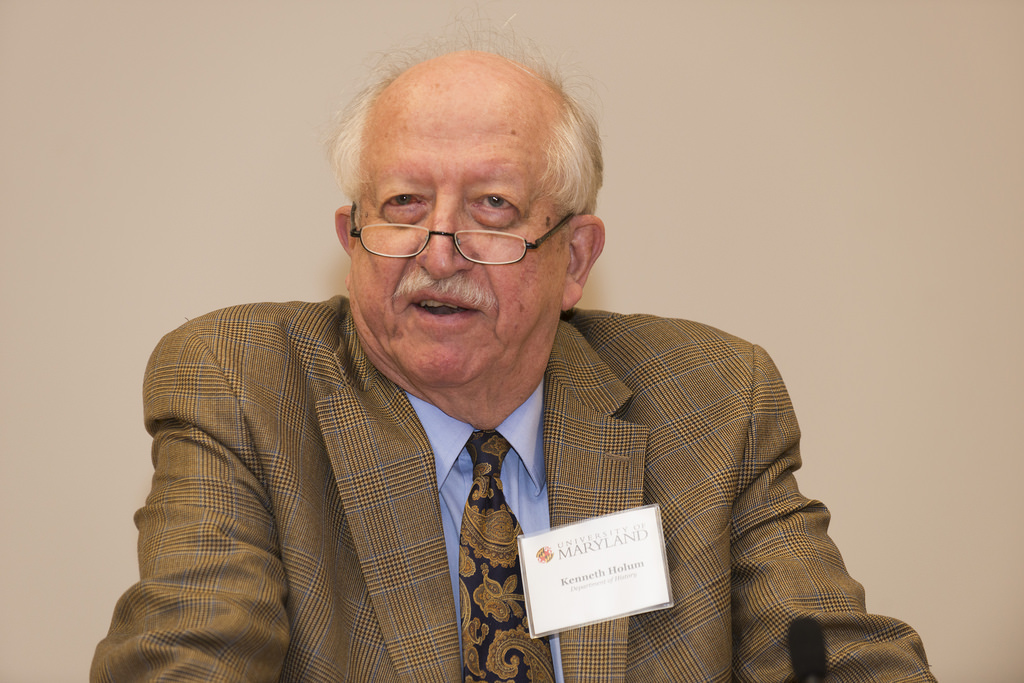
IN MEMORY OF DR. KEN HOLUM

[/vc_column_text][vc_column_text]Colleagues at the University of Maryland write:

“We are very sad to report that Professor Emeritus Kenneth (“Ken”) Holum passed away on the morning of September 20th after a battle with pancreatic cancer.

For more than forty years, Ken was a professor of late antique history in our department. He was also an active member and past chairman of the University’s Senate. Holum was a child of the prairie, having been born and raised in South Dakota, where he graduated from Augustana College in Sioux Falls in 1961. Following graduation, Ken served in the Navy for six years in Germany, before entering graduate school at the University of Chicago. There he wrote a dissertation on Byzantine empresses, receiving the Ph.D. in 1973. That work became the book, Theodosian Empresses (1982). Even before completing his Ph.D., Holum had begun to teach at the University of Maryland in 1970, where he promoted through the ranks to become professor. Upon retirement in 2014, he was awarded emeritus status.

While at Maryland, Holum developed a second scholarly specialty in historical archaeology and for many years, he was director of the University of Maryland’s excavations at Caesarea in Israel, once the capital of Roman Palestine. Holum was also widely respected as a published scholar in his field, having written several books and many articles. He will be sorely missed by the scores of students who enjoyed the opportunity to dig with him over the years.

Beloved by his colleagues and many beyond the university, Ken was a gentle soul who always evidenced great civility. He was also a model departmental citizen, willing to serve on committees or in any capacity that was needed to move the History Department ahead in its mission. Ken leaves behind his Lebensgefährtin, his wife, Marsha Rozenblit, professor of modern Jewish history in the department; his children, Kate and Mark; many members of his immediate family; and hundreds of other friends and colleagues who will miss him immensely.

Funeral services were held Monday, September 25 at 10:30 am at Hines-Rinaldi Funeral Home, 11800 New Hampshire Avenue, Silver Spring, Maryland, with burial at the Fabrangen Section of Garden of Remembrance Memorial Park, 14321 Comus Road, Clarksburg, Maryland. Charitable contributions can be made in Ken’s memory to the Southern Poverty Law Center, Planned Parenthood, Save the Bay, or ‘J Street.'”

Kenneth Holum won the ASOR P.E. MacAllister Field Archaeology Award in 2006.[/vc_column_text][/vc_column][vc_column border_color=”rgba(170,170,170,0.01)” width=”1/6″ css=”.vc_custom_1496684098866{margin-right: 5px !important;margin-bottom: 20px !important;border-right-width: 2px !important;border-bottom-width: 2px !important;padding-top: 30px !important;padding-right: 10px !important;padding-left: 10px !important;background-color: #ffffff !important;border-right-color: rgba(227,228,228,0.75) !important;border-bottom-color: rgba(227,228,228,0.75) !important;}”][vc_wp_posts title=”BROWSE THE NEWS ARCHIVE” number=”4″][/vc_column][vc_column border_color=”rgba(170,170,170,0.01)” width=”1/6″ css=”.vc_custom_1496684008271{margin-right: 10px !important;margin-bottom: 30px !important;border-right-width: 2px !important;border-bottom-width: 2px !important;padding-top: 30px !important;padding-right: 20px !important;padding-left: 20px !important;background-color: #ffffff !important;border-right-color: rgba(227,228,228,0.75) !important;border-bottom-color: rgba(227,228,228,0.75) !important;}”][vc_column_text] [/vc_column_text][/vc_column][/vc_row]