Submit your images, and they may be featured throughout the ASOR website!
[/vc_column_text][vc_images_carousel images=”30799,30732,30190,30745,30795″ img_size=”590×150″ autoplay=”yes” wrap=”yes”][vc_column_text]You may have noticed that photos are a central feature of the new, beautiful ASOR website. ASOR wants to show off your best landscapes, panoramas, artifact portraits, and high quality candids. We will choose the best images from different countries where ASOR members work to feature in the homepage slideshow that will change monthly. Other images may be chosen for banner images on other webpages throughout the website.
Entries should be high resolution (at least 300 dpi). As described in the submission form, photos should be named in such a way as to describe basic information, the location, and date. Submitters are also encouraged (but not required) to include a brief description of each photo in a Word file that should be sent together with the submission form. By submitting photo(s) and signing the submission form, you guarantee that you are the copyright holder and have the ability to transfer rights to ASOR. You are granting ASOR the non-exclusive right use the photo in any way it sees fit on the ASOR website, in ASOR social media, and/or in ASOR promotional materials. You also grant ASOR the permission and right to use the image(s) on a resource page for members and friends with the understanding that ASOR will not charge for the images.
Please note that ASOR will not accept images of artifacts from the antiquities market or images that might promote the trade of antiquities in any way. Submissions must comply with ASOR’s Policy on Professional Conduct.[/vc_column_text][mk_divider][mk_button corner_style=”rounded” size=”xlarge” bg_color=”#2f2f80″ txt_color=”#dddddd” url=”http://www.asor.org/wp-content/uploads/2017/07/Photo-Submission-Rules.pdf” align=”center” animation=”scale-up”]Download Entry Form[/mk_button][mk_divider][vc_column_text][/vc_column_text][/vc_column][vc_column border_color=”rgba(170,170,170,0.01)” width=”1/6″ css=”.vc_custom_1496684098866{margin-right: 5px !important;margin-bottom: 20px !important;border-right-width: 2px !important;border-bottom-width: 2px !important;padding-top: 30px !important;padding-right: 10px !important;padding-left: 10px !important;background-color: #ffffff !important;border-right-color: rgba(227,228,228,0.75) !important;border-bottom-color: rgba(227,228,228,0.75) !important;}”][vc_wp_posts title=”BROWSE THE NEWS ARCHIVE” number=”4″][/vc_column][vc_column border_color=”rgba(170,170,170,0.01)” width=”1/6″ css=”.vc_custom_1496684008271{margin-right: 10px !important;margin-bottom: 30px !important;border-right-width: 2px !important;border-bottom-width: 2px !important;padding-top: 30px !important;padding-right: 20px !important;padding-left: 20px !important;background-color: #ffffff !important;border-right-color: rgba(227,228,228,0.75) !important;border-bottom-color: rgba(227,228,228,0.75) !important;}”][vc_column_text]Tweets by ASOResearch [/vc_column_text][/vc_column][/vc_row]
[/vc_column_text][vc_column_text]Launched in 2014, ASOR Cultural Heritage Initiatives (ASOR CHI) is an international collaboration of scholars and institutions assisting local stakeholders in the Middle East and Northern Africa to preserve and protect cultural heritage. Through two cooperative agreements with the U.S. Department of State and with the generous support private and public organizations and donors (including the Getty Conservation Institute, The Whiting Foundation, The Foundation for Jewish Heritage, and the Kaplan Fund), ASOR CHI documents, protects, and preserves the cultural heritage of war-torn Syria, northern Iraq, and Libya. Hundreds of significant heritage sites have been damaged since fighting began in 2011. Although the theft and destruction of cultural resources represents only part of the humanitarian crisis, these harmful actions threaten cultural identity, memory, and diversity as well as erase irreplaceable data on the past.
ASOR CHI may have the need to hire additional staff for temporary positions during the second half of 2017. We thus invite ASOR members and friends who might be interested in such positions to let us know. To be considered, please submit a one-page letter of interest stating your academic and professional qualifications and the sorts of positions within cultural heritage protection and preservation work that might be of interest. Please also submit a brief CV (no more than 2 pages) and a list of three professional references. Send the materials by email to Marina Gabriel with a CC to Britta Abeln; please put “ASOR CHI CV” in the subject heading of the email. This solicitation of CVs is not a guarantee of new positions.
ASOR CHI is led by four principal investigators: Michael Danti (ASOR Academic Director), Andrew Vaughn (ASOR Executive Director), Scott Branting (University of Central Florida), and Susan Kane (Oberlin College). Marina Gabriel, Susan Penacho, and William Raynolds serve as Project Managers. The international team also includes 15 eminent specialists who have agreed to donate more than 600 hours of expert time over the course of the next twelve months of the project.
Questions about ASOR Cultural Heritage Initiatives may be directed to ASOR CHI Academic Director Michael Danti and/or ASOR Executive Director Andy Vaughn.[/vc_column_text][/vc_column][vc_column border_color=”rgba(170,170,170,0.01)” width=”1/6″ css=”.vc_custom_1496684098866{margin-right: 5px !important;margin-bottom: 20px !important;border-right-width: 2px !important;border-bottom-width: 2px !important;padding-top: 30px !important;padding-right: 10px !important;padding-left: 10px !important;background-color: #ffffff !important;border-right-color: rgba(227,228,228,0.75) !important;border-bottom-color: rgba(227,228,228,0.75) !important;}”][vc_wp_posts title=”BROWSE THE NEWS ARCHIVE” number=”4″][/vc_column][vc_column border_color=”rgba(170,170,170,0.01)” width=”1/6″ css=”.vc_custom_1496684008271{margin-right: 10px !important;margin-bottom: 30px !important;border-right-width: 2px !important;border-bottom-width: 2px !important;padding-top: 30px !important;padding-right: 20px !important;padding-left: 20px !important;background-color: #ffffff !important;border-right-color: rgba(227,228,228,0.75) !important;border-bottom-color: rgba(227,228,228,0.75) !important;}”][vc_column_text]Tweets by ASOResearch [/vc_column_text][/vc_column][/vc_row]
Subscription Options You can receive BASOR (and other ASOR publications) through an ASOR Membership or through an Individual Subscription. Single issues (subject to availability) are available for purchase, with ASOR members receiving a discount. Please email us if you have any questions.
Pp. 1-20: “Ethnofabrics: Petrographic Analysis as a Tool for Illuminating Cultural Interactions and Trade Relations between Judah and Philistia during the Iron Age II,” by Anat Cohen-Weinberger, Nahshon Szanton and Joe Uziel
Recent excavations along the lower eastern slopes of Jerusalem yielded a number of sherds attributed to Late Philistine Decorated Ware. As this family of vessels is generally thought to derive from Philistia, petrographic analysis was conducted on the sherds, as well as on other vessels assumed to be locally made, which served as a control group. Late Philistine Decorated Ware sherds were found to belong to three distinct petrographic groups, two of which seem to originate in Philistia (i.e., the southern coastal plain and Judaean Shephelah), while a third group was found to be local to Jerusalem. The results also indicate that some vessels considered local to the area of Jerusalem were actually produced farther west. This article discusses the results of the petrographic analysis and the implications they have on understanding Judaeo-Philistine relations.
Click here to access the above article on JSTOR (ASOR membership with online access and/or subscription to JSTOR Current Content required).
Pp. 21-38: “From Stadium to Harbor: Reinterpreting the Curved Ashlar Structure in Roman Tiberias,” by Rick Bonnie
A salvage excavation in the modern city of Tiberias in 2002 exposed the remnants of a wide, curved ashlar structure. Based on its curved shape, its construction date, and its location, various scholars have identified this structure as the foundation wall of the Roman stadium mentioned by Josephus in relation to the First Jewish Revolt (66–67 C.E.). However, neither Josephus nor the later rabbinic sources imply the presence of a stone-built monumental stadium at the location of this site, nor does all of the exposed evidence related to the structure fit with the stadium theory. Therefore, a different interpretation for this structure is proposed. Based on the presence of a mooring stone projecting outward from the structure’s waterside and the complex’s strong similarities in structural characteristics and in elevation to the nearby late Hellenistic to Roman harbor of Magdala, it is argued that the remains should be identified as those of a quay, a stone platform built along the lakeshore to accommodate the loading and unloading of boats. If this interpretation is correct, it suggests the existence of a harbor structure in the northeast area of Roman Tiberias.
Click here to access the above article on JSTOR (ASOR membership with online access and/or subscription to JSTOR Current Content required).
Pp. 39-47: “The Qubur al-Walaydah Bowl: New Images and Old Readings,” by Nathaniel E. Greene
Discovered in the late 1970s and first published in the Bulletin of the American Schools of Oriental Research by Frank Moore Cross in 1980, the Qubur al-Walaydah Bowl has become the object of more recent inspection by the current excavation team at the site. In 2010, Angelika Berlejung proposed new readings for parts of the inscription. This article seeks to analyze Berlejung’s proposed readings against Cross’s readings from his editio princeps. Furthermore, the present study utilizes reflectance transformation imaging in order to draw its conclusions. Ultimately, Berlejung’s proposed readings are not supported by reflectance transformation imaging.
Click here to access the above article on JSTOR (ASOR membership with online access and/or subscription to JSTOR Current Content required).
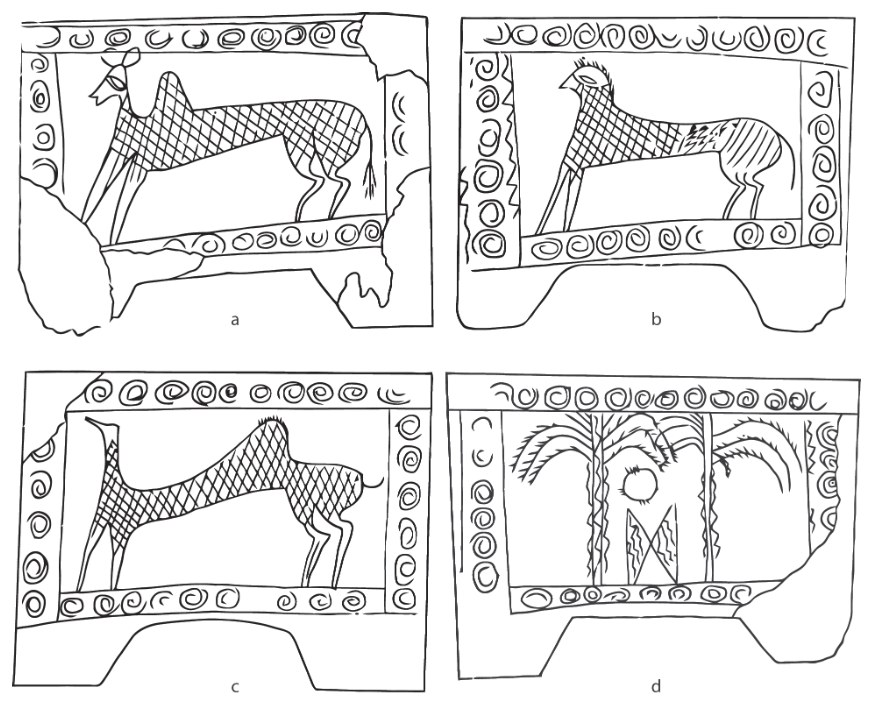
Pp. 49-67: “Local Production of a Small Rectangular Limestone Incense Altar at Tell Halif, Israel: Iconographic Considerations,” by Seung Ho Bang and Oded Borowski
This article studies local production of an incense altar found at Tell Halif in 2007 through examining its iconography. The carvings depict hunting scenes consisting of a human and various animals. These animals are positively identified as zebu, wild boar, Saluki-type hounds, and Nubian ibexes. The distribution of these five animals indicates that the southern Levant might be the source of primary influence for incense altar production, while southern Arabia is also a visible influential factor. Established trade between the southern Levant and southern Arabia, as early as the 12th–11th centuries B.C.E., might support the idea of cultural ties between the two regions. The taxonomical identifications strongly support the hypothesis that the object was locally produced. And this hypothesis is also in accord with the petrographic provenance analyses of the raw material used for the Tell Halif incense altar.
Click here to access the above article on JSTOR (ASOR membership with online access and/or subscription to JSTOR Current Content required).
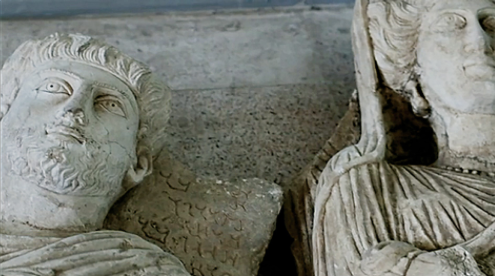
Pp. 71-84: “Six Palmyrene Portraits Destroyed in Manbij, Syria: A Salvage Reading,” by Jeremy M. Hutton
Operatives of the Islamic State reportedly destroyed six Palmyrene funerary busts and statue fragments in Manbij, Syria, on July 2, 2015. This article considers the ethical implications of publishing photographs of antiquities that have been destroyed, arguing that in such dramatic cases as destruction, it is justified to publish readings. Photographs of these antiquities are then analyzed, their physical and iconographic characteristics described, and readings for three of the inscriptions suggested. Finally, the loss of data caused by the items’ destruction is measured against the loss of data occasioned by looting.
Click here to access the above article on JSTOR (ASOR membership with online access and/or subscription to JSTOR Current Content required).
Pp. 85-106: “Two (?) Lion Reliefs from Iron Age Moab: Further Evidence for an Architectural and Intellectual Koiné in the Levant?,” by Martin Weber
The collection of the Karak Archaeological Museum contains two carved basalt slabs, both of which show the rear parts and hindquarters of a leonine figure. Although the two slabs differ vastly in their state of preservation, a comparison of their physical properties and iconographic features suggests that the two reliefs originally formed a matching pair and were part of a single architectural feature. Comparing the slabs to the well-known corpus of northern Levantine monumental sculpture, it is argued that the reliefs constitute the remains of two gateway figures, most plausibly dated to the Iron Age. The Karak slabs thus provide the first likely evidence for the use of architectural stone sculpture by Moabite elites, a practice most commonly associated with the Iron Age kingdoms of the northern Levant. Lion sculptures were often employed as gateways figures in public buildings, especially in the northern Levant and northern Mesopotamia, attesting to the close relationship between these images and the royal ideology they helped to project. Through their existence, the Karak slabs not only provide further evidence for cross-cultural artistic interaction in the Iron Age Levant but also suggest that ancient Karak played an important role in these exchanges.
Click here to access the above article on JSTOR (ASOR membership with online access and/or subscription to JSTOR Current Content required).
Pp. 107-133: “An Aramaic-Inscribed Lamaštu Amulet from Zincirli,” by Jessie DeGrado and Matthew Richey
In the final volume of excavation reports from the Felix von Luschan expedition to Zincirli, Turkey, the editor, Walter Andrae, provided a brief iconographic description and an imperfect photograph of an Aramaic-inscribed Lamaštu amulet from the site. The Old Aramaic inscription was, however, largely invisible in the photograph, and the epigraph went untranscribed and untranslated in this and all subsequent mentions. The present article represents a full edition and discussion of the amulet and its inscription on the basis of our examination of the object at the Vorderasiatisches Museum, Berlin. This artifact represents the only known instance of a local Aramaic script’s use on an amulet dominated by Mesopotamian iconographic motifs, notably including Lamaštu. It is an important witness to cultural contact and combination in an Aramaic/Neo-Hittite city-state of the 9th-8th centuries B.C.E. Due to the general paucity of Old Aramaic inscriptions, the epigraph also represents a significant addition to the broader extant corpus and contributes important data for understanding Old Aramaic palaeography, orthography, and onomastics.
Click here to access the above article on JSTOR (ASOR membership with online access and/or subscription to JSTOR Current Content required).
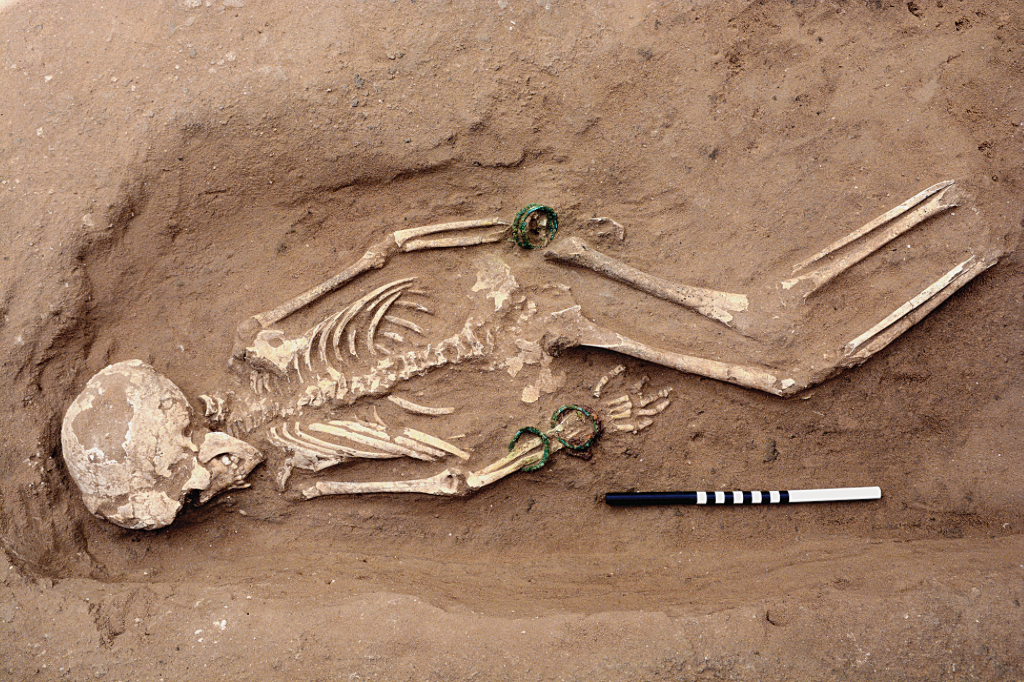
Pp. 135-159: “The Philistine Cemetery of Ashkelon,” by Daniel M. Master and Adam J. Aja
From 2013 to 2016, the Leon Levy Expedition to Ashkelon excavated an Iron Age IIA cemetery immediately adjacent to the ancient city. This research uncovered over 200 individuals buried in simple pits, built tombs, and cremation jars. The discovery represents a fundamental contribution to the history of the Philistines, as it demonstrates, for the first time, a typical burial practice for Philistine adults in the Iron Age. As such, it becomes a type-site against which other southern Levantine discoveries can be compared and provides new information about Iron Age death and burial in the eastern Mediterranean.
Click here to access the above article on JSTOR (ASOR membership with online access and/or subscription to JSTOR Current Content required).
Pp. 161-218: “Tombs and Offering Pits at the Late Bronze Age Metropolis of Hala Sultan Tekke, Cyprus,” Peter M. Fischer and Teresa Bürge
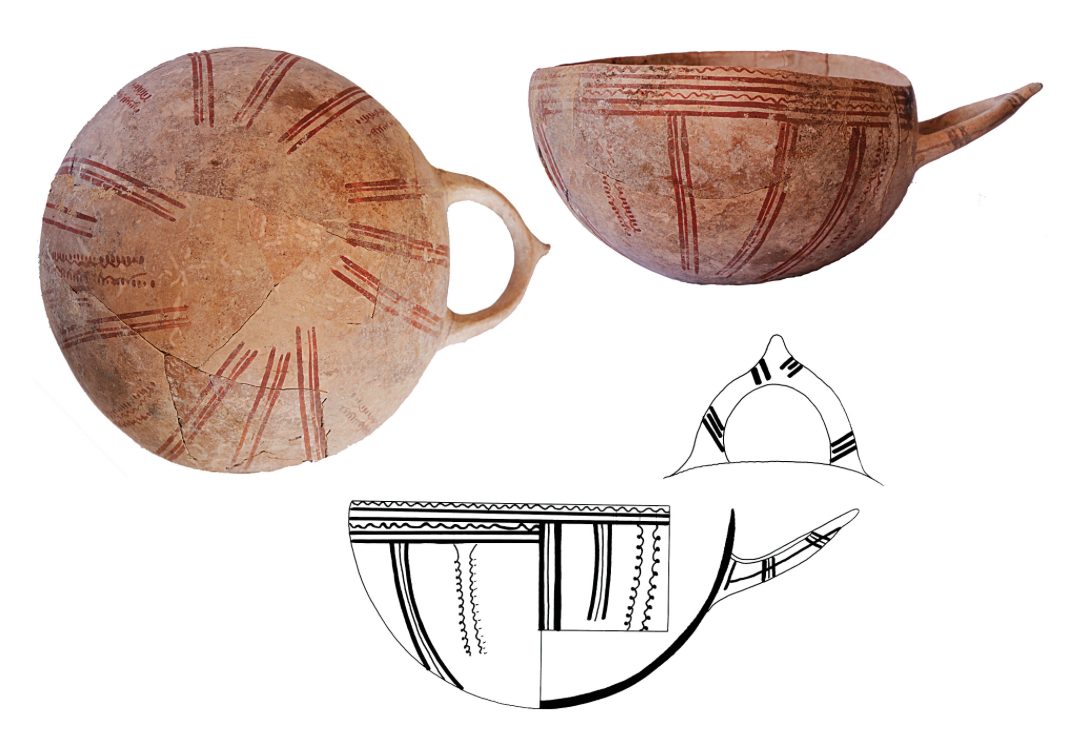
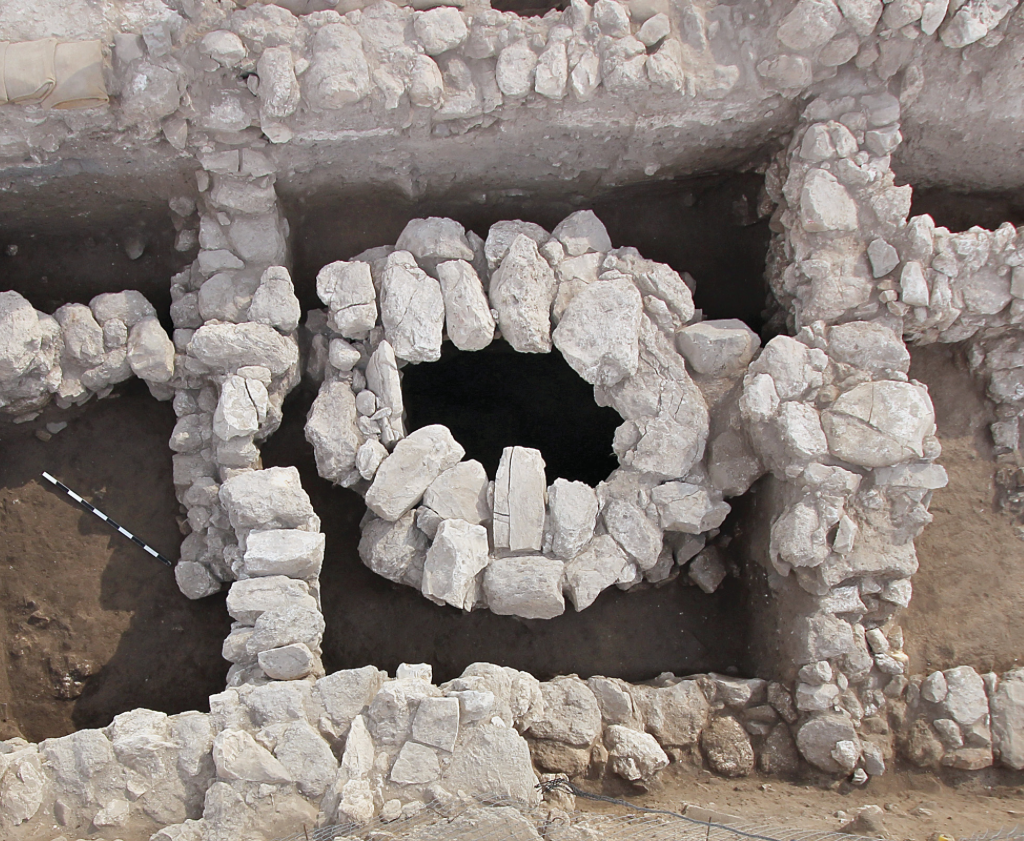
Hala Sultan Tekke is a large Bronze Age city close to the famous homonymous mosque near the international airport of Larnaca on the south coast of Cyprus. Previous research demonstrated that the city flourished mainly in the later part of the Late Bronze Age—viz., during the 13th and 12th centuries B.C.E.—but recent excavations confirmed that the city was occupied from as early as the Middle Cypriot III-Late Cypriot IA period around 1600 B.C.E. The current project, which started in 2010, exposed three new city quarters (CQ1–3) in the northern part of the city close to the ancient harbor—that is, today’s Larnaca Salt Lake. Geophysical surveys by georadar and magnetometer, which were carried out in Area A, a plateau approximately 600 m east of CQ1 and opposite the mosque, indicated more than 80 roughly circular anomalies. Among the seven anomalies excavated in 2016 are Tomb X and Offering Pit V, which are the main subjects of this article. Concentrated in these features were objects of high artistic value from a vast area of the eastern Mediterranean, including the Aegean, the Levant, Egypt, and possibly Anatolia. Both features antedate the occupation of the previously excavated city quarters.
Click here to access the above article on JSTOR (ASOR membership with online access and/or subscription to JSTOR Current Content required).
Pp. 219-248: “Embodiments of Death: The Funerary Sequence and Commemoration in the Bronze Age Levant,” by Melissa S. Cradic
This article presents an archaeological model for Levantine funerary rituals performed in the context of commingling inhumations. Using the case study of a masonry-constructed chamber tomb from Middle Bronze Age Tel Megiddo (Israel), the funerary sequence is reconstructed in three main phases: (1) pre-interment; (2) interment; and (3) post-interment. The sequential performance of funerary rituals in this shared burial space resulted in a high degree of skeletal fragmentation as previously interred corpses were moved aside to accommodate subsequent inhumations. However, rather than merely representing a functional aspect of burial, the repositioning of deceased bodies constituted a ritually meaningful practice that involved continuous physical interactions between the living and the dead. Drawing on theories of embodiment and methods of burial taphonomy, this article argues that mourners’ close encounters with deceased bodies played a major role in transforming the status of the dead after burial. Ritualized fragmentation and intermingling of human skeletal remains were integral components of becoming an ancestor.
Click here to access the above article on JSTOR (ASOR membership with online access and/or subscription to JSTOR Current Content required).
[/vc_column_text][mk_divider][vc_column_text]To view the entire article on JSTOR, click here.[/vc_column_text][/vc_column][vc_column border_color=”rgba(170,170,170,0.01)” width=”1/6″ css=”.vc_custom_1496684098866{margin-right: 5px !important;margin-bottom: 20px !important;border-right-width: 2px !important;border-bottom-width: 2px !important;padding-top: 30px !important;padding-right: 10px !important;padding-left: 10px !important;background-color: #ffffff !important;border-right-color: rgba(227,228,228,0.75) !important;border-bottom-color: rgba(227,228,228,0.75) !important;}”][vc_wp_posts title=”BROWSE THE NEWS ARCHIVE” number=”4″][/vc_column][vc_column border_color=”rgba(170,170,170,0.01)” width=”1/6″ css=”.vc_custom_1496684008271{margin-right: 10px !important;margin-bottom: 30px !important;border-right-width: 2px !important;border-bottom-width: 2px !important;padding-top: 30px !important;padding-right: 20px !important;padding-left: 20px !important;background-color: #ffffff !important;border-right-color: rgba(227,228,228,0.75) !important;border-bottom-color: rgba(227,228,228,0.75) !important;}”][vc_column_text]Tweets by ASOResearch [/vc_column_text][/vc_column][/vc_row]
By Dr. Ali. Y. Aljuboori
Dean of the College of Archaeology, Mosul University
Sr. Cultural Heritage Adviser, ASOR CHI
June 10. 2017
[/vc_column_text][vc_column_text]I am writing this article on June 10, 2017. Exactly three years ago, Mosul fell into the hands of ISIL.
On June 10, 2014, Mosul University was in the middle of final exams. At noon, the University ordered everyone to go home before the army and police began to enforce a curfew. At that time we heard that ISIL had entered western Mosul. By midnight they controlled the mayor’s office, the central bank, and all of the other major government buildings.
Over the course of the next morning, I saw many people leaving, including soldiers from the local military base who had thrown off their military uniforms and equipment in order to blend in with civilians. I told my son to flee with his wife and two children. My wife and I stayed behind.
At first, ISIL did not change much. Then, around a month after the conquest, they began to impose Shari’a law. ISIL treated different faiths in different ways. Sunni Muslims had to pay new Islamic taxes while Shi’a Muslims were killed. Other religious groups had three choices: convert to Islam, pay special taxes, or be killed. Every Friday at noon ISIL held public executions by decapitation or hanging as punishment for any resistance or disorder. In this cruel way, they controlled the people of Mosul.[/vc_column_text][mk_image src=”http://www.asor.org/wp-content/uploads/2017/07/ali-juboori-map-destruction2.jpg” image_width=”800″ image_height=”534″ hover=”false”][vc_column_text]
Density of Cultural Heritage Sites in Nineveh Province (Susan Penacho, ASOR CHI)
[/vc_column_text][vc_column_text]
Under ISIL, education and culture in Mosul and Nineveh Province suffered terribly. Shortly after they took over, ISIL began to blow up mosques, churches, and Yezidi shrines. This included Nebi Yunus Mosque, which they destroyed with explosives in July 2014.
[/vc_column_text][vc_column_text]In 2015 they started to erase our ancient heritage. In addition to the destruction of the Neo-Assyrian palace at Nimrud, they demolished the Nergal, Adad, and Mashki gates in the city wall of Nineveh as well as looted and smashed the collections of the Mosul Museum. They also started to dig tunnels into the mound below Nebi Yunus Mosque, which contained the remains of a Neo-Assyrian palace. In these tunnels they discovered inscribed stone reliefs of the Neo-Assyrian king Esarhaddon, a relief depicting a series of ladies, bull colossi, and other small finds from the Neo-Assyrian period.[/vc_column_text][mk_image src=”http://www.asor.org/wp-content/uploads/2017/07/ali-juboori-ratio-destruction2.jpg” image_width=”960″ image_height=”540″ hover=”false” margin_bottom=”5″][vc_column_text]
Ratio of Intentional Destruction of Cultural Heritage in Iraq and Syria (Susan Penacho, ASOR CHI)
[/vc_column_text][vc_column_text]ISIL also attempted to eliminate access to any knowledge that they considered un-Islamic. Schools and universities remained closed after the conquest. They burned the collections of the Public Library of Mosul and the Central Library of Mosul University.[/vc_column_text][mk_image src=”http://www.asor.org/wp-content/uploads/2017/07/ali-juboori-map-destruction-1.jpg” image_width=”919″ image_height=”652″ hover=”false” margin_bottom=”5″][vc_column_text]
Damage to Cultural Heritage Sites in Mosul (Susan Penacho, ASOR CHI)
[/vc_column_text][vc_column_text]However, knowledge persevered. Many teachers and professors fled to Dohuk, Erbil, and Kirkuk. Once there, they began to teach again. By October 2014, Mosul University had secondary locations in Dohuk and Kirkuk so that students could continue to learn.
Since January 15, eastern Mosul has been free from ISIL control. Life is beginning to gradually flourish once again. In February, the University of Mosul began classes for those who live in eastern Mosul. By July 1, all staff and faculty in the territory of the Kurdistan Regional Government will be back in Mosul and the secondary locations of Mosul University will be closed. The University intends to begin regular classes in October.
I have lived through many violent events in Iraq’s history. The destruction of the ancient and modern cultural heritage in Nineveh Province was an astonishing and sad moment that is impossible for me to describe. Now that ISIL is gone, my colleagues and I will do our best to restore what our nation has lost.
Editorial Comment: Dr. Ali Aljuboori is the Dean of the College of Archaeology of Mosul University and acts as a Senior Cultural Heritage Adviser for Iraq with ASOR CHI. Dr. Aljuboori is currently coordinating an ASOR CHI digital preservation initiative in the Mosul area to preserve textual collections. The project, funded by the Whiting Foundation, brings together the Hill Museum and Manuscript Library (HMML) and the Centre Numérique des Manuscrits Orientaux (CNMO) to preserve thousands of years of writing, Dr. Aljuboori is an expert in the ancient languages of Iraq and has most recently published the first Arabic-Sumerian dictionary.[/vc_column_text][vc_column_text]
125 NEW DONORS HELP ASOR EXCEED GOAL FOR A $33,000 CHALLENGE GIFT
Update (July 5, 2017)
Thanks to the generosity of 125 new donors, ASOR exceeded our goal of gaining support from 100 new donors and qualified for a $33,000 challenge gift! Thank you to everyone who made a financial contribution to ASOR during our last fiscal year, which ended on June 30.
In early May, ASOR Development Chair Ed Wright announced in a letter to ASOR members that the ASOR Board had made a $33,000 challenge gift. Board members collectively pledged to contribute $33,000 to the ASOR Annual Fund if we could recruit 100 new donors who had not yet made a gift this fiscal year (July 1, 2016 – June 30, 2017). Not only did we meet that challenge, but we surpassed it by 25 people.
All of these donors showed that not only do modest gifts add up to create significant support, they helped ASOR qualify for $33,000 that was crucial to (once again) having a balance budget.
If you are one of the 395 people who made a gift to ASOR in Fiscal Year 2017, thank you so much for your support. You not only helped us meet this challenge, but you helped ASOR have one of the highest donor participation rates (if not the highest rate) of any learned society.
We will be publishing our Honor Roll of Donors in the next News@ASOR (July 21st), and we look forward to thanking each of you by name.
If you would like to get a head start on joining the list of donors to ASOR for Fiscal Year 2018 (ends June 30, 2018), please click on the “Donate Now” button below.
Other ways you can donate:
Donate by Phone
Call ASOR at 857-277-1174
Donate by Mail
Send a check to:
ASOR
P. O. Box 15729
Boston, MA 02215
Make a Pledge (Donate Later)
Send an e-mail to ASOR[/vc_column_text][/vc_column][vc_column border_color=”rgba(170,170,170,0.01)” width=”1/6″ css=”.vc_custom_1496684098866{margin-right: 5px !important;margin-bottom: 20px !important;border-right-width: 2px !important;border-bottom-width: 2px !important;padding-top: 30px !important;padding-right: 10px !important;padding-left: 10px !important;background-color: #ffffff !important;border-right-color: rgba(227,228,228,0.75) !important;border-bottom-color: rgba(227,228,228,0.75) !important;}”][vc_wp_posts title=”BROWSE THE NEWS ARCHIVE” number=”4″][/vc_column][vc_column border_color=”rgba(170,170,170,0.01)” width=”1/6″ css=”.vc_custom_1496684008271{margin-right: 10px !important;margin-bottom: 30px !important;border-right-width: 2px !important;border-bottom-width: 2px !important;padding-top: 30px !important;padding-right: 20px !important;padding-left: 20px !important;background-color: #ffffff !important;border-right-color: rgba(227,228,228,0.75) !important;border-bottom-color: rgba(227,228,228,0.75) !important;}”][vc_column_text]Tweets by ASOResearch [/vc_column_text][/vc_column][/vc_row]
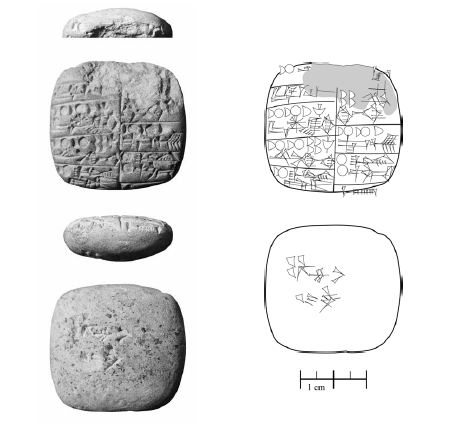
Pp. 3-31: “Nonadministrative Documents from Archaic Ur and from Early Dynastic I–II Mesopotamia: A New Textual and Archaeological Analysis,” by Camille Lecompte and Giacomo Benati
The present paper addresses a subgroup of cuneiform documents from the so-called Archaic Texts from Ur in Mesopotamia. The documents in this subgroup can be isolated within the bulk of the Archaic Texts due to their nonadministrative content. A fresh textual analysis of this dataset is combined with a discussion of the archaeological context of their provenance to highlight patterns in early Ur scribal training methods. The results of this integrated analysis are used to frame more precisely the significance of “Archaic Ur” scribal traditions, dating to the first part of the Early Dynastic period, within the cultural transition from the Late Uruk to the Early Dynastic III (“Fāra”) period in Mesopotamia.
Click here to access the above article on JSTOR (ASOR membership with online access and/or subscription to JSTOR Current Content required).
Pp. 33-47: “Three Administrative Texts from the Time of Me’annedu,” by Armando Bramanti
This article presents two land texts (allotments of field) and one grain text (barley loan) originating from Early Dynastic Zabala. The high year numbers allow for the attribution of these texts to the ensiship of Me’annedu. The edition is followed by a prosopographical study which, supported by paleographical considerations, provides some guidelines for the identification of more documents belonging to the same archive.
Click here to access the above article on JSTOR (ASOR membership with online access and/or subscription to JSTOR Current Content required).
Pp. 49-66: “The Sumerian Discourse Markers u4-ba and u4-bi-a,” by C. Jay Crisostomo
In Old Babylonian Sumerian literature, the temporal phrases u4-ba and u4-bi-a typically occur in complementary distribution. Previous analyses have focused on morphological disparity to differentiate the two. The present paper considers pragmatic functions within a larger discourse structure, analyzing them as discourse markers, specifically temporal connectives. In this study based on a corpus analysis of Old Babylonian literary compositions, I argue that in Sumerian discourse, u4-ba primarily marks perspectival shifts and refocusing, and u4-bi-a indexes sequential and consequential action.
Click here to access the above article on JSTOR (ASOR membership with online access and/or subscription to JSTOR Current Content required).
Pp. 67-108: “Goodbye, Princess: Iltani and the DUMU.MUNUS LUGAL,” by Seth Richardson
The Babylonian princess Iltani has been known to us since the 1899 copies of T. G. Pinches. Within fifty years, following a proliferation of published texts featuring the princess, it became probable there were at least two such persons by this name and title; by now, it can be shown there were at least three. But the problem hardly ends there: a close inspection of the disparate epistolary, administrative, and commercial evidence for these Iltani’s does little to clarify their activities or status, nor even their relation to the king. An analysis of that evidence leads me to propose a redefinition of the title DUMU.MUNUS LUGAL and a reinterpretation of the position and purpose of women bearing the name Iltani.
Click here to access the above article on JSTOR (ASOR membership with online access and/or subscription to JSTOR Current Content required).
Pp. 109-116: “Cultural Transformations from Mesopotamia to Hatti? The Case of the GALA,” by Ilan Peled
This article surveys the textual attestations of the cultic performer designated by the logogram GALA in Hittite texts. This logogram, which originated in Mesopotamia, was apparently used for the Hittite word šaḥtarili, but the nature of the activities performed by the Mesopotamian and Hittite cultic practitioners designated in this manner was not identical. This should be assessed against the background of the nature of Mesopotamian-Hittite connections and cultural transmissions and the multifaceted cultural influences that shaped Hittite cult.
Click here to access the above article on JSTOR (ASOR membership with online access and/or subscription to JSTOR Current Content required).
Pp. 117-124: “The Sumerogram KUR: Logogram or Determinative?,” by Maksim Kudrinski
The article deals with the problem of finding spoken correlates for combinations of the Sumerogram KUR and toponyms in Hittite texts. The discussion adds to our understanding of the relation between written and spoken language in the case of using foreign written templates by the Hittites.
Click here to access the above article on JSTOR (ASOR membership with online access and/or subscription to JSTOR Current Content required).
Pp. 125-150: “Teratomancy at Tigunānum: Structure, Hermeneutics, and Weltanschauung of a Northern Mesopotamian Omen Corpus,” by Nicla De Zorzi
This article examines the inner structure, building principles, and hermeneutic code of a group of late Middle Bronze age teratomantic tablets from Tigunānum in northern Mesopotamia. While in the final evaluation, the Tigunānum teratomantic corpus is of southern Babylonian inspiration, it represents a very specific local reworking of this tradition. This article posits as its distinctive feature the use of a strongly gendered imagery and language that reflect the worldview of an extremely androcentric and militarized society. It also demonstrates a connection between the cultural conceptions underlying the Tigunānum omen corpus and the Old Hittite sphere, the mid-second-millennium world of northern Mesopotamia, and later Assyria.
Click here to access the above article on JSTOR (ASOR membership with online access and/or subscription to JSTOR Current Content required).
Pp. 151-191: “The Nonintercalated Lunar Calendar of the Middle Assyrian Period,” by Joshua Jeffers
Scholars generally assume that Assyria employed a luni-solar calendrical system during the Middle Assyrian period—akin to the one used in Babylonia—that kept the months of its year synchronized with the seasons of the solar year through periodic intercalation. With this understanding, the regnal dates assigned to the Middle Assyrian kings have traditionally been expressed in terms of solar years. The present article, however, argues that the Assyrians did not use this type of system. The author draws upon a variety of administrative tablets—primarily from the reigns of Shalmaneser I, Tukultī-Ninurta I, and Tiglath-pileser I—to demonstrate that the months of the Assyrian year were in fact not permanently affixed to particular seasons of the solar year, revealing that its year was not intercalated and was thus perpetually rotating slowly through the solar year. This article also explores how such a calendrical system impacts the Middle Assyrian kings’ regnal dates, which would need to be lowered given that the unadjusted Assyrian lunar year was slightly shorter than its solar counterpart.
Click here to access the above article on JSTOR (ASOR membership with online access and/or subscription to JSTOR Current Content required).
Pp. 193-202: “The Case Marking of Sumerograms in Hittite,” Mojca Cajnko
The paper begins with a brief introduction to case and case marking and a description of the Hittite corpus and the corpus of the research. The main part is devoted to the case marking of Sumerograms, an as yet unresearched and undescribed topic in Hittitology. The paper examines different possibilities for the case marking of Sumerograms on the level of the sentence and the functional value of phonetic complements. It also attempts to discern whether competition between formally case-marked and case-unmarked Sumerograms in the grammatical roles of subject and direct object was driven by grammatical factors, economy of writing or by other reasons.
Click here to access the above article on JSTOR (ASOR membership with online access and/or subscription to JSTOR Current Content required).
Pp. 203-212: “Esarhaddon’s Prayer in the Inscription AsBbA as Related to the mīs pî Ritual,” by Amitai Baruchi-Unna
The prayer of Esarhaddon, incorporated in the inscription AsBbA, is the first prayer in an Assyrian royal inscription that is presented as a verbatim citation. The aim of this paper is to delineate the historiographical background for this innovation in a genre usually described as routine and formalistic. By examining descriptions of prayers said to have been recited by the king in Assyrian royal inscriptions, I analyze Esarhaddon’s prayer from the aspects of its content, context, and possible linkage to prayers external to the royal inscriptions. Specifically, I examine the possible relation between the prayer in this inscription and the mīs pî ritual performed during the last phases of the process of making a divine image. This comprehensive analysis suggests that the king’s prayer had been part of an early stage of such a ritual and was available to the authors of the Esarhaddon inscription.
Click here to access the above article on JSTOR (ASOR membership with online access and/or subscription to JSTOR Current Content required).
Pp. 213-220: “Comment Presentifier l’Invisible? Reflexions autour des termes ṣalmu, tamšīlu et uṣurtu,” by Jean-Jacques Glassner
Les Mésopotamiens créèrent des objets, des images et des signes qui avaient une fonction précise. À la suite d’une cristallisation de concepts produite par l’archéologie, on a pris l’habitude de parler à leur propos de « représentations ». Il est préférable d’y voir davantage des « présentification ». Tel fut le sens de šlm dans la Genèse, à propos du premier homme qui fut « à l’image de Dieu », entendons qu’il fut la manifestation de la puissance divine.
Click here to access the above article on JSTOR (ASOR membership with online access and/or subscription to JSTOR Current Content required).
Pp. 221-246: “From Text to Reading in Enūma Eliš,” by Johannes Haubold
This article makes two main points. First, the transmitted text of Enūma eliš can be more reliably construed than has hitherto been assumed, provided we take seriously the spelling of the manuscripts and the rules of Akkadian grammar. If we do this, and that is my second point, we can also make progress at the level of interpretation. To illustrate these claims, I look at two passages that have caused difficulties to modern readers. In Enūma eliš I.1–10 we encounter some forms that seem prima facie to defy the normal rules of Akkadian grammar. Through careful analysis of spelling, syntax, and poetic context I show that the text as it stands can in fact be securely construed. I then turn to a passage that the poet himself introduces as a masterpiece of verbal craft. In Enūma eliš II.61–70 the god Ea soothes the excited Anšar by reassuring him that he has the situation under control. I argue that existing translations misconstrue the personal pronoun šâši and consequently misinterpret the climactic final couplet of the speech. Clarifying the grammar of the passage enables us to establish not only what the text says, but also to appreciate it better.
Click here to access the above article on JSTOR (ASOR membership with online access and/or subscription to JSTOR Current Content required).
Pp. 247-260: “Additional MUL.APIN Fragments in the British Museum,” by Jeanette C. Fincke
The edition of the series MUL.APIN by Hermann Hunger and David Pingree (1989) granted modern scholars access to the rather objective descriptions of the stars, the intercalation scheme and the lengths of days and nights compiled by Mesopotamian astronomers in the first millennium BCE. This article provides the publication of three more Neo-Assyrian exemplars from Nineveh, and joins made by Enrique Jiménez, Irving Finkel, and me to two Late Babylonian fragments that have already been used in the edition.
Click here to access the above article on JSTOR (ASOR membership with online access and/or subscription to JSTOR Current Content required).
[/vc_column_text][mk_divider][vc_column_text]To view the entire article on JSTOR, click here.[/vc_column_text][/vc_column][vc_column border_color=”rgba(170,170,170,0.01)” width=”1/6″ css=”.vc_custom_1496684098866{margin-right: 5px !important;margin-bottom: 20px !important;border-right-width: 2px !important;border-bottom-width: 2px !important;padding-top: 30px !important;padding-right: 10px !important;padding-left: 10px !important;background-color: #ffffff !important;border-right-color: rgba(227,228,228,0.75) !important;border-bottom-color: rgba(227,228,228,0.75) !important;}”][vc_wp_posts title=”BROWSE THE NEWS ARCHIVE” number=”4″][/vc_column][vc_column border_color=”rgba(170,170,170,0.01)” width=”1/6″ css=”.vc_custom_1496684008271{margin-right: 10px !important;margin-bottom: 30px !important;border-right-width: 2px !important;border-bottom-width: 2px !important;padding-top: 30px !important;padding-right: 20px !important;padding-left: 20px !important;background-color: #ffffff !important;border-right-color: rgba(227,228,228,0.75) !important;border-bottom-color: rgba(227,228,228,0.75) !important;}”][vc_column_text]Tweets by ASOResearch [/vc_column_text][/vc_column][/vc_row]

 In early May, ASOR Development Chair Ed Wright announced in a