UNEARTHING THE PAST SINCE 1900
  • BECOME A MEMBER
  • RENEW
  • GIVE NOW
  • SEARCH
  • ONLINE PORTAL
  • American Society of Overseas Research (ASOR)American Society of Overseas Research (ASOR)
  • ABOUT
    • WELCOME FROM ASOR OFFICERS
    • HISTORY OF ASOR
    • MISSION, BYLAWS, & STRATEGIC PLAN
    • Board of Trustees
    • COMMITTEES
    • POLICIES
    • FINANCIAL DOCUMENTS
    • MEDIA RELEASES
    • CONTACT US
  • CULTURAL
    HERITAGE
    • ABOUT CULTURAL HERITAGE INITIATIVES
    • UPDATES
    • PAST GRANTS
    • TUTORIALS
    • Who We Are
  • ANNUAL
    MEETING
    • REGISTRATION
    • HOTEL RESERVATIONS
    • ANNUAL MEETING SCHEDULES
    • SPONSOR & EXHIBIT
    • ASOR Online Library
    • HONORS & AWARDS
    • ANNUAL MEETING SCHOLARSHIPS
    • PAST & FUTURE ANNUAL MEETINGS
  • MEMBERSHIP
    & RESOURCES
    • INDIVIDUAL MEMBERSHIPS
    • INSTITUTIONAL MEMBERSHIPS
    • NEWS@ASOR
    • PAST ASOR NEWS, MONTH BY MONTH
    • AFFILIATED PROJECTS
    • AFFILIATED RESEARCH CENTERS
    • ARCHIVES
    • ONLINE RESOURCES
      • PHOTO COLLECTION
    • EARLY CAREER MEMBER RESOURCES
  • FELLOWSHIPS
    & GRANTS
    • SCHOLARSHIPS FOR FIELDWORK PARTICIPATION
    • GRANTS FOR ARCHAEOLOGICAL PROJECTS
    • RESEARCH FELLOWSHIPS FOR MEMBERS
    • MEMBERSHIP & ANNUAL MEETING SCHOLARSHIPS
    • ASOR-AFFILIATED RESEARCH CENTERS FELLOWSHIPS
    • OTHER FELLOWSHIP PROGRAMS
  • PUBLICATIONS
    • BOOK SERIES & MONOGRAPHS
    • BULLETIN OF ASOR
    • JOURNAL OF CUNEIFORM STUDIES
    • MAARAV
    • NEAR EASTERN ARCHAEOLOGY
    • THE ANCIENT NEAR EAST TODAY
    • News@ASOR
    • LEVANTINE CERAMICS PROJECT
  • FRIENDS
    OF ASOR
    • Webinars
    • TOURS
    • THE ANCIENT NEAR EAST TODAY
    • ASOR ONLINE LIBRARY
  • Donate
    • FY25 HONOR ROLL OF DONORS
    • LIFETIME HONOR ROLL OF DONORS
    • ASOR LEGACY CIRCLE
    • WAYS TO DONATE
Hayslett-banner

 SHARE


NEWS@ASOR E-NEWSLETTER

ANCIENT NEAR EAST TODAY E-NEWSLETTER

PAST ASOR NEWS, MONTH BY MONTH

ASOR LEGACY CIRCLE MEMBERS

LIFETIME HONOR ROLL OF DONORS

FY25 HONOR ROLL OF DONORS

ASOR ANNUAL MEETING

Looking Beyond: Finding the New in the Old

Don’Neka Hayslett, 2025 ASOR Fieldwork Scholarship Recipient

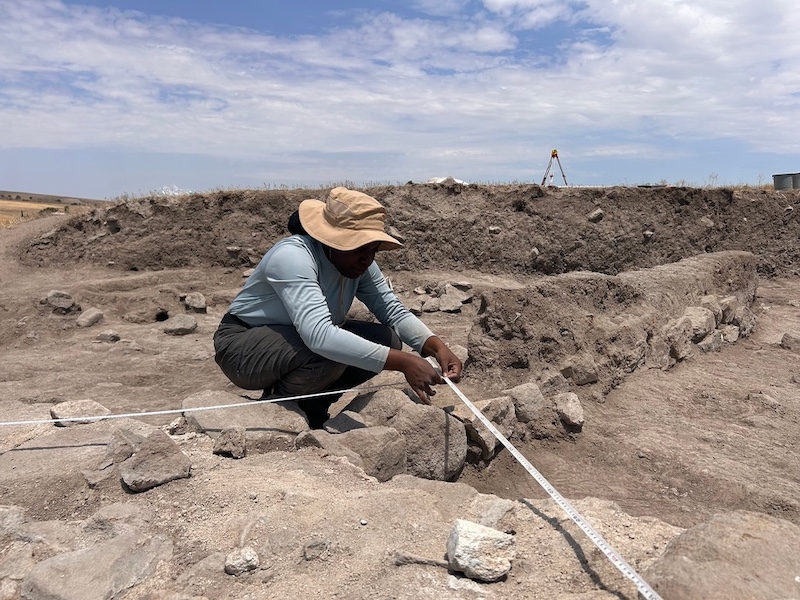
On my first few days at the Cadir Höyük 2025 project, I was introduced to a tool I had never used before: the dumpy level. At its core, it is a simple instrument for measuring horizontal levels—a tripod, a level head, and a staff marked with precise centimeters. But the challenge wasn’t in the setup; it was in the seeing. When I first looked through the lens, I kept getting lost in the landscape. My eyes drifted toward the mound, the hills, even the horizon, when all I really needed to find was a tiny line on the staff. It was only after practicing that I realized the trick: I had to look beyond the distractions in order to focus on what mattered. The dumpy level trained me to see not just what was directly before me but the exact measurement that would help piece together the excavation.

That realization became a metaphor for both archaeology and life. Archaeology is the art of connecting fragments—small sherds, soil layers, or architectural features—into a larger story of how people once lived. Like the dumpy level, it requires looking beyond what you can immediately see to uncover the bigger picture. Each tiny detail is meaningful, but only when joined with others does the whole emerge.
This idea also echoed a sermon I once heard about John in the book of Revelation. Exiled to Patmos, John could have focused only on his suffering or the power of Rome around him. But instead, he looked beyond his circumstances to receive visions of Christ and the churches. In doing so, he pieced together a larger truth: that God’s kingdom stood above earthly kingdoms, and that the faithful were called to live not by what was seen but by what was true.

My pastor also preached a sermon about a woman, described in Revelation as “Jezebel,” who lured people into sin. Many in that Roman city depended on her approval—or on society’s approval, to keep their businesses and livelihoods. Because the city was steeped in pagan worship with many gods, Christians were pressured into compromise. Their choice was stark: pursue wealth by following her influence, or trust God to provide. It’s unlikely that the woman’s actual name was Jezebel; rather, Jesus used the name to highlight her behavior, much like the Old Testament Jezebel who led Israel astray, claiming her words were from God. In the same way, false teaching must always be tested against Scripture. Every message should be weighed carefully, studied, and confirmed by the Word. It reminds me of using a dumpy level. You can either glance at the staff and guess your alignment, or you can use the notches to measure precisely. One way looks convincing, but the other ensures accuracy. Likewise, we must align every teaching with God’s Word rather than relying on appearances.
Hayslett-fig2

Both in the field and in faith, the discipline is the same. Whether sighting through a dumpy level or searching Scripture, the task is to look beyond what is immediate or distracting. To focus on the small pieces long enough for them to connect. To trust that fragments—whether centimeters measured in the dirt or words written on an island two thousand years ago—can be assembled into a greater whole.
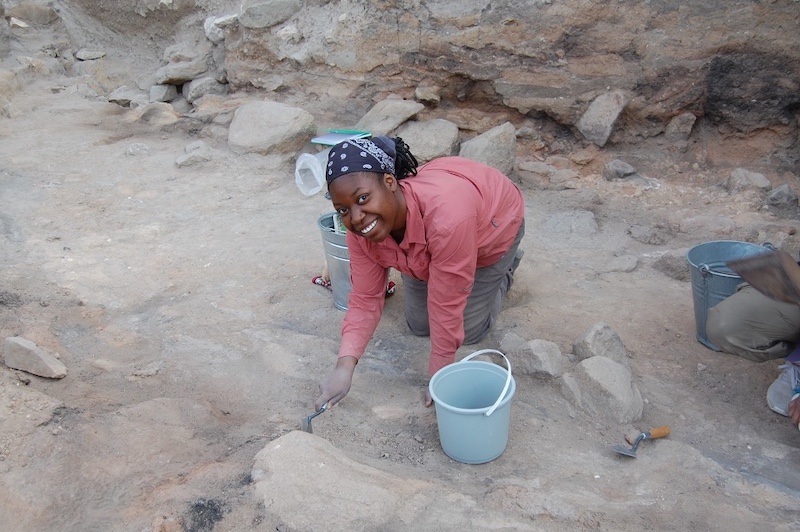
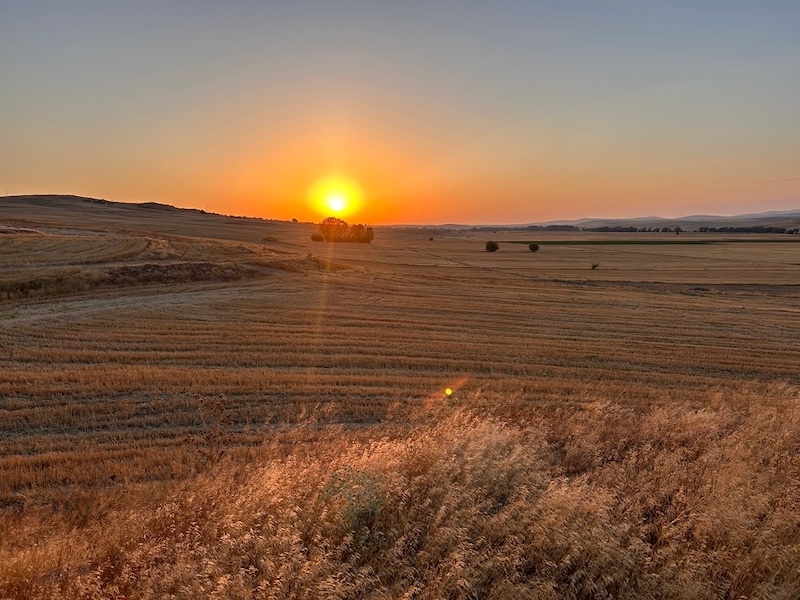
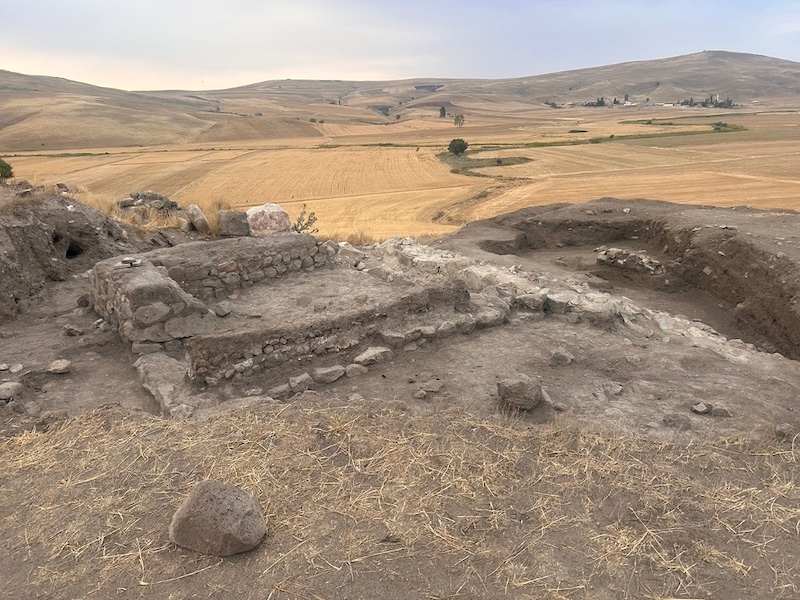
At Cadir Höyük, every careful measurement helped transform scattered stones into walls, walls into houses, and houses into a once-living community. And in my faith, every act of looking beyond reveals a glimpse of God’s larger design. Both remind me that to find the new in the old, you must learn to see beyond the surface and trust that each fragment, no matter how small, belongs to a greater story.
Don’Neka Hayslett is a recent graduate of the University of Memphis with a Bachelor of Arts in Anthropology and Earth Sciences. She hopes to further her knowledge of Mediterranean archaeology through various excavations and to explore how ancient art forms continue to influence contemporary culture.

Learn more about this project here.

Want to help more students and early career archaeologists get into the field? Donate to the cause today by selecting “Fieldwork Scholarships” as your gift purpose!

Recent Posts

  • Friends of ASOR Tours: Philadelphia 2026
  • FOA Webinar: Benyamin Storchan
  • 2025 Geraty Grant Report: Tall Hisban
  • Fieldwork Report: Helen Wong
  • 2026 Fieldwork Opportunities

Latest Posts from @ASORResearch

asor_research

Initiating and supporting research of the history and cultures of the Near East and wider Mediterranean world.


Our #ObjectoftheWeek: A limestone statue of an eag
Our #ObjectoftheWeek: A limestone statue of an eagle wrestling with a serpent found at Khirbet et-Tannur, an ancient Nabataean temple in southern Jordan. ca. 100-200 CE. CAM 1939.222. Photo credit: Cincinnati Art Museum.
#Archaeology #Jordan #Nabataean


Since the Neolithic, mudbrick architecture has bee
Since the Neolithic, mudbrick architecture has been one of the most widespread building traditions across the world. But a mudbrick is more than a structural unit: it is also a repository of information. Read the newest ANE Today by Marta Lorenzon by clicking the link (https://anetoday.org/mudbrick-architecture-meaning/) in our bio.
#Architecture #Mudbrick


Last summer, Helen Wong joined the University of P
Last summer, Helen Wong joined the University of Palermo Archaeological Project at Motya, an island near western Sicily. Helen, a PhD candidate at University of Pennsylvania, was the digital archaeology specialist on the project and helped with the ongoing geophysical survey mapping the ancient city. Read her report here: https://www.asor.org/news/2026/01/fieldwork-report-wong
#Archaeology #Survey #Sicily


Be sure to watch the next FOA webinar TOMORROW at
Be sure to watch the next FOA webinar TOMORROW at 7:00pm ET presented by Dr. Sarah Wenner: "Experiencing Khirbet et-Tannur: The Story of a Nabatean Temple from the Second through 21st Century." Register for free if you haven't already: https://buff.ly/CtzwPOm
#Jordan #Nabatean


ASOR is putting together a map of where our member
ASOR is putting together a map of where our members have worked in the world. You're invited to submit your own excavations, survey, laboratory, or museum and conservation projects to the map with stories and photos. Click the link in our bio to complete a brief survey to add yourself to the map: https://buff.ly/LYYJVlZ


The Honors and Awards Committee seeks nominations
The Honors and Awards Committee seeks nominations for at least 3 candidates. Committee members will serve a three-year term with the possibility of two consecutive terms. Nominees must fill out the online form by January 30. Learn more by clicking the link in our bio: https://www.asor.org/news/2025/12/honors-awards-members-call


This past summer, a group from Johns Hopkins Unive
This past summer, a group from Johns Hopkins University traveled to Türkiye to help excavate a Late Bronze Age archive of cuneiform tablets at Alalakh/Tell Atchana. This team, funded by an ASOR Harris Grant, was uniquely qualified for the task, as they were trained in both archaeology and in reading Akkadian cuneiform. Read their grant report by clicking the link in our bio: https://www.asor.org/news/2025/12/harris-grant-report-alalakh
#Archaeology #Fieldwork #Cuneiform #Turkiye


Reminder: the deadline to propose new member-organ
Reminder: the deadline to propose new member-organized sessions and workshops for the 2026 Annual Meeting in Chicago is Thursday, January 15. Find more info and fill out a brief proposal here: https://buff.ly/Kqui65X


Don't miss the upcoming FOA webinar on Wednesday,
Don't miss the upcoming FOA webinar on Wednesday, January 21 at 7:00pm ET: "Experiencing Khirbet et-Tannur: The Story of a Nabatean Temple from the Second through 21st Century," presented by Dr. Sarah Wenner. In the 2nd century CE, after Rome annexed the Nabataean Kingdom and transformed it into the Roman province of Arabia, the Nabataean temple at Khirbet et-Tannur was constructed in Central Jordan. This lecture travels the site’s two millennia history and explores how Khirbet et-Tannur’s excavations, the collection at the Cincinnati Art Museum, and 21st century innovations have changed our understanding of the Nabataeans. Read more and register by clicking the link in our bio: https://www.asor.org/news/2026/01/webinar-wenner


Our #ObjectoftheWeek: An Egyptian “New Year’s Bott
Our #ObjectoftheWeek: An Egyptian “New Year’s Bottle”, a type of lentoid-shaped flask that was filled with perfumed oil or water from the Nile, gifted in connection to the New Year. ca. 664-525 BCE. MMA 30.8.214. Photo credit: Metropolitan Museum of Art.
#Archaeology #Egypt #NewYear


The archaeological record and the cuneiform litera
The archaeological record and the cuneiform literature provide us with compelling information to assess how children lived 3000 years ago. This should open our eyes to current realities, which are not so different. Read the newest ANE Today article, "Children in the Ancient (and Present-day) Near East", by clicking the link in our bio: https://anetoday.org/children-near-east/


In town for the #AIASCS2026 Annual Meeting? 🏺

Mak
In town for the #AIASCS2026 Annual Meeting? 🏺

Make sure to stop by the ASOR table in the Exhibit Hall to learn more about our programs and publications, and reconnect with colleagues and friends from across the field.

ASOR Exhibit Hall Hours:
• Wed, Jan 7 | 3:00–6:00 PM
• Thu–Fri, Jan 8–9 | 9:30 AM–5:30 PM
• Sat, Jan 10 | 8:00 AM–12:00 PM

We can’t wait to see you—come say hello! 

#ASOR #AIAAnnualMeeting #MeetUsThere


The 2026 ASOR Annual Meeting will begin on Wednesd
The 2026 ASOR Annual Meeting will begin on Wednesday, November 18, at 7:00pm CST with the plenary address by Dr. Kim Benzel: Lapis, Clay, Copper, Water: Presenting Ancient West Asian Art at The Met. Dr. Benzel is Curator in Charge of The Metropolitan Museum of Art. She holds a Ph.D. in Art History and Archaeology from Columbia University and has participated in archaeological excavations in Syria. Currently, Kim and her colleagues are working on a full rethink and renovation of The Met’s permanent galleries of Ancient West Asian Art, scheduled to reopen in June 2027. Read more about the 2026 Plenary Address here: https://www.asor.org/am/2026/plenary-address-2026


Make sure to tune in TOMORROW at 7:00 pm ET for th
Make sure to tune in TOMORROW at 7:00 pm ET for the next FOA webinar presented by Amanda Hope Haley: "Beyond Edutainment: Reclaiming Archaeology in a Clickbait World". If you haven't already signed up, click the link (https://buff.ly/cDQEBdk) in our bio to register for free.


ASOR plans to award two Mesopotamian Fellowships f
ASOR plans to award two Mesopotamian Fellowships for 2026-2027; one for $9,000 and one for $4,000. These fellowships are primarily intended to support fieldwork/research on ancient Mesopotamian culture carried out in the Middle East, but other projects such as travel to work on museum collections or archives related to ancient Mesopotamia will also be considered. The deadline for applications is January 26, 2026. More info can be found here: https://www.asor.org/fellowships/mesopotamian-fellowship/


Yishu Deng, a 2025 Eric and Carol Meyers Fieldwork
Yishu Deng, a 2025 Eric and Carol Meyers Fieldwork Participation Scholarship Recipient,
excavated at Kani Shaie in the Kurdistan Region of Iraq. Yishu was able to participate in ongoing archaeological research in the Near East and further her interest in ancient metal production. Read her fieldwork report here: https://www.asor.org/news/2025/12/fieldwork-report-deng


Happy New Year from ASOR! We wish you all the best
Happy New Year from ASOR! We wish you all the best for 2026!


Before we turn the page to 2026, swipe through and
Before we turn the page to 2026, swipe through and take a look at ASOR's 2025 Year in Review! Thank you for being part of ASOR's historic 125th year — we couldn't have accomplished it without your support!
#ASOR2025 #ASORwrapped


The newest issue of Near East Archaeology includes
The newest issue of Near East Archaeology includes articles like: Burial Practices of the Bronze Age: An Archaeological Study of the Deh Dumen Cemetery in Southern Zagros, Iran; Time Capsules: Evidence for Foundation and Abandonment Practices at Middle Bronze Age Erimi, Cyprus; Āb Bād Rock-cut Tomb: Tracking Post-Achaemenid Burial Customs in Qir-o Karzin, Southern Pars, Iran; First Observations on the Excavations in the Terrace Area of Uluköy Cave, Mardin/Türkiye; and more. Check out the Table of Contents here: https://www.asor.org/news/2025/12/nea88.4-toc/


ASOR invites members to propose new member-organiz
ASOR invites members to propose new member-organized sessions and workshops for the 2026 Annual Meeting. The meeting will be held in Chicago and online, November 18-21. The brief proposal form asks for a description of the session/workshop, as well as a list of 4 to 5 potential speakers and topics. The deadline to propose sessions and workshops is January 15. More info can be found by clicking the link (https://www.asor.org/am/2026/call-for-sessions-2026) in our bio.


Instagram

Stay updated with the latest insights, photos, and news by following us on Instagram!

Follow Us on Instagram

American Society of Overseas Research
The James F. Strange Center
209 Commerce Street
Alexandria, VA 22314

E-mail: info@asor.org

© 2025 ASOR
All rights reserved.
Images licensed under a Creative Commons Attribution-NonCommercial-ShareAlike 4.0 International License

Contact Us
Membership
Give
Friends of ASOR
ASOR Cultural Heritage Initiatives
Terms of Use
News

Please follow & like us :)
Facebook
YouTube
LinkedIn