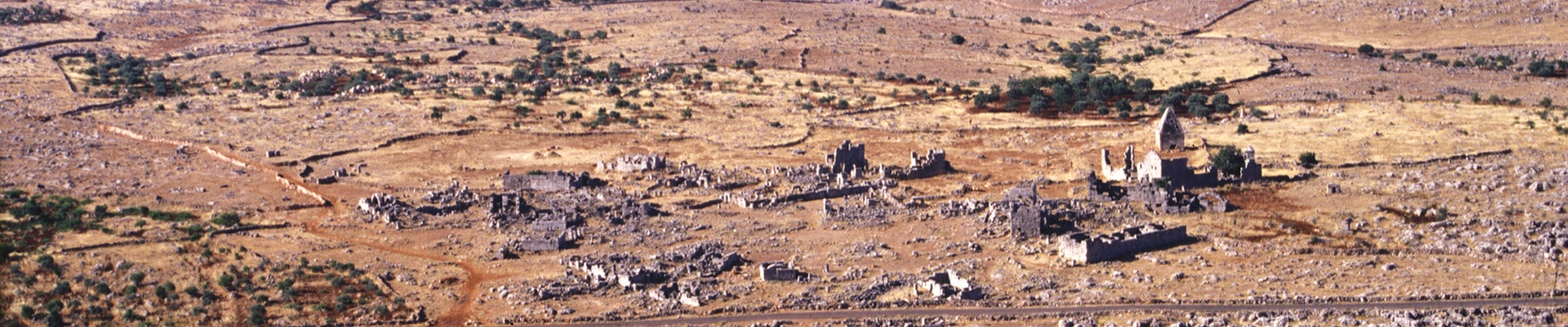
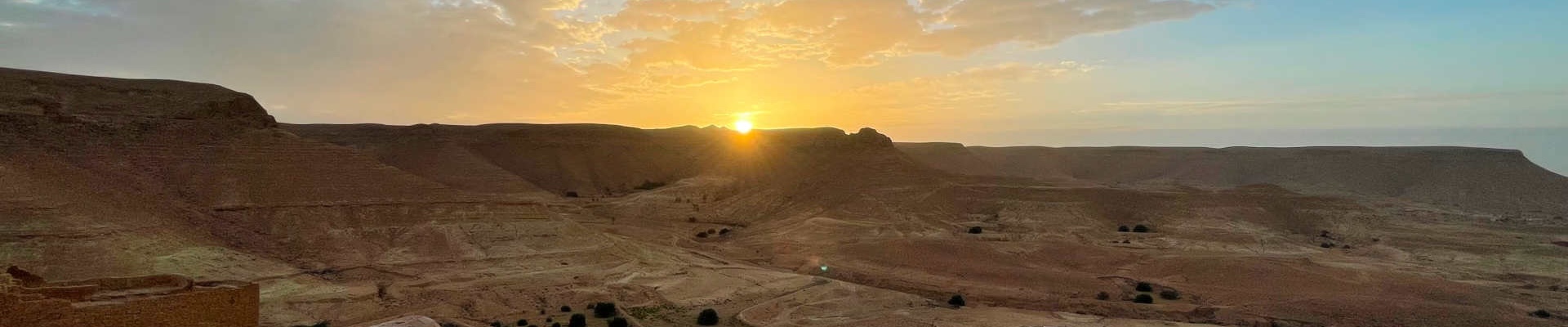
FOA Webinar Panel: From Tunis to Tataouine

FRIENDS OF ASOR WEBINARS

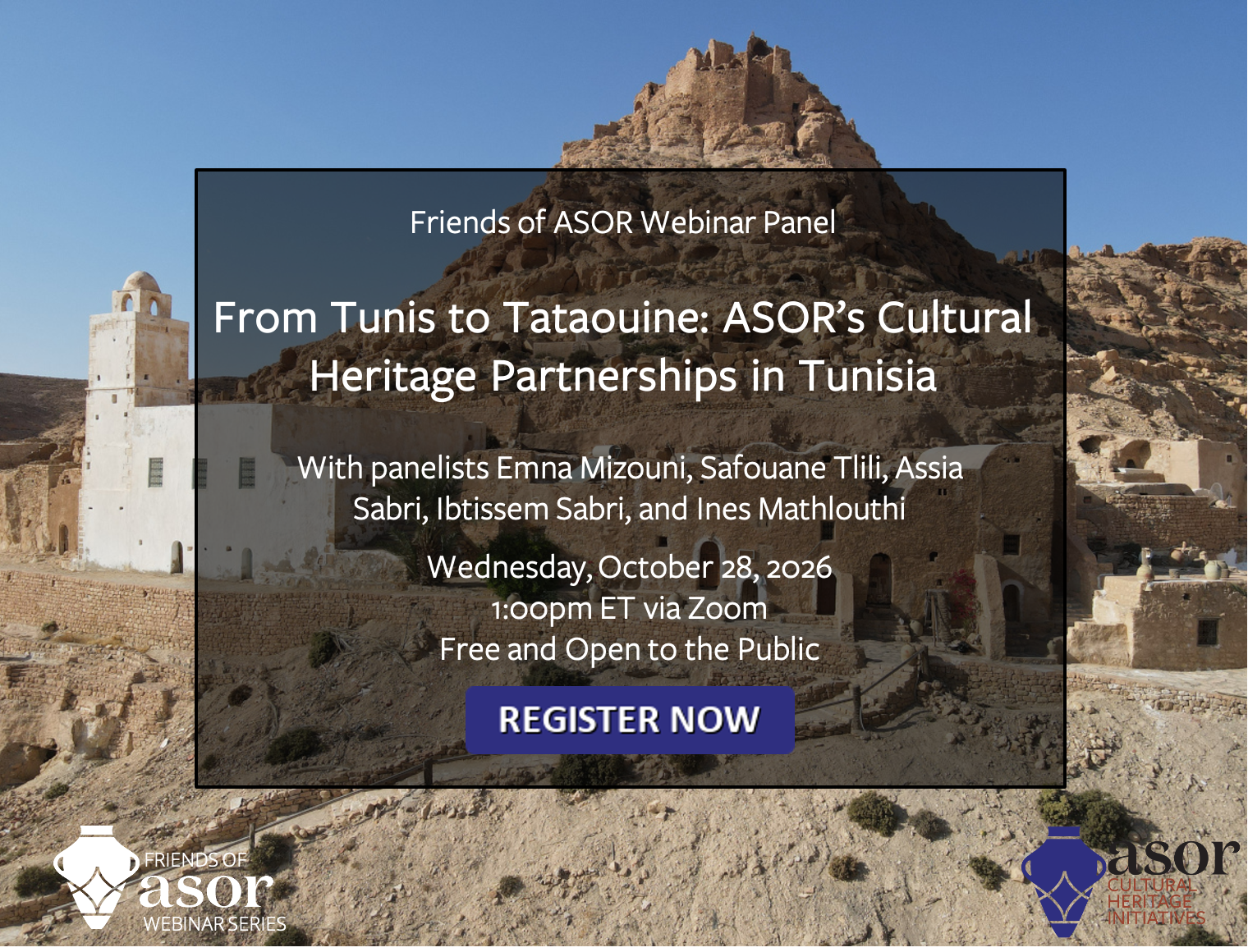
From Tunis to Tataouine: ASOR’s Cultural Heritage Partnerships in Tunisia

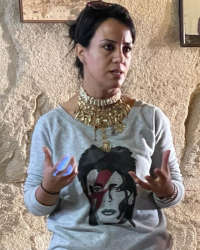
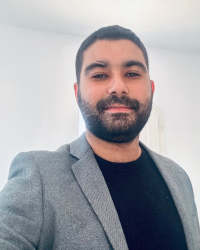
Friends of ASOR presents the next webinar of the 2026-2027 season: “From Tunis to Tataouine: ASOR’s Cultural Heritage Partnerships in Tunisia” on October 28, 2026, at 1:00 pm EDT, with panelists Emna Mizouni, Safouane Tlili, Assia Sabri, Ibtissem Sabri, and Ines Mathlouthi (moderated by Darren Ashby). This webinar will be free and open to the public. Registration through Zoom (with a valid email address) is required. This webinar will be recorded and all registrants will be sent a recording link in the days following the webinar.

Join us for a panel discussion on ASOR’s cultural partnerships in Tunisia and hear directly from local partners that make this important work possible.

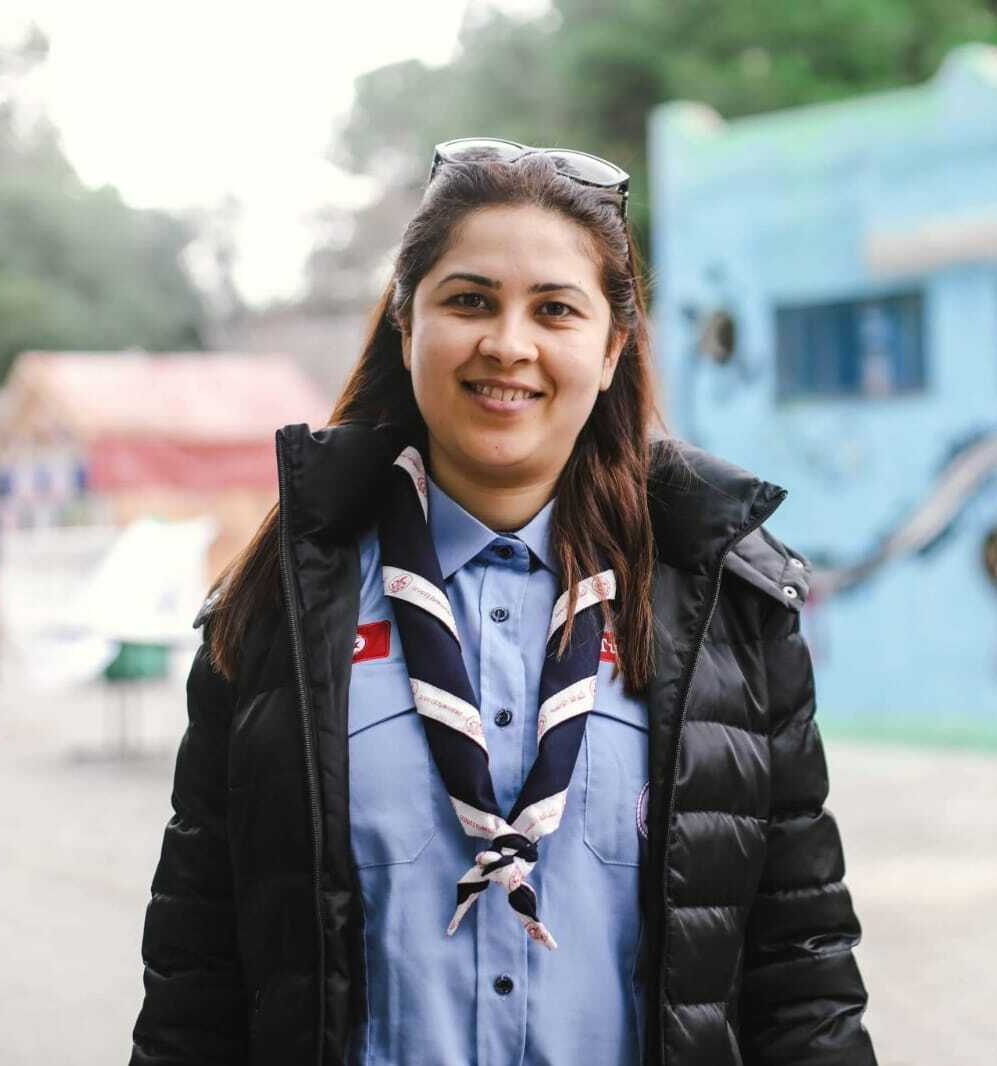
Ines Mathlouthi is a leader and project manager at the Tunisian Scouts organization. She has previously worked on TOURATH, a project aimed at preserving and protecting Tunisian national heritage for future generations, in partnership with the US Embassy in Tunis.

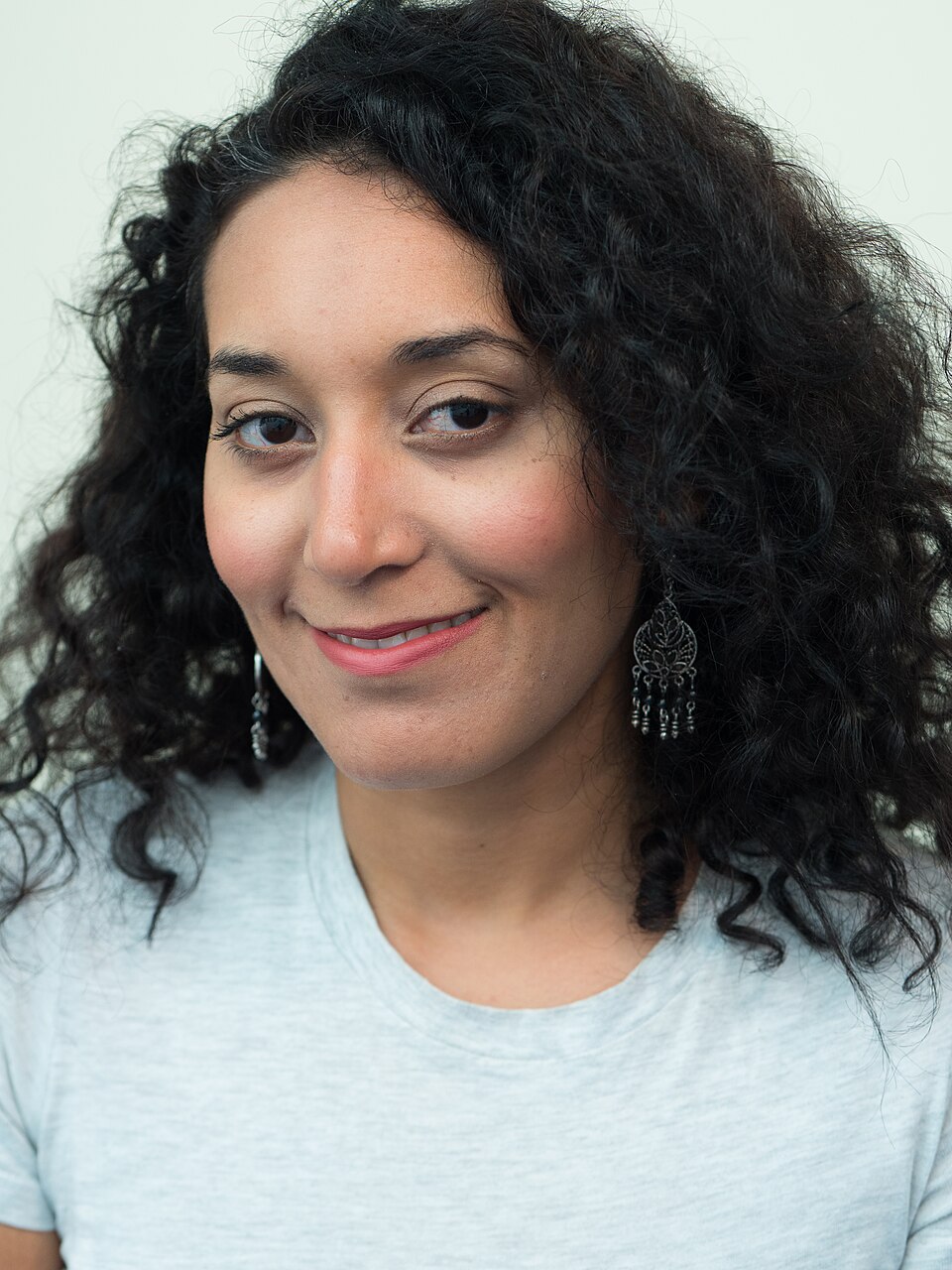
Emna Mizouni is a strategist dedicated to building equitable digital futures working at the intersection of technology, human rights, global policy, and the preservation of global cultural heritage. Her commitment to storytelling and documenting history and heritage led her to found Carthagina, an organization dedicated to preserving Tunisian heritage through digital innovation.

Assia Sabri holds a university degree in accounting and finance. She is also a traditional jewelry maker and civil society activist.

Ibtissem Sabri is a civil society activist in Tataouine in southern Tunisia. She is also a representative on the local council of Tataouine Sud in Douiret.

Safouane Tlili is a photographer who specializes in documenting the material and intangible heritage of Tunisia, especially on the island of Djerba. He has held several art exhibitions and is a civil activist in several human rights and cultural associations.

SUPPORT THE WEBINAR PROGRAM!

Friends of ASOR is pleased to announce that the first webinars of the 2026-2027 season will once again be free and open to the public with a goal to raise $10,000 so that the entire webinar season will be free. Will you support this outreach effort with a tax-deductible contribution? All donors/sponsors with gifts of $100 or more will be recognized in subsequent webinars. Make your gift today and select “webinars” from the drop-down menu.

Designate your gift for “Webinars” in the drop-down menu.

2026 Student Paper Award

2026 ANNUAL MEETING STUDENT PAPER AWARD

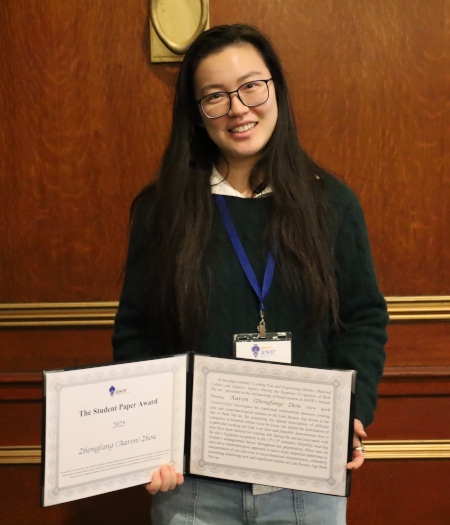
Aaren Zhou, winner of the 2025 Student Paper Award.

ASOR is accepting applications for the 2026 Student Paper Award. This award is conferred upon the author(s) of a paper presented (in-person or online) during the 2026 hybrid ASOR Annual Meeting that conveys the results of a study about ancient Near Eastern and wider Mediterranean societies in a clear, understandable and convincing fashion. The first author and presenter of the paper must be a registered student at the time of presentation in order to be eligible for consideration for this award. This year the award is accompanied by a $500 prize.

Students will need to complete the following steps by November 4 to be considered for the award:

1. Please complete this Google Form in order to apply for the Student Paper Award.

2. Upload your recorded presentation to ASOR’s Student Award Application Dropbox folder by navigating to the 2026 Annual Meeting Presenter Information page. From there, you will find instructions and the Dropbox link, as well as tips and tutorials for presenters.

Applications and recorded paper presentations are both due by November 4.

Please note that this award is independent of the Sean Dever Memorial Prize, which is conferred by the W.F. Albright Institute of Archaeological Research. To learn more about Awards presented at the Annual Meeting, please visit the Honors and Awards page. For questions and inquiries please email info@asor.org.

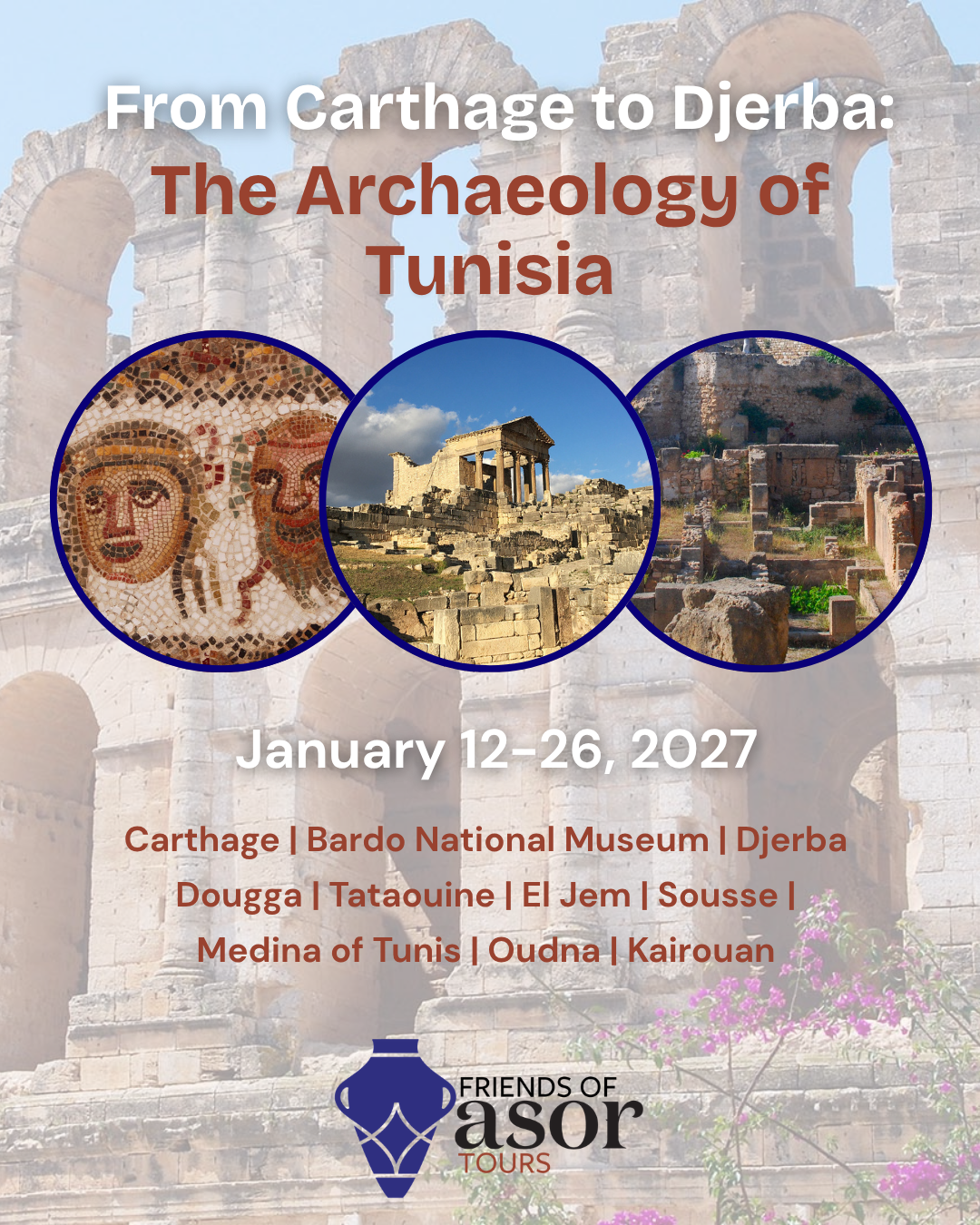
Friends of ASOR Tours: Tunisia 2027

FRIENDS OF ASOR TOURS

2027 Archaeological Tour of Tunisia

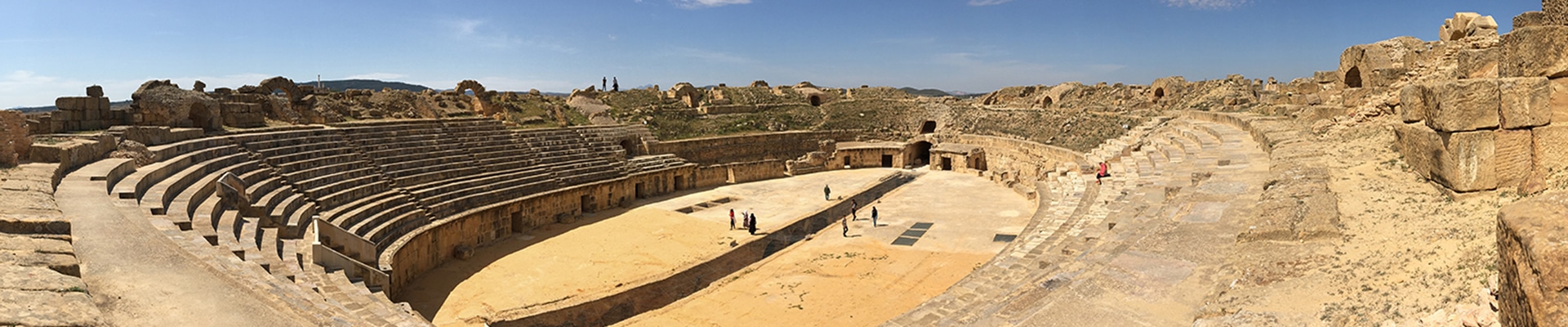
Discover Tunisia’s extraordinary blend of ancient cities, sacred landscapes, and desert fortresses on this new Friends of ASOR journey coming in January 2027. From Carthage to Djerba, explore millennia of history shaped by Phoenician, Roman, Islamic, and Amazigh cultures—a memorable experience for travelers who love archaeology, history, and heritage! Guided by expert scholars, this 15-day tour combines on-site lectures, museum visits, and cultural excursions for those eager to understand the deep history of the Maghreb.

Tour Dates: January 12 – 26, 2027

Tour Leader: Dr. Andrew G. Vaughn (ASOR Executive Director)

Highlights Include:

  • Bardo National Museum
  • Carthage
  • Medina of Tunis
  • Uthina (Oudna)
  • Dougga
  • Kairouan
  • Sousse
  • El Jem
  • Tataouine
  • Djerba
  • … and more!

*Full itinerary is subject to change.

Pricing Details:

Double occupancy from $4,000 (includes a $1,000 tax-deductible gift) | Single room supplement: +$800

Group Size: Maximum of 24 participants

Prices Include:

  • Accommodation
  • Guided site visits
  • Ground transportation
  • Breakfasts and dinners
  • Entrance fees
  • Tourist tax
  • $1,000 tax-deductible contribution that supports Friends of ASOR’s outreach initiatives, archaeological engagement, and education programs


NOT Included:

  • Flights
  • Airport transfers
  • Passport or visa fees
  • Travel insurance
  • Lunches
  • Alcoholic beverages
  • Tips

Registration Rates:

  • Early Bird (through October 20, 2026): $4,000 (including a $1,000 tax-deductible gift)
  • Super Saver (October 21 to November 13, 2026): $4,150 (including a $1,000 tax-deductible gift)
  • Advance (November 14 – December 15, 2026): $4,300 (including a $1,000 tax-deductible gift)
  • Regular (December 16, 2026 until space is full): $4,500 (including a $1,000 tax-deductible gift)

Payment Schedule:

To reserve your place: $250 non-refundable donation to Friends of ASOR Tours (applied toward your total $1,000 gift).

Full tour cost: Due by October 20, 2026 (or at registration if after this date). If this deadline presents an issue, we’d be willing to discuss an extension.

Example of payment schedule:

If you register during the Early Bird period:
First payment at registration: $250 non-refundable donation to reserve spot
Second payment on or before October 20: $3,750 remaining tour cost (includes remaining $750 tax-deductible gift)

Please e-mail us at info@asor.org or call +1 (703) 789-9229 with any questions.

Cancellation and Refund Policy:

ASOR strongly recommends that all participants purchase travel insurance because ASOR is required to make non-refundable deposits. ASOR cannot be responsible for refunds except as noted below.

All tax-deductible gifts to ASOR’s Friends of ASOR outreach initiatives are irrevocable and thus not refundable, except in the event that the tour is cancelled or rescheduled by ASOR. It is unlikely that travel insurance will cover the tax-deductible gift portion of the tour. No goods or services are provided in exchange for the gift to FOA.

Schedule of refunds for tour cost and single supplement (if any):

  • From time of payment until November 17, 2026: 90% refund of tour cost (excluding non-refundable donation[s] to Friends of ASOR)
  • From November 18, 2026 until December 7, 2026: 70% refund of tour cost (excluding non-refundable donation[s] to Friends of ASOR)
  • From December 8, 2026 until December 21, 2026: 25% refund of tour cost (excluding non-refundable donation[s] to Friends of ASOR)
  • From December 22, 2026 onward: no refund

2026 Annual Meeting Highlights

2026 ANNUAL MEETING HIGHLIGHTS

We are looking forward to seeing everyone for the Annual Meeting in November! For those coming to Chicago there are many reasons to come early and stay late. In addition to the academic program of more than 100 sessions and workshops, posters, and the Plenary Address by Kim Benzel, there are many receptions, special events, and local attractions to enjoy.

Follow along with the Academic Program and the Business Schedule on the Annual Meeting Schedules Page and in the Annual Meeting Mobile App (coming soon). Check this page often for a quick view of all the other exciting things happening at the Annual Meeting and in Chicago.
 

Chicago Highlights

November 17–24, 2026
Free admission to the Field Museum of Natural History
The Field Museum of Natural History is offering free general admission to ASOR Annual Meeting attendees. Show your ASOR name badge at the admissions desk for free entrance. For information on opening hours, planning your trip, and special exhibits (additional fee may apply), please visit their website.

November 17–24, 2026
Free admission to the Institute for the Study of Ancient Cultures (ISAC) Museum
The Institute for the Study of Ancient Cultures (ISAC) Museum is offering free general admission to ASOR Annual Meeting attendees. Show your ASOR name badge at the admissions desk for free entrance. ASOR attendees will also receive a 10% discount at the ISAC Museum Shop when they present their badge. For information on opening hours, planning your trip, and special exhibits (additional fee may apply), please visit their website.

November 17–24, 2026
Free admission to The Art Institute of Chicago 
The Art Institute of Chicago is offering free general admission to ASOR Annual Meeting attendees. Show your ASOR name badge at the admissions desk for free entrance. For information on opening hours, planning your trip, and special exhibits (additional fee may apply), please visit their website.

November 17–24, 2026
Free admission to the Adler Planetarium
The Adler Planetarium is offering free general admission to ASOR Annual Meeting attendees. Show your ASOR name badge at the admissions desk for free entrance. For information on opening hours, planning your trip, and special exhibits (additional fee may apply), please visit their website.

There are a number of special events taking place during the Annual Meeting. Some of these events require registered attendees to sign-up in advance.

Wednesday, November 18

7:00-8:30pm CST
ASOR Annual Meeting Plenary Address (Grand Ballroom, Hilton Chicago)
Dr. Kim Benzel, Curator in Charge of The Metropolitan Museum of Art, will present, “Lapis, Clay, Copper, Water: Presenting Ancient West Asian Art at The Met.” Also available online for virtual attendees. Learn more here.

Thursday, November 19

12:55-1:55pm CST
Seal Carving Workshop  (Room 4A, Hilton Chicago) 
Led by Dr. Pinar Durgun (The Morgan Museum & Library), this workshop is free for ASOR attendees. Space is limited and advance sign-up is required. Registration is full, but please email programs@asor.org to be added to the waitlist.

12:55-1:55pm CST
Early Career Scholars’ Panel (Boulevard C)
Stay tuned for more info on this event.

12:55-1:55pm CST
ASOR Roundtable Discussions (Grand Ballroom)
There will be a number of discussion topics offered during this lunchtime event. Advance sign-up will be required.

Friday, November 20

12:45-2:00pm CST
ASOR Members’ Meeting, Jane DeRose Evans, Presiding (Waldorf)
Bring your lunch and come for an update on the business of ASOR and the 2026 Honors & Awards.

8:00-10:00pm CST  
Early Career Scholars’ Reception (720 South Bar, Lobby Level)
This event is for registered ASOR attendees who are Early Career Scholars. There is no cost to attend, but space is limited and ECS members must sign-up in advance here.

Saturday, November 21

10:20-10:40am CST
ASOR Raffle Drawing (Normandie Lounge, 2nd Floor)
A fun event to highlight ASOR Exhibitors during the morning coffee break on the last day of the meeting. Join us in the Exhibit Hall (Normandie Lounge) near the registration tables to see if your raffle ticket is a winner.

12:45-2:00pm CST
ASOR Poster Session (Grand Ballroom Foyer)
Visit the ASOR Poster Hall throughout the Annual Meeting to see all of the research projects being presented, and come to the Poster Session on Saturday to talk with the presenters and ask questions.

7:00-8:00pm and 8:15-9:15pm CST
Institute for the Study of Ancient Cultures (ISAC) Museum Reception
After the sessions end on Saturday night, the Institute for the Study of Ancient Cultures (ISAC) Museum will host a reception for ASOR attendees. In addition to the permanent galleries, attendees will have the opportunity to view the new exhibition, Hartapu: The Forgotten King of Anatolia. Two time options are being offered to accommodate as many people as possible. Tickets are complimentary for ASOR attendees, however, space is limited and advanced registration is required (sign-up here).

Position Announcement: Director, Albright Institute of Archaeological Research

Position Announcement: Director, Albright Institute of Archaeological Research

The W. F. Albright Institute of Archaeological Research (AIAR) in East Jerusalem, an ASOR-Affiliated Overseas Research Center, invites applications for the position of Dorot Director. The Director serves as chief executive officer of the Institute, overseeing operations, financial strategy, academic programming, development, and institutional relationships with local academic, cultural, diplomatic and governmental institutions.

Candidates should hold a graduate degree, have familiarity with the region, and demonstrate leadership in Near Eastern studies or a related field (such as but not limited to archaeology, anthropology, biblical studies, history, museology, religious studies), along with experience in fundraising and institutional administration. The appointment is for up to five years, and includes a renovated three-bedroom Director’s residence on the AIAR campus.

Applications (letter, CV, and three references) are due 1 September 2026, though review will continue until the position is filled. More details and the application portal can be found here: https://aiar.org/archives/director_cfa_2026/

Please submit inquiries to the search committee chair, Prof. Eric H. Cline (ehcline@email.gwu.edu).

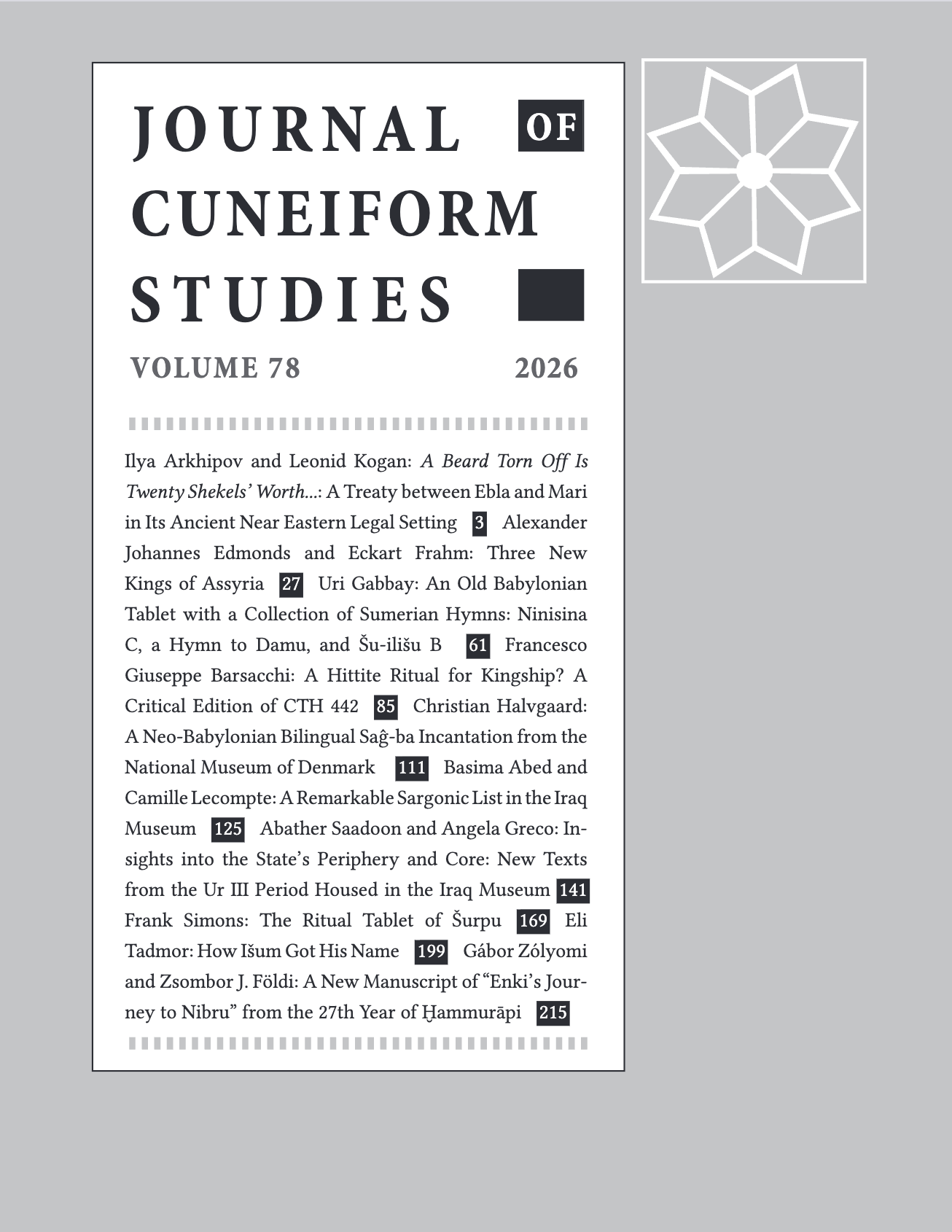
Table of Contents for JCS 78 (2026)

Table of Contents for Journal of Cuneiform Studies 78 (2026)

You can receive JCS (and other ASOR publications) through an ASOR Membership.
Please e-mail the Membership office if you have any questions.


Pp. 3-25: “A Beard Torn Off Is Twenty Shekels’ Worth…: A Treaty between Ebla and Mari in Its Ancient Near Eastern Legal Setting,” by Ilya Arkhipov and Leonid Kogan

Until recently, Assyriologists have been mostly unaware of the existence of prescriptive cuneiform law as early as in the Early Dynastic period. A deeper inquiry into the so-called chancery texts from Ebla has allowed Massimo Maiocchi and the present authors to independently conclude that compendia of prescriptive legal provisions, in their typology broadly identical to such well-known later codes as the Laws of Hammurabi, were produced (and, in all probability, implemented) in northwestern Syria as early as the latter third of the third millennium BCE (that is, ca. two hundred years before the Laws of Ur-Namma, the earliest known Mesopotamian specimen of the kind). In the present article, a detailed annotated reedition of a key source representing this text type—a collection of (mostly penal) stipulations embedded in the context of a treaty between Ebla and Mari—is proposed, with a special focus on the striking commonalities uniting ARET 16: 30 with the later Mesopotamian, Anatolian, and biblical legal codes.

ASOR Members with online access: log into ASOR’s Online Portal here. Tutorials for how to log in to the Online Portal as well as how to navigate to the Portal Journals page can be found here.

Pp. 27-59: “Three New Kings of Assyria,” by Alexander Johannes Edmonds and Eckart Frahm (OPEN ACCESS)

In this contribution, we critically examine the claim that the Assyrian King List (AKL) reliably contains all Neo-Assyrian monarchs up to Shalmaneser V, presenting three historical scenarios in which it can be demonstrated that short-lived Assyrian kings ruled parallel to or between those listed in the AKL’s first-millennium BCE portion. The first of these is a new rebel king Tiglath-pileser who rose up against his nephew Aššur-dān III in 763 BCE (most likely in the wake of a dramatic solar eclipse) and was enthroned in Aššur, before being toppled again by Aššur-dān III’s forces. The second is a new Shalmaneser who we assume succeeded Aššur-nārārī V to the Assyrian throne late in 747 BCE but lost his throne to Tiglath-pileser III a little more than a year later in 745 BCE. The third is earlier in date, a short-lived Aššur-uballiṭ whose reign was usurped by Adad-nārārī II in 912* BCE. Each king was enthroned at Aššur, and enjoyed support from some, if not all of Assyria, but was subsequently defeated or deposed. Evidence of the partial erasure of two of these kings from the historical record can be identified. The new insights thus gained into the cutthroat Assyrian “game of thrones” demonstrate that the AKL is not a reliable list of all Neo-Assyrian rulers, but rather of those who reigned long and successfully enough to be included by its editors in an idealized, consecutive order. This reframes our perspective on the motivations behind the compilation of this remarkable text, and the nature of Assyrian kingship itself.

ASOR Members with online access: log into ASOR’s Online Portal here. Tutorials for how to log in to the Online Portal as well as how to navigate to the Portal Journals page can be found here.

Pp. 61-84: “An Old Babylonian Tablet with a Collection of Sumerian Hymns: Ninisina C, a Hymn to Damu, and Šu-ilišu B,” by Uri Gabbay

The article presents an edition of a previously unpublished Old Babylonian tablet in the collection of the Kramer Institute of Assyriology of Bar Ilan University. The tablet contains three Sumerian compositions: Ninisina’s Journey to Nippur (Ninisina C), a hymn to Damu, and a hymn to An with wishes for Šu-ilišu (Šu-ilišu B). Besides the philological edition, the article deals with formal features on the tablet such as subscripts, as well as with the possible reason(s) for grouping the three compositions together on one tablet.

ASOR Members with online access: log into ASOR’s Online Portal here. Tutorials for how to log in to the Online Portal as well as how to navigate to the Portal Journals page can be found here.

Pp. 85-110: “A Hurro-Hittite Ritual for Kingship? A Critical Edition of CTH 442,” by Francesco Giuseppe Barsacchi

This article offers the first edition of the Hittite ritual composition cataloged as n. 442 in the Catalogue des Textes Hittites. The text is preserved on three fragments, with the best-preserved fragment represented by KUB 9.28. The synoptic edition of all manuscripts is introduced by a paleographic analysis and followed by a systematic commentary on all relevant grammatical and linguistic features. The structure and content of the ritual are examined in the broader framework represented by the Hittite ritual tradition of Hurrian origin. The paleography of the tablets, along with the presence of specific elements found also in the ritual of Ammiḫatna and in the itkalzi ritual, bring us to interpret the document as a late fourteenth century scribal product that reworks ritual traditions likely dating to the time of King Tutḫaliya II/III.

ASOR Members with online access: log into ASOR’s Online Portal here. Tutorials for how to log in to the Online Portal as well as how to navigate to the Portal Journals page can be found here.

Pp. 111-123: “A Neo-Babylonian Bilingual Saĝ-ba Incantation from the National Museum of Denmark,” by Christian Halvgaard

This article presents the first edition of a Neo-Babylonian cuneiform tablet containing a Sumerian Saĝ-ba incantation with an interlinear Akkadian translation. The purpose of the incantation was to strengthen an apotropaic design made of flour paste to keep demons away from the bed or house of a patient. It was utilized in a variety of different ritual settings. The tablet’s relationship to other known Saĝ-ba manuscripts is examined, and a Sippar provenience in the sixth century BCE or later is suggested based on paleographic and textual evidence.

ASOR Members with online access: log into ASOR’s Online Portal here. Tutorials for how to log in to the Online Portal as well as how to navigate to the Portal Journals page can be found here.

Pp. 125-139: “A Remarkable Sargonic List in the Iraq Museum,” by Basima Abed and Camille Lecompte

The present article publishes a remarkable school text housed in the Iraq Museum, likely originating from Sargonic Adab. The text, conical in shape, contains a list of fields, each measuring 1 iku, associated with a compilation of ad hoc personal names and unexpected terms. This study discusses the text’s content, origin, date, paleography, and its unusual names or expressions.

ASOR Members with online access: log into ASOR’s Online Portal here. Tutorials for how to log in to the Online Portal as well as how to navigate to the Portal Journals page can be found here.

Pp. 141-167: “Insights into the State’s Periphery and Core: New Texts from the Ur III Period Housed in the Iraq Museum,” by Abather Saadoon and Angela Greco

The present contribution offers the edition of eight texts from the Ur III period that were confiscated by the Iraqi authorities and subsequently entrusted to the Iraq Museum. These tablets, believed to have originated from royal archives, provide insights into economic activities of royal concern in peripheral areas or within the hinterland of the state’s core. Thereby, they contribute to adding new pieces to the puzzle of our understanding of the economy and society of the Ur III state, beyond the provincial perspective that has traditionally shaped our understanding of the period.

ASOR Members with online access: log into ASOR’s Online Portal here. Tutorials for how to log in to the Online Portal as well as how to navigate to the Portal Journals page can be found here.

Pp. 169-197: “The Ritual Tablet of Šurpu,” by Frank Simons

This article presents a new edition of the ritual Tablet of the ritual and incantation series Šurpu (“Burning”), based on a newly identified manuscript, BM 38656, which supplements and significantly extends the previously unique exemplar VAT 13613. The new fragment preserves much of the Tablet’s lost second half, clarifies numerous damaged passages, and restores the conclusion of the ritual, including additional incantation incipits and ritual instructions. Together, the two manuscripts reveal the stable transmission of the ritual Tablet for the α version of Šurpu, and confirm that an entire stage of associated incantations—omitted in modern editions—formed part of the ceremony. This study refines the structure, sequence, and performance of Šurpu, contributes improved readings throughout, and provides a more secure textual basis for understanding first-millennium ritual practice.

ASOR Members with online access: log into ASOR’s Online Portal here. Tutorials for how to log in to the Online Portal as well as how to navigate to the Portal Journals page can be found here.

Pp. 199-214: “How Išum Got His Name,” by Eli Tadmor

CT 15: 5–6, an Old Babylonian tablet of unknown provenience, tells of the origins of Išum, the divine night watchman: Ninlil bore him to her grandson Šamaš, set him on fire, and left him in the street. We learn of these events from words that Ištar, whom we find fostering the newborn in Ekur, addresses to Enlil. First, this article proposes that Ninlil’s setting alight of Išum and his subsequent fostering by Ištar serve as a native Babylonian explanation for the long-since noted similarity between the name Išum and the word išātum, “fire”: Ištar, finding a baby on fire, named him after fire itself. Second, the article defends its preference for translating the key verbal form uštāḫizma as “set ablaze.” Third, it argues that CT 15: 5–6 reflects a Mesopotamian, and more broadly ancient Near Eastern, motif of a young woman rescuing and naming a foundling. Fourth, it highlights the perennial difficulty of ascertaining the social reality underlying sources pertaining to Mesopotamian foundlings. And fifth, it reanalyzes Emar 256, an administrative document reflecting that difficulty.

ASOR Members with online access: log into ASOR’s Online Portal here. Tutorials for how to log in to the Online Portal as well as how to navigate to the Portal Journals page can be found here.

Pp. 215-233: “A New Manuscript of “Enki’s Journey to Nibru” From the Twenty-Seventh Year of Ḫammurāpi,” by Gábor Zólyomi and Zsombor J. Földi

This article presents a new manuscript of the Sumerian literary composition “Enki’s Journey to Nibru,” housed in the collection of the Musées royaux d’Art et d’Histoire, Brussels. MRAH O.343 is a two-column, Type I Old Babylonian tablet of uncertain provenance, preserving the complete text of the composition in 127 lines. The colophon permits its dating to the twenty-seventh year of Ḫammurāpi. Analysis of scribal errors suggests that MRAH O.343 was copied from memory. Based on this manuscript, the obscure line 68a of the composition can now be restored with certainty.

ASOR Members with online access: log into ASOR’s Online Portal here. Tutorials for how to log in to the Online Portal as well as how to navigate to the Portal Journals page can be found here.

Thank You Fiscal Year 2026 Donors

Banner Image for Aayush Umesh 2025 Fieldwork Report

Thank You Fiscal Year 2026 Donors

Breaking records!

This fiscal year (July 1, 2025–June 30, 2026) was a resounding success for ASOR all because of you, our members and donors!

This year, a record 955 people made a gift of $5 or more! Another 190 people made a gift of less than $5 (primarily donations to help with credit card fees), making for a total of 1145 donors. Moreover, the total of all donations in FY 2026 was more than $900,000. Please click on the FY 2026 Honor Roll of Donors to see a list of people who gave at all levels. We are in the process of updating the Lifetime Honor Roll of Donors, so please check it now (and over the next month) to see the amazing list of lifetime supporters. We are continuing to update and check both lists, so please contact us with any corrections or comments (info@asor.org).

Why does high donor participation matter?

Almost half of ASOR’s membership contributed this year—an achievement that sets ASOR apart from nearly every other learned society. Moreover, the high level of donor participation from our membership is viewed positively by foundations and major donors outside ASOR and helps ASOR attract support from them.

Your donations also enable ASOR to carry out our mission. Membership dues and registration fees only account for about a quarter of our annual revenue, so we rely on grants and donations from our members and friends. Every contribution, no matter the size, helps sustain our work. Thank you again for your support. Every donor is important and every gift is meaningful.

Benefactor ($20k+) – 6
Patron ($10,000–19,999) – 8
Friend ($5,000–9,999) – 9
Sponsor ($1,000–4,999) – 40
Sustainer ($500–999) – 24
Supporter ($250–499) – 38
Contributor ($100–249) – 202
Donor ($25–99.99) – 155
Ally ($5–24.99) – 473
Gifts under $5 – 190

Donor Participation Since 2017

0 200 400 600 800 1000
402
457
461
377
509
363
456
905
924
955
FY17 FY18 FY19 FY20 FY21 FY22 FY23 FY24 FY25 FY26

Number of Donors

OTHER WAYS TO DONATE

DONATE BY PHONEDONATE BY MAILMAKE A PLEDGE
(DONATE LATER)
Call ASOR:
(703) 789-9229
ASOR
209 Commerce Street
Alexandria, VA 22314
E-mail ASOR

ARS 32: The U-Shaped Building at Caesarea Maritima

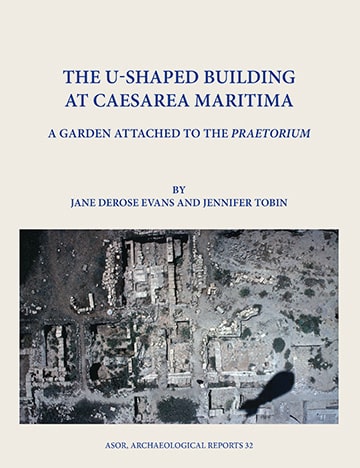
Archaeological Reports Series 32: The U-Shaped Building at Caesarea Maritima

The U-Shaped Building at Caesarea Maritima: A Garden Attached to the Praetorium

by Jane DeRose Evans and Jennifer Tobin

The U-Shaped Building at Caesarea is an exploration of a portion of the praetorium of the governor of Caesarea and its subsequent phases, through its excavation in the 1970s by a team led by Robert J. Bull. By examining field notes, photographs and plans, a team of specialists reconstructs the original fourth-century CE construction of a garden space and fountain; its subsequent remodeling in the mid-fifth to mid-sixth century; and its second phase as a luxuriously decorated garden and entertainment space. Partially refurbished during the short Persian occupation, the reassertion of Byzantine control led to a transformation of the area, linking it more strongly to interior spaces of the praetorium. Subsequent phases elucidate the areas use as a cemetery in the Crusader and Ottoman periods by providing information about the inhabitants and their burial practices. The volume investigates the form of a praetorium in the eastern Mediterranean, the formation of ancient garden architecture, and the composition of the inhabitants of Crusader and Ottoman Caesarea. 

ASOR Archaeological Reports, Volume 32, Series Editor Jennie Ebeling, January 2026, 214 pages, ISBN 9780897571258, $79.95.

Available from ISD — Distributor of Scholarly Books
www.isdistribution.com

Collections Fellowship Report: Laura Alvarez

Me and We in the Mirror. A Study of Self and Other from Mesopotamia to the Levantine Coast during the Fourth and Second Millennia BCE 

Laura Alvarez, University of Cambridge, 2025 Study of Collections Fellowship Recipient

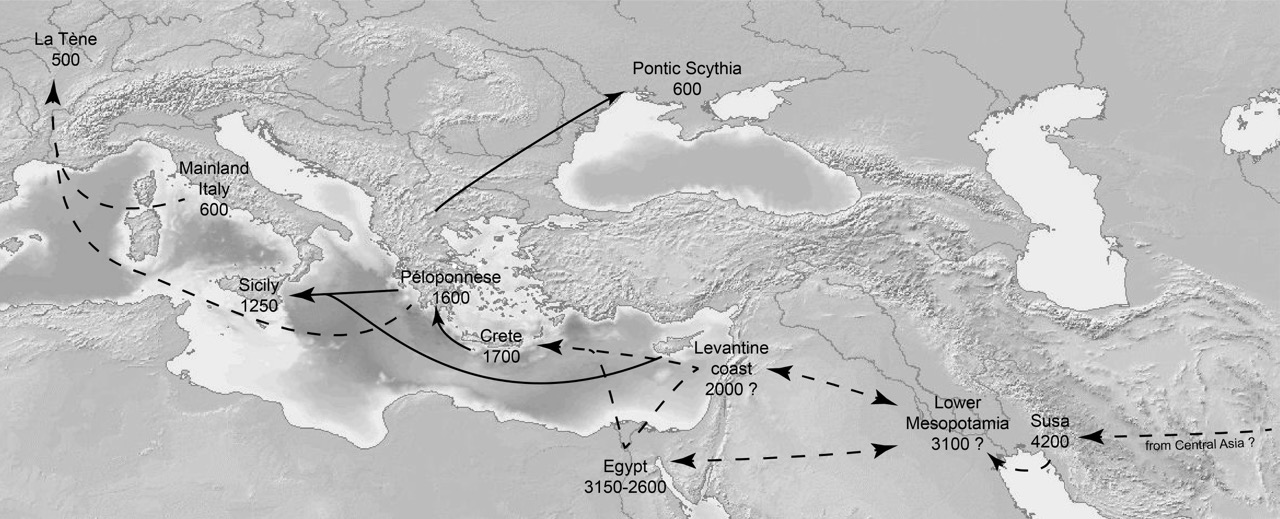
From the beginning of the fourth millennium BCE, small circular mirrors in copper alloy started appearing in funerary and temple contexts across Mesopotamia and the Levantine coast. What might seem a banal object in fact marks a major milestone in the history of both technology and perception, as mirrors offer a means of accessing what would otherwise be invisible to us directly: the face, in a left–right reversed and sometimes distorted image. Where reflections had previously been fleeting glimpses in water, mirrors now provided a more stable, manipulable, and portable medium.

Map of the earliest dates of metal mirror from Western Asia to Europe, with possible paths of spread across Eurasia.

For many years, I have wondered how mirrors may have altered perceptions of oneself and others, disrupted relational structures, or suggested new ways of conceptualising the world. A well-known historical parallel is the development of mirrors in seventeenth-century Europe, which coincided with the rise of the bourgeoisie, new notions of individuality, and the emergence of intimacy and personal comfort. But even earlier, in 12th Dynasty Egypt, Ipuwer evoked the image of a woman who once had to gaze at her reflection in water but now owned a mirror (Papyrus Leiden I 344 recto) as a way of expressing the upheaval of social revolution: access to self-awareness, once dictated by hierarchy, was shifting. Much like the performative nature of status at Versailles, this demonstrates how mirrors could become instruments of social and ideological transformation as far back as the Chalcolithic and Bronze Age periods.

In this project, my aim is to attempt to reconstruct the experiences of people interacting with mirrors, seeking insights into their perceptions of reflections and the symbolism attached to these objects. Since 2022 I have been building a dataset of mirrors from Syria, Palestine–Israel, Lebanon, Jordan, Iraq and western Iran, and have studied numerous collections worldwide.

The ASOR Study of Collections Fellowship provided the critical final support needed to complete the data collection phase of the project, which involved visiting the archaeological collections at the Louvre and the Baghdad Museum. The latter houses numerous mirrors from Agrab, Khafajeh and Kish-Tell Ingharra, Ur, Uruk, Khafajeh and Asmar, most of which remain unpublished. Although part of the work was hindered by the closure of regional airspace in mid-June, which forced the postponement of travel, I expect to conduct research in Iraq in the autumn or winter. The ultimate goal of this project is to produce a monograph, the Corpus Speculorum Orientis, restoring to this material a scholarly standing long minimised.

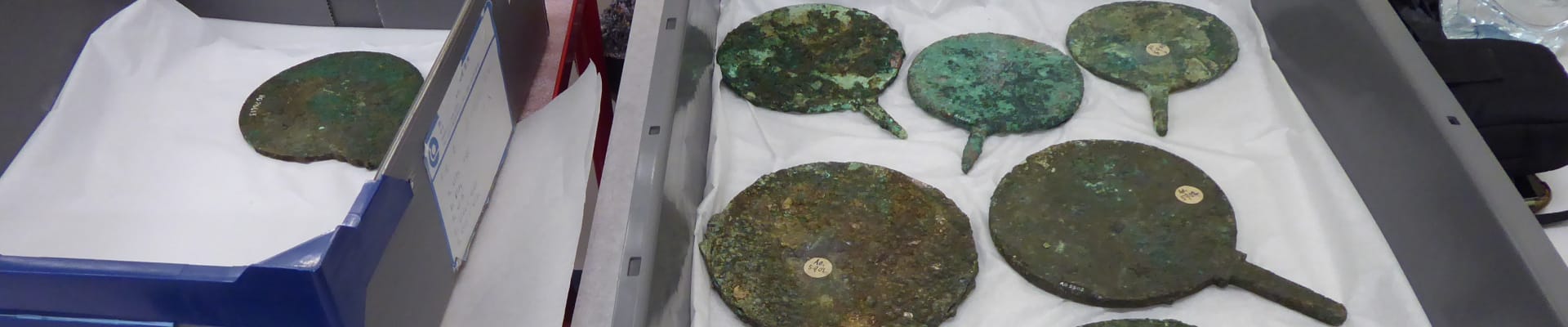
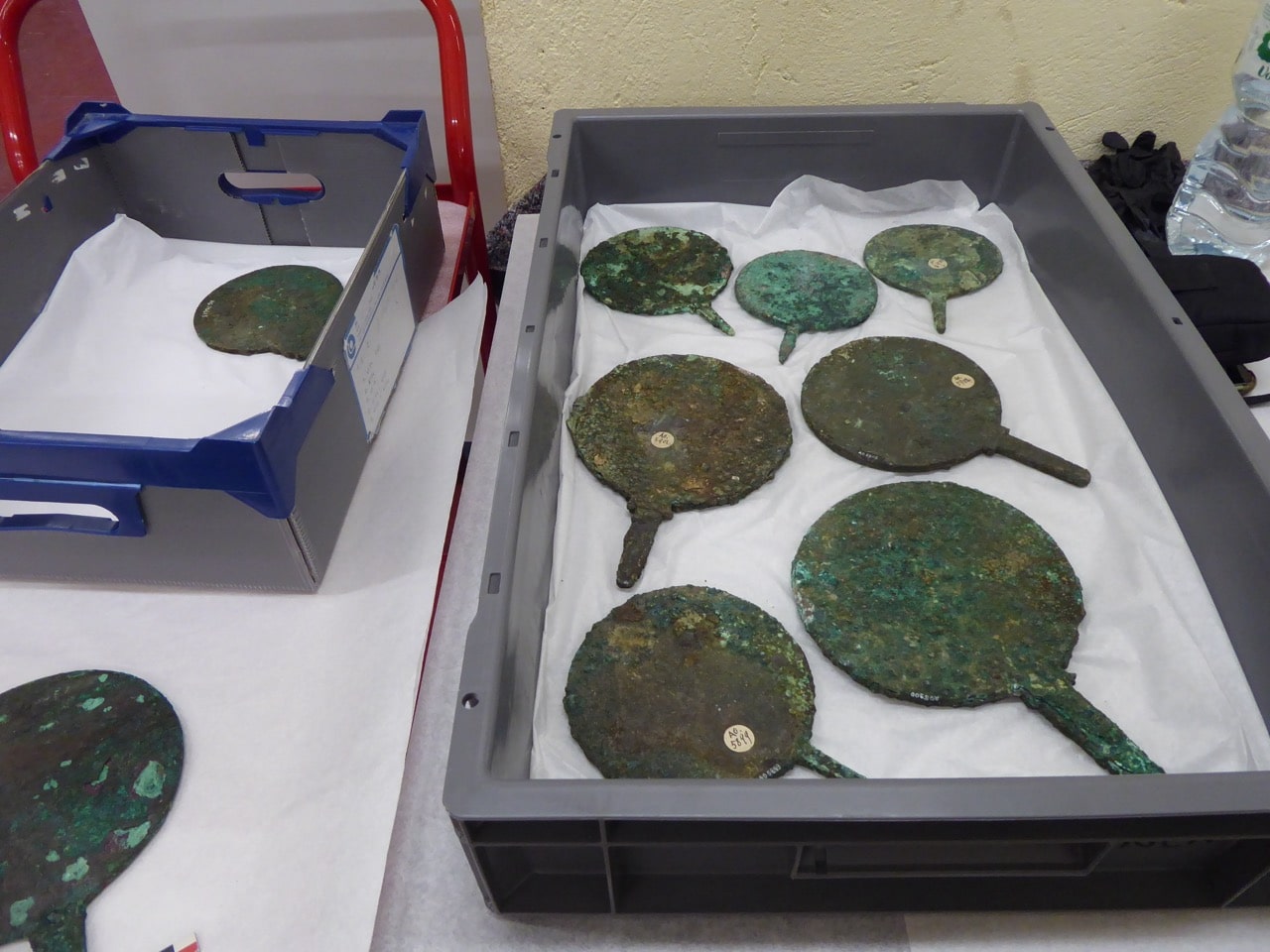
Copper-alloy mirrors from the collections of the Louvre Museum (photograph: Laura Alvarez).

The ASOR Study of Collections Fellowship provided the critical final support needed to complete the data collection phase of the project, which involved visiting the archaeological collections at the Louvre and the Baghdad Museum. The latter houses numerous mirrors from Agrab, Khafajeh and Kish-Tell Ingharra, Ur, Uruk, Khafajeh and Asmar, most of which remain unpublished. Although part of the work was hindered by the closure of regional airspace in mid-June, which forced the postponement of travel, I expect to conduct research in Iraq in the autumn or winter. The ultimate goal of this project is to produce a monograph, the Corpus Speculorum Orientis, restoring to this material a scholarly standing long minimised.

At the Louvre, I investigated ten mirrors from Sidon, acquired through the museum’s antiquities networks of Louvre curator Eugène Ledrain, whom aimed to expand the French knowledge of Levantine culture with the institutional objective of enriching the museum’s collections. I also studied mirrors from the coastal site of Ugarit (Ras Shamra), brought to Paris in the course of French excavations during the colonial and Mandate periods of the early twentieth century. In examining these objects, I paid particular attention to any surviving traces of engraved decoration, similar to those I have observed on mirrors from the Diyala region in Iraq.

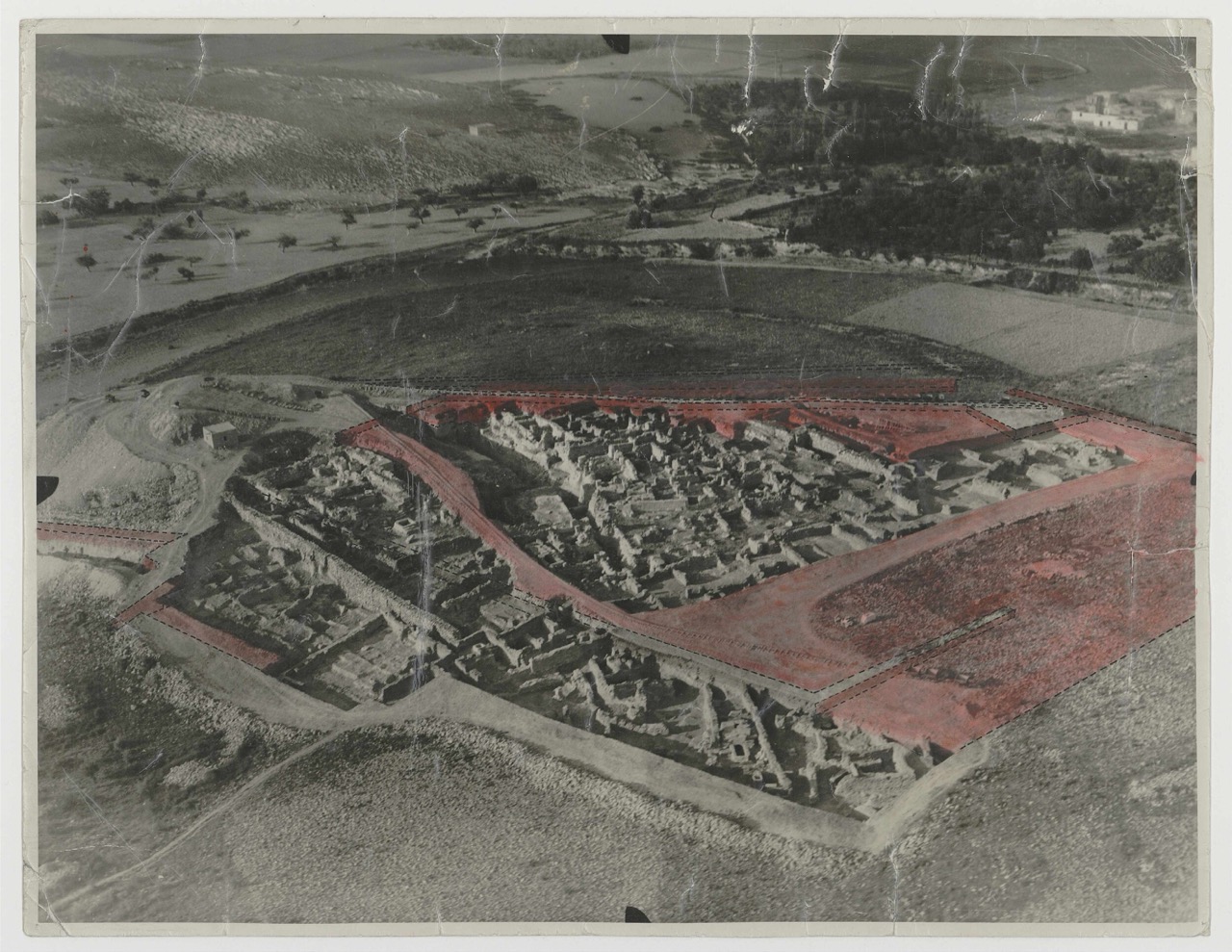
Undated aerial photograph of Ugarit, from the Schaeffer fonds, Collège de France, archival reference 16 Fi 1/329-h.

During this stay, I took the opportunity to consult the Collège de France archives, which preserve excavation documents of Claude Schaeffer, who directed work at Ras Shamra in the first half of the twentieth century, as well as to visit the National Museum of Archaeology at Saint-Germain-en-Laye (Musée d’archéologie nationale, MAN), located about an hour from Paris, which preserves material from Ugarit and its harbour, Minet el-Beida.

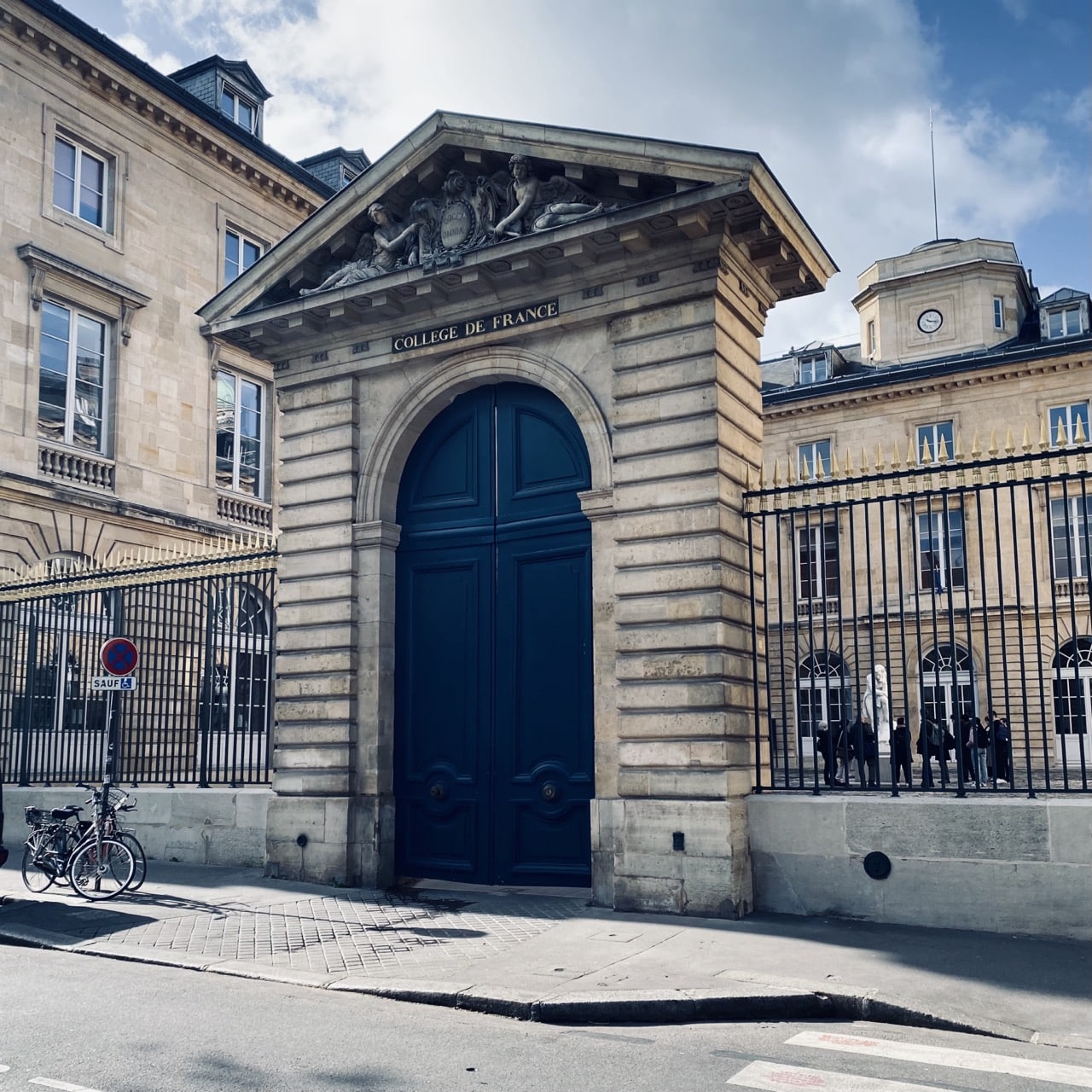
Entrance of the Collège de France from Place Marcelin Berthelot (photograph: Laura Alvarez).

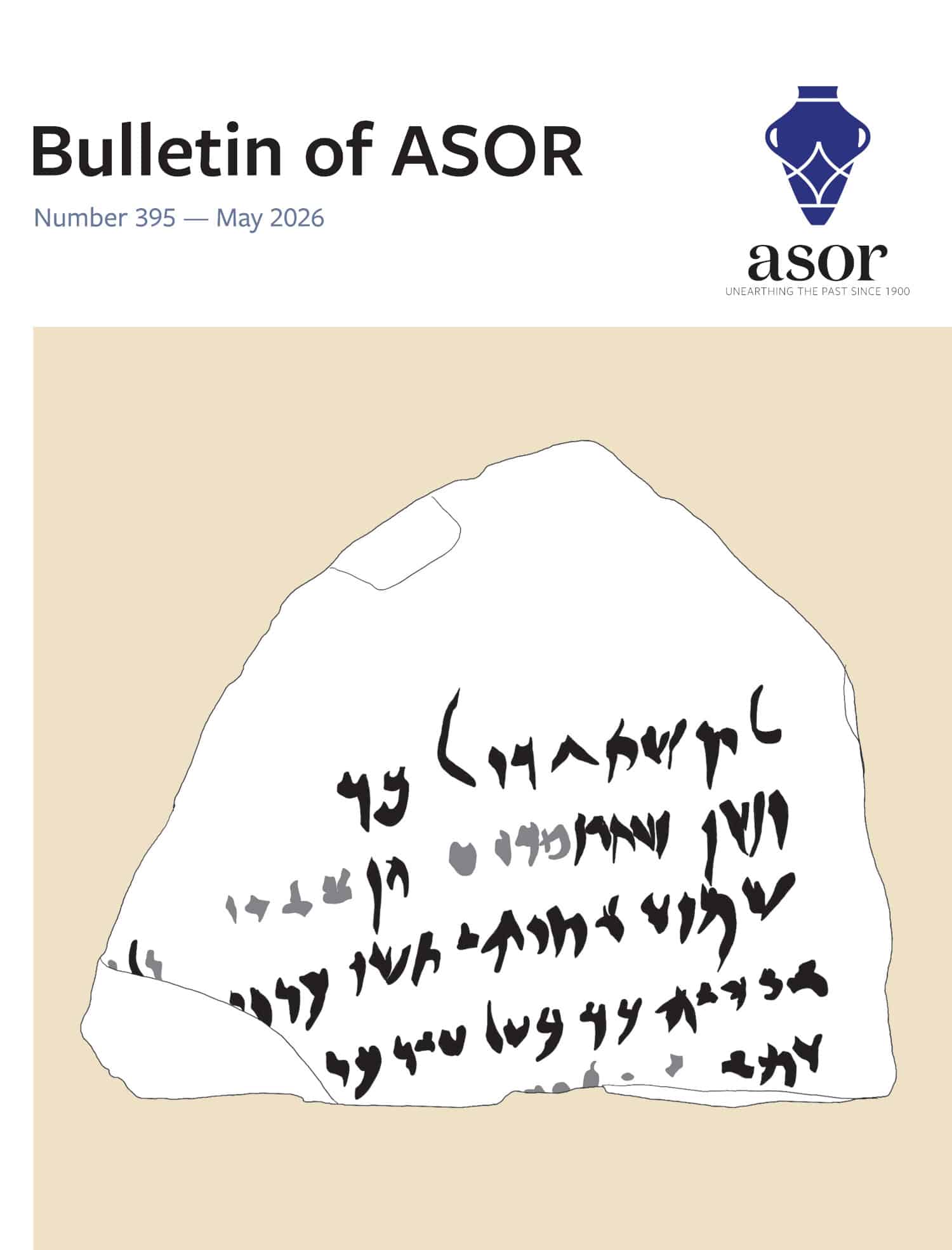
ASOR Seeks New BASOR Editor(s)

ASOR SEEKS NEW BASOR EDITOR(S)

The Bulletin of ASOR (BASOR), a publication of the American Society of Overseas Research (ASOR), is seeking an Editor (or Co-Editors) for a three-year term for six semi-annual issues, with the possibility of renewal for one more three-year term (ASOR editors are limited to two terms of services). The transition to the new Editor(s) will begin in November 2026, with the new Editor(s) assuming full responsibility by January 2027. BASOR is a peer-reviewed illustrated publication including technical articles covering the entire Near East and eastern Mediterranean world from the Paleolithic period through Islamic times. The principal subject areas of the journal include art and archaeology, history, anthropology, bioarchaeology and archaeozoology, archaeometry, geography, philology and epigraphy, and literature. BASOR is published on paper and online through the University of Chicago Press.

The duties of the position include the following: maintenance of an editorial office for the journal; solicitation and acquisition of manuscripts suitable for publication; implementation of a peer-review process for the evaluation of manuscripts; collaboration with the managing editor and the ASOR staff; actively promoting the journal online; and editing and proofreading each issue. One of the most important responsibilities of the Editor(s) is the chairing of an editorial board, which is actively engaged in the production of the journal. Duties also include timely publication of journal issues and providing annual reports to the Chair of the ASOR Publications Committee. The new Editor(s) will be required to gain familiarity with the Editorial Manager software program, which is currently used in the publication of the journal.

The Editor(s) of BASOR will have editorial control over the journal, within the parameters of the editorial mission established for BASOR by ASOR. Ideally, the Editor(s) should have knowledge of the production and distribution processes common to print and electronic journals. The Editors of BASOR currently receive a stipend and are eligible for reimbursement for travel expenses to ASOR’s Annual Meeting. These funds also could be reallocated to provide release time at the successful candidate’s home institution. ASOR will negotiate details regarding administrative support and other basic infrastructure in collaboration with the successful candidate(s).

The search committee requests proposals from applicants outlining a vision for the journal within the changing realities of academic publishing. Applications from a single editor, co-editors, or an editorial team will be considered and accepted until the position is filled. All applications received by September 1, 2026 are guaranteed to receive full consideration, but applications will be accepted until the position is filled. The candidate’s application package should consist of the aforementioned vision statement and a current CV. These materials, and any other inquiries, should be submitted via e-mail to publications@asor.org. Questions may be directed to Eric Kansa (eric@opencontext.org) and Sarah Whitcher Kansa (sarah@opencontext.org), Co-Chairs of the ASOR Publications Committee.