Digging the Divine?: Judahite Pillar Figurines and the Archaeology of Israelite Religion
Friends of ASOR present the next webinar in our monthly series on October 7, at 7:00 pm EDT, featuring Prof. Erin Darby. In this webinar, Dr. Darby will introduce you to the enigmatic female pillar figurines from the nation of Judah in the 8th-6th centuries BCE. These small clay figurines either supporting or holding their breasts are among the most numerous ritual objects uncovered in ancient Israel. However, they are never clearly mentioned in biblical texts and they lack inscriptions or identifying symbols. As a result, they have been interpreted in many ways, including as goddesses, as implements in illicit, popular rituals, and as objects used primarily by women to aid in fertility, birth, and infant health.
We will explore questions scholars ask about these clay statues, like: “Who made them?”, “What was their function?”, and “What do they tell us about religion in ancient Israel?” By focusing on the archaeological context of figurine fragments, we will debate what role archaeological data may play in the interpretation of these important figures.
Join us for this exploration of these mysterious figurines and what they can tell us about the people of Judah. Prof. Darby will conclude her webinar with a live Q&A session.
Registrants now get 25% off of Erin Darby’s new book through Brill!
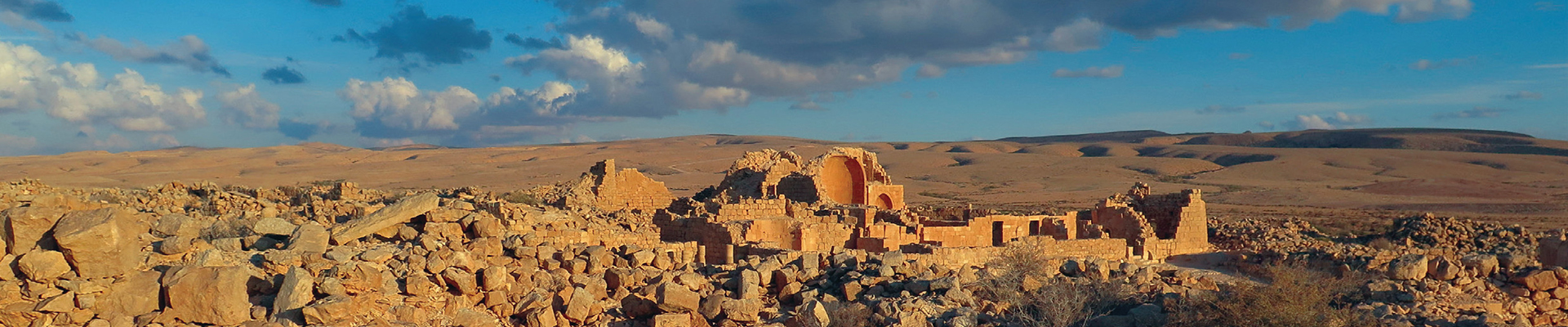
Dr. Erin Darby is an associate professor of Early Judaism in the Department of Religious Studies and the Faculty Director of Undergraduate Research and Fellowships at the University of Tennessee. Erin is an expert in the archaeology of Israelite religion, with a particular focus on figurines and other cultic objects. These are the focus of her monograph, Interpreting Judean Pillar Figurines: Gender and Empire in Apotropaic Practice (Mohr Siebeck 2014) and a forthcoming co-edited volume entitled Iron Age Terracotta Figurines from the Southern Levant in Context (Brill, fall 2021), as well as several other publications. Her research has been supported by two fellowships from the W. F. Albright Institute of Archaeological Research (AIAR) in Jerusalem. She has also received funding to support her research at the American Center of Research (ACOR) in Amman, Jordan and the Cyprus American Archaeological Research Institute (CAARI), in Nicosia, Cyprus. Her most recent work has focused on figurines and other ritual objects at shrine sites in the Negev Desert of southern Israel and in southern Jordan. She is also an active field archaeologist and co-director of the ‘Ayn Gharandal Archaeological Project in the Wadi Arabah of southern Jordan.
To receive your ASOR member discount, log into the online store. If you are new to ASOR, please click on the “New Visitor Registration” link to register your e-mail address and choose password for our online store. Once logged in, navigate to “Meeting and Event Registration” to register for the webinar and pay the fee. Each paid registrant will receive a confirmation e-mail when you pay for the webinar. If you do not receive this e-mail, then you are not registered. Please e-mail membership@asor.org with any questions or issues with registering.
You will be e-mailed the Zoom Webinar link in the week prior to the lecture on October 7, 2021 If you do not receive the link by the close of business on the Tuesday before the webinar, please e-mail membership@asor.org immediately. All webinars are recorded and all paid registrants will be sent a link to view the recording.
All proceeds from this lecture are used to fund scholarships for members impacted by COVID-19 as well as increasing ASOR’s online resources, which are free to the public.
WHY SPONSOR A WEBINAR?
Several levels of support from $50-$1,000 are available. Proceeds go towards membership scholarships and towards increasing ASOR’s virtual resources. Each sponsorship is tax-deductible and you can give your friends free registrations to a webinar!
Bronze Level ($50): up to 2 guest registrations Silver Level ($100): up to 5 guest registrations Gold Level ($500): up to 20 guest registrations Platinum Level ($1,000): up to 50 guest registrations
After you sign up for a sponsorship online or over the phone, email the names and email addresses of your guests to Felice Herman at membership@asor.org, who will send your guests a confirmation and the Zoom link before the webinar.
WANT TO SAVE $5.00 ON THE NEXT WEBINAR?
Join ASOR as a member! Click here for more details about discounts for events and other benefits of membership. Memberships start at $40 for the year as an Associate Member.
You can now purchase the link to the recording of any webinar. You can also purchase the bundle packages of all webinars from the 2020-2022 seasons. Please e-mail membership@asor.org for purchase details.
To see a printable pdf of the webinar titles from the 2020-2021 season, please click here. To see a printable pdf of the webinar titles from the 2021-2022 season, please click here.
Where Are They Now?: A Preview of 2022 ASOR-Affiliated Fieldwork Projects Michael Given (University of Glasgow), Xenia-Paula Kyriakou (Florida Gulf Coast University), Stephen Batiuk (University of Toronto), Monique Roddy (Walla Walla University), Kent Bramlett (La Sierra University), Friedbert Ninow (La Sierra University), and Michael Hoff (University of Nebraska-Lincoln) | March 8, 2022
Tel Rehov: A Major Bronze and Iron Age City in the Jordan Valley Amihai Mazar (Hebrew University of Jerusalem), Nava Panitz-Cohen ( Hebrew University of Jerusalem), Nota Kourou (Athens University), Naama Yahalom-Mack (Hebrew University of Jerusalem), Robert Mullins (Azusa Pacific University) | February 10, 2022
Archaeogaming: Why Video Games Deserve Their Own Archaeology Tine Rassalle (University of North Carolina at Chapel Hill), Shannon Martino (Morton College), Matthew Winter (University of Arizona), Michael Zimmerman (Rhode Island) | April 18, 2021
David, Solomon, and Rehoboam’s Kingdom—The Archaeological Evidence
Friends of ASOR present the next webinar in our monthly series on September 19, at 4:30 pm EDT, featuring Prof. Yosef Garfinkel. Since 2007, four sites in the Judean Shephelah were investigated: Khirbet Qeiyafa, Khirbet el-Ra‘i, Socoh, and Lachish. Khirbet Qeiyafa and Khirbet el-Ra‘i provided sweeping and cutting-edge data on the early part of the 10th century BCE, the time of King David. The fortified city of Khirbet Qeiyafa was built according to the typical Judean urban plan, a plan that is not found in any city in Philistia or the Kingdom of Israel. Public buildings and large quantities of jars with impressions on their handles indicate the existence of an administration. Two inscriptions were found, suggesting increasing knowledge of reading in this period.
A stone shrine model from Khirbet Qeiyafa provided data on royal building activities in the time of King Solomon that forces us to reconsider previous theories. The stone model is a carved box (35 cm high) and the façade is elegantly profiled, with three interlocking frames around the door and depictions of wooden beams in groups of three, that support the roof (known triglyph in classical architecture). The combination of iconographic and linguistic analysis indicates that the same two architectural components are also described in the biblical text regarding Solomon’s Palace and Solomon’s Temple.
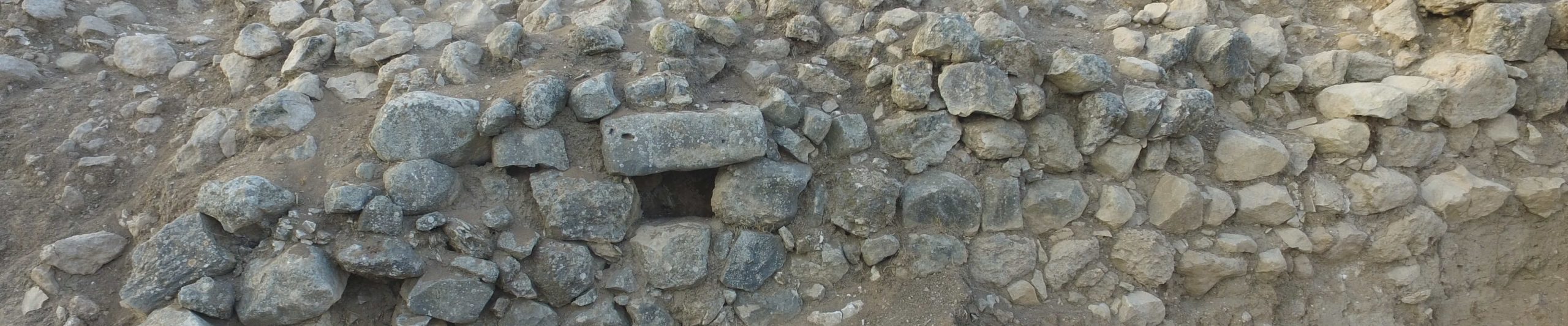
The date for the fortification of Lachish and for it becoming the second-most important city in the kingdom of Judah after Jerusalem has been heavily debated by scholars for generations. Prior the renewed excavations from 2013 to 2017, the various scholarly opinions ranged for more than 250 years, from the early 10th to the mid-8th centuries BCE. New excavations at Lachish from 2013 to 2017 uncovered a previously unknown city wall, dated by 14C to the second half of the 10th century BCE. This date fits well with the biblical tradition in 2 Chronicles 11:9, that Lachish was fortified in the last decades of the 10th century BCE by King Rehoboam.
Join us for this deep dive into some of the most exciting new finds at sites across the biblical kingdom of Judah. Prof. Garfinkel will conclude his webinar with a live Q&A session.
Yosef Garfinkel is Yigael Yadin Professor of Archaeology of the Land of Israel at the Institute of Archaeology, the Hebrew University of Jerusalem. For many years he was a prehistorian, excavating Neolithic and Chalcolithic sites, including Yiftahel, Gesher, Neolithic Ashkelon, Shaar Hagolan and Tel Tsaf. He did extensive research on prehistoric dance, including the publication of articles and a book: Dance at the Dawn of Agriculture. An article on the evolution of human dance had been published recently by Cambridge Archaeological Journal.
Since 2007, he has conducted a regional project in the Judean Shephelah, excavating in Khirbet Qeiyafa (2007-2013), Tel Lachish (2013-2017), and Khirbet al-Rai (since 2015). These sites shed new light on the early phases of the Kingdom of Judah, and indicate that state formation started as early as 1000 BC, the time of David. Prof. Garfinkel has written over 200 publications, including 35 books.
To receive your ASOR member discount, log into the online store. If you are new to ASOR, please click on the “New Visitor Registration” link to register your e-mail address and choose password for our online store. Once logged in, navigate to “Meeting and Event Registration” to register for the webinar and pay the fee. Each paid registrant will receive a confirmation e-mail when you pay for the webinar. If you do not receive this e-mail, then you are not registered. Please e-mail membership@asor.org with any questions or issues with registering.
You will be e-mailed the Zoom Webinar link in the week prior to the lecture on September 19, 2021 If you do not receive the link by the close of business on the Tuesday before the webinar, please e-mail membership@asor.org immediately. All webinars are recorded and all paid registrants will be sent a link to view the recording.
All proceeds from this lecture are used to fund scholarships for members impacted by COVID-19 as well as increasing ASOR’s online resources, which are free to the public.
WHY SPONSOR A WEBINAR?
Several levels of support from $50-$1,000 are available. Proceeds go towards membership scholarships and towards increasing ASOR’s virtual resources. Each sponsorship is tax-deductible and you can give your friends free registrations to a webinar!
Bronze Level ($50): up to 2 guest registrations Silver Level ($100): up to 5 guest registrations Gold Level ($500): up to 20 guest registrations Platinum Level ($1,000): up to 50 guest registrations
After you sign up for a sponsorship online or over the phone, email the names and email addresses of your guests to Felice Herman at membership@asor.org, who will send your guests a confirmation and the Zoom link before the webinar.
WANT TO SAVE $5.00 ON THE NEXT WEBINAR?
Join ASOR as a member! Click here for more details about discounts for events and other benefits of membership. Memberships start at $40 for the year as an Associate Member.
You can now purchase the link to the recording of any webinar. You can also purchase the bundle packages of all webinars from the 2020-2022 seasons. Please e-mail membership@asor.org for purchase details.
To see a printable pdf of the webinar titles from the 2020-2021 season, please click here. To see a printable pdf of the webinar titles from the 2021-2022 season, please click here.
Where Are They Now?: A Preview of 2022 ASOR-Affiliated Fieldwork Projects Michael Given (University of Glasgow), Xenia-Paula Kyriakou (Florida Gulf Coast University), Stephen Batiuk (University of Toronto), Monique Roddy (Walla Walla University), Kent Bramlett (La Sierra University), Friedbert Ninow (La Sierra University), and Michael Hoff (University of Nebraska-Lincoln) | March 8, 2022
Tel Rehov: A Major Bronze and Iron Age City in the Jordan Valley Amihai Mazar (Hebrew University of Jerusalem), Nava Panitz-Cohen ( Hebrew University of Jerusalem), Nota Kourou (Athens University), Naama Yahalom-Mack (Hebrew University of Jerusalem), Robert Mullins (Azusa Pacific University) | February 10, 2022
Archaeogaming: Why Video Games Deserve Their Own Archaeology Tine Rassalle (University of North Carolina at Chapel Hill), Shannon Martino (Morton College), Matthew Winter (University of Arizona), Michael Zimmerman (Rhode Island) | April 18, 2021
Back-to-school season means shopping for books, and ASOR is here to help you stock your library. ASOR members (with a mailing address in the USA) can purchase copies of recent ASOR books at the discounted price of $25.00 (ca. 70% discount + $5.00 US media mail shipping) through October 31, 2021, while supplies last. All prices listed below include US media mail shipping. Purchases are restricted to one copy of each volume per member. Due to ASOR’s licensing agreement with ISD, this offer is only available to ASOR members. We are unable to offer this discount to members without a US mailing address due to international shipping costs. Please contact programsasor.org with any questions.
Not an ASOR member?Join as an Associate Member ($40) first in order to take advantage of these great deals on books. More information on membership and its benefits can be found here.
ARS 28: All Things Cypriot. Studies on Ancient Environment, Technology, and Society in Honor of Stuart Swiny. Edited by Zuzana Chovanec and Walter Crist. Original price $79.95. Sale price $25.00 (includes US media mail shipping)
ARS 27: Caesarea Maritima: Excavations in the Old City 1989-2003.Volume 1: The Temple Platform (Area TP), Neighboring Quarters (Area TPS and Z), and the Inner Harbor Quays (Area I): Hellenistic Evidence, King Herods Harbor Temple, Intermediate Occupation, and the Octagonal Harbor Church. Edited by Kenneth G. Holum. Original price $89.95. Sale price $25.00 (includes US media mail shipping).
ARS 26: The Archaeological Survey of the Desert Roads between Berenike and the Nile Valley. Expeditions by the University of Michigan and the University of Delaware to the Eastern Desert of Egypt, 1987-2015. Edited by Steven E. Sidebotham and Jennifer E. Gates-Foster. Original price $84.95. Sale price $25.00 (includes US media mail shipping).
AASOR 74: The Excavations of ‘Iraq al-Amir, Volume II. Edited by Nancy L. Lapp, with contributions by Michael S. Zimmerman, Daniel Ulvoczky, Nicholas Hudson, Adam Hartman, and Nancy L. Lapp. Original price $84.95. Sale price $25.00 (includes US media mail shipping).
Pp. 172–181: “An Early Bronze Age Incense Burner from Dahwa (DH1), Northern al-Batinah, Oman,” by Nasser Said Al-Jahwari and Khaled Ahmed Douglas
The Early Bronze Age in the Oman Peninsula is marked by two local cultures: Hafit (ca. 3400–2500 BCE), which is notable for thousands of burials (cairns and beehives) spread over large areas in northern Oman and the lack of settlement remains; and Umm an-Nar (2500–2000 BCE) marked by the first permanent settlements, intensive exploitation of copper, and international trade, mainly with Mesopotamia and the Indus Valley (Potts 1990a: 102–6; 1993: 423–27; Cleuziou 2003; Al-Jahwari 2009, 2013). Five Early Bronze Age sites (DH1, DH5, DH6, DH7, and DH8) have been found in the Dahwa region clustered within an area not longer than 1.7 km. They are distributed on both sides of Wadi al-Sukhun and in the bottom of the wadi itself (Al-Jahwari et al. 2018: 29–30).The location of the sites in the Dahwa region were chosen carefully for several reasons. Primary among these were the water sources: the Dahwa region is located where two major wadis converge. Copper resources were another factor. Also important was the presence of a trade route: Dahwa is a key region connecting the coastal plain to the inland region, such as Hili, Yanqul, and Dhank.
ASOR Members with online access: navigate to the token link email sent to you (search for “token link” in inbox) before attempting to read this article. Once you have activated your member token, click here to access the above article on The University of Chicago Press Journals’ website.
Pp. 182–191: “Two Great Households of Old Babylonian Ur,” by Elizabeth Stone, Adelheid Otto, Dominique Charpin, Berthold Einwag, and Paul Zimansky
Visitors to the ruins of Ur venturing into the residential area south of the ziggurat and royal cemetery are confronted with a reconstructed “House of Abraham” (fig. 1), named after the city’s most famous putative resident. It is not clear who decided that this particular structure was the ancestral home of the patriarch, but it was certainly not Sir Leonard Woolley, who closed his celebrated excavations here in 1934. While he was convinced that this city was indeed the Ur of the Chaldees of the Bible—a claim that has not gone unchallenged—and even wrote a book postulating that the Old Babylonian houses here shed light on the origins of Yahwistic religion (Woolley 1936), he doubted that archaeology could ever link Abraham to a specific artifact or building. The massive brick structure one sees today was actually erected only two decades ago to promote tourism in anticipation of a papal visit that was delayed until March 2021. It was built on the ruins of half a dozen individual houses that Woolley had excavated in the area he called AH, generally following their ground plans but connecting the units with doorways to create a single edifice many times larger than any private residence of the early second millennium BCE (fig. 2). If the idea of naming this new creation after Abraham was to promote tourism, it has been a success: Among the thousands who visit Ur every spring, some even come to pray in these rooms, ignoring all warnings that the association with the family of Abraham is suspect.
ASOR Members with online access: navigate to the token link email sent to you (search for “token link” in inbox) before attempting to read this article. Once you have activated your member token, click here to access the above article on The University of Chicago Press Journals’ website.
Pp. 192–199: “Grisly Trophies: Severed Hands and the Egyptian Military Reward System,” by Danielle Candelora
All visitors to the massive New Kingdom (ca. 1550–1069 BCE)1 temples in Thebes (modern Luxor; see fig. 1) are bombarded with images of the king smiting foreign enemies, expanding his imperial borders, and overseeing the spoils of war. The texts and reliefs tell us that this booty generally includes livestock, goods, weapons, and prisoners of war, but the grisliest element by far is the enormous mounds of severed hands being piled and counted before the seated king (fig. 2). Eighteenth Dynasty (ca. 1450 BCE) private tomb autobiographies of soldiers indicate that warriors would have presented these trophies as a record of their kills and were rewarded with the so-called gold of valor in a public ceremony (fig. 3).2 Indeed, we even have tomb reliefs and statues of individuals commemorating their receipt of this award. Yet this military custom seems to have appeared fully realized in Egypt during Ahmose’s war with the Hyksos, with few clues as to its origin (Candelora 2019c; Matić 2019: 41–42; Abdalla 2005; Stefanović 2003; Lorton 1974: 57–68). Beyond that, no archaeological evidence of this practice had been found—that is, until 2011 when the excavations at Tell el-Dab‘a uncovered four pits containing the remains of sixteen severed right hands just outside a Hyksos palace.
ASOR Members with online access: navigate to the token link email sent to you search for “token link” in inbox) before attempting to read this article. Once you have activated your member token, click here to access the above article on The University of Chicago Press Journals’ website.
Pp. 200–204: “The Bronze Mouse of Maresha,” by Ian Stern
Maresha was the main city in Idumea during the Hellenistic period. It is located in the Judean lowlands at the intersection of the lateral road from Hebron to Gaza and on the longitudinal road from Beersheba to the Ayalon Plain and then to Jerusalem or Jaffa (fig. 1). The city consisted of an upper city (the tel) and a lower city that surrounded it (fig. 2). Excavations over the past 30 years (Kloner 2003; Stern 2014, 2019) have shown that it was inhabited from the Iron Age through the end of the Hellenistic period with a terminus ante quem dated to ca. 107 BCE.
ASOR Members with online access: navigate to the token link email sent to you (search for “token link” in inbox) before attempting to read this article. Once you have activated your member token, click here to access the above article on The University of Chicago Press Journals’ website.
Pp. 206–215: “Pomegranate or Poppy What Lies between the Cornucopias on Hasmonaean Coins?,” by David M. Jacobson and David B. Hendin
The Hasmonaean rulers struck coins, exclusively in bronze, beginning with John Hyrcanus I (135–104 BCE; Hendin 2020). Their most common denomination was a coin with a diameter averaging 15 mm and close to 2 g in weight, which is widely identified with the prutah (PRWṬH) of rabbinic literature (Jacobson 2014: 141). In accordance with a strict interpretation of the Second Commandment, which was then the norm, Hasmonaean coins avoid human images (Hendin 2007–2008: 79–82). In place of a ruler portrait, usually found on east Greek coins of that period, there is a Paleo-Hebrew inscription naming the governing authority, the high priest and governing council (ḤBR), enclosed in an olive wreath alluding to their authority (Hendin 2007–2008: 85–86); see figure 1. The reverse of this coin displays a motif consisting of a splayed pair of cornucopias filled with agricultural produce astride a fruit or seedpod on a straight stalk. Filled cornucopias are commonplace on Hellenistic and Roman coins and their symbolic meaning was understood throughout the classical world as indicating fecundity and well-being. Accordingly, cornucopia motifs are rooted in classical Greek rather than Jewish tradition. Specifically, the cornucopia alludes to the horn of Amaltheia, the she-goat wet nurse of Zeus in Greek mythology, a symbol of prosperity and abundance generally associated with “good fortune” (agathê tychê; Jacobson 2013a: 139). It is worth noting that the coins of the Seleucid king Alexander II Zabinas, featuring a splayed and intertwined pair of filled cornucopias (SC II, nos. 2235, 2237), were struck in 125–122 BCE, at about the time that the comparable Hasmonaean motif made its debut.
ASOR Members with online access: navigate to the token link email sent to you (search for “token link” in inbox) before attempting to read this article. Once you have activated your member token, click here to access the above article on The University of Chicago Press Journals’ website.
Pp. 216–229: “Eau de Cleopatra: Mendesian Perfume and Tell Timai,” by Robert J. Littman, Jay Silverstein, Dora Goldsmith, Sean Coughlin, and Hamedy Mashaly
Cleopatra VII, the last of the Ptolemaic rulers of Egypt, reveled in perfume (Plutarch, Life of Marcus Antonius 26.2). She even used it in her seduction of the Roman general Marc Antony. Sailing up the river Cydnus to meet him, she reclined in a canopy spangled with gold, adorned like Venus in a painting. Boys dressed as cupids fanned her and wondrous scents from incense offerings wafted along the riverbanks. Not long after her death in August 30 BCE, a book circulated under her name called Cleopatra’s Cosmetic, full of recipes for fragrant oils and cleansers (Totelin 2017: 114–18).
ASOR Members with online access: navigate to the token link email sent to you (search for “token link” in inbox) before attempting to read this article. Once you have activated your member token, click here to access the above article on The University of Chicago Press Journals’ website.
Pp. 230–237: “A Roman Bronze Bull from the Floor of the Mashhad Pool in Sepphoris in the Galilee,” by Adi Erlich, Tsvika Tsuk, Iosi Bordowicz, and Dror Ben-Yosef
Sepphoris, located in the heart of Lower Galilee, was a main urban center in the Roman period. It is first mentioned by Flavius Josephus (Ant. 13.338) as a Jewish-Hasmonean town, and was later taken over by Herod the Great. During the Great Revolt, Sepphoris eventually took a pro-Roman side and received the name Eirenopolis, city of peace, as appears on its coins (Josephus, J.W. 3.30), and later in the second century it was renamed Diocaesarea (Strange 2015: 22–23). Throughout the Roman period Sepphoris was populated by Jews; it was the home of Jewish sages and of Rabbi Judah, the patriarch who compiled the Mishnah. Alongside the Jewish community of the city there was also a Roman-pagan population, as can be inferred from a Roman temple in the center of the city and a Roman-style mansion with a Dionysiac mosaic on the top of the hill (Weiss 2010, 2015). Furthermore, rabbinic sources attest to a Roman castra inhabited by gentiles in the city (Miller 1984: 31–45). The end of the Roman period in Sepphoris was marked by rapid Christianization of the city, which reached its peak in the fifth century CE; the Roman phase ended with a severe earthquake in 363 that damaged its buildings.
ASOR Members with online access: navigate to the token link email sent to you (search for “token link” in inbox) before attempting to read this article. Once you have activated your member token, click here to access the above article on The University of Chicago Press Journals’ website.
Pp. 238–245: “Corals in the Desert: Recent Discoveries of Red Sea Corals in Byzantine and Early Islamic Sites in the Negev Desert,” by Guy Bar-Oz, Yotam Tepper, and Roee Shafir
Corals have been commercially exploited for many centuries all over the world (Jiménez and Orejas 2017). Traditionally, they have been regarded as mystical objects and hybrid organisms. Their skeletons have commonly been used as remedies and as amulets or jewelry, and they have represented an exotic and valuable resource throughout human history. In the Greco-Roman literature a number of classical authors, such as Aristotle (fourth century BCE, History of Animals 5.16; Ogle 1882) and Pliny (first century CE), referred to the natural history of corals and classified them as enigmatic creatures. Since corals are animals that lack locomotion or perception, Theophrastus also classified them as hybrids of plants and stones (On Stones 53:38; Caley and Richards 1956).
ASOR Members with online access: navigate to the token link email sent to you (search for “token link” in inbox) before attempting to read this article. Once you have activated your member token, click here to access the above article on The University of Chicago Press Journals’ website.

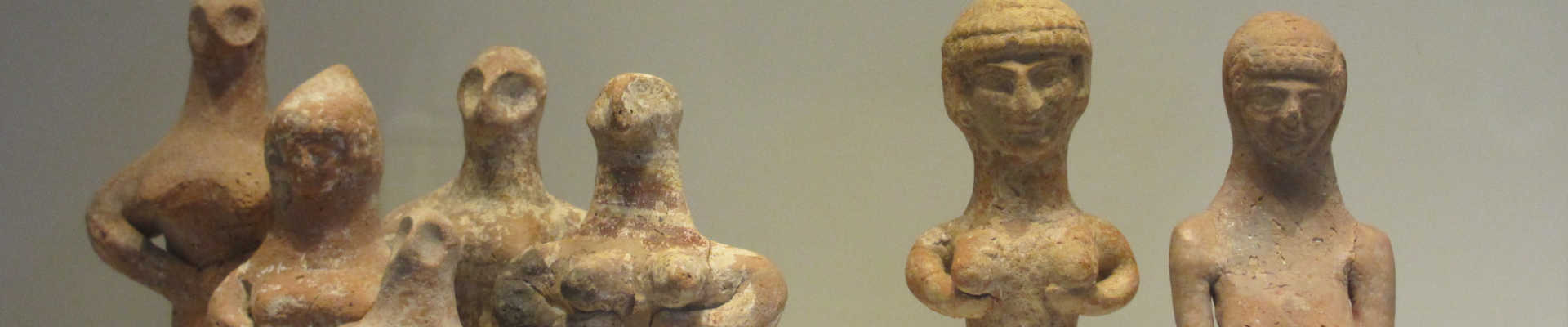
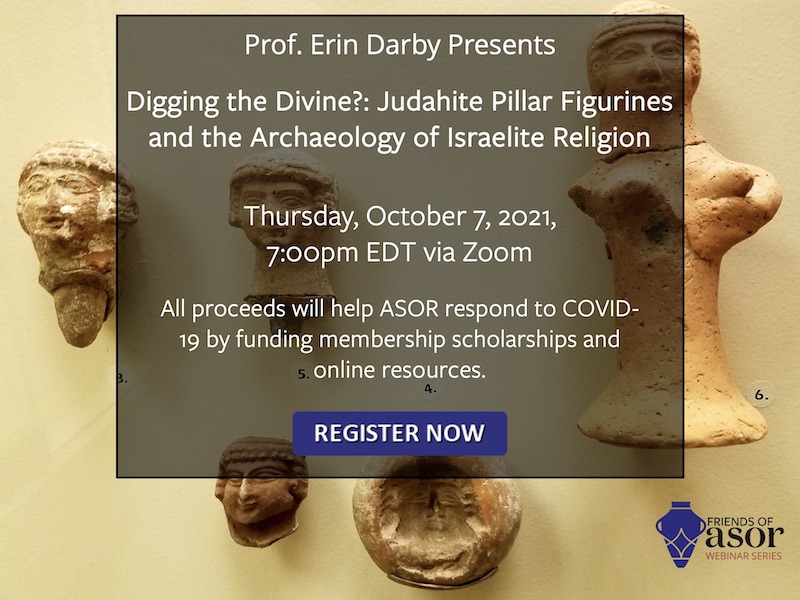
 Friends of ASOR present the next webinar in our monthly series on October 7, at 7:00 pm EDT, featuring Prof. Erin Darby. In this webinar, Dr. Darby will introduce you to the enigmatic female pillar figurines from the nation of Judah in the 8th-6th centuries BCE. These small clay figurines either supporting or holding their breasts are among the most numerous ritual objects uncovered in ancient Israel. However, they are never clearly mentioned in biblical texts and they lack inscriptions or identifying symbols. As a result, they have been interpreted in many ways, including as goddesses, as implements in illicit, popular rituals, and as objects used primarily by women to aid in fertility, birth, and infant health.
 Dr. Erin Darby is an associate professor of Early Judaism in the Department of Religious Studies and the Faculty Director of Undergraduate Research and Fellowships at the University of Tennessee. Erin is an expert in the archaeology of Israelite religion, with a particular focus on figurines and other cultic objects. These are the focus of her monograph, Interpreting Judean Pillar Figurines: Gender and Empire in Apotropaic Practice (Mohr Siebeck 2014) and a forthcoming co-edited volume entitled Iron Age Terracotta Figurines from the Southern Levant in Context (Brill, fall 2021), as well as several other publications. Her research has been supported by two fellowships from the W. F. Albright Institute of Archaeological Research (AIAR) in Jerusalem. She has also received funding to support her research at the American Center of Research (ACOR) in Amman, Jordan and the Cyprus American Archaeological Research Institute (CAARI), in Nicosia, Cyprus. Her most recent work has focused on figurines and other ritual objects at shrine sites in the Negev Desert of southern Israel and in southern Jordan. She is also an active field archaeologist and co-director of the ‘Ayn Gharandal Archaeological Project in the Wadi Arabah of southern Jordan.

 Friends of ASOR
 Yosef Garfinkel is Yigael Yadin Professor of Archaeology of the Land of Israel at the Institute of Archaeology,




 Pp. 192–199: “Grisly Trophies: Severed Hands and the Egyptian Military Reward System,” by Danielle Candelora
 Pp. 200–204: “The Bronze Mouse of Maresha,” by Ian Stern
 Pp. 216–229: “Eau de Cleopatra: Mendesian Perfume and Tell Timai,” by Robert J. Littman, Jay Silverstein, Dora Goldsmith, Sean Coughlin, and Hamedy Mashaly
