

Pp. 1–30: “The Date of Appearance of Philistine Pottery at Megiddo: A Computational Approach” by Eythan Levy, Israel Finkelstein, Mario A. S. Martin, and Eli Piasetzky
This paper addresses the question of the date of appearance of Philistine Bichrome pottery at Megiddo through a new computational approach, using recently developed chronology software. Based on historical dates, we obtain a terminus post quem of 1183 b.c.e. for the start of Philistine Bichrome at Megiddo using a broad model, and a terminus post quem of 1124 b.c.e. under stronger chronological hypotheses. Adding radiocarbon results at 68.2% confidence level to the model yields a narrow range of 1111–1086 b.c.e. for the appearance of Bichrome (1128—1079 b.c.e. for 95.4%). The paper also presents results suggesting that Stratum VIIB ended during, or only slightly before, the reign of Ramesses III (1184–1153 b.c.e.).
ASOR Members with online access: navigate to the token link email sent to you before attempting to read this article. Once you have activated your member token, click here to access the above article on The University of Chicago Press Journals’ website.

Pp. 31–53: “The Southern Levantine Roots of the Phoenician Mercantile Phenomenon,” by Ayelet Gilboa
I propose here a new way to look at the process through which, following the Bronze Age collapse and culminating in the second half of the 9th century b.c.e., polities in south Lebanon became the most important Levantine commercial hubs in the Mediterranean and the main patrons of the so-called Phoenician expansion. My approach differs from others dealing with the Phoenician question in that its definitions are not projected from a yet-to-happen “Phoenician” phenomenon in the West. It is an archaeological bottom-up diachronic approach and considers the entire Levantine coast and not Lebanon only, which is traditionally considered the Phoenician homeland. I argue that what may be termed the earliest Phoenician mercantile maritime ventures, in the early Iron Age, were launched mainly from the Carmel Coast and were directed mainly toward Egypt. Gradually this phenomenon expanded geographically, a process that can be followed closely. It was stimulated and conditioned mainly by the effects of Egypt’s withdrawal from Canaan, by the Late Cypriot IIIA collapse, by the slow recovery of the Syrian coast in the early Iron Age, and by environmental factors. The paper synthesizes several decades of research on Mediterranean issues, mainly in connection to Tel Dor on Israel’s Carmel Coast.
ASOR Members with online access: navigate to the token link email sent to you before attempting to read this article. Once you have activated your member token, click here to access the above article on The University of Chicago Press Journals’ website.

Pp. 55–85: “Ḥorvat Tefen: A Hasmonean Fortress in the Hinterland of ʿAkko-Ptolemais,” by Roi Sabar
Ḥorvat Tefen is located on a prominent hilltop in the Western Galilee, overlooking ʿAkko-Ptolemais and its vicinity. The remains of several rectangular towers, curtain walls, a single gate, and reservoirs are well discernible and suggest it was a military post. This article describes the results of the first excavation undertaken at the site, conducted in 2019 on behalf of the Hebrew University of Jerusalem. The excavations in four of the towers uncovered accumulations above floors as well as the foundations of the walls. The finds indicate this was a short-lived military site that was apparently founded by Alexander Jannaeus in the last years of his reign and abandoned shortly thereafter. The finds are unique in their well-defined chronological range and shed important light on the material culture of the early 1st century b.c.e. Galilee—the heyday of the Hasmonean territorial expansion. Two appendices present the coins and the amphorae finds, both crucial for dating the foundation of the fortress and identifying it as a Hasmonean initiative. In this context, the location of Ḥorvat Tefen suggests it was built to defend a sensitive part of the northwestern border of the Hasmonean state facing ʿAkko-Ptolemais.
ASOR Members with online access: navigate to the token link email sent to you before attempting to read this article. Once you have activated your member token, click here to access the above article on The University of Chicago Press Journals’ website.

Pp. 87–112: “A Middle Bronze Age Assemblage of Bone Inlays from Lachish: Typological, Technological, and Functional Aspects,” by Noam Silverberg, Yosef Garfinkel, Michael G. Hasel, and Naama Yahalom-Mack
Decorated bone inlays are among the fossiles directeurs of Middle Bronze (MB) Age II and early Late Bronze Age assemblages, having been documented since the beginning of archaeological research in the Levant. During the Fourth Expedition to Lachish, an assemblage of 49 decorated bone inlays restored from ca. 200 fragments was found in the rooms of a late MB II monumental building. The inlays were apparently used to decorate wooden boxes. Although such inlays are usually recovered from mortuary contexts, here they were found among daily objects, indicating that the building played an administrative role. In this paper the typological, technological, and functional aspects of the inlays are examined. We reconstruct the use of these objects and discuss the social context in which they were produced and used, providing an additional perspective on such objects and their role in both life and death during the late MB II. Our technological approach included microscopic examination of the inlays, which provided new information on the variability of craft traditions, suggestive of a decentralized production mode.
ASOR Members with online access: navigate to the token link email sent to you before attempting to read this article. Once you have activated your member token, click here to access the above article on The University of Chicago Press Journals’ website.

Pp. 113–138: “Ambiguity of Divine and Royal Portraiture and the Hiyawan Image of Kingship: Political Identity through the Monuments of ÇİNEKÖY and KARATEPE,” by Nathan Lovejoy
This paper examines the content of the ÇİNEKÖY and KARATEPE Inscriptions, the selection of scripts on the monuments, and the choices of iconography on the two statues of the Storm God. These monuments represent a regionally and temporally specific practice of representation that ambiguously blends elements of divine and royal imagery into a new form, while taking a similar approach to the semiotics of rulership as the Neo-Assyrian kings. The combined elements of the monuments suggest a unique cultural strategy in which the agency of the ruler is blended with that of the Storm God, exemplifying the specific worldview of Iron Age Cilicia that informed their composition. The rulers who created these monuments sought to assert their political identity through the combination of the figural representations, the visuality of the scripts, and the content of the inscriptions; the two monuments illustrate a drastic change in the political agenda of the kingdom of Hiyawa, reflecting a shift in power among opposing political factions. These identities also contain a sense of intentional ambiguity, as the various elements do not immediately support the same message, but rather work together to propagate a multifaceted message of military prowess, commercial interconnectedness, and royal legitimacy and kingship.
ASOR Members with online access: navigate to the token link email sent to you before attempting to read this article. Once you have activated your member token, click here to access the above article on The University of Chicago Press Journals’ website.

Pp. 139–169: “Early Islamic Copper Coins from Excavations in the Central Levant: An Indicator for Ancient Economy,” by Hagit Nol
Legible copper coins from excavations of Early Islamic sites are scarcer than in other periods. They contain, however, valuable information for understanding economic operations. The focus of this paper is the mint-toponyms inscribed on coins that point to their production place. This identification enables network inquiries and economic interpretations on a level that is rarely possible with archaeological finds. The following study utilizes coins of the 7th–9th centuries from excavations in one area in Israel, Palestine, and Jordan. It looks at mint names and the exact location of the coin’s discovery, maps these data with GIS, cross-references characteristics in the data, and detects possible correlations. The paper emphasizes two results. The first is a calculation of the distance that copper coins traveled—locally, regionally, or farther. This result challenges the view that copper coins were only circulated locally. The second result is the identification of sites with coins from four or more mints as marketplaces. Some of these sites are located at the center of large sites, such as Ramla or Beth Shean, but others are their neighboring small sites that acted in parallel. This result disputes Central Place Theory and similar paradigms.
ASOR Members with online access: navigate to the token link email sent to you before attempting to read this article. Once you have activated your member token, click here to access the above article on The University of Chicago Press Journals’ website.

Pp. 171–180: Three Women from Elam: A Revision of the Haft Tappeh Metal Plaque,” by Babak Rafiei-Alavi, Faranak Bahrololoumi, and Sabine Klein
The metal plaque of Haft Tappeh was found more than 60 years ago, and except for a few scenes on terracotta plaques and cylinder seals from both Elam and Mesopotamia with similar but not identical settings, it still has no known parallels in metal and remains a unique example of Elamite art. The present article is a study of this object from the heartland of the Elamite kingdom in the Khuzestan Plain. It revisits the scenic plaque and attempts to correct some of the misunderstandings regarding the identification of its iconography and symbology based on new photos, X-ray images, and lab analysis. The article also tries to place the plaque in its proper spatial and temporal context, using comparative methods and chemical and isotope analysis.
ASOR Members with online access: navigate to the token link email sent to you before attempting to read this article. Once you have activated your member token, click here to access the above article on The University of Chicago Press Journals’ website.

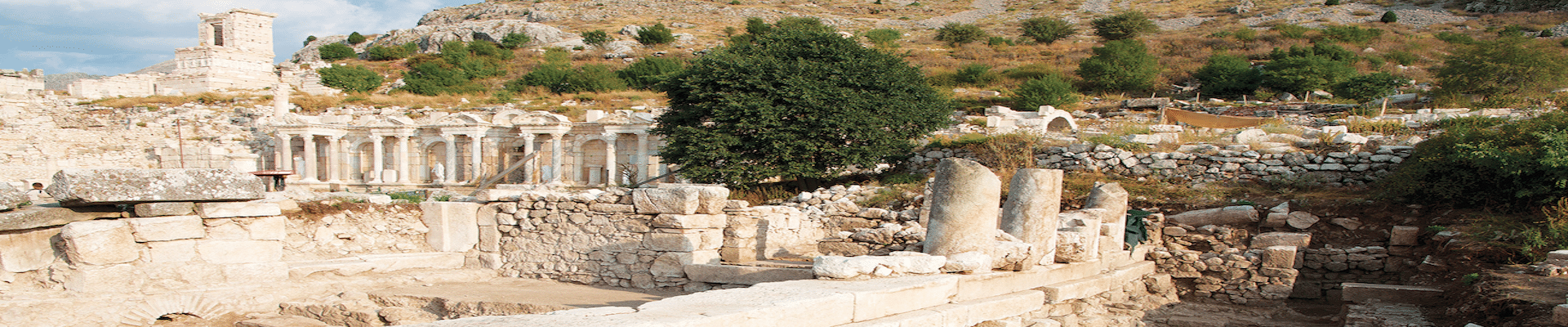
Pp. 181–205: “Moving in Together? Synoikismos and Polis Formation at Sagalassos and in Southwest Anatolia,” by Dries Daems and Peter Talloen
Topics such as polis formation and synoikismos have a rich background in classical studies, history, and archaeology. Such studies have mainly focused on the attestations of synoikismos events in literary sources and inscriptions. The archaeological side of such processes has not always been given equal weight. This paper presents a more encompassing view on patterns of synoikismos and polis formation by incorporating and assessing archaeological evidence in a model of push-pull interactions between local communities and the Hellenistic kingdoms in southwest Anatolia. This model will be applied on a case study of the origin of polis at Sagalassos and its relation with the nearby settlement at Düzen Tepe during its formative years in the Early to Middle Hellenistic period (3rd–2nd centuries b.c.). It will then situate this case in its wider context of settlement patterns and community formation in southwest Anatolia, focusing on the ancient regions of Pisidia, Lycia, and Pamphylia. The paper suggests that interactions between local communities and overarching central administrations offered suitable stimuli that resulted in local communities starting to participate in wider dynamics of economic and political importance. This ultimately resulted in observed patterns of polis formation and a potential synoikismos.
ASOR Members with online access: navigate to the token link email sent to you before attempting to read this article. Once you have activated your member token, click here to access the above article on The University of Chicago Press Journals’ website.

Pp. 207–220: “The Temple and the Town at Early Bronze Age I Megiddo: Faunal Evidence for the Emergence of Complexity,” by Lidar Sapir-Hen, Deirdre N. Fulton, Matthew J. Adams, and Israel Finkelstein
The Early Bronze Age is considered to be the period when complex and hierarchical societies first developed in the southern Levant. The appearance of specialization and social complexity is manifested through different aspects of the production stages of animal economy. In this paper, we examine faunal assemblages from two interconnected contemporaneous neighboring sites of differing characters in the Jezreel Valley, Israel: Megiddo, a cult site, and Tel Megiddo East, a town site. Both assemblages are dated to the Early Bronze Age IB (EB IB; 3090–2950 b.c.e.), at the dawn of urbanization in the Near East. The connection between sites, revealed in previous studies of other aspects, is supported by the analysis of faunal remains that reveals intriguing overlaps and divergences. The results of the current study show that the control of resources by the Great Temple in Megiddo also included access to animals and their products, and that it impacted the animal economy in settlements in its hinterland. The impact of this system demonstrates the Great Temple at the center of a larger regional economic organization in the late EB IB that would presage the urban developments of the EB II–III.
ASOR Members with online access: navigate to the token link email sent to you before attempting to read this article. Once you have activated your member token, click here to access the above article on The University of Chicago Press Journals’ website.







 Patty Gerstenblith is a Distinguished Research Professor of Law at DePaul University and director of its Center for Art, Museum and Cultural Heritage Law. She was appointed by President Obama to serve as Chair of the President’s Cultural Property Advisory Committee in the US Department of State on which had previously served as a Public Representative under President Clinton. Since 2020, she has served as President of the Board of Directors of the US Committee of the Blue Shield and Chair of the Blue Shield International Working Group on Illegal Trafficking of Cultural Objects. She was founding president of the Lawyers’ Committee for Cultural Heritage Preservation and editor of the International Journal of Cultural Property and is currently a Research Associate of the Cultural Heritage Center at the University of Pennsylvania Museum of Archaeology and Anthropology. The fourth edition of her casebook, Art, Cultural Heritage and the Law, was published in 2019. Gerstenblith lectures and publishes widely on the subjects of protection of cultural heritage during armed conflict and the international market in cultural objects. Gerstenblith received her AB from Bryn Mawr College, PhD in art history and anthropology from Harvard University, and JD from Northwestern University.
 Lisa Ackerman is the Executive Director of the Columbus Citizens Foundation, a non-profit organization in New York City committed to fostering an appreciation of Italian-American heritage and achievement through a broad range of philanthropic and cultural activities. Previously, Ackerman served as the Interim Chief Executive Officer, Executive Vice President, and Chief Operating Officer of the World Monuments Fund, an organization founded in 1965 that has assisted in the conservation and development of long-term stewardship strategies at more than 600 sites in 100 countries, and as Executive Vice President of the Samuel H. Kress Foundation. At WMF, where she worked from 2007 to 2019, Ackerman developed multiple international collaborative projects in conservation. In addition to general supervision over approximately 60 projects in 40 countries, she is the senior project manager for activities in Cambodia, Iraq, Libya, Thailand, and Tunisia.
 Andrew Cohen is currently a government professional using his experience with the legislative process, congressional oversight, and executive-legislative branch relations to advise the Internal Revenue Service on Congressional affairs. In 2020-21, he was a Brookings Fellow at the U.S. Senate Homeland Security and Governmental Affairs Committee. Prior to that, he worked for over a decade advising the U.S. Department of State on international cultural heritage protection and preservation policy, and representing the United States government in bilateral, multilateral, and intergovernmental fora as an expert on cultural heritage. In 2018-2019, as Executive Director of the Cultural Property Advisory Committee at the State Department, Cohen managed the simultaneous negotiation, signing, and implementation of more than 20 cultural property agreements between the United States and partner countries around the world, including most of the countries in the Near East and wider Mediterranean world. Dr. Cohen holds a Ph.D. in Near Eastern Archaeology and M.A. in Classical Archaeology from Bryn Mawr College.
 Jane DeRose Evans is Professor and Chair of Art History at Temple University. She specializes in the archaeology of the Roman provinces and especially in ancient numismatics. She is a Fellow of the American Numismatic Society and a member of the Royal Numismatic Society. After excavating for many years in France, she is now project numismatist for the Harvard/Cornell Excavations in Sardis and the George Washington University excavations at Bir Madhkur (Jordan). Recently, she brought to publication The Mithraeum at Caesarea Maritima (ASOR Press. Evans has been a member of ASOR for many years, and she currently serves on the Cultural Heritage Committee and has testified on behalf of the Memoranda of Understanding that allow intercepting illegally obtained antiquities from Cyprus and Egypt at the US border. Evans served on the ASOR Board from 2011-2013 and then rejoined the Board again in January 2016. She is currently serving as the Chair of the Trustee Nominations Committee and as the Chair of the Cultural Heritage Committee.
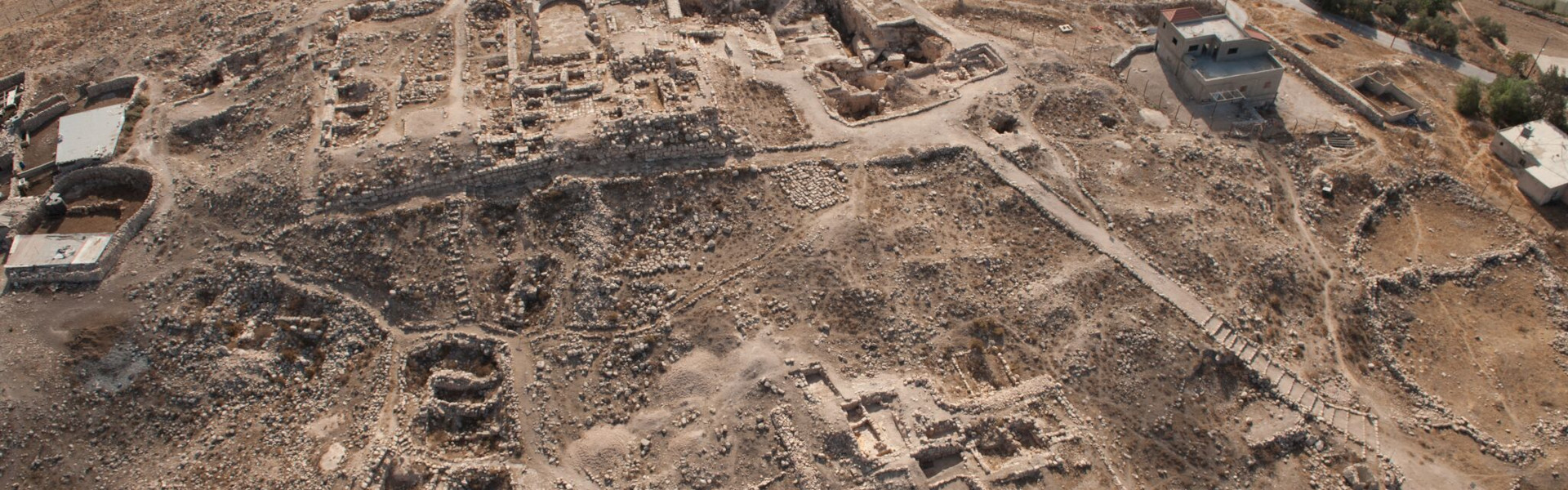

 Øystein LaBianca is a Professor of Anthropology in the Department of Behavioral Sciences and Associate Director of the Institute of Archaeology at Andrews University. He is the Senior Director of the Hisban Cultural Heritage Project, a community archaeology project centered at Tall Hisban in Jordan. He holds a Ph.D. in cultural anthropology and archaeology from Brandeis University. LaBianca’s research in Jordan began with studies of long-term human-animal-environment interactions as evidenced by changes over time in animal bone assemblages and related finds uncovered by his excavations and surveys at Tall Hisban. He has also been a leader in introducing community archaeology approaches to archaeological projects in Jordan. He is a long-time member of the boards of trustees of ASOR and ACOR in Amman, Jordan.
 Elizabeth Osinga is currently working full-time as a co-director of the Umm al-Jimal Archaeological Project (UJAP). A former student of the late UJAP director Bert de Vries, she has worked with the project since 2012 and her graduate work focused on a socio-economic approach to ceramic analysis at the site (University of Southampton, MA, PhD). When not involved in excavations, grant writing, or other essential projects, she is immersed in Umm al-Jimal’s archive, analyzing the backlog of excavation reports and materials in preparation for long-overdue publication.
 Darrell Rohl is an Assistant Professor of Archaeology, History, and Digital Humanities at Calvin University and is a co-director of the Umm al-Jimal Archaeological Project. A graduate of Andrews University (BSc) and Durham University (MA, PhD), his research has primarily focused on Roman and Late Antique periods in England, Scotland, and Jordan, as well as the application of place theories in archaeological and heritage contexts. He has co-directed excavations with Dr. Elizabeth Osinga at the Hisban North Church (2018) and Umm al-Jimal (2019), and has further fieldwork and research experience in the UK, USA, and Italy.

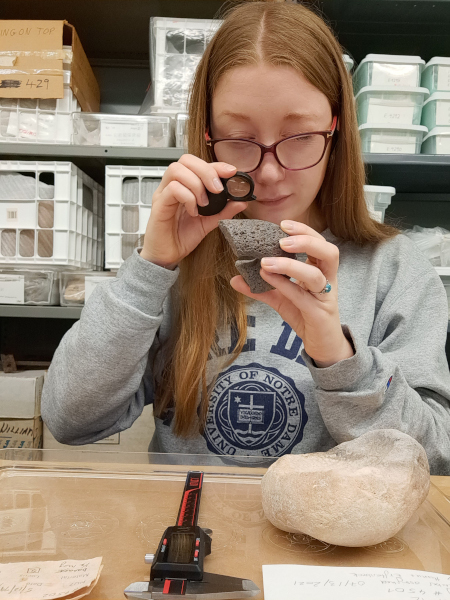
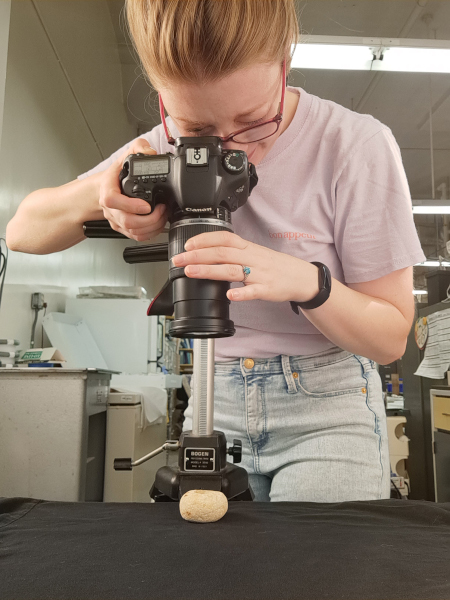

 ASOR’s 2022 March Madness Challenge was a success and we “filled the pots” for
