
 Trustee Nominations Committee has selected six highly qualified members to stand for election for four open positions on the Board of Trustees. The Board sets the direction for ASOR and provides oversight for our organization. Among other responsibilities, members of the Board agree to attend two meetings each year, to participate thoughtfully in the governance process, and to contribute financially to ASOR.
There are four candidates running for two openings as Membership-elected Trustees for 3-year terms (Tiffany Earley-Spadoni, Timothy Matney, Stephanie Selover, and Stuart Tyson Smith). There are two candidates for two openings as Institutionally-elected Trustees for 3-year terms (Kiersten Neumann and Jason Ur). All ASOR members are eligible to vote in the Membership-elected Trustee Election, while only Institutional Representatives of the 60 ASOR-member schools may vote in the Institutionally-elected Trustee Election. Missions and brief biographies of the nominees will be available in the ballot.
ASOR will conduct the elections by online ballot, and all members and Institutional Representatives will receive the appropriate ballot(s) via email on or around October 10, 2026. We will send out two reminders, and all ballots must be completed by 5:00 PM Eastern Time on Friday, November 13. If you have difficulties completing the online ballot (once they are distributed), please contact Marta Ostovich at programs@asor.org.
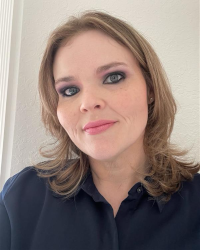
Tiffany Earley-Spadoni
Dr. Tiffany Earley-Spadoni is Associate Professor of History at the University of Central Florida and Director of the Kurd Qaburstan Project, an ASOR-affiliated excavation of the ancient city of Qabra in the Kurdistan Region of Iraq. Her archaeological and historical research focuses on landscapes, urbanism, warfare, empires, and digital approaches. She is the author of Landscapes of Warfare: Urartu and Assyria in the Ancient Middle East, recipient of ASOR’s 2025 Frank Moore Cross Book Award. She has received both the ASOR Mesopotamian Fellowship and the Shepard Urgent Action Grant.
Earley-Spadoni served as Chair of the Early Career Scholars Committee from 2018 to 2024 and also served on the Chairs Coordinating Council and Finance Committee. She currently serves on the Honors and Awards Committee. She received ASOR Membership Service Awards in 2023 and 2024 for her contributions to the organization. She has chaired more than twenty ASOR annual meeting sessions and workshops and founded the Digital Archaeology and History session, now an ASOR Standing Session.
Mission Statement:
Over the past eighteen years, I have participated in ASOR as a member, presenter, session organizer, committee member and chair, mentor, excavation director, grant recipient, and student volunteer. These experiences have given me a strong appreciation for ASOR’s role in advancing research, supporting fieldwork, and fostering scholarly community.
If elected to the Board of Trustees, I will focus on two priorities: advocating for increased grant funding opportunities for ASOR members in light of reduced federal support and supporting ASOR’s early career scholars. I will advocate for expanding ASOR-administered fellowships, project grants, and travel support. I am also committed to strengthening mentorship, training, and networking programs for early career scholars. These efforts are essential to help members navigate funding challenges and ensure opportunities for the next generation of researchers.
Throughout my ASOR service, I have worked to create opportunities for members to connect, collaborate, and develop new skills. As a trustee, I would build on that experience and work collaboratively to ensure ASOR remains a strong, sustainable, and intellectually vibrant organization for years to come.

Timothy Matney
Timothy Matney (BA Institute of Archaeology, London 1987, MA 1991 and PhD 1993 University of Pennsylvania) is Professor of Archaeology at the University of Akron. His areas of research include urbanism, the Early Bronze and Iron Ages, Neo-Assyrian archaeology, geophysics, and rurality in imperial Assyria. Matney co-directed excavations for seven seasons at the Early Bronze Age city of Titriş Höyük with Guillermo Algaze (1994-1999) and directed excavations at Neo-Assyrian administrative center of Ziyaret Tepe (1997-2014). His co-authored volume Ziyaret Tepe: Exploring the Anatolian Frontier of the Assyrian Empire (with J. MacGinnis, D. Wicke, and K. Köroğlu) won the 2019 AIA Felicia A. Holton Book Award for the best work representing archaeology to the public. Matney is currently editing the final publications of both the Titriş Höyük and Ziyaret Tepe excavations. His current ASOR-affiliated fieldwork, started in 2023, the Sebittu Project explores seven small villages in the Neo-Assyrian imperial heartland of the Erbil Plain in the Kurdish Region of Iraq. Matney has been a regular participant at ASOR meetings since giving his first ASOR paper in 1995 and served on the Baghdad Committee at ASOR.
Mission Statement:As a long-time participant at ASOR, I am always impressed at how many things ASOR does well in its mission to advance archaeology, inform the public, and serve as a steward for cultural heritage in the Near East. One of the biggest challenges that scholars now face in the US are disruptions to decades-old federal support system for archaeological fieldwork (e.g., NSF and NEH) which were the mainstay of many early career academics. ASOR already provides over two dozen grants and fellowships. One question to ask is whether, at this junction, it is possible to find resources for ASOR to do even more to fund fieldwork for those at the start of their careers. Likewise, I have always worked with the local communities where my fieldwork is located to give back knowledge of what our research has revealed about the past. Efforts like giving public lectures in the villages near my field sites, designing permanent displays at regional museums, and training local archaeologists in field techniques are common at many projects. Recently, I decided to take things a step further and build local infrastructure by providing permanent geophysical equipment to the General Directorate in Erbil so that staff, after training, could conduct surveys themselves. In the case of Iraq, this allows local archaeologists to document sites endangered by economic development, changes in land use, and conflict. I would like to help expand ASOR’s active cultural heritage initiatives by finding more resources to foster these kinds of collaborations with our partners in host countries.
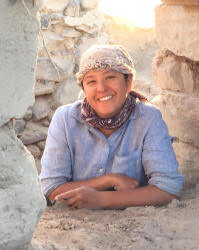
Stephanie Selover
Stephanie Selover (MA and PhD, University of Chicago; BA, Stanford University) is an Associate Professor and Chair of the Department of Middle Eastern Languages and Cultures and an Associate Professor of Anthropology at the University of Washington. Her research interests and publications focus on the domestic and technological archaeology of Late Chalcolithic and Early Bronze Age Anatolia, the domestic archaeology of Iron Age Jordan, the archaeology of warfare and violence in prehistoric Anatolia, and the effects of modern politics on the archaeology of the Middle East. She has excavated archaeological sites in Jordan, Türkiye, Syria, Israel, Italy, and the United States. She is currently Co-Director of the excavations at Çadır Höyük in Türkiye and Field Director at Khirbat al-Balua in Jordan.
Mission Statement:I have been a member of ASOR since 2007 and attended nearly all annual meetings since then. I am also a member of the Committee on Archaeological Research and Policy and the Committee on Growth, Innovation, and Visibility.
As an archaeologist and professor, I believe it is the duty of archaeology not only to interpret the past, but also to make it as accessible to as many people as possible. As an undergraduate, I was able to participate in my first excavations because of scholarships provided through my university. Those opportunities allowed me to discover my passion for archaeology and cultural heritage, a passion that has not abated to this day.
I firmly believe that archaeology should be accessible to anyone who wishes to participate, and I have always worked to help students find the financial resources necessary to attend field schools. I also believe strongly in the importance of community in archaeology. Excavations should be, first and foremost, part of and responsive to, the local community, with its interests and needs serving as a foundation for excavation goals.
If elected, I hope to continue supporting ASOR’s commitment to being a safe, open, and welcoming organization for all people, improving financial accessibility and support for students, and providing opportunities and funding for better incorporating local communities into archaeological research and practice.

Stuart Tyson Smith
Stuart Tyson Smith is Professor of Anthropology at the University of California, Santa Barbara (M.S. Ed. from USC and M.A. and Ph.D. in Archaeology from UCLA). At UCSB, he has served as Chair of Anthropology and Director of the Institute for Social, Behavioral, and Economic Research. Ancient Egyptian colonialism, intercultural interaction, identity, and the origins of the Napatan state, whose rulers conquered Egypt becoming Pharaohs of the 25th Dynasty, provide the focus of his current archaeological research. He has published on the dynamics of Egyptian imperialism and royal ideology, the use of sealings in administration, death and burial in ancient Egypt and Nubia, and the ethnic, social and economic dynamics of interaction and colonialism between ancient Egypt and Nubia. In a new line of research, he applies a postcolonial critique to modern views of ancient Egypt as not truly African and Nubia as its subordinate. Smith’s material specialization lies in ceramic analysis, including the chemical characterization of absorbed residues. He is also an active field archaeologist, having excavated in Egypt and since 1997 directed archaeological projects in Sudanese Nubia, in particular at Tombos with Sudanese archaeologist Prof. Mohamed Faroug Ali (Africa Institute, UAE) and bioarchaeologist Prof. Michele Buzon (Purdue). With fieldwork in Sudan made untenable by the civil war, he has joined Egyptian archaeologist Dr. Essam Nagy and Prof. Danielle Candelora (Holy Cross) as co-Director of the Osiris-Ptah Nebankh Project, a Nubian (Kushite) chapel at Karnak Temple in Luxor, Egypt.
Mission Statement:I have been increasingly involved in ASOR with the organization’s broadening of regional focus from its traditional emphasis on the Levant to the wider Mediterranean world, western and central Asia, and especially for me north Africa. I also appreciate the increasing engagement with theoretical perspectives that cross cut regional specialties, making ASOR a welcoming place for often marginalized areas of study like Nubiology. As a scholar focused on Africa, I have also been impressed by the ASOR’s commitment to making a difference in the context of this expanded focus by pursuing donations and supporting local scholars, particularly in places with critical needs like the recent initiatives in Libya and Sudan, helping to preserve heritage and repair the damage of civil war. One of my goals as a member of ASOR’s Board of Trustees would be to continue to foster and develop this larger regional focus, which I feel strongly benefits the organization as a whole. Promoting diversity in our field is also a priority for me, especially in these trying times. I would work to maintain and develop endowments for supporting the participation of students from underrepresented groups and indigenous students and scholars from the regions we study who do not have the resources to attend the annual meetings and acquire training and expertise through fieldwork.
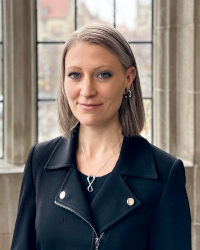
Kiersten Neumann
Kiersten Neumann is an art historian, archaeologist, curator, and educator specializing in ancient West Asia, with a focus on Assyria and Persia and their connections with Arabia. She is Curator of the Institute for the Study of Ancient Cultures (ISAC) Museum, Research Associate at ISAC, and Lecturer in the Department of Art History at the University of Chicago. Her work explores sensory experience, ritualized practice, and visual culture, as well as museum practice, collecting histories, provenance research, and cultural heritage preservation. She has curated numerous exhibitions at the ISAC Museum, including most recently Artifacts Also Die (2023) and Megiddo: A City Unearthed, A Past Imagined (2025–26), and the reinstallation of the museum’s permanent galleries (2019). She is co-editor of The Routledge Handbook of the Senses in the Ancient Near East (2022) and Scribal Worlds: Scholarship and classification in cuneiform cultures (2026). She has conducted archaeological fieldwork in Turkey (Tell Tayinat) and Greece (Athenian Agora), and is part of the Nineveh East Archaeological Project, a collaboration between the Iraqi State Board of Antiquities and Heritage and ISAC. She also collaborates on international museum, art, and cultural heritage projects, and works with diaspora artists and communities to advocate for and renew engagement with the heritage of West Asia. Originally from Vancouver, Canada, she earned her B.A. and M.A. from the University of British Columbia and her Ph.D. from the University of California, Berkeley (2014).
Mission Statement:
Joining ASOR’s Board of Trustees in 2024 opened a new window onto the organization and deepened my interest in serving. I now chair the Development Committee; co-chair the Program Committee and the new Friends of ASOR Committee; and serve on the Executive and Finance Committees, the Chairs Coordinating Council, and the editorial advisory committee of The Ancient Near East Today. Seeing how a concern raised by a single committee member moves through every level of the organization has been invaluable. When I first ran for the Board, I hoped to bring greater recognition to the museum world: this year’s plenary speaker is Kim Benzel, Curator in Charge of Ancient West Asian Art at The Met; more support is now available to members working with collections; and the Museum Professionals Working Group I co-founded in 2022 continues to meet each year at the Annual Meeting. I also wanted to build partnerships with scholars across the regions at the heart of ASOR’s work, which led me to establish the Tigris Travel Grant in 2024; it has now brought five scholars from Iraq and its Kurdistan Region to the Annual Meeting.
ASOR has always stood out to me for its collegiality as much as its scholarship, yet our field is marked by deep rifts right now, felt across our membership. I believe more strongly than ever that we need policies members can have confidence in and that reflect our shared values and ethical commitments. On the Program Committee, I’ve worked to apply our Policy on Professional Conduct consistently and transparently, and I’m encouraged by the work of the Taskforce now reviewing it. To members who feel unheard, my ask is simply to get involved—to join a committee, talk to trustees, and bring your perspective to the conversations that lead to change. Through it all, I remain heartened by ASOR’s growth: its expanding geographical and chronological reach traces a map with increasingly blurred boundaries, one that better reflects what our research keeps showing—an ancient world of widespread trade and contact over land and sea, with communities and their heritage continuing into the present.
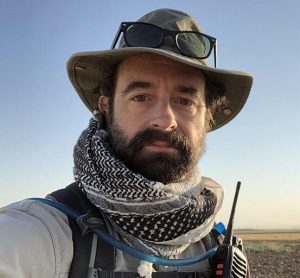
Jason Ur
Jason Ur is Stephen Phillips Professor of Archaeology and Ethnology in the Department of Anthropology at Harvard University. He specializes in early urbanism, landscape archaeology, and remote sensing, particularly the use of declassified US intelligence imagery. He was trained in Anthropology at the University of Pennsylvania (BA 1994) and in Near Eastern Languages and Civilizations at the University of Chicago (PhD 2004). He has directed field surveys in Syria, Iraq, Turkey, and Iran. He is the author of Urbanism and Cultural Landscapes in Northeastern Syria: The Tell Hamoukar Survey, 1999-2001 (2010). Since 2012, he has directed the CAP-affiliated Erbil Plain Archaeological Survey, an archaeological survey in the Kurdistan Region of northern Iraq. He is also preparing a history of Mesopotamian cities.
Ur joined ASOR as a student member in the late 1990s. He held the ASOR Mesopotamian Fellowship in 2000-2001 and served on the Committee on Mesopotamian Civilization from 2009-2013. He was the plenary speaker at the 2014 ASOR annual meeting. He organized and chaired the Settlement and Society in the Ancient Near East session from 2008-2010. The Archaeology of the Kurdistan Region of Iraq session, which he founded and chaired from 2017-2019, is now a Standing Session. He was first elected to ASOR’s Board of Trustees as Harvard’s Institutional Trustee in 2021 and has also served on the Board’s Executive Committee since 2025.
Mission Statement:
As a member of ASOR’s Board of Trustees, I will continue to promote its mission to create and disseminate knowledge of the history and culture of the societies of the Near East, past and present. I advocate for a geographically-inclusive ASOR that involves broader areas of West Asia beyond ASOR’s traditional areas of strength, and a comparative anthropological perspective to complement its culture-historical emphases. I am particularly interested to amplify new voices in ASOR: those of our research partners in the Middle East, and those of the next generation of scholars in our graduate and undergraduate classrooms. Finally, I hope to advocate for digital methods of research and outreach, with the goal of making ASOR members’ scholarship more accessible to our colleagues, to the public, to stakeholders in the countries where we conduct our research, and to future generations.