Fieldwork Report: Mandy Porter

DiggerKissonerga Skalia Cyprus July 2015 – 1920x600

Archaeology in Prehistoric Cyprus Rocks

Mandy Porter, 2025 Strange/Midkiff Families Scholarship Recipient

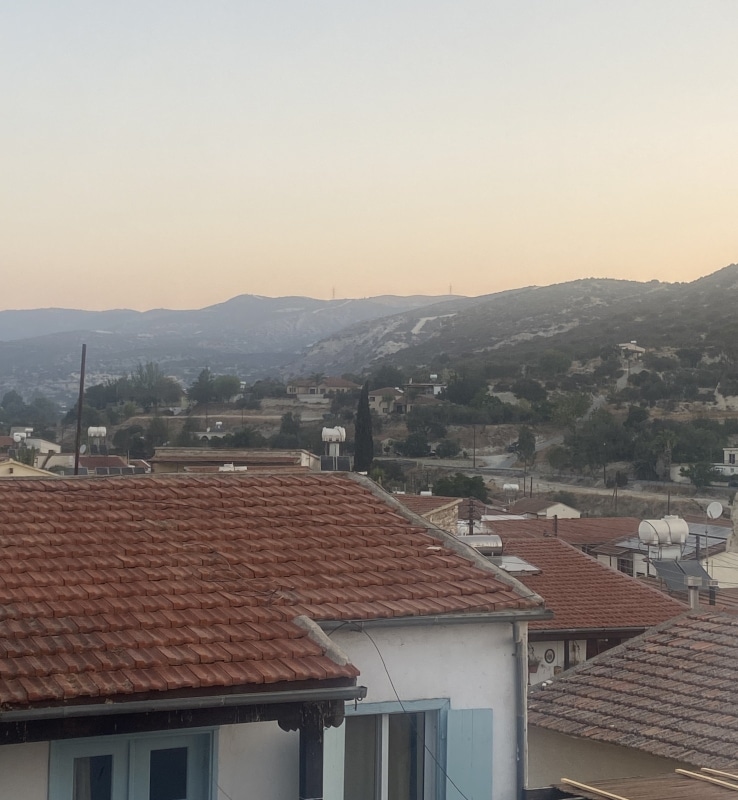
Kissonerga-Skalia is a Bronze Age settlement on the western coast of Cyprus, 10km north of Paphos. The site was occupied from the Early Cypriot Bronze Age (c. 2500 BC) to the beginning of the Late Bronze Age (c. 1600 BC). This ASOR-affiliated project is directed by Lindy Crewe (CAARI) and Ian Hill (HARP Archaeology). This is a remarkably interesting, and sometimes puzzling, site to excavate. The soil does not usually have distinct color changes, due to being baked in the sun, so it is important to pay attention to the soil’s texture. Additionally, the site is in a plow-zone, causing the different chronological layers and artifacts to be mixed together. While these aspects may seem daunting at first, they help archaeology students learn how to excavate meticulously.

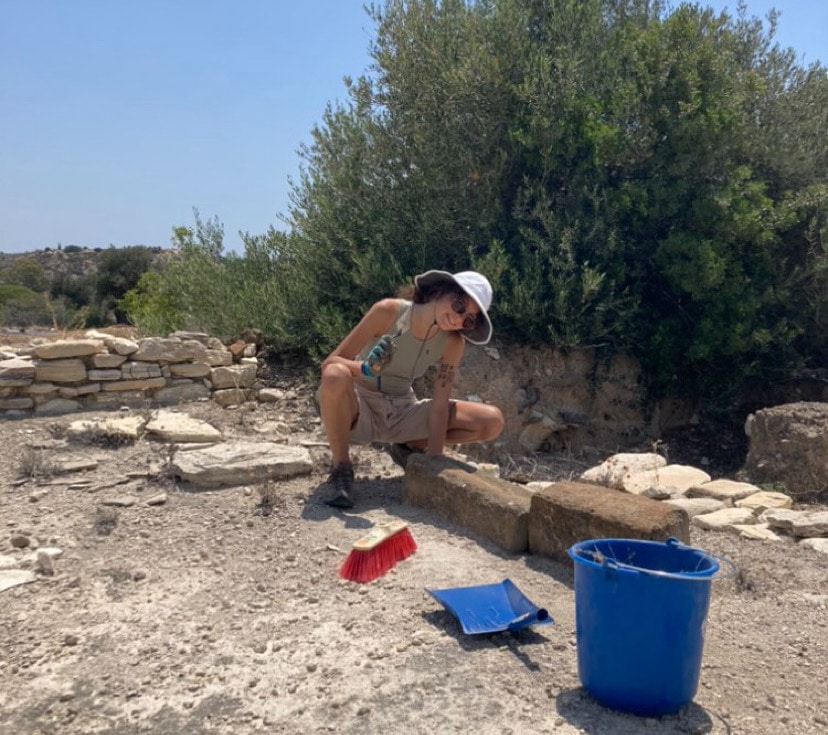
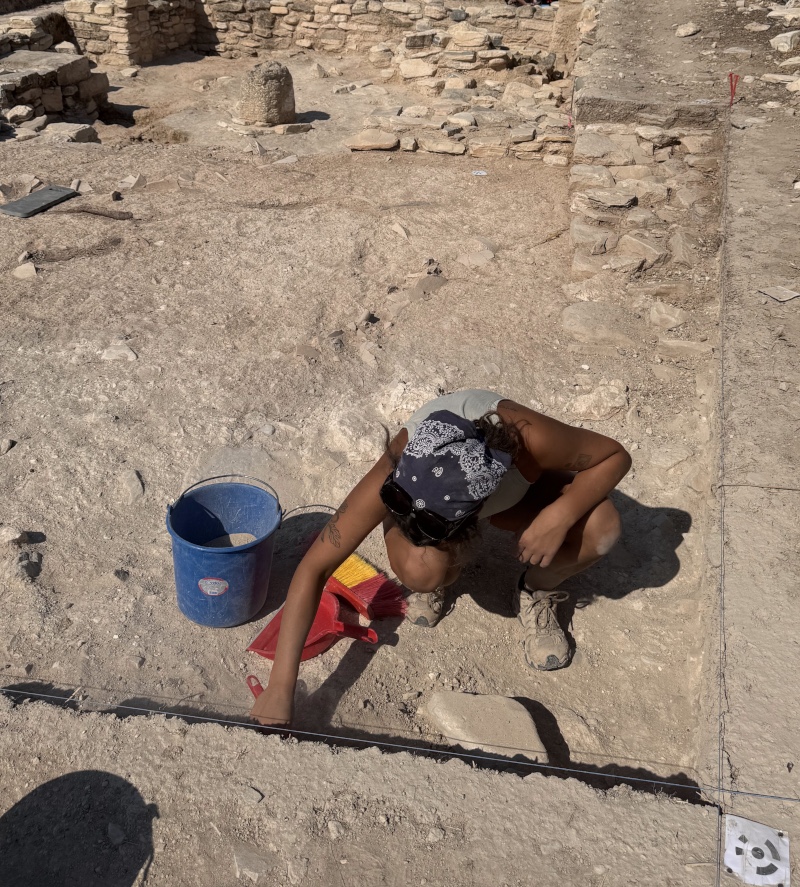
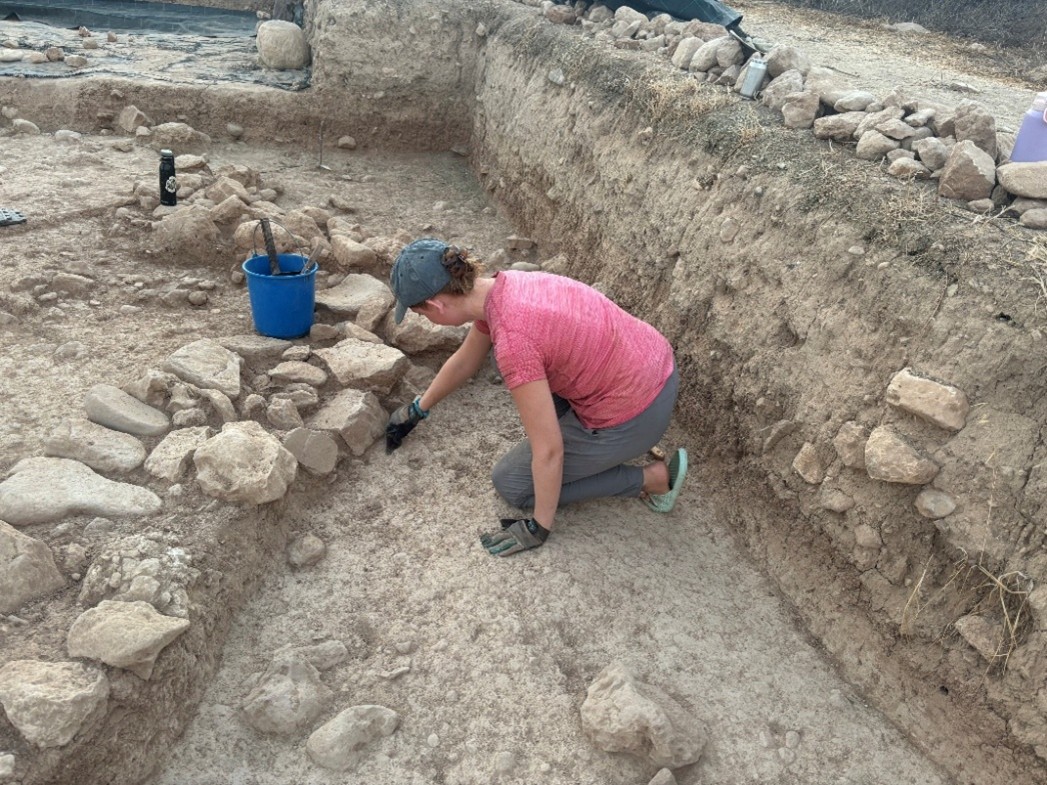
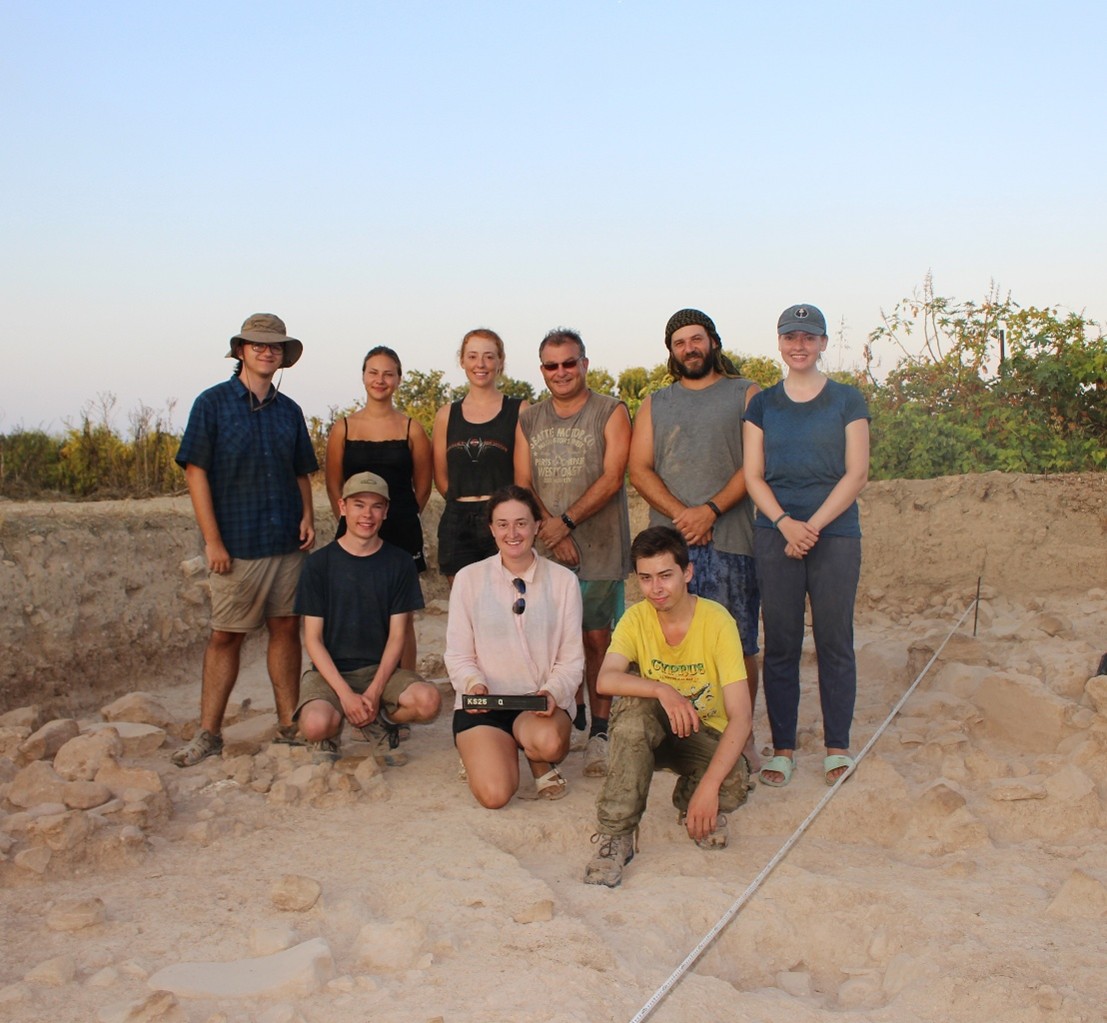
This summer was my second season at Kissonerga-Skalia, and I happily returned to my old unit, Trench Q, to pick up where I left off last year. This trench features an intact pithos, querns as well as other ground stones, and metal artifacts. Trench Q is also riddled with several wall constructions and pits. These walls cut into each other from various directions, and they feature different concentrations and sizes of stones, suggesting that they are not contemporaneous with each other. Trench Q also has a large number of rocks, many of which form the circular boundaries of pits running parallel to the walls. In order to confirm the presence of a pit, we had to identify the pit edges by defining the rocks and lightly trowelling the surrounding area to find where the soil texture transitioned from being compact to soft.

Mandy defining a compact surface and wall in Trench Q.

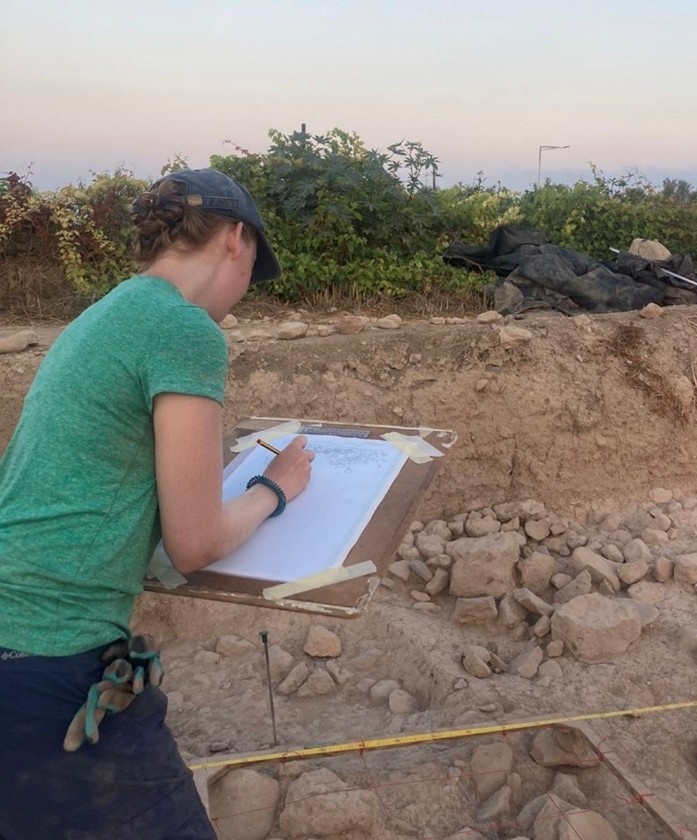
Another part of my trench features a jumbled heap of rocks, which I worked with most of last year. This season we attempted to articulate the pile by removing smaller, loose rocks from the top to see if we could identify the edges of a pit. We discovered that with each rock removed, it felt like two more rocks were found underneath it. The rocks will ultimately keep their secrets, but we interpret them to be either a rubble pile or the filling of a pit. This part of my trench demonstrates how archaeologists sometimes come across features that are difficult to identify or study. I spent the second half of the excavation exposing a flat, compact surface, which was probably a floor, and defining one of the walls. As we were following this surface, we realized that it continued on the other side of the wall, suggesting that this wall was not associated with the surface but that it was constructed later, cutting the floor. We concluded the season by planning every excavated section of the trench to assist future excavations at Kissonerga-Skalia.

Mandy drawing an archaeological site plan.

Alongside my role on the project, my personal goals were to increase my skills in photogrammetry, begin to delve into the use of digital modelling technology, and work on my instructional skills. I have only recently begun my journey in digital archaeology, but I am increasingly interested in the use of digital tools to enhance archaeological excavation and data collection. My use of digital modelling technology has been interesting. The feeling of creating an explorable model is wonderful but the process requires an incredible amount of patience. Teaching students in the archaeological field technique was a wonderful and amazing learning opportunity.

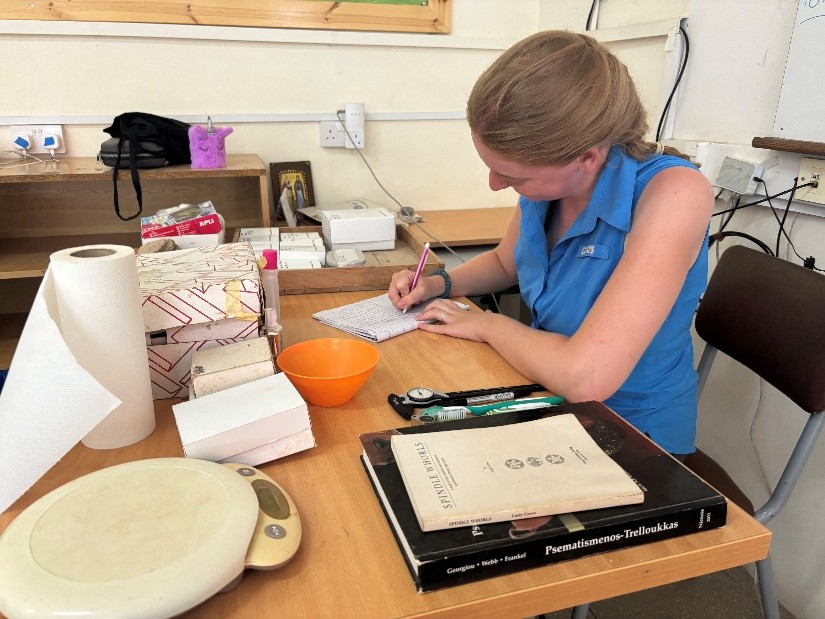
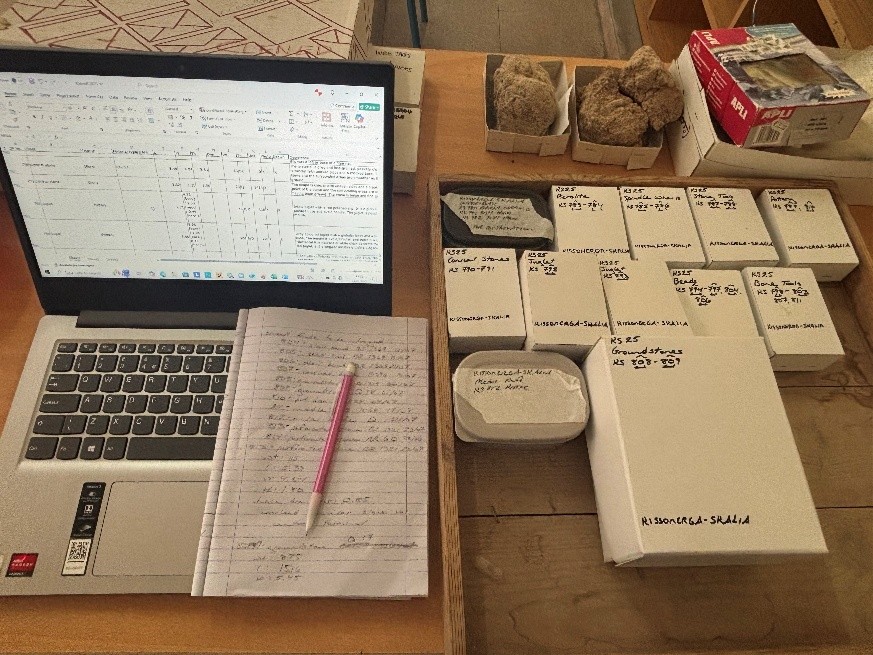
During post-excavation activities, I served as the Small Finds Registrar. In this role, I worked closely with prehistoric Cypriot material culture and studied the artifacts that my fellow students and I had excavated. The artifacts dated between the Late Chalcolithic and Middle Bronze Age. The range of small finds this season included juglets, ground stones, beads, and metal objects. I cleaned, measured, weighed, and catalogued these small finds firsthand. Some objects were too fragile to wash, so I dry brushed them to gently remove excess dirt and to articulate their shape. I researched these artifacts for typologies and comparable examples in site reports from other Cypriot sites, and I collaborated with the project’s specialists. Additionally, I made boxes for each artifact type so that the small finds could be securely transported to museum storage for future study. Through this unique opportunity, I gained experience handling artifacts as well as familiarity with various materials and object types that will be beneficial for future work in excavations or museums.

Mandy researching small finds during post-excavation activities.
Small finds from the 2025 season.
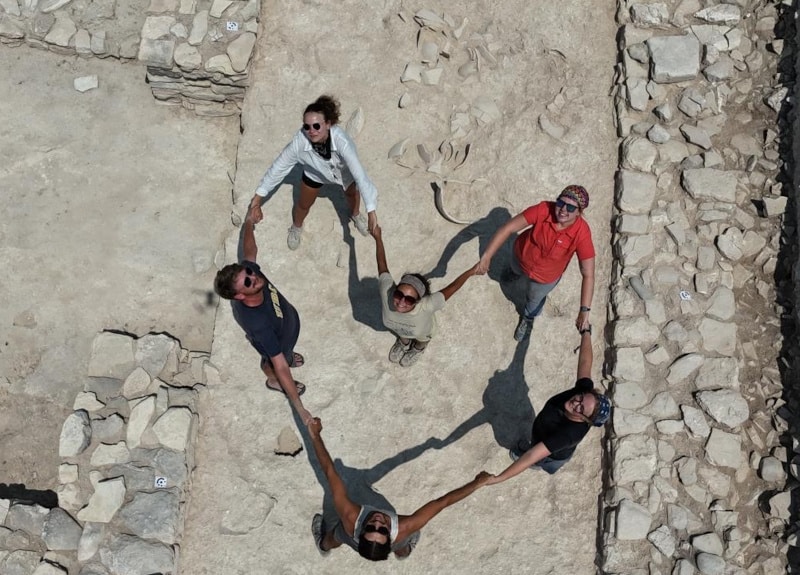
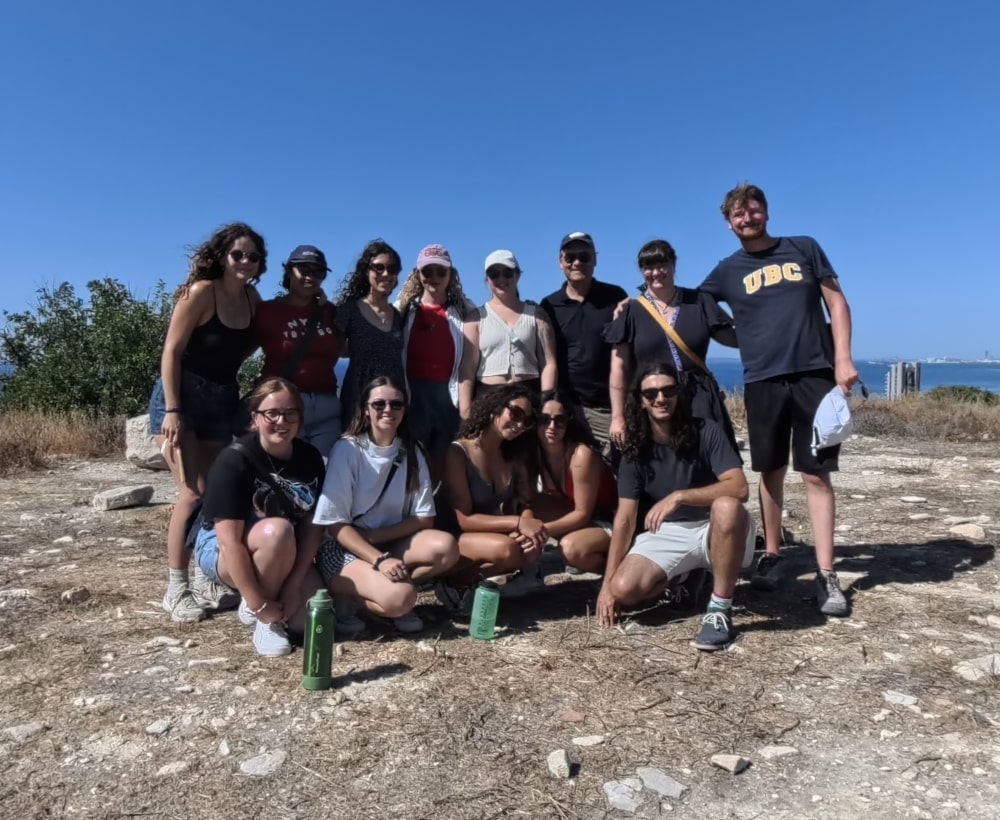
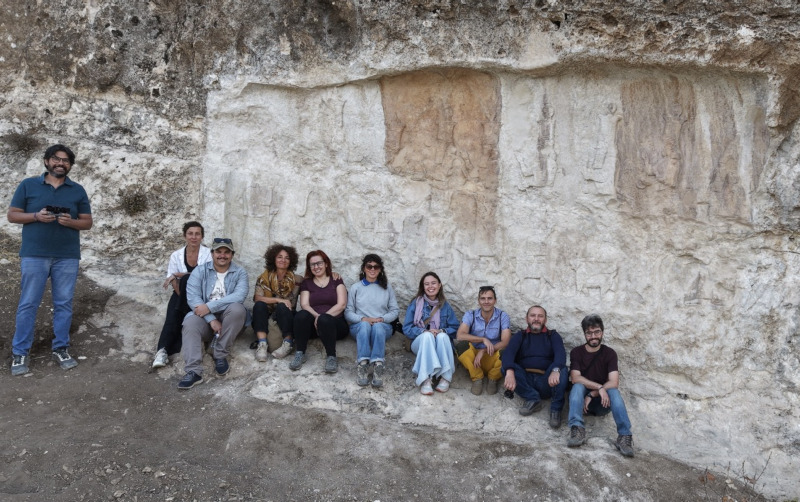
Team photo of Trench Q, Kissonerga-Skalia 2025.

Mandy Porter is a master’s student at Columbia University studying Museum Anthropology. She has a master’s degree in Classical Archaeology from the University of Oxford and a bachelor’s degree in Archaeology and Classical Studies from Dickinson College. She is also an active member of both ASOR’s Early Career Scholars Committee and Honors and Awards Committee. 

Want to help more students and early career archaeologists get into the field? Donate to the cause today by selecting “Fieldwork Scholarships” as your gift purpose!


Fieldwork Report: Amiella Musser

A Summer in the Pit

Amiella Musser, 2025 ASOR Stevan B. Dana Fieldwork Scholarship

Though I often say I spent my summer “digging in the dirt” in a somewhat humorous way, the truth is I spent the summer learning that archaeology is more than a fascinating discipline to me—it is a lifestyle that I love. Waking up at 4:30 a.m. to be at the site by 5:00, we would get as much done as possible before our 7:30 “coffee pause,” a quick but necessary break. Afterward, we had a couple more hours of digging before breakfast, and then more digging until our day ended at 1:00 p.m. But that wasn’t really the end of the day, because then came pottery washing. Though tedious, it was an opportunity to hear from others about what was going on in their areas, what finds had been uncovered, and what they knew about the site—or others in the region.

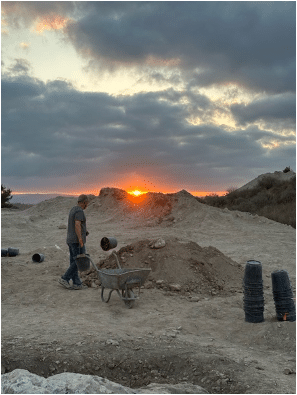
A sunrise at Azekah, one of many.

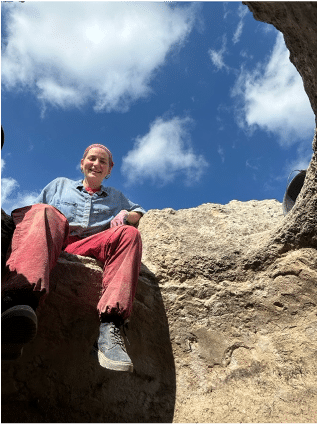
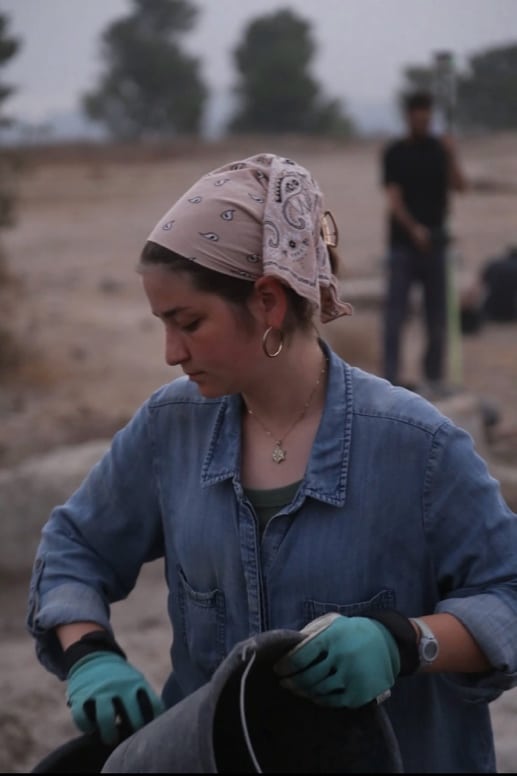
A quick break to get some fresh air and water outside of the pit

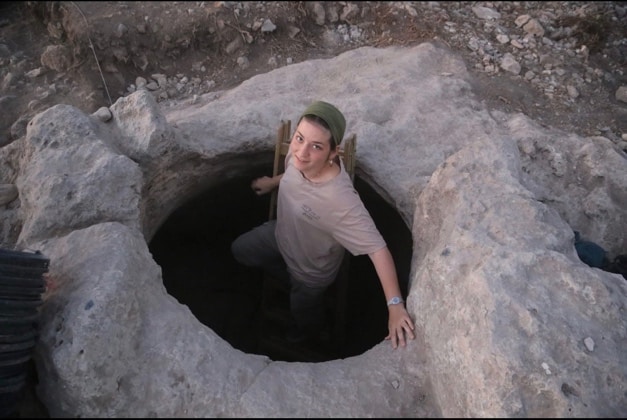
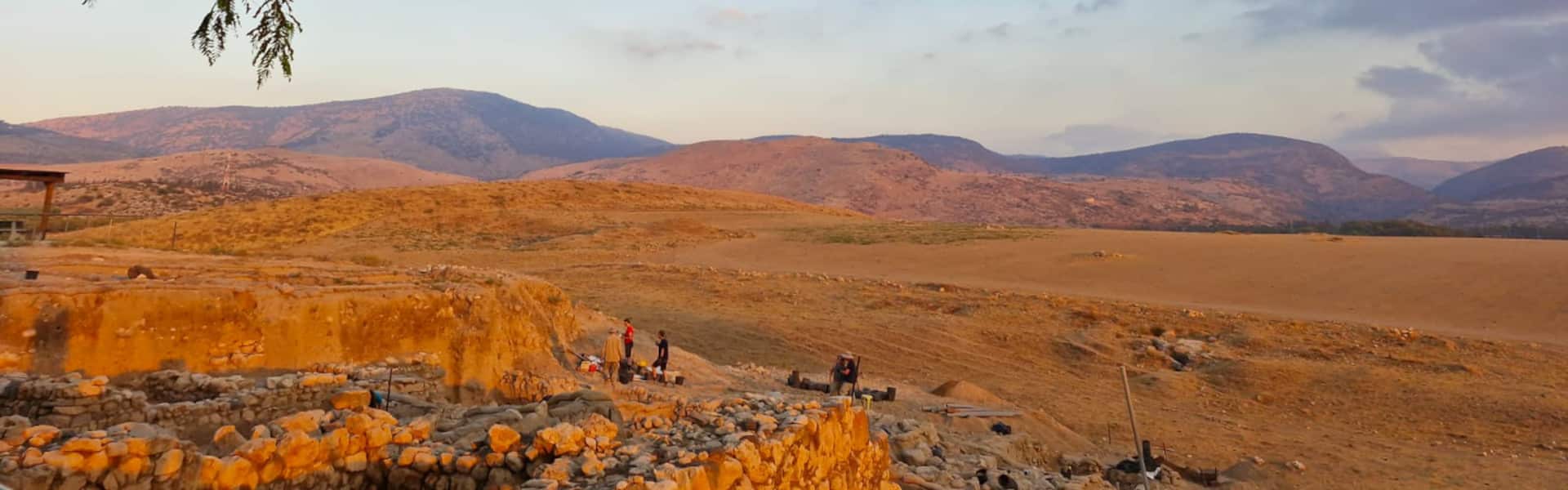
I worked in what became known as “Gadi’s Pit,” named for the assistant supervisor who oversaw its excavation. The site is Tel Azekah in the heart of the Shephelah. It’s a large area with so much left to discover, even alongside everything already uncovered. I exposed the entrance to what we initially thought was a cistern, but as we dug deeper we realized it was more than that, despite the deceptively simple first week. The Tel has a water system that has not yet been excavated, but the area I was working in seems to have some connection to it. The work was addictive. Every morning I woke up looking forward to getting back into the pit, and even during breakfast you could hear me saying how much I wanted to return. Unfortunately, I wasn’t able to reach the bottom this season, but it was not for lack of effort. If you were to meet my field supervisors, they would probably tell you they were mildly concerned at times about me ever leaving the pit. Little did they know I was just avoiding the sun in the most effective way possible—being two meters underground.

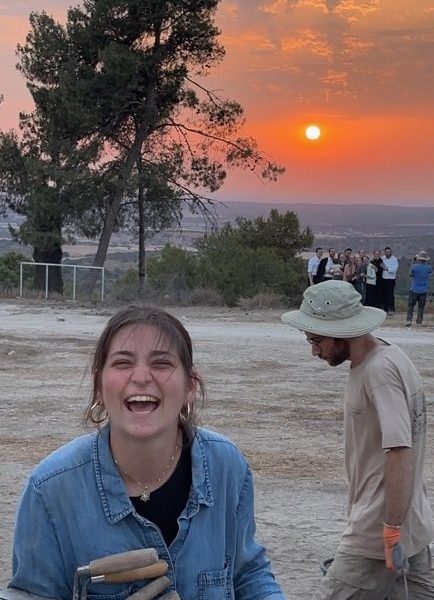
A sunset at Azekah while we were breaking down for the night, one of those days we tried to avoid the heat by working early morning and evening.

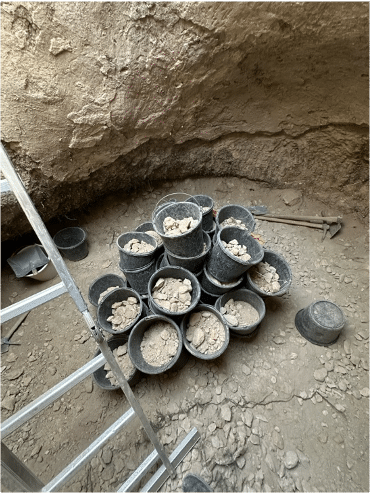
Buckets stacked triple high inside the pit while excavating. At this point it was about 2 Meters deep.

This summer had record-breaking heat day after day—so much so that we had to shorten and adjust our workdays in order to avoid it. Some days we left the site at 10 a.m. and returned at 5 p.m. to work into the evening, avoiding the harshest hours of the sun. The unusual schedule on those days made the work strangely more exhausting, even with the much-appreciated popsicle breaks meant to counteract the heat. Even then, I often found myself uninterested in truly taking a break. As strange as it may sound, among the many things I learned this summer (and there were many), the one I think is most important is how to take a break. Feeling the boost of energy it gave me—and seeing it in the team around me—I realized how valuable a ten-minute pause is. Our work in the first hour after a break always seemed to be the most productive. In general, we were quite an efficient team, with complementary skill sets, a lot of good humor, and thankfully a relatively good taste in music.

Me coming out of the pit after passing up buckets, normally we would empty 20 at a time, but at one point it got up to as many as 60.

It is simply the truth to say that excavation is hard work. Pickaxes, as fun to wield as they are, get heavy. Heat is more than uncomfortable; it exhausts you in ways you don’t notice until later. Dumping hundreds of buckets a day into what becomes a mountain works muscles you didn’t even know existed. You would think all this might make you want to never return to a site, yet it has the opposite effect. The conversations you have while pickaxing away, the strength you feel at the end of a season, the information you learn every moment—it draws you in. It’s been a couple of weeks since I left Azekah, and I have to say, I miss it. Though it’s still months away, I look forward to future excavation seasons.

One of the days I was working above-ground, some days it was too hot to work inside the pit since it trapped the heat and humidity in.

Amiella is an undergraduate student double-majoring in Archaeology and International Studies at Dickinson College in Pennsylvania. Archaeology is what she lives and breathes – she has known for a long time that this is what she wants to do with her life, and every year of learning and doing more with it only affirms that! As much as she loves the “digging-in-the-dirt” aspect of archaeology, Amiella hopes that she can build her career and make it more accessible to anyone who wants to learn more about our ancient past.

The Lautenschläger Azekah Expedition website
Facebook: The Lautenschläger Azekah Expedition
Instagram: @azekah_excavations

Want to help more students and early career archaeologists get into the field? Donate to the cause today by selecting “Fieldwork Scholarships” as your gift purpose!
Fieldwork Report: Joshua Feland

Adventure in a Nabatean Town

Joshua Feland, 2025 Eric and Carol Meyers Fieldwork Scholarship Recipient

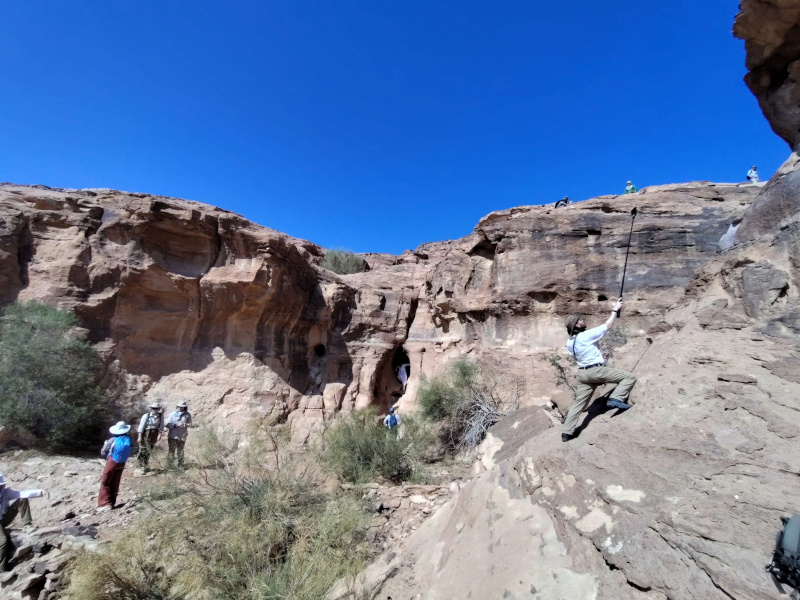
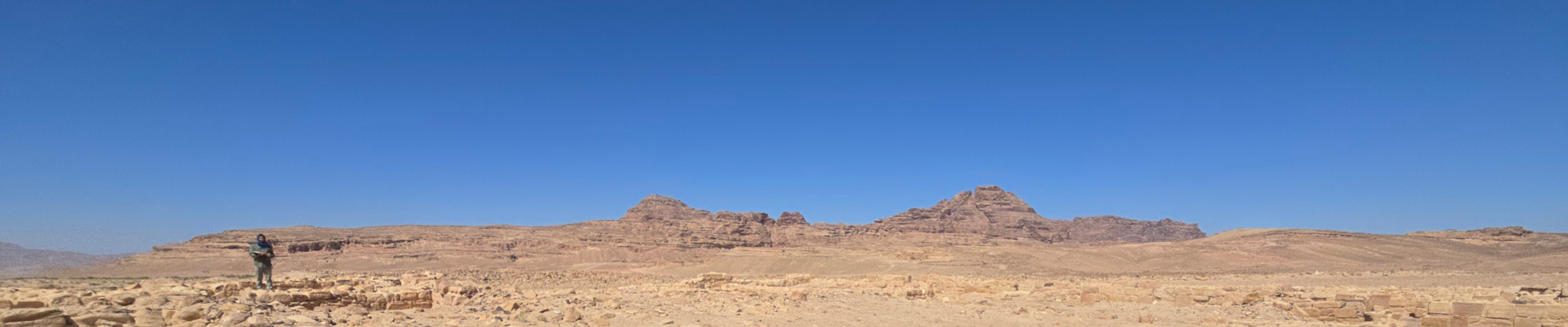
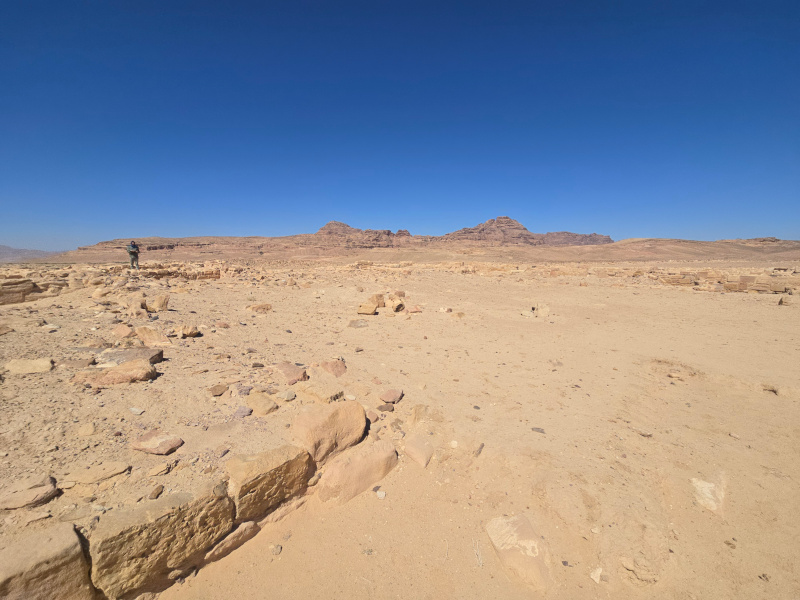
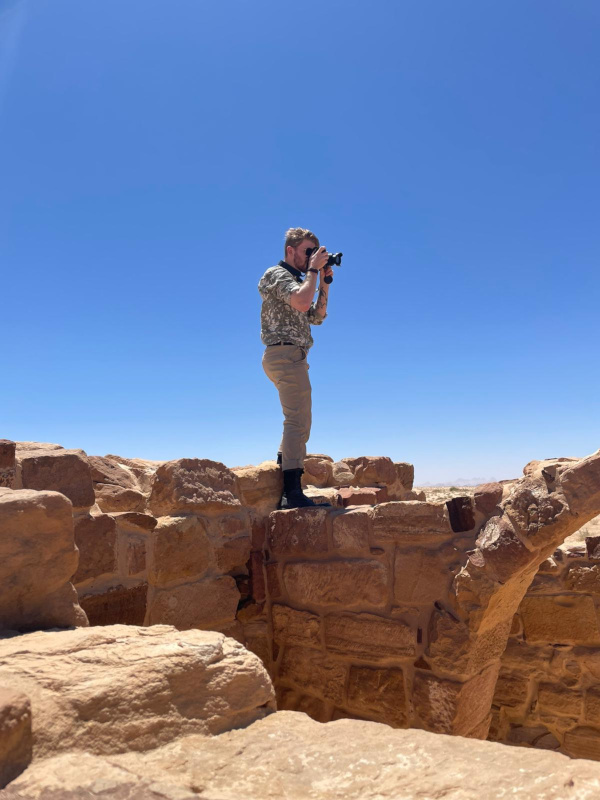
In southern Jordan lies Humayma, an extensive archaeological site with a complicated history. The ancient village was home to the Nabateans, Romans, Byzantines, and Arab peoples, all of whom left their mark permanently in the village in the form of large and small structures. Humayma, or ancient Hawara, was initially a Nabatean settlement roughly equidistant between Aqaba and Petra in southern Jordan. The site is notable for its water collection infrastructure, Roman fort, Byzantine churches, and Islamic Qasr, to name but a few of the structural types on the site. Spread throughout the site are the everyday signs of life in the past: pottery sherds, ceramic building materials (CBM), faunal remains, and evidence of burials—all of which is being mapped and documented.

In May 2025, I was presented with the opportunity to act as a supervisor on the University of Alberta’s Humayma Field School project. The field school aims to instill archaeological field technique and values in the next generation of archaeology students. For this season I was tasked with teaching photogrammetry techniques using the standing structures at Humayma and excavated materials from previous seasons.

Fifteen university students coming from Canada and the United States travelled to Jordan to conduct their first fieldwork in the Middle East. The overall goal of the field school in its inaugural season was to establish the state of the structures on the site, create a detailed site map, pinpoint key areas for further excavation and conservation, and instruct the students in archaeological field techniques, including photogrammetry and 3D modelling.

The photogrammetry for the site was conducted primarily by the students using both a traditional DSLR camera and the students’ own smartphones. Both pieces of capture technology produced excellent results, considering this was the students’ first time using them in the field. The process involved the students walking steadily around some of the notable standing structures on the site, taking photos as they went with as much overlap as possible. This allows for the processing applications to “match” structures, creating an in-depth 3D model that can be georeferenced and measured. The technology is instrumental to modern archaeology, allowing for the creation of high-quality and often fully explorable 3D models of sites, structures, features, artifacts, etc. This can provide easy access to on-the-ground site data that may be a world away. Properly georeferenced, one can measure entire structures from one’s own office or laboratory.

Alongside my role on the project, my personal goals were to increase my skills in photogrammetry, begin to delve into the use of digital modelling technology, and work on my instructional skills. I have only recently begun my journey in digital archaeology, but I am increasingly interested in the use of digital tools to enhance archaeological excavation and data collection. My use of digital modelling technology has been interesting. The feeling of creating an explorable model is wonderful but the process requires an incredible amount of patience. Teaching students in the archaeological field technique was a wonderful and amazing learning opportunity.

The inaugural season of the University of Alberta Humayma Field school consisted entirely of survey work; as such, small finds were limited to rare instances of surface collections. Throughout Humayma, due to environmental exposures, looting, and other means, artifacts are observable on the surface all throughout the site. Some of my notable finds were a bronze coin of indeterminate age and a piece of marble.

My fieldwork participation in Jordan continues to be instrumental to the development of my career as an archaeologist and educator, and I could not be more thankful for the opportunities and connections this experience has provided.

Joshua Feland is a master’s student at the University of Alberta in Alberta, Canada. He is interested in Desert and Harbour archaeology, particularly where the two intersect. He has a specialization in Roman provincial archaeology. He has conducted fieldwork in Italy, Jordan, and the boreal forest zones of British Columbia and Alberta.

Want to help more students and early career archaeologists get into the field? Donate to the cause today by selecting “Fieldwork Scholarships” as your gift purpose!
Fieldwork Report: Atakan Atabas

Once Upon a Time in Anatolia

Atakan Atabas, 2025 Shirlee Meyers/G. Ernest Wright Fellowship Recipient 

When I left my hometown in central Anatolia to attend university, I never imagined that my path would eventually bring me back to the same region—not as a student of technology, but as a researcher of the ancient past. My undergraduate years were spent studying computer science at one of Türkiye’s most prestigious universities, followed by professional work in the technology sector in Istanbul. Despite these achievements, I felt a growing distance from the land of my childhood. Archaeology offered me the chance to reconnect: to engage with the cultural heritage of Anatolia and, in doing so, to give something meaningful back to my community and my country.

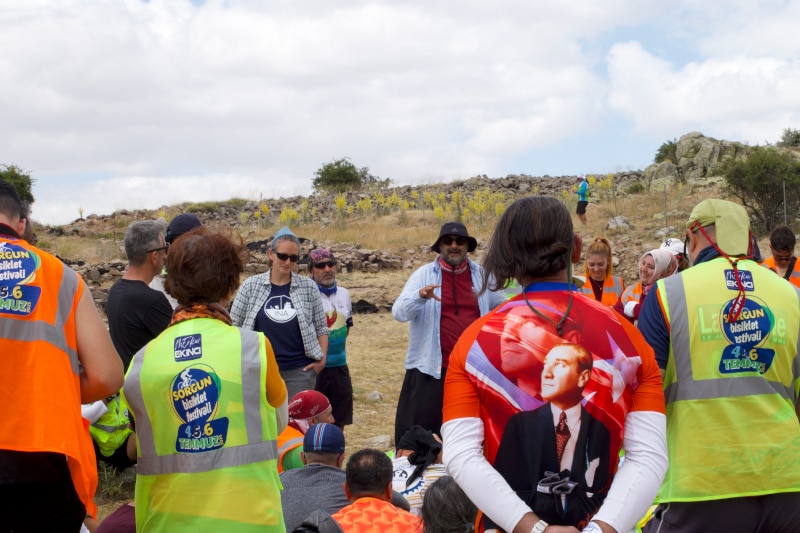
I gave a talk about Kerkenes to a group of cyclists who visited the site during the Sorgun Bicycle Festival.

One of the works that has always stayed with me is Nuri Bilge Ceylan’s Once Upon a Time in Anatolia. In one scene, a driver tells a doctor, “When you have a family, you’ll have a story to tell. You can say, once upon a time in Anatolia, when I was working out in the sticks, I remember this one night, which began like this. You can tell it like a fairytale, Doctor.”  Whenever I am in the field, I think of this dialogue. To me, research is not only about data or analysis; it is also about collecting stories. Some call them academic findings, but I see them as connections-bridges between the past, present, and future of the Anatolian landscape. In that sense, I consider myself a mediator, one who helps bring different times and perspectives into conversation.

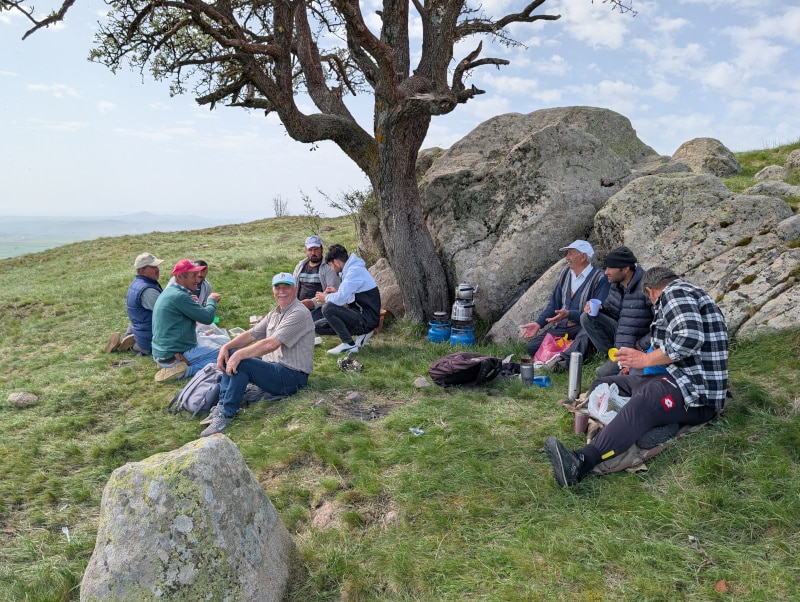
Turkish tea time! Workers gather to chat and share food and snacks.

In the summer of 2025, I joined the Kerkenes Project in Yozgat, central Anatolia. For many international scholars, fieldwork in Turkey means collecting evidence, expanding networks, publishing papers, and advancing knowledge of the ancient world. For me, however, it is also deeply personal. Fieldwork is a return home: talking with workers from the village, walking the landscapes of my childhood, breathing the scent of native flowers, and tasting familiar foods that I ate growing up. At Kerkenes, I feel responsible not only for contributing to the project but also for representing the local community whose generosity sustains our work. This dual sense of responsibility reminds me that archaeology is not just scientific inquiry; it is also an ongoing dialogue between researchers and the people who live near the site today. I believe that understanding this relationship is key to understanding how academia can engage more meaningfully with society.

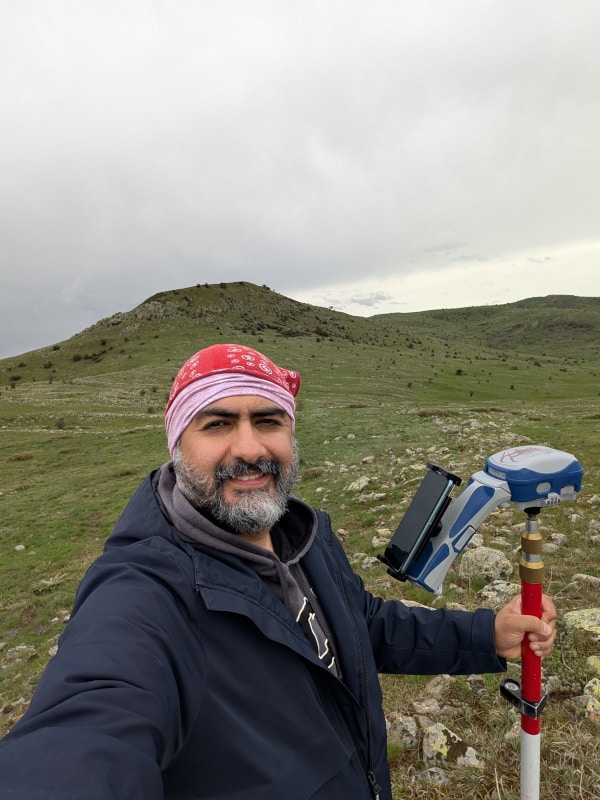
Looking for points for preparing survey grids.

My own path—from computer science to archaeology—has taught me the importance of interdisciplinary approaches. To restrict archaeology to narrow disciplinary boundaries is to diminish its potential. Often, archaeological questions require the mind of a sociologist, the skills of an engineer, the vision of an architect, the insights of a politician, or even the calculations of an economist. At Kerkenes, I have seen how archaeology draws together these diverse ways of thinking. Fieldwork also demands practical versatility: negotiating with local bureaucrats, collaborating with villagers, and adapting to shifting roles and responsibilities. In such a dynamic environment, effective communication is essential. Each season teaches me how to engage with people of different backgrounds, perspectives, and priorities. Thus, the Kerkenes Project is not only an academic training ground but also a place of intercultural exchange, collaboration, and personal growth.

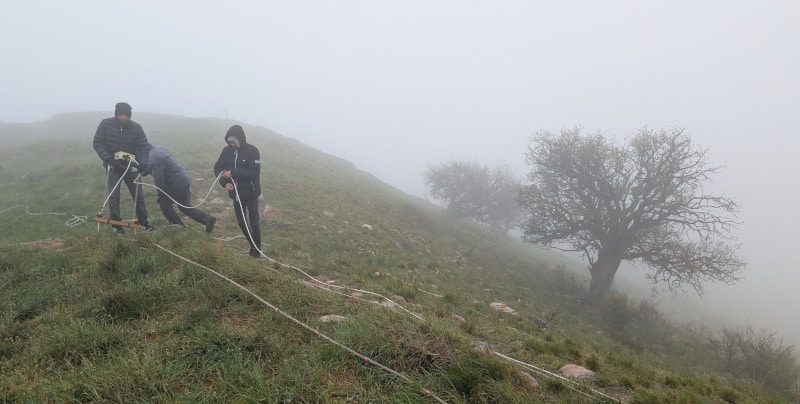
Conducting an electrical resistivity survey on a foggy, cold day in the field.

For me, archaeology is not only about answering research questions but also about building relationships—across cultures, disciplines, and generations. An excavation site is a meeting point where individuals from different nationalities, ethnicities, genders, socioeconomic classes, and educational backgrounds come together. It is also a meeting point across time, where modern researchers walk through the same landscapes that ancient inhabitants once knew. In this sense, we are not outside observers of history but participants in its unfolding narrative. We are part of the same story, shaped by the same land, only at different moments in time. Once upon a time in Anatolia… there is always a story to tell.

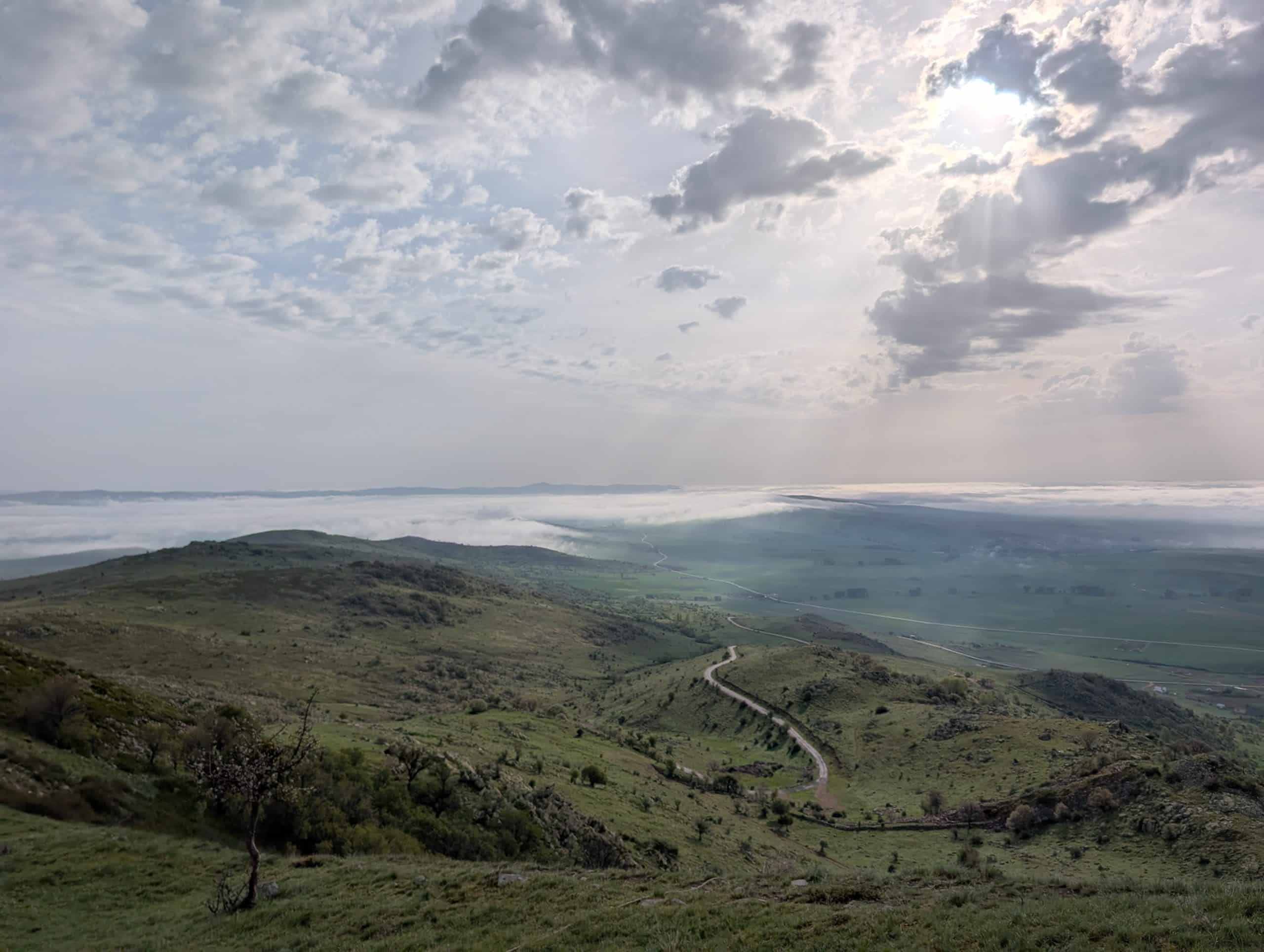
Looking out over the foggy plain from the field.

Atakan Atabas is a doctoral student in the Department of Anthropology at the University of Central Florida. His research focuses on digital archaeology, with particular attention to Anatolian art and archaeology. He has been a member of the Kerkenes Project since 2023, and his dissertation examines the orientations of buildings at Kerkenes and their relationship to the social organization of Kerkenes society.

Want to help more students and early career archaeologists get into the field? Donate to the cause today by selecting “Fieldwork Scholarships” as your gift purpose!
Fieldwork Report: Talia Neelis

Sherds of my Labor: Supervising with Pottery Plethoras at Kalavasos-Ayios Dhimitrios

Talia Neelis, 2025 P.E. MacAllister Fieldwork Scholarship Recipient

In the five minutes it takes to wind along the back road from Kalavasos Village to the site of Kalavasos-Ayios Dhimitrios, a cool purple light illuminating the foothills of the Troodos mountains morphs to a familiar hot orange. By the time we arrive to site, the blaze of the early morning Cypriot air signals that there’s no time to waste– onwards from the toolshed to the trench!

My enthusiasm to spend the rest of my days in a deep squat caked in sweat and dirt began here two years ago, nestled in the Vasilikos Valley about 3 km from the southern coast of Cyprus. After excavating at other Greek and Cypriot sites in between, coming back to K-AD with enough experience to take on a leadership role really cemented my long-term aspiration to work in the field of Cypriot archaeology.

Dawn over the Troodos foothills from our bathroom window

My enthusiasm to spend the rest of my days in a deep squat caked in sweat and dirt began here two years ago, nestled in the Vasilikos Valley about 3 km from the southern coast of Cyprus. After excavating at other Greek and Cypriot sites in between, coming back to K-AD with enough experience to take on a leadership role really cemented my long-term aspiration to work in the field of Cypriot archaeology.

I felt right at home supervising the new trench defining ‘Room 3,’ laid just east of the space I had excavated in 2023. That’s not to say that it wasn’t daunting to lead a group of my peers through the processes and techniques of excavation, to organize various materials and extensive notes, and to make decisions for the good of the trench and the people.

Excavating at K-AD in 2023 vs 2025

As our team made our way through topsoil and into less contaminated contexts, we uncovered an extraordinary concentration of characteristic Late Cypriot (1650 – 1050 BCE) pottery wares: we couldn’t trowel but two centimetres without revealing caches of White Slip, Base Ring, and pithoi sherds, and sometimes even complete vessels. The team had to be extra careful traversing our small ~7m x 4.5m trench, tip-toeing around the obstacle course made up of sherds that jutted out of the soil. When we weren’t articulating pottery scatters, we had the privilege of finding several nearly-intact wall brackets, a handful of bronze fragments, countless slag chunks, some specially marked vessels, and a couple remarkable triton shells.

Showing Room 3 some love at the end of the season

While our fruitful trench could be a little overwhelming as a first-time supervisor, I was grateful that I could study such a wealth of material. Since my own research examines regional and diachronic fluctuations in ceramic production on prehistoric Cyprus, I came to the site every morning excited to explore the pottery wilderness that was Room 3.

Supervising for the first time made me realize how lucky I’ve been to work under talented and dedicated excavators in the past. I borrowed leadership skills and pep-talking abilities (so much so that I was awarded ‘morning motivator’ at our end-of-season superlatives!) from each and every one of my previous supervisors and directors to try to create the best experience for my team.

Here I am doing some baulk cleaning in the early stages of our trench

I’m incredibly grateful to project director Dr. Kevin Fisher and field director Sheri Pak for having me back and enduring my incessant questions, and to our team for their endurance, enthusiasm, and support during my meeker supervisory moments. My deepest gratitude to the American Society of Overseas Research for supporting me with the financial resources to participate in this community of knowledge; a community I endeavor to contribute to and draw on for years to come.

The 2025 team on the Amathus Acropolis

Talia Neelis is currently pursuing the doctoral track at the University of California, Los Angeles in the Cotsen Institute of Archaeology’s Interdepartmental Program. She graduated from the University of British Columbia in the spring of 2025 with honors in Ancient Mediterranean and Near Eastern Studies and Art History, where she completed her undergraduate thesis on anthropomorphic figurines and osteological records of the Late Cypriot period. She looks forward to going ‘back to the Bronze Age’ (tagline credit to the Kissonerga-Skalia marketing team) in trenches across Cyprus and beyond.

Want to help more students and early career archaeologists get into the field? Donate to the cause today by selecting “Fieldwork Scholarships” as your gift purpose!
Fieldwork Report: Anna Taibi

Growing through the Dust: Skills, Challenges, and Community in the Mosul Dam Reservoir

Anna Taibi, 2025 Strange/Midkiff Families Fellowship Recipient

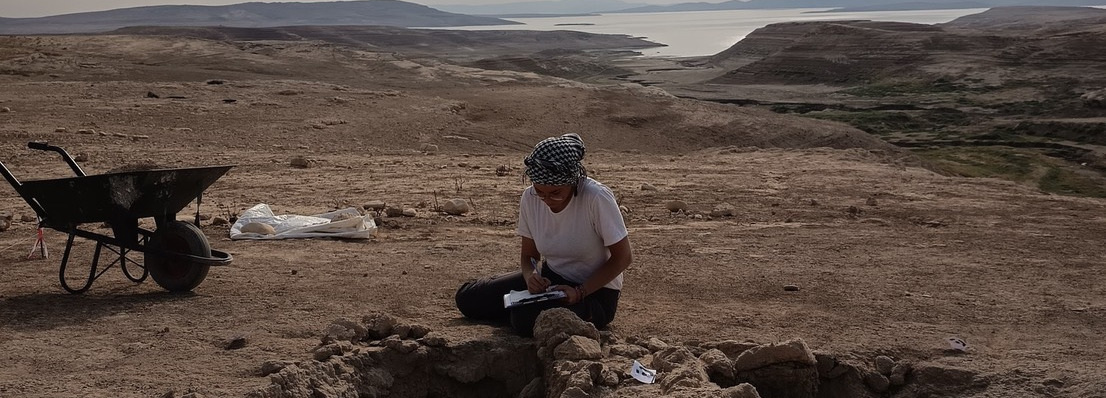
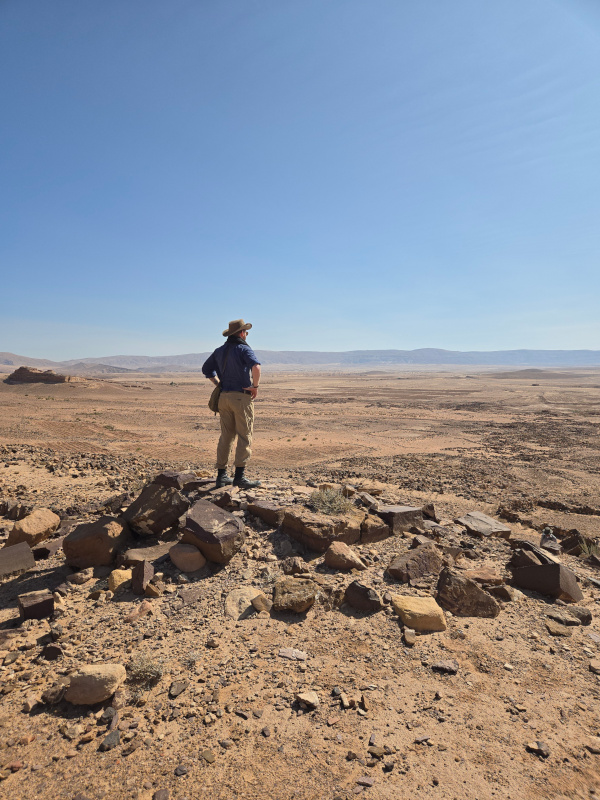
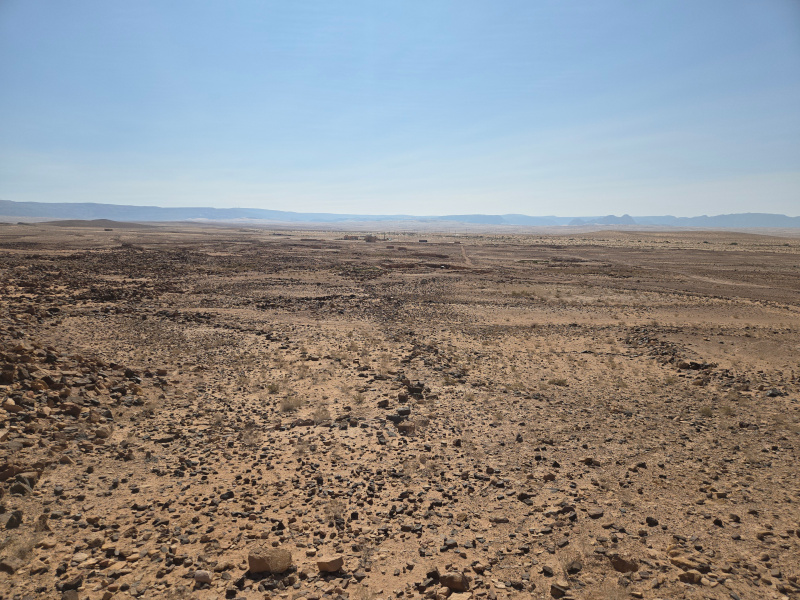
The season that just concluded has definitely been one of the most intense of my (still short) fieldwork experience! In October and November 2025, thanks to ASOR’s scholarship for fieldwork participation, I took part in ReLand’s 2025 campaign in the Mosul Dam Reservoir, KRI. The project’s goal is twofold: monitoring threatened sites located on Mosul Lake’s shore and, during cyclical phases of re-emergence, conducting emergency excavations to document settlements and their interaction with the surrounding landscape.

This year, due to an exceptional drought, hundreds of sites have emerged from the lake’s water, and, sadly, as a remote survey had already highlighted, these millennia-old features have immediately been targeted by looters. As a project member, during the first three weeks of the campaign, I helped record evidence of this kind of damage during the field survey, documenting different types of looting traces.

Recording a big looting pit, likely made by hand or shovel
Recording a big looting pit, likely made by hand or shovel.

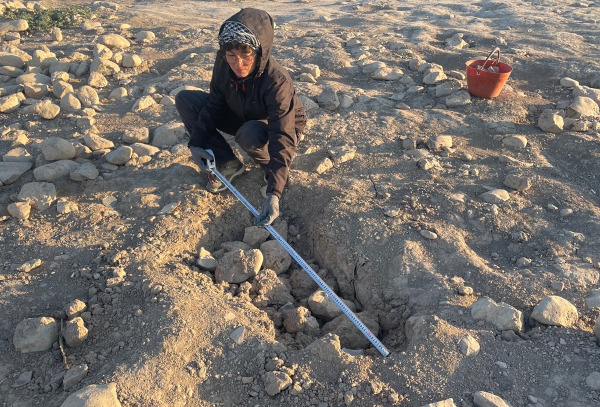
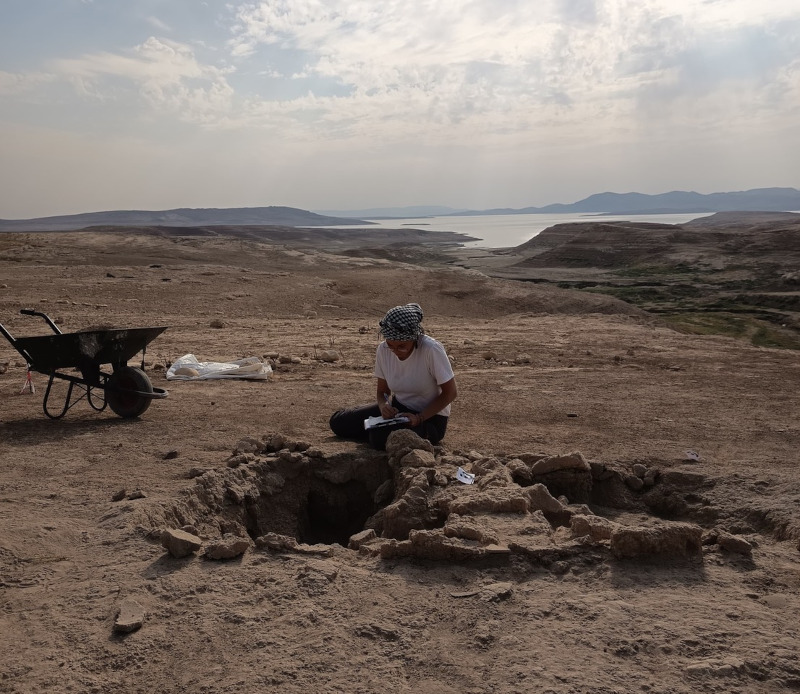
In the second part of the campaign, I worked at the site of Tell Gombass, a small Late Chalcolithic village, once located on a spur of a wadi, not far from the Tigris itself. Here, for the second year, emergency excavations were carried out. In particular, I was appointed as trench supervisor to excavate an ovoidal mud-brick (pottery?) kiln that just re-emerged. On this occasion, I had to challenge myself to lead a small team, ensuring a good quality of the documentation. But that’s not all: through the patient and expert guidance of our topographer, I managed to develop new skills in the topographical field and refine methodologies tailored to the diverse needs of the archaeological mission.

Excavating and documenting a Late-Calcholitic kiln’
Excavating and documenting a Late-Calcholitic kiln.
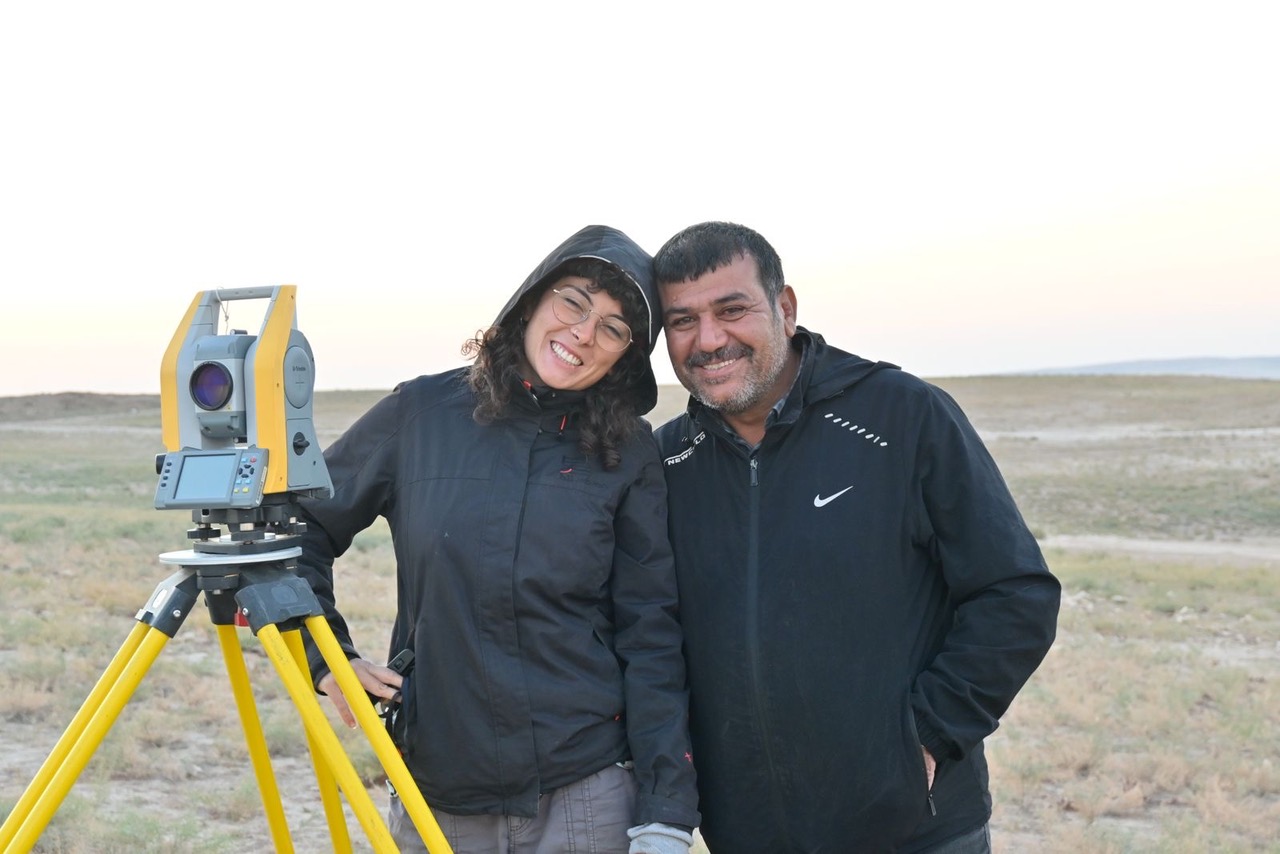
Me, Ali and the total station
Me, Ali, and the total station.

Previous skills have helped me through this international campaign: I’m getting better, but I still haven’t learnt Arabic nor Kurdish very well, so never has my Deutsches Sprachdiplom der Kultursministerkonferenz (DSD) been so helpful as to interact with Tarek, our chief worker from Syria, who spent 20 years excavating with German teams in Western Asia. His long field experience and knowledge had been one of the precious elements of the excavation campaign: although we worked in two different areas, we always kept up with each other’s work, and I’ve taken his generous advice to heart. This experience has definitely allowed me to work closely with Kurdish team members, fostering mutual learning and shared expertise while contributing to more inclusive and sustainable heritage practices.

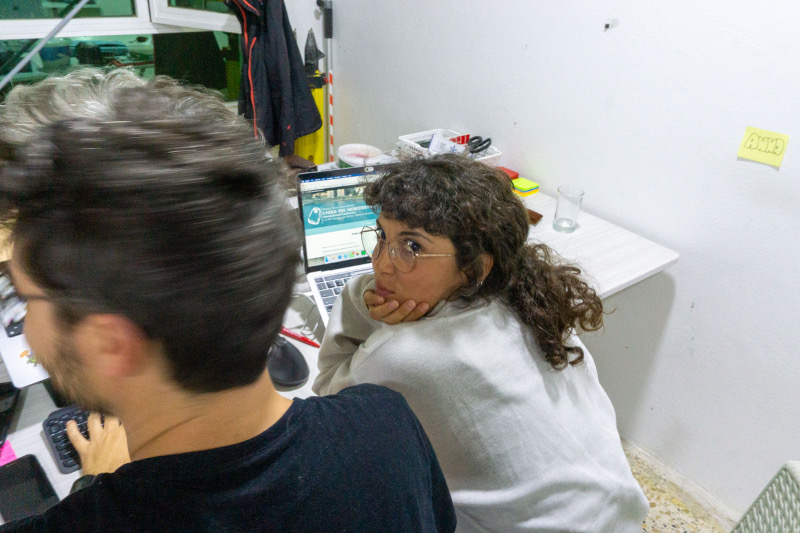
In the afternoons, I took care of the small finds documentation, getting the chance to measure, photograph, and document different types of artefacts, architectural elements, and ornaments that humans have produced in the Duhok region through millennia.

 
Afternoons
Afternoons.

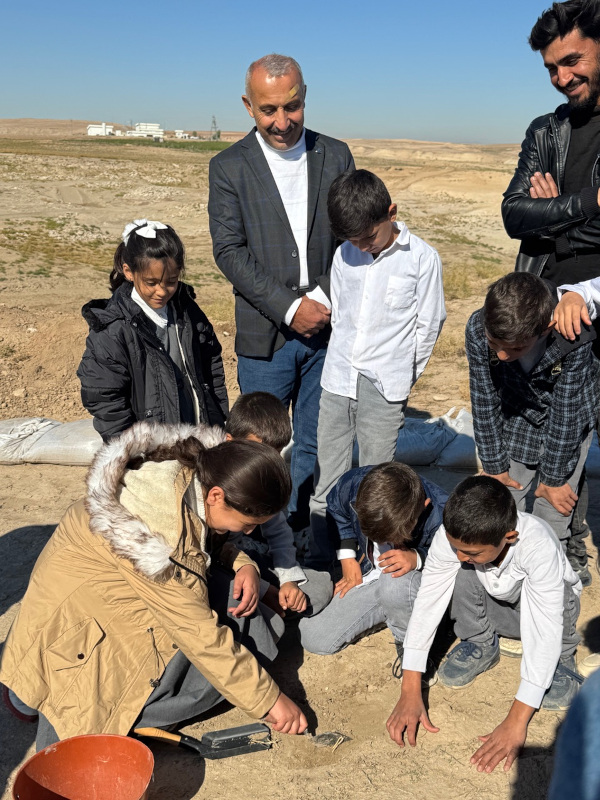
Last but not least, during my last week in KRI, I helped organise a tour of the excavation for Gombass’ elementary school pupils and students from the University of Duhok. It has been a precious moment to raise awareness among local populations about the cultural and historical significance of their landscape, and for my education as an archaeologist who wants to put ethical and post-colonial theories in practice: I believe that our work means nothing if not immediately given back to the people this heritagescape directly belongs to. This outreach experience has been particularly meaningful for me, as I have a strong interest in community organization, equitable governance, and cultural heritage preservation. After all, it is one of the main objectives of this project to preserve the memory of those communities that lived along the riverbanks, and the millennia-old settlements they inhabited, ensuring that their histories are acknowledged and valued.

Little archaeologists at work… in their home
Little archaeologists at work…in their home.

Last but not least, during my last week in KRI, I helped organise a tour of the excavation for Gombass’ elementary school pupils and students from the University of Duhok. It has been a precious moment to raise awareness among local populations about the cultural and historical significance of their landscape, and for my education as an archaeologist who wants to put ethical and post-colonial theories in practice: I believe that our work means nothing if not immediately given back to the people this heritagescape directly belongs to. This outreach experience has been particularly meaningful for me, as I have a strong interest in community organization, equitable governance, and cultural heritage preservation. After all, it is one of the main objectives of this project to preserve the memory of those communities that lived along the riverbanks, and the millennia-old settlements they inhabited, ensuring that their histories are acknowledged and valued.

I feel that participating in this long campaign of ReLand’s project has had a significant impact on my development as an archaeologist and as a future researcher. From survey skills to new and exciting responsibilities as a field supervisor, up until the possibility of developing and practicing non-colonial approaches to field archaeology, this campaign has given me far beyond the expertise luggage I expected to get back home with. I’m grateful for having built new tools and learnt methodologies, and I can’t wait for upcoming chances of professional and personal growth.

Team visit in Maltai, Duhok province’
Team visit in Maltai, Duhok province

Anna Taibi is a native of Palermo, Sicily, where she is working on her Master’s degree in Mediterranean and West Asian archaeology. She completed a BA in Cultural Heritage at the University of Palermo in 2023 with a cum laude dissertation on post- and decolonial approaches in archaeology. She is now delving into her commitment to community-based fieldwork while approaching new interests, such as the archaeology of production. She has participated in surveys and excavations in the Kurdistan Region of Iraq (ReLand project) and in Sicily, where she’s serving as a trench supervisor at the Phoenician-Punic site of Motya since 2024.

Want to help more students and early career archaeologists get into the field? Donate to the cause today by selecting “Fieldwork Scholarships” as your gift purpose!
Fieldwork Report: Hannah Borotsik

Just a Girl and Her Whiteboard

Hannah Borotsik, 2025 P. E. MacAllister Fellowship Recipient

Athens holds a very special place in my heart, and it has become one of my favourite cities in the world. I have met some of my best friends and have had some of the coolest experiences of my life here. I was so excited to be able to return to Greece for a fourth summer and for my third summer working at the Athenian Agora excavations with the American School of Classical Studies at Athens. I started in 2023 as a volunteer, and then in 2024, I returned as an assistant supervisor assigned to work in the apotheke. This past summer, I had the privilege of moving up to the role of apotheke supervisor. I never thought I would get the chance to say that I was a supervisor at the Athenian Agora Excavations, but this was the summer when I got the opportunity of a lifetime.

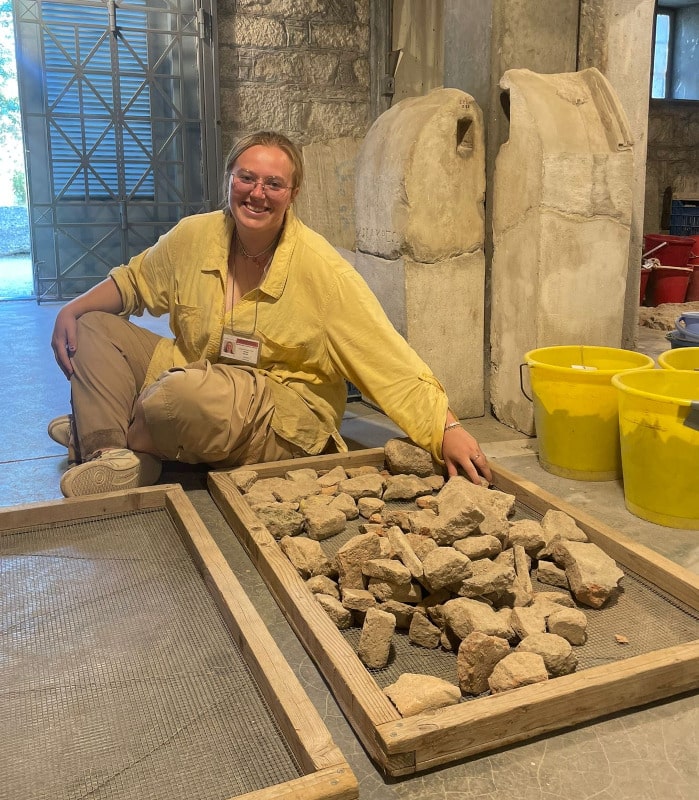
A common position to find me in… laying out tile. Photo by James Razumoff

My position involved managing the material coming into the apotheke and supervising all the volunteers who were assigned to flotation and pottery/bone/shell/tile wash. At the beginning of the season, my main goal was to make the processing of material coming to the apotheke as smooth as possible for everyone involved. I established different organizational systems, including having a large whiteboard, inboxes, labels, and designated spaces for different workflows. Since I worked with many different areas and members of the project on a daily basis, I thought a brief example of a “day in the life” for me at the Athenian Agora would be the best way to share how I spent my summer:

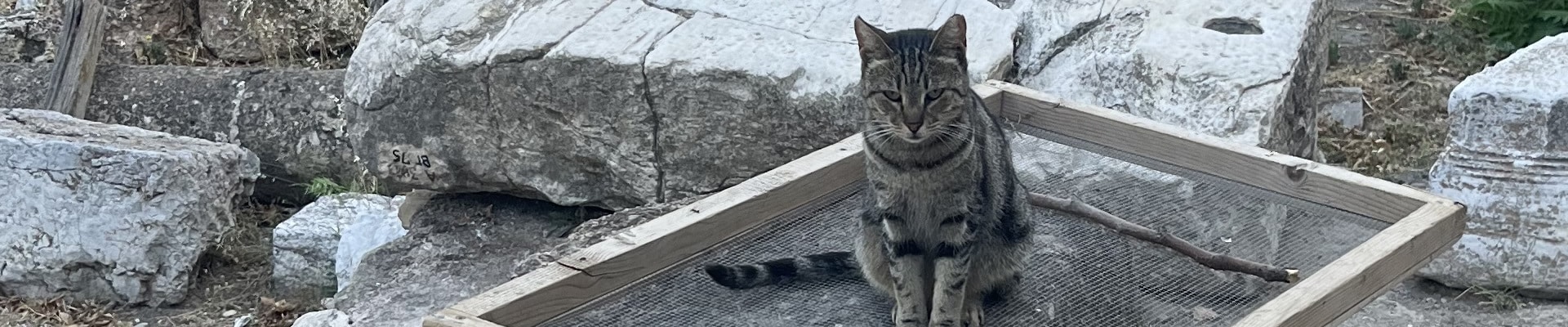
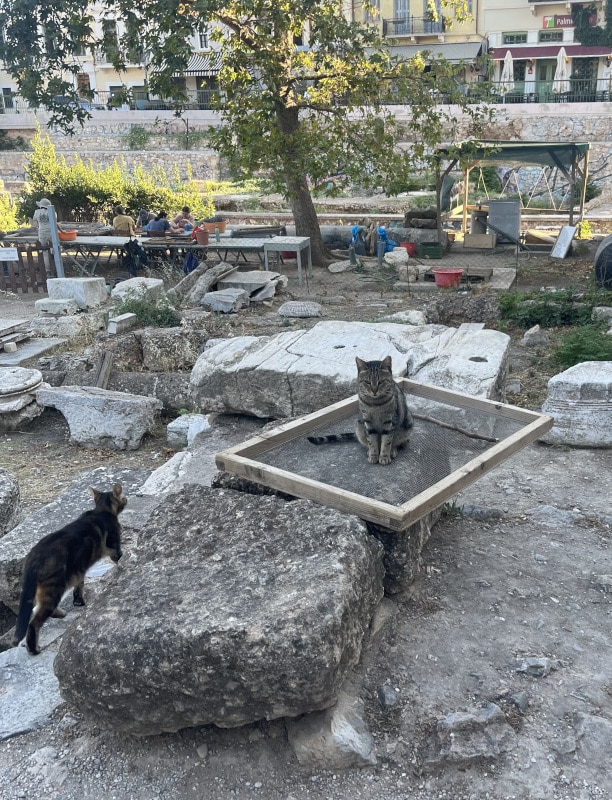
We get many cat visitors every day and some even liked to hang out in our trays. Photo by Hannah Borotsik

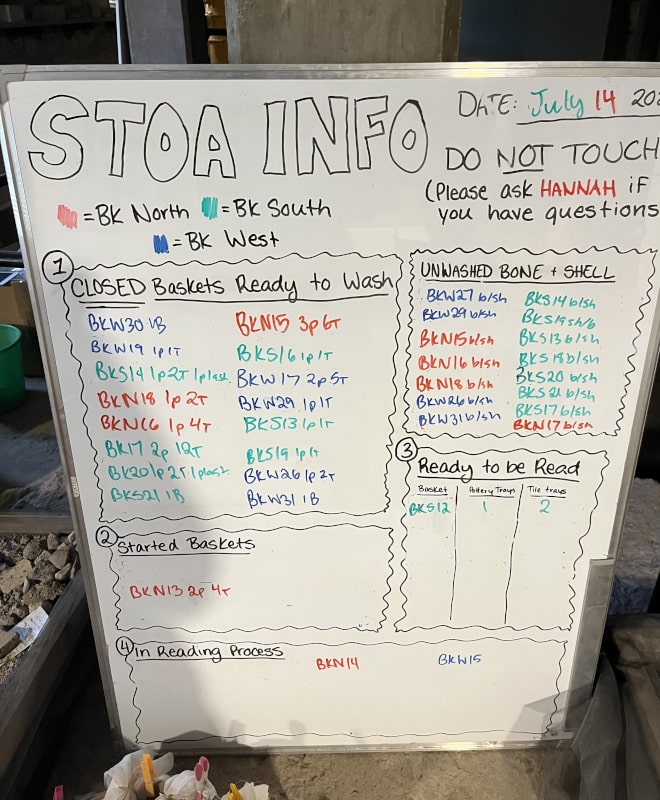
At the beginning of each day, I would start in the basement of the Stoa of Attalos, which serves as the apotheke for the Agora excavations. I would review the unwashed material and update my whiteboard with the information about the material that came up from the site at the end of the previous day. The whiteboard contained information for closed baskets from each trench in order to track the progress of washing, sorting, and reading by our wonderful pottery, bone, and shell specialists. Since the Agora is a total collection excavation, there is a lot of material coming up, and being able to communicate where all the material was at any given moment was extremely important. This was a method that I established in the 2024 season, and it became a staple of the basement’s organization (as well as a staple of my identity on the project).

The 2025 version of my whiteboard when the number of buckets of pottery felt like it would never end. Photo by Hannah Borotsik

Next, I would decide on which basket, or more often than not, baskets of pottery would be washed for the day. This depended on many different factors, including the number of volunteers assigned to wash, the number of available trays, and the number of buckets of pottery and tile belonging to a basket. The largest number of buckets in one basket from this season was three full buckets of pottery and thirteen tile buckets (this one took a while to wash). At this point, the volunteers assigned to the pottery wash area would arrive from the site for the day, and after bringing everything outside, I would divide the group into flotation and pottery wash.

Besides training and helping volunteers wash material, I had many responsibilities that I took care of during our work hours. I had to make sure that the dried ceramics, including the tile, were ready for our pottery specialists to analyse and count, weigh, and photograph. In some cases, I assisted with these procedures (for example, choosing the tile samples). I bagged and weighed dried bone and shell, after which I recorded the information into our iDig system. I made sure that any material that was ready for the trench supervisors to pack or things that needed to be made a special finds were in their respective inboxes. I wrote tags for trays inside and outside. I organized the baskets that were in queue to be washed. I strategized the best way to tackle the large backlog of tile, once larger baskets began to appear. At the end of the day, I facilitated the clean-up and organization of the apotheke, which mostly consisted of me giving the volunteers directions on what order I wanted each tray to go in and where I wanted them to go in the basement (and they did a great job every day!). These are just a few of my daily responsibilities, since every day came with new opportunities to improve workflows. After work, I sometimes stayed later to finish organizing and prepare for the following day or I worked on the procedural manual for the apotheke. At the end of most days, I went home and took a nap. One of the most important aspects of my job was to be the point of communication between our three open trenches and those working in the apotheke. As a result, my job consisted of many moving parts and more often than not, learning something new every day.

 
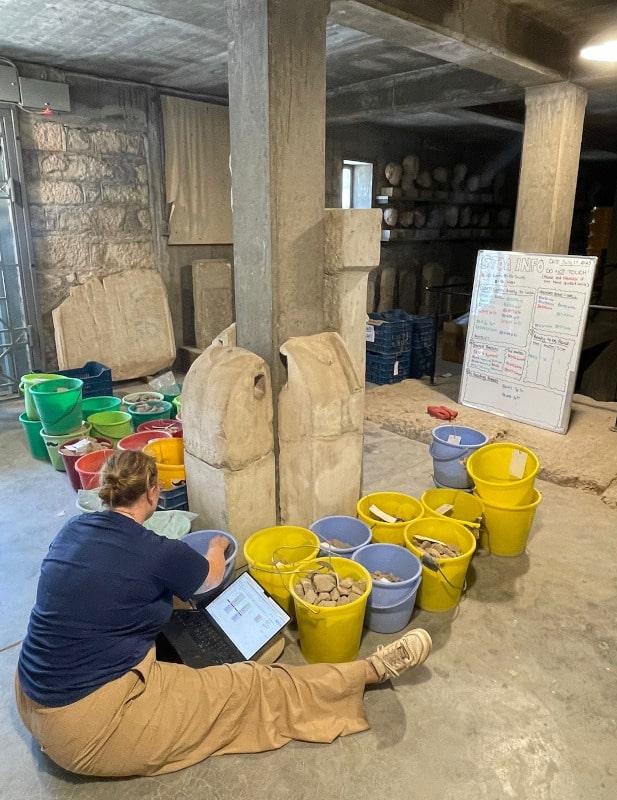
I am sitting with my buckets and whiteboard, updating the information for the unwashed shell and bone on my spreadsheet. Photo by James Razumoff

I was grateful to return to the Agora for my third summer and, although I was nervous to hold a supervisor position at such a well-known dig with only a few years of experience, my fellow supervisors, field director, and director were wonderful role models and helped me to become confident in my position. I learned so much more about being a leader and finding my leadership style, and I got more in-depth training on the many procedures that take place on excavation after the material comes out of the ground. All of these lessons have made me a better archaeologist. I am so thankful for the trust that was placed in me, and I will never forget my first-ever summer as a supervisor.

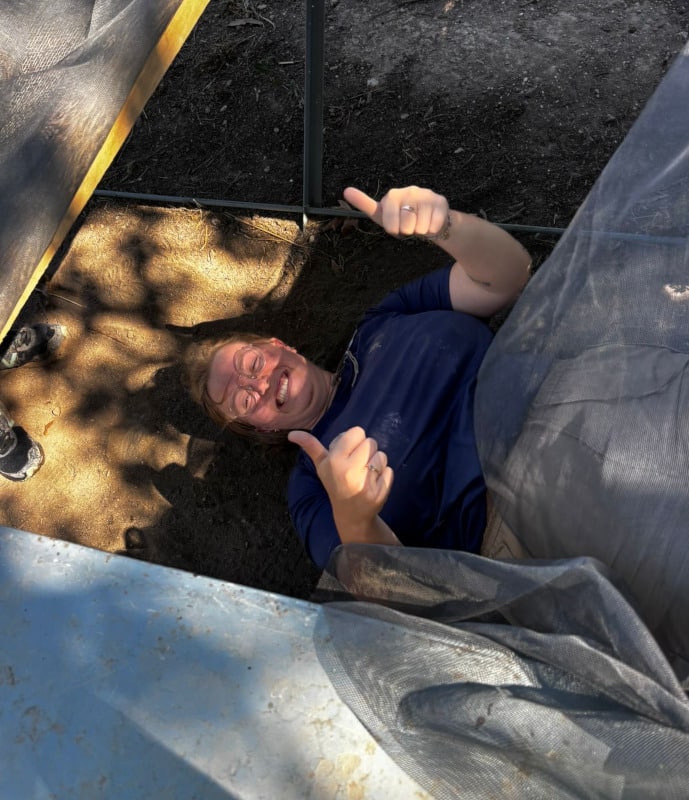
I am taking a break under the flotation trays. Photo by Theresa Cole

Hannah Borotsik is a first year PhD student in Classics at the University of Western Ontario, where she has just completed her Masters. She is also a graduate of Memorial University of Newfoundland and Labrador. She is interested in Ancient Greek religion, specifically traditions and rituals, and their relationship to social and political contexts. She has participated in digs at the Helike project and the Athenian Agora and has also worked on material from Newfoundland and Labrador.

Want to help more students and early career archaeologists get into the field? Donate to the cause today by selecting “Fieldwork Scholarships” as your gift purpose!