YouTube is one of the most influential platforms in modern media, but its origin story is surprisingly simple: a small team wanted an easier way to share video online. In the early 2000s, uploading and sending video files was slow, formats were inconsistent, and most websites weren’t built for smooth playback. YouTube’s founders focused on removing those barriers—making video sharing as easy as sending a link.
Who Founded YouTube?
YouTube was founded by three former PayPal employees: Chad Hurley, Steve Chen, and Jawed Karim. They combined product thinking, engineering skills, and a clear user goal: create a website where anyone could upload a video and watch it instantly in a browser.
Chad Hurley — product/design focus and early CEO role
Steve Chen — engineering and infrastructure
Jawed Karim — engineering and early concept support
The Problem YouTube Solved
At the time, sharing video often meant emailing huge files or dealing with complicated players and downloads. YouTube made video:
Uploadable by non-experts (simple interface)
Streamable in the browser (no special setup)
Sharable through links and embedding on other sites
Early Growth and the First Video
YouTube launched publicly in 2005. One of the most famous early moments was the first uploaded video, “Me at the zoo,” featuring co-founder Jawed Karim. The clip was short and casual—exactly the kind of everyday content that proved the platform’s big idea: ordinary people could publish video without needing a studio.
Key Milestones Timeline
Year/Date
Milestone
Why It Mattered
2005
YouTube is founded and launches
Introduced easy browser-based video sharing
2005
“Me at the zoo” is uploaded
Became a symbol of user-generated video culture
2006
Google acquires YouTube
Provided resources to scale hosting and global reach
Why Google Bought YouTube
By 2006, YouTube’s traffic was exploding. Video hosting is expensive—bandwidth and storage costs rise fast when millions of people watch content daily. Google’s acquisition gave YouTube the infrastructure and advertising ecosystem to grow into a sustainable business.
What YouTube’s Founding Changed
YouTube didn’t just create a popular website; it reshaped how people learn, entertain themselves, and build careers online. Its founding helped accelerate:
Creator-driven media and influencer culture
How-to education and free tutorials at massive scale
Music discovery, commentary, and global community trends
From a small startup idea to a global video powerhouse, YouTube’s founding is a classic example of a simple product solving a real problem—and changing the internet in the process.
AM25 Recordings Now Available on ASOR’s Online Library
Free Access for 2025 Annual Meeting Registrants through June 30, 2026!
ASOR’s 2025 Annual Meeting was a resounding success. Scholars, archaeologists, and historians from around the world gathered to exchange ideas, present groundbreaking research, and celebrate the vibrant world of the Near East and wider Mediterranean world. ASOR is pleased to announce that recordings from the 2025 Annual Meeting in Boston are now available to view on the 2025 ASOR Online Schedule and ASOR’s Online Library. This initiative not only helps preserve the wealth of knowledge shared but also ensures that those who couldn’t attend the event in person still have access to session and workshop presentations (nearly 500 in total).
We are still working through a few recordings that need additional editing. If you do not see your recording available, please contact Jared Koller (jaredkoller@asor.org) for a status update.
The Impact of Sharing the Recordings
By making the recordings of the 2025 Annual Meeting available to AM25 attendees, ASOR not only increases the reach of its events but also fulfills its mission to advance the study of the ancient world and its impact on modern life. These recordings allow those unable to attend to still be part of the conversation, and they offer invaluable educational resources for students, scholars, and enthusiasts of Near Eastern archaeology and history. ASOR is proud to share these valuable resources with you, and we’re excited to continue building on this effort in the future.
How to View the Recordings on the 2025 Annual Meeting Website
Recordings are available until June 30, 2026 for AM25 attendees.
Reminder about 2026 Annual Meeting Registration: you will gain free access to the Online Library platform with your 2026 Annual Meeting registration—and you’ll have access to the Online Library content (through June 30, 2026).
Presentation Slides Submission Deadline on November 7
2025 ASOR Annual Meeting
Welcome, ASOR 2025 presenters! Whether you’re joining us in Boston or presenting virtually, ASOR wishes to bring to your attention the following guidelines that apply to all presentations accepted to the ASOR 2025 Academic Program.
Key Deadline: November 7, 2025
Virtual Presenters: Submit a pre-recorded MP4 video (20 minutes max). Presenters are expected to join their session live via Zoom for discussion after their recording is played.
In-Person Presenters (Boston): Submit presentation slides (PPT or PDF) by this date; no video is required. Maximum file size of 1GB.
Session Format and Schedule
Sessions and workshops will run Thursday–Saturday, 8:15 AM–6:30 PM (ET) in Boston.
Please visit the ASOR Presenter Information page for helpful presentation tips, video tutorials, and instructions on how to upload your presentation to the ASOR Dropbox Folder. You will need to log into the ASOR Online Portal to access this page. Please contact Jared Koller at jaredkoller@asor.org if you have any trouble accessing the page or uploading your presentation files.
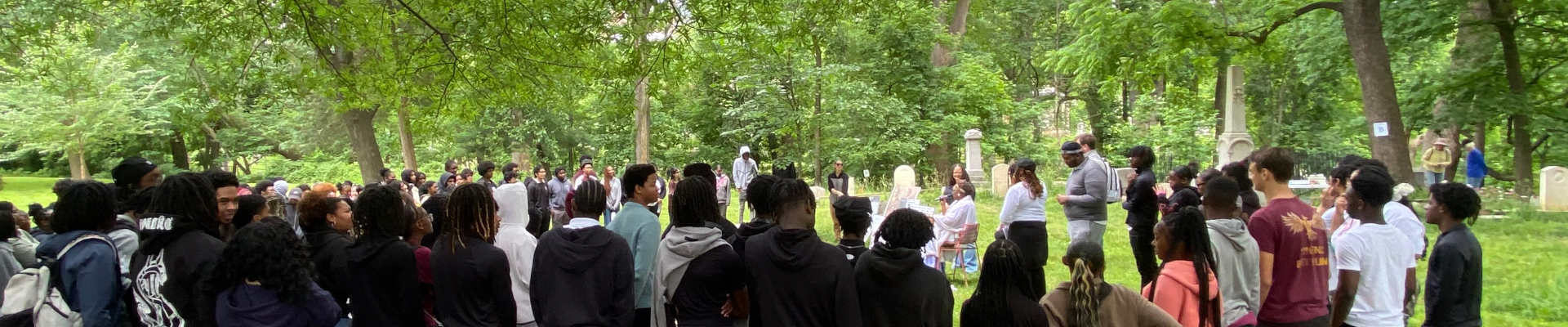
On May 23, over 100 11th graders from McKinley Tech High School (Washington, D.C.) transformed the Mt. Zion – Female Union Band Society Cemeteries into a living classroom—thanks to a teacher-led effort four months in the making. This program, initiated by Alysha Butler and Gabriel Morden-Snipper, featured ten interactive learning stations.
The day began with a moving libation ceremony and a powerful reminder of the land’s history, anchored by Dumbarton House’s 1841 painting featuring Julia Duckett’s wedding—once enslaved, now remembered and buried in the cemeteries. Vernon Ricks, a 1957 McKinley alum and Black Georgetown Foundation board member, shared personal memories of segregation and resilience. He was a member of the first integrated graduating class.
Students rotated through 10 powerful stations
Soil testing
Invasive species identification and removal (including 7-ft Japanese knotweed!)
Photogrammetry
Gravestone math & data analysis
Narrative writing and commemorative rock painting
History tours and descendant storytelling
Reflections recorded by the students themselves
At lunch, Vernon Ricks—McKinley Tech Class of 1957, its first integrated class—shared his powerful memories of growing up in segregated Washington.
Special thanks to Meg and Paul from Tour de Force, who not only funded the experience but spent the entire day with us in the field. And to the dedicated volunteers and partners who helped bring the learning to life:
Alysha Butler & Gabriel Morden-Snipper – McKinley Tech Faculty Leaders
Amy Durbin – Tudor Place
Matt Millage – Georgetown BID
Jared Koller – ASOR / Archaeologist & Educator
Erika Berg – Black Georgetown Volunteer
Dumbarton House & Dumbarton Oaks
This wasn’t just a day of service—it was a model for place-based education, community preservation, and student-powered historical inquiry. DC students led with purpose, and history answered back.
Mount Zion – Female Union Band Society Cemetery Documentation Event
Ever wanted to learn the art of preserving history? Curious about the stories etched in the stones of local cemeteries? Here’s your chance to dive into the fascinating world of cemetery documentation!
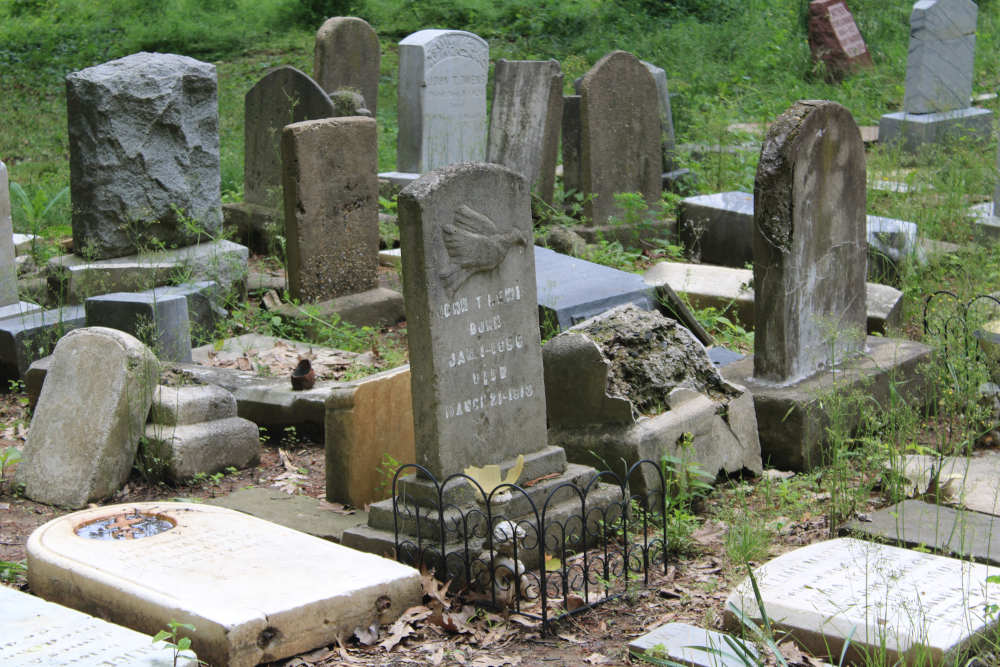
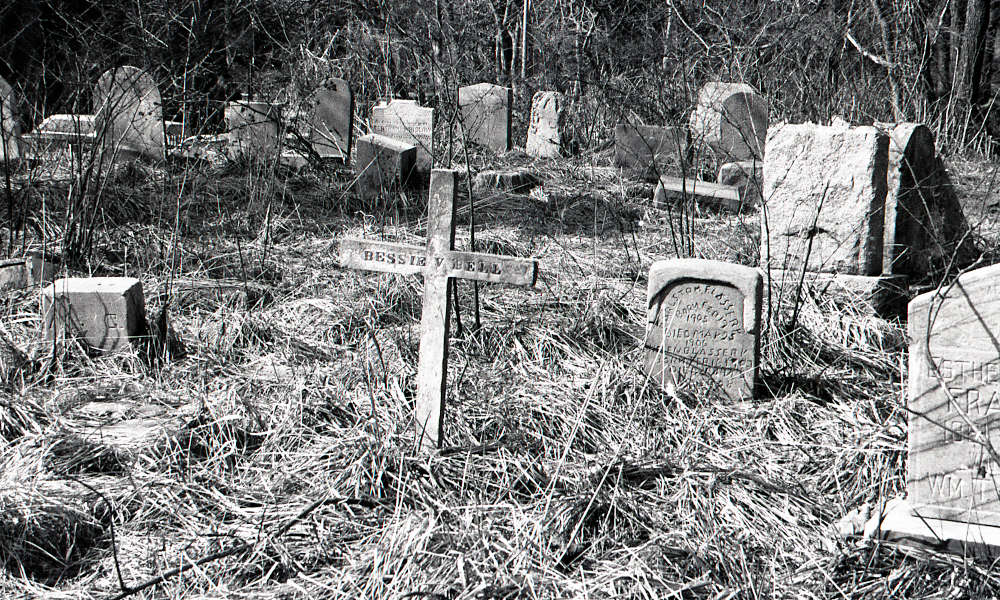
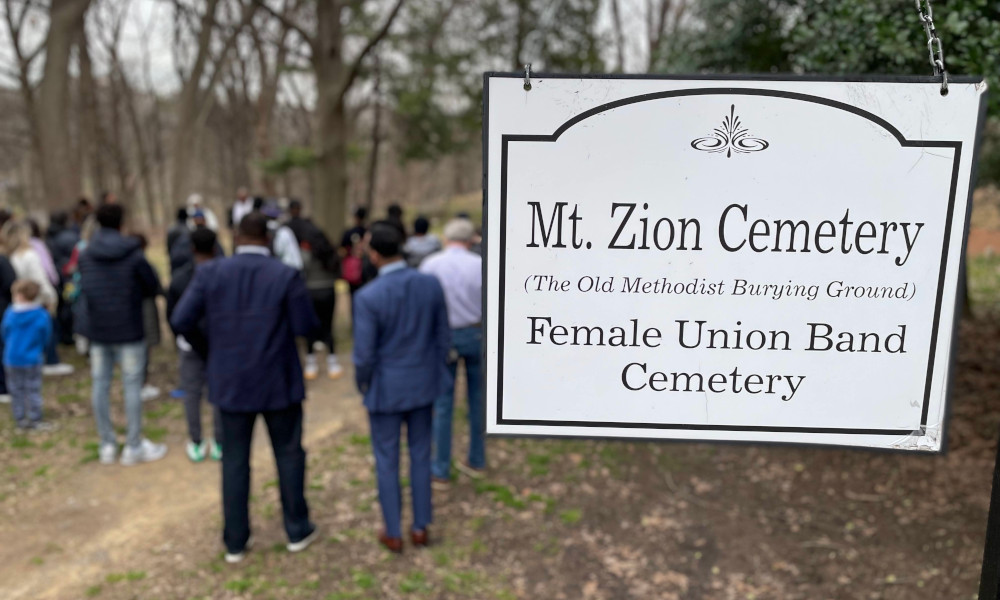
The Mount Zion – Female Union Band Society Cemetery is a historic cemetery located in the Georgetown neighborhood of Washington, D.C. The three-acre cemetery is composed of two roughly equal-sized halves, the Mount Zion Cemetery on the east and the Female Union Band Society Cemetery on the west, separated along a subtle north-south ridge in the center of the property.
Historically called the Old Methodist Burying Ground, the cemetery originated as a churchyard burial ground. It was established by the Montgomery Street Methodist Church in 1808, which gathered at the Montgomery Street Meeting House, formerly located on Twenty-Eighth Street between M and Olive Streets, N.W. (formerly Montgomery Street between Bridge and Olive Streets), approximately one-half mile southwest of the cemetery. The Montgomery Street Methodist Church was one of the few churches at the time that accepted white and black members, though on a segregated basis. Nearly half of the congregation consisted of former slaves and free blacks in the years leading up to 1816, when a group of 125 black members, dissatisfied with segregation, established their own congregation under the supervision of the parent church.
The congregation, now called the Mount Zion United Methodist Church and located at 1334 Twenty-Ninth Street, N.W., is thought to be the oldest black congregation in the District of Columbia, as well as the first black Methodist church in the area. The cemetery is the only remaining in D.C. used to inter a significant number of former slaves.
On October 19, 1842, a tract of land along the western border of the Old Methodist Burying Ground was sold for $250 to Joseph Mason in trust for the Female Union Band Society, a cooperative benevolent society founded in the same year by a group of free African American and Native American women. The Female Union Band Society purchased the western lot of Mount Zion to establish a secular burying ground for African Americans, which remained a prominent cemetery for the region’s African American community until 1950.
Continue reading the full history of the cemetery here.
📅 Dates: June 27, 29, & 30, 2024 📍 Location: Mount Zion – Female Union Band Society Cemetery, 2501 Mill Rd NW, Washington, D.C. 20007 & Via ZOOM
ℹ️ Open to the Public – No Prior Experience Needed! Familiarity with computers is recommended, but not required.
ℹ️ What to Expect:
Guided training sessions on cemetery documentation techniques
Hands-on experience in cataloging tombstones and historical markers
Insights into the rich history and cultural significance of Mount Zion – Female Union Band Society Cemetery
Opportunities to connect with fellow history enthusiasts and preservationists
Don’t miss out on this unique opportunity to contribute to the preservation of our heritage! Whether you’re a seasoned historian or simply curious about the past, all are welcome to join us.
Let’s come together to honor the past and pave the way for future generations to cherish and learn from the legacies of the Mount Zion – Female Union Band Society Cemetery!
Program Schedule
Click on the session links below to view the schedule for each day.
This training will introduce foundational concepts in heritage documentation for historic cemeteries:
Cemetery documentation fundamentals
Data collection: Kobotoolbox
Basics of Photogrammetry
KoBoToolbox is a free and open source software package for location and descriptive data collection. Information can be collected at heritage sites through tablets and phones using the KoBoCollect app or through the web browser interface, even when those devices are offline. Location and descriptive data recorded in the field can then be synched up with GIS software once an internet connection has been reestablished.
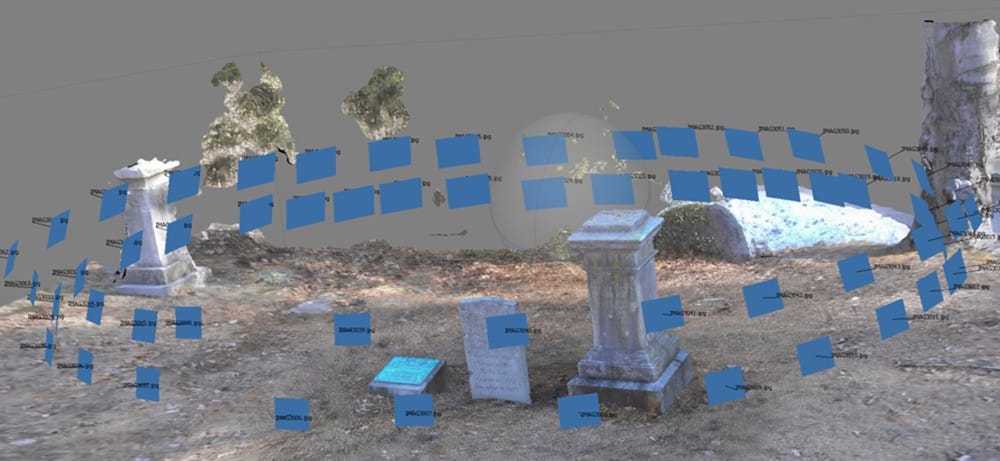
Photogrammetry is the use of two dimensional (2D) images to provide measurement data. Measurement data includes the creation of 3D models for heritage documentation and preservation. Processing heritage data through photogrammetry offers a transformative lens into the past. By meticulously capturing and analyzing images, we unveil hidden dimensions of cemeteries and tombs. This method not only preserves archaeological sites digitally but also facilitates precise measurements and reconstructions, fostering deeper insights into the legacies of African Americans in the Washington D.C. area.
On-site Training at Mount Zion – Female Union Band Society Cemetery
SATURDAY, June 29, 2024
10:00am – 4:00pm EDT (Attend for as long as you wish)
2501 Mill Rd NW, Washington D.C. 20007
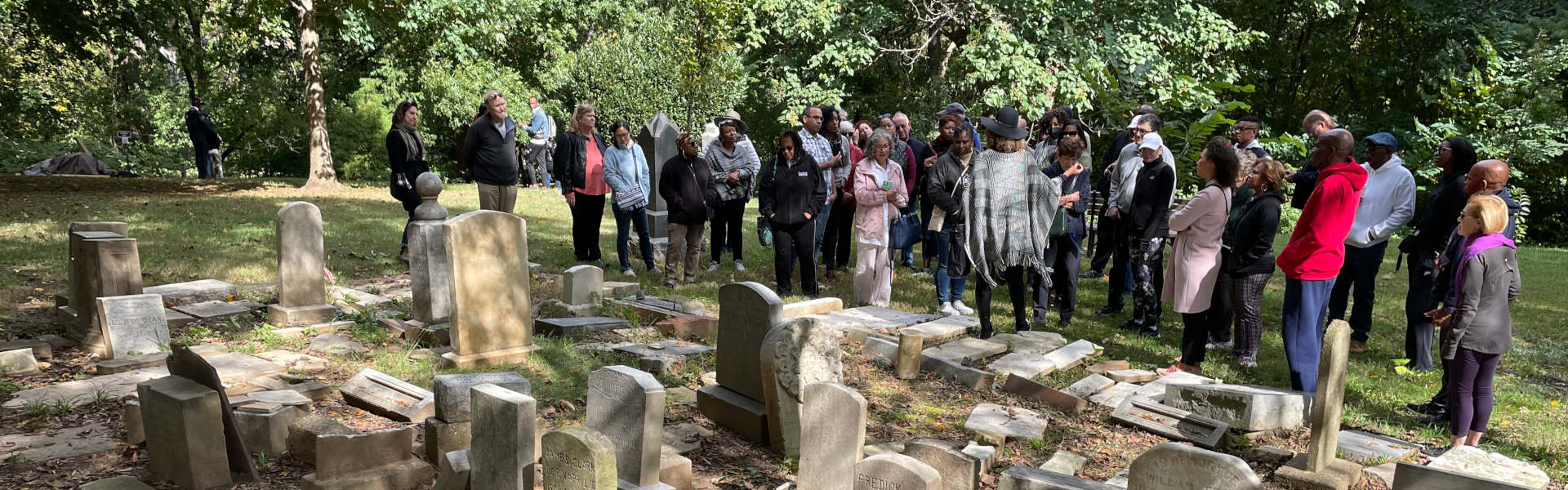
We will convene on Saturday at the Mount Zion – Female Union Band Society Cemetery, located in the Georgetown neighborhood of Washington, D.C. (2501 Mill Rd NW, Washington, DC 20007). Attendees are welcome to join at any point between 10am and 4pm to gain practical experience in cemetery documentation techniques:
Insights into the rich history and cultural significance of Mount Zion – Female Union Band Society Cemetery
Hands-on experience in cataloging tombstones and historical markers using free online databases (Kobotoolbox)
Photographic strategies for heritage preservation
* AITC and ASOR will provide the equipment needed during the training.
Data Processing
SUNDAY, June 30, 2024
1:00 – 4:00pm EDT
Via Zoom
On the final day of training we will process and examine the data collected at Mount Zion – Female Union Band Society Cemetery. Attendees will learn how to edit and publish their data stored in Kobotoolbox. They will also have a chance to build 3D models through photogrammetry of gravestones and tombs located at the cemetery.
ASOR CHI proudly announces Cultural Heritage Initiatives in Africa Today, a free three-day symposium that highlights the work of local heritage professionals, academics, and civil society organizations to protect, preserve, and promote cultural heritage in North Africa and the Sahel. ASOR welcomes you to attend the symposium via Zoom from April 11–13, which will feature work in Libya (April 11), the Maghreb (April 12), and the Sahel (April 13). Each session will last from 11:00–13:00 EDT.
No registration is necessary to attend this event. Please return to this webpage on each day of the symposium to access the Zoom link.
Simultaneous translation in Arabic, English, and French will be provided.
The Imperiled Jewish Cemetery of Soliman (Tunisia) Facing Disappearance
Jamel Eddine Ben Saidane
Carthagina, Tunisia
Documenting Endangered Heritage as a Tool for Connecting Tunisian Minorities
Lassaad Dandani & Nawel Drissi
University of Manouba, Tunisia
Cemeteries of the Jewish Minority in Tunisia: Between Heritage Conception and Tourism Employment: The Finalization of an Interactive Map of Jewish Cemeteries
Jamal Maghiouzi
American Society of Overseas Research (ASOR)
Towards Heritage Preservation and Intercultural Dialogues
Abdelkarim Ouguinaz
High Atlas Foundation, Morocco
Preserving Morocco’s Tangible Heritage: Condition Assessment and Mapping Efforts by the High Atlas Foundation and the American Society of Overseas Research
Ratiba Rigalma
Ibn Zohr University, Morocco
The Suitcase Museum Experience in Morocco
Assia Sabri, Ibtissem Sabri, & Belgacem Guemri
Laboratory Douiret, Tunisia
The Amazigh Heritage within ASOR’s project in Tunisia
Safouane Tlili
Carthagina, Tunisia
Ibadi Mosques on the Tunisian island of Djerba: A Legacy on the Way to Extinction
Insecurity, Challenges and Current Perspectives about the Heritage of the Sahel
Aboutou Konate
AESPAT, Mali
Training in Documenting the Threatened Heritage of Communities in Mali
II – Roles of Cultural Associations in Preserving Heritage
Kadiatou Sow
AESPAT, Mali
Raising Community Awareness and Documenting Threatened Cultural Heritage in the Commune of Minidjan in Mali
Boureima Teme
Association Dogon Initiatives (ADI), Mali
The Efforts of the Dogon Initiatives Association for the Documentation and Preservation of the Cultural Heritage of Mali
Rahina Balarabé
Oralité Plus, Niger
Oralité Plus’ Cultural Heritage Work in Niger
Pierre Guindo
Mission Culturelle Bandiagara, Mali
Mission Culturelle of Bandiagara (Mali): Work on the Bandiagara Cliffs (Mali) in Partnership with ADI and ASOR
III – Safeguarding and Preserving Heritage through Community Action
Maki Garba
Culture, Art et Humanité (CAH), Niger
The Valorization and Revitalization of Traditional Cultures and Skills in Niger: The Case of Practical Transmission of Women Potters from Boubon
Kientega Pingdewindé Gérard
Koombi Culture, Burkina Faso
Role and Place of the Blacksmith in the Society of the Mossé in Burkina Faso
Speakers / Presenters
Dr. Mftah Alhddad is Professor of Archaeology and Ancient History at Azzaytuna University in Tarhuna, Libya. He received his doctorate in Archaeology from the University of Leicester in 2010. In 2012, he became the first director of the Libyan Department of Archaeology’s Documentation and Digitization Centre for Cultural Heritage. He has since been involved in a number of collaborative projects between DoA and foreign archaeological missions and institutions, including EAMENA, Training in Action, and Partnership for Heritage.
Awatef Bahroun is a heritage consultant and curator of the Leader Habib Bourguiba Museum. She is also a doctoral student, researching the Jewish community of Nabeul and its affect on the Jews of Cap Bon.
Rahina Balarabé, born in Niamey, Niger, Ms. Balarabé fell in love with storytelling at a very young age. In 2007, she made her storytelling debut and by 2008 had founded her theater company. She currently leads the artistic and cultural organization, Oralité plus.
Issouf Balima works with IKAM Burkina Sarl, a non-profit specializing in training in cultural entrepreneurship (Maaya), management, and cultural administration. IKAM serves as a resource center for the cultural and creative industries in Burkina Faso.
Jamel Eddine ben Saidane is a member of the Tunisian Amazigh minority. He is passionate about history and is involved in various initiatives aiming to protect, document, and promote Tunisian heritage. Jamel is a member of the Carthagina Association.
Dr. Ahmed M. A. Buzaian is a Research Associate at EAMENA, School of Archaeology and Ancient History, University of Leicester, UK. He also served as a Full-time lecturer in classical archaeology at the Department of Archaeology, Benghazi University, from 1994 to 2012, including teaching courses on Roman pottery, Field archaeology and Techniques in archaeological excavations, as well as post-excavation skills. Dr. Buzaian has directed numerous field projects including excavations at the ancient city of Teucheira (modern Tocra) from 1994 to 2012, Omar al-Mukhtar University training excavations at the ancient site of Balagrae (modern al-Beida) from 2001 to 2006, and Co-director of the Anglo/Libyan excavations at Euesperides (1995-2006).
Lassaad Dandani is Assistant Professor at the Higher Institute of Heritage Professions of Tunis. He holds a PhD in Contemporary History. He researches tourism and heritage in Tunisia and the Maghreb. Author of several articles on the history of tourism in Tunisia, he recently published a book on “Automotive Tourism in Tunisia.”
Nawel Drissi, a University teaching assistant at the Faculty of Letters, Arts, and Humanities, Manouba. A PhD researcher (final year) in American Politics and International Relations. I hold a master degree in American Foreign Policy from Leicester University, UK. I am also a UNESCO peace ambassador.
Dr. Aida M. Ejroushi, an architect from Libya, obtained her doctoral degree in Land Use, Planning, Management, and Design with a specialization in historic preservation from the College of Architecture at Texas Tech University. Dr. Ejroushi’s research revolves around historic preservation planning, planning history, international planning and development, critical theory, uneven development, and Science and Technology Studies. She examines the intersection between historic preservation and urbanization.
Geoff Emberling is an archaeologist and museum curator specializing in the Middle East and North Africa. Since 2016 he has worked with a team of Sudanese and international archaeologists and conservators to engage communities in education and preservation of the UNESCO World Heritage site of “Gebel Barkal and Sites of the Napatan Region” in northern Sudan. This work has spanned a popular revolution, a military coup, and now a civil war in Sudan.
Dr. Ahmad S. M. Emrage is an associate professor at the Department of Archaeology, Faculty of Arts, University of Benghazi’s. He holds a BA and an MA in Archaeology from University of Benghazi. In 2014, he completed a PhD at the School of Archaeology and Ancient History, University of Leicester, The UK.
During the 2019–20 academic year, Emrage held a Fulbright Fellowship to teach courses on Libyan cultural heritage at Oberlin College (Ohio, USA).
As ASOR’s representative for heritage activities in Libya, Dr. Emrage manages ASOR’s cultural heritage grants and activities in Libya.
Maki Garba holds a Professional Master’s degree in Cultural Heritage Management from Senghor University of Alexandria, Egypt. He is president and founder of the Culture, Art and Humanity Association (CAH). Garba works for cultural heritage on associative and public lands in Niger. Garba coordinates several projects in the fields of culture, development and social cohesion in Niger through the Cultural Diversity Portal: https://niger.spla.pro
Belgacem Guemri is a mechanical engineer and freelance photographer, who is interested in methods and techniques for documenting and preserving cultural and civilizational heritage.
Pierre Guindo was born in Nombori (Bandiagara) in Mali. He holds a Master’s degree in History-Geography from the Ecole Normale Supérieure of Bamako-Mali obtained in 1999, and a Diploma of Advanced Professional Studies (equivalent to a Master II) in Cultural Heritage Management from the Senghor University of Alexandria in Egypt obtained in 2005.
Professional therefore in the field of cultural heritage, after two years of service in the world of NGOs, he has worked and continues to work for the preservation and promotion of cultural values at the level of the Cultural Mission of Bandiagara where he is manager, holding the position of head of department since 2013.
Dr. Khaled el Haddar is Associate Professor of Archaeology at the University of Benghazi in eastern Libya. Since the Libyan revolution of 2011, he has played an instrumental role in documenting and raising awareness about the illicit trafficking of Libyan cultural property. In 2022, the Libyan Historic Cities Authority published his book, The Missing Benghazi Treasure: a Documentary Study, detailing the disappearance of the significant archaeological collection that had been housed in the National Trade Bank in Benghazi.
Aboutou Konate is a graduate with a Masters in Culture and Development from the University of Social Sciences and Management, Bamako, Mali. Currently, Mr. Konate serves as an archaeologist and instructor for the Faculty of History and Geography at the University of Social Sciences and Management, as well as an ASOR Local Coordinator Consultant in Mali as part of the Cultural Heritage Initiatives in the Sahel.
Jean-Paul KOUDOUGOU. Trained as a historian, multimedia communicator and cultural heritage management consultant, he has benefited from a series of high-level training courses in cultural heritage management. He has held several senior positions in the field of museum management and has a good knowledge of African museum policies. He is the President of the ICOM Africa Regional Alliance (ICOM-Africa) and Consultant for ASOR.
Jamal Maghiouzi was born in Dades Valley, Tinghir, Morocco. He has bachelor’s degree in English from Kaddi Ayyad University, Marrakech. He was always interested in culture and heritage. He became a field cultural coordinator at High Atlas Foundation USAID-Dakira program / Religious and Ethnic Minorities Program and at Asor HIC Program between 2021 and 2023. During these experiences, he developed his interests in ethnography, anthropology, local heritage, and inter-cultural dialogues.
Julia Nikolaus is an archaeologist specializing in North Africa, with a focus on remote sensing and heritage protection particularly in Libya, Egypt and Tunisia. Her research centers around long-term changes to archaeological sites and landscapes, which includes the exploration of more recent challenges to heritage such as urbanization, agricultural expansion and climate related impacts.
Abdelkarim Ouguinaz is a Ph.D. GIS expert with 8 years of experience in the field of GIS. He is capable of managing spatial databases and creating maps to undertake urban and rural planning projects. As a GIS engineer, he worked in various offices and NGOs and was also a freelance consultant. His duties include collecting and analyzing the data using Remote Sensing to process satellite images, creating interactive maps on online platforms, and mastering GIS software such as ArcGIS, QGIS, Google Earth Pro, and SasPlanet. Additionally, he has experience with photogrammetric processing of digital images and generating 3D spatial data for use in GIS applications and cultural heritage documentation.
Kientega Pingdewindé Gérard (aka KPG) anchors his profession as a blacksmith from Burkina Faso based on ancestral knowledge transmitted by his father. He also trained in theatrical art in Ouagadougou and established himself as a renowned storyteller, which led him to win the Silver Medal at the 2009 XVI Francophonie Games in Beirut. Transmission of intangible cultural heritage is at the heart of his vision; for this, he created in 2008 the Koombi Cultural Center in Arbollé, his native village, to train young people in the practices of storytelling, dance, and music.
Ratiba Rigalma is a professor at Ibn Zohr University, specializing in archaeology and heritage. She is a graduate of the National Institute of Archaeology and Heritage and a former department head at the Moroccan Ministry of Culture. Professor Rigalma has published several articles on archaeology and heritage and has participated in seminars at the national and international level.
Assia Sabri holds a university degree in accounting and finance. She is also a traditional jewelry maker and civil society activist.
Ibtissem Sabri is a civil society activist in Tataouine in southern Tunisia. She is also a representative on the local council of Tataouine Sud in Douiret.
Kadiatou Sow is originally from western Mali, more precisely from the Nioro region in the Sahel region. She is president of the Association of Students and Supporters for the Protection of Cultural Heritage (AESPAT). Kadiatou is passionate about culture, reading, travel and discoveries.
Boureima Teme was born in Yendouma Sogol, Dogon Country. He obtained his master’s degree in History and Archaeology in 2011 after defending his dissertation on the theme of sigui and its teachings in the area of Tôôrô. He has been working with the NGO Association Dogon Initiatives (ADI) since March 2016 in the culture section as a program manager.
Safouane Tlili is a photographer who specializes in documenting the material and intangible heritage of Tunisia, especially on the island of Djerba. He has held several art exhibitions and is a civil activist in several human rights and cultural associations.
The 2026 ASOR Annual Meeting is supported by a dedicated mobile app, hosted by Whova, for participants attending in Chicago and remotely. The app provides the complete academic program, speaker and exhibitor listings, and floorplans of the Hilton Chicago.
Registered participants may download the app from Apple’s App Store or Google Play on your phones.
In 2022, the Committee has actively worked to energize ASOR’s membership to respond to the renewal of the Memorandum of Understanding (MoU) for the preservation of cultural heritage of Libya; hosted an FOA webinar “A World at War: Protecting Cultural Heritage in Times of Conflict” and will sponsor a workshop at the virtual Annual Meeting.
We are especially seeking members from outside of North America and in areas that can add to the committee’s vision and work. Please send a brief statement of interest and a brief CV by November 1 to Jane DeRose Evans (jevans@temple.edu), whom you should also contact if you have any questions.
2022 Study of Collections Fellowship Report: Kelsey Museum Archives
Joseph A. Greene, Harvard Museum of the Ancient Near East
An ASOR Study of Collections Fellowship funded my travel to the University of Michigan to complete work in archives related the 1925 Michigan excavations in the Carthage Sanctuary of Tanit (tophet). The excavator, Professor Francis Kelsey, died before completing a final report, but he left behind an extensive archives, held both at the Kelsey Museum and at the Bentley Historical Library.
The 1925 expedition directed by Kelsey was the forerunner to the 1975–1979 ASOR Punic Project, directed by the late Professor L.E. Stager (1943–2017). Dr. Brien Garnand and I have now taken responsibility for publication of the Punic Project, and we are using the opportunity to include Kelsey’s unpublished results with those of the ASOR Punic Project.
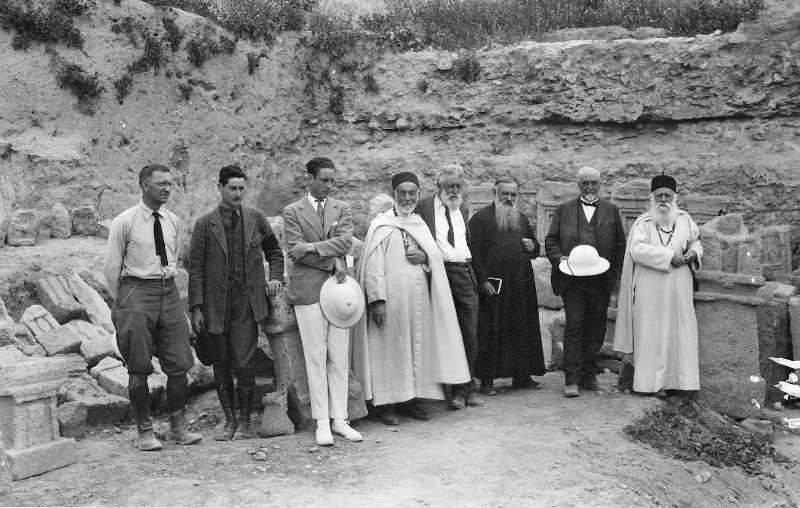
Francis Kelsey with his very smartly dressed Carthage excavation team. Kelsey is on the far right in dark three-piece suit holding white pith helmet. (University of Michigan, Kelsey Museum Archives)
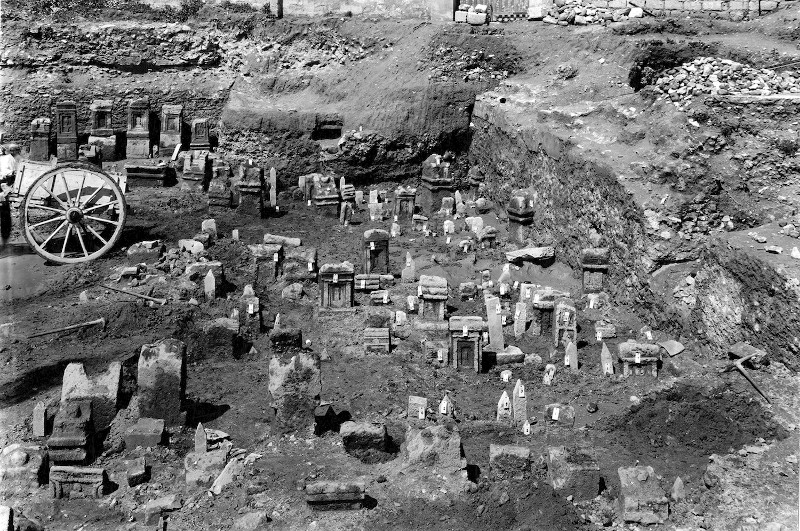
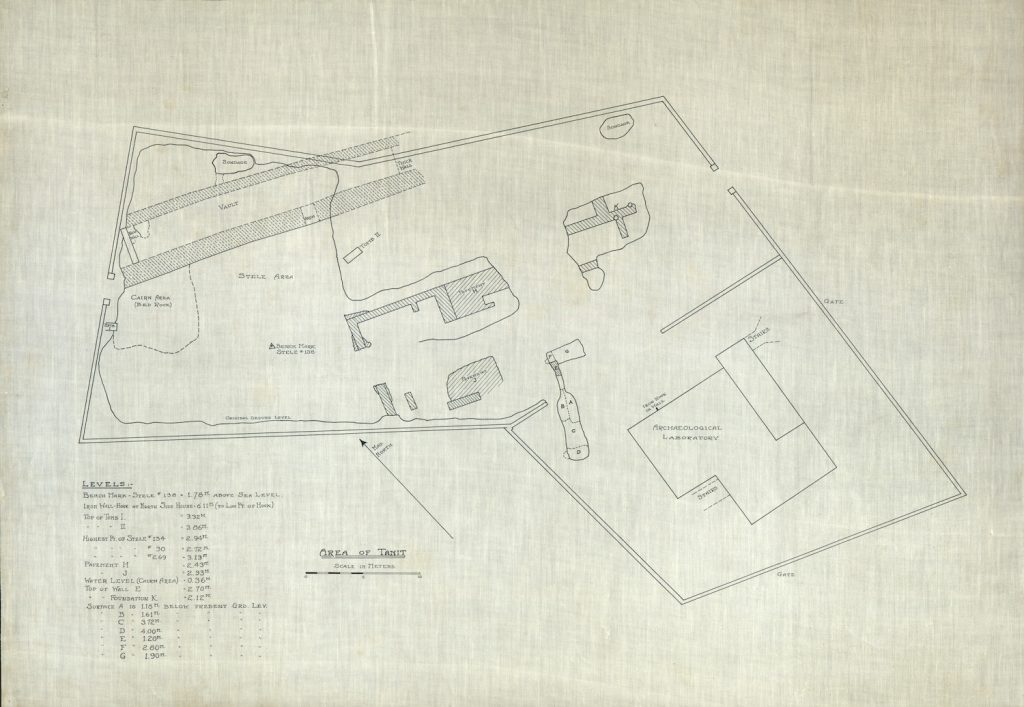
Carthage Tophet under excavation in 1925 with stelae and cippi exposed in situ, view northwest. The flat, vertical wall on righthand side is an intrusive 4th c. A.D. Roman vault (see also plan, Fig. 3). (University of Michigan, Kelsey Museum Archives)
Dr. Garnand completed much work in the Michigan archive before 2022. For example, Kelsey’s 1925 site plan had already been integrated into the ASOR 1979 site plan. Field notes and excavation diaries from 1925 have been scanned and edited, along with plans, sections, drawings, field photos and other documentation. The drawings and photographs have been edited and annotated so their format corresponds to that of the ASOR Punic Project records. All of the annotated 1925 field photos and plans will be included in the digital publication, while a selection will appear in the printed version of the final report.
Certain other tasks planned for 2022 have also already been completed. Photography of 78 paper squeezes of Tophet stele excavated by Kelsey was undertaken by the University of Michigan Imaging Services. Likewise prints of the 1925 expedition photographs (the negatives are lost) have also been digitized. Thus, we now have a detailed inventory of squeezes and photographs.
With help of Kelsey Museum Registrar Michelle Fontenot, I was able to identify and organize a residue of ASOR Punic Project large-format plans unaccountably co-mingled in the archives with those from Kelsey’s 1925 expedition and the 1975–1979 Carthage-Dermech Michigan excavations. The physical plans remain at Michigan, but digital copies will be deposited in the ASOR Punic Project archives at the Harvard Museum of the Ancient Near East (HMANE). Also digitized were 15 large-format plans and drawings from the 1925 and 1975–1979 Carthage Tophet and Harbor excavations. This was completed with assistance from Kelsey Museum Collections Manager Sebastian Encina and undergraduate intern, Isabella Blanton, who accompanied me to the Clark Library where we scanned the material using a large-format scanner under the guidance of map librarian Karl Longstreth.
Plan of 1925 Carthage Tophet excavation area. The “Vault” in upper lefthand side is an intrusive 4th c. A.D. Roman feature (also visible in the photo, Fig. 2). (University of Michigan, Kelsey Museum Archives)
Another unanticipated but helpful discovery was the archive of 1978 exhibit “Carthage Then and Now,” originated at the Kelsey Museum, which then traveled to the Oriental Institute Museum at the University of Chicago and to the Semitic Museum at Harvard (now HMANE).
Finally, in the Bentley Library I completed the review of the relevant Francis Kelsey papers held there. Garnand had begun review 165 boxes of Kelsey papers on a previous visit, and it was necessary only for me to verify the box numbers which contained the relevant documents previously scanned.
Khirbet al-Balu’a 2021 Study Season: Pottery and Figurines
Kacey Garcia, 2021 Shirlee Meyers-G. Ernest Wright Summer Stipend Recipient
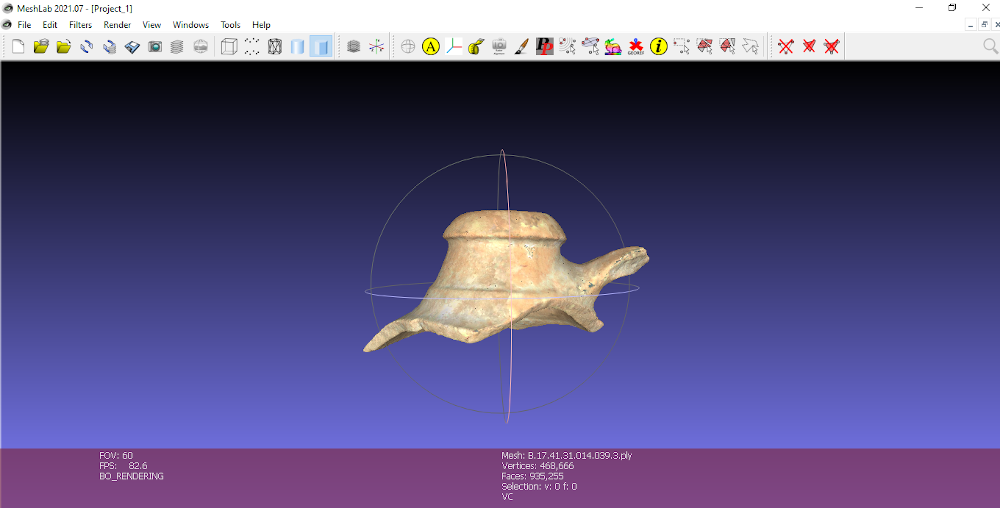
I would like to thank the Shirlee Meyers-G. Ernest Wright Scholarship donors and ASOR for providing me with an amazing opportunity to participate in the 2021 study season at La Sierra University. I assisted in processing loaned, diagnostic ceramic samples for publication of 2012-2019 excavation seasons at Khirbet al-Balu’a. I organized and sorted these samples according to occupational phases utilizing the data collected from the loci. Relying on my skills with Next Engine’s software ScanStudio and Meshlab, I was able to create plates for all of these diagnostic samples to prepare them for the Khirbet al-Balu’a publication. The next step will be creating a ceramic seriation for Central Jordan by applying C14 data.
Meshlab of an aligned diagnostic sample from 2017.
Scanning set up at La Sierra University.
I was also able to conduct research on the figurines found in the main occupational strata at Khirbet al Balu’a as part of a class on household archaeology. I discussed the figurines’ purposes while providing contextual evidence from Iron Age Khirbet al-Balu’a. I read articles in household archaeology methodology and theory and applied what I’ve learned to the archaeological dataset from Khirbet al-Balu’a. A total of 19 figurines were found at Khirbet al-Balu’a during the 2012 to 2019 excavations. While both anthropomorphic and zoomorphic figurines were found, the majority were zoomorphic (13 figurines). This assumes that the demonstrated figures are animals since many are difficult to interpret due to their poor condition.
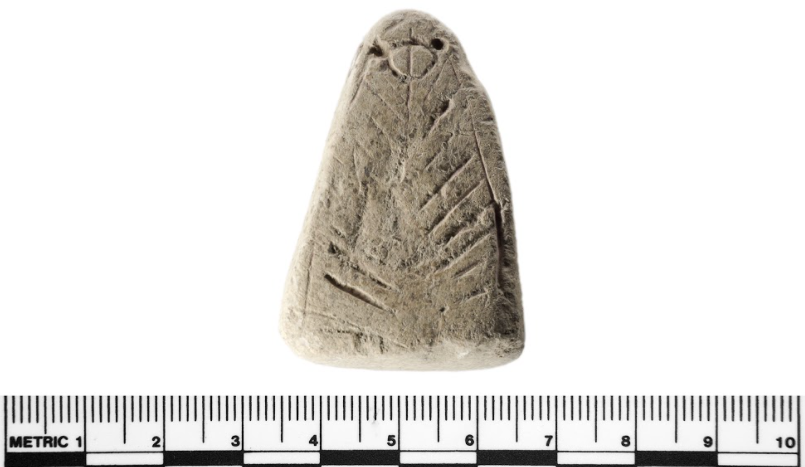
When analyzing figurines there are 3 main categories: zoomorphic, anthropomorphic and theriomorphic. Zoomorphic figurines resemble an animal, anthropomorphic figurines resemble humans, and theriomorphic figurines are thought to have depicted gods in animal form. In the ancient near east, theriomorphic figurine can be either an animal with humanistic traits that identify with gods or as part animal and human. Phase 2 at Balu’a did not have any female depictions, despite female figurines being the most common anthropomorphic archetype. Female figurines are often correlated to fertility, and were possibly used to enhance the chances of bearing children or giving birth safely. Most of Balu’a figurines are zoomorphic, and the ones from the Iron Age II house are identified as bovine, birds, and horses. Two of the figurines were ceramic and another two were made of plaster and clay. For example, B190010 was a plaster, conical-shaped zoomorphic figurine with incised eyes, beak, feathers and wings. There is a line design originating from the center of the figure. It is thought to be a bird of some sort owl or a hawk. This figurine was a part of the Phase 2 post-collapse rubble layer located in room A4. While learning about these figurines I couldn’t help but feel connected to the occupants of the Iron Age II house. I wondered what I would leave behind in my home long after I am gone for others to find. Figurines are initially interpreted as cultic objects. This is my favorite theory because it shows that ancient peoples needed something to believe in when life got too unpredictable and difficult. There is an unspoken beauty and a sense of humanity to the concept of hope thriving through these figurines during what may have been a desperate time.
Zoomorphic figurine of a bird from Balu'a Iron II house. Artifact #B190010 (Used with permission of Balu'a Regional Archaeological Project, BRAP)
Kacey Garcia is a senior undergraduate at La Sierra University majoring in archaeology. She first encountered archaeology while studying classics in Italy and has since fallen in love with it. Kacey knew right away this was what she wanted to do for the rest of her life. For the past two years, Kacey has been working as a student research assistant at the Center for Near Eastern Archaeology on projects pertaining to Khirbet al-Balu’a and Tell al-Umayri.
During the summer of 2021, ASOR supported 27 undergraduate and graduate students through the Summer Stipend Program. These students undertook non-fieldwork archaeological research projects led by ASOR-affiliated project directors. They also took part in monthly cohort group meetings hosted via zoom. Read a summary of these cohort meetings here.
Stay tuned for more updates from the 2021 Summer Stipend recipients!



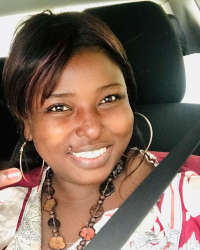

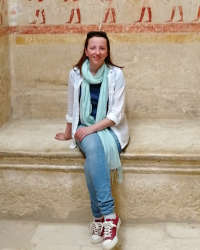
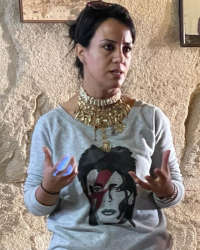
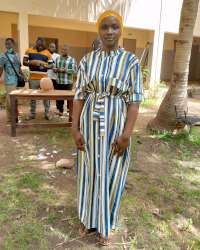
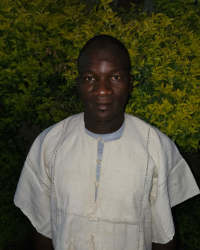
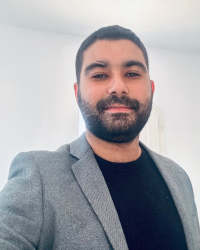







 Kacey Garcia is a senior undergraduate at La Sierra University majoring in archaeology. She first encountered archaeology while studying classics in Italy and has since fallen in love with it. Kacey knew right away this was what she wanted to do for the rest of her life. For the past two years, Kacey has been working as a student research assistant at the Center for Near Eastern Archaeology on projects pertaining to Khirbet al-Balu’a and Tell al-Umayri.