 Spring is in the air, and ASOR is pleased to be holding a spring book sale for publications 2+ years old. All proceeds from book sales will go to supporting membership scholarships!
ASOR members (with a mailing address in the USA) can purchase copies of ASOR books at the discounted price of $5.00 (ca. 90% discount) + $5.00 US media mail shipping, while supplies last. All prices listed below include US media mail shipping. Due to ASOR’s licensing agreement with ISD, this offer is only available to ASOR members. We are unable to offer this discount to members without a US mailing address due to international shipping costs. Please contact membership@asor.org with any questions.
Not an ASOR member? Join as an Associate Member ($46) or Academic Member (starting at $90) first in order to take advantage of these great deals on books. More information on memberships and the benefits associated with each level can be found here.

AASOR 75: The Amman Theater Statue in its Iron Age Contexts. By Joel S. Burnett, with contributions by Romel Gharib and Don F. Parker. Original price $85.95. Sale price $10.00 (includes US media mail shipping).

AASOR 74: The Excavations of ‘Iraq al-Amir, Volume II. Edited by Nancy L. Lapp, with contributions by Michael S. Zimmerman, Daniel Ulvoczky, Nicholas Hudson, Adam Hartman, and Nancy L. Lapp. Original price $84.95. Sale price $10.00 (includes US media mail shipping).

AASOR 73: An Examination of the Stratigraphy and Neolithic-Iron Age Pottery from Tel Jezreel, Area A. Edited by Charlotte Whiting and Gloria London. Original price $84.95. Sale price $10.00(includes US media mail shipping).

AASOR 72: Bayt Farhi and the Sephardic Palaces of Ottoman Damascus in the Late 18th and 19th Centuries. Edited by Elizabeth Macaulay-Lewis, with contributions by Ezra Ashkenazie, Jeffery Burden, George H. Lewis, Judith S. McKenzie, and Jason Montgomery. Original price $84.95. Sale price $10.00(includes US media mail shipping). Only two copies left!

AASOR 69: The Archaeology of Agro-Pastoralist Economies in Jordan. Edited by Kevin M. McGeough, with contributions by Robin M. Brown, Alan Farahani, Hannah Huynh, Natalie Mueller, Benjamin W. Porter, Jennifer Ramsay, Kevin Rielly, and Bruce Routledge. Original price $84.95. Sale price $10.00(includes US media mail shipping). SOLD OUT!

AASOR 63: Views from Phlamoudhi, Cyprus. By Joanna S. Smith. Original price $84.95. Sale price $10.00 (includes US media mail shipping). Only two copies left!

ARS 30: Tel Kedesh I: The Hellenistic Archive. By Sharon C. Herbert. Original price $99.95. Sale price $10.00 (includes US media mail shipping).

ARS 29: Taanach II: The Iron Age Stratigraphy. By Mark W. Meehl. Original price $89.95. Sale price $10.00 (includes US media mail shipping).

ARS 27: Caesarea Maritima: Excavations in the Old City 1989-2003. Edited by Kenneth G. Holum. Original price $89.95. Sale price $10.00 (includes US media mail shipping). SOLD OUT!

ARS 20: Cyprus and the Balance of Empires: Art and Archaeology from Justinian I to the Coeur de Lion. Edited by Charles Anthony Stewart, Thomas W. Davis, and Annemarie Weyl Carr. Original price $84.95. Sale price $10.00 (includes US media mail shipping). SOLD OUT!

ARS 15: Humayma Excavation Project, 1: Resources, History, and the Water-Supply System. By John Peter Oleson. Original price $89.95. Sale price $10.00 (includes US media mail shipping). SOLD OUT!

JCSSS 3: The Textual Criticism of Sumerian Literature. Edited by Paul Delnero. Original price $89.95. Sale price $10.00 (includes US media mail shipping). SOLD OUT!

JCSSS 2: Texts from the Late Old Babylonian Period. Edited by Seth F. C. Richardson. Original price $75.00. Sale price $10.00 (includes US media mail shipping). SOLD OUT!








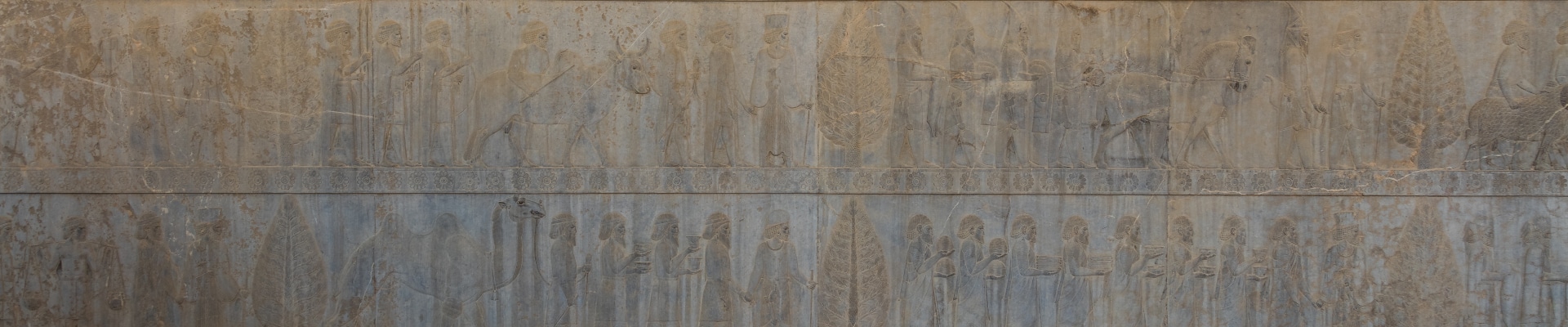

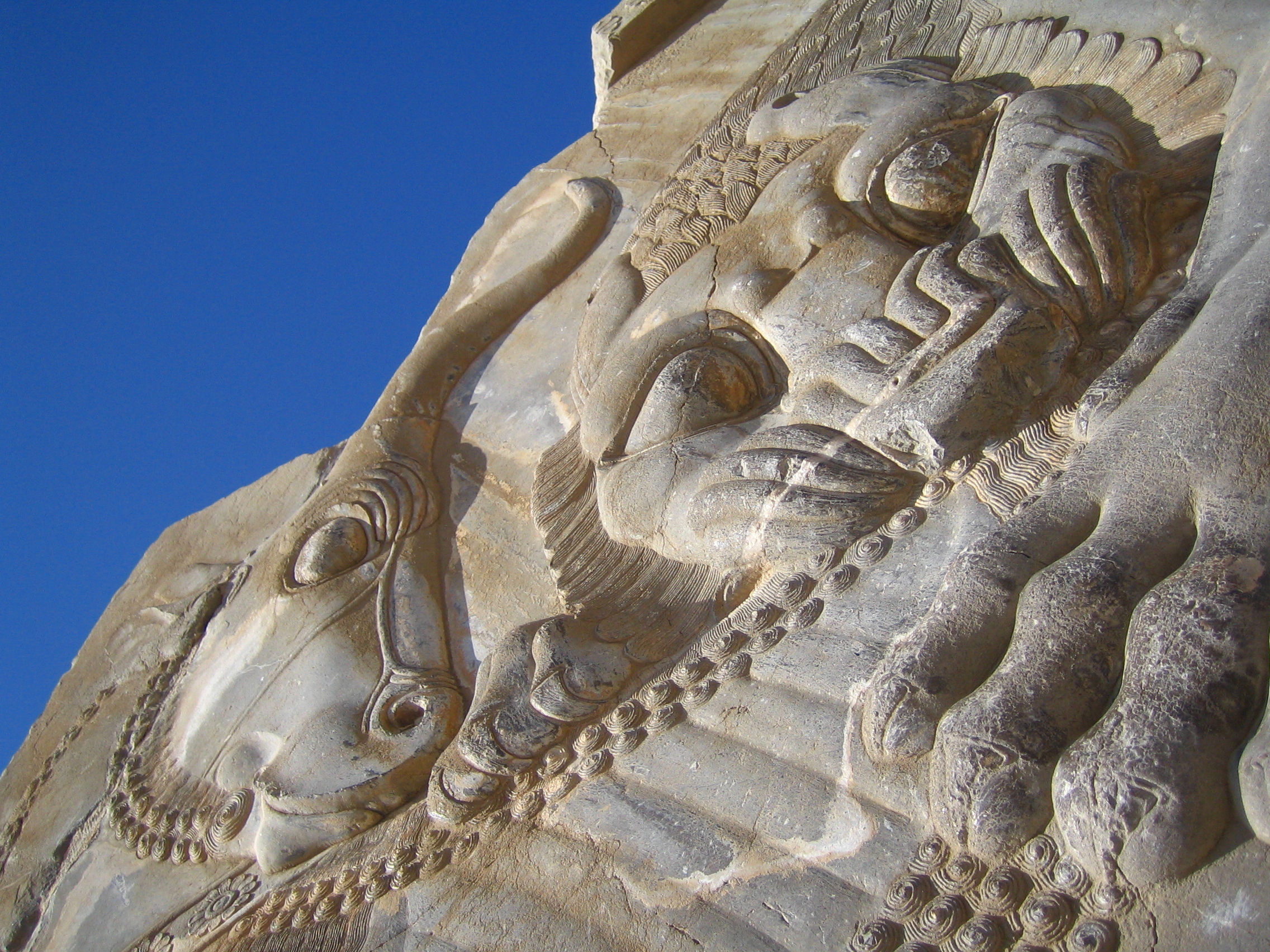

 Neville McFerrin holds a PhD in Ancient Mediterranean Art and Archaeology from the Interdepartmental Program of Ancient Mediterranean Art and Archaeology at the University of Michigan. She now serves as an Assistant Professor of Ancient Mediterranean Art in the Department of Art History at the University of North Texas. Her research focuses upon intersections between dress, perception, materiality, and embodiment at the sites of Persepolis and Pompeii. Her published and forthcoming work explores a range of topics from reconsiderations of gender in the reliefs of the Apadana to the fashionability of pearls in late first century BCE Pompeii. It has appeared in multiple journals and edited volumes including Fashioned Selves: Dress and Identity in Antiquity, Fashion Studies, the Handbook of the Senses in the Ancient Near East, and most recently in The Routledge Companion to Seals and Seal Studies in Antiquity. She is currently working on a monograph that considers dress as a lens through which to reinterpret the site of Persepolis.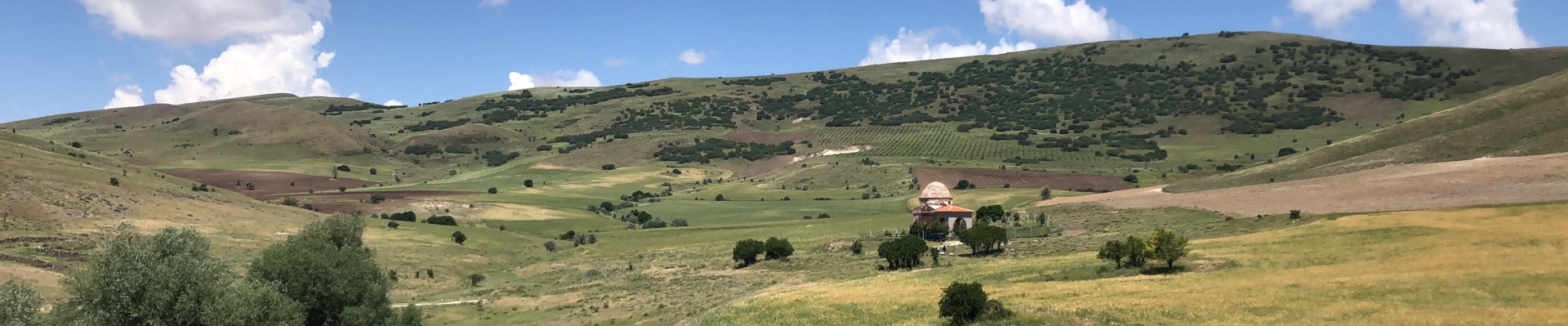
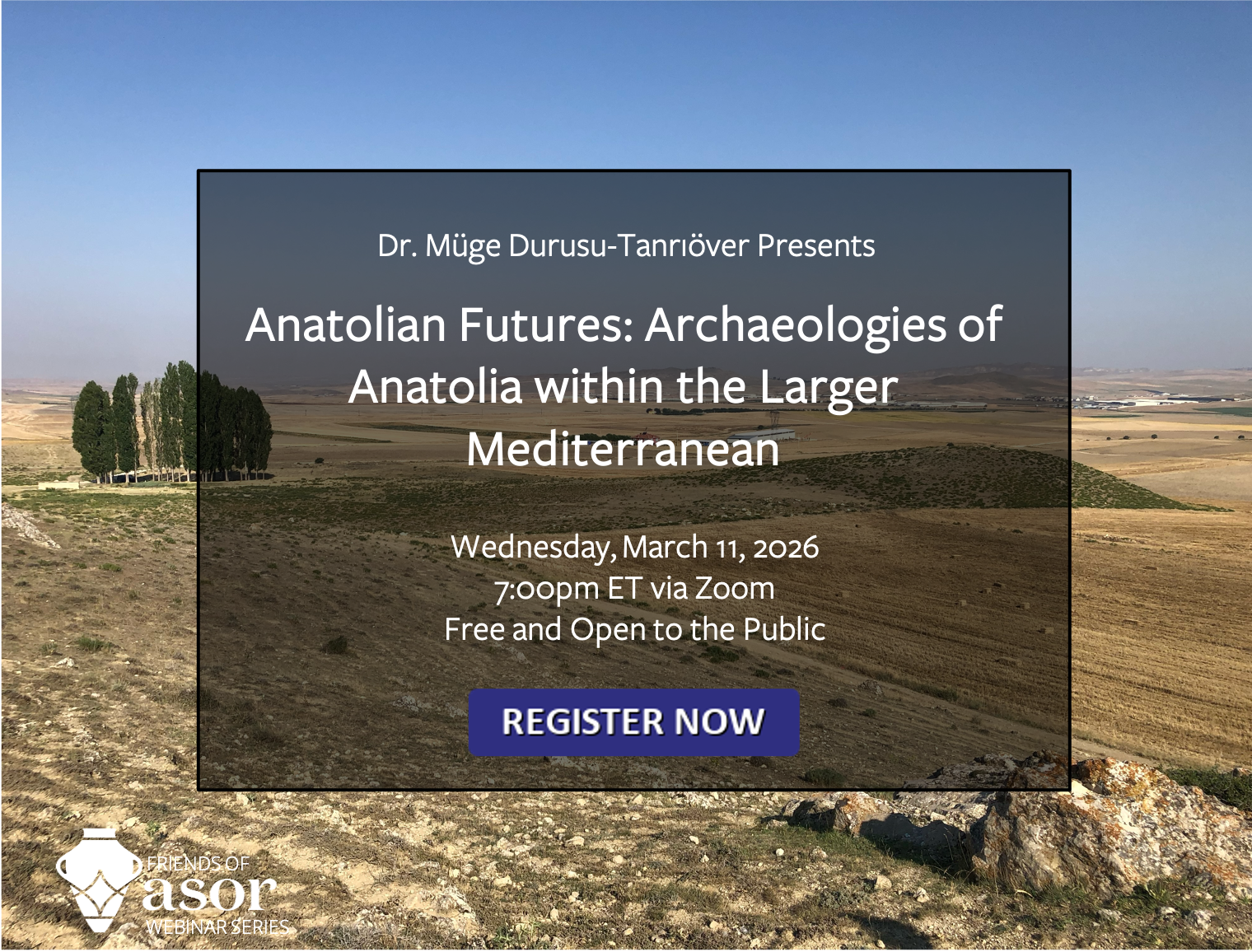
 Since their beginnings, archaeologies of Anatolia have occupied a liminal position within the larger archaeological traditions of the “Old World.” Seen as a geography in contact with, but never fully belonging to, the archaeologies of Mesopotamia, the Mediterranean, the Aegean, or the Black Sea over the longue durée, certain combinations of time and space in the Anatolian past have been siloed into various sub-fields that either look outwards to neighboring geographies or stay exclusively Anatolian. For instance, the Middle Bronze Age of the central plateau is discussed within frameworks of Mesopotamian archaeology because of the trade routes that linked Assyria to Anatolia, while the period immediately succeeding it has been studied mostly in isolation as a distinctly Anatolian phenomenon, even though the Hittite Empire of the Late Bronze Age thrived on the trade networks of the Middle Bronze Age. Similarly, the classical cities of western Anatolia are staples of Greek and Roman archaeology and are seen as part of a larger Mediterranean world, while the Bronze Age in this same geography falls between the cracks of Anatolian and Aegean traditions, remaining an understudied topic even today. Befitting the common trope of Anatolia as a bridge, the archaeologies of this geography have been fragmented into numerous transitions, some claimed by the larger Mediterranean world, while others remain distinctly Anatolian and idiosyncratic within scholarship.
 In this talk, Dr. Durusu-Tanrıöver traces the lineage of this fragmentation across times, places, and people as varied as nineteenth-century European travelers to Anatolia, early Republican Ankara, continual coloniality, and Orientalism. Posing the questions of how we can define Anatolia and what its archaeologies can look like in the later twenty-first century CE, she makes the case for a connected Anatolian archaeology that can both claim its multiple constituents and contribute to the larger debates in Mediterranean archaeology. To this end, she will identify several directions including, but not limited to, deliberate theoretical engagement, multi-disciplinarity, and regional fieldwork looking beyond single sites.
 Dr. Müge Durusu-Tanrıöver is an archaeologist whose research explores the strategies and impacts of ancient imperialism on border regions in the eastern Mediterranean during the Bronze and Iron Ages. Her publications and fieldwork to date have mainly focused on the Hittite Empire, approaching this state from its edges through a myriad of lenses, including material culture and hybridity, artistic production, the rhetoric of kingship, and place-making. She holds a PhD in Archaeology and the Ancient World from Brown University and is currently an Assistant Professor in Temple University’s Department of Art History. Since 2019, Dr. Durusu-Tanrıöver has directed the Polatlı Landscape Archaeology and Survey Project (PLAS), a fieldwork initiative that seeks to understand the imperial strategies of the Hittite Empire along its western border, as well as the responses of local communities to the expansion of Hittite power in the region. Dr. Durusu-Tanrıöver has received numerous grants for her research, including a