CHI – Condition Assessments

[vc_row fullwidth=”true” css=”.vc_custom_1486761987223{padding-top: 0px !important;padding-right: 0px !important;padding-bottom: 0px !important;padding-left: 0px !important;}”][vc_column][vc_single_image image=”50609″ img_size=”full”][/vc_column][/vc_row][vc_row fullwidth=”true” css=”.vc_custom_1567017721752{margin-top: 20px !important;padding-top: 0px !important;padding-right: 0px !important;padding-bottom: 0px !important;padding-left: 0px !important;}”][vc_column width=”1/12″ css=”.vc_custom_1493002455400{margin-right: 10px !important;}” offset=”vc_hidden-md vc_hidden-sm vc_hidden-xs”][vc_column_text]

 SHARE

[/vc_column_text][mk_image src=”http://www.asortest.org/wp-content/uploads/2017/01/social-fb-icon4.jpg” image_width=”42″ image_height=”42″ hover=”false” custom_url=”https://www.facebook.com/ASOResearch/” margin_bottom=”0″][mk_image src=”http://www.asortest.org/wp-content/uploads/2017/01/social-tw-icon4.jpg” image_width=”42″ image_height=”42″ hover=”false” custom_url=”https://twitter.com/ASOResearch?ref_src=twsrc%5Egoogle%7Ctwcamp%5Eserp%7Ctwgr%5Eauthor” margin_bottom=”0″][mk_image src=”http://www.asortest.org/wp-content/uploads/2017/01/social-in-icon4.jpg” image_width=”42″ image_height=”42″ hover=”false” custom_url=”https://www.linkedin.com/company/american-schools-of-oriental-research” margin_bottom=”0″][mk_image src=”http://www.asortest.org/wp-content/uploads/2017/01/social-ml-icon_7.jpg” image_width=”42″ image_height=”42″ hover=”false” custom_url=”mailto:asor@bu.edu” margin_bottom=”0″][mk_image src=”http://www.asortest.org/wp-content/uploads/2017/01/blog-icon3.jpg” image_width=”42″ image_height=”42″ hover=”false” custom_url=”http://asorblog.org/” margin_bottom=”0″][/vc_column][vc_column border_color=”rgba(255,255,255,0.01)” width=”1/6″ css=”.vc_custom_1493004112151{margin-right: 20px !important;border-left-width: 2px !important;padding-right: 20px !important;padding-left: 20px !important;border-left-color: #99422f !important;}”][mk_divider divider_color=”rgba(255,255,255,0.01)” thickness=”1″ margin_top=”3″ margin_bottom=”3″][vc_widget_sidebar sidebar_id=”ca-sidebar-50561″][/vc_column][vc_column border_color=”rgba(170,170,170,0.01)” width=”8/12″ css=”.vc_custom_1487276122024{margin-right: 10px !important;margin-bottom: 30px !important;border-right-width: 2px !important;border-bottom-width: 2px !important;padding-top: 30px !important;padding-right: 30px !important;padding-left: 20px !important;background-color: #ffffff !important;border-right-color: rgba(227,228,228,0.75) !important;border-bottom-color: rgba(227,228,228,0.75) !important;}”][vc_row_inner][vc_column_inner width=”1/4″ css=”.vc_custom_1567045286902{padding-right: 10px !important;}”][mk_image src=”http://www.asor.org/wp-content/uploads/2019/08/asor-chi-logo_100.jpg” image_width=”186″ image_height=”100″ crop=”false” hover=”false”][/vc_column_inner][vc_column_inner width=”3/4″][vc_column_text]

CONDITION ASSESSMENTS

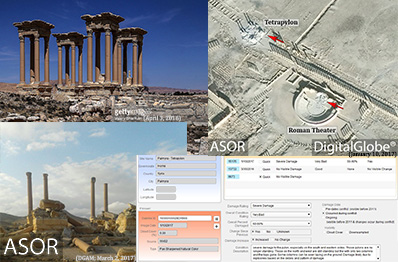
[/vc_column_text][/vc_column_inner][/vc_row_inner][vc_row_inner][vc_column_inner][mk_divider thickness=”1″ margin_top=”0″][vc_column_text]Relevant data is gathered using techniques developed by ASOR CHI and other cultural heritage organizations from ground level and low-level aerial photo-documentation, high-resolution satellite imagery, and more intensive ground-based survey assessments. All of this information is compiled by the ASOR CHI Conservation Team into an overall summary of the current known condition of the site. Within that assessment, the conservation team also assesses the ongoing threat to the site and ranks its rapid assessment priority using multiple factors.[/vc_column_text][mk_padding_divider size=”30″][mk_image src=”http://www.asor.org/wp-content/uploads/2019/08/Image4_sm.jpg” image_width=”432″ image_height=”288″ crop=”false” hover=”false”][vc_column_text]
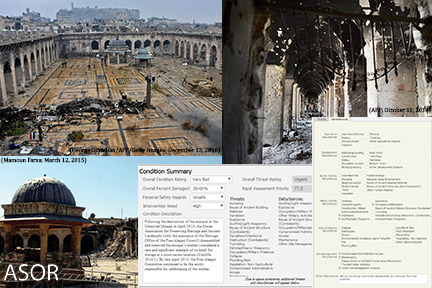
ASOR CHI conducts condition assessments to obtain detailed data on damage, risks, and threats to heritage sites.
[/vc_column_text][/vc_column_inner][/vc_row_inner][/vc_column][/vc_row]
CHI – In-Country Documentation

[vc_row fullwidth=”true” css=”.vc_custom_1486761987223{padding-top: 0px !important;padding-right: 0px !important;padding-bottom: 0px !important;padding-left: 0px !important;}”][vc_column][vc_single_image image=”50609″ img_size=”full”][/vc_column][/vc_row][vc_row fullwidth=”true” css=”.vc_custom_1567017731908{margin-top: 20px !important;padding-top: 0px !important;padding-right: 0px !important;padding-bottom: 0px !important;padding-left: 0px !important;}”][vc_column width=”1/12″ css=”.vc_custom_1493002455400{margin-right: 10px !important;}” offset=”vc_hidden-md vc_hidden-sm vc_hidden-xs”][vc_column_text]

 SHARE

[/vc_column_text][mk_image src=”http://www.asortest.org/wp-content/uploads/2017/01/social-fb-icon4.jpg” image_width=”42″ image_height=”42″ hover=”false” custom_url=”https://www.facebook.com/ASOResearch/” margin_bottom=”0″][mk_image src=”http://www.asortest.org/wp-content/uploads/2017/01/social-tw-icon4.jpg” image_width=”42″ image_height=”42″ hover=”false” custom_url=”https://twitter.com/ASOResearch?ref_src=twsrc%5Egoogle%7Ctwcamp%5Eserp%7Ctwgr%5Eauthor” margin_bottom=”0″][mk_image src=”http://www.asortest.org/wp-content/uploads/2017/01/social-in-icon4.jpg” image_width=”42″ image_height=”42″ hover=”false” custom_url=”https://www.linkedin.com/company/american-schools-of-oriental-research” margin_bottom=”0″][mk_image src=”http://www.asortest.org/wp-content/uploads/2017/01/social-ml-icon_7.jpg” image_width=”42″ image_height=”42″ hover=”false” custom_url=”mailto:asor@bu.edu” margin_bottom=”0″][mk_image src=”http://www.asortest.org/wp-content/uploads/2017/01/blog-icon3.jpg” image_width=”42″ image_height=”42″ hover=”false” custom_url=”http://asorblog.org/” margin_bottom=”0″][/vc_column][vc_column border_color=”rgba(255,255,255,0.01)” width=”1/6″ css=”.vc_custom_1493004112151{margin-right: 20px !important;border-left-width: 2px !important;padding-right: 20px !important;padding-left: 20px !important;border-left-color: #99422f !important;}”][mk_divider divider_color=”rgba(255,255,255,0.01)” thickness=”1″ margin_top=”3″ margin_bottom=”3″][vc_widget_sidebar sidebar_id=”ca-sidebar-50561″][/vc_column][vc_column border_color=”rgba(170,170,170,0.01)” width=”8/12″ css=”.vc_custom_1487276122024{margin-right: 10px !important;margin-bottom: 30px !important;border-right-width: 2px !important;border-bottom-width: 2px !important;padding-top: 30px !important;padding-right: 30px !important;padding-left: 20px !important;background-color: #ffffff !important;border-right-color: rgba(227,228,228,0.75) !important;border-bottom-color: rgba(227,228,228,0.75) !important;}”][vc_row_inner][vc_column_inner width=”1/4″ css=”.vc_custom_1567045329081{padding-right: 10px !important;}”][mk_image src=”http://www.asor.org/wp-content/uploads/2019/08/asor-chi-logo_100.jpg” image_width=”186″ image_height=”100″ crop=”false” hover=”false”][/vc_column_inner][vc_column_inner width=”3/4″][vc_column_text]

IN-COUNTRY DOCUMENTATION

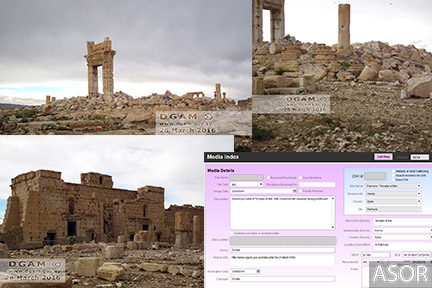
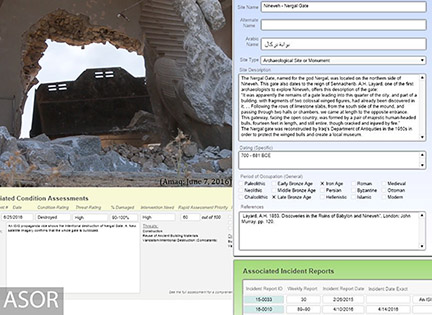
[/vc_column_text][/vc_column_inner][/vc_row_inner][vc_row_inner][vc_column_inner][mk_divider thickness=”1″ margin_top=”0″][vc_column_text]ASOR CHI obtains data on cultural heritage incidents from individuals and organizations working within or on the borders of the conflict zones of Syria and northern Iraq. This data is incorporated into our Incident Reports and published in our ongoing Weekly Report series. Such information helps to ensure that ASOR CHI provides timely and accurate information that helps to expose atrocities such as cultural cleansing and religious persecution, thwart the efforts of antiquities smugglers, and counter the propaganda produced by extremist organizations and other belligerents operating in the conflict zones of Syria and Iraq.[/vc_column_text][mk_padding_divider size=”30″][mk_image src=”http://www.asor.org/wp-content/uploads/2019/08/Image3_sm.jpg” image_width=”432″ image_height=”288″ crop=”false” hover=”false”][vc_column_text]
ASOR CHI obtains data on cultural heritage incidents from individuals and organizations working within or on the borders of the conflict zones of Syria and northern Iraq.
[/vc_column_text][mk_padding_divider size=”30″][/vc_column_inner][/vc_row_inner][vc_column_text]More information on ASOR CHI’s efforts in this area is available in the following publications:

Danti, Michael D. 2015 “Ground-Based Observations of Cultural Heritage Incidents in Syria and Iraq,” Near Eastern Archaeology 78/3: 133–141.

2016 “ISIS, War and the Threat to Cultural Heritage in Iraq and Syria: Recent Cultural Heritage Developments.” IFAR Journal 16/4: 33–46.

Nov. 17, 2015 “The Finance of Global Terrorism Through Cultural Property Crime in Syria and Northern Iraq.” Terrorist Financing: Kidnapping, Antiquities Trafficking, and Private Donations. U.S. House of Representatives. Committee on Foreign Affairs. Subcommittee on Terrorism, Nonproliferation, and Trade. Washington, DC.[/vc_column_text][/vc_column][/vc_row]

CHI – Inventory

[vc_row fullwidth=”true” css=”.vc_custom_1486761987223{padding-top: 0px !important;padding-right: 0px !important;padding-bottom: 0px !important;padding-left: 0px !important;}”][vc_column][vc_single_image image=”50609″ img_size=”full”][/vc_column][/vc_row][vc_row fullwidth=”true” css=”.vc_custom_1567017738897{margin-top: 20px !important;padding-top: 0px !important;padding-right: 0px !important;padding-bottom: 0px !important;padding-left: 0px !important;}”][vc_column width=”1/12″ css=”.vc_custom_1493002455400{margin-right: 10px !important;}” offset=”vc_hidden-md vc_hidden-sm vc_hidden-xs”][vc_column_text]

 SHARE

[/vc_column_text][mk_image src=”http://www.asortest.org/wp-content/uploads/2017/01/social-fb-icon4.jpg” image_width=”42″ image_height=”42″ hover=”false” custom_url=”https://www.facebook.com/ASOResearch/” margin_bottom=”0″][mk_image src=”http://www.asortest.org/wp-content/uploads/2017/01/social-tw-icon4.jpg” image_width=”42″ image_height=”42″ hover=”false” custom_url=”https://twitter.com/ASOResearch?ref_src=twsrc%5Egoogle%7Ctwcamp%5Eserp%7Ctwgr%5Eauthor” margin_bottom=”0″][mk_image src=”http://www.asortest.org/wp-content/uploads/2017/01/social-in-icon4.jpg” image_width=”42″ image_height=”42″ hover=”false” custom_url=”https://www.linkedin.com/company/american-schools-of-oriental-research” margin_bottom=”0″][mk_image src=”http://www.asortest.org/wp-content/uploads/2017/01/social-ml-icon_7.jpg” image_width=”42″ image_height=”42″ hover=”false” custom_url=”mailto:asor@bu.edu” margin_bottom=”0″][mk_image src=”http://www.asortest.org/wp-content/uploads/2017/01/blog-icon3.jpg” image_width=”42″ image_height=”42″ hover=”false” custom_url=”http://asorblog.org/” margin_bottom=”0″][/vc_column][vc_column border_color=”rgba(255,255,255,0.01)” width=”1/6″ css=”.vc_custom_1493004112151{margin-right: 20px !important;border-left-width: 2px !important;padding-right: 20px !important;padding-left: 20px !important;border-left-color: #99422f !important;}”][mk_divider divider_color=”rgba(255,255,255,0.01)” thickness=”1″ margin_top=”3″ margin_bottom=”3″][vc_widget_sidebar sidebar_id=”ca-sidebar-50561″][/vc_column][vc_column border_color=”rgba(170,170,170,0.01)” width=”8/12″ css=”.vc_custom_1487276122024{margin-right: 10px !important;margin-bottom: 30px !important;border-right-width: 2px !important;border-bottom-width: 2px !important;padding-top: 30px !important;padding-right: 30px !important;padding-left: 20px !important;background-color: #ffffff !important;border-right-color: rgba(227,228,228,0.75) !important;border-bottom-color: rgba(227,228,228,0.75) !important;}”][vc_row_inner][vc_column_inner width=”1/4″ css=”.vc_custom_1567045373654{padding-right: 10px !important;}”][mk_image src=”http://www.asor.org/wp-content/uploads/2019/08/asor-chi-logo_100.jpg” image_width=”186″ image_height=”100″ crop=”false” hover=”false”][/vc_column_inner][vc_column_inner width=”3/4″][vc_column_text]

INVENTORY

[/vc_column_text][/vc_column_inner][/vc_row_inner][vc_row_inner][vc_column_inner][mk_divider thickness=”1″ margin_top=”0″][vc_column_text responsive_align=”left”]

The ASOR CHI inventory includes thousands of archaeological sites and monuments, from prehistoric cave sites and small mounds representing the world’s earliest settled farming communities to the enormous mounded complexes of humanity’s earliest known cities such as Ugarit, Ebla, Mari, Aleppo, and Nimrud. The inventory contains an impressive array of monumental urban centers and monuments of the Hellenistic, Roman, Byzantine, and Islamic eras, including Palmyra, Hatra, Mosul, Krak des Chevalier, and Damascus as well as myriad other sites that await scientific study. Religious sites and monuments comprise the second largest part of the inventory and include ancient rock carvings and ziggurats from remote antiquity to mosques, shrines, synagogues, temples, churches, and cemeteries that span the periods from the birth of many major religions to the modern era. We have also inventoried secular sites and monuments — for example, historic government buildings, sporting centers, water wheels, parks, and statues — along with the administrative infrastructure and cultural repositories that form the core of the region’s educational and cultural heritage infrastructures, including a wealth of museums, collections, libraries, and archives. While our inventory entries generally document a single site or monument, we have also adopted a multiscalar approach that incorporates historic districts, neighborhoods, villages, and cities.

This inventory was compiled with the assistance of multiple research groups around the world and through diverse published surveys. While the inventory continues to grow, its coverage and accuracy depend on collaboration with other experts in the various regions of the Middle East. ASOR CHI also works to catalogue ongoing damage through high-resolution satellite imagery, incident reports published in our weekly reports, photographs and videos made available online, news and social media reports, and overall assessment of site condition using all of these data sources.

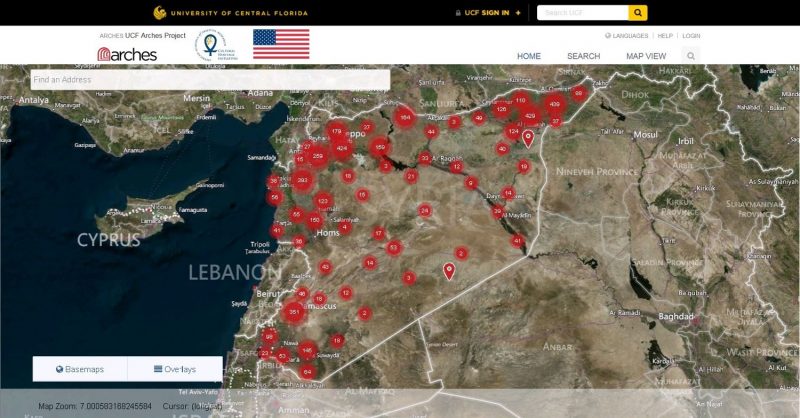
[/vc_column_text][mk_padding_divider size=”30″][mk_image src=”http://www.asor.org/wp-content/uploads/2019/08/Image2_sm.jpg” image_width=”432″ image_height=”315″ crop=”false” hover=”false”][vc_column_text]
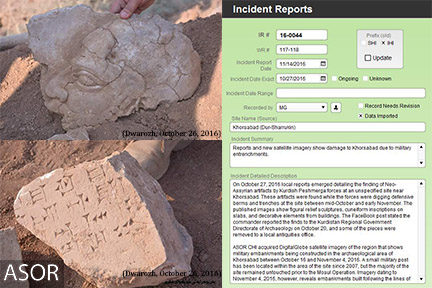
Over the last two years, ASOR CHI has inventoried 13,000 cultural heritage sites in Syria and northern Iraq. The inventory includes a wide range of different site types, such as archaeological, religious, and secular sites as well as museums, libraries, and historic districts.
[/vc_column_text][/vc_column_inner][/vc_row_inner][/vc_column][/vc_row]
CHI – How We Work

[vc_row fullwidth=”true” css=”.vc_custom_1486761987223{padding-top: 0px !important;padding-right: 0px !important;padding-bottom: 0px !important;padding-left: 0px !important;}”][vc_column][vc_single_image image=”53680″ img_size=”full” alignment=”center”][/vc_column][/vc_row][vc_row fullwidth=”true” css=”.vc_custom_1567017950344{margin-top: 20px !important;padding-top: 0px !important;padding-right: 0px !important;padding-bottom: 0px !important;padding-left: 0px !important;}”][vc_column width=”1/12″ css=”.vc_custom_1493002455400{margin-right: 10px !important;}” offset=”vc_hidden-md vc_hidden-sm vc_hidden-xs”][vc_column_text]

 SHARE

[/vc_column_text][mk_image src=”http://www.asortest.org/wp-content/uploads/2017/01/social-fb-icon4.jpg” image_width=”42″ image_height=”42″ hover=”false” custom_url=”https://www.facebook.com/ASOResearch/” margin_bottom=”0″][mk_image src=”http://www.asortest.org/wp-content/uploads/2017/01/social-tw-icon4.jpg” image_width=”42″ image_height=”42″ hover=”false” custom_url=”https://twitter.com/ASOResearch?ref_src=twsrc%5Egoogle%7Ctwcamp%5Eserp%7Ctwgr%5Eauthor” margin_bottom=”0″][mk_image src=”http://www.asortest.org/wp-content/uploads/2017/01/social-in-icon4.jpg” image_width=”42″ image_height=”42″ hover=”false” custom_url=”https://www.linkedin.com/company/american-schools-of-oriental-research” margin_bottom=”0″][mk_image src=”http://www.asortest.org/wp-content/uploads/2017/01/social-ml-icon_7.jpg” image_width=”42″ image_height=”42″ hover=”false” custom_url=”mailto:asor@bu.edu” margin_bottom=”0″][mk_image src=”http://www.asortest.org/wp-content/uploads/2017/01/blog-icon3.jpg” image_width=”42″ image_height=”42″ hover=”false” custom_url=”http://asorblog.org/” margin_bottom=”0″][/vc_column][vc_column border_color=”rgba(255,255,255,0.01)” width=”1/6″ css=”.vc_custom_1493004112151{margin-right: 20px !important;border-left-width: 2px !important;padding-right: 20px !important;padding-left: 20px !important;border-left-color: #99422f !important;}”][mk_divider divider_color=”rgba(255,255,255,0.01)” thickness=”1″ margin_top=”3″ margin_bottom=”3″][vc_widget_sidebar sidebar_id=”ca-sidebar-50561″][/vc_column][vc_column border_color=”rgba(170,170,170,0.01)” width=”8/12″ css=”.vc_custom_1487276122024{margin-right: 10px !important;margin-bottom: 30px !important;border-right-width: 2px !important;border-bottom-width: 2px !important;padding-top: 30px !important;padding-right: 30px !important;padding-left: 20px !important;background-color: #ffffff !important;border-right-color: rgba(227,228,228,0.75) !important;border-bottom-color: rgba(227,228,228,0.75) !important;}”][vc_row_inner][vc_column_inner width=”1/4″ css=”.vc_custom_1567044704035{padding-right: 10px !important;}”][mk_image src=”http://www.asor.org/wp-content/uploads/2019/08/asor-chi-logo_100.jpg” image_width=”186″ image_height=”100″ crop=”false” hover=”false”][/vc_column_inner][vc_column_inner width=”3/4″][vc_column_text]

HOW WE WORK

[/vc_column_text][/vc_column_inner][/vc_row_inner][mk_divider thickness=”1″ margin_top=”0″][vc_row_inner][vc_column_inner][vc_wp_text]

INVENTORY

The ASOR CHI inventory includes thousands of archaeological sites and monuments, from prehistoric cave sites and small mounds representing the world’s earliest settled farming communities to the enormous mounded complexes of humanity’s earliest known cities such as Ugarit, Ebla, Mari, Aleppo, and Nimrud. The inventory contains an impressive array of monumental urban centers and monuments of the Hellenistic, Roman, Byzantine, and Islamic eras, including Palmyra, Hatra, Mosul, Krak des Chevalier, and Damascus as well as myriad other sites that await scientific study. Religious sites and monuments comprise the second largest part of the inventory and include ancient rock carvings and ziggurats from remote antiquity to mosques, shrines, synagogues, temples, churches, and cemeteries that span the periods from the birth of many major religions to the modern era. We have also inventoried secular sites and monuments — for example, historic government buildings, sporting centers, water wheels, parks, and statues — along with the administrative infrastructure and cultural repositories that form the core of the region’s educational and cultural heritage infrastructures, including a wealth of museums, collections, libraries, and archives. While our inventory entries generally document a single site or monument, we have also adopted a multiscalar approach that incorporates historic districts, neighborhoods, villages, and cities.

This inventory was compiled with the assistance of multiple research groups around the world and through diverse published surveys. While the inventory continues to grow, its coverage and accuracy depend on collaboration with other experts in the various regions of the Middle East. ASOR CHI also works to catalogue ongoing damage through high-resolution satellite imagery, incident reports published in our weekly reports, photographs and videos made available online, news and social media reports, and overall assessment of site condition using all of these data sources.

Over the last two years, ASOR CHI has inventoried 13,000 cultural heritage sites in Syria and northern Iraq. The inventory includes a wide range of different site types, such as archaeological, religious, and secular sites as well as museums, libraries, and historic districts.

[/vc_wp_text][mk_divider divider_width=”one_third” thickness=”1″ margin_bottom=”30″][vc_wp_text]

IN-COUNTRY DOCUMENTATION

ASOR CHI obtains data on cultural heritage incidents from individuals and organizations working within or on the borders of the conflict zones of Syria and northern Iraq. This data is incorporated into our Incident Reports and published in our ongoing Weekly Report series. Such information helps to ensure that ASOR CHI provides timely and accurate information that helps to expose atrocities such as cultural cleansing and religious persecution, thwart the efforts of antiquities smugglers, and counter the propaganda produced by extremist organizations and other belligerents operating in the conflict zones of Syria and Iraq.

ASOR CHI obtains data on cultural heritage incidents from individuals and organizations working within or on the borders of the conflict zones of Syria and northern Iraq.

[/vc_wp_text][mk_divider divider_width=”one_third” thickness=”1″ margin_bottom=”30″][vc_wp_text]

CONDITION ASSESSMENTS

Relevant data is gathered using techniques developed by ASOR CHI and other cultural heritage organizations from ground level and low-level aerial photo-documentation, high-resolution satellite imagery, and more intensive ground-based survey assessments. All of this information is compiled by the ASOR CHI Conservation Team into an overall summary of the current known condition of the site. Within that assessment, the conservation team also assesses the ongoing threat to the site and ranks its rapid assessment priority using multiple factors.

ASOR CHI conducts condition assessments to obtain detailed data on damage, risks, and threats to heritage sites.

[/vc_wp_text][mk_divider divider_width=”one_third” thickness=”1″ margin_bottom=”30″][vc_wp_text]

SATELLITE ASSESSMENT

The ASOR CHI Geospatial Team assesses and monitors heritage sites using available high resolution satellite images. Each heritage site is often assessed multiple times using multiple images to build a timeline of visible damage. Satellite imagery is important in corroborating ground-based damage reports as well as identifying damage before it is noted in the media.

ASOR CHI monitors and assesses damage using high resolution satellite imagery.

[/vc_wp_text][mk_divider divider_width=”one_third” thickness=”1″ margin_bottom=”30″][vc_wp_text]

MEDIA INDEX

ASOR CHI has created a database of over 10,000 media files related to cultural heritage incidents in the conflict zones of Syria and northern Iraq, including photographs, videos, and video stills. Such media is collected from open-source outlets such as online new stories, blogs, and other web posts as well as individuals on the ground and site assessment teams supported by ASOR CHI. ASOR CHI hopes to expand our media database through the mobile app cultural heritage monitor, where users in northern Iraq and Syria can anonymously share photographs of sites.

ASOR CHI catalogues photographs and video to assist in documenting damage.

[/vc_wp_text][mk_divider divider_width=”one_third” thickness=”1″ margin_bottom=”30″][vc_wp_text]

ARCHES

A major activity for 2017-2018 will be the export of large amounts of information from the ASOR CHI database to the ARCHES platform. ASOR CHI is developing the ARCHES system with the Getty Conservation Institute to share data with our in-country partners and with our other partners around the globe using a secure platform for access.

The ARCHES database system will host our data online in 2017-2018.

[/vc_wp_text][mk_padding_divider size=”20″][/vc_column_inner][/vc_row_inner][/vc_column][/vc_row]
CHI – The Cultural Heritage Monitor

[vc_row fullwidth=”true” css=”.vc_custom_1486761987223{padding-top: 0px !important;padding-right: 0px !important;padding-bottom: 0px !important;padding-left: 0px !important;}”][vc_column][vc_single_image image=”50747″ img_size=”full”][/vc_column][/vc_row][vc_row fullwidth=”true” css=”.vc_custom_1567017982521{margin-top: 20px !important;padding-top: 0px !important;padding-right: 0px !important;padding-bottom: 0px !important;padding-left: 0px !important;}”][vc_column width=”1/12″ css=”.vc_custom_1493002455400{margin-right: 10px !important;}” offset=”vc_hidden-md vc_hidden-sm vc_hidden-xs”][vc_column_text]

 SHARE

[/vc_column_text][mk_image src=”http://www.asortest.org/wp-content/uploads/2017/01/social-fb-icon4.jpg” image_width=”42″ image_height=”42″ hover=”false” custom_url=”https://www.facebook.com/ASOResearch/” margin_bottom=”0″][mk_image src=”http://www.asortest.org/wp-content/uploads/2017/01/social-tw-icon4.jpg” image_width=”42″ image_height=”42″ hover=”false” custom_url=”https://twitter.com/ASOResearch?ref_src=twsrc%5Egoogle%7Ctwcamp%5Eserp%7Ctwgr%5Eauthor” margin_bottom=”0″][mk_image src=”http://www.asortest.org/wp-content/uploads/2017/01/social-in-icon4.jpg” image_width=”42″ image_height=”42″ hover=”false” custom_url=”https://www.linkedin.com/company/american-schools-of-oriental-research” margin_bottom=”0″][mk_image src=”http://www.asortest.org/wp-content/uploads/2017/01/social-ml-icon_7.jpg” image_width=”42″ image_height=”42″ hover=”false” custom_url=”mailto:asor@bu.edu” margin_bottom=”0″][mk_image src=”http://www.asortest.org/wp-content/uploads/2017/01/blog-icon3.jpg” image_width=”42″ image_height=”42″ hover=”false” custom_url=”http://asorblog.org/” margin_bottom=”0″][/vc_column][vc_column border_color=”rgba(255,255,255,0.01)” width=”1/6″ css=”.vc_custom_1493004112151{margin-right: 20px !important;border-left-width: 2px !important;padding-right: 20px !important;padding-left: 20px !important;border-left-color: #99422f !important;}”][mk_divider divider_color=”rgba(255,255,255,0.01)” thickness=”1″ margin_top=”3″ margin_bottom=”3″][vc_widget_sidebar sidebar_id=”ca-sidebar-50561″][/vc_column][vc_column border_color=”rgba(170,170,170,0.01)” width=”8/12″ css=”.vc_custom_1487276122024{margin-right: 10px !important;margin-bottom: 30px !important;border-right-width: 2px !important;border-bottom-width: 2px !important;padding-top: 30px !important;padding-right: 30px !important;padding-left: 20px !important;background-color: #ffffff !important;border-right-color: rgba(227,228,228,0.75) !important;border-bottom-color: rgba(227,228,228,0.75) !important;}”][vc_column_text responsive_align=”left”]

The Cultural Heritage Monitor

Report on the condition of sites, monuments and looted or stolen objects

Submit a report[/vc_column_text][mk_divider thickness=”1″ margin_top=”10″][vc_column_text responsive_align=”left”]English | عربي

What is Cultural Heritage Monitor (CHM)?

CHM is an anonymous reporting resource developed by ASOR CHI to share information about cultural heritage damage or looted / stolen object(s). CHM provides a safe mechanism for Syrians, Iraqis, and others to alert the world to heritage damaged and looted or stolen cultural objects. In the future, we will share relevant information with Syrian and Iraqi heritage experts to assist in post-conflict reconstruction, repatriation, and restitution efforts.

How does ASOR CHI use these anonymous tips?

ASOR CHI and a coalition of experts from around the world first check the veracity of information and then share data as part of our weekly reports series — publicly released on our website — and in other official reports and news stories. We add information about heritage damage and looting to our inventory of sites, which is shared with other international organizations.

Video tutorial

[/vc_column_text][/vc_column][/vc_row]

CHI – مرقاب التراث الثقافي

[vc_row fullwidth=”true” css=”.vc_custom_1486761987223{padding-top: 0px !important;padding-right: 0px !important;padding-bottom: 0px !important;padding-left: 0px !important;}”][vc_column][vc_single_image image=”50747″ img_size=”full”][/vc_column][/vc_row][vc_row fullwidth=”true” css=”.vc_custom_1567017997049{margin-top: 20px !important;padding-top: 0px !important;padding-right: 0px !important;padding-bottom: 0px !important;padding-left: 0px !important;}”][vc_column width=”1/12″ css=”.vc_custom_1493002455400{margin-right: 10px !important;}” offset=”vc_hidden-md vc_hidden-sm vc_hidden-xs”][vc_column_text]

 SHARE

[/vc_column_text][mk_image src=”http://www.asortest.org/wp-content/uploads/2017/01/social-fb-icon4.jpg” image_width=”42″ image_height=”42″ hover=”false” custom_url=”https://www.facebook.com/ASOResearch/” margin_bottom=”0″][mk_image src=”http://www.asortest.org/wp-content/uploads/2017/01/social-tw-icon4.jpg” image_width=”42″ image_height=”42″ hover=”false” custom_url=”https://twitter.com/ASOResearch?ref_src=twsrc%5Egoogle%7Ctwcamp%5Eserp%7Ctwgr%5Eauthor” margin_bottom=”0″][mk_image src=”http://www.asortest.org/wp-content/uploads/2017/01/social-in-icon4.jpg” image_width=”42″ image_height=”42″ hover=”false” custom_url=”https://www.linkedin.com/company/american-schools-of-oriental-research” margin_bottom=”0″][mk_image src=”http://www.asortest.org/wp-content/uploads/2017/01/social-ml-icon_7.jpg” image_width=”42″ image_height=”42″ hover=”false” custom_url=”mailto:asor@bu.edu” margin_bottom=”0″][mk_image src=”http://www.asortest.org/wp-content/uploads/2017/01/blog-icon3.jpg” image_width=”42″ image_height=”42″ hover=”false” custom_url=”http://asorblog.org/” margin_bottom=”0″][/vc_column][vc_column border_color=”rgba(255,255,255,0.01)” width=”1/6″ css=”.vc_custom_1493004112151{margin-right: 20px !important;border-left-width: 2px !important;padding-right: 20px !important;padding-left: 20px !important;border-left-color: #99422f !important;}”][mk_divider divider_color=”rgba(255,255,255,0.01)” thickness=”1″ margin_top=”3″ margin_bottom=”3″][vc_widget_sidebar sidebar_id=”ca-sidebar-50561″][/vc_column][vc_column border_color=”rgba(170,170,170,0.01)” width=”8/12″ css=”.vc_custom_1487276122024{margin-right: 10px !important;margin-bottom: 30px !important;border-right-width: 2px !important;border-bottom-width: 2px !important;padding-top: 30px !important;padding-right: 30px !important;padding-left: 20px !important;background-color: #ffffff !important;border-right-color: rgba(227,228,228,0.75) !important;border-bottom-color: rgba(227,228,228,0.75) !important;}”][vc_column_text responsive_align=”left”]

مرقاب التراث الثقافي

.الابلاغ عن قطعة أثرية مسروقة. ابلاغ عن الوضع الراهن لصرح أو لموقع

أرسل تقريرا

[/vc_column_text][mk_divider thickness=”1″ margin_top=”10″][vc_column_text responsive_align=”left”]

English | عربي

ما هو مرقاب التراث الثقافي ؟

مرقاب التراث الثقافي هو منصة الكترونية آمنة و سرية, طورت من قبل مبادرة التراث الثقافي في المدرسة الأمريكية للبحوث الشرقية لكي تسمح لمستخدميها الابلاغ عن أية معلومات تخص أعمال السرقة و التدمير اللذي تتعرض لها الأصول الثقافية في سوريا و العراق. وذلك بهدف تنبيه العالم الى الضرر اللاحق بالأصول و الممتلكات الثقافية الأثرية المنهوبة أو المسروقة. هذا و تسعى المبادرة مستقبلا الى وضع جميع هذه المعلومات التوثيقية تحت تصرف الخبراءالعاملين في حقل التراث الثقافي السوريين و العراقيي من أجل مساعدتهم في موضوع استعادة هذه القطع المنهوبة و لأهمية هذه المعلومات في موضوع اعادة التأهيل و الاعمار في فترة ما بعد النزاع.

ماذا ستفعل مبادرة التراث الثقافي بهذه التبليغات؟

تلتزم المبادرة بمبدأ السرية في التعامل مع البلاغات الواردة من خلال المنصة. حيث تقوم مبادرة التراث الثقافي و بمشاركة فريق أكبر من الخبراء المختصين حول العالم بالتحقق من صدقية هذه المعلومات قبل أن تقوم بتضمينها في سلسلة تقاريرها الأسبوعية اللتي هي متاحة للجميع على موقع المبادرة على الانترنت, و في ادراجها أيضا في تقارير رسمية و مواقع اخبارية أخرى. كماتقوم المبادرة على التوازي بتضمين هذه المواقع في قاعدتها البيانية اللتي هي عبارة عن مجموعة قوائم توثق للمواقع المتضررة, تقوم المبادرة بمشاركتها مع منظمات عالمية أخرى من ذات الاختصاص. تقوم المبادرة أيضا بمشاركة هذه المعلومات و التقارير مع الحكومة الأمريكية بهدف مناصرة قضية حماية المقدرات الثقافية و ملاحقة القطع المسروقة. هدفنا النهائي هو العمل على الحفاظ و حماية الميراث الثقافي في سوريا و العراق

فيديو تعليمي

[/vc_column_text][/vc_column][/vc_row]

CHI – Reports – Weekly/Monthly Reports

WEEKLY & MONTHLY REPORTS

Initiated in 2014, ASOR’s Cultural Heritage Initiatives (ASOR CHI) is an international collaboration of scholars and institutions who work under the auspices of ASOR. Through two cooperative agreements with the U.S. Department of State and with the generous support of non-federal organizations and donors (especially the Getty Conservation Institute, The Whiting Foundation, and the Kaplan Fund), ASOR CHI undertakes projects to document, protect, and preserve the cultural heritage of war-torn Syria, northern Iraq, and Libya. Hundreds of significant heritage sites have been damaged since fighting began in 2011. Although the destruction of cultural property represents only part of the humanitarian crisis, these harmful actions threaten our common world heritage and cultural diversity. We have an ethical obligation to respond, and our project is part of an international effort to work with Syrians, Iraqis, and Libyans (and other peoples) to protect their heritage and cultural identity.


May 2018 Monthly Report

Read the Report

• Alleged Turkish army or Turkish-backed FSA fighters destroyed the grave of the Kurdish writer Nuri Dersimi and damaged Henan Mosque in Mesh’ale, Aleppo Governorate. ASOR CHI Incident Report SHI 18-0116

• Reported SARG forces recaptured the Jerusalem Mosque from opposition forces in Yarmouk neighborhood, Damascus, Damascus Governorate. ASOR CHI Incident Report SHI 18-0104

• Satellite imagery revealed ongoing illegal excavations at Apamea, in Qalaat al-Mudiq, Hama Governorate. ASOR CHI Incident Report SHI 18-0100

• Video footage shows graffiti at the Roman Theater in Palmyra, Homs Governorate. ASOR CHI Incident Report SHI 18-0117

• Satellite imagery and photographs show new damage to Tell Danit in Idlib Governorate. ASOR CHI Incident Report SHI 18-0102

• Satellite imagery revealed damage to Ibrahim Khalil Mosque in Hajar al-Aswad, Rif Dimashq Governorate. ASOR CHI Incident Report SHI 18-0112

• An unnamed group rebuilt the al-Juwayjati Mosque in Mosul, Ninawa Governorate. ASOR CHI Incident Report IHI 18-0011

• Satellite imagery reveals damage to Sabha Castle in Sabha, Fezzan. ASOR CHI Incident Report LHI 18-0021

CHI – Reports

[vc_row fullwidth=”true” css=”.vc_custom_1486761987223{padding-top: 0px !important;padding-right: 0px !important;padding-bottom: 0px !important;padding-left: 0px !important;}”][vc_column][vc_single_image image=”50663″ img_size=”full”][/vc_column][/vc_row][vc_row fullwidth=”true” css=”.vc_custom_1567018248215{margin-top: 20px !important;padding-top: 0px !important;padding-right: 0px !important;padding-bottom: 0px !important;padding-left: 0px !important;}”][vc_column width=”1/12″ css=”.vc_custom_1493002455400{margin-right: 10px !important;}” offset=”vc_hidden-md vc_hidden-sm vc_hidden-xs”][vc_column_text]

 SHARE

[/vc_column_text][mk_image src=”http://www.asortest.org/wp-content/uploads/2017/01/social-fb-icon4.jpg” image_width=”42″ image_height=”42″ hover=”false” custom_url=”https://www.facebook.com/ASOResearch/” margin_bottom=”0″][mk_image src=”http://www.asortest.org/wp-content/uploads/2017/01/social-tw-icon4.jpg” image_width=”42″ image_height=”42″ hover=”false” custom_url=”https://twitter.com/ASOResearch?ref_src=twsrc%5Egoogle%7Ctwcamp%5Eserp%7Ctwgr%5Eauthor” margin_bottom=”0″][mk_image src=”http://www.asortest.org/wp-content/uploads/2017/01/social-in-icon4.jpg” image_width=”42″ image_height=”42″ hover=”false” custom_url=”https://www.linkedin.com/company/american-schools-of-oriental-research” margin_bottom=”0″][mk_image src=”http://www.asortest.org/wp-content/uploads/2017/01/social-ml-icon_7.jpg” image_width=”42″ image_height=”42″ hover=”false” custom_url=”mailto:asor@bu.edu” margin_bottom=”0″][mk_image src=”http://www.asortest.org/wp-content/uploads/2017/01/blog-icon3.jpg” image_width=”42″ image_height=”42″ hover=”false” custom_url=”http://asorblog.org/” margin_bottom=”0″][/vc_column][vc_column border_color=”rgba(255,255,255,0.01)” width=”1/6″ css=”.vc_custom_1493004112151{margin-right: 20px !important;border-left-width: 2px !important;padding-right: 20px !important;padding-left: 20px !important;border-left-color: #99422f !important;}”][mk_divider divider_color=”rgba(255,255,255,0.01)” thickness=”1″ margin_top=”3″ margin_bottom=”3″][vc_widget_sidebar sidebar_id=”ca-sidebar-50561″][/vc_column][vc_column border_color=”rgba(170,170,170,0.01)” width=”8/12″ css=”.vc_custom_1487276122024{margin-right: 10px !important;margin-bottom: 30px !important;border-right-width: 2px !important;border-bottom-width: 2px !important;padding-top: 30px !important;padding-right: 30px !important;padding-left: 20px !important;background-color: #ffffff !important;border-right-color: rgba(227,228,228,0.75) !important;border-bottom-color: rgba(227,228,228,0.75) !important;}”][vc_row_inner][vc_column_inner width=”1/4″ css=”.vc_custom_1567043246123{padding-right: 10px !important;}”][mk_image src=”http://www.asor.org/wp-content/uploads/2019/08/asor-chi-logo_100.jpg” image_width=”186″ image_height=”100″ crop=”false” hover=”false”][/vc_column_inner][vc_column_inner width=”3/4″][vc_column_text responsive_align=”left”]

REPORTS

[/vc_column_text][/vc_column_inner][/vc_row_inner][mk_divider thickness=”1″ margin_top=”0″][vc_column_text responsive_align=”left”]

Initiated in 2014, ASOR’s Cultural Heritage Initiatives (ASOR CHI) is an international collaboration of scholars and institutions who work under the auspices of ASOR. Through two cooperative agreements with the U.S. Department of State and with the generous support of non-federal organizations and donors (especially the Getty Conservation Institute, The Whiting Foundation, and the Kaplan Fund), ASOR CHI undertakes projects to document, protect, and preserve the cultural heritage of war-torn Syria, northern Iraq, and Libya. Hundreds of significant heritage sites have been damaged since fighting began in 2011. Although the destruction of cultural property represents only part of the humanitarian crisis, these harmful actions threaten our common world heritage and cultural diversity. We have an ethical obligation to respond, and our project is part of an international effort to work with Syrians, Iraqis, and Libyans (and other peoples) to protect their heritage and cultural identity.[/vc_column_text][mk_divider thickness=”1″ margin_top=”10″][vc_row_inner][vc_column_inner width=”1/3″][mk_image src=”http://www.asor.org/wp-content/uploads/2019/08/CHI_reports_250x350.jpg” image_width=”250″ crop=”false” hover=”false”][/vc_column_inner][vc_column_inner width=”2/3″][vc_column_text]

Weekly/Monthly Reports

The ASOR Cultural Heritage Initiatives publishes weekly and monthly reports from our documentation of cultural heritage damage. Keep up with our latest reports.

Read the Reports[/vc_column_text][/vc_column_inner][/vc_row_inner][mk_divider thickness=”1″ margin_top=”10″][vc_row_inner][vc_column_inner width=”1/3″][mk_image src=”http://www.asor.org/wp-content/uploads/2019/08/CHI_special-reports_250x350.jpg” image_width=”250″ crop=”false” hover=”false”][/vc_column_inner][vc_column_inner width=”2/3″][vc_column_text]

Special Reports

Read the Reports[/vc_column_text][/vc_column_inner][/vc_row_inner][mk_divider thickness=”1″ margin_top=”10″][vc_row_inner][vc_column_inner width=”1/3″][mk_image src=”http://www.asor.org/wp-content/uploads/2019/08/CHI_weekly-reports_index_250x350.jpg” image_width=”250″ crop=”false” hover=”false”][/vc_column_inner][vc_column_inner width=”2/3″][vc_column_text]

Incident Report Features

Read the features[/vc_column_text][/vc_column_inner][/vc_row_inner][mk_divider thickness=”1″ margin_top=”10″][vc_row_inner][vc_column_inner width=”1/3″][mk_image src=”http://www.asor.org/wp-content/uploads/2019/08/CHI_reports_updates_250x350.jpg” image_width=”250″ crop=”false” hover=”false”][/vc_column_inner][vc_column_inner width=”2/3″][vc_column_text]

Updates

Read the updates[/vc_column_text][/vc_column_inner][/vc_row_inner][mk_divider thickness=”1″ margin_top=”10″][/vc_column][/vc_row]

CHI – Our Mission

OUR MISSION

Initiated in 2014, ASOR’s Cultural Heritage Initiatives is an international collaboration of scholars and institutions who work under the auspices of ASOR. Although the destruction of cultural property represents only part of the humanitarian crisis, these harmful actions threaten our common world heritage and cultural diversity. We have an ethical obligation to respond, and our project is part of an international effort to work with Syrians, Iraqis, and Libyans (and other peoples) to protect their heritage and cultural identity.

ASOR Cultural Heritage Initiatives:
1. Promotes Global Awareness and Understanding
2. Fosters Education and Stewardship
3. Documents Heritage and Threats
4. Counters and Prevents Illicit Trafficking
5. Plans and Implements Urgent and Post-war Responses
6. Provides and Administers Grants

1. Promotes Global Awareness and Understanding

  • Collecting information from news and social media sources
  • Communicating with heritage specialists, networks of volunteers, and other organizations in Syria and northern Iraq
  • Analyzing satellite imagery to monitor, document, and verify heritage damage
  • Synthesizing data generated from the above activities to track the evolving cultural heritage situation in Syria
  • Producing a comprehensive inventory of heritage sites and damage that integrates all of the above

2. Fosters Education and Stewardship

  • Producing weekly reports that provide timely updates on the status of heritage damage and threats in Syria
  • Providing periodic reports that synthesize trends, patterns, and needs within the overall heritage situation
  • Sharing our findings and conclusions in public symposia, international conferences, and colloquia
  • Communicating with the public through English and Arabic-language social media and news sources
  • Coordinating with other organizations that are working to safeguard Syrian heritage

3. Documents Heritage and Threats

  • Assessing the major preservation issues affecting cultural heritage
  • Designing protocols for rapid documentation of damage and preservation needs that can be implemented in the future
  • Developing proposals for future large-scale preservation projects
  • Providing resources for high-impact mitigation projects
  • Identifying human resource priorities to strengthen future cultural heritage management capacity for Syria

4. Counters and Prevents Illicit Trafficking

  • Assessing the major preservation issues affecting cultural heritage
  • Designing protocols for rapid documentation of damage and preservation needs that can be implemented in the future
  • Developing proposals for future large-scale preservation projects
  • Providing resources for high-impact mitigation projects
  • Identifying human resource priorities to strengthen future cultural heritage management capacity for Syria

5. Plans and Implements Urgent and Post-war Responses

  • Assessing the major preservation issues affecting cultural heritage
  • Designing protocols for rapid documentation of damage and preservation needs that can be implemented in the future
  • Developing proposals for future large-scale preservation projects
  • Providing resources for high-impact mitigation projects
  • Identifying human resource priorities to strengthen future cultural heritage management capacity for Syria

CHI – About

[vc_row fullwidth=”true” css=”.vc_custom_1486761987223{padding-top: 0px !important;padding-right: 0px !important;padding-bottom: 0px !important;padding-left: 0px !important;}”][vc_column][vc_single_image image=”50522″ img_size=”full”][/vc_column][/vc_row][vc_row fullwidth=”true” css=”.vc_custom_1567018320353{margin-top: 20px !important;padding-top: 0px !important;padding-right: 0px !important;padding-bottom: 0px !important;padding-left: 0px !important;}”][vc_column width=”1/12″ css=”.vc_custom_1493002455400{margin-right: 10px !important;}” offset=”vc_hidden-md vc_hidden-sm vc_hidden-xs”][vc_column_text]

 SHARE

[/vc_column_text][mk_image src=”http://www.asortest.org/wp-content/uploads/2017/01/social-fb-icon4.jpg” image_width=”42″ image_height=”42″ hover=”false” custom_url=”https://www.facebook.com/ASOResearch/” margin_bottom=”0″][mk_image src=”http://www.asortest.org/wp-content/uploads/2017/01/social-tw-icon4.jpg” image_width=”42″ image_height=”42″ hover=”false” custom_url=”https://twitter.com/ASOResearch?ref_src=twsrc%5Egoogle%7Ctwcamp%5Eserp%7Ctwgr%5Eauthor” margin_bottom=”0″][mk_image src=”http://www.asortest.org/wp-content/uploads/2017/01/social-in-icon4.jpg” image_width=”42″ image_height=”42″ hover=”false” custom_url=”https://www.linkedin.com/company/american-schools-of-oriental-research” margin_bottom=”0″][mk_image src=”http://www.asortest.org/wp-content/uploads/2017/01/social-ml-icon_7.jpg” image_width=”42″ image_height=”42″ hover=”false” custom_url=”mailto:asor@bu.edu” margin_bottom=”0″][mk_image src=”http://www.asortest.org/wp-content/uploads/2017/01/blog-icon3.jpg” image_width=”42″ image_height=”42″ hover=”false” custom_url=”http://asorblog.org/” margin_bottom=”0″][/vc_column][vc_column border_color=”rgba(255,255,255,0.01)” width=”1/6″ css=”.vc_custom_1493004112151{margin-right: 20px !important;border-left-width: 2px !important;padding-right: 20px !important;padding-left: 20px !important;border-left-color: #99422f !important;}”][mk_divider divider_color=”rgba(255,255,255,0.01)” thickness=”1″ margin_top=”3″ margin_bottom=”3″][vc_widget_sidebar sidebar_id=”ca-sidebar-50561″][/vc_column][vc_column border_color=”rgba(170,170,170,0.01)” width=”8/12″ css=”.vc_custom_1487276122024{margin-right: 10px !important;margin-bottom: 30px !important;border-right-width: 2px !important;border-bottom-width: 2px !important;padding-top: 30px !important;padding-right: 30px !important;padding-left: 20px !important;background-color: #ffffff !important;border-right-color: rgba(227,228,228,0.75) !important;border-bottom-color: rgba(227,228,228,0.75) !important;}”][vc_row_inner][vc_column_inner width=”1/4″ css=”.vc_custom_1567044251154{padding-right: 10px !important;}”][mk_image src=”https://www.asor.org/wp-content/uploads/2025/07/CHI-terracotta.png” image_width=”186″ image_height=”100″ crop=”false” hover=”false”][/vc_column_inner][vc_column_inner width=”3/4″][vc_column_text responsive_align=”left”]

ABOUT ASOR CULTURAL HERITAGE INITIATIVES

[/vc_column_text][/vc_column_inner][/vc_row_inner][mk_divider thickness=”1″ margin_top=”10″][vc_column_text responsive_align=”left”]Initiated in 2014, ASOR’s Cultural Heritage Initiatives is an international collaboration of scholars and institutions who work under the auspices of ASOR. Although the destruction of cultural property represents only part of the humanitarian crisis, these harmful actions threaten our common world heritage and cultural diversity. We have an ethical obligation to respond, and our project is part of an international effort to work with Syrians, Iraqis, and Libyans (and other peoples) to protect their heritage and cultural identity.

ASOR Cultural Heritage Initiatives:
1. Promotes Global Awareness and Understanding
2. Fosters Education and Stewardship
3. Documents Heritage and Threats
4. Counters and Prevents Illicit Trafficking
5. Plans and Implements Urgent and Post-war Responses
6. Provides and Administers Grants[/vc_column_text][mk_divider thickness=”1″ margin_top=”10″][vc_row_inner][vc_column_inner width=”1/3″][mk_image src=”http://www.asor.org/wp-content/uploads/2019/08/chi-who-we-are-banner_205x350.jpg” image_width=”250″ crop=”false” hover=”false”][/vc_column_inner][vc_column_inner width=”2/3″][vc_column_text]

Who We Are

ASOR Cultural Heritage Initiatives is an international, collaborative effort focused on education and stewardship programs that foster understanding between people transcending ethnic, religious, and geographic boundaries. We have assembled a team of scholars with professional connections to leading academic and cultural institutions in Canada, England, France, Germany, Jordan, Lebanon, Libya, Morocco, Syria, Tunisia, and the United States.

Meet the team[/vc_column_text][/vc_column_inner][/vc_row_inner][mk_divider thickness=”1″ margin_top=”10″][vc_row_inner][vc_column_inner width=”1/3″][mk_image src=”http://www.asor.org/wp-content/uploads/2019/08/chi-contact-us-banner_250x350.jpg” image_width=”250″ crop=”false” hover=”false”][/vc_column_inner][vc_column_inner width=”2/3″][vc_column_text]

Contact Us

We welcome interested parties to help the ASOR Cultural Heritage Initiatives fulfill its mission to protect and preserve the cultural heritage of the MENA region by volunteering your time and expertise.

Reach out to ASOR[/vc_column_text][/vc_column_inner][/vc_row_inner][mk_divider thickness=”1″ margin_top=”10″][/vc_column][/vc_row]