
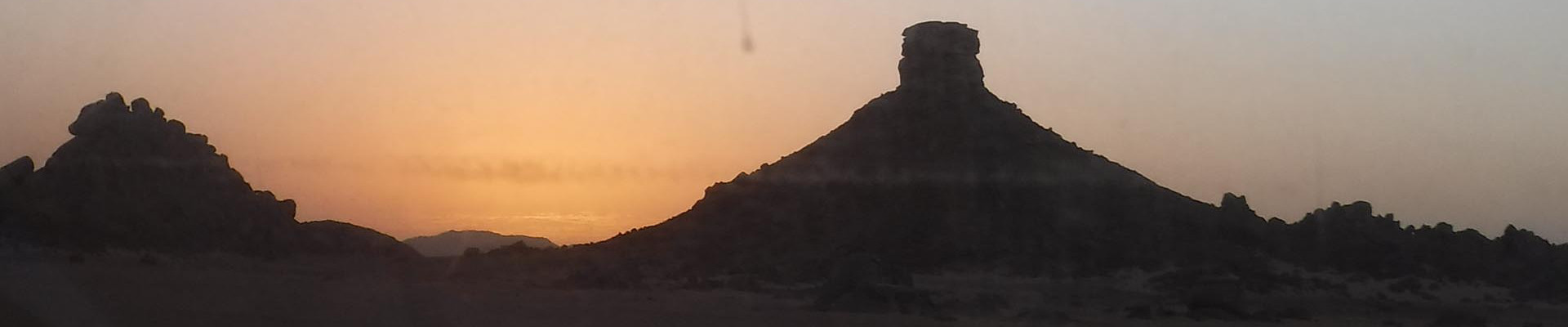

Jebel Barkal.
The Jebel Barkal Archaeological Project directed by Dr. Geoff Emberling investigates the royal Egyptian–Nubian site of Jebel Barkal – a central religious locality that emphasized the omnipresence of Amun, linking Egyptian and Nubian ideological thought in one dedicated area. The site was occupied first by Egypt in the New Kingdom and was established as the “cultic duplicate” of Luxor in Nubia (Kendall, 2010). It had since been ruled by various Egyptian and Napatan kings, who also contributed to the Temple of Amun and administrative buildings up until the Meroitic period. Prior to Dr. Emberling, and Dr. Timothy Kendall, Dr. George A. Reisner excavated the site and did not publish his findings in an official site report. Recordings of his work from between 1916 and 1920, sponsored by theMuseum of Fine Arts, Boston where he served as Curator of Egyptian Art, as well as Harvard University, have since been transcribed (unpublished) by Dr. Emberling and Nami Kaneko. Dows Dunham, who became Curator Egyptian Art at the Museum of Fine Arts, Boston after Reisner, has also published a series of 5 volumes covering the excavation of royal Kushite cemeteries upon which they worked together. Much of the information on the objects discovered at these sites, including photography, contextual findspot, and provenance, are accessible on the richly comprehensive Museum of Fine Arts, Boston website.
The section of the project that I oversaw as an archival researcher involved reading through the transcription from his archaeological excavations at Jebel Barkal and Nuri between 1919 and 1920. The purpose of this research was to locate, organize, and import the information recorded in the field diaries into an online metadatabase titled Omeka. Omeka organizes the metadata into a searchable website which aids scholars and researchers to easily search interrelated individuals, terms, materials, and buildings that relate to the site of Jebel Barkal which have not been previously organized or transcribed.
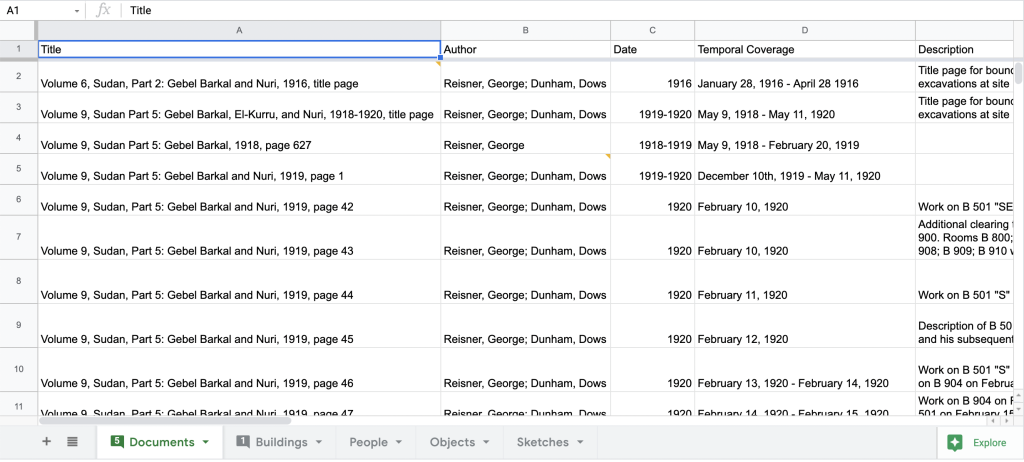
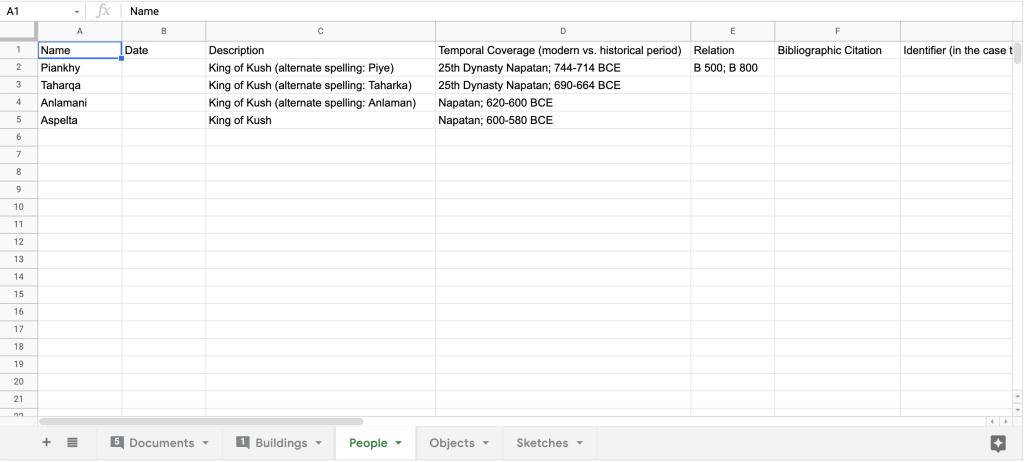
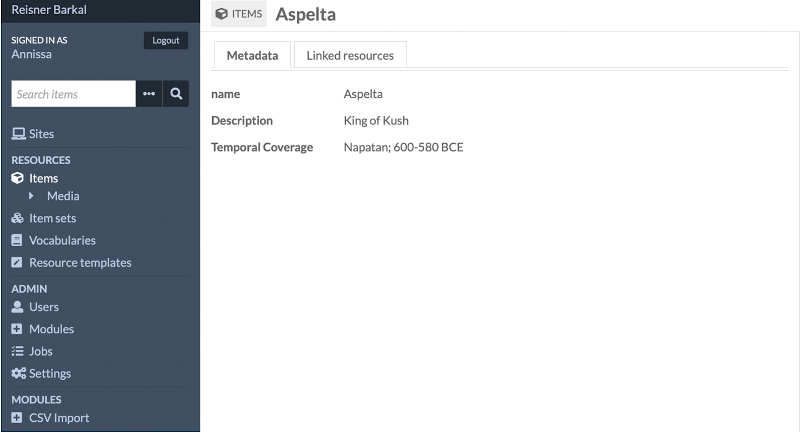
The process of learning Omeka was a fantastic experience which challenged and heightened my knowledge of online data processing on a parallel level, in addition to building expertise in curating the site for both the specialized and general public. Led by the Information Technology team at the University of Michigan, Joe Bauer and Matthew Carruthers, once the data from the transcription is organized by the desirable entry format was decided, it was imported and organized according to Omeka translation. The process is ongoing. This was a seamless experience which contributed to what will become a valuable resource for current and future archaeology at the site.
Annissa is a PhD candidate at the University of Toronto and the Bard Graduate Center/Brooklyn Museum Postdoctoral Fellow in the Arts of Africa. Her doctoral thesis investigates the ceramic production and trade industry during Meroitic Nubia and its potential far-reaching networks linking the Nile Valley to Iron Age West African cultures.