2025 Dana Grant Report: Developing an Accessible Digital Ceramic Typology for the Erbil Plain Archaeological Survey (EPAS)
Elise Laugier, Utah State University
For more than a decade, the Erbil Plain Archaeological Survey (EPAS) has documented the settlement and land use history of the agricultural plain surrounding Erbil, the capital city of the Kurdistan Region of Iraq. With more than a thousand sites documented to date, EPAS has revealed the Erbil Plain to be one of the richest archaeological landscapes in northern Mesopotamia.
Drone image of the Erbil Plain near EPAS site 761, showing ongoing agricultural activity and landscape development. Image courtesy the Erbil Plain Archaeological Survey (EPAS).
In recent years, urban expansion and agricultural intensification have placed increasing pressure on the region’s archaeological sites and cultural landscapes. Rapid documentation and accurate dating of surface materials have become critical for protecting the region’s cultural heritage. The EPAS ceramic typology, long used internally by the project, offers a standardized system for identifying pottery across 21 chronological phases (from the Proto-Hassuna to the Islamic periods) but has not yet been widely available.
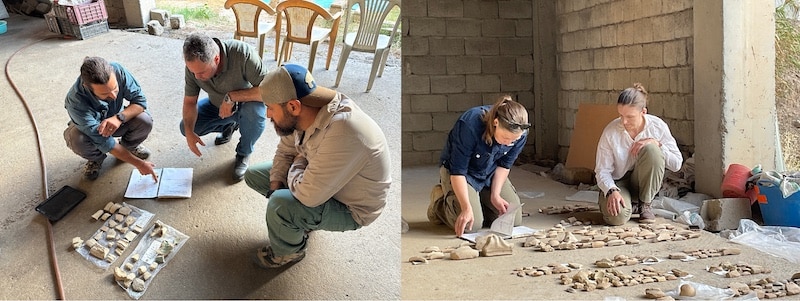
EPAS team members analyzing ceramics at the Erbil Directorate of Antiquities. From left: Jason Ur, Rebwar Jalal, Mohammed Lashkri, Elise Laugier, Madeline Ouimet.
Our goal in the last two seasons has been to expand access to EPAS’s ceramic typology by developing a bilingual, image-rich digital platform, an app that will allow archaeologists and heritage professionals to quickly identify pottery and date sites in the field. The app, accessible on both desktop and mobile devices, integrates detailed ceramic descriptions, diagnostic criteria, and color images, and will soon include both English and Kurdish. Once finalized, this accessible resource will provide students, archaeologists, and heritage officials in Iraq with a standardized system for ceramic classification, ensuring consistent documentation of sites across the Erbil Plain and adjacent regions.
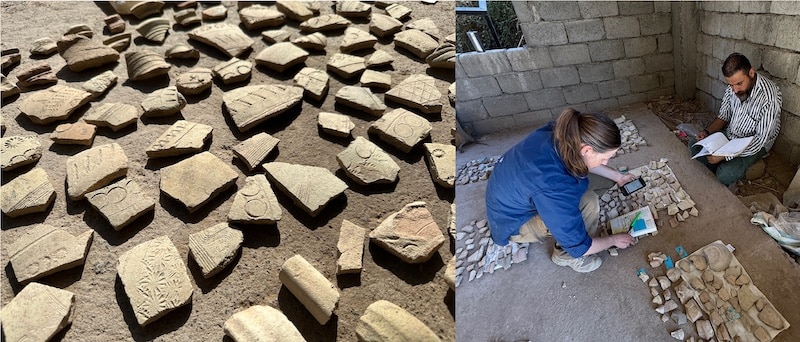
A selection of photographed sherds from the Mid-Late 3rd Millennium BCE through the Islamic periods (left). EPAS team members selecting ceramic types (right).
With support from ASOR’s Stevan B. Dana Grant, our 2025 season focused on expanding and completing the image database that underpins this typology. Working at the Museum at Erbil Directorate of Antiquities, the team processed and added dozens of images from early phases (Proto-Hassuna through Ninevite 5) to the existing ArcGIS Online mobile application. We also photographed hundreds of additional sherds representing later periods (Mid-Late 3rd Millennium through Islamic), creating a database of over 2,500 high-resolution images. Together, these materials form the foundation of the first comprehensive digital typology for the Erbil Plain.
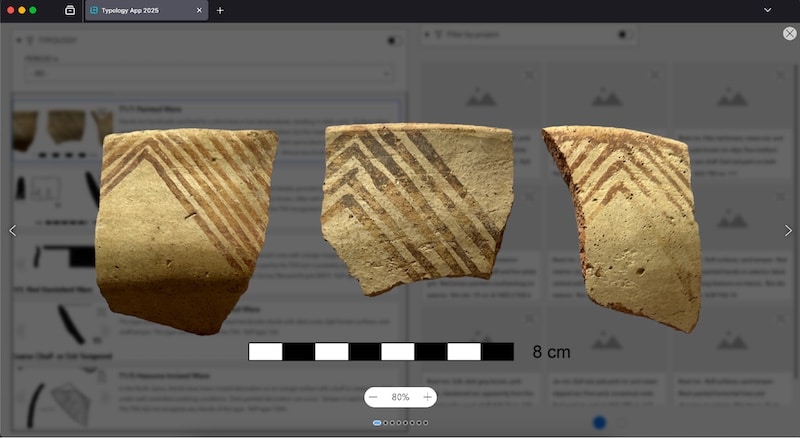
Example of the desktop EPAS Ceramic Typology interface, displaying color images and descriptive text of Hassuna Period painted sherds.
This project supports local capacity building and collaboration with Kurdish heritage professionals, ensuring that vital archaeological expertise is shared widely and sustainably. By transforming years of specialized field research into an open, bilingual reference, the project contributes to both heritage preservation and digital innovation in Mesopotamian archaeology.
We thank ASOR and the Stevan B. Dana Grant for its generous support in helping us transform a decade of research into a shared resource for the archaeological and heritage communities of the Erbil Plain and beyond.