ALERT: Fraudulent E-mails, Calls, and Phishing Scams
Be Aware of Common Scams
Many organizations, including ASOR, are being targeted by fraudulent groups and individuals that mine for contact information to use in phishing scams, fake hotel reservations and mailing lists, and money transfer requests. Conferences and hotel blocks are often targets of these scams.
Unfortunately, ASOR members have reported receiving e-mails from scammers posing as ASOR representatives trying to sell marketing lists, fake hotel reservations, and other services in connection with the Annual Meeting.
These individuals are not authorized by ASOR, the Annual Meeting hotel, or any of ASOR’s partners, to contact you on our behalf. No one from ASOR will ask you to provide credit card or banking details to be sent by e-mail. Always check the e-mail address of the sender—a message from ASOR will end in @asor.org (not Gmail or another account).
Whova.io If you receive an e-mail that looks like a scam, but is from a Whova.io account, it is not fraudulent, but it is also not authorized by ASOR. The Annual Meeting Mobile App is powered by Whova and we are working with them to disable auto-generated marketing e-mails that are on by default. You do not need to be concerned about or report emails from Whova.
Please let us know if you receive a fraudulent e-mail or phone call. We will do everything we can to address this situation and we appreciate your cooperation.
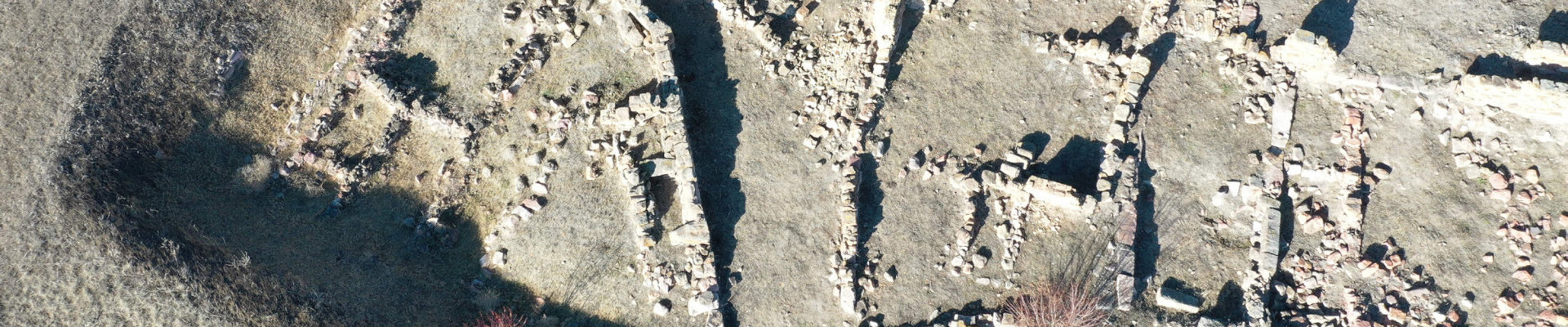
Since the mid-twentieth century, the Konya Plain, located in South-Central Anatolia, has been one of the Near East’s most famous archaeological regions due to its Neolithic heritage. The later periods, however, have been all but completely neglected. In this article, we present findings from the Türkmen- Karahöyük Archaeological Project (TKAP), an excavation that began in 2024. TKAP’s mission is to bring to light, for the first time, the cultural trajectory of the region from the Early Bronze Age through the end of the Hellenistic period, the sequence of occupation of the mound. As the plain’s largest site during these periods, Türkmen-Karahöyük promises to reveal much about social, cultural, and political dynamics in this underexplored time and place.
ASOR Members with online access: log into ASOR’s Online Portal here. Once logged in, click the JOURNALS tab in the top navigation bar. Tutorials for how to log in to the Online Portal as well as how to navigate to the Portal Journals page can be found here.
Fieldwork conducted in 2020 at the Lahsavareh Cemetery in Iran resulted in the identification and systematic excavation of 12 graves. Grave 1 has been attributed to the Middle Elamite period, whereas the remaining graves have been dated to the Neo-Elamite period. From several of these graves,129 metal artifacts deposited as grave goods were recovered. They are made of silver, bronze, and iron and include metal vessels, ornaments, and weapons. All artifacts from the Middle Elamite grave were made of bronze, whereas in the Neo-Elamite period, iron became more common for manufacturing weapons and pins. Interestingly, some pins were produced using two different metals, with an iron shaft and a bronze head. Laboratory analyses show that, similar to most Iron Age II–III sites in Iran, the bronzes from Lahsavareh were made by alloying copper with tin. These results provide new evidence about the technological and cultural aspects of Elamite metallurgy in the highlands between Susa and Anshan.
ASOR Members with online access: log into ASOR’s Online Portal here. Once logged in, click the JOURNALS tab in the top navigation bar. Tutorials for how to log in to the Online Portal as well as how to navigate to the Portal Journals page can be found here.
In this article, we explore the evidence for marking pottery at Arediou, a Late Bronze Age farming settlement in the Cypriot hinterland. Three potmarks were discovered at the site in the course of excavations, adding to current knowledge of the practice of marking pottery on Cyprus and how this was embedded within the island’s sociopolitical and economic organization during the later second millennium BCE. Although the quantity is small, the diversity of wares, forms, and sign types is intriguing; this corresponds to patterns of marking observed elsewhere on the island and in the Late Bronze Age Eastern Mediterranean generally. From the perspective of potmark studies, their rural provenience is what makes the Arediou corpus significant. It broadens the question of where and why potmarks had relevance and raises the question of the bounds of literacy and how the rural hinterland was embedded within wider exchange networks in the Late Bronze Age.
ASOR Members with online access: log into ASOR’s Online Portal here. Once logged in, click the JOURNALS tab in the top navigation bar. Tutorials for how to log in to the Online Portal as well as how to navigate to the Portal Journals page can be found here.
Qeladez is an ancient citadel-city located in the Azna Plain, serving as a significant intercultural hub connecting the Central Iranian Plateau to the western Central Zagros Mountains. During our fieldwork, three distinct cemetery areas were identified on the eastern ridges, yielding a small skeletal assemblage; this discovery followed the observation of human remains resulting from illegal excavations. We systematically excavated five graves, which revealed a variety of burial practices, including both primary and secondary inhumations. A preliminary bioarchaeological study of these burials provided valuable insights into the historical period (Parthian and Sasanian). Despite the limited sample size, the findings shed light on the diverse funerary customs of the citadel’s inhabitants. Furthermore, analysis of the human remains provided data on age (ranging from 10 to 50 years) and sex (both male and female), and health status was assessed through dental and skeletal examination. Together with the archaeological evidence, these results deepen our understanding of life, death, and ritual practices at Qeladez and confirm its role as a spatial center for cultural and religious activities. Please note, this article contains images of human remains.
Please note: This article contains images of human skeletal remains.
ASOR Members with online access: log into ASOR’s Online Portal here. Once logged in, click the JOURNALS tab in the top navigation bar. Tutorials for how to log in to the Online Portal as well as how to navigate to the Portal Journals page can be found here.
This article provides recent archaeological data on Site S27, Failaka Island, Kuwait. Unlike the past studies that have been focused on monumental complexes, like F3 and F6, the findings of S27 highlight the daily domestic activities outside these significant centers. The focus is on the structure and sequential alterations of the installation, along with the ceramic assemblage and palynological remains discovered on an intact vessel (SU19) found in the combustion chamber. The presence of plant remains (rice [Oryza] and olive [Olea europaea]) in palynological analysis may suggest the presence of food preparation and possible links to broader exchange networks in the early second millennium BCE. The architectural, ceramic, and botanical evidence combined demonstrates that smaller archaeological contexts matter in researching subsistence, domestic technology, and interaction in the region on Failaka Island during the Dilmun period in the north Gulf.
ASOR Members with online access: log into ASOR’s Online Portal here. Once logged in, click the JOURNALS tab in the top navigation bar. Tutorials for how to log in to the Online Portal as well as how to navigate to the Portal Journals page can be found here.
The two silver amulets discovered at Ketef Hinnom provide the earliest epigraphic witnesses to a blessing otherwise known from the Hebrew Bible, yet their ritual power depended not on visibility but on concealment. Inscribed with microscopic writing and permanently rolled into tight coils, the amulets housed blessing language invoking Yahweh’s protection against hidden dangers such as snares and evil. In this article, I argue that the concealment of writing was central to the amulets’ efficacy, transforming them into miniature sacred interiors that transposed the logic of temple space onto the individual body. By embedding divine words within refined silver and sealing them from ordinary access, the amulets enacted a form of present hiddenness in which holiness was made portable yet controlled. Reading Ketef Hinnom through the lens of materiality, scale, and ritual practice illuminates how hidden texts could function as powerful agents of protection in late Iron Age Judah.
ASOR Members with online access: log into ASOR’s Online Portal here. Once logged in, click the JOURNALS tab in the top navigation bar. Tutorials for how to log in to the Online Portal as well as how to navigate to the Portal Journals page can be found here.
This study examines a cave and adjacent structure at Qal’eh Maryam/Shekarbanu, 5 km west of Sar Pol-e Zahāb, situated on Kalgā-re Mountain overlooking Qara-Bulāgh spring (locally Qała-Bełākh). The site features a natural cave with a carved entrance and an exterior rubble-and-gypsum structure. While future excavations are needed for definitive identification, three potential functions are proposed: (1) a rock-cut tomb similar to Dokkān-e Dāwoud; (2) a Mithraic shrine, with the structure concealing the cave entrance; or (3) a Nestorian Christian monastery, suggested by historical clues and the site’s name. The architectural practice of building before caves appears at comparable sites like Aškawt-i Daya, Zerzevan, Pergamon, and Baba Qodrat’s tomb. Archaeological evidence currently favors the latter two interpretations.
ASOR Members with online access: log into ASOR’s Online Portal here. Once logged in, click the JOURNALS tab in the top navigation bar. Tutorials for how to log in to the Online Portal as well as how to navigate to the Portal Journals page can be found here.
It’s autumn at ASOR, and you, our members, are hard at work. Some of you have recently returned from the field, notebooks full of new finds waiting to be studied. Others are in a lecture hall or deep in a museum storeroom, finishing a manuscript or following the latest discoveries in Near Eastern Archaeology. And all of us belong to a community that has explored the Near East and wider Mediterranean together for more than 125 years. At a time when so much seems to divide us, that is something worth celebrating—and even though the autumn days are becoming shorter, our shared work and mission continue to grow.
ASOR has had quite a field season of its own. In 2026, we awarded more than $250,000 in fieldwork scholarships, research fellowships, project grants, cultural heritage awards, and membership and registration scholarships—a record fourth year at this level or higher. Our publications continue to share your research in print and online, and the Annual Meeting will again offer simultaneous hybrid sessions and workshops so members anywhere can participate. In Lebanon, Syria, Sudan, Tunisia, Mali, and Libya, where conflict and natural disaster threaten cultural heritage, we completed projects alongside local communities and heritage professionals, creating pathways for preservation, discovery, connection, and healing. Amid decreasing international aid budgets, we signed agreements this fall for more than $650,000 in new projects across North Africa and the Middle East, funded by both federal and non-federal sources.
A new sustainability report from the American Council of Learned Societies (ACLS) found ASOR growing in what has been a difficult decade for learned societies: since 2015, our membership has grown 41% and Annual Meeting attendance 30%, and the report rates our finances as strengthening. Your generosity is a large part of that. In this past year, 100% of trustees and almost 50% of our members made a gift. Thank you!
So, you might ask, why do we need a gift when ASOR is doing so well?
The honest answer is that growth, however welcome, brings new costs. ASOR is on solid ground financially, but keeping the Annual Meeting affordable means your registration fees cover only about 44 cents of every dollar it costs to run; across ACLS societies, the typical meeting recovers 99 cents. The $650,000 in new grants is fantastic, but those funds do not pay for the staff time it takes to research and write proposals, and we submit about three for every one that succeeds. Inflation has hit ASOR as it has your household, and we want salaries to keep pace so we can hold on to our skilled and dedicated staff. And with about 2,050 members—compared with a median of nearly 3,800 among societies with similar revenue—each gift counts for more.
Our goal is $200,000 for the Annual Fund. Unrestricted gifts give ASOR the flexibility to direct funds where they’re needed most: closing the gap in Annual Meeting costs, supporting students and early-career scholars, and responding quickly and effectively when heritage is at risk. If one part of our work is especially meaningful to you, you may also designate your gift to support it. Gifts of every size make a difference, and you can give online at www.asor.org/donate or by printing out this form.
This month, many of us will gather in Chicago to present new work, exchange ideas, and catch up with friends, as ASOR members have done for generations. In a year when conflicts in the regions we study have touched so many of us and the places we hold dear, we are grateful for the chance to come together. We hope to see you there.
Renovation of the first floor of ASOR’s home, The James F. Strange Center, began during the final week of September. The renovation aims to make the first floor a more open, multi-purpose workspace with a full kitchen. The new space will allow ASOR to carry out community outreach work (hosting cooking classes, lectures, etc.) as well as hosting meetings.
ASOR staff have relocated to the second and third floors of the building during construction. The project is moving along and the hope is that it will be finished by the end of the year. Check out some plans of the new space and photographs of the project’s progress below.
ASOR-ISAC Teacher Workshop: Bring Archaeology to your Classroom
Join the American Society of Overseas Research (ASOR) and the Institute for the Study of Ancient Cultures (ISAC) for a hands-on workshop created for K–12 educators on November 21, 2026 at 10:00am at the Hilton Chicago during the 2026 Annual Meeting.
Registration deadline: November 9, 2026
Workshop Schedule
10:00am–11:00 am | Investigating Ancient Artifacts
Experience ISAC’s Artifact Analysis activity using replica artifacts. Learn strategies for helping students make observations, form inferences, interpret material evidence, and ask meaningful questions about the past. Find out more about ISAC’s Museum in a Box program where you can bring artifact replicas to your own classroom and explore ASOR’s teacher resources and ISAC’s lesson plans on the ancient world!
11:00am–12:00pm | Archaeology in the Field
Hear firsthand perspectives from an archaeological field director and a student excavation volunteer. Learn what happens on a dig, how discoveries are interpreted, and what students can gain from participating in archaeological fieldwork. A question-and-answer session will follow.
Your Registration Includes:
Hands-on artifact-analysis training Classroom-ready educational resources Information about an upcoming curriculum competition
Admission to Saturday’s ASOR poster session and afternoon sessions
Digital certificate of completion
CPDUs for Illinois Teachers: Up to Five hours available. Saturday Teacher Workshop (2 hours), Poster session attendence (1 hour), ASOR workshop Teaching with the Ancient Near East Today (2 hours)
No previous background in archaeology or the ancient world is required.
The 2026 ASOR Annual Meeting is supported by a dedicated mobile app, hosted by Whova, for participants attending in Chicago and remotely. The app provides the complete academic program, speaker and exhibitor listings, and floorplans of the Hilton Chicago.
Registered participants may download the app from Apple’s App Store or Google Play on your phones.
Early Career Scholars Poster and Student Paper Preparation Session
Preparing a Poster or Student Paper
Join ASOR’s Early Career Scholars on October 30, 2026 at 12:00pm ET via Zoom for a virtual session on preparing a poster or student paper for the 2026 Annual Meeting.
Are you submitting a poster or student paper to the 2026 ASOR Annual Meeting? Drop into our “Preparing a Poster or Student Paper” session this fall. Poster Session Chair Natalia Handziuk will share advice focusing on effective poster composition and presentation. Mandy Porter, a member of the evaluating committee for the Student Paper Award, will speak about expectations for the paper and share tips.
We are here to answer your questions and hope to see you there.
The event is FREE for the ASOR community, but registration is required.
The Cultural Heritage Committee seeks nominations for two openings (including self-nominations) from ASOR members who are interested in serving on the committee. Committee members will serve a three-year term (January 1, 2027 – December 31, 2029) with the option to renew for a second term. Committee members are expected to attend quarterly meetings via Zoom and an in-person meeting at the ASOR Annual Meeting each year.
The Cultural Heritage Committee advises the President, the Executive Director, the Board, and other ASOR leaders regarding initiatives ASOR might undertake, either individually or jointly with other bodies in the field of cultural heritage, to help protect and preserve the cultural heritage of the Near East and the wider Mediterranean. Pre-eminently, the Cultural Heritage Committee advises the President, the Executive Director, the Board, and other ASOR leaders regarding the ASOR Cultural Heritage Initiatives program (ASOR CHI), regarding both current and prospective ASOR CHI projects. The Cultural Heritage Committee also advises the President, and ASOR’s leadership more generally, on cultural heritage issues affecting ASOR as well as maintains contact with cultural heritage committees in sister learned societies. This committee reserves one line of membership for an Early Career Scholar and three lines of membership for ASOR members from outside of North America, in countries where ASOR promotes Cultural Heritage Initiatives.
In order to receive full consideration by the committee, the online interest form must be submitted by noon ET on November 13, 2026. For questions and concerns, please contact Fred Winter, Committee Chair (fawinterassociates@gmail.com).
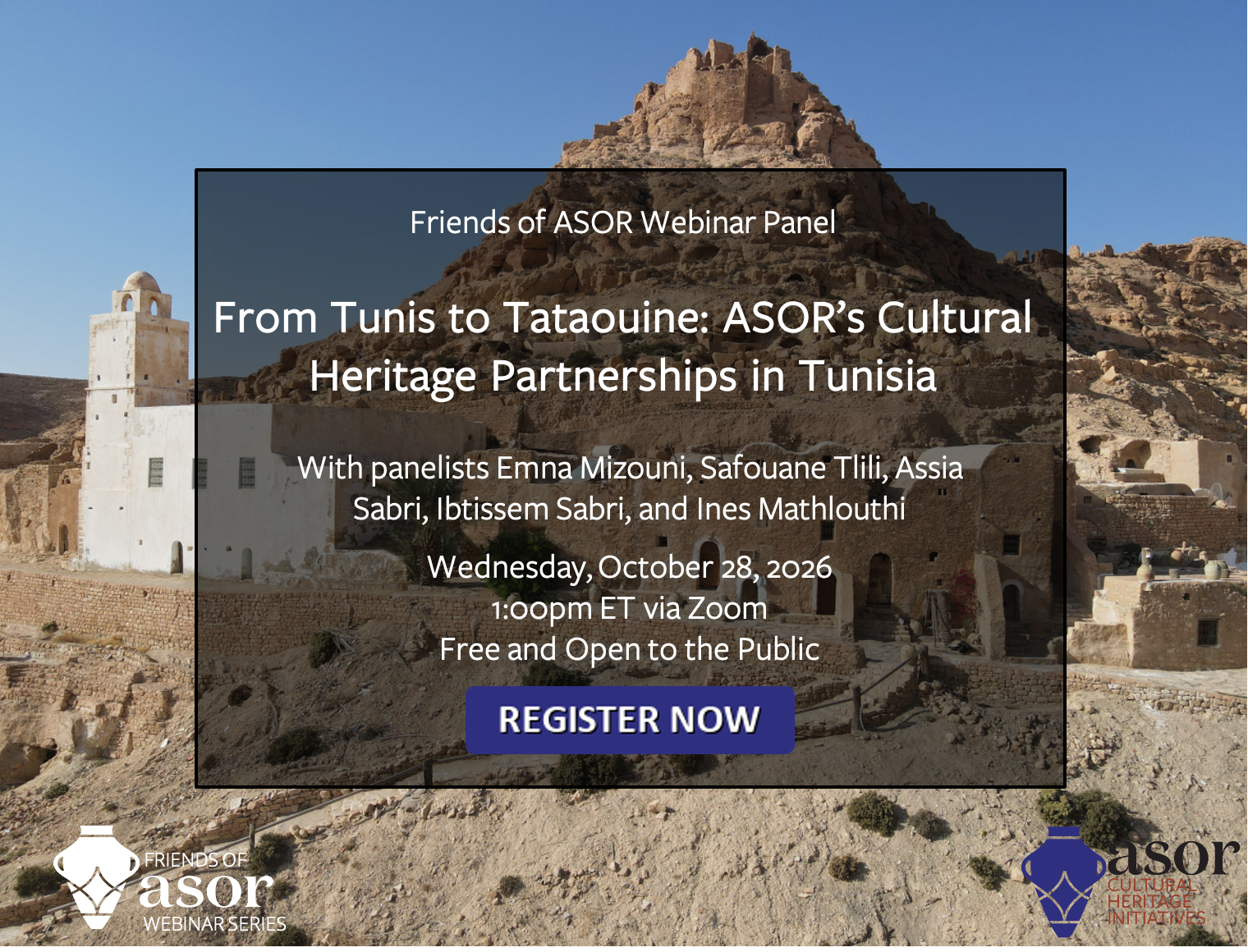
From Tunis to Tataouine: ASOR’s Cultural Heritage Partnerships in Tunisia
Friends of ASOR presents the next webinar of the 2026-2027 season: “From Tunis to Tataouine: ASOR’s Cultural Heritage Partnerships in Tunisia” on October 28, 2026, at 1:00 pm EDT, with panelists Emna Mizouni, Safouane Tlili, Assia Sabri, Ibtissem Sabri, and Ines Mathlouthi (moderated by Darren Ashby). This webinar will be free and open to the public. Registration through Zoom (with a valid email address) is required. This webinar will be recorded and all registrants will be sent a recording link in the days following the webinar.
Join us for a panel discussion on ASOR’s partnerships in Tunisia and hear directly from local partners that work to preserve Tunisian heritage.
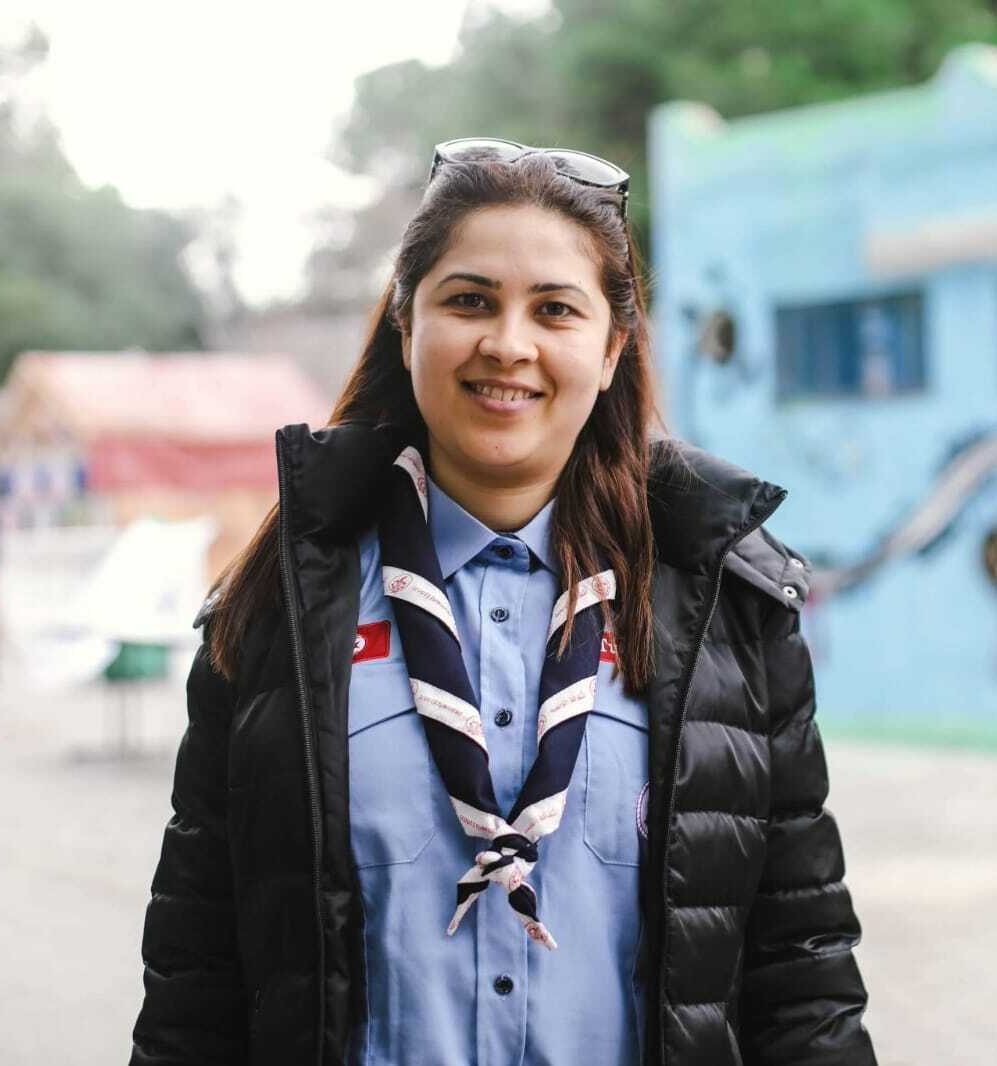
Ines Mathlouthi is a leader and project manager at the Tunisian Scouts organization. She has previously worked on TOURATH, a project aimed at preserving and protecting Tunisian national heritage for future generations, in partnership with the US Embassy in Tunis.
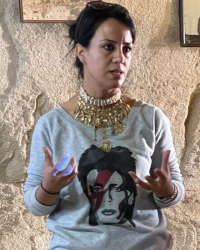
Emna Mizouni is a strategist dedicated to building equitable digital futures working at the intersection of technology, human rights, global policy, and the preservation of global cultural heritage. Her commitment to storytelling and documenting history and heritage led her to found Carthagina, an organization dedicated to preserving Tunisian heritage through digital innovation.
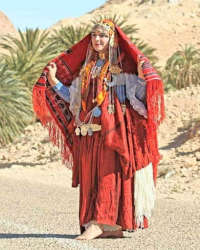
Assia Sabri holds a university degree in accounting and finance. She is also a traditional jewelry maker and civil society activist.
Ibtissem Sabri is a civil society activist in Tataouine in southern Tunisia. She is also a representative on the local council of Tataouine Sud in Douiret.
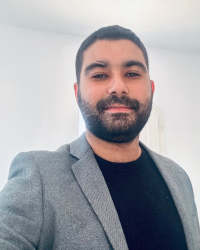
Safouane Tlili is a photographer who specializes in documenting the material and intangible heritage of Tunisia, especially on the island of Djerba. He has held several art exhibitions and is a civil activist in several human rights and cultural associations.
Friends of ASOR is pleased to announce that the first webinars of the 2026-2027 season will once again be free and open to the public with a goal to raise $10,000 so that the entire webinar season will be free. Will you support this outreach effort with a tax-deductible contribution? All donors/sponsors with gifts of $100 or more will be recognized in subsequent webinars. Make your gift today and select “Webinars” from the drop-down menu.
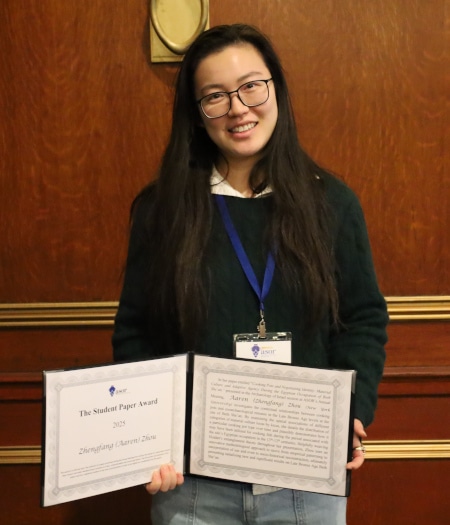
ASOR is accepting applications for the 2026 Student Paper Award. This award is conferred upon the author(s) of a paper presented (in-person or online) during the 2026 hybrid ASOR Annual Meeting that conveys the results of a study about ancient Near Eastern and wider Mediterranean societies in a clear, understandable and convincing fashion. The first author and presenter of the paper must be a registered student at the time of presentation in order to be eligible for consideration for this award. This year the award is accompanied by a $500 prize.
Students will need to complete the following steps by November 4 to be considered for the award:
1. Please complete this Google Form in order to apply for the Student Paper Award.
2. Upload your recorded presentation to ASOR’s Student Award Application Dropbox folder by navigating to the 2026 Annual Meeting Presenter Information page. From there, you will find instructions and the Dropbox link, as well as tips and tutorials for presenters.
Applications and recorded paper presentations are both due by November 4.
Please note that this award is independent of the Sean Dever Memorial Prize, which is conferred by the W.F. Albright Institute of Archaeological Research. To learn more about Awards presented at the Annual Meeting, please visit the Honors and Awards page. For questions and inquiries please email info@asor.org.
Aaren Zhou, winner of the 2025 Student Paper Award.