UNEARTHING THE PAST SINCE 1900
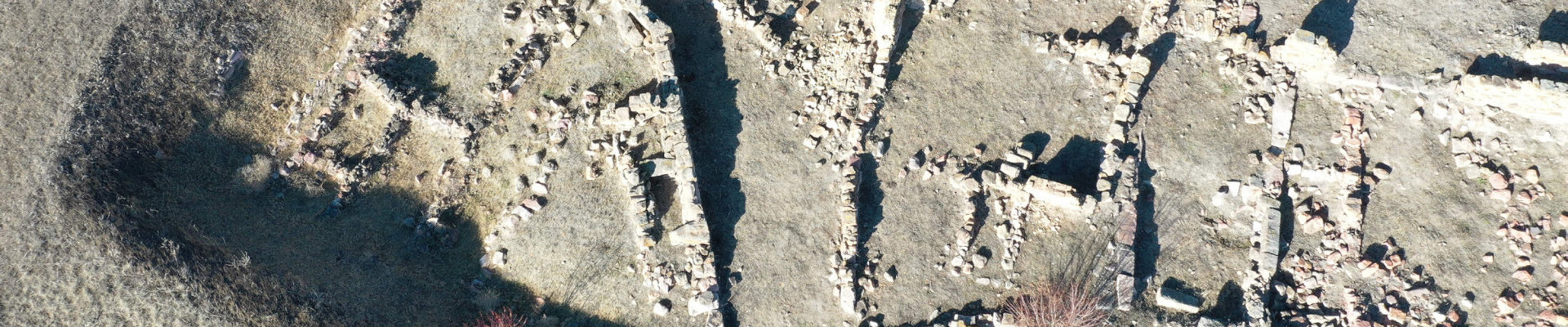


Since the mid-twentieth century, the Konya Plain, located in South-Central Anatolia, has been one of the Near East’s most famous archaeological regions due to its Neolithic heritage. The later periods, however, have been all but completely neglected. In this article, we present findings from the Türkmen- Karahöyük Archaeological Project (TKAP), an excavation that began in 2024. TKAP’s mission is to bring to light, for the first time, the cultural trajectory of the region from the Early Bronze Age through the end of the Hellenistic period, the sequence of occupation of the mound. As the plain’s largest site during these periods, Türkmen-Karahöyük promises to reveal much about social, cultural, and political dynamics in this underexplored time and place.
ASOR Members with online access: log into ASOR’s Online Portal here. Once logged in, click the JOURNALS tab in the top navigation bar. Tutorials for how to log in to the Online Portal as well as how to navigate to the Portal Journals page can be found here.

Fieldwork conducted in 2020 at the Lahsavareh Cemetery in Iran resulted in the identification and systematic excavation of 12 graves. Grave 1 has been attributed to the Middle Elamite period, whereas the remaining graves have been dated to the Neo-Elamite period. From several of these graves,129 metal artifacts deposited as grave goods were recovered. They are made of silver, bronze, and iron and include metal vessels, ornaments, and weapons. All artifacts from the Middle Elamite grave were made of bronze, whereas in the Neo-Elamite period, iron became more common for manufacturing weapons and pins. Interestingly, some pins were produced using two different metals, with an iron shaft and a bronze head. Laboratory analyses show that, similar to most Iron Age II–III sites in Iran, the bronzes from Lahsavareh were made by alloying copper with tin. These results provide new evidence about the technological and cultural aspects of Elamite metallurgy in the highlands between Susa and Anshan.
ASOR Members with online access: log into ASOR’s Online Portal here. Once logged in, click the JOURNALS tab in the top navigation bar. Tutorials for how to log in to the Online Portal as well as how to navigate to the Portal Journals page can be found here.

In this article, we explore the evidence for marking pottery at Arediou, a Late Bronze Age farming settlement in the Cypriot hinterland. Three potmarks were discovered at the site in the course of excavations, adding to current knowledge of the practice of marking pottery on Cyprus and how this was embedded within the island’s sociopolitical and economic organization during the later second millennium BCE. Although the quantity is small, the diversity of wares, forms, and sign types is intriguing; this corresponds to patterns of marking observed elsewhere on the island and in the Late Bronze Age Eastern Mediterranean generally. From the perspective of potmark studies, their rural provenience is what makes the Arediou corpus significant. It broadens the question of where and why potmarks had relevance and raises the question of the bounds of literacy and how the rural hinterland was embedded within wider exchange networks in the Late Bronze Age.
ASOR Members with online access: log into ASOR’s Online Portal here. Once logged in, click the JOURNALS tab in the top navigation bar. Tutorials for how to log in to the Online Portal as well as how to navigate to the Portal Journals page can be found here.

Qeladez is an ancient citadel-city located in the Azna Plain, serving as a significant intercultural hub connecting the Central Iranian Plateau to the western Central Zagros Mountains. During our fieldwork, three distinct cemetery areas were identified on the eastern ridges, yielding a small skeletal assemblage; this discovery followed the observation of human remains resulting from illegal excavations. We systematically excavated five graves, which revealed a variety of burial practices, including both primary and secondary inhumations. A preliminary bioarchaeological study of these burials provided valuable insights into the historical period (Parthian and Sasanian). Despite the limited sample size, the findings shed light on the diverse funerary customs of the citadel’s inhabitants. Furthermore, analysis of the human remains provided data on age (ranging from 10 to 50 years) and sex (both male and female), and health status was assessed through dental and skeletal examination. Together with the archaeological evidence, these results deepen our understanding of life, death, and ritual practices at Qeladez and confirm its role as a spatial center for cultural and religious activities. Please note, this article contains images of human remains.
Please note: This article contains images of human skeletal remains.
ASOR Members with online access: log into ASOR’s Online Portal here. Once logged in, click the JOURNALS tab in the top navigation bar. Tutorials for how to log in to the Online Portal as well as how to navigate to the Portal Journals page can be found here.

This article provides recent archaeological data on Site S27, Failaka Island, Kuwait. Unlike the past studies that have been focused on monumental complexes, like F3 and F6, the findings of S27 highlight the daily domestic activities outside these significant centers. The focus is on the structure and sequential alterations of the installation, along with the ceramic assemblage and palynological remains discovered on an intact vessel (SU19) found in the combustion chamber. The presence of plant remains (rice [Oryza] and olive [Olea europaea]) in palynological analysis may suggest the presence of food preparation and possible links to broader exchange networks in the early second millennium BCE. The architectural, ceramic, and botanical evidence combined demonstrates that smaller archaeological contexts matter in researching subsistence, domestic technology, and interaction in the region on Failaka Island during the Dilmun period in the north Gulf.
ASOR Members with online access: log into ASOR’s Online Portal here. Once logged in, click the JOURNALS tab in the top navigation bar. Tutorials for how to log in to the Online Portal as well as how to navigate to the Portal Journals page can be found here.

The two silver amulets discovered at Ketef Hinnom provide the earliest epigraphic witnesses to a blessing otherwise known from the Hebrew Bible, yet their ritual power depended not on visibility but on concealment. Inscribed with microscopic writing and permanently rolled into tight coils, the amulets housed blessing language invoking Yahweh’s protection against hidden dangers such as snares and evil. In this article, I argue that the concealment of writing was central to the amulets’ efficacy, transforming them into miniature sacred interiors that transposed the logic of temple space onto the individual body. By embedding divine words within refined silver and sealing them from ordinary access, the amulets enacted a form of present hiddenness in which holiness was made portable yet controlled. Reading Ketef Hinnom through the lens of materiality, scale, and ritual practice illuminates how hidden texts could function as powerful agents of protection in late Iron Age Judah.
ASOR Members with online access: log into ASOR’s Online Portal here. Once logged in, click the JOURNALS tab in the top navigation bar. Tutorials for how to log in to the Online Portal as well as how to navigate to the Portal Journals page can be found here.
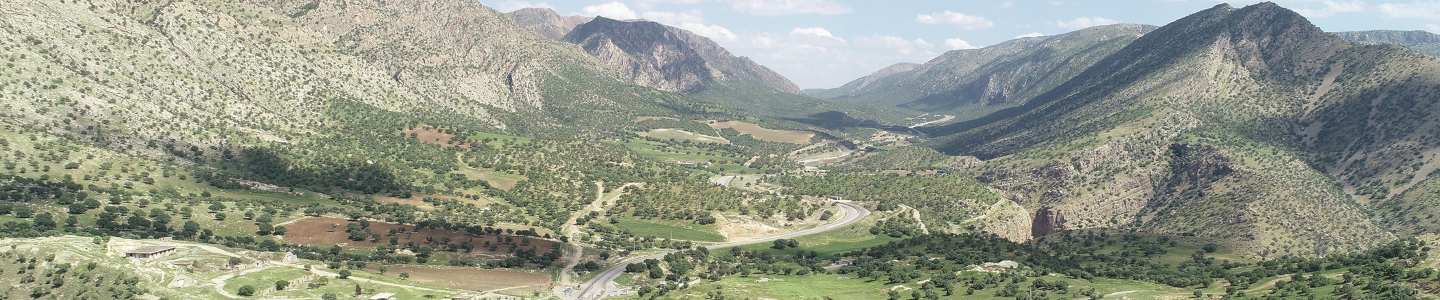
This study examines a cave and adjacent structure at Qal’eh Maryam/Shekarbanu, 5 km west of Sar Pol-e Zahāb, situated on Kalgā-re Mountain overlooking Qara-Bulāgh spring (locally Qała-Bełākh). The site features a natural cave with a carved entrance and an exterior rubble-and-gypsum structure. While future excavations are needed for definitive identification, three potential functions are proposed: (1) a rock-cut tomb similar to Dokkān-e Dāwoud; (2) a Mithraic shrine, with the structure concealing the cave entrance; or (3) a Nestorian Christian monastery, suggested by historical clues and the site’s name. The architectural practice of building before caves appears at comparable sites like Aškawt-i Daya, Zerzevan, Pergamon, and Baba Qodrat’s tomb. Archaeological evidence currently favors the latter two interpretations.
ASOR Members with online access: log into ASOR’s Online Portal here. Once logged in, click the JOURNALS tab in the top navigation bar. Tutorials for how to log in to the Online Portal as well as how to navigate to the Portal Journals page can be found here.