Sherds of my Labor: Supervising with Pottery Plethoras at Kalavasos-Ayios Dhimitrios
Talia Neelis, 2025 P.E. MacAllister Fieldwork Scholarship Recipient
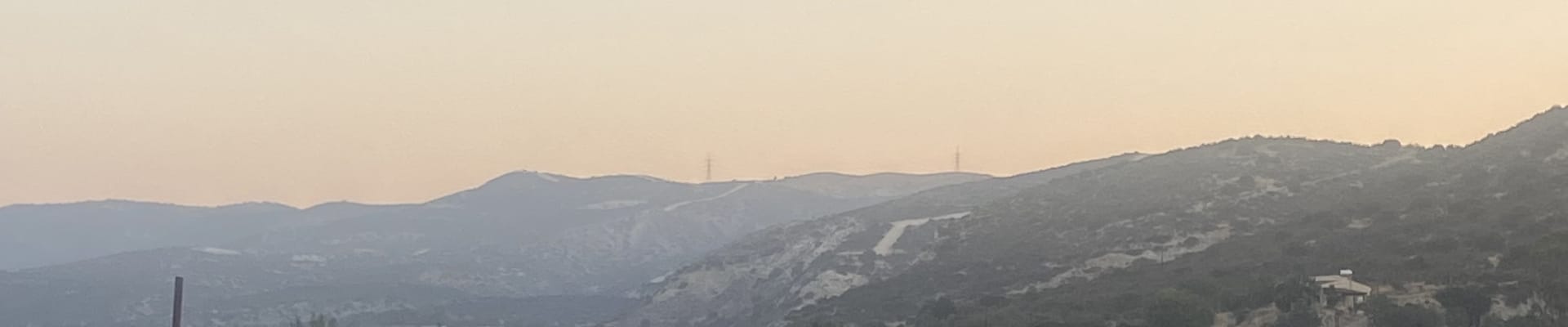
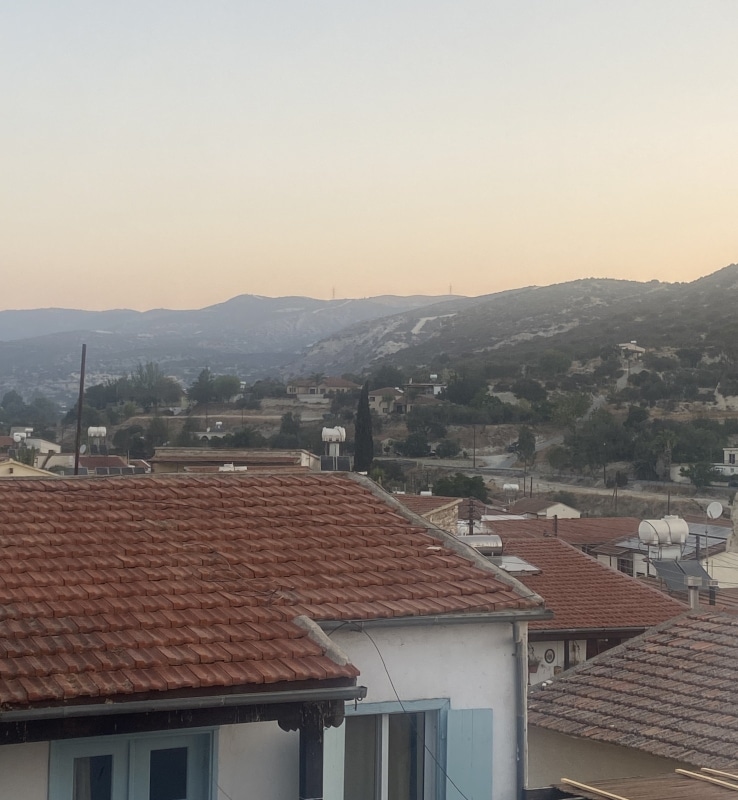
In the five minutes it takes to wind along the back road from Kalavasos Village to the site of Kalavasos-Ayios Dhimitrios, a cool purple light illuminating the foothills of the Troodos mountains morphs to a familiar hot orange. By the time we arrive to site, the blaze of the early morning Cypriot air signals that there’s no time to waste– onwards from the toolshed to the trench!
My enthusiasm to spend the rest of my days in a deep squat caked in sweat and dirt began here two years ago, nestled in the Vasilikos Valley about 3 km from the southern coast of Cyprus. After excavating at other Greek and Cypriot sites in between, coming back to K-AD with enough experience to take on a leadership role really cemented my long-term aspiration to work in the field of Cypriot archaeology.
My enthusiasm to spend the rest of my days in a deep squat caked in sweat and dirt began here two years ago, nestled in the Vasilikos Valley about 3 km from the southern coast of Cyprus. After excavating at other Greek and Cypriot sites in between, coming back to K-AD with enough experience to take on a leadership role really cemented my long-term aspiration to work in the field of Cypriot archaeology.
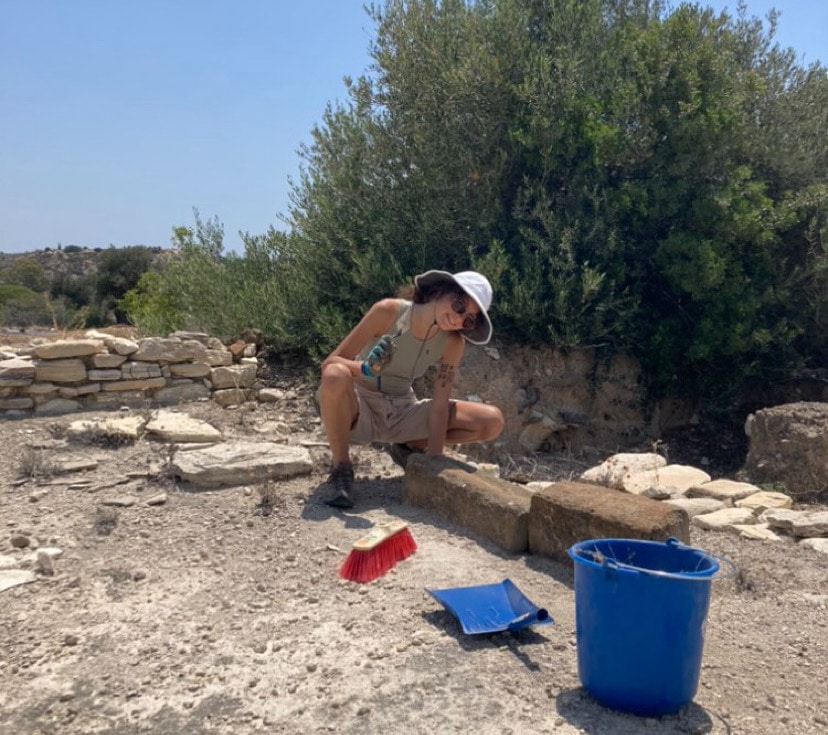
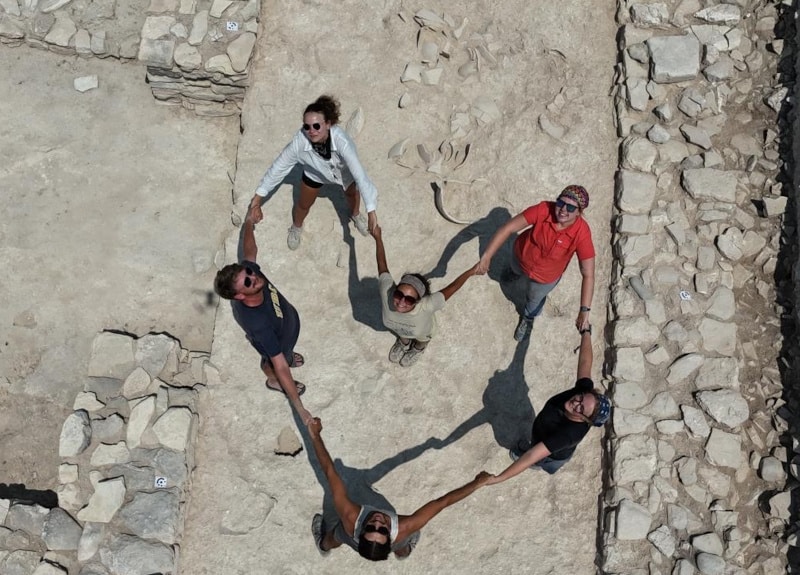
I felt right at home supervising the new trench defining ‘Room 3,’ laid just east of the space I had excavated in 2023. That’s not to say that it wasn’t daunting to lead a group of my peers through the processes and techniques of excavation, to organize various materials and extensive notes, and to make decisions for the good of the trench and the people.
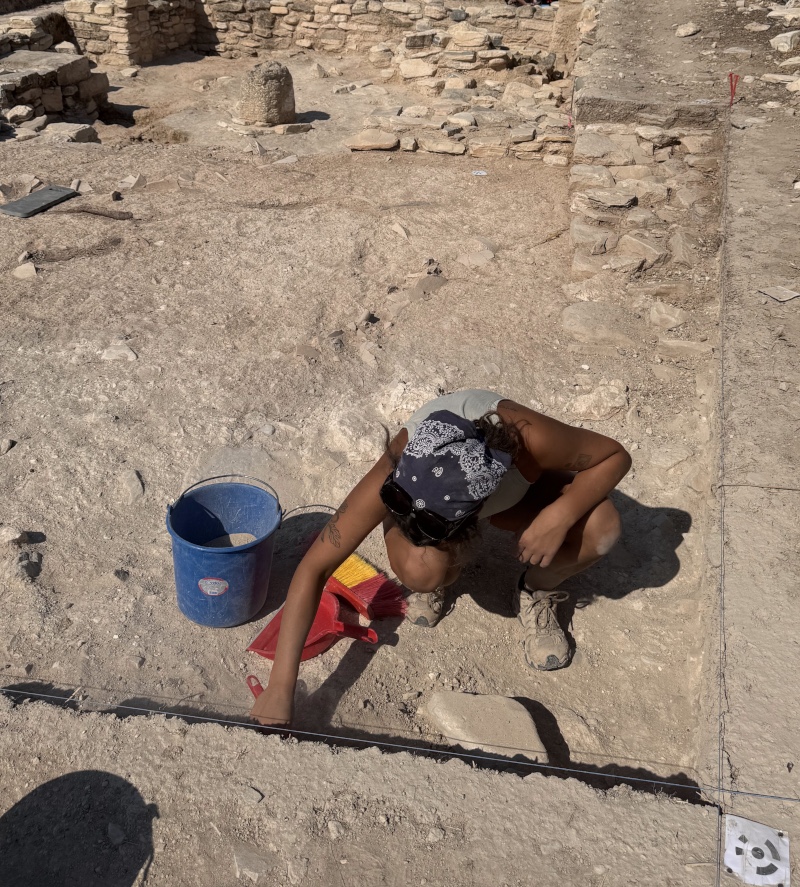
As our team made our way through topsoil and into less contaminated contexts, we uncovered an extraordinary concentration of characteristic Late Cypriot (1650 – 1050 BCE) pottery wares: we couldn’t trowel but two centimetres without revealing caches of White Slip, Base Ring, and pithoi sherds, and sometimes even complete vessels. The team had to be extra careful traversing our small ~7m x 4.5m trench, tip-toeing around the obstacle course made up of sherds that jutted out of the soil. When we weren’t articulating pottery scatters, we had the privilege of finding several nearly-intact wall brackets, a handful of bronze fragments, countless slag chunks, some specially marked vessels, and a couple remarkable triton shells.
While our fruitful trench could be a little overwhelming as a first-time supervisor, I was grateful that I could study such a wealth of material. Since my own research examines regional and diachronic fluctuations in ceramic production on prehistoric Cyprus, I came to the site every morning excited to explore the pottery wilderness that was Room 3.
Supervising for the first time made me realize how lucky I’ve been to work under talented and dedicated excavators in the past. I borrowed leadership skills and pep-talking abilities (so much so that I was awarded ‘morning motivator’ at our end-of-season superlatives!) from each and every one of my previous supervisors and directors to try to create the best experience for my team.
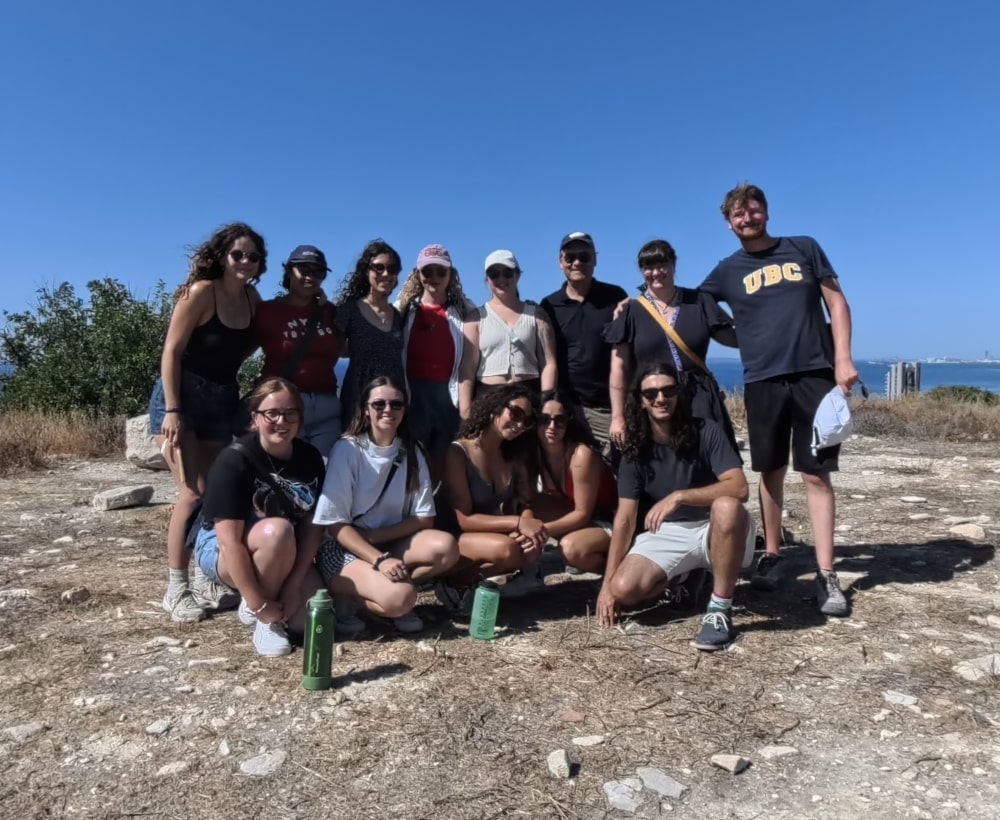
I’m incredibly grateful to project director Dr. Kevin Fisher and field director Sheri Pak for having me back and enduring my incessant questions, and to our team for their endurance, enthusiasm, and support during my meeker supervisory moments. My deepest gratitude to the American Society of Overseas Research for supporting me with the financial resources to participate in this community of knowledge; a community I endeavor to contribute to and draw on for years to come.
Talia Neelis is currently pursuing the doctoral track at the University of California, Los Angeles in the Cotsen Institute of Archaeology’s Interdepartmental Program. She graduated from the University of British Columbia in the spring of 2025 with honors in Ancient Mediterranean and Near Eastern Studies and Art History, where she completed her undergraduate thesis on anthropomorphic figurines and osteological records of the Late Cypriot period. She looks forward to going ‘back to the Bronze Age’ (tagline credit to the Kissonerga-Skalia marketing team) in trenches across Cyprus and beyond.
Want to help more students and early career archaeologists get into the field? Donate to the cause today by selecting “Fieldwork Scholarships” as your gift purpose!