
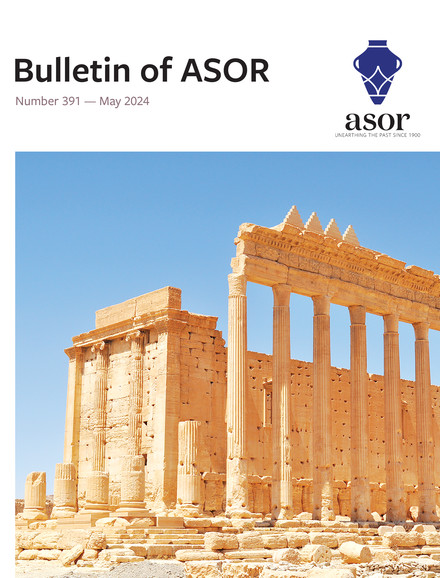

Pp. 1-23: “Conspicuous Construction: New Light on Funerary Monuments in Rural Early Roman Judea from Horvat Midras,” by Gregg E. Gardner and Orit Peleg-Barkat
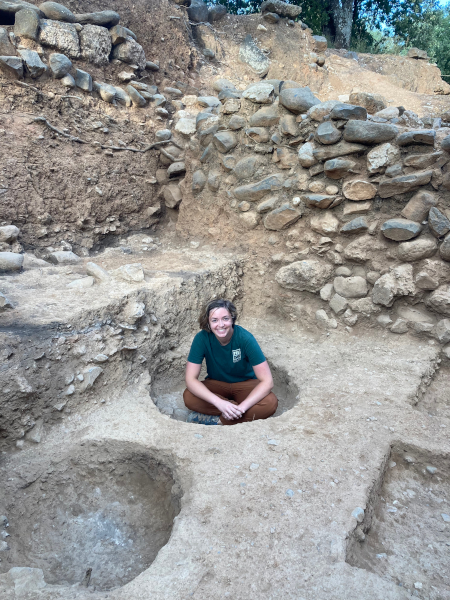
This paper discusses the growing trend in Late Hellenistic- and Early Roman-era Judea (ca. 200 b.c.e.–70 c.e.) for constructing “display tombs”—funerary architecture designed to achieve maximum visibility and project the status of the individual or family who financed the construction, not just in the cities, but also in the countryside. It uses the case study of the recently excavated pyramidal tomb marker at Horvat Midras (Israel), an affluent village, located on the border of Idumea and Judea about 30 km southwest of Jerusalem in the Judean Foothills. After a detailed discussion of the new finds, it is placed within the material and broader socioeconomic contexts of rural Judea in these periods. As will be shown, this monument’s architectural style, location, and other attributes enhance our understanding of monumental funerary architecture in rural settings, adds new archaeological data to often-overlooked rural areas, and contributes to a better understanding of socioeconomic elites in rural Judea at this time.

Pp. 25-45: “A Study of a Unique Roman Funerary Monument and Its Population at Dara in Upper Mesopotamia: A Collective Rock Burial ‘Tower,’” by Charlotte Labedan-Kodas, Ayse Acar, and Nihat Erdoğan
This article provides an in-depth study of a singular funerary monument located in the ancient city of Dara (southeastern Turkey). Its features relate to various influences, some of them outside the Roman world, and present a unique insight into the ritual practices of the inhabitants of Dara. This paper brings together archaeological and taphonomic evidence provided by recent excavations to offer perspectives for the dating of the building and the identification of the people buried there.

Pp. 47-75: “Domestic Waste as a Window into Crusader-Period Le Lyon (Kibbutz Megiddo/Lajjun, Israel): Insights from a Household Midden and Its Ceramic Assemblage,” by Edna J. Stern, Anastasia Shapiro, Matthew J. Adams, Nimrod Marom, Inbar Ktalav, and Yotam Tepper
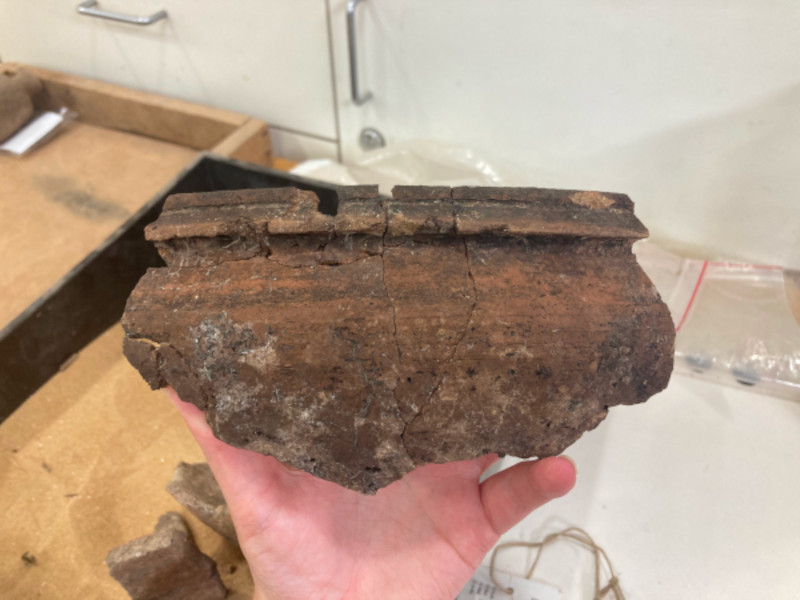
The 2017 salvage excavation conducted at the site of Lajjun within Kibbutz Megiddo, Israel, revealed layers of refuse, primarily ceramics, constituting a household midden with finds indicating a 12th-century date and a Frankish cultural affinity. The midden can be associated with the occupation of the ancient settlement of Lajjun by Frankish settlers intermittently in the 12th and 13th centuries c.e., representing a first archaeological window into the Frankish activity at the site and complementing the historical data on the village known from Crusader sources as Le Lyon (Lajjun).
ASOR Members with online access: log into ASOR’s Online Portal here. Once logged in, click the JOURNALS tab in the top navigation bar. Tutorials for how to log in to the Online Portal as well as how to navigate to the Portal Journals page can be found here.

Pp. 77-92: “The Proximity Principle and the Egyptian Levant in the Late 18th Dynasty,” by Francesco Ignazio De Magistris
It has been known for decades that the Egyptians of the 18th Dynasty took direct control of a number of centers across the Levant, that each center was governed by an Egyptian commissioner, and that every commissioner interacted with the rulers of the local city-states. However, the precise number of Egyptian centers and their respective areas of control remains debated to this day. This article revisits these issues by analyzing the relationships between centers, commissioners, and rulers as they appear within the Amarna corpus, with a focus on the proposed proximity principle. This principle posits that Levantine rulers would have primarily engaged with the closest Egyptian center and the closest Egyptian commissioner, rather than a farther one. Through this analysis, the article aims to shed new light on the number of the Egyptian centers in the Levant and the extent of land that they controlled.
ASOR Members with online access: log into ASOR’s Online Portal here. Once logged in, click the JOURNALS tab in the top navigation bar. Tutorials for how to log in to the Online Portal as well as how to navigate to the Portal Journals page can be found here.
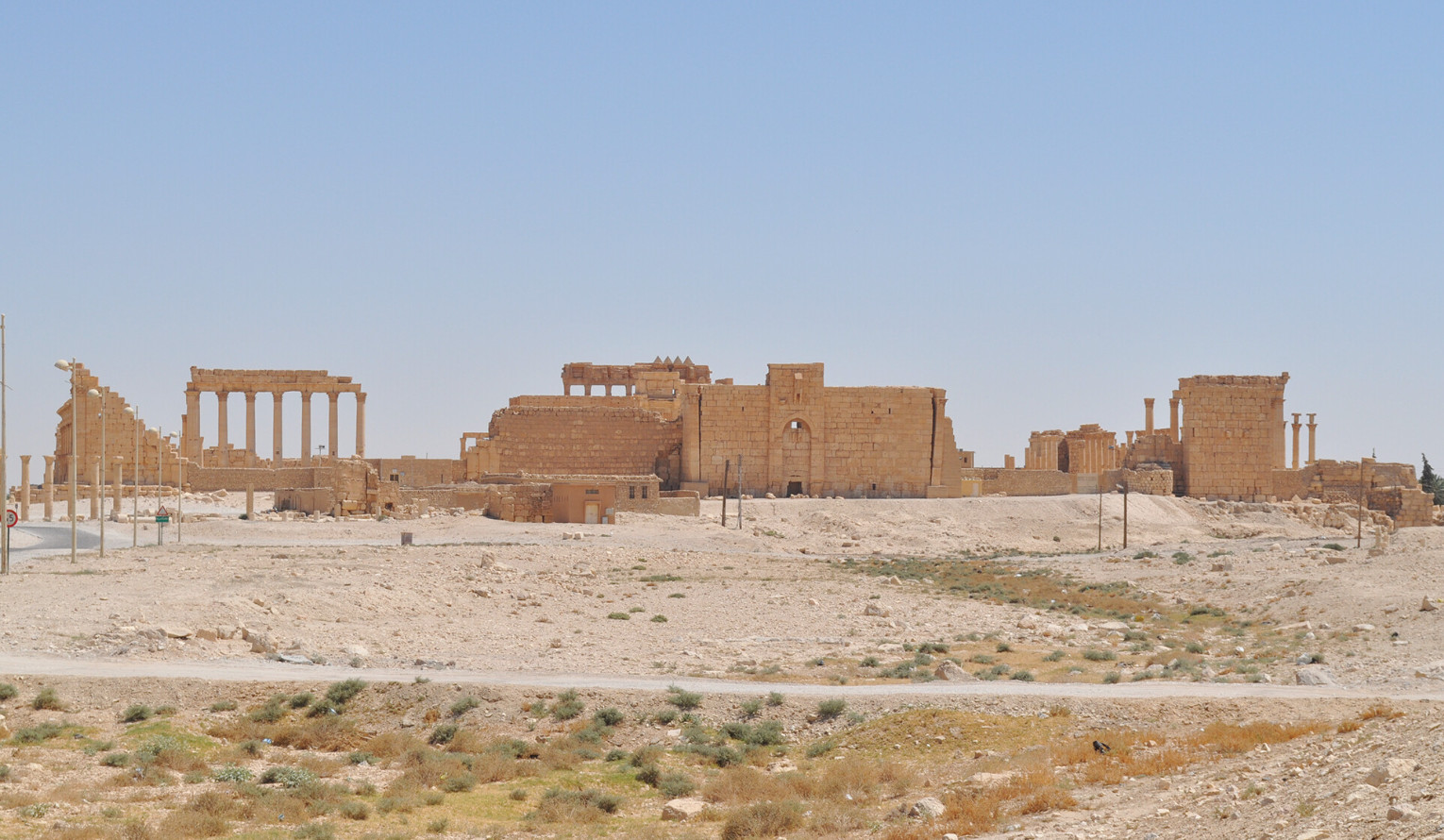
Pp. 93-106: “The Future of the Temple of Bel in Palmyra after Its Destruction,” by Maamoun Abdulkarim and Jacques Seigne
This article explores the significance of the Temple of Bel in the history of Palmyra, highlighting key aspects of its design and development. It reviews the measures taken by the archaeological authorities during the French Mandate (1920–1946) to manage and conserve the monument, such as relocating the local community outside the archaeological site far from the sanctuary and the implementation of repairs to the cella. Finally, it discusses the damage wrought by ISIS in 2015 to Palmyra, which included the partial destruction of the temple using explosives, and revisits the work of the specialists who examined this structure after it was destroyed. In order to preserve Palmyra’s cultural legacy, the relevance of the cella’s future conservation needs as a priority are underscored, not simply for the World Heritage Site, but within the wider context of Syria and the region.
ASOR Members with online access: log into ASOR’s Online Portal here. Once logged in, click the JOURNALS tab in the top navigation bar. Tutorials for how to log in to the Online Portal as well as how to navigate to the Portal Journals page can be found here.

Pp. 107-133: “Solving the Starry Symbols of Sargon II,” by Martin Worthington
The city of Khorsabad (ancient Dūr-Šarrukīn), the newly built capital of Sargon II of Assyria, contained multiple instances of a sequence of five images or symbols (lion, bird, bull, tree, plow) which also appeared shortened to three (lion, tree, plow). What did they mean? There is currently no consensus. This paper proposes a new solution, suggesting that the images a) symbolize specific constellations and b) represent Babylonian/Assyrian words whose sounds “spell out” Sargon’s name (this works for both the long and the short version). Combining these two traits, the effect of the symbols was to assert that Sargon’s name was written in the heavens, for all eternity, and also to associate him with the gods Anu and Enlil, to whom the constellations in question were linked. It is further suggested that Sargon’s name was elsewhere symbolized by a lion passant (pacing lion), through a bilingual pun.
ASOR Members with online access: log into ASOR’s Online Portal here. Once logged in, click the JOURNALS tab in the top navigation bar. Tutorials for how to log in to the Online Portal as well as how to navigate to the Portal Journals page can be found here.

Pp. 135-161: “Tel Dor in the Middle Bronze Age and Maritime Adaptation along the Carmel Coast,” by Assaf Yasur-Landau, Chandler Houghtalin, Marko Runjajić, Zachary Dunseth, and Ruth Shahack-Gross
A newly excavated, well-built, Middle Bronze (MB) II–III coastal structure at Tel Dor provides a fresh glimpse into the turbulent settlement history of the Carmel Coast in the first half of the 2nd millennium b.c.e. The structure, incorporating a massive ashlar orthostat, was built in the MB I–II transition or MB II and existed for more than a century before its collapse during the MB III. A tight cluster of radiocarbon data indicates its destruction ca. 1600–1550 b.c.e. As the first Middle Bronze Age structure extensively excavated at Dor, it fills a lacuna in the site’s history. Other Middle Bronze Age finds enable a reconstruction of Dor’s anchorages and create a narrative of settlement patterns on the Carmel Coast, tightly connected with contemporary maritime activities, and reflecting a resilient settlement system devoid of urban centers.
ASOR Members with online access: log into ASOR’s Online Portal here. Once logged in, click the JOURNALS tab in the top navigation bar. Tutorials for how to log in to the Online Portal as well as how to navigate to the Portal Journals page can be found here.

Pp. 163-189: “Reconstructing the Urban Fabric of Nea Paphos by Comparison with Regularly Planned Mediterranean Cities, Using 3D Procedural Modeling and Spatial Analysis,” by Anna Kubicka-Sowińska, Łukasz Miszk, Paulina Zachar, Anna Fijałkowska, Wojciech Ostrowski, Jakub Modrzewski, and Ewdoksia Papuci-Władyka
Nea Paphos, the Hellenistic-Roman capital of Cyprus, was established according to a regular Hippodamian street grid in the Hellenistic period. The city has been subjected to continuous archaeological research since the 1960s. Despite this, the possibilities for reconstructing its fabric were severely limited. This paper aims to gain a more in-depth understanding of the ways in which computational methods can be used in the analysis of ancient urban planning and the reconstruction of its elements, using the similarity of urban processes and social behavior in ancient Greek cities as its main premise. Therefore, a study based on Network and Space Syntax analysis was conducted for cities with a well-recognized urban layout of the Late Classical and Hellenistic periods, namely Olynthus and Priene, and other, less archaeologically explored harbor towns of the Hellenistic period, such as Piraeus and Ptolemais. The results of these studies were then extrapolated to hypothetical reconstructions of Nea Paphos in the Hellenistic period, mainly to propose the location of the main public buildings and to model the urban traffic. This methodology is experimental in its nature. The aim of this paper is to try to assess to what extent the adopted workflow can be useful in reconstructing the landscape of ancient cities.
ASOR Members with online access: log into ASOR’s Online Portal here. Once logged in, click the JOURNALS tab in the top navigation bar. Tutorials for how to log in to the Online Portal as well as how to navigate to the Portal Journals page can be found here.

Pp. 191–225: “The Early Dynastic ‘Maison des Fruits’ at Tell K in Tello (Ĝirsu),” by Christina Tsouparopoulou
Taking as a point of departure a foundation figurine of the 3rd-millennium Early Dynastic Lagashite ruler Ur-Nanše, housed in the National Archaeological Museum of Athens, Greece, this article presents a revised understanding of the “Maison des Fruits” and Tell K at Tello/Ĝirsu. It is centered on the objects and their inscriptions unearthed in and associated with the Maison, includes relevant parallel structures and objects, and concludes with a discussion of the function of the Maison. It is suggested that this was a sacred building closely related to water and fish and leaves open the discussion regarding to whom this structure was dedicated.
ASOR Members with online access: log into ASOR’s Online Portal here. Once logged in, click the JOURNALS tab in the top navigation bar. Tutorials for how to log in to the Online Portal as well as how to navigate to the Portal Journals page can be found here.

The Officers Nominations Committee of the American Society of Overseas Research announces a General Call for Candidates for service as Officers of the Corporation. All officers serve on the ASOR Executive Committee. Nominating an officer is an important way for members to participate in the governance of their organization, and we encourage you to nominate or self-nominate!
Two positions are currently open for nominations:
President of ASOR: this person leads the organization, supervises the Executive Director, and is the public face of ASOR. The term of office for this position is three years beginning January 1, 2026; however, the actual total minimum commitment will be five years with the first year (calendar year 2025) as President Elect, followed by a three-year term of office (calendar year 2026-28), and a final year as Past President (calendar year 2029). The position is renewable for a second three-year term. A general description of the Office of President and its responsibilities is in the ASOR Bylaws (see Article IV, Section 4.4). The President is expected to attend all appropriate meetings of the corporation and be available for other travel as necessary.
NOTE: After much discussion, the Board of Trustees approved the role of President Elect and reduced the term of Past President in May 2024. Both changes will require revision to the Bylaws, which we expect to be approved at the November meeting before voting on the President Elect. The changes were intended to shorten the total commitment required by an individual to serve as ASOR President and thus potentially attract more nominations for this important office. A strong majority on the Board also felt there should be no expectation or preference for the ASOR President to serve a second three-year term since we want to encourage nominations of individuals who plan to seek one term as well as those who might be interested in two terms.
Secretary of ASOR: this person is responsible for the minutes of all meetings of the corporation and acts as custodian of the official records of ASOR. The term of office for this position is three years beginning January 1, 2025. The position is renewable for a second three-year term. A general description of the Office of Secretary and its responsibilities is in the ASOR Bylaws (see Article IV, Section 4.9). The Secretary is expected to attend all appropriate meetings of the corporation.
Inquiries should be addressed to Bob Mullins (ramullins@apu.edu), Chair of the Officers Nominations Committee. The other members of the committee are Carol Meyers, Lisa Ackerman, Rick St.-Hilaire, and Sarah Costello, Sharon Herbert (ex-officio, voting), Sheldon Fox (ex-officio, voting), and Andy Vaughn (ex-officio, non-voting).
Nominations should include the candidate’s name, the position for which the candidate is nominated, a one-paragraph academic biography – including membership and activities in ASOR, a brief statement as to why the candidate would be appropriate for the position, and the candidate’s contact information. Self-nominations are encouraged. The Officers Nominations Committee will ask semi-finalists to submit further information, including, but not limited to, a CV and a vision statement.
Nominations should be submitted via e-mail to Bob Mullins (ramullins@apu.edu), Chair of the Officers Nominations Committee. Review of applications and nominations will begin on August 15, 2024, and continue until the position is filled.
The Officers Nominations Committee expects to present nominees for President Elect and Secretary to the ASOR Board of Trustees for a vote at the November 24, 2024 Board meeting in Boston, MA.