UNEARTHING THE PAST SINCE 1900

Ongoing Updates: We’re currently fixing unexpected design-related issues on our website. We apologize for any features that may be temporarily unavailable at this time. Thank you for your patience and understanding.

[vc_row fullwidth=”true” attached=”true” css=”.vc_custom_1496247803139{padding-top: 0px !important;padding-right: 0px !important;padding-bottom: 0px !important;padding-left: 0px !important;}”][vc_column][vc_single_image image=”91454″ img_size=”1920×400 (Width x Height)” alignment=”center”][/vc_column][/vc_row][vc_row fullwidth=”true” css=”.vc_custom_1496682730308{padding-top: 10px !important;padding-right: 0px !important;padding-bottom: 0px !important;padding-left: 0px !important;}”][vc_column width=”1/12″ css=”.vc_custom_1496683820796{margin-right: 10px !important;}” offset=”vc_hidden-md vc_hidden-sm vc_hidden-xs”][vc_column_text]

 SHARE

[/vc_column_text][mk_image src=”http://www.asortest.org/wp-content/uploads/2017/01/social-fb-icon4.jpg” image_width=”42″ image_height=”42″ hover=”false” custom_url=”https://www.facebook.com/ASOResearch/” margin_bottom=”0″][mk_image src=”http://www.asortest.org/wp-content/uploads/2017/01/social-tw-icon4.jpg” image_width=”42″ image_height=”42″ hover=”false” custom_url=”https://twitter.com/ASOResearch?ref_src=twsrc%5Egoogle%7Ctwcamp%5Eserp%7Ctwgr%5Eauthor” margin_bottom=”0″][mk_image src=”http://www.asortest.org/wp-content/uploads/2017/01/social-in-icon4.jpg” image_width=”42″ image_height=”42″ hover=”false” custom_url=”https://www.linkedin.com/company/american-schools-of-oriental-research” margin_bottom=”0″][mk_image src=”http://www.asortest.org/wp-content/uploads/2017/01/social-ml-icon_7.jpg” image_width=”42″ image_height=”42″ hover=”false” custom_url=”mailto:info@asor.org” margin_bottom=”0″][mk_image src=”http://www.asortest.org/wp-content/uploads/2017/01/blog-icon3.jpg” image_width=”42″ image_height=”42″ hover=”false” custom_url=”https://asor.org/blog” margin_bottom=”0″][/vc_column][vc_column border_color=”rgba(255,255,255,0.01)” width=”1/6″ css=”.vc_custom_1496683923840{margin-right: 20px !important;border-left-width: 2px !important;padding-right: 20px !important;padding-left: 20px !important;border-left-color: #99422f !important;}”][mk_divider divider_color=”rgba(255,255,255,0.01)” thickness=”1″ margin_top=”3″ margin_bottom=”3″][vc_widget_sidebar sidebar_id=”ca-sidebar-39801″][/vc_column][vc_column border_color=”rgba(170,170,170,0.01)” width=”1/2″ css=”.vc_custom_1487276122024{margin-right: 10px !important;margin-bottom: 30px !important;border-right-width: 2px !important;border-bottom-width: 2px !important;padding-top: 30px !important;padding-right: 30px !important;padding-left: 20px !important;background-color: #ffffff !important;border-right-color: rgba(227,228,228,0.75) !important;border-bottom-color: rgba(227,228,228,0.75) !important;}”][vc_column_text responsive_align=”left”]

There is Mud EVERYWHERE!

Hélène Maloigne, 2023 Strange/Midkiff Families Fellowship Recipient
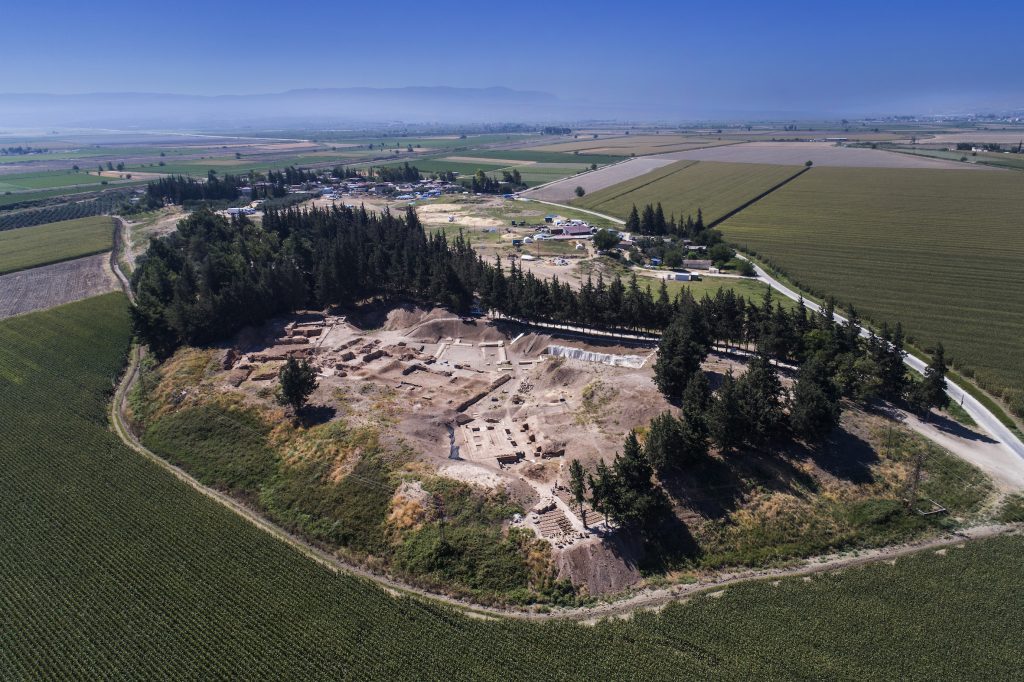
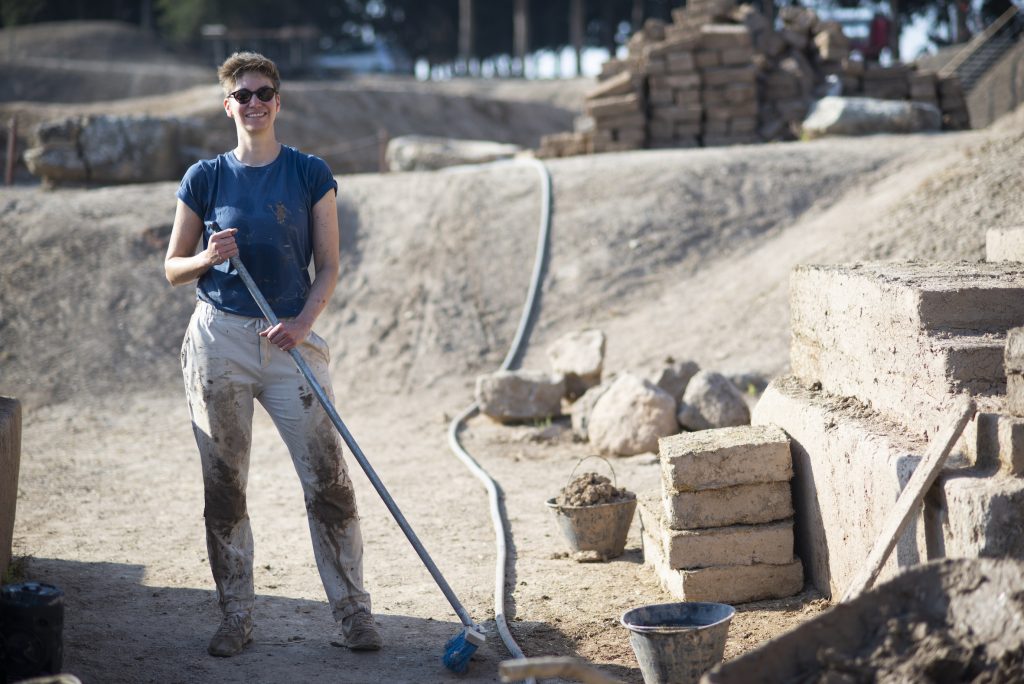
[/vc_column_text][mk_divider][vc_wp_text]I have been working as object registrar and collections manager at Tell Atchana, Alalakh Excavations in Turkey since 2014. During excavation seasons my work usually consists of recording objects and samples on our database, organising our storage facility and making sure all objects are where they are supposed to be. When specialists come to visit, for example bioarchaeologists, zooarchaeologists, palaeobotanists, or our bead or lithics specialists, I help them find their objects or samples and advise them on recording methods according to our system. I also teach our international group of students object handling and recording skills. For the last ten years I have therefore spent most of my time during season at our research centre where we store our finds and where our offices are, and not in the field. This year I decided to venture out into the great unknown and spend one day a week in the field. Reader, let me tell you: It was muddy!

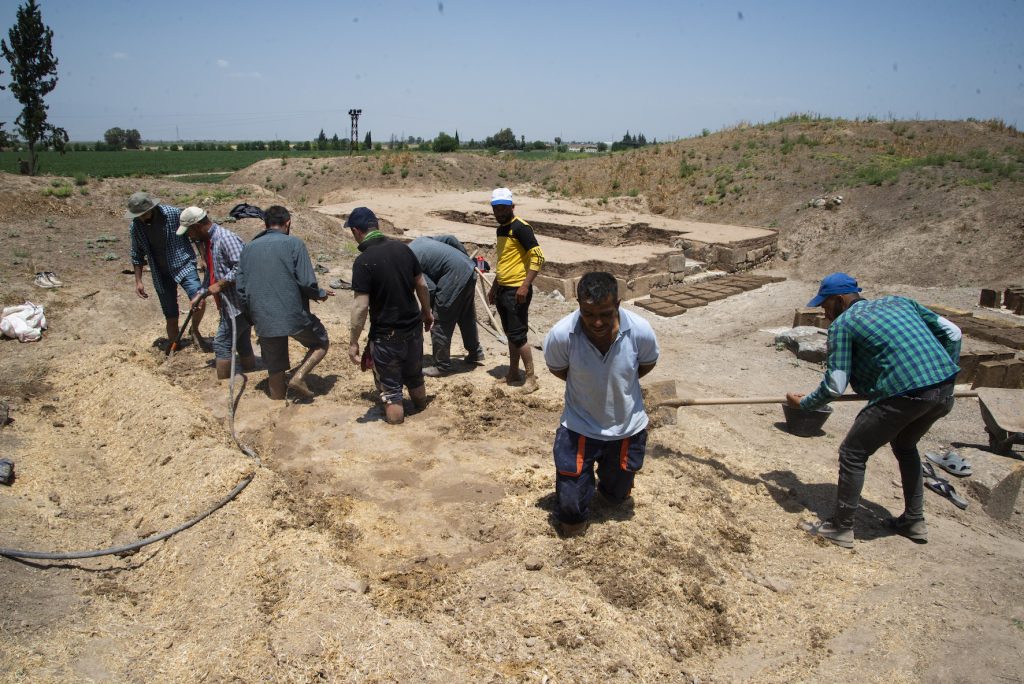
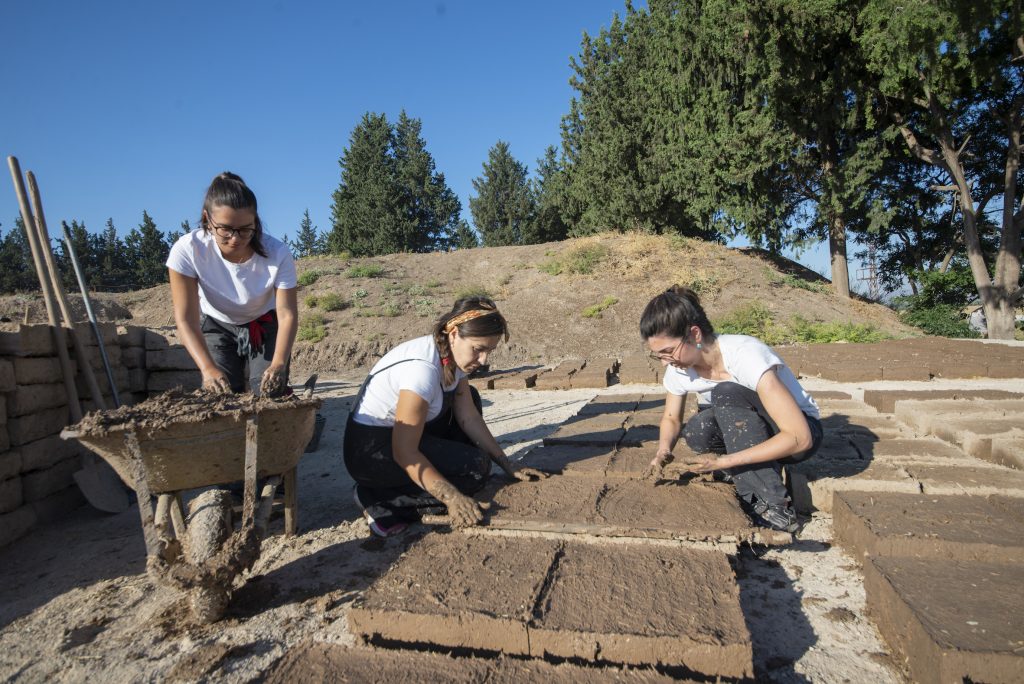
[/vc_wp_text][vc_single_image image=”91448″ img_size=”full” add_caption=”yes” alignment=”center” css=”.vc_custom_1692984035191{padding-right: 10px !important;}”][mk_padding_divider][vc_wp_text]Over the last four years our team has produced nearly 4,000 mudbricks using a traditional recipe mixing straw, soil and water. As you can see (figure 2), this mixing is done by hand or rather by foot. The mixture is left to mature over night and the following day we make the bricks using custom-made metal frames that reproduce the shape and size of the bricks used in ancient Alalakh (figure 3).[/vc_wp_text][vc_single_image image=”91449″ img_size=”full” add_caption=”yes” alignment=”center” css=”.vc_custom_1692984172521{padding-right: 10px !important;}”][mk_padding_divider][vc_single_image image=”91450″ img_size=”full” add_caption=”yes” alignment=”center” css=”.vc_custom_1692984298978{padding-right: 10px !important;}”][mk_padding_divider][vc_wp_text]They are turned regularly to expose all sides to as much sunlight as possible for about a week. While the constant bending over and pushing the wheelbarrows and water buckets during mudbrick production was bad enough for the back, I had not been prepared for what followed.

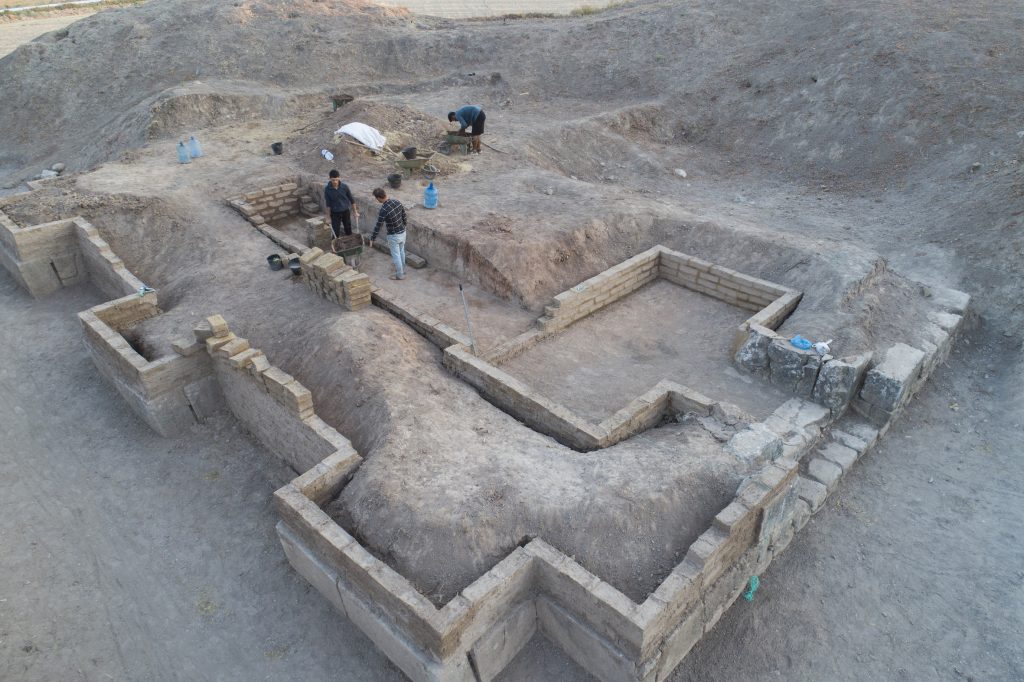
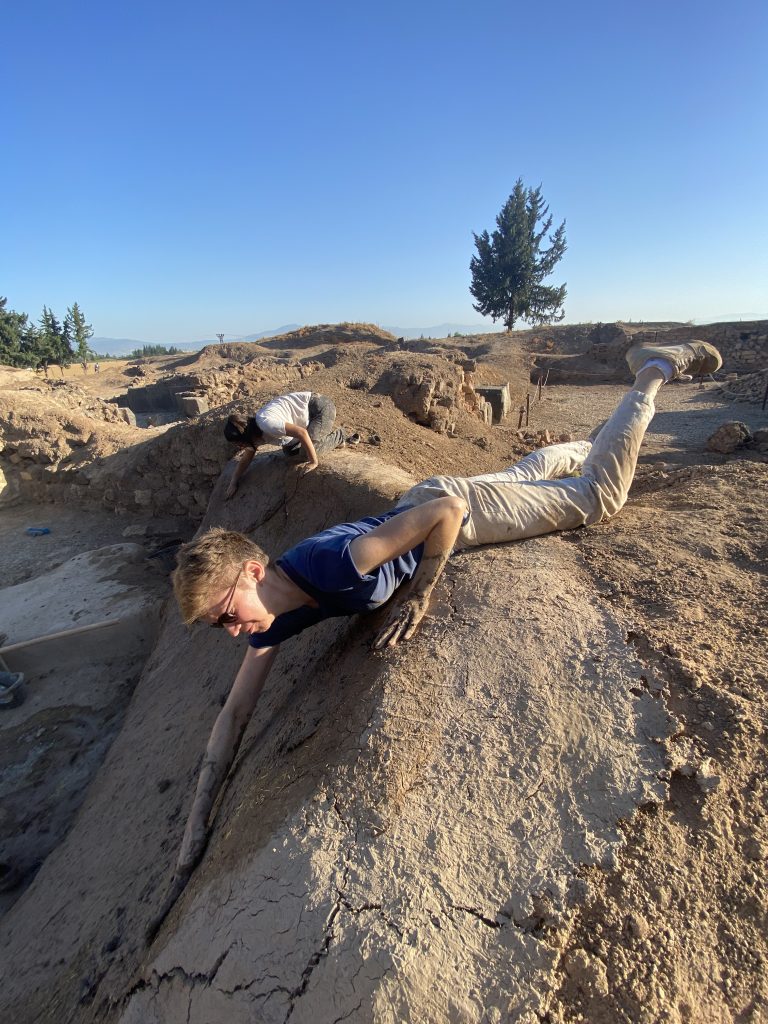
Each of these bricks weigh 30 kg. We use them to reinforce existing walls or surround fragile walls with an additional layer. Layers are joined by mortar, which is sometimes enforced with gravel or additional straw. We then seal the walls by additional mud plastering (figure 4).[/vc_wp_text][vc_single_image image=”91454″ img_size=”full” add_caption=”yes” alignment=”center” css=”.vc_custom_1692985857162{padding-right: 10px !important;}”][mk_padding_divider][vc_wp_text]That meant: carry a brick (or in my case asking someone to help me carry it), placing it correctly, adding gravel or straw as temper (which of course also had to be brought in buckets or wheelbarrows), covering the row of bricks with mortar, repeat. From 5:30 in the morning until 1 pm crouching, sitting, getting up, carrying buckets, lifting bricks, pushing wheelbarrows, bending over, being upside down, getting into mud fights, wiping mud off your face, cursing the heat and the mud, and wishing it was lunch time so that you can go to your room and stretch out on your bed…and yet, enjoying every minute of this backbreaking work because you get to do it with your friends.[/vc_wp_text][vc_single_image image=”91453″ img_size=”full” add_caption=”yes” alignment=”center” css=”.vc_custom_1692985722833{padding-right: 10px !important;}”][mk_padding_divider][vc_wp_text]One of my favourite things about archaeology is being part of a community forged through hard work, friendship, collegiality and mutual support. There is almost no better feeling than being covered in mud from head to toe, exhausted, hot, thirsty and hungry and yet somehow finding the energy for a race to the car for the best seat for the ride home while laughing all the way. Being part of this kind of family – a chosen family some might say – is a real privilege and one I look forward to every year.[/vc_wp_text][vc_single_image image=”91455″ img_size=”full” add_caption=”yes” alignment=”center” css=”.vc_custom_1692985989489{padding-right: 10px !important;}”][mk_padding_divider][vc_wp_text]Hélène Maloigne is a lecturer in History at the School of Humanities & Social Sciences, University of Greenwich. They research the history of archaeology in the Middle East in the 19th/20th century and are Associate Editor for the Bulletin of the History of Archaeology and object registrar at Tell Atchana/Alalakh Excavations (Turkey).

All images © Tell Atchana, Alalakh Excavations Project. Murat Akar, 2023
www.alalakh.org
Instagram:@TellAtchana
https://helenemaloigne.wordpress.com/
Twitter: @HMaloigne[/vc_wp_text][mk_divider][vc_wp_text]Want to help more students and early career archaeologists get into the field? Donate to the cause today by selecting “Student Support” as your gift purpose!

[/vc_wp_text][mk_padding_divider][/vc_column][vc_column border_color=”rgba(170,170,170,0.01)” width=”1/6″ css=”.vc_custom_1496684098866{margin-right: 5px !important;margin-bottom: 20px !important;border-right-width: 2px !important;border-bottom-width: 2px !important;padding-top: 30px !important;padding-right: 10px !important;padding-left: 10px !important;background-color: #ffffff !important;border-right-color: rgba(227,228,228,0.75) !important;border-bottom-color: rgba(227,228,228,0.75) !important;}”][vc_wp_posts title=”BROWSE THE NEWS ARCHIVE” number=”4″][/vc_column][vc_column border_color=”rgba(170,170,170,0.01)” width=”1/6″ css=”.vc_custom_1496684008271{margin-right: 10px !important;margin-bottom: 30px !important;border-right-width: 2px !important;border-bottom-width: 2px !important;padding-top: 30px !important;padding-right: 20px !important;padding-left: 20px !important;background-color: #ffffff !important;border-right-color: rgba(227,228,228,0.75) !important;border-bottom-color: rgba(227,228,228,0.75) !important;}”][vc_column_text] [/vc_column_text][/vc_column][/vc_row]

Leave a Reply