Wednesday, November 18
7:00 – 8:30pm CST | Hilton Chicago (Grand Ballroom)
** The Plenary Address will be broadcast live for virtual attendees
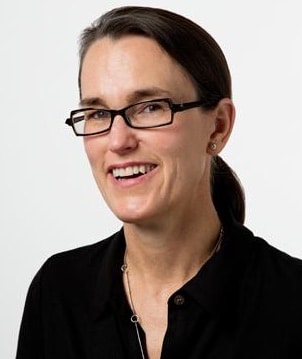
The 2026 Plenary Address will be given by Kim Benzel, Curator in Charge of The Metropolitan Museum of Art.
Kim Benzel joined The Met in 1990 and since then has worked on numerous exhibitions—such as The Royal City of Susa, Assyrian Origins, Art and Empire, Beyond Babylon, Hidden Treasures from Afghanistan, Assyria to Iberia at the Dawn of the Classical Age, Jewelry: The Body Transformed, and most recently, Rayyane Tabet/Alien Property. She has coedited and contributed to multiple exhibition catalogues, published several articles on the jewelry arts of ancient West Asia, and co-authored a Met resource guide for K–12 teachers. Kim holds a Ph.D. in Art History and Archaeology from Columbia University in New York and previous to that studied at the Kulicke-Stark Academy in New York, where she focused on goldsmithing methods used in antiquity and acquired the technological expertise that now informs so much of her art historical research. For many years Kim participated in archaeological excavations at sites in Syria and regularly taught the ancient West Asian sections of the Barnard College Introduction to Art History survey course, as well as the ancient West Asian portion of the Curatorial Studies course offered by the Institute of Fine Arts at New York University. Currently, Kim and her colleagues in the Department are working on a full rethink and renovation of The Met’s permanent galleries of Ancient West Asian Art, scheduled to reopen in June 2027.
Lapis, Clay, Copper, Water: Presenting Ancient West Asian Art at The Met
The Department of Ancient West Asian Art at The Met will reopen its permanent galleries in 2027, after an extensive renovation and many years of rethinking how it stewards and displays the heritage in its care. This deeply collaborative project centers people-focused histories, material resources and foundational technologies, provenance research and collecting practices, regional perspectives and contemporary debates, the participation of heritage communities, and multisensory approaches to the collection. By expanding the canon and conversations to foster care and concern for objects, people, communities, and diverse histories, the new galleries aim to elevate the formative cultural, artistic, and intellectual achievements—as well as the wonder and awe—of a vital and vibrant region of the world, the material traces of which help us understand the complexity of their world, and that of our own.