UNEARTHING THE PAST SINCE 1900
  • BECOME A MEMBER
  • RENEW
  • GIVE NOW
  • SEARCH
  • ONLINE PORTAL
  • American Society of Overseas Research (ASOR)American Society of Overseas Research (ASOR)
  • ABOUT
    • WELCOME FROM ASOR OFFICERS
    • HISTORY OF ASOR
    • MISSION, BYLAWS, & STRATEGIC PLAN
    • Board of Trustees
    • COMMITTEES
    • POLICIES
    • FINANCIAL DOCUMENTS
    • MEDIA RELEASES
    • CONTACT US
  • CULTURAL
    HERITAGE
    • ABOUT CULTURAL HERITAGE INITIATIVES
    • UPDATES
    • PAST GRANTS
    • TUTORIALS
    • Who We Are
  • ANNUAL
    MEETING
    • REGISTRATION
    • HOTEL RESERVATIONS
    • ANNUAL MEETING SCHEDULES
    • SPONSOR & EXHIBIT
    • ASOR Online Library
    • HONORS & AWARDS
    • ANNUAL MEETING SCHOLARSHIPS
    • PAST & FUTURE ANNUAL MEETINGS
  • MEMBERSHIP
    & RESOURCES
    • INDIVIDUAL MEMBERSHIPS
    • INSTITUTIONAL MEMBERSHIPS
    • NEWS@ASOR
    • PAST ASOR NEWS, MONTH BY MONTH
    • AFFILIATED PROJECTS
    • AFFILIATED RESEARCH CENTERS
    • ARCHIVES
    • ONLINE RESOURCES
      • PHOTO COLLECTION
    • EARLY CAREER MEMBER RESOURCES
  • FELLOWSHIPS
    & GRANTS
    • SCHOLARSHIPS FOR FIELDWORK PARTICIPATION
    • GRANTS FOR ARCHAEOLOGICAL PROJECTS
    • RESEARCH FELLOWSHIPS FOR MEMBERS
    • MEMBERSHIP & ANNUAL MEETING SCHOLARSHIPS
    • ASOR-AFFILIATED RESEARCH CENTERS FELLOWSHIPS
    • OTHER FELLOWSHIP PROGRAMS
  • PUBLICATIONS
    • BOOK SERIES & MONOGRAPHS
    • BULLETIN OF ASOR
    • JOURNAL OF CUNEIFORM STUDIES
    • MAARAV
    • NEAR EASTERN ARCHAEOLOGY
    • THE ANCIENT NEAR EAST TODAY
    • News@ASOR
    • LEVANTINE CERAMICS PROJECT
  • FRIENDS
    OF ASOR
    • Webinars
    • TOURS
    • THE ANCIENT NEAR EAST TODAY
    • ASOR ONLINE LIBRARY
  • Donate
    • FY25 HONOR ROLL OF DONORS
    • LIFETIME HONOR ROLL OF DONORS
    • ASOR LEGACY CIRCLE
    • WAYS TO DONATE
Atabas_Banner_1

 SHARE


NEWS@ASOR E-NEWSLETTER

ANCIENT NEAR EAST TODAY E-NEWSLETTER

PAST ASOR NEWS, MONTH BY MONTH

ASOR LEGACY CIRCLE MEMBERS

LIFETIME HONOR ROLL OF DONORS

FY25 HONOR ROLL OF DONORS

ASOR ANNUAL MEETING

Once Upon a Time in Anatolia

Atakan Atabas, 2025 Shirlee Meyers/G. Ernest Wright Fellowship Recipient 

When I left my hometown in central Anatolia to attend university, I never imagined that my path would eventually bring me back to the same region—not as a student of technology, but as a researcher of the ancient past. My undergraduate years were spent studying computer science at one of Türkiye’s most prestigious universities, followed by professional work in the technology sector in Istanbul. Despite these achievements, I felt a growing distance from the land of my childhood. Archaeology offered me the chance to reconnect: to engage with the cultural heritage of Anatolia and, in doing so, to give something meaningful back to my community and my country.

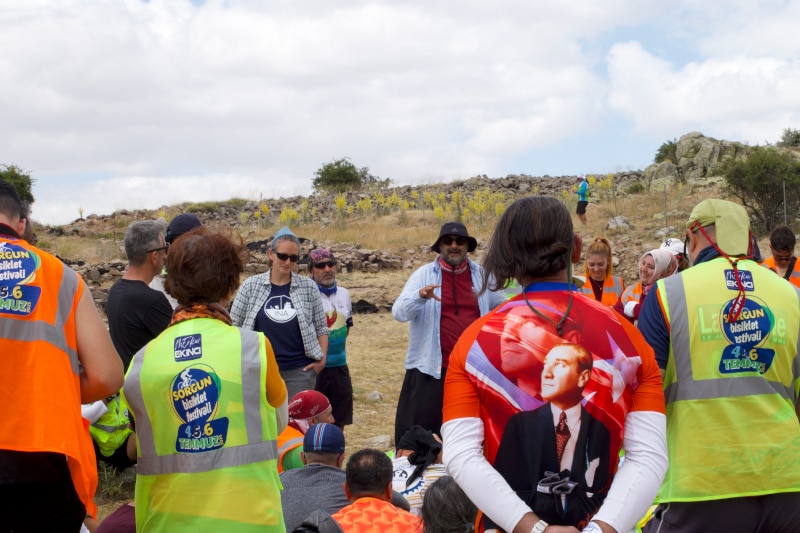
I gave a talk about Kerkenes to a group of cyclists who visited the site during the Sorgun Bicycle Festival.

One of the works that has always stayed with me is Nuri Bilge Ceylan’s Once Upon a Time in Anatolia. In one scene, a driver tells a doctor, “When you have a family, you’ll have a story to tell. You can say, once upon a time in Anatolia, when I was working out in the sticks, I remember this one night, which began like this. You can tell it like a fairytale, Doctor.”  Whenever I am in the field, I think of this dialogue. To me, research is not only about data or analysis; it is also about collecting stories. Some call them academic findings, but I see them as connections-bridges between the past, present, and future of the Anatolian landscape. In that sense, I consider myself a mediator, one who helps bring different times and perspectives into conversation.

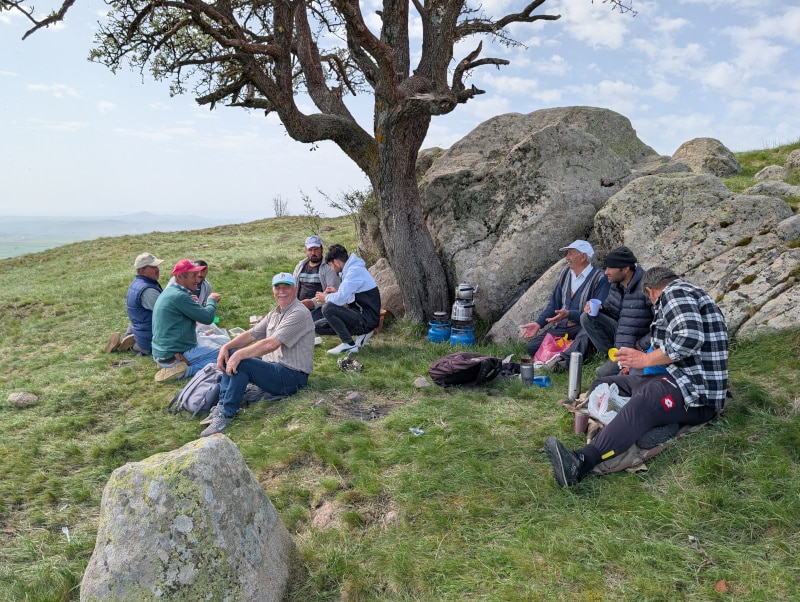
Turkish tea time! Workers gather to chat and share food and snacks.

In the summer of 2025, I joined the Kerkenes Project in Yozgat, central Anatolia. For many international scholars, fieldwork in Turkey means collecting evidence, expanding networks, publishing papers, and advancing knowledge of the ancient world. For me, however, it is also deeply personal. Fieldwork is a return home: talking with workers from the village, walking the landscapes of my childhood, breathing the scent of native flowers, and tasting familiar foods that I ate growing up. At Kerkenes, I feel responsible not only for contributing to the project but also for representing the local community whose generosity sustains our work. This dual sense of responsibility reminds me that archaeology is not just scientific inquiry; it is also an ongoing dialogue between researchers and the people who live near the site today. I believe that understanding this relationship is key to understanding how academia can engage more meaningfully with society.

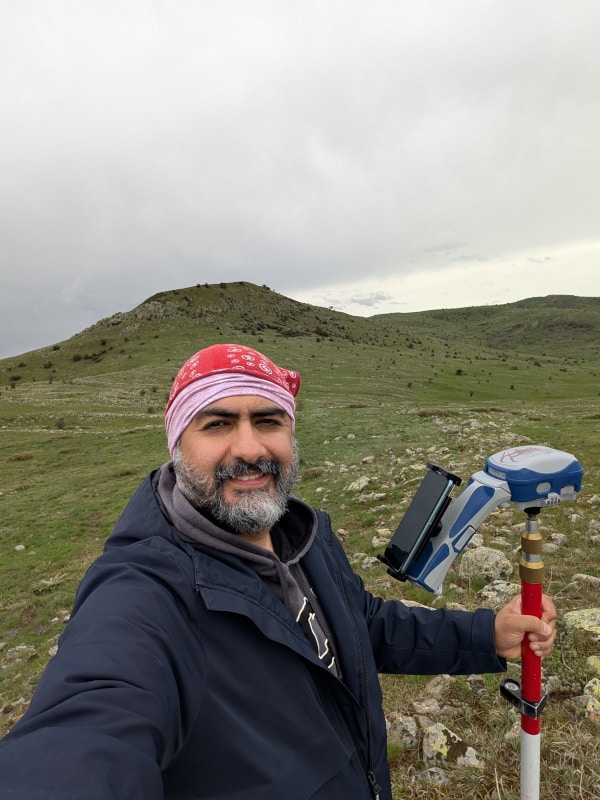
Looking for points for preparing survey grids.

My own path—from computer science to archaeology—has taught me the importance of interdisciplinary approaches. To restrict archaeology to narrow disciplinary boundaries is to diminish its potential. Often, archaeological questions require the mind of a sociologist, the skills of an engineer, the vision of an architect, the insights of a politician, or even the calculations of an economist. At Kerkenes, I have seen how archaeology draws together these diverse ways of thinking. Fieldwork also demands practical versatility: negotiating with local bureaucrats, collaborating with villagers, and adapting to shifting roles and responsibilities. In such a dynamic environment, effective communication is essential. Each season teaches me how to engage with people of different backgrounds, perspectives, and priorities. Thus, the Kerkenes Project is not only an academic training ground but also a place of intercultural exchange, collaboration, and personal growth.
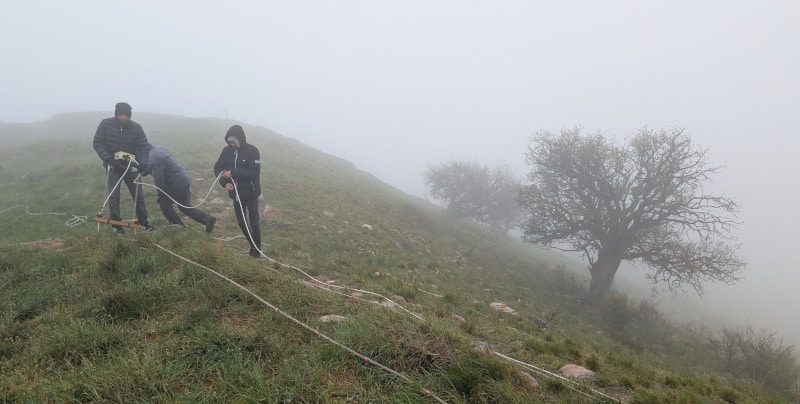
Conducting an electrical resistivity survey on a foggy, cold day in the field.

For me, archaeology is not only about answering research questions but also about building relationships—across cultures, disciplines, and generations. An excavation site is a meeting point where individuals from different nationalities, ethnicities, genders, socioeconomic classes, and educational backgrounds come together. It is also a meeting point across time, where modern researchers walk through the same landscapes that ancient inhabitants once knew. In this sense, we are not outside observers of history but participants in its unfolding narrative. We are part of the same story, shaped by the same land, only at different moments in time. Once upon a time in Anatolia… there is always a story to tell.

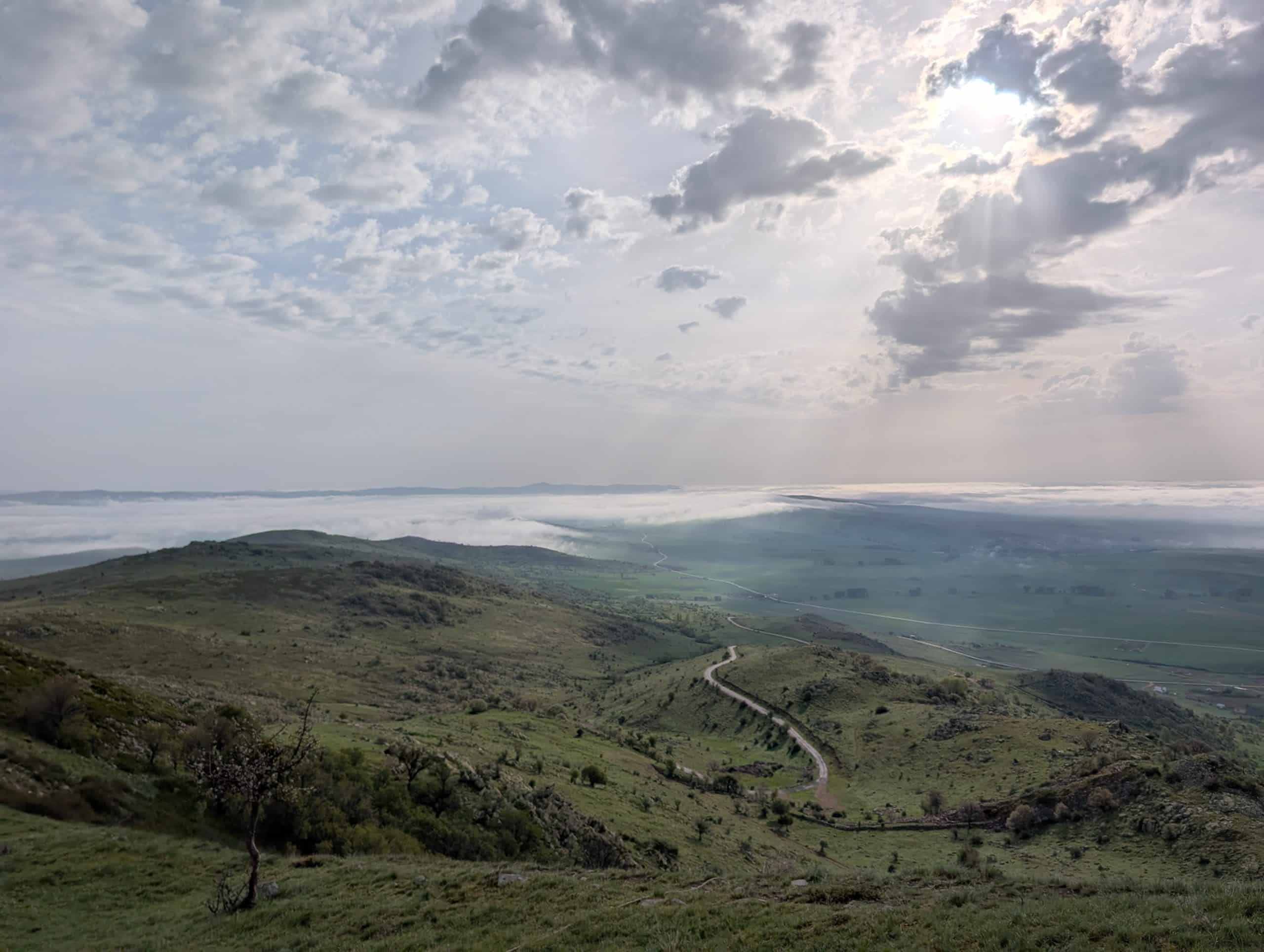
Looking out over the foggy plain from the field.

Atakan Atabas is a doctoral student in the Department of Anthropology at the University of Central Florida. His research focuses on digital archaeology, with particular attention to Anatolian art and archaeology. He has been a member of the Kerkenes Project since 2023, and his dissertation examines the orientations of buildings at Kerkenes and their relationship to the social organization of Kerkenes society.

Want to help more students and early career archaeologists get into the field? Donate to the cause today by selecting “Fieldwork Scholarships” as your gift purpose!

Recent Posts

  • Fieldwork Report: Atakan Atabas
  • FOA Webinar: Kevin Fisher
  • Table of Contents for Near Eastern Archaeology 89.1 (2026)
  • ECS Spring Brown Bag: Dr. Danielle Macdonald
  • March Fellowship Madness 2026: Bracket of Impact

Latest Posts from @ASORResearch

asor_research

Initiating and supporting research of the history and cultures of the Near East and wider Mediterranean world.


With over $4,000 raised, ASOR's March Fellowship M
With over $4,000 raised, ASOR's March Fellowship Madness has reached our final push. Help us get to $6,000 so 3 students can receive dig scholarships this summer—and stay tuned to see which artifact will emerge victorious! https://buff.ly/XPKQcGL
#MarchMadness


A reminder to check out ASOR's spring book sale be
A reminder to check out ASOR's spring book sale before it ends! ASOR members (with a US mailing address) can purchase ASOR books 2+ years old at the discounted price of $10.00. Check our website for the list of titles still available.


ASOR Board Member Rick St. Hilaire was recently pu
ASOR Board Member Rick St. Hilaire was recently published in The Hill for his opinion piece on protecting Iran's cultural heritage. You can find the article link in our bio.
#Archaeology #CulturalHeritage #Iran #Preservation

Image: Investiture scene, rock relief of Sasanian king Bahram Ist at Bishapur (said Bishapur V). Iran, province of Fars. Credit: Pentocelo/Wikimedia Commons.


Reminder: the final deadline to submit paper abstr
Reminder: the final deadline to submit paper abstracts and workshop presentation proposals for the 2026 Annual Meeting is April 1! ASOR academic membership and Annual Meeting registration are required to access the submission form in the ASOR Abstract Center. Read the Call for Papers on how to submit by clicking the link in our bio: https://www.asor.org/am/2026/call-for-papers-2026


Make sure to tune in TONIGHT at 7:00 pm ET for the
Make sure to tune in TONIGHT at 7:00 pm ET for the next FOA webinar presented by Neville McFerrin: "'Lions, Rams, and Kings: Interpreting Animals at Persepolis". If you haven't already signed up, click the link in our bio to register for free: https://www.asor.org/news/2026/03/webinar-mcferrin


As March Madness hits the Sweet 16, ASOR's March F
As March Madness hits the Sweet 16, ASOR's March Fellowship Madness has reached our first goal! With over $2,000 raised so far—thus one more student receiving a fieldwork scholarship—our artifacts have advanced to the next round. Help us get to $4,000 so we can send another student on a dig this summer, and follow along to see which artifact will be crowned a winner! 
#MarchMadness #Archaeology #Scholarships


Join ASOR’s Early Career Scholars on April 3 from
Join ASOR’s Early Career Scholars on April 3 from 12:00-1:00pm ET via Zoom for a virtual Brown Bag talk on scientific publishing in archaeology, led by Dr. Danielle Macdonald, co-Editor of the Journal of Archaeological Science: Reports. This session will provide insights into the publication process including understanding peer review, manuscript preparation best practices, responding to reviewer comments, and current trends in scientific archaeological publishing such as open access models. Register for the free lecture by clicking the link (https://www.asor.org/news/2026/03/ecs-macdonald) in our bio.


Eid Mubarak to those celebrating! Our #Objectofthe
Eid Mubarak to those celebrating! Our #ObjectoftheWeek is a ceramic bowl likely from Samarqand, Uzbekistan—with "blessings, prosperity, well-being, happiness" inscribed in Arabic—dated to late 10th-11th century CE. Credit: Metropolitan Museum of Art. 40.170.15
#Archaeology #Uzbekistan #Calligraphy


Why do so many of the ancient world’s most famous
Why do so many of the ancient world’s most famous kings share the same unlikely origin story? The answer may lie in a mythical template first forged in Mesopotamia. Read the newest ANE Today, The Myth of the Servant: A New Tale of Kingship from the Ancient Near East, by clicking the link (https://anetoday.org/myth-servant-kingship/) in our bio.


Join us for the next FOA webinar on Wednesday, Mar
Join us for the next FOA webinar on Wednesday, March 25th at 7:00pm ET: "Lions, Rams, and Kings: Interpreting Animals at Persepolis," presented by Dr. Neville McFerrin. Shortly after 515 BCE, the Achaemenid king Darius I began construction on a new imperial center: Persepolis. Across the site, a vision of an inclusive empire, one that celebrates diversity as strength, emerges. This talk argues that in reliefs across the site, the designers of Persepolis turn to depictions of animal encounters as a way to demonstrate to visitors the potentials of their imperial system. Click the link (https://www.asor.org/news/2026/03/webinar-mcferrin) in our bio to read more and register!
#Persia #Achaemenid #Persepolis


As part of March Fellowship Madness, we invite you
As part of March Fellowship Madness, we invite you to step into our Bracket of Impact, where every gift advances the next generation of archaeologists. Our goal is to raise $6,000 by March 31 which would fund scholarships for three more students. 

As donations come in, we’ll update our Bracket of Impact so you can track our progress and see which of your favorite artifacts below advances to the next round. Who do you have winning?
#MarchMadness


There is still time to submit paper abstracts and
There is still time to submit paper abstracts and workshop presentation proposals for the 2026 Annual Meeting! Abstracts of 250 words may be submitted according to the Call for Papers until April 1 (final deadline) with a $25 late fee. ASOR academic membership and Annual Meeting registration are required to access the submission form in the ASOR Abstract Center. #ASOR26


Talia Neelis, a P.E. MacAllister Fieldwork Scholar
Talia Neelis, a P.E. MacAllister Fieldwork Scholarship Recipient, excavated at Kalavasos-Ayios Dhimitrios in Cyprus in 2025. A PhD student at UCLA, Talia returned to the Late Bronze Age site as a trench supervisor. Read her fieldwork report here: https://www.asor.org/news/2026/03/fieldwork-report-neelis
#Cyprus #BronzeAge


ASOR is offering Tigris Travel Grants covering the
ASOR is offering Tigris Travel Grants covering the cost of travel and accommodation for the 2026 Annual Meeting in Chicago. Scholars must be citizens of Iraq, traveling from Iraq to the Annual Meeting, and have an accepted paper on the Annual Meeting Academic Program. Preference is given to scholars who have not participated in an in-person Annual Meeting before. Learn more here by clicking the link (https://www.asor.org/fellowships/annual-meeting-scholarships/student-travel-grants/) in our bio.


March is here — and so is ASOR’s March Fellowship
March is here — and so is ASOR’s March Fellowship Madness! 

Our goal is to raise $6,000 by March 31 which would fund scholarships for three more students. 100% of your gift will go directly toward funding student fieldwork participation. Every gift moves us forward, and every donor becomes part of a winning team by supporting emerging scholars. 

Please support archaeology’s next generation by making a gift online and selecting “Fieldwork Scholarships” as the designation for your gift!


Don't forget to tune in TOMORROW at 7:00 pm ET for
Don't forget to tune in TOMORROW at 7:00 pm ET for the next FOA webinar presented by Dr. Müge Durusu-Tanrıöver: "Anatolian Futures: Archaeologies of Anatolia within the Larger Mediterranean". If you haven't already signed up, click the link (https://buff.ly/NHDHKof) in our bio to register.


Our #ObjectoftheWeek: A shallow faience bowl from
Our #ObjectoftheWeek: A shallow faience bowl from New Kingdom Egypt—decorated with a double-sistrum with Hathor heads and blue lotus flowers—dated to ca. 1539-1292 BCE. Credit: Museo Egizio, Turin, Cat. 3368. CC0 1.0.
#Archaeology #Egypt #Hathor


The Amman Citadel with its prominent ruins is the
The Amman Citadel with its prominent ruins is the most striking landmark in the city centre. Since 2024, the Amman Archaeological Project has been investigating the site’s formative period to better understand its history. Read the newest ANE Today by clicking the link (https://anetoday.org/royal-capital-ammon/) in our bio.
#Jordan #Amman

📸 : ©Amman Archaeological Project (Münster University, DAI, Felix Wolter)


ASOR is pleased to be holding a book sale for publ
ASOR is pleased to be holding a book sale for publications 2+ years old this March. All proceeds from book sales will go to supporting membership scholarships! ASOR members (with a mailing address in the USA) can purchase copies of available books for only $10 through March 31, 2026. Click the link (https://www.asor.org/news/2026/03/spring-book-sale) in our bio to take a look at the list of available titles.


In 2025, Hanna Erftenbeck and Natalia Handziuk rec
In 2025, Hanna Erftenbeck and Natalia Handziuk received a Joe D. Seger Project Grant for research at Tall al-Handaquq South in Jordan. A systematic survey documented Early Bronze Age remains, including a dolmen, and areas impacted by looting—helping to clarify the site’s extent, occupational intensity, and preservation challenges. Read their grant report by clicking the link (https://www.asor.org/news/2026/02/seger-grant-report-al-handaquq) in our bio.
#Jordan #BronzeAge


Instagram

Stay updated with the latest insights, photos, and news by following us on Instagram!

Follow Us on Instagram

American Society of Overseas Research
The James F. Strange Center
209 Commerce Street
Alexandria, VA 22314

E-mail: info@asor.org

© 2025 ASOR
All rights reserved.
Images licensed under a Creative Commons Attribution-NonCommercial-ShareAlike 4.0 International License

Contact Us
Membership
Give
Friends of ASOR
ASOR Cultural Heritage Initiatives
Terms of Use
News

Please follow & like us :)
Facebook
YouTube
LinkedIn