UNEARTHING THE PAST SINCE 1900
  • BECOME A MEMBER
  • RENEW
  • GIVE NOW
  • SEARCH
  • ONLINE PORTAL
  • American Society of Overseas Research (ASOR)American Society of Overseas Research (ASOR)
  • ABOUT
    • WELCOME FROM ASOR OFFICERS
    • HISTORY OF ASOR
    • MISSION, BYLAWS, & STRATEGIC PLAN
    • Board of Trustees
    • COMMITTEES
    • POLICIES
    • FINANCIAL DOCUMENTS
    • MEDIA RELEASES
    • CONTACT US
  • CULTURAL
    HERITAGE
    • ABOUT CULTURAL HERITAGE INITIATIVES
    • UPDATES
    • PAST GRANTS
    • TUTORIALS
    • Who We Are
  • ANNUAL
    MEETING
    • REGISTRATION
    • HOTEL RESERVATIONS
    • ANNUAL MEETING SCHEDULES
    • SPONSOR & EXHIBIT
    • ASOR Online Library
    • HONORS & AWARDS
    • ANNUAL MEETING SCHOLARSHIPS
    • PAST & FUTURE ANNUAL MEETINGS
  • MEMBERSHIP
    & RESOURCES
    • INDIVIDUAL MEMBERSHIPS
    • INSTITUTIONAL MEMBERSHIPS
    • NEWS@ASOR
    • PAST ASOR NEWS, MONTH BY MONTH
    • AFFILIATED PROJECTS
    • AFFILIATED RESEARCH CENTERS
    • ARCHIVES
    • ONLINE RESOURCES
      • PHOTO COLLECTION
    • EARLY CAREER MEMBER RESOURCES
  • FELLOWSHIPS
    & GRANTS
    • SCHOLARSHIPS FOR FIELDWORK PARTICIPATION
    • GRANTS FOR ARCHAEOLOGICAL PROJECTS
    • RESEARCH FELLOWSHIPS FOR MEMBERS
    • MEMBERSHIP & ANNUAL MEETING SCHOLARSHIPS
    • ASOR-AFFILIATED RESEARCH CENTERS FELLOWSHIPS
    • OTHER FELLOWSHIP PROGRAMS
  • PUBLICATIONS
    • BOOK SERIES & MONOGRAPHS
    • BULLETIN OF ASOR
    • JOURNAL OF CUNEIFORM STUDIES
    • MAARAV
    • NEAR EASTERN ARCHAEOLOGY
    • THE ANCIENT NEAR EAST TODAY
    • News@ASOR
    • LEVANTINE CERAMICS PROJECT
  • FRIENDS
    OF ASOR
    • Webinars
    • TOURS
    • THE ANCIENT NEAR EAST TODAY
    • ASOR ONLINE LIBRARY
  • Donate
    • FY25 HONOR ROLL OF DONORS
    • LIFETIME HONOR ROLL OF DONORS
    • ASOR LEGACY CIRCLE
    • WAYS TO DONATE
Feland_Banner_Jordan

 SHARE


NEWS@ASOR E-NEWSLETTER

ANCIENT NEAR EAST TODAY E-NEWSLETTER

PAST ASOR NEWS, MONTH BY MONTH

ASOR LEGACY CIRCLE MEMBERS

LIFETIME HONOR ROLL OF DONORS

FY25 HONOR ROLL OF DONORS

ASOR ANNUAL MEETING

Adventure in a Nabatean Town

Joshua Feland, 2025 Eric and Carol Meyers Fieldwork Participation Scholarship Recipient 

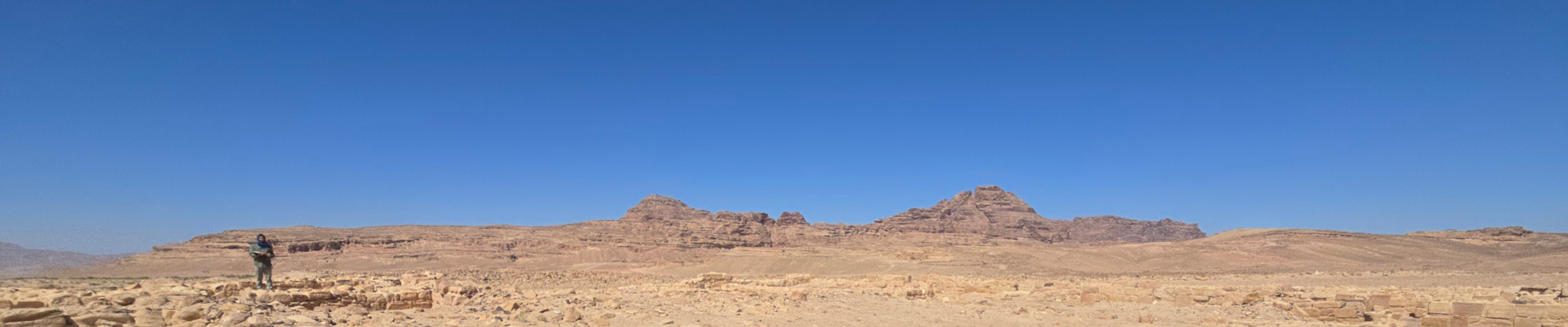
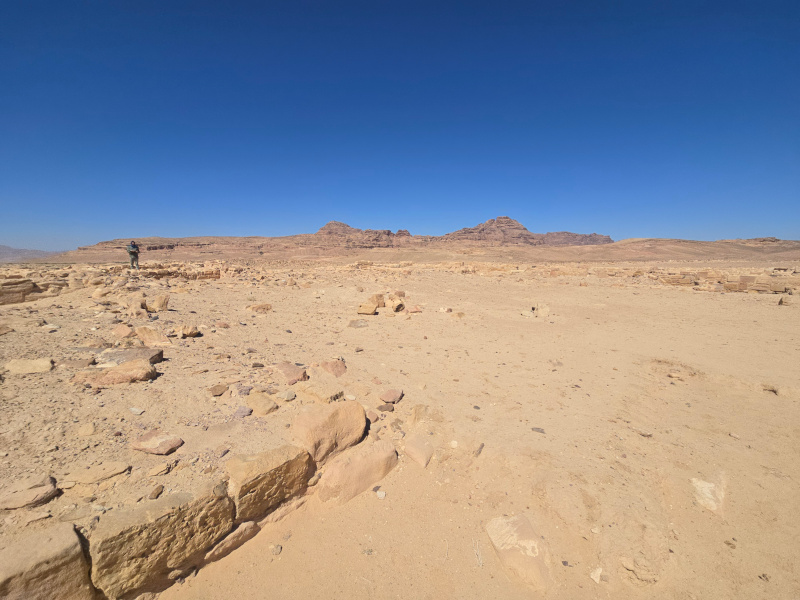
In southern Jordan lies Humayma, an extensive archaeological site with a complicated history. The ancient village was home to the Nabateans, Romans, Byzantines, and Arab peoples, all of whom left their mark permanently in the village in the form of large and small structures. Humayma, or ancient Hawara, was initially a Nabatean settlement roughly equidistant between Aqaba and Petra in southern Jordan. The site is notable for its water collection infrastructure, Roman fort, Byzantine churches, and Islamic Qasr, to name but a few of the structural types on the site. Spread throughout the site are the everyday signs of life in the past: pottery sherds, ceramic building materials (CBM), faunal remains, and evidence of burials—all of which is being mapped and documented.
In May 2025, I was presented with the opportunity to act as a supervisor on the University of Alberta’s Humayma Field School project. The field school aims to instill archaeological field technique and values in the next generation of archaeology students. For this season I was tasked with teaching photogrammetry techniques using the standing structures at Humayma and excavated materials from previous seasons.

Fifteen university students coming from Canada and the United States travelled to Jordan to conduct their first fieldwork in the Middle East. The overall goal of the field school in its inaugural season was to establish the state of the structures on the site, create a detailed site map, pinpoint key areas for further excavation and conservation, and instruct the students in archaeological field techniques, including photogrammetry and 3D modelling.
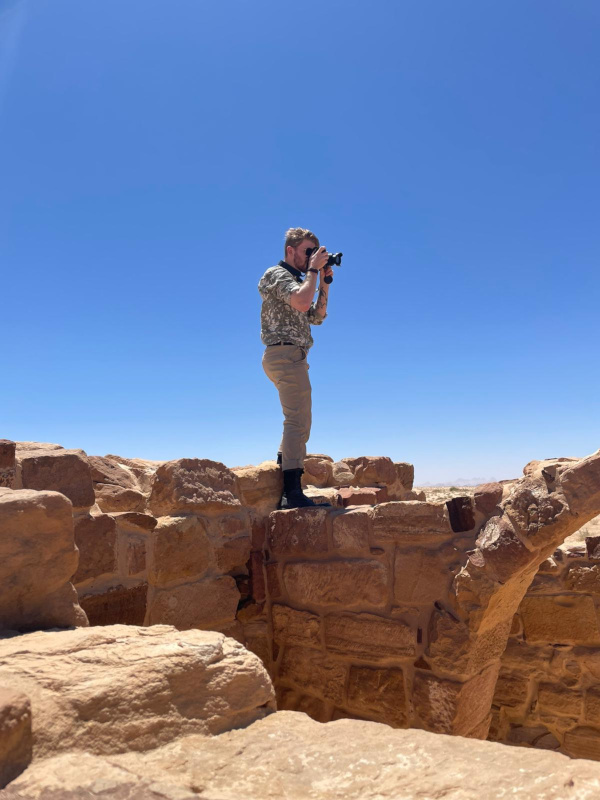
The photogrammetry for the site was conducted primarily by the students using both a traditional DSLR camera and the students’ own smartphones. Both pieces of capture technology produced excellent results, considering this was the students’ first time using them in the field. The process involved the students walking steadily around some of the notable standing structures on the site, taking photos as they went with as much overlap as possible. This allows for the processing applications to “match” structures, creating an in-depth 3D model that can be georeferenced and measured. The technology is instrumental to modern archaeology, allowing for the creation of high-quality and often fully explorable 3D models of sites, structures, features, artifacts, etc. This can provide easy access to on-the-ground site data that may be a world away. Properly georeferenced, one can measure entire structures from one’s own office or laboratory.
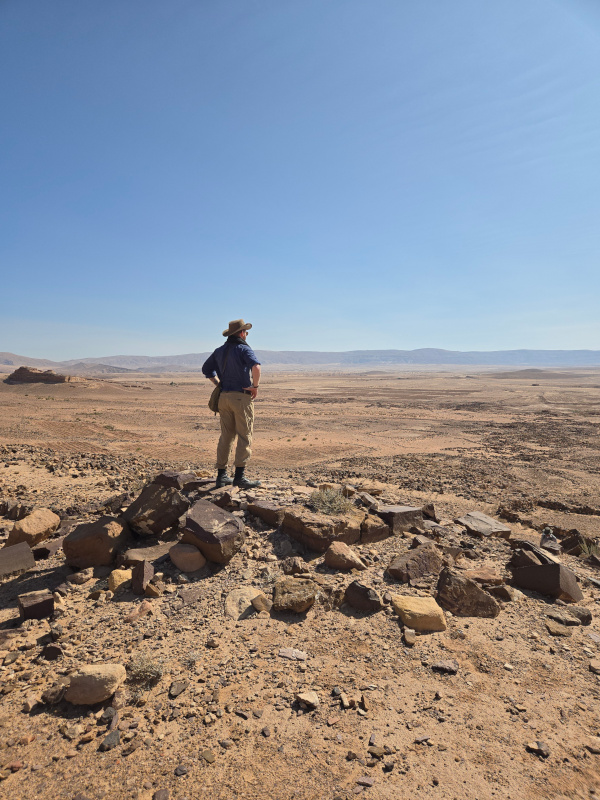
Alongside my role on the project, my personal goals were to increase my skills in photogrammetry, begin to delve into the use of digital modelling technology, and work on my instructional skills. I have only recently begun my journey in digital archaeology, but I am increasingly interested in the use of digital tools to enhance archaeological excavation and data collection. My use of digital modelling technology has been interesting. The feeling of creating an explorable model is wonderful but the process requires an incredible amount of patience. Teaching students in the archaeological field technique was a wonderful and amazing learning opportunity.
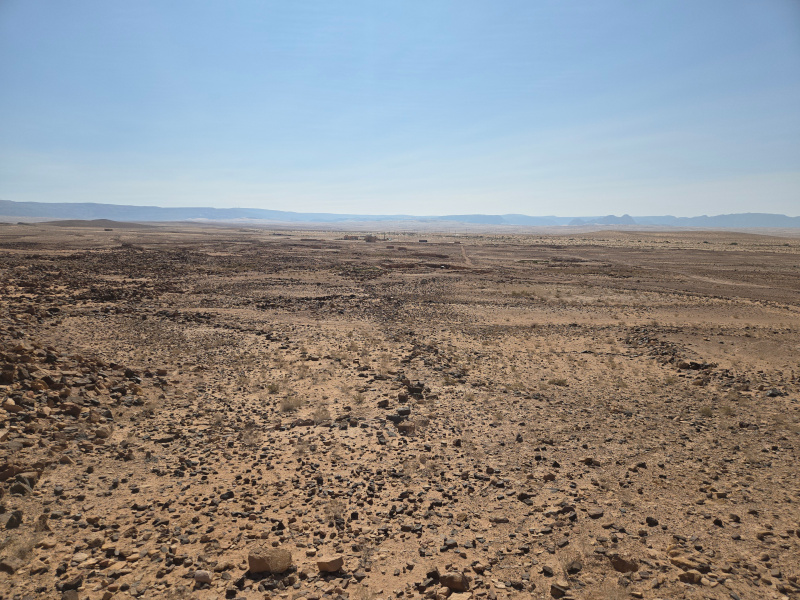
The inaugural season of the University of Alberta Humayma Field school consisted entirely of survey work; as such, small finds were limited to rare instances of surface collections. Throughout Humayma, due to environmental exposures, looting, and other means, artifacts are observable on the surface all throughout the site. Some of my notable finds were a bronze coin of indeterminate age and a piece of marble.

My fieldwork participation in Jordan continues to be instrumental to the development of my career as an archaeologist and educator, and I could not be more thankful for the opportunities and connections this experience has provided.
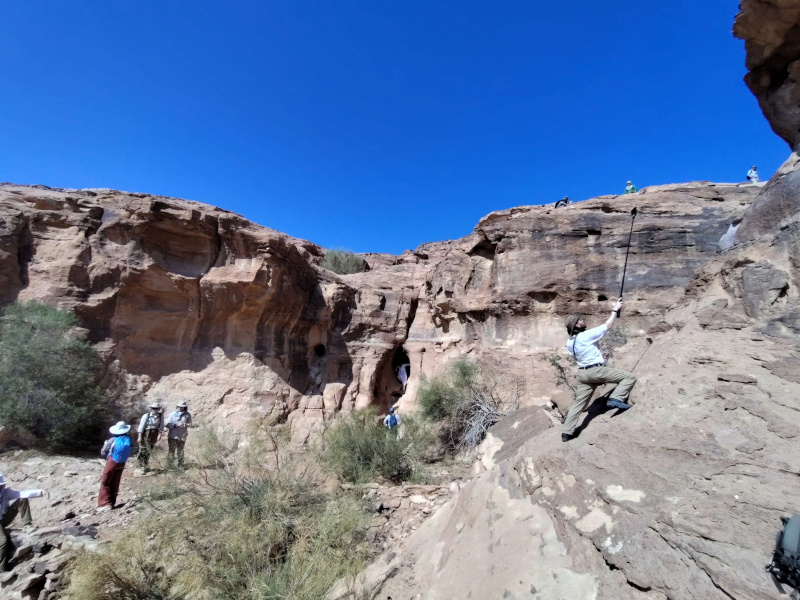
 Joshua Feland is a master’s student at the University of Alberta in Alberta, Canada. He is interested in Desert and Harbour archaeology, particularly where the two intersect. He has a specialization in Roman provincial archaeology. He has conducted fieldwork in Italy, Jordan, and the boreal forest zones of British Columbia and Alberta.

Want to help more students and early career archaeologists get into the field? Donate to the cause today by selecting “Fieldwork Scholarships” as your gift purpose!

Recent Posts

  • ASOR Seeks New BASOR Editor(s)
  • Friends of ASOR Philadelphia Tour 2026 Recap
  • ECS Research in Action: Dr. Leilani Lucas
  • Table of Contents for BASOR 395 (May 2026)
  • FOA Webinar: Danielle Candelora

Latest Posts from @ASORResearch

asor_research

Initiating and supporting research of the history and cultures of the Near East and wider Mediterranean world.


From behind-the-scenes museum tours to up-close en
From behind-the-scenes museum tours to up-close encounters with artifacts and archives, Friends of ASOR spent two unforgettable days exploring Philadelphia through the lens of archaeology, art, and curation. Read about exclusive visits to the Penn Museum, Barnes Foundation, and Philadelphia Museum of Art—guided by the scholars who brought the past to life along the way: https://www.asor.org/news/2026/05/foa-in-philly


Join ASOR’s Early Career Scholars @asorearlycareer
Join ASOR’s Early Career Scholars @asorearlycareer on May 29, 2026, at 12:00pm ET via Zoom for a virtual talk from Dr. Leilani Lucas about reconstructing culinary practices in prehistoric Cyprus from charred food remains. This study contributes to a growing body of research demonstrating the potential of microstructural analysis to enhance archaeobotanical interpretations of food preparation in the past, while providing the first applications of this approach in Cyprus. 

Register at the link in our bio: https://www.asor.org/news/2026/05/ecs-lucas
#Cyprus


Through support from the U.S. Department of State,
Through support from the U.S. Department of State, ASOR partnered with Libya’s Department of Antiquities to document and repair flood damage at the archaeological sites of Cyrene, Ptolemais, and Tocra in eastern Libya. These locally led projects reflect ASOR’s commitment to supporting Libyan efforts to protect their heritage from natural disasters. Read more about these projects at the link in our bio: https://www.asor.org/chi/updates/2026/05/libya-mini-grants
#CulturalHeritage #Libya


Don't forget to tune in TONIGHT at 7:00 pm ET for
Don't forget to tune in TONIGHT at 7:00 pm ET for the last FOA webinar of the season, presented by Dr. Danielle Candelora: “'I am the border': Borders and Immigration in Ancient Egypt”. If you haven't already signed up, click the link in our bio to register for free: https://www.asor.org/news/2026/04/webinar-candelora
#AncientEgypt


Check out the May issue of BASOR 395, featuring ar
Check out the May issue of BASOR 395, featuring articles such as: Preservation through Transformation: Identifying Late Roman Hula Valley Sites in Panias’s Diocletianic Boundary Stones; The Life and Afterlife of the Palace of Herod Antipas in Tiberias; Baʾude, a World Heritage Site in Northern Syria from the Early Byzantine Era: A Study of the Residential Buildings and Their State of Preservation; and much more. Read it at the link in our bio: https://www.asor.org/news/2026/05/basor395-toc/


With the support of an ASOR Dana Grant, Silvia Ami
With the support of an ASOR Dana Grant, Silvia Amicone conducted geological fieldwork along the shore of Mosul Dam Lake in Iraq, documenting endangered clay deposits to trace ancient pottery-making traditions in the Upper Tigris region. Read about her work in her grant report at the link in our bio: https://www.asor.org/news/2026/04/dana-grant-report-mosul-dam
#Fieldwork #Iraq #Mesopotamia #Tigris


Our #ObjectoftheWeek is a terracotta kitchen mold
Our #ObjectoftheWeek is a terracotta kitchen mold of a woman, found at the Amorite royal palace complex in Mari (modern-day Syria). ca. 1782-1759 BCE. Louvre AO 18913. Credit: 2022 Musée du Louvre, Dist. GrandPalaisRmn / Raphaél Chipault
#Archaeology #Amorite #Syria


The Cultural Heritage Watch platform not only docu
The Cultural Heritage Watch platform not only documents the damage to Iran’s heritage in wartime but preserves the social memories and meanings of these places. Read the newest ANE Today by Kiersten Neumann by clicking the link (https://anetoday.org/cultural-heritage-watch-iran/) in our bio.
#Iran #CulturalHeritage


Join us for the LAST Friends of ASOR webinar of th
Join us for the LAST Friends of ASOR webinar of the season on Wednesday, May 6th at 7:00pm ET: “'I am the border': Borders and Immigration in Ancient Egypt” presented by Dr. Danielle Candelora. Issues of borders, citizenship, and immigration are at the forefront of media headlines around the globe, and are examined across fields as diverse as Political Science and Sociology to Comparative Literature and the Visual Arts. Exploring these multiple approaches allows for new insights into the entangled concepts of borders, immigration, and identity in ancient Egypt. 
Register at the link in our bio: https://www.asor.org/news/2026/04/webinar-candelora
#AncientEgypt


Make sure to tune in TOMORROW at 12:30 pm ET for t
Make sure to tune in TOMORROW at 12:30 pm ET for the next FOA webinar presented by Yana Tchekhanovets: "New Excavations at Nessana, Negev: Late Antique Pilgrimage Hub on the Desert Fringe." If you haven't already signed up, click here to register for free: https://www.asor.org/news/2026/04/webinar-tchekhanovets


Last chance to nominate! Know a standout recent bo
Last chance to nominate! Know a standout recent book 📖 on the ancient Near East or Eastern Mediterranean? Make sure it gets the recognition it deserves by submitting it for an ASOR Book Award. Nominations close May 1. Press the link in our bio to learn more: https://buff.ly/jt6dx1G
📸 Winner of the 2025 Lapp Award


ASOR invites Roundtable Proposals from members who
ASOR invites Roundtable Proposals from members who plan to attend the 2026 Annual Meeting in Chicago, November 18-21. Roundtables are an ideal format for informal discussion or focused conversations on topics of general interest to meeting attendees. Roundtable proposals of 250 words or fewer will be reviewed through October 31 (or until space fills). Learn more and submit your roundtable proposal at the link in our bio: https://www.asor.org/am/2026/round-tables-2026


Our spring book sale is ending soon! These books,
Our spring book sale is ending soon! These books, plus several other titles, are available for the low price of $10.00 each. All proceeds go towards membership scholarships, helping expand access to ASOR’s programs and resources. Check out the sale on our website before it's over: https://buff.ly/Vn3LEZy


Joshua Feland, a master’s student at the Universit
Joshua Feland, a master’s student at the University of Alberta, received an Eric and Carol Meyers Fieldwork Scholarship in 2025 to excavate in Humayma, Jordan. As a supervisor on the project, Joshua was tasked with teaching photogrammetry techniques to students using the structures at Humayma and previously excavated material. Read his fieldwork report at the link in our bio: https://www.asor.org/news/2026/04/fieldwork-report-feland
#Jordan #Humayma #Archaeology


ASOR's Early Career Scholars hosted Dr. Danielle M
ASOR's Early Career Scholars hosted Dr. Danielle Macdonald (The University of Tulsa) for their Spring 2026 Brown Bag lecture, "Scientific Publishing in Archaeology: Ask an Editor." Dr. Macdonald provides insights into the publication process, including understanding peer review, manuscript preparation best practices, responding to reviewer comments, and current trends in scientific archaeological publishing, such as open access models. Watch the lecture on YouTube at the link in our bio: https://www.youtube.com/watch?v=JDQxb_I0A3Y


Join us for the next Friends of ASOR webinar on We
Join us for the next Friends of ASOR webinar on Wednesday, April 29th at 12:30pm ET: “New Excavations at Nessana, Negev: Late Antique Pilgrimage Hub on the Desert Fringe” presented by Yana Tchekhanovets. The ancient settlement of Nessana, located in the southwestern Negev, on the modern Israeli–Egyptian border, is a key site for the study of early Christian pilgrimage. This lecture will present the preliminary results of the first four seasons of renewed excavations at the site. Read more and register at the link in our bio: https://www.asor.org/news/2026/04/webinar-tchekhanovets


Our #ObjectoftheWeek is a terracotta model of a bo
Our #ObjectoftheWeek is a terracotta model of a boat with multiple persons and birds, decorated with geometric patterns. From Cyprus, Middle Bronze Age, ca. 2000-1600 BCE. Louvre AM972. Credit: Musée du Louvre, Dist. GrandPalaisRmn / Raphaél Chipault
#Archaeology #Cyprus #BronzeAge


Ancient Nessana is not associated with any biblica
Ancient Nessana is not associated with any biblical events or major relics. However, during the Byzantine period, it emerged as a prominent Christian center for pilgrims traveling to Sinai. Read more in the latest ANE Today at the link in our bio: https://anetoday.org/ancient-nessana-pilgrimage/
📸 ©Nessana Expedition
#Byzantine #Christianity #Negev


Don't forget to tune in TONIGHT at 7:00 pm ET for
Don't forget to tune in TONIGHT at 7:00 pm ET for the next FOA webinar presented by Dr. Kevin Fisher: "Kalavasos and Maroni Revisited: New Explorations of Late Bronze Age Urban Landscapes in Southcentral Cyprus." If you haven't already signed up, click the link in our bio to register for free: https://buff.ly/Me2Ax1K


Atakan Atabas, a PhD student at the University of
Atakan Atabas, a PhD student at the University of Central Florida, received a Shirlee Meyers/G. Ernest Wright Fellowship to excavate at Kerkenes, Türkiye in 2025. During the 2025 season, Atakan contributed to survey and geophysical work, including electrical resistivity mapping, while also engaging with local communities and exploring how interdisciplinary approaches can be applied. Read more at the link in our bio: https://www.asor.org/news/2026/03/fieldwork-report-atabas
#Turkiye


Instagram

Stay updated with the latest insights, photos, and news by following us on Instagram!

Follow Us on Instagram

American Society of Overseas Research
The James F. Strange Center
209 Commerce Street
Alexandria, VA 22314

E-mail: info@asor.org

© 2025 ASOR
All rights reserved.
Images licensed under a Creative Commons Attribution-NonCommercial-ShareAlike 4.0 International License

Contact Us
Membership
Give
Friends of ASOR
ASOR Cultural Heritage Initiatives
Terms of Use
News

Please follow & like us :)
Facebook
YouTube
LinkedIn