Fieldwork Report: Mireya Smith

The Secret Life of an Archaeologist at Kerkenes

Mireya Smith, 2023 BIPOC Fieldwork Scholarship Recipient

In May of this year, I graduated from the University of Central Florida with a Bachelor of Arts degree in Anthropology and an undergraduate certificate in Geographic Information Systems. My hope was to become an archaeologist after realizing that it was something that genuinely made me happy in life. I decided to apply for the UCF in Turkey program as a beginning step to this new chapter of my life. My dreams were coming true when I found out I got accepted to the program.
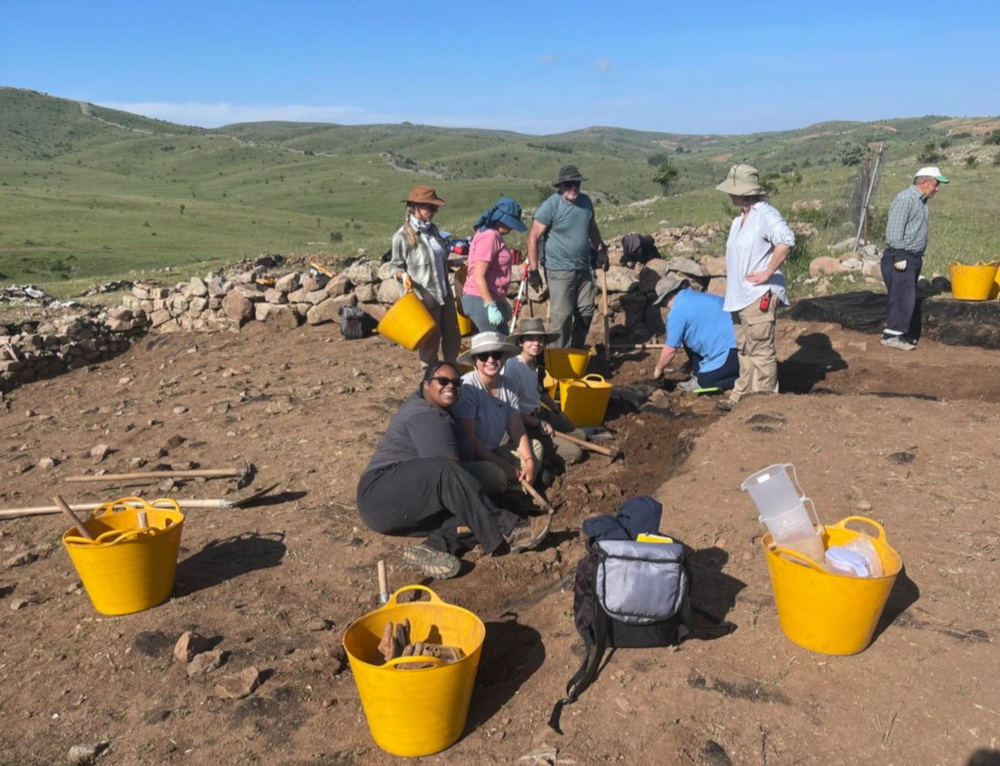
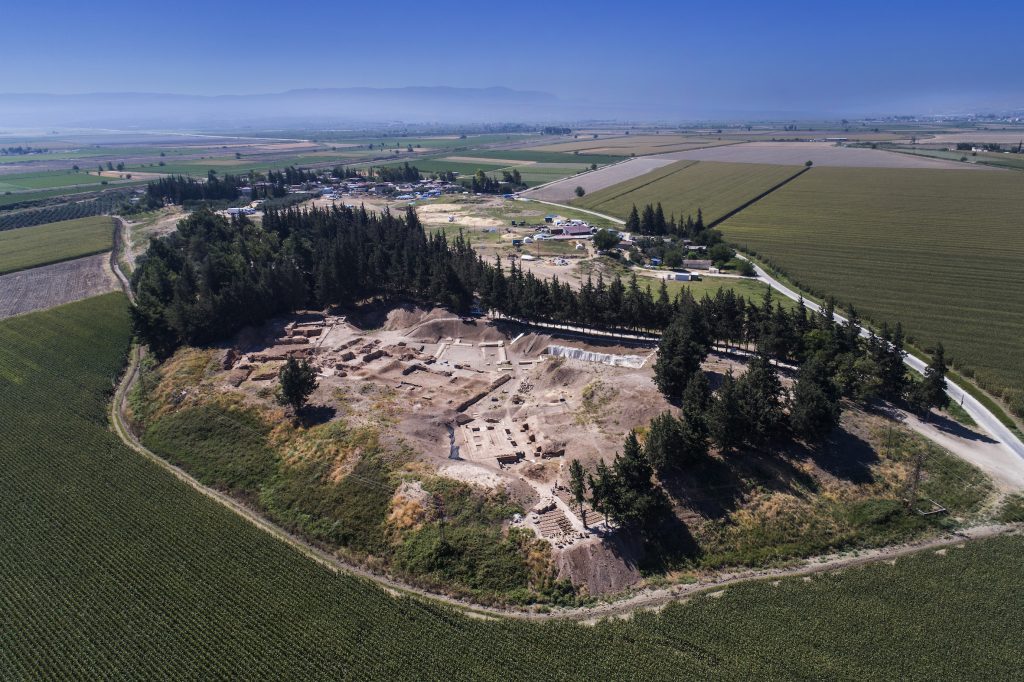
Kerkenes is an ancient Iron Age site in Anatolia that has a unique past. It stood for only about 60 years before being burnt down by either the Lydian or Phrygian King. Luckily archaeological evidence shows that almost everyone made it out before the burning, and that it was burned to show dominance after taking over the area. Kerkenes stands on a mountain at anout 1500 meters high. It is surrounded by granite and bedrock, but under the surface, the 2500-year-old structures are waiting to be discovered by future archaeologists.

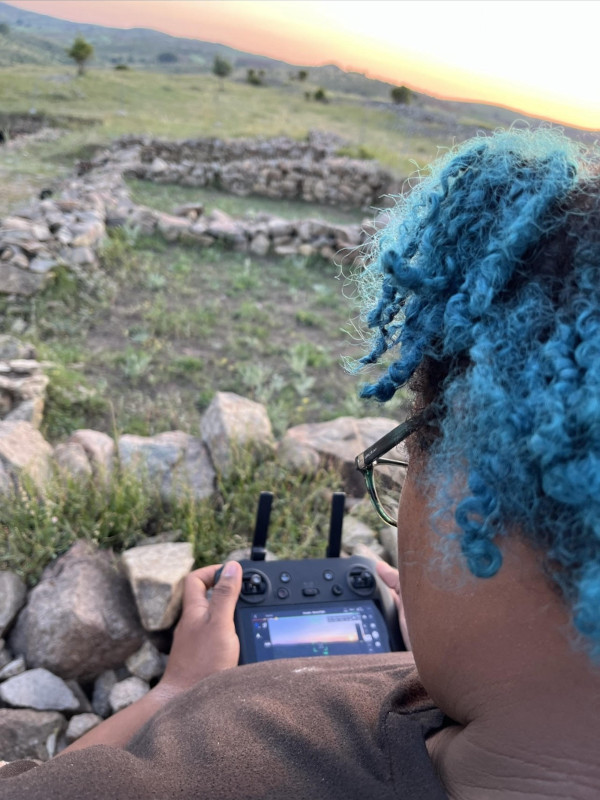
This year, four UCF students joined the Kerkenes Project on May 18th, 2023. We started by conducting an electrical resistance survey where probes eject an electrical current into the ground and record the amount of time it takes for the current to come back. The change in time helps to create a picture of what is underground. In order to establish where to do electrical resistance survey, we also conducted a total station survey to map the above-ground areas.

A few weeks later, we commenced excavation in Trench 45. This trench has been open for some time, and last year’s excavations revealed a building (Structure B) that could potentially be an ivory workshop. This was what we were excavating this year but in order to begin, we had to get rid of all the flora that grew on top of the geotextile (a fabric that protects what was exposed) and backfill. After a few days of this, we were able to see the walls that had been previously excavated, and we learned what collapsed architecture looks like. After getting the go ahead, these walls were removed down to the first course. Once we knew what we were working with, we were able to follow the walls to reveal the entire structure. When this was revealed, things took a very non-traditional turn (at least as far as what I have been taught in my classes).
The area to be excavated was split into 32 squares with multiple people digging with pickaxes. My previous experience had taught me that traditional archaeology calls for excavating in 10cm increments while keeping the surface level, then collecting and dry sieving the dirt that comes out of the trenches. Since the sediments at Kerkenes are comprised of clay and become solid when dry, so the team excavated with pickaxes, collected the dirt in plastic bags, recorded the elevations with the total station, and then wet sieved the dirt using Hydra. This process entailed getting a bag of the collected dirt, placing it in a mesh crate, and washing away the small dirt particles, leaving behind any ivory, bone, or ceramic that were missed during the excavation process.

Things collected include bone, ivory, ceramic, and building materials with impressions on them. Ceramics were washed, labeled, and categorized by the students and volunteers while the other materials went to the registrar and conservator to be assigned ID numbers. After this, the items were photographed, conserved, 3D scanned, and put on shelves for later reference by specialists or the museum.

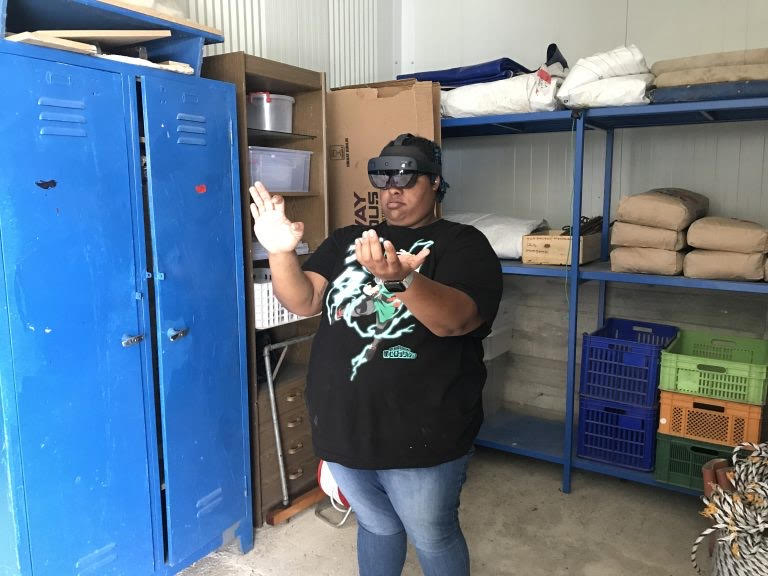
Some other other methods we used included 3D scanning and photogrammetry of the area, along with some of the artifacts. Photogrammetry meant going to site when the sun was not as bright and taking back-to-back photos of the installation, walls, and the trench itself. These photos will be uploaded to a program that turns them into a 3D image. The 3D scanning of the area works similarly except it is done in real time as opposed to having to wait to upload the images.

As the excavation season came to an end, we closed the unit and compiled all the materials and data. Some of the team went to the site to clean and backfill while others processed the ceramics, bone, ivory, etc. The season ended with a workers’ dinner, where we celebrated their efforts before everyone went on their way for new adventures.
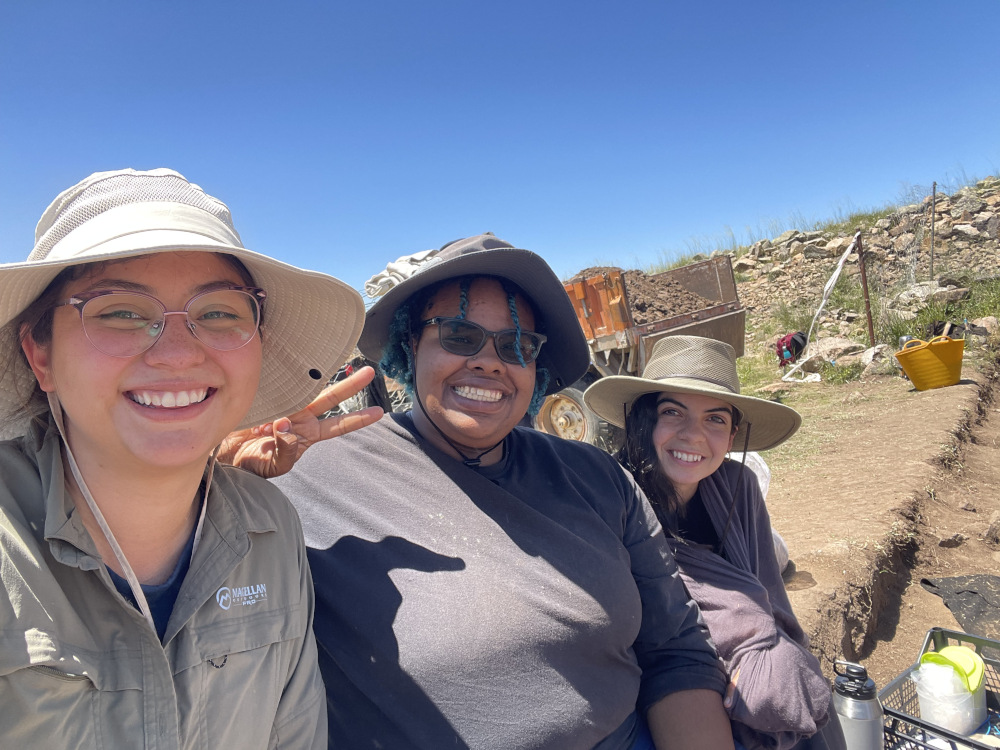
The fun part of excavations is not limited to the skills we learn and apply, however. There is so much that happens behind the scenes that affects not only the people, but the flow of the project itself. Being away from home for two months with strangers is hard enough, but being away from home in another country is even harder. The long workdays make it harder to keep in contact with loved ones on a consistent basis. While we all hope to get along, there are struggles and disagreements here and there. What I think is great about this experience is that it not only solidifies the relationship with your support group at home, but also challenges you as a person to make and keep up friendships while on the project. With people coming and going, there are so many opportunities to make friends and connections. We really do function like a family and share many great memories—like the workers singing and dancing, our six-minute rendition of Bohemian Rhapsody when the bosses were away (sorry you had to find out this way), bonfires, enjoying the scenery while eating meals, cookin, and baking for everyone, tears, talking about and resolving conflicts, trying new fruit, and just spending time with the new friends we’ve made.

I came to this project wanting to gain experience in archaeology and GIS and came out with so much more. I accomplished my goals and even was offered a job at two different CRM companies with many other interviews. I also made new friends that I believe will last a lifetime. My favorite part of this whole project was having the opportunity to meet all the students, volunteers, senior staff, and professors. Our backgrounds are so diverse, but Kerkenes bonds us all. I’m going to miss them so much! I hope to come back and make more memories with everyone!

Mireya Smith graduated in May of 2023 with a BA in Anthropology and an undergraduate certificate in GIS from the University of Central Florida. She was originally on a pre-med track until after Covid when she realized she wanted to do something she loved instead of something to make others happy. After studying abroad in Türkiye, she has been working in CRM. Mireya has completed projects in Mississippi, Texas, and Florida. She is so thankful for the grant! Without it, she would not have gained the archaeological experience and then in turn work opportunities.

Want to help more students and early career archaeologists get into the field? Donate to the cause today by selecting “Student Support” as your gift purpose!
Collections Fellowship Report: Helen Dixon

2023 Collections Fellowship Report: Exploring Punic Religious and Social Life in Coastal Tunisia

Helen Dixon, Assistant Professor of History at East Carolina University

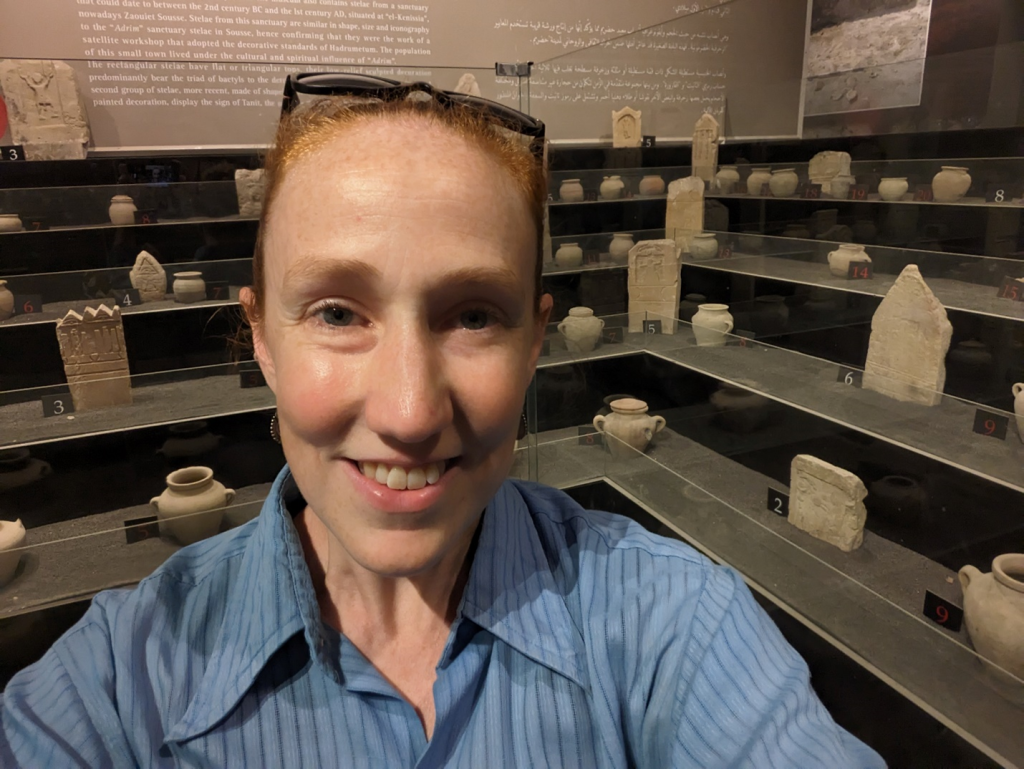
In the early centuries of the first millennium BCE, some Phoenicians left their homes along the Levantine coast, selected sites on nearly every Mediterranean island and coastline, and made a new life for themselves. They learned from local populations, adapting their religious and cultural practices to new environments. Carthage would become the most famous Phoenician diaspora community, but it was one of many Punic settlement sites in modern Tunisia. Thanks to the ASOR Collections Fellowship, I conducted research in archaeological collections from Utica, Carthage, Kerkouane, and Sousse that tells the stories of Levantine Phoenicians (and Sidonians in particular) as they joined existing regional networks and made their mark on coastal Tunisia.

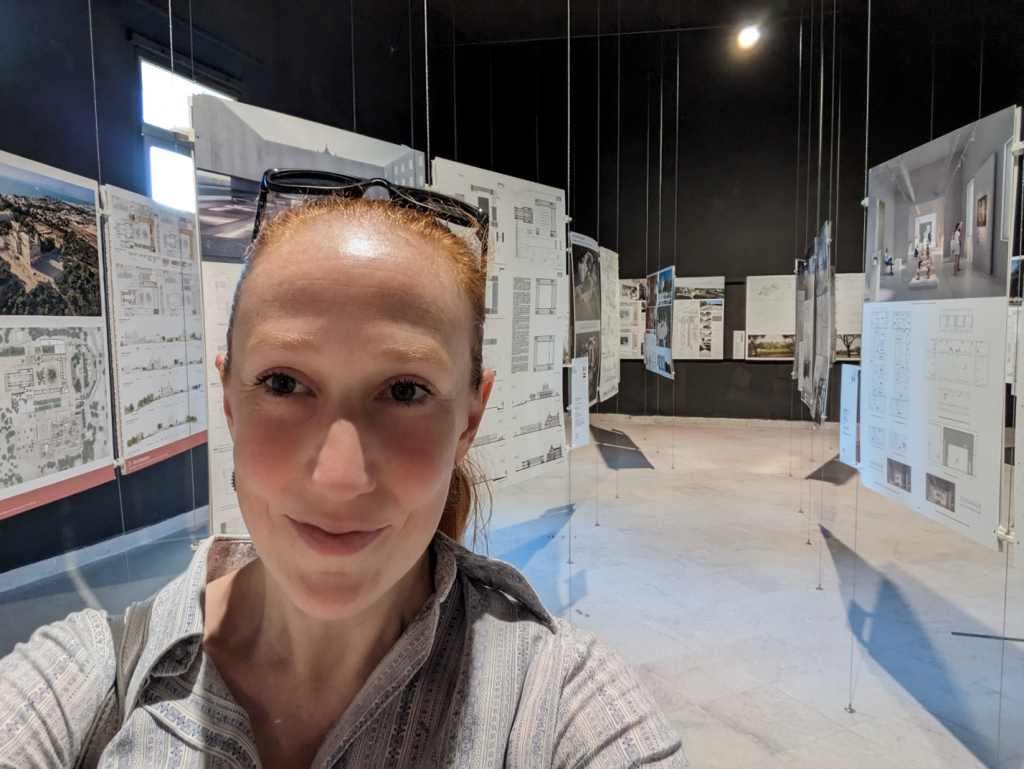
The author at the Sousse Archaeological Museum, featuring votive stelae and ceramic urns from the “Baal Hammon sanctuary” at Sousse (photo by H. Dixon).
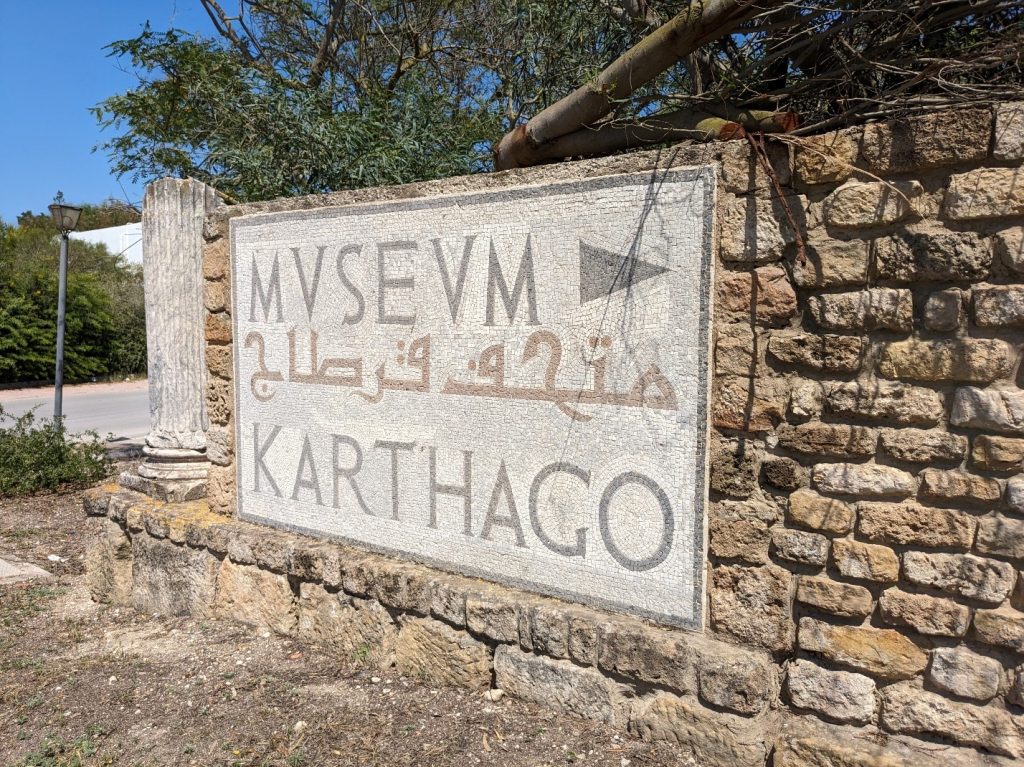
The mosaic sign at the base of the driveway to the Carthage National Museum (photo by H. Dixon).
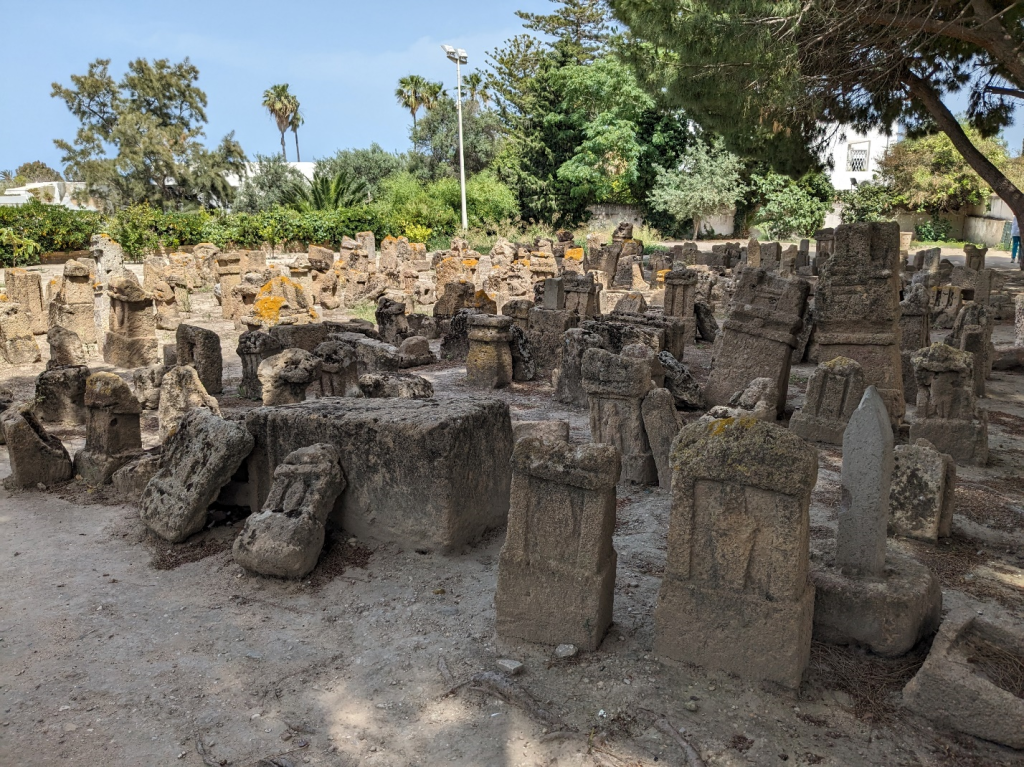
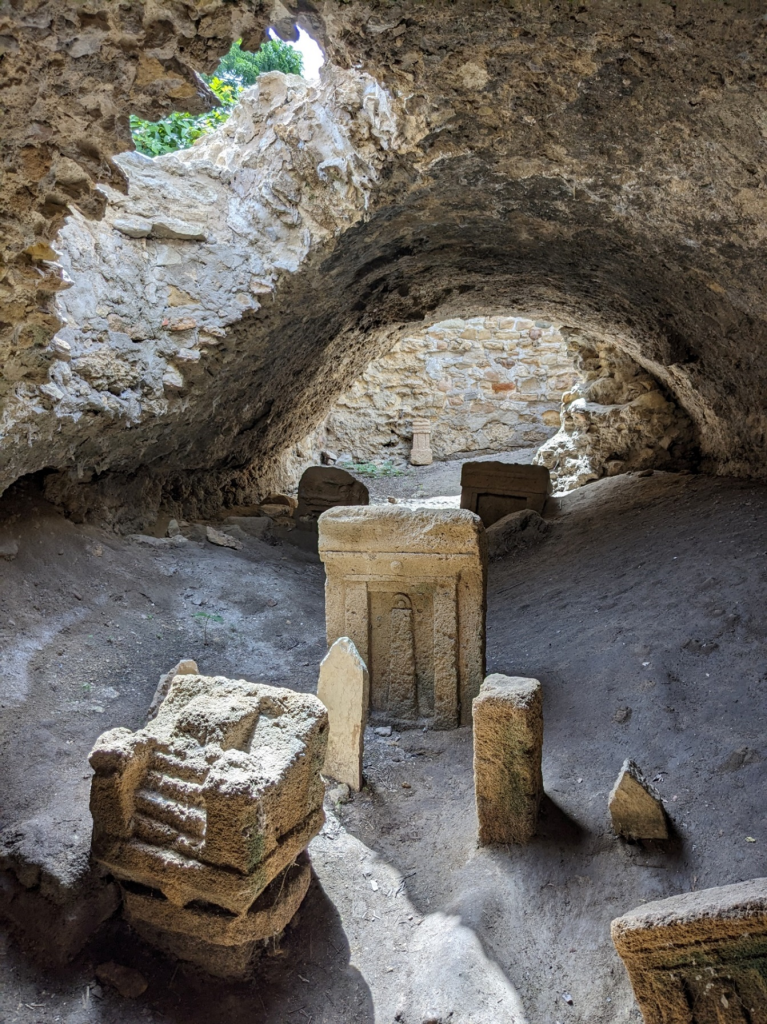
Votive stelae removed from excavations at the “Precinct of Tanit” in Carthage, currently on view at the archaeological site (photo by H. Dixon).

I had planned to explore two research projects during my ten days in residence in Tunis: first, to investigate ca. 70 Carthaginian votive stelae featuring images of ships known from the infant cremation site often referred to as a “tophet.” I was also on the lookout for contemporaneous maritime images from other religious or funerary contexts to better understand these votive images. The second project was for my current book manuscript, Death in Sidon: a study of nine Carthaginian funerary stelae commissioned by men and women “of Sidon” – settlers who still identified with their Levantine city of origin. Many (but not all!) of the stelae from both projects were published in Latin in the Corpus Inscriptionum Semiticarum (1881-1962), but the tiny thumbnail images were not sufficient to clearly make out the details of the iconography, and I was excited to see what traces of paint might remain.

Previewing proposed plans for the reinstalled, renovated Carthage National Museum to be completed in 2026 (photo by H. Dixon).
Votive stelae and a miniature stone throne from the “Precinct of Tanit” at Carthage, covered over by a Roman aqueduct channel (photo by H. Dixon).

When I arrived at the Institut National du Patrimoine (INP) offices in Tunis, I learned that the Carthage National Museum had just undertaken a new collections inventory, which would lead to improved photographs and perhaps a searchable catalogue in the future. Unfortunately for me, this meant specific research requests like the one I had made could not be accommodated, as the museum was mostly closed and staff time redirected. With the guidance and generosity of Dr. Imed Ben Jerbania, I was able to rethink my research plans. I focused on understanding 7th-4th c. BCE life in the Punic settlements along the Tunisian coast, visiting ongoing excavations at Utica and Carthage, archaeological parks throughout Carthage, Sousse, and Kerkouane (including both the Punic town and the necropolis), and archaeological collections in the Utica, Sousse, and Kerkouane Museums. This will allow me to offer a nuanced picture of these communities’ values, self-representation, and maritime orientation in future publications, while awaiting the reinstallation of the Carthage National Museum in 2026. I am grateful to the INP for the hospitality and assistance I received and to ASOR and East Carolina University for making these connections possible.

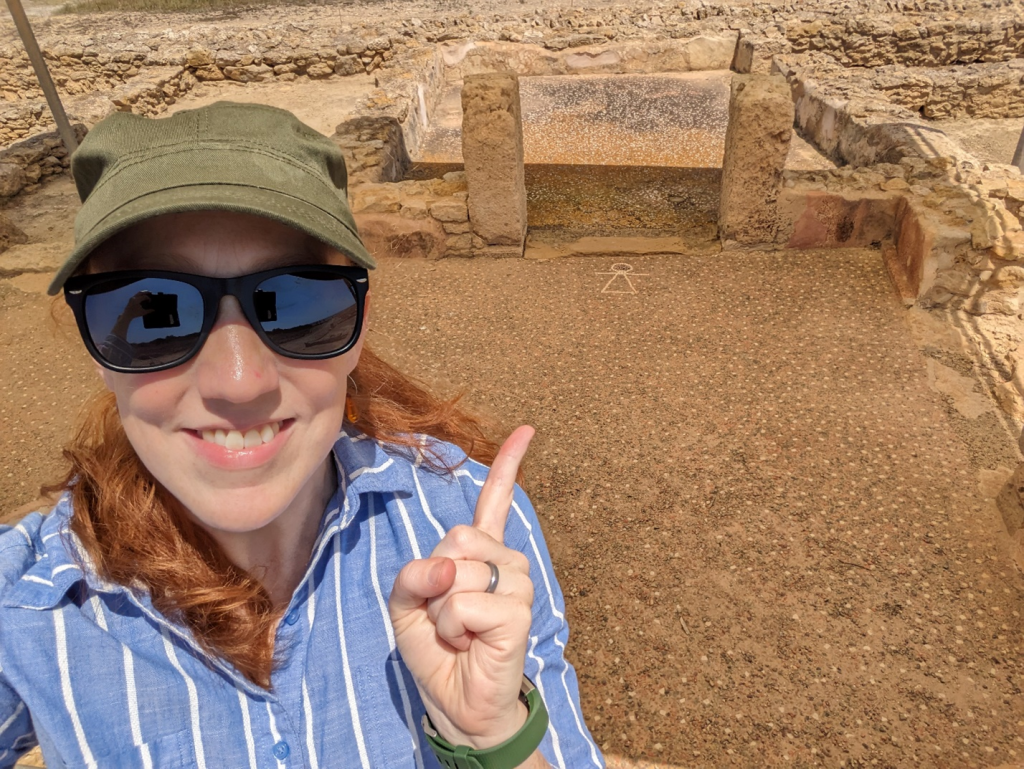
A visit to the mosaic “Sign of Tanit” in the floor of a private home (ca. 250 BCE), preserved at the incredible Kerkouane archaeological site (photo by H. Dixon).

Fieldwork Report: Sophie Vo

Geophysics in the Erbil Plain

Sophie Vo, 2023 Eric and Carol Meyers Fellowship Recipient
 

Thank you to ASOR and Dr. Eric Meyers and Dr. Carol Meyers for allowing me this opportunity to participate in my first excavation! Without the Fellowship, I would not have been able to excavate in the Kurdistan Region of Iraq.


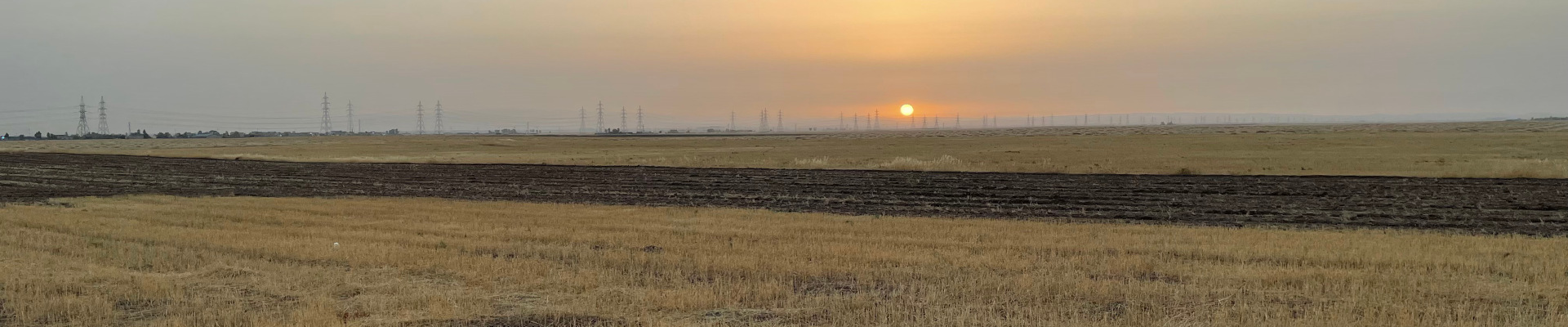
Fig. 1: Qach Rresh at sunrise. The slight outline of the mountains are visible in the distance. Photo courtesy of Sophie Vo.

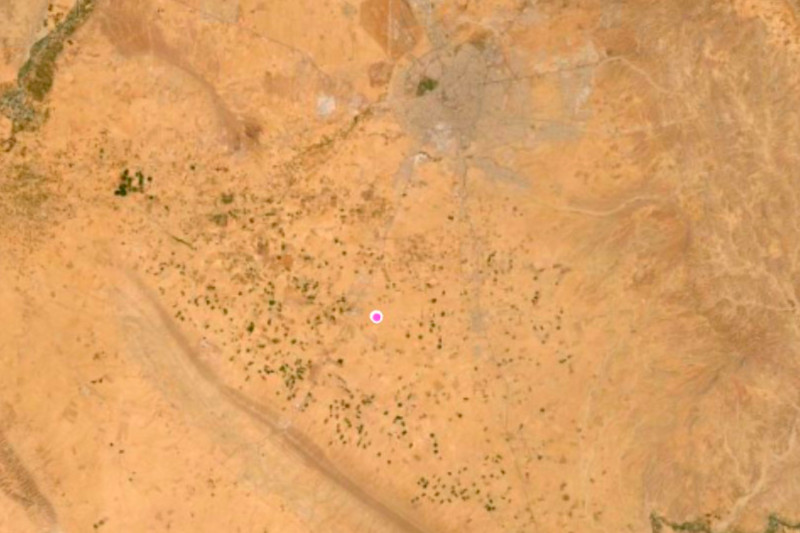
My mornings started at 3:30 am—I would wake up an hour before we departed to pack lunch for the team’s second breakfast or drink coffee and slowly transition into consciousness. At 4:30am, we would pile into our driver Bapir’s van. As the sun rose, we drove east from Ankawa, the Christian district of Erbil. Typically, we arrived at our site, Qach Rresh, at 5:30am. The sun was poking through the clouds and the air was still cool. Qach Rresh, located 14 km south of Erbil and 2 km north of Trpa Spiyan, is a site which is estimated to date to the 7th-4th centuries BCE (Iron Age II and III). This includes the height of the Assyrian Empire and its subsequent collapse, including periods during which the Erbil Plain might have been under Neo-Babylonian or Median control in the 6th century and Achaemenid Persian control thereafter. Later, the administrative buildings at Qach Rresh were apparently used as trash dumping grounds after the fall of the Assyrian Empire, giving us a huge amount of data about the 6th-4th centuries that is otherwise rare on the Erbil Plain.


Fig. 2: Image of the Emlid R2 GPS system

Upon arriving at Qach Rresh, I would help Glynnis, the project registrar, set up the Emlid R2 GPS system and lay lines for magnetometry. Magnetometry is an archaeological survey method that measures the Earth’s geomagnetic field at the nanotesla (nT) level with two sensors spaced 1 meter apart. Archaeology does not solely involve digging and excavating on site. We would excavate in the mornings and perform data analysis, ceramic cataloging, and zooarchaeological analysis in the afternoons.

To record points in X-Y space, Glynnis and I set up the Emlid R2 GPS system, one of two Reach R2 systems (Figure 2). This allowed us to measure points with sub 2cm accuracy. The base RS2 sits stationary while the rover RS2 is moved to mark points. We marked points using this rover so that we could lay transect ropes every two meters for the magnetometer machine reading spaced every 50 cm (Figure 3). Figure 3 demonstrates the typical set up for surveying Qach Rresh using magnetometry.


Fig. 3: Example of the magnetometry survey setup, with transect ropes set up every two meters for machine readings spaced every 50cm.

Afterward, Dr. Creamer showed me how to conduct magnetometry by carrying the Bartington 601-2 Gradiometer suspended from our backpack straps ~20cm from the ground surface. The left and right vertical sensors needed to be held parallel to each other and perpendicular to the ground. Transects were laid out at intervals of 2m in 20x20m squares (with machine readings at every 50cm),with corner stakes laid in by GPS (Emlid Reach R2). The machine took eight measurements at a pace of one meter per second walking speed. By the end of the day, we were all walking at a cadence of one meter per second and measuring distances by counting our steps. Each square took roughly 15-20 minutes to survey with the Bartington. On average, 5,600m2 (or, roughly half a hectare) was surveyed with the Bartington per day. In the lab, geophysics results were analyzed with the open source computer applicationArchaeoFusion. Magnetometry of the site revealed important features of the rural administrative center of the Neo-Assyrian Empire, such as an animal pen and other potential buildings for future field seasons.

One of my favorite aspects of the Rural Landscapes of Imperial Iron Age Mesopotamia project was the ability to get my feet wet in the various sub-specialties of archaeology. I worked with Laurel Poolman, a zooarchaeology student, who taught me how to analyze and identify unearthed animal remains from our site. I also was able to work with the Kurdish workers, Hallo and Tayib, who taught me how to quickly and efficiently dig trenches. It was extremely valuable learning numerous archaeological methods, from learning the basics—like writing lot numbers—to interpreting animal remains and discussing magnetometer readings. As my first excavation, I gained valuable archaeology and professional experience both in and out of the field. I was also afforded the opportunity to explore my research interests and make lifelong friends on the project. I am extremely grateful to have met everyone in Kurdistan and I can’t wait to return next season!

Figure 4: The location of Qach Rresh on the Erbil Plain.

Sophie Vo recently graduated Emory University in May 2023 with a BS in Biology and a BA in Ancient Mediterranean Studies. Having never excavated before, she was eager to learn about the animal remains on the site and learn alongside the project’s zooarchaeologist. Afterward, Sophie continued to explore her interest in archaeology at the Brooklyn Museum in Egyptian, Classical, and Near Eastern Art. There, she utilized her excavation experience to research and examine Egyptian archaeology reports for the objects housed in the collection


Want to learn more? Visit the Project’s Website or ASOR’s TikTok and Youtube to hear about Sophie Vo’s field experience!

Want to help more students and early career archaeologists get into the field? Donate to the cause today by selecting “Student Support” as your gift purpose!
Fieldwork Report: Megan Nishida

Kites in Context and Khirbat Iskandar 2023: Two Projects, Both Alike in Dignity

Megan Nishida, 2023 Strange-Midkiff Fieldwork Scholarship Recipient

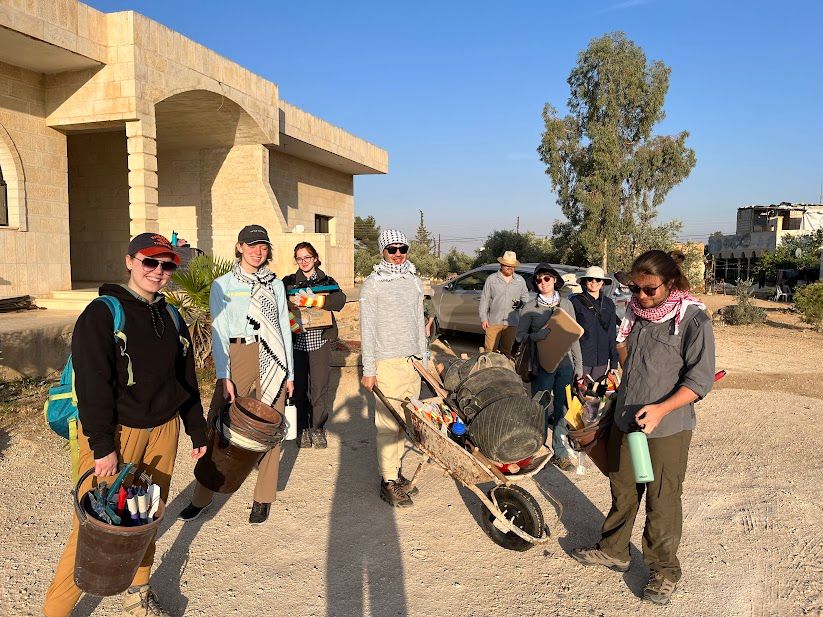
This year, thanks to the Strange-Midkiff Fieldwork Scholarship awarded by ASOR, I was able to participate in two projects in Jordan, Kites in Context and Khirbat Iskandar. This was my first field season in Jordan, so I was thankful to be able to experience two unique projects, in different landscapes and contexts, each with important contributions to the story of the human experience in Jordan.

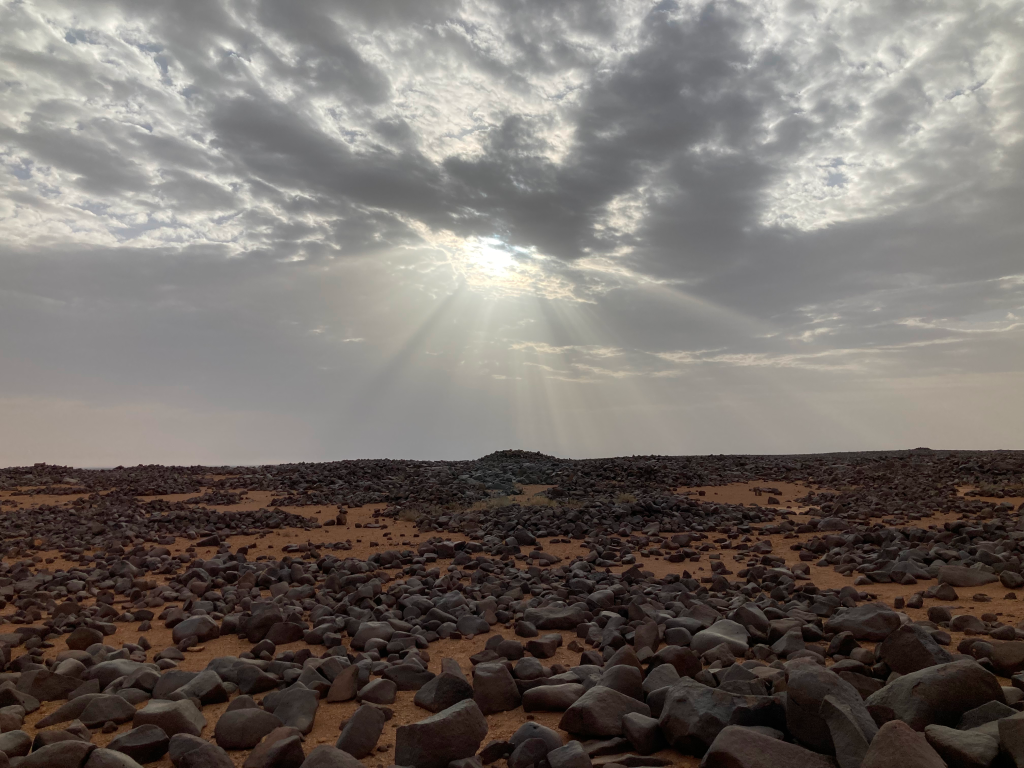
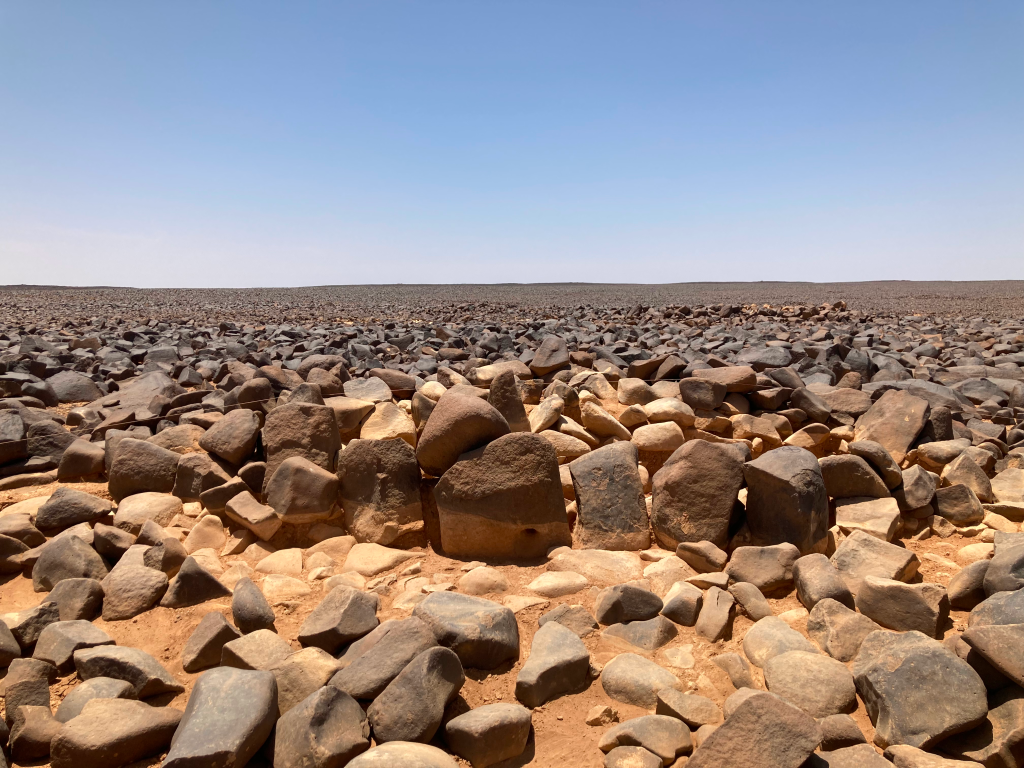
Photo 1: The intensity of the sun shining down onto the archaeological landscape in the black desert meant the group took a break at lunch time to escape the worst of the heat. Photo by Megan Nishida.

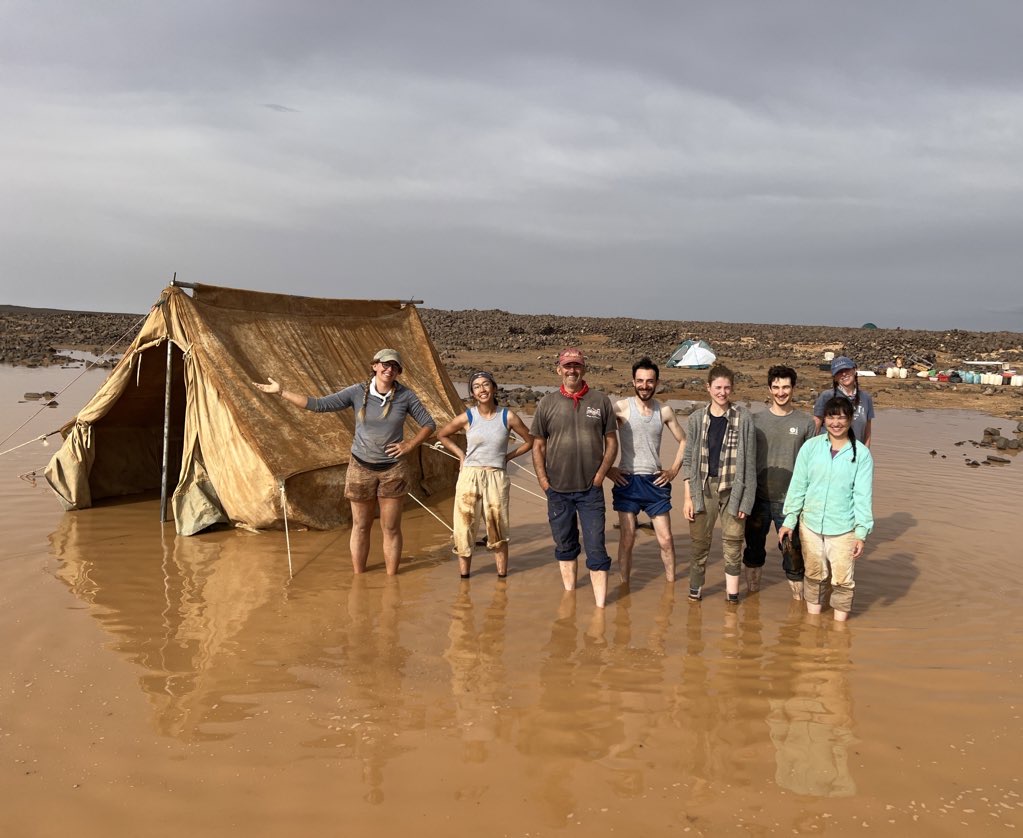
Kites in Contexts saw our team of nine drive five hours into the eastern desert – the badia – to investigate Neolithic hunting traps known as kites and the structures and landscapes associated with them. Before I left for Kites in Context, I had believed I would experience four weeks of beating sun, fierce winds, ancient landscapes, and relaxed camaraderie (Photo 1). Within the first two weeks, our camaraderie was fierce, cemented not because of the heat, but because of the unexpected rainstorm and subsequent flood that laid waste to our camp and our route out of the desert (Photo 2). Our camp’s location at the bottom of a catchment basin meant the two days of rain all eventually flowed into the wadi, or river, near where we made camp.

Although tumultuous, the weather did not dampen our spirits and our work continued after a couple days of drying out. All told, the team excavated two cells of a kite and two structures in the vicinity of the kite. It took a while to train my eye to understand the story written in the layers of stratigraphy we pulled back (Photo 3). Generations of communities inhabiting this landscape have continuously altered the landscape, each moving basalt stones to suit their needs for shelter or to control animals, in the process obfuscating the remnants of the more ancient past. It was a valuable experience in an archaeological context and landscape completely new to me. I am thankful to have had this absolutely unforgettable experience and to have forged such close bonds with the team.

Photo 2: The flood that followed after over two inches of rain fell in the desert meant we had to quickly, but successfully, evacuate the kitchen tent before our food stores were ruined. Photo by Dr. Chad Hill, Kites in Context.
Photo 3: The vagaries of time and preservation mean that the only thing left of the Neolithic communities who originally created these structures are the large stones they moved into place. Photo by Megan Nishida.

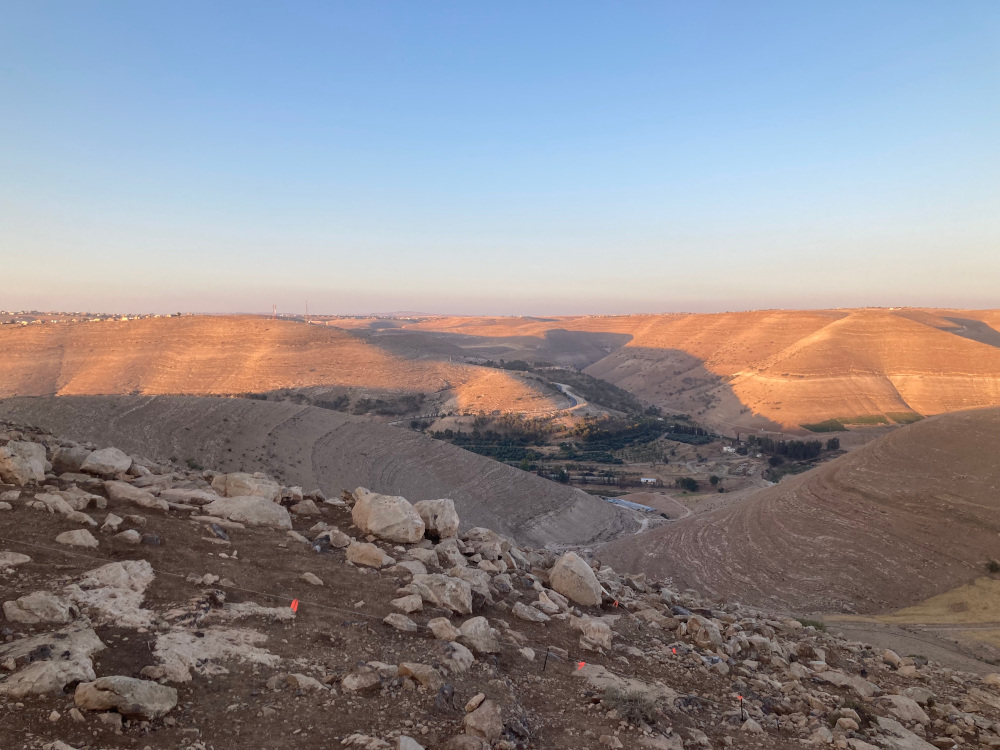
After Kites in Context concluded, I joined another team working at Khirbat Iskandar. Khirbat Iskandar is an Early Bronze Age III/IV tell site, notable for the continuity of urban identity into the EB IV, at a time when other communities were abandoning their urban centers. Unlike previous field seasons focused on the tell site, the goal of this season was to better understand the use of the landscape around the site, including around the large hill, Umm el-Idham, to the north of the site (Photo 4).

Photo 4: The first megalithic feature was excavated on the west side of Umm el-Idham and although we had to wake up early to beat the heat, we were treated to a beautiful sunrise everyday when we got to site.

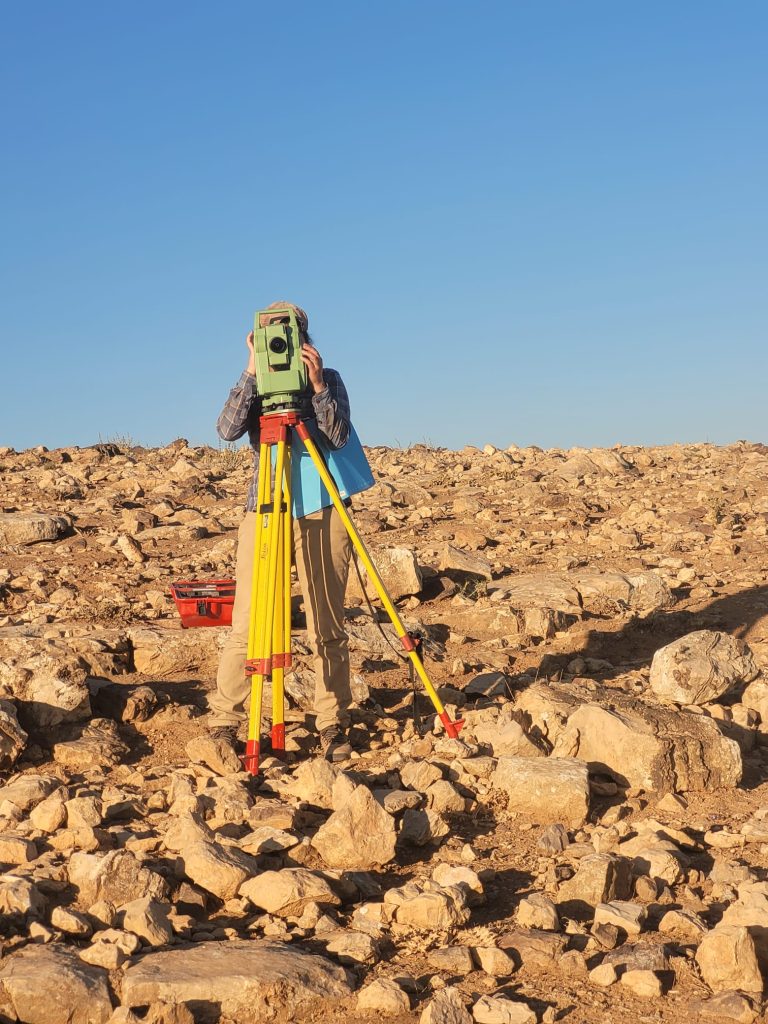
Over the course of this work, I helped conduct excavations at three megalithic features and record archaeological features identified through a pedestrian survey of Umm el-Idham (Photo 5). When not out in the field, the team worked to keep on top of the thousands of artifacts we identified and collected. As someone with a background in primarily North American archaeology, I was daunted at first by wholly different archaeological world I found myself in. However, I was lucky to be amongst a supportive team of experienced project directors, field supervisors, and fellow excavators, who were more than happy to share their hard-earned wisdom and insights into the archaeology of the Early Bronze Age. I am extremely thankful for the crash course in pottery – I gained valuable experience in identifying pottery typology and chronology and in drawing objects and pottery profiles.

Both projects were unique and rewarding experiences. I am thankful for the opportunity to have worked in Jordan and been able to get to know the country, its people, and its archaeology. I know what I learned on these projects will be extremely beneficial as I build a regional and chronological framework for my dissertation research on the EBA site of Bab adh-Dhra’. A most sincere thank you to Carolyn Midkiff Strange, ASOR, Drs. Yorke Rowan, Chad Hill, Suzanne Richard, Jesse Long, and Marta d’Andrea for allowing me to have an unforgettable summer participating on the Kites in Context and Khirbat Iskandar projects.

Photo 5: One of the new techniques I was able to learn this field season was how to operate a dumpy level and total station. Photo by Natalia Handziuk.

Megan Nishida is currently a second year PhD student at the University of Notre Dame. Her PhD research focuses on the mortuary practices at the Early Bronze Age site of the Bab adh-Dhra’.

Want to help more students and early career archaeologists get into the field? Donate to the cause today by selecting “Student Support” as your gift purpose!
2023 FOA Seminar in Raleigh-Durham

[vc_row fullwidth=”true” attached=”true” css=”.vc_custom_1496247803139{padding-top: 0px !important;padding-right: 0px !important;padding-bottom: 0px !important;padding-left: 0px !important;}”][vc_column][vc_single_image image=”90494″ img_size=”1900×400″ alignment=”center”][/vc_column][/vc_row][vc_row fullwidth=”true” css=”.vc_custom_1496682730308{padding-top: 10px !important;padding-right: 0px !important;padding-bottom: 0px !important;padding-left: 0px !important;}”][vc_column width=”1/12″ css=”.vc_custom_1496683820796{margin-right: 10px !important;}” offset=”vc_hidden-md vc_hidden-sm vc_hidden-xs”][vc_column_text]

 SHARE

[/vc_column_text][mk_image src=”http://www.asortest.org/wp-content/uploads/2017/01/social-fb-icon4.jpg” image_width=”42″ image_height=”42″ hover=”false” custom_url=”https://www.facebook.com/ASOResearch/” margin_bottom=”0″][mk_image src=”http://www.asortest.org/wp-content/uploads/2017/01/social-tw-icon4.jpg” image_width=”42″ image_height=”42″ hover=”false” custom_url=”https://twitter.com/ASOResearch?ref_src=twsrc%5Egoogle%7Ctwcamp%5Eserp%7Ctwgr%5Eauthor” margin_bottom=”0″][mk_image src=”http://www.asortest.org/wp-content/uploads/2017/01/social-in-icon4.jpg” image_width=”42″ image_height=”42″ hover=”false” custom_url=”https://www.linkedin.com/company/american-schools-of-oriental-research” margin_bottom=”0″][mk_image src=”http://www.asortest.org/wp-content/uploads/2017/01/social-ml-icon_7.jpg” image_width=”42″ image_height=”42″ hover=”false” custom_url=”mailto:info@asor.org” margin_bottom=”0″][mk_image src=”http://www.asortest.org/wp-content/uploads/2017/01/blog-icon3.jpg” image_width=”42″ image_height=”42″ hover=”false” custom_url=”http://asor.org/blog” margin_bottom=”0″][/vc_column][vc_column border_color=”rgba(255,255,255,0.01)” width=”1/6″ css=”.vc_custom_1496683923840{margin-right: 20px !important;border-left-width: 2px !important;padding-right: 20px !important;padding-left: 20px !important;border-left-color: #99422f !important;}”][mk_divider divider_color=”rgba(255,255,255,0.01)” thickness=”1″ margin_top=”3″ margin_bottom=”3″][vc_widget_sidebar sidebar_id=”ca-sidebar-39801″][/vc_column][vc_column border_color=”rgba(170,170,170,0.01)” width=”1/2″ css=”.vc_custom_1487276122024{margin-right: 10px !important;margin-bottom: 30px !important;border-right-width: 2px !important;border-bottom-width: 2px !important;padding-top: 30px !important;padding-right: 30px !important;padding-left: 20px !important;background-color: #ffffff !important;border-right-color: rgba(227,228,228,0.75) !important;border-bottom-color: rgba(227,228,228,0.75) !important;}”][vc_wp_text]

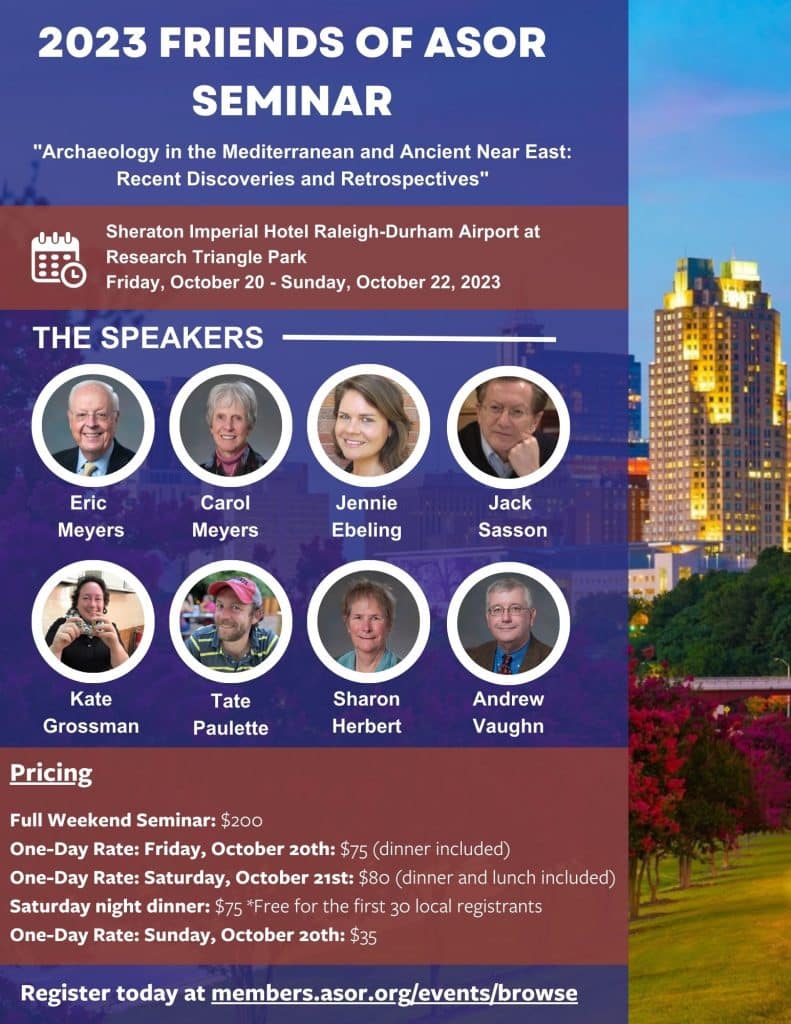
2023 FRIENDS OF ASOR SEMINAR

October 20-22, Raleigh-Durham, NC

Register today for “Archaeology in the Mediterranean and Ancient Near East: Recent Discoveries and Retrospectives” a Friends of ASOR Weekend Seminar in Raleigh-Durham, NC at the Sheraton Imperial Hotel Raleigh-Durham Airport at Research Triangle Park.

Join us in Raleigh this October for a weekend full of interactive lectures, or register for a One-Day pass! Registration for the entire weekend includes admission to an intimate dinner discussion on Friday evening, presentations all-day Saturday, a special dinner and plenary panel discussion on ASOR’s Cultural Heritage Initiates, and presentations on Sunday morning. There will be ample opportunities to engage informally with speakers and panelists. Registration for the entire weekend includes access to a discount on hotel room rates (cut-off date is September 29), dinner on 10/20, lunch on 10/21, and dinner on 10/21.

This FOA Seminar will include presentations from Eric Meyers, Carol Meyers, Jennie Ebeling, Kate Grossman, Tate Paulette, and Jack Sasson. Sharon Herbert and Andrew Vaughn will participate as panelists.[/vc_wp_text][vc_single_image image=”89693″ img_size=”300×400″ alignment=”center” onclick=”custom_link” img_link_target=”_blank” css=”.vc_custom_1692208204439{padding-right: 10px !important;}” link=”https://members.asor.org/integratedEvents/home/2023-FRIENDS-OF-ASOR-SEMINAR”][mk_padding_divider][vc_wp_text]

Pricing

(Full weekend seminar with all events included is $185, individual events priced below)[/vc_wp_text][mk_table]

Friday Oct. 20 Saturday Oct. 21 Sunday Oct. 22
Dinner and a private conversation with the seminar’s academic speakers: $75 One-day Registration (includes 4 presentations, lunch, and dinner): $80 One-day Registration: $35
Saturday night dinner: $75
*Free for the first 30 local registrants
Full Weekend Registration ($185) All of the above included All of the above included All of the above included

[/mk_table][mk_padding_divider][vc_wp_text]

Presentation Schedule


[/vc_wp_text][vc_row_inner][vc_column_inner][vc_column_text]

FRIDAY, OCTOBER 20

[/vc_column_text][/vc_column_inner][vc_column_inner][/vc_column_inner][/vc_row_inner][vc_row_inner][vc_column_inner width=”1/6″][vc_column_text]Dinner

[/vc_column_text][/vc_column_inner][vc_column_inner width=”5/6″][vc_column_text]Private conversation with the seminar’s academic speakers
[/vc_column_text][/vc_column_inner][/vc_row_inner][vc_row_inner][vc_column_inner][vc_column_text]

SATURDAY, OCTOBER 21

[/vc_column_text][/vc_column_inner][/vc_row_inner][vc_row_inner][vc_column_inner width=”1/6″][vc_column_text]Morning[/vc_column_text][/vc_column_inner][vc_column_inner width=”5/6″][vc_column_text]Naboth’s Vineyard in Context: Excavating an Iron Age Winery at Jezreel
Jennie Ebeling

The beverage described most frequently in the Hebrew Bible/Old Testament, wine played a major role in the diet, economy, religion, and culture of ancient Israel. A well-preserved winery complex excavated at Jezreel in Israel’s Galilee offers insights into the technology of wine production during the Iron Age (ca. 1200-586 BCE) and provides context for the dramatic story of Naboth’s vineyard in 1 Kings 21.

Food, Gender, and Power in Israelite Households
Carol Meyers

Nothing is more fundamental to human existence than food, and in traditional societies like ancient Israel, growing crops and raising animals and then transforming them into edible form occupied a significant part of the daily life of most people. The latter step–the production of edible products, that is, food­­–was largely the task of women in biblical antiquity. This presentation will look at some of the archaeological materials that women used in making food. Then it will go a step further and look at the social, religious, and other aspects of women’s food-production tasks. In so doing, it will reveal otherwise unnoticed aspects, such as personal and social power, of women’s lives in Israelite households.

[/vc_column_text][/vc_column_inner][/vc_row_inner][vc_row_inner][vc_column_inner][vc_column_text]Lunch[/vc_column_text][/vc_column_inner][/vc_row_inner][vc_row_inner][vc_column_inner width=”1/6″][vc_column_text]Afternoon[/vc_column_text][/vc_column_inner][vc_column_inner width=”5/6″][vc_column_text]Tales the Animals Tell: Zooarchaeology and the Multispecies Communities of the Ancient Near East
Kate Grossman

The cities, towns, and countryside of the Near East were populated not just by humans, but also by the animals that lived, worked, and died alongside them. While we tend to think of animals primarily as a source of food and labor, new approaches to the study of human-animal interactions are foregrounding the ways that animals influenced human action and contributed to social life in the ancient world. Drawing on 15+ years of studying animal bones from archaeological sites in Syria, Iraq, Jordan, Egypt, and Cyprus, I will show how the zooarchaeological record provides surprising new insights into the multispecies communities of the ancient Near East.

Beer and Brewing in Ancient Mesopotamia
Tate Paulette

In ancient Mesopotamia, beer was produced on a massive scale and was consumed on a daily basis by people across the socio-economic spectrum. Beer was a gift from the gods, a marker of civilization, a dietary staple, a social lubricant, a ritual necessity, and a reason for celebration. It was consumed at feasts, festivals, and ritual ceremonies, but also at home, on the job, and in neighborhood taverns. It was produced by brewers working for the powerful palace and temple institutions and also by local tavern keepers and homebrewers. This lecture explores the archaeological, artistic, and written evidence for beer and brewing in Mesopotamia, as well as recent efforts to recreate Mesopotamian beer.

[/vc_column_text][/vc_column_inner][/vc_row_inner][vc_row_inner][vc_column_inner width=”1/6″][vc_column_text]Dinner
Plenary Panel
[/vc_column_text][/vc_column_inner][vc_column_inner width=”5/6″][vc_column_text]Cultural Heritage in the Age of Conflict: ASOR in North Africa
Andrew Vaughn, Sharon Herbert, Carol Meyers, Eric Meyers, Jack Sasson[/vc_column_text][/vc_column_inner][/vc_row_inner][vc_row_inner][vc_column_inner][vc_column_text]

SUNDAY, OCTOBER 22

[/vc_column_text][/vc_column_inner][/vc_row_inner][vc_row_inner][vc_column_inner width=”1/6″][vc_column_text]Morning[/vc_column_text][/vc_column_inner][vc_column_inner width=”5/6″][vc_column_text]Of Tombstones and Atlantis: Searching for a Lost Past in Tunis and Djerba
Jack Sasson

In Tunis and Djerba, Jack M. Sasson, a retired (UNC and Vanderbilt) Assyriologist and Biblical scholar, had glimpses of remnant communities that parallel those of his native Syria and Lebanon, alas now as submerged as Atlantis. In this informal talk, he will reflect on his personal experience of that world as evoked by his visit: Arab in culture, Jewish in religion, and French in outlook. Sasson will also report on a striking difference among those communities in their biographic use of tombstones.

Jesus in Galilee: An Archaeological Perspective
Eric Meyers

Recent archaeological discoveries in Galilee have shown beyond any shadow of a doubt that the region was overwhelmingly Jewish in the time of Jesus. There are only a handful of sites that may be identified as gentile or non-Jewish. In addition, the identification of many early synagogues from this period has allowed us to better understand that the multiple references in Josephus and the New Testament are to actually purpose-built structures, chief among them being Magdala. Together with the many stones vessels and ritual baths found, we may today conclude that most of these Jewish sites, which date to the early Roman period, indicate that Jews were practicing purity laws based on the Torah. Also, with little to no Greek attested in the epigraphic finds from this time, therefore, a much more nuanced and accurate picture of Jewish Galilee may be drawn in the most recent quest for the historical Jesus.

[/vc_column_text][/vc_column_inner][/vc_row_inner][mk_padding_divider][vc_row_inner][vc_column_inner][vc_single_image image=”91975″ img_size=”full” alignment=”center” onclick=”custom_link” img_link_target=”_blank” css=”.vc_custom_1695302848266{padding-right: 10px !important;}” link=”https://members.asor.org/integratedEvents/home/2023-FRIENDS-OF-ASOR-SEMINAR”][/vc_column_inner][/vc_row_inner][mk_padding_divider][vc_wp_text]Questions about registration? Please contact membership@asor.org or call 703-789-9230.[/vc_wp_text][mk_padding_divider][/vc_column][vc_column border_color=”rgba(170,170,170,0.01)” width=”1/6″ css=”.vc_custom_1496684098866{margin-right: 5px !important;margin-bottom: 20px !important;border-right-width: 2px !important;border-bottom-width: 2px !important;padding-top: 30px !important;padding-right: 10px !important;padding-left: 10px !important;background-color: #ffffff !important;border-right-color: rgba(227,228,228,0.75) !important;border-bottom-color: rgba(227,228,228,0.75) !important;}”][vc_wp_posts title=”BROWSE THE NEWS ARCHIVE” number=”4″][/vc_column][vc_column border_color=”rgba(170,170,170,0.01)” width=”1/6″ css=”.vc_custom_1496684008271{margin-right: 10px !important;margin-bottom: 30px !important;border-right-width: 2px !important;border-bottom-width: 2px !important;padding-top: 30px !important;padding-right: 20px !important;padding-left: 20px !important;background-color: #ffffff !important;border-right-color: rgba(227,228,228,0.75) !important;border-bottom-color: rgba(227,228,228,0.75) !important;}”][vc_column_text] [/vc_column_text][/vc_column][/vc_row]

Fieldwork Report: Thomas Barrett

Uncovering Untold “Vignettes” of History at Huqoq

Thomas Barrett, 2023 Katherine Barton Platt Fellowship Recipient

With special thanks to the Katherine Barton Platt Fellowship, I had the privilege of participating in the 2023 excavation season of the Huqoq Excavation Project, an archaeological excavation of a Late Roman period Jewish synagogue in the lower Galilee. This project was led by Jodi Magness of the University of North Carolina at Chapel Hill and marked their final excavation season at Huqoq.

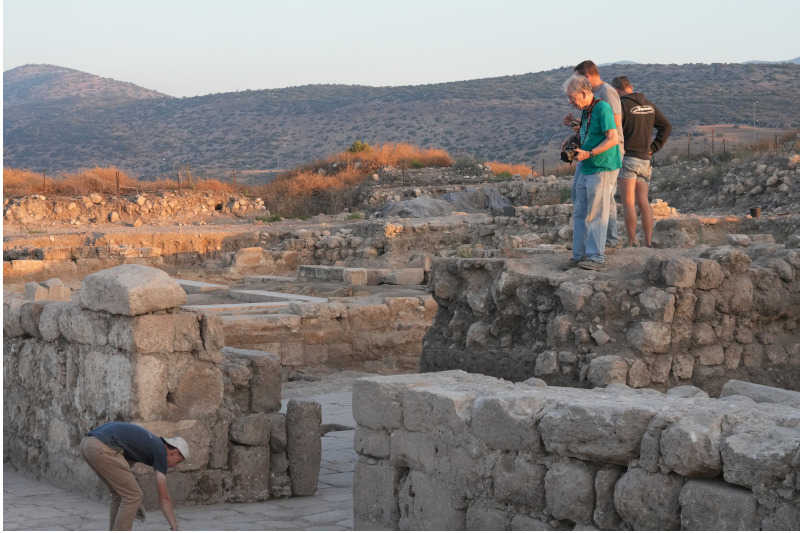
The author adjusting the metric stick and sign for Jim Haberman, project photographer before a photoshoot of an area. Photo courtesy of David Adel.


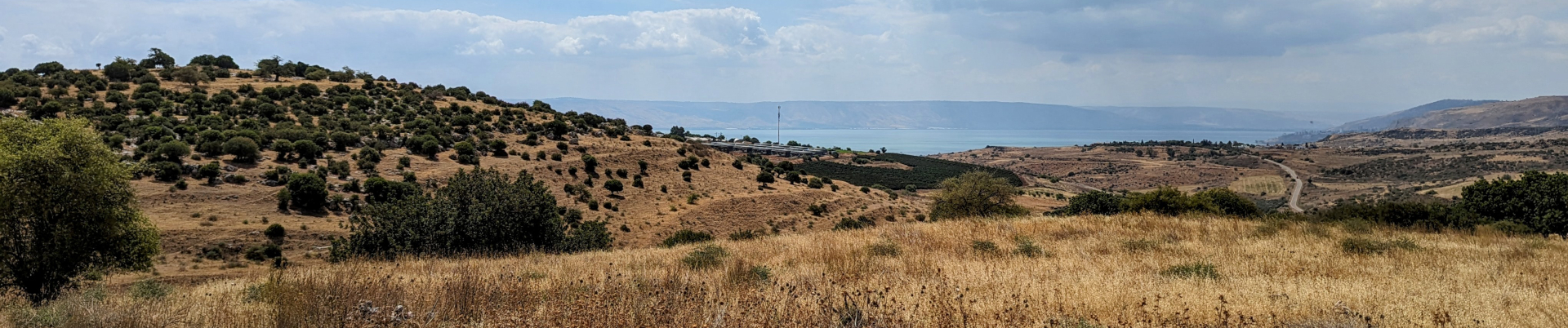
A view of the Sea of Galilee from the excavation site. Photo courtesy of the author.

This project was a singular experience because it allowed us to participate in a traditional archaeological field school while tailoring this phenomenal experience to our particular interests. I was able to approach the project from a unique angle—I am a Geography student at Brigham Young University with a minor in History. My primary area of interest lies in the religious history of Judaism and early Christianity. Thus, this opportunity presented itself as the perfect way for me to intimately study religious experience up close and in the Holy Land, not just in a book or in a class. It likewise allowed me to, at least for a moment, fulfill my childhood dream of one day being an archaeologist.

While my experience differed from the “archaeology” I was exposed to in popular media as a child, I came away from my experience at Huqoq having been taught numerous valuable lessons. Above all,our excavations at Huqoq led me to have a shift in my understanding of the importance of archaeology.

Prior to participating in the dig, I had a preconceived notion that archaeology was simply the method used to produce information required for scholars and archaeologists to draw conclusions about the past. In a way, it was the best way for them to preserve a small snapshot of the past, if you will. While that has an element of truth to it, I also began to understand that archaeology additionally provided the opportunity for us as scholars to capture a fresh perspective of the historical world. History is multi-faceted, and not a one-dimensional “snapshot,” after all. It is for this reason that archaeology is such an appropriate means to better understand the past, as it allows us to uncover additional “vignettes” of the past and explore another aspect of the historical narrative that deserves to be shared.

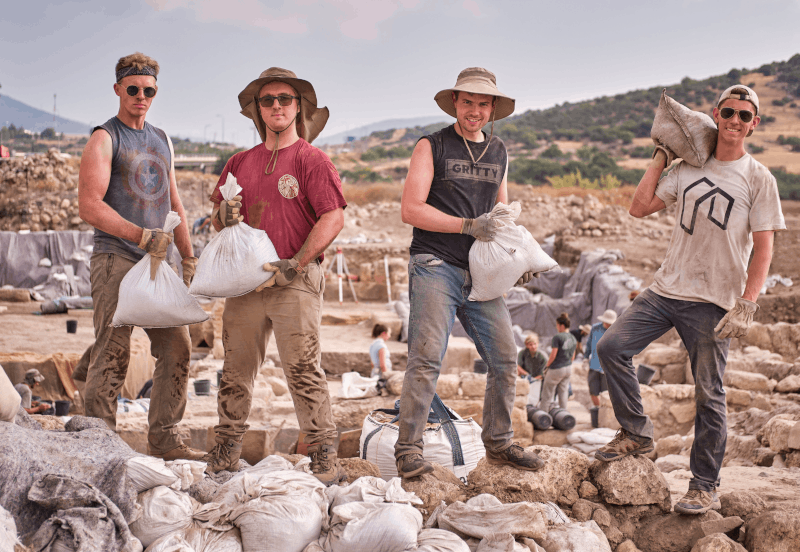
The author moving sandbags with other BYU students during the final week of excavation. Photo courtesy of Andrej Zeman.

This certainly was the case at Huqoq. Our efforts there centered on uncovering a Late Roman period Jewish synagogue similar to other Galilean-type synagogues, but one that stands out as drastically different and unique compared to other similar synagogues in the area. Not only is its adjacent courtyard unique due to its large size, but the actual synagogue floor is covered in exceptional mosaics depicting various biblical scenes. I was assigned to work in the “3000 East” area, where we were given the task of uncovering a large portion of the adjacent courtyard to determine its true dimensions. Over the course of the dig, all of us were surprised to come across finds that reshaped our initial conceptions of the courtyard, making our site at Huqoq even more exceptional than other synagogues constructed in the same period. While all these finds and details initially raised additional questions, over time we all began to realize how crucial they were and how they painted a new picture of Jewish worship in this particular synagogue. Indeed, our efforts over the course of the dig provided sufficient data to expose a new perspective on Jewish worship spaces and capture that previously untold “vignette” of history.

In short, it was the exceptional privilege for me to participate in the Huqoq Excavation Project for their final year, not only because it supplemented my academic studies and offered me a close-up view of the Holy Land, but also because it augmented my understanding of the significance of archaeology. For this reason, I am profoundly grateful for those individuals whose assistance made my participation in the Huqoq Excavation Project possible, as well as all the directors, team leaders, and fellow members who made it such an unforgettable and phenomenal experience.

Thomas Barrett is a Senior at Brigham Young University in Provo, Utah. He is currently studying Geography with an emphasis in Geospatial Science & Technology and is minoring in History, with an emphasis in Religious History.

Read more about the Huqoq Excavation Project here. 

Want to help more students and early career archaeologists get into the field? Donate to the cause today by selecting “Student Support” as your gift purpose!
Fieldwork Report: Hélène Maloigne

There is Mud EVERYWHERE!

Hélène Maloigne, 2023 Strange/Midkiff Families Fellowship Recipient

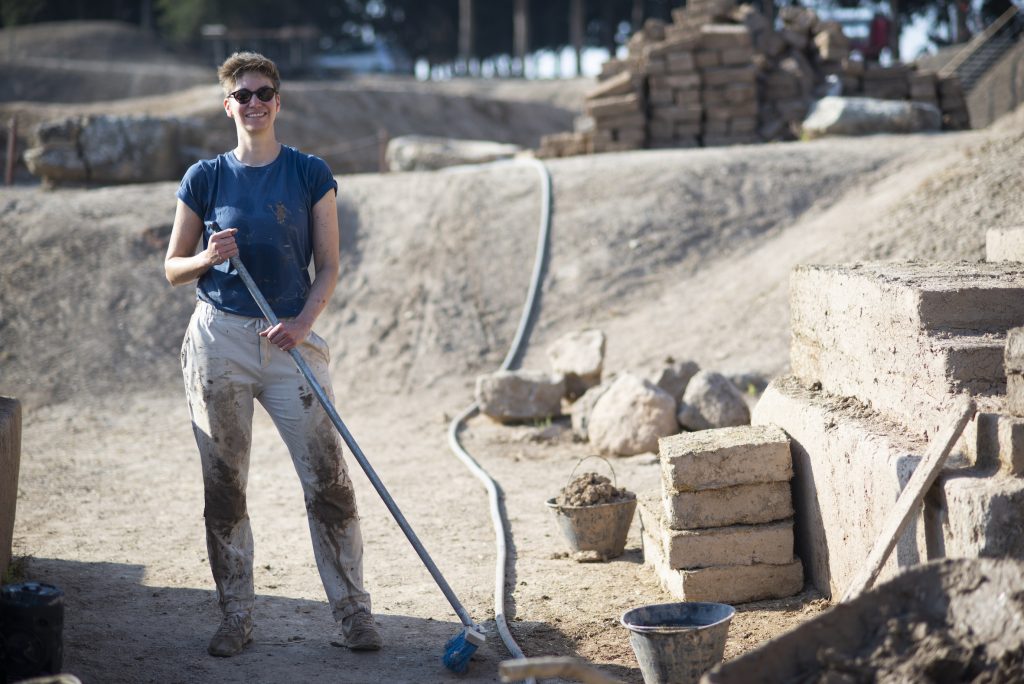
I have been working as object registrar and collections manager at Tell Atchana, Alalakh Excavations in Turkey since 2014. During excavation seasons my work usually consists of recording objects and samples on our database, organising our storage facility and making sure all objects are where they are supposed to be. When specialists come to visit, for example bioarchaeologists, zooarchaeologists, palaeobotanists, or our bead or lithics specialists, I help them find their objects or samples and advise them on recording methods according to our system. I also teach our international group of students object handling and recording skills. For the last ten years I have therefore spent most of my time during season at our research centre where we store our finds and where our offices are, and not in the field. This year I decided to venture out into the great unknown and spend one day a week in the field. Reader, let me tell you: It was muddy!

Figure 1: Tell Atchana, ancient Alalakh viewed from the northwest. In the foreground is the Level VII City Gate, where mudbricks are being dried in the sun. The palace and temple area excavated in the 1930s and 1940s is surrounded by trees, beyond which lie further excavation areas, and modern-day farms and villages.

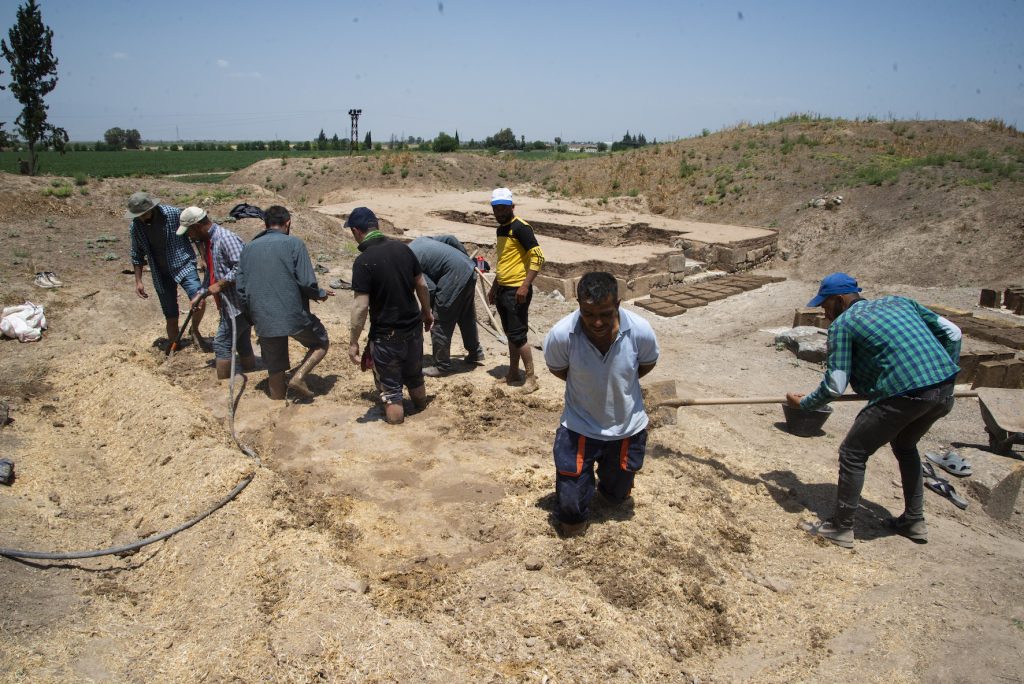
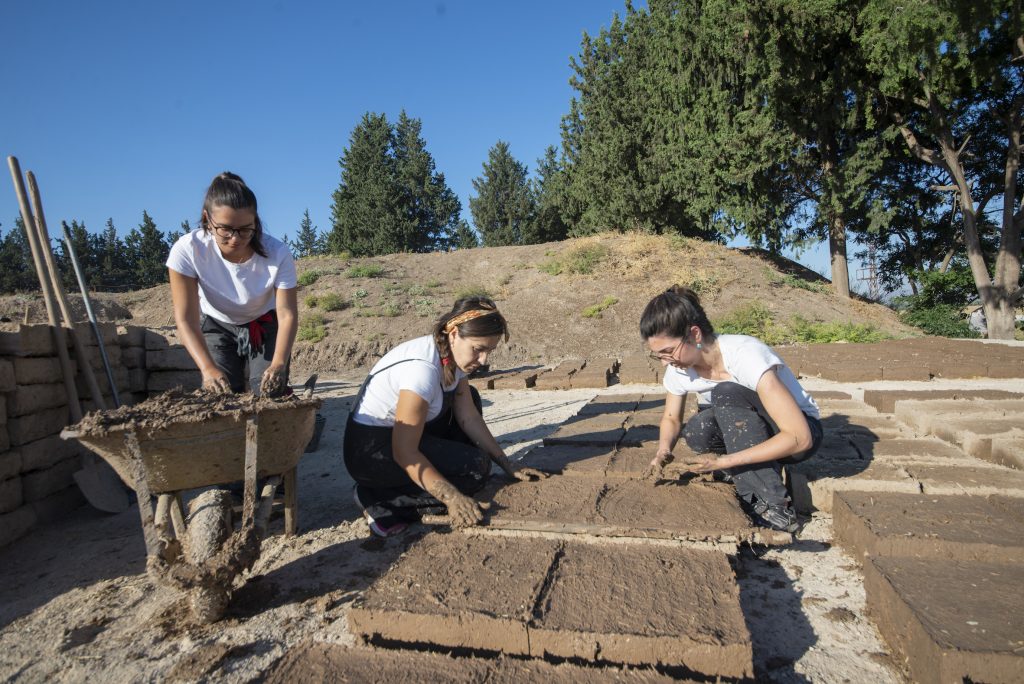
Over the last four years our team has produced nearly 4,000 mudbricks using a traditional recipe mixing straw, soil and water. As you can see (figure 2), this mixing is done by hand or rather by foot. The mixture is left to mature over night and the following day we make the bricks using custom-made metal frames that reproduce the shape and size of the bricks used in ancient Alalakh (figure 3).

Figure 2: The team preparing the mixture of soil, water, and straw.
Figure 3: Team members Defne Bilgili, Gamze Alkan, and Zeynep Türker make mudbricks in metal frames.

They are turned regularly to expose all sides to as much sunlight as possible for about a week. While the constant bending over and pushing the wheelbarrows and water buckets during mudbrick production was bad enough for the back, I had not been prepared for what followed.

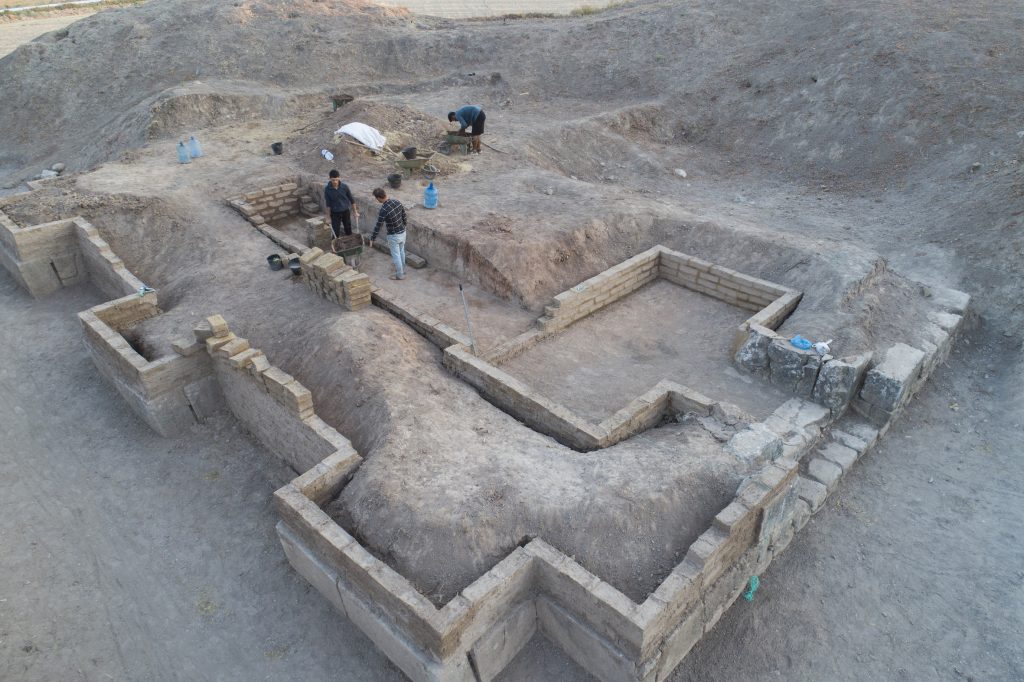
Each of these bricks weigh 30 kg. We use them to reinforce existing walls or surround fragile walls with an additional layer. Layers are joined by mortar, which is sometimes enforced with gravel or additional straw. We then seal the walls by additional mud plastering (figure 4).

Figure 4: The tripartite city gate during preservation. Level VII (Middle Bronze Age).

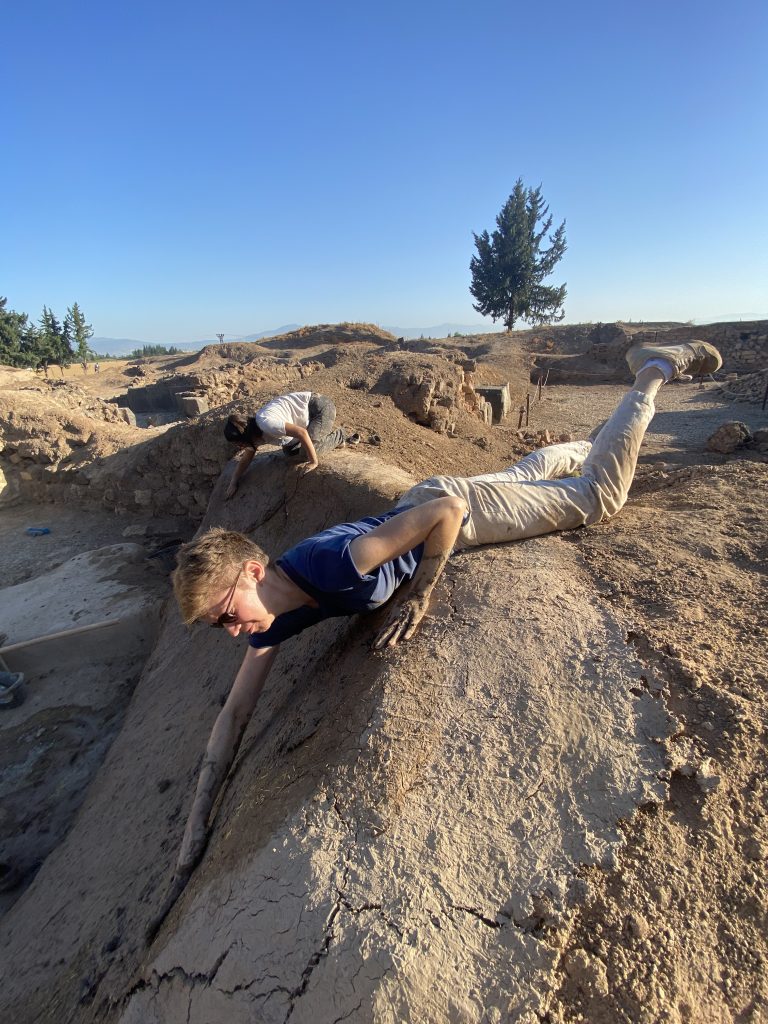
That meant: carry a brick (or in my case asking someone to help me carry it), placing it correctly, adding gravel or straw as temper (which of course also had to be brought in buckets or wheelbarrows), covering the row of bricks with mortar, repeat. From 5:30 in the morning until 1 pm crouching, sitting, getting up, carrying buckets, lifting bricks, pushing wheelbarrows, bending over, being upside down, getting into mud fights, wiping mud off your face, cursing the heat and the mud, and wishing it was lunch time so that you can go to your room and stretch out on your bed…and yet, enjoying every minute of this backbreaking work because you get to do it with your friends.

The author plastering a wall in the Level IV palace (Late Bronze Age).

One of my favourite things about archaeology is being part of a community forged through hard work, friendship, collegiality and mutual support. There is almost no better feeling than being covered in mud from head to toe, exhausted, hot, thirsty and hungry and yet somehow finding the energy for a race to the car for the best seat for the ride home while laughing all the way. Being part of this kind of family – a chosen family some might say – is a real privilege and one I look forward to every year.

Figure 6: The author at Tell Atchana after a looooooong day of laying mudbricks.

Hélène Maloigne is a lecturer in History at the School of Humanities & Social Sciences, University of Greenwich. They research the history of archaeology in the Middle East in the 19th/20th century and are Associate Editor for the Bulletin of the History of Archaeology and object registrar at Tell Atchana/Alalakh Excavations (Turkey).

All images © Tell Atchana, Alalakh Excavations Project. Murat Akar, 2023
www.alalakh.org
Instagram:@TellAtchana
https://helenemaloigne.wordpress.com/
Twitter: @HMaloigne

Want to help more students and early career archaeologists get into the field? Donate to the cause today by selecting “Student Support” as your gift purpose!
2023 FOA Seminar in Raleigh-Durham

2023 FRIENDS OF ASOR SEMINAR

October 20-22, Raleigh-Durham, NC

Register today for “Archaeology in the Mediterranean and Ancient Near East: Recent Discoveries and Retrospectives” a Friends of ASOR Weekend Seminar in Raleigh-Durham, NC at the Sheraton Imperial Hotel Raleigh-Durham Airport at Research Triangle Park.

Join us in Raleigh this October for a weekend full of interactive lectures, or register for a One-Day pass! Registration includes admission to presentations on Friday evening, all-day Saturday, and Sunday morning. There will be ample opportunities to engage informally with speakers and panelists. Registration also includes a discount on hotel room rates, dinner on 10/20, lunch on 10/21.

This FOA Seminar will include presentations from Eric Meyers, Carol Meyers, Jennie Ebeling, Kate Grossman, Tate Paulette, and Jack Sasson. Sharon Herbert and Andrew Vaughn will participate as panelists.


Register Now Button


Pricing

(Full weekend seminar with all events included is $200, individual events priced below)

 Friday Oct. 20Saturday Oct. 21Sunday Oct. 22
 Dinner and a private conversation with the seminar’s academic speakers: $75One-day Registration (includes 4 presentations, lunch, and dinner): $100One-day Registration: $50
  Saturday night dinner: $75
*Free for the first 30 local registrants
 
Full Weekend Registration ($200)All of the above includedAll of the above includedAll of the above included


Presentation Schedule

FRIDAY, OCTOBER 20


Dinner

Private conversation with the seminar’s academic speakers

SATURDAY, OCTOBER 21

Morning

Naboth’s Vineyard in Context: Excavating an Iron Age Winery at Jezreel
Jennie Ebeling

The beverage described most frequently in the Hebrew Bible/Old Testament, wine played a major role in the diet, economy, religion, and culture of ancient Israel. A well-preserved winery complex excavated at Jezreel in Israel’s Galilee offers insights into the technology of wine production during the Iron Age (ca. 1200-586 BCE) and provides context for the dramatic story of Naboth’s vineyard in 1 Kings 21.

Food, Gender, and Power in Israelite Households
Carol Meyers

Nothing is more fundamental to human existence than food, and in traditional societies like ancient Israel, growing crops and raising animals and then transforming them into edible form occupied a significant part of the daily life of most people. The latter step–the production of edible products, that is, food­­–was largely the task of women in biblical antiquity. This presentation will look at some of the archaeological materials that women used in making food. Then it will go a step further and look at the social, religious, and other aspects of women’s food-production tasks. In so doing, it will reveal otherwise unnoticed aspects, such as personal and social power, of women’s lives in Israelite households.

Lunch


Afternoon


Tales the Animals Tell: Zooarchaeology and the Multispecies Communities of the Ancient Near East
Kate Grossman

The cities, towns, and countryside of the Near East were populated not just by humans, but also by the animals that lived, worked, and died alongside them. While we tend to think of animals primarily as a source of food and labor, new approaches to the study of human-animal interactions are foregrounding the ways that animals influenced human action and contributed to social life in the ancient world. Drawing on 15+ years of studying animal bones from archaeological sites in Syria, Iraq, Jordan, Egypt, and Cyprus, I will show how the zooarchaeological record provides surprising new insights into the multispecies communities of the ancient Near East.

Beer and Brewing in Ancient Mesopotamia
Tate Paulette

In ancient Mesopotamia, beer was produced on a massive scale and was consumed on a daily basis by people across the socio-economic spectrum. Beer was a gift from the gods, a marker of civilization, a dietary staple, a social lubricant, a ritual necessity, and a reason for celebration. It was consumed at feasts, festivals, and ritual ceremonies, but also at home, on the job, and in neighborhood taverns. It was produced by brewers working for the powerful palace and temple institutions and also by local tavern keepers and homebrewers. This lecture explores the archaeological, artistic, and written evidence for beer and brewing in Mesopotamia, as well as recent efforts to recreate Mesopotamian beer.

Dinner

Plenary Panel


Cultural Heritage in the Age of Conflict: ASOR in North Africa – Andrew Vaughn, Sharon Herbert, Carol Meyers, Eric Meyers, Jack Sasson

SUNDAY, OCTOBER 22

Morning

Of Tombstones and Atlantis: Searching for a Lost Past in Tunis and Djerba
Jack Sasson

In Tunis and Djerba, Jack M. Sasson, a retired (UNC and Vanderbilt) Assyriologist and Biblical scholar, had glimpses of remnant communities that parallel those of his native Syria and Lebanon, alas now as submerged as Atlantis. In this informal talk, he will reflect on his personal experience of that world as evoked by his visit: Arab in culture, Jewish in religion, and French in outlook. Sasson will also report on a striking difference among those communities in their biographic use of tombstones.

Jesus in Galilee: An Archaeological Perspective
Eric Meyers

Recent archaeological discoveries in Galilee have shown beyond any shadow of a doubt that the region was overwhelmingly Jewish in the time of Jesus. There are only a handful of sites that may be identified as gentile or non-Jewish. In addition, the identification of many early synagogues from this period has allowed us to better understand that the multiple references in Josephus and the New Testament are to actually purpose-built structures, chief among them being Magdala. Together with the many stones vessels and ritual baths found, we may today conclude that most of these Jewish sites, which date to the early Roman period, indicate that Jews were practicing purity laws based on the Torah. Also, with little to no Greek attested in the epigraphic finds from this time, therefore, a much more nuanced and accurate picture of Jewish Galilee may be drawn in the most recent quest for the historical Jesus.

Questions about registration? Please contact membership@asor.org or call 703-789-9230.

Fieldwork Report: Sarah Foster

My Expectations of Desert Fieldwork vs. the Reality

Sarah Foster, 2022 Platt Scholarship

In May of 2022 I had the fortunate opportunity to be able to participate in fieldwork under the Umm al-Jimal Archaeological Project, taking part in excavations at their West Church. I shared this experience with fellow Calvin University undergraduate students, most of whom had little to no knowledge of the realities of archaeological fieldwork in a desert environment. Although I was passionate to finally do archaeology instead of reading about it. Yet, the classes I took in preparation led me to expect our work to look and be entirely different from what it actually was.

For instance, I was under the notion that the trench would be a perfect rectangle with no obstacles inhibiting my ability to trowel through the contexts and collect artifacts. We worked alongside the North end of the West Church, just outside the area of the apse in locations that were suspected to be rooms that were added later on in the church’s life. Before we had arrived, a local team had worked to clear these “rooms” of large rubble and stones that had been part of the infrastructure. Even when we started our fieldwork, we had to work around large stones that had been buried by sand over the ages since the building’s collapse. Our trench was therefore not a perfect square but instead a rubble-filled rectangle with areas that were never even excavated. From this I learned that while ideally, we’d like to dig up the entire area of the rooms to get a solid understanding of their layout and purpose, it just wasn’t physically possible. Instead, we strived to make the best of our trench by troweling in areas that were assumed to be most significant and drawing a top plan of the inaccessible parts to aide us in answering our research questions. 

Additionally, I had not expected fieldwork to take much of a toll on my body besides the typical soreness from physical labor. I discovered that while working in a desert environment, if you are not used to it, can worsen your allergies and the dust can cause irritation in your eyes, nose, and throat. As a result, many of us started taking allergy medicine, opted to use masks to ward off as much dust as possible, and drank a lot of tea to soothe our throats. Ideally, we would have been able to put in 100% effort of work each day, but due to our body’s response to the environment, there were those of us that had to sit out for a day to allow our bodies to recover. This taught me that when conducting fieldwork in the desert, I cannot expect my body to function as it normal does in the environment I live in. Therefore, before going anywhere, it is just as important to research the environment and its potential effects as it is to do background research on the history. 

Overall, conducting fieldwork at the West Church in Umm al-Jimal was a formative experience for me. I got to discover how archaeology is conducted in the field which I found was in practice a lot different than my expectations. This realization allowed me to comprehend that not only should archaeologists strive to achieve the ideals that are taught, but that they should in turn never expect them. Our rubble-filled trench in the deserts of northern Jordan provided difficulties, as do all other environments and sites when conducting fieldwork. The ideals that exist are expected in a perfect world that we will never find. Thus, it is important to have courage that you can overcome aspects of the obstacles of your environment but it is also important to take heart and embrace the differentness of your setting to reach the histories that lie within. 

Sarah Foster is a recent graduate of Calvin University, located in Grand Rapids, Michigan. She graduated magna cum laude, earning her B.A. degree in history alongside a minor in archaeology. 

Want to help more students and early career archaeologists get into the field? Donate to the cause today by selecting “Student Support” as your gift purpose!
Fieldwork Report: Anna Luurtsema

A Day in the Life on an Archaeological Survey Project

Anna Luurtsema, 2022 Shirlee Meyers-G. Ernest Wright Scholarship Recipient

This summer, I was the recipient of the Shirlee Meyers-G. Ernest Wright Scholarship for Fieldwork Participation. This scholarship made it possible for me to participate in an archaeological survey project called “A Multi-Survey Exploration of Residences near Tell el-Hesi, Israel.” The project utilized GPR, magnetometry, and pedestrian survey to better understand where people were living in the Bronze Age town surrounding Tell el-Hesi; our results will help inform the locations of our excavations next season. I primarily helped with the pedestrian survey. In the area surrounding the tell, we created a grid of five-by-five meter squares in order to systematically measure the densities of potsherds, lithics, and other artifacts. We had five minutes in each square to pick up as many artifacts as we could. Our findings were then recorded and photographed before being placed back in the square. Over the course of three weeks, we surveyed 600 squares. 

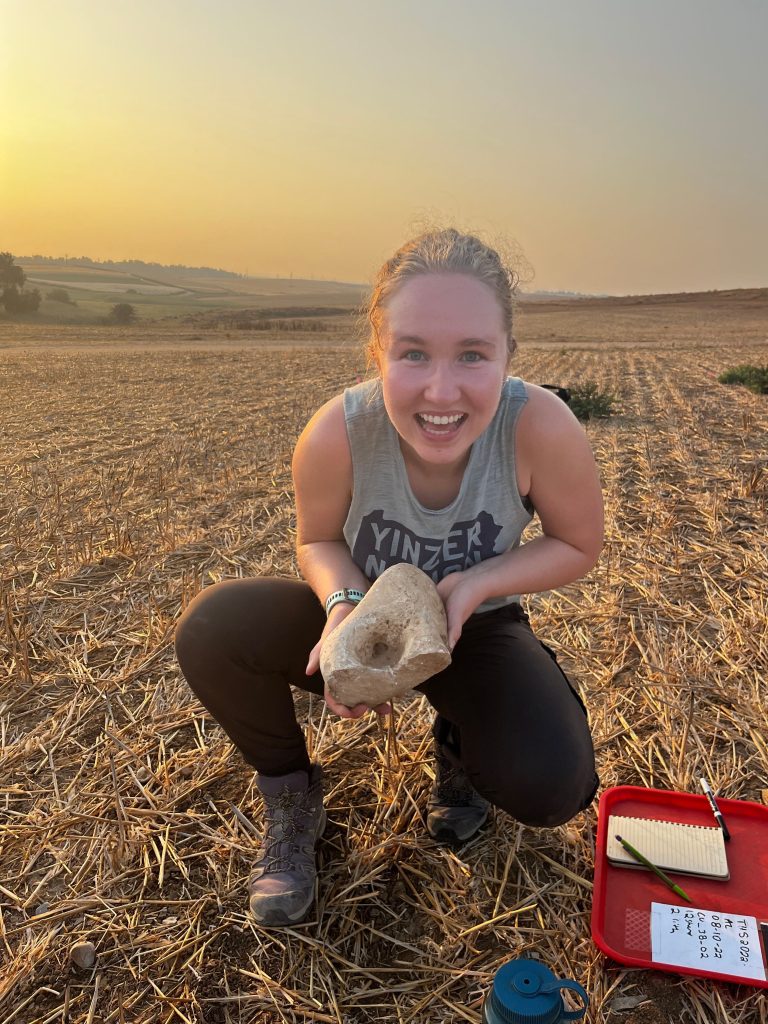
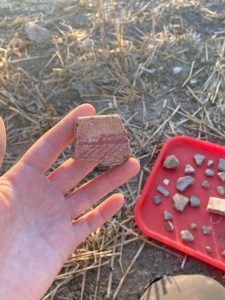
One of my coolest finds--a Bronze Age socket that held up the lintel in a door frame.

Upon arriving in Israel, we quickly fell into a routine. We stayed at a kibbutz, which is sort of like a gated community complete with a grocery store and a school. We woke up at 5:30 every morning as it was essential to get an early start to the day in order to beat the heat. For breakfast, I would usually have a pita and an apple with a mug of instant coffee. Then we piled into our trusty rental car we endearingly named Sandy—by the end of the project, the rear window was covered with dust. It was about a twenty minute drive from the kibbutz to the site on dirt roads; everyday, it seemed that we discovered new craters and bumps in the winding path. 

At the site, we started our survey. The three of us undergraduates took our positions in our own squares, which were marked by pink tape, while our supervisor timed us and documented our findings. For five minutes, we picked up potsherds, lithics, and other miscellaneous objects—glass, bone, coral. Sometimes I collected upwards of thirty sherds in a square, while other times I was lucky to find three. After each five-minute interval, in addition to showing our supervisor, we also recorded in our own notebooks the proportion of Bronze Age pottery and noted any other unusual finds, such as sickle blade fragments. 

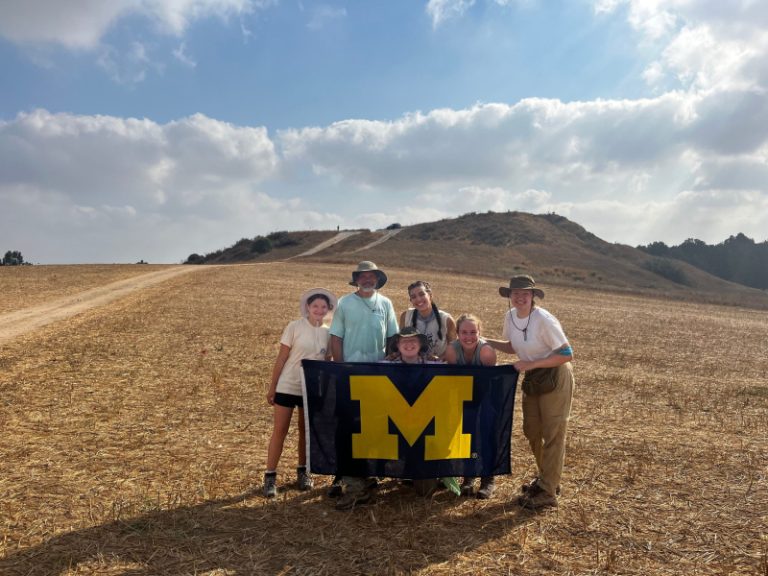
Our survey team, with Tell el-Hesi in the background.
A beautiful piece of Bronze Age pottery.

For the first hour or so, the tell blocked the sun from directly shining on us, so the air was almost cool. Gradually, it started to heat up, and eventually the black flies made their appearance. We kept surveying, swapping stories and playing music to distract ourselves from the heat and the perpetual buzzing of flies in our ears. It was sometimes difficult to stay motivated in the heat, but it helped me to look forward to the next milestone—200 squares, 300 squares, 400 squares—and to remember how much progress we had already made. 

Around 9 am, we took a break in the comfort of our air conditioned car to have a snack and reapply sunscreen. Then we continued for another three hours, or until we hit our quota of squares for the day. Our work day was finished by lunchtime, at which point the heat was almost unbearable. We always felt accomplished with our work as we drove back to the kibbutz. 

The landscape around Tell el-Hesi.

For lunch, we usually had pita bread and a variety of vegetables—cucumber, carrots, bell peppers—dipped in hummus. We made almost daily trips to the kibbutz grocery store for fruit; the peaches were the best I’ve ever had. In the afternoons, I helped organize boxes of artifacts from previous excavations at the site. Tell el-Hesi has been periodically excavated since the 19th century, though the boxes we were working with were from the 1970s and later. Some of the boxes were falling apart, so we moved the bags of artifacts to new ones; sometimes, the plastic bags were deteriorating as well. This task made me realize the importance of curation; it’s critical that we preserve artifacts for future generations. 

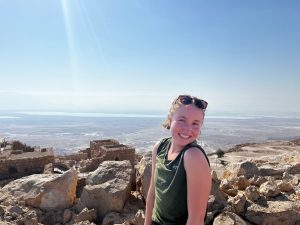
After boxing artifacts and hanging out around the kibbutz in the afternoon, one of our favorite spots to go for dinner was McDonald’s, funny enough. McDonald’s in Israel is very different from the US as it’s not really considered fast food. Our first time there, I ordered a hamburger and was shocked to discover that it was almost the size of my face. I really enjoyed our time outside the kibbutz, both at night and on the weekends, when we took trips to places like Masada, the Dead Sea, and Jerusalem. I loved experiencing the culture of Israel as I learned firsthand about its archaeology.

I look forward to continuing this project next summer, when we begin excavations. I’m sure it will be very exciting and rewarding to participate in an archaeological field project from the initial survey phase all the way through the excavation. Of course, I wouldn’t have been able to participate in this project without the help of the Shirlee Meyers-G. Ernest Wright Scholarship, and I am sincerely grateful for this experience.

Anna Luurtsema is a senior at the University of Michigan studying anthropological archaeology with a minor in Middle East Studies. Her research interests include zooarchaeology, human mobility, and the origin of agriculture, and she plans to apply to graduate school this fall.

Want to help more students and early career archaeologists get into the field? Donate to the cause today by selecting “Student Support” as your gift purpose!