[/vc_column_text][mk_divider][vc_wp_text]ASOR’s members come from all over the world. In 2020, more than 45% of ASOR Annual Meeting presenters were from countries other than the United States. We are committed to providing inclusive opportunities for all colleagues to share research, collaborate, and engage.
As part of our commitment to fostering inclusivity for all of our members, the 2021 Annual Meeting will have both in-person and virtual components. As long as it is safe and possible, the in-person component will take place in Chicago, November 17-20. The virtual component will take place online, December 9-12, and will feel much like the 2020 virtual meeting. Here some of the key features of the dual component Annual Meeting:[/vc_wp_text][vc_column_text]
Meeting registration includes both components.
Scholarships are available: Due to COVID-19, and thanks to our generous members, current ASOR members with a need may request a 25%, 50%, or full Annual Meeting scholarship. Email your scholarship request to programs@asor.org before you purchase registration.
In-person papers will be presented live during the sessions in Chicago.
Virtual paper presentations will be recorded and uploaded to ASOR’s virtual platform in November.
Many sessions and workshops are being hosted as part of both components.
A member may present the same paper both in-person and online and this will count as 1 program appearance.
Make sure to submit your abstract via both the In-Person AND Virtual proposal forms if you would like to present your paper as part of both components.
March 15 is the Call for Papers deadline to propose a paper or workshop presentation.
ASOR is watching the pandemic and following health and safety guidelines as we make plans to hold a safe in-person meeting. ASOR attendees will enjoy an iconic downtown location at the Hilton Chicago. The hotel overlooks Grant Park and Lake Michigan, and is located within walking distance of museums, restaurants, shopping, and many of Chicago’s top attractions. Read more about the hotel and Chicago here.
The academic program will include an opening plenary address, paper sessions, workshops, and posters. In addition, attendees will have access to exhibitors, receptions and networking opportunities.
Program participants may choose to share their work with those who are not able to attend in person by preparing the same paper or poster for presentation during the virtual component. ASOR is not planning to live stream or record presentations in Chicago, however, presenters may prepare a recording to upload to the virtual component platform.
The second component of ASOR’s 2021 Annual Meeting will take place online, December 9-12. As was the case for the 2020 Virtual Annual Meeting, the online session time will be used for discussion of presentations. Pre-recorded paper presentations and digital posters will be available to view on demand before the virtual component takes place. Those presenting a paper as part of the virtual component will need to pre-record their presentation and upload the .mp4 file to ASOR’s virtual platform in November. This format will allow scholars who presented in Chicago to share their work with virtual attendees, and vice versa.
A Note About Virtual Workshops: The format for workshops is different from a traditional paper session. Whereas paper presentations for the virtual component will be pre-recorded, workshops will take place live and do not include pre-recorded content or paper presentations. Workshop presentations are limited to 10 minutes maximum.
March 15 is the deadline to submit a paper or workshop presentation proposal for the virtual component: Virtual Abstract Submission Form (Online, December 9-12)[/vc_wp_text][/vc_column][vc_column border_color=”rgba(170,170,170,0.01)” width=”1/6″ css=”.vc_custom_1496684098866{margin-right: 5px !important;margin-bottom: 20px !important;border-right-width: 2px !important;border-bottom-width: 2px !important;padding-top: 30px !important;padding-right: 10px !important;padding-left: 10px !important;background-color: #ffffff !important;border-right-color: rgba(227,228,228,0.75) !important;border-bottom-color: rgba(227,228,228,0.75) !important;}”][vc_wp_posts title=”BROWSE THE NEWS ARCHIVE” number=”4″][/vc_column][vc_column border_color=”rgba(170,170,170,0.01)” width=”1/6″ css=”.vc_custom_1496684008271{margin-right: 10px !important;margin-bottom: 30px !important;border-right-width: 2px !important;border-bottom-width: 2px !important;padding-top: 30px !important;padding-right: 20px !important;padding-left: 20px !important;background-color: #ffffff !important;border-right-color: rgba(227,228,228,0.75) !important;border-bottom-color: rgba(227,228,228,0.75) !important;}”][vc_column_text]Tweets by ASOResearch [/vc_column_text][/vc_column][/vc_row]
Pp. 4–11: “Archaeogaming: When Archaeology and Video Games Come Together,” by Tine Rassalle
The connection between archaeology and video games might come as a surprise to some, especially to those who have never played a video game. However, games and “playing” as a field for serious scholarship and historical research have been explored since the 1930s, when Dutch cultural historian Johan Huizinga wrote that “play is older than culture.” In Homo Ludens, Huizinga makes the case that from human play comes the creation of cultures, the forming of meaning, and the learning and transmitting of knowledge. His “playing man” engages in game-like practices and rituals, in politics, and in war and violence, showing that play and culture exist side by side as a “twin-union,” but play came first (Huizinga).
ASOR Members with online access: navigate to the token link email sent to you (search for “token link” in inbox) before attempting to read this article. Once you have activated your member token, click here to access the above article on The University of Chicago Press Journals’ website.
Pp. 12–21: “Beyond Tomb and Relic: Anthropological and Pedagogical Approaches to Archaeogaming,” by Matthew Winter
The advent of the computer chip has radically altered human life at a global scale, and with increasing access to digital platforms it was inevitable that digitization would reshape popular culture. The video game industry is one of the fastest growing sectors in technological and entertainment industries, reaching an enormous audience. It is now estimated that some 2.5 billion people play games worldwide, with 211 million American adults, 52 percent of whom are college educated (see Rassalle in this issue) ().Figure 1. Infographic of gamer demographics. From Entertainment Software Association. Source: https://www.theesa.com/esa-research/2019-essential-facts-about-the-computer-and-video-game-industry/.
ASOR Members with online access: navigate to the token link email sent to you (search for “token link” in inbox) before attempting to read this article. Once you have activated your member token, click here to access the above article on The University of Chicago Press Journals’ website.
Pp. 22–31: “Formless and Void: The Emergence of Biblical Lands in Early Religious Video Games (1982–1991),” by V. Gonzalez and Tine Rassalle
This essay examines how digital signifiers across the first decade of religious video games (1982–1991) helped players to situate themselves in the biblical landscapes. Spanning eight gaming platforms, and many different genres, from puzzle games to adventure, 17 games depicting biblical lands were created in this time period, offering us a fresh perspective on the question of how the past is presented through video games.
ASOR Members with online access: navigate to the token link email sent to you search for “token link” in inbox) before attempting to read this article. Once you have activated your member token, click here to access the above article on The University of Chicago Press Journals’ website.
Pp. 32–43: “Might, Culture, and Archaeology in Sid Meier’s Civilization,” by Shannon Martino
That video games should be socially conscious, engaged with political discourse, or historically accurate may not immediately come to mind: Video games are entertainment. One popular game series, Sid Meier’s Civilization (Civ), however, has run into multiple issues regarding its representations of culture(s) and history, particularly of underrepresented societies. This is unsurprising given the premise of the game, where users create civilizations based upon predefined, somewhat historically informed, often unfamiliar historical cultures. Players are encouraged to learn about these from the quasi-academic, imbedded encyclopedia Civilopedia, from in-game historical allusions and scenarios, game units, buildings, and archaeology.
ASOR Members with online access: navigate to the token link email sent to you (search for “token link” in inbox) before attempting to read this article. Once you have activated your member token, click here to access the above article on The University of Chicago Press Journals’ website.
Pp. 44–51: “Persia’s Victory: The Mechanics of Orientalism in Sid Meier’s Civilization,” by Angus Mol and Aris Politopoulos
A large Persian army consisting of archers, siege equipment, and fearless Immortals is wedged in a narrow strip between the sea and the mountains. Beyond this pass lies the Greek heartland and the ancient cities of Corinth and Athens. All that stands between Persia and their conquest of Greek cities is a handful of charioteers and bowmen. The battle commences. Arrows cloud the sky but fail to stop the advance of the Immortals. The Greek charioteers, caught by surprise and without enough room to maneuver, are quickly defeated. Corinth cannot stand the siege and soon falls. With minimal losses to the Persian army and little time for the Greeks to regroup, the city of Athens is soon to follow. In a defeat without distinction, the capital of the Greek world is ceded to the Persians. A few years later, nothing but toponyms are left to remind one of the once thriving Greek civilization.
ASOR Members with online access: navigate to the token link email sent to you (search for “token link” in inbox) before attempting to read this article. Once you have activated your member token, click here to access the above article on The University of Chicago Press Journals’ website.
Pp. 52–61: “Virtual Ziggurats: Orientalist Views and Playful Spaces,” by Aris Politopoulos
With this quotation, this fifth-century BCE Greek historian provides us with a vivid description of Etemenanki, the ziggurat of Babylon. The ziggurat is one of the most enduring symbols of the ancient Near East: From paintings to movies to books to video games, versions of the stepped constructions emerge in popular culture and imagination all the way from classical Greece until today. One could even argue that the ziggurat is a transhistorical symbol (Crowther ); it has existed as a symbol not only produced by and related to the ancient Near East, but has transcended its original historical context and has acquired new meanings and images over time. In this article, I explore this transhistoricity of the ziggurat by examining it within western, modern, popular imagination, and particularly within the context of video games. For this, I take an art-historical approach, examining ziggurats from various games to create a ziggurat typology as portrayed in video games. In doing that, I explore how modern conceptions of the ziggurat affect and shape our understanding of the Near East, and how this can be tied to Edward Said’s concept of orientalism (see also Mol and Politopoulos in this issue). I conclude with a brief discussion on how we can reframe the ziggurat within popular culture in order to increase knowledge and awareness about the history and cultures of the ancient Near East today.
ASOR Members with online access: navigate to the token link email sent to you (search for “token link” in inbox) before attempting to read this article. Once you have activated your member token, click here to access the above article on The University of Chicago Press Journals’ website.
Pp. 62–70: “Building Kunulua Block by Block: Exploring Archaeology through Minecraft,” by Dominique Langis-Barsetti
The Computational Research on the Ancient Near East (CRANE) Project, directed by Tim Harrison of the University of Toronto, has united scholars from a variety of disciplines across several institutions around the globe since 2012. Originally focused on the Orontes Watershed of southern Turkey and northwestern Syria, the goal of the project is to provide researchers with a collaborative framework in which to leverage the full array of data produced by archaeology in order to shed light on the rise and development of complex societies in the region. The pooled resources and skills of collaborators have allowed the project to visualize and model connections between social, economic, and environmental factors across a range of temporal and regional scales (https://crane.utoronto.ca/).
ASOR Members with online access: navigate to the token link email sent to you (search for “token link” in inbox) before attempting to read this article. Once you have activated your member token, click here to access the above article on The University of Chicago Press Journals’ website.
Pp. 71–78: “Assassin’s Creed Origins: Video Games as Time Machines,” by Christian Casey
Ancient Egypt is far away. Very far away. For too many scholars who study Egypt professionally, it is far away in space. For all of us, it is far away in time—around two thousand years at the nearest point. This distance has consequences. We tend to view the world of ancient Egypt as we would a city on a mountain top: We observe the buildings as amorphous shapes, the people as bug-like creatures moving about at random, the events that shape their lives as momentary flurries of activity. Deliberate study provides an alternative view. Through the telescopic lens of scholarship, individual moments come into focus, are magnified, and become real, but the whole remains an incomplete sum of its disconnected parts. To use a more-familiar metaphor, we modern scholars see either the texture of the bark or the blue-gray smudge of a distant forest (). We have no choice but to miss the forest for the trees, we can never experience them together. Figure 1. Bayek and trusty pet lion in an idyllic Egyptian forest. The only proper way to experience a forest is to walk through one. Screenshot by the author.
ASOR Members with online access: navigate to the token link email sent to you (search for “token link” in inbox) before attempting to read this article. Once you have activated your member token, click here to access the above article on The University of Chicago Press Journals’ website.
Pp. 79–85: “Assassin’s Creed Origins Discovery Tour: A Behind the Scenes Experience,” by Perrine Poiron
ASOR Members with online access: navigate to the token link email sent to you (search for “token link” in inbox) before attempting to read this article. Once you have activated your member token, click here to access the above article on The University of Chicago Press Journals’ website.
Pp. 86–92: “Colossal Cave Archaeology: Epigraphy, FORTRAN Code-Artifacts, and the Ur-Game,” by Andrew Reinhard
As explained by Tine Rassalle in her article introducing this special issue, video games and archaeology intersect in many ways, all of which can be applied to the archaeology of the Near East. Other authors in this issue describe video games (and their underlying engines) as pedagogical tools, tools for digital visualizations and reconstructions, and offer windows into how archaeology and archaeologists are perceived by both designers and players, which can also inform them about different interpretations of the ancient Near East and its many cultures. In this article, however, I take a different approach, showing that one can take methods, tools, and theories used by more traditional archaeologists working on Near Eastern topics and apply them to work on digital artifacts from the late twentieth century (Reinhard : 49–130).
ASOR Members with online access: navigate to the token link email sent to you (search for “token link” in inbox) before attempting to read this article. Once you have activated your member token, click here to access the above article on The University of Chicago Press Journals’ website.
March Fellowship Madness 2021- Supporting Diversity, Equity, and Inclusion
Update March 10: $9,095 raised towards $20,000 goal[/vc_column_text][mk_divider][mk_skill_meter title=”Progress towards $20,000 March Goal” percent=”45″ title_color=”#000000″ progress_bar_color=”#27d2f4″ track_bar_color=”#b2b2b2″][mk_divider][vc_wp_text]
Since 2007, ASOR has awarded over 830 fellowships, grants, dig scholarships, and travel awards totaling more than $900,000. In 2021, ASOR plans to award at least 25 summer stipends, six to eight excavation project grants, two Mesopotamian Fellowships, and more than a dozen Annual Meeting Travel Scholarships.
Every year in March, we launch a targeted campaign called March Fellowship Madness to support scholarships. This March we are focusing our efforts on raising $20,000 for BIPOC scholarships. We have received a lead gift of $7,000, so we need $13,000 more to reach our goal.
Our $20,000 March goal is part of a larger campaign to support broader ASOR diversity initiatives. Thanks to a generous 2-for-1 challenge gift by ASOR Trustee Carolyn Midkiff Strange, every dollar contributed will be matched with two dollars. A contribution of $25 will be matched with $50; a gift of $100 will be matched with $200; a gift of $1,000 will be matched with $2,000; and so forth.
In addition to supporting BIPOC stipends and scholarships in 2021, ASOR will use these gifts to endow research scholarships, internships, and travel fellowships dedicated to BIPOC students and early career scholars. These fellowships and grants will be a foundation for future efforts, and will serve as a tangible sign of ASOR’s commitment to long-term change.
The $20,000 March Fellowship Madness goal will move ASOR much closer towards raising the $75,000 that is needed to fully “earn” this transformative $150,000 challenge gift. Extending social equity and equal opportunity throughout all sectors of our world is one of the foremost challenges facing us today. You can join ASOR in making this change happen. Consider a gift of any amount to help us earn this extraordinary challenge gift.
[/vc_wp_text][mk_divider][vc_wp_text]
Please choose “Diversity Initiatives” from the drop-down menu in the
online donation module to designate your gift to this 2-for-1 Challenge Campaign.
[/vc_column_text][mk_divider][vc_column_text]ASOR Photo Collection has been growing over the past couple of months! Take a look at the 550+ images in ASOR’s Photo Collection. Images are organized by site, country, time period, and other categories.
In addition to the Photo Collection, ASOR’s Online Resources now include a Map Collectionas well.
One of the areas where the Photo Collection has expanded is through the inclusion of photos from museums. ASOR members and friends have kindly shared images from their travels, and we have started compiling photos from a number of different museums. Our hope is keep adding new museum pages to the Photo Collection over the next couple of months.
If you have traveled to these museums or others and would like to share photos with your ASOR colleagues for use in lectures and presentations, please email Marta Ostovich (programs@asor.org).
Thank you to all who have shared photos from their travels and excavations!
Pp. 200–209: “Adorning and Protecting: Glass Intaglios and the Changing Character of Being a Sardian in the Early Imperial Period,” by Jane DeRose Evans
Glass intaglios found on a hilltop in Sardis, Turkey are dated by archaeological context to the Augustan period. Iconographic details and the state of the intaglios show that they were made in Sardis, very likely near where they were found. The group of about forty gems gives us insight into the changing sociocultural history of the Sardians at a time when they are adapting to new political realities; they also give us a glimpse of favored motifs of the lower classes, in contrast to the magistrates who paid for local coinages and other euergistic projects.[/vc_column_text][/vc_column_inner][/vc_row_inner][vc_column_text responsive_align=”left”]ASOR Members with online access: navigate to the token link email sent to you (search for “token link” in inbox) before attempting to read this article. Once you have activated your member token, click here to access the above article on The University of Chicago Press Journals’ website.[/vc_column_text][mk_divider][vc_row_inner][vc_column_inner width=”1/4″ css=”.vc_custom_1570041002103{padding-right: 10px !important;}”][mk_image src=”http://www.asor.org/wp-content/uploads/2021/01/Isin-Larsa-Monumental-Building-NEA-83.4-TOC.jpg” image_width=”200″ image_height=”500″ crop=”false” hover=”false” custom_url=”https://www.journals.uchicago.edu/doi/10.1086/708510″][/vc_column_inner][vc_column_inner width=”3/4″][vc_column_text]
Pp. 210–221: “Rediscovering the Heartland of Cities: Early Southern Mesopotamian States in Their Setting through New Field Research,” by Nicolò Marchetti andFederico Zaina
The 2016–2018 QADIS survey project is a joint Iraqi-Italian initiative aimed at achieving a new understanding of the processes that led to the formation and development of urban centers in central-southern Iraq from the fourth millennium BCE to modernity. The project applied an integrated methodology including a combined set of techniques, from remote sensing to aerial mapping, from archaeological surface collection to test soundings, from geoarchaeological investigation to the study of epigraphic materials. As a result, a more detailed reconstruction of the urban layout of several ancient Mesopotamian centers, as well as a comprehensive understanding of the cultural landscape of the region through time, is now possible.[/vc_column_text][/vc_column_inner][/vc_row_inner][vc_column_text responsive_align=”left”]ASOR Members with online access: navigate to the token link email sent to you (search for “token link” in inbox) before attempting to read this article. Once you have activated your member token, click here to access the above article on The University of Chicago Press Journals’ website.[/vc_column_text][mk_divider][vc_row_inner][vc_column_inner width=”1/4″ css=”.vc_custom_1570041002103{padding-right: 10px !important;}”][mk_image src=”http://www.asor.org/wp-content/uploads/2021/01/Trench-B-NEA-83.4-TOC.jpg” image_width=”200″ image_height=”500″ crop=”false” hover=”false” custom_url=”https://www.journals.uchicago.edu/doi/10.1086/710097″][/vc_column_inner][vc_column_inner width=”3/4″][vc_column_text]
Pp. 222–233: “A Newly Discovered Administrative Center of the Late Sasanian Empire: Tappe Bardnakoon, Farsan, Iran,” by Alireza Khosrowzadeh,Aliasghar Norouzi, andHossein Habibi
The two first seasons of excavation at the large settlement of Tappe Bardnakoon unearthed remarkable archaeological material, including huge architectural structures, a large corpus of 559 clay bullae and sealings, and collections of ceramics, gems, and metal and stone objects from the Sasanian period. The acquired data indicate that Bardnakoon is a hitherto unidentified administrative center of the late Sasanian Empire. The space excavated in Trench B possibly locates a repository at this center where the used sealings were kept. Given the location of the site in a region between different Sasanian provinces, its discovery offers new insights into the structural organization of the state. Further examination of the findings may cast light on the onomastica, either personal or place names, beliefs, and interregional interactions in a strategic yet largely overlooked region in the late-antique Central Zagros.[/vc_column_text][/vc_column_inner][/vc_row_inner][vc_column_text responsive_align=”left”]ASOR Members with online access: navigate to the token link email sent to you search for “token link” in inbox) before attempting to read this article. Once you have activated your member token, click here to access the above article on The University of Chicago Press Journals’ website.[/vc_column_text][mk_divider][vc_row_inner][vc_column_inner width=”1/4″ css=”.vc_custom_1570041002103{padding-right: 10px !important;}”][mk_image src=”http://www.asor.org/wp-content/uploads/2021/01/Cyclopean-Wall-Karum-NEA-83.4-TOC.jpg” image_width=”200″ image_height=”500″ crop=”false” hover=”false” custom_url=”https://www.journals.uchicago.edu/doi/10.1086/708506″ align=”center”][/vc_column_inner][vc_column_inner width=”3/4″][vc_column_text]Pp. 234–247: “New Evidence on Central Anatolia during the Second Millennium BCE Excavations at Büklükale,” by Kimiyoshi Matsumura
The circumstances behind the emergence of the Hittite kingdom remain one of the unsolved questions in Hittite history. In particular, the decades between the end of the kārum period and the establishment of Hattusa as the Hittite capital remain largely unknown. The site of Büklükale, a second-millennium BCE city situated on the banks of the Kızılırmak River in central Anatolia, is a promising candidate for filling this gap. Eleven years of research have revealed a large-scale, fortified city that was settled throughout the second millennium BCE. In the excavations on the citadel area, traces of intensive settlement in the Hittite period and a substantial building constructed using cyclopean masonry in the kārum period were found, indicating continued settlement into the Hittite period. Finds such as a Hattian foundation ceremony, a Hurrian glass bottle, and early Luwian hieroglyphs also reveal the multicultural character of the site. Its multicultural nature may be a clue to comprehending the emergence process of the Hittite Kingdom in Anatolia.[/vc_column_text][/vc_column_inner][/vc_row_inner][vc_column_text responsive_align=”left”]ASOR Members with online access: navigate to the token link email sent to you (search for “token link” in inbox) before attempting to read this article. Once you have activated your member token, click here to access the above article on The University of Chicago Press Journals’ website.[/vc_column_text][mk_divider][vc_row_inner][vc_column_inner width=”1/4″ css=”.vc_custom_1570041002103{padding-right: 10px !important;}”][mk_image src=”http://www.asor.org/wp-content/uploads/2021/01/Camper-Practices-Archaeological-Drawing-NEA-83.4-TOC.jpg” image_width=”200″ image_height=”500″ crop=”false” hover=”false” custom_url=”https://www.journals.uchicago.edu/doi/10.1086/708509″][/vc_column_inner][vc_column_inner width=”3/4″][vc_column_text]
Pp. 248–255: “Education beyond Preservation: An Archaeological Camp for Girls in Armenia,” by Lori Khatchadourian
Since the early 2000s, public archaeology has begun to ask how archaeological education can be unfettered from preservation and stewardship, instead responding to wider educational or social needs among the publics it is meant to serve. This new direction in archaeological education has yet to influence informal education programs offered in the context of research-based fieldwork, particularly in southwest Asia. In 2017 and 2018, the Aragats Foundation, a nonprofit organization affiliated with the American-Armenian research initiative known as Project ArAGATS, organized an archaeological camp for girls in the Republic of Armenia. This program was designed in response to social-justice concerns surrounding gender inequality in Armenia and disparities in opportunities between rich and poor, as well as urban and rural children. The camp harnessed the full research capacities of Project ArAGATS to provide girls with a multidimensional, hands-on learning experience that emphasized science and technology over heritage preservation.[/vc_column_text][/vc_column_inner][/vc_row_inner][vc_column_text responsive_align=”left”]ASOR Members with online access: navigate to the token link email sent to you (search for “token link” in inbox) before attempting to read this article. Once you have activated your member token, click here to access the above article on The University of Chicago Press Journals’ website.[/vc_column_text][mk_divider][vc_row_inner][vc_column_inner width=”1/4″ css=”.vc_custom_1570041002103{padding-right: 10px !important;}”][mk_image src=”http://www.asor.org/wp-content/uploads/2021/01/Amphoriskos-Flask-NEA-83.4-TOC.jpg” image_width=”200″ image_height=”500″ crop=”false” hover=”false” custom_url=”https://www.journals.uchicago.edu/doi/10.1086/710096″][/vc_column_inner][vc_column_inner width=”3/4″][vc_column_text]
Pp. 256–263: “Curating The World Between Empires: Art and Identity in the Ancient Middle East,” by Blair Fowlkes-Childs andMichael Seymour
The World between Empires was an international loan exhibition held at The Metropolitan Museum of Art from March 18 through June 23, 2019 that featured nearly 190 works of art from twenty museums in the Middle East, Europe, and the U.S. as well as from the Met’s collection. The exhibition covered the period when the Roman and Parthian Empires competed for control of the Middle East and its trade routes (ca. 100 B.C.–A.D. 250), and was focused on how the cultural, religious, and personal identities of people and communities in the region that formed the imperial border were expressed through art. The two curators discuss the curatorial process and why The World between Empires represented an exceptional opportunity both to disseminate recent scholarship and to contribute to research on the art, history, religions, and culture of the Middle East during the Roman and Parthian period. Several of the iconic archaeological sites included in the exhibition, including Palmyra and Dura-Europos in Syria and Hatra in Iraq, have suffered extensive damage in recent years, and the curators offer their thoughts on their efforts to include a nuanced discussion of the destruction of cultural heritage in conjunction with ongoing humanitarian crises, and of current and future responses.[/vc_column_text][/vc_column_inner][/vc_row_inner][vc_column_text responsive_align=”left”]ASOR Members with online access: navigate to the token link email sent to you (search for “token link” in inbox) before attempting to read this article. Once you have activated your member token, click here to access the above article on The University of Chicago Press Journals’ website.[/vc_column_text][mk_divider][vc_row_inner][vc_column_inner width=”1/4″ css=”.vc_custom_1570041002103{padding-right: 10px !important;}”][mk_image src=”http://www.asor.org/wp-content/uploads/2021/01/Limestone-Male-Votary-Head-NEA-83.4-TOC.jpg” image_width=”200″ image_height=”500″ crop=”false” hover=”false” custom_url=”https://www.journals.uchicago.edu/doi/10.1086/712391″][/vc_column_inner][vc_column_inner width=”3/4″][vc_column_text]
Pp. 264–269: “A Square Peg in a Round Hole: Rethinking Archaeological Publication,” by Kevin Garstki, Derek B. Counts, Erin Walcek Averett, Sarah Whitcher Kansa, and Eric C. Kansa
This essay offers a first-hand look at how one archaeological project (the Athienou Archaeological Project on Cyprus) decided to rethink the definition of “final” and contribute to the growing discourse surrounding 3D visualization, archaeological publication, archival data, and access.[/vc_column_text][/vc_column_inner][/vc_row_inner][vc_column_text responsive_align=”left”]ASOR Members with online access: navigate to the token link email sent to you (search for “token link” in inbox) before attempting to read this article. Once you have activated your member token, click here to access the above article on The University of Chicago Press Journals’ website.[/vc_column_text][mk_divider][vc_column_text responsive_align=”left”]
ASOR Members with online access: navigate to the token link email sent to you before attempting to read this issue. Once you have activated your member token, click here to access the the entire issue, including book reviews, on The University of Chicago Press Journals’ website.
Pp. 1–19: “The Ördekburnu and Katumuwa Stelae: Some Reflections on Two Grabdenkmäler,” by K. Lawson Younger Jr.
The recent discovery of the Katumuwa Stele and the new edition of the Ördekburnu Stele have invigorated the study of ancient Yādiya/Samʾal, in particular the study of its Grabdenkmäler. This article will investigate some of the ways in which the two are mutually informing of one another. It will address some of the important interpretive difficulties in these monuments, especially as they bear on religion in that ancient polity.
ASOR Members with online access: navigate to the token link email sent to you before attempting to read this article. Once you have activated your member token, click here to access the above article on The University of Chicago Press Journals’ website.
Pp. 21-43: “Marble Sculptures from the Great Eastern Baths of Gerasa (Jordan): The Sources of the Marbles,” by Khaled Al-Bashaireh, Thomas M. Weber-Karyotakis, Nizar Abu-Jaber, and Thomas Lepaon
This paper aims to examine the provenance of Roman marble statues uncovered from the Eastern Roman Baths (Gerasa of the Decapolis, Jordan) during the 2016 and 2017 excavation campaigns. The samples were characterized using magnifying lenses, an x-ray diffractometer, a stable isotope mass spectrometer, and a polarized light microscope. The results show that the Aphrodite and drapery marbles are dolomitic and most probably from the Cape Vathy of Thassos Island (Greece); the Asklepios and Zeus marbles are fine-grained and most probably from Docimium (Turkey); the Melopmene, Demetrius Aphrodite, and eagle marbles are fine-grained and most probably from Penteli (Greece); the dancing satyr and Apollo marbles are coarse-grained and most probably from Lakkos (Paros Island, Greece); and the marble fragments of unknown statues are coarse-grained and most probably from Marmara (Proconnesus-1) Island, Turkey. The results indicate that sculptors preferred fine white marbles for carving sculptures in spite of their source, price, and sculpture workshop. The results agree with previous studies that showed a wide variety of marble sources, indicating that Gerasa prospered in its location on the King’s Highway and participated in a well-established trade network with the major cities and marble sources in the Roman Empire.
ASOR Members with online access: navigate to the token link email sent to you before attempting to read this article. Once you have activated your member token, click here to access the above article on The University of Chicago Press Journals’ website.
Pp. 45–67: “Basileus Meets Imperator: Herod’s Evolving Honors to Augustus,” by Barbara Burrell
This paper uses recent finds and reinterpretations (archaeological, epigraphic, and historical) to re-examine and place in a wider context Herod the Great’s actions towards honoring Augustus in his realm. As a king formerly allied with Antony, Herod needed to placate Augustus quickly after Actium. At first he showered his new overlord with service, money, and supplies, but it may have been in imitation of cities like Pergamon in Asia that he established a festival in Augustus’s honor in Jerusalem. We hear nothing of actual temples, however, until after Augustus granted Herod new territories; it was there, in non-Jewish areas, that Herod founded cities (which was what kings did), named them in honor of his sole superior, and built in them temples to Augustus and Roma, perhaps again on the model of Hellenic cities of Asia or Bithynia, or of Alexandria in Egypt. Herod did this not for the sake of Hellenization or Romanization, but to reify his relationship with Augustus before his kingdom and the world, enshrining him in the sole place in the hierarchy that a king could tolerate, and also, not incidentally, to show his own magnificence.
ASOR Members with online access: navigate to the token link email sent to you before attempting to read this article. Once you have activated your member token, click here to access the above article on The University of Chicago Press Journals’ website.
Pp. 69–76: “Hazon Gabriel: A Display of Negligence,” by Årstein Justnes and Josephine Munch Rasmussen
How do recently crafted objects of dubious provenance become ancient manuscripts of serious scientific interest? In this article, we will explore the curious case of Hazon Gabriel. We will demonstrate how this unprovenanced stone inscription was turned into an “authentic” artifact with an ideal provenance, and we will discuss the role of the owner and the scholarly community in this process.
ASOR Members with online access: navigate to the token link email sent to you before attempting to read this article. Once you have activated your member token, click here to access the above article on The University of Chicago Press Journals’ website.
Pp. 77–103: “Crime and Punishment: Deportation in the Levant in the Age of Assyrian Hegemony,” by Jonathan Valk
Assyrian imperialism is closely associated with the practice of mass deportation. This practice has been explained by recourse to many different motivations. But can we hope to pinpoint the logic informing deportation rather than merely identifying its advantages? This paper surveys the evidence of deportation in the Levant in the period 745–620 b.c.e. Focusing on deportation in this circumscribed time and place enables a more concentrated account of its use. Deportation is generally argued to have served three broad ends: bolstering the supply of human resources in the Assyrian heartland, meeting particular strategic needs, and dealing with dissent. This paper finds that despite the many uses of deportation, it was first and foremost a punitive instrument intended to curb resistance to Assyrian hegemony. This punitive dimension constituted the foundation of Assyrian deportation in the Levant in the age of Assyrian hegemony.
ASOR Members with online access: navigate to the token link email sent to you before attempting to read this article. Once you have activated your member token, click here to access the above article on The University of Chicago Press Journals’ website.
Pp. 105–132: “Foreigners at Beni Hassan: Evidence from the Tomb of Khnumhotep I (No. 14),” by Anna-Latifa Mourad
The procession of Asiatics in the tomb of Khnumhotep II (No. 3) at Beni Hassan is one of the most famous scenes alluding to ancient Egypt’s interactions with its neighbors. Khnumhotep II, however, was not the only official at Beni Hassan to include representations of foreigners. The tomb of his possible grandfather, Khnumhotep I (No. 14), additionally features unique depictions of a number of individuals who can be identified as of non-Egyptian origin. These foreigners signal that particular cross-cultural relations could remain under the auspices of specific families in the early Middle Kingdom, perhaps influencing power and political dynamics that helped shape the 12th Dynasty. The following presents the most recent recordings of the depictions as completed by The Australian Centre for Egyptology, commenting on their nature and historical significance in relation to Khnumhotep I and the Oryx nome.
ASOR Members with online access: navigate to the token link email sent to you before attempting to read this article. Once you have activated your member token, click here to access the above article on The University of Chicago Press Journals’ website.
Pp. 133–158: ““Beloved of the Lady Are Those Who …”: A Recurring Memorial Formula in the Sinaitic Inscriptions,” by Aren M. Wilson-Wright
This paper proposes a revised interpretation of the recurring sequence ḏ t b ṯ n m ṯ found in the early alphabetic inscriptions from Serabit el-Khadem, an Egyptian turquoise mining facility located in the Sinai Peninsula. I argue that this sequence combines with the well-known phrase m(ʾ)hb(b)ʿlt “beloved of the Lady” in Sinai 351, 353, 360, and 361 to form a memorial formula meaning “Beloved of the Lady are those who tell people about Māṯ.” It thus expresses a sentiment similar to contemporaneous Egyptian inscriptions from Serabit el-Khadem: the author of the inscriptions—in this case Māṯ—asks the reader to perform some action on his behalf. In return, he assures the reader that they will be beloved of the Lady (i.e., Hathor, the patron goddess of the mining district).
ASOR Members with online access: navigate to the token link email sent to you before attempting to read this article. Once you have activated your member token, click here to access the above article on The University of Chicago Press Journals’ website.
Pp. 159–182: “The People Behind the Stamps: A Newly-Found Group of Bullae and a Seal from the City of David, Jerusalem,” by Anat Mendel-Geberovich, Ortal Chalaf, and Joe Uziel
The article presents a group of thirteen inscribed bullae and a stamp seal, dated to the late 8th–early 6th centuries B.C.E., discovered in the recent excavations of Area U in the City of David, Jerusalem. Following the presentation of the archaeological context and palaeographic analysis of the finds, we discuss the names appearing on them and their contribution to the broader topic of the history of Jerusalem, with a special emphasis on the connection of the findings to the importance of the Gihon Spring and to the debate regarding Israelite refugees in Judah.
ASOR Members with online access: navigate to the token link email sent to you before attempting to read this article. Once you have activated your member token, click here to access the above article on The University of Chicago Press Journals’ website.
Pp. 183–190: “The Morphology of Iron Age Storage Jars and Its Relation to the Handbreadth Measure (Biblical Tefach),” by Avshalom Karasik, Ortal Harush, and Uzy Smilansky
In this paper we compare morphological features of three groups of Iron Age storage jars that were unearthed in several Judahite and Israelite sites. The most famous group is the royal Judahite storage jars with stamped handles (“lmlk,” “rosette,” etc.). The other two groups are the “Hippo” jars found abundantly in Israelite sites and the jars from Khirbet Qeiyafa (Judah), assigned chronologically to the early 10th century b.c.e. We scanned most of the available jars in 3D and compared them in a detailed morphological study. We extracted several metric measures and observed large variations between jars within a group and, to a larger extent, between jars from different groups. The only exception is the inner rim diameter, which shows surprising uniformity. Moreover, the distribution of inner rim diameters is consistent with anthropometric measurements of the handbreadth of the human male. We provide a detailed description of our methodology and findings and offer a few alternative explanations for the clear correlation between the measured inner rim diameter and the human tefach.
ASOR Members with online access: navigate to the token link email sent to you before attempting to read this article. Once you have activated your member token, click here to access the above article on The University of Chicago Press Journals’ website.
Pp. 191–209: “Yehud Stamp Impressions from Ramat-Raḥel: An Updated Tabulation,” by Oded Lipschits and David S. Vanderhooft
The 2011 publication of the corpus of the Yehud stamp impressions of the Persian and Early Hellenistic periods included 582 items—307 of them were excavated at Ramat Raḥel. A few additional handles with Yehud stamp impressions were discovered since then, mainly in Jerusalem, but 33 more stamped handles were discovered in the “Babylonian-Persian Pit” at Ramat Raḥel (five of these were previously published and one is unidentified). Forty-one more were discovered during processing, cataloging, and restoration of material from the 2009–2010 seasons (three of them are unidentified), bringing the total number of identified Yehud stamp impressions from all sites to 647. In this paper we present all the unpublished stamped handles, as well as a final tabulation of Yehud stamp impressions excavated at Ramat Raḥel, and reflect on the significance of the site for the administration of the province during the Persian and early Hellenistic periods.
ASOR Members with online access: navigate to the token link email sent to you before attempting to read this article. Once you have activated your member token, click here to access the above article on The University of Chicago Press Journals’ website.
Pp. 211–240: “Radiocarbon-Dating the Late Bronze Age: Cultural and Historical Considerations on Megiddo and Beyond,” by Mario A. S. Martin, Israel Finkelstein, and Eli Piasetzky
Megiddo, with its tight stratigraphy and well-controlled ceramic typology, yielded more than half of the radiocarbon determinations for the time span of the Middle Bronze II to the Iron I in the southern Levant. Here we present two radiocarbon models for this entire sequence, focusing on the Late Bronze Age—1) for Megiddo; 2) for Megiddo and Beth-Shean—adding a third model for sites which provide results relevant to the Middle Bronze III/Late Bronze I transition. We then discuss the impact of the results on the material culture and history of Megiddo in particular and the southern Levant (and eastern Mediterranean) in general.
ASOR Members with online access: navigate to the token link email sent to you before attempting to read this article. Once you have activated your member token, click here to access the above article on The University of Chicago Press Journals’ website.
[/vc_column_text][mk_divider][vc_column_text]
ASOR Members with online access: navigate to the token link email sent to you before attempting to read this issue. Once you have activated your member token, click here to access the the entire issue, including book reviews, on The University of Chicago Press Journals’ website.
Pp. 200-209: “Milk Libations for Osiris: Nubian Piety at Philae,” by Solange Ashby
During the Roman period, the temples of Philae became a favorite place of pilgrimage for people throughout the Greco-Roman world. Pilgrims came to pray before Isis and her brother-husband Osiris who was buried on the adjacent island of Biga, also known by its Greek name Abaton. Many of these pilgrims left reminders of their pious visits in the form of prayer inscriptions, called proskynemata, which were engraved on the stone walls of the temple complex at Philae. Philae’s numerous temples are located on an island near the first cataract of the Nile, the traditional border between Egypt and Nubia. The Main Temple of Philae, dedicated to the goddess Isis, is oriented toward the south whence come the island’s most consistent visitors: the Nubians. Recovered building blocks and a bark shrine dedicated to Amun indicate that the Kushite king Taharqa was active at Philae during his twenty-six-year reign (690–664 BCE). The last inscriptions of Blemmye priests who traveled to Philae from elsewhere in Nubia were inscribed in 456 CE. Thus, Nubians were active in temple ritual at Philae and the other Egyptian temples of Lower Nubia for a period of more than one thousand years.[/vc_column_text][/vc_column_inner][/vc_row_inner][vc_column_text responsive_align=”left”]ASOR Members with online access: navigate to the token link email sent to you before attempting to read this article. Once you have activated your member token, click here to access the above article on The University of Chicago Press Journals’ website.[/vc_column_text][mk_divider][vc_row_inner][vc_column_inner width=”1/4″ css=”.vc_custom_1570041002103{padding-right: 10px !important;}”][mk_image src=”http://www.asor.org/wp-content/uploads/2019/12/NEA82.4-2.jpg” image_width=”200″ image_height=”500″ crop=”false” hover=”false”][/vc_column_inner][vc_column_inner width=”3/4″][vc_column_text]
Pp. 210-215: “Material Evidence of the Early Christian Occupation in the Great Temple of Amun-Ra at Karnak,” by Benjamin Durand
Since 2008, the sector of the Temple of Ptah at Karnak has been subject to an epigraphic, architectural, and archaeological survey (fig. 1). It offers a tremendous opportunity for a diachronic study of the history of occupation in the domain of Amun (Thiers and Zignani 2013). Remains found by Guillaume Charloux in 2015 allow for a closer look at the first occupation of the sector dating back to the Middle Kingdom (Charloux 2017). Likewise, surface structures abandoned at the end of the fourth or middle of the fifth century CE (David 2013, 2017) provide a unique opportunity to gather information about this less-studied period of the area. While in-depth excavation has allowed for a limited peek at the earlier occupation, the surface remains have been cleared and documented in a much more extensive way despite being subjected to long-term human and climatic interference. As a result, all Byzantine remains were excavated as part of the multidisciplinary program conducted in the sector of the Temple of Ptah. The broad extent of the excavation allows for a comprehensive picture, meaning not only a better understanding of the spatial organization of the structures, but also of their function (at least for some of them). Furthermore, the examination of the objects discovered has allowed for the study of the local community and its culture.[/vc_column_text][/vc_column_inner][/vc_row_inner][vc_column_text responsive_align=”left”]ASOR Members with online access: navigate to the token link email sent to you before attempting to read this article. Once you have activated your member token, click here to access the above article on The University of Chicago Press Journals’ website.[/vc_column_text][mk_divider][vc_row_inner][vc_column_inner width=”1/4″ css=”.vc_custom_1570041002103{padding-right: 10px !important;}”][mk_image src=”http://www.asor.org/wp-content/uploads/2019/12/NEA82.4-3.jpg” image_width=”200″ image_height=”500″ crop=”false” hover=”false”][/vc_column_inner][vc_column_inner width=”3/4″][vc_column_text]
Pp. 216-225: “Bygone Fish: Rediscovering the Red-Sea Parrotfish as a Delicacy of Byzantine Negev Cuisine,” by Gil Gambash, Guy Bar-Oz, Efraim Lev, and Uri Jeremias
In the ancient world, the presence of exotic fish in locations distant from the sea would have signified their importance as luxury foods for social elites. Of special interest in this respect is the Red Sea parrotfish (scarus Sp.), which, while consumed regularly around the Red Sea basin, would have been considered an exotic fish when found at great distances from its point of origin. Recent archaeological excavations in the Negev Desert of the southern Levant have yielded surprising and unprecedented quantities of parrotfish remains, found in the landfills of Byzantine sites located some 200 km from the Red Sea (Tepper et al. 2018; Bar-Oz et al. 2019). These sites (Elusa, Soubeita, Oboda, and Nessana), which date from the fourth through seventh centuries CE, are located along the main system of ancient trade routes that connected the Arabian Peninsula and the Red Sea with the Mediterranean region and Europe (fig. 1). The remains recovered from these sites testify to the historical importance of this fish in Byzantine society and economy, as well as to the development of sophisticated trade networks, which facilitated the supply of Red Sea fish to distant inland locations.[/vc_column_text][/vc_column_inner][/vc_row_inner][vc_column_text responsive_align=”left”]ASOR Members with online access: navigate to the token link email sent to you before attempting to read this article. Once you have activated your member token, click here to access the above article on The University of Chicago Press Journals’ website.[/vc_column_text][mk_divider][vc_row_inner][vc_column_inner width=”1/4″ css=”.vc_custom_1570041002103{padding-right: 10px !important;}”][mk_image src=”http://www.asor.org/wp-content/uploads/2019/12/NEA.jpg” image_width=”200″ image_height=”500″ crop=”false” hover=”false”][/vc_column_inner][vc_column_inner width=”3/4″][vc_column_text]Pp. 226-235: “Rescuing the Paleolithic Heritage of Hawraman, Kurdistan, Iranian Zagros,” by Fereidoun Biglari and Sonia Shidrange
The last two decades have seen a significant development in the field of rescue archaeology in Iran due to the increasing legal protection of archaeological sites in areas that are threatened by rapid urban and rural development. The construction of numerous dams, used for irrigation, hydropower, and other purposes in different parts of the country forced the Iranian Center for Archaeological Research (ICAR) to take action and organize rescue projects. Except for a few projects in the Khuzestan and Fars regions (Wright 1979; Tsuneki and Zeidi 2008), these rescue projects have been focused mainly on excavation of mound sites, which is not surprising given that they are the most common site type in the alluvial plains of Iran. As a result, archaeological salvage projects have predominantly contributed information on late prehistoric and historic periods. The construction of Darian Dam on the Sirwan River in the Central Western Zagros, where archaeological deposits are better preserved in cave and rockshelter contexts, have allowed us to explore such sheltered sites in the framework of a dam salvage project.[/vc_column_text][/vc_column_inner][/vc_row_inner][vc_column_text responsive_align=”left”]ASOR Members with online access: navigate to the token link email sent to you before attempting to read this article. Once you have activated your member token, click here to access the above article on The University of Chicago Press Journals’ website.[/vc_column_text][mk_divider][vc_row_inner][vc_column_inner width=”1/4″ css=”.vc_custom_1570041002103{padding-right: 10px !important;}”][mk_image src=”http://www.asor.org/wp-content/uploads/2019/12/NEA82.4-5.jpg” image_width=”200″ image_height=”500″ crop=”false” hover=”false”][/vc_column_inner][vc_column_inner width=”3/4″][vc_column_text]
Pp. 236-247: “Hala Sultan Tekke, Cyprus: A Late Bronze Age Trade Metropolis,” by Peter M. Fischer
The ancient city of Hala Sultan Tekke, which flourished in the Late Bronze Age, that is, from approximately 1650 to 1150 BCE, is situated on the southeastern coast of Cyprus west-southwest of the Larnaca Salt Lake near Larnaca Airport (fig. 1). Today’s salt lake, which is isolated from the open sea, was a protected bay of the Mediterranean in the Late Bronze Age and thus provided convenient anchorage—the basis for trade and the wealth of the city. The city is named after the nearby famous mosque, which has its roots in the seventh century CE. The mosque was built in the area where, according to a local tradition, Umm Haram, a relative or nurse of the prophet Mohammed, died.[/vc_column_text][/vc_column_inner][/vc_row_inner][vc_column_text responsive_align=”left”]ASOR Members with online access: navigate to the token link email sent to you before attempting to read this article. Once you have activated your member token, click here to access the above article on The University of Chicago Press Journals’ website.[/vc_column_text][mk_divider][vc_row_inner][vc_column_inner width=”1/4″ css=”.vc_custom_1570041002103{padding-right: 10px !important;}”][mk_image src=”http://www.asor.org/wp-content/uploads/2019/12/NEA82.4-6.jpg” image_width=”200″ image_height=”500″ crop=”false” hover=”false”][/vc_column_inner][vc_column_inner width=”3/4″][vc_column_text]
Pp. 248-255: “Papyrus and the Pharaoh’s Treasure: An Ecological Perspective,” by John Gaudet
Many factors have been cited to explain how and why Egypt developed so quickly in ancient times. The Nile water, the annual inundation with its life-nourishing sediment, the warm climate, and a system of natural barriers to invasion all helped. Other hydraulic civilizations had some or all of these resources, but a unique resource stood out in Egypt. As it happened, that nation was the only one among early hydraulic civilizations in which the giant aquatic sedge papyrus (figs. 1–2) grew and prospered.[/vc_column_text][/vc_column_inner][/vc_row_inner][vc_column_text responsive_align=”left”]ASOR Members with online access: navigate to the token link email sent to you before attempting to read this article. Once you have activated your member token, click here to access the above article on The University of Chicago Press Journals’ website.[/vc_column_text][/vc_column][vc_column border_color=”rgba(170,170,170,0.01)” width=”1/6″ css=”.vc_custom_1496684098866{margin-right: 5px !important;margin-bottom: 20px !important;border-right-width: 2px !important;border-bottom-width: 2px !important;padding-top: 30px !important;padding-right: 10px !important;padding-left: 10px !important;background-color: #ffffff !important;border-right-color: rgba(227,228,228,0.75) !important;border-bottom-color: rgba(227,228,228,0.75) !important;}”][vc_wp_posts title=”BROWSE THE NEWS ARCHIVE” number=”4″][/vc_column][vc_column border_color=”rgba(170,170,170,0.01)” width=”1/6″ css=”.vc_custom_1496684008271{margin-right: 10px !important;margin-bottom: 30px !important;border-right-width: 2px !important;border-bottom-width: 2px !important;padding-top: 30px !important;padding-right: 20px !important;padding-left: 20px !important;background-color: #ffffff !important;border-right-color: rgba(227,228,228,0.75) !important;border-bottom-color: rgba(227,228,228,0.75) !important;}”][vc_column_text]Tweets by ASOResearch [/vc_column_text][/vc_column][/vc_row]
Pp. 1–15: “An Analog from the Prehistoric Bronze Age Site of Alambra Mouttes (Cyprus) for Adornments on the Enigmatic Vounous Bowl,” by Andrew Sneddon
The “Vounous Bowl” (ca. 2025–1850 b.c.e.) is a prehistoric Bronze Age vessel from the cemetery at Bellapais Vounous on the northern coast of Cyprus, modeled to depict what is commonly interpreted as people engaged in ritual activities in front of a shrine. The vessel has long intrigued archaeologists working in Cyprus, partly because unambiguous evidence for religious structures and paraphernalia has eluded them in the archaeological record. However, excavations at the Early–Middle Bronze Age site of Alambra in central Cyprus have yielded an artifact that closely resembles the finials placed atop the “throne” depicted in the Vounous Bowl. Its find context—in a room within a domestic structure that also contained a human burial—supports those interpretations of the Vounous Bowl that emphasize its sacred dimensions and its possible connections with the mortuary domain.
ASOR Members with online access: navigate to the token link email sent to you before attempting to read this article. Once you have activated your member token, click here to access the above article on The University of Chicago Press Journals’ website.
Pp. 17-32: “Observations on the Stratigraphic Attribution of the Early Bronze Age Pillared Building in Area D at Tel ʿErani, Israel,” by Marcin Czarnowicz and Eliot Braun
Tel ʿErani is a large Early Bronze Age site within the municipal bounds of modern Qiryat Gat, Israel, at the northeastern edge of the Negev, adjacent to the Judean Shephelah (piedmont). It includes a high mound and several lower terraces, ca. 25 ha in area. The site gained notoriety when an imported potsherd bearing an Egyptian royal symbol (a serekh) incised with the hieroglyph of an early ruler, Narmer, was found in Excavation Area D. Large-scale exposure there in the 1950s and 1960s, under the direction of Shmuel Yeivin, unearthed a rather lengthy and complicated stratigraphic sequence that has prompted numerous attempts at correlating its Early Bronze Age strata with Dynasty 0 and the early 1st Dynasty in Egypt. Yeivin’s cursorily published results illustrate only partial and rudimentary plans of the Early Bronze Age strata in Area D, most of which lack elevations. One exceptionally large building boasting seven substantial mudbrick pillars has attracted researchers’ attention, as it likely had a public function. This essay, based on Yeivin’s original, unpublished plans that include elevations, as well as information derived from recent excavations in Area D, offers a detailed reconstruction of the plan of that building, which suggests its likely chrono-stratigraphic ascription to late phases of the Early Bronze I. It further notes its importance for understanding the relationship between Egypt and the southern Levant in this late prehistoric period, and especially the place of Tel ʿErani as one of a growing number of sites in the southern Levant known to yield definitive evidence for the onset of its earliest complex, hierarchical societies in the first centuries of the 4th millennium b.c.e.
ASOR Members with online access: navigate to the token link email sent to you before attempting to read this article. Once you have activated your member token, click here to access the above article on The University of Chicago Press Journals’ website.
Pp. 33-69: “Reconsidering Coastal Archaeological Sites in Late Bronze Age Cyprus: Tochni-Lakkia and the South-Central Coastscape,” by Georgia M. Andreou, Artemis Georgiou, Thomas M. Urban, Kevin D. Fisher, Sturt W. Manning, and David A. Sewell
The Cypriot Late Bronze Age (referred to as Late Cypriot and LBA, 1680/1650–1100 b.c.e.) has attracted particular attention due to textual and material evidence that suggests engagement with the international maritime trade networks of the eastern Mediterranean. A longstanding scholarly preoccupation with interregional trade has encouraged the development of theoretical models that aim to reconstruct the economy of the island and generally view Late Cypriot coastal sites as gateway communities channeling copper to the eastern Mediterranean. Studies have also highlighted the local and regional significance of these communities and have shed light on their complex economic networks. In this paper, we use data from coastal Tochni-Lakkia, an actively eroding site located near two major Late Bronze Age centers (Kalavasos-Ayios Dhimitrios and the Maroni Complex) to add nuance to smaller-scale regional interaction networks along the south-central coast of the island. To do that, we engage evidence from trial excavations and archaeological and geophysical surveys at Tochni-Lakkia in the form of a preliminary report with theoretical approaches that highlight the potential for and role of regional maritime networks and the concept of coastscape.
ASOR Members with online access: navigate to the token link email sent to you before attempting to read this article. Once you have activated your member token, click here to access the above article on The University of Chicago Press Journals’ website.
Pp. 71-87: “Wood Economy in Early Roman Period Jerusalem,” by Helena Roth, Yuval Gadot, and Dafna Langgut
In this study we present the identification of several Early Roman (63 b.c.e.–70 c.e.) charred wood assemblages, collected from the “Lower City” of Jerusalem. The results outline elements in Jerusalem’s nearby woody vegetation, characterized by a mosaic of native Mediterranean maquis-forest species and olive orchards, and possibly pine and cypress stands. The arboreal surrounding of Jerusalem supplied the city with pruned olive branches and other types of agricultural refuse to serve as firewood. Local conifers (pines and cypress) as well as imported conifers (cedar of Lebanon), were used for construction purposes. The results further highlight important issues such as social status and importation of wood. The occurrence of prestigious imported tree species within the charcoal assemblage of the Lower City (e.g., cedar, boxwood) indicates the presence of wealthy residences, standing in contrast to prior assumptions that suggest a low social status for the inhabitants within this area.
ASOR Members with online access: navigate to the token link email sent to you before attempting to read this article. Once you have activated your member token, click here to access the above article on The University of Chicago Press Journals’ website.
Pp. 89-110: “The Metal Assemblage from Early Iron Age IIA Khirbet Qeiyafa and Its Implications for the Inception of Iron Production and Use,” Alla Rabinovich, Naama Yahalom-Mack, Yosef Garfinkel, Saar Ganor, and Michael G. Hasel
A large metal assemblage was uncovered at the late 11th–early 10th century b.c.e. fortified town of Khirbet Qeiyafa. At this early date, iron was already used rather extensively for utilitarian purposes at the site, though bronze was not yet restricted to decorative use. The metal assemblage from Khirbet Qeiyafa, therefore, provides a rare glimpse into the transition from bronze to iron at the beginning of Iron Age II. This article presents the typology and spatial distribution of the finds, followed by a discussion of their possible cultural and social implications.
ASOR Members with online access: navigate to the token link email sent to you before attempting to read this article. Once you have activated your member token, click here to access the above article on The University of Chicago Press Journals’ website.
Pp. 111-142: “The Pottery of Tel Esur, a Rural Canaanite Late Bronze Age Site on the Via Maris,” by Golan Shalvi, Shay Bar, Shlomo Shoval, and Ayelet Gilboa
Tel Esur is identifiable with D-f-tj (Djefty), mentioned by Thutmose III in his description of his march to Megiddo through the ʿAruna Pass. Recent excavations provide the first unequivocal indication that the site was inhabited during the Late Bronze Age as a farm/hamlet, perhaps also a waystation. The main architectural feature is a large partially-excavated structure, whose contents—mainly pottery—were well preserved by a destruction level. We propose that the destruction assemblage dates around the mid-14th century b.c.e. and that the structure was built around 1400 b.c.e., thus somewhat later than Thutmose III’s famed first campaign. Since pottery of this period is known primarily from large/central sites, Tel Esur offers an exceptional glimpse into a 14th century b.c.e. assemblage from the rural Canaanite domain. Currently, it is also the only small site excavated along the ʿAruna Pass between Megiddo and the Sharon, inter alia offering insights about this stretch of the Via Maris during the Late Bronze Age. This is the first synthesis of Tel Esur during this period. We focus on typo-chronology, and on the main characteristics of the ceramic assemblage, including unique phenomena such as storage in Cypriot-Style pithoi and Egyptianizing pottery in a rural setting.
ASOR Members with online access: navigate to the token link email sent to you before attempting to read this article. Once you have activated your member token, click here to access the above article on The University of Chicago Press Journals’ website.
Pp. 143-209: “‘A Mid-6th-Century B.C.E. Deposit from Gordion in Central Anatolia: Evidence for Feasting and the Persian Destruction,” by Elspeth R. M. Dusinberre, Kathleen M. Lynch, and Mary M. Voigt
A coherent deposit of dumped debris, excavated at Gordion in 1950 and the 1990s, was apparently formed during the cleanup following the Achaemenid Persian attack on the city, ca. 540 b.c.e. It offers a first glimpse of life at Gordion during the mid-6th century (end of the Middle Phrygian period, Yassıhöyük Stratigraphic Sequence 5A). Greek imports provide a relatively firm date for the deposit and allow a chronologically specific snapshot of locally produced fine, household, and coarse wares. Vessels made of traditional Phrygian black-polished ware were used primarily for drinking. Lydian influence at the site is seen in the large number of burnished gray stemmed vessels, although the size of Gordion’s stemmed dishes and the way in which they were used apparently differ from the Lydian capital, Sardis. Bowls come in a variety of wares, shapes, and sizes, while large jars and jugs are primarily gray-slipped household wares, with some imports. Puzzling is a large terracotta object with pseudomorph appliqués suggesting metal attachments, which may have been a niche for a household cult. This initial presentation of the pottery from the mid-6th-century dump provides insight into multiple concerns and behaviors of Gordion’s inhabitants just before the Achaemenid Persian Empire.
ASOR Members with online access: navigate to the token link email sent to you before attempting to read this article. Once you have activated your member token, click here to access the above article on The University of Chicago Press Journals’ website.
Pp. 211-241: “A Persian Period Bulla from Tel Qedesh, Israel, and Its Implications for Relations between Tyre and Nippur,” by Baruch Brandl, Xiaoli Ouyang, Andrea M. Berlin, Sharon C. Herbert, and Anastasia Shapiro
In the 1999 season of excavation at Tel Qedesh, in northern Israel, a small, perfectly intact stamped bulla dating to the Persian period was found. The bulla originally sealed a papyrus document. Thanks to its excellent preservation, it is possible to identify a series of key aspects of the object: the motif and type of seal used to stamp it, the way the bulla was created, and even the way in which the original document was folded and tied. These details allow us to identify the probable origin and date of the seal and contextualize its associated bulla within the site of Qedesh. This evidence, in conjunction with information from the late 5th century b.c.e. Murašû archive in Nippur, allows us to suggest that the seal’s user may have been a person with Tyrian ties—perhaps a member of the Tyrian diaspora—who acquired his seal in Nippur and traveled to Qedesh where he used it to seal a document.
ASOR Members with online access: navigate to the token link email sent to you before attempting to read this article. Once you have activated your member token, click here to access the above article on The University of Chicago Press Journals’ website.
Pp. 243-259: “The Idrimi Statue Inscription in its Late Bronze Age Scribal Context,” by Kathryn McConaughy Medill
The Idrimi Statue Inscription from Alalakh (modern Tell Atchana) has added immeasurably to our understanding of Late Bronze Age Syria since it was published by Sidney Smith in 1949. However, it is notorious for its non-standard Akkadian grammar and paleography. While recent studies have explained individual problems in the inscription, a systematic framework for the verbal system has been lacking. Following a suggestion from Manfred Dietrich and Oswald Loretz (1981), I examine three types of non-standard verb forms in the inscription and argue that these are best understood as reflexes of a scribal code similar (but not identical) to the Canaano-Akkadian code of the Taanach and Amarna Letters. These non-standard verb forms are limited to the first part of the inscription while standard Akkadian verbs appear in the second part of the inscription, suggesting that the scribe was switching between orthographic codes in order to achieve his rhetorical goals. I end by considering some of the questions raised by the inclusion of the Idrimi inscription’s code in the orthographic and linguistic repertoire of Syro-Palestinian scribes.
ASOR Members with online access: navigate to the token link email sent to you before attempting to read this article. Once you have activated your member token, click here to access the above article on The University of Chicago Press Journals’ website.
Pp. 261-312: “Urban Built Environments in Early 1st Millennium b.c.e. Syro-Anatolia: Results of the Tayinat Archaeological Project, 2004–2016,” by James F. Osborne, Timothy P. Harrison, Stephen Batiuk, Lynn Welton, J. P. Dessel, Elif Denel, and Özge Demirci
The archaeological site of Tell Tayinat in the province of Hatay in southern Turkey was the principal regional center in the Amuq Plain and North Orontes Valley during the Early Bronze and Iron Ages. This paper focuses on the latest known period of occupation at Tayinat, which during the Iron Age was the Syro-Anatolian city of Kunulua. In 2004, following a 67-year hiatus, the University of Toronto’s Tayinat Archaeological Project (TAP) resumed excavations at the site. Here we present the preliminary results of TAP’s investigations of the Iron Age II and III settlement, including the topography of the 1st millennium settlement, super- and sub-structural remains associated with Building II (a temple first discovered in the 1930s), a second, newly discovered temple (Building XVI), part of a large Assyrian-style courtyard building, and the remains of additional monumental architecture on the Iron Age citadel. The terminal phases of these structures date to the Iron Age III period, or the late 8th and 7th century occupation of Kunulua following the Assyrian conquest in 738 b.c.e., and collectively point to the transformation of Kunulua’s royal citadel into a Neo-Assyrian provincial administrative center, a pattern witnessed at contemporary sites elsewhere in southeastern Anatolia and northern Syria.
ASOR Members with online access: navigate to the token link email sent to you before attempting to read this article. Once you have activated your member token, click here to access the above article on The University of Chicago Press Journals’ website.
[/vc_column_text][mk_divider][vc_column_text]
ASOR Members with online access: navigate to the token link email sent to you before attempting to read this issue. Once you have activated your member token, click here to access the the entire issue, including book reviews, on The University of Chicago Press Journals’ website.
Pp. 3–9: “A Double Date Formula of the Old Akkadian King Manishtusu,” by Nashat Alkhafaji
This article provides a preliminary edition of an unprovenienced Old Akkadian tablet located in the Iraq Museum that must have originated in Umma or its environs. This account of equids is unique in that it is the first “mu-iti” type that carries a year name; this is also the first known such year name from the reign of Manishtusu, the third ruler of the Sargonic dynasty of the late third millennium BCE.
ASOR Members with online access: navigate to the token link email sent to you before attempting to read this article. Once you have activated your member token, click here to access the above article on The University of Chicago Press Journals’ website.
Pp. 11–34: “How to “Institutionalize” a Household in Ur III Ĝirsu/Lagaš: The Case of the House of Ur-DUN,” by Palmiro Notizia
Aside from the institutional households, a good number of “private” estates are known from Ur III sources. These private households were usually named after their owners (members of the royal entourage, the military or the local elite, merchants, cultic officials etc.), and controlled extensive resources, but were only rarely mentioned in the administrative documents from the provincial archives. One of the best-documented private estate is the one that belonged to a certain Ur-DUN. His estate was located in the Ĝirsu/Lagaš province and played an important role in the raising of slaughter animals and wool production. The aim of the present paper is to describe the economic activities of the Ur-DUN household according to the available sources and to highlight how this private household interacted with the provincial economy and the crown/military sector.
ASOR Members with online access: navigate to the token link email sent to you before attempting to read this article. Once you have activated your member token, click here to access the above article on The University of Chicago Press Journals’ website.
Pp. 35–52: “On the Location of Irisaĝrig Once Again,” by Maurizio Viano
The recovery of a few royal inscriptions at Tūlūl al-Baqarat (Iraq) by the archaeological mission of the University of Torino has made it possible to propose the identification of the site with ancient Keš. The present contribution reexamines the location of Irisaĝrig in light of its well-known textual connections with and physical proximity to Keš.
ASOR Members with online access: navigate to the token link email sent to you before attempting to read this article. Once you have activated your member token, click here to access the above article on The University of Chicago Press Journals’ website.
Pp. 53-76: “The Structure of Prices in the Ur III Economy: Cults and Prices at the Collapse of the Ur III State,” by Eric L. Cripps
The production of a barley surplus by the Ur III economy was vital for the operation of its commodity money system. The standardizing bi-monetary equivalence of a gur measure of barley and a shekel of silver stabilized commodity prices for the thirty-five years before the reign of Ibbi-Suen. In Ibbi-Suen’s early years, the collapse of the barley supply induced an excessive devaluation of the barley to silver ratio leading to a near hyperinflation in the prices of staple commodities and bovids required for cult and other purposes. This article analyzes the inflation in prices of animals and staples correlated with the precipitous fall in the barley to silver price ratio. Data is primarily from the Ur texts dated to the seventh year of Ibbi-Suen’s reign concerned with the purchase and delivery to state institutions of animals. Importantly, an analysis of these events demonstrated the central function of a barley surplus in the Ur III monetary system.
ASOR Members with online access: navigate to the token link email sent to you before attempting to read this article. Once you have activated your member token, click here to access the above article on The University of Chicago Press Journals’ website.
Pp. 77-83: “A Cylinder Seal with an Amorite Name from Tepe Musiyan, Deh Luran Plain,” by Mohsen Zeynivand
The archeology of the Deh Luran plain was documented by the work of Frank Hole and his associates in 1960s and 1970s. While these investigations were mostly dedicated to the study of the village periods, the presence of early state formations on the plain was also documented by their surface surveys. Tepe Farukhabad was an exception, but because it was only a small settlement in the third and second millennia BCE, the excavations there did not yield fruitful results for this period. Based on their systematic surface study of Tepe Musiyan, Wright and Neely argued that during the third and second millennia BCE, this settlement played a central role in this strategic plain due to its location on the route from Susa to Der (Badra in Iraq). Recently, our team again surveyed the Deh Luran Plain. Our visit to Musiyan provided us with a cylinder seal discovered by one of the locals. The inscription reveals the owner as a person with an Amorite name who may have been present in Musiyan sometime during the early centuries of the second millennium BCE, contemporary with the end of the Šimaški period, which in Mesopotamia extends from late in the Third Dynasty of Ur until the early Old Babylonian period.
ASOR Members with online access: navigate to the token link email sent to you before attempting to read this article. Once you have activated your member token, click here to access the above article on The University of Chicago Press Journals’ website.
Pp. 85-109: “Unfinished Business: The Relief on the Hammurabi Louvre Stele Revisited,” by Tallay Ornan
A reexamination of the relief on the Hammurabi’s “Law Code” stele reveals that the type of beard worn by Hammurabi and Šamaš does not conform to the Old Babylonian beard type. Moreover, the linear workmanship of the lower part of the king’s beard suggests that the relief was never finished. Considering the troubled history of the stele—made and erected in Babylonia in the late fifties of the eighteenth century BCE and carried away to Susa in the mid twelfth century—it is proposed that the resculpting of the Stele was undertaken by Šutruk-Naḫḫunte or his son Kutir-Naḫḫunte upon the Elamite capture of the monument with the goal of making it their own. An attempt to clarify the circumstances and motivation of this reworking is offered in the article.
ASOR Members with online access: navigate to the token link email sent to you before attempting to read this article. Once you have activated your member token, click here to access the above article on The University of Chicago Press Journals’ website.
Pp. 111-120: “An Uprising at Karkar: A New Historical-Literary Text,” by Elyze Zomer
This paper offers a new edition of the Middle Babylonian bilingual fragment VS 17, 43 (VAT 1514) together with the duplicate lines found on the obverse of the Kassite period exercise tablet CBS 7884. The text is of historical-literary content and depicts an otherwise unknown uprising at Karkar. A first edition of the text is offered together with a brief introduction regarding its problematic historical setting.
ASOR Members with online access: navigate to the token link email sent to you before attempting to read this article. Once you have activated your member token, click here to access the above article on The University of Chicago Press Journals’ website.
Pp. 121-132: “Fate Strikes Back: New Evidence for the Identification of the Hittite Fate Deities and Its Implications for Hieroglyphic Writing in Anatolia,” by Willemijn Waal
In 2014, I proposed that the GUL-šeš deities may have to be identified with the Kuwa(n)šeš deities, a suggestion that has met with severe criticisms. Since now new evidence has come to light that confirms the equation of these deities, it seems opportune to re-address this debate, which also has important consequences for the use of hieroglyphic writing in Anatolia. In this article, I will present the new evidence, counter the critiques that have been given, and address the wider implications.
ASOR Members with online access: navigate to the token link email sent to you before attempting to read this article. Once you have activated your member token, click here to access the above article on The University of Chicago Press Journals’ website.
Pp. 133-152: “War in Anatolia in the Post-Hittite Period: The Anatolian Hieroglyphic Inscription of Topada Revised,” by Lorenzo d’Alfonso
This article presents a new transcription and translation of the TOPADA inscription. According to the new interpretation, the inscription narrates the events of a four-year-long war between a western coalition led by an unnamed Phrygian king and a coalition of post-Hittite rulers from south-central Anatolia, led by Great King Wasusarma. The careful study of paleography, scribal practice, script development, and literary aspects yields a dating of the inscription to the late tenth or early ninth century BCE. In view of the growing archaeological evidence for the central Anatolian Dark Ages, the new interpretation of the inscription has far-reaching implications for the overarching historical picture of the early first millennium BCE in Western Asia. It also provides the earliest attestation for the kingdom of Phrygia, and the sole occurrence of the toponym Phrygia and derivatives outside of the western Greco-Roman sources.
ASOR Members with online access: navigate to the token link email sent to you before attempting to read this article. Once you have activated your member token, click here to access the above article on The University of Chicago Press Journals’ website.
Pp. 153-157: “Another Exemplar of Esarhaddon’s Uruk B Cylinder (NBC 2511),” by Shana Zaia
The Yale Babylonian Collection contains a partial cylinder, NBC 2511, that preserves a hitherto unknown example of Esarhaddon’s Uruk B inscription. While this exemplar does not deviate in translation from those already published in RINAP 4, there are some orthographic variations. This article presents an edition of NBC 2511 with some comments regarding its differences from the published exemplars and its parallels with other Esarhaddon Uruk cylinders.
ASOR Members with online access: navigate to the token link email sent to you before attempting to read this article. Once you have activated your member token, click here to access the above article on The University of Chicago Press Journals’ website.
Pp. 159-180: “Aššur and His Friends: A Statistical Analysis of Neo-Assyrian Texts,” by Tero Alstola, Shana Zaia, Aleksi Sahala, Heidi Jauhiainen, Saana Svärd, and Krister Lindén
Large digital datasets of cuneiform sources lend themselves to computational analysis that can complement and improve upon traditional philological work. The present article applies social network analysis to an electronic corpus of 1,532 texts to study the god Aššur and his position in divine networks in the Neo-Assyrian period. Our results show that the performance of social network analysis can be improved by using a small window size and calculating tie strengths with pointwise mutual information. This allows us to study the co-occurrences of gods in semantic contexts. From a network perspective, Aššur is not a very central god in our corpus despite his importance in Assyrian royal theology, but he rather joins the existing networks of gods without altering them.
ASOR Members with online access: navigate to the token link email sent to you before attempting to read this article. Once you have activated your member token, click here to access the above article on The University of Chicago Press Journals’ website.
Pp. 181–190: “An Early Maššartu-List from the Eanna Temple in Uruk,” by Reinhard Pirngruber
This article presents editions of two maššartu lists from the Eanna-temple in Uruk now housed in the Yale Babylonian Collection and in the Princeton Theological Seminary. Not only are NCBT 660 and PTS 2232 among the very few completely preserved examples of such lists, they also belong to the earliest known specimens of their genre, dating to the third (602/1 BCE) and first (604/3 BCE) year of Nebuchadnezzar II. These texts are valuable additions to the rather sparse dossier containing information on the Eanna cult during the formative phase of the Neo-Babylonian Empire; moreover, they are related to a text that concerns Nabonidus’s cultic reforms in the Eanna.
ASOR Members with online access: navigate to the token link email sent to you before attempting to read this article. Once you have activated your member token, click here to access the above article on The University of Chicago Press Journals’ website.
Pp. 191-207: “Critical Review,” by Pascal Attinger
ASOR Members with online access: navigate to the token link email sent to you before attempting to read this article. Once you have activated your member token, click here to access the above article on The University of Chicago Press Journals’ website.
[/vc_column_text][mk_divider][vc_column_text]ASOR Members with online access: navigate to the token link email sent to you before attempting to read this issue. Once you have activated your member token, click here to access the the entire issue, including book reviews, on The University of Chicago Press Journals’ website.[/vc_column_text][/vc_column][vc_column border_color=”rgba(170,170,170,0.01)” width=”1/6″ css=”.vc_custom_1567019974102{margin-right: 5px !important;margin-bottom: 20px !important;border-right-width: 2px !important;border-bottom-width: 2px !important;padding-top: 30px !important;padding-right: 10px !important;padding-left: 10px !important;background-color: #ffffff !important;border-right-color: rgba(227,228,228,0.75) !important;border-bottom-color: rgba(227,228,228,0.75) !important;}”][vc_wp_posts title=”BROWSE THE NEWS ARCHIVE” number=”4″][/vc_column][vc_column border_color=”rgba(170,170,170,0.01)” width=”1/6″ css=”.vc_custom_1496684008271{margin-right: 10px !important;margin-bottom: 30px !important;border-right-width: 2px !important;border-bottom-width: 2px !important;padding-top: 30px !important;padding-right: 20px !important;padding-left: 20px !important;background-color: #ffffff !important;border-right-color: rgba(227,228,228,0.75) !important;border-bottom-color: rgba(227,228,228,0.75) !important;}”][vc_column_text]Tweets by ASOResearch [/vc_column_text][/vc_column][/vc_row]
Pp. 5–7: “The Rise of Ancient Israel in the Iron I–IIA: The Need for a Closer Look,” by Omer Sergi and Yuval Gadot
In 1995 and 1996, the periodical Biblical Archaeologist (the former name of Near Eastern Archaeology) staged a debate between Israel Finkelstein and William G. Dever over the origins of ancient Israel (Dever 1995; Finkelstein 1996). This debate, described by the journal’s editor (David Hopkins) as “sharp and pointed,” was the culmination of more than a decade of revolutionary archaeological research that was much influenced by the new historical and archaeological paradigms that took shape in the academic world at the time. The Dever-Finkelstein debate of 1995–1996 was fueled by fresh archaeological data, the result of extensive exploration in the Samaria hills conducted throughout the 1970s and 1980s. From the vantage point of 2018 it seems that despite the many books and articles published since those days, the 1995–1996 debate marks something of a stagnation point, since very few new data have been published since then, and even when new questions have arisen, due to political circumstances there has been no real option to go out to the field and reexcavate.
Click here to access the above article on The University of Chicago Press Journals (ASOR membership with online access and/or subscription to UCP Current Content required).
Pp. 8–15: “First Israel, Core Israel, United (Northern) Israel,” by Israel Finkelstein
The rise of ancient Israel has been studied from the perspectives of archaeology and the biblical text in parallel. Archaeology deals with the settlement processes that took place in the highlands, while biblical exegesis may identify germs of memories that go back to events that took place before the rise of the Hebrew kingdoms and shed light on the ideology of Israelite and Judahite authors regarding the emergence of the Israelite “nation.”
The archaeology of the rise of early Israel, involving the investigation of Iron I sites in the highlands, flourished in the 1980s and introduced new field methodologies and theoretical frameworks. For political reasons, progress in this area has since come to an almost complete standstill, yet recent work in regions bordering on the highlands shed light on several important issues related to the rise of ancient Israel. I refer mainly to the chronology of the process and the impact of climate on the events in Canaan ca. 1250–1100 BCE. The cessation of fieldwork in the highlands has stimulated scholars to revisit the textual traditions regarding the emergence of ancient Israel and to combine the existing archaeological data with the biblical text in a more critical way than was practiced in the past.
Click here to access the above article on The University of Chicago Press Journals (ASOR membership with online access and/or subscription to UCP Current Content required).
Pp. 16–23: “Earliest Israel in Highland Company,” by Lauren Monroe and Daniel E. Fleming
When God calls Jacob “Israel” in Gen 32:29, after grappling with an angel, the name Israel is applied to all the tribal sons of Jacob and thus given a grand geographical range, stretching north to Dan, south to the Negev, and east into modern Jordan. Archaeologists, historians, and biblical scholars most often identify their object of study as “ancient Israel,” as if the biblical name represented something static that could be read back onto the whole historical dimension of their enterprise. Yet, the name Israel was first of all political, and we must expect its use to change with the evolving political landscape. “Israel” identified a polity situated in the southern Levant from at least the late thirteenth century BCE through the end of the kingdom by that name in 720 BCE, and the name is applied to the whole people of God in biblical writing through the Persian period and beyond. Since few would argue that what writers imagined in the sixth or fifth centuries BCE matched “Israel” in the Late Bronze Age Merenptah Inscription, there is much to learn from treating the name with precision.
Click here to access the above article on The University of Chicago Press Journals (ASOR membership with online access and/or subscription to UCP Current Content required).
Pp. 24–31: ““All These Are the Twelve Tribes of Israel”: The Origins of Israel’s Kinship Identity,” by Kristin Weingart
What is Israel and who is an Israelite? While the He- brew Bible has a lot to say about the eponymous patriarch Jacob/Israel, the meaning of his new name, or the people of Israel’s special role among the nations, details on Israel’s definition are sparse. The most comprehensive treatment of the matter is offered in the last and one of the latest books of the Hebrew Bible, the Book of Chronicles originating from the Persian period. This book does not offer any definition of Israel, but it starts with extensive genealogical lists (1 Chr 1–9) presenting a complete inventory of all Israelite tribes, clans, and families appearing in the texts and existing at the Chronicler’s time. Therefore, according to the Chronicler, being an Israelite is a matter of kin: Whoever is born or marries into one of the Israelite tribes is an Israelite, while Israel, in turn, is part and parcel of a greater family of peoples. In the first (in terms of the canon, not of its dating) book of the Bible, the Chronicler’s definition finds its counterpart and basis. The Book of Genesis describes Israel’s development from a small family into a clan that is to become a people. It is structured as a community of twelve tribes and embedded into a network of neighboring peoples who are all traced back to near or distant relatives. So even without a straightforward definition, Israel’s kinship identity seems quite natural to any reader of the Bible.
Click here to access the above article on The University of Chicago Press Journals (ASOR membership with online access and/or subscription to UCP Current Content required).
Pp. 32–41: “The Iron I Settlement Wave in the Samaria Highlands and Its Connection with the Urban Centers,” by Yuval Gadot
The archaeological and historical study of the “Early Israelitie” settlement of the Iron I period in the southern Levant culminated in the early 1990s Novel and revolutionary theoretical thinking in archaeology was brought in as a framework for new explanations and interpretations of old and new material. Socioeconomic transformations (as opposed to migrations) were sought when attempting to explain the “sudden” appearance of hundreds of sites in the highlands of the southern Levant (west and east of the Jordan). The new theories proposed tracing the source of the “early Israelites” to the nomadic society that had lived in the highlands for generations, or to refugees fleeing from the Canaanite urban society. These theories were unique in the fact that they offered an alternative to the migration models based mainly on the books of Joshua (military conquest) or Judges (peaceful infiltration) that had prevailed for many years.
However, no matter how revolutionary these theories were, one fundamental concept was common to all of them: their basic assumption that the settlement of “Early Israel” was a reaction to and outcome of the collapse of the Canaanite urban centers—a downfall that took place at the end of the Late Bronze Age and as part of the “collapse of all civilizations” that was taking place across the board.
Click here to access the above article on The University of Chicago Press Journals (ASOR membership with online access and/or subscription to UCP Current Content required).
Pp. 42–51: “The Formation of Israelite Identity in the Central Canaanite Highlands in the Iron Age I–IIA,” by Omer Sergi
From the early beginnings of the scientific quest for historical Israel, the Israelites were considered outsiders in their land: whether they were understood as geographical outsiders who conquered the land or just peaceful infiltrators, or whether they were viewed as social outsiders—the lower classes of Canaanite society who fled to the hill country—the Israelites were conceived as foreign to the central hill country of Canaan. It was Finkelstein’s study, The Archaeology of the Israelite Settlement, that revolutionized our understanding of pre-monarchic Israel. Finkelstein demonstrated that the settlement wave that characterized the central high- lands in the Iron I was not a one-time phenomenon but a part of a cyclic settlement fluctuation, which had its (similar) predecessors already in the EB I and MB II–III. He, therefore, suggested explaining these settlement fluctuations not as the result of migrations or demographic expansion and withdrawal from the nearby lowlands, but rather in terms of socioeconomic change; that is, shifts toward a more sedentary or a more pastoral way of life, in accordance with political, economic, and social transformations. Finkelstein further argued that the settlement pattern, the architectural layout, and the typical ceramic assemblage of these settlements reflected their agro-pastoral subsistence economy and thus pointed to their background in a mobile pastoral mode of life. In other words, the Iron I settlers in the hill country had never been outsiders, but were rather the indigenous mobile population of the central Canaanite highlands.
Click here to access the above article on The University of Chicago Press Journals (ASOR membership with online access and/or subscription to UCP Current Content required).
Pp. 52–59: “Food, Pork Consumption, and Identity in Ancient Israel,” by Lidar Sapir-Hen
In search of archaeological features that would help identify early Israel and its origin, an older version of this journal (then named Biblical Archaeologist) published twenty years ago the debate between William G. Dever and Israel Finkelstein. The single argument that both researchers agreed upon was that absence of pig remains can be used as an ethnic marker when attempting to identify early Israel. This argument has relied primarily on the publications of the late Brian Hesse and other zooarchaeologists regarding frequencies of pigs from southern Levantine sites dated to the Iron Age. The patterns that emerged from these publications demonstrated high frequencies of pig in sites on the coastal plain, identified as Philistines, and low frequencies or absence in highland sites’ populations. While Hesse and others had argued for caution when using such a dichotomy in pork consumption for cultural identification, the data led, in the following years, to the practice of identifying Iron Age population ethnicity based on pig presence or absence.
Click here to access the above article on The University of Chicago Press Journals (ASOR membership with online access and/or subscription to UCP Current Content required).
[/vc_column_text][mk_divider][vc_column_text]To view the entire issue on The University of Chicago Press Journals, click here.[/vc_column_text][/vc_column][vc_column border_color=”rgba(170,170,170,0.01)” width=”1/6″ css=”.vc_custom_1496684098866{margin-right: 5px !important;margin-bottom: 20px !important;border-right-width: 2px !important;border-bottom-width: 2px !important;padding-top: 30px !important;padding-right: 10px !important;padding-left: 10px !important;background-color: #ffffff !important;border-right-color: rgba(227,228,228,0.75) !important;border-bottom-color: rgba(227,228,228,0.75) !important;}”][vc_wp_posts title=”BROWSE THE NEWS ARCHIVE” number=”4″][/vc_column][vc_column border_color=”rgba(170,170,170,0.01)” width=”1/6″ css=”.vc_custom_1496684008271{margin-right: 10px !important;margin-bottom: 30px !important;border-right-width: 2px !important;border-bottom-width: 2px !important;padding-top: 30px !important;padding-right: 20px !important;padding-left: 20px !important;background-color: #ffffff !important;border-right-color: rgba(227,228,228,0.75) !important;border-bottom-color: rgba(227,228,228,0.75) !important;}”][vc_column_text]Tweets by ASOResearch [/vc_column_text][/vc_column][/vc_row]

 SOR is watching the pandemic and following health and safety guidelines as we make plans to hold a safe in-person meeting. ASOR attendees will enjoy an iconic downtown location at the Hilton Chicago. The hotel overlooks Grant Park and Lake Michigan, and is located within walking distance of museums, restaurants, shopping, and many of Chicago’s top attractions. Read more about the hotel and Chicago here.
 The second component of ASOR’s 2021 Annual Meeting will take place online, December 9-12. As was the case for the 2020 Virtual Annual Meeting, the online session time will be used for discussion of presentations. Pre-recorded paper presentations and digital posters will be available to view on demand before the virtual component takes place. Those presenting a paper as part of the virtual component will need to pre-record their presentation and upload the .mp4 file to ASOR’s virtual platform in November. This format will allow scholars who presented in Chicago to share their work with virtual attendees, and vice versa.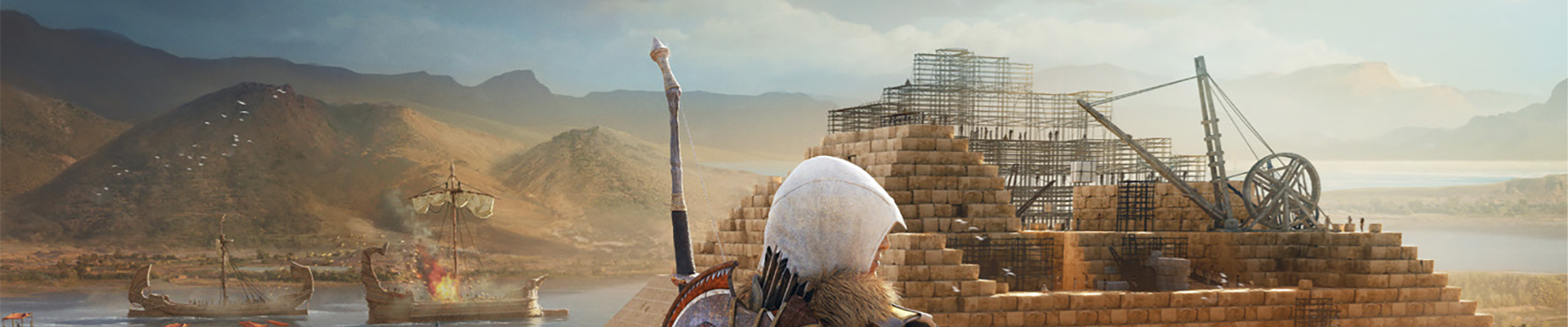


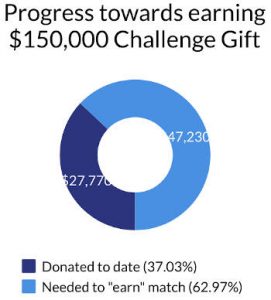 Our $20,000 March goal is part of a larger campaign to support broader ASOR diversity initiatives. Thanks to a generous
 ASOR Photo Collection has been growing over the past couple of months! Take a look at the 550+ images in
 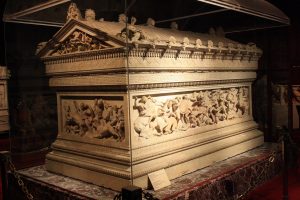 [/vc_column_text][/vc_column][vc_column border_color=”rgba(170,170,170,0.01)” width=”1/6″ css=”.vc_custom_1496684098866{margin-right: 5px !important;margin-bottom: 20px !important;border-right-width: 2px !important;border-bottom-width: 2px !important;padding-top: 30px !important;padding-right: 10px !important;padding-left: 10px !important;background-color: #ffffff !important;border-right-color: rgba(227,228,228,0.75) !important;border-bottom-color: rgba(227,228,228,0.75) !important;}”][vc_wp_posts title=”BROWSE THE NEWS ARCHIVE” number=”4″][/vc_column][vc_column border_color=”rgba(170,170,170,0.01)” width=”1/6″ css=”.vc_custom_1496684008271{margin-right: 10px !important;margin-bottom: 30px !important;border-right-width: 2px !important;border-bottom-width: 2px !important;padding-top: 30px !important;padding-right: 20px !important;padding-left: 20px !important;background-color: #ffffff !important;border-right-color: rgba(227,228,228,0.75) !important;border-bottom-color: rgba(227,228,228,0.75) !important;}”][vc_column_text]


 modeled to depict what is commonly interpreted as people engaged in ritual activities in front of a shrine. The vessel has long intrigued archaeologists working in Cyprus, partly because unambiguous evidence for religious structures and paraphernalia has eluded them in the archaeological record. However, excavations at the Early–Middle Bronze Age site of Alambra in central Cyprus have yielded an artifact that closely resembles the finials placed atop the “throne” depicted in the Vounous Bowl. Its find context—in a room within a domestic structure that also contained a human burial—supports those interpretations of the Vounous Bowl that emphasize its sacred dimensions and its possible connections with the mortuary domain.
 It includes a high mound and several lower terraces, ca. 25 ha in area. The site gained notoriety when an imported potsherd bearing an Egyptian royal symbol (a serekh) incised with the hieroglyph of an early ruler, Narmer, was found in Excavation Area D. Large-scale exposure there in the 1950s and 1960s, under the direction of Shmuel Yeivin, unearthed a rather lengthy and complicated stratigraphic sequence that has prompted numerous attempts at correlating its Early Bronze Age strata with Dynasty 0 and the early 1st Dynasty in Egypt. Yeivin’s cursorily published results illustrate only partial and rudimentary plans of the Early Bronze Age strata in Area D, most of which lack elevations. One exceptionally large building boasting seven substantial mudbrick pillars has attracted researchers’ attention, as it likely had a public function. This essay, based on Yeivin’s original, unpublished plans that include elevations, as well as information derived from recent excavations in Area D, offers a detailed reconstruction of the plan of that building, which suggests its likely chrono-stratigraphic ascription to late phases of the Early Bronze I. It further notes its importance for understanding the relationship between Egypt and the southern Levant in this late prehistoric period, and especially the place of Tel ʿErani as one of a growing number of sites in the southern Levant known to yield definitive evidence for the onset of its earliest complex, hierarchical societies in the first centuries of the 4th millennium b.c.e.
 engagement with the international maritime trade networks of the eastern Mediterranean. A longstanding scholarly preoccupation with interregional trade has encouraged the development of theoretical models that aim to reconstruct the economy of the island and generally view Late Cypriot coastal sites as gateway communities channeling copper to the eastern Mediterranean. Studies have also highlighted the local and regional significance of these communities and have shed light on their complex economic networks. In this paper, we use data from coastal Tochni-Lakkia, an actively eroding site located near two major Late Bronze Age centers (Kalavasos-Ayios Dhimitrios and the Maroni Complex) to add nuance to smaller-scale regional interaction networks along the south-central coast of the island. To do that, we engage evidence from trial excavations and archaeological and geophysical surveys at Tochni-Lakkia in the form of a preliminary report with theoretical approaches that highlight the potential for and role of regional maritime networks and the concept of coastscape.
 The results outline elements in Jerusalem’s nearby woody vegetation, characterized by a mosaic of native Mediterranean maquis-forest species and olive orchards, and possibly pine and cypress stands. The arboreal surrounding of Jerusalem supplied the city with pruned olive branches and other types of agricultural refuse to serve as firewood. Local conifers (pines and cypress) as well as imported conifers (cedar of Lebanon), were used for construction purposes. The results further highlight important issues such as social status and importation of wood. The occurrence of prestigious imported tree species within the charcoal assemblage of the Lower City (e.g., cedar, boxwood) indicates the presence of wealthy residences, standing in contrast to prior assumptions that suggest a low social status for the inhabitants within this area.
 At this early date, iron was already used rather extensively for utilitarian purposes at the site, though bronze was not yet restricted to decorative use. The metal assemblage from Khirbet Qeiyafa, therefore, provides a rare glimpse into the transition from bronze to iron at the beginning of Iron Age II. This article presents the typology and spatial distribution of the finds, followed by a discussion of their possible cultural and social implications.
 Recent excavations provide the first unequivocal indication that the site was inhabited during the Late Bronze Age as a farm/hamlet, perhaps also a waystation. The main architectural feature is a large partially-excavated structure, whose contents—mainly pottery—were well preserved by a destruction level. We propose that the destruction assemblage dates around the mid-14th century b.c.e. and that the structure was built around 1400 b.c.e., thus somewhat later than Thutmose III’s famed first campaign. Since pottery of this period is known primarily from large/central sites, Tel Esur offers an exceptional glimpse into a 14th century b.c.e. assemblage from the rural Canaanite domain. Currently, it is also the only small site excavated along the ʿAruna Pass between Megiddo and the Sharon, inter alia offering insights about this stretch of the Via Maris during the Late Bronze Age. This is the first synthesis of Tel Esur during this period. We focus on typo-chronology, and on the main characteristics of the ceramic assemblage, including unique phenomena such as storage in Cypriot-Style pithoi and Egyptianizing pottery in a rural setting.
 It offers a first glimpse of life at Gordion during the mid-6th century (end of the Middle Phrygian period, Yassıhöyük Stratigraphic Sequence 5A). Greek imports provide a relatively firm date for the deposit and allow a chronologically specific snapshot of locally produced fine, household, and coarse wares. Vessels made of traditional Phrygian black-polished ware were used primarily for drinking. Lydian influence at the site is seen in the large number of burnished gray stemmed vessels, although the size of Gordion’s stemmed dishes and the way in which they were used apparently differ from the Lydian capital, Sardis. Bowls come in a variety of wares, shapes, and sizes, while large jars and jugs are primarily gray-slipped household wares, with some imports. Puzzling is a large terracotta object with pseudomorph appliqués suggesting metal attachments, which may have been a niche for a household cult. This initial presentation of the pottery from the mid-6th-century dump provides insight into multiple concerns and behaviors of Gordion’s inhabitants just before the Achaemenid Persian Empire.
 The bulla originally sealed a papyrus document. Thanks to its excellent preservation, it is possible to identify a series of key aspects of the object: the motif and type of seal used to stamp it, the way the bulla was created, and even the way in which the original document was folded and tied. These details allow us to identify the probable origin and date of the seal and contextualize its associated bulla within the site of Qedesh. This evidence, in conjunction with information from the late 5th century b.c.e. Murašû archive in Nippur, allows us to suggest that the seal’s user may have been a person with Tyrian ties—perhaps a member of the Tyrian diaspora—who acquired his seal in Nippur and traveled to Qedesh where he used it to seal a document.
 This paper focuses on the latest known period of occupation at Tayinat, which during the Iron Age was the Syro-Anatolian city of Kunulua. In 2004, following a 67-year hiatus, the University of Toronto’s Tayinat Archaeological Project (TAP) resumed excavations at the site. Here we present the preliminary results of TAP’s investigations of the Iron Age II and III settlement, including the topography of the 1st millennium settlement, super- and sub-structural remains associated with Building II (a temple first discovered in the 1930s), a second, newly discovered temple (Building XVI), part of a large Assyrian-style courtyard building, and the remains of additional monumental architecture on the Iron Age citadel. The terminal phases of these structures date to the Iron Age III period, or the late 8th and 7th century occupation of Kunulua following the Assyrian conquest in 738 b.c.e., and collectively point to the transformation of Kunulua’s royal citadel into a Neo-Assyrian provincial administrative center, a pattern witnessed at contemporary sites elsewhere in southeastern Anatolia and northern Syria.
 located in the Iraq Museum that must have originated in Umma or its environs. This account of equids is unique in that it is the first “mu-iti” type that carries a year name; this is also the first known such year name from the reign of Manishtusu, the third ruler of the Sargonic dynasty of the late third millennium BCE.
 Aside from the institutional households, a good number of “private” estates are known from Ur III sources. These private households were usually named after their owners (members of the royal entourage, the military or the local elite, merchants, cultic officials etc.), and controlled extensive resources, but were only rarely mentioned in the administrative documents from the provincial archives. One of the best-documented private estate is the one that belonged to a certain Ur-DUN. His estate was located in the Ĝirsu/Lagaš province and played an important role in the raising of slaughter animals and wool production. The aim of the present paper is to describe the economic activities of the Ur-DUN household according to the available sources and to highlight how this private household interacted with the provincial economy and the crown/military sector.
 archaeological mission of the University of Torino has made it possible to propose the identification of the site with ancient Keš. The present contribution reexamines the location of Irisaĝrig in light of its well-known textual connections with and physical proximity to Keš.
 While these investigations were mostly dedicated to the study of the village periods, the presence of early state formations on the plain was also documented by their surface surveys. Tepe Farukhabad was an exception, but because it was only a small settlement in the third and second millennia BCE, the excavations there did not yield fruitful results for this period. Based on their systematic surface study of Tepe Musiyan, Wright and Neely argued that during the third and second millennia BCE, this settlement played a central role in this strategic plain due to its location on the route from Susa to Der (Badra in Iraq). Recently, our team again surveyed the Deh Luran Plain. Our visit to Musiyan provided us with a cylinder seal discovered by one of the locals. The inscription reveals the owner as a person with an Amorite name who may have been present in Musiyan sometime during the early centuries of the second millennium BCE, contemporary with the end of the Šimaški period, which in Mesopotamia extends from late in the Third Dynasty of Ur until the early Old Babylonian period.
 and Šamaš does not conform to the Old Babylonian beard type. Moreover, the linear workmanship of the lower part of the king’s beard suggests that the relief was never finished. Considering the troubled history of the stele—made and erected in Babylonia in the late fifties of the eighteenth century BCE and carried away to Susa in the mid twelfth century—it is proposed that the resculpting of the Stele was undertaken by Šutruk-Naḫḫunte or his son Kutir-Naḫḫunte upon the Elamite capture of the monument with the goal of making it their own. An attempt to clarify the circumstances and motivation of this reworking is offered in the article.
 together with the duplicate lines found on the obverse of the Kassite period exercise tablet CBS 7884. The text is of historical-literary content and depicts an otherwise unknown uprising at Karkar. A first edition of the text is offered together with a brief introduction regarding its problematic historical setting.
 According to the new interpretation, the inscription narrates the events of a four-year-long war between a western coalition led by an unnamed Phrygian king and a coalition of post-Hittite rulers from south-central Anatolia, led by Great King Wasusarma. The careful study of paleography, scribal practice, script development, and literary aspects yields a dating of the inscription to the late tenth or early ninth century BCE. In view of the growing archaeological evidence for the central Anatolian Dark Ages, the new interpretation of the inscription has far-reaching implications for the overarching historical picture of the early first millennium BCE in Western Asia. It also provides the earliest attestation for the kingdom of Phrygia, and the sole occurrence of the toponym Phrygia and derivatives outside of the western Greco-Roman sources.
 in the Yale Babylonian Collection and in the Princeton Theological Seminary. Not only are NCBT 660 and PTS 2232 among the very few completely preserved examples of such lists, they also belong to the earliest known specimens of their genre, dating to the third (602/1 BCE) and first (604/3 BCE) year of Nebuchadnezzar II. These texts are valuable additions to the rather sparse dossier containing information on the Eanna cult during the formative phase of the Neo-Babylonian Empire; moreover, they are related to a text that concerns Nabonidus’s cultic reforms in the Eanna.