SHARE
[/vc_column_text][mk_image src=”http://www.asortest.org/wp-content/uploads/2017/01/social-fb-icon4.jpg” image_width=”42″ image_height=”42″ hover=”false” custom_url=”https://www.facebook.com/ASOResearch/” margin_bottom=”0″][mk_image src=”http://www.asortest.org/wp-content/uploads/2017/01/social-tw-icon4.jpg” image_width=”42″ image_height=”42″ hover=”false” custom_url=”https://twitter.com/ASOResearch?ref_src=twsrc%5Egoogle%7Ctwcamp%5Eserp%7Ctwgr%5Eauthor” margin_bottom=”0″][mk_image src=”http://www.asortest.org/wp-content/uploads/2017/01/social-in-icon4.jpg” image_width=”42″ image_height=”42″ hover=”false” custom_url=”https://www.linkedin.com/company/american-schools-of-oriental-research” margin_bottom=”0″][mk_image src=”http://www.asortest.org/wp-content/uploads/2017/01/social-ml-icon_7.jpg” image_width=”42″ image_height=”42″ hover=”false” custom_url=”mailto:info@asor.org” margin_bottom=”0″][mk_image src=”http://www.asortest.org/wp-content/uploads/2017/01/blog-icon3.jpg” image_width=”42″ image_height=”42″ hover=”false” custom_url=”https://asor.org/blog” margin_bottom=”0″][/vc_column][vc_column border_color=”rgba(255,255,255,0.01)” width=”1/6″ css=”.vc_custom_1490365673198{margin-right: 20px !important;border-left-width: 2px !important;padding-right: 20px !important;padding-left: 20px !important;border-left-color: #99422f !important;}” el_class=”sticky-sidenav”][mk_divider divider_color=”rgba(255,255,255,0.01)” thickness=”1″ margin_top=”3″ margin_bottom=”3″][vc_widget_sidebar sidebar_id=”ca-sidebar-60550″ el_class=”.widget { overflow: hidden; margin-bottom: 0; }”][/vc_column][vc_column border_color=”rgba(170,170,170,0.01)” width=”8/12″ css=”.vc_custom_1490225606852{margin-right: 10px !important;margin-bottom: 30px !important;border-right-width: 2px !important;border-bottom-width: 2px !important;padding-top: 30px !important;padding-right: 30px !important;padding-left: 20px !important;background-color: #ffffff !important;border-right-color: rgba(227,228,228,0.75) !important;border-bottom-color: rgba(227,228,228,0.75) !important;}”][vc_row_inner][vc_column_inner width=”1/4″ css=”.vc_custom_1590517099925{margin-right: 20px !important;}”][vc_single_image image=”61117″ img_size=”full”][/vc_column_inner][vc_column_inner width=”3/4″][vc_wp_text]ONLINE RESOURCES
ASOR Photo Collections
[/vc_wp_text][/vc_column_inner][/vc_row_inner][mk_divider thickness=”1″ margin_top=”10″ margin_bottom=”10″][vc_row_inner][vc_column_inner width=”2/3″ css=”.vc_custom_1602082671534{padding-top: 0px !important;padding-right: 10px !important;}”][vc_wp_text]Georgian National Museum Photo Collection
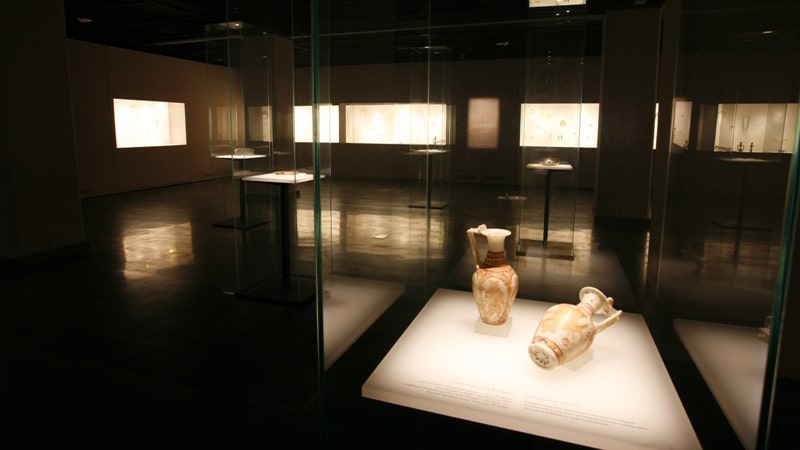
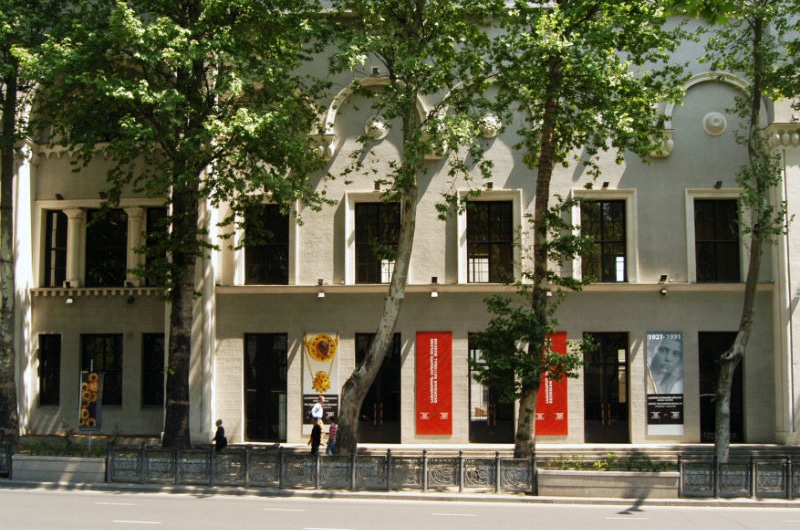
Description: The Georgian National Museum is made up of ten different museums across Georgia, officially conglomerated in 2004. The oldest of the museums is the Simon Janashia Museum of Georgia located in Tbilsi. This museum houses a unique array of natural and archaeological materials covering the history of the country.
The Museum was formerly known as the State Museum of the History of Georgia. Its collections originated in the Caucasian Department of the Russian Imperial Geographic Society founded in 1852. With Georgian independence from Russia inn 1918 the museum was renamed. The bulk of it’s collections come from excavations sanctioned by the Government of Georgia prior to Soviet take-over.
During the post-Soviet turmoil the museum suffered significantly, being damaged by a fires which occurred during the military coup in 1991-1992. In 2004 the museum was integrated with other major Georgian Museums under a joint system of the Georgian National Museum.
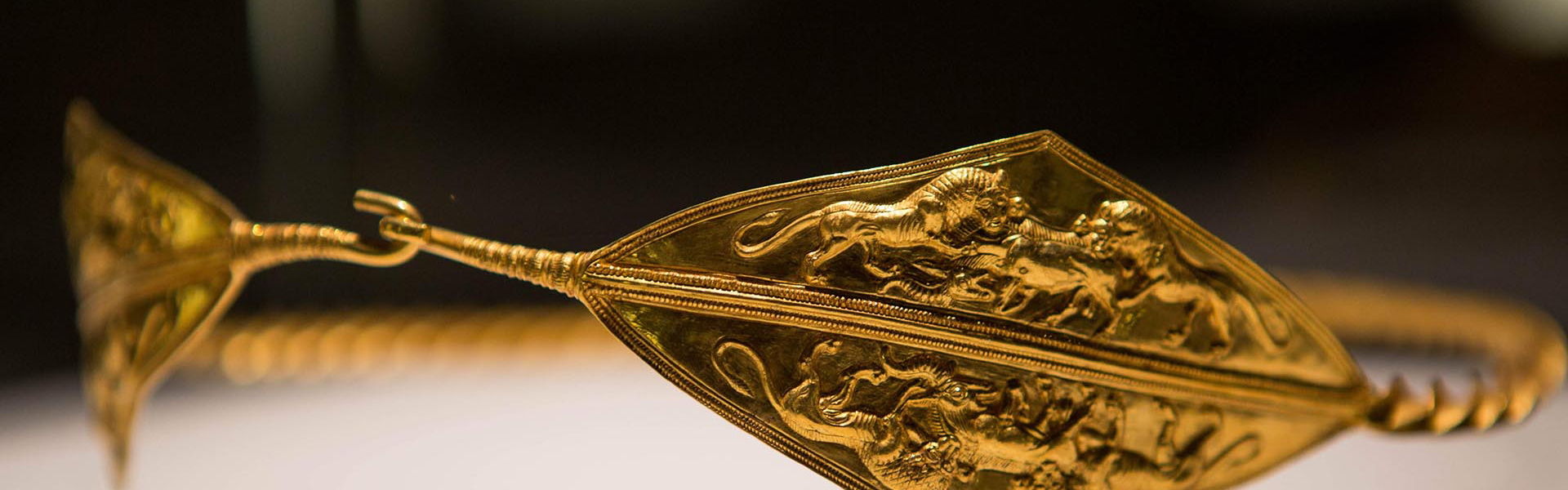
The materials in the Museum of Georgia are made up of hundreds of thousands of artifacts including important hominin remains uncovered in Dmanisi. One of the most important collections in the museum is the Collection of Treasures, which includes unique artifacts spanning from the second half of the 3rd millennium BCE through the 19th c CE. The collection is made up of gold and silver artifacts from various regions across the country. (Georgian National Museum)
[/vc_wp_text][/vc_column_inner][vc_column_inner width=”1/3″ css=”.vc_custom_1601476336236{margin-top: 20px !important;}”][vc_single_image image=”71381″ img_size=”800×530″ alignment=”center” onclick=”img_link_large” img_link_target=”_blank”][vc_wp_text](Tbilisi Local Guide)[/vc_wp_text][vc_single_image image=”71382″ img_size=”800×450″][/vc_column_inner][/vc_row_inner][mk_divider thickness=”1″ margin_top=”30″ margin_bottom=”30″][vc_wp_text]Image Collection
[/vc_wp_text][vc_wp_text] [/vc_wp_text][vc_wp_text] [/vc_wp_text][vc_wp_text]Khramis Didi Gora, Georgia: Neolithic Vessel with Dancing Man
Khramis Didi Gora, Georgia: Neolithic Material, Shulaveris-Shomu Culture
Vani
Vani, Georgia: Bronze Figurines
Vani, Georgia: Bronze Figurines 02
Vani, Georgia: Cholchian Bronzes
Vani, Georgia: Cholchian Bronzes 02
Vani, Georgia: Cholchian Bronzes 03
Varia, Georgia: Achaemenid Protomes
Varia, Georgia: Kura Araxes Figurines
Varia, Georgia: Neolithic Material
Varia, Georgia: Neolithic Material, Shulaveris-Shomu Culture
Varia, Georgia: Neolithic Material, Shulaveris-Shomu Culture 02